
 Many of the minor plot lines in my latest Regency romantic suspense concern who could inherit a title? There is the matter of the Marquess of Malvern’s losing his memory. Should the Duke of Devilfoard declare his eldest son incompetent and petition for his second son to assume control of the dukedom? Was such even legal? And what of the missing Earl of Sandahl? The original earl falls overboard on his “honeymoon” and cannot be found. Should he be declared dead? If so, who inherits? The logical answer is the second son, but that solution is not what it seems.
So, what do we know of peerages? When reading historical fiction/historical romance there are many misconceptions about titles. First thing a reader must know is not all titles are created equal. For example, a baronet may pass on his title to his heir, but he is not considered part of the Peerage in the United Kingdom. There are some 800+ peers in modern day England whose titles may be inherited. Peers include Dukes/Duchesses, Marquesses/Marchionesses, Earls/Countesses, Viscounts/Viscountesses, and Barons/Baronesses. The law that applies to a particular British title depends upon when it was bestowed upon the family and the method of its creation.
Peerages of England, Great Britain, and the United Kingdom follow English law; the difference between them is that Peerages of England were created before the Act of Union 1707, Peerages of Great Britain between 1707 and the Union with Ireland in 1800, and Peerages of the United Kingdom since 1800. Irish Peerages follow the law of the Kingdom of Ireland, which is very like English law, except no Irish peers have been created since 1898, and they have no part in the present governance of the United Kingdom. Scottish Peerage law is generally similar to English law, but differs in innumerable points of detail, often being more similar to medieval practice.” (Burke’s Guide to British Titles: Courtesy Titles. Burke’s Peerage and Gentry. 2005)
A title may be created by a writ of summons, which means that a person is summoned to Parliament. A writ of summons is a document calling Members of the House of Lords to Parliament. Members of the Lords may not take their seats until they have obtained their writ of summons. Writs of summons are issued by direction of the Lord Chancellor from the office of the Clerk of the Crown in Chancery. New writs are issued before the meeting of each Parliament to all Lords Spiritual and Temporal who have a right to seats in the House. (Francis Palgrave (1788-1861), Parliamentary Writs and Writs of Military Summons (2 volumes, 1827 and 1834)) Writs of summons set out the titles of the Sovereign and the recipient of the writ. They state the reason for Parliament’s calling upon the individual.
When the Earl of Berkley died, his oldest son applied for a writ of summons to the House of Lords. The Committee on Privilege turned him down and said he and the other brothers born before 1795 were illegitimate and that the earldom had fallen to the 16 year old born in 1796. The boy was too young to do anything about the matter and his oldest brother and mother ran things. When he came of age, he never put forth a claim to the earldom However, he was, by right and law, the earl so anything requiring the signature of the earl had to be signed by him. He signed responsibility over to his oldest brother, but the title itself went dormant until he died.

Letters patent granting the Dukedom of Marlborough to Sir John Churchill were later amended by Parliament (via Wikipedia)
Titles may also be created by letters of patent. This method sets out a created peerage and names the person in question. It may limit the course of descent to the male line, with only legitimate children having a right to the title. (Scottish titles permit the “legitimacy” to be determined by a marriage, not simply a marriage at time of the birth.) Traditionally, only the peer sits in the House of Lords, but from the time of Edward IV, an heir to the title (who also held additional titles) could sit in the HOL as one of his father’s subsidiary dignities. This is possible through a writ of acceleration.
Letters Patent can be amended by Act of Parliament. Likely, the two most famous examples of amending Letters were the Dukedom of Marlborough in 1706 and the Duke of Windsor in 1936.
A person who is a possible heir to a peerage is said to be “in remainder.” A title becomes extinct (opposite to extant, which means alive) when all possible heirs (as provided by the letters patent) have died out, i.e., there is nobody in remainder at the death of the holder. A title becomes dormant if nobody has claimed the title or if no claim has been satisfactorily proven. A title goes into abeyance if there is more than one person equally entitled to be the holder.
In the past, peerages were sometimes forfeit or attainted under Acts of Parliament, most often as the result of treason on the part of the holder. The blood of an attainted peer was considered “corrupted,” consequently his or her descendants could not inherit the title. If all descendants of the attainted peer were to die out, however, then an heir from another branch of the family not affected by the attainder could take the title. The Forfeiture Act 1870 abolished corruption of blood; instead of losing the peerage, a peer convicted of treason would be disqualified from sitting in Parliament for the period of imprisonment.
Nothing prevents a British peerage from being held by a foreign citizen (although such peers cannot sit in the House of Lords). Several descendants of George III were British peers and German subjects; the Lords Fairfax of Cameron were American citizens for several generations.
“Hereditary peers do not have the automatic right to a writ of summons to the House. Irish peerages may not be disclaimed. A peer who disclaims the peerage loses all titles, rights and privileges associated with the peerage; his wife or her husband is similarly affected. No further hereditary peerages may be conferred upon the person, but life peerages may be. The peerage remains without a holder until the death of the peer making the disclaimer, when it descends normally.” (Hereditary Peers)

London Herald
So what can a person do if he does not wish to accept the title? He could simply refuse to take up the title or touch the money. Technically he’d still be the title’s holder, but to have the full title and honors he must be confirmed before Parliament, and all the legal stuff has to be done to ensure he is the correct heir. He can simply not claim the title and not style himself by the title, but it remains it place at his disposal. The person does not need to send in the writ of summons to the House of Lords, and he can refuse to use the title, but someone must care for the property, and no one else may claim the title while he is alive. He can also do something drastic, such as commit treason, in which case he and his family would be stripped of the title, but no one would recommend such a step. It would be easier simply not to claim the title.
Like it or not, the heir cannot be disinherited to prevent his assuming the title. If there is a living person and the lawful successor to a title, he cannot be displaced unless convicted of a crime. During the Regency there was no way to disclaim a peerage except by not using it and not sending in a request for a seat in the House of Lords.
 Angel Comes to the Devil’s Keep
Huntington McLaughlin, the Marquess of Malvern, wakes in a farmhouse, after a head injury, being tended by an ethereal “angel,” who claims to be his wife. However, reality is often deceptive, and Angelica Lovelace is far from innocent in Hunt’s difficulties. Yet, there is something about the woman that calls to him as no other ever has. When she attends his mother’s annual summer house party, their lives are intertwined in a series of mistaken identities, assaults, kidnappings, overlapping relations, and murders, which will either bring them together forever or tear them irretrievably apart. As Hunt attempts to right his world from problems caused by the head injury that has robbed him of parts of his memory, his best friend, the Earl of Remmington, makes it clear that he intends to claim Angelica as his wife. Hunt must decide whether to permit her to align herself with the earldom or claim the only woman who stirs his heart–and if he does the latter, can he still serve the dukedom with a hoydenish American heiress at his side?
Angel Comes to Devil’s Keep is a well-written tale of courage and sacrifice and what women went through in order to marry well in Regency England. The author did her homework and it shows in an authenticity that we don’t often see in Regency romances.
Purchase Links:
Black Opal Books (Both eBook and Print Copies Available – Print Copies Have a Signed Bookplate)
GIVEAWAY:
Leave a comment below to be eligible for an eBook copy of Angel Comes to the Devil’s Keep (Book 1 of the Twins’ Trilogy). The giveaway ends at midnight EDST, August 7, 2016.


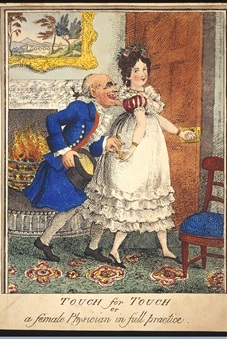
 On 7 April 1853, Queen Victoria delivered her fourth son and eighth child. Prince Leopold George Duncan Albert was the first of the queen’s children to be delivered with the aid of chloroform, a controversial procedure at the time. The belief by many in the medical field and the theological circles was that God meant women to “suffer” during childbirth so a symbol of Eve’s betrayal in the Garden of Eden. The queen’s use of the drug created quite a debate. It was also argued that a painful delivery assured that mother’s would wish to protect the children for whom they had suffered. The press thought the procedure too dangerous to the queen’s health. It was Victoria’s approval of the procedure that finally broke this archaic “male” perspective of women’s health.
 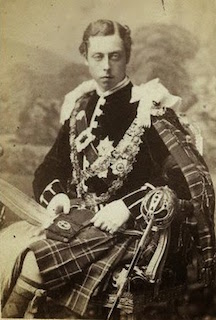 The diagnosis of hemophilia was not met well by either Victoria or Albert. “Blame” for the condition was denied by both the queen and her consort. So, who can be a hemophilia carrier? “A daughter gets an X chromosome from her mother and an X chromosome from her father. Suppose the X chromosome from her mother has the gene for normal blood clotting. Suppose the X chromosome from her father has the gene for hemophilia. The daughter will not have hemophilia since the normal blood clotting gene from her mother is dominant. It won’t allow the instructions from the hemophilia gene to be sent.
 Eventually, Leopold won his mother’s permission to marry. However, his medical condition prevented many eligible princesses from accepting an offer. “Princess Helen of Waldeck-Pyrmont agreed to marry him. The couple tied the knot in 1882. Although when they married they barely knew each other, they soon grew to love, and became very devoted to, each other. The following year, Helen gave birth to a child, Alice. Unfortunately, Leopold didn’t get to spend a lot of time with his beloved family. In March 1884, he went, alone (his wife was pregnant and couldn’t travel) to the south of France, something he always did to escape the cold English winters. While there, he slipped, bruising his knee and hitting his head. That night, he died. The cause is unclear, but the most likely explanation is that he suffered a cerebral hemorrhage. Four months later, Helen gave birth to their second child, a boy named Charles Edward.”
 “About 7 o’clock on the evening of Monday, the 3rd of November, at 42 weeks and 3 days gestation, the membranes spontaneously ruptured and labor pains soon followed. The contractions were coming every 8 to 10 minutes and were very mild. Examination of the cervix at that time revealed the tip of the cervix to be about a half penny dilated. On Tuesday morning, around 3 a.m., the 4th of November, Princess Charlotte had a violent vomiting spell and Dr. Croft thinking that delivery was eminent, sent for the officers of the state and Dr. Matthew Baillie. The Archbishop of Canterbury, the Bishop of London, The Lord Chancellor, the Home Secretary, the Secretary of war and Dr. Baillie, all arrived in their coaches and four before 8:00 a.m. But alas, the Princess was only three centimeters dilated at this time.



 Another favorite of my teaching days was William Strunk and E. B. White’s Elements of Style. It was a standard in many college classrooms of the later half of the 20th Century. In it, Strunk and White make a case for
  One of the surprising things upon which many readers of the courtroom scene in The Prosecution of Mr. Darcy’s Cousin commented was the lack of a “defense attorney” for the accused. A prosecutor served the British courts, but the accused was often only permitted a barrister’s advice for points of law.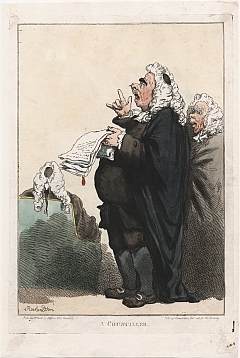


 A
A  Pomatum


 Every Woman Dreams...