In my latest release, Mr. Darcy’s Bargain, Elizabeth pleads with Darcy to save the citizens of Meryton from a scam being perpetrated upon them by Mr. Wickham. But how did I come up with the idea of this scam as the basis for this book?
 Most of you know I am a bit of a history geek, and in one of my “off shoots” of research for another book, I came across William “520 Per Cent” Miller, an American scammer who likely served as the model for Charles Ponzi, who lends his name to what we now call “Ponzi schemes.”
 William Miller was a Brooklyn bookkeeper who was eventually incarcerated for swindling investors out of their savings. In 1899, Miller operated a scheme called the “Franklyn Syndicate,” in which he promised 10% interest on contributions each week. Miller was given the nickname of “520 Percent.” He promised a ten percent interest weekly to his investors, therefore the nickname of 520 Percent. He managed to defraud his investors of some $1 million. He spent 10 years in jail for grand larceny, serving only 5 years. He was released early for good behavior. Upon his release he opened a grocery store on Long Island and lived out his days as a law biding citizen.
Book Blurb:
When Elizabeth Bennet appears on his doorstep some ten months after her refusal of his hand in marriage, Darcy uses the opportunity to “bargain” for her acceptance of a renewal of his proposal in exchange for his assistance in bringing Mr. Wickham to justice. In Darcy’s absence from Hertfordshire, Wickham has practiced a scheme to defraud the citizens of Meryton of their hard-earned funds. All have invested in a Ten Percent Annuity scheme, including Mr. Bennet, and her family and friends are in dire circumstances. Elizabeth will risk everything to bring her father to health again and to save her friends from destitution, but is she willing to risk her heart? She places her trust in Darcy’s thwarting Wickham’s manipulations, but she is not aware that Darcy wishes more than her acquiescence. He desires her love. And what will happen if Darcy does not succeed in bringing Mr. Wickham to justice? Will that end their “bargain,” or will true love prevail?

PURCHASE LINKS:
Amazon Kindle Kobo CreateSpace
EXCERPT:
“The young lady says she will not leave without speaking to you, sir.”
Darcy scowled at his butler. His servant had interrupted Darcy’s meeting with his solicitor to say a Mr. Gardiner pleaded for a bit of Darcy’s time. “What young lady?” Darcy demanded.
Even as he asked the question, he was aware of the hitch in his voice. How often had he fantasized about the woman who haunted his dreams marching into his home and demanding he love her? He fought the urge to close his eyes and bring forth an image of Elizabeth Bennet. More than ten months had passed since he left her in the parlor of Mr. Collins’ cottage at Hunsford–left her to her misinterpretations. He had thought to present her with a letter of explanation regarding his part in separating her elder sister from Mr. Bingley and a defense of his interactions with Mr. Wickham, but after walking the length of the plantation at Rosings Park three times, Darcy abandoned the task. The letter remained unopened in the drawer of the night table beside his bed.
“A Miss Bennet, sir.”
Darcy did not know whether satisfaction was a proper response, but he knew the emotion nonetheless.
He spoke to the solicitor, “If you will pardon me, Hess, I suspect I should discover what brings these strangers to my threshold.”
Mr. Hess stood to gather his papers. “I understand, Mr. Darcy. I will have someone deliver the new documents later today. If you require my services after you have had time to examine the contract, send me word.”
“Thacker, see Mr. Hess out and then provide me ten minutes before you escort Mr. Gardiner and the lady up.”
“As you wish, Mr. Darcy.”
Darcy felt a bit foolish requesting a few minutes to settle his composure before he looked upon Elizabeth Bennet again. Needless to say, the “Miss Bennet” waiting below could be another of Mr. Bennet’s daughters or even another young lady with the same surname, but Darcy doubted any other female would act so boldly as to call upon him and to demand to speak to him. Only Miss Elizabeth would dare to invade his privacy.
Although it was early in the day, Darcy poured himself a stiff drink and swallowed it quickly. He thought he had placed the memory of Elizabeth Bennet behind him, but, in truth, doing so was impossible. A book lying open on a table with an embroidered bookmark keeping the place brought him anguish. The scent of fresh cut lavender had him searching his house for a lost dream. Little things brought the lady’s image rushing to his memory. The passion she prompted in him was not an emotion Darcy knew previously or since.
“Yet, the lady shunned your offer of marriage,” he reminded his foolish hope. “If she were coming to Darcy House for you, Miss Elizabeth would not require another’s escort.”
To rid himself of misplaced aspirations, over the previous months, Darcy had relived each of Elizabeth’s accusations until they had shredded his heart completely. “The feelings which you tell me have long prevented the acknowledgment of your regard can have little difficulty in overcoming it after this explanation.” and “Can you deny that you have done it? and “Who that knows what his misfortunes have been can help feeling an interest in him?” and “You are mistaken, Mr. Darcy, if you suppose that the mode of your declaration affected me any other way than as it spared me the concern which I might have felt in refusing you, had you behaved in a more gentleman-like manner.”
“Perhaps I should have taken the lady into my arms and kissed her into submission,” he murmured.
A knock upon his study door sent Darcy’s musings darting off into the deepest recesses of his mind. He turned as the door opened, and Thacker ushered “her” into his private retreat. He noted a man of some girth and dark hair stood behind her, but Darcy’s gaze remained locked upon Elizabeth’s countenance.
God! But he missed her! She was more beautiful than he recalled.
Although he told himself repeatedly it was best to forget her, in reality, his heart sang with the possibility of renewing their acquaintance. Perhaps he could claim an opportunity to make amends. When Elizabeth refused him, for the first time in his life, Darcy held no means of solving the problem before him–that of his obsession with the woman.
A clearing of the gentleman’s throat brought Darcy from his considerations. He belatedly recalled his manners and offered the pair a bow of greeting. Schooling his expression, he said, “Miss Elizabeth, what a pleasant surprise.”
Surprise was the correct word, but how pleasant the experience would be was yet to be seen.
“Mr. Darcy,” she said so softly he found the experience disconcerting. Did she fear he would turn her away?
“Please come in and have a seat. Would you care for refreshments?” He gestured her to the chairs arranged before his desk.
“No, sir,” Elizabeth said in politeness. “We shall attempt to keep our business short.” She folded her hands upon her lap. “If you will permit it, sir,” she continued in stiff tones, “I would give you the acquaintance of my uncle.”
The man remained standing. Darcy knew the look of her Uncle Phillips for he took Phillips’s companionship on several occasions when Darcy resided at Netherfield. The man before him must be the uncle from Cheapside.
“Certainly.”
Elizabeth repeated the required niceties. “Mr. Darcy, may I present my uncle, Mr. Gardiner. Uncle, this is Mr. Darcy, the gentleman from Derbyshire of whom I spoke.”
Darcy liked the idea of Elizabeth speaking of him without absolute disdain.
“Thank you, Mr. Darcy, for receiving us without notice,” the gentleman repeated as he assumed the seat beside his niece.
Darcy sat carefully so as not to crease his breeches. Somehow, he wished to appear at his best before Elizabeth. He thought it odd. Up until this very moment gray clouds filled the London skies outside his Town house’s windows, but as he turned to rest his gaze upon the woman who owned his heart, a single ray of sunshine claimed its target: the back of Elizabeth Bennet’s head. The effect was a flicker of fire dancing through the red strands of her auburn locks.
He could never know enough of her. Darcy permitted his eyes to drift over her features. Dark circles rested upon her cheeks. Needless to say, she had experienced more than one sleepless night, and Darcy wondered what brought her to distress.
“It has been nearly a year, Miss Elizabeth,” he stated the obvious as a beginning to their conversation. “I pray your family is in health.”
Tears misted Elizabeth’s eyes. “All but my father, sir,” she pronounced in strained tones. “Mr. Bennet experienced an episode recently.”
Mr. Gardiner reached for Elizabeth’s hand, and Darcy wished to slap the man’s hand away so Darcy might comfort her instead.
“Something serious?” he asked in empathetic tones.
Darcy knew first hand the devastation of losing a parent. He had felt at a loss since his revered father’s passing. That is until he encountered Elizabeth Bennet in Hertfordshire. He had latched his hopes to the woman, praying she would assist him in making sense of his obligations, but he found himself still adrift.
“Perhaps I should answer for our Lizzy,” Mr. Gardiner suggested. “The doctor believes my Brother Bennet knew a spell with his heart. We pray for a speedy recovery.”
“I am sorry to hear it, Miss Elizabeth,” Darcy said in sincere sympathy. “I long recognized your devotion to Mr. Bennet. Yours is a relationship many would admire.”
Her voice held her emotions, but Elizabeth pronounced, “Such is my purpose in calling upon your household, sir. I would never think to disturb your peace unless the situation was not dire. I require your assistance.”
“My assistance?” Darcy questioned. “Are you in need of a more knowledgeable physician? I assure you Doctor Nott is excellent. I will gladly speak to the man upon your behalf.”
Elizabeth shot a pleading glance to her uncle, but Gardiner only nodded his encouragement. It shook Darcy to his core to view Elizabeth so distraught. In his memories of her, she was the most independent woman of his acquaintance.
“Although I am certain Mr. Bennet would thrive under Doctor Nott’s care, I was hoping you might intervene in a business affair, which brought on my father’s condition.”
Darcy struggled not to flinch. “You wish me oversee one of Mr. Bennet’s business negotiations?” Darcy would find doing so beyond the pale. He could not fathom Mr. Bennet asking him to act in the man’s place.
Before Elizabeth could respond, Gardiner smoothly claimed the lead.
“Mayhap I should explain the situation.”
Despite remaining uncomfortably tense, Darcy nodded his agreement. He suspected Gardiner’s tale would set Darcy’s sedate world into a whirlwind.
“Mr. Bennet, my Brother Phillips, Sir William Lucas, and many others among Meryton’s elite foolishly invested large sums in what they assumed was an offer that would provide them a quick tidy profit. Unfortunately, if what Elizabeth and I believe proves true, Mr. Bennet’s neighbors will lose more than their initial investments. As the situation appeared dire, when she realized the farce, our Elizabeth spoke to her father of her fears.”
“Which precipitated Mr. Bennet’s attack,” Elizabeth said with a catch in her throat. “My father’s current situation is my fault. I should have kept my counsel. If my foolish tongue causes Papa to…” She looked away quickly, but Darcy noticed how her bottom lip trembled.
“Like my Sister Bennet and Lizzy’s sisters,” Mr. Gardiner stated the obvious, “Elizabeth does not only fear the loss of a beloved husband and father, but also the eventual ascension of Mr. Collins as master of Longbourn.”
“Is Mr. Bennet’s condition so severe?” Darcy inquired in earnest.
“My Brother Bennet is not upon his death bed,” Gardiner assured, “but the physician believes him more fragile because of the questionable nature of this situation. Doctor Doughty knows of the financial maneuverings for the good physician also placed funds in the scheme. He remains silent on the subject only at Elizabeth’s encouragement. Our Lizzy convinced Doughty to hold his tongue until she could recruit my assistance and…”
“And mine,” Darcy finished the man’s sentence. “If you would, Mr. Gardiner, please explain the nature of this investment.”
Gardiner appeared relieved by Darcy’s response. “When Elizabeth summoned me to Longbourn, I took the liberty to study the papers presented to Mr. Bennet. Only a man who held knowledge of the law would recognize the circular nature of the contracts. The terms appear quite simple, but there is no means for this venture to prove anything but a disaster. How my Brother Phillips overlooked the obvious is beyond my understanding!”
Darcy said evenly, “Most country men of law rarely encounter complicated contracts.”
“I suppose so,” Gardiner continued, “but I make it fair practice never to sign any legal papers I do not fully understand. Yet, Bennet and the others trusted the man with whom they did business. Moreover, the lure of a quick profit was more than any of Mr. Bennet’s neighbors could withstand.”
“What were the terms of the proposition?” Darcy asked, intrigued by the tale.
Gardiner shook his head in what appeared to be disbelief. “Pure profit,” the man announced. “Ten percent interest paid bi-weekly. If a person invested a hundred pounds, he would earn more than twenty pounds per month.”
Darcy’s eyebrow shot upward in recognition of the ludicrous scheme. “Invest one hundred and earn an additional twenty,” he said in honest disapproval. “How could anyone think earning a fortune so easy?”
“The legal language provides the contract the appearance of complicated negotiations. Needless to say, not all the investors provided one hundred pounds. If I understand the situation correctly, some of Mr. Bennet’s servants combined their savings with others from Sir William’s staff. They agreed to split the profit, while others placed more than a hundred in the scheme.”
“And has anyone known the stated profit?” Darcy inquired. It interested him that someone devised such an ingenious plan.
Elizabeth resumed the tale. “All were presented with the required first interest payment.” She glanced in worry to Darcy. “Then the master of this plan encouraged the investors to add the interest to the initial fund. Next time they would receive eleven pounds for each one hundred ten pounds. That would be one and twenty pounds for a one month’s profit.”
“The investors readily agreed,” Darcy summarized.
“Naturally,” Elizabeth acknowledged. “The easiest coins anyone ever made.” Sarcasm marked her tone.
“And who managed to convince the good citizens of Meryton to part with their hard-earned funds?” he asked.
Elizabeth glanced away as if she hoped to earn reassurance. At length, her gaze returned to Darcy’s. “Mr. Wickham,” she said without emotion.
At length, Darcy understood the lady’s turning to him for assistance. Elizabeth had placed her trust in Wickham only to have the man betray her. The idea of her coming willingly to his household had taken root, and a flicker of expectation had claimed Darcy’s heart, only to be drenched by the woman’s tears for a scoundrel.
“Elizabeth tells me you hold knowledge of Mr. Wickham’s previous manipulations,” Gardiner spoke in businesslike tones, but Darcy’s interest in the investigation had waned.
“I do, but…” he began.
Elizabeth interrupted. “Please, Mr. Darcy. I know we last parted with ill-chosen words, but there is no other who could devise a means to recover the initial funds from a man such as Mr. Wickham. I fear he has spent the hard-earned pennies of so many. I blame myself for I did not listen to the doubts I held long before returning to Longbourn from Kent. I egregiously disabused your chronicle of Mr. Wickham’s reputation, as well as the warnings of my Aunt Gardiner and Mrs. Collins. I fully accept my faults, but I beg you not to punish others who require your benevolence because you wish no contact with me.”
Mr. Gardiner opened his mouth to chastise his niece for her familiarity, but Darcy motioned the man to silence. The “business” between him and Elizabeth required settlement before they could address Mr. Wickham’s schemes.
Without polite humor, Darcy asked, “Do you regret your choices?”
“Some,” she said softly. Elizabeth turned to her uncle to ask, “Might Mr. Darcy and I have a private moment? There are unfinished discussions to address.”
“I will not have your reputation spoiled by leaving you alone with Mr. Darcy,” Gardiner protested.
Darcy gestured to two chairs seated close together before the hearth.
“Miss Elizabeth and I will remove to the chairs my sister and I regularly use after supper. You may view us at all times.”
Gardiner scowled, but he nodded his agreement. Elizabeth stood immediately, and Darcy followed her to the seating. As perverse as it may seem to others, he enjoyed the display of the gentle sway of her hips; yet, he missed the spirited stride through which she moved through life.
Once seated, Elizabeth continued in hushed tones. “What you wish to know is if I regret denying your plight?”
“Do you?” Darcy asked in humorless tones.
Elizabeth paused in consideration. “I am known within my family as the one who speaks her opinions openly, but such is a false assumption. I do speak with some fervor when I feel a wrong was perpetrated. Even so, I never speak without careful examination, and I always reevaluate my interactions. Unfortunately, sometimes only experience proves the true tutor.”
“You avoid the question, Miss Elizabeth.”
She smiled knowingly. “I suppose I do for I possess no answer that satisfies me.”
Darcy slowly sucked in a deep breath. “Before I can assist you, I must know when you recognized Mr. Wickham’s talents for persuasion.”
“Must we revisit that night in Kent, Mr. Darcy?” Elizabeth’s gaze sharpened. “Must we dissect each accusation before you will agree to assist me?”
“It is not the only means to secure my agreement,” Darcy proclaimed.
Elizabeth countered, “Did I err in arriving on your threshold today?”
“Your uncle has identified Mr. Wickham’s deceit. Surely a man of Mr. Gardiner’s aplomb can devise a plan to secure Mr. Wickham’s return of the Meryton funds.”
“If we do not act quickly, there may be nothing remaining to claim for the recovery. From what I have learned from Mrs. Forster, the Meryton militia will soon depart for Brighton, and eventually on to the northern shires. For the moment, Mr. Wickham regularly chronicles the steady climb of the profits for any who ask. Such is what the good people of Meryton spend in the village shops. They purchase items on credit, living on the dream fed to them by Mr. Wickham. Why does it matter when I recognized Mr. Wickham’s manipulations? What matters are the lives of innocents!” Her voice rose quickly, but Darcy shushed Elizabeth’s growing ire. “Do you wish me to beg, Mr. Darcy? If so, you may hold the pleasure of seeing me thoroughly chastised and upon my knees. Simply tell me what you desire, sir, and it is yours.” She inhaled sharply and waited Darcy’s reply.
“I want you, Elizabeth. I want you at my side as my wife–as the mistress of my households, and…” Darcy paused for dramatic effect. He meant to shock her. “And I want you in my bed at night.”
Now for the giveaway, leave a comment below to be entered into a giveaway for one of two eBooks of Mr. Darcy’s Bargain. The giveaway ends at midnight EST on November 21, 2016.
Resources:
Time Content ~ March 7, 2012

 First made by Dom Bernardo Vincelli, a herbalist monk of the Order of St. Benedict, Bénédictine came into being in the Sixteenth Century. Vincelli devoted his life to the study of curative herbs and plants. The area surrounding the Abbey at Fécamp was fertile and herbs were plentiful, for it was part of the Caux district near the sea. The Pays de Caux is an area in Normandy occupying the greater part of the French département of Seine Maritime in Haute-Normandie. It is a chalk plateau to the north of the Seine Estuary. Vincelli used them to concoct his various balms and cordials, including the Elixir Bénédictin.



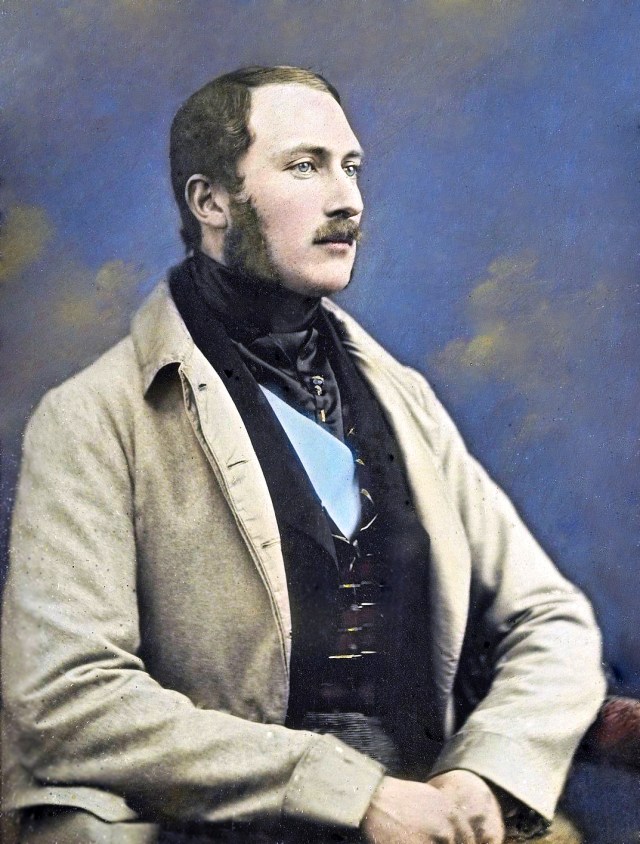 On December 14, 1861, Prince Albert succumbed to what was believed to be typhoid fever, although a recent book Magnificent Obsession by historian Helen Rappenport suggest the prince suffered from Crohn’s disease. (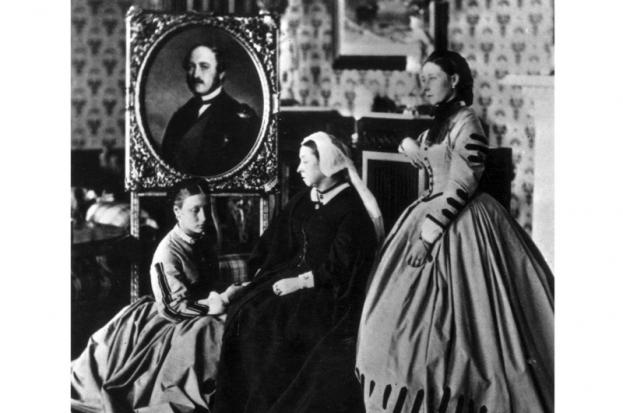

 December 1 –
 December 7 –
  December 9 –
  December 10 –

 December 14 –
  December 27 –
  ibility
  December 29 –


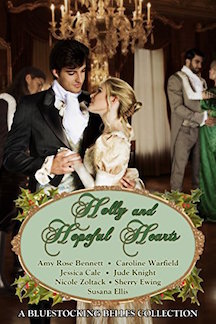 The Bluestocking Belles are happy to announce the winner of their holiday collection,
  Below are Recent Winners of
  With the news of the anniversary of the Cutty Sark ship this past week, I thought to renew this post. First a bit on the clipper ship: On 22 November, Cutty Sark celebrates the 146th anniversary of her launch. Originally designed to last just 30 years, Cutty Sark has survived nearly five times her life expectancy thanks to her world-wide success, fame and beauty. Commissioned by Scottish shipowner John Willis, Cutty Sark was built in Dumbarton in 1869 by Scott & Linton. She is a clipper ship – a ship designed for speed – and Willis had high aspirations that his new vessel would earn him handsome profits as the fastest of the clippers serving the China tea trade. Unfortunately for Cutty Sark, the Suez Canal opened the same week she was launched and steamers soon entered and dominated the trade. After just eight voyages to China, Cutty Sark was forced to seek alternative cargoes. [Read more at

 Spillikin


 Marcella


 Despite the name of the city, Newcastle’s castle keep is almost a thousand years old – having replaced an earlier castle in 1178. The association of the city with coal and the phrase itself are also old. In 1606, Thomas Heywood in ‘If you know not me, you know no bodie: or, the troubles of Queene Elizabeth‘ wrote:
 Today, I welcome Amy Rose Bennett back to the blog, representing several of my favorite Regency authors, a group known as the Bluestocking Belles. They have a lovely boxed holiday set they are sharing with us. I preordered mine, and it has been delivered. Reading frantically… Check out a bit of each story. You will love this!!


 About
About 


