Readers are always asking me questions regarding which is which when it comes to Regency era coaches. Today, I am offering a short primer.
Barouche, Gig, Curricle, and Phaeton are types of 18th & 19th-century horse-drawn carriages, differing in wheels (two vs. four), number of horses, and design, with Barouche a large four-seater open carriage with a folding hood, Curricle a light, two-wheeled vehicle for two horses, Gig a lighter, often single-horse two-wheeled carriage, and Phaeton a sporty, open four-wheeled carriage for owner-drivers, known for its high perch and instability.
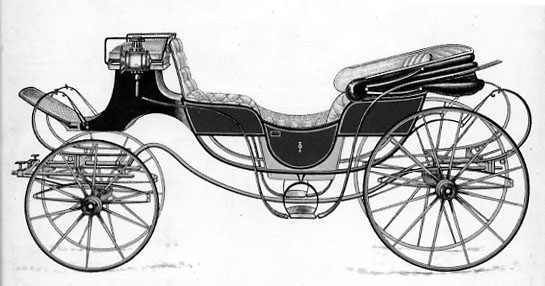
- Wheels: Four.
- Design: A large, open carriage with seats for four, a separate driver’s seat, and a folding hood, but only covering the rear passengers, leaving the front open.
- Key Feature: A large, elegant carriage for social outings, often pulled by four horses.
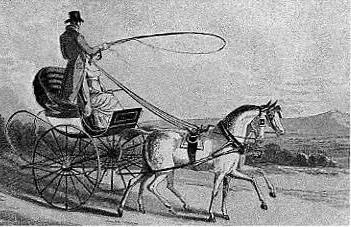
- Wheels: Two.
- Design: A light, open carriage for two, notable for being pulled by a pair of perfectly matched horses.
- Key Feature: A fashionable but potentially dangerous vehicle, popular with young gentlemen.
- Wheels: Two.
- Design: A small, light vehicle, often for one or two people, used by doctors and others for practical travel.
- Key Feature: Simpler and cheaper than a curricle, sometimes built to resemble one but usually pulled by a single horse.
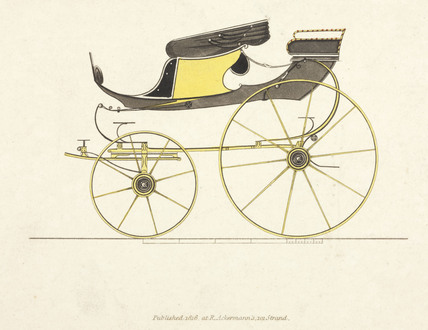
- Wheels: Four, with smaller front wheels.
- Design: An open, lightweight carriage for the owner-driver, with a high seat and often no side protection.
- Key Feature: Sporty, fast, and sometimes unstable, named after the mythical Phaethon; came in high-perch (risky) and lower (safer) styles.
An Aside: Here in the Charlotte, NC area, we have a local weather man [FOX network] whose name is Ted Phaeton. I imagine I am one of the few who spell his last name correctly, and do not get me going on Southern pronunciations of his name!