
Regency Summer Escape is currently on preorder for $0.99 or free on Kindle Unlimited on Amazon; it will release on July 23. This wonderful anthology contains stories from my friends Victoria Hinshaw and Arietta Richmond, as well as my “Courting Lord Whitmire.” I have been teasing you with the cover and snippets for awhile now, and, finally, I can provide you more details for my particular story.
Three wonderful Regency Summer stories! Will the Lord win his Lady by summer’s end?
***** FREE ON KINDLE UNLIMITED *****
This anthology contains:
Her Summer Duke by Arietta Richmond
Courting Lord Whitmire by Regina Jeffers
Sarah’s Summer Surprise by Victoria Hinshaw
If you love great stories, and the Regency era, you’ll love these!
Presenting “Courting Lord Whitmire”…
 At the bend of a path, an unexpected meeting.
She is all May. He is December.
But loves knows not time.
Colonel Lord Andrew Whitmire has returned home to England after spending fifteen years in service to his country. In truth, he would prefer to be anywhere but England. His late wife cuckold him, before he departed England. His daughter, who was reared by his father, enjoys calling him “Father” in the most annoying ways. However, his future is the viscountcy, and Andrew knows his duty to both title and child. He imagines himself the last of his line until he encounters Miss Verity Coopersmith, the cousin of his dearest friend, Robert Coopersmith. Miss Coopersmith turns Whitmire’s world on its axis. She is more than twenty years his junior, but all he can think is she is absolute perfection.
As you may guess from the book blurb, Andrew Whitmire denies his attraction for Miss Verity Coopersmith, but it vibrates just under the surface whenever they are together. He attempts to be strong; however, Miss Coopersmith has other ideas. Despite his objections, she is determined to win Lord Whitmire’s heart. She accepts the challenge and “courts” Lord Whitmire.

Enjoy this excerpt from Andrew and Verity’s first meeting in Chapter One.
She wished she had taken her aunt’s warning to heart, but Verity had been determined to mail her letter to her brother at the posting inn, assuring him, once again, she was satisfied with her life and that their aunt and uncle had promised they would bring her out into Society with the Short Season in the autumn. Robinson was concerned she would not be permitted a Season until he took the reins as the new baron. Repeatedly, she had told herself, it was not that either her Uncle Spenser or Aunt Margaret were neglectful of either her or Robinson: It was simply they always had another new discovery or another relic that took precedence over days spent in doing nothing more than attending balls, soirees, afternoon teas, and the like. She hoped she was correct in that assumption, but, of late, a niggling doubt had crept in and would not be displaced. Unfortunately, she had nothing upon which to hang her concerns, and so she had assumed it was simply her loneliness and her desire to see Robinson once again that kept her in a state of melancholy.
Although Robinson was three years her junior, since their parents’ untimely deaths, eight years prior, her brother had considered himself her protector, whereas, their father’s will specifically stated that when she was one and twenty or when she married, Verity was to be Robinson’s guardian, until he reached his majority. Naturally, her parents had thought she would have had a husband and perhaps a child by now, not still be living with her relations. They had expected her to be in a position to aid Robinson; regrettably, no one had considered the possibility of their early demise and the unthinkable outcome.
The fact Uncle Spenser and Aunt Margaret had interrupted their lives and his career to take in a twelve-year-old niece and a nine-year-old nephew when no one else stepped forward proved their worth in Verity’s opinion. The fact she had not been given a Season was of little consequence in the realm of what all had occurred. Moreover, she had been given much more: experiences no fresh maid out of the schoolroom would ever be able to claim. And if not a “parent’s love,” her aunt and uncle had provided her their support and their encouragement. She and Robinson had been fortunate in many ways. Yet, of late, she wondered how benevolent her relations actually were. Certainly, they had placed their lives on hold for some six months, but, after those few months of grieving the family they all had lost, her aunt and uncle had packed up her and Robinson and taken them on an “adventure,” meaning Uncle Spenser had resumed his life as an archaeologist and historian. Until recently, she and Robinson had trailed their family across exotic lands.
“Just a bit eccentric.” She grinned as she pulled her cloak tighter around her. “Eccentric and kind and well-meaning, but more somewhat forgetful,” Verity declared aloud to convince herself of the truth of the words and then looked around, making certain no one had heard her talking to herself. “Everyone will soon think I am quite as odd as is my uncle if they hear me having a conversation with myself.”
It was then a large drop of rain landed upon the top of her hand, where she held her bonnet upon her head. “Wonderful,” she grumbled, picking up her pace. She would likely be soaked to the bone before she reached Cooper Hall.
With every step Verity took, the rain increased in intensity to the point she could barely see a foot or two in front of her. It slanted down in torrents. How she wished she had taken the time to learn some of the alternate paths that led across the stiles and farmlands and woods, instead of taking the traditional road into the village every time she ventured that way. She had been at Cooper Hall for a mere eight months, and she knew little of the surrounding area, for she spent most of her days serving as both housekeeper and companion to her Aunt Margaret, rather than the other way around.
Pausing to claim her bearings, Verity turned in a circle. In the rain and beneath the dark clouds that had stolen away much of the daylight, everything appeared different. Had she reached the fork in the road that led to her family’s residence? “Surely not,” she murmured in indecision. Swallowing her confusion, she plowed ahead, certain she would soon stumble across the entrance road to Cooper Hall.
Shoving back the drooping bonnet for the fifth time, in a fit of anger at herself for being caught out in this onslaught, Verity ripped the dratted thing from her head, which allowed her hair to fall around her shoulders in a matted mess. Water ran into her eyes, but she stumbled forward again. She hoped she would come across Vicar Simonsen’s cottage soon. The vicar would offer her shelter until the storm ended.
Spotting what she thought must be the steeple of the village church, she paused to use her handkerchief to clean away the steady flow of rain from her hair sliding over her forehead and into her eyes. “Must be the church,” she said aloud, as she turned to the left to follow a path she thought she remembered being wider and smoother.
Decision made, Verity again stepped smartly along the road, attempting to sidestep the quickly-forming puddles full of muddy water. Her half-boots were soggy, water seeping in every time her stride was too short to miss the accumulating water overflowing the ditches, leaving her gown some six inches deep in brown smudges.
The farther she walked the less familiar her surroundings became. She debated on turning back, but she was not certain she could find the main road again, for she had made several turns along the way. Her relations were not sociable people, not the type to make calls and have people over for company, and they rarely went into the village. They all resided in Uncle Spenser’s childhood home, and Aunt Margaret’s people had been from an estate some five miles on the other side of the village. They knew the roads when they moved into Cooper Hall, and they had never thought to teach either Verity or Robinson their way around the neighborhood, and, moreover, Verity had never thought to ask them because she knew their doing so would take them away from Uncle Spenser’s work. Renowned as an archaeologist and a military history expert, his work was very important to the history of England and the world.
Feeling her gown and cloak weighing her down, Verity shortened her stride. It was rare for her to know fear, but she wished the rain would stop, so she could claim something familiar. Thunder rumbled through her as easily as it did the sky. And each bolt of lightning made her literally jump in alarm. Not knowing for certain where she was had caused a knot of urgency to settle in her chest—making it harder to breathe. Her steps clicked and stomped along the road, echoing back to her. For a moment, she wondered if a wild animal might have caught her scent and was, at that very minute, stalking her. She looked repeatedly over her shoulder to note its approach. Were there wild animals in Worcestershire? Highwaymen? Smugglers?
As the fear began to fill her chest, she turned to study the path behind her. Was the movement marking the bend in the trail the wind stirring up the trees or had someone stepped back from view? Staring intently at the spot, she prayed she had not stumbled upon the land of some irate farmer or into a den of poachers. Without realizing what she did, Verity slowly backed away from the spot, where, again, she noted movement.
Unfortunately, in her retreat, she had not taken into account how soggy the ground had become until she took a giant step backward, only to feel her right leg sink into a watery bog. “Demme!” she growled. “Now what?” Mud and slime settled around her leg, which held her upright, but she teetered, nearly falling face-first into the muck. Quickly releasing her cloak, she wadded it into a ball, attempting to toss it toward what she hoped was solid ground; however, the movement set her wobbling again, balancing in an awkward stance where her right leg was stuck in the bog, while her left one was raised in the air, placing her in what would have been a high kick if she were standing upon a stage in some Parisian burlesque, her toes resting upon the soggy ground surrounding the pit in which she was trapped.
The trees overhead provided some protection from the rain, but the new leaves hid whatever light remained of the day. “I still have one leg on solid ground,” she reasoned. “Or as close to solid ground as this rain provides. But I possess no means to pull myself out. Not a fingerhold anywhere.” A sigh of frustration escaped as she examined her position. “Claws,” she said with a second sigh, this one in disbelief. She was afraid to move too quickly, fearing, if she slipped, her other leg might slide into the waiting bog. It was reposed slightly above the muck at the moment, but she did not expect to be able to hold it in place for long. If her left leg also slid below the surface, she could be pulled under completely. Already, that leg cramped from being held in such an awkward position.
“What do we have here?”
A very masculine voice came from behind her, but Verity made no attempt to turn. She feared the slightest movement would spell her doom.
“How does it appear to you, sir?”
“It appears you thought the bog was a warm mineral spring.” The man’s voice held levity, but Verity found nothing amusing about the situation in which she found herself. She heard the man dismount and begin to walk slowly in her direction. “It is not often people dare to trespass upon my land, and, especially, not any as comely as you.” Although he attempted to sound intimidating, Verity suspected he simply thought her situation a diverting tale to share with his chums over ale at the inn. There was no hardness in his tone.
He continued to stroll casually around the outside rim of the bog. At length, he stopped before her. “Perhaps you are one of those fairies who creates the steps which are impossible to climb—so impossible you took a fall and were caught in your own trap.”
Verity scowled. “I would appreciate it, sir, if you would cease with your attempts to make light of my situation and, instead, provide me a hand out of this muck.”
He grinned again, and Verity realized how breathtakingly handsome he was. Certainly, he was not a young man, likely old enough to be her father; yet, there was nothing lacking in his appearance. His eyebrows were everything masculine. He possessed a nose that was a bit crooked—as if he had known more than one round of fisticuffs—but, nevertheless, it was very aristocratic. And his mouth sat in a straight line, but remained unable to disguise his humor. She wished she could view the color of his eyes and the exact shade of his hair. She thought he would make an excellent study for her paints. Would she be capable of capturing the life and depth she viewed in his countenance?
He studied her for a moment, without comment. Finally, he asked, “How did you come to be caught in the bog?”
“It was a mistake,” she began.
“You do not appear to be a half-wit,” he declared, “so I assumed your situation was not purposeful.”
She glanced off to the path. “I permitted my imagination free rein. For a few minutes, I thought someone followed me.” She made her gaze meet his. “In fact, how do I know it was not you who trailed me?” she accused.
“I assure you, a man of my age has better things to do than to frighten young ladies in the midst of a rain storm.” As if on cue, a crack of thunder and a bolt of lightning accented his words. He tossed his hat behind him, and, without notice, he stepped into the bog and edged forward. “At least my batman will kill me but once for the abuse my clothes and boots have known today.” Although he did not ask her permission first, he placed his hand around her waist. “It would be of use if you would wrap your arms around my neck,” he instructed. “I plan to lift you into my arms.”
“But, sir—” she began to protest.
“Dear lady,” he corrected, “there is no tree or rock close enough to the edge for you to use as leverage to release yourself. If I am to remove you from this scum, you must assist me. I intend to lift you and to cradle you in my arms, and we will walk out together.”
After an elongated second, she presented him a nod of acceptance. Carefully, he bent his knees and slid an arm underneath and around her legs and lifted her to him. With a grunt, he pivoted to return to solid ground. It was then that her right leg finally pulled free with a popping sound, and she released a gasp of pain before she could swallow it. Her rescuer did not stop his progress until they stood along the tree line, with her still cradled in his arms. “What occurred?” he asked, as he set her on a downed tree.
Verity was still shaky, but she managed a response. “My boot stayed in the bog. My ankle—” She gestured toward the foot that throbbed as thoroughly as if it were a rotten tooth.
“May I?” He indicated her ankle. All the teasing was gone from his tone.
Tears crept into her eyes, but, again, she nodded her agreement. The gentleman knelt before her and discreetly lifted her skirt before bracing her right heel in the palm of his hand. With the fingers of his other hand, he rotated her foot and studied the movement before poking the soft tissue with his finger. “The ankle is not broken, but I fear it will turn black and blue before it knows no pain.” Standing again, he said, “Permit me to see you home. I will put you up before me on Tyr.”
Just as she thought to remark on the horse’s name being the same as that of the son of the Norse god, Odin, and a god of war, the man bent to lift her to him again. He was certainly a man accustomed to having his way—a man, a gentleman, no doubt, who gave orders and expected them to be obeyed. He strode toward the waiting horse and lifted her, with ease, to the saddle. Verity was, most assuredly, on the lean side, but she was tall and “solid,” as her father had often called her. Even so, her rescuer lifted her as if she weighed no more than a sack of meal. “Be careful, my dear,” he cautioned. “The saddle is wet and, therefore, slippery.” Then he retrieved her discarded cloak and hat and handed the items to her. With that, he stepped into the stirrup and swung himself onto the saddle behind her.
Before he took up the reins, he lifted her onto his lap. “Slide your left hand around my waist and catch hold. If you like, you may rest your head against my shoulder.” He had unbuttoned his coat and wrapped it around her. “Such will provide you more balance, and ladies unaccustomed to riding often require assistance with balance.”
Despite the man’s kind deed, Verity’s temper arrived. She was unaccustomed to men making condescending remarks about her, specifically, or about the female populace, as a whole. Neither her father nor her uncle spoke as such, but she had heard many men do so in the various countries she had visited with her relations. Just because she had heard the tone before did not mean she would tolerate anyone using it in her presence. “I assure you, sir, I am no weeping violet. You will notice I did not cry when I found myself in the bog nor when your rough handling caused me injury, as well as the loss of my boot.”
He leaned back as if to have a closer look at her—to study her as if she were a rare specimen. Verity could feel her cheeks redden under his prolonged gaze; yet, she willed herself not to look away. In spite of her previous ire, she found herself suddenly quite lightheaded. Those eyes she had wished to view when she first encountered him were now only a few inches removed and focused purely on her. Silver. Molten. And darkening in what appeared to be concern.
“Perhaps your previous fear of an attacker has finally known fruition,” he declared in self-assurance. “You are trembling.”
Although she knew the gentleman she faced had more to do with her sudden loss of control than she would care to admit, she declared, “I am soaked to the bone! My ankle is injured! And one of my boots—a favorite pair, I might add—is lost to the muck of a bog located upon your land!”
“So your woes all arrived at my hand?” he asked incredulously.
“All except for the rain,” she retorted.
He leaned closer. They were at eye level, and Verity found the experience quite disconcerting. “At least you did not place that fault also at my feet,” he said boldly. “Mayhap you would prefer I replace you where I found you. I would be less than a gentleman if I ignored the wishes of a lady. That is what you are, is it not? A lady?” He paused as if he knew how he inflamed her pride. His words had been purposeful, but Verity had no means to control her growing temper nor the feeling the man had just undressed her with his eyes. She blushed thoroughly.
“You rogue!” she accused. “I am most certainly a lady. My brother is a baron or will be a baron when he reaches his majority!”
A look of puzzlement crossed his countenance. “The only baron in this area was Theodore Coopersmith of Cooper Hall.”
“Exactly,” she confirmed in triumph.
His features hardened. “Both Theodore and his son Robert are dead. The latter died at Waterloo. I understand Theodore suffered a bout with his heart and passed nearly two years removed.”
The rain had lessened to a steady drizzle, but Verity barely noticed the difference. “Although you obviously consider yourself the chronicler of the aristocracy in this little section of Worcestershire, you forget Theodore was not an only child. My uncle had two brothers: Murdoch and Spenser. My brother and I are products of the marriage of Mr. Murdoch Coopersmith and Miss Clare Hadley.”
“But Murdoch passed some ten years before Theodore,” he argued in tones that spoke of disbelief and of an emotion she could not identify.
“Very true, sir,” she said through trembling lips that betrayed her state of mind. Speaking of her parents’ deaths always had that effect on her. They were sorely missed. “But it was eight years, not ten, and such is why I am blessed that Uncle Spenser and Aunt Margaret showed compassion and accepted the responsibilities for my brother Robinson and me. We returned to Cooper Hall when Uncle Spenser determined that before Robinson could claim his title, my brother would require an English education.”
“Then you are Miss Coopersmith?” he asked in bewilderment.
“Did I not just say so, sir?” She raised her chin on a dare. “And you are?”
He pulled himself up straight in the saddle. “I fear I am your neighbor.”
“Colonel Lord Whitmire?” she said with a small gasp. “But I thought you were still in Canada.” She knew much of the exploits of Lord Whitmire. He was a decorated hero on two Continents. She wished to melt away—to disappear with a snap of her fingers for appearing before a man she had admired from afar for many years.
“Hardly. If Spenser Coopersmith is anything like the man I recall from my youth, it is no wonder you are behind in the latest gossip of the neighborhood. I returned to Whit Manor a fortnight ago.”
GIVEAWAY!!! I have 3 eBooks copies of a Regency Summer Escape to share with those who comment below. The giveaway will end at midnight EDST on Monday, July 22.

 A Taste of Peanut Butter
 Elizabeth ran out from back stage, waved at the crowd, and confidently put her jar of American peanut butter on the island countertop. “Thank you all for the warm welcome and to the Pemberley Network for this extraordinary opportunity to compete. I must say that I love a challenge and shall look forward to giving you my best.” The crowd cheered as she took her place behind the first work station.
 A tall, skinny redhead sauntered in through the kitchen door, briefly stopping to give Elizabeth a rather demeaning look. With a flip of her head and a wave of dismissal, she faced the audience with an air of triumph in accepting her applause. Decisively placing her bag of shredded coconut next to Elizabeth’s peanut butter, she boasted, “For the record, I should like all of you to know that I will not be bested by an American. I shall triumph over all other contestants with integrity and honour.”
 “Our third contestant comes to us from the humble village of Meryton in Hertfordshire,” announced Gigi. “A stay-at-home mother with five children, please welcome Madame Martha Long.”
 Nervously peeking through the opening to the staging area, a rather portly man with thinning hair suddenly found his courage and walked straight to the counter where he placed his tray of assorted coffees alongside the other offerings. Feeling a little more at ease, he began to orate as if he were giving a sermon.


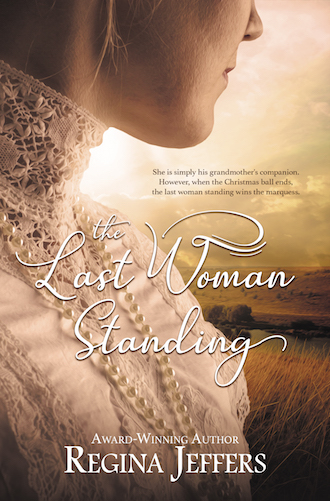 In my novella, “Last Woman Standing,” which is to be a part of a Christmas anthology, the heroine’s father is a horticulturalist. He has an unusual monkey flower species called the “Calico” in the book. In case you are interested, here is what the website

 In case you want to know more of the book
 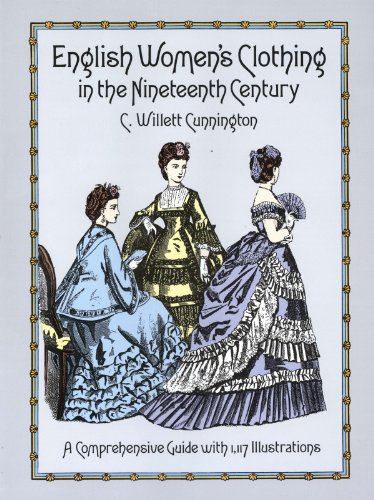 You might consider an investment in C. Willett Cunningham’s,
  I was recently looking for names and titles to use for characters in a list of extinct and abeyant peerages in an online copy of Debrett’s from the mid 1800s. Some of the titles in abeyance had been in that state since the 13th Century. It got me thinking as to whether the readers of Regency romances know the difference between dormant, extinct, or in abeyance as a plot point. Does it matter to the average reader whether the history is accurate or not?
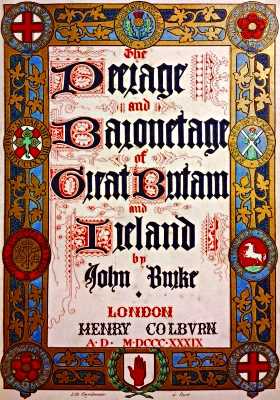
 I have a book called
  Goldsmiths, John Freame and Thomas Gould began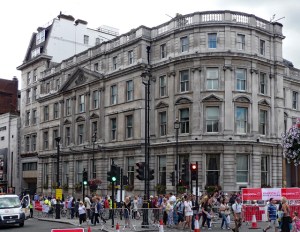
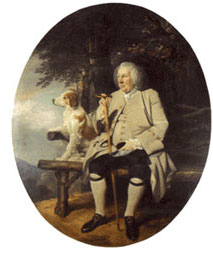 Drummonds now specializes in wealth and asset management. It is located at 49-50 Trafalgar Sqare, London, where it began its services. Reconstruction began on the building in 1877 and was completed in 1881. Some of Drummonds many clients over the years included His Majesty King George III, Alexander Pope, Benjamin Disraeli, Beau Brummel, Capability Brown and Thomas Gainsborough. “Both Coutts & Co. and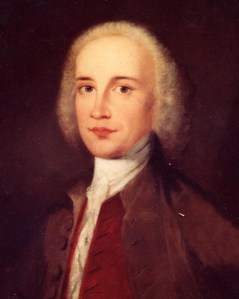
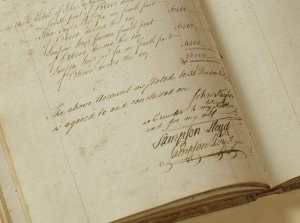
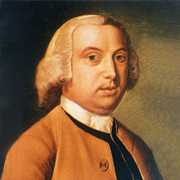
 Child & Co.was one of the oldest British bank, coming into existence in the 1580s. It originated in the goldsmith shop of the Wheeler family. Like, Drummond above, the goldsmithing business soon took a back seat to the banking business. William Wheeler’s widow eventually married another goldsmith, Robert Blanchard. Their shops merged under the sign of the “Marygold” on Fleet Street. Francis Child joined in Blanchard’s partnership. Child, eventually, inherited the whole business located at 1 Fleet Street, when he married Blanchard’s stepdaughter. This occurred in 1681. Incidentally Francis Child later became Lord Mayor of London. [
 Coutts & Co “was founded at the sign of the Three Crowns in London’s Strand in 1692 by John Campbell, a Scottish goldsmith. A fellow Scot and able banker, George Middleton, was taken into partnership in 1708 and assumed sole control upon Campbell’s death in 1712. Middleton later married Campbell’s daughter, Mary, and quickly attracted a large aristocratic clientele. Middleton was forced to stop payment temporarily during the 1720 financial crisis, but subsequently recovered and took into partnership his brother-in-law, George Campbell, in 1727 and his nephew, David Bruce, in 1744. By this time the business was located at 59 Strand and was focused exclusively on banking, having abandoned the original goldsmithing business which had involved the fashioning and sale of gold and silver wares. Middleton died in 1747 and Bruce in 1751, leaving George Campbell as sole proprietor.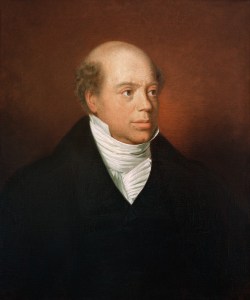
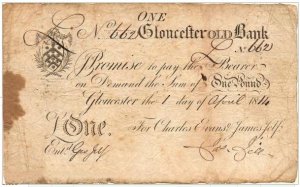
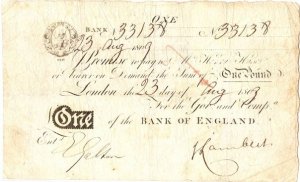
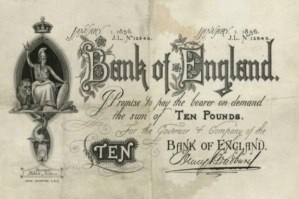
 In Jane Austen, Edward Knight & Chawton: Commerce and Community by Linda Slothouber she says that Edward Austen Knight’s primary London bank was Goslings Bank. He also used a bank founded by his brother Henry called Austen, Maunde & Austen, which went bankrupt and made him suffer a substantial loss.
 An acquired taste
 Mrs Norris is a poorer, older version of Fanny Dashwood
 Mary Crawford is a (seriously) insolent Elizabeth Bennet


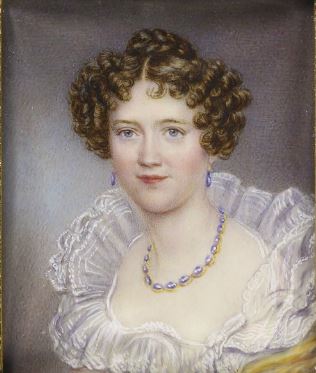


 Although in my story there is no real “word” or “diagnosis” to describe the effects of war, the early literature tells us that some sort of upheaval most assuredly did exist. So wether we call it melancholia, nostalgia, ester root, heimweh, malady du pays, soldier’s heart, neurasthenia, hysteria, compensation sickness, railway spine, shell shock, combat exhaustion, stress response syndrome, situational disorders, or PTSD, physical shock, accompanied by horrifying circumstances have haunted men since the beginning of time.
 Enjoy this excerpt from “Courting Lord Whitmire,” where our hero, Colonel Lord Andrew Whitmire, acts instinctively to save the life of the one woman who fascinates him, Miss Verity Coopersmith.


