A Young Man of Good Fortune, Mr. Charles Bingley ~ Guest Post by Nancy Lawrence

Nancy Lawrence is one of our newest members of Austen Authors, and I so glad she decided to bring her knowledge to our group site. Have a look at a “model tale” for Jane Austen’s “Mr. Bingley.” I am certain you will find it as fascinating as I did. Enjoy! 

“A young man of large fortune.” That’s how Mrs. Bennet described Charles Bingley when she learned he had leased a neighboring estate in Jane Austen’s classic novel, Pride and Prejudice.

As the mother of five unmarried daughters, Mrs. Bennet didn’t feel the need to know how Charles came into possession of such a fortune; her only concern was that he marry one of her daughters.

I, on the other hand, want to learn as much as I can about Charles Bingley’s background, because Charles makes an appearance in the JAFF story I’m currently writing. Piecing together Charles’ history (and that of his sisters) will give me insight into how—and why—he will take certain actions in my novel.

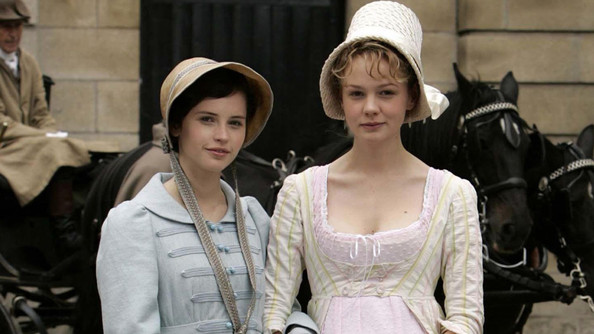
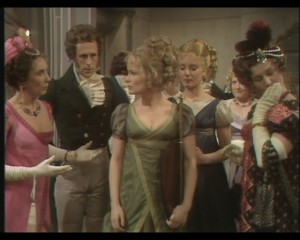
Charles Bingley with his sisters, Caroline and Luisa, as depicted in the 1995 BBC production of Pride and Prejudice.

Jane Austen gives us some hints about Charles’ origins. The Bingley fortune had been “acquired by trade.” Charles himself had a fortune of £100,000, which gave him an annual income of about £4,000. (In today’s money that’s £186,100 or $241,930 U.S. dollars.)

The Bingleys were “respectable.” They came “from the north of England,” an area of the country where the manufacture of textiles was a booming business at the time the story was written.

Whirring spools of threads and fibers in an old mill.

Given those hints, it’s probable that Charles, Luisa, and Caroline Bingley’s father owned one of the textile mills that sprang up across the north during the Industrial Revolution of the late 18th century. As children, they were most likely raised in a house that was either next door to, or very near, the mill their father owned.

Mule spinning machine at the Quarry Bank Mill.

In most mills of that era, the people who worked there were seen not as people, but as extensions of the machinery. They were given pitiful wages for 12 or 13 hour work days. They lived in unsanitary conditions and worked in unsafe environments. Poet William Blake described the mills of the 19th century as “satanic.”

But considering what we know about the Bingley siblings—particularly Charles, who was described as amiable, lively, unreserved, sensible, and good-humoured—it’s hard for me (looking through my 21st century lens) to imagine they were raised by a father capable of such draconian treatment of the people in his employ.

So I have to wonder . . .

What if, like Charles Bingley, the father had a disposition to be kind and friendly by nature?

What if, like Charles, the elder Mr. Bingley treated everyone respectfully, regardless of their rank or privilege?

And what if the elder Mr. Bingley was among a small group of enlightened mill owners? What if he treated his workers humanely and did what he could to set apart his mill from the dark, grim places we tend to associate with the Regency Era?

I can give you a real-life example of what I mean. In 1784 a man named Samuel Greg founded a mill not far from Manchester, England. He named it Quarry Bank Mill.

Quarry Bank Mill, near Manchester.

The great thing about Quarry Bank Mill is that it’s still in existence. Now owned by England’s National Trust, Quarry Bank Mill stands as a real-life working model of the kind of business I think Charles Bingley’s father would have run.

Originally powered by an enormous iron waterwheel, Quarry Bank Mill boasted five floors of cotton textile production. Those five floors were filled with hundreds of employees ginning and weaving cotton.

Quarry Bank Mill employees outside their homes, circa 1900.

Each of those employees needed a place to live, so, adjacent to the mill, Greg built a village of row-houses and cottages for his workers.

Workers homes at Quarry Bank Mill, as they appear today.

Many of his workers were children—orphans from workhouses and children who previously lived on the streets. He called them “apprentices,” and he built a communal home to house them.

Apprentice House at Quarry Bank Mill.

The children attended school and worked in the community garden, which provided fresh vegetables and fruit for their diets.

The kitchen at Apprentice House.

Greg also built churches for his workers and gave them Sundays off so they could attend services.

Norcliffe Chapel, one of the churches Samuel Greg built for Quarry Bank workers

And when his workers fell ill or were injured, Greg ensured he had a doctor on hand for their care.

Samuel Greg created a community and a way of life for his workers that was superior to any that could be had by farm workers and other laborers of the lower-class. Many of the apprentices who grew up working in his mill stayed on to work at Quarry Bank as adults.

This photo shows the immense size of the mill building. The light yellow building on the left is where the Greg family lived. The white building on the right is Apprentice House.

Mr. Greg operated his mill in a much more humane fashion than his competitors, and doing so earned him a handsome fortune. He built a respectable and well-appointed home next to the mill for his wife and children.

The Greg family home next to Quarry Bank Mill.

Since I first learned about Quarry Bank Mill, I’ve often wondered if Charles Bingley’s father earned his fortune in the same way. I wonder, too, if Charles and his sisters grew up in a fine house within a few yards of the workers’ cottages and mill works, just as Samuel Greg’s children did.

I think it’s possible that, coming into every-day contact with mill workers would explain how Charles learned to be gracious and respectful to everyone he met, regardless of their station in life.

And it would explain why his manner was relaxed and amiable, why he never uttered a critical word about anyone, and why his behavior at the Meryton Assembly earned everyone’s good opinion. As Jane Austen wrote:

There had been no formality, no stiffness; he had soon felt acquainted with all the room.

What do you think? Do you think it’s possible Charles Bingley’s kind disposition and good humor were traits he inherited from his father?

Had Charles elected to follow in his father’s footsteps, what kind of mill owner do you think he would have made?


Charles’ sisters Caroline and Luisa each inherited £20,000 from their father. Would you like to know how much that would be in today’s money?

Click here to visit The U.K.’s National Archives Currency Converter.

Then, select a year: Try 1810, which is close to the year P&P was first published (1813).

Enter the amount: 20,000

Click on the “Show Purchasing Power” button, and you’ll see how much their inheritance was worth in today’s money.

For Americans, don’t forget to multiply the converted amount by 1.3—that’s today’s average rate of exchange rate for British Pound to U.S. Dollar.

You can use this tool to calculate all financial sums mentioned in Jane Austen’s novels—from the Dashwood’s £500 a year to Georgiana Darcy’s £30,000 marriage portion.

Nancy-Lawrence-portfolio-pic-326x435.jpg Meet Nancy Lawrence: 

Nancy Lawrence writes traditional Regency romances, where the heroes are gentlemen, the heroines are ladies, and there’s always a fancy-dress ball to attend. Nancy lives with her family in Aurora, Colorado, “the best city in the world if you can’t live in Bath, England.” 

You can learn more about Nancy, her books, and her writing progress at:
http://NancyLawrenceRegency.com

And follow Nancy on social media at: https://austenauthors.net/nancy-lawrence/
http://twitter.com/NLawrenceAuthor 
http://www.facebook.com/nancy.lawrence.712

A few of Nancy’s books…

51FBlOnXmkL._SY346_.jpg 51fM9bS9ADL._SY346_.jpg 512M7tDykPL._SY346_.jpg 51I6NIsqTOL._SY346_.jpg


Posted in Austen Authors, British history, commerce, family, Georgian England, Georgian Era, Guest Post, Inheritance, Jane Austen, Pride and Prejudice, Vagary | Tagged , , , , , , , , | 6 Comments

The Early Origins of the Novel

In the mid to late 1700s, the novel, as a means of literary expression developed to an art form. In many of the Regency-based romances that I read, it speaks of the “novel” being something females might read, rather than a male. However, I doubt that many of my contemporary writer understand how “debased” those early tales were. Most of the stories dealt with fornication, rape, incest, adultery, seduction, polygamy, and voyeurism. Some of the early novels were Defoe’s Moll Flanders (1722), Richardson’s Clarrisa, Fielding’s Tom Jones, and Sterne’s Tristram Shandy.

One of the greatest writers of all times, Jane Austen, read Richardson quite often. According to her nephew, James-Edward Austen-Leigh, her knowledge of Samuel Richardson “was such as no one is likely again to acquire . . . Every circumstance narrated in Sir Charles Grandison, all that was said or done in the cedar parlour, was familiar to her; and the wedding days of [characters like] Lady L. and Lady G. were as well remembered as if they had been living friends.” But what was the context of Richardson’s writing? 

pamela_set11.jpgLaurel Ann at Austenprose tells us: “Richardson is a literary hero of mine, too, and I always think it’s sad that so few people read him nowadays. Not only because Clarissa, in particular, is one of the great masterpieces of European literature, but because it’s only by reading Richardson that you really understand the tradition Austen was writing in, and where she got some of the inspiration for her books. Pamela is a novel-in-letters, written by a young serving-maid to her parents, in which she describes her master’s attempts to seduce her. But as the subtitle (‘Virtue Rewarded’) suggests, all’s well that ends with a wedding. It sounds pretty standard stuff now, but at the time it was a publishing sensation.  There were 5 editions by the end of 1741, with an estimated 20,000 copies sold. It was also the first book to have what we would now call a ‘promotional campaign’. As a printer himself, Richardson employed all the tricks of the book-trade, including newspaper leaders and celebrity endorsement, and may even have encouraged the publication of a pamphlet that denounced the novel as pornographic, which certainly had a predictably healthy effect on sales! But if it was Pamela that was ground-breaking, Richardson’s next novel, Clarissa, is the one that really established a new kind of prose fiction in English. This, like all Richardson’s books, is an epistolary novel, and it’s worth remembering that when Austen first put pen to paper seriously herself, she chose exactly this form – first in Lady Susan, and then in Elinor & Marianne, the first version of Sense & SensibilityClarissa is the story of a young woman who’s tricked away from her family by the libertine, Robert Lovelace, and eventually raped. The story evolves through two parallel correspondences – Clarissa’s with her friend Anna, and Lovelace’s with his confidant Belford. The depth and subtlety of the psychological characterization is extraordinary, and you can see immediately why Henry Austen says his sister was such an admirer of ‘Richardson’s power of creating, and preserving, the consistency of his characters.'”

JnZmxvYTrqAXGAvqo5AqbzKURU_x-slu_640x360_53945923852.jpg 

Do you recall the scene in Becoming Jane, a biographical portrait of a pre-fame Jane Austen (portrayed by Anne Hathaway) and her romance with a young Irishman (played by James Mcavoy), where Tom Lefroy’s character tempts Jane by suggesting that she read Tom Jones? His suggestion is more than one of presenting a young lady with a piece of literary greatness. It is part of his romantic “seduction” of Miss Jane Austen. 

An awareness of sexuality was never far from the surface in these early novels. One of the major forces of the time was John Cleland, an administrator for the East India Company. Reportedly Cleland made a bet that he could write the “dirtiest book in the English language” without using ANY “dirty words.” His Memoirs of a Woman of Pleasure (better known as Fanny Hill) provided readers with the story of a country girl who experiences lesbianism, group sex, masturbation, flagellation, etc. For his efforts, Cleland was arraigned before the Privy Council. The Earl of Granville, the president of the Council, suggested that Cleland be awarded a pension of £100 a year, with the guarantee that he would not repeat the exercise. Cleland foolishly sold the copyright of the book to a publisher for a mere £20. The publisher raked in more than £10,000 in book sells. 

John Wilkes, a strong political activist, who spoke out regularly against George III and who supported the American colonies’ push for independence, is said to have written Essay on Woman, a parody of Alexander Pope’s Essay on Man. Whether Wilkes actually penned the piece is debatable, but it was the perfect instrument for his political opponents to use against him. It did not help Wilkes’s defense that he was reportedly a member of the Medmenham monks, or Hell-Fire Club, a secret society known to take pleasure in sexual activities. According to The Montague Millennium, “The Hell-Fire Club was sort of a cross between the Dead Poets Society and a risque Playboy club. John Montagu (Lord Sandwich) was a principal, and apparently Lady Mary Wortley Montagu attended. The club formally styled itself the Monks of Medmenham, and originally occupied the caves beneath the ancient Abbey of Medmenham. Its members could reach the Abbey by boat from the river at night and thus not be bothered by `paparazzi’.”

If Wilkes was a member of this group, I find it odd that Lord Sandwich was the one who read the scandalous poem to the House of Lords, which termed the poem as “a gross profanation of many parts of the Holy Scriptures.” Before the House of Lords could have Wilkes arrested, the man escaped to America, never to stand in answer to the charges against him. In absentia, he was fined £300.

images.jpgAccording to Nussbaum, Martha C., and Alison L. Lacroix, eds., of Subversion and Sympathy: Gender, Law and the British Novel. [New York, NY: Oxford University Press, 2013, pages 78-79], “For more than a century. . . English law yielded nothing at all definitive about the concept of literary obscenity. There was no definition of the concept, no rationale for its regulation, and only sporadic skirmishes over the issue. The historian Peter Wagner has aptly characterized the “Age of Enlightenment” as the “Age of Eros.” The proliferation of writing about sex in the eighteenth century led to ‘a sort of downward osmosis’ through which an upper-class ‘libertine philosophy’ was, at least, for a time, dispersed and then absorbed by a larger culture. By the 1780s, when the United States was contemplating its Constitution, London was awash with all sorts of sexually explicit material, including lewd novels, racy poems, bawdy songs, erotic prints, and licentious newspapers and magazines. Throughout this era, neither influential citizens or public authorities made any serious effort ‘to curb this sexual Eden,’ though occasional prosecutions were brought when individual libel was involved or ‘when there were personal axes to grind, as in the prosecution of Wilkes. It was against this background that the United States enacted the First Amendment.

Posted in American History, book excerpts, British history, Georgian Era, Great Britain, history, Jane Austen, publishing, reading habits, writing | Tagged , , , , , , | 3 Comments

A Marriage of Convenience as a Plot Point in Jane Austen’s Novels

cm-capture-3

Mr. and Mrs. Collins austenonly.com

What hope was there for the dowerless daughters of the middle class during Jane Austen’s lifetime? Such is a topic Austen explored repeatedly in her novels. Elizabeth and Jane Bennet sought men of a like mind. The Dashwood sisters found their choices limited by their financial situation. Fanny Harville and Captain Benwick could not marry until he earned his future. General Tilney drove Catherine Morland from his home because of the lady’s lack of funds. Charlotte Lucas accepted Mr. Collins as her last opportunity for a respectable match. The intricacies and tedium of high society, particularly of partner selection, and the conflicts of marriage for love and marriage for property are repeated themes.

200_sMarriage provided women with financial security. Henry Tilney in Northanger Abbey explains, “… in both [marriage and a country dance], man has the advantage of choice, woman only the power of refusal: that in both, it is an engagement between man and woman, formed for the advantage of each.” Women of Austen’s gentry class had no legal identity. No matter how clever the woman might be, finding a husband was the only option. A woman could not buy property or write a will without her husband’s approval. If a woman was fortunate, she would bring to her marriage a settlement – money secured for her when she came of age – usually an inheritance from her mother. The oldest son or male heir received the family estate, and the unmarried or widowed females lived on his kindness.

arts-graphics-2008_1182989aThe ladies of Sense and Sensibility have this reality thrust upon them when Uncle Dashwood changes his will and leaves Norland to his grandnephew. In Uncle Dashwood’s thinking, this change will keep Norland in the Dashwood family. However, the four Dashwood ladies suddenly find themselves living in a modest cottage with an income of £500 annually. As such, they have no occasion for visits to London unless someone else assumes the expenses. Their social circle shrinks, and the opportunities to meet eligible suitors becomes nearly non-existent. With dowries of £1000 each, the Dashwood sisters are not likely to attract a man who will improve their lots.

Jane Austen, herself, lived quite modestly. The Austens lived frugally among the country gentry. The Austen sisters were well educated by the standards of the day, but without chances for dowries, Jane and Cassandra possessed limited prospects. Jane met a Mr. Blackall the year Cassandra lost her Mr. Fowle. In a letter, Blackall expressed to Mrs. Lefroy a desire to know Jane better; yet, he confided, “But at present I cannot indulge any expectation of it.” To which, Jane Austen responded, “This is rational enough. There is less love and more sense in it than sometimes appeared before, and I am very well satisfied.” Imperfect opportunities were Jane Austen’s reality. In 1802, Jane Austen accepted an offer of marriage from Harris Bigg-Wither. With this marriage, Jane would have become the mistress of Manydown.

200px-CassandraAusten-JaneAusten(c.1810)_hiresYet, despite her affection for the family, Austen could not deceive Bigg-Wither. The following morning, she refused the man’s proposal. Whether she thought to some day find another or whether Austen accepted the fact that her refusal doomed her to a life as a spinster, we shall never know. In the “limited” world in which Jane Austen lived, she could not have known her eventual influence on the literary canon.

Austen held personal knowledge of young women seeking husbands in one of the British colonies. Reverend Austen’s sister, Philadelphia, traveled to India in 1752, where she married an English surgeon Tysoe Hancock, a man twenty years her senior. When the Hancocks returned to England a decade later, Reverend Austen traveled to London to greet his sister. However, Philadelphia and Tysoe were not to live “happily ever after.” Unable to support his family in proper English style, Tysoe returned to India to make his living. He never saw his wife and child again. Despite its tragic ending, this “marriage” secured Philadelphia’s future and the lady’s place in Society. Only marriage could offer a woman respectability.

In Jane Austen for Dummies (page 134), Joan Klingel Ray breaks down the financial prospects of the Dashwood sisters. Converting the £500 to a modern equivalent, Ray comes out with a figure of $46,875. For the gentry, supporting four women, two maids, a man servant, paying rent, buying clothes, food, coal, etc., that sum would have meant a poor existence. I find in reading Sense and Sensibility that I am often disappointed with the eventual choices of the Dashwood sisters. Edward Ferras and Colonel Brandon have less of the “glitz and the glamour” that my innate Cinderella syndrome requires in a love match. However, if any affection did exist between the couples, then Marianne and Elinor, under the circumstances and the times, made brilliant matches.

Posted in customs and tradiitons, dancing, Jane Austen, Living in the Regency, Living in the UK, marriage customs, Regency era, Uncategorized | Tagged , , , , , , , , | 5 Comments

Ireland and the Irish in Jane Austen Novels, a Guest Post from Eliza Shearer

This post originally appeared on Austen Authors on 16 June 2018. Enjoy!

A couple of weekends ago I was fortunate enough to spend a few days in Dublin. I had visited the capital of Ireland on several occasions, but for some reason – possibly the beautiful weather and clear blue skies – this time I paid a great deal of attention to its Georgian architecture. The fluted Greek columns, the refined and delicately moulded cornices, the elegant windows are just outstanding, and such a particular feature of the city that the Dublin Regency doors alone are famous enough to warrant posters and fridge magnets.

A Perfect Regency Town

In Dublin, the spirit of the Regency is everywhere, and no wonder. It was a time of economic bounty for a privileged few, with money from trade pouring into the city, and the local elite opting to expand and beautify their capital rather than eventually have to send it to London. Walking in the wide cobbled streets, contemplating the fine ironwork and majestic bow windows, I inevitably felt transported to Jane Austen’s times.

There are traces of Ireland in Jane Austen’s novels. At the time, it was the second biggest British city outside London, after the 1800 Acts of the Union created the United Kingdom of Great Britain and Ireland, so it is no wonder that the country and its people and customs make several appearances. In most cases, the mentions are in passing, but they give a fascinating insight into the way English regarded their neighbours across the Irish sea.

Music, Landscapes and Craic

The Irish have a reputation for being musically inclined, and Irish music makes several appearances in Jane Austen’s novels. In Pride and Prejudice, Mary Bennet, to the mortification of her sister Elisabeth, plays Irish airs at the piano during a gathering at Sir William Lucas’. In Emma, Jane Fairfax’s new pianoforte, of mysterious provenance, comes with a new set of Irish melodies, which were often played during her Weymouth stay, when she becomes secretly engaged to Frank Churchill.

Moreover, Jane’s skills at the pianoforte are much admired by Mr Dixon, the Irishman courting her particular friend Miss Campbell, who often asks both ladies to play together. It is an unusual request, and one that Frank Churchill suggests is proof of Jane’s proficiency, for Dixon is “a very musical man, and in love with another woman”. (Emma, needless to say, thinks otherwise).

Ireland is also known for its breathtaking scenery. No surprise, then, that Mr Dixon often talks about the beauty of his home country when talking to Miss Campbell, with Jane often also present. The wish to see her parents and best friend enjoy the Irish countryside are one of the reasons why the lady, once married and settled in Ireland, insists on their visiting her. And she must be onto something, for once the Campbells are there, they postpone their return, not once, but twice, spending the best part of half a year at their son-in-law’s seat.

No mention of the Irish is complete without talking about their gift for friendly, witty and entertaining conversation, and Jane Austen seems to agree. In Mansfield Park, when the party of young people accompanied by Mrs Norris travel to Sotherton, Maria Bertram is bitter that it is her sister Julia and not her the lucky lady to accompany Mr Crawford in the barouche-box. Maria observes to him later that they seemed to laugh a great deal, and Mr Crawford attributes it to the fact that he “was relating to her some ridiculous stories of an old Irish groom of (his) uncle’s”.

The Irish Charm

In her personal life, Jane Austen indeed met several Irish individuals, but as all Janeites will know, one, in particular, stood out from the rest. Tom Lefroy was a nephew of Mrs Lefroy, an older friend of Jane’s. Tom and Jane appeared to have courted, or at least have engaged in some serious flirting, for the best part of a year, and she refers to him as “my Irish friend” in a letter to Cassandra.

Their love, sadly, was not to be. Tom was ambitious and had a large number of siblings to support, so the logical step for him was to marry a wealthy woman, which he went on to do. Some scholars say that Jane was brokenhearted, others that her pragmatic approach made the disappointment much easier to bear. In any case, she certainly appreciated the charm of the young Irishman.

Many years later, when penning Persuasion, perhaps she thought of Tom when writing the concert scene that takes place in the Octagon Room in Bath, with Anne Elliot and Captain Wentworth as protagonists. Anne overhears her father remark to his cousin, Lady Dalrymple, that the Captain is “a very well-looking man”. Lady Dalrymple who also happens to be a member of the Irish nobility, could not agree more:

“A very fine young man indeed!” said Lady Dalrymple. “More air than one often sees in Bath. Irish, I dare say.”

Persuasion, Chaapter 20

Whether the sentence was intended as a secret message for Jane’s former love, we will never know.


51ZCMhjyFnL.jpg If you would like to immerse yourself in Bath and meet Anne Elliot, Lady Dalrymple and many other well-loved Austen characters in the company of Georgiana Darcy, check out Miss Darcy’s Beaux, a Persuasion, Mansfield Park and Pride and Prejudice Continuation.

A Jane Austen variation featuring Georgiana Darcy, Lady Catherine de Bourgh and many other characters from Pride and Prejudice, Mansfield Park and Persuasion.

Fitzwilliam Darcy’s beloved sister Georgiana is now a woman of twenty. After living in the enclosed safety of Pemberley for years, she is sent to London for the season with Lady Catherine de Bourgh as her chaperone. Lady Catherine is determined that her niece shall make a splendid match. But will Georgiana allow her domineering aunt to decide for her? Or will she do as her brother did, and marry for love? 

What readers are saying about Miss Darcy’s Beaux:

“… a wonderful debut…”

“… a journey of discovery for Georgiana to find herself and what really matters in life…” 

“There is deception, mystery, jealousy, backstabbing, romance and true love.” 

“… the sort of story that makes you care for the characters; the kind of book that stays with you long after you finish reading it.” 

“I loved how the story includes appearances by characters from three different Jane Austen novels.”

“Eliza Shearer’s delightful Pride and Prejudice sequel is packed with surprises for the fans.” 

“Romantic, sensitive and faithful to the spirit of Jane Austen’s work.”

ElizaShearer-283x435.jpgMeet Eliza Shearer: 

Posted in Austen Authors, book release, British history, eBooks, Georgian England, Georgian Era, Guest Post, Jane Austen, Living in the Regency, Persuasion, Pride and Prejudice, publishing, Regency era, Regency romance, Vagary, writing | Tagged , , , , , , , , , | 1 Comment

Wilkin & Sons, Jam Making Extraordinaire

Arthur Charles Wilkin took over his family farm, located in Tiptree, Essex, England,  in his late 20s. The family had owned the farm since the early 1700s. Arthur had a vision for the farm, which was not producing as well as it could. He was determined to specialize in growing fruits to market to the London jam-makers of the mid 1800s. Originally, he thought to ship his fruit via the Kelvedon and Tollesbury Light Railway, which operated in Essex at that time (and did so until 1962). But reliable transportation of his fragile product forced Wilkin into the jam making business himself. He was introduced to an Australian merchant who agreed to take as much strawberry jam as Wilkin could produce. This Australian did not want the jam that was being produced in London at the time. He wanted jam that was glucose free, as well as free of preservatives and added colouring. It was decided to call this new product “conserves” to distinguish it as a higher-quality product. Moreover, the name Britannia Fruit Preserving Company was chosen because that name would be more marketable in Australia than would the Wilkin & Sons Limited. Since 1885, the Wilkin family has made some of the finest preserves, marmalades, etc., marketed to the public. William Gladstone, the British Prime Minister from 1868 to 1894 praised Wilkin’s product.

Wilkin used his wife’s recipe and her kitchen to make the first jam. Three boiling pots and tractor engines were required to make that jam. Mechanisation came about in the 1890s. Nowadays, the company produces 90 different conserves, chutneys, honeys, marmalades, and preserves. The Tiptree trademark was set in place in 1905, when the company became Wikin and Sons, Ltd. 

download

Arthur Charles Wilkin

 As the business grew, Wilkin & Sons leased other farms to meet the demand for the company’s product. By 1900, 100 tons of fruit was needed to make jams and preserves. “By 1906, the company owned 800 acres (320 ha) of land on farms in Tiptree, Tollesbury, and Goldhanger, producing 300 tons of fruit per year, and feeding a factory capable at peak production of making 10 tons of strawberry jam per day. The company has held a Royal Warrant for preserves and marmalades continuously since 1911.” (History Timeline)

81tkqaX3KeL._SL1500_.jpg

91s4wf+dmrL._SL1500_.jpg0499019.jpg

“With the need for a pound of sugar to a pound of fruit to produce 2 lb of preserves, production was halted during World War I due to a lack of essential supplies. But by 1922, and now owning 1,000 acres (400 ha) of farmland across eight farms, the company was creating new record outputs of fruit and preserves. An integrated production facility, the company also owned 100 houses, the village’s windmill and blacksmith’s forge, the Factory Club and the freehold of the Salvation Army hall. During World War II, the company and factory came under the control of the Ministry of Food, and kept producing its preserves alongside other essential food products. In 2010, the company celebrated its 125th anniversary, highlighted by a visit from Her Majesty Elizabeth II.” (Wilkin & Sons)

The company also owns a chain of tea rooms in Essex, as well as a specialty bakery and patisserie.

Resources:

“History Timeline: 1885 – The First Jam,” Tiptree https://www.tiptree.com/index.php/ourcompany/history-timeline.html

“No Additives or Secrets, Just Fruity Jams,” The New York Times https://www.nytimes.com/1985/07/03/garden/no-additives-or-secrets-just-fruity-jams.html

Wilin & Sons Celebrate Their 125th Anniversary, Essex Life http://www.essexlifemag.co.uk/people/wilkin-sons-celebrate-their-125th-anniversary-on-25th-june-1-1638654

Posted in British history, business, commerce, customs and tradiitons, England | Tagged , , , , , , , , | Comments Off on Wilkin & Sons, Jam Making Extraordinaire

A Closer Look at MR. DARCY’S BRIDEs: A Pride and Prejudice Vagary

In my book, MR. DARCY’s BRIDEs, by mistake Elizabeth disrupts Mr. Darcy’s marriage to his cousin, Anne De Bourgh. Our daring heroine is in disguise (NOTE: I drape her with a heavy veil attached to her bonnet, which would not be likely in the Regency era, but it was not forbidden. No one can say for certain; therefore, I took some “liberty” in this case because it made a nice plot point.) and does not realize she is at the wrong wedding until it is too late. Afterwards, the legality of the wedding in which she participated with Darcy comes into place. If it is legal, in the Regency, that meant FOREVER unless one wished to seek a annulment. But, in truth, that legal statute was not so easily achieved.

So how did one go about earning an annulment? Annulments were only granted if (1) one or both of the couple were not of age, (2) were too closely related (Remember first cousins could marry, but a man could not marry the sister of his late wife, so “related” was not always as clear cut as we might think in modern times.), (3) the gentleman was impotent at the time of marriage (hard to prove unless the marriage was consummated), (4) one of the pair had committed fraud, (5) one or both could be considered insane at the time of marriage, (6) or one of the pair was already married to another. Even if one of the couple was not of age, if they did not stop living together when they became of age (12 for women and 14 for men), then they were still considered married.

I think it’s worth mentioning that the fraud, force, or lunacy had to have occurred during the wedding ceremony (or before, if it pertained to the permission granted to a minor), NOT after the couple were lawfully wed. One could not claim coercion after he had pronounced his vows. Even wealthy peers were stuck with a spouse if problems arose only after the ceremony. For example, both the 11th Duke of Norfolk and the 4th Earl of Sandwich were stuck in unfortunate marriages when their wives went insane. In the Duke of Norfolk’s case, his wife was locked up before giving him an heir, so that the dukedom eventually passed to his cousin.

In the Regency period, fraud as a means to voiding the marriage rested in the question of parental permission. The fraud was not the type where a person misrepresented himself by saying he owned property that he did not own or held a title that he did not possess. Lying about circumstances was not fraudBeing drunk at the wedding was not a cause as long as one knew what he was doing. And insanity had to previous to the wedding–simplemindedness came under that category as well. 

Also the idea of forcing someone into a marriage changed over the 19th century. At first, force was considered physical force only as more than a reasonable man could withstand. Over the period of time, the courts acknowledged that women were weaker and less physical force was necessary to overpower them. One had to run, literally, away or protest at the ceremony or at the signing of the register or in some other way express one’s denial of acceptance to void a marriage. Witnesses to one’s refusal were required as proof. The court did not take into consideration such things as a threat as being “forced” into a marriage.

Marriages could be annulled if the spouse was a previous in-law or if one was impotent. I know you have seen in numerous romance novels where the man and woman decide not to consummate their marriage so they can later get an annulment and marry another, but non-consummation was not grounds for an annulment. Consummation could strengthen a claim of marriage in Scotland and could throw doubt over a claim of being forced into marriage, but non-consummation was not grounds. The church always assumed that the couple would get around to it sooner or later if they were able.

Impotence and real frigidity, on the other hand, were grounds as was a physical deformity of the necessary parts. An impenetrable hymen was also grounds, though that could be fixed by a surgeon.

Invalid marriages were those by minors by license without proper permission or the situation involved bigamy.

English law did not require consummation. Scottish law used it as proof in clandestine marriages, but only if the other forms were not followed. The Consistory court of the Church of England handled annulments. This was located in London. The Courts within Doctors Commons were very much associated in the public mind with the making and unmaking of marriage from the 17th Century forward. Gradually the London Consistory Court assumed a virtual monopoly in matrimonial suits and became the most important matrimonial court for the whole of the country. It became the court of first instance for most matrimonial cases.

MR. DARCY’S BRIDEs…

I much prefer the sharpest criticism of a single intelligent man to the thoughtless approval of the masses.

ELIZABETH BENNET is determined that she will put a stop to her mother’s plans to marry off the eldest Bennet daughter to Mr. Collins, the Longbourn heir, but a man that Mr. Bennet considers an annoying dimwit. Hence, Elizabeth disguises herself as Jane and repeats her vows to the supercilious rector as if she is her sister, thereby voiding the nuptials and saving Jane from a life of drudgery. Yet, even the “best laid plans” can often go awry.

FITZWILLIAM DARCY is desperate to find a woman who will assist him in leading his sister back to Society after Georgiana’s failed elopement with Darcy’s old enemy George Wickham. He is so desperate that he agrees to Lady Catherine De Bourgh’s suggestion that Darcy marry her ladyship’s “sickly” daughter Anne. Unfortunately, as he waits for his bride to join him at the altar, he realizes he has made a terrible error in judgement, but there is no means to right the wrong without ruining his cousin’s reputation. Yet, even as he weighs his options, the touch of “Anne’s” hand upon his sends an unusual “zing” of awareness shooting up Darcy’s arm. It is only when he realizes the “zing” is arrives at the hand of a stranger, who has disrupted his nuptials, that he breathes both a sigh of relief and a groan of frustration, for the question remains: Is Darcy’s marriage to the woman legal?

What if Fitzwilliam Darcy and Elizabeth Bennet met under different circumstances than those we know from Jane Austen’s classic tale: Circumstances that did not include the voices of vanity and pride and prejudice and doubt that we find in the original story? Their road to happily ever after may not, even then, be an easy one, but with the expectations of others removed from their relationship, can they learn to trust each other long enough to carve out a path to true happiness?

Excerpt from chapter 1 of MR. DARCY’S BRIDEs…

Elizabeth knew she would not be able to see much from behind the veil draping the curve of her bonnet, and she held no doubt that her head would itch from the scraps of a cut up wig she had attached to the straw bonnet. Before she left her childhood home, she had discovered the wig in the attic at Longbourn. Mr. Hill, her father’s man servant, seemed to think it had belonged to her paternal grandfather, a man of “peculiar tendencies,” Mr. Hill had said with diplomacy.

“It does not matter if the wig were nicer,” she had assured her sister. “It will be enough to provide the impression that my hair is blonde, and the veil will cover my face until it is too late for Mama to realize it is not you who has married Mr. Collins. The morning shadows in the church will do the rest. If we are fortunate, it will be cloudy on the day of the ceremony.”

“Are you certain this is best?” Jane pleaded with tears forming in her eyes. “As much as I have no desire to marry the man, neither do I wish you to be attached to Papa’s cousin.”

The fact that Jane had participated willingly in this charade spoke a great deal of her sister’s dismay at their mother’s ultimatum that Jane marry Mr. Bennet’s heir, Mr. Collins, a man none of them knew by countenance.

“I am certain.” Elizabeth squeezed the back of Jane’s hand to comfort her sister’s growing anxiousness. “Even if Mr. Collins would suddenly switch his promise to marry one of the Bennet sisters from you to me, grounds for an annulment would still remain, for I shall take my vows as Jane Bennet. The marriage will be void. You must simply escape to Aunt Gardiner’s relations in Derbyshire. I will stall as long as possible so you may be several hours upon the road before anyone discovers our deception. As only you and I and Aunt Gardiner know of your whereabouts, you should be safe until Mama’s vengeance has wained.”

“More likely, the devil’s disciples will be wearing nothing but their unmentionables before our mother’s ire dissipates.”

Elizabeth agreed, but she would not give voice to her concerns. Jane’s agreement to escape to the northern shires was uncharacteristic enough. “The only thing that worries me is that you will travel so far and alone.”

“I assure you, in these circumstances, I can be as strong as is required, but do not fret of my traveling unchaperoned, for Aunt Gardiner will send a maid with me. But what of Papa? How shall Mr. Bennet react when he discovers what we have done to thwart Mama’s plans?”

After his horse had thrown him during a thunder storm, their father had experienced a long bout of consumption, which had turned into lung fever. Such was the reason Mrs. Bennet had decided that Jane must marry their father’s heir presumptive in order to save the family. It was almost as if their mother had decided that Mr. Bennet would leave them at the mercy of the “odious” Mr. Collins, as Mrs. Bennet was fond of calling the man. As Jane was considered one of the prettiest ladies in the Hertfordshire, their mother had thought that Mr. Collins would accept a comely wife immediately. Their mother assumed that if Mr. Bennet passed from his afflictions, Collins could drive the Bennet family from Longbourn. Therefore, Mrs. Bennet meant to secure Mr. Collins’s patronage by marrying off her eldest daughter to the man.

“Papa is improving, but he is not yet well enough to bring a halt to Mama’s manipulations, and, in truth, I feared speaking to him of this matter. He would insist upon leaving his bed before Doctor French says it is safe. However, I have recruited Mary to watch over him, and I have made some bit of explanation to our sister. She has promised her silence unless we meet difficulties.”

“You realize our mother will be enraged by our actions?” Jane asked in tentative tones.

“I shall be viewed as the architect of this plan,” Elizabeth said with a shrug of resignation. She often knew her mother’s disfavor. Fanny Bennet rarely had a kind word for her second daughter. “But better Mrs. Bennet’s temper than a lifetime of drudgery with Mr. Collins in a cottage in Kent, bowing and scraping to know the pleasure of his benefactor. Papa calls the man an obvious twit. I am not certain Mr. Bennet has ever met the man, but Papa considered Mr. Collins’s father a candidate for Bedlam. Naturally, he would transfer his opinion of the late Mr. Collins to his son.”

Posted in Austen Authors, British history, Church of England, eBooks, Jane Austen, Living in the Regency, marriage, marriage customs, marriage licenses, Pride and Prejudice, Regency era, Regency romance, Scotland, Vagary | Tagged , , , , , , , , , | 25 Comments

Pride and Prejudice Locations, a Guest Post from Catherine Bilson

On May 24, 2018, Catherine Bilson became one of our new authors on the Austen Authors’ blog. I thought I would share her debut post here, mainly because of the lovely images she includes and because of her connections to Jane Austen. Enjoy! 

I’m extremely honoured to be invited to join the Austen Authors, and dithered for ages on what to write in my first blog post. In the end, I decided to go with one of my personal connections to Jane Austen’s works; the fact that I lived, for a while in the 90’s, in Hertfordshire.

I lived in one of the new parts of Stevenage, a town conceived and designed as a ‘dormitory town’ to accommodate London commuters, and rather soulless in its modernity and plethora of roundabouts. However, Stevenage was also possessed of an Old Town, which most certainly existed in Jane Austen’s day. The 1801 Census recorded Stevenage as having 1,430 residents, and its position on the Great North Road (now the A1(M)) had twenty or more stage coaches passing through each day. The Bowling Green was the most popular meeting place for people in Stevenage for over 800 years, where people came to hear proclamations, to celebrate, or to remember the dead. Famous writer and MP Samuel Pepys visited to play bowls in 1664, one of the many times that he visited Stevenage.

In 1861, Charles Dickens visited Stevenage and wrote “The village street was like most other village streets: wide for its height, silent for its size, and drowsy in the dullest degree. The quietest little dwellings with the largest of window-shutters to shut up nothing as if it were the Mint or the Bank of England.” Which, at least in the drowsiness, sounds very much as I have always imagined Meryton.

What fixed Stevenage Old Town as Meryton in my headcanon, however, was its proximity to the gorgeous Knebworth House.


Who could possibly look at Knebworth and not imagine it as Netherfield, Charles Bingley and Mr Darcy cantering across that expanse of green lawn on their horses? Described by Sir Henry Chauncy in 1700 as ‘a large pile of brick with a fair quadrangle in the middle of it, seated upon a dry hill, in a fair large park, stocked with the best deer in the country, excellent timber and well wooded and from thence you may behold a most lovely prospect to the East.’

Really, those words could have been said by Mrs Bennet herself, waxing lyrical about the house of which she hoped her eldest daughter would one day be mistress.

If you watched the film Victoria & Abdul you would have seen some of the rooms from Knebworth House. It doubled as Balmoral and bits of Windsor in the film, and has also been filmed as Balmoral in the Netflix series The Crown.

Just imagine that awkward meeting between Darcy and Lizzy in that library!

However, Knebworth House didn’t look quite like the picture above in the early 1800s. It was ‘improved’ and vastly enlarged in the Victorian era. I did find a pencil sketch c. 1829 which still shows it as a spectacular house of which any lady would be delighted to find herself mistress. Perhaps Jane and Bingley were even the ‘improvers’…

So, we have Meryton and Netherfield; what about Longbourn?

Well, it’s a touch further from Knebworth than I’d care to walk at 6.7 miles (according to Google Maps) but the 14th century Hitchin Priory certainly looks the part, both inside and out. (It’s now a lovely country house hotel and conference venue).

Did Jane Austen use these places as inspiration for her fictional locations in Hertfordshire? Unless new notes or letters come to light, we will probably never know. In my writings, however, I’ll always have these beautiful houses in mind when writing Netherfield or Longbourn, and I certainly used Old Town Stevenage’s location in A Christmas Miracle At Longbourn when calculating the time it would take to drive to Hatfield or ride there from London. A Christmas Miracle At Longbourn was released in late May, and I do hope my fellow Austen devotees will enjoy the read! Exclusive to Amazon, it’s available in Kindle Unlimited.

Do you have any favourite English country houses in mind which could double as the locations in Austen novels? Of course, Chatsworth will always be Pemberley to most of us (though Lyme Park was a beautiful stand-in in the 1995 TV version), but I’d love to hear if you have any alternatives for Longbourn, Netherfield, Rosings, Northanger Abbey, Hartfield, Donwell, Mansfield Park or Sanditon!

chatsworth-house.jpg

Posted in British history, buildings and structures, Guest Post, Jane Austen, Living in the Regency, Pride and Prejudice, Regency romance, Vagary, Victorian era | Tagged , , , , , , , , , , , | Comments Off on Pride and Prejudice Locations, a Guest Post from Catherine Bilson

Very “Real” Estate ~ Edwinstowe, Nottinghamshire ~ Church for Robin Hood and Maid Marian’s Wedding???

220px-Saint_King_Edwin_of_Northumbria

https://en.wikipedia.org/wiki/Edwin_of_Northumbria ~ St. Edwin of Northumbria depiction at St Mary, Sledmere, Yorkshire

 In 633 A. D., King Edwin of Northumbria (King of Deira and Bernicia), a Saxon, whose kingdom at the time stretched from the River Trent, which marks the boundary between the Midlands and the north of England, to Edinburgh (Edwin’s borough), marched south to fight the pagan King Penda of Mercia. Edwin had been converted to Christianity by his wife Princess Ethelburga of Kent, which was the first Christian kingdom in England. Unfortunately, Edwin was killed in the battle, which took place near a small hamlet known as Cuckney (in Sherwood Forest), then known at Hatfield.

               To prevent his body being mutilated by his enemies, his friends buried King Edwin in a clearing of the forest. They intended to see to a proper burial once the war knew success. Edwin’s body was to be taken to Whitby Abbey; yet, when they returned for his body, they discovered that the locals had begun to think of the late king as Saint Edwin, so instead of unearthing him, they built a small wooden chapel on the spot. A priest was pressed into service, and the place was christened, Edwinstowe, or “the holy place of Edwin.” In 1175, a stone church replaced the wooden chapel, one of the many churches put up by Henry II as penance for the murder of Thomas a Becket. 

According to the Edinstowe Parish Council, “In 1066 Edenstou was royal land, part of the Saxon king’s manor of nearby Mansfield. The Domesday survey of 1086 records that in Edenstou was a church, a priest and four bordars (slaves who worked on the priest’s lands). Edwinstowe stood well within the roughly 20 miles long by 7 miles wide Royal Forest of Sherwood.

“The villagers were bound by harsh forest laws, and courts to punish offenders were held frequently. It was a punishable offence to damage living timber in any way, and all dogs taken into the forest had to be ‘lawed,”\’ i.e. three claws had to be removed from each front foot. Death and dismemberment was the punishment for deer poaching and these harsh laws were not changed until 1217 A.D. In 1334 A.D. the Vicar of Edwinstowe, John de Roystan, was convicted of ‘venison trespasses,’ a major crime.

“Edwinstowe villagers had various privileges regarding the forest. e.g. gathering brushwood and letting their pigs root for acorns. They were also free born and could marry without permission.

“Much had changed by 1600 A.D. Queen Elizabeth owned parts of Sherwood Forest but it was no longer regarded as a hunting forest. Parts were cleared for farming and the oaks were felled for ship building. In 1609 A.D. there were 49,909 oaks in the forest areas just north of Edwinstowe. By 1790 there were only 10,117! Ship building accounted for the best timber although 10 oaks were used for the roof of Saint Paul’s Cathedral in London.

“By 1801, the total population of Edwinstowe had risen to 506! Piped water was available in Edwinstowe for the first time in 1905. In 1912, more than thirty Suffragettes (including Mrs. Emeline Pankhurst) visited Edwinstowe. In 1925 the nearby Thoresby Colliery began operation with benefits to the village.

“During World War II the nearby forest housed one of the largest ammunition dumps in the U.K. The area was also used for tank training and for housing thousands of troops prior to D-Day. The facilities were used after the war for European displaced persons.

“Popular belief has it that Robin Hood and Maid Marian were married in St Mary’s Church! There was certainly some sort of church here during any of the periods ascribed to Robin Hood.”

Resources: 

Edwinstowe, Nottinghamshire

Excavation of Robin Hood’s Village

Visit Nottinghamshire

Posted in Anglo-Saxons, British history, buildings and structures, kings and queens, legends and myths, medieval | Tagged , , , , , , , , | Comments Off on Very “Real” Estate ~ Edwinstowe, Nottinghamshire ~ Church for Robin Hood and Maid Marian’s Wedding???

The Making of a Janeite, a Guest Post from Eliza Shearer

Eliza Shearer debuted on Austen Authors on May 12, 2018, with a bit on how she came to be a Janeite, a Jane Austen fan. Enjoy!

Almost eight years ago, I found myself in the Royal Crescent in Bath, dressed in a crimson gown, coiffed with a bonnet and clutching a reticule. I was surrounded by gentlemen in breeches and cravats, ladies in gowns in all the colours of the rainbow, the odd militia officer and children in Regency attire running around. The crowd was a sea of top hats, feathered turbans, straw bonnets and dainty parasols, while the master of ceremonies tried to maintain some semblance of order. The occasion was the legendary Grand Promenade, part of the Jane Austen festival, which takes place every September. I was over the moon, yet bewildered: it was a scene that, just a few months earlier, I could have never imagined witnessing. 

For years, my love of Austen had the taint of a dark secret. I was an avid (re)reader of Jane Austen’s works, and knew the places and characters in her books as intimately as if they were real. I also watched the film adaptations with much enthusiasm, cheering (or booing) the different casting choices for my favourite heroines. Unfortunately, none of my many friends and family shared my interest. They were used to seeing me read my dog-eared Penguin Classics volumes but thought that it was all down to a general love of English literature. I suspected that if they knew the real extent of my Austenesque obsession, they would be slightly taken aback, so I kept it to myself.

Then I moved to Edinburgh, Scotland, a beautiful city steeped in history and with a magical castle in its midst, and everything changed. It all started harmlessly enough. To meet new people, I joined a book group, and quickly bonded with the other members over a shared love of Austen’s novels and Colin Firth’s rendering of Mr Darcy. My new friends also introduced me to the world of Jane Austen adaptations, variations and continuations, and I devoured all the ones I could get hold of. For the first time in my life, my love of all things Austen was out in the open, and joyfully so. It was a revelation to realise that I was part of something much greater than I could ever imagine. 

Some time later, when a fellow book group member suggested going to Bath for the Jane Austen festival, I immediately said yes. The experience was just perfect. I remember loving every minute of our trip, having wonderful conversations with people from the farthest-flung corners of the planet, and smiling so much that my cheeks hurt. But the best bit was realising that I was surrounded by men and women who cared as much about Jane Austen as I did.

Looking back, I believe it was on that magical occasion I decided I would one day pen my own Austen continuations. But what I treasure the most from the day is the warm, happy feeling that came with spending time with like-minded souls. It is a feeling I have experienced in subsequent Janeite gatherings, as well as online, in places such as the wonderful Austen Authors community. I consider myself incredibly fortunate: what I felt in Bath is very much present in my life. I have found my tribe. I am a Janeite.

What’s your story? How did you become a Janeite? Tell us below.


Posted in British history, fashion, Georgian Era, Guest Post, Jane Austen, JASNA, Living in the Regency, Pride and Prejudice, publishing, Regency era, Regency romance, tradtions, Vagary, writing | Tagged , , , , , , , | Comments Off on The Making of a Janeite, a Guest Post from Eliza Shearer

Look for Me Now on Kindle Unlimited

Nearly a month ago, I made a decision to move some of my titles to Kindle Select/Kindle Unlimited. I know several of my fellow authors limit their titles to KU, but I have also always listed mine on Kobo and Nook, in addition to Amazon. One of the reasons I have done this is I have a niche group of readers, who have been with me from the time I released Darcy’s Passions in 2009,  in many of the European countries, who Kobo services. There is also a large number of readers who own Nooks in the U.S., who follow my stories. That being said, as sales on certain titles have dwindled, I thought to open up the KU connection, and hopefully find new readers and provide loyal followers who use KU to read some of the stories again. Therefore, I have switched a number of titles over to Kindle Unlimited. With each, I have done another complete edit. Hopefully, I caught most of the typos (and did not create new ones). I also updated some of the “history” in each. Most of you know I am a great one for including history in each of my tales. Below are the books currently on KU. I hope you find something you have not read and will choose to pick it up. [By the way, I have a new Austen book coming in late August and two Regency based Christmas tales in October. I will keep everyone posted on the release dates.]

Austen-Inspired Titles:

51mWCN35-9L._AC_US218_.jpg Mr. Darcy’s Fault: A Pride and Prejudice Vagary

What if an accident prevents Elizabeth Bennet from reading Mr. Darcy’s letter of apology? What if said letter goes missing and ends up in the hands of George Wickham? What if Mr. Wickham plans to use the evidence of both Georgiana Darcy’s ruination and Darcy’s disdain for the Bennets to his benefit? How will Darcy counter Wickham’s plans and claim happiness with the woman he loves?

When he notices his long-time enemy in the vicinity of Hunsford Cottage, FITZWILLIAM DARCY means to put an end to an assignation between ELIZABETH BENNET and Mr. Wickham, but Darcy is not prepared for the scene which greets him in Rosings Woods. Elizabeth lies injured and crumpled beneath the trees, and in order to save her, by Society’s standards, Darcy must compromise Elizabeth. Needless to say, Darcy does not mind being forced into claiming Elizabeth to wife, but what of the lady’s affections? Can Darcy tolerate Elizabeth’s regard being engaged elsewhere?

Kindle    

51Z7CTMdYNL._AC_US218_.jpg The Pemberley Ball: A Pride and Prejudice Vagary Novella

Elizabeth Bennet’s acceptance of his hand in marriage presents FITZWILLIAM DARCY a hope of the world being different. Elizabeth offers warmth and naturalness and a bit of defiance; but there is vulnerability also. With characteristic daring, she boldly withstood Caroline Bingley’s barbs, while displaying undying devotion to her sister Jane. More unpredictably, she verbally fenced with the paragon of crudeness, his aunt, Lady Catherine, and walked away relatively unscathed. One often finds his betrothed self-mockingly entertaining her sisters and friends, and despite Darcy’s best efforts, the woman makes him laugh. She brings lightness to his spirit after so many years of grief.

Unfortunately for ELIZABETH BENNET, what begins gloriously turns to concern for their future. She recognizes her burgeoning fears as unreasonable; yet, she cannot displace them. She refuses to speculate on what Mr. Darcy will say when he learns she is not the brilliant choice he proclaims her to be. Moreover, she does not think she can submit to the gentleman’s staid lifestyle. Not even for love can Elizabeth accept capitulation.

Will Elizabeth set her qualms aside to claim ‘home’ in the form of the man she truly affects or will her courage fail her? Enjoy a bit of mayhem that we commonly call “Happily Ever After,” along with three alternate turning points to this tale of love and loss and love again.

Kindle   

51oSiXeZuoL._AC_US218_.jpg Elizabeth Bennet’s Excellent Adventure: A Pride and Prejudice Vagary

The Last Man in the World She Wishes to Marry is the One Man Who Owns Her Heart!

ELIZABETH BENNET adamantly refused Fitzwilliam Darcy’s proposal, but when Maria Lucas discovers the letter Darcy offers Elizabeth in explanation of his actions, Elizabeth must swallow her objections in order to save her reputation. She follows Darcy to London and pleads for the gentleman to renew his proposal. Yet, even as she does so, Elizabeth knows not what she fears most: being Mr. Darcy’s wife or the revenge he might consider for her earlier rebuke.

FITZWILLIAM DARCY would prefer that Elizabeth Bennet held him in affection, but he reasons that even if she does not, having Elizabeth at his side is far better than claiming another to wife. However, when a case of mistaken identity causes Darcy not to show at his wedding ceremony, he finds himself in a desperate search for his wayward bride-to-be.

Elizabeth, realizing Society will label her as “undesirable” after being abandoned at the altar, sets out on an adventure to mark her future days as the spinster aunt to her sisters’ children. However, Darcy means to locate her and to convince Elizabeth that his affections are true, and a second chance will prove him the “song that sets her heart strumming.”

Kindle  

51bDxdYnvEL._AC_US218_.jpg Elizabeth Bennets Deception: A Pride and Prejudice Vagary

What if Fitzwilliam Darcy refused to approach Elizabeth Bennet when he observes her upon the grounds of Pemberley? What if Elizabeth permits Mr. Darcy to think she is the one ruined by Mr. Wickham? What if love is not enough to bring two souls together?

FITZWILLIAM DARCY’S pride makes the natural lead to ELIZABETH BENNET’S ruination when the lady appears, without notice, upon Pemberley’s threshold to plead for Darcy’s assistance in locating his long-time enemy, George Wickham. Initially, Darcy cannot look beyond the pain of lost hopes, but when Charles Bingley demands that Darcy act with honor, Darcy assumes the task. Even so, the idea of delivering Miss Elizabeth into the hands of Mr. Wickham leaves Darcy raw with anguish. Yet, Darcy loves Elizabeth Bennet too much to see her brought low. He sets his heartbreak aside to save the woman he affects, but it is not long before Darcy realizes Elizabeth practices a deception, one Darcy permits so he might remain at her side long enough to convince the lady that only in each other can either find happiness.

Kindle     

 51CbnM5ZhlL._AC_US218_.jpg Mr. Darcy’s Bargain: A Pride and Prejudice Vagary

Darcy and Elizabeth are about to learn how “necessity” never makes a fair bargain.

When ELIZABETH BENNET appears on his doorstep some ten months after her refusal of his hand in marriage, FITZWILLIAM DARCY uses the opportunity to “bargain” for her acceptance of a renewal of his proposal in exchange for his assistance in bringing Mr. George Wickham to justice. In Darcy’s absence from Hertfordshire, Wickham has executed a scam to defraud the citizens of Meryton, including her father, of their hard-earned funds. All have invested in Wickham’s Ten Percent Annuity scheme. Her family and friends are in dire circumstances, and more importantly, Mr. Bennet’s heart has taken an ill turn. Elizabeth will risk everything to bring her father to health again and to save her friends from destitution; yet, is she willing to risk her heart? She places her trust in Darcy’s ability to thwart Wickham’s manipulations, but she is not aware that Darcy wishes more than her acquiescence. He desires her love. Neither considers what will happen if he does not succeed in bringing Mr. Wickham before a magistrate. Will his failure bring an end to their “bargain”? Or will true love prevail?

Kindle: 

518cER8ZVbL._AC_US218_.jpg The Road to Understanding: A Pride and Prejudice Vagary

DARIUS FITZWILLIAM’s life is planned down to who he will marry and where he will live, but life has a way of saying, “You don’t get to choose.” When his marriage to his long-time betrothed Caroline Bradford falls through, Darius is forced to take a step back and to look upon a woman who enflames his blood with desire, but also engenders disbelief. Eliza Harris is everything that Darius never realized he wanted.

ELIZA HARRIS is accustomed to doing as she pleases. Yet, despite being infuriated by his authoritative manner, when she meets the staunchly disciplined Captain Fitzwilliam, she wishes for more. She instinctively knows he is “home,” but Eliza possesses no skills in achieving her aspirations.

Plagued with misunderstandings, manipulations, and peril upon the Great Valley Road between eastern Virginia and Tennessee in the years following the Revolutionary War, Darius and Eliza claim a strong allegiance before love finds its way into their hearts.

This is a faith-based tale based on Jane Austen’s Pride and Prejudice.

Kindle:   

51eZXm92+iL._AC_US218_.jpg Honor and Hope: A Contemporary Pride and Prejudice

Liz Bennet’s flirtatious nature acerbates Will Darcy’s controlling tendencies, sending him into despair when she fiercely demands her independence from him. How could she repeatedly turn him down? Darcy has it all: good looks, intelligence, a pro football career, and wealth. Attracted by a passionate desire, which neither time nor distance can quench, they are destined to love each other, while constantly misunderstanding one another until Fate deals them a blow from which their relationship may never recover. Set against the backdrop of professional sports and the North Carolina wine country, Honor and Hope offers a modern romance loosely based on Jane Austen’s Pride and Prejudice.

Kindle  

Regency Era Based Stories:

All eight books of the Realm Series is now available on Kindle Select/Kindle Unlimited. Publishers Weekly says of the series: “The first fully original series from Austen pastiche author Jeffers is a knockout.”

The men of the REALM have served their country, while ignoring their responsibilities to home and love, but now with Bonaparte defeated, they each mean to claim their portion of a new and prosperous England. However, their long-time enemy Shaheed Mir has other plans. The Persian warlord believes one of the Realm has stolen a fist-sized emerald, and the Baloch intends to have its return or his revenge.

51Q64wIzdVL._AC_US218_.jpg A Touch of Scandal: Book 1 of the Realm Series [originally title The Scandal of Lady Eleanor]

JAMES KERRINGTON, the future Earl of Linworth, left his title and his infant son behind after the death of his beloved Elizabeth, but he has returned to England to tend his ailing father and to establish his roots. With Daniel as his heir, Kerrington has no need to marry, but when Eleanor Fowler stumbles and falls into his arms, Kerrington’s world is turned upon its head. He will do anything to claim her.

LADY ELEANOR FOWLER has hidden from Society, knowing her father’s notorious reputation for debauchery has tainted any hopes she might have of a happy marriage. And yet, despite her fears, her brother’s closest friend, James Kerrington, has rekindled her hopes, but when Sir Louis Levering appears with proof of Eleanor’s participation in her father’s wickedness, she is drawn into a world of depravity, and only Kerrington’s love can save her.

KIndle   

51Ltz+-GNUL._AC_US218_.jpg A Touch of Velvet: Book 2 of the Realm Series

No one finds his soul mate when she is twelve and he seventeen, but Brantley Fowler, the Duke of Thornhill, always thought he had found his. The memory of Velvet Aldridge’s face was the only thing that kept him alive all those years he remained estranged from his family. Now, he has returned to Kent to claim his title and the woman he loves, but first he must obliterate the memory of his infamous father, while staving off numerous attacks from Shaheed Mir’s associates.

Miss Velvet Aldridge always believed in “happily ever after.” Yet, when Brantley Fowler returns home, he has a daughter and his wife’s memory to accompany him. He promised her eight years prior that he would return to make her his wife, but Thornhill only offers her a Season and a dowry. How can she make him love her? Make him her “knight in shining armor”?

Kindle   

516yYuuIWKL._AC_US218_.jpg A Touch of Cashémere: Book 3 of the Realm Series

MARCUS WELLSTON never expected to inherit his father’s title. After all, he is the youngest of three sons. However, his oldest brother Trevor is judged incapable of meeting the title’s responsibilities, and his second brother Myles has lost his life in an freak accident; therefore, Marcus has returned to Tweed Hall and the earldom. Having departed Northumberland years prior to escape his guilt in his sister’s death. In atonement, Marcus has spent the previous six years with the Realm, a covert governmental group. Now, all he requires is a biddable wife with a pleasing personality. Neither of those phrases describes Miss Cashémere Aldridge.

MISS CASHEMERE ALDRIDGE thought her opinions were absolutes and her world perfectly ordered, but when her eldest sister Velvet is kidnapped, Cashé becomes a part of the intrigue. She quickly discovers nothing she knew before is etched in stone. Leading her through these changes is a man who considers her a “spoiled brat.” A man who prefers her twin Satiné to Cashémere. A man whose approval she desperately requires: Marcus Wellston, the Earl of Berwick. Toss in an irate Baloch warlord, a missing emerald, a double kidnapping, a blackmail attempt, and an explosion in a glass cone, and the Realm has its hands full.

Kindle    

512J3dWI1KL._AC_US218_.jpg A Touch of Grace: Book 4 of the Realm Series

GABRIEL CROWDEN, the Marquis of Godown, can easily recall the night he made a vow to know love before he met his Maker. Of course, that was before Lady Gardenia Templeton’s duplicity had driven Godown from his home and before his father’s will had changed everything. Godown requires a wife to meet the unusual demands of the former marquis’s stipulations. Preferably one either already carrying his child or one who would tolerate his constant attentions to secure the Crowden line before the deadline.

MISS GRACE NELSON dreams of family died with her brother’s ascension to the title. Yet, when she meets the injured Marquis of Godown at a Scottish inn, her dreams have a new name. However, hope never has an easy path. Grace is but a lowly governess with ordinary features. She believes she can never earn the regard of the “Adonis” known as Gabriel Crowden. Moreover, the man has a well-earned skepticism when it comes to the women in his life. How can she prove that she is the one woman who will never betray him?

Kindle    


51YKc0AyULL._AC_US218_.jpg A Touch of Mercy: Book 5 of the Realm Series

A devastating injury has robbed AIDAN KIMBOLT, LORD LEXFORD, of part of his memory, but surely not of the reality that lovely Mercy Nelson is his father’s by-blow. Aidan is intrigued by his “sister’s” vivacity and how easily she ushers life into Lexington Arms, a house plagued by Death’s secrets—secrets of his wife’s ghost, of his brother’s untimely passing, and of his parents’ marriage: Secrets Aidan must banish finally to know happiness.

Fate has delivered MERCY NELSON to Lord Lexford’s door, where she quickly discovers appearances are deceiving. Not only does Mercy practice a bit of her own duplicity, so do all within Lexington Arms. Yet, dangerous intrigue cannot squash the burgeoning passion consuming her and Lord Lexford, as the boundaries of their relationship are sorely tested. How can they find true love if they must begin a life peppered with lies?

Kindle  

51uJ2+iL0xL._AC_US218_.jpg A Touch of Love: Book 6 of the Realm Series

Aristotle Pennington has groomed SIR CARTER LOWERY to be his successor as the Realm’s leader, and Sir Carter has thought of little else for years. He has handcrafted his life, filled it with duties and responsibilities, and eventually, he will choose a marriage of convenience to bolster his career; yet, Lucinda Warren is a temptation he cannot resist. Every time he touches her, he recognizes his mistake because his desire for her is not easily quenched. To complicate matters, it was Mrs. Warren’s father, Colonel Roderick Rightnour, whom Sir Carter replaced at the Battle of Waterloo, an action which named Sir Carter a national hero and her father a failure as a military strategist.

LUCINDA WARREN’s late husband has left her to tend to a child belonging to another woman and has drowned her in multiple scandals. Her only hope to discover the boy’s true parentage and to remove her name from the lips of the ton’s censors is Sir Carter Lowery, a man who causes her body to course with awareness, as if he had etched his name upon her soul. Cruel twists of Fate have thrown them together three times, and Lucinda prays to hold off her cry for completion long enough to deny her heart and to release Sir Carter to his future: A future to which she will never belong.

Kindle   

51pZyxcaiNL._AC_US218_.jpg A Touch of Honor: Book 7 of the Realm Series 

For two years, BARON JOHN SWENTON has thought of little else other than making Satiné Aldridge his wife; so when he discovers her reputation in tatters, Swenton acts honorably: He puts forward a marriage of convenience that will save her from ruination and provide him with the one woman he believes will bring joy to his life. However, the moment he utters his proposal, Swenton’s instincts scream he has made a mistake: Unfortunately, a man of honor makes the best of even the most terrible of situations.

MISS SATINE ALDRIDGE has fallen for a man she can never possess and has accepted a man she finds only mildly tolerable. What will she do to extricate herself from Lord Swenton’s life and claim the elusive Prince Henrí? Obviously, more than anyone would ever expect.

MISS ISOLDE NEVILLE has been hired to serve as Satiné Aldridge’s companion, but her loyalty rests purely with the lady’s husband. With regret, she watches the baron struggle against the impossible situation in which Miss Aldridge has placed him, while her heart desires to claim the man as her own. Yet, Isolde is as honorable as the baron. She means to see him happy, even if that requires her to aid him in his quest to earn Miss Satiné’s affections.

Sacrifice and honor, betrayal and redemption, all make for an exceptionally satisfying romance. A Touch of Honor is a mesmerizing story of extraordinary love realized against impossible odds. – Collette Cameron, Award-Winning Author

Kindle   

519u-vHsXGL._AC_US218_.jpg A Touch of Emerald: The Conclusion of the Realm Series

Four crazy Balochs. A Gypsy band. An Indian maiden. A cave with a maze of passages. A hero, not yet tested. And a missing emerald.

For nearly two decades, the Realm thwarted the efforts of all Shaheed Mir sent their way, but now the Baloch warlord is in England, and the tribal leader means to reclaim the fist-sized emerald he believes one of the Realm stole during their rescue of a girl upon whom Mir turned his men. Mir means to take his revenge on the Realm and the Indian girl’s child, Lady Sonalí Fowler.

Daniel Kerrington, Viscount Worthing, has loved Lady Sonalí since they were but children. Yet, when his father, the Earl of Linworth, objects to Sonalí’s bloodlines, Worthing thinks never to claim her. However, danger arrives in the form of the Realm’s old enemy, and Kerrington must ignore all caution for the woman he loves.

Kindle  

51TQoPeqEyL._AC_US218_.jpg His American Heartsong: A Companion Novel of the Realm Series

The Deepest Love is Always Unexpected.

LAWRENCE LOWERY, Lord Hellsman, has served as the dutiful son since childhood, but when his father Baron Blakehell arranges a marriage with the insipid Annalee Dryburgh, Lowery must choose between his responsibilities to his future title and the one woman who makes sense in his life.

Although her mothers was once a lady in waiting to the Queen, by Society’s standards, MISS ARABELLA TILNEY is completely wrong to be the future baroness: Bella is an American hoyden who demands that Lowery do the impossible: Be the man he always dreamed of being.

Kindle  

415UMK93jdL._AC_US218_.jpg His Irish Eve

When the Earl of Greenwall demands his only son, ADAM LAWRENCE, Lord Stafford, retrieve the viscount’s by-blow, everything in Lawrence’s life changes. Six years prior, Stafford released his mistress, Cathleen Donnell, from his protection; now, he discovers from Greenwall that Cathleen was with child when she returned to her family. Stafford arrives in Cheshire to discover not only the son of which Greenwall spoke, but also two daughters, as well as a strong-willed woman, in the form of AOIFE KENNICE, who fascinates Stafford from the moment of their first encounter.

Set against the backdrop of the early radicalism of the Industrial Revolution and the Peterloo Massacre, a battle begins: A fight Lawrence must win: a fight for a woman worth knowing, his Irish Eve.

Kindle  


Contemporary Choices:

41lP25xslPL._AC_US218_.jpg Second Chances: The Courtship Wars

Rushing through the concourse to make her way to the conference stage, Gillian Cornell comes face-to-face with the one man she finds most contemptible, but suddenly her world tilts. His gaze tells stories she wants desperately to hear. As he undresses her with his eyes, Gillian finds all she can do is stumble through her opening remarks. The all-too-attractive cad challenges both her sensibility and her reputation as a competent sexologist.

Dr. Lucian Damron never allows any woman to capture his interest for long. He uses them to boost his career and for his pleasure. Yet, Lucian cannot resist Gillian’s stubborn independence, her startling intelligence, and her surprising sensuality. Sinfully handsome, Lucian hides a badly wounded heart and a life of personal rejection. 

Thrown together as the medical staff on “Second Chances,” a new reality TV show designed to reunite previously married couples, Lucian and Gillian soon pique the interest of the American viewing public, who tune in each week, fascinated by the passionate electricity coursing between them. Thus begins an all-consuming courtship war, plagued by potential relationship-ending secrets and misunderstandings and played out scandalously on a national stage. 

Kindle   

515ZRGQX5VL._AC_US218_.jpg “One Minute Past Christmas” [a holiday short story]

One Minute Past Christmas is the story of a Greenbrier County, West Virginia, family in which a grandfather and his granddaughter share a special ability — they call it a gift — that enables them to briefly witness each year a miraculous gathering in the sky. What they see begins at precisely one minute past Christmas and fills them with as much relief as it does wonder. But they worry the “gift” — which they cannot reveal to anyone else — will die with them because it has been passed to no other relative for forty-four years.

Kindle  

Posted in Austen Authors, publishing, writing | Tagged , , , , , , , , , , , , , , , , , , , , , | 3 Comments