“Mirror, Mirror on the Wall” – The Employment of Filmic Devices to Tell a Story in Austen Adaptations

image11.jpg Often in the visual representations of Jane Austen’s works, the media employs props or artifacts as visual cues to Austen’s themes of flawed impressions, misconceptions, and false interpretations. For example, in Austen’s Emma, Harriet’s sketch serves as a means to reveal how the other characters feel about Emma’s friend. Mr. Elton flatters Emma’s representation of her subject rather than remark on Harriet. Mr. Woodhouse’s sensibility and his need for fires in all the hearths shows through when he says Harriet has been subjected to the elements when she is portrayed without a shawl. Even Mr. Knightley gives the viewer a clue to how he feels about Emma’s efforts to raise Harriet up in Society. Upon observing the sketch, he says Emma has made Harriet “too tall.”

The resetting of the miniature of Captain Benwick in Persuasion serves as a the perfect symbol for Captain Harville’s and Anne’s “debate” over the constancy of females and males in love. In Mansfield Park, the distorted and mistaken impressions of the characters plays out in theatricals. Edward Ferrars’ ring is a prime example. In Sense and Sensibility, Elinor Dashwood mistakenly believes it is a lock of her hair encased within. In truth, the lock belongs to Lucy Steele.

These “mistaken interpretations” and many more of Austen’s subtle thematic layers appear in the film versions of Austen’s works in the form of a mirror. It is a bit of irony that Austen never uses the prop as part of her story lines (except in the case of Sir Walter Elliot in Persuasion). Yet, Hollywood loves a good prop, and a mirror can tell the viewer so many unspoken tales. The mirror is often used in film to double a shot’s space or to display a character’s feelings or even to take on metaphorical dimensions. Film history gives up multiple examples of the use of the mirror as important role (Orson Welles’s 1948 The Lady from Shanghai; Walt Disney’s 1939 Snow White, etc.). ladyfromshangai

A mirror in its stillness reflects a “fundamental absence,” as Christian Metz terms the prop’s use. It is a reflection within a reflection. Ariane Hudelet says in “Deciphering Appearances in Jane Austen’s Novels and Films” that “To look at a heroine looking at herself transforms the character into a self-spectacle, a motif we could link with the emphasis on interiority in Austen’s novels. The mirror objects can thus stand for conflicting notions of blindness or introspection, vanity or revelation, according to the films and sequences. Whether it is used as a symbol to reflect the characters’ thoughts or nature, or as a metaphor of the relationships between the characters which can sometimes contrast with the contents of the dialogue and reveal ironic distance, the mirror image constitutes a privileged example of the way Austen’s very modern questioning of the perception of reality can become a post-modern questioning of the reception and distortion of images.”ppmirror

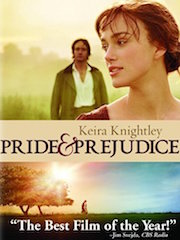
So, when we as viewers encounter a filmic scene in which the director has used a mirror, we immediately translate the prop’s use to represent introspection on the part of the character. Or we may immediately interpret the character’s self-absorption. Or we may recognize the illusory blindness of the character. In Joe Wright’s 2005 adaptation of Pride and Prejudice, the scene where Elizabeth Bennet “reflects” on Mr. Darcy’s letter is a very poignant one in the film. She discovers her own misconstructions. Those are summarized by Elizabeth’s response to Charlotte Lucas’s inquiry to her mindset. “I hardly know.”

pride_prejudice09Wright’s film relies on stillness to create the conflict. Following the proposal scene in the pouring rain, the viewer follows Elizabeth’s slow progression through Hunsford cottage to stand before the mirror. We, the viewers, are on the inside of the mirror, looking back at Elizabeth’s inner journey. The scene begins with Elizabeth sitting on her bed. This is what is known as a medium close shot. She does not move. It is a back lit shot to create a claire-obscure effect. Elizabeth moves along a narrow corridor to stand before the mirror. In his commentary on the DVD, Joe Wright says, “We are her,” in referring to the viewing audience becoming Elizabeth’s reflection.

Time progresses behind Elizabeth, but she remains still and expressionless. Darcy appears behind her to deliver his letter. Images are purposely blurred to tell the viewer that these characters have often misconstrued the other.

Elizabeth is learning about Mr. Darcy but also about herself. Her “vision” is both blurred and clear. She turns around to find what she now sees clearly as having disappeared. When she can finally recognize Darcy for the man he is, he is no longer available. Wright uses the mirror as an image of revelation. In the novel, Elizabeth looks long and hard at an image of Darcy in the Pemberley gallery. She recognizes the man she should have seen from the beginning.

Now, it is your turn. Tell me other instances of when the mirror is used as a prop in an Austen adaptation. I, personally, can think of several others, but I’ll leave it to you to list some before I pour forth others. We can even explore the use of the mirror in other modern films if you like.

Posted in acting, Austen actors, drama, film, film adaptations, Jane Austen, Pride and Prejudice | Tagged , , , , , , , | Comments Off on “Mirror, Mirror on the Wall” – The Employment of Filmic Devices to Tell a Story in Austen Adaptations

“Mansfield Park” and Conduct Novels, a Guest Post from Lona Manning

“There is a great deal more for you to learn:” Mansfield Park and Conduct Novels

It was once a truth universally acknowledged that parents had a moral duty to raise their children to be industrious, virtuous, charitable, and pious, to prepare their offspring for a happy and useful life on earth and salvation thereafter.

Parents were expected to examine and develop the personality traits of their children. For example, Jane Austen’s parents said of their daughters: ‘Cassandra had the merit of having her temper always under command, but that Jane had the happiness of a temper that never required to be commanded.’”

Or we may recall Mrs. Morland in Northanger Abbey, afraid that her daughter Catherine has “been spoilt for home by great acquaintance,” because of her time in Bath. She hurries upstairs to find an improving essay in The Mirror, “anxious to lose no time in attacking so dreadful a malady.” Parents like Mrs. Morland would often turn to written essays with which to exhort their children.

A conduct book–such as Fordyce’s Sermons to Young Women, with which Mr. Collins bores Lydia in Pride & Prejudice–was typically a collection of essays, sometimes written in letter form, giving advice on conducting a virtuous life. The topics included good manners, education, forming friendships, courtship and so on.

Other examples of popular conduct books for young ladies are: Essays on Various Subjects Principally Designed for Young Ladies, by Hannah More, and A Father’s Legacy to his Daughters, by Dr. John Gregory. These books were best-sellers. No doubt they were often bought by older relations and godparents for the young girls in their lives. Perhaps they were purchased and gifted more often than they were actually read, but at any rate, Hannah More died a wealthy woman!

Her best-selling conduct novel, Coelebs in Search of a Wife, is about a young man’s search for a virtuous wife. Coelebs and other conduct novels take the moral lessons of the conduct book and place them into the mouths of characters in a novel, who embody various virtues, vices and sins.

In another conduct novel, The Two Cousins, by Elizabeth Pinchard, a spoilt young city cousin comes to live with her intelligent, good-hearted and virtuous country cousin, and is reformed.

Academics such as Professor Mary Waldron have suggested that Mansfield Park is Jane Austen’s answer to the conduct novel. Austen had the ability to create a novel which tackled moral issues without being preachy or stilted. Conduct novels are straightforwardly didactic. Unlike Coelebs or Two Cousins, however, Mansfield Park explores its moral lessons in a realistic setting with exquisite prose and compelling dialogue. And, unlike the conduct novels in which the characters are little more than animated points of view, a device with which to address the reader, Mansfield Park’s characters are unique and well-rounded. Maria Bertram marries a man she doesn’t love. Henry Crawford tries to reform to win Fanny’s love, but falls back in to his old seductive ways. Edmund Bertram is beguiled by the witty but superficial Mary Crawford. Lady Bertram neglects her children and Mrs. Norris is an avaricious, judgmental, busybody.

There are some passages in Austen which echo some of the popular conduct novels. In The Two Cousins, there is a scene where the wise, loving mother and her young daughter talk about a spoilt little girl they met at a dinner party.

“Oh indeed yes, Mama,” exclaims little Constantia. “I was quite astonished to hear Miss Selwyn use such an expression!”

After a dinner party at Mansfield Park, of course, Edmund and Fanny discuss Mary Crawford:

“But was there nothing in her conversation that struck you, Fanny, as not quite right?”

“Oh yes! she ought not to have spoken of her uncle as she did. I was quite astonished.”

Elsewhere, the mother of The Two Cousins advises her niece: “Own your conviction, my dear Alicia, and you will have gained a great victory over your pride and prejudice, [emphasis added] for which you are not so blameable as your education and companions.

An abiding preoccupation in conduct novels was the proper education of girls. In Coelebs, the topic is canvassed several times; the speakers lament the superficial education being given to young girls in England at that time, with its emphasis upon “accomplishments” instead of solid education or even practical home economics, to say nothing of a good moral education.

In this passage in Mansfield Park, Jane Austen shows us, with a subtle humour you won’t find in Coelebs, that the young Bertram girls are receiving much information, but very little self-awareness, in their education:

“…[M]y cousin cannot put the map of Europe together—or my cousin cannot tell the principal rivers in Russia—or, she never heard of Asia Minor—or she does not know the difference between water-colours and crayons!—How strange!—Did you ever hear anything so stupid?”

“My dear,” their considerate aunt would reply, “it is very bad, but you must not expect everybody to be as forward and quick at learning as yourself.”

“But, aunt, she is really so very ignorant… How long ago it is, aunt, since we used to repeat the chronological order of the kings of England, with the dates of their accession, and most of the principal events of their reigns!”…

“Very true indeed, my dears, but you are blessed with wonderful memories, and your poor cousin has probably none at all… And remember that, if you are ever so forward and clever yourselves, you should always be modest; for, much as you know already, there is a great deal more for you to learn.”

“Yes, I know there is, till I am seventeen…”

In An Enquiry into the Duties of the Female Sex, Thomas Gisborne strongly discouraged young ladies from participating in amateur theatricals; it encouraged vanity, and “unrestrained familiarity with the other sex.” Jane Austen makes masterful use of the “dangerous intimacy” of the amateur theatricals at Mansfield Park.

Or here is Hannah More, moralizing about household management and small-minded women:

Economy, such as I would inculcate, and which every woman, in every station of life, is called upon to practise, is not merely the petty detail of small daily expenses, the shabby curtailments and stinted parsimony of a little mind, operating on little things; but it is the exercise of sound judgment… the narrow minded vulgar economist is… perpetually bespeaking your pity for her labours and your praise for her exertions; she is afraid you will not see how much she is harassed. Little wants and trivial operations engross her whole soul.

At the beginning of that paragraph, we have the busy-body Mrs. Norris. At the end, we have her hapless, disorganized sister, Mrs. Price. Jane Austen illustrates these faults through her characters, showing rather than telling.

Hester Chapone, in her conduct book, warned against forming friendships with those who are not devout:

“The woman who thinks lightly of sacred things, or is ever heard to speak of them with levity or indifference, cannot reasonably be expected to pay a more serious regard to the laws of friendship…”

Austen brings this woman to life in Mary Crawford, described as “careless as a woman and as a friend,” laughing and joking in the chapel at Sotherton.

One significant difference between Mansfield Park and Coelebs and Two Cousins, is that in the conduct novels, someone (a neglectful husband and a spoilt girl, respectively) is saved from their dissolute ways by the steadfast Christian example of a virtuous person. But as Waldron pointed out, “Mansfield Park deliberately rejects this stereotype; good example fails to avert a shipwreck.” Henry Crawford explicitly asks Fanny for advice and guidance when he visits her in Portsmouth, and she refuses him:

“I advise! You know very well what is right,” [says Fanny.]

“Yes. When you give me your opinion, I always know what is right. Your judgment is my rule of right.”

“Oh, no! do not say so. We have all a better guide in ourselves, if we would attend to it, than any other person can be.”

That short exchange, Waldron says, is “the pivot upon which the novel finally hums toward its calamitous conclusion.”

Henry goes to London and starts flirting again with Maria, rather than going to his estate and sorting out his corrupt manager; leading to, in Mary Waldron’s words, the “almost unmitigated disaster of the ending,” with severe justice meted out to Maria Bertram Rushworth, and Edmund and Fanny married, and a great many readers of Mansfield Park left unsatisfied and unconvinced.

Perhaps Jane Austen rejected the idea of Fanny ‘saving’ Henry Crawford as unrealistic. Perhaps she thought Henry Crawford was responsible for saving himself.

In the concluding chapters of Mansfield Park, Sir Thomas Bertram realizes he has failed in his duty as a parent:

He feared that principle, active principle, had been wanting; that [his daughters Maria and Julia] had never been properly taught to govern their inclinations and tempers by that sense of duty which can alone suffice. They had been instructed theoretically in their religion, but never required to bring it into daily practice. To be distinguished for elegance and accomplishments, the authorised object of their youth, could have had no useful influence that way, no moral effect on the mind…

Jane Austen, First Edition of “Mansfield Park”

These personal moral struggles and failings are at the heart of the story. (Mansfield Park is not, I would argue, an anti-slavery tract, but that is another subject).


In conclusion, some familiarity with conduct books and conduct novels helps us understand the context in which Mansfield Park was written. I think the evidence is strong that Austen intended to write a new type of conduct novel; one with real, believable characters, plot and outcomes, which still told its moral story.

In Mansfield Park, Austen knew she had written something important, something different, something rich and complex, and she was disappointed with the lack of response to it. Certainly Mansfield Park didn’t challenge the sales of the conduct novels. No newspapers or journals reviewed it, unlike her previous novels.

But today, even as the least-popular of her novels, Mansfield Park has acquired a fame and immortality greater than all of the conduct novels of her day, put together.

More Reading:

Waldron, Mary. “The Frailties of Fanny: Mansfield Park and the Evangelical Movement,” in Eighteenth-Century Fiction 6 (1994): 259–81  Essay available here [pdf]


Meet Lona Manning: Lona Manning loves reading, choral singing, gardening and travel. Over the years, she has been a home care aide, legal secretary, political speech writer, office manager, vocational instructor and non-profit manager until deciding (in her late 50’s) to get an ESL teaching certificate and teach in China. Manning and her husband divide their time between China and the Okanagan Valley in British Columbia. In addition to her novels, she has written true crime articles for http://www.CrimeMagazine.com.


Lona Manning is the author of A Contrary Wind: a variation on Mansfield Park. A sequel,  A Marriage of Attachment, is available for pre-order. To celebrate the release of A Marriage of AttachmentA Contrary Wind ebook is on sale this week for $0.99.


A Contrary Wind: Fanny Price, an intelligent but timid girl from a poor family, lives at Mansfield Park with her wealthy cousins. But the cruelty of her Aunt Norris, together with a broken heart, compel Fanny to run away and take a job as a governess. Far away from everything she ever knew and the man she secretly loves, will Fanny grow in strength and confidence? Will a new suitor help her to forget her past? Or will a reckless decision ruin her life and the lives of those she holds most dear?

This variation of Jane Austen’s novel includes all the familiar characters from Jane Austen’s Mansfield Park, and some new acquaintances as well. There are some mature scenes and situations not suitable for all readers.


A Marriage of Attachment: A Marriage of Attachment continues the story of Fanny Price as she struggles to build her own life after leaving her rich uncle’s home. Fanny teaches sewing to poor working-class girls in London, while trying to forget her first love, Edmund Bertram, who is trapped in a disastrous marriage with Mary Crawford. Together with her brother John and her friend, the writer William Gibson, she discovers a plot that threatens someone at the highest levels of government. Meanwhile, Fanny’s brother William fights slavery on the high seas while longing for the girl he loves.

Filled with romance, suspense and even danger, A Marriage of Attachment takes the familiar characters from Mansfield Park on a new journey.


Posted in Austen Authors, book release, customs and tradiitons, Georgian England, Georgian Era, Guest Post, Jane Austen, Living in the Regency, Mansfield Park, Uncategorized, writing | Tagged , , , , , , , , , , , , , | Comments Off on “Mansfield Park” and Conduct Novels, a Guest Post from Lona Manning

Colchester and Colchester Castle, Oldest Recorded Town and the Largest Keep in England

Colchester, some 50 miles northeast of London, is an historic market town in the county of Essex. As the oldest recorded Roman town in Britain, Colchester is claimed to be the oldest town in Britain. For a time, it was the capital of the kingdom of Cunobelin (Roman Britain). It was called Camulodunum and was reduced to ashes by Queen Boadicea in AD 60. The town was rebuilt by the Romans, but by then, Londinium was the capital. With the Romans departure, the Saxons renamed the town Colchester. In the 11th Century, the Normans built the largest keep ever constructed in Europe on top of the Roman temple of Claudius. Colchester Castle  is the largest castle in England. 

Pliny the Elder, who died in AD 79, mentions Colchester, which is why many consider it the oldest town in Britain. However, the Celtic name, Camulodunon, appears on coins minted by Tasciovanus, a tribal chief, from 20-10 BC. Shakespeare knew the town, not as Cunobelin, but as Cymbeline, King of the Catuvellauni (c. 5 BC to 40 AD). Coins of his reign also exist. Shakespeare’s Cymbeline was the father of Caratacus, leader of the earliest resistance agains the Roman invasion. Supposedly, Caratacus was enchained and sent to Rome, where he was paraded as a Roman enemy through the city. However, his silent dignity and courage earned him Caesar’s recognition. Caratacus was released to live in Rome as a free man. Colchester Celtic name, Camulodunon, also appears on coins during the 30s AD. Camulodunon controlled a large section of Southern and Eastern Britain at the time. Camulodunon is considered one of the possible sites of the legendary Camelot of King Arthur tales.

Medieval Colchester’s main landmark is Colchester Castle, which is an 11th-century Norman keep, and built on top of the vaults of the old Roman temple. There are notable medieval ruins in Colchester, including the surviving gateway of the Benedictine abbey of St John the Baptist and the ruins of the Augustinian priory of St Botolph. In 1189, Colchester was granted its first royal charter by King Richarch I. The charter was granted at Dover with the king about to embark on one of his many journeys away from England. Colchester developed rapidly during the later 14th century as a centre of the woollen cloth industry and became famous in many parts of Europe for its russets (fabrics of a grey-brown colour). This allowed the population to recover financially from the effects of the Black Death, causing many who sought work to migrate there.

Between 1550 and 1600, a large number of  weaver and cloth makers from Flanders emigrated to Colchester and the surrounding areas. They were famed for the production of “Bays and Says” cloths which were woven from wool and are normally associated with Baize and Serge although surviving examples show that they were rather different from their modern equivalents

A mid-17th century English ditty (a short, simple popular song)—much quoted in histories of ale and beer brewing in England—refers to 1525 as the year:

Hops, heresies, bays, and beer;
Came into England all in one year.

Heresies refers to the Protestant Reformation, while bays is the Elizabethan spelling for baize. Baize is most often used on snooker and billiards tables to cover the slate and cushions and is often used on other kinds of gaming tables such as blackjack, baccarat, craps, and casino games. It was popular in the 19th Century on the writing surface of a pedestal desk. (Baize, Wikipedia) “I have covered my old carpet with a handsome green baize, and every stranger who comes to see me, I observe, takes it for granted that I have a rich carpet under it.” (From novel by Maria Edgeworth (1968-1849), “Belinda” published 1801.)

Meanwhile, serge is a type of twill fabric that has diagonal lines on both side, made with a two-up, two-down weave. Worsted serge is used for military uniforms, suits, great coats, and trench coats. Silk serge is used for linings. Serge can also be used for a woollen fabric. The early association of silk serge, Greece, and France is shown by the discovery in Charlemagne’s  tomb of a piece of silk serge dyed with Byzantine motifs, evidently a gift from the Byzantine Imperial Court in the 8th or 9th century AD. It also appears to refer to a form of silk twill produced in the early renaissance in or around Florence, used for clerical cassocks. A reference can be found in Don Quixote: “I am more pleased to have found it than anyone had given me a Cassock of the best Florentine serge” (The Curate, Book I, Chapter VI). [“Colchester Archaeological Trust Online Report Library – Colchester Bays, Says and Perpetuanas by Eliot Howard” (PDF). essex.ac.uk.]

From early Saxon times, most English wool (“staples”) was exported. In the early 16th century it went mainly to an English owned Royal monopoly in Calais, where it was woven into cloth by Low Country cloth makers.  The French captured Calais in January 1558. With that, England expanded their own weaving industry. The Eighty Years’ War and the French Wars of Religion (1567) sent Calvinist refugees from the Low Countries searching for a new home. Many skilled serge makers sought refuge in England. Huguenot refugees in the early 1700s added to the skilled workers streaming into Colchester and like English towns.  (Serge, Wikipedia)

An area in Colchester town centre is still known as the Dutch Quarter and many buildings there date from the Tudor  period. During this period Colchester was one of the most prosperous wool towns in England, and was also famed for its oysters. (A P Baggs; Beryl Board; Philip Crummy; Claude Dove; Shirley Durgan; N R Goose; R B Pugh; Pamela Studd; C C Thornton (1994). Janet Cooper; C R Elrington, eds. “The Borough of Colchester”. A History of the County of Essex: Volume 9: The Borough of Colchester. Institute of Historical Research.) Flemish refugees in the 1560s brought innovations that revived the local cloth trade, establishing the Dutch Bay Hall for quality control of the textiles for which Colchester became famous. The old Roman wall runs along Northgate Street in the Dutch Quarter.

Lucas_and_Lise

The place of the execution of Charles Lucas and George Lisle. ~ Public Domain ~ https://en.wikipedia.org/wiki/Colchester#/media/File:Lucas_and_Lise.jpg

In the reign of “Bloody Mary” (1553-1558) Colchester became a centre of Protestant “heresy” and in consequence at least 19 local people were burned at the stake at the Castle, at first in front, later within the walls. They are commemorated on a tablet near the altar of St Peter’s Church. (Sources– John Foxe “Book of Martyrs”; Mark Byford: The Process of Reformation in a Tudor Town).

Colchester is reputed to be the home of three of the best known English nursery rhymes: ‘Old King Cole,’ ‘Humpty Dumpty,’ and and ‘Twinkle, Twinkle Little Star’, although the legitimacy of all three claims is disputed.(A P Baggs; Beryl Board; Philip Crummy; Claude Dove; Shirley Durgan; N R Goose; R B Pugh; Pamela Studd; C C Thornton (1994). Janet Cooper; C R Elrington, eds. “The Borough of Colchester”A History of the County of Essex: Volume 9: The Borough of Colchester. Institute of Historical Research.

St-Botolph's-Wall---630-318

ps://www.visitcolchester.com/things-to-do/if-our-walls-could-talk.aspx

Local legend places Colchester as the seat of  King Cole (or Coel) of the rhyme Old King Cole, a legendary ancient king of Britain. In folk etymology the name Colchester was thought of as meaning Cole’s Castle, though this theory does not have academic support. In the legend Helena, the daughter of Cole, married the Roman senator Constantius Chlorus, who had been sent by Rome as an ambassador and was named as Cole’s successor. Helena’s son became Emperor Constantine I. Helena was canonised as  Saint Helena of Constantinople and is credited with finding the true cross and the remains of the Magi.  She is now the patron saint of Colchester. This is recognised in the emblem of Colchester: a cross and three crowns. The Mayor’s medallion contains a Byzantine style icon of Saint Helena. A local secondary school – St Helena’s – is named after her, and her statue is atop the town hall, although local legend is that it was originally a statue of Blessed Virgin Mary which was later fitted with a cross.

Colchester is also the most widely credited source of the rhyme Humpty Dumpty. During the siege of Colchester in the Civil War, a Royalist sniper known as One-Eyed Thompson sat in the belfry of the church of St Mary-at-the-Walls (Humpty Dumpty sat on the wall) and was given the nickname Humpty Dumpty, most likely because of his size, Humpty Dumpty being a common insult for the overweight. Thompson was shot down (Humpty Dumpty had a great fall) and, shortly after, the town was lost to the Parliamentarians (all the king’s horses and all the king’s men / couldn’t put Humpty together again.) Another version says that Humpty Dumpty was a cannon on the top of the church. The church of St Mary-at-the-Walls still retains its Norman tower until the top few feet, which are a Georgian repair.

The third rhyme said to have come from Colchester is Twinkle, Twinkle Little Star, which was written by Jane Taylor, who lived in the town’s Dutch Quarter and published the poem as “The Star” in 1806. 

Sources: 

Colchester, Wikipedia 

Colchester Tourist Board (2011). “Colchester – Britain’s Oldest Recorded Town”. visitcolchester.com.

Visit Colchester

V. Watts, The Cambridge Dictionary of English Place-Names (Cambridge University Press: Cambridge, 2004), p. 113.

Posted in Anglo-Normans, Anglo-Saxons, British currency, British history, buildings and structures | Tagged , , , , , | Comments Off on Colchester and Colchester Castle, Oldest Recorded Town and the Largest Keep in England

Lancashire “Hotpot,” The Red Rose Country’s Regional Dish

hotpotlarge.jpgHave you ever eaten Lancashire Hotpot? It is a casserole dish consisting of layers of meat (beef or lamb or lamb with lamb kidney), a root vegetable (carrot, turnip, leeks, etc.), and sliced potatoes.

Then you put the lid on the pot, and place it in a slow oven for several hours. The lid is removed for final hour of cooking to allow juices to thicken, and to brown the top layer of potatoes.

AdobePhotoshopExpress_2014_04_23_17-52-41.jpg

Quantities in a Lancashire Hotpot don’t have to be exact:

  • enough lamb for everyone
  • potatoes — double or a bit more of the amount of lamb
  • onions — about 1/3 the amount of potatoes

“In spring 2011, a loose campaign started forming to propose that the dish be awarded European “Protected Geographical Indication” status. This would mean that commercially the dish could only be prepared for sale in Lancashire, and according to certain methods. The campaign appears to have been launched by people such as Steve Dean, managing director of Lancashire County Developments Limited (LCDL) , chef Nigel Haworth, and Paul Nuttall, European MEP for Lancashire.

500-Lancashire-hotpot-Nigel-Haworth.jpg“Lancashire Hotpot is usually dated back to the start of industrialisation in the area, from the 1750s onwards. It really was designed as an oven dish from the start, as opposed to a stew in a pot over flame. It required potatoes being widely enough accepted to be available, and access to an oven (access to an oven was a luxury throughout much of history.)

“In the television programme “Coronation Street”, the character of Betty Williams is famous for the hotpot she serves at the Rovers Return Inn.” [Lancashire Hotpot-CooksInfo]

Country File Magazine tells us, “What distinguishes the traditional hotpot, though, is its steep-sided cooking vessel, after which the dish gets its name. The pot cradles the long bones of local sheep, which lend flavour to the sliced potato topping. The traditional protruding bones make it an eye-catching, if slightly spooky looking, dish.

“No one knows exactly how or when the hotpot came about, but what’s certain is that it was popular when Lancashire’s cotton industry was at its height in the 19th century. The dish was quick and simple to prepare and could be left to its own devices while its makers – female mill workers – were toiling in the mills and factories that propelled England’s economic prosperity. Hours later, when they returned, the hotpot would have turned into a flavoursome stew, the lamb gently fusing with its bedfellow ingredients. Oysters, which were cheap at that time, were sometimes added to bulk out the mixture.

static1.squarespace.jpgimages.jpg “Hotpot kept miners going too, the pot being wrapped in a blanket to ensure it was still warm at lunchtime. In the novel North and South, Victorian writer Elizabeth Gaskell described how Mr Thornton, a mill owner, dined on hotpot with his workers : “I never made a better dinner in my life… and for some time, when ever that special dinner recurred in their dietary, I was sure to be met by these men, with a ‘Master, there’s hotpot for dinner today win yo’ come?’” 

Htpot.jpg

Resources

BBC Home

By ‘eck! Lancashire hotpot set to become the next English cuisine granted protected status. London: Daily Mail. 5 April 2011.
[Looking for Original Recipes and Historical Mentions]   The Foods of England
Hix, Mark. Lancashire Hot Pot. London: The Independent. 14 October 2006.

Human Beans. Sonja’s Lancashire Hotpot. September 2006. Retrieved October 2010 fromhttp://whatscookinggrandma.humanbeans.net/card/8

The Interesting History of Lancashire Hotpot

Lancashire Hotpot,CooksInfo.com

Posted in British history, food, food and drink | Tagged , , , , , , | Comments Off on Lancashire “Hotpot,” The Red Rose Country’s Regional Dish

Father’s Day

This is my father. He died too young, barely in his mid 40s. I wish I had known him better. 

Posted in Uncategorized | Comments Off on Father’s Day

Father’s Day – Part 2

This is my maternal grandfather. My parents separated when I was quite young. It was a time when divorce was frowned upon, so my parents never “officially” parted ways. Yet, for all intents and purposes, my father was never around. It was my grandfather who saw that I had weekly lunch money, who co-signed for my first car, who “encouraged” me to become a teacher when I wanted to be a journalist, and who died one month before my son was born. I hated that he never knew my son. He was a man who worked for American Car and Foundry during the day – making railroad cars. However, of the evening he was dressed in a white shirt and a suit and a hat. It was quite the contrast to the day job.

Posted in Uncategorized | Comments Off on Father’s Day – Part 2

Love Between Persons of a Certain Age (or) Does the Couple Need to Be Young? a Guest Post from Don Jacobson

This post appeared on Austen Authors on 25 April, 2018. I found it quite interesting to think of “love stories” in novels also including those of a certain age, for I have written several such romances, including one coming out this October. Enjoy!!!

bennets.jpgI have been somewhat cranky over the past several days because The Avenger: Thomas Bennet and A Father’s Lament is slow going.  Most of this is rooted in that I am writing a bit of an espionage book. Yes there will be romance and there will be a ball. And, yes, there are the stories of Denis and Letty (Brouillard) Robard as well as Alois and Elizabeth (Darcy) Schiller.

But, the most important romance will be the rediscovered fervor between the elder Bennets…that which flared brightly in 1789 and slowly dimmed until by 1800…

As I previously have noted, however, Miss Austen did not fill out either of the elder Bennet’s characters. If I were to use them to advance the Bennet Wardrobe arc, I would have to build plausible pasts and realistic futures for both partners in the marriage.

There is a plot reason for this beyond the fact that I believe that Elizabeth Bennet’s observations of her parent’s loveless marriage—which shaped her firm resolution to only marry for the deepest love—were those of an adolescent girl who is utterly convinced of the veracity of her own conclusions (and who has met a teenager who was not that?). Austen never really explored the reason why Mr. Bennet (I have named him Thomas George) was attracted to Mrs. Bennet (Frances Lorinda Gardiner in the Wardrobe’s Universe) in the first place. We know that he was assumed to be a highly educated and bookish man. Are we to believe that he was also so socially inept—as is the trope of what might be termed as being the problem of all geeks, ancient and modern—that his head was turned by an opportunistic solicitor’s daughter? No, there had to be something more…her manner, her eyes, her joie de vivreAdmittedly, I stole this from Lydia because she has always been offered up as the daughter most like her mother.

mr mrs bennett.jpg Using an author’s authoritative voice, I have decided to let my readers know that I believe that Mr. Bennet—and Mrs. Bennet—married for love and not infatuation.

While it would have been logical to have Fanny Gardiner seeking to improve her station by snagging a landowner, that would have put her in the class of Caroline Bingley. Mrs. Bennet, while annoying, was never consciously despicable.

Would Edward Gardiner’s sister, the daughter of a sober legal man who somehow left the impression for his son that marrying for love was to be desired, have sought less than her brother?  As a daughter of a country solicitor—who, none-the-less, had to have received a lawyer’s education at one of the Inns in Town, although he may have clerked in St. Albans—she could have easily focused her physical charms on a son of one of her father’s professional colleagues without being seen as a social climber. Certainly her mother would have been urging her father to place her in front of suitable men, if Fanny’s exhortations about Bingley and Netherfield grew from her own juvenile experience. That individual could have been a London barrister or solicitor, either of whom would have been well-off and steps up from young Miss Gardiner’s rusticated roots.

Tom Bennet would have been a reach for young Fanny even if his mother, who likely would have objected to such a match even though she was only a country rector’s daughter herself, had not died in the fever of ’77. I note that many Austenesque writers have had Fanny entrapping Thomas through a staged compromise. These stories tend to cast Mrs. Bennet in an avaricious light, and she rarely moves beyond this awful image. I have never been satisfied with such a characterization because I wonder why Jane and Lizzy, the daughters most exposed to her nature, are shown to be paragons of gentle womanhood in these same works. T’is inconsistent…

However, I am recounting the story of the Bennet family in the Universe of the Wardrobe.

And so, using an author’s conceit, I have concluded that Frances Gardiner married for love. I determined that the young lady with the sky blue, near purple eyes, was entranced by the wry man with the hazel orbs.

Early on in “The Avenger,” I have taken the Canonical Mrs. Bennet and Mr. Bennet and turned them into humans with foibles rather than being served up as caricatures. I have spent some pages in the earlier books revealing why each parent acted in the manner they did after 1800. Mrs. Bennet’s story is found in the latter pages of Part 1 of “The Exile.” Mr. Bennet changed his behavior first in response to his wife’s depression after the awful summer of the Year Zero and later as her anxiety mounted. Then he responded to the instructions he received in the “reverse” Founder’s Letter delivered in “Lizzy Bennet Meets the Countess.”

Mr-and-Mrs-Bennet-jane-austens-couples-14290539-360-282.jpg  I believe I am there. In order to rebuild Mr. Bennet’s respect for Fanny, I have portrayed the lady as a clever and practical observer of the world around her. Her fears of society’s treatment of her unmarried daughters after Mr. Bennet’s oft-anticipated death has, by this point in 1814, moderated considerably with the three marriages in 1811 as well as Mary’s betrothal to Mr. Benton who is off in Boston earning his second divinity degree. Now, t’is only left for her to see Kitty settled. And that, of course, is the underlying plot mover…Mrs. Bennet’s desire to see her daughter conflicting with Mr. Bennet’s knowledge that Kitty lives well over 120 years in the future. Except…

In order for Bennet to give Kitty, Jacques, and Schiller justice, he needs to have a confederate who knows him beyond words. This individual also must be utterly committed to the task. While Lord Thomas Fitzwilliam has every motivation to avenge his mother, he only met Mr. Bennet in July 1947. While the two men are of an age, Fitzwilliam does not appreciate the vagaries of Bennet’s weltanschauung. Likewise, he is in awe of his Grandfather. Even though “young” Thomas is the 12th Earl of Matlock, the Managing Director of the Trust, and “M,” he will never be more than a lieutenant to The Founder.

Who better to serve as co-consul than someone who shares the same Georgian/Regency discursive context—in addition to the deeper reaches of a spousal relationship. And, to do that, as I repeat myself, Tom Bennet needs to regain his respect for his wife as well as win back her heart.

This he accomplishes, I believe, in the early chapters of the next book in the Bennet Wardrobe, Volume Three, The Avenger: Thomas Bennet and A Father’s Lament.

Please enjoy this brief excerpt.

&&&&&

This excerpt from a work-in-progress is (c)2018 by Donald P. Jacobson. No republication or other use of this material without the expressed written consent of the creator of this work is permitted. Published in the United States of America.

It is August 1, 1947. Mrs. Bennet has cut through Mr. Bennet’s prevarication about her current where/when. He has decided to read her into the secrets of the Wardrobe and the situation in which they find themselves.  Mr. and Mrs. Bennet have left Longbourn House to seek privacy atop Oakham Mount.

&&&&&

Chapter V

The path up the side of Oakham Mount gradually rose away from Longbourn’s fields and wound gently up through the ancient deciduous woodland. The undergrowth along the furrowed slopes bore testament to the benign neglect that had been the watchword for at least the last two decades. The economic calamities before and then after the most recent war had dictated different priorities for the current Master of Longbourn. That six-year long cataclysm had, itself, been a great winnowing that had stolen away and never repatriated great tranches of young men who might otherwise have been put to work by a competent forester clearing away the brush and juvenile trees that burdened the hump. Thus, the timberland had undertaken that which it had always: exercising its wooded privilege of entropy by reclaiming that which Man had sought to turn to another purpose.

The two figures toiling up the slope would have appeared, to a Twentieth Century observer, to be play-actors stepping directly from the sound stages at Gainsborough Studios in Shepherd’s Bush.[i] Their quaint and stifling garb—she in a long-sleeved muslin gown, gloves, and a broad-brimmed straw sunbonnet and he decked out in pantaloons, waistcoat, and topcoat…as well as his planter’s hat—were redolent of a sesquicentennial celebration honoring Jervis’ great victory.[ii] The mid-summer heat simmered in full intensity above the leafy canopy. However, the couple was shielded from its glaring worst by shadows thrown by massive branches flying up and away from equally colossal trunks. The air beneath eased and freshened as the pair moved further up and away from the manor house now hidden by thickened forest. The great arbor dwarfed both the Master and his Mistress in all but the enormity of their contemplations.

“I always wondered how Lizzy could possibly wear out boots and slippers at the pace which she did,” gasped Fanny Bennet, “And, now I know. That girl was up top of this knob at least five days out of seven! And this trail…t’is new to me, but, and please correct me if I am mistaken, this path is surely age-old when you consider how deeply it has been worn through that ledge up ahead.”

Bennet marveled at Mrs. Bennet’s powers of observation for he had never considered her able to leap beyond household matters where her knowledge and management skills were unparalleled. Yet here she offered another compelling argument against his earlier estimation of her mind. This was no foolish woman, but rather someone with a laywoman’s appreciation of natural philosophy and longue durée history.[iii]

He, himself, had penned a monograph in which he had employed the findings from excavations of the ruins atop Oakham.[iv] His colleagues at Cambridge had been perplexed to find old strongholds or watchtowers using even older stockades as foundations; stacking fortifications like so many pancakes.[v] Bennet had demonstrated, through the use of recovered artifacts, that the Romans as well as certain predecessor Celts had taken advantage of the full-circle field of vision afforded from the crest, effectively pushing the history of the Meryton region back by 2,000 years.

Thus, Fanny had the right of it, almost as if she had read his essay. Not only had the dainty booted feet of Elizabeth Rose Bennet trod this path, but also those sporting medieval English clogs and imperial Roman sandals. Perhaps the leathery bare feet of Wessex warriors were the first to ascend the chalky slopes. Oakham’s prominence above Longbourn’s rolling fields gave its owner control of the reaches of the Mimram Valley as it coursed through the alluvial deposits between the shire and the Thames.

Bennet stopped for a moment—as much to catch his breath as to respond to his wife—and asked, “Have you been listening at the door as Lizzy and I talked about archaeology?”

At his wife’s look of reproof, he raised his hands in defense and quickly added, “I was simply teasing, my dear. I was offering what turned out to be, I am afraid, a backhanded compliment. I am afraid, Fanny, that I will have to relearn proper behavior. I have been lax, and you have been the victim.

“Let me try a ‘forehand’ compliment.

“As you said, you have never climbed Oakham through all the years of your life. Yet, you just offered a sophisticated reading of the apparent antiquity of the path beneath our feet.

“You may recall my journey up to Cambridge in ’03. T’was then that I delivered my paper Considerations On the History and Pre-History of the Mimram Valley in Roman and Celtic Hertford to the fellows at Trinity.[vi] You may have heard me mention the late Professor Gibbons. I thought to revise his assessment of the historiography of the scholars of the last century…”

His voice tailed off when he almost could hear the <click> as she rolled her eyes in response to his rambling soliloquy. Bennet glanced expectantly at her. Those blue to near purple orbs peered up at him from beneath the brim of her hat; said lip fetchingly bowed down beside her ears by a broad azure ribbon tied neatly beneath her chin. A small smile played across her lips and showed a hint of even teeth.

She asked coquettishly, “And the compliment?”

Bennet stammered, having lost his ability to speak when she had speared him with those sparkling beams emanating from her orbs, “Uh…I meant to say…that…you sounded just like Elizabeth. Oh, no, not that…rather that Lizzy sounded like you! No…uuuh.”

He stopped talking, and, using his long legs, loped off up the hill a few paces, leaving Mrs. Bennet standing where she had halted. He then arrested his flight, and froze in place, his back to the lady, one fisted hand planted in the small of his back, the thumb worrying the forefinger as he sought to regain his composure. Mrs. Bennet, using the wisdom earned through a quarter century of managing her husband, waited for his assured return.

After two or three minutes, during which she closed her eyes and focused on the sounds of the birds calling to one another across the forest, he rejoined her.

At first, a solemn Bennet faced his wife. Then the façade cracked to allow the wry Thomas to escape. He had begun to smile before long. Finally, he spoke to her.

“I thought I had become immune to your arts and allurements so long has it been since I have appreciated you as an object of desire. Yet, when you turn those lighthouses of your soul…your incredible eyes…my way, I nearly forget how to breathe.

“Miss Frances, for now I address you as such because you sparkle much like the girl who poured me tea in her mother’s parlor facing out onto Meryton’s High Street, you are nonpareil. You are an original. You are the woman without whom I would not have become half the man I am today.

“Wait, that statement is not well put for you may believe I am implying that I became the indolent man I am because of you.

“On the contrary, I would have only become more lackadaisical and more withdrawn in my own anguish and pain if you had not found your way Home from whatever ring of Hades to which you had consigned yourself after that horrible day. Only the good Lord knows what would have happened to our girls if you had withered like a bloom way past its prime.

“Even though you were distracted, you found a path to becoming the Mistress of my house and the truest, fiercest, and, might I suggest, only defender of our daughters.”

He paused, grief coloring his hazel eyes as he recalled all those years he had closed his heart to the woman he had loved for nearly a dozen before.

In a voice thick with emotion, Bennet continued, “As you so aptly noted earlier, I have the ability to convince myself of the veracity of my acts. And, upon reflection, that is what I did with you.

“T’was easier to ascribe your uneven moods to nerves or silliness. That allowed me to ignore my responsibility to you—for did I not vow to protect you that day you changed your surname to mine? However, what did I do to help you ride the waves of loss? Nothing…absolutely nothing!”

He shook himself like a sheepdog as if doing so would rearrange his turbulent feelings around his longish frame.

“Frances Lorinda, you are the soul that makes my life meaningful. I had forgotten that singular fact and, instead, began to find all the ways I could moderate and diminish my respect for you because I had lost my own self-respect. And convincing myself that you had a second-rate mind was the worst of my transgressions!

“True, you are unschooled as are almost all women in England. And, unlike Madame de Staël, you never had the advantage of a parent who would see to your informal education.[vii] That you bravely entered Longbourn, the estate of a Cambridge don, as the younger daughter of a country solicitor, and meekly submitted to instruction from first Sally Hill and then our current Mrs. Hill, speaks volumes about your modesty and self-effacement.

“Every step of the way you never asked what was best for you, only your family and Longbourn. I could not be prouder of you or your list of accomplishments that, I assure you, would put any female of the ton to shame. I imagine they would succumb to fits of vapors if they had to undertake half of what you have since ’89!

“Now, all that remains is for me to beg your forgiveness, and pray that I will live long enough to earn it.”

There amongst the softly swaying blades growing in the shade of Oakham’s boughs, Mrs. Bennet forgave Mr. Bennet in the tenderness of her wifely embrace.


[i] From the filming of, perhaps, The Young Mr. Pitt (1942). See https://en.wikipedia.org/wiki/The_Young_Mr_Pitt accessed 3/31/18.

[ii] The Battle of Cape St. Vincent (February 1797) is considered to be one of six fleet actions (the others being the Glorious First of June—1794, Howe; Camperdown—1797, Duncan; The Nile—1798, Nelson; Copenhagen—1801, Parker/Nelson/Graves; and Trafalgar—1805, Nelson) across the 25-year long war that confirmed British naval supremacy and enforced the Blockade against Napoleon’s Continental System.

[iii] See Fernand Braudel who argued that the regularities of social life whose change is almost imperceptible except over vast stretches of centuries. http://www.sunypress.edu/pdf/62451.pdf

[iv] Please see Lizzy Bennet Meets the Countess, Ch. XII.

[v] Not an unusual situation in human construction. See the ruins of Troy discovered by von Schliemann in the 1870s where he found over one dozen distinct cities built atop the ruins of the previous town.

[vi] T. M. Bennet, MA, unpublished mss, 1803, Wren Library, Trinity College, Cambridge University.

[vii] A leading French intellectual of the Napoleonic era. https://en.wikipedia.org/wiki/Germaine_de_Sta%C3%ABl

Posted in Austen Authors, book excerpts, excerpt, Guest Post, Jane Austen, Living in the Regency, Pride and Prejudice, Regency era, Vagary | Tagged , , , , , , , | Comments Off on Love Between Persons of a Certain Age (or) Does the Couple Need to Be Young? a Guest Post from Don Jacobson

Very “Real” Estate: Axminster

Axminster is a market town and civil parish of about 6,000 on the eastern border of Devon. The town is built upon a hill and overlooks the River Axe. The town dates back to around 300 BC. There was once a Roman fort on the crossroads at Woodbury Farm, south of the present town center. Axminster is one of only 15 British town on the Peutinger Map (also referred to a Peutinger’s Tabula or Peutinger’s Table). It is an illustrated itinerarium displaying the road network of the Roman Empire. It is a 13th C copy of a Roman original, drawn upon parchment. Aixminster lies on two major Roman roads: the Fosse Way from Lincoln to Seaton and the Dorchester to Exeter road. 

Part_of_Tabula_Peutingeriana

Tabula Peutingeriana (section)—top to bottom: Dalmatian coast, Adriatic Sea, southern Italy, Sicily, African Mediterranean coast ~ Public Domain ~ https://en.wikipedia.org/wiki/Tabula_Peutingeriana#/media/File:Part_of_Tabula_Peutingeriana.jpg

Aixminster was registered in the 1086 Domesday Book as “Ascanmynster,” meaning a monastery located near the river Axe. In 1210, the town was granted the privilege of holding a weekly cattle market. This weekly market continued until the 2006 UK foot-and-mouth breakout. The town was on the London to Exeter coaching route, and in 1760, a coaching inn named The George Hotel opened on the corner of Lyme and Chard streets. Nearly 20 coaches a day stopped at The George. 


The town has lended its name to a type of carpets, which are known worldwide. The carpets are consider among England’s finest. They were first made (1775) at Court House near the town church. The carpets in those days were hand tufted, and, traditionally, the completion of a carpet was marked by a peal of bells from the parish church. The bells celebrated the hard work put into the carpet, and the town folk would flock to the workshop to have a look at the latest production.

The inspiration for Thomas Whitty’s founding of Axminster Carpets is uncertain. Some claim he was inspired by watching several French carpetmakers at work in Fulham. Others say he saw a large Turkish carpet at the market in London’s Cheapside and was compelled to learn more of the workmanship. It is said he returned to Axminster and went to work creating a piece of similar quality. He invented and built a new type of loom to permit the hand knotting of carpets. Axminster carpets graced the floors of the Brighton Royal Pavilion, Saltram House, Warwick Castle, and Chatsworth House. It is said King George III and Queen Charlotte purchases Axminster carpets and even toured the small factory from which they came. 

axminster-19th-c-george-iii

George III Axminster Carpet, England, by Thomas Whitty, late 18th century ~ This enormous late 18th century Axminster carpet was made by Whitty for the Music Room at Powderham Castle, 1798. Image @Eloge de l’Art par Alain Truong ~ https://janeaustensworld.wordpress.com/tag/samuel-whitty/


18th-c-axminster-christies

Large Axminster carpet, late 18th century. From Cowdray Park and Dunecht House, At Cowdray Park, West Sussex. Image @Christie’s. https://janeaustensworld.wordpress.com/tag/samuel-whitty/


According to Axminster Heritage, “In order to support his young family, Whitty travelled to London to seek a fresh trade. Here, in the warehouse of a William Freke, he saw some carpets imported from Turkey. He marveled not only at their vibrant colours but also their size and the fact that they were seamless. For a long time he puzzled as to how they could be made.

A Turkey Carpet

After much thought, Whitty had some ideas that he wished to try out. On Easter Fair day that year (25 April 1755), as his employees were away at the fair, he conducted some trials and succeeded in making an eight-inch square of ‘Turkey’ carpet. Although excited by his success he realised that he did not know of a loom that would enable him to make them economically.

“Many years later, in a 1790 letter to his sons, Whitty described how he overcame this difficulty. By chance he saw an advertisement for a carpet manufactur- ing company in Fulham owned by Peter Parisot, a French immigrant. He tells how he went to an inn close to the factory with the hope of making the acquaintance of some of the workers. He started talking with a man whose son was an apprentice at the carpet factory and, through him, was able to gain access to the works. Whitty wrote: “Accordingly, I obtained a view of everything I wanted, by which every remaining difficulty was removed from my mind and I was thoroughly satisfied.”

“Although he had seen how to make his carpets at the Fulham factory, he knew that the carpets made there were much too expensive and a cheaper method of production needed to be found. Although he reduced the number of knots per square inch, the labour cost was still too high. Thus, when he started to make his first carpet on Midsummer’s Day 1755, it was his own children, under the watchful eye of their aunt Betty Harvey, who were his first workforce. Throughout his life, Whitty employed mainly girls of between ten and seventeen years. His competitors employed mainly men, so not only was he able to gain the advantage of lower labour costs, but the girls’ fingers were much more nimble than those of the men, giving him an edge in productivity.

“Thomas Whitty’s first carpet was to have been bought by a Mr Cook of Beaminster but was seen by the Countess of Shaftsbury, who insisted on having it herself. Further orders followed and, in 1757 the Society for the Encouragement of Arts, Manufactures and Commerce (the forerunner of the Royal Society for the Arts) ran a competition for the best value carpet submitted to them. Although the carpet submitted by Thomas Moore of Moorfields was judged to be the finest carpet – being made of the highest quality materials – it was very expensive (forty guineas). The one made by Thomas Whitty was deemed the best value in proportion to its price (£15), and the prize was divided between them.

“Whitty’s prize-winning entry was bought by a William Crompton who, putting it on display in his warehouse in Charing Cross, received so many enquiries that he asked Whitty to supply as many carpets as possible for him to sell. In the following year a similar competition was held and again Whitty shared the prize – this time with a Claude Passavant of Exeter. Interestingly, Peter Parisot moved his Fulham factory to Exeter in 1755 and the following year sold it to Passavant. As Whitty had observed in Fulham, the carpets made in Exeter, although very fine, were much too expensive. (The one submitted for the competition was valued at eighty guineas).”

For some 80 years, until a fire in 1828 destroyed the weaving looms, Axminster produced the best hand-knotted carpets in Europe, and they made them with a small staff and only one workshop. Even today, some of the best homes have Axminster carpets. The largest of the carpets produced was for the Sultan of Turkey’s Topkapi Palace in Istanbul. Made in 1822, it measures 74 feet by 52 feet. Alas, the palace is now a museum, but no one can account for the missing carpet. 

In 1835, Samuel Rampson Whitty, the grandson of the founder, declared bankruptcy, having never recovered from the fire seven years earlier. Blackmores of Wilton, near Salisbury, bought the remaining stock and looms and extended their business to include hand-knotted carpets, which are still called “Axminsters.”


Posted in British history, buildings and structures, commerce, Georgian England, Georgian Era, Industrial Revolution, real life tales | Tagged , , , , , , , , | 2 Comments

The Lack of “Reality” in Austen’s “Pride and Prejudice” ~ Does it Matter?

In Jane Austen’s Pride and Prejudice, we often think of the story as being a depiction of the Regency era. But does it truly speak to the time? If so, would not Elizabeth Bennet be more sensitive to her family’s situation? Our heroine turns down two proposals, both of which would “save” her family. Is that realistic? Most of us who love this story consider Elizabeth Bennet a responsible, reasonable, pragmatic and mature young lady. Yet, Elizabeth’s actions prove her to be more like her father: self-centered and casually indifferent. 

Even if none of her other sisters found husbands, Elizabeth could have secured their futures with the acceptance of either Mr. Collins, who is set to inherit Longbourn, or Mr. Darcy, who owns one of the largest estates in England. Naturally, for us readers, we can never imagine our independent Miss Elizabeth with a buffoon of Mr. Collins’s nature, but should she not know a twinge of regret at having failed her family or displayed a bit of sympathy for her mother’s nerves at knowing disappointment. Obviously, Mrs. Bennet, and likely Mary and perhaps Kitty will be left without a home once Collins assumes control of Longbourn. If Elizabeth had married Collins, he would have been duty bound to provide for her mother and her unmarried sisters. Instead, Elizabeth has a jolly laugh, led on by her father, and at Mr. Collins’s expense and Mrs. Bennet’s chagrin. 

mr_collins_proposes_to_lizzie_pandp2005

“An unhappy alternative is before you, Elizabeth. From this day you must be a stranger to one of your parents. — Your mother will never see you again if you do not marry Mr. Collins, and I will never see you again if you do.”

Elizabeth could not but smile at such a conclusion of such a beginning; but Mrs. Bennet, who had persuaded herself that her husband regarded the affair as she wished, was excessively disappointed.

giphy After Mr. Darcy’s proposal, Elizabeth later attacks the man with a litany of his shortcomings: haughtiness, disdain for others, interference in Bingley and Jane’s courtship, open disapproval of her family, and his insults directed to others about her. 

And I might as well inquire why, with so evident a design of insulting me, you chose to tell me that you liked me against your better judgment. If I was uncivil, then that is some excuse. But I have other reasons, you know I have.

What reasons?

Do you think anything might tempt me to accept the hand of the man who has ruined, perhaps for ever, the happiness of a most beloved sister? Do you deny that you separated a young couple who loved each other, exposing your friend to censure of the world for caprice and my sister to derision for disappointed hopes, involving them both in misery of the acutest kind?

Darcy’s has his many faults; there is no denying them. The thing we readers love about him is he is willing to change for the woman he loves. Yet, even with the multitude of his shortcomings, would not it be more realistic (although not as romantic) for Elizabeth, at least, to pause and consider his offer of marriage? In the wealth-obsessed culture depicted in Pride and Prejudice, should not a hesitation exist if this is true to the society of the time? Given at this point in the story, her family is out on their collective keisters if something happens to Mr. Bennet, should not Elizabeth think about her mother and sisters. After all, Collins has married Charlotte Lucas, eliminating all chances of a Bennet sister to become the next mistress of Longbourn, and Mr. Bingley has been persuaded to abandon Jane Bennet, dashing any hopes of a wealthy husband in the form to save them. 

That being said, Elizabeth Bennet does not belong to reality. She is a “romantic” character. Therefore, she does ignore the peril in which her family exists, as do the readers. We would not wish to look upon our heroine as a Gold Digger. Otherwise, the readers might question the depth of their true love when Darcy and Elizabeth finally come together at the novel’s end. In a romance, there is always some form of “happily ever after (HEA).” 

 Romance-Literary Devices tells us, “Etymologically, romance comes from Anglo-Norman and Old French romanz, which means a story of chivalry and love. The word “romance” also refers to romantic love. As far as literature in concerned, the term has an entirely a different concept. It means romantic stories with chivalrous feats of heroes and knights. Romance describes chivalry and courtly love, comprising stories and legends of duty, courage, boldness, battles, and rescues of damsels in distress…. Romanticism is a specific movement and period in English literature during which poems, stories, and novels related to Romantic ideas were created. William Wordsworth, P. B. Shelly, Lord Byron, and John Keats are some of the most famous poets and writers of the Romantic period.”

prideprejudiceIn Pride and Prejudice, it is those crude characters who represent the farce—the comedic buffoonery—who speak of money and think money will solve all their woes. The novel parades the comedic characters across page after page. We have Mr. Collins, who definitely leads the way. He has good company in Mrs. Bennet, Lady Catherine de Bourgh, Anne de Bourgh, Lydia Bennet, Mary Bennet, Sir William Lucas, Caroline Bingley, Louisa Hurst, Mr. Hurst, and Kitty Bennet. The villain, Mr. Wickham, is absolutely obsessed with the idea of money. He goes from Georgiana Darcy’s dowry to the one belonging to Miss King to an elopement with Lydia Bennet to force Darcy into paying him off to save the foolish girl’s reputation, as well as the reputations of all the Bennet sisters. These characters all worry about their financial prospects.

prideprejudicejaneJane Bennet and Charles Bingley are our Cinderella and Prince Charming types. Their personalities are too good to be true. Jane and Bingley forgive Caroline’s and Darcy’s attempts to keep her and Bingley apart. There is nothing of realism in their relationship. They are less comedic than the ones mentioned above, but certainly there is something of silliness about their relationship. 

Only Darcy and Elizabeth come close to realism, and that is because they both possess their faults, prominent among them is “pride” and “prejudice.” Yet, even with the weakness in their character, readers identify with them. There are the romantic elements, separated from the satiric ones. Elizabeth earns the love of a superior man because she is the “superior” Bennet sister. All is well that ends well. Although Collins will one day inherit Longbourn, no one doubts that Darcy and Bingley will join forces to see to the comfort of Mrs. Bennet and any unmarried Bennet daughters. The estate may be lost to the conventions of the day, but the people will not suffer greatly. We have our happy ending, which is not realistic or true to form, but is desired by human kind, for we cannot exist without hope for a better tomorrow. 

maxresdefault


Posted in British history, historical fiction, Jane Austen, political stance, Pride and Prejudice, reading habits | Tagged , , , , | 4 Comments

Regency Men’s Wear: The Coat

During the Regency era, men’s fashion changed dramatically from the powered-wig peacocks of the late 1700s. Throughout the last decade of the 18th Century, men continued to wear the coat, waistcoat, and breeches.  However, changes were seen in both the fabric used as well as the cut of these garments, with each element undergoing stylistic changes. Some believe the growing enthusiasms for outdoor sports and country pursuits planned a role in the changes noted in dress. The elaborately embroidered silks and velvets characteristic of “full dress” or formal attire earlier in the century gradually gave way to carefully tailored woolen “undress” garments for all occasions except the most formal.

Charles_Pettit_by_Charles_Willson_Peale_(1792)

  Charles Pettit wears a matching coat, waistcoat, and breeches. Coat and waistcoat have covered buttons; those on the coat are much larger. His shirt has a sheer frill down the front. United States, 1792. ~ Public Domain ~ https://en.wikipedia.org/wiki/1775%E2%80%9395_in_Western_fashion#/media/File:Charles_Pettit_by_Charles_Willson_Peale_(1792).jpg

The later part of the 1700s saw coats exhibiting a tighter, narrower cut than seen in earlier periods, and they were occasionally double-breasted.Toward the 1780s, the skirts of the coat began to be cutaway in a curve from the front waist. Waistcoats gradually shortened until they were waist-length and cut straight across. Waistcoats could be made with or without sleeves. [Ribeiro, Aileen. The Art of Dress: Fashion in England and France 1750–1820, Yale University Press, 1995.] As in the previous period, a loose, T-shaped silk, cotton or linen gown called a banyan was worn at home as a sort of dressing gown over the shirt, waistcoat, and breeches. Men of an intellectual or philosophical bent were painted wearing banyans, with their own hair or a soft cap rather than a wig. [“Franklin and Friends,” http://www.npg.si.edu/exh/franklin/rush.htm] This aesthetic overlapped slightly with the female fashion of the skirt and proves the way in which male and female fashions reflected one another as styles became less rigid and more suitable for movement and leisure. [Hollander, Anne (1994). Sex and Suits. Kodansha. p. 53.]

A coat with a wide collar called a frock coat, derived from a traditional working-class coat, was worn for hunting and other country pursuits in both Britain and America. Although originally designed as sporting wear, frock coats gradually came into fashion as everyday wear. The frock coat was cut with a turned down collar, reduced side pleats, and small, round cuffs, sometimes cut with a slit to allow for added movement. Sober, natural colors were worn, and coats were made from woolen cloth, or a wool and silk mix. [1775-1795 in Western Fashion]

regency_gent_01.jpgThe early 1800s found men’s fashion toning down the colors and the construction, choosing to wear clothes that identified their place in society. Many credit Beau Brummel with the change from intricate embroidery and the overuse of color to a more polish look. the cut of the man’s coat and the quality of the fabric from which it was made became the standard of the day. 


“As fashion promenaded into the Regency era (1800s – 1820s) and strolled into the Romantic era (1830s-1850s), men’s style stepped away from the once-popular look of a powdered-wig peacock and toward that of a notably understated yet impeccably dressed dandy. Gone were flamboyant vests, coats and pantaloons cut from rich fabrics in vivid colors adorned with elaborate embroidery. High heels worn with knee-length breeches and stockings also fell out of favor.

“Instead, the Regency gentleman began donning more practical fabrics such as wool, cotton and buckskin – shapes and drapes changed as well. Limited availability of fine textiles during the French Revolution, along with the fear of looking aristocratic enough to be delivered to the guillotine, were partially behind this swing toward a more sedate silhouette.” [Historical Emporium]

Romance author Isobel Carr tells us, “Coats come in several varieties. The terminology is confusing, and sometimes contradictory. On most of the coats in the Regency (shooting coats excepted) the pocket flap is for decoration only. The actual pocket (if there is one) is inside the coat, usually in the tail (as with the extant example on display at the Jane Austen Center in Bath). This pocket was sometimes reached from the outside of the coat, and sometimes from the inside (which seems inconvenient, to say the least). Later in the period (post 1813) a single breasted pocket, on the inside of the coat, began to be seen.

1682h

https://www.vintagetextile.com/images/Early/1682h.jpg ~ Example of tail-pocket reached from the outside on an extant coat c. 1790

Frock coat was the term used for the skirted coat of the 18th century, and was again applied specifically to the skirted coats that became fashionable in the 1820s (and lived on well into the Victorian period). I have also seen this term used to describe the morning coats of our era (just to confuse things!).

MORNING COATS

 One finds a rounded, sloping edge on what we term as “morning coats.” This edge can be found all the way down from the collar to the tail. Also the buttons were usually decorative only by Regency period.  If they did button, it would have been the top 1-3 only.

18th century coat of the same shape (but fuller, esp. through the skirts), 1770s


Gentlemen's jackets at The Argory, County Armagh.

Gentlemen’s jackets at The Argory, County Armagh ~ ©National Trust Images/Arnhel de Serra http://www.nationaltrustimages.org.uk/image/896170

suit-1770s-pocket

Detail showing 1770s working pocket (the flap, if present at all, would have been merely decorative for our era) http://www.pemberley.com/images/Clothes/suit-1770s-pocket.jpg

Coat with pantaloons, c. 1800-1810 (note how much narrower the whole line has become)

dd489ff2517ca90201984399a58dda14

This is fascinating: a green wool hunt coat, circa 1810-1820, which has lapels with sharp “M” notches. The coat is cut high and square at the waist. It has pocket flaps concealed in the tails. The breeches are made from soft white leather. The lower legs have “extenders” for wearing inside boots, and have mother-of-pearl buttons. ~ https://austenonly.com/category/jane-austen-and-fashion/


edwardwalking

Hugh Grant wearing a morning coat in Sense and Sensibility http://www.songsmyth.com/men/edwardwalking.jpg

DRESS COATS

The most common men’s coat of the Regency was the dress coat (also referred to as the “tail coat”). It was open and cut away in the front and had “tails” in the back. Most were single breasted, but double breasted dress coats were worn. Generally, these were made from wool of varying colors, but most often in a solid color. That being said, some were made of linen and of various patterns and plaids. Blue coats are invariably shown with brass/gold buttons, all others with self fabric covered buttons.

Fashion plate of Beau Brummell in a cutaway or tail coat

Cutaway coat and breeches, c. 1795

Cutaway coat, c. 1805-1810 (no waist seam = early)

1805-1810 coat inside out

Fashion plate from Costume Parisien, 1820. This one shows the stiff, open tailcoat.

Colonel Fitzwilliam in a recreation of a cutaway with a velvet collar and cuffs.

image9

1967.13.17, “Stonington Plaid” linen check coat, 1800-1810. Gift of Mrs Muriel Buckley, URI Textiles Collection. https://kittycalash.files.wordpress.com/2014/10/image9.jpg

Wool example, c. 1815 (shown with buckskin breeches).

SHOOTING COATS

Men also had jackets worn purely for outdoor use. Shooting jackets were cut along the same lines as what we now call a “barn coat.” These were usually double breasted, and could be worn open, with the sides folded back on themselves or buttoned up.

Detail of a Gainsborough painting showing a chamois shooting coat (c. 1740s)

Extant chamois example, mid-late 18th century. Note the gold buttons and gold bullion trim.

Extant example, c. 1800-1830

SKIRTED FROCK COATS

At the end of the Regency period, the skirted frock coat appeared. It was the fashion of the early Victorian age. 

Fashion plate from Costume Parisien, 1820. The man’s coat is long, nipped in, and buttons in a single row up the front. The waistcoat is spotted, and the cravat striped. The trousers have straps on the bottoms.

Men’s dark blue suit. Made in the United Kingdom. c 1840. This suit with its skillful tailoring is an excellent example of Nineteenth Century menswear. Suits at this time comprising a jacket, trousers and waistcoat often of non-matching colour and fabric as found in this example. The frock coat was the most popular style of coat for day wear for middle class and professional men, its full skirt modestly hiding the crotch and buttocks. 

THE WELLINGTON COAT

The “Wellington,” named after the country’s hero of the Napoleonic Wars was popular in the 1820s. It was long, with a single row of buttons up the front, always shown with trousers. It seems to have been another style of morning coat.

Caricature (full figure) of William, Sixth Duke of Devonshire – “A View of Devonshire ~ “A View of Devonshire.” Right side view of figure in tan overcoat with brown collar, white trousers and shirt, black top hat and black shoes with spurs. A riding whip is held in the right hand. Figure stands on paved pathway.

Thanks to the lovely ladies and gents at the Beau Monde (the Regency-based chapter of the Romance Writers of America) for the discussion forum. I learn so much from you. Some of the images above came from suggestions from this group. Isobel Carr, in particular, shared a wealth of knowledge on the subject. 

Posted in British history, fashion, Georgian England, Georgian Era, Jane Austen, Living in the Regency, Regency era, research | Tagged , , , | 1 Comment