Wilkin & Sons, Jam Making Extraordinaire

Arthur Charles Wilkin took over his family farm, located in Tiptree, Essex, England,  in his late 20s. The family had owned the farm since the early 1700s. Arthur had a vision for the farm, which was not producing as well as it could. He was determined to specialize in growing fruits to market to the London jam-makers of the mid 1800s. Originally, he thought to ship his fruit via the Kelvedon and Tollesbury Light Railway, which operated in Essex at that time (and did so until 1962). But reliable transportation of his fragile product forced Wilkin into the jam making business himself. He was introduced to an Australian merchant who agreed to take as much strawberry jam as Wilkin could produce. This Australian did not want the jam that was being produced in London at the time. He wanted jam that was glucose free, as well as free of preservatives and added colouring. It was decided to call this new product “conserves” to distinguish it as a higher-quality product. Moreover, the name Britannia Fruit Preserving Company was chosen because that name would be more marketable in Australia than would the Wilkin & Sons Limited. Since 1885, the Wilkin family has made some of the finest preserves, marmalades, etc., marketed to the public. William Gladstone, the British Prime Minister from 1868 to 1894 praised Wilkin’s product.

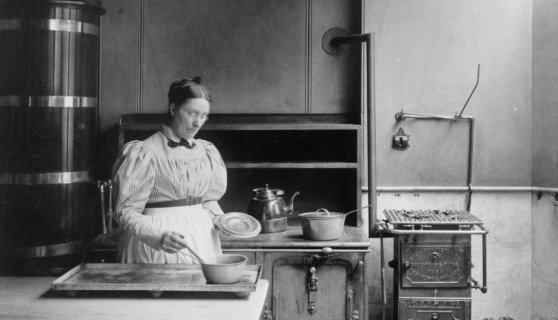
Wilkin used his wife’s recipe and her kitchen to make the first jam. Three boiling pots and tractor engines were required to make that jam. Mechanisation came about in the 1890s. Nowadays, the company produces 90 different conserves, chutneys, honeys, marmalades, and preserves. The Tiptree trademark was set in place in 1905, when the company became Wikin and Sons, Ltd. 

download

Arthur Charles Wilkin

 As the business grew, Wilkin & Sons leased other farms to meet the demand for the company’s product. By 1900, 100 tons of fruit was needed to make jams and preserves. “By 1906, the company owned 800 acres (320 ha) of land on farms in Tiptree, Tollesbury, and Goldhanger, producing 300 tons of fruit per year, and feeding a factory capable at peak production of making 10 tons of strawberry jam per day. The company has held a Royal Warrant for preserves and marmalades continuously since 1911.” (History Timeline)

81tkqaX3KeL._SL1500_.jpg

91s4wf+dmrL._SL1500_.jpg0499019.jpg

“With the need for a pound of sugar to a pound of fruit to produce 2 lb of preserves, production was halted during World War I due to a lack of essential supplies. But by 1922, and now owning 1,000 acres (400 ha) of farmland across eight farms, the company was creating new record outputs of fruit and preserves. An integrated production facility, the company also owned 100 houses, the village’s windmill and blacksmith’s forge, the Factory Club and the freehold of the Salvation Army hall. During World War II, the company and factory came under the control of the Ministry of Food, and kept producing its preserves alongside other essential food products. In 2010, the company celebrated its 125th anniversary, highlighted by a visit from Her Majesty Elizabeth II.” (Wilkin & Sons)

The company also owns a chain of tea rooms in Essex, as well as a specialty bakery and patisserie.

Resources:

“History Timeline: 1885 – The First Jam,” Tiptree https://www.tiptree.com/index.php/ourcompany/history-timeline.html

“No Additives or Secrets, Just Fruity Jams,” The New York Times https://www.nytimes.com/1985/07/03/garden/no-additives-or-secrets-just-fruity-jams.html

Wilin & Sons Celebrate Their 125th Anniversary, Essex Life http://www.essexlifemag.co.uk/people/wilkin-sons-celebrate-their-125th-anniversary-on-25th-june-1-1638654

Posted in British history, business, commerce, customs and tradiitons, England | Tagged , , , , , , , , | Comments Off on Wilkin & Sons, Jam Making Extraordinaire

A Closer Look at MR. DARCY’S BRIDEs: A Pride and Prejudice Vagary

In my book, MR. DARCY’s BRIDEs, by mistake Elizabeth disrupts Mr. Darcy’s marriage to his cousin, Anne De Bourgh. Our daring heroine is in disguise (NOTE: I drape her with a heavy veil attached to her bonnet, which would not be likely in the Regency era, but it was not forbidden. No one can say for certain; therefore, I took some “liberty” in this case because it made a nice plot point.) and does not realize she is at the wrong wedding until it is too late. Afterwards, the legality of the wedding in which she participated with Darcy comes into place. If it is legal, in the Regency, that meant FOREVER unless one wished to seek a annulment. But, in truth, that legal statute was not so easily achieved.

So how did one go about earning an annulment? Annulments were only granted if (1) one or both of the couple were not of age, (2) were too closely related (Remember first cousins could marry, but a man could not marry the sister of his late wife, so “related” was not always as clear cut as we might think in modern times.), (3) the gentleman was impotent at the time of marriage (hard to prove unless the marriage was consummated), (4) one of the pair had committed fraud, (5) one or both could be considered insane at the time of marriage, (6) or one of the pair was already married to another. Even if one of the couple was not of age, if they did not stop living together when they became of age (12 for women and 14 for men), then they were still considered married.

I think it’s worth mentioning that the fraud, force, or lunacy had to have occurred during the wedding ceremony (or before, if it pertained to the permission granted to a minor), NOT after the couple were lawfully wed. One could not claim coercion after he had pronounced his vows. Even wealthy peers were stuck with a spouse if problems arose only after the ceremony. For example, both the 11th Duke of Norfolk and the 4th Earl of Sandwich were stuck in unfortunate marriages when their wives went insane. In the Duke of Norfolk’s case, his wife was locked up before giving him an heir, so that the dukedom eventually passed to his cousin.

In the Regency period, fraud as a means to voiding the marriage rested in the question of parental permission. The fraud was not the type where a person misrepresented himself by saying he owned property that he did not own or held a title that he did not possess. Lying about circumstances was not fraudBeing drunk at the wedding was not a cause as long as one knew what he was doing. And insanity had to previous to the wedding–simplemindedness came under that category as well. 

Also the idea of forcing someone into a marriage changed over the 19th century. At first, force was considered physical force only as more than a reasonable man could withstand. Over the period of time, the courts acknowledged that women were weaker and less physical force was necessary to overpower them. One had to run, literally, away or protest at the ceremony or at the signing of the register or in some other way express one’s denial of acceptance to void a marriage. Witnesses to one’s refusal were required as proof. The court did not take into consideration such things as a threat as being “forced” into a marriage.

Marriages could be annulled if the spouse was a previous in-law or if one was impotent. I know you have seen in numerous romance novels where the man and woman decide not to consummate their marriage so they can later get an annulment and marry another, but non-consummation was not grounds for an annulment. Consummation could strengthen a claim of marriage in Scotland and could throw doubt over a claim of being forced into marriage, but non-consummation was not grounds. The church always assumed that the couple would get around to it sooner or later if they were able.

Impotence and real frigidity, on the other hand, were grounds as was a physical deformity of the necessary parts. An impenetrable hymen was also grounds, though that could be fixed by a surgeon.

Invalid marriages were those by minors by license without proper permission or the situation involved bigamy.

English law did not require consummation. Scottish law used it as proof in clandestine marriages, but only if the other forms were not followed. The Consistory court of the Church of England handled annulments. This was located in London. The Courts within Doctors Commons were very much associated in the public mind with the making and unmaking of marriage from the 17th Century forward. Gradually the London Consistory Court assumed a virtual monopoly in matrimonial suits and became the most important matrimonial court for the whole of the country. It became the court of first instance for most matrimonial cases.

MR. DARCY’S BRIDEs…

I much prefer the sharpest criticism of a single intelligent man to the thoughtless approval of the masses.

ELIZABETH BENNET is determined that she will put a stop to her mother’s plans to marry off the eldest Bennet daughter to Mr. Collins, the Longbourn heir, but a man that Mr. Bennet considers an annoying dimwit. Hence, Elizabeth disguises herself as Jane and repeats her vows to the supercilious rector as if she is her sister, thereby voiding the nuptials and saving Jane from a life of drudgery. Yet, even the “best laid plans” can often go awry.

FITZWILLIAM DARCY is desperate to find a woman who will assist him in leading his sister back to Society after Georgiana’s failed elopement with Darcy’s old enemy George Wickham. He is so desperate that he agrees to Lady Catherine De Bourgh’s suggestion that Darcy marry her ladyship’s “sickly” daughter Anne. Unfortunately, as he waits for his bride to join him at the altar, he realizes he has made a terrible error in judgement, but there is no means to right the wrong without ruining his cousin’s reputation. Yet, even as he weighs his options, the touch of “Anne’s” hand upon his sends an unusual “zing” of awareness shooting up Darcy’s arm. It is only when he realizes the “zing” is arrives at the hand of a stranger, who has disrupted his nuptials, that he breathes both a sigh of relief and a groan of frustration, for the question remains: Is Darcy’s marriage to the woman legal?

What if Fitzwilliam Darcy and Elizabeth Bennet met under different circumstances than those we know from Jane Austen’s classic tale: Circumstances that did not include the voices of vanity and pride and prejudice and doubt that we find in the original story? Their road to happily ever after may not, even then, be an easy one, but with the expectations of others removed from their relationship, can they learn to trust each other long enough to carve out a path to true happiness?

Excerpt from chapter 1 of MR. DARCY’S BRIDEs…

Elizabeth knew she would not be able to see much from behind the veil draping the curve of her bonnet, and she held no doubt that her head would itch from the scraps of a cut up wig she had attached to the straw bonnet. Before she left her childhood home, she had discovered the wig in the attic at Longbourn. Mr. Hill, her father’s man servant, seemed to think it had belonged to her paternal grandfather, a man of “peculiar tendencies,” Mr. Hill had said with diplomacy.

“It does not matter if the wig were nicer,” she had assured her sister. “It will be enough to provide the impression that my hair is blonde, and the veil will cover my face until it is too late for Mama to realize it is not you who has married Mr. Collins. The morning shadows in the church will do the rest. If we are fortunate, it will be cloudy on the day of the ceremony.”

“Are you certain this is best?” Jane pleaded with tears forming in her eyes. “As much as I have no desire to marry the man, neither do I wish you to be attached to Papa’s cousin.”

The fact that Jane had participated willingly in this charade spoke a great deal of her sister’s dismay at their mother’s ultimatum that Jane marry Mr. Bennet’s heir, Mr. Collins, a man none of them knew by countenance.

“I am certain.” Elizabeth squeezed the back of Jane’s hand to comfort her sister’s growing anxiousness. “Even if Mr. Collins would suddenly switch his promise to marry one of the Bennet sisters from you to me, grounds for an annulment would still remain, for I shall take my vows as Jane Bennet. The marriage will be void. You must simply escape to Aunt Gardiner’s relations in Derbyshire. I will stall as long as possible so you may be several hours upon the road before anyone discovers our deception. As only you and I and Aunt Gardiner know of your whereabouts, you should be safe until Mama’s vengeance has wained.”

“More likely, the devil’s disciples will be wearing nothing but their unmentionables before our mother’s ire dissipates.”

Elizabeth agreed, but she would not give voice to her concerns. Jane’s agreement to escape to the northern shires was uncharacteristic enough. “The only thing that worries me is that you will travel so far and alone.”

“I assure you, in these circumstances, I can be as strong as is required, but do not fret of my traveling unchaperoned, for Aunt Gardiner will send a maid with me. But what of Papa? How shall Mr. Bennet react when he discovers what we have done to thwart Mama’s plans?”

After his horse had thrown him during a thunder storm, their father had experienced a long bout of consumption, which had turned into lung fever. Such was the reason Mrs. Bennet had decided that Jane must marry their father’s heir presumptive in order to save the family. It was almost as if their mother had decided that Mr. Bennet would leave them at the mercy of the “odious” Mr. Collins, as Mrs. Bennet was fond of calling the man. As Jane was considered one of the prettiest ladies in the Hertfordshire, their mother had thought that Mr. Collins would accept a comely wife immediately. Their mother assumed that if Mr. Bennet passed from his afflictions, Collins could drive the Bennet family from Longbourn. Therefore, Mrs. Bennet meant to secure Mr. Collins’s patronage by marrying off her eldest daughter to the man.

“Papa is improving, but he is not yet well enough to bring a halt to Mama’s manipulations, and, in truth, I feared speaking to him of this matter. He would insist upon leaving his bed before Doctor French says it is safe. However, I have recruited Mary to watch over him, and I have made some bit of explanation to our sister. She has promised her silence unless we meet difficulties.”

“You realize our mother will be enraged by our actions?” Jane asked in tentative tones.

“I shall be viewed as the architect of this plan,” Elizabeth said with a shrug of resignation. She often knew her mother’s disfavor. Fanny Bennet rarely had a kind word for her second daughter. “But better Mrs. Bennet’s temper than a lifetime of drudgery with Mr. Collins in a cottage in Kent, bowing and scraping to know the pleasure of his benefactor. Papa calls the man an obvious twit. I am not certain Mr. Bennet has ever met the man, but Papa considered Mr. Collins’s father a candidate for Bedlam. Naturally, he would transfer his opinion of the late Mr. Collins to his son.”

Posted in Austen Authors, British history, Church of England, eBooks, Jane Austen, Living in the Regency, marriage, marriage customs, marriage licenses, Pride and Prejudice, Regency era, Regency romance, Scotland, Vagary | Tagged , , , , , , , , , | 25 Comments

Pride and Prejudice Locations, a Guest Post from Catherine Bilson

On May 24, 2018, Catherine Bilson became one of our new authors on the Austen Authors’ blog. I thought I would share her debut post here, mainly because of the lovely images she includes and because of her connections to Jane Austen. Enjoy! 

I’m extremely honoured to be invited to join the Austen Authors, and dithered for ages on what to write in my first blog post. In the end, I decided to go with one of my personal connections to Jane Austen’s works; the fact that I lived, for a while in the 90’s, in Hertfordshire.

I lived in one of the new parts of Stevenage, a town conceived and designed as a ‘dormitory town’ to accommodate London commuters, and rather soulless in its modernity and plethora of roundabouts. However, Stevenage was also possessed of an Old Town, which most certainly existed in Jane Austen’s day. The 1801 Census recorded Stevenage as having 1,430 residents, and its position on the Great North Road (now the A1(M)) had twenty or more stage coaches passing through each day. The Bowling Green was the most popular meeting place for people in Stevenage for over 800 years, where people came to hear proclamations, to celebrate, or to remember the dead. Famous writer and MP Samuel Pepys visited to play bowls in 1664, one of the many times that he visited Stevenage.

In 1861, Charles Dickens visited Stevenage and wrote “The village street was like most other village streets: wide for its height, silent for its size, and drowsy in the dullest degree. The quietest little dwellings with the largest of window-shutters to shut up nothing as if it were the Mint or the Bank of England.” Which, at least in the drowsiness, sounds very much as I have always imagined Meryton.

What fixed Stevenage Old Town as Meryton in my headcanon, however, was its proximity to the gorgeous Knebworth House.


Who could possibly look at Knebworth and not imagine it as Netherfield, Charles Bingley and Mr Darcy cantering across that expanse of green lawn on their horses? Described by Sir Henry Chauncy in 1700 as ‘a large pile of brick with a fair quadrangle in the middle of it, seated upon a dry hill, in a fair large park, stocked with the best deer in the country, excellent timber and well wooded and from thence you may behold a most lovely prospect to the East.’

Really, those words could have been said by Mrs Bennet herself, waxing lyrical about the house of which she hoped her eldest daughter would one day be mistress.

If you watched the film Victoria & Abdul you would have seen some of the rooms from Knebworth House. It doubled as Balmoral and bits of Windsor in the film, and has also been filmed as Balmoral in the Netflix series The Crown.

Just imagine that awkward meeting between Darcy and Lizzy in that library!

However, Knebworth House didn’t look quite like the picture above in the early 1800s. It was ‘improved’ and vastly enlarged in the Victorian era. I did find a pencil sketch c. 1829 which still shows it as a spectacular house of which any lady would be delighted to find herself mistress. Perhaps Jane and Bingley were even the ‘improvers’…

So, we have Meryton and Netherfield; what about Longbourn?

Well, it’s a touch further from Knebworth than I’d care to walk at 6.7 miles (according to Google Maps) but the 14th century Hitchin Priory certainly looks the part, both inside and out. (It’s now a lovely country house hotel and conference venue).

Did Jane Austen use these places as inspiration for her fictional locations in Hertfordshire? Unless new notes or letters come to light, we will probably never know. In my writings, however, I’ll always have these beautiful houses in mind when writing Netherfield or Longbourn, and I certainly used Old Town Stevenage’s location in A Christmas Miracle At Longbourn when calculating the time it would take to drive to Hatfield or ride there from London. A Christmas Miracle At Longbourn was released in late May, and I do hope my fellow Austen devotees will enjoy the read! Exclusive to Amazon, it’s available in Kindle Unlimited.

Do you have any favourite English country houses in mind which could double as the locations in Austen novels? Of course, Chatsworth will always be Pemberley to most of us (though Lyme Park was a beautiful stand-in in the 1995 TV version), but I’d love to hear if you have any alternatives for Longbourn, Netherfield, Rosings, Northanger Abbey, Hartfield, Donwell, Mansfield Park or Sanditon!

chatsworth-house.jpg

Posted in British history, buildings and structures, Guest Post, Jane Austen, Living in the Regency, Pride and Prejudice, Regency romance, Vagary, Victorian era | Tagged , , , , , , , , , , , | Comments Off on Pride and Prejudice Locations, a Guest Post from Catherine Bilson

Very “Real” Estate ~ Edwinstowe, Nottinghamshire ~ Church for Robin Hood and Maid Marian’s Wedding???

220px-Saint_King_Edwin_of_Northumbria

https://en.wikipedia.org/wiki/Edwin_of_Northumbria ~ St. Edwin of Northumbria depiction at St Mary, Sledmere, Yorkshire

 In 633 A. D., King Edwin of Northumbria (King of Deira and Bernicia), a Saxon, whose kingdom at the time stretched from the River Trent, which marks the boundary between the Midlands and the north of England, to Edinburgh (Edwin’s borough), marched south to fight the pagan King Penda of Mercia. Edwin had been converted to Christianity by his wife Princess Ethelburga of Kent, which was the first Christian kingdom in England. Unfortunately, Edwin was killed in the battle, which took place near a small hamlet known as Cuckney (in Sherwood Forest), then known at Hatfield.

               To prevent his body being mutilated by his enemies, his friends buried King Edwin in a clearing of the forest. They intended to see to a proper burial once the war knew success. Edwin’s body was to be taken to Whitby Abbey; yet, when they returned for his body, they discovered that the locals had begun to think of the late king as Saint Edwin, so instead of unearthing him, they built a small wooden chapel on the spot. A priest was pressed into service, and the place was christened, Edwinstowe, or “the holy place of Edwin.” In 1175, a stone church replaced the wooden chapel, one of the many churches put up by Henry II as penance for the murder of Thomas a Becket. 

According to the Edinstowe Parish Council, “In 1066 Edenstou was royal land, part of the Saxon king’s manor of nearby Mansfield. The Domesday survey of 1086 records that in Edenstou was a church, a priest and four bordars (slaves who worked on the priest’s lands). Edwinstowe stood well within the roughly 20 miles long by 7 miles wide Royal Forest of Sherwood.

“The villagers were bound by harsh forest laws, and courts to punish offenders were held frequently. It was a punishable offence to damage living timber in any way, and all dogs taken into the forest had to be ‘lawed,”\’ i.e. three claws had to be removed from each front foot. Death and dismemberment was the punishment for deer poaching and these harsh laws were not changed until 1217 A.D. In 1334 A.D. the Vicar of Edwinstowe, John de Roystan, was convicted of ‘venison trespasses,’ a major crime.

“Edwinstowe villagers had various privileges regarding the forest. e.g. gathering brushwood and letting their pigs root for acorns. They were also free born and could marry without permission.

“Much had changed by 1600 A.D. Queen Elizabeth owned parts of Sherwood Forest but it was no longer regarded as a hunting forest. Parts were cleared for farming and the oaks were felled for ship building. In 1609 A.D. there were 49,909 oaks in the forest areas just north of Edwinstowe. By 1790 there were only 10,117! Ship building accounted for the best timber although 10 oaks were used for the roof of Saint Paul’s Cathedral in London.

“By 1801, the total population of Edwinstowe had risen to 506! Piped water was available in Edwinstowe for the first time in 1905. In 1912, more than thirty Suffragettes (including Mrs. Emeline Pankhurst) visited Edwinstowe. In 1925 the nearby Thoresby Colliery began operation with benefits to the village.

“During World War II the nearby forest housed one of the largest ammunition dumps in the U.K. The area was also used for tank training and for housing thousands of troops prior to D-Day. The facilities were used after the war for European displaced persons.

“Popular belief has it that Robin Hood and Maid Marian were married in St Mary’s Church! There was certainly some sort of church here during any of the periods ascribed to Robin Hood.”

Resources: 

Edwinstowe, Nottinghamshire

Excavation of Robin Hood’s Village

Visit Nottinghamshire

Posted in Anglo-Saxons, British history, buildings and structures, kings and queens, legends and myths, medieval | Tagged , , , , , , , , | Comments Off on Very “Real” Estate ~ Edwinstowe, Nottinghamshire ~ Church for Robin Hood and Maid Marian’s Wedding???

The Making of a Janeite, a Guest Post from Eliza Shearer

Eliza Shearer debuted on Austen Authors on May 12, 2018, with a bit on how she came to be a Janeite, a Jane Austen fan. Enjoy!

Almost eight years ago, I found myself in the Royal Crescent in Bath, dressed in a crimson gown, coiffed with a bonnet and clutching a reticule. I was surrounded by gentlemen in breeches and cravats, ladies in gowns in all the colours of the rainbow, the odd militia officer and children in Regency attire running around. The crowd was a sea of top hats, feathered turbans, straw bonnets and dainty parasols, while the master of ceremonies tried to maintain some semblance of order. The occasion was the legendary Grand Promenade, part of the Jane Austen festival, which takes place every September. I was over the moon, yet bewildered: it was a scene that, just a few months earlier, I could have never imagined witnessing. 

For years, my love of Austen had the taint of a dark secret. I was an avid (re)reader of Jane Austen’s works, and knew the places and characters in her books as intimately as if they were real. I also watched the film adaptations with much enthusiasm, cheering (or booing) the different casting choices for my favourite heroines. Unfortunately, none of my many friends and family shared my interest. They were used to seeing me read my dog-eared Penguin Classics volumes but thought that it was all down to a general love of English literature. I suspected that if they knew the real extent of my Austenesque obsession, they would be slightly taken aback, so I kept it to myself.

Then I moved to Edinburgh, Scotland, a beautiful city steeped in history and with a magical castle in its midst, and everything changed. It all started harmlessly enough. To meet new people, I joined a book group, and quickly bonded with the other members over a shared love of Austen’s novels and Colin Firth’s rendering of Mr Darcy. My new friends also introduced me to the world of Jane Austen adaptations, variations and continuations, and I devoured all the ones I could get hold of. For the first time in my life, my love of all things Austen was out in the open, and joyfully so. It was a revelation to realise that I was part of something much greater than I could ever imagine. 

Some time later, when a fellow book group member suggested going to Bath for the Jane Austen festival, I immediately said yes. The experience was just perfect. I remember loving every minute of our trip, having wonderful conversations with people from the farthest-flung corners of the planet, and smiling so much that my cheeks hurt. But the best bit was realising that I was surrounded by men and women who cared as much about Jane Austen as I did.

Looking back, I believe it was on that magical occasion I decided I would one day pen my own Austen continuations. But what I treasure the most from the day is the warm, happy feeling that came with spending time with like-minded souls. It is a feeling I have experienced in subsequent Janeite gatherings, as well as online, in places such as the wonderful Austen Authors community. I consider myself incredibly fortunate: what I felt in Bath is very much present in my life. I have found my tribe. I am a Janeite.

What’s your story? How did you become a Janeite? Tell us below.


Posted in British history, fashion, Georgian Era, Guest Post, Jane Austen, JASNA, Living in the Regency, Pride and Prejudice, publishing, Regency era, Regency romance, tradtions, Vagary, writing | Tagged , , , , , , , | Comments Off on The Making of a Janeite, a Guest Post from Eliza Shearer

Look for Me Now on Kindle Unlimited

Nearly a month ago, I made a decision to move some of my titles to Kindle Select/Kindle Unlimited. I know several of my fellow authors limit their titles to KU, but I have also always listed mine on Kobo and Nook, in addition to Amazon. One of the reasons I have done this is I have a niche group of readers, who have been with me from the time I released Darcy’s Passions in 2009,  in many of the European countries, who Kobo services. There is also a large number of readers who own Nooks in the U.S., who follow my stories. That being said, as sales on certain titles have dwindled, I thought to open up the KU connection, and hopefully find new readers and provide loyal followers who use KU to read some of the stories again. Therefore, I have switched a number of titles over to Kindle Unlimited. With each, I have done another complete edit. Hopefully, I caught most of the typos (and did not create new ones). I also updated some of the “history” in each. Most of you know I am a great one for including history in each of my tales. Below are the books currently on KU. I hope you find something you have not read and will choose to pick it up. [By the way, I have a new Austen book coming in late August and two Regency based Christmas tales in October. I will keep everyone posted on the release dates.]

Austen-Inspired Titles:

51mWCN35-9L._AC_US218_.jpg Mr. Darcy’s Fault: A Pride and Prejudice Vagary

What if an accident prevents Elizabeth Bennet from reading Mr. Darcy’s letter of apology? What if said letter goes missing and ends up in the hands of George Wickham? What if Mr. Wickham plans to use the evidence of both Georgiana Darcy’s ruination and Darcy’s disdain for the Bennets to his benefit? How will Darcy counter Wickham’s plans and claim happiness with the woman he loves?

When he notices his long-time enemy in the vicinity of Hunsford Cottage, FITZWILLIAM DARCY means to put an end to an assignation between ELIZABETH BENNET and Mr. Wickham, but Darcy is not prepared for the scene which greets him in Rosings Woods. Elizabeth lies injured and crumpled beneath the trees, and in order to save her, by Society’s standards, Darcy must compromise Elizabeth. Needless to say, Darcy does not mind being forced into claiming Elizabeth to wife, but what of the lady’s affections? Can Darcy tolerate Elizabeth’s regard being engaged elsewhere?

Kindle    

51Z7CTMdYNL._AC_US218_.jpg The Pemberley Ball: A Pride and Prejudice Vagary Novella

Elizabeth Bennet’s acceptance of his hand in marriage presents FITZWILLIAM DARCY a hope of the world being different. Elizabeth offers warmth and naturalness and a bit of defiance; but there is vulnerability also. With characteristic daring, she boldly withstood Caroline Bingley’s barbs, while displaying undying devotion to her sister Jane. More unpredictably, she verbally fenced with the paragon of crudeness, his aunt, Lady Catherine, and walked away relatively unscathed. One often finds his betrothed self-mockingly entertaining her sisters and friends, and despite Darcy’s best efforts, the woman makes him laugh. She brings lightness to his spirit after so many years of grief.

Unfortunately for ELIZABETH BENNET, what begins gloriously turns to concern for their future. She recognizes her burgeoning fears as unreasonable; yet, she cannot displace them. She refuses to speculate on what Mr. Darcy will say when he learns she is not the brilliant choice he proclaims her to be. Moreover, she does not think she can submit to the gentleman’s staid lifestyle. Not even for love can Elizabeth accept capitulation.

Will Elizabeth set her qualms aside to claim ‘home’ in the form of the man she truly affects or will her courage fail her? Enjoy a bit of mayhem that we commonly call “Happily Ever After,” along with three alternate turning points to this tale of love and loss and love again.

Kindle   

51oSiXeZuoL._AC_US218_.jpg Elizabeth Bennet’s Excellent Adventure: A Pride and Prejudice Vagary

The Last Man in the World She Wishes to Marry is the One Man Who Owns Her Heart!

ELIZABETH BENNET adamantly refused Fitzwilliam Darcy’s proposal, but when Maria Lucas discovers the letter Darcy offers Elizabeth in explanation of his actions, Elizabeth must swallow her objections in order to save her reputation. She follows Darcy to London and pleads for the gentleman to renew his proposal. Yet, even as she does so, Elizabeth knows not what she fears most: being Mr. Darcy’s wife or the revenge he might consider for her earlier rebuke.

FITZWILLIAM DARCY would prefer that Elizabeth Bennet held him in affection, but he reasons that even if she does not, having Elizabeth at his side is far better than claiming another to wife. However, when a case of mistaken identity causes Darcy not to show at his wedding ceremony, he finds himself in a desperate search for his wayward bride-to-be.

Elizabeth, realizing Society will label her as “undesirable” after being abandoned at the altar, sets out on an adventure to mark her future days as the spinster aunt to her sisters’ children. However, Darcy means to locate her and to convince Elizabeth that his affections are true, and a second chance will prove him the “song that sets her heart strumming.”

Kindle  

51bDxdYnvEL._AC_US218_.jpg Elizabeth Bennets Deception: A Pride and Prejudice Vagary

What if Fitzwilliam Darcy refused to approach Elizabeth Bennet when he observes her upon the grounds of Pemberley? What if Elizabeth permits Mr. Darcy to think she is the one ruined by Mr. Wickham? What if love is not enough to bring two souls together?

FITZWILLIAM DARCY’S pride makes the natural lead to ELIZABETH BENNET’S ruination when the lady appears, without notice, upon Pemberley’s threshold to plead for Darcy’s assistance in locating his long-time enemy, George Wickham. Initially, Darcy cannot look beyond the pain of lost hopes, but when Charles Bingley demands that Darcy act with honor, Darcy assumes the task. Even so, the idea of delivering Miss Elizabeth into the hands of Mr. Wickham leaves Darcy raw with anguish. Yet, Darcy loves Elizabeth Bennet too much to see her brought low. He sets his heartbreak aside to save the woman he affects, but it is not long before Darcy realizes Elizabeth practices a deception, one Darcy permits so he might remain at her side long enough to convince the lady that only in each other can either find happiness.

Kindle     

 51CbnM5ZhlL._AC_US218_.jpg Mr. Darcy’s Bargain: A Pride and Prejudice Vagary

Darcy and Elizabeth are about to learn how “necessity” never makes a fair bargain.

When ELIZABETH BENNET appears on his doorstep some ten months after her refusal of his hand in marriage, FITZWILLIAM DARCY uses the opportunity to “bargain” for her acceptance of a renewal of his proposal in exchange for his assistance in bringing Mr. George Wickham to justice. In Darcy’s absence from Hertfordshire, Wickham has executed a scam to defraud the citizens of Meryton, including her father, of their hard-earned funds. All have invested in Wickham’s Ten Percent Annuity scheme. Her family and friends are in dire circumstances, and more importantly, Mr. Bennet’s heart has taken an ill turn. Elizabeth will risk everything to bring her father to health again and to save her friends from destitution; yet, is she willing to risk her heart? She places her trust in Darcy’s ability to thwart Wickham’s manipulations, but she is not aware that Darcy wishes more than her acquiescence. He desires her love. Neither considers what will happen if he does not succeed in bringing Mr. Wickham before a magistrate. Will his failure bring an end to their “bargain”? Or will true love prevail?

Kindle: 

518cER8ZVbL._AC_US218_.jpg The Road to Understanding: A Pride and Prejudice Vagary

DARIUS FITZWILLIAM’s life is planned down to who he will marry and where he will live, but life has a way of saying, “You don’t get to choose.” When his marriage to his long-time betrothed Caroline Bradford falls through, Darius is forced to take a step back and to look upon a woman who enflames his blood with desire, but also engenders disbelief. Eliza Harris is everything that Darius never realized he wanted.

ELIZA HARRIS is accustomed to doing as she pleases. Yet, despite being infuriated by his authoritative manner, when she meets the staunchly disciplined Captain Fitzwilliam, she wishes for more. She instinctively knows he is “home,” but Eliza possesses no skills in achieving her aspirations.

Plagued with misunderstandings, manipulations, and peril upon the Great Valley Road between eastern Virginia and Tennessee in the years following the Revolutionary War, Darius and Eliza claim a strong allegiance before love finds its way into their hearts.

This is a faith-based tale based on Jane Austen’s Pride and Prejudice.

Kindle:   

51eZXm92+iL._AC_US218_.jpg Honor and Hope: A Contemporary Pride and Prejudice

Liz Bennet’s flirtatious nature acerbates Will Darcy’s controlling tendencies, sending him into despair when she fiercely demands her independence from him. How could she repeatedly turn him down? Darcy has it all: good looks, intelligence, a pro football career, and wealth. Attracted by a passionate desire, which neither time nor distance can quench, they are destined to love each other, while constantly misunderstanding one another until Fate deals them a blow from which their relationship may never recover. Set against the backdrop of professional sports and the North Carolina wine country, Honor and Hope offers a modern romance loosely based on Jane Austen’s Pride and Prejudice.

Kindle  

Regency Era Based Stories:

All eight books of the Realm Series is now available on Kindle Select/Kindle Unlimited. Publishers Weekly says of the series: “The first fully original series from Austen pastiche author Jeffers is a knockout.”

The men of the REALM have served their country, while ignoring their responsibilities to home and love, but now with Bonaparte defeated, they each mean to claim their portion of a new and prosperous England. However, their long-time enemy Shaheed Mir has other plans. The Persian warlord believes one of the Realm has stolen a fist-sized emerald, and the Baloch intends to have its return or his revenge.

51Q64wIzdVL._AC_US218_.jpg A Touch of Scandal: Book 1 of the Realm Series [originally title The Scandal of Lady Eleanor]

JAMES KERRINGTON, the future Earl of Linworth, left his title and his infant son behind after the death of his beloved Elizabeth, but he has returned to England to tend his ailing father and to establish his roots. With Daniel as his heir, Kerrington has no need to marry, but when Eleanor Fowler stumbles and falls into his arms, Kerrington’s world is turned upon its head. He will do anything to claim her.

LADY ELEANOR FOWLER has hidden from Society, knowing her father’s notorious reputation for debauchery has tainted any hopes she might have of a happy marriage. And yet, despite her fears, her brother’s closest friend, James Kerrington, has rekindled her hopes, but when Sir Louis Levering appears with proof of Eleanor’s participation in her father’s wickedness, she is drawn into a world of depravity, and only Kerrington’s love can save her.

KIndle   

51Ltz+-GNUL._AC_US218_.jpg A Touch of Velvet: Book 2 of the Realm Series

No one finds his soul mate when she is twelve and he seventeen, but Brantley Fowler, the Duke of Thornhill, always thought he had found his. The memory of Velvet Aldridge’s face was the only thing that kept him alive all those years he remained estranged from his family. Now, he has returned to Kent to claim his title and the woman he loves, but first he must obliterate the memory of his infamous father, while staving off numerous attacks from Shaheed Mir’s associates.

Miss Velvet Aldridge always believed in “happily ever after.” Yet, when Brantley Fowler returns home, he has a daughter and his wife’s memory to accompany him. He promised her eight years prior that he would return to make her his wife, but Thornhill only offers her a Season and a dowry. How can she make him love her? Make him her “knight in shining armor”?

Kindle   

516yYuuIWKL._AC_US218_.jpg A Touch of Cashémere: Book 3 of the Realm Series

MARCUS WELLSTON never expected to inherit his father’s title. After all, he is the youngest of three sons. However, his oldest brother Trevor is judged incapable of meeting the title’s responsibilities, and his second brother Myles has lost his life in an freak accident; therefore, Marcus has returned to Tweed Hall and the earldom. Having departed Northumberland years prior to escape his guilt in his sister’s death. In atonement, Marcus has spent the previous six years with the Realm, a covert governmental group. Now, all he requires is a biddable wife with a pleasing personality. Neither of those phrases describes Miss Cashémere Aldridge.

MISS CASHEMERE ALDRIDGE thought her opinions were absolutes and her world perfectly ordered, but when her eldest sister Velvet is kidnapped, Cashé becomes a part of the intrigue. She quickly discovers nothing she knew before is etched in stone. Leading her through these changes is a man who considers her a “spoiled brat.” A man who prefers her twin Satiné to Cashémere. A man whose approval she desperately requires: Marcus Wellston, the Earl of Berwick. Toss in an irate Baloch warlord, a missing emerald, a double kidnapping, a blackmail attempt, and an explosion in a glass cone, and the Realm has its hands full.

Kindle    

512J3dWI1KL._AC_US218_.jpg A Touch of Grace: Book 4 of the Realm Series

GABRIEL CROWDEN, the Marquis of Godown, can easily recall the night he made a vow to know love before he met his Maker. Of course, that was before Lady Gardenia Templeton’s duplicity had driven Godown from his home and before his father’s will had changed everything. Godown requires a wife to meet the unusual demands of the former marquis’s stipulations. Preferably one either already carrying his child or one who would tolerate his constant attentions to secure the Crowden line before the deadline.

MISS GRACE NELSON dreams of family died with her brother’s ascension to the title. Yet, when she meets the injured Marquis of Godown at a Scottish inn, her dreams have a new name. However, hope never has an easy path. Grace is but a lowly governess with ordinary features. She believes she can never earn the regard of the “Adonis” known as Gabriel Crowden. Moreover, the man has a well-earned skepticism when it comes to the women in his life. How can she prove that she is the one woman who will never betray him?

Kindle    


51YKc0AyULL._AC_US218_.jpg A Touch of Mercy: Book 5 of the Realm Series

A devastating injury has robbed AIDAN KIMBOLT, LORD LEXFORD, of part of his memory, but surely not of the reality that lovely Mercy Nelson is his father’s by-blow. Aidan is intrigued by his “sister’s” vivacity and how easily she ushers life into Lexington Arms, a house plagued by Death’s secrets—secrets of his wife’s ghost, of his brother’s untimely passing, and of his parents’ marriage: Secrets Aidan must banish finally to know happiness.

Fate has delivered MERCY NELSON to Lord Lexford’s door, where she quickly discovers appearances are deceiving. Not only does Mercy practice a bit of her own duplicity, so do all within Lexington Arms. Yet, dangerous intrigue cannot squash the burgeoning passion consuming her and Lord Lexford, as the boundaries of their relationship are sorely tested. How can they find true love if they must begin a life peppered with lies?

Kindle  

51uJ2+iL0xL._AC_US218_.jpg A Touch of Love: Book 6 of the Realm Series

Aristotle Pennington has groomed SIR CARTER LOWERY to be his successor as the Realm’s leader, and Sir Carter has thought of little else for years. He has handcrafted his life, filled it with duties and responsibilities, and eventually, he will choose a marriage of convenience to bolster his career; yet, Lucinda Warren is a temptation he cannot resist. Every time he touches her, he recognizes his mistake because his desire for her is not easily quenched. To complicate matters, it was Mrs. Warren’s father, Colonel Roderick Rightnour, whom Sir Carter replaced at the Battle of Waterloo, an action which named Sir Carter a national hero and her father a failure as a military strategist.

LUCINDA WARREN’s late husband has left her to tend to a child belonging to another woman and has drowned her in multiple scandals. Her only hope to discover the boy’s true parentage and to remove her name from the lips of the ton’s censors is Sir Carter Lowery, a man who causes her body to course with awareness, as if he had etched his name upon her soul. Cruel twists of Fate have thrown them together three times, and Lucinda prays to hold off her cry for completion long enough to deny her heart and to release Sir Carter to his future: A future to which she will never belong.

Kindle   

51pZyxcaiNL._AC_US218_.jpg A Touch of Honor: Book 7 of the Realm Series 

For two years, BARON JOHN SWENTON has thought of little else other than making Satiné Aldridge his wife; so when he discovers her reputation in tatters, Swenton acts honorably: He puts forward a marriage of convenience that will save her from ruination and provide him with the one woman he believes will bring joy to his life. However, the moment he utters his proposal, Swenton’s instincts scream he has made a mistake: Unfortunately, a man of honor makes the best of even the most terrible of situations.

MISS SATINE ALDRIDGE has fallen for a man she can never possess and has accepted a man she finds only mildly tolerable. What will she do to extricate herself from Lord Swenton’s life and claim the elusive Prince Henrí? Obviously, more than anyone would ever expect.

MISS ISOLDE NEVILLE has been hired to serve as Satiné Aldridge’s companion, but her loyalty rests purely with the lady’s husband. With regret, she watches the baron struggle against the impossible situation in which Miss Aldridge has placed him, while her heart desires to claim the man as her own. Yet, Isolde is as honorable as the baron. She means to see him happy, even if that requires her to aid him in his quest to earn Miss Satiné’s affections.

Sacrifice and honor, betrayal and redemption, all make for an exceptionally satisfying romance. A Touch of Honor is a mesmerizing story of extraordinary love realized against impossible odds. – Collette Cameron, Award-Winning Author

Kindle   

519u-vHsXGL._AC_US218_.jpg A Touch of Emerald: The Conclusion of the Realm Series

Four crazy Balochs. A Gypsy band. An Indian maiden. A cave with a maze of passages. A hero, not yet tested. And a missing emerald.

For nearly two decades, the Realm thwarted the efforts of all Shaheed Mir sent their way, but now the Baloch warlord is in England, and the tribal leader means to reclaim the fist-sized emerald he believes one of the Realm stole during their rescue of a girl upon whom Mir turned his men. Mir means to take his revenge on the Realm and the Indian girl’s child, Lady Sonalí Fowler.

Daniel Kerrington, Viscount Worthing, has loved Lady Sonalí since they were but children. Yet, when his father, the Earl of Linworth, objects to Sonalí’s bloodlines, Worthing thinks never to claim her. However, danger arrives in the form of the Realm’s old enemy, and Kerrington must ignore all caution for the woman he loves.

Kindle  

51TQoPeqEyL._AC_US218_.jpg His American Heartsong: A Companion Novel of the Realm Series

The Deepest Love is Always Unexpected.

LAWRENCE LOWERY, Lord Hellsman, has served as the dutiful son since childhood, but when his father Baron Blakehell arranges a marriage with the insipid Annalee Dryburgh, Lowery must choose between his responsibilities to his future title and the one woman who makes sense in his life.

Although her mothers was once a lady in waiting to the Queen, by Society’s standards, MISS ARABELLA TILNEY is completely wrong to be the future baroness: Bella is an American hoyden who demands that Lowery do the impossible: Be the man he always dreamed of being.

Kindle  

415UMK93jdL._AC_US218_.jpg His Irish Eve

When the Earl of Greenwall demands his only son, ADAM LAWRENCE, Lord Stafford, retrieve the viscount’s by-blow, everything in Lawrence’s life changes. Six years prior, Stafford released his mistress, Cathleen Donnell, from his protection; now, he discovers from Greenwall that Cathleen was with child when she returned to her family. Stafford arrives in Cheshire to discover not only the son of which Greenwall spoke, but also two daughters, as well as a strong-willed woman, in the form of AOIFE KENNICE, who fascinates Stafford from the moment of their first encounter.

Set against the backdrop of the early radicalism of the Industrial Revolution and the Peterloo Massacre, a battle begins: A fight Lawrence must win: a fight for a woman worth knowing, his Irish Eve.

Kindle  


Contemporary Choices:

41lP25xslPL._AC_US218_.jpg Second Chances: The Courtship Wars

Rushing through the concourse to make her way to the conference stage, Gillian Cornell comes face-to-face with the one man she finds most contemptible, but suddenly her world tilts. His gaze tells stories she wants desperately to hear. As he undresses her with his eyes, Gillian finds all she can do is stumble through her opening remarks. The all-too-attractive cad challenges both her sensibility and her reputation as a competent sexologist.

Dr. Lucian Damron never allows any woman to capture his interest for long. He uses them to boost his career and for his pleasure. Yet, Lucian cannot resist Gillian’s stubborn independence, her startling intelligence, and her surprising sensuality. Sinfully handsome, Lucian hides a badly wounded heart and a life of personal rejection. 

Thrown together as the medical staff on “Second Chances,” a new reality TV show designed to reunite previously married couples, Lucian and Gillian soon pique the interest of the American viewing public, who tune in each week, fascinated by the passionate electricity coursing between them. Thus begins an all-consuming courtship war, plagued by potential relationship-ending secrets and misunderstandings and played out scandalously on a national stage. 

Kindle   

515ZRGQX5VL._AC_US218_.jpg “One Minute Past Christmas” [a holiday short story]

One Minute Past Christmas is the story of a Greenbrier County, West Virginia, family in which a grandfather and his granddaughter share a special ability — they call it a gift — that enables them to briefly witness each year a miraculous gathering in the sky. What they see begins at precisely one minute past Christmas and fills them with as much relief as it does wonder. But they worry the “gift” — which they cannot reveal to anyone else — will die with them because it has been passed to no other relative for forty-four years.

Kindle  

Posted in Austen Authors, publishing, writing | Tagged , , , , , , , , , , , , , , , , , , , , , | 3 Comments

A Bit on the History of The British Imperial System of Weights and Measures

weights-and-measures.jpg In 1965, the British Imperial System of Weights and Measures was replaced by the metric system, used in Europe since the days of Napoleon in the 19th Century. The change has been a gradual one for the UK, and, today, most weights, lengths, and volumes are measured and labelled metrically. The United States Customary System of weights and measures is derived from the British Imperial System.

According to the Encyclopedia Britannica, “The British Imperial System evolved from the thousands of Roman, Celtic, Anglo-Saxon, and customary local units employed in the Middle Ages. Traditional names such as pound, foot, and gallon were widely used, but the values so designated varied with time, place, trade, product specifications, and dozens of other requirements. Early royal standards established to enforce uniformity took the name Winchester, after the ancient capital of Britain, where the 10th-century Saxon king Edgar the Peaceable kept a royal bushel measure and quite possibly others. Fourteenth-century statutes recorded a yard (perhaps based originally on a rod or stick) of 3 feet, each foot containing 12 inches each inch equaling the length of three barleycorns (employed merely as a learning device since the actual standard was the space between two marks on a yard bar). Units of capacity and weight were also specified. In the late 15th century, King Henry VII reaffirmed the customary Winchester standards for capacity and length and distributed royal standards (physical embodiments of the approved units) throughout the realm. This process was repeated about a century later in the reign of Queen Elizabeth I. In the 16th century the rod (5.5 yards, or 16.5 feet) was defined (once again as a learning device and not as a standard) as the length of the left feet of 16 men lined up heel to toe as they emerged from church. By the 17th century usage and statute had established the acre, rod, and furlong at their present values (4,840 square yards, 16.5 feet, and 660 feet, respectively), together with other historic units. The several trade pounds in common use were reduced to just two: the troy pound, primarily for precious metals, and the pound avoirdupois, for other goods sold by weight.”

fabric-measurements-guide-by-buyandcreate.png Ironically, the British still use “pint” and “mile” as they once were considered, but most other weights and measurements have been changed to metric. The British Imperial System was based on the human form. I recall so easily when my mother was measuring fabric and determining a yard how she would hold the one end of the fabric between her finger and thumb and stretch out her arm to her side. She would bring the other end of the fabric to her nose after she turned her face in the opposing direction of her stretched out arm. That was her “yard.” The 5th Century philosopher Protagoras reportedly said, “Man is the measure of all things.” Many took this statement quite literally. 

The basic unit of length for the English was the yard, which was originally set as the distance between Henry I’s nose and the tip of his outstretched arm. I Never Knew That About London by Christopher Winn tells us, ” In the 14th century many items in the markets in and around St Paul’s were sold by the ‘St Paul’s foot,’ a measurement based on the length of the foot of St Algar, carved on the base of one of the columns near the cathedral entrance. This soon became a standard measurement and was the origin of one ‘foot’ (12 inches or 30.48 cm).” When the Romans occupied England, they brought with them the concept of 1000 paces equalling a mile. A pace was FIVE Roman feet. A Roman mile, therefore, became 5000 paces. It was Elizabeth I who changed the mile to 5280 feet (or eight furlongs). 

The furlong was based on the length of a long furrow in a plowed field. A rod was based on the accepted length of the ox goad or prod used by medieval farmers. An acre was set as one furlong by one rod. An agreement of the national standard of weights and measures can be found as far back as the Magna Carta. But it was during the reign of George IV that the Weights and Measures Act came into effect. This act, along with the another in 1878, established the British Imperial System. This system was based on precise “understandings” of existing units of measure. “The 1824 act sanctioned a single imperial gallon to replace the wine, ale, and corn (wheat) gallons then in general use. The new gallon was defined as equal in volume to 10 pounds avoirdupois of distilled water weighed at 62 °F with the barometer at 30 inches, or 277.274 cubic inches (later corrected to 277.421 cubic inches). The two new basic standard units were the imperial standard yard and the troy pound, which was later restricted to weighing drugs, precious metals, and jewels. A 1963 act abolished such archaic measures as the rod and chaldron (a measure of coal equal to 36 bushels) and redefined the standard yard and pound as 0.9144 metres and 0.45359237 kg respectively. The gallon now equals the space occupied by 10 pounds of distilled water of density 0.998859 gram per millilitre weighed in air of density 0.001217 gram per millilitre against weights of density 8.136 grams per millilitre.

1024px-Weights_and_Measures_office

The former Weights and Measures office in Seven Sisters, London (590 Seven Sisters Road). https://en.wikipedia.org/wiki/Imperial_units#/media/File:Weights_and_Measures_office.jpg

“While the British were reforming their weights and measures in the 19th century, the Americans were just adopting units based on those discarded by the act of 1824. The standard U.S. gallon is based on the Queen Anne wine gallon of 231 cubic inches and is about 17 percent smaller than the British imperial gallon. The U.S. bushel of 2,150.42 cubic inches, derived from the Winchester bushel abandoned in Britain, is approximately 3 percent smaller than the British imperial bushel. In the British system, units of dry and liquid capacity are the same, while in the United States they differ; the liquid and dry pint in Britain both equal 0.568 cubic decimetre, while the U.S. liquid pint is 0.473 cubic decimetre, and the U.S. dry pint is 0.551 cubic decimetre. British and American units of linear measure and weight are essentially the same. Notable exceptions are the British stone of 14 pounds, which is not used in the United States, and a divergence in definition of the hundredweight (100 pounds in the United States, 112 in Britain) that yields two different tons, the short U.S. ton of 2,000 pounds and the long British ton of 2,240 pounds. In 1959 major English-speaking nations adopted common metric definitions of the inch (2.54 cm), the yard (0.9144 metres), and the pound (0.4536 kg).” (British Imperial System)

In another Christopher Winn book, I Never Knew That About the English (Ebury Press, ©2008, pages 115-116), Mr. Winn tells us, “Weights were even more complicated, but were based on multiples of a grain of barley, except when it came to money, and then it was a grain of wheat. Money was based on weight and hence 240 pennies, which made up one pound in weight, became one pound in money terms as well…. Some old units have quietly died away. A guinea was one pound, one shilling, and was widely used as a conventional method of payment in auctions or transactions where a percentage was to be paid to a third party…. A league was three miles, the distance a man could comfortably walk in one hour.”

From Encyclopedia Britannica

unit abbreviation
or symbol
equivalents in other units
of same system
metric
equivalent
Weight
Avoirdupois1 avdp    
ton      
short ton   20 short hundredweight, or 2,000 pounds 0.907 metric ton
long ton   20 long hundredweight, or 2,240 pounds 1.016 metric tons
hundredweight cwt    
short hundredweight   100 pounds, or 0.05 short ton 45.359 kilograms
long hundredweight   112 pounds, or 0.05 long ton 50.802 kilograms
pound lb, lb avdp, or # 16 ounces, or 7,000 grains 0.454 kilogram
ounce oz, or oz avdp 16 drams, 437.5 grains, or 0.0625 pound 28.350 grams
dram dr, or dr avdp 27.344 grains, or 0.0625 ounce 1.772 grams
grain gr 0.037 dram, or 0.002286 ounce 0.0648 gram
stone st 0.14 short hundredweight, or 14 pounds 6.35 kilograms
Troy
pound lb t 12 ounces, 240 pennyweight, or 5,760 grains 0.373 kilogram
ounce oz t 20 pennyweight, 480 grains, or 0.083 pound 31.103 grams
pennyweight dwt, or pwt 24 grains, or 0.05 ounce 1.555 grams
grain gr 0.042 pennyweight, or 0.002083 ounce 0.0648 gram
Apothecaries’
pound lb ap 12 ounces, or 5,760 grains 0.373 kilogram
ounce oz ap 8 drams, 480 grains, or 0.083 pound 31.103 grams
dram dr ap 3 scruples, or 60 grains 3.888 grams
scruple s ap 20 grains, or 0.333 dram 1.296 grams
grain gr 0.05 scruple, 0.002083 ounce, or 0.0166 dram 0.0648 gram


200409230052_20659.gif

Posted in British currency, British history, business, commerce, customs and tradiitons, Elizabeth I, George IV, Georgian England, Georgian Era, Uncategorized | Tagged , , , , , | Comments Off on A Bit on the History of The British Imperial System of Weights and Measures

Lessons Learned from Jane Austen’s “Northanger Abbey”

northanger-abbey-jane-austen-paperback-cover-artIn Northanger Abbey, Henry Tilney chastises Catherine Morland for romanticizing foreign settings (from the Gothic romances she reads) and forgetting her “nationalism.” 

Dear Miss Morland, consider the dreadful nature if the suspicions you have entertained. what have you been judging from? Remember the country and the age in which we live. Remember that we are English, that we are Christians. Consult your own understanding, your own sense of the probable, your observation of what is passing around you. Does our education prepare us for such atrocities? Do our laws connive at them? Could they be perpetrated without being known, in a country like this, where social and literary intercourse is on such a footing? Where every man is surrounded by a neighborhood of voluntary spies and where roads and newspapers lay everything open?

Catherine responds by thinking upon her national duty. 

imagesHer thoughts being still chiefly fixed on what she had with such causeless terror felt and done, nothing could shortly be clearer than that it had been all a voluntary, self-created delusion…Among the Alps and Pyrenees, perhaps, there were no mixed characters…[but] among the English, she believed, in their hearts and habits, there was a general though unequal mixture of good and bad.

This passage is from Volume II, Chapter X. It shows that Catherine has learned something from her wild speculation about General Tilney and her subsequent scolding by Henry for thinking such a terrible thing. “The Alps and the Pyrenees” refers to the settings of the Gothic novels that Catherine reads. Here Catherine recognizes the fact that in those novels, people are either all good or all bad, and a bad-tempered widower is an obvious murder suspect. But in the real world of England, Catherine realizes, people can be both good and bad. The real world Catherine refers to is actually a fictional world created by Austen, who suggests that even in fiction, characters need not be purely good or purely evil. In this passage, Austen makes it clear that her project is to create fiction that accurately reflects the world as it is.

We know that Henry himself has made attempts to be as actively concerned as his father over politics. General Tilney stays up late to study the latest political pamphlets. We are never told which party the general prefers, but it obvious that General Tilney is a “party man.”Likely, he represents the Whig oligarchy, which would be opposing the Morland’s Toryism.  Austen has been described as the “Tory daughter” of a “Tory parson,” who wrote “Tory pastorals.” She never mentions political parties in her novels, but there are signals within the novels. The gentry of the time were VERY devout and patriotic. She came from a rural, Anglican background. Her books express the need for moral accountability. Patriotism is an element we find in Austen. Most experts on the novel think that Catherine’s marrying Henry will bring a sense of moral reclamation (of a Whig). 

In Patrick Parrinder’s Nation and Novel: The English Novel from its Origin to the Present Day (page 182-183), we find, “There was an intense loyalist reaction to the French Revolution and the threat posed by Napoleon’s armies ‘orchestrated by the rich’, as one historian writes, but spreading to all classes. Jacobin novelists like Charlotte Smith tried to warn their readers against the dangers of nationalism, balancing England against France and Royalism against republicanism. The heroine of Smith’s Marchmont studies English history and concludes that, for one who has gone beyond the abridged histories written for children, since the reign of Elizabeth I ‘there is hardly an interval that can be read with pleasure’. Jane Austen’s outspokenly Royalist teenage History of England, admittedly a burlesque, reveals the ‘strong political opinions’ which later mellowed into her family’s moderate Toryism.”  

Henry, on the other hand, expresses only complacency when he attempts to engage a group of females with a “short disquisition on the state of the nation.” Henry also remarks on the inferiority of women, in general. 

The advantages of natural folly in a beautiful girl have been already set forth by the capital pen of a sister author; and to her treatment of the subject I will only add, in justice to men, that though to the larger and more trifling part of the sex, imbecility in females is a great enhancement of their personal charms, there is a portion of them too reasonable and too well informed themselves to desire anything more in woman than ignorance. But Catherine did not know her own advantages — did not know that a good–looking girl, with an affectionate heart and a very ignorant mind, cannot fail of attracting a clever young man, unless circumstances are particularly untoward. In the present instance, she confessed and lamented her want of knowledge, declared that she would give anything in the world to be able to draw; and a lecture on the picturesque immediately followed, in which his instructions were so clear that she soon began to see beauty in everything admired by him, and her attention was so earnest that he became perfectly satisfied of her having a great deal of natural taste. He talked of foregrounds, distances, and second distances — side–screens and perspectives — lights and shades; and Catherine was so hopeful a scholar that when they gained the top of Beechen Cliff, she voluntarily rejected the whole city of Bath as unworthy to make part of a landscape. Delighted with her progress, and fearful of wearying her with too much wisdom at once, Henry suffered the subject to decline, and by an easy transition from a piece of rocky fragment and the withered oak which he had placed near its summit, to oaks in general, to forests, the enclosure of them, waste lands, crown lands and government, he shortly found himself arrived at politics; and from politics, it was an easy step to silence. The general pause which succeeded his short disquisition on the state of the nation was put an end to by Catherine, who, in rather a solemn tone of voice, uttered these words, “I have heard that something very shocking indeed will soon come out in London.”

And listen to what Henry says of history, children, and reading. 

“Yes, I am fond of history.”

“I wish I were too. I read it a little as a duty, but it tells me nothing that does not either vex or weary me. The quarrels of popes and kings, with wars or pestilences, in every page; the men all so good for nothing, and hardly any women at all — it is very tiresome: and yet I often think it odd that it should be so dull, for a great deal of it must be invention. The speeches that are put into the heroes’ mouths, their thoughts and designs — the chief of all this must be invention, and invention is what delights me in other books.”

“Historians, you think,” said Miss Tilney, “are not happy in their flights of fancy. They display imagination without raising interest. I am fond of history — and am very well contented to take the false with the true. In the principal facts they have sources of intelligence in former histories and records, which may be as much depended on, I conclude, as anything that does not actually pass under one’s own observation; and as for the little embellishments you speak of, they are embellishments, and I like them as such. If a speech be well drawn up, I read it with pleasure, by whomsoever it may be made — and probably with much greater, if the production of Mr. Hume or Mr. Robertson, than if the genuine words of Caractacus, Agricola, or Alfred the Great.”

“You are fond of history! And so are Mr. Allen and my father; and I have two brothers who do not dislike it. So many instances within my small circle of friends is remarkable! At this rate, I shall not pity the writers of history any longer. If people like to read their books, it is all very well, but to be at so much trouble in filling great volumes, which, as I used to think, nobody would willingly ever look into, to be labouring only for the torment of little boys and girls, always struck me as a hard fate; and though I know it is all very right and necessary, I have often wondered at the person’s courage that could sit down on purpose to do it.”

“That little boys and girls should be tormented,” said Henry, “is what no one at all acquainted with human nature in a civilized state can deny; but in behalf of our most distinguished historians, I must observe that they might well be offended at being supposed to have no higher aim, and that by their method and style, they are perfectly well qualified to torment readers of the most advanced reason and mature time of life. I use the verb ‘to torment,’ as I observed to be your own method, instead of ‘to instruct,’ supposing them to be now admitted as synonymous.”

“You think me foolish to call instruction a torment, but if you had been as much used as myself to hear poor little children first learning their letters and then learning to spell, if you had ever seen how stupid they can be for a whole morning together, and how tired my poor mother is at the end of it, as I am in the habit of seeing almost every day of my life at home, you would allow that ‘to torment’ and ‘to instruct’ might sometimes be used as synonymous words.”

“Very probably. But historians are not accountable for the difficulty of learning to read; and even you yourself, who do not altogether seem particularly friendly to very severe, very intense application, may perhaps be brought to acknowledge that it is very well worth–while to be tormented for two or three years of one’s life, for the sake of being able to read all the rest of it. Consider — if reading had not been taught, Mrs. Radcliffe would have written in vain — or perhaps might not have written at all.”

MV5BMjAzMTQ2ODMxOV5BMl5BanBnXkFtZTcwMDg2MjA1MQ@@._V1_UY268_CR3,0,182,268_AL_We also have this passage early on regarding “reading” and writing of novels. 

And what are you reading, Miss—?” “Oh! it is only a novel!” replies the young lady…in short, only some work in which the greatest powers of the min are displayed, in which the most thorough knowledge of human nature, the happiest delineation of its varieties, the liveliest effusions of wit and humor are conveyed to the world in the best chosen language.

This passage comes from Volume I, Chapter V, when the narrator gives a long and fervent defense of novel-reading. In Austen’s time, novels were looked down upon by many people, especially people of the upper classes. The young Jane Austen, writing her first novel, likely felt she had to launch a preemptive strike against critics who would disparage her work. This passage is one of the few places where the narrator makes a long address to the reader. By the second half of the novel, the narrator will have given over to Austen’s famous free indirect discourse style of narration.

But what other lessons do we learn from Austen’s spoof of the Gothic novels of her day?

northanger-abbey-bannerThere is the theme of “wealth” having its privileges, one found in all Austen’s novels. For example, although the Thorpes hold strong opinions of the prideful Tilneys, they scramble to be noticed by them. John Thorpe says of General Tilney, “A very fine fellow; as rich as a Jew.” Isabella Thorpe says of the Tilney family, “…all pride, pride, insufferable haughtiness and pride,” but she succumbs to Captain Frederick Tilney’s seduction for she wishes to align herself with the rich rather than the provincial such as James Morland. General Tilney boasts himself to be the owner of “as considerable a landed property as any private man in the county.” char_lg_frederick

John-Thorpe-period-drama-villains-31635816-149-231We also find the reoccurring appearance of the “bounder,” this time in the form of John Thorpe. [We have seen the type in Mr. Wickham in Pride and Prejudice, Mr. Willoughby in Sense and Sensibility, Frank Churchill in Emma, Tom Musgrave in The Watsons, etc.] Each causes the heroine a great deal of pain and a lesson in humility. The heroine is wooed by the bounder, but ends up giving her heart to the prig [Mr. Darcy, Colonel Brandon, Mr. Knightley, and Lord Osborne, respectively].  

Resources: 

Fuller, Miriam. “Let me go, Mr. Thorpe; Isabella, do not hold me!”: Northanger Abbey and the Domestic Gothic. JASNA.

Merrett, Robert. Consuming Modes in Northanger Abbey: Jane Austen’s Economic View of Literary Nationalism. JASNA.

Schaub, Melissa. Irony and Political Education in Northanger Abbey. JASNA

Spark Notes 

Posted in book excerpts, British history, British Navy, Georgian England, Great Britain, Jane Austen, Living in the Regency, Napoleonic Wars, political stance | Tagged , , , , , , | 3 Comments

The Village of Ewelme and Alice Chaucer, Duchess of Suffolk

Alice de la Pole, from her tomb at Ewelme Parish Church, Oxfordshire ~ https://en.wikipedia.org/wiki/Alice_Chaucer,_Duchess_of_Suffolk#/media/File:Alice_de_la_Pole.jpg

In the wooded village of Ewelme in Oxfordshire, we discover an elaborate church monument incorporating a cadaver tomb at St Mary’s Church. An alabaster tomb, remaining essentially undamaged by time, is the resting place of Alice Chaucer, granddaughter of Geoffrey Chaucer, author of The Canterbury Tales. Alice was the last of the Chaucers. She lies beneath a stone canopy. She wears the Order of the Garter on her arm, one of the few women to be so honored. It is said Alice’s effigy was examined by Queen Victoria’s commissioners in order to discover how a lady should wear the Order of the Garter. Inside the cabinet is an emaciated figure covered by a shroud and looking up at a frescoed roof, which can only by seen by visitors brave enough to lie down on the floor next to the tomb.

According to Christopher Winn in I Never That About the English (Ebury Press, ©2008, pp. 224-226), Geoffrey Chaucer’s sister-in-marriage, Katherine Swynford, became the third wife of John of Gaunt, Duke of Lancaster, third surviving son of Edward III. Chaucer’s oldest son, Thomas, was favored by Henry V and fought at Agincourt. Thomas married an heiress, Matilda Burghersh, who purchased the manor of Ewelme for them. Alice was their only child. At age 11, Alice married Sir John Philip. She was Sir John’s second wife. The couple lived briefly at Donnington Castle, but Sir John died within a year, having been killed at Harfleur. Others say, Sir John, a close personal friend of  Henry V, died of dysentery after the successful 22 September 1415 capture of the fortress of Harfleur in Normandy. [The siege of Harfleur (18 August 1415 – 22 September 1415) was successfully undertaken by the English in Normandy, France, during the Hundred Years’ War. It was the first major military action in the Lancastrian War, the third and last phase of the century-long conflict. The siege ended when the French port of Harfleur surrendered to the English.]

Next, Alice married (1421) Thomas Montacute, 4th Earl of Salisbury, who died in 1428. Salisbury died at the siege of Orleans. The siege of Orléans (12 October 1428 – 8 May 1429) was the watershed of the Hundred Years’ War between France and England.  It was the French royal army’s first major military victory to follow the crushing defeat at the Battle of Agincourt in 1415, and also the first while Joan of Arc was with the Army. The siege took place at the pinnacle of English power during the later stages of the war. The city held strategic and symbolic significance to both sides of the conflict. The consensus among contemporaries was that the English regent, John of Lancaster, would have succeeded in realizing Henry V’s dream of conquering all of France if Orléans fell. For half a year the English and their French allies appeared to be winning, but the siege collapsed nine days after Joan’s arrival. [Siege or Orléans]

Finally, in 1430, she married William de la Pole, Earl and later Duke of Suffolk, by whom she had a son John in 1442. In 1444, Suffolk negotiated a marriage between Henry VI and Margaret of Anjou. William and Alice traveled to France to escort the new Queen to England, where she stayed as a guest in their palace at Ewelme.  

Alice was known to be a patron of the arts. “She ordered the making of a series of tapestries depicting the life of St Anne. The tapestries were in the room in her Ewelme house where Alice would have greeted visitors. She outlived her husband for a number of years and dwelled at Ewelme as the mistress of the house for a decade (during which times the tapestries were commissioned). She is a rare and important example of an autonomous woman patronising art works depicting empowered historical female characters. St Anne, mother of Virgin Mary and grandmother of Jesus, was a saint who was enjoying increasing popularity amongst female worshippers and was of particular pertinence to Alice as Anne, like Alice, also had had three marriages and was pregnant later in her life. Images of St Anne teaching the Virgin Mary to read was a popular image of Anne at this time, implying perhaps a contemporary reverence for literacy and education for women, how Alice is frequently overlooked as an historical figure of significance because of patriarchal assumptions about the subservience of women in history. Alice was a woman of intelligence and her life reveals information about the late medieval experience of women. She possessed a large library.” [Alice Chaucer, Duchess of Suffolk]

Led on by the criticism of the Duke of York, William, who served as the Lord High Chamberlain for King Henry, took the blame for the loss of English land in France. William acted as steward of the household to Henry VI,, and from 1447 to 1450 was the dominant force in the council and chief minister to the king; as such he was particularly associated with the unpopular royal policies whose failures culminated in the anti-court protest and political violence of Cade’s Revolt in 1450. York wished to place his own son Edward (later Edward IV) on the throne and he advocated for William de la Pole’s banishment to the Continent. In 1450, William was impeached by the Commons in Parliament, but Henry VI intervened to exile his favourite rather than have him tried by the Lords. On his way across the Channel his vessel was intercepted by The Nicholas of the Tower whose crew subjected him to a mock trial, after which he was beheaded and his body thrown overboard.William, Duke of Suffolk, was hustled into a small boat, where he was “beheaded with six strokes of a rusty sword, and his body dumped on the beach near Dover.” [page 225] William’s remains were recovered from a beach at Dover, and Alice had her husband buried at the Carthusian Priory in Hull, founded in 1377 by his grandfather, Michael de la Pole, first Earl of Suffolk. 

“After William was killed, his properties, including the castle and Honour of Wallingford and St Valery, passed to Alice. She lent the Crown 3500 Marks and the king spared the family from attainder of title. She survived many challenges to her position, including a state trial in 1451. Whilst she had benefited from Lancastrian  connections, she switched to supporting the House of York during the Wars of the Roses. In 1455 she was custodian of the Duke of Exeter at the castle. She was officially castellan at Wallingford until at least 1471 and possibly until her death in 1475. In 1472, Alice became custodian of Margaret of Anjou, her former friend and patron. A wealthy landowner, Alice de la Pole held land in 22 counties, and was a patron to poet John Lydgate.” [Alice Chaucer, Duchess of Suffolk]

“Chapel of St. John the Baptist within St. Mary’s Church, Ewelme” by Edward Lever at PicturesofEngland.com

Alice continued to live at Ewelme. She left a group of medieval buildings “without parallel in an English village. They owe their superb state of preservation to the fact that they are built of brick, a new and costly material at the time, and also because Ewelme has been left largely undisturbed over the years, being far from any main roads and well concealed in its own valley. 

“The schoolroom, put up by Alice in the 1430s, is still used as a school and is THE OLDEST SCHOOL IN THE STATE SYSTEM STILL HOUSED IN ITS ORIGINAL BUILDING. Most other schools established at that time, notably Eton, founded in 1440 under the Earl of Suffolk’s supervision for Henry VI, became private schools. 

“Next door are the superb cloistered almshouses, designed for 13 poor men and fashioned around a square, flower-filled courtyard. They are still run as almshouses by the Ewelme Trust. 

“A steep, covered stairway leads to St Mary’s Church, which shows signs of William de la Pole’s Suffolk influence with space, light, a high roof and flint walls. The interior retains its screen and high, pinnacled oak front cover, and is rich with monuments and carving because, according to the villagers, Cromwell’s rampaging soldiers couldn’t find the village. In St John’s Chapel are the simple tombs of Thomas and Mildred Chaucer, their portraits picked out in bronze on top.

“Of Alice’s grand home, where Henry VIII honeymooned with Catherine Howard, and Queen Elizabeth stayed, little remains, just a few bits of wall embedded in the Georgian manor house which stands on the site.” [pp. 225-227]


Resources: 

Alice Chaucer, Duchess of Suffolk

History Refreshed 

Posted in architecture, British history, buildings and structures, Chaucer, kings and queens, legacy, medieval, military, real life tales, war | Tagged , , , , , , , , | Comments Off on The Village of Ewelme and Alice Chaucer, Duchess of Suffolk

Fairy Tales, Royal Weddings and HEAs! a Guest Post from Nancy Lawrence

Nancy Lawrence joined Austen Authors on May 19, 2018, the day of Prince Harry’s wedding to Meghan Markle. However, she reminds us other fabulous weddings in this piece on fairy tales, royal weddings, and living happily ever after. Enjoy! 

Hello! I’m so excited to be making my first official blog post as an Austen Author; and I’m especially glad to do so on such a special day.

After all, it’s a royal wedding day, and as you read this, I’ll be parked in my favorite chair, sipping tea and nibbling on scones as I watch America’s Meghan Markle and Britain’s Prince Harry exchange their wedding vows. I have to admit, I’m a little ga-ga over the whole thing.

An invitation to the royal wedding, sent, not by the bride’s family, but by the Prince of Wales (Prince Harry’s father).

With the time difference, I’ve been awake since Oh-Dark-Thirty this morning, taking in every little detail of the processions, the famous guests, the ladies’ hats, the gentlemen’s suits, and everything else that makes a royal wedding special.

After centuries of practice, British royals have learned how to add a fairy-tale element to all their wedding ceremonies, from the bride’s story-book arrival at the church in a state carriage . . .

Lady Diana Spencer, riding to her wedding in the royal glass coach.

. . . to her dramatic walk down the aisle on her father’s arm.

Kate Middleton’s walk down the aisle on her father’s arm at Westminster Abbey in 2011.

It’s no wonder that the British people love a royal wedding, and I’m happy to join my ooh’s and aah’s to theirs as we watch the entire event unfold together.

And since a fair share of royal marriages occurred during Jane Austen’s lifetime, I have to wonder if, like me, Jane got caught up in the spectacle of those moments, too.


A Royal Marriage in 1795

Jane was 19 years old when Caroline of Brunswick married George, Prince of Wales on April 8, 1795. The marriage itself was a disaster, but the wedding was magnificent. Jane would have read details of the wedding day in the newspaper.

This is a portion of an article that appeared in the London Times on April 9, 1795.

As was the custom at the time for royal brides, Princess Caroline wore a gown of silver tissue and enough dazzling jewels to signal her and her home country’s wealth. Her gown was styled in the classic Georgian “sack-back.”

Caroline of Brunswick in her wedding dress (1795).

Her train was made of lace and ermine-lined velvet; and next to her heart, Caroline wore a painted miniature of her intended husband, the Prince of Wales.

The marriage of Caroline of Caroline of Brunswick and the Prince of Wales in 1795.

The ceremony took place at night in the chapel at St. James Palace. Under the candlelight, Caroline’s gown must have glowed and sparkled.

On her way to the palace, Caroline drove through cheering crowds. After the ceremony, the mobs pressed close to the couple’s carriage to wish them joy in their life together—a wish that, unfortunately, did not come true.


A Royal Marriage in 1816

Jane Austen was forty years old when the next major royal wedding took place.

Princess Charlotte Augusta

On May 2, 1816 Princess Charlotte—daughter of the aforementioned Princess Caroline and Prince George (and by then Prince Regent)—married Prince Leopold of Saxe-Coburg.

Prince Leopold of Saxe-Coburg.

The ceremony was held in the Crimson Drawing Room at Carlton House, the Regent’s London residence.

The Crimson Drawing Room at Carlton House.

Even though Jane didn’t attend the ceremony (she was probably at Chawton at the time), she had a special knowledge of the location because she had been a guest at Carlton House only five months before.

It was during Jane’s tour of the Prince Regent’s library at Carlton House in November 1815 that she received an invitation to dedicate a future work to the Prince Regent—an invitation she accepted. Her 1816 novel Emma includes a proper dedication to the Prince at the front of the book.

The dedication page from Jane Austen’s novel Emma, published in 1816 (from the Royal Collection).

No doubt Jane Austen read the newspaper articles about the royal wedding of Princess Charlotte and Prince Leopold.

A depiction of Princess Charlotte and Prince Leopold’s wedding ceremony.

The newspapers were filled with accounts of the day, including descriptions of the crowds that gathered outside St. James’s Palace, hoping for a glimpse of the royal bride or groom on their way to the ceremony:

From the Times of London, May 3, 1816.

The crowds showed particular affection for Prince Leopold. The Times described how the crowds of people cheered for him, and thronged about his carriage, impeding his progress. The crowd even tried to free his horses and pull the prince’s carriage to Carlton House themselves.

A newspaper account of Prince Leopold’s ride through London streets on his wedding day. From The Times of London, May 3, 1816.

Prince Leopold endured their enthusiasm with patience and indulgent good humor.

Naturally, newspapers described Princess Charlotte’s wedding gown in great detail. Like her mother’s gown, Princess Charlotte’s dress was silver, and sparkled with her every move.

Princess Charlotte’s wedding gown.

The May 1816 issue of La Belle Assembleé described the princess’ dress this way:

Her dress was silver lama [lamé] on net, over a silver tissue slip, embroidered at the bottom with silver lama in shells and flowers. Body and sleeves to correspond, elegantly trimmed with point Brussels lace. The manteau was of silver tissue lined with white satin, with a border of embroidery to answer that on the dress, and fastened in front with a splendid diamond ornament.

This detail of the bodice on the princess’ gown shows how it must have sparkled like diamonds on her wedding day.

And like her mother before her, the princess wore a wealth of diamonds—in her necklace, at her wrists in bracelets, in earrings, and in diamond rosebuds arranged in her hair.

The Archbishop of Canterbury performed the ceremony, and as soon as it was complete, the happy couple kissed their family members good-bye, changed their clothes, and immediately set off, unchaperoned, to begin their married life together.

An 1816 souvenir engraving of the royal wedding, available for purchase by the public.

By today’s standards, those royal weddings were surprisingly simple. In our modern times we’ve come to expect British royal weddings to be magnificent in scope, with many nods to traditions and precedents.

Modern Royal Weddings

The first royal wedding I saw (on television, along with 750 million other viewers around the world) was the marriage of Prince Charles and Lady Diana Spencer in 1981. I was enthralled by the pageantry.

I remember hearing the roar of the crowd when the bride arrived at the church and stepped from her glass-paneled carriage onto the pavement.

Lady Diana Spencer’s brides’ maids work to unfurl her wedding gown train from the carriage, in one of many memorable moments from her 1981 wedding.

And I recall hearing the crowds cheer even louder when—inch by inch—Lady Diana’s attendants unfurled her incredibly long train as she slowly ascended the steps of the cathedral. It was one of many show-stopping moments that day.

The wedding itself was, as the Archbishop of Canterbury famously said:

“. . . the stuff of which fairy tales are made.”

I’ve been an ardent watcher of royal weddings ever since, including the story-book wedding of Kate Middleton and Prince William in 2011.

The newly-married Duke and Duchess of Cambridge drive past cheering crowds in a procession to Buckingham Palace after their wedding ceremony in 2011.

I expect today’s wedding will have a little bit of the fairy tale magic, too. That’s why I’ll be among the millions of people watching when Prince Harry and Meghan Markle arrive at St. George’s Chapel at Windsor Castle; and I’ll be watching when they exchange wedding vows, and leave the chapel for their reception.

A modern touch to a traditional wedding. The Cambridges leave their wedding reception at Buckingham Palace in 2011.

The truth is, I enjoy watching that special brand of fairy tale the British royals are so adept at creating; it feeds the romantic streak in me, and inspires me to create stories with happily-ever-afters.

What about you? Will you be watching the royal wedding? If you have a favorite royal wedding moment, please share it!


Nancy Lawrence is the author of Mary and the Captain, Pride and Prejudice continuation in which Miss Mary Bennet receives the romantic happily-ever-after she was always meant to have. Nancy’s next Jane Austen inspired novel will be released this summer.


Posted in Austen Authors, British history, family, George IV, Georgian England, Georgian Era, Guest Post, Jane Austen, Living in the Regency, Pride and Prejudice, publishing, Regency era, Regency romance, romance, Vagary | Tagged , , , , , , , , , , , , , , | 1 Comment