 On the upcoming Saturday, December 26, thirty-eight of my titles go on sale for my annual Twelfth Night Sale! The sale runs from December 26, 2020, to January 5, 2021. Fill up your eReaders!!!! For the books for which I own the rights, all books will be between $0.99 and $1.75. There are Austen-inspired titles, romantic suspense, a Regency series, and contemporary choices. Moreover, many are available to read for FREE on Kindle Unlimited. MERRY CHRISTMAS!!!!!
 Darcy’s Passions: Pride and Prejudice Retold Through His Eyes [Austenesque; classics; retelling; Regency era; historical fiction]
FITZWILLIAM DARCY loves three things: his sister Georgiana, his ancestral estate, and Elizabeth Bennet. The first two come easily to him. He is a man who recognizes his place in the world, but the third, Elizabeth Bennet, is a woman Society would censure if he chose her for his wife. Can he risk everything he has ever known to love an impossible woman, a woman who has declared him to be “the last man in the world (she) could ever be prevailed upon to marry”?
Revisit Jane Austen’s beloved novel, Pride and Prejudice, retold from Mr. Darcy’s point of view. Discover his soul-searching transformation from hopeless into the world’s most romantic hero. Experience what is missing from Elizabeth Bennet’s tale. Learn something of the truth of Fitzwilliam Darcy’s pride. Return to your favorite scenes from Austen’s classic: Darcy’s rejection of Miss Elizabeth at the Meryton assembly; the Netherfield Ball; the first proposal; his discovering Elizabeth at Pemberley; and Darcy’s desperate plan to save Lydia Bennet from his worst enemy, George Wickham, all retold through his eyes. Satisfy your craving for Austen’s timeless love story, while defining the turmoil and vulnerability in a man who possesses everything except the one thing that can make him happy.
Kindle Kobo Nook
***********************************************************************
 Captain Frederick Wentworth’s Persuasion: Austen’s Classic Retold Through His Eyes [historical fiction; Regency romance; retelling’ Austenesque; classics]
(Disclaimer: This is not a new title; it is a reworking of “Captain Wentworth’s Persuasion” from Ulysses Press.)
The love affair behind Jane Austen’s classic, Persuasion, rests at the heart of this retelling from Captain Frederick Wentworth’s point of view.
He loved her from the moment their eyes met some eight years prior, but Frederick Wentworth is determined to prove to Anne Elliot that she made a mistake by refusing him. Persuaded by her family and friends of his lack of a future, Anne had sent him away, but now he is back with a fortune earned in the war, and it is Anne, whose circumstances have brought her low. Frederick means to name another to replace her, but whenever he looks upon Anne’s perfect countenance, his resolve wavers, and he finds himself lost once again to his desire for her. Return to the Regency and Austen’s most compelling and mature love story. Jeffers turns the tale upon its head while maintaining Jane Austen’s tale of love and devotion.
Nook Kobo Kindle
***********************************************************************
 Vampire Darcy’s Desire: A Pride and Prejudice Paranormal Adventure [Regency romance; paranormal; Scottish; Austenesque; classics]
[Disclaimer: This work was originally released by Ulysses Press. It has been reworked and self published by the author.]
Vampire Darcy’s Desire presents Jane Austen’s Pride and Prejudice as a heart-pounding vampire romance filled with passion and danger.
Tormented by a 200-year-old curse and his fate as a half human/half vampire dhampir, Fitzwilliam Darcy vows to live a solitary life rather than inflict the horrors of his life upon an innocent wife and his first born son. However, when he encounters the captivating Elizabeth Bennet, his will is sorely tested.
As a man, Darcy yearns for Elizabeth, but as a vampire, he is also driven to possess her. Uncontrollably drawn to each other, they are forced to confront a different kind of “pride” and his enemy’s “prejudice,” while wrestling with the seductive power of forbidden love. Evil forces, led by George Wickham, the purveyor of the curse, attack from all sides, and Darcy learns his only hope to survive is to align himself with Elizabeth, who is uncannily astute in how to defeat Wickham, a demon determined to destroy each generation of Darcys.
Vampire Darcy’s Desire retells Austen’s greatest love story in a hauntingly compelling tale. Can love be the only thing that can change him?
“An engaging and romantic paranormal surprise” ~ JustJane1813
“Jeffers ups the ante even more by basing the core of the plot line on the traditional Scottish ballad.” ~ The Royal Reviews
Kindle Kobo Nook
***********************************************************************
 Christmas at Pemberley: A Pride and Prejudice Holiday Vagary, Told Through the Eyes of All Who Knew It
THE DARCYS AND THE BENNETS CORDIALLY INVITE YOU TO CHRISTMAS AT PEMBERLEY: A PRIDE & PREJUDICE HOLIDAY SEQUEL
Darcy has invited the Bennets and the Bingleys to spend the Christmastide’s festive days at Pemberley. But as he and Elizabeth journey to their estate to join the gathered families, a blizzard blankets the English countryside. The Darcys find themselves stranded at a small inn while Pemberley is inundated with refugees seeking shelter from the storm.
Without her brother’s strong presence, Georgiana Darcy tries desperately to manage the chaos surrounding the arrival of six invited guests and eleven unscheduled visitors. But bitter feuds, old jealousies and intimate secrets quickly rise to the surface. Has Lady Catherine returned to Pemberley for forgiveness or revenge? Will the manipulative Caroline Bingley find a soul mate? Shall Kitty Bennet and Georgiana know happiness?
Written in Regency style and including Austen’s romantic entanglements and sardonic humor, Christmas at Pemberley places Jane Austen’s most beloved characters in an exciting yuletide story that speaks to the love, the family spirit and the generosity that remain as the heart of Christmas.
Kobo Nook
Kindle
**********************************************************
 Mr. Darcy’s Fault: A Pride and Prejudice Vagary (Fiction/Historical Fiction; Romance; Austenesque; Variation; Regency)
What if an accident prevents Elizabeth Bennet from reading Mr. Darcy’s letter of apology? What if said letter goes missing and ends up in the hands of George Wickham? What if Mr. Wickham plans to use the evidence of both Georgiana Darcy’s ruination and Darcy’s disdain for the Bennets to his benefit? How will Darcy counter Wickham’s plans and claim happiness with the woman he loves?
When he notices his long-time enemy in the vicinity of Hunsford Cottage, FITZWILLIAM DARCY means to put an end to an assignation between ELIZABETH BENNET and Mr. Wickham, but Darcy is not prepared for the scene which greets him in Rosings Woods. Elizabeth lies injured and crumpled beneath the trees, and in order to save her, by Society’s standards, Darcy must compromise Elizabeth. Needless to say, Darcy does not mind being forced into claiming Elizabeth to wife, but what of the lady’s affections? Can Darcy tolerate Elizabeth’s regard being engaged elsewhere?
Kindle (Also available to read on Kindle Unlimited)
***********************************************************************
 The Pemberley Ball: A Pride and Prejudice Vagary Novella [Austeneque; Regency romance; historical fiction; vagary; multiple endings]
Elizabeth Bennet’s acceptance of his hand in marriage presents FITZWILLIAM DARCY a hope of the world being different. Elizabeth offers warmth and naturalness and a bit of defiance; but there is vulnerability also. With characteristic daring, she boldly withstood Caroline Bingley’s barbs, while displaying undying devotion to her sister Jane. More unpredictably, she verbally fenced with the paragon of crudeness, his aunt, Lady Catherine, and walked away relatively unscathed. One often finds his betrothed self-mockingly entertaining her sisters and friends, and despite Darcy’s best efforts, the woman makes him laugh. She brings lightness to his spirit after so many years of grief.
Unfortunately for ELIZABETH BENNET, what begins gloriously turns to concern for their future. She recognizes her burgeoning fears as unreasonable; yet, she cannot displace them. She refuses to speculate on what Mr. Darcy will say when he learns she is not the brilliant choice he proclaims her to be. Moreover, she does not think she can submit to the gentleman’s staid lifestyle. Not even for love can Elizabeth accept capitulation.
Will Elizabeth set her qualms aside to claim ‘home’ in the form of the man she truly affects or will her courage fail her? Enjoy a bit of mayhem that we commonly call “Happily Ever After,” along with three alternate turning points to this tale of love and loss and love again from Austen-inspired author, Regina Jeffers.
Kindle (Also available to read on Kindle Unlimited)
***********************************************************************
 Elizabeth Bennet’s Excellent Adventure: A Pride and Prejudice Vagary [Pride and Prejudice, Fiction, Jane Austen, Regency romance, Historical romance, classics, variation]
The Last Man in the World She Wishes to Marry is the One Man Who Owns Her Heart!
ELIZABETH BENNET adamantly refused Fitzwilliam Darcy’s proposal, but when Maria Lucas discovers the letter Darcy offers Elizabeth in explanation of his actions, Elizabeth must swallow her objections in order to save her reputation. She follows Darcy to London and pleads for the gentleman to renew his proposal. Yet, even as she does so, Elizabeth knows not what she fears most: being Mr. Darcy’s wife or the revenge he might consider for her earlier rebuke.
FITZWILLIAM DARCY would prefer that Elizabeth Bennet held him in affection, but he reasons that even if she does not, having Elizabeth at his side is far better than claiming another to wife. However, when a case of mistaken identity causes Darcy not to show at his wedding ceremony, he finds himself in a desperate search for his wayward bride-to-be.
Elizabeth, realizing Society will label her as “undesirable” after being abandoned at the altar, sets out on an adventure to mark her future days as the spinster aunt to her sisters’ children. However, Darcy means to locate her and to convince Elizabeth that his affections are true, and a second chance will prove him the “song that sets her heart strumming.”
Kobo (Also available to read on Kindle Unlimited)
***********************************************************************
 Elizabeth Bennet’s Deception: A Pride and Prejudice Vagary (Fiction/Historical Fiction; Romance; Austenesque; Regency Romance; Vagary; Classics)
What if Fitzwilliam Darcy refused to approach Elizabeth Bennet when he observes her upon the grounds of Pemberley? What if Elizabeth permits Mr. Darcy to think her the one ruined by Mr. Wickham? What if love is not enough to bring two souls together?
FITZWILLIAM DARCY’S pride makes the natural lead to ELIZABETH BENNET’S ruination when the lady appears, without notice, upon Pemberley’s threshold to plead for Darcy’s assistance in locating his long-time enemy, George Wickham. Initially, Darcy cannot look beyond the pain of lost hopes, but when Charles Bingley demands that Darcy act with honor, Darcy assumes the task. Even so, the idea of delivering Miss Elizabeth into the hands of Mr. Wickham leaves Darcy raw with anguish. Yet, Darcy loves Elizabeth Bennet too much to see her brought low. He sets his heartbreak aside to save the woman he affects, but it is not long before Darcy realizes Elizabeth practices a deception, one Darcy permits so he might remain at her side long enough to convince the lady that only in each other can either find happiness.
Kindle (Also available to read on Kindle Unlimited)
***********************************************************************
 Mr. Darcy’s Present: A Pride and Prejudice Vagary [Fiction; Romance; Regency; Austenesque; vagary; Christmas; holiday]
The Greatest Present He Would Ever Receive is the Gift of Her Love…
What if Mr. Darcy purchased a gift for Elizabeth Bennet to acknowledge the festive days even though he knows he will never present it to her? What if the gift is posted to the lady by his servants and without his knowledge? What if the enclosed card was meant for another and is more suggestive than a gentleman should share with an unmarried lady? Join Darcy and Elizabeth, for a holiday romp, loaded with delightful twists and turns no one expects, but one in which our favorite couple take a very different path in thwarting George Wickham and Lydia Bennet’s elopement. Can a simple book of poetry be Darcy’s means to win Elizabeth’s love? When we care more for another than ourselves, the seeds of love have an opportunity to blossom.
Words of Praise for Mr. Darcy’s Present… Jeffers takes a familiar story and reinvigorates it with humor, warmth, and wisdom. – Roses and Lilacs Reviews
Kindle (Also available to read on Kindle Unlimited)
***********************************************************************
 Mr. Darcy’s Bargain: A Pride and Prejudice Vagary [vagary; Austenesque; Regency romance; scams; Ponzi; historical fiction]
Darcy and Elizabeth are about to learn how “necessity” never makes a fair bargain.
When ELIZABETH BENNET appears on his doorstep some ten months after her refusal of his hand in marriage, FITZWILLIAM DARCY uses the opportunity to “bargain” for her acceptance of a renewal of his proposal in exchange for his assistance in bringing Mr. George Wickham to justice. In Darcy’s absence from Hertfordshire, Wickham has executed a scam to defraud the citizens of Meryton, including her father, of their hard-earned funds. All have invested in Wickham’s Ten Percent Annuity scheme. Her family and friends are in dire circumstances, and more importantly, Mr. Bennet’s heart has taken an ill turn. Elizabeth will risk everything to bring her father to health again and to save her friends from destitution; yet, is she willing to risk her heart? She places her trust in Darcy’s ability to thwart Wickham’s manipulations, but she is not aware that Darcy wishes more than her acquiescence. He desires her love. Neither considers what will happen if he does not succeed in bringing Mr. Wickham before a magistrate. Will his failure bring an end to their “bargain”? Or will true love prevail?
Kindle (Also available to read on Kindle Unlimited)
***********************************************************************
 The Road to Understanding: A Pride and Prejudice Vagary [Pride and Prejudice; Inspirational Romance; vagary; historical fiction; Great Valley Road; Colonial romance]
DARIUS FITZWILLIAM’s life is planned down to who he will marry and where he will live, but life has a way of saying, “You don’t get to choose.” When his marriage to his long-time betrothed Caroline Bradford falls through, Darius is forced to take a step back and to look upon a woman who enflames his blood with desire, but also engenders disbelief. Eliza Harris is everything that Darius never realized he wanted.
ELIZA HARRIS is accustomed to doing as she pleases. Yet, despite being infuriated by his authoritative manner, when she meets the staunchly disciplined Captain Fitzwilliam, she wishes for more. She instinctively knows he is “home,” but Eliza possesses no skills in achieving her aspirations.
Plagued with misunderstandings, manipulations, and peril upon the Great Valley Road between eastern Virginia and western Tennessee in the years following the Revolutionary War, Darius and Eliza claim a strong allegiance before love finds its way into their hearts.
This is a faith-based tale based on Jane Austen’s Pride and Prejudice.
Kindle (Also available to read on Kindle Unlimited)
*****************************************************************
 A Dance with Mr. Darcy: A Pride and Prejudice Vagary [JAFF, historical fiction, vagary, Pride and Prejudice, Scotland, sweet romance]
The reason fairy tales end with a wedding is no one wishes to view what happens next.
Five years earlier, Darcy had raced to Hertfordshire to soothe Elizabeth Bennet’s qualms after Lady Catherine’s venomous attack, but a devastating carriage accident left him near death for months and cost him his chance at happiness with the lady. Now, they meet again upon the Scottish side of the border, but can they forgive all that has transpired in those years? They are widow and widower; however, that does not mean they can take up where they left off. They are damaged people, and healing is not an easy path. To know happiness they must fall in love with the same person all over again.
Kobo Kindle Nook
*************************************************************
 MR. DARCY’S BRIDEs: A Pride and Prejudice Vagary
I much prefer the sharpest criticism of a single intelligent man to the thoughtless approval of the masses.
ELIZABETH BENNET is determined that she will put a stop to her mother’s plans to marry off the eldest Bennet daughter to Mr. Collins, the Bennet heir to Longbourn, but a man that Mr. Bennet considers an annoying dimwit. Hence, Elizabeth disguises herself as Jane and repeats her vows to the supercilious rector as if she is her sister, thereby voiding the nuptials and saving Jane from a life of drudgery. Yet, even the “best laid plans” can often go awry.
FITZWILLIAM DARCY is desperate to find a woman who will assist him in leading his sister back to Society after Georgiana’s failed elopement with Darcy’s old enemy George Wickham. He is so desperate that he agrees to Lady Catherine De Bourgh’s suggestion that Darcy marry her ladyship’s “sickly” daughter Anne. Unfortunately, as he waits for his bride to join him at the altar, he realizes he has made a terrible error in judgement, but there is no means to right the wrong without ruining his cousin’s reputation. Yet, even as he weighs his options, the touch of “Anne’s” hand upon his sends an unusual “zing” of awareness shooting up Darcy’s arm. It is only when he realizes the “zing” has arrived at the hand of a stranger, who has disrupted his nuptials, that he breathes both a sigh of relief and a groan of frustration, for the question remains: Is Darcy’s marriage to the woman legal?
What if Fitzwilliam Darcy and Elizabeth Bennet met under different circumstances than those we know from Jane Austen’s classic tale: Circumstances that do not include the voices of vanity and pride and prejudice and doubt that we find in the original story? Their road to happily ever after may not, even then, be an easy one, but with the expectations of others removed from their relationship, can they learn to trust each other long enough to carve out a path to true happiness?
Kobo Kindle Nook
*************************************************************
 Pride and Prejudice and a Shakespearean Scholar: A Pride and Prejudice Vagary
Unless one knows the value of loyalty, he cannot appreciate the cost of betrayal.
What if Darcy and Elizabeth met weeks before the Meryton assembly? What if there is no barely “tolerable” remark to have Elizabeth rejecting Mr. Darcy’s affections, but rather a dip in a cold creek that sets her against him? What if Mr. Bennet is a renown Shakespearean scholar who encourages Darcy to act the role of Petruchio from Shakespeare’s “The Taming of the Shrew” to bring Elizabeth’s Katherina persona to the line?
ELIZABETH BENNET’s pride has her learning a difficult lesson: Loyalty is hard to find, and trust is easy to lose. Even after they share a passionate kiss outside the Meryton assembly hall and are forced to marry, Elizabeth cannot forget the indignity she experienced at the hands of Fitzwilliam Darcy. Although she despises his high-handedness, Elizabeth appreciates the protection he provides her in their marriage. But can she set her prejudice aside long enough to know a great love?
FITZWILLIAM DARCY places only two demands on his new wife: her loyalty and her trust, but when she invites his worst enemy to Darcy House, he has no choice but to turn her out. Trusting her had been his decision, but proving his choice the right one before she destroys two hearts meant to be together must be hers, and Darcy is not certain Elizabeth is up to the task.
Kindle Kobo Nook
**************************************************************
 Honor and Hope: A Contemporary Pride and Prejudice [romance; contemporary romance; classics; Austenesque; football; winery]
Liz Bennet’s flirtatious nature acerbates Will Darcy’s controlling tendencies, sending him into despair when she fiercely demands her independence from him. How could she repeatedly turn him down? Darcy has it all: good looks, intelligence, a pro football career, and wealth. Attracted by a passionate desire, which neither time nor distance can quench, they are destined to love each other, while constantly misunderstanding one another until Fate deals them a blow from which their relationship may never recover. Set against the backdrop of professional sports and the North Carolina wine country, Honor and Hope offers a modern romance loosely based on Jane Austen’s Pride and Prejudice.
Kindle (Also available to read on Kindle Unlimited)
******************************************************************
 Where There’s a Fitzwilliam Darcy, There’s a Way
To him that will, ways are never wanting.
ELIZABETH BENNET’s world has turned upon its head. Not only is her family about to be banished from their beloved Longbourn after her father’s sudden death, but Mr. Darcy has appeared upon her threshold, not to renew his proposal, as she first feared, but, rather, to serve as Mr. Collins’s agent in taking an accounting of the estate’s “treasures” before her father’s cousin steals away all her memories of the place.
FITZWILLIAM DARCY certainly has no desire to encounter Elizabeth Bennet again so soon after her mordant refusal of his hand in marriage, but when his aunt, Lady Catherine de Bourgh, strikes a bargain in which her ladyship agrees to provide his Cousin Anne a London Season if Darcy will become Mr. Collins’s agent in Hertfordshire, Darcy accepts in hopes he can convince Miss Elizabeth to think better of him than she, obviously, does. Yet, how can he persuade the woman to recognize his inherent sense of honor, when his inventory of Longbourn’s entailed land and real properties announces the date she and her family will be homeless?
Kindle Nook Kobo
***************************************************************
 In Want of a Wife: A Pride and Prejudice Vagary
“It is a truth universally acknowledged, that a single man in possession of a good fortune, must be in want of a wife.” – Jane Austen
Elizabeth Bennet Darcy wakes in an unfamiliar room, attended by a stranger, who claims she is his wife and saying she has suffered an injury to her head. He accuses her of pretending her memory loss, but to Elizabeth, the fear is real.
“Surely you know me,” he protested. His words sounded as if he held his emotions tightly in check. “I am William. Your husband.”
She thought to protest, but the darkness had caught her hand and was leading her away from him. With one final attempt to correct his declaration, her mind formed the words, but her lips would not cooperate. Her dissent died before she could tell him: I do not have a husband!
Fitzwilliam Darcy despises his new wife, for he fears she has faked her love for him, better to see her family well-settled, and if love is not powerful enough to change a life, what is?
“This is unacceptable. I realize I was never your first choice as a husband, but it is too late to change your mind. The vows have been spoken. The registry signed. You cannot deny your pledge with this ploy. I will not have it. No matter how often you call out George Wickham’s name, he will never be your husband. I will never release you.”
Kindle Nook Kobo
***********************************************************
 Mr. Darcy’s Bet: A Pride and Prejudice Vagary
“Our doubts are traitors and make us lose the good we oft might win, by fearing to attempt.” – Act 1, Sc. 4, William Shakespeare’s Measure for Measure
FITZWILLIAM DARCY has done everything within his power to prove his devotion to ELIZABETH BENNET. He believes they are so close to knowing happiness; howbeit, when his aunt, Lady Catherine de Bourgh, accosts Elizabeth with predictions of Elizabeth never being able to fit in with his social connections, everything changes. Although the lady sent his aunt packing with words to the contrary, a bit of doubt has slipped under Elizabeth’s shield of confidence, and she again refuses his hand in marriage, this time to protect him from the gossiping beau monde.
Therefore, Darcy must take a leap of faith; he proposes to her before the congregation gathered for the marriage of Jane Bennet and his friend Charles Bingley—a public proposal from which Darcy cannot legally or morally withdraw, one only Elizabeth Bennet can refuse. He bets, this time, he can win not only her heart, but also her consent. With the assistance of his family and hers, a plan is put into motion to prove to all comers that Elizabeth Bennet is not only worthy of his attentions, but also the only one Darcy should consider marrying.
Kindle
(Also available to read on Kindle Unlimited)
*************************************************
The Mysterious Death of Mr. Darcy: A Pride and Prejudice Mystery
A THRILLING STORY OF MURDER AND BETRAYAL FILLED WITH THE SCANDAL, WIT AND INTRIGUE CHARACTERISTIC OF AUSTEN’S CLASSIC NOVELS
Fitzwilliam Darcy is devastated. The joy of his recent wedding has been cut short by the news of the sudden death of his father’s beloved cousin, Samuel Darcy. Elizabeth and Darcy travel to Dorset, a popular Regency resort area, to pay their respects to the well-traveled and eccentric Samuel. But this is no summer holiday. Danger bubbles beneath Dorset’s peaceful surface as strange and foreboding events begin to occur. Several of Samuel’s ancient treasures go missing, and then his body itself disappears. As Darcy and Elizabeth investigate this mystery and unravel its tangled ties to the haunting legends of Dark Dorset, the legendary couple’s love is put to the test when sinister forces strike close to home. Some secrets should remain secrets, but Darcy will do all he can to find answers—even if it means meeting his own end in the damp depths of a newly dug grave.
With malicious villains, dramatic revelations and heroic gestures, The Mysterious Death of Mr. Darcy will keep Austen fans and mystery readers turning the pages right up until its dramatic conclusion.
Kindle Kobo Nook
**********************************************************************************************************************************************************************
 A Touch of Scandal: Book 1 of the Realm Series [historical fiction; Regency romance; romantic suspense]
2011 Write Touch Readers’ Award, 2nd Place, Historical Romance
(Disclaimer: This book is the self-published version of The Scandal of Lady Eleanor.)
The men of the REALM have served their country, while ignoring their responsibilities to home and love, but now Bonaparte is defeated, they each mean to claim their portion of a new and prosperous England. However, their long-time enemy Shaheed Mir has other plans. The warlord believes one of the Realm has stolen a fist-sized emerald, and the Baloch intends to have its return or his revenge.
JAMES KERRINGTON, the future Earl of Linworth left his title and his infant son behind after the death of his beloved Elizabeth, but he has returned to England to tend his ailing father and to establish his roots. With Daniel as his heir, Kerrington has no need to marry, but when Eleanor Fowler stumbles and falls into his arms, Kerrington’s world is turned upon its head. He will do anything to claim her.
LADY ELEANOR FOWLER has hidden from Society, knowing her father’s notorious reputation for debauchery has tainted any hopes she might have of a happy marriage. And yet, despite her fears, her brother’s closest friend, James Kerrington, has rekindled her hopes, but when Sir Louis Levering appears with proof of Eleanor’s participation in her father’s wickedness, she is drawn into a world of depravity, and only Kerrington’s love can save her.
The first fully original series from Austen pastiche author Jeffers is a knockout. – Publishers Weekly
Jeffers’s characters stay in the reader’s heart and mind long after the last page has been turned. – Favored Elegance
Kindle (Also available to read on Kindle Unlimited)
********************************************************************
 A Touch of Velvet: Book 2 of the Realm Series [historical fiction; Regency romance; romantic suspense; adventure; mystery]
After years away from England, members of the Realm return home to claim the titles and the lives they once abandoned. Each man holds on to the fleeting dream of finally knowing love. For now, all any of them can hope is the resolutions of their previous difficulties before Shaheed Mir, their old enemy, finds them and exacts his revenge. Mir seeks a mysterious emerald, and he believes one of the Realm has it.
No one finds his soul mate when she is twelve and he seventeen, but BRANTLEY FOWLER, the Duke of Thornhill, always thought he had found his. The memory of Velvet Aldridge’s face was the only thing that kept him alive all those years he remained estranged from his family. Now, he has returned to Kent to claim his title and the woman he loves, but first he must obliterate the memory of his infamous father, while staving off numerous attacks from Mir’s associates.
MISS VELVET ALDRIDGE always believed in “happily ever after.” Yet, when Brantley Fowler returns home, he has a daughter and his wife’s memory to accompany him. He promised her eight years prior that he would return to make her his wife, but Thornhill only offers her a Season and a dowry. How can she make him love her? Make him her “knight in shining armor”? Regency England has never been hotter or more dangerous.
Kindle (Also available to read on Kindle Unlimited)
********************************************************************
 A Touch of Cashémere: Book 3 of the Realm Series [historical fiction; Regency romance; romantic suspense/adventure/mystery]
MARCUS WELLSTON never expected to inherit his father’s title. After all, he is the youngest of three sons. However, his oldest brother Trevor is judged incapable of meeting the title’s responsibilities, and his second brother Myles has lost his life in an freak accident; therefore, Marcus has returned to Tweed Hall and the earldom. Having departed Northumberland years prior to escape his guilt in his sister’s death, Marcus has spent the previous six years with the Realm, a covert governmental group, in atonement. Now, all he requires is a biddable wife with a pleasing personality. Neither of those phrases describes Cashémere Aldridge.
MISS CASHEMERE ALDRIDGE thought her opinions were absolutes and her world perfectly ordered, but when her eldest sister Velvet is kidnapped, Cashé becomes a part of the intrigue. She quickly discovers nothing she knew before is etched in stone. Leading her through these changes is a man who considers her a “spoiled brat.” A man who prefers her twin Satiné to Cashémere. A man whose approval she desperately requires: Marcus Wellston, the Earl of Berwick. Toss in an irate Baloch warlord, a missing emerald, a double kidnapping, a blackmail attempt, and an explosion in a glass cone, and the Realm has its hands full. The Regency era has never been hotter, nor more dangerous.
Kindle (Also available to read on Kindle Unlimited)
********************************************************************
 A Touch of Grace: Book 4 of the Realm Series [historical fiction; Regency romance; adventure; romantic suspense/mystery]
SOLA’s Seventh Annual Dixie Kane Memorial Awards, 3rd Place, Historical Romance
“Jeffers’s close look at the dark secrets of Regency society instills a sense of realism.” – Publishers Weekly
After years away from England, members of the Realm return home to claim the titles and the lives they had previously abandoned. Each man holds onto the fleeting dream of finally know love and home. For now, all any of them can hope is the resolution of his earlier difficulties before Shaheed Mir, their old enemy, finds them and exacts his revenge. Mir seeks a mysterious emerald, and he believes one of the Realm has it.
GABRIEL CROWDEN, the Marquis of Godown, can easily recall the night that he made a vow to know love before he met his Maker. Of course, that was before Lady Gardenia Templeton’s duplicity had driven Godown from his home and before his father’s will had changed everything. Godown requires a wife to meet the unusual demands of the former marquis’s stipulations. Preferably one either already carrying his child or one who would tolerate his constant attentions to secure the Crowden line before the deadline.
MISS GRACE NELSON dreams of family died with her brother’s ascension to the title. Yet, when she meets the injured Marquis of Godown at a Scottish inn, her dreams have a new name. However, hope never has an easy path. Grace is but a lowly governess with ordinary features. She believes she can never earn the regard of the “Adonis” known as Gabriel Crowden. Besides, the man has a well-earned skepticism when it comes to the women in his life. How can she prove that she is the one woman who will never betray him? The Regency era has never been hotter.
Kindle (Also available to read on Kindle Unlimited)
********************************************************************
 A Touch of Mercy: Book 5 of the Realm Series [historical fiction; Regency romance; adventure; romantic suspense; mystery]
Members of the Realm have retuned to England to claim the titles they left behind. Each holds to the fleeting dream of finally knowing love, but first he must face his old enemy Shaheed Mir, a Baloch warlord, who believes one of the group has stolen a fist-sized emerald. Mir will have the emerald’s return or will exact his bloody revenge.
A devastating injury has robbed AIDAN KIMBOLT, Viscount Lexford, of part of his memory, but surely not of the reality that lovely Mercy Nelson is his father’s by-blow. Aidan is intrigued by his “sister’s” vivacity and how easily she ushers life into Lexington Arms, a house plagued by Death’s secrets–secrets of his wife’s ghost, of his brother’s untimely passing, and of his parents’ marriage: Secrets Aidan must banish to finally know happiness.
Fate has delivered Miss MERCY NELSON to Lord Lexford’s door, where she quickly discovers appearances are deceiving. Not only does Mercy practice a bit of her own duplicity, so do all within Lexington Arms. Yet, dangerous intrigue cannot squash the burgeoning passion consuming her and Viscount Lexford, as the boundaries of their relationship are sorely tested. How can they find true love if they must begin a life peppered with lies?
Kindle (Also available to read on Kindle Unlimited)
********************************************************************
 A Touch of Love: Book 6 of the Realm Series [historical fiction; Regency romance; adventure; romantic suspense; mystery]
The REALM has returned to England to claim the titles they left behind. Each man holds to the fleeting dream of finally knowing love and home, but first he must face his old enemy Shaheed Mir, a Baloch warlord, who believes one of the group has stolen a fist-sized emerald. Mir will have the emerald’s return or will exact his bloody revenge.. Aristotle Pennington has groomed
SIR CARTER LOWERY as his successor as the Realm’s leader, and Sir Carter has thought of little else for years. He has handcrafted his life, filled it with duties and responsibilities, and eventually, he will choose a marriage of convenience to bolster his career; yet, Lucinda Warren is a temptation he cannot resist. Every time he touches her, he recognizes his mistake because his desire for her is not easily quenched. To complicate matters, it was Mrs. Warren’s father, Colonel Roderick Rightnour, whom Sir Carter replaced at the Battle of Waterloo, an action which had named Sir Carter a national hero and her father a failure as a military strategist.
LUCINDA WARREN’s late husband has left her to tend to a child belonging to another woman and has drowned her in multiple scandals. Her only hope to discover the boy’s true parentage and to remove her name from the lips of the ton’s censors is Sir Carter Lowery, a man who causes her body to course with awareness, as if he had etched his name upon her soul. Cruel twists of Fate have thrown them together three times, and Lucinda prays to hold off her cry for completion long enough to deny her heart and to release Sir Carter to his future: A future to which she will never belong.
Kindle (Also available to read on Kindle Unlimited)
********************************************************************
 A Touch of Honor: Book 7 of the Realm Series [historical fiction; Regency romance; romantic suspense/adventure/mystery]
For two years, BARON JOHN SWENTON has thought of little else other than making Satiné Aldridge his wife; so when he discovers her reputation in tatters, Swenton acts honorably: He puts forward a marriage of convenience that will save her from ruination and provide him the one woman he believes will bring joy to his life. However, the moment he utters his proposal, Swenton’s instincts scream he has made a mistake: Unfortunately, a man of honor makes the best of even the most horrendous of situations.
MISS SATINE ALDRIDGE has fallen for a man she can never possess and has accepted a man she finds only mildly tolerable. What will she do to extricate herself from Baron Swenton’s life and claim the elusive Prince Henrí? Obviously, more than anyone would ever expect.
MISS ISOLDE NEVILLE has been hired to serve as Satiné Aldridge’s companion, but her loyalty rests purely with the lady’s husband. With regret, she watches the baron struggle against the impossible situation in which Miss Aldridge has placed him, while her heart desires to claim the man as her own. Yet, Isolde is as honorable as the baron. She means to see him happy, even if that requires her to aid him in his quest to earn Miss Satiné’s affections.
Sacrifice and honor, betrayal and redemption, all make for an exceptionally satisfying romance. A Touch of Honor is a mesmerizing story of extraordinary love realized against impossible odds. – Collette Cameron, Award-Winning Author
Kindle (Also available to read on Kindle Unlimited)
********************************************************************
 A Touch of Emerald: The Conclusion of the Realm Series (Fiction/Historical; Historical Romance/Mystery/Adventure; Regency)
Four crazy Balochs. A Gypsy band. An Indian maiden. A cave with a maze of passages. A hero, not yet tested. And a missing emerald.
For nearly two decades, the Realm thwarted the efforts of all Shaheed Mir sent their way, but now the Baloch warlord is in England, and the tribal leader means to reclaim the fist-sized emerald he believes one of the Realm stole during their rescue of a girl upon whom Mir turned his men. Mir means to take his revenge on the Realm and the Indian girl’s child, LADY SONALI FOWLER.
DANIEL KERRINGTON, Viscount Worthing, has loved Lady Sonalí since they were but children. Yet, when his father, the Earl of Linworth, objects to Sonalí’s bloodlines, Worthing thinks never to claim her. However, when danger arrives in the form of the Realm’s old enemy, Kerrington ignores all caution for the woman he loves.
Kindle (Also available to read on Kindle Unlimited)
********************************************************************
 His American Heartsong: A Companion Novel of the Realm Series (Regency romance, Historical romance, Series, The Realm)
The Deepest Love is Always Unexpected.
LAWRENCE LOWERY, Lord Hellsman, has served as the dutiful son since childhood, but when his father Baron Blakehell arranges a marriage with the insipid Annalee Dryburgh, Lowery must choose between his responsibilities to his future title and the one woman who makes sense in his life.
Although her mother was once a lady in waiting to the Queen, by Society’s standards, MISS ARABELLA TILNEY is completely unfit to be the future baroness: Bella is an American hoyden who demands that Lowery do the impossible: Be the man he always dreamed of being.
Kindle (Also available to read on Kindle Unlimited)
********************************************************************
 His Irish Eve (Fiction/Historical Fiction; Romance; Regency Romance/Adventure)
When the Earl of Greenwall demands his only son, ADAM LAWRENCE, Viscount Stafford, retrieve the viscount’s by-blow, everything in Lawrence’s life changes. Six years prior, Stafford released his mistress, Cathleen Donnell, from his protection; now, he discovers from Greenwall that Cathleen was with child when she returned to her family. Stafford arrives in Cheshire to discover not only the son of which Greenwall spoke, but also two daughters, as well as a strong-willed woman, in the form of AOIFE KENNICE, who fascinates Stafford from the moment of their first encounter.
Set against the backdrop of the early radicalism of the Industrial Revolution and the Peterloo Massacre, a battle begins: A fight Lawrence must win: a fight for a woman worth knowing, his Irish Eve.
Kindle (Also available to read on Kindle Unlimited)
********************************************************************
 Lady Joy and the Earl: A Regency Christmas Romance
They have loved each other since childhood, but life has not been kind to either of them. James Highcliffe’s arranged marriage had been everything but loving, and Lady Joy’s late husband believed a woman’s spirit was meant to be broken. Therefore, convincing Lady Jocelyn Lathrop to abandon her freedom and consider marriage to him after twenty plus years apart may be more than the Earl of Hough can manage. Only the spirit of Christmas can bring these two together when secrets mean to keep them apart.
Kindle (Available to read on Kindle Unlimited)
************************************************************************
 Letters from Home: A Regency Christmas Romance
She is the woman whose letters to another man kept Simon alive during the war. He is the English officer her late husband claimed to be incomparable. In her, his heart whispers of finally being “home.” In him, she discovers a man who truly stirs her soul. Unfortunately for both, the lady fears no longer being invisible to the world and assuming a place at his side. Can Major Lord Simon Lanford claim Mrs. Faith Lamont as his wife or will his rise to the earldom and his family’s expectations keep them apart?
“This was both a heart-breaking and heart-warming second chance love story, made all the more satisfying by the Christmas setting.” – Calico Hearts Review
Kindle (Available to read on Kindle Unlimited)
*************************************************************************
 Lady Chandler’s Sister: Book 3 of the Twins’ Trilogy
Sir Alexander Chandler knows his place in the world. As the head of one of the divisions of the Home Office, he has his hand on the nation’s pulse. However, a carriage accident on a deserted Scottish road six months earlier has Sir Alexander questioning his every choice. He has no memory of what happened before he woke up in an Edinburgh hospital, and the unknown frightens him more than any enemy he ever met on a field of battle. One thing is for certain: He knows he did not marry Miss Alana Pottinger’s sister in an “over the anvil” type of ceremony in Scotland.
Miss Alana Pottinger has come to London, with Sir Alexander’s son in tow, to claim the life the baronet promised the boy when he married Sorcha, some eighteen months prior. She understands his responsibilities to King and Crown, but this particular fiery, Scottish miss refuses to permit Sir Alexander to deny his duty to his son. Nothing will keep her from securing the child’s future as heir to the baronetcy and restoring Sir Alexander’s memory of the love he shared with Sorcha: Nothing, that is, except the beginning of the Rockite Rebellion in Ireland and the kidnapping of said child for nefarious reasons.
An impressive ending to the beautifully crafted Twins’ Trilogy – Starr’s ***** Romance Reviews
Love. Power. Intrigue. Betrayal. All play their parts in this fitting conclusion to a captivating, romantic suspense trio. – Bella Graves, Author & Reviewer
“Lady Chandler’s Sister,” Award-Winning Finalist in the Fiction: Romance Category of the 2019 International Book Awards ~ http://www.internationalbookawards.com/2019awardannouncement.html
Kindle Kobo Nook
************************************************************************
 A Regency Christmas Proposal: A Regency Romance Christmas Anthology
A Fabulous Regency Christmas anthology from Best-selling Authors.
Six full length novellas to keep you reading all through Christmas, each featuring a happily ever after centered around Christmas. The anthology includes:
The Last Woman Standing by Regina Jeffers
A Gypsy blessing for choosing a wife bound to rare flowers, a Marquess loath to comply with it, a companion with horticulture in her blood, lies, deception and manipulation, a blessing fulfilled in unexpected ways, an enduring love.
Twelfth Night Promise by Alanna Lucas
A Lord with a steadfast love, the Lady who broke his heart, six long years ago, now forced to a marriage against her will, a snowbound Christmas which brings them together again, deception unravelling as love proves stronger than lies, a second chance claimed.
A Bluestocking for a Baron by Arietta Richmond
A Bluestocking with unfashionable interests, a Baron with a deep investment in trade, an unscrupulous business rival, kidnapping, blackmail and rescue, love found in the face of danger.
The Earl and the Bluestocking by Janis Susan May
An Earl who needs a wife – but dislikes all of the women he meets, a young lady who staunchly denies any interest in fashion and frivolity, a Christmas Eve Ball, and a chance to be different – just once, a mysterious beauty who disappears, a slender clue to a lifetime love.
His Yuletide Kiss by Summer Hanford
A gentleman, the woman he believes he is fated to marry, her cousin, a family feud, an approval denied, secrets lies and deception, dark character revealed and true love redeemed.
Wooing the Wallflower by Emma Kaye
A Viscount’s daughter, a man of business, a conflict of class, a secret of art, an unsuitable affection, the threat of a marriage, a love worth fighting for.
Kindle (Available to Read on Kindle Unlimited)
********************************************************************
 A Regency Summer Escape: A Regency Summer Romance Anthology
Three wonderful Regency Summer stories! Will the Lord win his Lady by summer’s end?
Her Summer Duke by Arietta Richmond
A Lady promised since childhood, now questioning her feelings, a Duke also promised, and questioning his desire for love, a noblemen turned to the sea, now desperately in love, a cousin doubting her own betrothal, a confusion of suitors, and unexpected triumph of love.
Lady Margaret Caulfield is somewhat spoiled, and newly come out into society, finds that she suddenly doubts everything – about love, and about her future. Promised since childhood to the man who saved her life when she was ten, she had not questioned it – until she met a man at a Masquerade Ball, and immediately fell in love with him.
Captain Lord Adam Halstone is barely accepted by society, and only then because he is the second son of a Duke – for he has done the inexcusable, and not only invested in trade, but chosen to work as a ship’s Captain. Love is not something that he has considered, yet when he meets a green eyed beauty at a Masquerade Ball, he finds himself utterly in love.
But Lady Margaret must contend with her uncertain feelings for the Duke she is promised to, who himself is coming to doubt the wisdom of the promise he made eight years before. And matters are complicated by others who would also seek Lady Margaret’s hand, should she cry off from that promise.
In the end, will love triumph? Or will duty bind each of the players in this tangle to an unhappy future?
Courting Lord Whitmire by Regina Jeffers
At a bend of the path, an unexpected meeting. She is all May, he is December. But love knows not time.
Miss Verity Coopersmith, at twenty, has not met a man she feels anything for, and expects that she never may. Mostly, she is content with her lot.
Andrew, Viscount Whitmire, at forty two, a widower newly come into his inheritance, with a fifteen year old daughter to contend with whom he had spent little time with since her birth, does not expect love or happiness to ever be part of his life. Duty will have to suffice.
But when they meet on a muddy lane in the rain, life is irreversibly changed for both of them.
Sarah’s Summer Surprise by Victoria Hinshaw
Miss Sarah Kinnard is the youngest of ten children, and when her father’s death and her mother’s grief delayed her London Season, she found herself with no options but to accompany a friend to the countryside, or to play nursemaid to her sisters’ children. The countryside seemed an excellent choice – until she met the man responsible for the renovations of the manor house at which they were staying. The man who, just by his presence, made her feel things that she had never felt before.
Captain Benjamin Lockhart took on the role of renovation manager to give himself something to do, as he healed after the war. It was a new life that he found comfort in, until the arrival of Miss Kinnard, when he found himself desiring more from life than he had ever considered before.
Can the restoration of a long abandoned manor house also restore the joy of life and love for two souls somewhat abandoned by their families?
If you love great stories, and the regency era, you’ll love these!
Kindle (Available to read on Kindle Unlimited)
************************************************************************************************************************************************************************
 Second Chances: The Courtship Wars (Contemporary Romance, Psychology, Sexology, Reality TV, Downs Syndrome, Eccentric Hermits)
Rushing through the concourse to make her way to the conference stage, GILLIAN CORNELL comes face-to-face with the one man she finds most contemptible, but suddenly her world tilts. His gaze tells stories she wants desperately to hear. As he undresses her with his eyes, Gillian finds all she can do is stumble through her opening remarks. The all-too-attractive cad challenges both her sensibility and her reputation as a competent sexologist.
DR. LUCIAN DAMRON never allows any woman to capture his interest for long. He uses them to boost his career and for his pleasure. Yet, Lucian cannot resist Gillian’s stubborn independence, her startling intelligence, and her surprising sensuality. Sinfully handsome, Lucian hides a badly wounded heart and a life of personal rejection.
Thrown together as the medical staff on “Second Chances,” a new reality TV show designed to reunite previously married couples, Lucian and Gillian soon pique the interest of the American viewing public, who tune in each week, fascinated by the passionate electricity coursing between them. Thus begins an all-consuming courtship war, plagued by potential relationship-ending secrets and misunderstandings and played out scandalously on a national stage.
Kindle (Also available to read on Kindle Unlimited)
********************************************************************
 One Minute Past Christmas: Tale of an Appalachian Christmas Miracle [short story, Appalachia, holidays, Christmas, family relationships, legends]
One Minute Past Christmas is the story of a Greenbrier County, West Virginia, family in which a grandfather and his granddaughter share a special ability — they call it a “gift”– that enables them to briefly witness each year a miraculous gathering in the sky. What they see begins at precisely one minute past Christmas and fills them with as much relief as it does wonder. But they worry that the “gift” — which they cannot reveal to anyone else — will die with them because it has been passed to no other relative for forty-four years.
Kindle (Also available to read on Kindle Unlimited)
******************************************************************
I do not currently own the rights to the three books listed below, but Black Opal Books, the publisher, has placed a reasonable price on these eBooks.
 Angel Comes to the Devil’s Keep: Book 1 of the Twins’ Trilogy [romantic suspense; Regency romance; historical fiction; mystery; twins]
SOLA’s Eighth Annual Dixie Kane Memorial Awards, 3rd Place, Historical Romance; 2017 finalist in the Daphne du Maurier Award for Excellence in Mystery/Suspense; 2017 finalist Derby Award for Fiction
Huntington McLaughlin, the Marquess of Malvern, wakes in a farmhouse, after a head injury, being tended by an ethereal “angel,” who claims to be his wife. However, reality is often deceptive, and Angelica Lovelace is far from innocent in Hunt’s difficulties. Yet, there is something about the woman that calls to him as no other ever has. When she attends his mother’s annual summer house party, their lives are intertwined in a series of mistaken identities, assaults, kidnappings, overlapping relations, and murders, which will either bring them together forever or tear them irretrievably apart. As Hunt attempts to right his world from problems caused by the head injury that has robbed him of parts of his memory, his best friend, the Earl of Remmington, makes it clear that he intends to claim Angelica as his wife. Hunt must decide whether to permit her to align herself with the earldom or claim the only woman who stirs his heart–and if he does the latter, can he still serve the dukedom with a hoydenish American heiress at his side?
The story is charming, with interesting and realistic characters, a complex plot with plenty of surprises, and a sweet romance woven through it all. The author has a good command of what it was like to be a woman in nineteenth-century England–almost as if she had been there. She really did her research for this one. – Taylor Jones
Angel Comes to Devil’s Keep is a well-written tale of courage and sacrifice and what women went through in order to marry well in Regency England. The author did her homework and it shows in an authenticity that we don’t often see in Regency romances. – Regan Murphy
Nook Kobo Smashwords Kindle All Romance eBooks
Black Opal Books iTunes Regency Reader
**************************************************************
 The Earl Claims His Comfort: Book 2 of the Twins’ Trilogy [historical fiction; romantic suspense, Regency romance; mystery, twins]
2016 Hot Prospects Award Finalist, Romantic Suspense
Hurrying home to Tegen Castle from the Continent to assume guardianship of a child not his, but one who holds his countenance, Levison Davids, Earl of Remmington, is shot on the road and left to die. The incident has Remmington chasing after a man who remains one step ahead and who claims a distinct similarity—a man who wishes to replace Remmington as the rightful earl. Rem must solve the mystery of how Frederick Troutman’s life parallels his while protecting his title, the child, and the woman he loves.
Comfort Neville has escorted Deirdre Kavanaugh from Ireland to England, in hopes that the Earl of Remmington will prove a better guardian for the girl than did the child’s father. When she discovers the earl’s body upon road backing the castle, it is she who nurses him to health. As the daughter of a minor son of an Irish baron, Comfort is impossibly removed from the earl’s sphere, but the man claims her affections. She will do anything for him, including confronting his enemies. When she is kidnapped as part of a plot for revenge against the earl, she must protect Rem’s life, while guarding her heart.
Amazon Kindle Kobo Nook Black Opal Books
Barnes and Noble Smashwords
*******************************************************************
 The Heartless Earl:A Common Elements Romance Novel (Regency romance, historical romance, trilogy, series, mystery, family relationships)
STERLING BAXTER, the Earl of Merritt, has married the woman his father has chosen for him, but the marriage has been everything but comfortable. Sterling’s wife, Lady Claire, came to the marriage bed with a wanton’s experience. She dutifully provides Merritt his heir, but within a fortnight, she deserts father and son for a baron, Lord Lyall Sutherland. In the eyes of the ton, Lady Claire has cuckolded Merritt.
EBBA MAYER, longs for love and adventure. Unfortunately, she’s likely to find neither. As a squire’s daughter, Ebba holds no sway in Society; but she’s a true diamond of the first water. Yet, when she meets Merritt’s grandmother, the Dowager Countess of Merritt creates a “story” for the girl, claiming if Ebba is presented to the ton as a war widow with a small dowry, the girl will find a suitable match.
LORD LYALL SUTHERLAND remains a thorn in Merritt’s side, but when the baron makes Mrs. Mayer a pawn in his crazy game of control, Merritt offers the woman his protection. However, the earl has never faced a man who holds little strength of title, but who wields great power; and he finds himself always a step behind the enigmatic baron. When someone frames Merritt for Lady Claire’s sudden disappearance, Merritt must quickly learn the baron’s secrets or face a death sentence.
Smashwords Black Opal Books Amazon
Kobo Nook
Kindle

 Up before dawn, the servants of an aristocratic household found the work tedious. Likely, the lower servants worked two hours before he/she was permitted to sit to his own meager breakfast.
 Upper servants (cook, lady’s maid, governess, parlour maid, and nurse) usually got an extra hour sleep while others began their days as early as 5 A.M. The cook was responsible for 4 meals daily for the master and mistress and their guests, the children, and the other servants. She prepared a different type of meal for each group. All the servants, minus the nursery staff, sat down to breakfast shortly after 8 A.M. They would dine on leftovers of yesterday’s roast or cold meat pie and a slice of bread, along with a weak tea or home brewed beer. A tea break for the servants came at approximately 11 A.M. The cook would meet regularly with the mistress to discuss the menus for the day. The servants had their “dinner” between midday and one o’clock. Generally, it was a roast and vegetables with a rice or suet pudding. Beer was served with the meal. The nursery staff were given a shepherd’s pie or mutton stew. The master and mistress and the older children had a luncheon served by liveried footmen. This was a more formal meal than was breakfast. The course was usual fish, which was followed by hot dishes and then a sweet dessert or fresh fruit. The ladies would be out the door for afternoon social calls.

 Nursery maids swept and cleaned the day nursery and lit the hearth for warmth. The governess saw to the children. Upper class ladies rarely visited their children in the nursery for longer than 30 minutes per day. With infants, a wet nurse was engaged. Ladies of quality never breast fed their children. Governesses were occasionally accused of using a bit of laudanum to keep the children in order. The first duty of the day was to bath and feed the babies/children. A mixture of milk and barley water was used for the infants. The governess was also responsible for administering prescribed medicines and purges of castor oil, senna, or peppermint. They took the children out for morning and afternoon excursions. Older children were bathed and dressed. Even little boys wore stays until the age of 7 or 8. Breakfast was a porridge or gruel. It was quite bland when compared to what the parents ate.
 On 22 January 1879, one of the world’s most remarkable military engagements took place. It was a short, but intense, battle in what is known as the Anglo- Zulu Wars. For two days, some 150 British soldiers defended Rorke’s Drift mission station from an estimated 4,000 Zulu warriors.
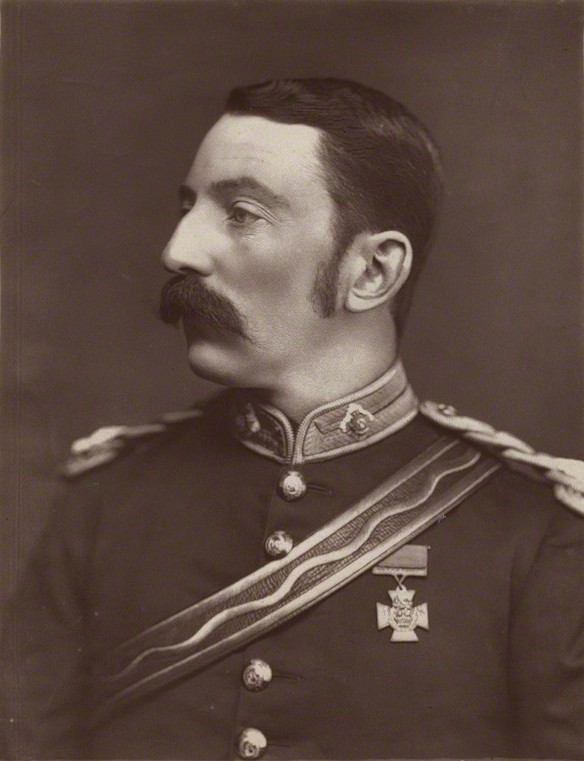 As preparations were nearing completion, a group of cavalry on retreat from Isandlwana arrived and offered to take position on a hill near the station in the direction the Zulus would be coming from. They added their numbers to between 100 and 350 foot soldiers from Natal who had been ordered to remain at the garrison to support B Company. At this point there were several hundred men in the vicinity of Rorke’s Drift, including ‘walking wounded’ in the hospital, and Chard felt his force was sufficient to stave off the coming threat.


 Introducing


 What do you think of The New Game of Human Life? Do you enjoy boardgames, or think you will find one under the Christmas tree?
  Early on, I convinced my traditional publisher, Ulysses Press, to print one of my Regency romances – a book I originally called A Touch of Gold and later called A Touch of Scandal. Ulysses released the book under the title The Scandal of Lady Eleanor. That book has been followed by seven others, each the tale of one of the members of a fictional covert military group operating out of the Home Office during the Napoleonic Wars and known as “the Realm.” The men of the Realm have served their country honorably and have returned home to claim their titles and a chance at love, a fleeting hope each held during their service. Unfortunately, a Baloch warlord claims one of the group has stolen a fist-sized emerald, and Shaheed Mir means to have the jewel’s return, or he will know his revenge.




 Introducing
  Tell us about your new release.


 Every Woman Dreams...