In the singular form the lexicon of a particular subject is all the terms associated with it. The lexicon of a person or group is all the words they commonly use. As a plural noun, a lexicon is an alphabetical list of the words in a language or the words associated with a particular subject. To distinguish lexicon from a dictionary, it is an alphabetical list of the words in a language or the words associated with a particular subject.
These examples are a mix of what one might hear upon the lips of the aristocracy, as well as examples of Cant used upon London’s streets and those terms used by farmers and like in the country.
face-making – begetting children
facer – a violent blow to the face
fadge – make suit or fit
It won’t fadge – It will not do.
fag – used in English public schools; denoted a younger boy who ran errands for an older student (to become “fatigued” by doing these errands)
faggot – a grouping of sticks tied together and used for fuel
Fall away from a horse load to a cart load – a saying indicating one has grown fat
fallow – farmland left temporarily unplated
faro – a gambling game; players bet on the order of the cards being turned over by the dealer
farrier – A farrier is a specialist in equine hoof care, including the trimming and balancing of horses’ hooves and the placing of shoes on their hooves, if necessary. A farrier combines some blacksmith’s skills (fabricating, adapting, and adjusting metal shoes) with some veterinarian’s skills (knowledge of the anatomy and physiology of the lower limb) to care for horses’ feet.
fart catcher – a valet or footman, from his walking behind his master or mistress
A Father’s Legacy to His Daughters – a guide book by John Gregory (1774), which served as a young lady’s guide to conduct; Dr. Gregory suggested that women should hide their knowledge and wisdom to avoid appearing superior.
fellow – a member of a college at Oxford or Cambridge; constituted the governing body of the college
Fellow Commoner – An empty bottle, so called at the university of Cambridge, where fellow commoners are not in general considered as overly full of learning. At Oxford, an empty bottle is called a gentleman commoner for the same reason. They pay at Cambridge 250 li (meaning “pounds,” coming from the Latin word “libra”) a year for the privilege of wearing a gold or silver tassel on their caps. The younger branches of the nobility have the privilege of wearing a hat, and from thence are denominated as Hat Fellow Commoners.
female education – no standard curriculum existed for women; women were instructed in penmanship, reading, basic arithmetic, homemaking; sewing, manners, dancing, art, and music
fen – an area in and around Lincolnshire and Cambridgeshire; low, swampy area
to fence – to pawn or sell to a receiver of stolen goods
fender – a protective grate to keep sparks from falling out onto the floor/carpet
Ferrara – Andrea Ferrara; the name of a famous sword cutter; most of the Highland broad-swords are marked with his name; whence an Andrea Ferrara has become the common name for the glaymore or Highland broad-sword.
Scottish Claymore, National Museum of Scotland. The two-handed highland Claymore, or “claidheamh mor” in Scottish Gaelic, was one of the final developments of the distinctive Scottish sword. By the 16th century, the single-handed Scottish sword with its down-turned quillons had evolved not just into a basket-hilted variety of the same blade, but also a long, two-handed sword with an unique quatrefoil guard. The Claymore was an aggressive infantry weapon. Too large to use on horseback or with a shield. It delivered overpowering blows that would sweep aside any efforts to block or parry. For over two hundred years, the Claymore witnessed inter-clan rivalries and used in wars against the English crown until the Battle of Killiecrankie in 1689. ~ https://www.darksword-armory.com/medieval-weapon/medieval-swords/scottish-claymore-1319/
ferret – a tradesman who sells goods to young unthrifty heirs, at excessive rates, and then continually duns them for the debt
fête – a large fancy party (fete champetre was a large outdoor party)
feuterer -a dog-keeper: from the French vautrier, one that leads the lime hound for the chase
fichu – used as a head or shoulder covering by women; especially for low cut gowns
fiddle faddle – trifling discourse, nonsense
fiddlestick’s end – nothing; the end of the ancient fiddlesticks ended in a point; hence, metaphorically used to express a thing terminating in nothing
figure – an isolated dance step or a series of related steps, especially when referring to a country dance or a quadrille
filch – to steal
fingerpost – road signs (usually at cross roads) in the shape of a finger
flagon – a container for drinking alcohol; had a spout, handle, and lid
fleece – to rob, cheat or plunder
Fleet Prison – a prison housing debtors
flog – to whip
flush in the pockets – full of money
flux – to cheat
fly – a rented horse and carriage
fob – a cheat, trick, or contrivance; also a small breeches pocket for holding a watch
footpads – rogues who rob on foot
Fordyce’s Sermons (or) Sermons to Young Women – by Dr. James Fordyce (1765); explained within a Christian framework how a woman must please a man in order to earn his hand in marriage; women were taught to be docile, soft, and obedient; the sermons emphasizes beauty over education; women were told to avoid exercise
foolscap – 13″ x 17″ paper; bore a watermark of a fool’s cap and bells
Foot Guards – the infantry which guarded the sovereign; there were the Coldstream Guards, the Scots Guards, and the Grenadier Guards
footman – an indoor male servant; cleaned and trimmed the lamps, waited the meal service, and escorted the ladies of the house when the women made calls; normally wore a livery; were matched in height if more than one footman was employed in a household
fortnight – a unit of time equal to 14 days (2 weeks)
foxed – intoxicated
foundling – a child dropped in the streets and found; educated at the parish’s expense
franking – in reality, only members of Parliament (until 1840) could “frank” a letter, meaning to send the post for free (carrying on Parliamentary business without cost to the MP); the MP was to add his name and the date to the address; the letters were to weigh no more than one ounce; the privilege was often abused, however
freeholders – the landowners in a community
French disease – venereal disease (French gout is the same.)
fribble – an effeminate fop: a name borrowed from a celebrated character of the kind, found in the farce of Miss in Her Teens, written by Mr. David Garrick
Stage scene; an episode from David Garrick’s farce “Miss in her Teens” at the Theatre Royal, Covent Garden, with Garrick as Fribble, Henry Woodward as Captain Flash, Jane Hippisley as Biddy Bellair and Hannah Pritchard as Mrs Tag. 1747 Etching and engraving ~ Public Domain
frigate – one of the smaller boats of the British Navy; used for reconnaissance, not part of the line
front – a small hairpiece worn above the forehead (usually by women)
fudge – lies or nonsense
furlong – equivalent to 660 feet; came from the phrase “furrow long”
fusiliers – infantry armed with fusils; later, fusiliers were outfitted as was all other member of the infantry, except they wore busbies
fustian – coarse cotton fabrics, such as corduroy or velveteen; usually in a dark color – a thick cotton and flax (linen) woven fabric. When used as slang, it means b.s. or laying it on thick, which is likely a word made up by the Regency writer, Georgette Heyer, but is generally accepted as true
As most of you are likely to realize by now, I am a “whole brained” individual, which means that although I adore the fine arts, I still possess a very analytical brain. You’ll find me solving word puzzles and sodokus equally. In fact, numbers and statistics are a hidden pleasure. [Did I ever mention that I began my college career as a math major? In fact, if not for a poorly placed professor, who knew little of teaching and less of mathematics, I might have taken a different career choice. My high school teachers of Huntington High School taught rings around the woman. Thank you Mrs. Castleberry and Mrs. Stanley! But I have digressed.] So here’s another of my meticulous posts where I count the use of key words in Austen’s “Pride and Prejudice.” I hope you enjoy this one.
If you have ever read Jane Austen’s masterpiece, you are aware that Mr. Darcy is too “Proud.” But is Darcy the only character who is too Proud in Austen’s “Pride and Prejudice” And are there different types of “Pride”?
When the reader is first introduced to Mr. Darcy in Chapter 3, we learn this of the man: “The gentlemen pronounced him to be a fine figure of a man, the ladies declared he was much handsomer than Mr. Bingley, and he was looked at with great admiration for about half the evening, till his manners gave a disgust which turned the tide of his popularity; for he was discovered to be proud; to be above his company, and above being pleased; and not all his large estate in Derbyshire could then save him from having a most forbidding, disagreeable countenance, and being unworthy to be compared with his friend.”
Also, in Chapter 3, the residents of Meryton contrast Mr. Bingley’s lively and unreserved nature to that of Mr. Darcy. “He was the proudest, most disagreeable man in the world, and every body hoped that he would never come there again.”
Elizabeth’s opinion of the Bingley sisters is not favorable. “They were in fact very fine ladies; not deficient in good humour when they were pleased, nor in the power of making themselves agreeable when they chose it, but proud and conceited.” Chapter 4
In Chapter 5, Charlotte Lucas defends Mr. Darcy to the Bennets, especially to Elizabeth. Charlotte seems to think Mr. Darcy’s demeanor was a result of his upbringing. “One cannot wonder that so very fine a young man, with family, fortune, everything in his favour, should think highly of himself. “If I may so express it, he has a right to be proud.”
Personally, I love this next quote. It was one of the first that rang true when I read “Pride and Prejudice” at the ripe old age of 12. In this one, again, Charlotte Lucas does not view being proud as a “sin” against good manners. “Vanity and pride are different things, though the words are often used synonymously. A person may be proud without being vain. Pride relates more to our opinion of ourselves, vanity to what we would have others think of us.” Chapter 5
Also in Chapter 5, Charlotte’s younger brother aspires to be called proud if he can have Mr. Darcy’s supposed fortune. “If I were as rich as Mr. Darcy,” cried a young Lucas, who came with his sisters, “I should not care how proud I was. I would keep a pack of foxhounds, and drink a bottle of wine a day.”
Darcy and Bingley enjoy a bit of a tease regarding the lack of legibility of Mr. Bingley’s writing, especially as it applies to letter writing. Darcy accuses Bingley of “the appearance of humility. It is often only carelessness of opinion, and sometimes an indirect boast.” When Bingley ask which is the greater offense, Darcy responds with,“The indirect boast; for you are really proud of your defects in writing, because you consider them as proceeding from a rapidity of thought and carelessness of execution, which, if not estimable, you think at least highly interesting. The power of doing anything with quickness is always prized much by the possessor, and often without any attention to the imperfection of the performance.” Chapter 10
In Chapter 14, we are introduced to Lady Catherine de Bourgh. Mr. Collins defends his patroness. “She had also asked him twice to dine at Rosings, and had sent for him only the Saturday before, to make up her pool of quadrille in the evening. Lady Catherine was reckoned proud by many people he knew, but he had never seen anything but affability in her.”
In Chapter 16, Wickham weaves his tale of woe and how the elder Mr. Darcy esteemed him. If Elizabeth had not been looking for another reason to dislike Darcy, she might have realized the “holes” in Wickham’s tale. “How strange!” cried Elizabeth. “How abominable! I wonder that the very pride of this Mr. Darcy has not made him just to you! If from no better motive, that he should not have been too proud to be dishonest — for dishonesty I must call it.”
When Elizabeth cannot quite believe Mr. Wickham’s defamation of Mr. Darcy, Wickham explains his criticism as such, “Yes. It has often led him to be liberal and generous, to give his money freely, to display hospitality, to assist his tenants, and relieve the poor. Family pride, and filial pride — for he is very proud of what his father was — have done this.” Chapter 16
Mr. Wickham does not stop with his disdain for Darcy. He also speaks poorly of Georgiana Darcy. Needless to say, Elizabeth did not hold knowledge of Wickham’s attempted seduction of the girl. Wickham sounds reasonable. What is not to be believed? He shook his head. “I wish I could call her amiable. It gives me pain to speak ill of a Darcy. But she is too much like her brother — very, very proud. As a child, she was affectionate and pleasing, and extremely fond of me; and I have devoted hours and hours to her amusement.” Chapter 16
Mrs. Gardiner plays into Mr. Wickham’s hands. Elizabeth’s aunt holds some knowledge of the Darcys from her time in Lambton. “Mrs. Gardiner had seen Pemberley, and known the late Mr. Darcy by character perfectly well. Here consequently was an inexhaustible subject of discourse. In comparing her recollection of Pemberley with the minute description which Wickham could give, and in bestowing her tribute of praise on the character of its late possessor, she was delighting both him and herself. On being made acquainted with the present Mr. Darcy’s treatment of him, she tried to remember some of that gentleman’s reputed disposition when quite a lad which might agree with it, and was confident at last that she recollected having heard Mr. Fitzwilliam Darcy formerly spoken of as a very proud, ill-natured boy.” Chapter 25
By the end of Chapter 36, Elizabeth has read Darcy’s letter often enough to give him credit for the honor in which he acted. “How differently did everything now appear in which he was concerned! His attentions to Miss King were now the consequence of views solely and hatefully mercenary; and the mediocrity of her fortune proved no longer the moderation of his wishes, but his eagerness to grasp at anything. His behaviour to herself could now have had no tolerable motive; he had either been deceived with regard to her fortune, or had been gratifying his vanity by encouraging the preference which she believed she had most incautiously shown. Every lingering struggle in his favour grew fainter and fainter; and in farther justification of Mr. Darcy, she could not but allow Mr. Bingley, when questioned by Jane, had long ago asserted his blamelessness in the affair; that proud and repulsive as were his manners, she had never, in the whole course of their acquaintance — an acquaintance which had latterly brought them much together, and given her a sort of intimacy with his ways — seen anything that betrayed him to be unprincipled or unjust — anything that spoke him of irreligious or immoral habits; that among his own connections he was esteemed and valued — that even Wickham had allowed him merit as a brother, and that she had often heard him speak so affectionately of his sister as to prove him capable of some amiable feeling; that had his actions been what Mr. Wickham represented them, so gross a violation of everything right could hardly have been concealed from the world; and that friendship between a person capable of it, and such an amiable man as Mr. Bingley, was incomprehensible.”
In Chapter 43, Mrs. Reynolds defends Darcy against the rumors of his prideful nature. “He is the best landlord, and the best master,” said she, “that ever lived; not like the wild young men nowadays, who think of nothing but themselves. There is not one of his tenants or servants but will give him a good name. Some people call him proud; but I am sure I never saw anything of it. To my fancy, it is only because he does not rattle away like other young men.”
At the end of Chapter 43, the Gardiners pronounce their evaluation of Darcy. “The observations of her uncle and aunt now began; and each of them pronounced him to be infinitely superior to anything they had expected. ‘He is perfectly well behaved, polite, and unassuming,’ said her uncle. ‘There is something a little stately in him, to be sure,’ replied her aunt, ‘but it is confined to his air, and is not unbecoming. I can now say with the housekeeper, that though some people may call him proud, I have seen nothing of it.’”
In Chapter 44, upon first meeting Miss Darcy, Elizabeth expects the girl to be uppity, but finds otherwise. “Miss Darcy and her brother appeared, and this formidable introduction took place. With astonishment did Elizabeth see that her new acquaintance was at least as much embarrassed as herself. Since her being at Lambton, she had heard that Miss Darcy was exceedingly proud; but the observation of a very few minutes convinced her that she was only exceedingly shy. She found it difficult to obtain even a word from her beyond a monosyllable.”
In Chapter 45, Elizabeth realizes how others might deem Georgiana’s shyness as pride. “In this house they were received by Miss Darcy, who was sitting there with Mrs. Hurst and Miss Bingley, and the lady with whom she lived in London. Georgiana’s reception of them was very civil, but attended with all the embarrassment which, though proceeding from shyness and the fear of doing wrong, would easily give to those who felt themselves inferior the belief of her being proud and reserved. Mrs. Gardiner and her niece, however, did her justice, and pitied her.”
In Chapter 47, Elizabeth describes Wickham’s perfidy to the Gardiners. “I do indeed,” replied Elizabeth, colouring. “I told you, the other day, of his infamous behaviour to Mr. Darcy; and you yourself, when last at Longbourn, heard in what manner he spoke of the man who had behaved with such forbearance and liberality towards him. And there are other circumstances which I am not at liberty — which it is not worth while to relate; but his lies about the whole Pemberley family are endless. From what he said of Miss Darcy I was thoroughly prepared to see a proud, reserved, disagreeable girl. Yet he knew to the contrary himself. He must know that she was as amiable and unpretending as we have found her.”
In Chapter 50, Elizabeth realizes how much she has lost. “What a triumph for him, as she often thought, could he know that the proposals which she had proudly spurned only four months ago, would now have been most gladly and gratefully received! He was as generous, she doubted not, as the most generous of his sex; but while he was mortal, there must be a triumph.”
In Chapter 52, after learning of Darcy’s involvement in bringing Wickham and Lydia together, Elizabeth reflects on how poorly she treated Darcy. “It was painful, exceedingly painful, to know that they were under obligations to a person who could never receive a return. They owed the restoration of Lydia, her character, every thing, to him. Oh! how heartily did she grieve over every ungracious sensation she had ever encouraged, every saucy speech she had ever directed towards him. For herself she was humbled; but she was proud of him. Proud that in a cause of compassion and honour, he had been able to get the better of himself. She read over her aunt’s commendation of him again and again. It was hardly enough; but it pleased her. She was even sensible of some pleasure, though mixed with regret, on finding how steadfastly both she and her uncle had been persuaded that affection and confidence subsisted between Mr. Darcy and herself.”
In Chapter 53, Mr. Bennet sarcastically speaks of his pride in claiming Wickham as part of the family. “He is as fine a fellow,” said Mr. Bennet, as soon as they were out of the house, “as ever I saw. He simpers, and smirks, and makes love to us all. I am prodigiously proud of him. I defy even Sir William Lucas himself to produce a more valuable son-in-law.”
In Chapter 53, Kitty describes the arrival of Bingley and Darcy to Longbourn. “There is a gentleman with him, mamma,” said Kitty; “who can it be?” “Some acquaintance or other, my dear, I suppose; I am sure I do not know.” “La!” replied Kitty, “it looks just like that man that used to be with him before. Mr. what’s-his-name. That tall, proud man.”
In Chapter 59, Mr. Bennet questions Elizabeth’s motives for accepting Darcy’s proposal. “Have you any other objection,” said Elizabeth, “than your belief of my indifference?” “None at all. We all know him to be a proud, unpleasant sort of man; but this would be nothing if you really liked him.”
Today is Lady Day. This is not a buy one get one free drink at your favorite bar day, though if any in the U.S. realized the significance of the day, they might attempt to create some sort of promotion, but as the day has very religious connotations, maybe it would be best to have second thoughts on the matter. Perhaps Golden Corral might have an easier time in selling “Lady Day.”
According to Hebrew (and later, Christian) tradition, March 25th is the date of Creation. Some traditions also place the fall of Lucifer, the fall of Adam and Eve, the passing of the Israelites through the Red Sea, and the Binding of Isaac on March 25th. In the Western liturgical year, Lady Day is the traditional name in some English-speaking countries of the Feast of the Annunciation, which is celebrated on 25 March, and commemorates the visit of the archangel Gabriel to the Virgin Mary, during which he informed her that she would be the mother of Jesus Christ, the Son of God.
Falling close to the Spring equinox, Lady Day was the first day of the civil year in England, Wales and the British dominions (but not Scotland) until 1752 (when it was harmonized with the Scottish practice of 1 January being New Year’s Day). The British (personal) tax year still ends on “Old” Lady Day (5 April under the ‘new style’ (Gregorian) calendar, which corresponds to 25 March under the ‘old style’ Julian calendar: the Calendar (New Style) Act 1750 advanced the calendar by eleven days. 5 April is still the end of the British tax year for personal taxation.
Totally confused? I do not blame you, but bear with me, and I will attempt to clarify.
In “another life,” so people often say, I was a tax preparer for about five years. Even so, I would not dare to attempt to file my taxes these days without a properly trained tax preparer at hand. I have retirement benefits from three different states and a handful of 1099s from my writing.
All that being said, the Benjamin Franklin quote really only can be applied to “death,” not “taxes,” for tax law change every year, and some years more than others. It is impossible to predict with any accuracy what will change from year to year. That’s because the tax brackets are adjusted each year to account for inflation. Many in the U.S. will be in new tax brackets this year. These are the 2023 tax brackets here in the U.S.
All this has led me to a question I received about taxes during the Regency era. I answered the person right away, but I have purposely saved the response I provided to now, with Tax Day (here in the U.S.) quickly approaching.
Question: Do you know when taxes were paid or how long a person could go without paying taxes before the income from their estate could be seized? I found a lot of information on the types of taxes paid yearly, but nothing about the time of year when they were paid. Any help would be appreciated.
Response: There were hundreds of taxes and so there are a variety of dates on which they would be due. Some were paid as you go, so to speak. For others, the tax man came along and counted the number of windows in the person’s residence and looked at the number of footmen employed and counted the crested carriages owned and other four-wheeled vehicles, etc., and made his demand. A person then had “x” number of days to pay the tax. Some taxes were due in quarter days and some on cross quarter days.
Traditionally – and dating back to the Middle Ages – the quarter days were the 4 dates when servants were hired and rent was paid. They fell on religious festivals every 3 months and were close to the solstices and equinoxes. Any debts were settled and recorded on the quarter days.
In the Regency era, in England, Wales, and Ireland, the quarter days were important events on the calendar. Rents were due, school terms started, and servants might be paid and hired. In England, these four dates fell on: Lady Day or March 25, Midsummer or June 24, Michaelmas or September 29, and Christmas Day. In Scotland the quarter days are 28 February, 28 May, 28 August and 28 November. Meanwhile, the cross-quarter days are four holidays falling in between the quarter days: Candlemas (2 February), May Day (1 May), Lammas (1 August), and All Hallows (1 November). – Note: I am repeating those dates from above, now that they might make a bit more sense.
For years the government’s fiscal year began on Lady Day, 25 March, a quarter day.
Question: Specifically, how long before a tax lien would be placed on the property? When would taxes be considered delinquent, say from 1810, be due?
Response: The tax was due in quarterly installments until the late 1800’s. I would think taxes due in 1810 would not be called delinquent until after 6 April 1811. Then there would be various ways of collecting these taxes before any seizure of the property, etc., so the tax delinquent probably could have until 1812 before property was seized. HOWEVER, in the meantime, the taxes for 1811 and 1812 would have become due. Spiraling debt is a hard lesson to learn.
The delinquent person would be brought before the judges of the court of the Exchequer to have the debt be formally recognized and an order drafted for the property to be seized. The property of peers was handled differently from that of commoners, though it was still seized.
Owners of land or property (according to the size of their landholdings) paid a direct tax. This “land tax” was required of those who owned any property from farms to estates to innkeepers to shopkeepers, etc. Parliament set the tax yearly and, during the 1700s, it was between 2 and 4 shillings in the pound based on the value of the property.
Taxes the 18th Century Way tells us, “An unusual feature of the tax was that it was administered not by government officials, but by unpaid local ‘commissioners’, gentry who were nominated by Parliament and whose names were included in the annual Land Tax Acts. Those who collected the tax were usually local men of modest means, such as farmers or tradesmen.”
The UK Parliament site also speaks to indirect taxes, though this information does not speak to tax days, I found it delightfully interesting, so I am sharing it, as well. “The commonest indirect taxes paid by most people in the 18th century were excise duties. These were levied by Parliament on basic commodities – household essentials such as salt, candles, leather, beer, soap, and starch. Duties on ‘luxury’ items, such as wine, silks, gold and silver thread, silver plate, horses, coaches and hats were aimed at wealthier consumers. Parliament raised or lowered duties, as well as adding new items or dropping others, depending on the needs of the time. In practice, however, consumers were largely unaware of these impositions as it was the traders who actually paid. There were also ‘Assessed Taxes’, of which the best known is the Window Duty. This was first levied by Parliament in 1696 in support of William III’s war with France. House owners paid two shillings on properties with up to ten windows, and four shillings for between 10 and 20 windows. From 1778 the rate was made a variable one depending on the value of the property.”
Now back to the question from my reader, another glitch in answering the question comes with what was known as Correction Tax day was changed to April 6 in 1800.
Source of this matter: The Julian Calendar had been in place since 45 BC. In 1582, Pope Gregory XIII ordered the calendar changed, for the Julian calendar differed from the solar calendar by 11.5 minutes, which was not initially such a big deal, but after 500 years, the difference had built up to 10 days off the solar calendar. Therefore, the Pope introduced the Gregorian calendar. The Gregorian calendar reduced the length of the calendar year from 365.25 days to 365.2425, a reduction of 10 minutes 48 seconds per year. Most of Europe accepted the change, but the British Empire did not embrace the change. However, the difference of 11 days on the calendar was a real-killer for important trade routes, etc., and, moreover, the difference would continue to increase over time.
“On the old British Calendar the tax year began on March 25 (the old New Year’s Day). In order to ensure against losing revenue it was decided by the British Treasury that the tax year, which started on March 25 1752, would be of the usual length (365 days) and therefore it would end on April 4, the following tax year beginning on April 5. Time passed smoothly and most importantly accurately until 1800. Unfortunately, 1800 was not a leap year in the new Gregorian calendar but would have been in the old Julian system. Thus the treasury moved the start of the UK tax year from the April 5 to the April 6 and it has remained there ever since!” (UK Tax History Lesson)
In other words, in typical style, the Treasury was concerned to ensure there would be no loss of tax revenue and no concession to the populous, and so it decided the tax year should remain as 365 days. So the beginning of the following tax year was moved from 25 March to 5 April and everyone was happy, kind of. Having done it once, the Treasury then decreed in 1800, there would be another lost day of revenue, given the century end would have been a leap year under the Julian calendar, whereas it was not under the new Gregorian calendar. Thus 1800 was a leap year for tax purposes, but not for the purpose of the calendar, and so the tax year start was moved on again by a single day to 6 April.
The change in calendar in 1752 had many ramifications. Practically everything else still was due on various quarter days and parliamentary acts often went into effect on March 25.
If you are interested in more information on the Quarter Days, check out this piece on Regency Fiction Writers.
In the Western liturgical year, Lady Day is the traditional name in some English-speaking countries of the Feast of the Annunciation, which is celebrated on 25 March, and commemorates the visit of the archangel Gabriel to the Virgin Mary, during which he informed her that she would be the mother of Jesus. In both the 1549 Prayer Book of Edward VI and the 1662 Book of Common Prayer, this event is known as “The Annunciation of the (Blessed) Virgin Mary.” It is the first of the four traditional English quarter days.
In England there is a long tradition that a standard commercial lease has rents paid quarterly in advance. The practice stems, like much property law, from medieval times. The Kings in those days would have their tax collectors tour around the country collecting taxes on the Christian holy days, so commercial rents took on the same tradition.
From 1155 to 1752, Lady Day was New Year’s Day, meaning the beginning of the new year. The change to 1 January only occurred with the adoption of the Gregorian calendar by Great Britain.
This should be distinguished from the liturgical and historical year, which is still 1 January.
Lady Day was traditionally the day upon which people executed year-long contracts, generally, between landowners and tenant farmers. Farmers’ time of “entry” into new farms and onto new fields often occurred on Lady Day. “As a result, farming families who were changing farms would travel from the old farm to the new one on Lady Day. In 1752, England followed western Europe in switching to the Gregorian calendar from the Julian calendar. The Julian lagged 11 days behind the Gregorian, and hence 25 March in the Old Style calendar became 5 April (“Old Lady Day”), which assumed the role of contractual year-beginning.” (Lady Day)
The Biblical story of the Annunciation is found in Gospel of Luke 1: 26-38:
In the sixth month, God sent the angel Gabriel to Nazareth, a town in Galilee, to a virgin pledged to be married to a man named Joseph, a descendant of David. The virgin’s name was Mary.
The angel went to her and said, “Greetings, you who are highly favoured! The Lord is with you.”
Mary was greatly troubled at his words and wondered what kind of greeting this might be.
But the angel said to her, “Do not be afraid, Mary, you have found favour with God. You will be with child and give birth to a son, and you are to give him the name Jesus. He will be great and will be called the Son of the Most High. The Lord God will give him the throne of his father David, and he will reign over the house of Jacob forever; his kingdom will never end.”
“How will this be,” Mary asked the angel, “since I am a virgin?”
The angel answered, “The Holy Spirit will come upon you, and the power of the Most High will overshadow you. So the holy one to be born will be called the Son of God. Even Elizabeth your relative is going to have a child in her old age, and she who was said to be barren is in her sixth month. For nothing is impossible with God.”
“I am the Lord’s servant,” Mary answered. “May it be to me as you have said.” Then the angel left her.
The quarter days are the four days marking the beginning of each quarter of the year. They are traditionally regarded as the days for settling certain debts, such as rent. Since the Middle Ages, these days marked the four parts of the year. “Note that the days are different for England and Scotland. Both mark the start of the seasons, but according to different calendars. The English Quarter Days roughly align with the astronomical seasons, while the Scottish Quarter Days mark (more or less) the start of the seasons according to the Celtic calendar. These Scottish days correspond more closely, but not exactly, to the cross-quarter days, or mid-season days, of the English calendar.” (Quarter Days)
In southern England, Wales and Ireland are what we, generally read in Regency romances. They are Lady Day – March 25, Feast of the Annunciation of the Virgin Mary, the traditional day for hiring farm workers for the coming year Midsummer – June 24, Feast of St John the Baptist, the midpoint of the growing season Michaelmas – September 29, Feast of St. Michael the Archangel, start of the harvest Christmas – December 25, Feast of the Birth of Jesus, high point of the year, when farm workers were paid for the year’s labor
Meanwhile, in the northern part of England and in Scotland, the four Quarter Days (also called Old Scottish Term Days in Scotland) are Candlemas – February 2, Feast of the Purification of the Virgin Mary Whitsunday – May 15, Feast of the Holy Spirit Lammas – August 1, Feast of St Peter’s Deliverance from Prison Martinmas – November 11, Feast of St Martin the Bishop
In Chapter One of Jane Austen’s Pride and Prejudice, Mrs. Bennet tells her husband something of Mr. Bingley’s arrival at Netherfield Park. The speech tells us Bingley will take possession at Michaelmas, 29 September, when contracts were customarily signed for such adventures.
“Why, my dear, you must know, Mrs. Long says that Netherfield is taken by a young man of large fortune from the north of England; that he came down on Monday in a chaise and four to see the place, and was so much delighted with it, that he agreed with Mr. Morris immediately; that he is to take possession before Michaelmas, and some of his servants are to be in the house by the end of next week.”
Quarter days were also the days that servants were hired or were paid. Cottagers on large estates paid their rents on these days, and I assume, so did many living in the larger cities, such as London. I do know that leasehold payments and businesses paid rents on the Quarter Days. Other debts were also paid on these days, and legal matters were taken up. Money owed to the poor was delivered. Taxes were collected.
School terms often aligned with the Quarter Days. For example, Michaelmas term at Cambridge runs from October through December, the Lent term from January to March, and the Easter term from April to June.
In the singular form the lexicon of a particular subject is all the terms associated with it. The lexicon of a person or group is all the words they commonly use. As a plural noun, a lexicon is an alphabetical list of the words in a language or the words associated with a particular subject. To distinguish lexicon from a dictionary, it is an alphabetical list of the words in a language or the words associated with a particular subject.
These examples are a mix of what one might hear upon the lips of the aristocracy, as well as examples of Cant used upon London’s streets and those terms used by farmers and like in the country.
earnest money – the first installment of a financial bargain; often the master of a household hiring a servant at a hiring fair offered earnest money to secure the person’s services
Easter term – one of the terms of the law courts in London, Oxford, or Cambridge
easy virtue – a lady of easy virtue can be easily seduced
East India Company – privately ruled India until the British government took over in the wake of the Mutiny in 1857
Eat One’s Terms – to study for the bar; to be eligible to be “called to the bar,” a man had to eat a certain number of meals at the Inns of Court
ecarte – a popular gambling game
elder – a medicinal berry used to make Elderberry wine
entail – a legal term which indicated that a landed estate was tied to a particular person (the heir); the property could not be sold or mortgaged: An inheritance of real property which cannot be sold by the owner but which passes by law to the owner’s heir upon his death. The purpose of an entail was to keep the land of a family intact in the main line of succession. The heir to an entailed estate could not sell the land, or bequeath it to anyone but his direct heir. Some entails were tied to a title and were defined in the
Empire waist – In England, the early 1800s (up to 1820) was known as the Regency Period, but in France, the same period was known as the Empire Period. England looked to France as the leader in fashion. Dresses with an Empire waist were straight (tube or column shaped) and with a low neckline. The waistline was high, located just below the bosom.
Empire style dress which can be found on Amazon
endowment – generally, this references funds structured in a consistent manner so as to consistently provide an income to a given individual, family or organization.
engagement – as in the traditional promise or agreement of marriage. Upon a proposal’s acceptance, the suitor would seek the acceptance of the father (or guardian) of the lady.
(breaking an) engagement – This could ruin a person. Generally, a woman could do it at any time, though she might be deemed a flirt or worse if she did it often. Older men did not break an engagement, though younger men could if it was determined that he was seduced by a ‘gold digger’.
elbow room – sufficient space to act in
“out at elbows” - is said of an estate that is mortgaged
Ellenborough Lodge- The King’s Bench Prison; Lord Ellenborough’s Teeth were the chevaux de frize around the top of the prison. King’s Bench prison (London) took its name from the court it originally served from the 14th cent. In the 16th cent. it was one of the prisons used to hold political and religious prisoners during the swings of persecution. It later became a flourishing debtors’ prison infamous for the privilege it offered the wealthy
Lord Ellenborough, whose birth name was, by a piece of nominative determinism, Edward Law, was Lord Chief Justice from 1802 until 1817, earned a reputation for being harsh and overbearing towards counsel and sometimes showed remarkable bias against the accused in his summing ups to the jury.
Portrait of Edward Law, 1st Baron Ellenborough (1750-1818), M.P., Lord Chief Justice of England (1750-1818), three-quarter-length, in judicial robes with his chain of office – via Wikipedia
English country dance – the most frequent dance form of the period; the dancing couples stood opposite (etre contre) each other in a lien; contre-dancing was Anglicized as country-dancing
English Gentleman – a book by Richard Braithwait (1622); a popular courtesy book for gentlemen; a “self-help” book that included the proper protocol in a social context
envy – a common theme in Jane Austen’s novels
Epigrammatism – Jane Austen told her sister Cassandra that her readers delighted in Epigrammatism of the general stile (sic); Austen refers to clever, witty, and terse remarks
Epistolary Style – a novel where the plot is rendered through letters
Epsom Downs – the location of the Derby (in Surrey, south of London)
equipage – a generic term to denote a horse and carriage (occasionally it also referred to the servants accompanying the carriage)
equipt – rich; also having new clothes. Well equipt: full of money or well dressed
escritoire – a writing desk with small compartments for writing implements and paper
Established Church – the Church of England
execution – seizing a person and his good (pursuant of a court order)
expectations – denoting the likelihood of inheriting wealth (i.e., Dickens’ Great Expectations)
exquisite – a man excessively concerned about appearance, clothes, and grooming. Usually synonymous with dandy or coxcomb. Typically negative connotations, often used in satire, about a man being fussy or effeminate
Étiquette – in French, the word means “ticket”; proper etiquette was the ticket to social acceptability, a mix of good manners and polite behavior
Thinking Russia was considering an alliance with England, Napoleon Bonaparte attempted to invade Russia, but the bitter cold and Russia’s own efforts was more than he could accomplish. “A military campaign, known in Russia as the Patriotic War of 1812 and in France as the Russian Campaign, that began in June 1812 when Napoleon’s Grande Armée crossed the Niemen River to engage and defeat the Russian army. Napoleon hoped to compel Tsar Alexander I of Russia to cease trading with British merchants through proxies in an effort to pressure the United Kingdom to sue for peace. The official political aim of the campaign was to liberate Poland from the threat of Russia.
Napoleon on Board the Bellerophon, exhibited in 1880 by Sir William Quiller Orchardson. Orchardson depicts the morning of 23 July 1815, as Napoleon watches the French shoreline recede. Public Domain
“The invasion of Russia demonstrates the importance of logistics in military planning. Napoleon and the Grande Armée developed a proclivity for living off the land that served them well in the densely populated and agriculturally rich central Europe with its network of roads. Rapid forced marches dazed and confused old order Austrian and Prussian armies and made foraging difficult. In Russia, many of the Grande Armée’s methods of operation did not work and they were handicapped by the lack of winter horse shoes, which made it impossible for the horses to obtain traction on snow and ice. Forced marches often left troops without supplies as the wagons struggled to keep up. Lack of food and water in thinly populated, agriculturally sparse regions led to the death of troops by exposing them to waterborne diseases through drinking from mud puddles and eating rotten food and forage. The front of the army received whatever could be provided while the formations behind starved. In fact, starvation, desertion, typhus, and suicide would cost the French Army more men than all the battles of the Russian invasion combined. Following the campaign, a saying arose that the Generals Janvier and Février (January and February) defeated Napoleon, alluding to the Russian Winter. While the harsh weather was an important factor in the final defeat of the French Army, historians point out that most French losses took place before the winter and the common narrative that identified the extremely cold weather as the main reason behind the French loss is a myth (perpetuated also by Napoleon’s advisers).” [Invasion of Russia]
Much of Europe united against Napoleon, and in 1814, Bonaparte offered to step down and leave his son in his place. The European forced rejected the idea, and he abdicated and was sent to Elba.
Less than a year following his abdication (April 6, 1814) and the Bourbon Restoration, Napoleon left his island exile in the Tyrrhenian Sea and landed at Cannes on March 1, leading 1,500 men, and marched at once upon Paris. Louis XVIII fled to Ghent on March 13, and Napoleon entered Paris one week later. To broaden his support, Napoleon made liberal changes to the Imperial Constitution, which led a number of former opponents, most notably Benjamin Constant, to rally to his cause. On March 25 Austria, Britain, Prussia, and Russia concluded an alliance against Napoleon and forced a series of military engagements leading up to the fatal Battle of Waterloo (June 18).
Steuben, Carl von, “Napoleon’s Return from Island of Elba, March 7th 1815” (1818). Prints, Drawings and Watercolors from the Anne S.K. Brown Military Collection. Brown Digital Repository. Brown University Library. https://repository.library.brown.edu/studio/item/bdr:245633/
In early March 1815, he easily escaped from Elba and made his way across France to return to Paris, where he regained supporters and reclaimed the title of Napoleon I, Emperor of France. The day he marched into France was 20 March1815. The next Hundred Days would prove his final hurrah.
The Hundred Days is also known as the War of the Seventh Coalition. Napoleon had been on Elba for a mere 11 months before he attempted to take control of France and Europe once more. The War of the Seventh Coalition includes such important battles as the Neapolitan War [also known as the Austro-Neapolitan War, was a conflict between the Napoleonic Kingdom of Naples and the Austrian Empire. It started on 15 March 1815, when King Joachim Murat declared war on Austria, and ended on 20 May 1815, with the signing of the Treaty of Casalanza.], the Battle of Quatre Bras, the Battle of Ligny (both Napoleon victories), and the Battle of Waterloo (where Napoleon was soundly defeated).
Dighton, Denis, “The 7th Queen’s Own Hussars under Sir Edward Kerrison, charging the French at Quatre Bras. 16th June 1815” (1818). Prints, Drawings and Watercolors from the Anne S.K. Brown Military Collection. Brown Digital Repository. Brown University Library. https://repository.library.brown.edu/studio/item/bdr:238479/
The phrase les Cent Jours (the hundred days) was first used by the perfect of Paris, Gaspard, comte de Chabrol, in his speech welcoming King Louis XVIII back to the throne.
Napoleon’s defeat ultimately signaled the end of France’s domination of Europe. He abdicated for a second time and was exiled to the remote island of Saint Helena, in the southern Atlantic Ocean, where he lived out the rest of his days. He died at age 52 on May 5, 1821.
Psychology Today tells us, “Human beings are built to size each other up quickly. These first impressions are influenced by a number of factors, such as facial shape, vocal inflection, attractiveness, and general emotional state. People tend to get attached to their initial impressions of others and find it very difficult to change their opinion, even when presented with lots of evidence to the contrary. As a result, it’s important to be aware of how one comes across to others during a first meeting.”
We have all taken a first impression of another individual. You encounter the person at the grocery store, in a public park, in school, etc., and you create (consciously or subconsciously) a mental image of that person. How accuracy that snap judgement is can prove debatable. Such factors as where you encounter them, the person’s looks, demeanor, gender, language (this is a big one for me as a former English teacher), posture, voice, etc. all lend themselves to forming that first impression.
First impressions can be affected by whether we are alone or with others. We found that to be true when Elizabeth Bennet first encounters Mr. Fitzwilliam Darcy at the Meryton Assembly in Jane Austen’s Pride and Prejudice. The original title of Austen’s most famous tale was “First Impressions.” Let us see what our two main characters thought of each other upon their first encounter.
Mr. Darcy catches everyone’s eye, for he tall and handsome and reportedly has an income of 10,000 per year. Mr. Darcy is the “another young man” of whom they all have heard who will attend the assembly with the Bingley party. Sandsifterfive tells us . . .
That ‘another young man’ is, of course, Mr. Darcy, and his words and actions at Chapter Three’s Assembly Ball will affect every succeeding page of the Novel. His pride gives rise to no small reactions of wounded pride and intense prejudice on the part of Elizabeth, the object of his studied insult.Studied because Austen makes clear that Mr. Darcy is aware that Elizabeth is listening when he tells Bingley that Elizabeth:
‘… is tolerable; but not handsome enough to tempt me; and I am in no humour at present to give consequence to young ladies who are slighted by other men.’
Mr. Darcy: a fine, tall person, handsome features, noble mien … looked at with great admiration for about half the evening, till his manners gave a disgust … for he was discovered to be proud, to be above his company, and above being pleased.
Elizabeth: who
… remained with no very cordial feelings toward him [Mr. Darcy, of course]. She told the story however with great spirit among her friends; for she had a lively, playful disposition, which delighted in any thing ridiculous.
I have previously searched out the words “pride” and “prejudice” to note how often Austen used those words in her beloved novel. Now let us see how she used first “impressions,” the intended title.
From Chapter 35, a part of Mr. Darcy’s letter to Elizabeth: “I must now mention a circumstance which I would wish to forget myself, and which no obligation less than the present should induce me to unfold to any human being. Having said thus much, I feel no doubt of your secrecy. My sister, who is more than ten years my junior, was left to the guardianship of my mother’s nephew, Colonel Fitzwilliam, and myself. About a year ago she was taken from school, and an establishment formed for her in London; and last summer she went with the lady who presided over it to Ramsgate; and thither also went Mr. Wickham, undoubtedly by design; for there proved to have been a prior acquaintance between him and Mrs. Younge, in whose character we were most unhappily deceived; and by her connivance and aid, he so far recommended himself to Georgiana, whose affectionate heart retained a strong impression of his kindness to her as a child, that she was persuaded to believe herself in love, and to consent to an elopement. She was then but fifteen, which must be her excuse; and after stating her imprudence, I am happy to add that I owed the knowledge of it to herself. I joined them unexpectedly a day or two before the intended elopement, and then Georgiana, unable to support the idea of grieving and offending a brother whom she almost looked up to as a father, acknowledged the whole to me. You may imagine what I felt and how I acted. Regard for my sister’s credit and feelings prevented any public exposure; but I wrote to Mr. Wickham, who left the place immediately, and Mrs. Younge was of course removed from her charge. Mr. Wickham’s chief object was unquestionably my sister’s fortune, which is thirty thousand pounds; but I cannot help supposing that the hope of revenging himself on me was a strong inducement. His revenge would have been complete indeed.
From Chapter 36, Elizabeth second guesses her “first impression”: When she came to that part of the letter in which her family were mentioned in terms of such mortifying, yet merited reproach, her sense of shame was severe. The justice of the charge struck her too forcibly for denial, and the circumstances to which he particularly alluded as having passed at the Netherfield ball, and as confirming all his first disapprobation, could not have made a stronger impression on his mind than on hers.
From Chapter 44, we note Elizabeth’s change of heart: As for Elizabeth, her thoughts were at Pemberley this evening more than the last; and the evening, though as it passed it seemed long, was not long enough to determine her feelings towards one in that mansion; and she lay awake two whole hours endeavouring to make them out. She certainly did not hate him. No; hatred had vanished long ago, and she had almost as long been ashamed of ever feeling a dislike against him, that could be so called. The respect created by the conviction of his valuable qualities, though at first unwillingly admitted, had for some time ceased to be repugnant to her feelings; and it was now heightened into somewhat of a friendlier nature by the testimony so highly in his favour, and bringing forward his disposition in so amiable a light, which yesterday had produced. But above all, above respect and esteem, there was a motive within her of goodwill which could not be overlooked. It was gratitude — gratitude, not merely for having once loved her, but for loving her still well enough to forgive all the petulance and acrimony of her manner in rejecting him, and all the unjust accusations accompanying her rejection. He who, she had been persuaded, would avoid her as his greatest enemy, seemed, on this accidental meeting, most eager to preserve the acquaintance, and without any indelicate display of regard, or any peculiarity of manner, where their two selves only were concerned, was soliciting the good opinion of her friends, and bent on making her known to his sister. Such a change in a man of so much pride, excited not only astonishment but gratitude — for to love, ardent love, it must be attributed; and as such, its impression on her was of a sort to be encouraged, as by no means unpleasing, though it could not be exactly defined. She respected, she esteemed, she was grateful to him, she felt a real interest in his welfare; and she only wanted to know how far she wished that welfare to depend upon herself, and how far it would be for the happiness of both that she should employ the power, which her fancy told her she still possessed, of bringing on the renewal of his addresses.
From Chapter 48, Mr. Bennet has returned from his search for Lydia in London. He does not blame Elizabeth for what happened. Instead, he indicates she practiced wisdom, when he did not.
When Mr. Bennet arrived, he had all the appearance of his usual philosophic composure. He said as little as he had ever been in the habit of saying; made no mention of the business that had taken him away, and it was some time before his daughters had courage to speak of it.
It was not till the afternoon, when he joined them at tea, that Elizabeth ventured to introduce the subject; and then, on her briefly expressing her sorrow for what he must have endured, he replied, “Say nothing of that. Who should suffer but myself? It has been my own doing, and I ought to feel it.”
“You must not be too severe upon yourself,” replied Elizabeth.
“You may well warn me against such an evil. Human nature is so prone to fall into it! No, Lizzy, let me once in my life feel how much I have been to blame. I am not afraid of being overpowered by the impression. It will pass away soon enough.”
“Do you suppose them to be in London?”
“Yes; where else can they be so well concealed?’
“And Lydia used to want to go to London,” added Kitty.
“She is happy, then,” said her father drily; “and her residence there will probably be of some duration.”
Then, after a short silence, he continued —
“Lizzy, I bear you no ill-will for being justified in your advice to me last May, which, considering the event, shews some greatness of mind.”
The next reference to “impressions” occurs in Chapter 55. This is when Mrs. Bennet is attempting to remove her other daughters from the room so Mr. Bingley might propose to Jane.
The same anxiety to get them by themselves, was visible again in the evening. After tea Mr. Bennet retired to the library, as was his custom, and Mary went upstairs to her instrument. Two obstacles of the five being thus removed, Mrs. Bennet sat looking and winking at Elizabeth and Catherine for a considerable time, without making any impression on them. Elizabeth would not observe her; and when at last Kitty did, she very innocently said, “What is the matter, mama? What do you keep winking at me for? What am I to do?”
Hoping for a more enjoyable response to his proposal to Elizabeth Bennet, he asks her again in Chapter 58, which is where we find “impression” once more.
“We will not quarrel for the greater share of blame annexed to that evening,” said Elizabeth; “The conduct of neither, if strictly examined, will be irreproachable. But since then we have both, I hope, improved in civility.”
“I cannot be so easily reconciled to myself. The recollection of what I then said — of my conduct, my manners, my expressions during the whole of it — is now, and has been many months, inexpressibly painful to me. Your reproof, so well applied, I shall never forget: ‘Had you behaved in a more gentlemanlike manner.’ Those were your words. You know not, you can scarcely conceive, how they have tortured me; though it was some time, I confess, before I was reasonable enough to allow their justice.”
“I was certainly very far from expecting them to make so strong an impression. I had not the smallest idea of their being ever felt in such a way.”
“I can easily believe it. You thought me then devoid of every proper feeling; I am sure you did. The turn of your countenance I shall never forget, as you said that I could not have addressed you in any possible way that would induce you to accept me.”
The final reference comes from Chapter 59 when Mr. Bennet agrees to Elizabeth marrying Mr. Darcy.
Her father was walking about the room, looking grave and anxious. “Lizzy,” said he, “what are you doing? Are you out of your senses, to be accepting this man? Have not you always hated him?”
How earnestly did she then wish that her former opinions had been more reasonable, her expressions more moderate! It would have spared her from explanations and professions which it was exceedingly awkward to give; but they were now necessary, and she assured him with some confusion, of her attachment to Mr. Darcy.
“Or, in other words, you are determined to have him. He is rich, to be sure, and you may have more fine clothes and fine carriages than Jane. But will they make you happy?”
“Have you any other objections,” said Elizabeth, “than your belief of my indifference?”
“None at all. We all know him to be a proud, unpleasant sort of a man; but this would be nothing if you really liked him.”
“I do, I do like him,” she replied, with tears in her eyes; “I love him. Indeed he has no improper pride. He is perfectly amiable. You do not know what he really is; then pray do not pain me by speaking of him in such terms.”
“Lizzy,” said her father, “I have given him my consent. He is the kind of man, indeed, to whom I should never dare refuse anything which he condescended to ask. I now give it to you, if you are resolved on having him. But let me advise you to think better of it. I know your disposition, Lizzy. I know that you could be neither happy nor respectable unless you truly esteemed your husband — unless you looked up to him as a superior. Your lively talents would place you in the greatest danger in an unequal marriage. You could scarcely escape discredit and misery. My child, let me not have the grief of seeing you unable to respect your partner in life. You know not what you are about.”
Elizabeth, still more affected, was earnest and solemn in her reply; and at length, by repeated assurances that Mr. Darcy was really the object of her choice, by explaining the gradual change which her estimation of him had undergone, relating her absolute certainty that his affection was not the work of a day, but had stood the test of many months suspense, and enumerating with energy all his good qualities, she did conquer her father’s incredulity, and reconcile him to the match.
“Well, my dear,” said he, when she ceased speaking, “I have no more to say. If this be the case, he deserves you. I could not have parted with you, my Lizzy, to any one less worthy.” To complete the favourable impression, she then told him what Mr. Darcy had voluntarily done for Lydia. He heard her with astonishment.
“This is an evening of wonders indeed! And so, Darcy did everything — made up the match, gave the money, paid the fellow’s debts, and got him his commission! So much the better. It will save me a world of trouble and economy. Had it been your uncle’s doing, I must and would have paid him; but these violent young lovers carry everything their own way. I shall offer to pay him to-morrow: he will rant and storm about his love for you, and there will be an end of the matter.” He then recollected her embarrassment a few days before, on his reading Mr. Collins’s letter; and after laughing at her some time, allowed her at last to go, saying, as she quitted the room, “If any young men come for Mary or Kitty, send them in, for I am quite at leisure.”
Elizabeth’s mind was now relieved from a very heavy weight, and, after half an hour’s quiet reflection in her own room, she was able to join the others with tolerable composure. Everything was too recent for gaiety, but the evening passed tranquilly away; there was no longer anything material to be dreaded, and the comfort of ease and familiarity would come in time.
That is it. Only 7 times was “impressions” used in the novel originally entitled First Impressions. Whereas, variations of “pride, proud, and prideful” appear more than 130 times. Enough said.
In the singular form the lexicon of a particular subject is all the terms associated with it. The lexicon of a person or group is all the words they commonly use. As a plural noun, a lexicon is an alphabetical list of the words in a language or the words associated with a particular subject. To distinguish lexicon from a dictionary, it is an alphabetical list of the words in a language or the words associated with a particular subject.
These examples are a mix of what one might hear upon the lips of the aristocracy, as well as examples of Cant used upon London’s streets and those terms used by farmers and like in the country.
doctor – milk and water, with a little rum and nutmeg; also the name of the composition distillers used to make spirits to appear stronger than they were
doctors – loaded dice
Doctors’ Commons – where the ecclesiastical and admiralty courts met; south of St. Paul’s Cathedral; marriage licenses were issued and wills written there
Dog Latin – Barbarous Latin, such as was formerly used by the lawyers in their pleading
doing it much too brown – overdoing it, so that it is no longer credible
Don – head of a college at Oxford or Cambridge; another name for a “tutor”
done up – ruined by gaming and extravagances
dot and go one – to waddle: generally applied to person who have one leg shorter than the other, and who, as the sea phrases are keen to say, go upon an uneven keel; also a jeering appellation for an inferior writing-master or teacher of arithmetic
Double First – the title given to the person who received first prize in both the classics and in mathematics honor exams at Oxford
Dowager – a title given to a widow of rank;
The widow of a peer, eg the Dowager Countess of Somewhere. The term was not added to a woman’s title unless and until the new (male) holder of the title married. For example, if the new Earl of Somewhere, the son of the late earl, is a young man when he inherits the title and has no wife, his mother continues to be styled Countess of Somewhere. When he marries, his wife takes that title and his mother becomes the Dowager Countess. The term is also sometimes used informally, and disparagingly, to refer to an older woman of the upper classes.
dowry – the monetary settlement the woman brings to the marriage
doxies – female beggars, wenches, and whores
drag – a private stagecoach; usually pulled by four horses
2nd Royal North British Dragoons on the Line of March 1743 by Harry Payne
dragoon – cavalrymen who rode into battle on horseback and then dismounted to fight; shot a pistol that send out a “flame” like a dragon
dragooning it – a man who occupies two branches of the same professions, is said to dragoon it, because like the soldier of that denomination, he serves in a double capacity; such as a physician who furnishes the medicines and compounds his own prescriptions
dram – a glass or small measure of any spirituous liquors, which, being originally sol by apothecaries, were estimated by drams, ounces, &c.
draw someone’s cork – punch in the nose and cause to bleed
drawers – long underpants; originally were two separate leggings tied together at the waist; generally knee length
drawing room – room used for after-dinner gatherings; usually large enough for informal dancing, a pianoforte, etc. (see comment below)
dressing for Supper – Supper was a formal meal; ladies and gentlemen don their best clothing for dinner.
drive unicorn – drive a vehicle with 3 horses, one in front of the other two
dropsy – having fluid build up in the joints in such diseases as diabetes or emphysema
drum – A party. Also, follow the drum, meaning to follow the army. For example, a woman who joins her soldier husband wherever he is posted is said to follow the drum.
drummer – a jockey term for a horse that throws about his forelegs in an irregular manner
duck legs – short legs
ducks and drakes – skipping stones across the surface of a river, lake, etc.
dudgeon: a feeling of offense or resentment; anger
duds – clothes
Duke Humphrey – to dine with Duke Humphrey was to fast. In old St. Paul’s Church was an aisle called Duke Humphrey’s walk (from a tomb vulgarly called his, but, in reality, belonging to John of Gaunt) and persons who walked there, while others were at dinner, were said to dine with Duke Humphrey.
dumb-founded – silenced on a subject
dun territory – in debt
(This post went up early, and several of my followers saw it then. One of them was LordBeariOfBow. Brian assures me the correct term is “withdrawing room,” not “drawing room.” I told him in Regency novels, the “withdrawing room” was the room set aside for the ladies to see to a torn hem or their personal needs during a ball. He was kind enough to send me these links to illustrate his point. I bow to his British heritage…
Here’s some interesting links to the ……….room. the last of the 3 is the most interesting to my mind.
William Herschel – Public Domain ~ supposedly by Lemuel Francis Abbott
Frederick William Herschel was a German born astronomer and composer, residing in England during the late 1750s. He was nineteen when he came to live in England. In 1774, Herschel constructed the first of his large telescopes.
On 13 March 1781, while making observations he saw something “unusual” in the constellation of Gemini, Herschel noticed an object appearing as a disk. Initially, he thought it might be a comet or some sort of stellar disc. He reported his find to the Astronomer Royal, one Nevil Maskelyne, while he continued to make additional observations of the object. Afterwards, Anders Lexell, a Russian Academician, computed the orbit and determined it was likely planetary.
Herschel’s find was the planet Uranus. His find was the first planet to be discovered and confirmed by other astronomers since antiquity, meaning the ancient past and before the Middle Ages. Herschel became famous immediately, and King George III appointed him Court Astronomer. He was elected a Fellow of the Royal Society and was presented with funds to construct new and better telescopes.
Initially, Herschel called the planet the “Georgian star,” in honor of King George III, but, needless to say, not all liked the name, especially the French, who called the discovery after Herschel. Eventually, all involved agreed to call the planet “Uranus.”
Herschel received the Copley Medal [The Copley Medal is the most prestigious award of the Royal Society, conferred “for sustained, outstanding achievements in any field of science”. It alternates between the physical sciences or mathematics and the biological sciences and was elected a Fellow of the Royal Society. ]
In 1782, he was appointed as the “King’s Astronomer,” not to be confused with the “Astronomer Royal.” [Astronomer royal is a senior post in the Royal Households of the United Kingdom. There are two officers, the senior being the astronomer royal dating from 22 June 1675; the junior is the astronomer royal for Scotland dating from 1834.The post was created by King Charles II in 1675, at the same time as he founded the Royal Observatory, Greenwich.]
From 1782 to 1802, and most intensively from 1783 to 1790, Herschel conducted systematic surveys in search of “deep-sky” or non-stellar objects with two 20-foot-focal-length (610 cm), 12-and-18.7-inch-aperture (30 and 47 cm) telescopes (in combination with his favoured 6-inch-aperture instrument). Excluding duplicated and “lost” entries, Herschel ultimately discovered over 2,400 objects defined by him as nebulae. [Barentine, John C. (2015). The Lost Constellations: A History of Obsolete, Extinct, or Forgotten Star Lore. Springer. p. 410.]
We now know that Uranus is one of coldest of the planets. It was named after the Greek God of the Sky. Uranus is the seventh planet from the Sun and is considered an ice giant because it is largely made up of water, ammonia, and methane in solid form. Like all the other planets, Uranus was likely formed in a massive, ancient cloud of gas, dust, and ice that collapsed into a spinning disc. The planet is often dubbed an ice giant, since at least 80% of its mass is a fluid mix of water, methane and ammonia ice. Unlike the other planets of the solar system, Uranus is tilted so far that it essentially orbits the sun on its side, with the axis of its spin nearly pointing at the star.
Herschel and his sister Caroline (also a noted astronomer) moved to Datchet, England, to continue his work as an astronomer and telescope maker. His reputation along those lines was well-known and he sold over completed reflector telescopes to British and Continental astronomers.
Herschel’s Grand Forty feet Reflecting Telescopes A hand-coloured illustration of William Herschel’s massive reflecting telescope with a focal length of forty feet, which was erected at his home in Slough. Completed in 1789, the telescope became a local tourist attraction and was even featured on Ordnance Survey maps. By 1840, however, it was no longer used and was dismantled, although part of it is now on display at the Royal Observatory, Greenwich. This image of the telescope was engraved for the Encyclopedia Londinensis in 1819 as part of its treatment of optics. Herschel’s Grand Forty feet Reflecting Telescopes ~ Public Domain
Herschel pioneered the use of astronomical spectrophotometry, using prisms and temperature measuring equipment to measure the wavelength distribution of stellar spectra. In the course of these investigations, Herschel discovered infrared radiation. [“Herschel discovers infrared light”. Cool Cosmos.] Other work included an improved determination of the rotation period of Mars, [“Mars in the Classroom”. Copus.] the discovery that the Martian polar caps vary seasonally, the discovery of Titania and Oberon (moons of Uranus) and Enceladus and Mimas (moons of Saturn). Herschel was made a Knight of the Royal Guelphic Order in 1816. He was the first President of the Royal Astronomical Society when it was founded in 1820. He died in August 1822, and his work was continued by his only son, John Herschel.
In addition to his scientific studies, Herschel was a well-known musician, playing both oboe and violin and following in the footsteps of his father. He was amazingly talented.
Herschel’s complete musical works were as follows:
18 symphonies for small orchestra (1760–1762)
6 symphonies for large orchestra (1762–1764)
12 concertos for oboe, violin and viola (1759–1764)
2 concertos for organ
6 sonatas for violin, cello and harpsichord (published 1769)
12 solos for violin and basso continuo (1763)
24 capriccios and 1 sonata for solo violin
1 andante for two basset horns, two oboes, two horns and two bassoons.
Various vocal works including a “Te Deum”, psalms, motets and sacred chants along with some catches.
Is it not odd that Austen chose originally to name her novel First Impressions, when it is not “first impressions,” which bring Elizabeth Bennet “enlightenment”?
Initially, Elizabeth finds everyone, but Mr. Darcy, as “amiable.” To prove my point about the slow process that brings about Elizabeth’s change of heart, mayhap we should think about how often the word “amiable” is used in Pride and Prejudice and by whom. For example, Mr. Collins throws the word about as the ultimate superlative (as in describing Miss De Bourgh as “perfectly amiable”), and we all likely possess the same opinion of Mr. Collins’ sensibility. I would venture the majority of us think of the word “amiable” in regards to displaying a friendly manner. If so, how is Anne De Bourgh “perfectly amiable”?
Mr. Collins refers to Elizabeth as “amiable” in his proposal, but later transfers the word to refer to Charlotte Lucas. Elizabeth says Charlotte is “very amiable” in accepting Mr. Collins’ plight. Elizabeth also speaks of Wickham as “amiable.” Do you notice a pattern that those who act insensibly are the ones named as “amiable”? Mayhap, then: If Mr. Darcy is not “amiable,” he is the most sensible of Elizabeth’s acquaintances.
Elizabeth calls Mr. Bingley “truly amiable,” but that is long before she comes to the realization that his weak character has permitted him to be swayed by his sisters and Mr. Darcy to leave Netherfield and Jane Bennet behind. Is amiability then a weakness?
Dictionary.comdefines the adjective as… 1. having or showing pleasant, good-natured personal qualities; affable: an amiable disposition. 2. friendly; sociable: an amiable greeting; an amiable gathering. 3. agreeable; willing to accept the wishes, decisions, or suggestions of another or others. 4. Obsolete. lovable or lovely.
Let us take a look at the word “amiable” as it is used in Pride and Prejudice.
Chapter 3: Such amiable qualities must speak for themselves. What a contrast between him and his friend! Mr. Darcy danced only once with Mrs. Hurst and once with Mrs. Hurst and conch with Miss Bingley, declined being introduced to any other lady, and spent the rest of the evening walking about the room, speaking occasionally to one of his own part. His character was decided. He was the proudest, most disagreeable man in the world, and everyone hoped that he would never come there again! Needless to say, the reader is well aware that Elizabeth’s first impression of Mr. Darcy is marked by the opinion of others, as well as her encounter with the gentleman when he terms her merely “tolerable.”
Chapter 13:I cannot be otherwise than concerned at being the means of injuring your amiable daughters, and beg leave to apologise for it, as well as to assure you of my readiness to make them every possible amends, but of this hereafter. Mr. Collins terms Mr. Bennet’s daughters as “amiable,” although he has never met them. Is “amiable” a word to toss about in any Regency conversation?
Chapter 14:She is unfortunately of a sickly constitution, which has prevented her making that profess in many accomplishments which she could not otherwise have failed of, as I am informed by the lady who superintended her education, and who still resides with them. But she is perfectly amiable, and often condescends to drive by my humble abode in her little phaeton and ponies. Would any of us who know the story of Anne De Bourgh term the woman “amiable.” The woman barely utters a word through the story and then only to her companion Mrs. Jenkinson.
Chapter 15: Having now a good house and a very sufficient income, he intended to marry; and in seeking a reconciliation with the Longbourn family he had a wife in view, as he meant to choose one of the daughters, if found them as handsome and amiable as they were represented by common report. This was his plan of amends — of atonement — for inheriting their father’s estate; and he thought it an excellent one… Mr. Collins means to marry one of the Bennet daughters for he believes as the heir presumptive of Longbourn that any of the Bennets would be happy to save their family home. He is looking for a “sure deal.” He knows nothing of the girls accept common rumors of their being pleasant.
Chapter 16:She could have added, “A young man too, like you, whose very countenance may vouch for your being amiable.” But she contented herself with, “And one, too, who had probably been his own companion from childhood, connected together, as I think you said, in the closest manner.” Elizabeth judges the reliability of Mr. Wickham’s allegations against Mr. Darcy on his pleasant countenance and her embarrassment of being only “tolerable” in the Darcy’s opinions. She is saying “because you are very handsome, I will believe every lie you utter.”
Chapter 17:Elizabeth related to Jane, the next day, what had passed between Mr. Wickham and herself. Jane listened with astonishment and concern; she knew not how to believe that Mr. Darcy could be so unworthy of Mr. Bingley’s regard, and yet it was not in her nature to question the veracity of a young man of such amiable appearance as Wickham. The possibility of his having really endured such unkindness, was enough to interest all her tender feelings, and nothing, therefore, remained to be done but to think well of them both, to defend the conduct of each, and throw into the account of accident or mistake whatever could not be otherwise explained. Jane cannot believe that Mr. Darcy could act without benevolence for she believes Mr. Bingley could not admire Darcy if the man were so vile. Again, Wickham’s handsome countenance blinds the women to his true nature.
Chapter 19:You would have been less amiable in my eyes had there not been this little unwillingness; but allow me to assure you, that I have your respected mother’s permission for this address. Mr. Collins does not view Elizabeth’s refusal as a deficit, rather as if he expects ALL women to use their wiles to illicit confessions of “love” from their gentlemen callers.
“Were it certain that Lady Catherine would think so,” said Mr. Collins, very gravely, “but I cannot imagine that her ladyship would at all disapprove of you. And you may be certain when I have the honor of seeing her again I shall speak in the highest terms of your modesty, economy, and other amiable qualifications.” Although has presented Mr. Collins several refusals, the man still speaks of her “amiability.” In this scene, Elizabeth is everything but amiable.
… in spite of your manifold attractions, it is by no means certain that another offer of marriage may ever be made you. Your portion is unhappily so small that it will, in all likelihood, undo the effects of your loveliness and amiable qualifications. As I must, therefore, conclude that you are not serious in your rejection of me, I shall choose to attribute it to your wish of increasing my love by suspense, according to the usual practice of elegant females. Mr. Collins bases his opinion of “elegant” females on what Lady Catherine dictates. Elizabeth does not wish to be viewed as “amiable” in her interactions with Mr. Collins.
Chapter 20:My conduct may, I fear, be objectionable in having accepted my dismiss ion from your daughter’s lips instead of your own; but we are all liable to error. I have certainly meant well through the whole affair. My object has been to secure an amiable companion for myself, with due consideration for the advantage of all your family, and if my manner has been at all reprehensible, I here beg leave to apologize. Mr. Collins’ pride requires him to accept Elizabeth’s refusal. He has determined earlier that if Elizabeth is “a very headstrong and foolish,” she would not make him a desirable wife. Elizabeth would not suit for him, nor would she receive Lady Catherine’s approval.
Chapter 25:After a week spent in professions of love and schemes of felicity, Mr. Collins was called from his amiable Charlotte by the arrival of Saturday. The pain of of separation, however, might be alleviated on his side by preparations fro the reception of his bride, as he reason to hope that shortly after his return into Hertfordshire the day would be fixed that would make him the happiest of men. Personally, I do not believe that Charlotte was acting from amiability by accepting Mr. Collins, but rather through practical reality. Marriage was a woman’s only choice during the Regency.
Chapter 35: If it be so, if I have been misled by such error to inflict pain on her, your resentment has not been unreasonable. But I shall not scruple to assert that the serenity of your sister’s countenance and air was such as might have given the most acute observer a conviction that, however amiable her temper, her heart was not likely to be easily touched. That I was desirous of believing her indifferent is certain; but I will venture to says that my investigations and decisions are not usually influenced by my hopes or fears. If Jane Bennet used the cloak of amiability to hide her feelings for Mr. Bingley, is amiability something to covet?
Chapter 36:… that as proud and repulsive as were his manners; she and never, in the whole course of their acquaintance – an acquaintance which had latterly brought them much together, and given her a sort of intimacy with his way – seen anything that betrayed him to be unprincipled or unjust – anything that spoke him of irreligious or immoral habits; that among his own connections he was esteemed and valued; that even Wickham had allowed him merit as a brother and that she had often heard him speak so affectionately of his sister as to prove him capable of some amiable feeling; that had his actions been what Wickham represented them, so gross a violation of everything right could hardly have been concealed from the world; and that friendship between a person capable of it and such an amiable man as Mr. Bingley was incomprehensible. From the letter Elizabeth begins to measure the true exemplary qualities of Mr. Darcy and how Wickham’s “amiable” tales could not be reality.
Chapter 40:The general prejudice against Mr. Darcy is so violent, that it would be the death of half the good people in Meryton to attempt to place him in an amiable light. I am not equal to it. Wickham will soon be gone; and, therefore, it will not signify to anyone here what he really is. Some time hence it will be all found out, and then we may laugh at their stupidity in not knowing it before. At present I will say nothing about it. Despite Elizabeth’s recognizing the injustices she placed on Mr. Darcy’s shoulders, she does nothing to correct the perceptions of the man or of Mr. Wickham. She cannot admit that Mr. Wickham’s easy manner persuaded her and the others to see only what they wished to see.
Chapter 43:“In what an amiable light does this place him!” thought Elizabeth. “This fine account of him,” whispered her aunt as they walked, “is not quite consistent with his behavior to our poor friend.” Elizabeth acknowledged to Jane that she misjudged Mr. Darcy, but she has not done so with others until this moment. Moreover, what she suspects is the real nature of the man is flushed out by the reports from Mrs. Reynolds of Darcy’s benevolence (“He is the best landlord and the best master”) and of Mr. Wickham (“but I am afraid he turned out very wild”). “This was praise of all others, most extraordinary, most opposite to her ideas. That he was not a good-tempted man had been her firmest opinion. Her keenest attention was awakened; she longed to hear more, and was grateful…”
Chapter 44: She certainly did not hate him. No; hatred had vanished long ago, and she had almost as long been ashamed of ever feeling a dislike against him that could so be called. The respect created by the conviction of his valuable qualities, though at first unwillingly admitted, had for some time ceased to be repugnant to her feelings, and it was not heightened into somewhat of a friendlier nature by the testimony so highly in his favor, and bringing forward his disposition in so amiable a light, which yesterday had produced. But above all, above respect and esteem, there was a motive within her of good-will which could not be overlooked. Elizabeth’s opinion of Darcy has changed dramatically with her appearance at Pemberley. It is not him that she calls “amiable,” but the manner of her transformation. Her first impressions have proved faulty, and only her careful examination of a variety of facts brings her to this “amiable light.”
Chapter 47:He must know that she was as amiable and unpretending as we have found her.” “But does Lydia know nothing of this? Can she be ignorant of what you and Jane seem so well to understand?” Like others in the story, Lydia is termed as “amiable,” but she does not show good judgement with Mr. Wickaham.
Chapter 54:“He could be still amiable, still pleasing to my uncle and aunt, when he was in town; and why not to me? If he fears me, why come hither? If he no longer cares for me, why silent? Teasing, teasing man! I will think no more about him.” Elizabeth knows something of Darcy’s pleasing personality and is jealous of his ignoring her when Darcy and Bingley call upon the Longbourn household. The last lines of the chapter speak to the idea of amiability and “first impressions”: “That is a question which I hardly know how to answer. We all love to instruct, though we can teach only what is not worth knowing.”
Chapter 58: I was spoilt by my parents, who, though good themselves (my father particularly , all that was benevolent and amiable), allowed, encouraged, almost taught me to be selfish and overbearing; to care for none beyond my own family circle; to think meanly of all the rest of the world; to wish, at least to think, meanly of their sense and worth compared with my own. Mr. Darcy has yet to acknowledge that “amiability” is not a sign of good breeding. How could a father who was “benevolent” and “amiable” teach his child such prideful lessons? Perhaps the answer lies in the fact that amiability is not a sign of strength.
Chapter 61: I wish I could say for the sake of her family, that the accomplishment of her earnest desire in the establishment of so many of her children produced so happy an effect as to make her a sensible, amiable, well-informed woman for the rest of her life; though, perhaps, it was lucky for her husband, who might not have relished domestic felicity in so unusual a form, that she still was occasionally nervous and invariably silly. In this case, Mr. Bennet prefers his wife’s silliness rather than her sensibility, but even if Mrs. Bennet knew “amiability,” the reader would not see her in a positive light. The words before this quote tells us of her going about the neighborhood and bragging on the advantageous marriages of her two eldest daughters.
Darcy and Elizabeth achieve their “HEA” because they each go through a change. When Elizabeth first refused Mr. Darcy, he permitted no one to know his more “perfectly amiable” qualities. He must overcome his “improper pride.” Meanwhile, Elizabeth slowly learns what it means to “marry for love.” Starting with the receipt of Mr. Darcy’s letter, Elizabeth does a great deal of soul searching. She acknowledges the flaws which led her to accept Mr. Wickham’s shallowness over Mr. Darcy’s sense of responsibility. Because Darcy and Elizabeth grow together, they achieve a Happily Ever After.
She grew absolutely ashamed of herself. Of neither Darcy nor Wickham could she think without feeling she had been blind, partial, prejudiced, absurd.
“How despicably I have acted!” she cried; “I, who have prided myself on my discernment! I, who have valued myself on my abilities! who have often disdained the generous candour of my sister, and gratified my vanity in useless or blameable mistrust! How humiliating is this discovery! Yet, how just a humiliation! Had I been in love, I could not have been more wretchedly blind! But vanity, not love, has been my folly. Pleased with the preference of one, and offended by the neglect of the other, on the very beginning of our acquaintance, I have courted prepossession and ignorance, and driven reason away, where either were concerned. Till this moment I never knew myself.” (36.18-19)

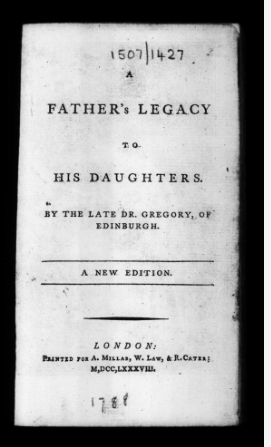


 In Chapter 5, Charlotte Lucas defends Mr. Darcy to the Bennets, especially to Elizabeth. Charlotte seems to think Mr. Darcy’s demeanor was a result of his upbringing.
  Darcy and Bingley enjoy a bit of a tease regarding the lack of legibility of Mr. Bingley’s writing, especially as it applies to letter writing. Darcy accuses Bingley of “the appearance of humility. It is often only carelessness of opinion, and sometimes an indirect boast.” When Bingley ask which is the greater offense, Darcy responds with,
 By the end of Chapter 36, Elizabeth has read Darcy’s letter often enough to give him credit for the honor in which he acted.
  At the end of Chapter 43, the Gardiners pronounce their evaluation of Darcy.


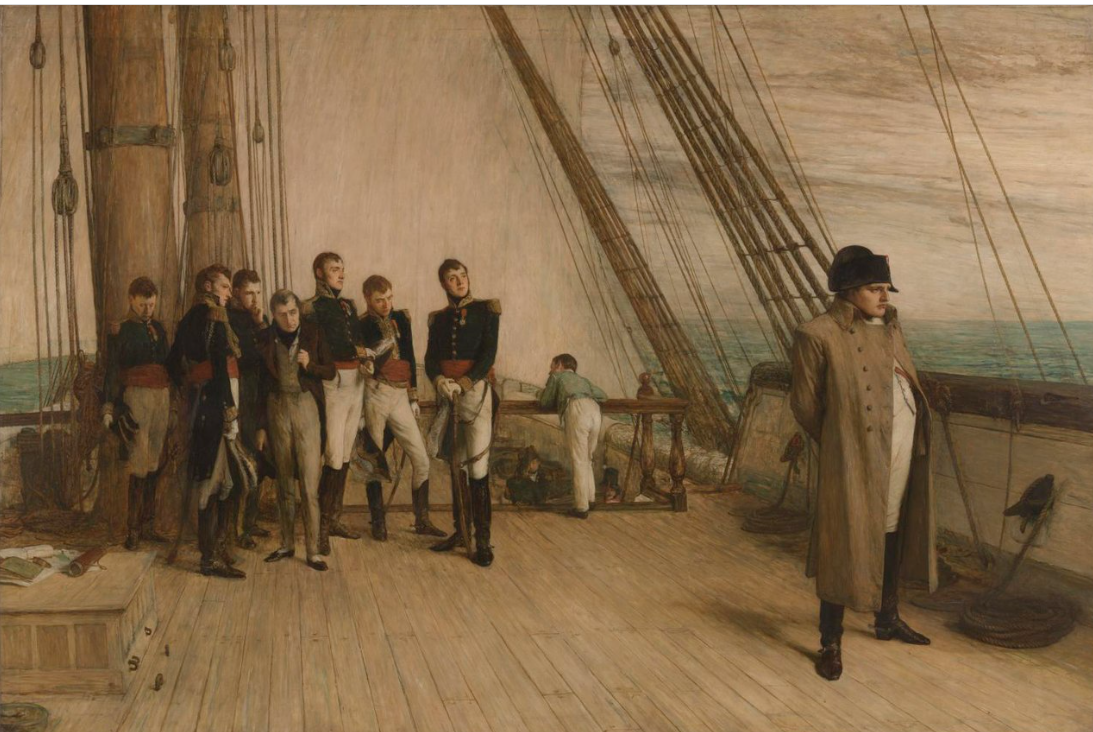

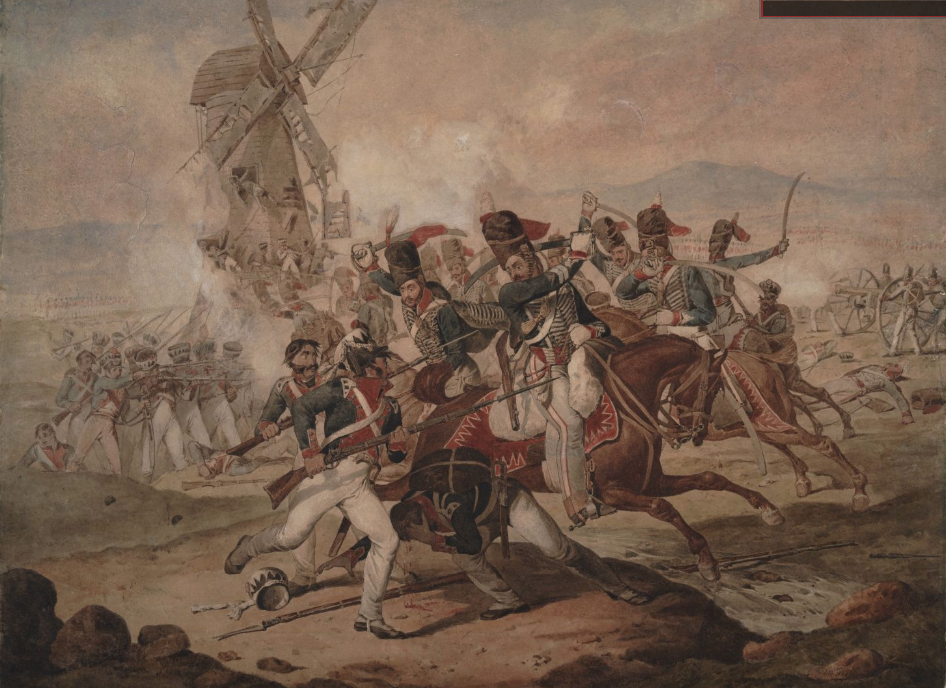


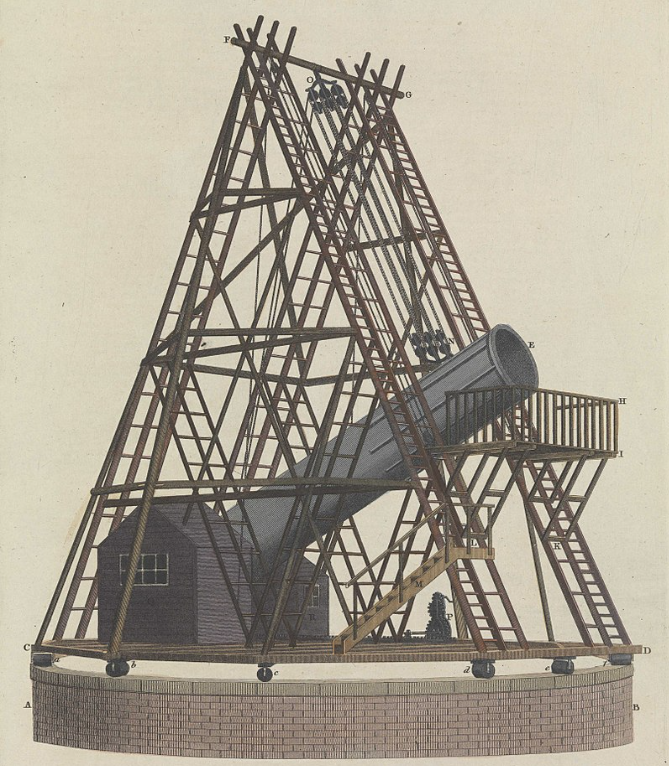

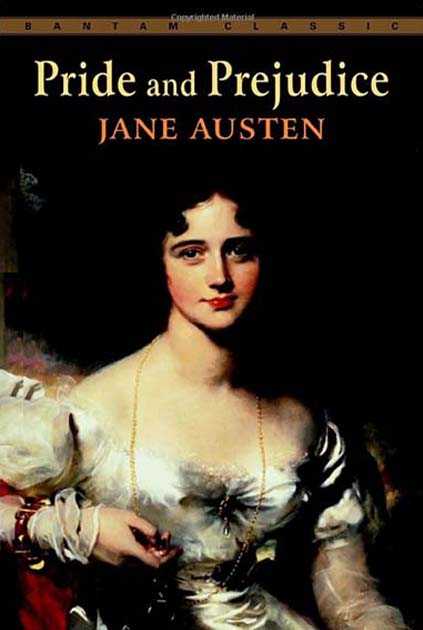 Is it not odd that Austen chose originally to name her novel First Impressions, when it is not “first impressions,” which bring Elizabeth Bennet “enlightenment”?

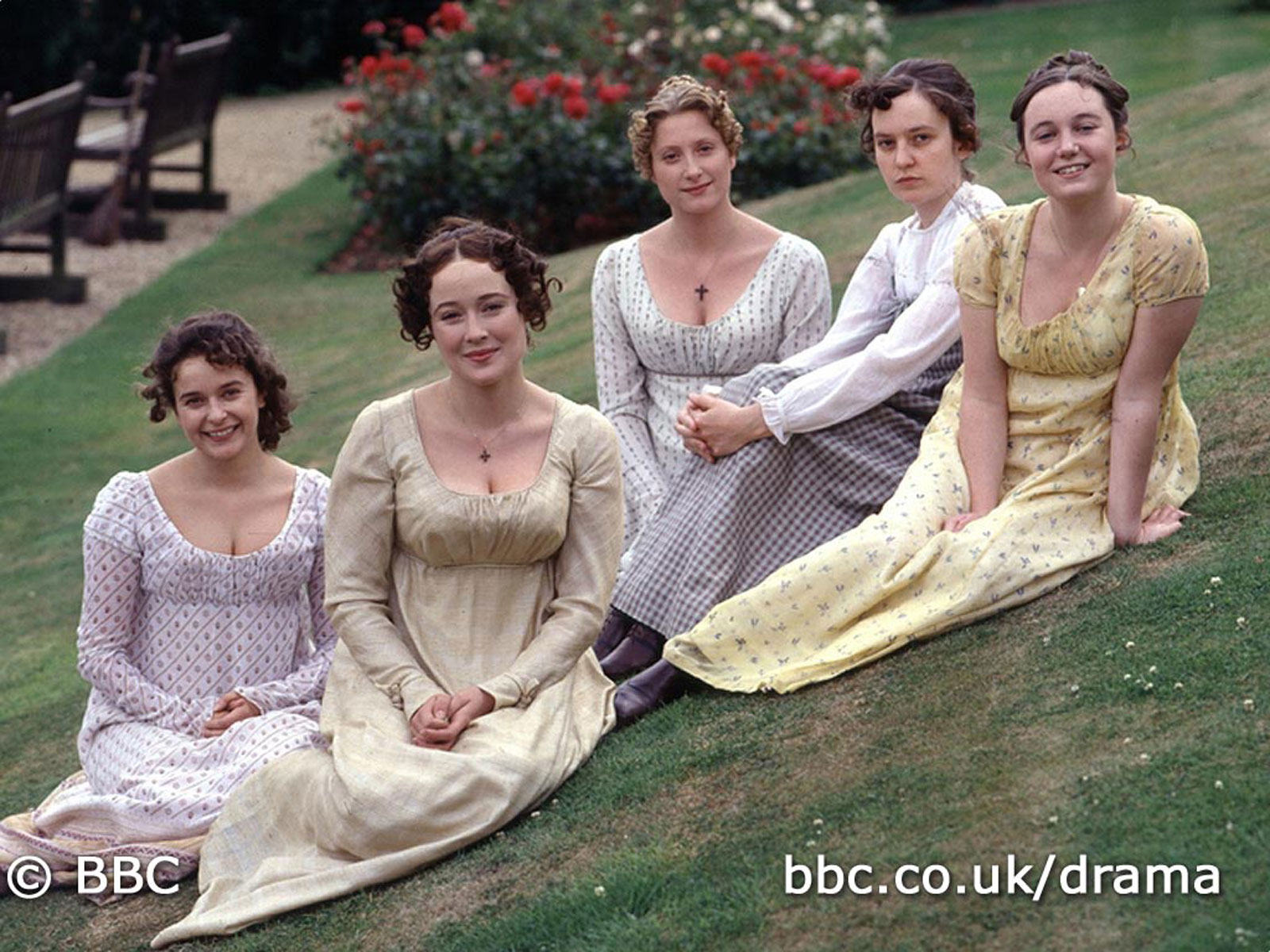
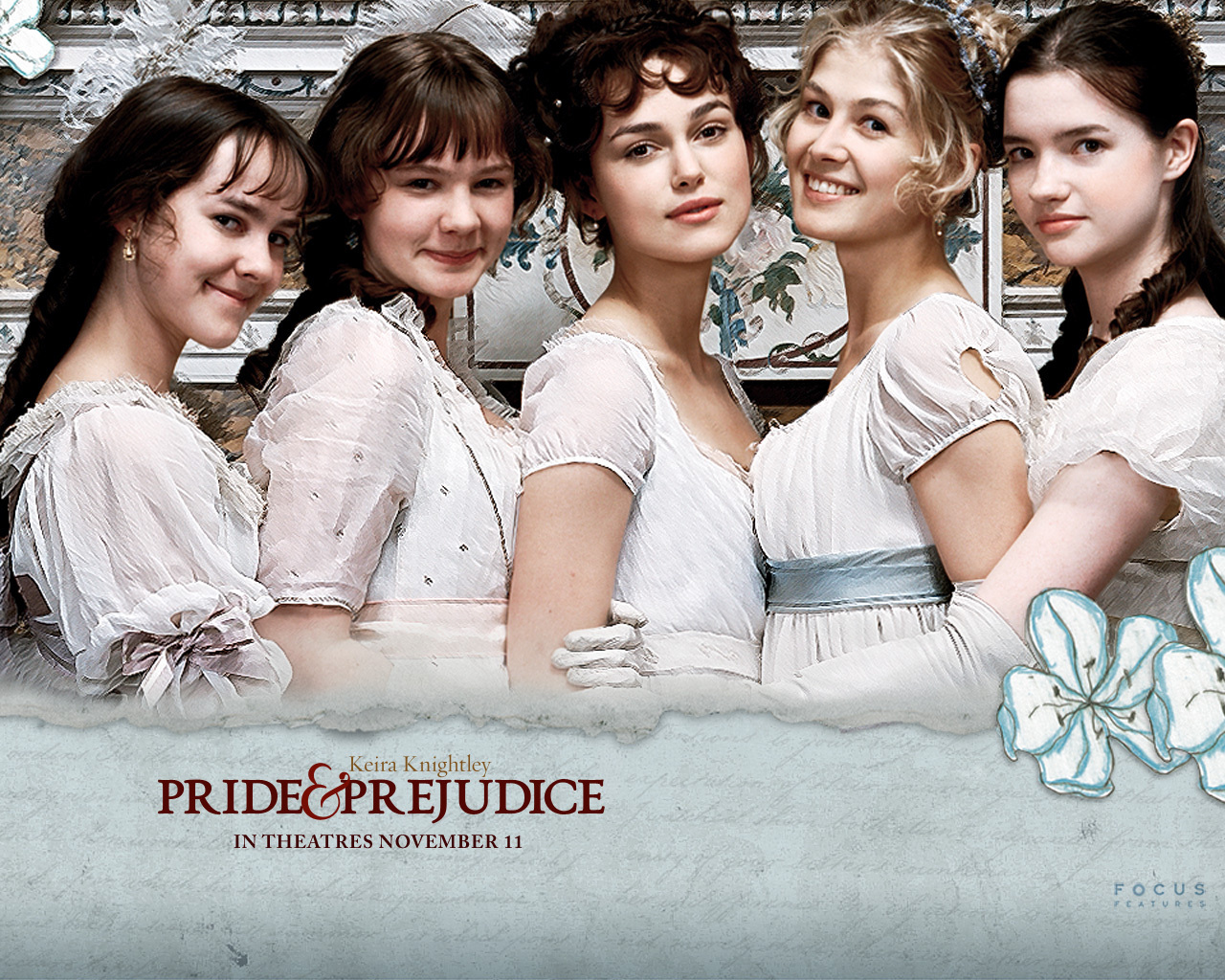
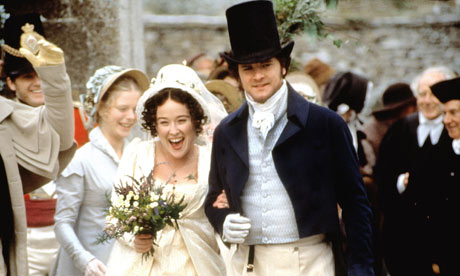
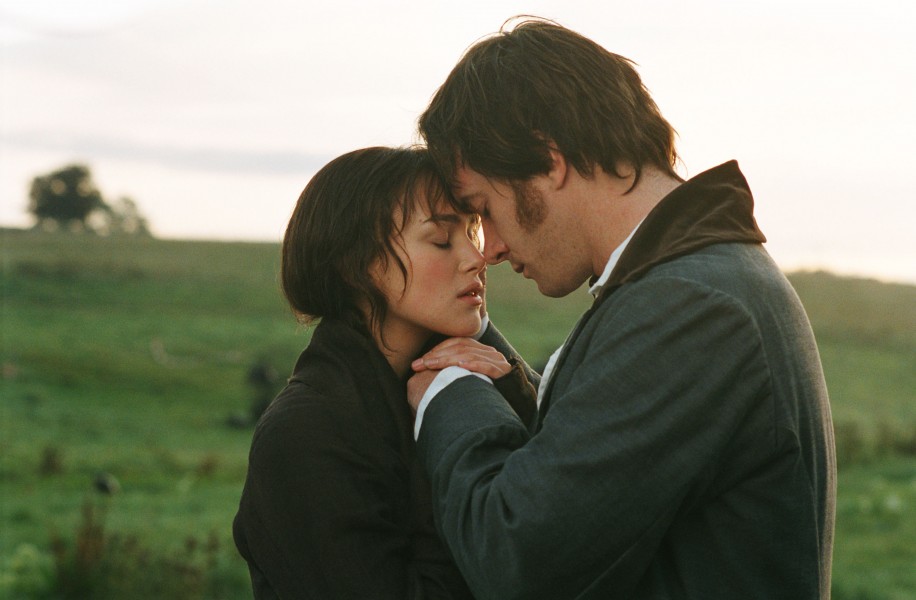


 Every Woman Dreams...