In the singular form the lexicon of a particular subject is all the terms associated with it. The lexicon of a person or group is all the words they commonly use. As a plural noun, a lexicon is an alphabetical list of the words in a language or the words associated with a particular subject. To distinguish lexicon from a dictionary, it is an alphabetical list of the words in a language or the words associated with a particular subject.
These examples are a mix of what one might hear upon the lips of the aristocracy, as well as examples of Cant used upon London’s streets and those terms used by farmers and like in the country.
dace – Cant. for two pence
being at daggers – slang for ready to fight
daft – stupid
The Daily Courant – England’s first daily newspaper; founded in 1702
dam – a small Indian coin, mentioned in the Gentoo code of laws: hence etymologists may have derived the expression, “I do not give a dam” to mean “I do not care half a farthing for it.”
damask – a fancy silk or linen fabric used for table linen; usually had a flower design raised
damned hum – a falsehood or lie
damper – a luncheon or sack before dinner; so called because it dampened the appetite
dance upon nothing – to be hanged
dandy – the term came into use in 1813; It indicated a man of fashion, charm and wit. The preferred subdued, carefully curated looks that reflected a “studied masculinity” with dark colors, no perfume, and artful accessories.
dangling after – hanging about; pursuing someone, especially man interested in a female
dapper – sharply dressed
dark cully – a married man who keeps a mistress; he visits her only after dark for fear of discovery
“Dark Lady” – sometimes used to refer to the character of Marianne Dashwoood in “Sense and Sensibility”; it is a term Leslie Fiedler uses in “Love and Death in the American Novel”; a woman of deep feelings and sensibilities
to cut a dash – to be well dressed; cut a figure
David Jones – the devil; the spirit of the sea; called “Necken” in the north countries, such as Norway, Denmark, and Sweden; sleeping in “David Jones’s locker,” would be having drowned in the sea
dead horse – to work for the dead horse was to work for wages already paid
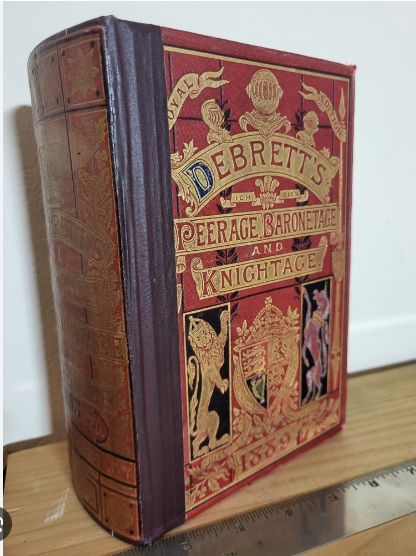
Debrett’s – an guide to the peerage; published annually
debt of honor – a gambling debt; not enforceable by law
Decree Nisi – a provisional divorce decree; the couple had to wait 6 months to see if the circumstances changed, only then was the decree final
deep one – a thorough-paced rogue; a sly, designing fellow
degen, or dagen – a sword; nim the degen; steal the sword; “dagen” is Dutch for sword
demesne – land upon which the manor house is built (as opposed to tenants’ cottages)
demi-monde – the phrase means “half world” when translated; class on the fringes of respectable Society. Often used in reference to courtesans, prostitutes, etc, though this is not strictly correct.
Derby – the greatest of the horse racing venues; pronounced “Darby”; held at Epsom Downs, which is some 15 miles outside of London
devil – the gizzard of a turkey or fowl, scored, peppered, salted, and broiled; it derives its appellation from being hot in the mouth
devil’s guts – a surveyor’s chain, so called by farmers who did not their landlords to measure their land
dicked in the nob – being silly; crazed
dicky – a woman’s under petticoat
dickey – a seat for servants to sit behind a carriage when their master drives
dimwitted – torn to pieces by a mob, as was the great Dutch statesman John de Wit (Johan de Witt) in Holland in 1672
We have all received those letters and emails requesting money or asking someone to invest in a scheme. Here is one of the recent ones I received, which is addressed to “Dear Sir.” OOPS!!! Obviously, my gmail account sent the request to the spam folder.
Dear sir,i m so sorry please dont mind that i trouble you but its my real problem
My name is Mrs Rehana Kishwar Naaz, I am a Pakistani and live in district of Sialkot. Sir I am very poor. There is no source of income to fulfil the demand of my family. We are eight members of family. My husband is mad. He is absent of mind he cannot do any work as a normal person. I am very worried about my children.
My children want to get EDUCATION but I cannot afford the expenditure of education. Dear sir you know well that education is the key of success and it is very important for the success of a nation. I wish my children gets education and become a gentle man.
I live in rent house and I am a home maid. I cannot explain how I am tense and worried about my family. I send this request to many institute of Pakistan but they cannot help me because I am a Christen.
Sir you are my last option. I hope you never feel me alone. Sir please give me response as soon as possible .it is the matter of my children education.
I am very thankful to you because you give me your precious time to read my request. I always remember you in my prayers.
dear sir its my request that please help me personally thank you
But what of “begging letters” in history? Before the time of the internet?
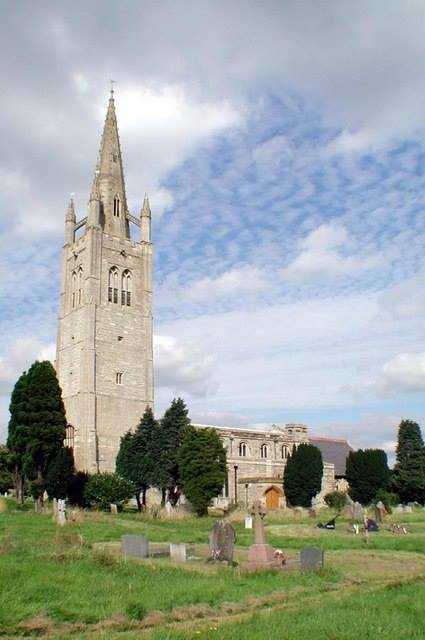
Alan Taylor at the British History Georgian Lives Facebook group recently posted, “Begging letters were often written in the 18th and 19th Century. Sometimes the author was trying his luck with the vulnerable – as some charities today badger the elderly with requests for donations. Other letters were written by the ‘down and out’ to relations, authorities or creditors begging for help. I have a letter of the latter type written by Elizabeth Perry in 1757 from Hanslope in Buckinghamshire to a Francis Walker to whom she owed money. She could not pay the debt and ‘must rely upon your goodness as an excuse’. The tragic tale enfolds ‘my husband has been these two years past…miserably afflicted with the dropsy (a heart condition)’ and so apparently was unable to work. According to records he was a malster (making malt from grain in the brewing industry) but there was also another misfortune for the family as Elizabeth states ‘if it had not been for the loss of our cattle we would not be the humble supplicants now’. This was a double whammy as many artisans of the period would have kept a few animals to supplement their income in hard times. There seemed no way Elizabeth could pay the debt as she had even tried ‘selling all our goods’ but ‘will not near raise the money’ – she was even willing to sell their furniture and other household goods leaving them with nothing, but realised this would not be enough. The only possible end to this was what she dreaded most ‘we must fling ourselves entirely on the parish & become a burden to that place in which we have formerly lived so well’. This outcome was not only a future life of poverty but also a great blow to the pride and reputation of the family!
“I do not know if Mr Walker was sympathetic to their situation, but online research revealed that Mr Perry died the next year, and in his will, there was a section leaving ‘goods, chattels and furniture’ to Elizabeth after the payment of a Bill of Sale..to the Reverend Moses Agar and John Downing’. My interpretation of this statement is that these two Samaritans had bought the furniture, etc., in order for Elizabeth to pay off at least some of her debts but allowed her temporarily to keep it. Further the Northampton Mercury for June 1758 states; ‘to be sold – A malting and orchard..in Hanslope..late belonging to John Perry’. It seems probable that once this was sold, Elizabeth would have been able to pay off the rest of her debts, but I am not sure what happened afterwards although there is a record of the burial of an Elizabeth Perry (pauper) in Hanslope for Dec 1759. The photo shows the church of St James the Great whose vicar, Moses Agar, helped Elizabeth in her distress and possibly buried her as a pauper!”
The State Library of New South Wales has a collection of Begging Letters Received by Banks from Various Persons 1786 – 1808. Purchased in 1884 from Lord Brabourne by Sir Saul Samuel, the Agent-General for New South Wales, the letters were later transferred to the Mitchell Library in 1910 as part of the Brabourne Collection. Sir Joseph Banks was the recipient of many letters requesting financial support, or his support in obtaining a position or promotion. [You can view the series at this Link: https://transcripts.sl.nsw.gov.au/section/series-76-begging-letters-received-banks-various-persons-1786-1808-1884-undated ]
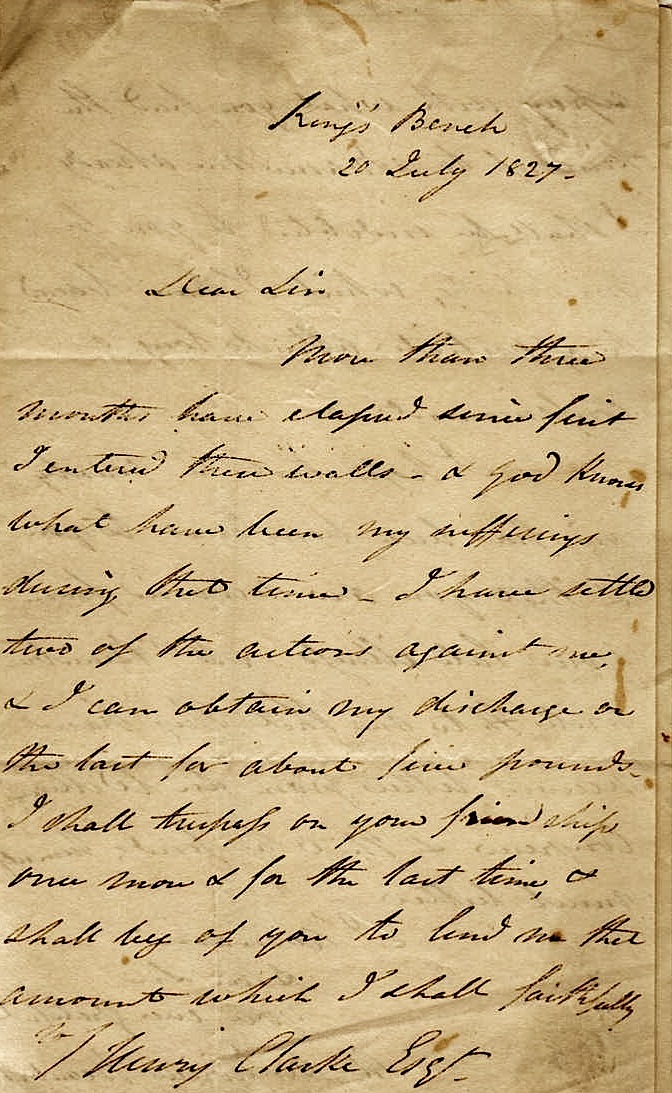
The Jot101 blog shares a begging letter from a debtor in prison. The blog piece goes on to say: “This particular letter is from someone who signs himself M. Eurius Beaubrier, and is addressed to a Henry Clarke. Although preliminary research has revealed nothing of the writer, who may have been French, the handwriting is that of an educated man and the tone is rather pathetic. The letter suggests that both he and Clarke, who is also hard to identify, had dealings before.
“The plea for help comes from the King’s Bench prison in Southwark and is dated 20th July 1827. The tone is pretty desperate:
“‘More than three months have elapsed since first I entered these walls–& God knows what have been my sufferings during that time. I have settled two of the actions against me & I can obtain my discharge on the last for about five pounds. I shall trespass on your friendship once more & for the last time & shall beg of you to lend me the amount which I shall faithfully repay with what you had the kindness to advance me already. I shall be indebted to you for my liberty, which I have learned to appreciate after so long a confinement. I hope that the country air has been beneficial to you and that you are recovered from your late illness. Mrs Beaubrier writes to say that they have received letters from Sir William Congreve & that he finds himself much better. I remain, dear Sir, your ever grateful, M. Eurius Beaubrier'”
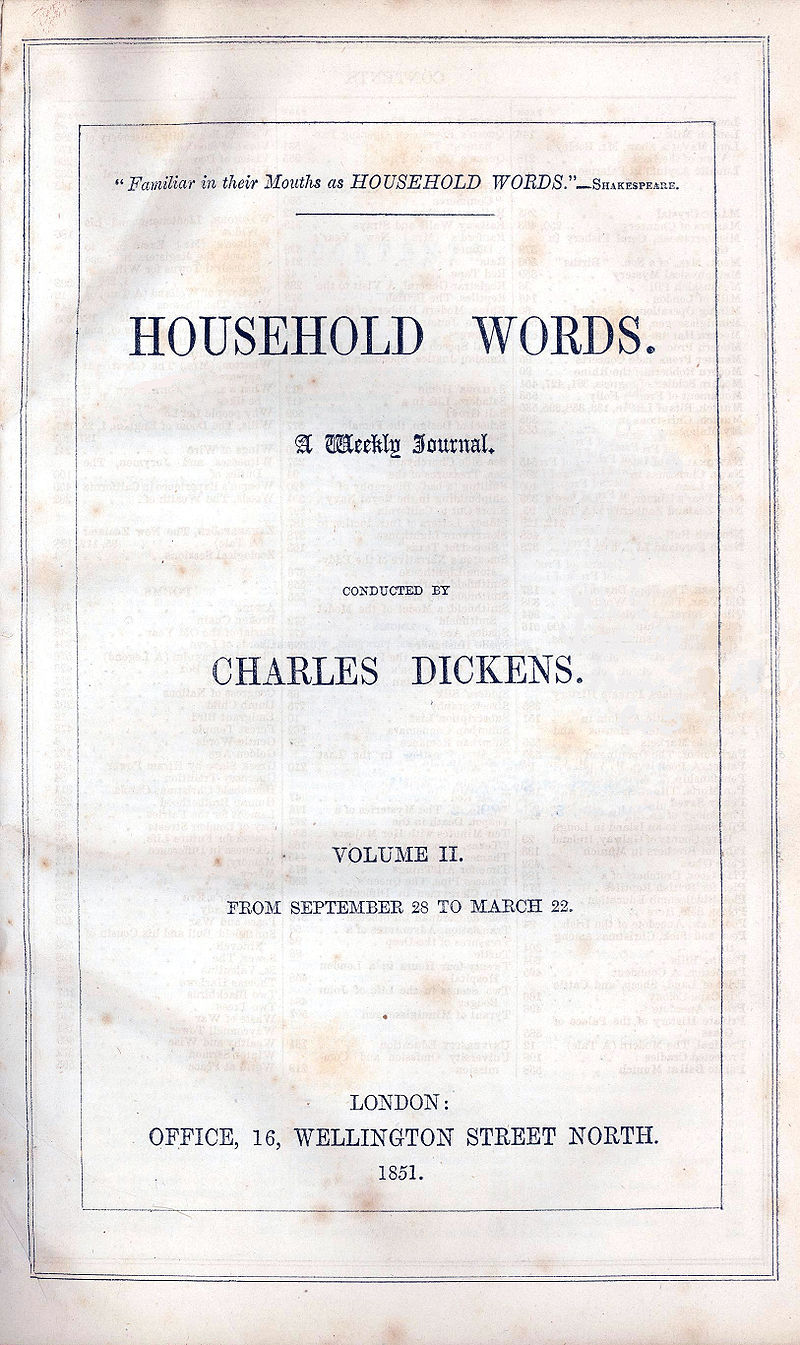
The May 1850 edition of Household Words contained an article entitled The Begging-Letter Writer written by Charles Dickens. Household Words was an English weekly magazine edited by Dickens in the 1850s. It took its name from the line in Shakespeare’s Henry V: “Familiar in his mouth as household words.” In the article Dickens describes examples of the many begging letters he had received over the years, and the ruses employed by their writers to gain funds from the recipients.
Periodically in a story set in the Regency era, the occasion arises where a curse word would be appropriate for a character. However, how to use that word and who might utter it remains a decision most authors of the period take seriously. I customarily choose either “bloody” or “demme.”
“Bloody” is a commonly used expletive attributive (intensifier) in British English. It was used as an intensive since at least the 1670s. Considered “respectable” until about 1750, it was heavily tabooed during c. 1750–1920 (which includes the Regency Era of 1811 to 1820), considered equivalent to heavily obscene or profane speech. Public use continued to be seen as controversial until the 1960s, but since the later 20th century, the word has become a comparatively mild expletive or intensifier. (Bloody)
Unfortunately, “demme” is more difficult to pin down for usage. According to Merriam-Webster, “damme” is a mild imprecation, an alteration of “damn me.” Most writers of the Regency claim that Georgette Heyer used the spelling “demme,” although I admit not being a Heyer expert and cannot quote you a passage when it was used. Complicating a search of “demme” is the fact that Google wishes to direct me to Jonathan Demme, the director of the film “Silence of the Lambs.”
The Oxford English Dictionary mentions “demme” being used in 1801 in place of “damn me,” much as the Merriam-Webster reference I mentioned above. This reference in OED refers to Demmy being used for damn me! or dem for damn. In C. S. Lewis’s “The Magician’s Nephew,” (1955) the sixth book of the seven in The Chronicles of Naria, Jadis is clearly a majestic and impressive creature, a “dem fine woman,” (186) as Uncle Andrew calls her.
Arnold Bennett’s “Aunt Clara” was part of the The Clayhanger Family Saga, published between 1910 and 1955. In it, he writes, “Aunt Clara was a handsome woman. She had been called — but not by men who code she would have approved — ‘a damn fine woman.'”
Meanwhile, in 1838, Charles Dickens writes in Nicholas Nickleby (Chapter 17), “She will not take poison and have horrid pains, will she?’ said Mantalini; who, by the altered sound of his voice, seemed to have moved his chair, and taken up his position nearer to his wife. ‘She will not take poison, because she had a demd fine husband who might have married two countesses and a dowager — ‘ ‘Two countesses,’ interposed Madame. ‘You told me one before!’ ‘Two!’ cried Mantalini. ‘Two demd fine women, real countesses and splendid fortunes, demmit.’ ‘And why didn’t you?’ asked Madame, playfully. ‘Why didn’t I!’ replied her husband. ‘Had I not seen, at a morning concert, the demdest little fascinator in all the world, and while that little fascinator is my wife, may not all the countesses and dowagers in England be — ‘ Mr Mantalini did not finish the sentence, but he gave Madame Mantalini a very loud kiss, which Madame Mantalini returned; after which, there seemed to be some more kissing mixed up with the progress of the breakfast. ‘And what about the cash, my existence’s jewel?’ said Mantalini, when these endearments ceased. ‘How much have we in hand?’ ‘Very little indeed,’ replied Madame. ‘We must have some more,’ said Mantalini; ‘we must have some discount out of old Nickleby to carry on the war with, demmit.‘”
The Scarlet Pimpernel is the first novel in a series of historical fiction by Baroness Orczy, published in 1905. In Chapter 4, we find:
We seek him here, we seek him there, Those Frenchies seek him everywhere. Is he in heaven? — Is he in hell? That damned, elusive Pimpernel
Damned and damnation has been around since the sins of Hell were mentioned in a Biblical sense.
Middle English: from Old French dam(p)ner, from Latin dam(p)nare ‘inflict loss on,’ from damnum ‘loss, damage.’ The question is when it became more common as a casual statement without reference to a belief in Hell.
Usages of swearing are like casual slang hard to pinpoint before the days of instant communications. We do not have transcripts of actual people in casual conversation.
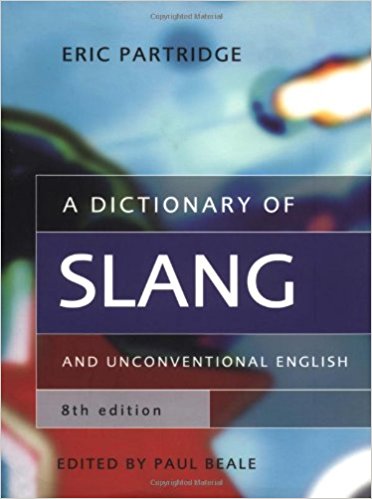
damfool; occ., joc., damphoole or -phule. A damned fool. colloquial. noun. and adjective; from resp., ca. 1880 and ca. 1895da
damme (or) dammy. A profane swearer (generally the single word). coll.; ca. 1610-1820; from mid 17th C to 18th C early; “a roaring mad blustering fellow”
damme, I’m off. of late 18th C and early 19th C, satiric of initials on cards of invitation, etc. Grose, 3rd edition
“Damned was coll. late 18C to 20c. dammed was used often instead of “bloody.”
You might find Vic Gatrell’s City of Laughter: Sex and Satire in Eighteen Century London of interest. The book blurb tells us, “City of Laughter chronicles the rise and fall of a great tradition of ridicule and of the satirical, humorous, and widely circulated prints that sustained it. Focusing not on the polished wit upon which polite society prided itself, but rather on malicious, sardonic and satirical humor―humor that was bawdy, knowing and ironic―Vic Gatrell explores what this tradition says about Georgian views of the world and about their own pretensions. Taking the reader into the clubs and taverns where laughter flowed most freely, Gatrell examines how Londoners laughed about sex, scandal, fashion, drink and similar pleasures of life.
“Combining words and images–including more than 300 original drawings by Cruikshank, Gillray, Rowlandson, and others―City of Laughter offers a brilliantly original panorama of the era, providing a ground-breaking reappraisal of a period of change and a unique account of the origins of our attitudes toward sex, celebrity and satire today.”
This book includes language used by famous men in correspondence of the time. One thing we should note is that the word “Christ” is NOT used. So phrases such as “Jesus Christ” as an exclamation should be avoided. Some words that could be used, however are bollocks, by Jove, bloody hell, confound it, balderdash, deuce take it, Egad, gamman, Hell and the Devil, hound’s teeth, etc.
From a member of the Beau Monde chapter of the Romance Writers of America, I “borrowed” a list of words most likely used by women of the period. Unfortunately, I cannot remember who that was and cannot provide them credit at this time. Try these: Baggage (referring to a female), Dratted (man, boy, etc.), Fustian, Heaven forbid, Heaven forfend, Horsefeathers, Humdudgeon, Imp of Satan, Merciful Heavens, Odious (man, creature, etc.), Piffle, Pooh, Ramshackle
In the singular form the lexicon of a particular subject is all the terms associated with it. The lexicon of a person or group is all the words they commonly use. As a plural noun, a lexicon is an alphabetical list of the words in a language or the words associated with a particular subject. To distinguish lexicon from a dictionary, it is an alphabetical list of the words in a language or the words associated with a particular subject.
These examples are a mix of what one might hear upon the lips of the aristocracy, as well as examples of Cant used upon London’s streets and those terms used by farmers and like in the country.
crabbed – ill-tempered; difficult
cradles – Cradles have been around for centuries. The ancient Britons wove cradles in the tree-tops for both children and old men (do we all now Hush-a-bye baby, on the three top; when the wind blows, the cradle will rock…?) It was the custom of weaving an infant’s cradle in the branches of a tree, out of harm’s way, to be rocked by wind power, that spawned the lullaby. The traditional wood for a cradle is birch the tree of inception, which the ancients believed drove away evil spirits.
The first time the future George IV received company, he was twelve days old and securely ensconced in a gold cradle surmounted with a gold coronet. He lay under a canopy of state, enveloped in crimson velvet and gold lace, in a nest of white satin. On either side stood ‘a fair mute, employed as occasion required, to rock the infant to sleep.’ The public were admitted in batches of forty. The daily bill for cake was 40 pound sterling, and for wine, ‘more than could have been conceived’.
crape – a black silk used for mourning clothes
cravat – a long fine cloth tied about a gentleman’s neck in a variety of “bows”
cribbage – Cribbage, or crib, is a card game, traditionally for two players, that involves playing and grouping cards in combinations which gain points. Cribbage has several distinctive features: the cribbage board used for score-keeping; the crib, box, or kitty (in parts of Canada and New England); two distinct scoring stages; and a unique scoring system, including points for groups of cards that total 15. It has been characterized as “Britain’s national card game.”
Both cribbage and its close relative costly colours are descended from the old English card game of noddy. Cribbage added the distinctive feature of a crib and changed the scoring system for points, whereas costly colours added more combinations but retained the original noddy scoring scheme.
cribbage-faced – marked with small pox, the pits bearing a resemblance to the holes in a cribbage board
cribbey or cribbey islands – blind alleys, courts, or bye-ways; perhaps from the houses built there being “cribbed” out of the common way or passage
criminal conversation – adultery, especially as formerly constituting grounds for the recovery of legal damages by a husband from his adulterous wife’s partner.
crim con money – damages directed by a jury to be paid to the convicted adulterer to the injured husband, for the criminal conversation with his wife
cripple – sixpence, that piece being commonly much bent and distorted
crony – an intimate companion or comrade
crop – a nickname for a Presbyterian, for they cropped their hair, trimmed close to a bowl dish placed on the head; latter they were called “roundheads” [The name “roundheads” was originally given to the supporters of the Parliament of England during the English Civil War. Also known as Parliamentarians, they fought against Charles I of England and his supporters, the Cavaliers or Royalists, who claimed rule by absolute monarchy and the divine right of kings. England’s many Puritans and Presbyterians were almost invariably Roundhead supporters, as were many smaller religious groups such as the Independents.]
crops and animals – (I am basically using Yorkshire for my example, but it would apply to most shires with the exception of cold versus warmer climates) In the 1800s, Yorkshire produced corn, cattle, deer, sheep, goats, very fine horses, river and sea fish, game, fowls, copper, brass, lead, iron, coal, wood, liquorice, rape-seed, freestone, limestone, jet, alum, black amber, marble, coppers and kelp, with the “manufactur of woollen”, alum, coppers, malt, fine ale, pins, bone lace, stockings, cutlery wares and iron work which employed at least 40,000 people (the manufacturing).
For wheat, East Riding. Within this area – and in particular the area south of the Derwent river, East Riding produced far more grain products (including wheat) than could be consumed so it was a primary exporter of grains to London.
For Cattle – in addition to East Riding, North Riding where lean cattle were raised in the worst parts, but on the sides of the hills and in the valleys and plains it has rich pastures where large cattle were raised. Also the valleys in West Riding which was famous for its fine horses, where excellent cattle were also raised.
So for those who did not comprehend the reference correctly, the use of the word ‘corn’ in the opening paragraph was my way of describing generally the grains produced within the entire region known as Yorkshire. Please remember, in North America and Australia corn is often used for maize, but in England and Wales it can refer to wheat or barley, and in Scotland and Ireland to oats.
Dairy cows from the midlands (Staffordshire, Cheshire, Wiltshire, etc) through Buckinhamshire, Bedforshire, Berkshirem Middlesex and down to the southern counties – Somerset, Devonshire, Kent, Dorset). Also Suffolk, Sussex, Norfolk etc.
cross writing – fill a page of writing normally and then turn it at a 90 degree angle and write between the open spaces; postage was very expensive
crowdy – oatmeal and walk or milk; much eaten in the north
crump – one who helps solicitors to affidavit men or false witnesses
crusty fellow – someone who is surly
cuckolding – perhaps the best known of these words, and it has many synonyms, including (but by no means restricted to) cornute, cornuto, hoddy-doddy, hoddypoll, horn, ram, and wittol (a man who is aware of his wife’s infidelity and acquiesces to it). What of a woman whose husband is unfaithful? For that our language appears to have but a single word, and an obscure one at that: cuckquean. Lady Caroline Lamb was married to William Lamb but carried on a very public affair with Lord Byron.
cull – an honest man; a “bob cull” is a good-natured fellow (Cant)
cur – a cur or curtailed dog; According to the forest laws, a man who had no right to the privilege of the chase was obliged to cut or law his dog. Among othere modes of disabling him from disturbing the game, one was by depriving him of his tail: a dog so cut was called a “cut” or “curtailed dog,” and by contraction a “cur.” Used figuratively, it meant a surly fellow.
curmudgeon – a covetous old fellow, supposedly derived from the French term cæur mechant
curry – to curry favor; to obtain the favour of a person by coaxing or servility
Curse of Scotland – the nine of diamonds; diamonds, it is said, imply royalty, being ornaments of the imperial crown, and every 9th king of Scotland was considered for many ages to be a tyrant and the “curse of Scotland.”
Others say the phrase is from it similarity to the arms of Argyle. The Duke of Argyle was considered very instrumental in bringing about the union of England and Scotland, which, by some Scottish patriots’ estimation is detrimental to their country.
To cut – to renounce acquaintance with any one is to “cut him.” There are several species of the cut: the direct cut, the cut indirect, the cut sublime, the cut infernal, etc. To cut direct is to make a public display of avoiding someone, as in going a different direct when you see their approach or purposely turning one’s back on the person. The cut indirect is to look another way and pass him without observing him. The cut sublime is to admire the top of King’s College Chapel or the beauty of the passing clouds, etc., until the person is out of sight. The cut infernal is to analyze the arrangement of one’s shoe strings or boot polish for the same purpose.
Curricle – a two-wheeled carriage; pulled y two horses; could seat two people, who of
When I was a teen girl, I enjoyed the school-sponsored Sadie Hawkins’ dances. We didn’t exactly go for the girl asking the boy to the dance (like a date). But we did follow some of the tradition. It was my chance to claim a dance with whichever boy was my fancy at the time. But from where does the tradition come? First, let me say there’s a misconception that February 29 is Sadie Hawkins’ Day.
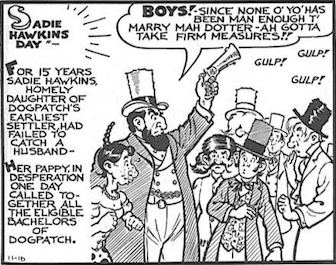
Sadie Hawkins was a character created by Al Capp as part of the Li’l Abner comic strip. She made her debut on 15 November 1937. Reportedly, Sadie was “homely” and unable to get a date. Her father Hezekiah Hawkins, a prominent and wealthy citizen of the fictional mountain town of Dogpatch, Kentucky, decided he’d help his 35-year-old daughter out. So, he created a day specifically for Sadie (i.e., Sadie Hawkins Day). On that particular day, the women of Dogpatch matched speed with the town’s eligible bachelors in a footrace. According to Capp, Sadie Hawkins Day was celebrated in November (NOT February). November was when we had our school dances, but at the time, I didn’t understand the significance. (Women’s Issues)
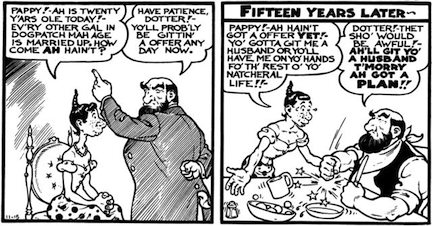
This image from Women You Should KnowFills in the blanks about Capp and the Sadie Hawkins’ tradition. “Calling all the bachelors in town, Hezekiah declared it ‘Sadie Hawkins Day’ and ordered a race of eligible bachelors with Sadie chasing after them… when a man was caught, he would be legally bound to marry her. The other town spinsters loved this idea so much that they declared Sadie Hawkins Day a mandatory annual event, which was recreated in the comic strip by Capp every November… for FORTY years!
“Sadie Hawkins Day wasn’t just a hit with the fictional spinsters of Dogpatch, it was also a hit with Capp’s real life readers. In 1939, two years after Sadie’s introduction, Life magazine reported over 200 colleges holding Sadie Hawkins Day events. It became a rite for girls at high schools and college campuses across the country.
“Understanding that Sadie Hawkins was a craze during a very different time in history helps to put its popularity into perspective, at least a little bit. As for the man who dreamed up this idea, Al Capp was apparently a known womanizer and misogynist, as well as an accused rapist. His reputation for ‘seducing and even sexually assaulting aspiring actresses, including a young Goldie Hawn and a distraught and disheveled Grace Kelly,’ along with sleeping with the college girls he met on his Sadie Hawkins Day tours preceded him.” (Women You Should Know)
(Image via Celebrate the History of Sadie Hawkinswww.people.com)
Wikipedia provides us a summary to of the story: I”n Li’l Abner, Sadie Hawkins was the daughter of one of Dogpatch‘s earliest settlers, Hekzebiah Hawkins. The ‘homeliest gal in all them hills,’ she grew frantic waiting for suitors to come a-courtin’. When she reached the age of 35, still a spinster, her father was even more frantic—about Sadie living at home for the rest of her life. In desperation, he called together all the unmarried men of Dogpatch and declared it ‘Sadie Hawkins Day.’ A foot race was decreed, with Sadie in hot pursuit of the town’s eligible bachelors. She specifically had her eye on a boy who was already in a courtship with the cute farmers daughter, Theresa. She was the daughter of the area’s largest potato farmer, Bill Richmand, and, unlike Sadie, had a lot of courtship offers. Stud-muffin Adam Olis was her target, and because the engagement of Miss Theresa and Adam wasn’t official he was included in the race. With matrimony as the consequence of losing the foot race, the men of the town were running for their freedom. Turned out Adam Olis was in 4th place out of 10th leaving John Jonston as Sadie’s catch of the day. It seems likely that the concept’s origins lie in an inversion of the myth of Atalanta, who, reluctant to marry, agreed to wed whoever could outrun her in a footrace.
“When ah fires [my gun], all o’ yo’ kin start a-runnin! When ah fires agin—after givin’ yo’ a fair start—Sadie starts a runnin’. Th’ one she ketches’ll be her husbin.”
(Image from Women You Should Know) “The town spinsters decided that this was such a good idea, they made Sadie Hawkins Day a mandatory yearly event, much to the chagrin of Dogpatch bachelors. In the satirical spirit that drove the strip, many sequences revolved around the dreaded Sadie Hawkins Day race. If a woman caught a bachelor and dragged him, kicking and screaming, across the finish line before sundown—by law he had to marry her.
“Sadie Hawkins Day was first mentioned in the November 15, 1937 Li’l Abner daily strip, with the race actually taking place between November 19 and November 30 in the continuity. It would prove to be a popular annual feature in Li’l Abner, and a cultural phenomenon outside the strip. (see Schreiner, Dave; “Sadie’s First Run”, Li’l Abner Dailies Volume 3: 1937, Kitchen Sink Press, Princeton, WI, pg. 8.)”
Sadie Hawkins’ Day is different (but in many ways the same) as Lady’s Privilege Day, an Irish and Scottish tradition, which I’m discussing on Austen Authors today. You may read it HERE.
One of favorite things to do on or about Leap Year is watch the film by the same name with two of my favorite actors: Amy Adams and Matthew Goode. I am always a sucker for a guy with an Irish accent.
The Story: When Anna’s (Amy Adams) four-year anniversary to her boyfriend passes without an engagement ring, she decides to take matters into her own hands. Inspired by an Irish tradition that allows women to propose to men on Leap Day, Anna follows Jeremy (Adam Scott) to Dublin to propose to him. But after landing on the wrong side of Ireland, she must enlist the help of the handsome and carefree local Declan (Matthew Goode) to get her across the country. Along the way, they discover that the road to love can take you to very unexpected places.
I still handwrite my stories on paper. Black ink. Wide ruled spiral notebooks. Wide ruled means I can squeeze in words or phrases. What I write today will receive its first edit tomorrow before I continue on with the story. Eventually, I type the pages, which is the second round of edits.
All that being said, I have my own method of marking words and phrases. If I cannot think of a more appropriate word than the one I have, I simple circle it and write wc (word choice) above it. On that second read through, I might change it or it may change later in the process, but I do not stop to look for an alternate word, for such would play havoc with my story flow. I do the same thing, if I have used the word often in a short passage. I also circle phrases that seem as if they might be too modern for a story set in the early 1800s. Such was true when I wrote a passage where my heroine, Lady Cora Midland, was honored by walking about the room with the “dandy of the period,” one Beau Brummell. Here is a bit of their conversation:
“How very sad,” she observed.
“Is such not the way of all people?” Mr. Brummell questioned. “We wish others to fail so we might think ourselves the fortunate ones, though often we are teetering on the edge of disaster ourselves. Yet, enough of my sermonizing. I did not ask to walk about the room with you to discuss such morbid thoughts. Tell me, instead, something of your people, Lady Cora.”
“Gladly so,” she said with another smile. “I adore speaking of them. My mother, Miss Sophia Cooper, was half-sister to Lord Lindmore’s mother, Miss Louisa Cooper. They shared a father, Edward, 7th Viscount Cooper. Louisa married Frederick Harrington, who, as you well know, both passed quite young, leaving their son as the heir to the Lindmore line.
“My mother was the second wife of Lord John Midland. With our father’s passing, my half-brother has assumed the earldom. My mother inherited Cameron Manor from her mother, the late Viscountess Cooper. The manor is mine, or, I should say, will be mine when the law considers me old enough to manage on my own. Before she passed, Lady Midland asked the Dowager Countess of Lindmore to see to my Come Out.” Cora would not admit how her mother had not trusted the Midlands to do right by her. Some family secrets were to be held close to the chest.
“My own father was not a landed gentleman,” Brummell admitted. “Not that anyone in this room cares. Never permit them to know you possess a weakness,” he advised. “They will turn upon you in the manner of a swarm of bees.”
Cora glanced to those watching them intently. “You make me wish to run screaming from the room, sir,” she admitted.
Brummell chuckled. “Perhaps we both should do so and see how many follow suit. I have heard of the habits of Norway lemmings, which suddenly appear in large numbers, seemingly out of nowhere, as if they fell from the sky. They are thought to come upon the notion of following each other so closely that when one jumps from a cliff, they all follow without reason. Someday I may place this rumor into practice to see what might be the result.”
Cora felt sympathy for a man who could not even turn around without everyone remarking on it.
*******
When I wrote this remark regarding “lemmings,” I again circled it and put “origin” above it to remind me to trace whether those in the Regency era might know of lemmings and the story of their “supposed” suicide. Fortunately, for me, some knowledge of this tale did exist for the time period of my story. I did not have far to go for the truth of the matter. The lovely encyclopedia Britannica tells us, “In the 17th century, naturalists perplexed by the habit of Norway lemmings to suddenly appear in large numbers, seemingly out of nowhere, came to the conclusion that the animals were being spontaneously generated in the sky and then falling to earth like rain. (The prosaic truth is that they migrate in herds.) Some people also thought that lemmings explode if they become sufficiently angry. This is also a myth, of course—lemmings are indeed one of the more irascible rodents, but they mostly channel their rage into fights with other lemmings. People probably came up with the notion of exploding lemmings after seeing the picked-over lemming carcasses that were left behind following a migration.
“But there is one myth that has held on tenaciously: Every few years, herds of lemmings commit mass suicide by jumping off seaside cliffs. Instinct, it is said, drives them to kill themselves whenever their population becomes unsustainably large.
“Lemmings do not commit suicide. However, this particular myth is based on some actual lemming behaviors. Lemmings have large population booms every three or four years. When the concentration of lemmings becomes too high in one area, a large group will set out in search of a new home. Lemmings can swim, so if they reach a water obstacle, such as a river or lake, they may try to cross it. Inevitably, a few individuals drown. But it’s hardly suicide.”
“There it is in the 17th Century!” It can fit in the story, and no one can call me out on it, though someone will for that is the way of mean-spirited reviewers. Sorry. That is for a different blog.
Loving Lord Lindmore released yesterday. If you do have your copy yet, do so soon before the price change at the end of next week, and keep looking for the story’s companion novel, Taming Lord Truist, releasing in September 2024.
LADY CORA TAKES SOCIETY BY STORM . . .
Lady Cora Midland, a highly-spirited country beauty, offers no pretensions, which wins her many admirers, despite her lack of knowledge on how to manage the beau monde. However, Matthew Harrington believes she is taking advantage of his elderly grandmother, and he means to put a stop to the girl.
LORD MATTHEW LINDMORE IS IN DENIAL . . .
Lindmore reluctantly assists his grandmother in bringing Lady Cora out in Society. Yet, what appeared to be a daunting task becomes a transformation the earl does not expect. He finds the woman as delightful, as do others in the haut ton. Yet…
When Lady Cora is on the the verge of marrying another, Lindmore fears time will expire before he can speak his own proposal.
It is here at last. I adored this book so much, I am writing a followup book that features Lord Augustus Truist, Lord Lindmore’s friend. Taming Lord Truist will arrive in late August (after all, he is named after Gaius Julius Caesar Augustus, also known as Octavian (which serves as August’s younger brother’s name in my tale). August, as expected, is the eighth month of the Gregorian calendar. It was named for the first Roman emperor, Augustus Caesar, in 8 bce.
Loving Lord Lindmore: Book 1 of the Strong Regency Women Duo
LADY CORA TAKES SOCIETY BY STORM . . .
Lady Cora Midland, a highly-spirited country beauty, offers no pretensions, which wins her many admirers, despite her lack of knowledge on how to manage the beau monde. However, Matthew Harrington believes she is taking advantage of his elderly grandmother, and he means to put a stop to the girl.
LORD MATTHEW LINDMORE IS IN DENIAL . . .
Lindmore reluctantly assists his grandmother in bringing Lady Cora out in Society. Yet, what appeared to be a daunting task becomes a transformation the earl does not expect. He finds the woman as delightful, as do others in the haut ton. Yet…
When Lady Cora is on the the verge of marrying another, Lindmore fears time will expire before he can speak his own proposal.
Taming Lord Truist: Book 2 of the Strong Regency Women Duo
Miss Eleanor Wilder has admired Lord Augustus Truist since she was a young girl. He had once protected her from an older boy who had meant to strike her. Now, she requires his protection again: This time, it is from her guardian, a cousin who means to marry Eleanor off to a man more that twice Ella’s age in order to keep Eleanor’s fortune in the family. As she will soon be one and twenty, Eleanor must convince Lord Truist to marry her himself, rather than see all her fortune go to a ne’er-do-well.
Lord Truist must save his family from disgrace and a touch of poverty by marrying an heiress of whom his mother approves, but he finds repugnant. However, when Miss Wilder offers him her fortune with no strings attached—a marriage of convenience—how can he refuse? As his countess, the lady would have the protection she required, and he would have the freedom to enjoy his long-time mistress, Miss Sarah Darling, without complaints.
How was he to know that the new Lady Truist not only loved him but was quite perfect in ways he did not realize he required?
London held a variety of popular parks during the Regency era. Let us explore a few of them.
St James’s Park is a Royal Park, named after a once isolated medieval hospital dedicated to St James the Less, now the site of St James’s Palace. It is the most easterly of a near-continuous chain of public parks, which includes (moving westward) Green Park, Hyde Park and Kensington Gardens.
It meets Green Park at Queen’s Garden, opposite the entrance to Buckingham Palace.
It contains a small lake, St James’s Park Lake, with two islands, West Island and Duck Island with the lake.
Originally it was an enclosed deer park for the use of King Henry VIII in the 1530s. Henry purchased the area from Eton College. It was a marshland through which the River Tyburn flowed. It set west of York Palace, which was subsequently renamed Whitehall. St James Palace was meant to serve as a “hunting lodge” for the king.
James I had the park drained and landscaped in 1603, and it housed exotic animals, including crocodiles, an elephant, camels, exotic birds, etc.
Charles II had the park redesigned in a more formal style. A 775-metre by 38-metre ornamental canal was added. During this time the park had a reputation as a meeting place for acts of lechery. Charles II was said to have entertained guests and mistresses in the park.
In the late 1600s and early 1700s, a person might purchase fresh milk at the “Lactarian,” for cows grazed in the park.
Further changes occurred in the 18th century with the purchase of Buckingham House (now Buckingham Palace) for the use of Queen Charlotte in 1761.
The Prince Regent (later King George IV) commissioned further remodeling in 1826-27. Architect John Nash converted the canal into a more natural shaped lake and formal pathways were added. Buckingham House was expanded to create the palace. Marble Arch was built at its entrance to the cour d’honneur of Buckingham Palace.
Hyde Park’s name comes from the Manor of Hyde, which was the northeast sub-division of the manor of Eia and appears in the Domesday Book. The name was of Saxon origin. “Hide” was a unit of land appropriate to support a single family. It was the property of Westminster Abbey in the Middle Ages.
Hyde Park was created for hunting purposes in the 1530s when Henry VIII received the manor of Hyde from the Abbey. It remained a hunting ground until the reign of James I, who permitted others access to the area and appointed a ranger to oversee it.
Charles I created the Ring (north of the present day Serpentine boathouses) and opened the area to the public in 1637.
A series of fortifications were built along the east side of the park at the start of the English Civil War in 1642.
During the Interregnum [the period between the execution of Charles I on 30 January 1649 and the arrival of his son Charles II in London on 29 May 1660 which marked the start of the Restoration] Parliament sold the then 620-acre park for “ready money,” earning £17000 + an additional £765 6s 2d for the deer living there.
Charles II retook ownership of the park in 1660 and enclosed it with a brick wall.
Hyde Park was used as a military encampment during the Great Plague of Lonon in 1665.
William III moved his residence to Kensington Palace in 1689 and installed a private road on the southern edge of the park, particularly for his use only. It is now known at Rotten Row. The row was used by the wealthy for riding in the early 19th century.
In late January through May, the “fashionable” people rode out during the Season. 4:30 to 7:30 P.M.
Hyde Park is one of London’s finest landscapes. It covers 142 hectares (350) acres.
The Ladies’ Mile was a more sedate bridle path than was the Row.
The Ring was where the fashionable drove their pleasure carriages to see and be seen.
The Serpentine was a shallow, man-made stream that wound its way through a section of the park.
Hyde Park section of “Improved map of London for 1833, from Actual Survey. Engraved by W. Schmollinger, 27 Goswell Terrace”, photographed for Wikipedia by User:Pointillist. All rights of the photographer are hereby released.
The Regent’s Park occupies 410 acres of high ground in what is now the northwest part of inner London.
It is split between the City of Westminster and the Borough of Camden
The land was part of the manor of Tyburn during the Middle Ages, having been acquired by Barking Abbey.
With the Dissolution of the Monasteries, Henry VIII appropriated it under the statutory forfeiture with minor compensation affairs of the time.
The park was named after the Prince Regent.
The Regent’s Park, as well as other properties built for the Prince Regent, include John Nash, James Burton, and Decimus Burton as the architects and builders.
Along with the park, Regent Street and Carlton House Terrace became a grand sweep of town planning stretching from St James’s Park to Primrose Hill.
Green Park, royal park in the borough of Westminster, London. Located north of Buckingham Palace, east of Hyde Park, and west of the neighbourhood of St. James, it covers about 53 acres (21 hectares) of land.
During the Medieval era, the park was a swampy burial ground for lepers from the hospital at St James.
The Poulteney family was the first to enclose it in the 16th century.
It was partly excavated for the sand found within to be used to make bricks and stone.
Like the others above, the park was enclosed in the 16th century, and it was later designated a royal park by Charles II (reigned 1660–85). In the 18th century it was an isolated location that often concealed highwaymen and served as the meeting place for duels, but it was also used for fireworks displays and balloon ascents. Green Park is the least stylized and ornamented of London’s royal parks.
Charles II took the land from the Poulteneys and ordered it developed into a Royal Park and enclosed with a brick wall. It was to be called Upper St James’s Park.
He even ordered an icehouse built to supply his family with ice for the summer months.
It was officially renamed Green Park in 1746.
Paul Rabbitts (15 June 2017). London’s Royal Parks The Postcard Collection. Amberley Publishing suggests that the Queen Consort, Catherine of Braganza, had all the flowers removed from the parkland, for she believed King Charles II gave some of the flowers to another woman.
The Queen’s Basin came about when King George II had “The Queen’s Walk” laid out for his wife Queen Caroline. The walk led to a reservoir that held drinking water.
During the late 18th century and early 19th century, it was a popular place for balloon attempts and fireworks.
Because it was somewhat “rural,” it was also known to have its fair share of highwaymen and thieves/
In 1730, William Pulteney, 1st Earl of Bath, and John Hervey, 1st Earl of Bristol held a duel upon the grounds. Other duels were reported, but no one so famous as these two.
In the present, in contrast with its neighbouring parks, Green Park has no lakes, no buildings, no playgrounds and three, early yet distinctive post-war-era public monuments.
Green Park, St. James’s Park and Buckingham Palace section of “Improved map of London for 1833, from Actual Survey. Engraved by W. Schmollinger, 27 Goswell Terrace”, photographed for Wikipedia by User:Pointillist. All rights of the photographer are hereby released. The monarch at the time the map was published was William IV.
BOOK BLURB…
LADY CORA TAKES SOCIETY BY STORM . . .
Lady Cora Midland, a highly-spirited country beauty, offers no pretensions, which win her many admirers, despite her lack of knowledge on how to manage the beau monde. However, Matthew Harrington believes she is taking advantage of his elderly grandmother, and he means to put a stop to the girl.
LORD MATTHEW LINDMORE IS IN DENIAL . . .
Lindmore reluctantly assists his grandmother in bringing Lady Cora out in Society. Yet, what appeared to be a daunting task becomes a transformation the earl does not expect. He finds the woman as delightful as do others in the haut ton. Yet… When Lady Cora is on the the verge of marrying another, Lindmore fears time will expire before he can speak his own proposal.
Excerpt from Chapter Seven of Loving Lord Lindmore
Lord Truist had called at noon, claiming he had business with Lindmore, but Cora thought it odd, for she considered the pair “friendly enemies.” She did not necessarily believe in happenstance, especially when it came to these two particular gentlemen, but there was little she could do to deter them. Even so, she made a mental note to watch and listen, for they were up to something.
Therefore, when Jordan and the Petersens appeared at twenty past one, it did not surprise Cora that the two lords “finished their business” about the same time and joined her and Lady Lindmore as they entertained her friends. “Lord Truist,” she said. “Hopefully, you recall Mr. Holt and Mr. Petersen. They often attended the hunts at Franklin Place with their fathers. All you young gentlemen were quite a tight group, each of you attempting to best the other, if I recall correctly.”
“Though I should have, I admit, I would not have immediately recognized Petersen,” his lordship admitted with a smile, “but Holt favors his father enough I might have introduced him to Lindmore by the elder Holt’s title.” He returned the bow the men presented him. “And the lady . . .” he hinted.
Cora smiled, for she noted Truist’s appreciation for the pretty blonde. The thing with Truist was, he always “appreciated,” but never took any young lady seriously. Therefore, Cora slid a protective arm about Miranda’s waist. “This is Mr. Petersen’s youngest sister, Miss Miranda.”
Again, Truist bowed, but, this time, he shifted his weight to present a pretty leg and a sweep of his hand as he did so. Cora thought him a terrible flirt. “I fear I do not recall Miss Miranda. I do remember a Miss Petersen and a Miss Alice.”
Cora laughed easily. She could not believe women tolerated Truist’s foolishness; yet, she had viewed for herself how more than one young lady longed for just a bit of his lordship’s attention. “Such is because Miranda was barely old enough not to holding onto her mother’s skirt tails, upon occasion, while the rest of us chased after the hunting dogs.”
“Why do we not all sit?” the countess suggested. “Cora, my dear, might you pour tea for your friends?”
As they all found seats, Cora was surprised when it was Lindmore who claimed her hand to seat her by him on the settee. During each of the evening entertainments she had experienced this last week, he rarely reached a hand for her beyond serving as her partner during one of the dance sets. His eyes met hers, and Cora stumbled, but his arm caught her before she could tumble over. “Thank you kindly, my lord. I am not often so foul-footed.”
“My pleasure, my lady,” he said in a tone she could not quite identify. Was it criticism or something more pleasant?
Seated at last, she lifted the pot to serve the countess first. “I fear I did not finish my introductions.” She poured the milk and the tea for the first cup. “For her ladyship,” she instructed the waiting footman softly. “Mr. Petersen. Miss Miranda, it gives me great pleasure to make you acquainted with my extended family. Lady Lindmore has been excessively kind to take me on, for you three are aware I would never have had the nerve to claim a London Season without her. I can never repay the kindness she has shown me.”
While she spoke, she poured a like cup of tea and passed it to the man on her left. “Her ladyship and I are extremely grateful Lord Lindmore has agreed to escort us upon the Town, and I am proud to enter each event upon his arm and under his protection.” Cora knew her speech too flowery, but she wished the Lindmores to know something of her honest gratitude. The countess had been excessively kind to her, and, though not being her mother, or even her grandmother, her ladyship’s gentle hand upon Cora’s shoulder had removed some of the sting of loneliness chasing Cora about over the last few years. As to Lord Lindmore, she had begun to think upon him as the standard for all others she met.
When she held up a sugar pat, Lord Truist waved off the offer. “And what will you say of me, my dear?” he asked with that taunting grin which was so much a part of his personality. She suspected the woman who finally tamed Lord Truist would never know a sad day in her life.
“Lady Lindmore has cautioned me on how some of my opinions might not always be welcomed,” she said with a lift of her brows. Cora liked Truist and thought any woman who claimed his loyalty would earn a true defender, but she was not that woman. Therefore, she would simply tease and test him.
While Truist laughed and good-naturedly warned her that her sassiness was not required before company, he said, “I understand from Lindmore you and your friends hope to ride out together. Where will you ride?”
Jordan Holt responded, “Miss Miranda wishes to view Hyde Park. This is her first visit to London.”
Truist continued to speak for him and Lindmore. “You are welcome to join me and the earl. We planned to ride together tomorrow. That is, if you hold no objections, Lady Cora.”
“Lady Lindmore has yet to extend her permission for my riding with friends,” Cora responded dutifully.
The countess gently nodded her approval of Cora’s response. “If Lindmore means to be in attendance, no objection will be spoken. He understands my expectations for Lady Cora and how they reflect on this family.”
“It would do both Truist and me well to have such enjoyable company,” Lindmore said. “Should I see to an appropriate mount for you, my lady? Are you well trained or a casual rider?”
“Not too calm,” Jordan said with a grin. “Lady Cora is quite the horsewoman, my lord. You will not be disappointed in her seat or her handling of the reins.”
Loving Lord Lindmore will be released on February 21, 2024. Purchase links are below.
In my latest novel, the heroine, Lady Cora Midland, is a bit of what we nowadays would call a “tomboy.” She likes to fish, is not afraid of using a knife to gut them or to shave a rough piece of wood, and bemoans the loss of her beloved father, who was a collector of pocket watches and snuff boxes, which her step-brother has claimed and refuses to share even a few with her. Earlier, I did a piece on snuff boxes of the day. Yet, what of pocket watches and John Elliott, both mentioned in the story?
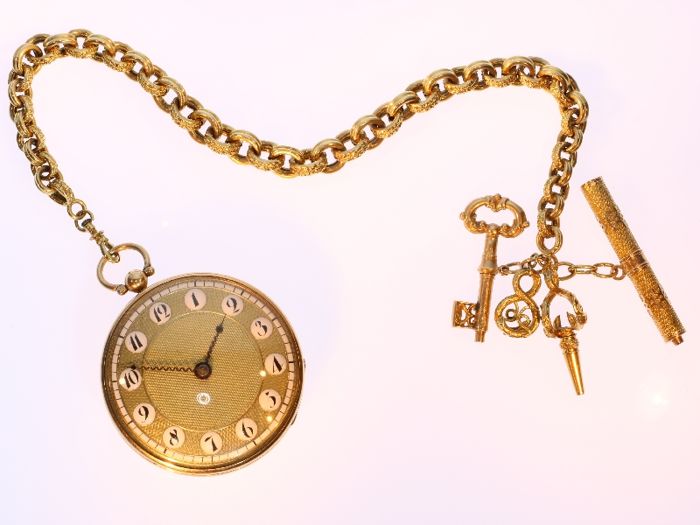
Fob watches date back to the 15th Century, originally made in Germany. Fob pocket watches found their footing in the mid 1700s in England and were very popular by the late 1700s. Originally, they were made of gold and silver, but, eventually even the common man looked to carry one, those made of nickel and cheaper metals. Fob pockets watches became quite popular in the 19th Century. Women could even wear one as a necklace or attached to a belt about her waist. (The History of the Pocket Watch)
“Pocket watches have a long and fascinating history that traces their development for use by the upper classes to their eventual status as a compulsory tool for the working classes over the period of a few centuries. Pocket watches were first referred to in correspondence between craftsmen and members of the upper class in the fifteenth century, and it is believed that an early prototype of the pocket watch was worn in this era around the neck, rather than on a pocket watch chain, like an Albert T Bar chain. Historical figures such as the Duke of Modena, the Marchese di Manta and Meshur Sheyh Dede were all known to have used the first pocket watch designs.
“The famous German watch-maker, Peter Henlein, furthered the growth of the pocket watch when he took his spring-loaded design to England in the 1520”s, from which point the fad of the pocket watch truly took off. Manufacturers in Germany, Italy and England supplied the rest of Europe and eventually the designs began to appear in brass, gold and silver instead of the less desirable steel. The seventeenth and eighteenth centuries saw great innovation in the realm of watch-making. While pocket-watches had originally only had an hour-hand, new developments with the inner spring-workings allowed for a minute-hand to be introduced. The number of wheels within the watch mechanism was increased, thus decreasing the number of times the watch had to be wound up each day (previously it had to be wound twice). Another clever design feature was the use of jewels, generally rubies, for use as bearings within the watch; reducing the drag and wear on the mechanical parts and allowing for a smoother, more accurate time-piece. Oil was also used to maintain the regularity of watches and to stop the parts from freezing up.” (History of Pocket Watches)
A Regency gentleman might carry a watch in a pocket inside the waistband of his breeches/trousers. Sometimes a VERY fashionable man might wear two fobs kept tucked away in two welted pockets. Customarily the fob was engraved with a monogram or the family’s coat of arms. Accessories for the Regency Gentleman website tells us, ” The fob was either made entirely of metal (steel, gold, silver, pinchbeck, etc.) or with a carved gemstone as the seal. In some examples, the base swiveled to lie flat against the body when worn. Watches were usually open-faced as opposed to the flip-open cover of Victorian watches. They were wound with a separate key suspended from the ribbon alongside the fob. The very fashionable wore two fobs on matching ribbons, one from each fob pocket. Usually the very wealthy and conspicuously wealthy carried more than one watch. The second fob was usually attached to something else. I find that the remote entry widget for my car works well, and enables me to carry that modern accessory non-obviously.
John Elliott & Son was listed as working between 1802-51. The Kentish Gazette in January 1803 records him as a Watchmaker, Silversmith, Stationer & Bookseller. He was trading from premises opposite the White Hart Inn, High Street, Ashford. The Old Watch Word tells us, “John Elliott seems to have managed to evade the Censuses from 1841 onwards. A John Elliott was apprenticed to James Roberts, watchmaker of Ashford, Kent on 17 April 1794 for 5 years from 1 January 1794. Loomes notes: Elliott John (& Son) Ashford 1802-51. Elliot(t) & Son of Ashford appears in a 1855 trade directory at High Street, Ashford. John was listed as a watchmaker, silversmith, stationer and bookseller, trading from premises opposite the White Hart Inn, High Street, Ashford. In a 1858 directory the listing is: Elliott, John and son, booksellers, stationers, printers, circulating library, jewellers, watch and clock manufacturers, agent to the Phoenix Fire Office, High Street, Ashford.”
Lady Cora Midland, a highly-spirited country beauty, offers no pretensions, which win her many admirers, despite her lack of knowledge on how to manage the beau monde. However, Matthew Harrington believes she is taking advantage of his elderly grandmother, and he means to put a stop to the girl.
LORD MATTHEW LINDMORE IS IN DENIAL . . .
Lindmore reluctantly assists his grandmother in bringing Lady Cora out in Society. Yet, what appeared to be a daunting task becomes a transformation the earl does not expect. He finds the woman as delightful as do others in the haut ton. Yet… When Lady Cora is on the the verge of marrying another, Lindmore fears time will expire before he can speak his own proposal.
Loving Lord Lindmore is currently on PreOrder with a release date on February 21, 2024. Purchase links are below.
To Enter the Giveaway, leave a comment below. Winners will be chosen the weekend of February 17, and prizes will be delivered on February 21, 2024, the book’s release date.
As we are in the midst of award programs, and it is Valentine’s Day, let’s go back to the songs that made us fall in love. These are some of my LONG-time favorites. Today, I offer you an “evergreen” post.
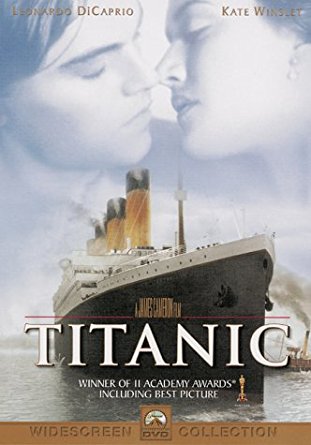
The theme song from the 1997 James Cameron film “Titanic,” starring Leonardo DiCaprio & Kate Winslet can bring you both hope and sadness. “My Heart Will Go On” was written by James Horner & performed by Celine Dion. See it on YOU TUBE
How about “Moon River” from Breakfast at Tiffanys”? Audrey Hepburn singing this wistful number on the balcony of her apartment is a moment that Manhattan dreamers have related to ever since. See it on YOU TUBE
Fred Astaire singing “The Way You Look Tonight” to Ginger Rogers with shampoo in her hair is a priceless scene from “Swing Time.” See it onYOU TUBE
Then there’s “Skyfall” from the 2012 James Bond movie by the same name. Heck, it is Adele, what else must I say? See it on YOU TUBE
Next up, “(I’ve Had) The Time of My Life” from “Dirty Dancing” (1987) is an all-time favorite. Johnny pulls Baby up on stage at the end of season revue at Kellermans. See it on YOU TUBE
Although I was never a big fan of the film, “A Officer and a Gentleman,” I was a fan of “Up Where We Belong.” See it on YOU TUBE
Along the same vein, I offer “Take My Breath Away” (sung by Berlin) and featured in “Top Gun.” See it on YOU TUBE
Robert Redford is absolutely delicious in “The Way We Were.” Barbara Streisand sings the title song and stars with Redford in the film. See it on YOU TUBE
Vic Damone’s version of “The Shadow of Your Smile” is haunting. It comes from “The Sandpiper,” starring Elizabeth Taylor and Richard Burton. See it on YOU TUBE
“Evergreen,” again sung by Barbara Streisand in “A Star is Born,” is another that stays with a soul. She plays opposite Kris Kristofferson. See it on YOU TUBE
I also love “You Don’t Bring Me Flowers,” sung by Neil Diamond and Barbara Streisand. (Believe it or not, I did not set out to feature Ms. Streisand. She just has memorable songs!) This is from their GRAMMY AWARDS performance. See it on YOU TUBE
Barbra Streisand’s signature song, “People,” came from the film “Funny Girl.” She starred with Omar Sharif. See it on YOU TUBE
Noel Harrison’s “Windmills of Your Mind” from “The Thomas Crown Affair” is wonderfully crafted poetry set to music. See it on YOU TUBE
In “The Days of Wine and Roses,” Jack Lemmon and Lee Remick are unforgettable and the title tune wins an Oscar(R) in Blake Edwards’ searing, bittersweet study of an alcoholic couple on the rocks. See the title song on YOU TUBE
“Love is a Many Splendored Thing” from the film by the same name always ends up being an earworm for me. Here is Connie Francis’s version on YOU TUBE
Doris Day sang “Secret Love” in “Calamity Jane.” The fact that Howard Keel was in the film with her sealed the deal for me. See it on YOU TUBE
“Call me Irresponsible” came to us from “Papa’s Delicate Condition,” starring Jackie Gleason. See the trailer HERE. Listen to the song HERE.
“The Morning After” from “The Poseidon Adventure” evokes melancholy, as well as hope. Hear Maureen McGovern’s version on YOU TUBE.
When was the last time you heard “Three Coins in a Fountain” from the movie by the same name? Listen to it on YOU TUBE
And a song about growing into womanhood: “Gigi” from the movie by the same name. Here the song on YOU TUBE.
Another disaster movie, “The Towering Inferno,” gives us “We May Never Love Like This Again.” This is one is sung by Maureen McGovern. Listen to it on YOU TUBE.
Jeanne Crain sings “It Might As Well Be Spring” from the 1945 film “State Fair.” Hear it here on YOU TUBE.




 Alan Taylor at the
 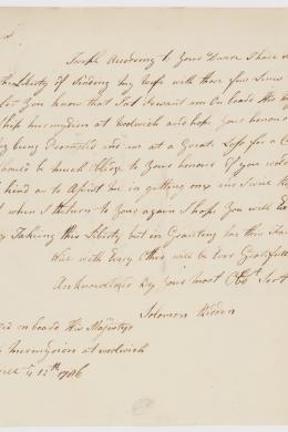 The State Library of New South Wales has a collection of Begging Letters Received by Banks from Various Persons 1786 – 1808. Purchased in 1884 from Lord Brabourne by Sir Saul Samuel, the Agent-General for New South Wales, the letters were later transferred to the Mitchell Library in 1910 as part of the Brabourne Collection. Sir Joseph Banks was the recipient of many letters requesting financial support, or his support in obtaining a position or promotion. [You can view the series at this Link: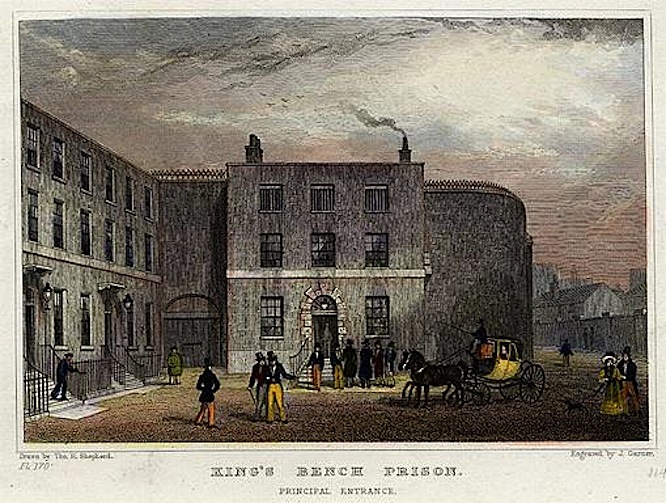

 Meanwhile, in 1838, Charles Dickens writes in Nicholas Nickleby (Chapter 17),
 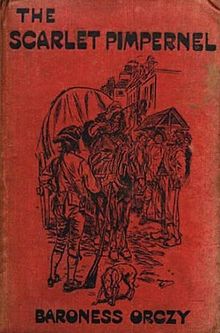 The Scarlet Pimpernel is the first novel in a series of historical fiction by Baroness Orczy, published in 1905. In Chapter 4, we find:
  Usages of swearing are like casual slang hard to pinpoint before the days of instant communications. We do not have transcripts of actual people in casual conversation.
 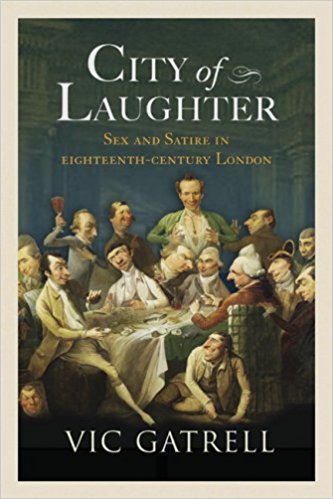 You might find Vic Gatrell’s City of Laughter: Sex and Satire in Eighteen Century London of interest. The book blurb tells us, “City of Laughter chronicles the rise and fall of a great tradition of ridicule and of the satirical, humorous, and widely circulated prints that sustained it. Focusing not on the polished wit upon which polite society prided itself, but rather on malicious, sardonic and satirical humor―humor that was bawdy, knowing and ironic―Vic Gatrell explores what this tradition says about Georgian views of the world and about their own pretensions. Taking the reader into the clubs and taverns where laughter flowed most freely, Gatrell examines how Londoners laughed about sex, scandal, fashion, drink and similar pleasures of life.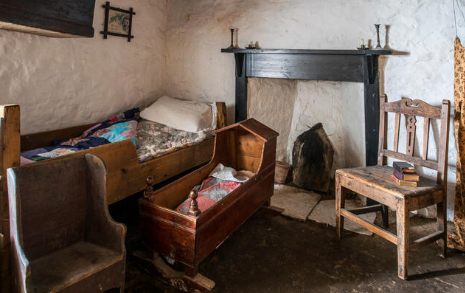



 (Image via
  (Image from
  The Story: When Anna’s (Amy Adams) four-year anniversary to her boyfriend passes without an engagement ring, she decides to take matters into her own hands. Inspired by an Irish tradition that allows women to propose to men on Leap Day, Anna follows Jeremy (Adam Scott) to Dublin to propose to him. But after landing on the wrong side of Ireland, she must enlist the help of the handsome and carefree local Declan (Matthew Goode) to get her across the country. Along the way, they discover that the road to love can take you to very unexpected places.



 The theme song from the 1997 James Cameron film “Titanic,” starring Leonardo DiCaprio & Kate Winslet can bring you both hope and sadness. “My Heart Will Go On” was written by James Horner & performed by Celine Dion. See it on
 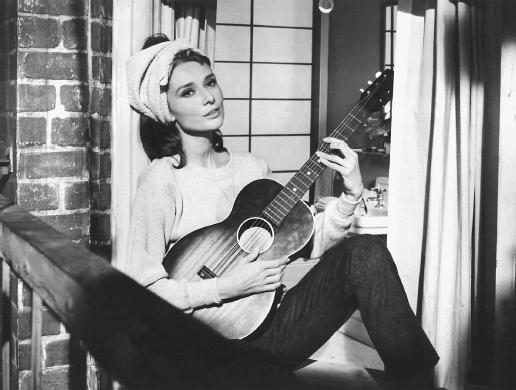 How about “Moon River” from Breakfast at Tiffanys”? Audrey Hepburn singing this wistful number on the balcony of her apartment is a moment that Manhattan dreamers have related to ever since. See it on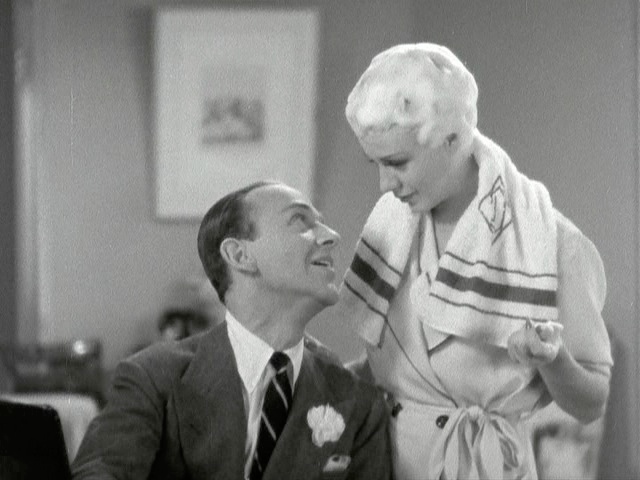
 Then there’s “Skyfall” from the 2012 James Bond movie by the same name. Heck, it is Adele, what else must I say? See it on
 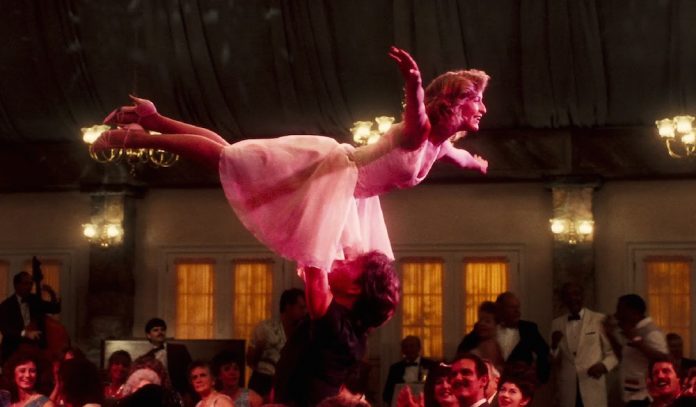 Next up, “(I’ve Had) The Time of My Life” from “Dirty Dancing” (1987) is an all-time favorite. Johnny pulls Baby up on stage at the end of season revue at Kellermans. See it on
 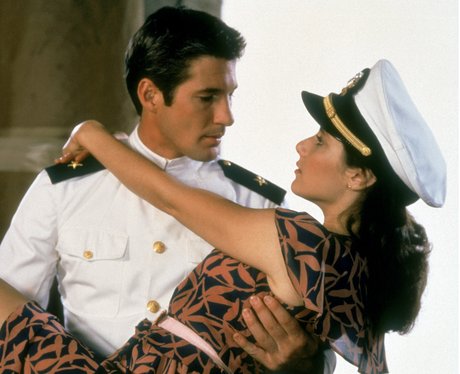 Although I was never a big fan of the film, “A Officer and a Gentleman,” I was a fan of “Up Where We Belong.” See it on
  Along the same vein, I offer “Take My Breath Away” (sung by Berlin) and featured in “Top Gun.” See it on
 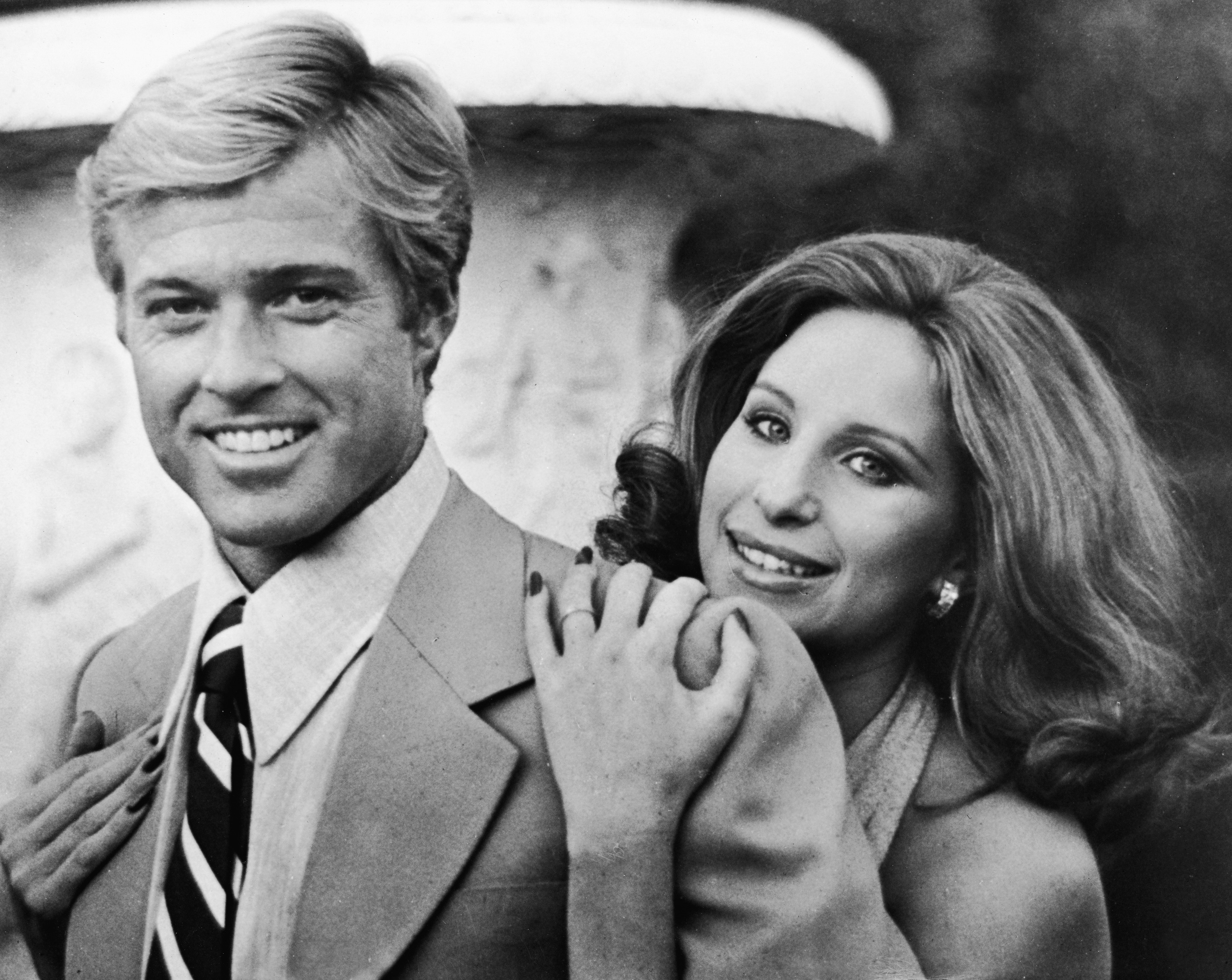 Robert Redford is absolutely delicious in “The Way We Were.” Barbara Streisand sings the title song and stars with Redford in the film. See it on
 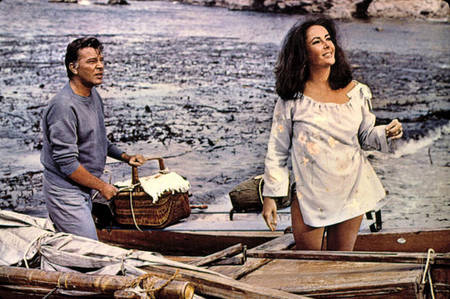 Vic Damone’s version of “The Shadow of Your Smile” is haunting. It comes from “The Sandpiper,” starring Elizabeth Taylor and Richard Burton. See it on
 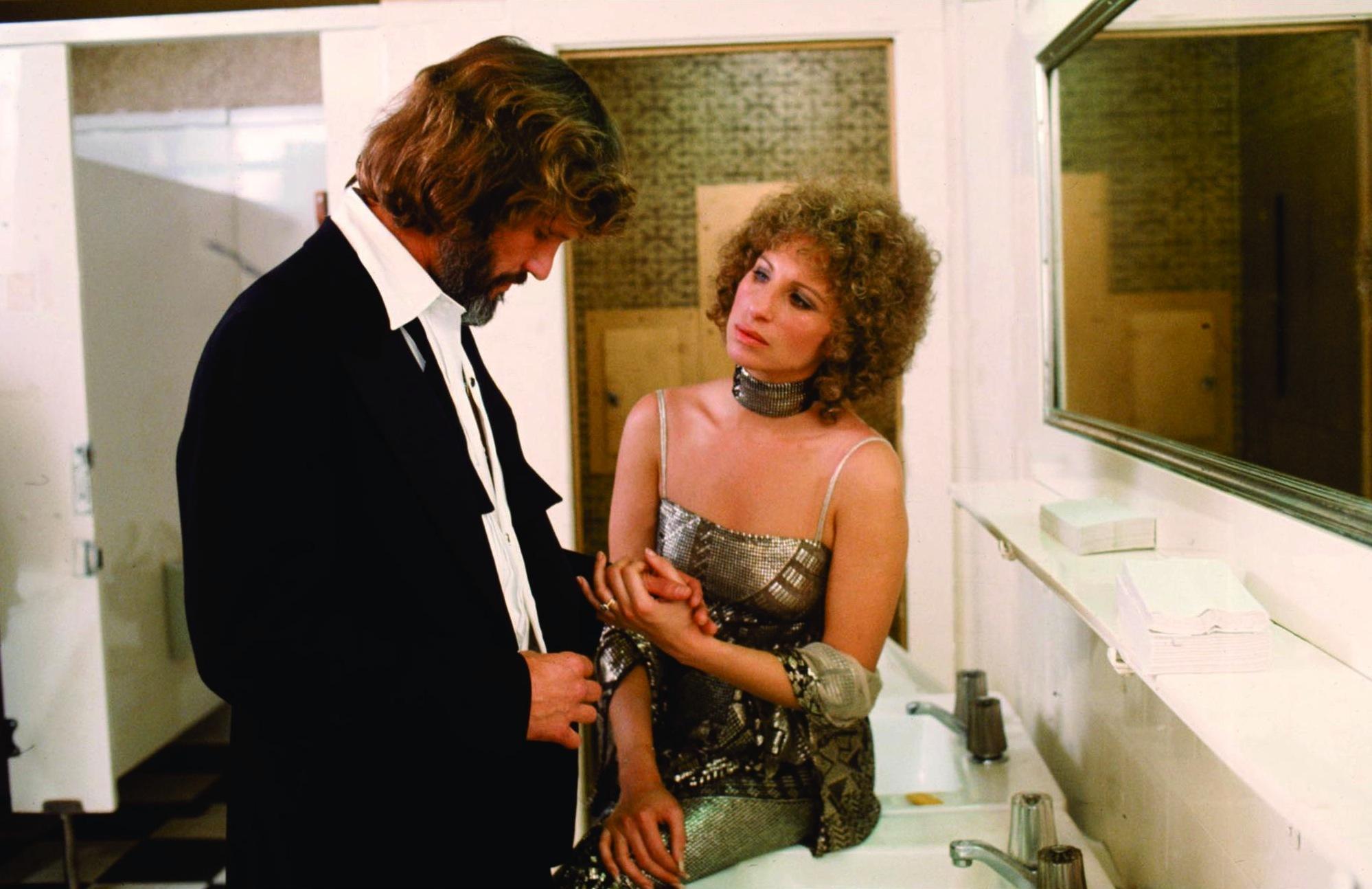 “Evergreen,” again sung by Barbara Streisand in “A Star is Born,” is another that stays with a soul. She plays opposite Kris Kristofferson. See it on
  I also love “You Don’t Bring Me Flowers,” sung by Neil Diamond and Barbara Streisand. (Believe it or not, I did not set out to feature Ms. Streisand. She just has memorable songs!) This is from their GRAMMY AWARDS performance. See it on
 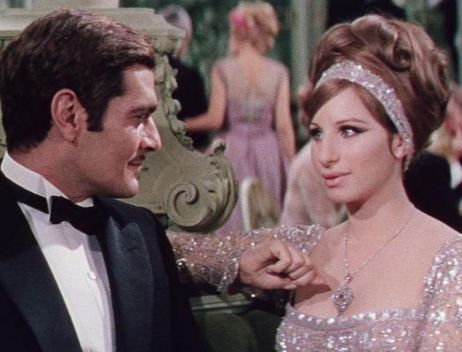 Barbra Streisand’s signature song, “People,” came from the film “Funny Girl.” She starred with Omar Sharif. See it on
  Noel Harrison’s “Windmills of Your Mind” from “The Thomas Crown Affair” is wonderfully crafted poetry set to music. See it on
 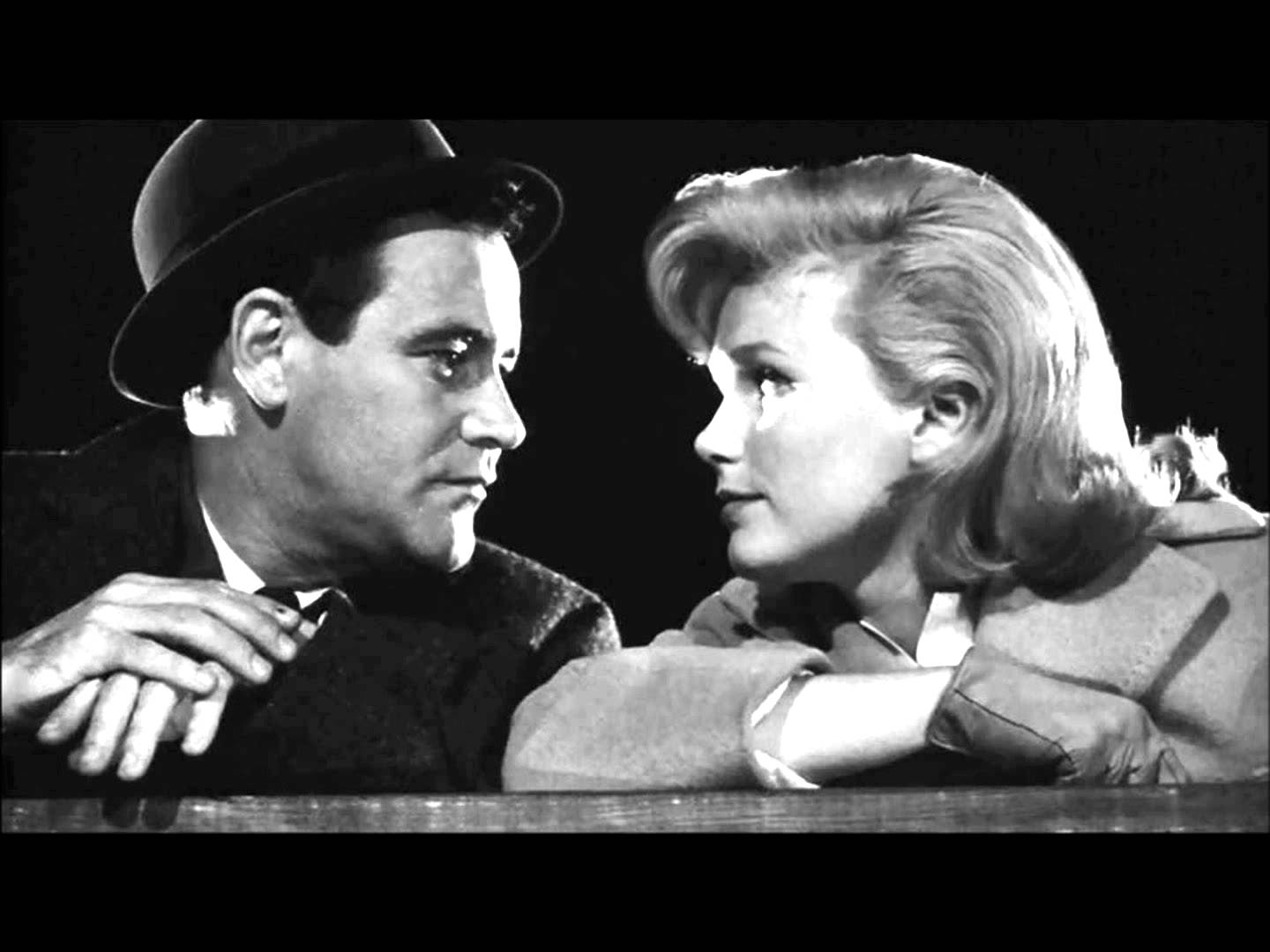 In “The Days of Wine and Roses,” Jack Lemmon and Lee Remick are unforgettable and the title tune wins an Oscar(R) in Blake Edwards’ searing, bittersweet study of an alcoholic couple on the rocks. See the title song on
  “Love is a Many Splendored Thing” from the film by the same name always ends up being an earworm for me. Here is Connie Francis’s version on
 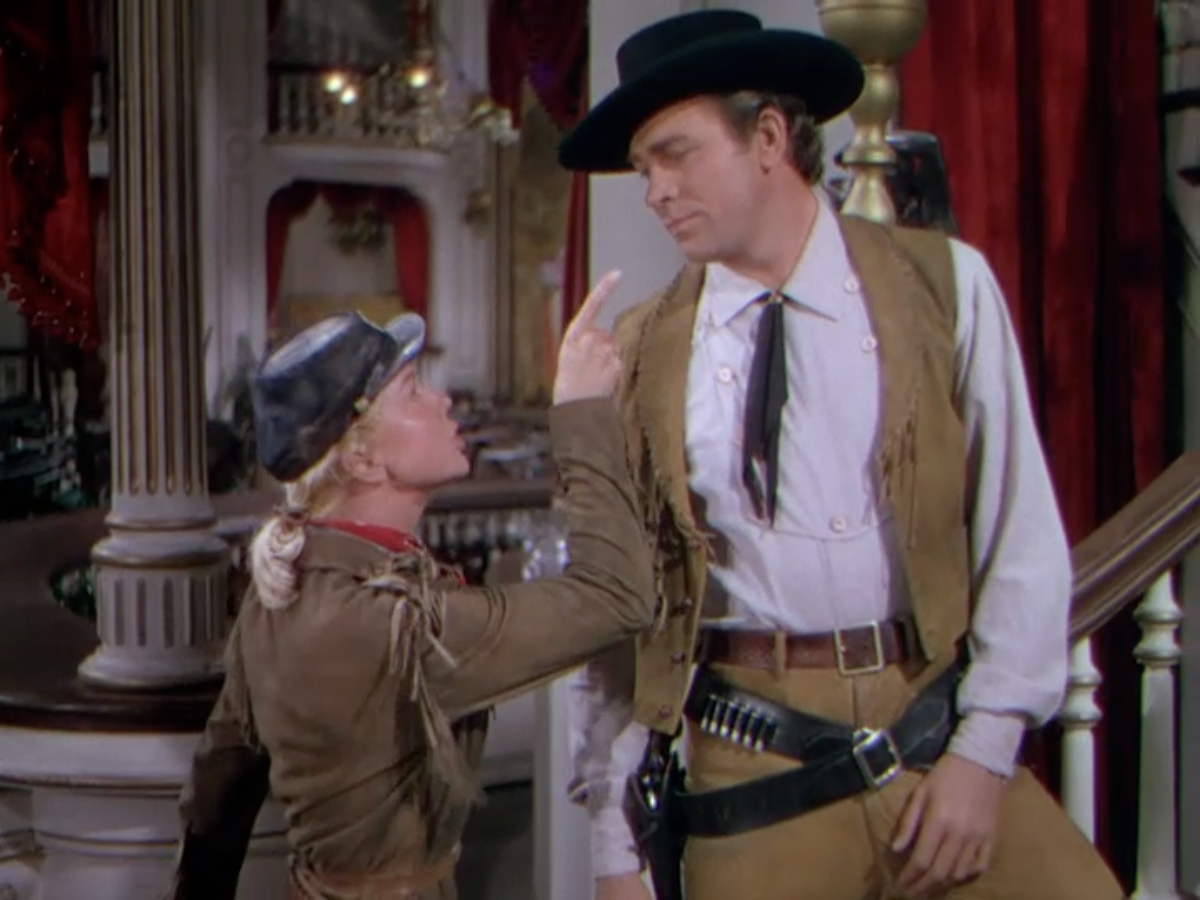 Doris Day sang “Secret Love” in “Calamity Jane.” The fact that Howard Keel was in the film with her sealed the deal for me. See it on
 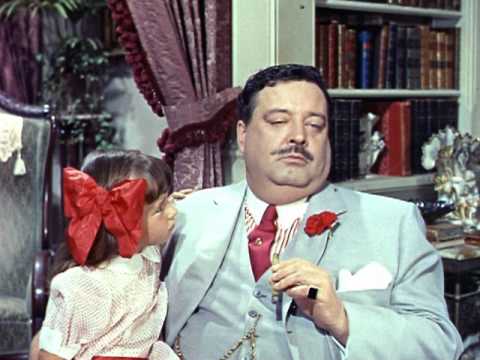 “Call me Irresponsible” came to us from “Papa’s Delicate Condition,” starring Jackie Gleason. See the trailer
 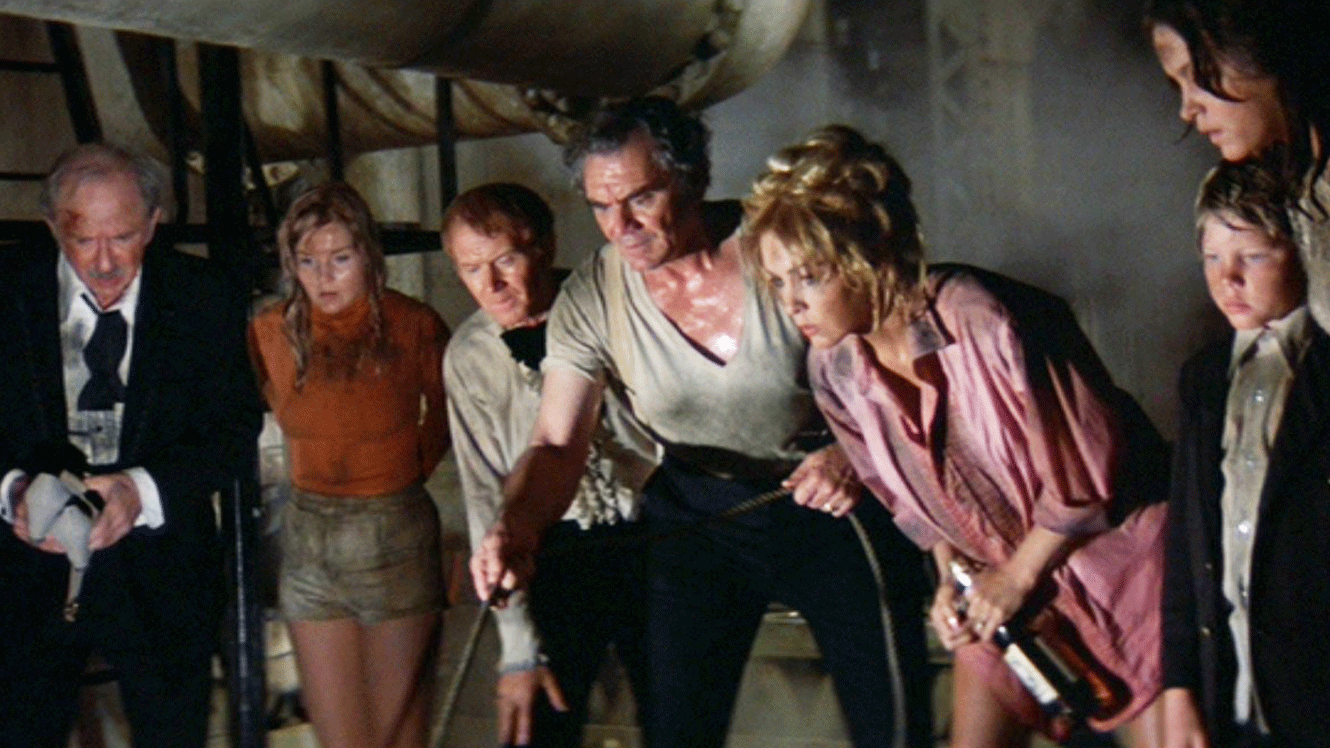 “The Morning After” from “The Poseidon Adventure” evokes melancholy, as well as hope. Hear Maureen McGovern’s version on
 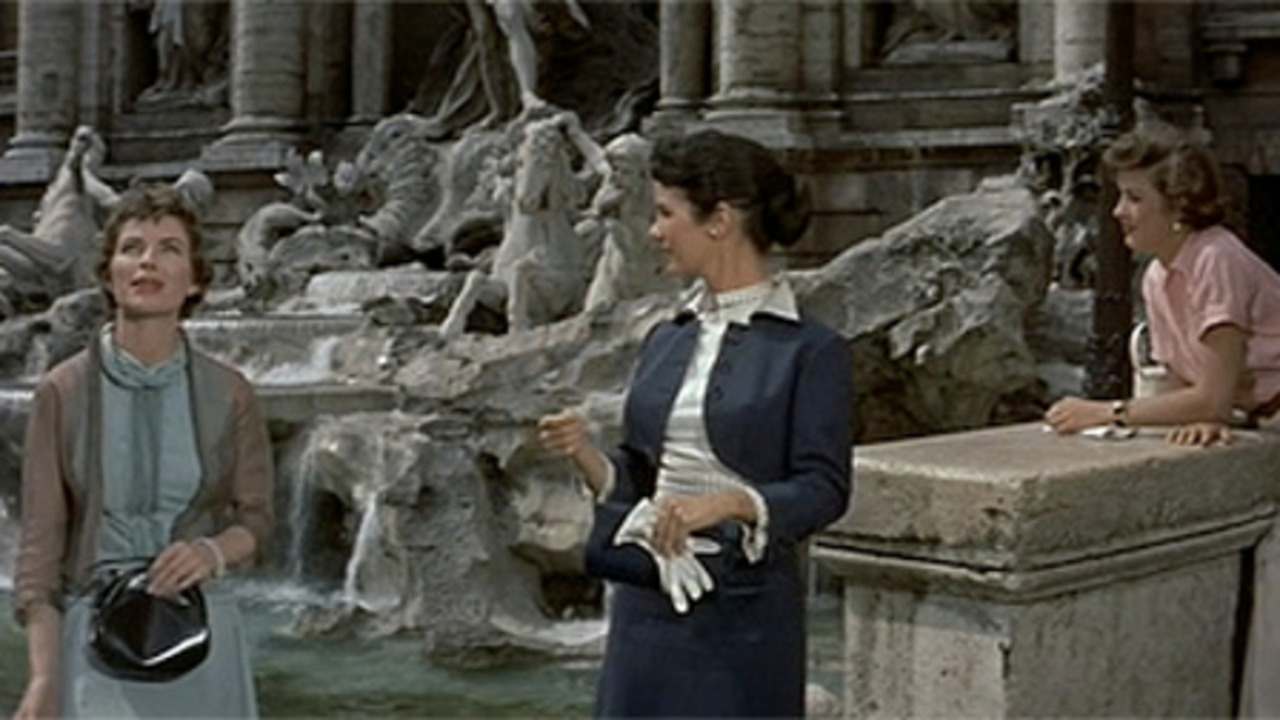 When was the last time you heard “Three Coins in a Fountain” from the movie by the same name? Listen to it on
 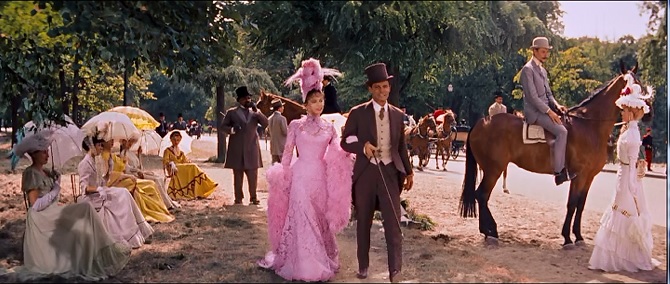 And a song about growing into womanhood: “Gigi” from the movie by the same name. Here the song on
 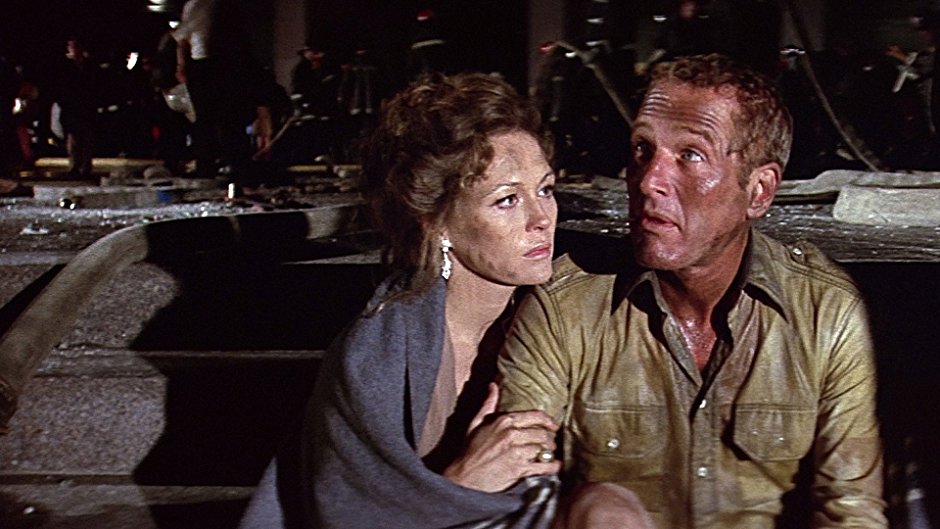 Another disaster movie, “The Towering Inferno,” gives us “We May Never Love Like This Again.” This is one is sung by Maureen McGovern. Listen to it on
 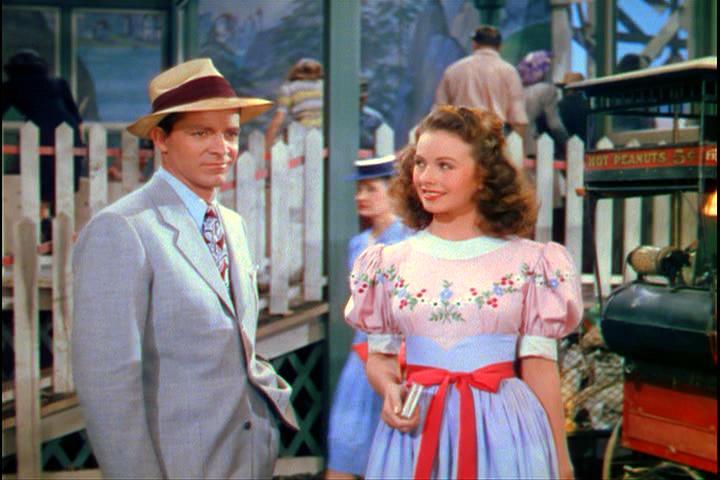 Jeanne Crain sings “It Might As Well Be Spring” from the 1945 film “State Fair.” Hear it here on


 Every Woman Dreams...
.jpg)

.jpg)
.jpg)