Many books dealing with the Regency Era mention card playing going in designated rooms at balls, but what type of cards were the gentlemen (and a few ladies) playing? Would they be gambling and playing games for money like 21 (apparently one of the most popular games of the day, even among families, what we would nowadays call “Blackjack”) or would they stick to games such as Whist, which can also be played for stakes, but could be played for an evening’s entertainment. At balls, would there be a person who would play the bank, as there was at the various clubs or hells? Who might we discover as reputable citizens, but deeply in debt?
Charles James Fox, for example, was a Whip MP and leader of the Opposition to William Pitt, the Younger’s Tory Party. He was a great friend of the Prince Regent, later George IV, and of Georgiana Cavendish, Duchess of Devonshire. Author Rachel Knowles on her Regency History website tells us: “Fox had a reputation for dissolute behaviour. He was a member of White’s and Brooks’ and of theDilettanti Society. He drank too much and was an inveterate gambler, winning and losing huge amounts of money, betting on horse races and at the gaming tables. His father paid out more than £120,000 for his son’s gambling habit, but his debts continued to amass. After his father’s death, he was twice declared bankrupt between 1781 and 1784.”
Reportedly, Fox and his brother lost even at supposedly staid places like Almack’s, but we must be careful in thinking Almack’s where young ladies and gentlemen were under the watchful eyes of the Patronesses, who were known to present unsuspecting guests who had been presented a voucher a thumbs up or a thumbs down.
However, more likely the reports of Fox gambling at Almack’s were referring to the gentlemen’s club Brooks’s, not the Almack’s found in many of a Regency romance. Brooks’s was called Almack’s, in the late 18th century. (Yes, I know, hopelessly confusing!) So the place Fox lost masses of money was the gentlemen’s club. However, I will say our assembly room Almack’s was not as staid as Georgette Heyer and most Regency romances made out: it was not just a “marriage mart” (I think that was more the Victorian view of the place), but rather a club where the wheelers and dealers of Parliament wheeled their deals (and dealt their wheels?), and where you would meet everyone of importance on a Wednesday night. So I expect there was some significant money lost and won at our Almack’s, too, on occasion.
Almacks’ was a gambling house that rented out rooms for private events and the assembly.
The Games They Played
Vingt-un – similar to blackjack, where players attempt to obtain a hand totalling close to but no more than twenty-one. Vingt-un is a “round game” (with unlimited number of players) and is a favorite of Bingley.
Commerce – players trade cards in an attempt to score the best hand of three – ideally, three of a kind. Commerce is also a “round game”.
Quadrille – a common gambling game restricted to four players at a time.
Loo – a “round game” that can be played with hands of three or five cards.
Cassino – players gamble on cards in hopes of scoring with a ten of diamongs or a two of spades.
Whist – similar to bridge, four players pair up in teams of two and gamble in a complex circuit of ‘trumps’.
Additional Terms:
fish – gambling chips
In Georgette Heyer’s Faro’s Daughter, the family has a gambling house where Faro was played. It was a game with a bank that people played against the house. They had a bouncer and usually had people by word of mouth because it was illegal to have a Faro bank.
The caricaturists of the day had a field day with a couple of high class women who were arrested for running a gambling house playing Faro. The news prints show them being whipped at the back side of a cart, which, obviously, did not happened, but the authors and artists advocated it.
The clubs and gambling hells had games with dealers and held the bank. People bet against the house, which won more than 50% of the time. Private games were between two or more people. and they set their own terms and limits. In clubs one had to buy cards. In private parties cards were provided.
If you’re interested in a quick overview of games in Jane Austen, with quotes from her works, plus the rules of casino translated for modern players (that is, the rules are period, but rewritten to be clearer), you can find one on my very-out-of-date website at: http://caraking.com/Gaming.html
Jane Austen Summer Program provides a great overview of the card games played during the Regency, as mentioned by Miss Austen in her tales. You can find that information HERE.
This is a repeat of a post from 2017 from Kyra Kramer. It speaks so poignantly of the loss of Jane Austen that I thought it appropriate to share here with you on the 202nd Anniversary of Jane Austen’s passing.
The Death of a Great Author, and Greater Woman
Jane Austen passed away on 18 July 1817, at the age of only 41. She didn’t just deprive the future of English literature by her death; she left behind a devastated and grieving family. Her mother, and her seven beloved siblings, all survived her. Moreover, her nieces and nephews were bereft at losing the aunt who had so entertained, encouraged, and embraced them.
Before her death, Jane had been ailing for some time. There is intense speculation regarding what diseased ended her life, with the three main contenders being Addison’s disease of the adrenal glands, a type of cancer termed Hodgkin’s lymphoma, or a commonplace illness of the time period, disseminated bovine tuberculosis, contracted from contaminated milk. Because of the continued mental perspicacity marking Jane’s last days, the hypothesis of disseminated bovine tuberculosis appears more likely than either Addison’s disease or Hodgkin’s lymphoma, but without disinterring her and testing her remains, we can never know for certain what killed her. We can only know that it was physically distressing, chronic, and lingering. In March of 1816 she wrote to her niece, Fanny Austen-Knight, about her reoccurring illness:
“I am got tolerably well again, quite equal to walking about and enjoying the air, and by sitting down and resting a good while between my walks, I get exercise enough … Many thanks for your kind care for my health; I certainly have not been well for many weeks, and about a week ago I was very poorly. I have had a good deal of fever at times, and indifferent nights; but I am considerably better now and am recovering my looks a little, which have been bad enough — black and white, and every wrong colour. I must not depend upon being ever very blooming again. Sickness is a dangerous indulgence at my time of life … I was languid and dull and very bad company … I do not venture to church … I took my first ride yesterday, and liked it very much. I went up Mounter’s Lane and round by where the new cottages are to be, and found the exercise and everything very pleasant; and I had the advantage of agreeable companions, as [Aunt] Cass. and Edward walked by my side. [Aunt] Cass. is such an excellent nurse, so assiduous and unwearied!”
Although Jane made light of her sickness in her cheerful letters, stressing her sporadic episodes of good health, by the next spring she was rapidly losing strength and mobility. One of life’s self-proclaimed “desperate walkers”, Jane could no longer enjoy long rambles around the Hampshire countryside by 1817, and was forced to remain bedridden or housebound with increasing frequency and duration. On 18 March her deteriorating health even made the master of “two-inches of ivory” put down her pen and give up work on her last, lamentably uncompleted novel, The Brothers (eventually retitled Sanditon). Jane wrote to her closest non-familial friend, governess and aspiring playwright Anne Sharp, on 22 May to explain that:
“In spite of my hopes & promises when I wrote to you I have since been very ill indeed. An attack of my sad complaint seized me within a few days afterwards – the most severe I ever had – & coming upon me after weeks of indisposition, it reduced me very low. I have kept my bed since 13. of April, with only removals to a Sopha. Now, I am getting well again, & indeed have been gradually tho’ slowly recovering my strength for the last three weeks. I can sit up in my bed & employ myself, as I am proving to you at this present moment, & really am equal to being out of bed, but that the posture is thought good for me. … My head was always clear, & I had scarcely any pain; my cheif sufferings were from feverish nights, weakness and Languor” [Further Reading: Jane Austen’s Dearest Friendship with Miss Sharp Still Resonates Today]
Although she made the best of things in her letters to friends and family, Jane was aware her illness was dire. She had written a will on 27 April, leaving the bulk of her worldly goods to her sister Cassandra, and had given her sister private information on whom she wished to leave very personal mementoes, such as a bodkin or some of Jane’s hair with which to make jewelry, as a mark of her affection. Her siblings and mother, however, stubbornly held out hope of Jane’s recovery, writing to one another with the good news whenever she felt the tiniest bit better, displaying a perfectly natural form of denial regarding their impending loss.
Throughout her decline, Jane was attended by the local apothecary, Mr William Curtis, who had cared for her with every consideration. Nonetheless, he was aware her amendment was beyond his skills, so Mr Curtis advised Jane’s family sometime in mid-May to take her to Winchester to see a physician attached to the Hampshire County Hospital, Dr Giles King Lyford. It was hoped that the esteemed Dr Lyford could restore Jane’s health with what would have been cutting-edge medical technology at the time. The Austens, of course, were willing to leave no stone unturned in the search for a cure, and immediately made plans to move Jane to Winchester. To this end they turned to close friends who were living there, Mrs Heathcote and Miss Bigg, (they were the older sisters of Jane’s fiancé of less than a day, Harris Bigg-Wither; they clearly held no grudge against her deciding against the union) to help them find lodgings for Jane and Cassandra. Mrs Heathcote and Miss Bigg were equal to their task, and they quickly secured a house at 8 College Street, near to their own home, for the Austens’ use.
Public Domain ~ via Wikipedia ~ Royal Hampshire County Hospital, Winchester. Rear view of the original Victorian pile on Romsey Road, with modern buildings clothing the hill to the south. A telephoto view from Whiteshute Ridge
Jane left Chawton Cottage for Winchester on 24 May under the care of her siblings, Cassandra and Henry Austen, and a nephew, William Austen-Knight. She wrote to her eldest brother’s son, James Edward Austen (known as Edward to the family, and the nephew would eventually adopt the surname Austen-Leigh and write the first biography of Jane’s life), to assure him her removal to Winchester went as smoothly as possible:
“Thanks to the kindness of your father and mother [Rev James Austen and Mary Lloyd Austen] in sending me their carriage, my journey hither on Saturday was performed with very little fatigue, and had it been a fine day, I think I should have felt none; but it distressed me to see uncle Henry and Wm. Knight [the fourth son of Jane’s brother, Edward Austen-Knight], who kindly attended us on horseback, riding in the rain almost all the way.”
Initially, the move to Winchester seemed to bring Jane a marked return to health. She promised her nephew Edward that, “neither that nor my face have yet recovered their proper beauty, but in other respects I am gaining strength very fast. I am now out of bed from 9 in the morning to 10 at night: upon the sopha, ’tis true, but I eat my meals with aunt Cass in a rational way, and can employ myself, and walk from one room to another.” She also joked with him that, “Mr. Lyford says he will cure me, and if he fails, I shall draw up a memorial and lay it before the Dean and Chapter, and have no doubt of redress from that pious, learned, and disinterested body.”
Jane likewise wrote to Mrs Frances Tilson (the wife of Henry Austen’s London banking partner) on 29 May that Dr Lyford was “encouraging, and talks of making me quite well. I live chiefly on the sopha, but am allowed to walk from one room to the other. I have been out once in a Sedan-chair, and am to repeat it, and be promoted to a wheel-chair as the weather serves. On this subject I will only say further that my dearest sister, my tender, watchful, indefatigable nurse, has not been made ill by her exertions.”
These cheerful letters may have brought those who cared about her some comfort, but it was sadly a false comfort. In private, Dr Lyford had warned family members that even though Jane was feeling a little better, “he must still consider her in a precarious state”.When James Austen went to Winchester to see Jane for himself in early June, he could not echo Jane’s determinedly upbeat reports. Instead, James was forced to tell his teenage son:
“I grieve to write what you will grieve to read; but I must tell you that we can no longer flatter ourselves with the least hope of having your dear valuable Aunt Jane restored to us. The symptoms which returned after the first four or five days at Winchester, have never subsided, and Mr. Lyford has candidly told us that her case is desperate. I need not say what a melancholy gloom this has cast over us all. Your Grandmamma has suffered much, but her affliction can be nothing to Cassandra’s. She will indeed be to be pitied. It is some consolation to know that our poor invalid has hitherto felt no very severe pain–which is rather an extraordinary circumstance in her complaint. I saw her on Tuesday and found her much altered, but composed and cheerful. She is well aware of her situation. Your Mother has been there ever since Friday and returns not till all is over–how soon that may be we cannot say–Lyford said he saw no signs of immediate dissolution, but added that with such a pulse it was impossible for any person to last long, and indeed no one can wish it–an easy departure from this to a better world is all that we can pray for. I am going to Winchester again to-morrow; you may depend upon early information, when any change takes place, and should then prepare yourself for what the next letter may announce.”
Jane was resigned to her death, but she did her utmost to relieve the emotional burdens of those who loved her. She even continued to jest playfully with her caregivers when she could, and made a point of thanking them all repeatedly. She was particularly careful to thank Mary Austen, the sister-in-law who came to stay with the Austen sisters for the final month of Jane’s life in order to share some of the burden of round-the-clock nursing with Cassandra.Jane had never been overly fond of Mary, who was snobbish and whom Jane felt had not made her dearest brother James very happy in marriage, and Jane was eager to make unspoken peace with Mary near the end, as is encouraged by the Anglican religion.
There is also every indication that she was well enough to still enjoy being with friends and family. Not only did her sister Cassandra remain by Jane’s side almost without cessation, 8 College Street boasted numerous visitors to comfort and distract the patient. Mrs Heathcote and Miss Bigg were there nearly every day, and Mrs Heathcote in particular “was the greatest possible comfort to them all”. Regrettably, two of Jane’s best friends, Anne Sharp and Martha Lloyd, had neither the funds nor the ability to visit Winchester, but were faithful correspondents. Jane’s brother Henry made a frequent appearance in the neat little drawing room with its bow-window overlooking the headmaster of Winchester College’s garden, as did her nephew Charles Austen, who was attending the college at the time. Her brother’s James, Frank, and Charles were all able to come to her as well. However, no one seems to have thought that her brother George, whom may have had mental disabilities, would like to say farewell.
Jane’s mother missed the opportunity to see Jane in the final weeks of her existence, due to a combination of semi-hypochondrial bad heath and bone-deep denial that her youngest daughter was truly dying. When Jane passed way, her mother, in spite of having every forewarning that Jane’s death was imminent, was shocked by her youngest daughter’s death. She wrote to her granddaughter, Anne Austen Lefroy, “I am certainly in a good deal of affliction … I was not prepared for the Blow, for though it in a manner hung over us I had reason to think it at a distance, & was not quite without the hope that she might in part recover”.
Nor were there arrangements made for two of Jane’s most attached nieces, Fanny Austen-Knight and Anna Austen Lefroy, to come to Winchester. Neveretheless, they frequently wrote to their aunts, giving Jane a great deal of pleasure. Cassandra assured Fanny Austen-Knight that Jane “did love you most sincerely, and never shall I forget the proofs of love you gave her during her illness in writing those kind, amusing letters at a time when I know your feelings would have dictated so different a style. Take the only reward I can give you in the assurance that your benevolent purpose was answered; you did contribute to her enjoyment. Even your last letter afforded pleasure. I merely cut the seal and gave it to her; she opened it and read it herself, afterwards she gave it to me to read, and then talked to me a little and not uncheerfully of its contents, but there was then a languor about her which prevented her taking the same interest in anything she had been used to do.”
As further evidence that Jane remained (at least outwardly, for her loved ones) brave and merry in the face of death, her brother Henry would later write that his sister, “retained her faculties, her memory, her fancy, her temper, her affections, warm, clear and unimpaired, to the last. Neither her love of God, nor of her fellow creatures flagged for a moment. She made a point of receiving the sacrament before excessive bodily weakness might have rendered her perception unequal to her wished. She wrote whilst she could hold a pen, and with a pencil when a pen became too laborious. The day before her death she composed some stanzas replete with fancy and vigour.”
This poem, entitled Venta, was a humorous verse about the rainy weather that occurred on St Swithun’s Day, July 15. VentaBelgarumhad been the Roman name for the city [the Latinized form of the Brittonic words meaning City of the Belgae] and erudite scholars of the local college loved to show off their knowledge by calling Winchester by its old appellation. Jane, with her usual wit and acerbic skewing of sociocultural absurdity, mocked everything about the pretentious nomenclature and the races that were held to celebrate St Swithun.
Venta
When Winchester races first took their beginning
It is said the good people forgot their old Saint
Not applying at all for the leave of St. Swithin
And that William of Wykham’s approval was faint.
The races however were fix’d and determined
The company met & the weather was charming
The Lords & the Ladies were sattin’d & ermin’d
And nobody saw any future alarming.
But when the old Saint was inform’d of these doings
He made but one spring from his shrine to the roof
Of the Palace which now lies so sadly in ruins
And thus he address’d them all standing aloof.
Oh subject rebellious, Oh Venta depraved! When once we are buried you think we are dead But behold me Immortal. — By vice you’re enslaved You have sinn’d and must suffer. — Then further he said
These races & revels & dissolute measures
With which you’re debasing a neighbourly Plain
Let them stand — you shall meet with a curse in your pleasures
Set off for your course, I’ll pursue with my rain.
Ye cannot but know my command in July.
Henceforward I’ll triumph in shewing my powers,
Shift your race as you will it shall never be dry
The curse upon Venta is July in showers.
Having made this last sally into the written word, Jane Austen slipped off her mortal shell a little more than 48 hours later, dying in the wee hours of Friday, 18 July, with her head pillowed on her sister Cassandra’s lap. Cassandra sent a letter to Fanny Austen-Knight recounting Jane’s final moments:
“She felt herself to be dying about half an hour before she became tranquil and apparently unconscious. During that half-hour was her struggle, poor soul! She said she could not tell us what she suffered, though she complained of little fixed pain. When I asked her if there was anything she wanted, her answer was she wanted nothing but death, and some of her words were: ‘God grant me patience, pray for me, oh, pray for me!’ Her voice was affected, but as long as she spoke she was intelligible … he was seized again with the same faintness, which was followed by the sufferings she could not describe; but Mr. Lyford had been sent for, had applied something to give her ease, and she was in a state of quiet insensibility by seven o’clock at the latest. [According to Henry Austen, Jane’s “last voluntary speech conveyed thanks to her medical attendant”.] From that time till half-past four, when she ceased to breathe, she scarcely moved a limb, so that we have every reason to think, with gratitude to the Almighty, that her sufferings were over. A slight motion of the head with every breath remained till almost the last. I sat close to her with a pillow in my lap to assist in supporting her head, which was almost off the bed, for six hours; fatigue made me then resign my place to Mrs. J. A. for two hours and a half, when I took it again, and in about an hour more she breathed her last. I was able to close her eyes myself, and it was a great gratification to me to render her those last services. There was nothing convulsed which gave the idea of pain in her look; on the contrary, but for the continual motion of the head, she gave one the idea of a beautiful statue, and even now, in her coffin, there is such a sweet, serene air over her countenance as is quite pleasant to contemplate.”
Austen’s family and friends were profoundly grieved. Cassandra wrote, “I have lost a treasure, such a sister, such a friend as never can have been surpassed. She was the sun of my life, the gilder of every pleasure, the soother of every sorrow; I had not a thought concealed from her, and it is as if I had lost a part of myself. I loved her only too well … I do think of her in every variety of circumstance. In our happy hours of confidential intercourse, in the cheerful family party which she so ornamented, in her sick room, on her death-bed, and as (I hope) an inhabitant of heaven. Oh, if I may one day be re-united to her there!” Fanny Austen-Knight also suffered “severely”, recording in her diary that she “had the misery of losing my dear Aunt Jane after a lingering illness”, and wrote several times to her Aunt Cassandra and her grandmother regarding the extent of their loss. Anne Austen Lefroy also felt the loss of Aunt Jane keenly, constantly eager to tell Jane some news or though, only to recall that she was no longer alive to receive the information. Anna’s young half-sister, 12 year old Caroline Austen, lamented that her sorrow made her feel as though she “had never loved and valued” her Aunt Jane as much as she should. Her brother James was so moved he composed a poem as an elegy for his sister, praising her multitudinous virtues. These effusions of sorrow are all proofs of a family in deepest mourning.
Jane Austen was laid to rest in Winchester Cathedral on 24 July. As was customary, it was a small family affair, attended by her kinsmen because a funeral was considered too much for the deceased female relatives to bear. Jane’s brothers Frank and Henry were there, but Edward Austen came as his father’s surrogate (James’s was in ill health and they feared the grief might harm him constitutionally) and Charles Austen was unable to come away from his naval post in time. Cassandra wrote of the funeral, “Never was human being more sincerely mourned … than was this dear creature. May the sorrow with which she is parted with on earth be a prognostic of the joy with which she is hailed in heaven!”
A simple memorial stone covered Jane’s grave, saying:
In Memory of JANE AUSTEN youngest daughter of the late Rev GEORGE AUSTEN formerly Rector of Steventon in this County she departed this Life on the 18th July, 1817 aged 41, after a long illness supported with the patience and the hopes of a Christian. The benevolence of her heart, the sweetness of her temperament the extraordinary endowments of her mind obtained the regard of all who knew her and the warmest love of her intimate connections. Their grief is in proportion to their affection they know their loss to be irreparable but in their deepest affliction they are consoled by a firm though humble hope that her charity, devotion, faith and purity have rendered her soul acceptable in the sight of her REDEEMER
There was no mention of her novels, or her success as a writer. For the Austen family, even her overwhelming abilities with the pen were overshadowed by the intense personal nature of her loss. Their dismay was for the absence of a sister and friend, not for the fact her career as an author was so sadly cut short. Not even works of Jane Austen’s magnitude could surpass her worth as a sibling and companion in their eyes.
This is not to say that they were unaware of her extraordinary literary gifts. Her grave may have borne no reference to her writing, but her brother Henry was lavish in his praise of her the obituary he submitted to the newspapers, listing all of her novels with great pride. He furthermore declared that “the whole catalogue of the mighty dead” buried at Winchester Cathedral did “not contain the ashes of a brighter genius”.
Although we probably can all agree with Henry’s assessment of his sister’s talents, we can none of us understand the depths of the Austen family’s pain at losing one of their own. As Austen herself wrote in Mansfield Park, the sibling bond is “a strengthener of love, in which even the conjugal tie is beneath the fraternal. Children of the same family, the same blood, with the same first associations and habits, have some means of enjoyment in their power, which no subsequent connexions can supply”. In a way it is a blessing that Jane was the first to go; she alone was spared the anguish of losing a brother or sister. English literature has suffered for her early demise, but Jane herself did not.
In our regrets for the loss of such a magnificent author, we sometimes neglect the fact she was a wonderful person, as well.
Meet Kyra Kramer: Kyra Cornelius Kramer is a freelance academic with BS degrees in both biology and anthropology from the University of Kentucky, as well as a MA in medical anthropology from Southern Methodist University. She has written essays on the agency of the Female Gothic heroine and women’s bodies as feminist texts in the works of Jennifer Crusie. She has also co-authored two works; one with Dr. Laura Vivanco on the way in which the bodies of romance heroes and heroines act as the sites of reinforcement of, and resistance to, enculturated sexualities and gender ideologies, and another with Dr. Catrina Banks Whitley on Henry VIII.
Ms. Kramer lives in Bloomington, IN with her husband, three young daughters, assorted pets, and occasionally her mother, who journeys northward from Kentucky in order to care for her grandchildren while her daughter feverishly types away on the computer. [Amazon Author Page]
When her widowed uncle made her home untenable, Mary made the best of things by going to live with her elder sister, Mrs Grant, in a parson’s house the country. Mansfield Parsonage was more than Mary had expected and better than she could have hoped. Gregarious and personable, Mary also embraced the inhabitants of the nearby Mansfield Park, watching the ladies set their caps for her dashing brother, Henry Crawford, and developing an attachment to Edmund Bertram and a profound affection for his cousin, Fanny Price.
Mansfield Parsonage retells the story of Mansfield Park from the perspective of Mary Crawford’s hopes and aspirations and shows how Fanny Price’s happily-ever-after came at Mary’s expense.
According to the Romance Writers of America, “the main plot of a romance novel must revolve around the two people as they develop romantic love for each other and work to build a relationship together. Both the conflict and the climax of the novel should be directly related to that core theme of developing a romantic relationship although the novel can also contain subplots that do not specifically relate to the main characters’ romantic love. Furthermore, a romance novel must have an emotionally satisfying and optimistic ending.”
Wikipedia says, “The romance novel is a literary genre developed in Western culture, mainly in English-speaking countries. Novels in this genre place their primary focus on the relationship and romantic love between two people and must have an “emotionally satisfying and optimistic ending. Separate from their type, a romance novel can exist within one of many subgenres, including contemporary, historical, science fiction and paranormal. One of the earliest romance novels was Samuel Richardson’s popular 1740 novel Pamela, or Virtue Rewarded, which was revolutionary on two counts: it focused almost entirely on courtship and did so entirely from the perspective of a female protagonist. In the next century, Jane Austen expanded the genre, and her Pride and Prejudice is often considered the epitome of the genre. Austen inspired Georgette Heyer, who introduced historical romances in 1921.”
“Romance (Word)” Stock photo and royalty-free images on Fotolia.com – Pic 17800826 eu.fotolia.com
Chick Lit (according to the Metropolitan Library System in Illinois), on the other hand, explores the personal, professional, and romantic lives of young, single, working women. Quirky protagonists and humor distinguish the genre as these women look for love and deal with often less than desirable jobs. Some general characteristics of chick lit:
Written by women for women
First person-personal voice (confiding to reader)
Humor is important
Discuss life issues (love, marriage, dating, relationships, friendships, jobs, weight)
Circle of friends for support
Dead end jobs they usually hate, often with bad bosses
Unsuitable boyfriends or a lack of one
Urban-but no real sense of place
Outrageous situations
Main character drifting through life
May have overbearing/interfering mother, family
Obsessed with fashion, weight, shopping
So, does Jane Austen fit into any of these categories? Specifically, can Pride and Prejudice serve as a model for the modern romance or chick lit novel? Let us make some assumptions.
Pride and Prejudice is the story of an intelligent, sassy young woman. “‘Mr. Darcy is not to be laughed at!’ cried Elizabeth. ‘That is an uncommon advantage and uncommon I hope it will continue, for it would be a great loss to me to have many such acquaintances. I dearly love to laugh.'”
Elizabeth Bennet has an unpredictable family, especially her mother. “’An unhappy alternative is before you, Elizabeth. From this day you must be a stranger to one of your parents. Your mother will never see you again if you do not marry Mr. Collins, and I will never see you again if you do.’”
The book has a “relatable” heroine, a sympathetic and believable creation. We all see ourselves as Elizabeth Bennet, a woman demanding that a man choose her for something other than her looks or her position in society. Can you not see your reaction if Mr. Darcy called you not “tolerable”? “Mr. Darcy walked off; and Elizabeth remained, with no very cordial feelings toward him. She told the story, however, with great spirit among her friends; for she had a lively, playful disposition, which delighted in anything ridiculous.”
Elizabeth Bennet takes pleasure in observing the faults of others, as well as the quirks of society. She claims to be a student of humanity. As a woman possessing an ironic sense of humor, I most definitely enjoy Elizabeth’s quips. “They were, in fact, very fine ladies; not deficient in good humor when they were pleased, nor in the power of being agreeable when they chose it; but proud and conceited.”
Yet, Elizabeth is equally critical of herself and her apparent flaws. This is something with which many people experience difficulty. It is extremely hard to own up to our own faults. “She began now to comprehend that he was exactly the man who, in disposition and talents, would most suit her. His understanding and temper, though unlike her own, would have answered all her wishes.”
Elizabeth Bennet’s female relationships are as important, if not more important, than her relationship with Mr. Darcy. We view her as a loyal sister, especially to Jane Bennet. She is also a devoted friend to Charlotte Lucas, even tolerating Mr. Collins in order to visit with her friend. “Indeed, jane, you ought to believe me. No one who has ever seen you together can doubt his affection; Miss Bingley, I am sure, cannot; she is not such a simpleton.”
Pride and Prejudice is a female-centered book, not just in the main character’s point of view, but also many of the minor characters. I always say Mr. Darcy is a major-minor character. He actually holds a minor role in the book. Think upon how many passages are devoted to Elizabeth’s interaction with Mr. Darcy. Then think of the multiple conversations between Elizabeth and Jane, Elizabeth and Aunt Gardiner, and Elizabeth and Charlotte. Like modern women, Austen’s characters discuss the men they encounter; they analyze every word or action. “Well, he certainly is very agreeable, and I give you leave to like him. You have liked many a stupider person.”
Elizabeth is coming to terms with her family complications, Charlotte’s irresponsible choices, and her own prejudices throughout the novel. This assists her in coming to a decision as to whether an alliance with Mr. Darcy is what she really wants in life. “We will not quarrel for the greater share of blame annexed to that evening,” said Elizabeth. “The conduct of neither, if strictly examined, will be irreproachable, but since then we have both, I hope, improved in civility.”
She changes dramatically throughout the book. Elizabeth admits that Mr. Darcy does not change. “’How despicably have I acted!’ she cried. ‘I, who have prided myself on my discernment!’”
Do you not adore the way Elizabeth reacts when Charlotte Lucas marries Mr. Collins? Have you not had a friend marry someone you thought was so “WRONG”? Or what about that awkward situation when all your friends are married, and you are not? “She had always felt that Charlotte’s opinion of matrimony was not exactly like her own; but she could no have supposed it possible that, when called into action, she would have sacrificed every better feeling to worldly advantage.”
What of all those bad boys you encountered? Elizabeth meets a “womanizer” in the form of Mr. Wickham, a man whose only genuine quality is his handsome face. Wickham appears to be the perfect romantic hero, but “first impressions” are faulty. In reality, he’s a pathological liar and a scoundrel. “Wickham was not at all more distressed than herself; but his manners were always so pleasing, that had his character and his marriage been exactly what they ought, his smiles and easy address, while he claimed their relationship. would have delighted them all.”
Although Mr. Darcy is the romantic hero of the Pride and Prejudice (and assuming you have no images of Colin Firth emerging from a placid lake in a wet shirt or of Matthew Macfadyen walking through the morning mist with an open shirt and lots of chest hair), you probably do not care for the man. In fact, Austen manipulates the reader before revealing Darcy’s true worth. Quite frankly, he’s a “prat.” “‘That is very true,’ replied Elizabeth, ‘and I could easily forgive his pride, if he had not mortified mine.'”
So, do you see similar themes and plot points in modern romance novels (whether they be contemporary, westerns, paranormal, or historical)? I do every time I read a romance. Add comments below if you agree, or even if you disagree.
This post first appeared on Austen Authors on 21 April 2020. Enjoy!
Upon opening my inbox this morning, I found the latest newsletter from the Jane Austen Centre. If you haven’t seen one of these newsletters, you should check in out. It’s full of fun trivia, products and generally just all things Jane. My favorite is the quiz, which sometimes I can ace, and sometimes, well, frankly, I totally choke. But I do enjoy the newsletter, so if you haven’t seen it, check it out!!
The first feature in the newsletter really was intriguing. It contained a miniature of a young woman. The headline read: “Literary Miniature: Was she the inspiration for Lydia Bennett?” When I read further, I discovered that a portrait miniature of a young lady named Mary Pearson and painted by William Wood was offered by the London Gallery for sale, and was purchased by Chawton House.
Pearson was the daughter of a naval officer and was apparently engaged to Henry Austen, brother of Jane Austen. The engagement only last a few months. But the most interesting thing to me was the comment that Mary Pearson was the inspiration for Lydia Bennett Wickham in Austen’s “Pride and Prejudice.” This was news to me. But they didn’t elaborate further. It wasn’t enough for me. My obsessive need for thorough research got the better of me. I had to find out if there was any validity to this hypothesis. Here’s what I discovered:
Miss Mary Pearson was the daughter of Sir Richard Pearson, an officer of the Greenwich Hospital. According to “Becoming Jane Austen” by Jon Spence, Henry took leave from his post with the Oxfordshire regiment to introduce Mary to his family in the summer of 1796. They went to Rowling, the estate owned by brother Edward, where Jane was making an extended stay. Jane invited Mary to go back to Steventon with her when she returned there. Jane wrote her family there in advance, warning them they might be disappointed by Mary’s appearance:
“If Miss Pearson should return with me, pray be careful not to expect too much beauty,” wrote Jane. “I will to pretend to say that on a first view, she quite answered the opinion I had formed of her. My Mother I am austere will be disappointed if she does not take great care. From what I remember of her picture, it is no great resemblance.”
One person in particular that was not a fan of Mary’s was Eliza de Feuillide, Jane and Henry’s cousin. She had been married to Jean Capot, Comte de Feuillide, who was guillotined for his support of the French monarchy in 1794. After Eliza moved to England for protection during the revolution, there was always a chemistry between her and Henry, and when his engagement to Mary was announced, she had a few words to say:
“I hear Henry’s late intended is a most intolerable flirt, and reckoned to give herself great airs. The person who mentioned this to me says she is a pretty wicked looking girl with bright black eyes which pierce through and through. No wonder this poor young man’s heart could not withstand it.”
There is no record I could find that said why, but Mary and Henry were not meant to last. By the fall, the engagement was broken. My guess is his attachment to Eliza was too strong. He asked for her hand the year before his engagement to Mary, and she rejected it. But she ultimately gave in to his charms. It is said that Jane did not approve of her brother marrying Eliza in the beginning, and would have been much happier had he married the less flamboyant and less experienced Miss Pearson. She was afraid Eliza would promote Henry’s ambitions of being a professional in the military, and this would take him away from her and she would not see him as often as she liked.
Jane Austen corresponded with Mary years after her brother broke off the engagement. Mary wed another, but not for nearly 20 years. It is thought that this only known miniature portrait of Mary might have been part of her attempt to get back on the marriage market after the broken engagement. We know during Austen’s time a broken engagement could be quite the scandalous thing, and that could be why Mary did not have another marriage proposal for all that time.
That leaves us to ponder why it is said that Mary was the inspiration for Lydia Bennett. The truth is, no one can know definitively what inspires a writer, unless they tell you directly, which is rare. So the connection between Lydia Bennett and Mary Pearson is clearly supposition. But it could be surmised that, if Mary did have a reputation as a flirt, and was the daughter of a military officer, and was set to marry a military man, this gave Jane Austen the idea for the character. We know that Austen had started composing “First Impressions,” at about this time as well, which can also give credence to the notion that Lydia was based on Mary.
We will never now for sure, but it’s fun to try and make the connections. As for Mary Pearson, she has been plucked from obscurity, and 200 plus years later, has a little revenge on the boy who took her on the rebound.
You may also like this article on the same subject from the Smithsonian.
Today, I am catching up on some writing time, but I thought some of you might wish a second chance to explore my pieces on the Signers of the Declaration of Independence. It took me a little over a year to compile these stories. Enjoy!
Signers of the Declaration of Independence
John Adams (MA), John Adams, American Founding Father and the “Atlas of Independence”
William Floyd (NY) So What Do President Abraham Lincoln and Rock Legend David Crosby Have in Common? William Floyd, a Signer of the Declaration of Independence
Roger Sherman (CT), Roger Sherman, Signer of the Articles of Association, Declaration of Independence, the Articles of Confederation, and the U. S. Constitution
BIRTH: Perhaps around 1602, likely either at Dorking or Guildford, co. Surrey, England, daughter of William Mullins. MARRIAGE: John Alden, about 1622 or 1623, at Plymouth. CHILDREN: Elizabeth, John, Joseph, Priscilla, Jonathan, Sarah, Ruth, Mary, Rebecca, and David. DEATH: Sometime between 1651 and 1687 at Duxbury. By tradition she attended the funeral of Josiah Winslow in 1680, but no primary source exists to confirm.
It is believed Priscilla Mullins hailed from Dorking, Surrey, England and she was in her late teen years in 1620 when she sailed for America on the Mayflower, along with her parents and her brother Joseph. Her relations died that first winter at Plymouth, leaving Priscilla as an orphan. It is believed she moved into the residence created for the Brewster family.
During that first year, it is assumed she became very close to John Alden (my 10th great-grandfather), a man hired to be a cooper (barrel maker). Alden was to take care of the barrels aboard the Mayflower when it set sail for the New World in the early fall of 1620. After his contract was up, he decided to remain in New England when the Mayflower returned home to England.
Priscilla is the best known woman who sailed to America on the Mayflower, because of the poem The Courtship of Miles Standish by Henry Wadsworth Longfellow (my sixth great uncle 5 x removed). I was inspired by Longfellow’s poem to write “The Courtship of Lord Blackhurst.” According to Longfellow’s legend, John Alden spoke to Priscilla Mullins on behalf of Miles Standish, who was interested in the lovely young woman. But she asked, “Why don’t you speak for yourself, John?” You will find that line and a few more from the poem embedded within my tale. Priscilla and Alden were married by 1623, because she is not listed separately in the 1623 Division of Land at Plymouth Colony. Each man drew lots to determine the location of his land. John Alden’s grant was “on the other side of the bay” from the original Plymouth settlement.
“Not much is known about their early married life, but records show that by 1627 they were living in a house on the hillside, across from the Governor’s house and near the fort. John Alden served in various offices in the government of the Colony. He was elected as assistant to the governor and Plymouth Court as early as 1631, and was regularly re-elected throughout the 1630s.
“At first, the colonists only planted crops on the land given them at the Division of Land. But by 1632, John Alden and others wanted to stay on their new land year round, and Plymouth Colony reluctantly agreed. There, the Aldens helped to found the town of Duxbury, and raised their ten children.” [History of American Women]
Mayflower History provides us with a look at the house in which Priscilla Mullins lived in Surrey.
What happens when a lady falls in love,not with her betrothed, but rather with his cousin?
Miss Priscilla Keenan has been promised to the Marquess of Blackhurst since her birth. The problem is: She has never laid eyes upon the man. So, when Blackhurst sends his cousin to York to assist Priscilla in readying Blackhurst’s home estate for the marquess’s return from his service in India, it is only natural for Priscilla to ask Mr. Alden something of the marquess’s disposition. Yet, those conversations lead Cilla onto a different path, one where she presents her heart to the wrong gentleman. How can she and Alden find happiness together when the world means to keep them apart? Inspired by Henry Wadsworth Longfellow’s “The Courtship of Miles Standish,” this tale wants for nothing, not even a happy ending, but it is not what the reader things.
A delightful anthology of Regency Romance Summer stories from best selling authors! Fall in love for Summer, with these wonderful romantic reads! Seven novellas to keep you reading all through Summer, each centered around Summer.
The anthology includes:
The Courtship of Lord Blackhurst by Regina Jeffers
A Lady promised to a man she has never met, who yet answers his request for assistance in preparing the home they will share, a Marquess unsure what to expect, an unplanned deception, a seemingly improper affection, misperception untangled to love.
A Hero for Harriet by Victoria Hinshaw
A young woman whose family want her to marry well, a gentleman, nobly born but uninterested in society, two matchmaking aunts, assumptions and misconceptions, the intervention of a donkey, love found despite it all.
Her Absent Duke by Arietta Richmond
A Lord and a Lady promised from birth, an avaricious uncle with plans of his own, an impossible choice which leads to disaster, an unplanned compromise, a love fulfilled despite all opposition.
The Magic Garden by Janis Susan May
A beautiful young woman, shut away in the country so that her less appealing sister may shine, an Earl set upon visiting a never seen estate, simply to escape the demands of his aunt and the pursuit of unwanted young women, an accident, a garden left to run wild, a new perspective on the world, a love which defies all expectations.
Grace’s Story by Summer Hanford
Trying to save her dearest friend from heartache will unravel a web of secrets that just might get Miss Grace Birkchester killed. Doctor Andrew Carter is determined to help those in need – but doing so draws him ever deeper into a web of danger. When their worlds collide, love may be the only thing which can save them.
What if I Loved You by Cora Lee
A man who needs to marry for his career, a woman who needs a new location in life, a proposal born of friendship, a shocking family secret which could ruin them both. Will love triumph, or will all be lost?
The Masked Wicked Duke by Sandra Masters
An opera singer who is cousin to royalty, a Duke with an artist’s soul, who is yet reputed as a rake, a chance meeting, an overwhelming attraction, a masquerade, a love which burns away all past resolve.
If you love Regency Historical Romance, you’ll love these!
As my previous two posts on John Alden and Henry Wadsworth Longfellow have indicated, my most recent tale, “The Courtship of Lord Blackhurst” was inspired by Longfellow’s narrative poem, “The Courtship of Myles Standish.” Other than the knowledge of Standish being a part of the original Plymouth colonists, what else do we know of the man? In truth, not as much as one might think. As it was with John Alden, we know Standish’s “history” after his arrival at Plymouth Rock, but much before that time is mere speculation.
For example, many list his birthdate as occurring 1584, while others think it more likely to be closer to 1587. His place of birth is also greatly debated. Nathaniel Morton, writing in his book New England’s Memorial (1669) states that Standish hailed from Lancashire, England. Morton tells us Standish owned a book about the former head of the Rivington Grammar School in Lancashire, and he cites the town of Duxbury that Standish and John Alden founded as a reference to Duxbury Hall in Lancashire. Others believe him to be from the Isle of Man state that “in his probate will that were “surreptitiously detained” from him (including lands on the Isle of Man itself); these lands all belonged at one time to Thomas Standish, of the branch of the Standish family from the Isle of Man. In September 2006, Jeremy D. Bangs supplied a scholarly review of the evidence and controversy in “Myles Standish, Born Where?”, Mayflower Quarterly 72:133-159.” [Mayflower History]
Standish was an heir to a fairly sizeable estate in Lancashire, but his lands were lost during the English Civil War, and neither he nor his son Alexander were ever able to legally regain control of the estate.
Likewise, we know little of his service to Queen Elizabeth’s army. Unsubstantiated reports claim he was a lieutenant in the Queen’s arm. Scholars believe he served for a time in Holland where he became acquainted with John Robinson and the Pilgrims who lived near Leiden. He was hired to be the Pilgrims’ military captain. His role in the settlement was to be coordinate the Pilgrims’ defense against outside threats from, say, the French, the Spanish, or the Dutch, as well as the “Indians” (Native American) tribes.
We know he was married when he traveled with the Pilgrims. His wife Rose traveled with him to the New World. As they had no children, they likely married before the Mayflower set sail, but we do not know the date or even Rose’s last name. The lady died during the first winter at Plymouth. According to the tale Longfellow set about, Standish set his eyes on Priscilla Mullins, an orphan (Her parents and brother also died during that first winter.) and one of the wealthier Pilgrims because she held the shares of her family in the expedition. Moreover, she was the only female who was not married among those who, initially, traveled with the Pilgrims. Priscilla, however, chose John Alden over Standish. Standish, later, courted and married a woman named Barbara (again, no last name), who arrived at Plymouth on the ship Anne in the year 1623.
As part of his duties to the Pilgrims, he explored the area and assisted in developing the site chosen for the settlement. In his role as military captain, Standish oversaw the building of the fort designed to protect the colonists. He led trading expeditions and designed the group’s response to the Indian tribes in the region. “He led the party that went in pursuit of the alleged killers of Squanto (who was later discovered to be safe). He led the revenge attacks on the Indians in the Massachusetts Bay after they were caught in a conspiracy planning to attack and destroy the Plymouth and Wessagussett colonies; several Indians were killed or executed, for which Standish received some criticism, even from his friends, for being too heavy-handed.” [Mayflower History] At times Standish was criticized for his ruthlessness and for his quick temper. However, he was also praised for his defense of the colony and for his tender concern for those who took ill during that first disastrous winter.
In the mid 1630s, Standish and John Alden founded the town of Duxbury, where they lived out the remainder of their days. Standish and Barbara had eight children: Charles (died young), Alexander, John, Myles, Lora, Josias, and Charles. He died a painful death from most consider to be kidney stones on 3 October 1656.
Introducing “The Courtship of Lord Blackhurst” (part of the Regency Summer Secrets and Soirées Anthology)
Released Yesterday, June 30, 2020
What happens when a lady falls in love,not with her betrothed, but rather with his cousin?
Miss Priscilla Keenan has been promised to the Marquess of Blackhurst since her birth. The problem is: She has never laid eyes upon the man. So, when Blackhurst sends his cousin to York to assist Priscilla in readying Blackhurst’s home estate for the marquess’s return from his service in India, it is only natural for Priscilla to ask Mr. Alden something of the marquess’s disposition. Yet, those conversations lead Cilla onto a different path, one where she presents her heart to the wrong gentleman. How can she and Alden find happiness together when the world means to keep them apart? Inspired by Henry Wadsworth Longfellow’s “The Courtship of Miles Standish,” this tale wants for nothing, not even a happy ending, but it is not what the reader things.
I have 3 eBook copies of Regency Summer Secrets and Soirées available to those who comment below.
According to Henry Wadsworth Longfellow: A Maine Historical Society Website, “Henry Wadsworth Longfellow was a commanding figure in the cultural life of nineteenth-century America. Born in Portland, Maine, in 1807, he became a national literary figure by the 1850s, and a world-famous personality by the time of his death in 1882. He was a traveler, a linguist, and a romantic who identified with the great traditions of European literature and thought. At the same time, he was rooted in American life and history, which charged his imagination with untried themes and made him ambitious for success.”
My story, “The Courtship of Lord Blackhurst,” was inspired by Longfellow’s poem “The Courtship of Miles Standish.” I have loved the poem for more years than I care to recall. I spent 40 years teaching English/language arts in public schools of three different states, most of which at the high school level. Therefore, I was often called upon to teach “Evangeline” and, upon occasion, “The Courtship of Miles Standish” in my American Lit classes. Naturally, when Ancestry.com led me to John Alden of the Plymouth Colony fame as my tenth great-grandfather and then directed me to Longfellow as my sixth cousin 5x removed, I was doing my “happy dance.” Longfellow, you see, is also related to John Alden through Alden’s daughter Elizabeth. I am related to Alden through his daughter Rebecca.
Henry Wadsworth Longfellow, one of the “Fireside Poets,” wrote lyrical poems about history, mythology, and legend that were popular and widely translated, making him the most famous American of his day.
The plot of The Courtship of Miles Standish deliberately varies in emotional tone, unlike the steady tragedy of Longfellow’s Evangeline. The Pilgrims grimly battle against disease and Indians, but are also obsessed with an eccentric love triangle, creating a curious mix of drama and comedy. Bumbling, feuding roommates Miles Standish and John Alden vie for the affections of the beautiful Priscilla Mullins, who slyly tweaks the noses of her undiplomatic suitors. The independent-minded woman utters the famous retort, “Why don’t you speak for yourself, John?” The saga has a surprise ending, one full of optimism for the American future.
Most would agree that Longfellow’s poem is fictionalized history. Main characters Miles Standish, John Alden, and Priscilla Mullins are based upon real Mayflower passengers. Longfellow was a descendant of John Alden and Priscilla Mullins through his mother Zilpah Wadsworth and he claimed he was relating oral history. Skeptics dismiss his narrative as a folktale. At minimum, Longfellow used poetic license, condensing several years of events. Scholars have confirmed the cherished place of romantic love in Pilgrim culture and have documented the Indian war described by Longfellow. Miles Standish and John Alden were likely roommates in Plymouth; Priscilla Mullins was the only single woman of marriageable age in the young colony at that time and did in fact marry Alden. Standish’s first wife, Rose Handley, died aboard the Mayflower in January 1621. Two years later, Standish married a woman named Barbara in Plymouth in 1623. The Standish and Alden families both moved from Plymouth to adjacent Duxbury, Massachusetts in the late 1620s, where they lived in close proximity, intermarried, and remained close for several generations.
What happens when a lady falls in love,not with her betrothed,
but rather with his cousin?
Miss Priscilla Keenan has been promised to the Marquess of Blackhurst since her birth. The problem is: She has never laid eyes upon the man. So, when Blackhurst sends his cousin to York to assist Priscilla in readying Blackhurst’s home estate for the marquess’s return from his service in India, it is only natural for Priscilla to ask Mr. Alden something of the marquess’s disposition. Yet, those conversations lead Cilla onto a different path, one where she presents her heart to the wrong gentleman. How can she and Alden find happiness together when the world means to keep them apart? Inspired by Henry Wadsworth Longfellow’s “The Courtship of Miles Standish,” this tale wants for nothing, not even a happy ending, but it is not what the reader things.
EXCERPT:
For more than a week, Cilla had called daily upon the abbey, no longer waiting for either of the Sterlings to assist her. She also no longer wore her better day dresses, for she often assisted the maids, girls from the village she knew either from church or by sight, taking down dusty drapes or rolling up carpets to be beaten. Some items she had chosen to replace, while others only required a thorough cleaning. Each day, she spent time reorganizing her various lists, prioritizing what should be addressed first.
“After you have had your midday meal,” she told Audrey, Ellie, and Janie, the three maids hired to assist her, “we will take a survey of the music room.” If it had been Cilla’s choice, once she had viewed the spectacular pianoforte located in the music room, she would have started her survey of that particular room first, for music was what touched her soul. Everything else was secondary in her life. However, it was on the third day before she had recalled the room near the rear of the house.
When she was younger, she would sometimes sneak into the abbey just to have a look around. There were so many wonderful pieces of art and sculptures thereabouts, and Cilla loved simply to curl up on one of the dust-covered chairs and study the artwork, while she made notations of melodies to accompany each piece. The works served as her inspiration. It was perhaps on her third or fourth visit to the abbey that she had discovered the music room. Her hands had itched to play the pianoforte, but she had resisted the urge to do so, knowing someone might hear her and demand to know why she had entered the Blackhurst property without permission. Little did she know, at the time, this would be her future home. She was glad today that she would have a legitimate excuse to view the ornate instrument, perhaps even taking a few moments to play a short composition she had rolling around in her head.
“Shall I bring you a tray, miss?” Janie asked.
Cilla’s eyes remained on the instrument. Distractedly, she responded, “Bring it when you return. I am in no hurry.”
“Yes, miss. Enjoy your time to rest for a few minutes. You’ve worked most diligently,” Audrey added.
Cilla smiled at the girls. “I plan to test out Lord Blackhurst’s pianoforte.”
“You play, miss?”
“My late mother loved music as dearly as she loved my father. She made certain each of her children could play an instrument.” Cilla did not say the words aloud, but she thought, As I pray I will be allowed to do so with my own children. Catching the ache of loneliness seeping into her chest, she shooed the maids from the room so she might explore the space alone.
With the maids’ exit, Cilla made her way about the room, admiring the carved frame of a harp, which had two broken strings, but she strummed the remaining ones, picking out a simple tune. “Even without all its strings, the instrument is excellent, or perhaps it is the room that speaks of perfection,” she murmured. She could imagine herself spending countless hours within. “At least, this is something I can love about the future marriage to which I have been committed.”
She began a more complete examination of the room, which she had belatedly realized had been specifically designed to create a musical experience. The room’s location, near the rear of the house, would prevent the noise of a busy household from interfering with a musical performance. Draperies not only hung at the windows, but also covered one of the walls. Persian rugs of various sizes were scattered about the floor, sometimes layered with rugs made of wool supporting an instrument, while several large plants and upholstered chairs and settees dotted the rim of the room.
One corner held a bookshelf, containing books of various sizes. A floral printed wallpaper covered the wall surrounding the arched entrance, and a fabric-covered folded screen sat opposite the book shelf in another corner.
“Someone certainly knew what they were doing,” she said as she crossed to one of the windows to draw back the drapes to allow light into the space. A smattering of dust filled the air about her, and she batted away the dust motes floating before her eyes. She turned for a second look at the room, now draped in sunlight. “I could spend my days practicing and not be disturbed.”
With a sigh of satisfaction she had yet to know since assuming the task of arranging his lordship’s household, Cilla sat at the instrument and positioned her fingers upon the keys. Although the pianoforte, like the harp, could do with a good tuning, within minutes, she was lost in the music, swaying on the bench, allowing the melody to carry her to another place—a place only she knew. Soon she was switching from a piece by Mozart to one she had been working on for several months—one with which she had yet to know fulfillment.
Over and over again, she played the prelude, changing the phrasing—adding a different chord here and there—dropping a half note she once thought essential.
So engrossed with the process, she failed to hear the faint sound of a footfall behind her. When she finally realized she was no longer alone in the room, it was too late not to gasp, as she spun around to gape at the handsomest man her eyes had ever beheld.
“Oh, botheration!” She clapped a hand over her mouth, as she blushed thoroughly. “You startled me, sir! I did not hear you come in. May I assist you?”
What could only be called an arrogant lift of his eyebrow rose in obvious disapproval. “Perhaps it is I who should assist you,” he said in exacting tones.
Regency Summer Secrets and Soirées Releases July 7 – PreOrder is Available Today
My story, “The Courtship of Lord Blackhurst,” is part of the Regency anthology, Secrets and Soirees, being released 1 July 2020. It is heavily influenced by Henry Wadsworth Longfellow’s “The Courtship of Miles Standish.” Many of the characters names, for example, derive from the poem. However, in Longfellow’s narrative, John Alden speaks to Priscilla Mullins because his friend, Miles Standish, wishes to marry Priscilla. In the Longfellow poem, Standish simply wishes to marry Priscilla because his wife, Ruth, has died, and, obviously, at the Plymouth Colony, few English women were available. Yet, it is John Alden who loves Priscilla, and, astutely, she loves John in return.
I did not want my story to follow Longfellow’s tale too closely, just to be influenced by it. Why? You may ask. The reason this tale has captured my attention all over again is John Alden, the Assistant Governor of Plymouth Colony, is my 10th Great Grandfather on my maternal side through Alden’s daughter Rebecca.
Alden was born in approximately 1599, most likely in Harwich, Essex, England. Although there are several other possibilities for his heritage, the Aldens of Harwick were related by marriage to the Mayflower‘s master Christopher Jones. Alden would have been about 21 years of age when he hired to be the cooper (barrel-maker) for the voyage. Once those aboard the Mayflower reached America, Alden chose to remain rather than to return to England. Priscilla Mullins, the woman he eventually married was from Dorking, Surrey, England. Her parents, William and Alice Mullins, and her brother Joseph, all died during their first winter at Plymouth.
As members of the original voyage, both Alden and Priscilla held shares in the company financing the establishment of Plymouth Colony. Priscilla’s shares were many due to the deaths of her family members. John Alden was elected an assistant to the Colony’s governor in 1631. “He was one of the men who purchased the joint-stock company from its English shareholders in 1626, and was involved in the company’s trading on the Kennebec River. [In 1626, the colony’s financial backers in London, known as the Merchant Adventurers, disbanded. This left the colonists in a quandary as to how to settle their significant debts to those who had funded the effort. Eight of the Plymouth colonists, including John Alden, agreed to collectively assume, or undertake, the debt in exchange for a monopoly on the fur trade from the colony. These men who averted financial ruin for the colony became known as the ‘Undertakers.’ The fact Alden was among them is indicative of his growing stature in the colony.] John Alden, along with Myles Standish and several other Plymouth Colonists, founded the town of Duxbury to the north of Plymouth. Evidence suggests the men began constructing their houses as early as 1629.
About 1653, he, along with his son Captain Jonathan Alden,built the Alden House, which is still standing and is maintained by theAlden Kindred of America. By the 1660s, John and Priscilla Alden had a growing family of ten children [Elizabeth, John, Joseph, Priscilla, Jonathan, Sarah, Ruth, Mary, Rebecca, and David]. Combined with his numerous public service duties (which were mostly unpaid positions) he was left in fairly low means. He petitioned and received from the Plymouth Court various land grants, which he distributed to his children throughout the 1670s. He died in 1687 at the age of 89, one of the last surviving Mayflower passengers.” (Mayflower History)
Cilla knocked on the door to her father’s study. “You sent for me, Papa?” She knew quite well what the subject of today’s meeting was to be, for she had observed the marquess’s mark on the express delivered a half hour removed to her father on a silver salver. Ironically, she had been raised with a strong sense of independence, but, today, she was to be maneuvered into accepting a man she had never met—to be the pawn in a chess match where everyone would win, but her.
“Come in, Priscilla. I have additional news from Lord Blackhurst.”
She swallowed her sigh of resignation as she made herself do as her dear Papa said; yet, she was not pleased with the situation. Until Lord Blackhurst had shocked her by sending word to her father that he was prepared to meet the arrangements between the marquess’s family and hers and marry her, Cilla had only heard mention of the man and his family because one of the marquessate’s many properties marched along with her father’s main estate.
Most assuredly, she had heard more than a few tales of the previous Marquess of Blackhurst. Lord Robert Keyes had been her father’s most loyal chum growing up in this part of Yorkshire, and Lord Edward Keenan had often sung the man’s praises. Since learning of the arrangement between her father and Robert, 10th Marquess of Blackhurst, Cilla had often thought if her prospective groom had been the father, instead of the son, she would have held no qualms about marrying the man. Even if only half of her father’s tales were true, there was much to admire in the former marquess.
His son, however, possessed quite a different reputation. Unbending. Sanctimonious. Harsh. Empty of humor. Being forced to marry a man she could not respect was beyond the pale. “Has his lordship changed his mind about taking a complete stranger to wife?”
Her father looked up from the letter resting upon his desk and frowned. “Do you realize how fortunate you are? You are a mere ‘miss,’ the daughter of a baron. His lordship’s agreement to marry you is a rare opportunity for one of your station. Customarily, a duke or a marquess would court daughters of earls—women who are addressed as ‘Lady So-and-So,’ not ‘Miss Keenan.’ Your marriage to Blackhurst will make you a marchioness, one of the leaders of English society.”
She rarely spoke disrespectfully to her father, who had turned his life upside down to raise his five children properly after the loss of his beloved wife. However, in this matter, Cilla could not agree. “What good will it be to become a marchioness if Lord Blackhurst means to clip my wings? I shall not be allowed my own thoughts on anything more important than the color of a pillow in my favorite drawing room.” She worried if she would be allowed to continue to compose music once she married. She had already sold two pieces to Mr. McFadden in London, and she hoped the fugue she was writing would be the third such piece to know authorship.
“Such nonsense,” her father grumbled. “Blackhurst is not an ogre.”
Her brow crinkled in objection. “In the newsprints, he is depicted as a man with a stick down his trousers and not in the front,” she declared in bold tones.
“Priscilla Rebecca Elizabeth Keenan, I will not tolerate such language in this house! Do you understand me?” her father chastised in sharp tones.
She wished to remind him it was she who oversaw the horse breeding upon the estate and knew something of the nature of stubborn stallions and resistant mares, and she was well aware of what the caricatures meant, but, instead, she bowed her head in submission and said, “Yes, Papa. I beg your forgiveness.” Cilla paused before daring to ask, “When was the last time you laid eyes upon his lordship? Perhaps the man you knew is not the man who has returned to London after years in India.”
Her father’s frown lines deepened in concentration. “Blackhurst was perhaps twelve or thirteen. The last few years of Robert Keyes’s life, the family lived on the property belonging to the late Lady Blackhurst through her marriage settlements. Her ladyship preferred Devon to the wilds of Yorkshire, and Lord Blackhurst adored his wife as much as I did your mother. He allowed her to determine his home seat, but the abbey is Blackhurst’s traditional home.”
“More than seventeen years,” she said triumphantly. “Since reaching his majority and leaving university, the current Lord Blackhurst has spent his years in India. For all we know, he would still be there if his father had not passed. And, might I remind you, that was nearly two years removed. His lordship made no effort to rush home to claim this peerage. We know nothing of the type of man he has become other than the tales found in the newsprints of his years of service to the East India Company, most of which are quite unflattering. I cannot believe you mean to send off your only daughter on the arm of a man who is a complete stranger.”
Turbulent emotions reflected upon his countenance, and Cilla realized he was not as pleased with this arrangement between her family and that of the marquess, as she once thought. Her father sighed heavily. “A contract exists between our families. Would you have me know dishonor? Or ruin? I could not afford a large penalty for breaking the agreement. I have your four brothers to consider.”
“I would have you also consider your only daughter,” she said defiantly.
Giveaway: Regency Summer Secrets and Soirees will not be released until July 7. On that date, I will present 5 winners an eBook copy of the anthology, which also includes a story from Summer Hanford. The giveaway will end at midnight EST on June 30. The winners will be announced on July 12. Happy Reading!
Meanwhile, you might also be interested in the release of “Last Woman Standing,” my long novella from last Christmas’s anthology entitled, A Regency Christmas Proposal. It is available on Kindle and Kindle Unlimited for your reading pleasure.
Last Woman Standing
JACKSON SHAW, the Marquess of Rivens, never considered the “gypsy blessing” presented to his family during the time of Henry VIII truly a blessing. He viewed it more as a curse. According to the “blessing,” in his thirtieth year, at the Christmas ball hosted by his family, he was to choose a wife among the women attending. The catch was he possessed no choice in the matter. His wife was to be the one who proved herself to be his perfect match, according to the gypsy’s provisions: a woman who would bring prosperity to his land by her love of nature and her generous heart. In his opinion, none of the women vying for his hand appeared to care for anything but themselves.
EVELYN HAWTHORNE comes to River’s End to serve as the companion to the Marchioness of Rivens, his lordship’s grandmother. However, Lady Rivens has more than companionship in mind when she employs the girl, whose late father was a renown horticulturalist. The marchioness means to gather Gerald Hawthorne’s rare specimens to prevent those with less scrupulous ideas from purchasing Hawthorne’s conservatory, and, thereby, stealing away what little choice her grandson has in naming a wife, for all the potential brides must present the Rivenses with a rare flower to demonstrate the lady’s love of nature. Little does the marchioness know Hawthorne’s daughter might not only know something of nature, but be the person to fulfill the gypsy’s blessing.
If you prefer a print copy of the tale, try Something in the Air, which includes “Courting Lord Whitmire” and “Lady Woman Standing” in one volume.
Courting Lord Whitmire: A Regency May-December Romance
At the bend of the path, an unexpected meeting.
She is all May. He is December.
But loves knows not time.
Colonel Lord Andrew Whitmire has returned to England after spending fifteen years in service to his country. In truth, he would prefer to be anywhere but home. Before he departed England, his late wife, from an arranged marriage, had cuckolded him in a scandal that had set Society’s tongues wagging. His daughter, Matilda, who was reared by his father, enjoys calling him “Father” in the most annoying ways. Unfortunately, his future is the viscountcy, and Andrew knows his duty to both the title and his child. He imagines himself the last of his line until he encounters Miss Verity Coopersmith, the niece of his dearest friend, the man who had saved Andrew’s life at Waterloo. Miss Coopersmith sets Whitmire’s world spinning out of control. She is truly everything he did not know he required in his life. However, she is twenty-two years his junior, young enough to be his daughter, but all he can think is she is absolute perfection.
JACKSON SHAW, the Marquess of Rivens, never considered the “gypsy blessing” presented to his family during the time of Henry VIII truly a blessing. He viewed it more as a curse. According to the “blessing,” in his thirtieth year, at the Christmas ball hosted by his family, he was to choose a wife among the women attending. The catch was he possessed no choice in the matter. His wife was to be the one who proved herself to be his perfect match, according to the gypsy’s provisions: a woman who would bring prosperity to his land by her love of nature and her generous heart. In his opinion, none of the women vying for his hand appeared to care for anything but themselves.
EVELYN HAWTHORNE comes to River’s End to serve as the companion to the Marchioness of Rivens, his lordship’s grandmother. However, Lady Rivens has more than companionship in mind when she employs the girl, whose late father was a renown horticulturalist. The marchioness means to gather Gerald Hawthorne’s rare specimens to prevent those with less scrupulous ideas from purchasing Hawthorne’s conservatory, and, thereby, stealing away what little choice her grandson has in naming a wife, for all the potential brides must present the Rivenses with a rare flower to demonstrate the lady’s love of nature. Little does the marchioness know Hawthorne’s daughter might not only know something of nature, but be the person to fulfill the gypsy’s blessing.
Previously, I have spoken of anxiety treatments for Mrs. Bennet’s nerves. You may find the article HERE.
Recently, I have been exploring a book called Decency and Disorder: The Age of Cant 1789-1837. It is by Ben Wilson. Amazon describes it as such: “Brilliant young historian Ben Wilson explores a time when licentious Britain tried to straighten out its moral code, ridding itself of its boisterous pastimes, plain-speaking and drunkenness – raising uncomfortable but fascinating parallels with our own age. Decency and Disorder is about the generation who grew up during the turmoil of the Napoleonic Wars, and some of its most exciting figures.”
In this book, it speaks of it becoming fashionable to speak of ones “nerves.” Those of us who love Jane Austen recall Mrs. Bennet’s many references to her “nerves.” [See Mrs. Bennet’s Nerves, causes thereof on Two Nerdy History Girls.]
Mrs. Bennet: “Mr. Bennet, how can you abuse your own children in such a way? You take delight in vexing me. You have no compassion for my poor nerves.”
Mr. Bennet: “You mistake me, my dear. I have a high respect for your nerves. They are my old friends. I have heard you mention them with consideration these last twenty years at least.”
Nervous disorders and palpitations could be caused by any or every thing. Such disorders were a boon both to those who had training in medicine and those who did not, but wished to profit from the hysterics of others. People began taking a variety of remedies from powders to pills to elixirs.
The Nurse: A Monthly Journal of Practical Knowledge , March 1915, provides us one account of a man took 51,590 pills in 1814, alone. The man died in 1817 “at a ripe old age.” Did the pills assist him to another three years on this earth? No one can say for certain.
“Some people live for pleasure, some for fame, some for business, and some have never exhibited any particular reason why they should be alive. There are a variety of the human species, well known to doctors and nurses, who seem to live for the purpose of sampling all the remedies proposed for all the ills to which humanity is heir. With them, ‘doctoring’ is a synonym for drugging. They scan the advertising pages of every printed thing that they see, and they count that day lost in which they do not read of some new nostrum for the particular malady that is making them miserable at that particular time. Their well-worn path to the grave runs via the local drug story. They ‘doctor’ a while for the liver, then for the kidneys, then the stomach—of course—then for catarrh, then for all the rest of the diseases mentioned in the ‘ads’; then without pausing for breath they start in and do the whole course over again. The names of the ‘wonderful medicinal discoveries’ mentioned in the papers become household words to them, and they wait impatiently for the next one to appear. Their premises are renowned for their abundance of bottles, empty and filled.
“We have it directly from the wife of one of these, that the poor man came home two hours early from his work suffering from an awful dyspepsia, and actually helped himself to seven sorts of medicine before night, going to bed without relief at last.
“This was considered a record, but we are just mean enough to remind him and all the rest of his ilk, that they are out of the race—just one long century behind the times. The record for this sort of dosing was made in 1814, and so far as we know has never been beaten. We saw it in the Lancet, and that is good enough authority on this particular sport: In the year 1814, one man created a record by swallowing not fewer than 51,590 pills. His name was Samuel Jessup, who died in Heckington, in Lincolnshire, in 1817, age 65. He was an opulent grazier, a bachelor, without known relatives, and for the last thirty years of his life possessed a craving for what was then called ‘physic.’ In twenty-one years he took 226,934 pills supplied by an apothecary of the name of Wright, who resided in Bottesford. This is at a rate of 10,806 pills a year, or 29 pills each day, but toward the end, he took 78 a day. Notwithstanding this, he took 40,000 bottles of mixture, juleps, and electuaries. Some of these particulars were disclosed at a trial for the amount of an apothecary’s bill at Lincoln Assizes shortly after his death.”
A very clever marketing idea of the time was newspaper and other advertisements promoting Balm of Gilead.
“The resin from the leaf bud (Balm of Gilead) of the cottonwood tree has a celestial scent like no other. One of my favorite activities is walking along river banks, taking in the scent of the cottonwood. It’s the leaf buds we gather from fallen branches after a windstorm that we use for medicine.
“Cottonwood leaf buds contain tannins, as well as anti-inflammatory and fever-reducing salicylates. The resins from the buds also possess antifungal and antimicrobial properties in the form of flavones. An oil or salve made from this resin can bring relief to pain caused by swelling, arthritis, strains, and general muscle pains. You’ll notice that the tips of the branches look like gnarled witches fingers. Or my grandma’s poor arthritic fingers. Or mine, as they are starting to look like Grandma’s. A bit of the old doctrine of signatures is happening there – plants sometimes resemble the part of the body they affect. A little cottonwood bud oil on my poor gnarled fingies sure ease the pain of the arthritis that’s setting in. Cool, hey?
“Cottonwood resin can also be applied directly from the bud onto a cold (herpes) sore. It doesn’t look pretty, and stings a little at first, but man, does it ever bring relief from the itch. It also does a great job with speedy healing of the lesions. If you are worried about people staring at the yellow glob on your face, you can use the medicinal oil extraction full strength. It works just as well (perhaps a bit more slowly), but with lesser visual impact.
“For a hot dry cough with a lot of hacking but little relief plus feverishness, Balm of Gilead resin works well to cool the lungs and bring up the mucous. The resin is not water-soluble, so making a tea or infusion would not work. How do we get the resin to the lungs? Cottonwood bud resin dissolves well in honey, which can be stirred into hot water or tea for sipping.”
Alan Mackintosh’s The Patent Medicines Industry in Georgian England: Constructing the Market by the Potency of Print speaks of Irregular Medicine Owners. For those of you interested in this type of book, here is how Amazon describes it: In this book, the ownership, distribution and sale of patent medicines across Georgian England are explored for the first time, transforming our understanding of healthcare provision and the use of the printed word in that era. Patent medicines constituted a national industry which was largely popular, reputable and stable, not the visible manifestation of dishonest quackery as described later by doctors and many historians. Much of the distribution, promotion and sale of patent medicines was centrally controlled with directed advertising, specialisation, fixed prices and national procedures, and for the first time we can see the detailed working of a national market for a class of Georgian consumer goods. Furthermore, contemporaries were aware that changes in the consumers’ ‘imagination’ increased the benefits of patent medicines above the effects of their pharmaceutical components. As the imagination was altered by the printed word, print can be considered as an essential ingredient of patent medicines. This book will challenge the assumptions of all those interested in the medical, business or print history of the period.
Several prominent men of the Georgian era made themselves rich in treating a variety of ailments, among them were William Brodum, James Coghlan, Bishop George Hay, Samuel Solomon (1768/1769-1819), and John Lignum. Solomon ran his business out of Liverpool, while Lignum was located in Manchester.
William Brodum by E. A. Ezekiel, 1797. (Image Courtesy of The Wellcome Library, CC BY 4.0.)
We do not know much about William Brodnum. We assume he was a foreign-born Jew. He promoted himself as a physician, having received training in surgery for both the navy and the army in Europe and obtaining a an MD degree from Marischal College in Aberdeen, Scotland, in 1791. He claimed to be an expert in treating venereal disease. He was, initially, quite successful. In 1799, he patented Dr. Brodum’s Nervous and Restorative Cordial (nervous conditions, consumption, and deafness) and Dr. Brodnum’s Botanical Syrup (general complaints and aches and pains). He published his 344-page Guide to Old Age in two volumes in 1795. The Guide claimed the Royal family took Brodnum’s medicines, and it was dedicated to the King. Eventually, his notoriety caught up to him. He was accused of “planning to bribe” his way to becoming the President of the Royal College of Physicians. According to The Patent Medicines Industry in Georgian England, “Perhaps the ultimate indication of Brodnum’s celebrity was an elaborate masquerade at Foley House in 1802, attended by the Prince of Wales and two of his brothers. Artificial village shops were created in the great hall and manned by the local aristocracy and gentry. One shop was ‘Doctor Brodnum’s shop’, and the whole scene ‘produced all the comic effect that may be imagined to arise from the characters that composed it.'”
James Coghlan was a leading Catholic publishing bookseller in London. Coghlan, along with Bishop George Hay, the Vicar-Apostolic for the Scottish Lowlands, and Father Henry Francis Xavier Chappel, a Dominican priest from Leicester. These three men made and distributed medicine between 1770 and 1800. Coghlan published The Laity’s Directory, a periodical-style publication of the time. He made some five different medicines during these years, often including an advert for the product in the back part of the Laity’s Directory. It does appear that Coghlan had any medical training. He claimed the recipes could be found in either the Jesuits’ Library (three of his 5 medicines used the word “Jesuit” in the title) or other Catholic publications. After his death, the profits from the sales went to various Catholic charities.
Bishop Hay was the joint head of the Catholic church in Scotland. He set up the first Catholic seminary in Scotland and was recognized scholar of religious works. He even supervised a new translation of the Bible. Hay originally trained as a surgeon. He first designed his own Antiscorbutic Tincture in Scotland, but the proceeds were used for charity. He met Coghlan when Hay meant to have Coghlan sell copies of the translated Bible in London. He also sent along bottles of his tincture for Coghlan to sell, but it was not very popular, so he he later sent an improved version
Solomon, a Jew, had obtained an MD from Marischal College in 1796. He spent some time as a spectacle (meaning eyeglasses) salesman before he started selling his famous Cordial Balm of Gilead. This elixir was recommended for a wide variety of conditions, especially those associated with nerves and other debilitating disorders. Solomon also developed and sold an Anti-Impetigines designed to purify the blood for scorbutic and other complains, as well as an Abstergent Lotion applied directly to scorbutic eruptions. He promoted his Balm of Gilead and other “cures” through newspaper and other advertisements.
In his book, A Guide to Health, Solomon claimed to be one of the most successful physicians in both England and upon the Continent. He also claimed to spend at least £5000 per year on advertising. His success allowed Solomon not only to become a leader in Liverpool’s society but also to build Gilead House on the eastern edge of the city in 1804.
John Lignum’s fame was less than that of Solomon. When he lived in Edinburgh he was an apothecary called John Wood. Later, he became a surgeon called John Lignum when he was living in Manchester. His “circuit” covered much of northern England. Not being so well known kept him from being a target of those who criticized others like Solomon. Lignum produced his Antiscorbutic Drops and Lotion and pills, specifically designed for those with venereal disease, for some 30 years, working out of his home, first on Thomas Street, and, then, on Bridge Street in Manchester.
The ingredients for Solomon’s elixir was not discovered until after 1810. The main ingredient was a half pint of brandy to which Solomon had added cardamon seeds, tincture of cantharides, lemon peel, and scented with Sicilian oregano. The “drunk” would feel the initial euphoria of the spirits, but then came the “pity drunk” lows. Afterward, a larger dose or a more frequent dose was recommended.

 Many books dealing with the Regency Era mention card playing going in designated rooms at balls, but what type of cards were the gentlemen (and a few ladies) playing? Would they be gambling and playing games for money like 21 (apparently one of the most popular games of the day, even among families, what we would nowadays call “Blackjack”) or would they stick to games such as Whist, which can also be played for stakes, but could be played for an evening’s entertainment. At balls, would there be a person who would play the bank, as there was at the various clubs or hells? Who might we discover as reputable citizens, but deeply in debt?
 Charles James Fox, for example, was a Whip MP and leader of the Opposition to William Pitt, the Younger’s Tory Party. He was a great friend of the Prince Regent, later George IV, and of Georgiana Cavendish, Duchess of Devonshire. Author Rachel Knowles on her Regency History website tells us: “Fox had a reputation for dissolute behaviour. He was a member of White’s and Brooks’ and of the Dilettanti Society. He drank too much and was an inveterate gambler, winning and losing huge amounts of money, betting on horse races and at the gaming tables. His father paid out more than £120,000 for his son’s gambling habit, but his debts continued to amass. After his father’s death, he was twice declared bankrupt between 1781 and 1784.”
 The Games They Played




 So, does Jane Austen fit into any of these categories? Specifically, can Pride and Prejudice serve as a model for the modern romance or chick lit novel? Let us make some assumptions.
 So, do you see similar themes and plot points in modern romance novels (whether they be contemporary, westerns, paranormal, or historical)? I do every time I read a romance. Add comments below if you agree, or even if you disagree.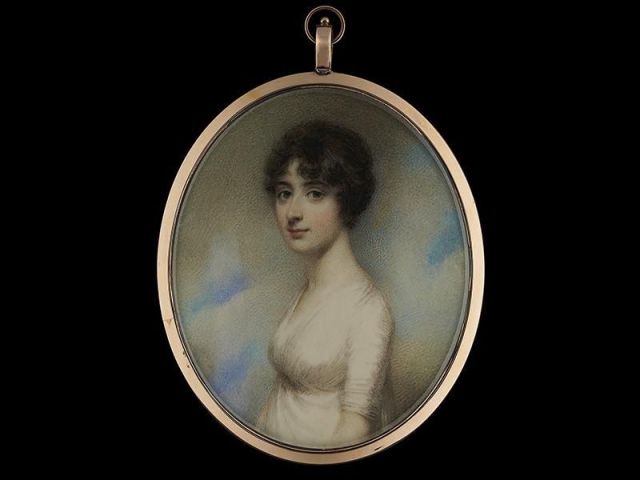

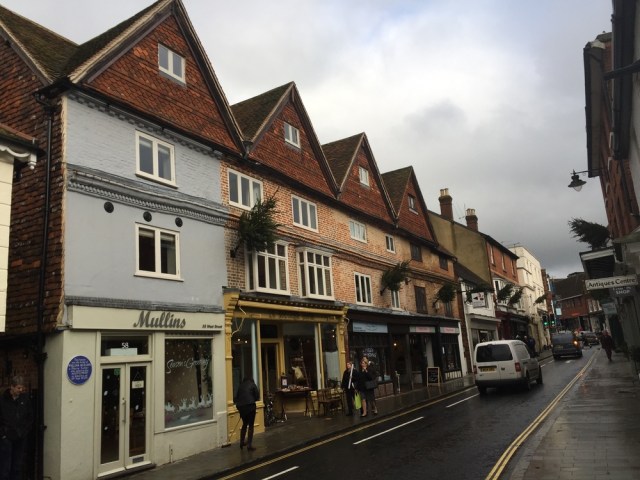


 As my previous two posts on John Alden and Henry Wadsworth Longfellow have indicated, my most recent tale, “The Courtship of Lord Blackhurst” was inspired by Longfellow’s narrative poem, “The Courtship of Myles Standish.” Other than the knowledge of Standish being a part of the original Plymouth colonists, what else do we know of the man? In truth, not as much as one might think. As it was with John Alden, we know Standish’s “history” after his arrival at Plymouth Rock, but much before that time is mere speculation.


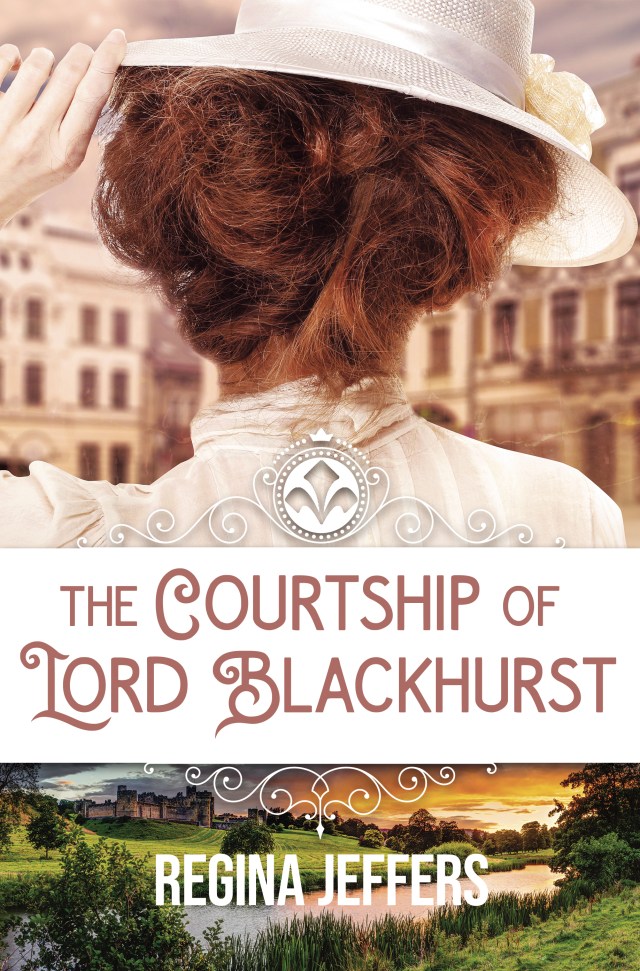
 Meanwhile, you might also be interested in the release of
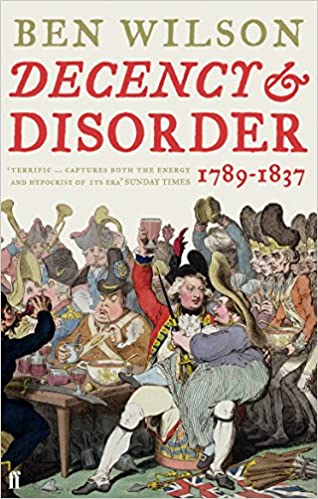 Recently, I have been exploring a book called Decency and Disorder: The Age of Cant 1789-1837. It is by Ben Wilson. Amazon describes it as such: “Brilliant young historian Ben Wilson explores a time when licentious Britain tried to straighten out its moral code, ridding itself of its boisterous pastimes, plain-speaking and drunkenness – raising uncomfortable but fascinating parallels with our own age. Decency and Disorder is about the generation who grew up during the turmoil of the Napoleonic Wars, and some of its most exciting figures.”

 Alan Mackintosh’s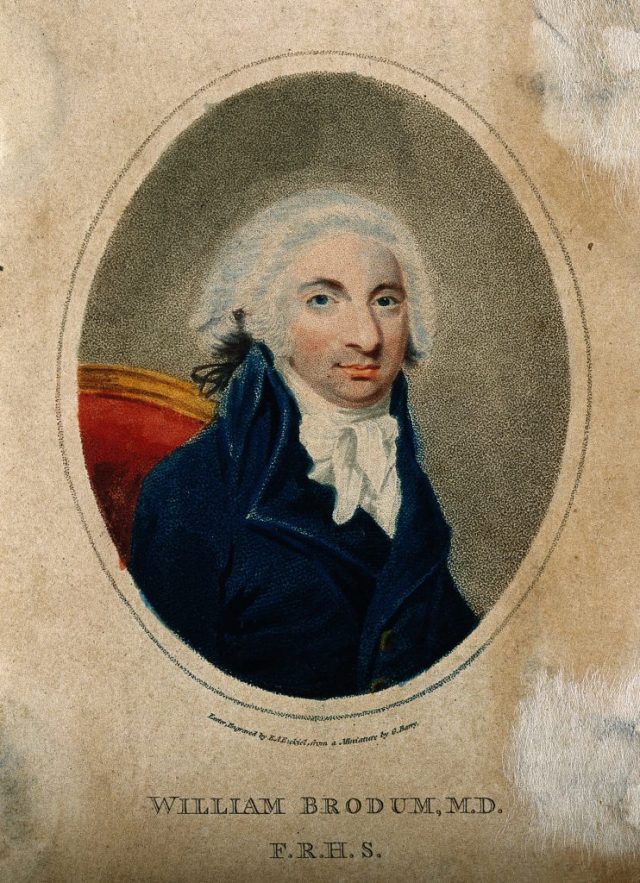


.jpg)