Orphans and Orphanages in Late Georgian England

I had a recent question regarding what I knew about the conditions inside of orphanages during the Regency and Georgian eras. Below is a mash of all the tidbits I had accumulated on the subject. I have attempted to organize them in some order, but as I am currently recovering from cancer surgery and have a large patch over part of my face, maybe it is not as organized as I hoped. (Note: I wrote this in December 2024, not April 2025.)

All orphanages/foundling homes seem to be run privately as schools. I think the best descriptor I have is with Jane Eyre’s Lowood School, but I have not been able to find any first personal accounts of anyone who attended a school or orphanage such as this in either the Victorian or Regency era. Either I’m a terrible researcher or I’m looking in all the wrong places.

There are official reports by various boards and charitable organizations about the conditions. I have spoken previously about Charitable Organizations During the Regency. This post includes a long list of actual charitable organizations during the late Georgian and early Victorian eras.

Philanthropy in the 19th century was based on religious tradition that was centuries in the making.  Historically, wealthy people in society gave to the poor as a Christian duty. Charity was seen as a way of saving one’s own soul while also helping those in need. Protestants, especially those with strong evangelical leanings, believed that social conscience demanded social action. They held that by coming into contact with human nature, particularly with those in need, that they were able to come in contact with Christ.

Women, in particular, especially those in the middle class, stepped up to the task, but, not always for the reasons one might expect. Certainly, charity was an admirable trait. However, “working outside the home,” even in a charitable manner, provided these women a sense of worth beyond tending to their husband’s homes. Charitable work seemed to be an extension of their “natural” maternal instincts, but it also allowed women to meet and socialize with other women of like minds and education, opening them up to new experiences and ideas

I do not know of any first person narrative regarding the conditions within the orphanages because most were not educated to the level where they could write such.

There is plenty on line about the work houses. The orphanages were often for children of clergymen, sailors, or army men. So many children in the institutions were actually illegitimate and suffered the sins of the fathers and mothers being put on the children.

Each one of these would have a board of governors and be run by their own laws and rules. There were hundreds of schools which were neither registered nor regulated. These ranged from day schools to boarding schools with many masters (mistresses) and  expenses.

There was no requirement that children go to school nor any requirements of what they should be taught.

The better schools for boys prepared them for Eton, Harrow and such.

There were cathedral choir schools.

From what I understand, the infant mortality rate in orphanages was very high. From our perspective now, where we have noted and understood “failure to thrive,” we can see that the care given in a charity orphanage would likely be lacking in the individual attention, like cuddling babies, so even if their basic survival needs were met, many of them would have died.

Another thing is that children were pushed out of orphanages at an early age and either sent into domestic service or to apprenticeships. Dickens’s stories speak to this situation, but that was much later than the Regency era.

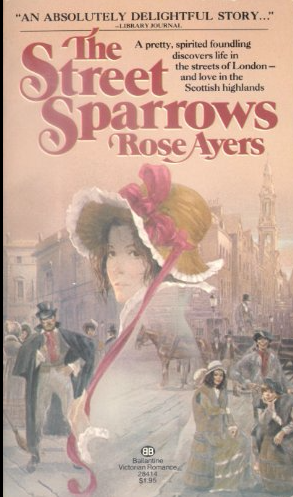
A book that was recommended to me was Rose Ayer’s The Street Sparrows. Again, it is set in 19th C London, but not necessarily the Georgian era. It is more the Victorian experience, but many appear to love this book, if you are interested. Two orphans in 19th-century London lead a precarious existence trying to earn their living any way they can.
It was fairly common early in the Industrial Era to sweep orphans off the streets in cities and put them to work in the mills. Their experience there varied from desperate to just very rough, though a few mill owners had some schooling for the children employed there. Again, though, their life expectancy was not very high.

Children were sent to work in mills and mines or on farms as young as seven. Some chimney sweeps had boys younger than that. Orphan girls were taught domestic tasks and were sent off to be maids. Some 12 year olds were maids of all work. Though not known to be widespread, some of the girls were also regularly raped. Most children of the laboring class had little schooling  They certainly would not be writing memoirs. Now, sometimes a child was fortunate to fall in with a good family who was likely to treat the child as their own. Some one might educate a boy and have him trained up for their business, the church or the law–but that person would not be one to wrote about the conditions of the orphanage.

My late friend Lindsay Downs wrote a piece in 2014 for the English Historical Fiction Authors website, for he had written about a chimney sweep in his book Swept Away. I thought you might find what he had to say interesting:

“During the Regency period, there wasn’t adoption as we know it today. In England, this didn’t come about until the 1920’s.

“If the head of a household brought an orphan in but left no provisions for the child in his will, the new head had no obligation to continue the care. If the head did have unentitled property that could be left to the child in the will, it was probably with conditions until adulthood was reached.

“Another option would be to have a family in the village take the orphan in. This is what I did with my character. Depending on the needs of the family, the child might become a scullery maid or if taken in by a farmer, might become additional help. These are a few of the best possible options for these waifs.

“Another, and better, choice would be that a childless couple might take in a relative’s children. Here, through a provision in the will, the orphan would be able to inherit on the passing of their foster parents. This was not necessarily required of the new parents.

“When the child didn’t find a home with family or friends, they were turned over to the parish. Here an orphan could be contracted to a master under certain conditions. The pact gave control over the child to their, for lack of a better word, owner who was required to feed, clothe, and care for the boy or girl, and apprentice them in a trade. Sometimes the new master might not be as scrupulous as was thought, and he would force the child into dangerous work situations. One which comes to mind is a chimney sweep’s apprentice where they could easily die if care was not taken.”
Posted in British history, Georgian England, Georgian Era, history, Living in the Regency, real life tales, Regency era | Tagged , , , , , | Comments Off on Orphans and Orphanages in Late Georgian England

Did Heirs to a Title Ever Enter the Commons Before Succeeding? Answering a Reader’s Questions…

I am again attempting to answer a variety of questions from a reader on peerages. So, here goes…

Question: I have a question about politics circa 1812. I am constructing my character development fir a story line, and my hero is the son of an earl who hearty and healthy. Therefore, the son is not likely to inherit any time soon. While he holds an honorary title, there is no political privilege associated with that, I assume. 

My hero is an ambitious sort, I planned to write him as having political aspirations.

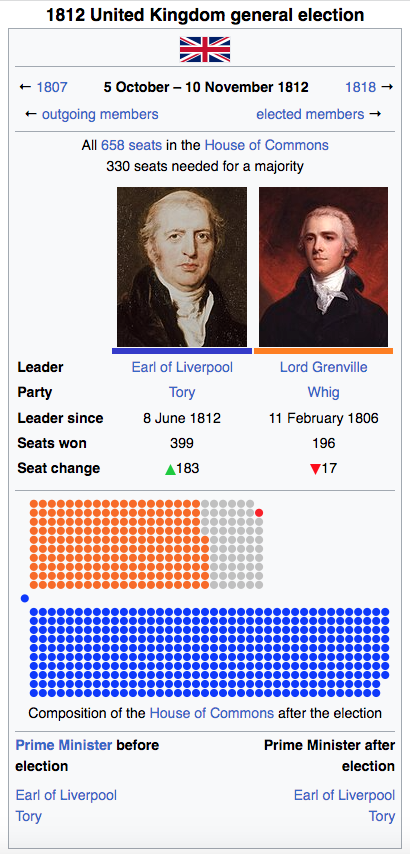
First Part of my response: You must remember that unlike here in the U.S. there were not elections every four years. “The 1812 United Kingdom general election was the fourth general election after the Union of Great Britain and Ireland, held on 5 October 1812 to 10 November 1812, taking place at the height of the Napoleonic Wars.

“The fourth United Kingdom Parliament was dissolved on 29 September 1812, four months after the Earl of Liverpool succeeded to the premiership following the assassination of Spencer Perceval. The new Parliament was summoned to meet on 24 November 1812, for a maximum seven-year term from that date. The maximum term could be and normally was curtailed, by the monarch dissolving the Parliament, before its term expired.”

Question #2: Would a man in his mid twenties have run/been elected to Parliament? Would there have been another way he could have participated in politics without being in the House of Commons? I know there must be reference material out there, just finding abbreviated information thus far.

Response: As the son of an earl, he would not normally enter a mp (member of Parliament) race in 1812 as the House of Lords held more power than it does today. If he is the eldest son, he will inherit his father’s seat in the House of Lords.  He could lend his support very visibly to a cause or a party or a candidate, serve in the diplomatic corps and eventually become an ambassador.  There was a lot of behind the scenes business at Whitehall, and it was not unusual for a peer to work there in the diplomatic offices, etc. Most of the oversight committees (for want of a better description) for the war effort were housed there. Nepotism was alive and well during the Regency.

Question #3: Would a man in his mid twenties have run/been elected to Parliament? Would there have been another way he could have participated in politics without being in the House of Commons?

Response: Absolutely. The lords often controlled many house seats – these were called “pocket buroughs” because they were in the peer’s pocket. So the landlord wanted “his guys” in there, whether they were sons — to allow them time to earn experience to become powerhouses in the Lords later on — or just yes-men. However, that being said, a son did not need to gain his experience by actually holding a seat. He could be appointed to a deputy position in any one of the Cabinet departments. The Exchequer was particularly desirable – nice and close to the money. People became very rich in that department. Sometimes, mysteriously so! The one I am not confident about (I would need to check with my military expert) is the Admiralty. I am not assured if civilians were acceptable on staff there or if they had to have military rank. Of course, for a son of an earl, that might easily be a small matter of purchasing a plum commission.

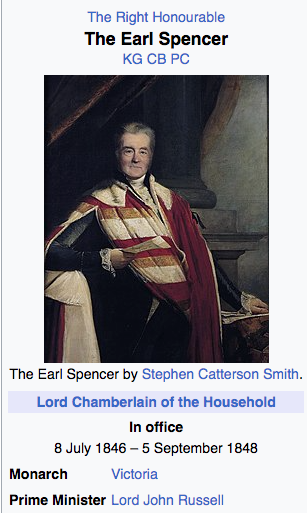
The  secretary of the admiralty was often a peer. Earl Spencer held a position as Secretary of the Navy under Queen Victoria.

“Vice-Admiral Frederick Spencer, 4th Earl Spencer, (14 April 1798 – 27 December 1857), styled The Honourable Frederick Spencer until 1845, was a British naval commander, courtier, and Whig politician. He initially served in the Royal Navy and fought in the Napoleonic Wars and the Greek War of Independence, eventually rising to the rank of Vice-Admiral. He succeeded his elder brother as Earl Spencer in 1845 and held political office as Lord Chamberlain of the Household between 1846 and 1848 and as Lord Steward of the Household between 1854 and 1857. In 1849 he was made a Knight of the Garter.”

Question #4: I’m seeing examples of a member of the House of Commons moving to the House of Lords as he inherits a seat, but now I’m wondering if anyone fills his vacancy.

Response: Yes, they must hold a by election.

There were some by-elections when a man died or succeeded to a peerage. 

The young man’s father or his uncle or his mother’s brother or his mother’s uncle probably had a borough under his control. There were quite a few of these in Cornwall alone. These rotten boroughs were safe seats for sprigs of the aristocracy.

Earl Spencer sent his oldest son into politics  in the House of Commons. The father could be on some committees and hire the son to be a clerk.

Some young men preferred learning to manage the estates to playing politics.

Question #5: Was not William Pitt very young?

Response: “William Pitt was born on 28 May 1759 in Kent, the son of the earl of Chatham (William Pitt the Elder), himself a famous statesman. Pitt studied at Cambridge University, graduating when he was 17. In early 1781, he was elected to parliament aged 21. In 1782, he became chancellor of the exchequer. The following years were marked by the battle between George III and the radical Charles Fox, whom the king detested. Matters deteriorated when Fox forged an alliance with the previously loyal Lord North. The two men defeated the government and George was forced to ask them to take control. Fox became Pitt’s lifelong political rival.

“In December 1783, George III dismissed their coalition and asked Pitt to form a government. He was, at 24, the youngest man to become prime minister. He was immediately defeated in parliament but refused to resign. George III was prepared to abdicate rather than let Fox in again. In 1784, parliament was dissolved for a general election, which Pitt won. His government worked to restore public finances, severely strained by the cost of the American War of Independece and later by war with France. Pitt imposed new taxes – including Britain’s first income tax – and reduced both smuggling and frauds. He also simplified customs and excise duties.” [BBC History]

Question #6: Would he be geographically restricted in running for a seat? Like Congress?

Response: No. They were not restricted to the county in which they lived.

Unless one is dead or is made a peer, one can not resign from the House of Commons. One had to say one was taking the “Chiltern Hundreds” to resign from the House of Commons between elections. 

First off, a seat in the House of Commons was a lifetime position, and there were MPs who found themselves therein against their will and until the early 1700s, they could not resign.

Things changed in 1701with the Act of Settlement (and some subsequent legislation) which made it illegal for any MP who accepted an office of the Crown for profit to remain in the House of Commons. I think it was John Pitt who first used this mechanism to resign – ie taking the Chiltern Hundreds.  

The Chiltern Hundreds refers to the three ‘hundreds’ (administrative areas in Buckinghamshire) of Burnham, Desborough and Stoke. These ‘hundreds’ (the whole country was divided into ‘hundreds’ for administrative purposes), are located around the geographical area known as the Chiltern Hills. Note that only Desborough was actually in the Chiltern Hills. Anyway, the Crown office for profit involved in the Chiltern Hills instance was the (by then) nominal post of Crown Steward and Bailiff of the three Chiltern Hundreds of Stoke, Desborough and Burnham. But at this time, an MP could also resign from the House of Commons if he was given the Stewardship of the Manor of Old Shoreham (about a dozen MPs used this one in the latter half of the 18th century), and in the mid 19th century, the Stewardship of the Manor of Hempholme was used, as have a number of  offer Crown offices from time to time. 

And it was John Peel, not John Pitt who first used the new legislation (and the other significant piece of legislation was the Place Act of 1742.

A ‘Parliament’ refers to the full term served by an elected government (after a national election to fill all seats in the House of Commons).  

A new Parliament does not commence if a sitting member dies (or a member succeeds to a title and leaves the House of Commons to take his seat in the House of Lords). In those cases, a by-election is held to fill the casual vacancy, but it does not ‘re-start’ the life or term of the Parliament.  

The key thing in all this is that the Parliament (UK and Australia) lives and dies by the election of a majority government (lower house) led by a Prime Minister (also seated in the lower house). If the Parliament does not serve out the full term (eg: the 1974 dismissal of Whitlam and his government, or the PM choosing to go to the polls early, which a PM can and frequently does choose to do), that reduced term is still referred to as the ‘life’ of that particular Parliament.

There is nothing to stop your hero from deciding not to contest the seat at the general elections. He just cannot resign the seat while the Parliament is serving its term – ie: between the start of the term and the end of the term when the next general elections are held.

Courtesy  peers and Irish peers had seats in the House of Commons, so the roster is sprinkled with Lords. The number of those who could vote was small. Elections were not secret. There was more secrecy about voting for new members for White’s than there was in voting for an MP. The other term for “pocket boroughs” was “rotten boroughs.

Brittanica defines pocket borough, as an “election district that is controlled by, or “in the pocket” of, one person or family. The term was used by 19th-century English parliamentary reformers to describe the many boroughs in which a relatively small population was either bribed or coerced by the leading family or landowners to elect their representatives to Parliament. As a result, Parliament was controlled by the landed gentry and seats were filled by representatives who wanted to please their patrons rather than their constituents. Reforms passed in 1832 and 1867 ended this practice by widening the franchise and redistributing parliamentary seats to reflect the population shift from rural areas to the industrial towns.”

All that being said, heirs to titles did enter the Commons, and they did so for a variety of reasons. Some were coerced by their fathers to further their fathers’ interests (eg: in the case of the rotten boroughs), and some were forced to take a seat in the Commons in the hope they might develop more responsible ways or behaviours their fathers deemed more fitting in an heir to the title. Others went into the Commons of their own free will, usually because they were keen to enter the political world and become an influencer. A peer who had political goals could gain much ground and attention from those in the Lords through his performance in the Commons and thereby enhance his standing in the Lords when he did enter that House. 

Posted in Act of Parliament, aristocracy, British history, estates, family, Georgian England, Georgian Era, Great Britain, history, Inheritance, laws of the land, Living in the Regency, Napoleonic Wars, Regency era, research, Victorian era | Tagged , , , , , , , , , , | Comments Off on Did Heirs to a Title Ever Enter the Commons Before Succeeding? Answering a Reader’s Questions…

Who the Heck was the Lord Lieutenant of the County in Regency Times?

Question from a Reader: Who or what does the term “Lord Lieutenant of the County” mean?

Answer: Simply speaking, the Lord-Lieutenant represents His Majesty The King or Her Majesty The Queen in his respective county/shire. They were not just in the Georgian era.

The banner flown by lord-lieutenants. ~ Public Domain via Wikipedia

“The office of the Lord-Lieutenant, the permanent representative of The Crown in a county, dates from Tudor times. Its holder was originally concerned mainly with supporting the monarch, protecting the county, being responsible for maintenance of order and for defence through the county militia. The first Lord-Lieutenants were appointed by King Henry VIII in the 1540s. The King was concerned about invasion from England’s enemies, which included at various times Scotland, France and Spain. He appointed Lord-Lieutenants in the counties who could raise and be responsible for militia within their respective counties. The militia not only included standing armies but also yeomen and volunteers.

“The title ‘lieutenant’ originated during the time of Henry VIII; the Lord-Lieutenant’s role was literally to ‘stand in for’ The King, in the battlefield and elsewhere. Important parts of the role were to act as an unpaid recruiting sergeant for The King and to play a major part in keeping law and order by both appointing and managing magistrates. The Lord-Lieutenant was also responsible for looking after state documents in their county and informing The King of what was going on.

“The fact that throughout 150 years the role was dominated by military men and in Oxfordshire by the Dukes of Marlborough says much about what was long thought to be an appropriate CV. In the 18th century, all but one Lord-Lieutenant was a peer and in the 19th century all were peers. Today, and with a changed role, Lord-Lieutenants are increasingly drawn from a widening variety of different backgrounds.” [Oxfordshire County Council]

In Regency stories, we often refer to the Lord Lieutenant when speaking of the militia and its oversight. I have done so in regarding to Mr. George Wickham’s antics in several of my Austen-inspired books. The Lord Lieutenant oversaw the militia of the county and was responsible for calling out the militia in cases of riot.

There are a couple of references with which I am familiar which might help a person find what he/she seeks regarding the role of Lord Lieutenant.

The first is The New British Traveller by James Dugdale. Though it was sold as a “travel” book, it is presented county by county and includes information about each local government. It was published as a four volume set in 1819, but the author had spent a number of years compiling it. And, governments change very slowly, so the details provided for Herefordshire or Hertfordshire or Oxfordshire, etc., should be fairly accurate for the Regency period.

One may find a review of the book at  https://regencyredingote.wordpress.com/2014/01/03/the-new-british-traveller-by-james-dugdale/

This particular post also includes a link to a page on the Internet Archive where a person can download all four volumes in digital format. Fortunately, it was NOT scanned by Google, so the pages are all clean and legible.

Each town, borough village had its own governing body. The civic parish was often the same as the church parish and was often governed by the same group of men. The county was administered by the justices at the Quarter sessions, and the Lord Lieutenant of the county and the man in charge of the court rolls who was often the same man. The Lord Lieutenant was most often a high ranking peer. He had to approve and recommend the local JP’s or Justice of the Peace, who was a person holding a commission from the Crown to exercise certain judicial functions for a particular commission area. JPs are appointed on behalf of and in the name of the Queen/King by the Lord Chancellor and may be removed from office in the same way. (JP’s were appointed to serve in a specific county)

There is a  book about the Lord Lieutenants. He could be mayor of a town, but the way most got involved was as a JP and then in attending Quarter Sessions.

Posted in British history, Georgian England, Georgian Era, Great Britain, history, laws of the land, Living in the Regency, Living in the UK, military, peerage, reading, real life tales, Regency era, research | Tagged , , , , , , , , , , | 4 Comments

Card Playing in the Regency Era

This post is not about the rules of card games, but rather about the cards themselves.

Question from a Reader: I read your Bell, Book, and Wardrobe novel, and I wondered about how one might have cards made up thusly. Do you know if customized playing cards were available during the Regency era? I know a person could purchase hand-painted ones, which were extremely expensive.

Response: Anything was available to be customized if one had money. The scene in Bell, Book, and Wardrobe takes place at a Christmas party in the house of a baron. Cards were not yet printed and sold by big companies so they were not all together standardized. Some gambling clubs could have had their own cards printed up in an effort to avoid card fuzzing. Hand painted ones would usually be customized. 

There are more than a couple of sites about the history of playing cards in the Regency era. Try these:

Jane Austen UK

Jude Knight, Storyteller: Card Games in the Regency

Playing Cards at Balls and Gaming Hells During the Regency: Regina Jeffers

Regency Wagering: Donna Hatch

Women and Cards: Regency Reader

Card printing began in Germany during the 15th century, so yes, they would have been available. 

Printed playing cards were available in America, so they were probably available in England. In America, the cards were printed without numbers because so few people could read. Only the arrangement of spades, diamonds, etc., were on the face of the cards.

Yes, Regency folks definitely could have packs of playing cards printed for them specifically, either to their own design or otherwise.  And as aristocrats ran through playing cards very fast (my research shows tonish gamblers did not play with used, dirty, or bent packs, so a single gambling session generally trashed many packs of cards), I think it is no surprise that there were were multiple playing-card printers in London at the time. Have a look at EKDuncan’s My Fanciful Muse: Regency Era Pictorial Playing Cards: Ackerman’s Respository for examples.

As to creative individual design, though, that would most often be limited to the court cards, as most English playing cards at the time had plain white backs. However, printed backs were preferred in parts of Europe at that time, so if you wanted your character to have cards with a specific design on the back (which I did in my story line), that could work, too, especially if you point out that printed backs were atypical. (I needed a specific playing card to be easily identifiable as coming from a pack that was commissioned by a specific person, and that was the easiest way to do it.)

Just as an interesting tidbit, the English preferred plain backs because they thought it made cheating via marked cards harder, while the Europeans preferred printed backs for the same reason!

In case it helps, here are a few links that might be useful in re playing cards and/or Regency card games:

http://kenlodge.blogspot.com/2012/05/1-playing-cards-their-history.html?q=england

http://kenlodge.blogspot.com/2013/06/30-not-so-minor-cardmakers-of-19th.html?q=english

http://kenlodge.blogspot.com/2013/09/31-not-so-minor-cardmakers-of-19th.html?q=english

http://kenlodge.blogspot.com/2012/10/19th-century-breaks-with-tradition.html?q=england

http://kenlodge.blogspot.com/2012/09/14-back-designs.html?q=england

http://kenlodge.blogspot.com/2013/01/27-cards-at-strangers-hall-norwich.html?q=english

http://kenlodge.blogspot.com/2012/11/20-english-card-makers-1761-1905-new.html?q=english

Enjoy this excerpt from Bell, Book, and Wardrobe.

Bell, Book, and Wardrobe: A Georgian Romance 

They may be able to disguise their appearance, but not the love in their hearts. 

Miss Galla Casson wished with all her being that her cousin Lady Helena Aldrete had consulted her before Helena ran off with a simple “Mr. Groton,” a country solicitor. However, Helena had not. Now, in desperation, Galla must pretend to be her cousin at a Christmas house party where Helena was to meet her intended, but only long enough for the Holy days to come to an end and for Galla to earn employment in London. 

Colonel Ian Coates did not relish pretending to be his brother, Evan, the Earl of Claiborne, but in order to reclaim several precious heirlooms stolen from Evan in a savage attack, Ian practices his deception. The only problem is the woman who is to marry Evan’s assumed attacker is a woman Ian has previously presented a small piece of his heart. 

Ian’s and Galla’s double deception threatens to overset their purpose in being at the same house party until a bell, a book, and a wardrobe lead them to a lifetime of singular devotion.

For Your Enjoyment: Excerpt from Chapter Six

“Perhaps the cards on the table are yours,” Wilton accused. 

“They were in a wooden box displayed on the table when we all sat down together,” Ian declared. “How could I have marked the cards when they belong to you? The box has the Wilton crest on the lid.” 

Lady Mathiesen grabbed another box of cards from a nearby table. “What of these, my lord?” her ladyship asked. She set the deck face down on the table. 

“The first is the nine of hearts,” Ian declared as he flipped the card over to expose it to all standing about the table. 

“Next, ace of spades.” Lady Mathiesen turned over the ace, and a collective gasp of truth filled the air. 

“Seven of clubs.” Her ladyship flipped the card over to expose the seven.

“Should I continue?” Ian asked. 

“You sat at that table two nights prior,” Wilton accused. 

Ian reached into his pocket. “This is the box you hid behind the books on religion in your library. Lady Wilton can testify she discovered me searching that particular shelf earlier today. Should we also have a look at those?” 

“I did find Lord Claiborne perusing that particular shelf, but I did not know of the cards,” her ladyship declared with a frown of displeasure. 

“I assumed you did not, my lady,” Ian assured in sympathy. Bringing Stephen Wilton into her husband’s house and expecting him to perform as had the late baron must be very daunting in this new reality. He then looked to Galla. “I believe Lady Helena found two other boxes, also holding playing cards and marked with the Wilton crest. Her maid spoke to my valet about them. I do not believe Lady Helena had set herself the task of exposing Lord Wilton, but she did not know what to do with the boxes when they fell out from behind the book she had removed from the shelf for her own reading pleasure. Nor did she wish a maid to be punished for sloppy work.” 

“Behind a copy of Clarissa,” the lady managed as she looked on in disbelief. “I could not fit them back behind the other books for the shelf was too high. I thought to use a chair, but Miss Ross and her cousin came in. I was a bit embarrassed. My maid asked Mr. Quinn if he would return them to the shelf later this evening when no one was around.”

“We were with Lady Helena in the library,” Miss Ross said. “We noted the Richardson book when we all looked for a copy of one of Miss Austen’s tales.” 

“This is ridiculous. I have known Wilton for years. Something is more than a bit rotten in Denmark. They cannot all be marked cards,” Lord Hendrics argued. 

“See for yourself,” Ian instructed. “If you wish, I will gladly explain how to read them without turning them over. It is quite simple once a person knows the pattern.” 

Several of those in the room grabbed a few boxes from the other tables and began to inspect them. 

“There is a small notch in the side,” Hendrics declared with a bit of triumph.

“I believe such is the maker’s mark. I, too, was initially distracted by the imperfection,” Ian explained. 

Hendrics appeared disappointed, but the man continued to look for the markings, even pulling out his eyeglass for a better look. 

“A dark dot on the back,” Lady Kingsolver remarked casually. “Small, but it breaks the pattern’s design. Extra ink?” she asked.

Everyone in the room began to study the back of the cards. “The dot is not in the same place on each,” Kingsolver said as he compared his cards to those his wife held. “A drop of ink makes sense.”

“One would think so, would one not? A small imperfection, until one is aware there is a pattern to the drops.” Ian provided a hint. “Think of the card as a square clock face, with an ace as twelve of the clock and the suits in alphabetical order on the left side.” 

“I be a son of a—” Kingsolver hissed, as he shared the markings with his wife. His lordship started naming the cards still resting face down in his deck with ease. “Seven of clubs. Nine of diamonds.” 

Lady Mathiesen studied the backs of the stack in her hands. “Queen of spades. Jack of hearts.”

Some of the others repeated the actions as they two were made aware of Wilton’s deception.

Smithers moved up where he was toe-to-toe with Wilton. “You have won several hundred pounds from me over the last six months. I often thought your luck exceptional, but never did I believe a ‘friend’ would consider me an easy mark.” 

Ian grabbed the opportunity to ask, “Were you with Wilton the night of my attack?”

“I left early, but I was there when a liquid was added to your drink.” Smithers looked about the room. “It was egregious of me to ignore what was going on, but I feared those with whom Wilton associates would look to me for redress.”

“These ‘associates’ of Lord Wilton?” Ian prompted. 

Smithers swallowed hard. “Those at the Red Rooster and some of Solomon King’s men.” 

Lady Wilton finally rallied from the shock of what was transpiring before her very eyes. “Lord Claiborne, with your permission, may I speak to you in Wilton’s study? I assume the rest of you will discover a means to entertain yourselves this evening. Mr. Brady is available to assist you if you require additional refreshments.” 

Note: This story was originally a novella written for a Christmas anthology from Dreamstone Publishing. I have since rewritten it and made it into a novel to be rereleased in 2025.

Posted in book excerpts, British history, Dreamstone Publishing, excerpt, Georgian England, Georgian Era, historical fiction, history, Living in the Regency, Living in the UK, Regency era, Regency romance, research | Tagged , , , , , | 3 Comments

Examining the Character of John Willoughby in Jane Austen’s “Sense and Sensibility”

John Willoughby is one of Dashwood family’s country neighbors in Devon in Jane Austen’s Sense and Sensibility, but what do we know of the character. He and Sir John Middleton serve as bookends in the country society. 

Willoughby, John Biography moviespictures.org ~ Greg Wise

Willoughby, John Biography
moviespictures.org ~ Greg Wise

Willoughby literally sweeps Marianne Dashwood off her feet with his first acquaintance in the novel. He assists her home when Marianne falls and twists her ankle. In Willoughby, Marianne discovers a man she admires for his dash. She comments “that is what a young man ought to be” in describing Willoughby to others, a line which is reminiscent of Jane Bennet’s evaluation of Charles Bingley. In her naive fashion, Marianne does not recognize that a man of Willoughby’s cut MUST marry for money for he loves his horses, society, and women. He is a landed gentleman living beyond his means. His behavior is a statement to the hereditary privileges granted men of his social class. Although Marianne terms him courteous and gallant, but he is a man-about-time. 

Willoughby, John Biography moviespictures.org ~ Dominic Cooper

Willoughby, John Biography
moviespictures.org ~ Dominic Cooper

Willoughby acts as his name implies. He is “pliable, but tough, and with a tenacity for life.” We must wonder if Austen took the name from Frances Burney’s “Evelina.” Sir Clement Willoughby is a baronet who pursues Evelina throughout the novel. He meets her at an assembly and takes umbrage at her refusing a dance with him. Sir Clement “creates” situations around Evelina. He is a smooth talker, but also superficial and obnoxious. His interest in Evelina is motivated purely by lust. [As to the name, we also know that Thomas Willoughby was the first Lord Middleton and a distant relative to Mrs. Austen.]

The character of Willoughby in the novel holds no qualms about how he treats the women he encounters (i.e., what he did to Colonel Brandon’s ward Eliza). His charm is everything for which Marianne could hope: handsome, loves poetry and music, rich, etc. In truth, Willoughby’s gaming debts and his life of debauchery consume him. He will become the typical country squire. The rivalry between Willoughby and Colonel Brandon contrasts the two men in broad strokes. 

Prior to the opening of the novel, Willoughby seduced and abandoned Brandon’s ward, Eliza. The two men fought a duel over the circumstances, and they later become rivals for Marianne’s love. Brandon is modeled in the Cavalier-Roundhead form. [“Roundhead” was the name given to the supporters of the Parliament during the English Civil War. They fought against King Charles I and his supporters, the Cavaliers (Royalists), who claimed absolute pose and the divine right of kings.] 

In truth, most readers feel cheated at Marianne’s abandonment of Willoughby for Brandon at the end of the novel. It is difficult to muster up any of the romance we recognize in “Pride and Prejudice” or “Persuasion.” In Nation & Novel, Patrick Parrinder says, “There are, perhaps, political as well as emotional reasons why this plot resolution is unsatisfactory. Austen’s determination to end the novel with a version of the Cavalier-Roundhead alliance cannot alter the fact that Brandon, Middleton, and (in his final incarnation) Willoughby are all country squires representing broadly similar values and interests. The social tension between Marianne and Brandon is not great enough to become a focus of romantic interest.” (page 191)

In what is one of Austen’s most “contrived” scenes, Willoughby appears at what he thinks is Marianne’s deathbed and confesses his “love” for Marianne to her sister Elinor. The confession amplifies Willoughby’s selfish and spoilt personality, but also shows that he is not totally without principles. After this scene, he marries the appropriately named Miss Grey (a ho-hum type of woman). Miss Grey is wealthy and very proper. Austen tells us Willoughby was one “to exert, and frequently to enjoy himself. His wife was not always out of humor, nor his home always uncomfortable; and in his breed of horses and dogs, and in sporting of every kind, he found no inconsiderable degree of domestic felicity.” 


Posted in Austen actors, books, British history, Great Britain, Jane Austen, Living in the Regency, Regency era, Uncategorized | Tagged , , , | 11 Comments

Procedure for a Man to Claim a Peerage

This seems to be the month when authors and readers send me questions of “procedures” for those living in Georgian/Regency England.

PROCEDURE ON CLAIMS

Most claims are going to be straight forward and having the claim settled will only take a few weeks (Note: This formality does not prevent the claimant from using the title in the meantime, and there is no law stating that the claimant HAS to come forward and make a claim, e.g. the Berkeley case where the elder brother was found to be illegitimate, and the younger never claimed the title ). The heir makes a petition to the Crown to be recognized. This petition is quite detailed (it is more formal than just proving one is the heir to the man who just died). I’ll quote from the book: “The petition should be addressed to the Crown and should state in what way the peerage claimed was originally created, whether by charter or patent, or by girding or by writ and sitting thereon. It should further set out the facts which show that, according to the limitations of its creation, the peerage in question has descended to the claimant, or where the petition claims as a co-heir, the facts which show that the peerage is in abeyance and that the claimant is one of the co-heirs and who are the other co-heirs. The facts elide on should be set out in considerable detail. It is not enough to state generally that the peerage claimed has descended to the claimant, the line of descent must be traced.”

In truth, I have found differing information about just who the petition goes to (I am guessing it changed at some point, and that is the reason for the contractions.). It goes to either the Attorney-General or the Lord Chancellor. The office of each would then review it and if satisfied, present it to the sovereign. If they or the sovereign are unsure or if there is a complication (such as multiple claims), it goes to the Committee for Privileges for review.

There are rules about presenting a printed case and their being no vote allowed for two weeks after it is presented (presumably allowing time for the case to be reviewed). It is at this stage that any secondary claims must be presented. The person who believes they have a claim submits a request to the House of Lords to be heard. After they are heard, the Lords then decide if they can submit their own printed claim. 

What happens when there is a dispute? Well, the Lords are inherently conservative when it comes to reviewing these cases. They have a strong liking for precedent and are, generally, inclined to side with those who have been won the support of the one believed to be the legal heir. When something truly ugly happens, usually both parties walk away with a title. One with the original title and one with a new one. Read the Mar Case (under Peerage Law on Wikipedia), which also illustrates the decisions of the Lords can not be overturned and are considered binding). 

I highly recommend the review of Peerage Law in England to anyone who wants to devise an inheritance plot. It is full of actual case examples and all kinds of juicy tidbits that are perfect for creating a complicated and interesting legal plot. The book even details what kinds of evidence are considered legal and acceptable by the Lords (Charter or patent, sitting in Parliament, public/parish registers [marriage, birth, death], Heralds’ books, family Bibles, letters, diaries, even inscriptions on tombstones).

Fee simple refers to the man/holder of the property who has complete ownership of the property and can sell it or leave it to whomever he wishes.

There were different rules of peerages for Scotland in the 18th century before Scottish peers could sit in the English House of Lords.

Also, Scotland kept baronies by tenure longer than England did–that is a lord who was not a parliamentary lord was considered a member of their peerage. Those peerages went to whomever held the land and could, often, be given away as the current owner wished. I do not think that they had any higher rank than barony, though. Of course, I have been wrong previously and would gladly have someone point in the right direction. I am currently writing about a Scottish lord who sits in the House of Lord, so anything you might wish to share privately would be welcomed.

Lord Lyon was the one who decided  on Scottish peerages in Scotland. “The Office of Lord Lyon stems out of medieval times, but actually goes back further into the Celtic history of Scotland. Scotland and Spain are probably the only countries where a court of heraldry and genealogy still exists, but the Court of the Lord Lyon is the last of the heraldic courts that sits regularly …”

“The Lord Lyon, as the sole judge of the heraldic court in Scotland, has an administrative responsibility for the granting of new arms to individuals or organisations. The Public Register of All Arms and Bearings in Scotland, in which the Lyon Clerk records all Scotland’s coats of arms, was established by the Lyon King of Arms Act 1672. Section 1 of the 1672 Act provides that the Lord Lyon “may give Armes to vertuous and well deserving Persones and Extracts of all Armes expressing the blasoning of the Arms undir his hand and seall of office”.

“An application for a new grant of arms is made by petition to the Court of the Lord Lyon. Where the Lord Lyon decides, in the exercise of his discretion under the royal prerogative, to grant the petition, the determination is set out in a warrant authorising the Lyon Clerk to prepare Letters Patent – a formal title deed from the Crown issued to the petitioner – granting appropriate armorial bearings and to register the arms in the Public Register. In addition to confirming claims to existing arms and determining claims to chiefships of clans, the Lord Lyon also registers and records new clan tartans.” [Scottish Legal News]

A book some have found helpful is . . .

“Remarks Upon Scotch Peerage Law,” by John Riddell, published in 1828

Remarks Upon Scotch Peerage Law: As Connected With Certain Points In The Late Case Of The Earldom Of Devon is a book written by John Riddell in 1833. The book discusses the Scottish law of peerage in relation to the case of the Earldom of Devon. Riddell provides a detailed analysis of the legal principles and precedents that were relevant to the case, and offers his own opinions on the issues at stake. The book is a valuable resource for anyone interested in the history of Scottish peerage law, and provides insight into the legal and social context of the time.To Which Are Added, Desultory Observations Upon The Nature, And Descent Of Scotch Peerages, Etc.This scarce antiquarian book is a facsimile reprint of the old original and may contain some imperfections such as library marks and notations. Because we believe this work is culturally important, we have made it available as part of our commitment for protecting, preserving, and promoting the world’s literature in affordable, high quality, modern editions, that are true to their original work.

The Ministry of Justice, College of the House of Lords, offers guidance notes on succession. They are modern regulations, but steeped in tradition and can provide a write answers to some of his/her questions. https://www.college-of-arms.gov.uk/GuidanceNotes1.pdf

Still Have Questions? See Other Pieces I Have Written on Peerage Claims, Etc.

Claiming a Title in the Regency Era

Peerage, Abdication, Inheritance and Questions of Legality

Peerage Law in Georgian England

The Skinny on Abdicating a Title During the Regency Period

What Is the Difference Between a Peerage that Is “Dormant,” “Extinct,” or in “Abeyance”?

When Might the Heir Style Himself With His New Title in Regency Romances?

Posted in Act of Parliament, British history, estates, Georgian England, Georgian Era, heraldry, history, Inheritance, laws of the land, Living in the Regency, peerage, primogenture, real life tales, Regency era, research, Scotland, terminology, titles of aristocracy | Tagged , , , , , | Comments Off on Procedure for a Man to Claim a Peerage

“Old Lady Day” ~ No It is Not My Birthday!

Quarter Days are the four dates in each year that align with religious festivals. The days are roughly three months apart and are close to the two solstices and the two equinoxes. In British history, these days were the ones on which servants were hired, school terms started, and rents were due. They have been observed since the Middle Ages. They made certain debts and unresolved law suits did not drag on and on forever.  Accounts and a public reckoning were recorded on quarter days.

The English Quarter Days (also observed in Wales and the Channel Islands) are Lady Day (25 March), Midsummer Day (24 June), Michaelmas (29 September), and Christmas (25 December). Lady Day was set aside in commemoration of the angel Gabriel’s announcement to the Virgin Mary that she would become the mother of Jesus Christ.

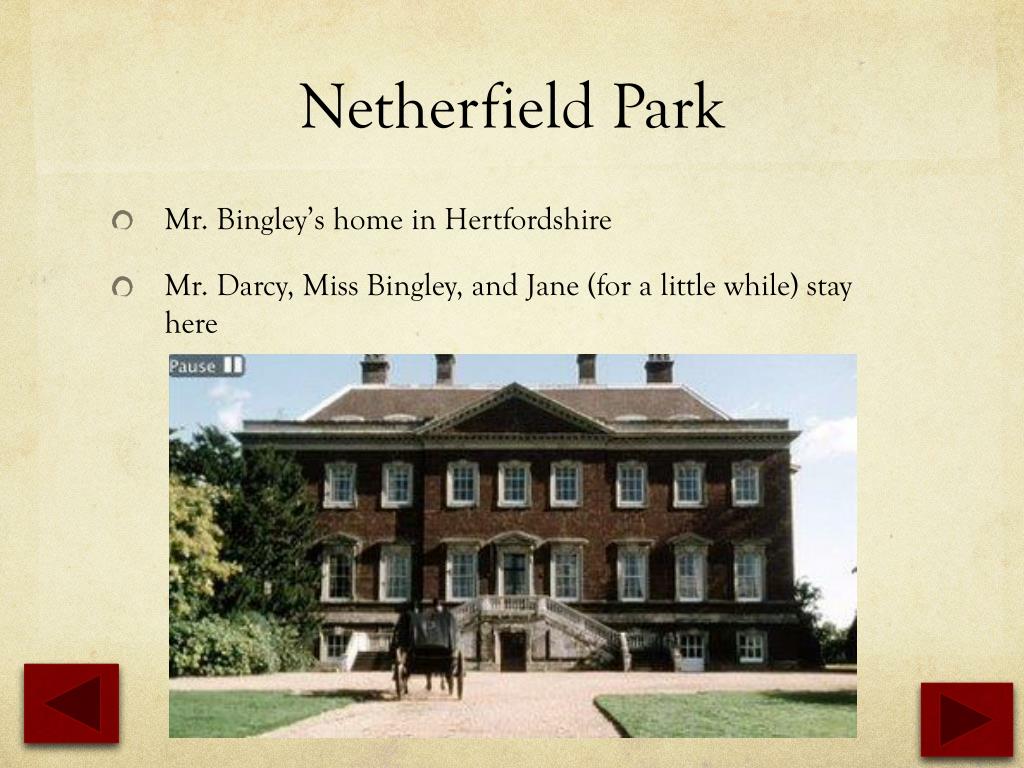
You may recall Mr. Bingley arrives at Netherfield Park at Michaelmas in Austen’s Pride and Prejudice, and many assume Darcy and Colonel Fitzwilliam regularly call at Rosings Park to assist Lady Catherine with her Lady Day accounting.

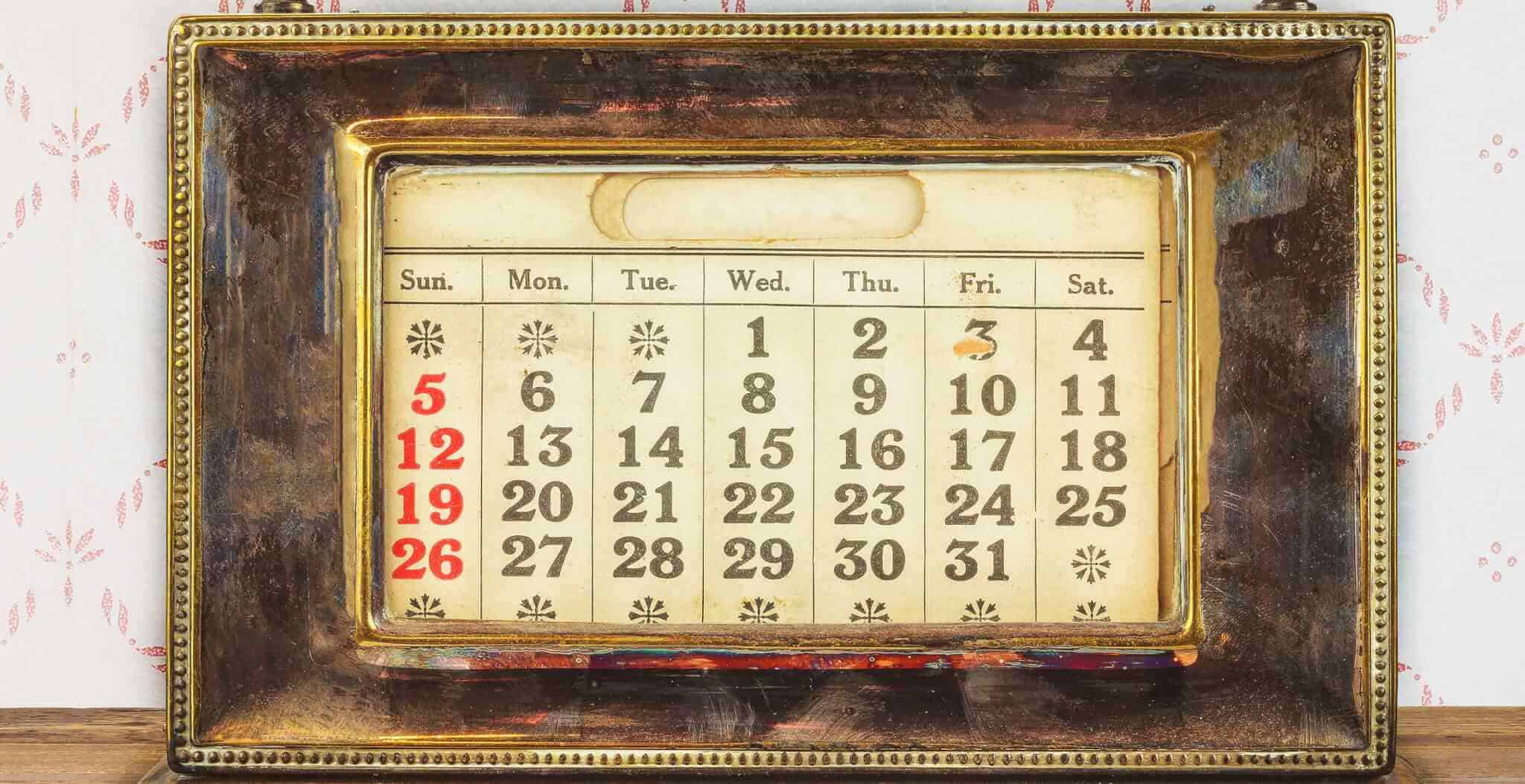
In England, Lady Day was New Year’s Day from 1155 until 1752, when England adopted the Gregorian calendar (moving from the Julian calendar( making 1 January, rather than 25 March, the beginning of the new year. A vestige of this change remains when it comes to the United Kingdom’s tax year, which starts on 6 April, or what is known as “Old Lady Day,” which takes the original Lady Day of 25 March and adjusts for the 11 “lost days” created by the calendar change, making Tax Day occur on 5 April. The date was moved to 6 April after 1800. Until this change, Lady Day, as mentioned above, was considered the start of the legal year, not the liturgical or historical year, which functioned on a different calendar of sorts.

Year-long contracts between land owners and tenants traditionally began and end on Lady Day. Farming families who were changing farms or setting off to the industrial centers of the late Regency and early Victorian periods would do so on Lady Day.

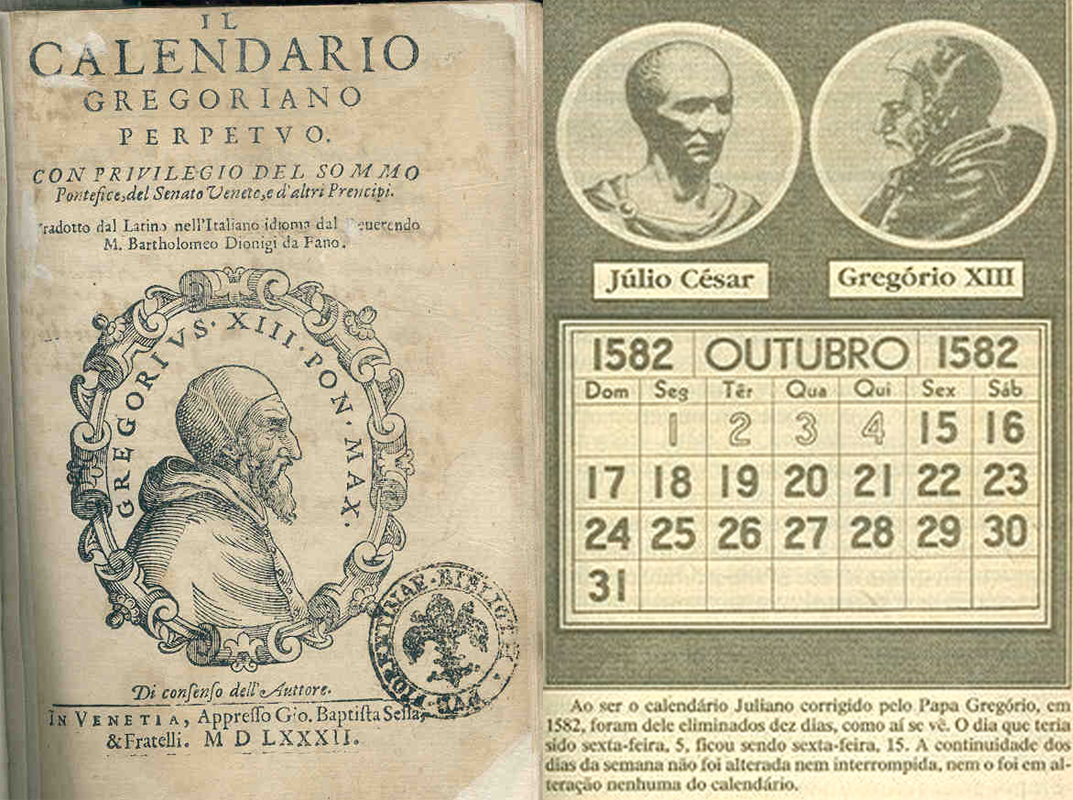
Theconversation.com explains, “The Julian year was only 11½ minutes longer than a solar year, but by the late 1500s, this had all added up and the Julian calendar was some ten days adrift from the solar calendar. The Roman Catholic church was especially concerned because the celebration of Easter had been gradually getting later than when it had been celebrated by the early church.

And so in October 1582 Pope Gregory XIII instituted a change (to the “Gregorian” calendar) to solve the problem: three leap days were omitted every 400 years by the authority of a papal bull known as ‘Inter Gravissimas’. While Europe adopted the Gregorian calendar, however, England, with its history of conflict with the Roman Catholic church, did not (nor did Russia), and continued with the Julian calendar.

By 1752, when it was 11 days out of alignment with the rest of Europe, England finally accepted that it would have to make a change. The decision was made to drop 11 days from the month of September to catch up, and so September 2 was followed by September 14 that year. To ensure that there was no loss of tax revenues, however, the Treasury extended the 1752 tax year by adding on the 11 days at the end. Consequently, the beginning of the 1753 tax year was moved to April 5.

“In 1800 a further adjustment was made, shifting the start of the tax year forward by one more day to April 6, once again to mitigate for the differences between the Julian and Gregorian calendars. The year 1800 would have been a leap year under the Julian calendar system, but not the Gregorian one, so the Treasury treated 1800 as a leap year for purposes of taxation to get an extra day’s revenue. April 6 has remained the beginning of the tax year ever since, though it was only formalised in 1900. Although some countries, including the US, Canada, France and Germany, have adopted the calendar year as their tax year, the UK and others such as Australia have not.”

It is interesting that with all these date changes, the UK government’s fiscal year still does not align. The financial year in the UK runs from 1 April to 31 March, not coinciding with the tax year dates.

Tudors Dynasty http://www.tudorsdynasty.com/about-lady-day-and-other-major-days-guest-post/

Give Us Our Eleven Days https://www.historic-uk.com/HistoryUK/HistoryofBritain/Give-us-our-eleven-days/


Posted in British history, Chaucer, Christmas, Church of England, Georgian England, Georgian Era, Living in the UK, real life tales, research, servant life, writing | Tagged , , , , , , , , , , | 6 Comments

Posting Inns and Hedge Taverns and “Posting Letters” During the Regency Era ~ Clearing the Confusion, Hopefully…

After last Friday’s piece on postage and sombre statements, I had a few questions regarding the concept of posting inns during the Regency. Remember posting of letters could be completed at posting inns, and mail bags could be exchanged at posting inns, etc. Posting letters locally in a village was also possible and addressed at the bottom. So here goes . . .

There is no set answer to this. Inns/hotels varied from country hedge taverns with a room or two to let through village inns through coaching inns to high-end London hotels like Grillon’s. Even the posting inns varied. Those close to London that served many mail and stage coach routes were large with enormous stables while those near the ends of the routes were much smaller. If one has ever stayed in period inns in England, he will discover the premises vary considerably. But coaching inns were only found along coaching routes. Other places would have inns if there was a need for overnight accommodations to suit merchants/peddlers. 

A Hedge Tavern might be described as [from a comment on the post Pubs of Wonderful London on Spitafields Life website] “…Other old words for what we now call a pub are: mug-house, cupping-house, victualling house, pot house, pot shop, peg-house, tippling-house, red lattice (from where the pub chain’s name Slug and Lettuce comes from – see this old post of mine), diversory (or deversary) and change-house (a Scottish word). A lust-house was a tavern with a beer garden (from the Dutch and German Lust meaning pleasure). A night-house was a tavern that stayed open all night, as did a night-cellar, which was usually a more disreputable establishment. A shoful was a lower-class tavern, and the prefix hedge-, as hedge-inn, hedge-tavern or hedge-alehouse was used contemptuously to mean ‘third-rate’….”

https://spitalfieldslife.com/2014/09/12/pubs-of-wonderful-london/#:~:text=A%20shoful%20was%20a%20lower,third%2Drate’%E2%80%A6.%E2%80%9D

A post on Hops & Hosteiries, Stamford tells us tells us something about the inns about that area and what went on in each. “… At the turn of the 19th century, Stamford stood in an ideal position on the Great North Road; virtually halfway between London and York. The waiting rooms in the George for coach passengers travelling north and south were named York and London. By coach and horses it was about sixteen hours to Stamford from the capital, the same to York. Mail and goods needed to be delivered too. Stamford was a natural stopping-off point for travellers and coaches to overnight. In the so-called golden age of coaching, the town would have been vibrant with travellers going up and down this key highway, as can be seen in the only Stamford Turner painting, disgorging outside the Bull and Swan. Dozens of coaches passed through each day, breaking their weary journey. Some travelled to and from local towns, others long distance. They had exotic names such as Tally Ho, High Flyer, Perseverance, and Red Rover. Passengers needed food and lodgings, so did coachmen and servants. Horses needed rest, hay and water. Wheels would need fixing, horseshoes replacing by blacksmiths, repairs to coaches and tackle.

“It is estimated 75% of the local population were involved in the coaching and carrying trade or peripherals and this legacy is reflected in names such as Horseshoe Lane, Foundry Arms, Coach and Horses, Horse and Groom, the Ostler, lately the Black Bull, and the Waggon and Horses in St Martin’s – scene of the demise of Mr Daniel Lambert. There were many pubs of that name and indeed of Dan himselfThese were in London. Wealthy travellers stayed at the four great Stamford coaching inns, the George, Crown, Blew Bell and Black Bull.” This information deals with the posting inns along Great North Road. AGAIN, posting of mail is different from posting inn open purely to let rooms. I prefer the idea of a “coaching inn” rather than a “posting inn.”

A coaching inn likely had a counter where patrons could check in before being showed to their rooms — I’ve seen these located in entrance halls and tucked away behind the bar. These places also had a private parlor or two that could be hired by patrons. Smaller inns rarely had private parlors. Hedge taverns were not places any upper class person would choose to stay and likely had no counter at all. People would ask the barman for a room. The high-end hotels around Mayfair ran much as they do today.”

~~~~~~~~~~~~~~~~~~~~~~~~~~~~~~~~~~~~~~~~~~~~~~~~

Shannon Donnelly has a blog post on Lost Letters – http://shannondonnelly.com/2010/05/29/the-regency-post-a-pity-weve-lost-letters/

Posting inns were just that –places contracted to handle local post. So one would go to a posting inn, or one would go to the local main center of his/her village, since there was often a post master there. Local post masters:

-handled posting of letters (no packages)

-kept horses for the post

-oversaw local deliveries (generally by foot or horseback)

All stamps were hand stamps, or postage cost was hand written on the letter. The One Penny Black–the first stamp–comes in in 1840.

You could NOT get a sheet with it marked PREPAID. However, you could–if you knew your local MP or were friends with a lord–get them to FRANK a sheet. All Members of Parliament were allowed to frank their letters–sign them to send them free in the post.

To see what all this looks like:

Google “prepaid stampless covers

And “franked stampless covers

Posted in British history, buildings and structures, business, commerce, England, Georgian England, Georgian Era, Great Britain, history, Living in the Regency, Regency era, research, travel | Tagged , , , , , , , , , , , | Comments Off on Posting Inns and Hedge Taverns and “Posting Letters” During the Regency Era ~ Clearing the Confusion, Hopefully…

A Bit About the Historical Beginnings for the “Pianoforte” in England

This post began with a question from a follower: If a piano was called a “pianoforte” during the Regency, would the term “pianist” not be correct? If not, what would one call someone who played pianoforte?

First, I began with a response to the question above. The piano’s proper name (even today) is pianoforte, not piano. At some time in the last century we shortened the name to “piano.” The French term pianiste was used in England as early as 1816. The Anglicisation of the term does not show up in extant examples until around 1822.

Starting in the 18th century, the instrument was also called a “piano.” In Emma, Frank Bates secures a piano for Jane Fairfax, remember? The earliest citation for pianist in the OED is 1820, but words are generally in use quite a while before they are written.

Piano is equal to “soft,” and forte to “loud.” One advancement on the instrument was that one could play loudly or quietly. What is more interesting is that I believe Austen used a brand name. An early example of product placement?

In both Emma and Sense & Sensibility, the term used in my copies is “piano-forte.”

Melanie Spanswick post dated in 2013 tells us, “Austen was a keen pianist as were the majority of her heroines, who played to various standards. All accomplished young ladies were expected to play the piano as a matter of course, and therefore Jane was no exception. She apparently practised every day after breakfast and was quite specific about the music she enjoyed working on, as we can glean from her niece’s memoir:

Aunt Jane began her day with music – for which I conclude she had a natural taste; as she thus kept it up – ‘tho she had no one to teach; was never induced (as I have heard) to play in company; and none of her family cared much for it. I suppose that she might not trouble them, she chose her practising time before breakfast – when she could have the room to herself – She practised regularly every morning – She played very pretty tunes, I thought – and I liked to stand by her and listen to them; but the music (for I knew the books well in after years) would now be thought disgracefully easy – Much that she played from was manuscript, copied out by herself – and so neatly and correctly, that it was as easy to read as print. (extract from My Aunt Jane, a Memoir – 1867 by Caroline Austen: Jane Austen Society 1952).

“Jane was apparently introduced to the piano aged nine whilst she attended the Abbey School in Reading in 1785. The Austen’s appear to have borrowed a piano and it was during this period that Jane compiled several volumes of music. An instrument was eventually purchased and she studied the piano with Dr George Chard, assistant organist of Winchester Cathedral. Jane had access to a piano most of her adult life and when she did not, her writing appears to have suffered demonstrating just how important music was for her. At Chawton, the house where she lived in Hampshire, Jane owned a Stodart Square piano.

I actually checked on this because I had recently listened to them on audiobook, and the narrator pronounced it “piano-FORT,” and I thought that strange to my American pronunciation of “FOR-tay.”

A very popular instrument by the last few years of the 1700s, the pianoforte was quite popular with professionals and amateurs. We must remember that those instruments were not of the same caliber of the modern piano. On The Met website, an article from Independent Scholar, Wendy Powers, in 2003 fills in the history of the pianoforte. “Broadly defined as a stringed keyboard instrument with a hammer action (as opposed to the jack and quill action of the harpsichord) capable of gradations of soft and loud, the piano became the central instrument of music pedagogy and amateur study. By the end of the nineteenth century, no middle-class household of any stature in Europe or North America was without one. Almost every major Western composer from Mozart onward has played it, many as virtuosi, and the piano repertory—whether solo, chamber, or with orchestra—is at the heart of Western classical professional performance.

Portrait of Bartolomeo Cristofori, inventor of the piano. (The original was lost in the Second World War) ~ Wikipedia ~ Public Domain

Cristofori and the First Pianofortes: The quiet nature of the piano’s birth around 1700, therefore, comes as something of a surprise. The first true piano was invented almost entirely by one man—Bartolomeo Cristofori (1655–1731) of Padua, who had been appointed in 1688 to the Florentine court of Grand Prince Ferdinando de’ Medici to care for its harpsichords and eventually for its entire collection of musical instruments. A 1700 inventory of Medici instruments mentions an “arpicimbalo,” i.e., an instrument resembling a harpsichord, “newly invented by Bartolomeo Cristofori” with hammers and dampers, two keyboards, and a range of four octaves, C–c”’. The poet and journalist Scipione Maffei, in his enthusiastic 1711 description, named Cristofori’s instrument a “gravicembalo col piano, e forte” (harpsichord with soft and loud), the first time it was called by its eventual name, pianoforte. A contemporary inscription by a Florentine court musician, Federigo Meccoli, notes that the “arpi cimbalo del piano e’ forte” was first made by Cristofori in 1700, giving us a precise birthdate for the piano.

“Cristofori was an artful inventor, creating such a sophisticated action for his pianos that, at the instrument’s inception, he solved many of the technical problems that continued to puzzle other piano designers for the next seventy-five years of its evolution. His action was highly complex and thus expensive, causing many of its features to be dropped by subsequent eighteenth-century makers, and then gradually reinvented and reincorporated in later decades. Cristofori’s ingenious innovations included an “escapement” mechanism that enabled the hammer to fall away from the string instantly after striking it, so as not to dampen the string, and allowing the string to be struck harder than on a clavichord; a “check” that kept the fast-moving hammer from bouncing back to re-hit the string; a dampening mechanism on a jack to silence the string when not in use; isolating the soundboard from the tension-bearing parts of the case, so that it could vibrate more freely; and employing thicker strings at higher tensions than on a harpsichord.”

Posted in British history, customs and tradiitons, Georgian England, Georgian Era, Great Britain, history, Jane Austen, Living in the Regency, Regency personalities, research | Tagged , , , , , | 4 Comments

“Emma” 1995’s Depiction of Social Class

I recently rewatched this version of Jane Austen’s book. 

Emma 1995Columbia/Miramax feature film (120 minutes); Directed by Douglas McGrath; Screenplay by Douglas McGrath; Produced by Patrick Cassavetti and Steven Haft

Cast:

Gwyneth Paltrow…………………………….Emma Woodhouse

Jeremy Northam……………………………..Mr. George Knightley

Toni Collette………………………………….Harriet Smith

James Cosmo………………………………..Mr. Weston

Greta Scaacchi……………………………….Mrs. Weston

Alan Cumming………………………………..Mr. Elton

Juliet Stevenson………………………………Mrs. Elton

Denys Hawthorne…………………………….Mr. Woodhouse

Sophie Thompson……………………………Miss Bates

Phyllida Law…………………………………..Mrs. Bates

Edward Woodall………………………………Mr. Martin

Kathleen Byron……………………………….Mrs. Goddard

Brian Capron………………………………….John Knightley

Karen Westwood……………………………..Isabella Knightley

Polly Walker…………………………………..Jane Fairfax

Ewan McGregor………………………………Frank Churchill

Angela Down………………………………….Mrs. Cole

John Franklyn-Robbins………………………Mr. Cole

Rebecca Craig………………………………..Miss Martin

Ruth Jones……………………………………Bates Maid

With an American playing the lead role and an American director and screenwriter, this adaptation of Austen’s Emma is the Americanization of Austen. Despite the use of period costumes and picturesque British locations, McGrath’s is a Hollywood lighthearted version of Austen’s satire. Although subtler than Amy Heckerling’s “Clueless,” the film addresses social stratification based on income and education.

The Emma we meet in this adaptation is said to have an “anachronistic snap bordering on irreverence.” (New York Times) In the NYTimes article, Janet Maslin says, “This Emma is the centerpiece of a broadly amusing film in which characters expound earnestly about the merits of celery root or the horrors of having a sore throat. In the midst of such stupefying refinement, a demure schemer like Emma can affect a pose of pampered idleness while vigorously working her wiles. Though Emma, like the film version of Sense and Sensibility, is milder and more narrowly marriage-minded than Austen’s fiction (and has less weight than Persuasion, still the most moving and acute feature-length Austen adaptation), it has enough satirical edge to amuse audiences weary of big-screen explosions and computer wizardry. The whole film, like its central character, thrives on subverting well-bred fatuousness and pondering the tiniest mysteries of love. Surrounded by an outstanding supporting cast, Ms. Paltrow’s Emma presides daintily over these goings-on while managing to remain blissfully oblivious to much of what surrounds her. The planet spins (quite literally, in a clever opening credit sequence), but Emma is content to occupy herself with the most minuscule matters. The film is able both to satirize and enjoy such myopia, just as it savors the absurd frippery of its characters’ costumes and indulgences. It’s one of Mr. McGrath’s little jokes to seldom depict servants here, even though an absurd set of props appears on the manor lawn every time a new form of dabbling — archery or stitching or writing or sketching — is under way.”

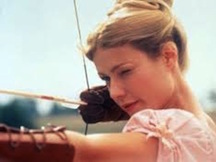
emma_gwyneth_paltrow_movie_archeryDouglas McGrath, who wrote “Bullets Over Broadway” with Woody Allen and held a stint on Saturday Night Live, walks a very thin line between social satire and melodrama. McGrath makes fun of the snobbery of the upper class. We see a bumbling Harriet Smith knocking over baskets and food when she visits the poor with Emma. When Knightley says he would prefer to stay home where it was “cozy,” the camera backs away to show the audience the extent of Donwell Abbey. When Emma’s aim with a bow and arrow falters, Knightley says “Please do not shoot my dogs.”
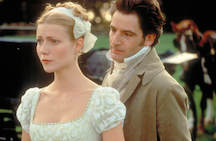
Highbury’s upper echelons are looked upon with little sympathy. There is nothing to indicate the obligations and responsibilities a man would have to his tenants and servants These people are the target of the screenwriter/director’s barbs. We see Emma’s outrage that Mr. Elton would aspire to claim her to wife. In reality, he is a gentleman (although one without land) and she is a lady. As Elizabeth Bennet tells Lady Catherine de Bourgh in Pride and Prejudice, “We are equals.” We view the childlike petulance of Emma when she pines for an invitation to the Coles’s party while declaring them beneath her. Instead of treating the differences in rank with sympathy or even with historical accuracy, the characters who act upon the gradations appear as foolish.

The audience is simply asked to accept the “rightness” of rank. There is little emphasis on the poor or the servant class. We do not see the dilemma the Box Hill Picnic scene would create for the servants who had to lug everything to the site. Other versions address the duties of the servant class and this scene in particular.

I found in this film that the director used what we find common in society: The “beautiful” are forgiven for their transgressions. Gwyneth Paltrow’s portrayal of Emma Woodhouse makes it easier for the audience to like her character, who. in truth, is easy to dislike because Ms. Paltrow’s comely face appeals to the audience. Even when the character Emma acts in a most disgraceful fashion, the audience sees her as sympathetic. Ms. Paltrow’s appearance reminds the audience that she is a “Greek goddess” (in hair style and dress) to be forgiven all her sins.

Emma-1996-3Meanwhile Jeremy Northam’s portrayal of Knightley is one that conveys sensitivity and a certain vulnerability. He is equal in looks to Paltrow and the female audience responded as such to his acting. Northam’s style is more understated than we see from Mark Strong in the 1995 TV movie of the same year. The film’s script provides Northam several moments of quipped irony in the dialogue, something he does quite well.
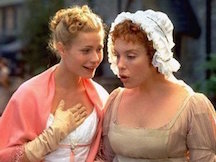
Emma-1996-period-films-14285184-300-225_zps952bd6f1I have adored Toni Collette in several roles. In my opinion, her portrayal of Harriet Smith elicits more sympathy than her counterparts. Her scenes leave the audience considering her as a pathetic character. Collette’s Harriet gushes too much, laughs too loudly, and weeps uncontrollably at her disappointments.
As a whole, this version of Emma takes a different notion of class structures than does Austen’s more divergent definitions of “class.” McGrath chose to underline his offhand “sarcastic” look at social class with the occasional gag. Highbury’s society is open for more than one joke. For example, we return to the bumbling Harriet Smith’s call of mercy on the poor (which I mentioned above). Instead of administering to the poor, she leaves their few belongings a mess. 

The film’s mise-en-scène (the arrangement of scenery and stage properties) do little to establish social class. The viewer is often confronted with a framed image of characters of varying class distinctions being equal. Their positions in the framed image do not give the viewer a visual clue as to who is dominant. How often do we see Emma and Harriet in an “equal” position – walking side by side, sitting on opposite ends of the hearth, both women bowing their heads into each other’s laps (2 separate scenes), etc. The set director chooses to place the actors within window seats or on equal levels, which levels the class distinctions. We see Mr. Martin dressed as a gentleman rather than a laborer. We see lavish meals, lighting that defies candles, pristine lawns, etc., all of which reinforces class distinctions, but which are not realistic for a country squire’s home.

Some sections of the novel are minimized. In Austen’s tale, Emma is flabbergasted that Mr. Elton would think himself equal to her. In the film, Emma’s indignation is turned into a “lesson” of sorts. She is shamed by her error in judging his supposed interest in Harriet. There is also the lengthy “parting of the ways” between Emma and Harriet found in the novel. In the film, Harriet rushes from the room upon learning of Emma’s engagement to Knightley. The next scene shows the two women coming to a new understanding with Harriet’s own engagement. Please note that Emma kisses Harriet’s cheek after her wedding ceremony in the last scene. I doubt this would have happened during this class conscience period.

In this adaptation, McGrath greatly reduces the roles of Jane Fairfax and Frank Churchill. In truth, it would have been more appropriate that Emma to choose Jane Fairfax as friend over Harriet Smith. Do you recall Sir Walter Eliot’s opinion of the name “Smith” as a character? “[Sir Walter speaks]  “A widow Mrs Smith lodging in Westgate Buildings! A poor widow barely able to live, between thirty and forty; a mere Mrs Smith, an every-day Mrs Smith, of all people and all names in the world, to be the chosen friend of Miss Anne Elliot, and to be preferred by her to her own family connections among the nobility of England and Ireland! Mrs Smith! Such a name!” (17.18) Is it not convenient that Harriet is also a “Smith”?

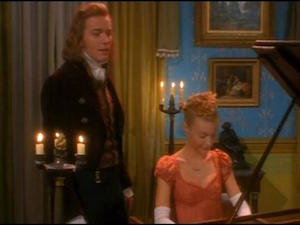
96MiramaxEmmaEmmaFrankColesPartyEwan McGregor emphasizes the “charm” of Frank Churchill. He is teasing in a romantic sort of way, most obviously seen in the scene where Churchill joins Emma at the pianoforte for a duet. For his part, the song is directed to Jane Fairfax. Because the lyrics speak of Ireland there are undertones of Jane and Mr. Dixon. Moreover, Churchill’s character attempts to make Jane jealous with references to the maid with the “golden hair.” Instead, Emma is jealous of Jane Fairfax’s accomplishments for Emma is accustomed to being the one by which all others are judged.

Alan Cummings as Mr. Elton is an excellent. He balances the comic elements of Elton’s character with the serious clergyman persona. He plays the obsequious suppliant, the rejected suitor, the vindictive revenger, and the henpecked husband, each with perfect inflection and nuances to make them believable.

Posted in Austen actors, film, film adaptations, Georgian England, Jane Austen, Living in the Regency, Pop Culture | Tagged , , , , | 2 Comments