Competency Hearings During the Regency

I had a reader send me a question about a particular book, which I will not name nor provide the author’s name, for I do not call out others on a public forum, unless it is in a positive manner. In it, a duke suffered a stroke, and the incident affects him physically, but not mentally. The reader wanted to know what I knew of these type of hearings during the Regency and early 1800s, for in the story the duke is sent to an asylum. I will tell you the reader had nothing but good things to say of the story, speaking of how it touched her emotions deeply, but this one hiccup bothered her.

First, I must say, this is not an area in which I have completed much research. However, based on what I know of the time period, I would not think a duke would be placed in either a public or private asylum if he still had his faculties about him, though, as authors, we often extend reality to fit our stories. Gosh, I have written so many “coincidences” to move a story along, I should be ashamed of myself. Yet, I am not. So, again, I do not mean this as criticism, for, although I have used “coincidences” galore, I understand how the reader with a working knowledge of the history of the time might have difficulty on this point. A duke simply was not treated like other members of the aristocracy or of the gentry. That being said, as it was easy to commit an ordinary person to an asylum for there was lots of corruption at that time, a duke, in my opinion, was not “ordinary.” Dukes were lord lieutenants, members of the Privy Council, hereditary gentlemen, and holders of ceremonial or regular offices. Dukes were not so easily tossed aside.

It seems to me, if he were competent enough to write out his responses, an asylum would not be the appropriate place for him. Yet, as I said above, there were lots of bribes and corruption in the system at that time, so a traitorous family might have had him placed aside, though he would still be the duke.

http://www.historyisnowmagazine.com/blog/2014/5/28/a-scene-of-chaos-in-a-19th-century-asylum-image-of-the-week#.Y_jvbuzML5Y= History Is Now Magazine ~ The image above is a scene entitled In the Madhouse, painting eight of William Hogarth’s A Rake’s Progress. In the scene we can see the inside of Bethlem Hospital (‘Bedlam’), the foremost criminal lunatic hospital of its day. The painting was produced in the 1730s. The hospital’s roots can be traced as far back as the thirteenth century, while in the Georgian era, it housed many people who were classed as insane by the authorities. The image itself shows us a picture of chaos inside the hospital, with dark figures lurking who are undertaking all sorts of weird and wonderful activities.

In most cases, I believe he would have been kept at home, probably with attendants, as well as his personal servant. The question would remain: Could he read and comprehend papers and could he still communicate?

I do have a bunch of notes from a class I took from the ever fabulous Louis Cornell as part of one of the Romance Writers of America’s Academe classes. I am sharing them in no particular order:

**The important thing to remember is the laws concerning certificates of lunacy and commissions of lunacy changed a great deal after 1823. Before that, whilst the procedures appeared fair and above board on paper, there was a great deal of room for bribery, abuse of the system, and outright graft and greed.

**From the late eighteenth century until the mid-nineteenth century there WERE cases where unscrupulous family members or even solicitors used the system to get their hands on the estates and monies of wealthy cits, peers, and yes, even men ranking as high as a duke.

**One did not have to be a family member to petition the Lord Chancellor to call a Lunacy Commission. However, one did have to inform the subject’s next of kin.

Once the Lord Chancellor read the petition and decided to convene a commission, that commission would consist of one to three (sometimes more) legal representatives. They would conduct the commission. A jury of up to 23 men would be convened to hear the evidence of the case. These men would be gentlemen, professionals, and peers of the subject. With this many people involved and so much power in play (MP’s often sat on these commissions) the chance for bribes and old grievances to be used against a subject were rife.

**Lunacy and competence were two different things. A person might be declared incompetent and still be allowed the freedom to live his life. His incompetence would result in a guardian or a board of trustees to oversee the person’s finances, etc. Questioning in a competency hearing might include asking the person to do math in his head, or to explain contracts of business, or to recite what his estate’s crop yields were last year. So a man who had suffered a stroke might be seen as incapable of doing these tasks. Remember the medical world and especially the mental health world was at a crossroads in the Regency – some thought of mental illness as a spiritual failing and the other of mental illness as an actual physical of psychological issue. Get the right men on the jury and a stroke victim could be seen as incompetent as a person born with brain issues and learning disorders.

**A certificate of lunacy issued by a physician could suffice to have a person locked up in an asylum. But there were ways to secure a release. However, it took a commission of lunacy to lock a person up and deprive them of his civil rights. This would have been harder to override.

**Yes, locking a duke up in an asylum would be hard, but not impossible, especially if the duke were locked up in a private asylum with a good reputation and those involved in petitioning for the lunacy commission were able to prove the duke was dangerous to himself or others.

Posted in British history, Georgian Era, laws of the land, Living in the UK | Tagged , , , , , , | Comments Off on Competency Hearings During the Regency

Use of Mews in Regency London

Question from a Reader/Writer – Were mews actually kept behind London’s great houses or were there a, for lack of another word, a group barn for the people along a street?

Okay, I admit I am not an expert in this area. My editor often corrects my ignorance in these matters. I rode some when I was young, but not enough to know all the ins and outs of riding, saddles, barns, etc. Below is a hodgepodge of tidbits I picked up from writing Regency.

RIBApix – The UK’s Largest Architecture Image Library – Architectural Images & Drawings via Pinterest ~ https://www.ribapix.com/design-for-a-stable-and-mews-house-for-s-pocock-possibly-in-regency-mews-brighton-plans-and-elevations_riba37553

Many large houses in Mayfair had their own mews along the back of the property, opening onto an alley behind. You can see these spaces on the The A to Z of Regency London 1819 maps. It was important to keep the carriages separate from the horses because manure let off gases that harmed carriages, so one configuration would be 4-6 stalls perpendicular to the alley, which were separated by a wall from a carriage house on the other side of the space. The upper floor would contain rooms for grooms and a coachman plus storage for hay. It took time to fetch a carriage for use because it would have to be hitched up, then exit the alley and drive around to the front door. If one did not have his own stabling facilities, he could rent/let space at public mews, which were located all over the place. So a family might use a mews on the next street, which did not add much time to fetching a carriage in an emergency. Most uses of a carriage were pre-arranged so it would be at the front door when wanted. Or one could use hired horses/carriages to move to London and then rent horses and carriages as needed once arriving in the City. 

DESCRIPTION

The London Topographical Society A to Z series consists of seven books, which provide fully-indexed maps of London at roughly 100 year intervals. Each reproduces a key map of the period. The indexes allow users to identify the position of streets and buildings, in some cases right down to small courts and alleys.

They appeal to anyone interested in the development of London and are invaluable for those researching family history.

This publication reproduces at two-thirds actual size the 4th and last edition of Richard Horwood’s map of London.

As a guide to the topography of early-nineteenth-century London it is unequalled. The 40 sheets of the map are accompanied by an introductory essay describing its making, assessing its qualities, and casting new light on the life of the map-maker, as well as indexes to streets and buildings showing the juxtaposition of residential and industrial premises.

***************************************

There is a good article on the cost of maintaining a horse in London–always follow the money. It covers stabling (which includes feed, water, and getting rid of the manure).

https://janeaustensworld.wordpress.com/2009/06/18/cost-of-maintaining-a-horse-in-regency-london/

There is also information worth noting on the Royal Mews —

http://www.royal.gov.uk/TheRoyalHousehold/RoyalAnimals/Workinganimals/TheRoyalMews/History.aspx

Also some good information on stabling arrangements here:

http://regencywriter-hking.blogspot.com/2014/08/stabling-in-nineteenth-century_22.html

One could stable horses at local inns; however, that would be both expensive and would not guarantee a well maintained horse. So … either one is rich enough to have one’s own mews for his horses, or he opts for hiring horses (for riding and driving) as he needs them from London stables, or he walks. This was one reason why driving one’s own horse in Hyde Park was a sign of wealth.

“Hackneys, or public carriages for hire made their first significant appearance in the early 17th century. By 1694, these vehicles had increased to such a number that a body of Hackney Coach Commissioners was established in London. The commissioners dealt out licences, which was a bit of a joke, for a mere four inspectors were responsible for over 1,000 vehicles.

“Most of these licensed hackney coaches were purchased second hand. All that an enterprising person needed to establish his own hackney coach business was enough money for a used carriage and three horses, two that worked in rotation, and one that could be used as a replacement in case of injury or illness. The death of a horse could lead to a cab owner’s financial ruin. Another important ingredient was housing for the horses.”

“By, 1823, the lighter horse cabs began to replace cumbersome hackney coaches in great quantity, and by the mid 1830’s, the hansom cab set the new standard for modern horse cabs. Aloysius Hansom, an architect, designed the first carriage. When Hansom went bankrupt through poor investments, John Chapman took over, designing an even lighter, more efficient cab, one whose framework did not strike the horses on their backs or sides whenever a carriage ran over an obstacle in the road.

“It is also why hansome cabs took off in the Victorian era as the city’s middle class boomed–the population created the need for more carriage for hire for those who could afford to pay but who could not afford to keep their own horses and carriages. “The hansom cab is a kind of horse-drawn carriage designed and patented in 1834 by Joseph Hansom, an architect from York. The vehicle was developed and tested by Hansom in Hinckley, Leicestershire, England. Originally called the Hansom safety cab, it was designed to combine speed with safety, with a low centre of gravity for safe cornering. Hansom’s original design was modified by John Chapman and several others to improve its practicability, but retained Hansom’s name.”

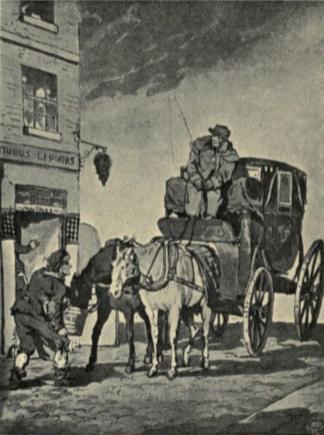
Hansom cab and driver in the 2004 movie Sherlock Holmes and the Case of the Silk Stocking, set in 1903 London ~ Wikipedia
Posted in British history, buildings and structures, customs and tradiitons, Georgian England, Georgian Era, Great Britain, history, Living in the Regency, Regency era, research, travel | Tagged , , , , , , | Comments Off on Use of Mews in Regency London

Were There Any Requirements for Those of Age to Elope to France?

Question from a Reader/Author: Is there any other reasons besides age when a couple was considering elopement during the Regency Era? I mean, if they were both twenty-one or older, were there other restrictions? Would they still require a parent’s permission? Was Scotland the only choice? Could they go to France or some other European country?

As a general rule, the English accepted all marriages as valid that were valid in the country where they were celebrated. However, there were few marriages of English persons in France, for example, during the war, except those of soldiers who had a chaplain officiating. A marriage that took place in such conditions after the war was declared invalid because it was not done in accordance with local law.

There were the Channel Islands where some people went to be married, but usually these were people who lived in the southwest corner of the country and were accustomed to the sea. I have recently written such a scenario in The Marchioness’s Madness, which is waiting to be published. Of course, the couple in that tale are older, looking for a second chance romance.

The Channel Islands are an archipelago in the English Channel, off the French coast of Normandy. They are divided into two Crown Dependencies: the Bailiwick of Jersey, which is the largest of the islands; and the Bailiwick of Guernsey, consisting of Guernsey, Alderney, Sark, Herm and some smaller islands. Historically, they are the remnants of the Duchy of Normandy. Although they are not part of the United Kingdom, the UK is responsible for the defence and international relations of the islands as it is for the other Crown Dependency, the Isle of Man, and the British Overseas Territories. [The term “Channel Islands” was not used until about 1830, so do not use it in a Regency era book.]

As for the Channel Islands, they were properties of the English crown but had their own legislature and laws. They were not part of France, though their proximity to the French coast made travel there dangerous during the war. According to my notes, they allowed marriage to anyone 21 or older without any residency requirements.  My notes do not mention what the rules were for younger people as I was not researching that situation when I made them…

A couple things to remember…

On 20 September 1789, the age of legal majority was reduced to 21 for both men and women, confirmed in 1804, and parental permission was no longer required.

When the Code Napoleon came into effect in the early 1800s, it automatically repealed all previous laws, including the 1789 law I cite below. [See my piece on Eloping During the Regency and What the Code Napoleon Said About It.]

Note that under the Code Napoleon, there were different majority ages for different aspects of the law.

Given that Britain was at war during a good part of the Regency, one would either need to set his story AFTER the war had ended, or NOT have one’s couple elope to France. Having them elope to France during the war simply because it is supposedly easier than going north, and I would instantly toss the book. The author would need to have very strong reasons for them to go to France, other than it being easier than going to Scotland to have any hope of my continuing to read. Even having them elope to France after the war would be a big step to ask of most readers.

Moreover, there are other factors one needs to consider before pursuing this course.

In the early 19th century (and throughout the period we call the Regency) family consent was required for most marriages IN FRANCE. Women who had not attained their 21st/22nd (depending on which source one reads) birthday, and men who had not attained their 26th birthday, needed permission from a parent or guardian, though only the father’s permission was required if the parents were in disagreement.

If the parents refused consent for women aged between 22 and 25, or for men aged between 26 and 30, the couple had to make three written requests, at one-month intervals, seeking permission. If all three requests were denied, then one month after the third denial, a marriage license would be issued. For women over the age of 26 and men over the age of 30, only a single written request and denial was required. These requirements were, I guess, the state’s way of giving the couple an enforced cooling off period.

Both parties had to present birth certificates (or notarised acts in the case of lost or destroyed birth certificates), AND the parents’ death certificates if other relatives were acting as guardians, AND notarised acts of consent if the parents are unable to come to the town hall to give consent in person.

Foreigners in France were subject to the same laws, but with additional restrictions, depending on marriage law within their country of origin.

The French marriage would be legitimate in France, but France did not have reciprocity agreements with its European neighbors, meaning that the foreigner couple could not return to their own country and expect that the marriage would be considered valid. I do not know if there were reciprocity agreements in place with England, but I very much doubt it given the Code Napoleon was introduced before the Regency era proper began. 

In any event, to avoid issues of foreigners being stuck on French welfare rolls, the French government ordered its officials to ensure that foreigners adhere to all regulations of their country of origin before any marriage service was performed in France.

“Women had more or less control of their own lives depending on the specific area covered by the Code. For example, a female could not be forced to marry against her will, or marry at all before age 21 – but then not without the permission of her parents or grandparents.” [I ran into this bit when writing my way out of a forced marriage scenario in a book yet to be published.]

Therefore, if one is writing an elopement, it is a bad idea to have them elope to France because the couple would not have parental permission. All the rules of the local law had to be followed for the English courts to declare the marriage valid.

Georgette Heyer used that device in her book Cotillion, and I cannot remember if she brought a time frame into that particular book or not. Of course, that’s fiction!

Heyer also allowed a man to scratch out the name of the bride on a special license and substitute another, which is absolutely not valid.  I enjoy her books, but I never trust Heyer for legal details.

A marriage in France must also take into account that France was (and still is) mainly a Catholic country–not Church of England religion. Also, the Revolution threw out the church, but then Napoleon made up with the Pope, who was all for Napoleon being crowned Emperor, so it was back to being Catholic. All this means it was unlikely for an English couple to think about running away to marry in France. (Scotland is mainly Protestant.) Plus, how do you go about finding a church in which to marry? Most parishes wanted the couple to be a resident in the area for a set time before they would marry you [Remember that George Wickham had to live in St Clements for 15 days to be considered a resident of the area.], and most priests would want to make certain the couple were good Catholics, and they cannot do that if they do not know you.

In Austen’s Pride and Prejudice, “When Lydia remarks that “We were married, you know, at St. Clement’s, because Wickham’s lodgings were in that parish.” – she gives a clue that perhaps contemporary readers would not have found confusing, but we are left with not being completely sure which St. Clements she is referring to: St Clement Danes in the Strand, or St. Clement Eastcheap. Neither is mentioned in her extant letters.

“Pat Rogers notes in her 2006 Cambridge edition of Pride and Prejudice that the fairly large parish of St. Clement Danes had a population of 12,000 in 1801 and “contained areas of cheap lodgings and some raffish districts, notably a part of Drury Lane” (531-32). Most who have written on this would agree (see Kaplan and Fullerton cites below), largely because the other St. Clement (Eastcheap), on St. Clement’s Lane between Lombard Street and Great Eastcheap, would have been too close to the Gardiner’s who lived on Gracechurch Street [see maps for location of both churches]. Wickham would not have placed himself in such a smaller parish, with a population of 350 in 1801 (Rogers, 531), and so close to those who might find him out. Another reason that Rogers selects this as the best option is that in order to marry in this parish, one of the parties had to have residence there for fifteen days (Rogers, 532). Laurie Kaplan adds that “the length of time required for residency functions perfectly for the elopement plot of the novel, for tension increases the longer Lydia and Wickham remain unmarried” (Kaplan, 7).” 

What was an option for a time was the Isle of Man and the Isle of Wight – http://www.regencyhistory.net/2015/11/why-did-regency-lovers-elope-to-gretna.html

Unless the lovers had relatives in France, it is highly unlikely that they travelled there to marry. War conditions would really make it impossible for any Englishman to be in France from 1793 until 1814…you have only the brief peace in 1803.

Religion is also a bar with elopements to Spain, Tuscany, or any other country that is primarily Catholic, unless one of the couple is also Catholic with relatives in that country, and then the residency issue is no longer an issue. Now, one might try a run away and live in sin, particularly if the woman is a wife on the run from a husband or vice versa.

Of course, too, Mary Godwin and Percy Bysshe Shelley eloped to France in 1814, but they were in no way respectable, and he was still married to Harriet at the time, so I doubt that is what you’re looking for.

Sources used to help write the piece:

BookLadyDeb. “The Places of Pride and Prejudice: Where, Oh Where, Did Wickham and Lydia Marry? Or the Dilemma of the Two St Clements.” Jane Austen in Vermont Blog. 3 March 2013.

Laurie Kaplan. “London as Text: Teaching Jane Austen’s “London” Novels In Situ.” Persuasions On-Line 32.1 (2011).

Pat Rogers, ed. Pride and Prejudice: The Cambridge Edition of the Works of Jane Austen. Cambridge UP, 2006. Google link: http://books.google.com/books?id=yxIHAemJKM4C&lpg=PA531&ots=DK3PxqM79J&dq=st.%20clements%20pride%20and%20prejudice&pg=PA531#v=onepage&q=st.%20clements&f=false

Posted in Uncategorized | Comments Off on Were There Any Requirements for Those of Age to Elope to France?

Proud Member of Clan MacThomas, Whose Blood Flows Through My Veins

When I traveled to Disney World with my son and his family several years back, I was quite disappointed for I only saw my favorite Disney princess once. That is Merida from “Brave.” One of things I like about Merida is she chooses her own path to travel, and she does not require a prince to save her. Yada, Yada! The film was released in 2012, but no one then was complaining about the prince not saving Snow White. Yet, that is another story for current times, not the purpose of this post.

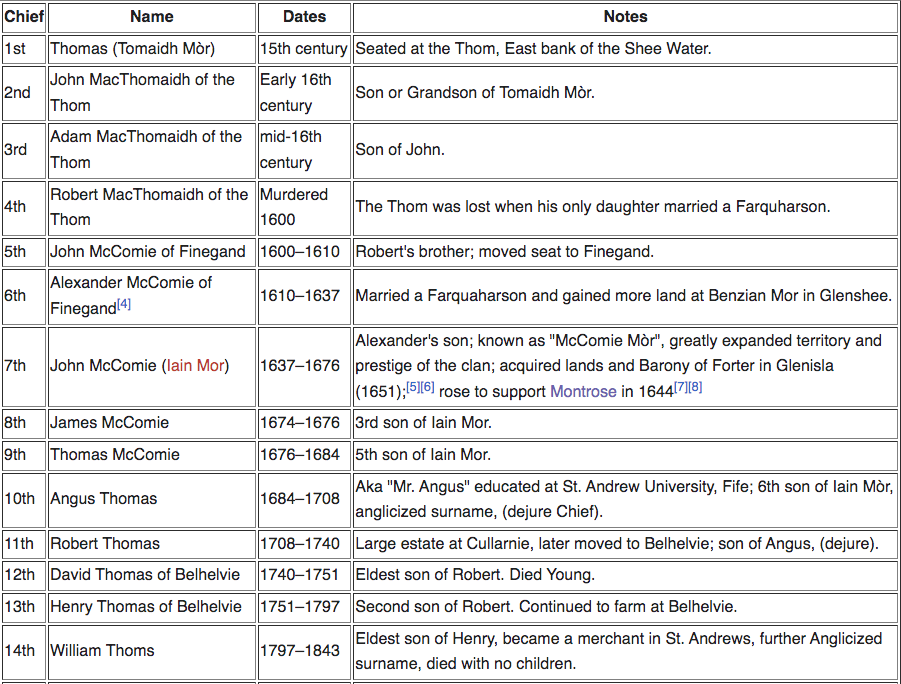
When the clans arrive to bring their suitors from which Merida is to choose, I automatically scream “Macintosh” along with the voice over from Craig Ferguson. My granddaughters always looked at me curiously, but only recently have I explained that my 9th Great-Grandfather on my father’s side is the 7th Chieftain of the clan, John Mccomie (Iain Mòr), who has passed into the folklore of Perthshire. [https://www.maclaine.org/legends] You see, the reason I screamed “Mackintosh,” was the fact that the progenitor of the Clan MacThomas was Thomas, who was a Scottish Gaelic speaking Highlander. He was known as Tomaidh Mòr and it is from him that the clan takes its name. He was a grandson of William Mackintosh, 7th chief of Clan Mackintosh and 8th chief of the Chattan Confederation. [Way, George and Squire, Romily. Collins Scottish Clan & Family Encyclopedia. (Foreword by The Rt Hon. The Earl of Elgin KT, Convenor, The Standing Council of Scottish Chiefs). Published in 1994. Pages 258–259.]

According to the tale of the Mccomies, my 9th great-grandfather objected to the taxes the Earl of Atholl had placed on them. One must remember that the Mormaer or Earl of Atholl was the title of the holder of a medieval comital lordship straddling the highland province of Atholl (Ath Fodhla), now in northern Perthshire. Atholl is a special Mormaerdom, because a King of Atholl is reported from the Pictish period. ANYWAY, the Earl of Atholl thought to be done away with my great-grandfather by employing a champion swordsman from Italy. One problem existed; Mccomie slew the swordsman instead. Or, at least, that is how I heard it.

Clan MacThomas supported Charles I during the 17th Century Scottish Civil War. My ancestor, Ian Mor MacThomas joined James Graham, 1st Marquess of Montrose, in 1644 at Dundee. When the royalists captured Aberdeen, Iain Mor himself captured Sir William Forbes who was sheriff of Aberdeen and commander of the Covenanter cavalry. However the chief of Clan MacThomas withdrew his support from Montrose after he was defeated at the Battle of Philiphaugh and instead devoted his time to extending his lands which included purchasing the Barony of Forter from the Earl of Airlie.

“After the Restoration of 1660 Macthomas was fined heavily by Parliament and the Earl of Airlie set about trying to recover some of his lands. Airlie’s legal action was successful but the chief of Clan MacThomas refused to recognize this and continued to pasture his cattle on the disputed land. In response Airlie used his legal right to lease the land to men of the Clan Farquharson which led to a feud. On 28 January 1673 Farquharson of Broughdearg was killed along with two sons of Iain Mor MacThomas. The lawsuits that followed crippled the MacThomas chief and when he died in 1676 his remaining sons were forced to sell the lands.”

The MacThomas chief is mentioned again in 1678 and 1681 in Government proclamations but the clan had begun to drift apart. Some moved south to the Tay valley where they became known as Thomson and others to Angus in Fife where they are known as Thomas, Thom or Thoms. The tenth chief took the name Thomas and then later Thoms. He settled in northern Fife and successfully farmed.

After all the battles, and following Iain Mor’s death, his remaining sons were forced to sell their lands. The clan drifted apart some going to the Tay Valley and some to Angus and Fife where they took the names Thomas, Thom or Thoms. Others moved to Aberdeenshire where the name became corrupted to McCombie of Tillyfour.

“In 1954 the Clan MacThomas Society was formed. The Clan is unusual as most of its members do not have the name MacThomas. But have a name of one of its septs. These are Comb, Combie, McColm, McComas, McComb, McCombie, McComie, McComish, Macomie, Macomish, Macthomas, Tam, Thom, Thomas, Thoms and Thomson.

“The current chief is Andrew MacThomas of Fingand. During his lifetime the clans ancient gathering ground ‘The Cockstane’ was purchased as well as the new bridge at The River Shee was named after the family. Historic links with with the Glenshee family have been re-established. The current chief has one son, Thomas born in the late 1980s.” [MacThomas Clan History]

Posted in castles, customs and tradiitons, family, Great Britain, heraldry, hero, history, legends, Scotland | Tagged , , , , , , | 3 Comments

Children’s Meals in the Regency Era

A reader recently asked of what I knew of children’s meals during the Georgian era. In truth, I have collected a hodgepodge of facts. I will attempt to organize the in some manner, but I fear not to know true success, so bear with me.

Seems to me the important thing to remember is that English children of the comfortable classes were traditionally fed their main meal (i.e. dinner–usually the meal with meat) in the middle of the day. That’s when everyone had dinner back in medieval times–Henry VIII supposedly had his dinner at 11:30 A.M.

Children’s meals remained settled there as the adult meal shifted farther and farther into the afternoon and evening. Children (at least the ones in one of our typical Regency upper classes) did not eat with adults; they were fed by nannies or nursemaids in the nursery. Their meals remained stable, probably because it was just easier that way. A nursery tea, therefore, was the children’s meal just before a bath and bed or just bed in the earlier periods when a daily bath was not considered next to godliness. Whether they called it “tea” or not in Regency times I do not know. Perhaps originally it was “supper.” I have never seen any reference to the children’s meal being a “snack” at any time.

I do not know when it began, but I do know that the English use of the word ‘tea’ for a meal as well as a simple noun for a beverage.

English Language Thoughts tell us: “In Britain in the 18 and 19th centuries, dinner was often served around 8 pm, so the meal tea was developed in order to provide some sustenance during the long hours between lunch and dinner. In upper-class households where leisure time was plentiful, this became known as afternoon tea, and was usually served around 4pm, consisting of tea, of course, and some light dishes such as sandwiches.

“For working-class families though, tea usually had to wait until shortly after 5pm, when the workday was finished. This meal, which tended to feature heavier cooked dishes such as pies, became known as high tea, apparently as families would have it while sitting on high-backed chairs, and not the soft armchairs of the upper classes.

Teatime then, refers to the general late-afternoon, early-evening period when either of these variations were served. But as I said earlier, there are three meals which claim the name tea, and the third one is the one that really provokes strong feelings in some people.

“As we moved into the 20th century, the number of highly physically-demanding jobs declined, as did working hours, and many working-class families no longer felt the need to have both tea and dinner after work. Both meals were therefore often replaced by a single evening meal at about 6 or 7 pm. Some called this dinner, but some preferred tea. To this day, what you call your evening meal is considered a sure sign of your social class in the UK. Referring to it as tea identifies you as working-class, whereas dinner is more of a practice of the middle classes. If you’re a member of the upper classes though, the word dinner might be refer to a formal affair, and therefore the word supper is used to refer to a more humble, homemade evening meal.

“But of course supper is also sometimes used, by those who use the term dinner, to refer to a light nighttime meal. You can see then, why this gets confusing, and why people get so defensive about which one they use! Makes you want to sit down with a nice cup of tea, or cha, or char, or cuppa…”

While the grownups had tea – as we drink it today, with sugar and milk – the child/children were given cambric tea, consisting of a scant spoon of sugar, a teaspoon or so of tea (poured from the pot, just like an adult’s) and then filled to the brim with warm milk. Remember though, cambric tea was not a Georgian era term. “Also known as nursery tea, or milk tea, it was coined cambric tea because, like the fabric, it was light and thin. It is suggested it was first used mid-century, in 1859, but there is no definite confirmation of its origins. Claimed to be coined in the US, it can also be found referenced in fiction and non-fiction sources from both Canada and the UK.

No More Cambric Tea tells us, “Cambric tea was also featured in American author Laura Ingalls Wilder’s Little House series, and like Montgomery, described it as a childhood drink, especially in winter months, when warm water and a dash of tea gave the younger children in the Ingalls family a bit of energy.

At noon Ma sliced bread and filled bowls with the hot bean broth and they all ate where they were, close to the stove. They all drank cups of strong, hot tea. Ma even gave Grace a cup of cambric tea. Cambric tea was hot water and milk, with only a taste of tea in it, but little girls felt grown-up when their mothers let them drink cambric tea”. (The Long Winter, by Laura Ingalls Wilder).

In my family, the “old folks” often spoke of how my great grandparents several times removed (who came from Scotland in the mid to 1800s) would have tea when they came home from school starving (as children usually do). They called it ‘cambric tea.’ She had tea every day of her life in the mid-afternoon, whether the family was dirt-poor or reasonably comfortable (our family was never rich!) and she believed that children should learn both proper habits and manners. You can find recipes for “nursery tea” online with lots of milk, sugar, and vanilla–basically a way to add a little more nutrition to a child’s tea

There’s a good overview of the history of “tea” as a social function here – http://www.foodtimeline.org/teatime.html

Tea as a social even (as in tea time) really start off more in the 1830’s and became the more formal affair in Victorian and Edwardian times. During that later era “tea” became the working class meal as well.

In Regency era, children often took their meals in the nursery and not with the family–so they might have nursery tea with their dinner. But tea in Georgian and Regency time tea was still more of a beverage to be served as a possible refreshment to callers–or a beverage for late in the evening along with possibly some cakes or a light snack type meal before bed, but not so much a social event as in afternoon tea.

Also, if one is looking to learn what the children in a household might have, it would not be too out of the ordinary for cook to have a treat for them–hot pastries or biscuits (the English version of cookies) or cakes. A child might well eat in the kitchen in a household that is not too formal.

And, by the way “snack” is in period – http://www.etymonline.com/index.php?term=snack

verb – The meaning “have a mere bite or morsel, eat a light meal” is first attested 1807.

noun – Main modern meaning “a bite or morsel to eat hastily” is attested from 1757.

From what I have discerned regarding raising small children in England, nursery tea was the final meal for children during the day. They had a proper meal, dinner, at what we call “lunch” time. Nursery tea was half tea/half milk, bread and milk, and usually some cake for afterwards. I remember my grandfather talking about how his grandmother would present them with an “egg tea,” meaning the children would have a boiled egg as well.

This was of course long after the Regency and even the Victorians! But I would expect it was one of the meals that changed little. Probably since tea was so expensive it would be only a taste of tea or perhaps none at all–or some herbal tea. But I would believe that the base would most likely be bread and butter for the comfortable middle class and much the same for the wealthy–except perhaps in the north of England, Ireland, and Scotland, where oats were more commonly available than wheat, and then it would be a dish of porridge.

https://ladybakerstea.com/blogs/blog/no-more-cambric-tea#:~:text=Also%20known%20as%20nursery%20tea,definite%20confirmation%20of%20its%20origins.

“Nursery tea” would then most likely refer to a very simple meal–and I agree that it would probably be Victorian or possibly late Regency period, because it was only then that the grownups–the ladies!–started drinking tea in the afternoon. At that period, as I understand it, people routinely went from breakfast to dinner w/o eating in the meantime, except for snacks that eventually became known as elevenses and tea (as a time to eat, not a beverage). It was the advancing hour of dinner, from 5-6, which it was generally in the 18th century, to later in the day that gradually re-established the mid-day meal that had been called dinner before it moved later and later. In the days when dinner as the main meal was mid-day, there was supper in the evening.  Nursery tea, therefore, could be considered an adaptation of supper for children!

I looked into this when I saw the term “nursery tea” in a Regency book. Nursery tea was hot water with milk and sugar. It could be because tea was expensive or it could be because they noticed bad effects (like being really hyper or uncontrollable or not being able to sleep) on children of a certain age. I do not remember if it said when this practice started, but the book I saw it in was right after Waterloo. 

Personally, I think “nursery tea” sounds Victorian–something established after tea became an afternoon ritual  and could well signify a childish version of high tea. High tea was not a more formalized, elaborate version of the established Victorian practice of afternoon tea, but a supper moved forward  in time to late afternoon or early evening. I read once that it started out as a sort of mocking name for the meal a working family had in the evening.

In the Regency period, tea was still a bit too expensive to be wasted on children. Their meals were often merely bread and milk.

Posted in American History, British history, food, Georgian England, Georgian Era, history, Living in the UK, Regency era, research | Tagged , , , , , , , , | Comments Off on Children’s Meals in the Regency Era

Easter Through the Georgian/Regency Era and the Earlier Victorian Era

One must recall, especially this year when Easter feels like it is so late, that Easter, unlike Christmas which falls on the same date each year, as a “moveable feast,” the date of Easter is determined in each year through a calculation known as computus paschalis (Latin for ‘computation’) – often simply Computus – or as paschalion particularly in the Orthodox church. [Bede (1999) The Reckoning of Time. Translated by Faith Wallis. Liverpool University Press. p.xviii]  Easter is celebrated on the first Sunday after the Paschal full moon (a mathematical approximation of the first astronomical full moon, on or after 21 March – itself a fixed approximation of the March equinox). Determining this date in advance requires a correlation between the lunar months and the solar year, while also accounting for the month, date, and weekday of the Julian or Gregorian calendar. [Bede (1999) pp. xviii – xx] The complexity of the algorithm arises because of the desire to associate the date of Easter with the date of the Jewish feast of Passover which, Christians believe, is when Jesus was crucified. [John 19:14 “Now it was the day of Preparation for the Passover; and it was about noon. He said to the Jews, “Here is your King!”

Easter’s date is based on the lunar calendar. not a calendar as with Christmas. Easter comes on the first Sunday after the first full moon following the spring equinox.

The spring equinox arrived on March 20 this year, which marks the astronomical start of spring. It’s the time when there are roughly the same number of hours of day and night on all parts of Earth, according to NASA. That means Easter Sunday can fall anywhere between March 22 and April 25.

This year, Coordinated Universal Time (UTC), often referred to as the military time zones plays a big role in when we celebrate Easter, for Easter is set as the first Sunday after the first full moon of the vernal equinox (start of spring). In 2025, though we in the U.S. had our first full moon after the vernal equinox on Saturday, April 12, we are on Daylight Savings Time, meaning we jumped ahead one hour. If not, Sunday, April 13, would have been Easter because it would have been the Sunday after the full moon. That is where UTC time comes in. The full moon is actually a FULL 22 minutes after midnight in the U.S., meaning April 13. Therefore, we must wait until April 20 for Easter. Are you thoroughly confused? Though I know the reason, I had difficulty explaining all this.

Just to mess with your minds a bit more, in case you have never considered this part of the night sky, in the Southern Hemisphere, the Moon is observed from a perspective inverted, or rotated 180°, to that of the Northern, so that the opposite sides appear to wax or wane. Closer to the Equator, the lunar terminator will appear horizontal during the morning and evening. This is a plot point in one of my upcoming novels. LOL!

All that being said, I thought that as it is nearly Easter 2025, some of you who read and write Regency might wish a reminder as to when Easter occurred during the Regency era (and a bit beyond). [Please note that I wrote this piece in late 2024 as I was recovering from three cancer surgeries. Yes, I generally do my blog posts several months in advance! Anyway, I chose to include pieces from other authors on Easter rather than to do all the research myself, as I am not yet at my best. I did find the moveable dates for Easter, however. I have presented each author link. As a former English teacher, I strongly despise plagiarism and believe in giving credit where it is due.]

It was originally feasible for the entire Christian Church to receive the date of Easter each year through an annual announcement by the pope. By the early third century, however, communications in the Roman Empire had deteriorated to the point that the church put great value in a system that would allow the clergy to determine the date for themselves, independently yet consistently. [Bede (1999) p. xx]  Additionally, the church wished to eliminate dependencies on the Hebrew calendar, by deriving the date for Easter directly from the March equinox.

EASTER:

13 April 1800    3 April 1825  

5 April 1801   26 March 1826  

18 April 1802    15 April 1827  

10 April 1803    6 April 1828  

1 April 1804   19 April 1829 

14 April 1805   11 April 1830 

6 April 1806    3 April 1831 

29 March 1807   22 April 1832 

7 April 1808    7 April 1833   

2 April 1809   30 March 1834  

22 April 1810   19 April 1835  

14 April 1811    3 April 1836  

29 March 1812   26 March 1837  

18 April 1813   15 April 1838  

10 April 1814   31 March 1839  

26 March 1815   19 April 1840  

14 April 1816   11 April 1841  

6 April 1817   27 March 1842  

22 March 1818   16 April 1843  

11 April 1819    7 April 1844  

2 April 1820   23 March 1845  

22 April 1821   12 April 1846  

7 April 1822    4 April 1847  

30 March 1823    23 April 1848  

18 April 1824 

In the  early years of the 19th century, the date of Easter was quite important. Law courts, parliament, school terms  — as well as the church calendar all based dates on that of Easter. Generally, the season in Town did not start until after Easter.

Donna Hatch tells us something of Holy Week: “True believers viewed Easter and Holy Week, the week between Palm Sunday and Easter Sunday, as even more important than Christmas due to its reminder of the Resurrection. Multiple church services occurred during the week complete with choirs singing. On Easter Sunday, worship included choirs singing, incense burning, chanting, kneeling, making the sign of the cross, and lighting candles during personal prayers. Some churches today, especially larger cathedrals, still practice these traditional forms of worship. A common practice includes draping the statues in black and stripping the altar on Good Friday symbolic of mourning the Savior’s death. On Easter morning, they removed black from church altars and dressed them to celebrate His Resurrection.

“According to Gaelen Foley, new gowns and Easter bonnets were a must for all gently-bred Regency ladies to wear to church and social events, a custom that many still observe today. An important part of the day included Easter dinner, usually including ham or lamb, and, of course, hot cross buns.”

Jane Austen UK tells us, “… Though dying and decorating eggs to mark the coming of Spring has been a tradition since before the advent of Christianity, the first chocolate eggs started to appear on the continent somewhere around the end of Austen’s lifetime, and would have been chocolate  the whole way through, rather than hollow- now that sounds like a challenge for your fillings! The first commercially produced Easter egg in the UK was created by J.S. Fry and Sons in 1873, followed by Cadbury in 1875.

“Easter celebrations would have begun, as they do now, on Shrove Tuesday, or Pancake day… they made a whole day of it, with the ladies of the parish racing around their parish clutching a frying pan, trying to be the one to win the Pancake Day race. Ash Wednesday would follow the next morning, and forty days and nights of observance with it. 

“Easter (was) a strictly observed day in the Church of England’s calendar. The whole parish would get together to observe the occasion. …

“Then it would be time for (the midday meal). Like today, our Regency forebears would have enjoyed a Hot Cross Buns, with vendors lining the streets in the days running up to the big event. Lamb or ham would also have been served for the main meal.”

Meanwhile, 10 Victorian Easter Traditions You Should Try, tells us, “Just as they do today, children loved their Victorian Easter. They would dye hens’ eggs using cranberries, beets, oranges, and lemon peel. Just like the Christmas tree, Easter egg hunts and the egg roll was introduced by Germans to England during the 1800s. Children would participate in both egg rolling and egg hunts and the winner would receive a special prize. Some Victorian egg hunts included cardboard eggs lined with fabric and containing candy.”

Date of Easter

From Yahoo Life: What’s the earliest date Easter is held? You’ll wait until 2285 for the next one

The earliest date Easter is held is March 22.

The last time Easter was on March 22 was in 1818. The next time will be in 2285, according to earthsky.

What’s the latest date Easter is held? That will come in 2038

The latest date Easter is held is April 25.

The last time Easter was on April 25 was in 1943. The next time Easter will be on April 25 will be in 2038, followed by the one in 2190.

Posted in Uncategorized | Comments Off on Easter Through the Georgian/Regency Era and the Earlier Victorian Era

The Quem Quaeritis Trope, the Roots of Liturgical Drama

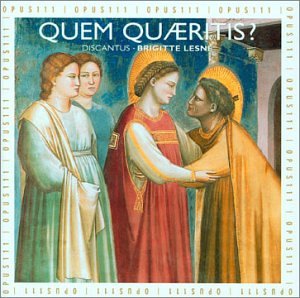
413ZV9RH8FL.jpg The first Easter or Quem Quaeritis trope had its beginnings in the Benedictine Abbey of St. Gall, Switzerland. (The script of this first trope and an accompanying translation can be found below.) The Easter trope became the model for similar tropes associated with Christmas and the Ascension. 

Melodies connected with the Mass were sung with vowel sounds alone, and these were the beginnings of the liturgical dramas, which grew into the English Miracle and Morality plays. Originally the Quem Quaeritis trope was an Introit trope at the beginning of the Easter mass. Later, it became part of the Sepulchrum, an Easter drama, which began on Good Friday and the “creeping of the cross,” known as Adoratio Crucis. The Good Friday Communion known as Depositio Crucis and then on to the Elevatio Crucis on Easter morning. This ceremony varied greatly depending upon the country in which it was performed. 

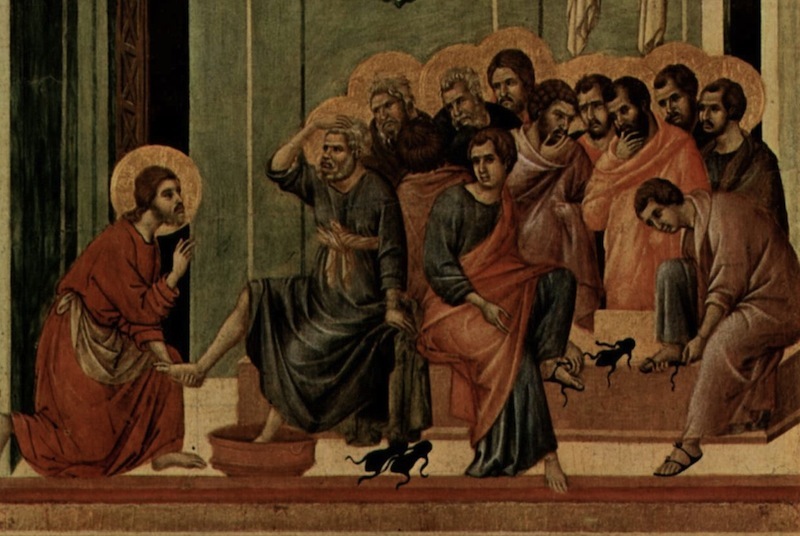
duccio_di_buoninsegna_detail1

Triduum, a Liturgical Drama in Three Acts

In England there was Quem Quaeritis held at Winchester Cathedral. The manuscript used then was copied in about 980 A.D. At the Winchester ceremony they placed the Quem Quaeritis in the middle of the performance instead of at the beginning of the Easter Mass. It was part of the third Nocturn at Matins on Easter morning. E. K. Chamber in The Medieval Stage (Vol. II, p. 15) says that in the Quem Quaeritis that the “Dialogued chant and mimetic action have come together and the first liturgical drama is, in all its essentials, complete.” 

Angelica de Christi Resurrectione

Quem quaeritis in sepulchro, Christicolae?

Sanctarum mulierum responsio:

Ihesum Nazarenum crucifixum, O caelicola!

Angelicae vocis consolatio:

non est hic, surrexit sicut praedixerat,

ite, nuntiate quia surrexit, dicentes:

Sanctarum mulierum ad omnem clerum modulatio:

alleluia! resurrexit Dominus hodie,

leo fortis, Christus filius Dei!

Deo gratias dicite, eia!

Dicat angelus:

venite et videte locum ubi positus erat Dominus,

alleluia! alleluia!

Iterum dicat angelus:

cito euntes dicite discipulis quia surrexit Dominus,

alleluia! alleluia!

Mulieres una voce canant iubilantes:

surrexit Dominus de sepulchro,

qui pro nobis pependit in ligno, alleluia!

_________________________________________

The Angel After Christ’s Resurrection

Whom seek ye in the sepulchre, O Christians?

Response of the Holy Women:

Jesus of Nazareth who was crucified, O heavenly one.

The Angel in a voice of consolation:

He is not here, he is risen as he fore-told.

Go, announce that he is risen, saying:

Chant of the Holdy Women:

Alleluia! The Lord is risen today,

The strong lion, Christ the son of God,

Unto God give thanks, eia!

Let the Angel say:

Come, and see the place where the Lord was laid.

Alleluia! Alleluia!

Let the Angel say again:

Go quickly, tell to the disciples that the Lord is risen.

Alleluia! Alleluia!

The women with one voice sing joyously:

The Lord is risen from the sepulchre,

Who for us was hanged on the cross, Alleluia!

(Translated by Edd Winfield Parks)

Posted in acting, Church of England, customs and tradiitons, drama, medieval | Tagged , , , , | Comments Off on The Quem Quaeritis Trope, the Roots of Liturgical Drama

Proving Oneself the New Peer

I had a recent question from a reader/writer about how after the death of the current peer was one made the new peer. Was it immediate? Is there a process or some sort of hearing. What must he prove to be the new peer?

This particular writer was asking about a nephew assuming the new peerage, as the peer had no male heirs, but the nephew being the son of the peer’s brother.

In such cases, there is very little delay or a contest. The  son of the second brother is immediately the peer, but he would generally wait until after the funeral to assume the title publicly. It is when a title can be inherited by a female and there are no direct descendants. like a daughter or granddaughter that contests arise that delays happen. Delays might also occur if the widow is pregnant or if there is doubt about the young man’s legitimacy.

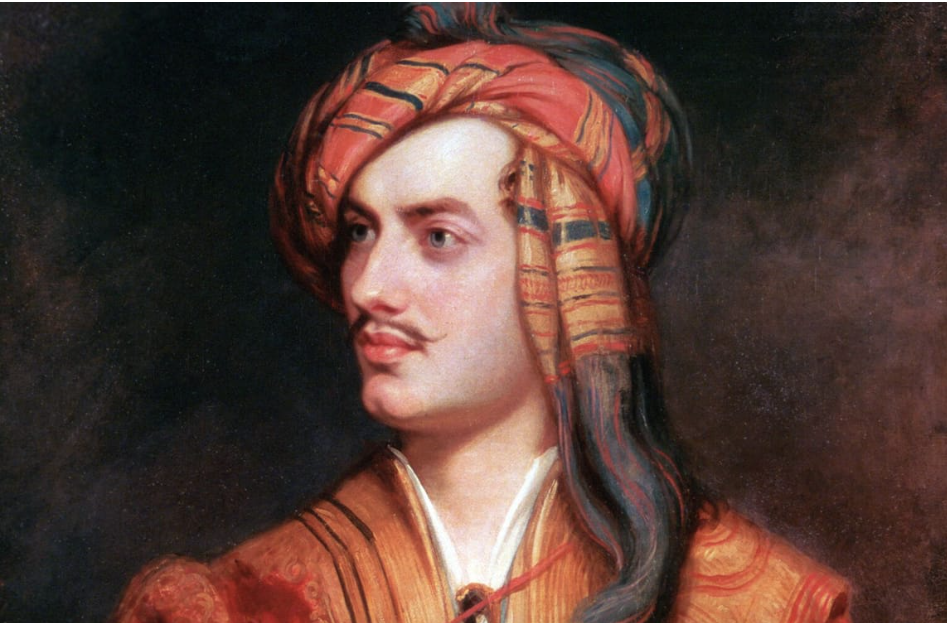
For example, let us have a look at Lord Byron. “George Gordon Noel Byron was born, with a clubbed right foot, in London, on January 22, 1788. He was the son of Catherine Gordon of Gight, an impoverished Scots heiress, and Captain John (“Mad Jack”) Byron, a fortune-hunting widower with a daughter, Augusta. The profligate captain squandered his wife’s inheritance, was absent for the birth of his only son, and eventually decamped for France as an exile from English creditors, where he died in 1791 at age 36.

“With the death in 1798 of his great-uncle, the “Wicked” fifth Lord Byron, George became the sixth Baron Byron of Rochdale, heir to Newstead Abbey, the family seat in Nottinghamshire. He enjoyed the role of landed nobleman, proud of his coat of arms with its mermaid and chestnut horses surmounting the motto “Crede Byron” (“Trust Byron”).” [Poetry Foundation]

Lord Byron’s guardian, Lord Carlisle was ill when Byron turned 21. As mentioned above, Byron inherited at age ten from a great uncle. He thought he was being singled out to prove that his father and his mother were married before he was born, that his father was legitimate, and that his father was the son of a previous deceased baron, that the baron’s sons were all dead without legitimate male issue, and that any contenders were the sons of a son junior to John Byron. Byron gathered all the needed information– he had been the peer for 11 years by then, presented it and was accepted. He castigated Carlisle in one of his poems, but his half sister, Augusta, took him to task for this by letting him know that Carlisle had been ill. Not that the earl did much for the boy. Hanson the solicitor of Chancery handled the practical aspects of the guardianship, but either did not know enough to tell Byron that it was standard operating procedure or just forgot to.

The Hereditary Peer Association explains the official process of claiming a title. Here is the relevant portion of the reply:

The position up to the end of 1999 and the passing of the House of Lords Act 1999, was that on the death of any hereditary peer, his heir would have to prove to the Clerk of the Parliaments his right of succession by appropriate birth marriage and death certificates, and in some cases, affidavits to prove for example, that there was no better claimant. I think other evidence such as parish records can be used as often heirs outside the direct line have to search back many generations to prove their lineage and rights.

Having satisfied the Clerk, the new peer would receive a Writ of Summons to attend the House. The procedure for taking his seat was simply that he would alert the Clerk on the day he wished to take his seat before the start of the day’s business. At the opening of the day’s business, he would take a seat usually on the Bishops’ benches and after the opening prayers, the Clerk would call him to the despatch box where he would take the Oath of Allegiance, walk to the wool sack and shake the hand of the Lord Chancellor or his deputy if the latter was not present. He would then leave the Chamber to be greeted by representatives of the political parties in the Lobby. He would then declare his party allegiance if any and proceed to take a seat on the appropriate benches.

There was no more ceremony than that. Only newly created peers (now days exclusively Life Peers) endured, and still do, an introductory ceremony at which they and their two supporters, wear parliamentary robes over their ordinary suits, and carry Coked Hats which they doff the Lord Chancellor (now Speaker) and to the throne. They also take the Oath and shake hands with the Lord Chancellor or Speaker.

This latter ceremony has recently been simplified but has it origins some centuries ago. Sadly few peers have their own robes, either parliamentary or Coronation and mostly hire them from Ede & Ravenscroft. Coronets are only worn at a Coronation and as you note, only following the actual crowning of the new Monarch. I am fairly certain that a peer had to have received a Writ, sworn allegiance and taken his seat in the House of Lords in order to attend a Coronation. Sadly, there was no ceremony involved in inheriting a peerage, other than a consultation with a parliamentary tailor such as E&R.

According to Titles and Forms of Addresses: A Guide to Correct Usage, in the case of any inheritance it is customary for the new peer to be known as their previous style until after the funeral of the late peer. For instance, Mr. John Doe, the nephew of the Duke of Soandso, inherits, but continues to go by Mr. John Doe until after the funeral; this is the same for a direct heir as well. Also, while the heir takes on the title automatically upon confirmation of his claim, his siblings only gain their honorifics by favour of the Crown. So Mr. John Doe’s brothers and sisters would not be permitted to add “Lord” or “Lady” to his or her name until they apply for them and have it granted. The widow of the new peer’s father, however, is not entitled to a change in title because that honour only comes through the husband, who is dead. So Mr. John Doe’s mother does not become the (Dowager) Duchess of Soandso and is not entitled to apply for the favour from the Crown; she remains Mrs. Doe.

Sources:

Hereditary Peers

Hereditary Peers Removed

House of Lords Act 1999

The Last of the Hereditary Peers in the House of Lords

At the bend of the path, an unexpected meeting.
She is all May. He is December.
But loves knows not time.

Colonel Lord Andrew Whitmire has returned to England after spending fifteen years in service to his country. In truth, he would prefer to be anywhere but home. Before he departed England, his late wife, from an arranged marriage, had cuckolded him in a scandal that had set Society’s tongues wagging. His daughter, Matilda, who was reared by his father, enjoys calling him “Father” in the most annoying ways. Unfortunately, his future is the viscountcy, and Andrew knows his duty to both the title and his child. He imagines himself the last of his line until he encounters Miss Verity Coopersmith, the niece of his dearest friend, the man who had saved Andrew’s life at Waterloo. Miss Coopersmith sets Whitmire’s world spinning out of control. She is truly everything he did not know he required in his life. However, she is twenty-two years his junior, young enough to be his daughter, but all he can think is she is absolute perfection.

Purchase Links:

Kindle: https://www.amazon.com/Courting-Lord-Whitmire-Regency-May-December-ebook/dp/B085QNYHRW/ref=sr_1_1?keywords=courting+lord+whitmire&qid=1584536924&sr=8-1

Read for FREE on Kindle Unlimited https://www.amazon.com/kindle-dbs/hz/subscribe/ku?passThroughAsin=B085QNYHRW&ref_=ku_lp_rw_pbdp&_encoding=UTF8&shoppingPortalEnabled=true

Book Bub https://www.bookbub.com/books/courting-lord-whitmire-a-regency-may-december-romance-by-regina-jeffers

Enjoy this scene from Chapter 5 of my Courting Lord Whitmire, where his lordship claims his peerage before the House of Lords. We view it through the heroine’s eyes.

When they learned at Lady Stephenson’s gathering that the Countess of Savidge had taken a fall earlier in the day and had cancelled her entertainment, Verity had convinced Matilda that they should return to Parliament and plead to be admitted to the gallery to view Lord Whitmire’s introduction to the House of Lords. 

“What if they turn us away?” Matilda had protested, the girl’s earlier bravado fading quickly before the pudding was set. 

“Then we will discover a tea room nearby and wait,” Verity had said without the exasperation she felt. All afternoon, Matilda had bemoaned not being able to join Robinson in the gallery, but now that Verity had suggested their doing so, Matilda wished Verity to beg or to insist, so the girl would not bear any of the blame, if Lord Whitmire disapproved. It was Matilda’s wish not to upset the delicate balance the girl and Lord Whitmire had achieved, but, on this particular day, Verity had no time, or desire, to coddle the child. “Do you not wish to view your father’s elevation?”

“Most assuredly, I would wish to observe the proceedings,” Matilda said softly. Her gaze remained steady, although her tone held unrelenting curiosity. “But I have heard it said only those women who hold exalted positions dare enter the gallery. Father may not be happy with our presence.” 

“Miss Ridenour again?” Verity questioned. She should have known the chit would say something to discourage Matilda from her desire to sit with Robinson in the gallery. 

She did not wait for the girl’s response; instead, Verity decided for them. She had considered Lord Whitmire’s possible disapproval before she had made her suggestion, but she refused to think of his lordship’s disdain when she had the opportunity to look upon him again, especially in such a life-defining moment. Not being a part of this event, even if it were from a distance, was not a choice she could consider. Although he did not recognize her total devotion to him, she wished to share the experience—wished to have the memory to cherish in her old age. Unfortunately for her badly bruised heart, her fascination with the man had not waned; rather, it had intensified the longer she remained in his company. “We shall ask, and, if refused, accept the tradition in which the ceremony is imbued.” 

And so, with heavy reprimands delivered toward them by a clerk for even asking for permission to enter the gallery, along with a generous donation to the man’s purse, she and Matilda had been hidden behind a heavy drape, where they might peer down upon the floor of the House of Lords. After what felt like forever, the House was called to order by the Lord Chancellor. A prayer followed, and Verity’s anticipation rose. She tugged Matilda closer, placing the girl before her, so they could share the small space. 

She explained in Matilda’s ear. “Black Rod, an officer of the Order of the Garter, has already escorted Lord Whitmire and your father’s retinue to the King of Arms, who will lead the trio into the main chamber. Just wait a minute, and they will appear where we can see them.” True to her narration, his lordship and the others appeared, but, for Verity, the thrill was in watching Andrew Whitmire. Looking upon him, she had never known a prouder moment. His countenance remained stern and respectful of the majesty of the ceremony, while also holding a hint of contentment. He was a man meant for the aristocracy—noble and strong. 

“Who is with Father?” Matilda asked softly, destroying the moment for Verity. 

Swallowing the sigh of exasperation rushing to her lips, Verity leaned closer to whisper once again. “According to tradition, his lordship must be escorted by two of his fellow viscounts. When Robinson goes through the ceremony, my brother will be accompanied by two barons. Lord Whitmire asked two of his former soldiers to serve him. Black Rod leads, followed by the Garter King. The peer in front of your father is the junior peer, Lord Franklin. The one behind Whitmire is Lord Lexford.” 

“How did you learn all this?” Matilda asked with what sounded to be a nervous giggle. 

Verity smiled easily, enjoying her confession before she spoke it. “I have the habit of overhearing what I should not. I listened as your father explained the process to Robinson.” Her smile grew. “Some day you will learn that men often think women have no brains to understand of what they speak. They sometimes treat the women in their lives as if they were a silent servant.” 

“They enjoy strutting their colors as much as would an actor upon a stage,” Matilda observed in hushed tones. Verity realized the girl meant the goings on in the Lords, but Matilda’s words fit many situations where men gathered.

“Or as much as a diamond of the first water in a ballroom,” Verity said with another smile. She pointed over Matilda’s shoulder to the area below. “Notice each peer wears a robe designed to indicate his rank. Also notice that the Garter King of Arms carries a silver gilt scepter in his right hand. In his left is the patent of creation for your father.” 

Matilda rose up on her toes and whispered, “Thank you for arranging this. I shall never forget your kindness. I did not think I would enjoy the spectacle of all this, but it is quite remarkable, is it not?” 

“Very remarkable, and it is my pleasure to share this with you,” Verity replied in all seriousness. 

She wished she could resist the pull and the push that always rested between her and Lord Whitmire. She was both perplexed and fascinated by the man. Her heart knew the deepest compassion when his long-time suffering, at no fault of his own, mind you, marked the lines about his mouth and his eyes. The manner of the conversations in which he partook displayed his quick wit and keen intellect. He was accustomed to giving orders and having them obeyed, but he was also one of the most reasonable men she had ever encountered. His lordship had a firm, stubborn nature, and Verity imagined they would have a regular stream of quarrels, followed by a round of passion, the type she had only read of in Minerva novels. She suspected he held the ability to sweep her off her feet, both, figuratively, and, literally, but he kept his desires rigidly under control. She both admired and despised him at the same time.

Carrying their cocked black hats in their left hands, the lords in the procession below reached the Bar of the House. Lord Whitmire carried his Writ of Summons in his right hand. They walked up the temporal side of the House. They bowed first to where the Sovereign would sit, if present, then to the table where the clerks sat, followed by a third bow to the Judges. 

“What now?” Matilda asked. Her excitement showed upon the girl’s face. 

“Your father will next approach the Lord Chancellor.” Verity waited, holding her breath until the Lord Chancellor raised his hat to acknowledge Lord Whitmire. “His lordship will kneel on one knee and present the letters patent of his creation to the Lord Chancellor. Once the Lord Chancellor accepts the patent on behalf of the King, he will hand it to the Reading Clerk to be read aloud to all the peers present.” 

Along with Matilda, Verity held her breath as she listened to the formalities and to his lordship’s resonant, distinct voice. Then, the oddest thought caught her by surprise: She did not simply admire Lord Andrew Whitmire; she loved him. She could not remove her eyes from where the man stood, tall and proud, even when she felt Matilda shift before her. She could no more control the sense of longing in her chest than she could stop the world from spinning on its axis. The air, what there was to be had in their hiding place, thickened. Her breathing grew short. 

“Verity?” Matilda’s voice held the girl’s concern. “Are you unwell? You are so pale. We should leave.” 

Verity quickly shook off the idea. “In a moment,” she assured. “The ceremony nears its conclusion.” She returned her attention to what she could view of the proceedings. When the Reading Clerk finished reading the Summons, Lord Whitmire read the Oath of Allegiance. His full-bodied orotund voice carried to the rafters. “Now your father will sign the Test Rolls.” 

As his lordship bent over the document to add his signature to a list that went back one hundred twenty-five years, Verity caught Matilda’s hand. “Now we may depart. The ceremony is essentially over. Next, your father will change out of the ceremonial constraints and assume his seat in the Lords. Therefore, we should leave before we are seen. We promised the clerk not to be a distraction.” She led the girl through a door and down a set of stairs the clerk had said were rarely used. “I think we should have his lordship’s carriage take us to Whitmire House. Then the driver can return for Lord Whitmire and Robinson. We have no idea how long your father and my brother must tarry before they can leave without being thought poorly of. We might discover ourselves dining alone this evening.” 

The door at the bottom of the stairs led to the outside and fresh air. Stepping into a small bricked circle, Verity inhaled deeply. She needed to clear her thinking. What was she to do? Without realizing it, she had given her heart to a man who would never love her. 

Posted in Act of Parliament, book excerpts, British history, eBooks, excerpt, Great Britain, history, laws of the land, Living in the Regency, peerage, real life tales, Regency era, Regency romance, research, romance, titles of aristocracy | Tagged , , , , , , , , , | Comments Off on Proving Oneself the New Peer

The Cambridge Five: “We need people who could penetrate into the bourgeois institutions. Penetrate them for us!”

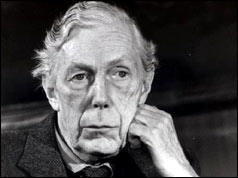
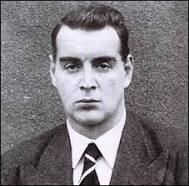
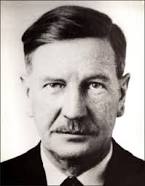
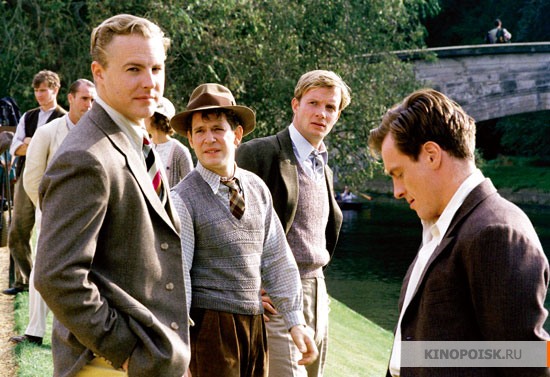
51T3CBEFG2L._SY445_.jpg If you are a great lover of all things British, as am I, you are likely familiar with the BBC2 mini-series, Cambridge Spies. It starred four of my personal favorites: Toby Stephens, Rupert Penry Jones, Tom Hollander, and Samuel West. Also, I adore Benedict Cumberbatch, Simon Woods, and David Savile in the cast. Cambridge Spies is a four-part BBC television drama, broadcast on BBC2 in May 2003, concerning the lives of the best-known quartet of the Cambridge Five Soviet spies, from 1934 to the 1951 defection of Guy Burgess and Donald Maclean to the Soviet Union. (Cambridge Spies)
356248_original.jpg

_40409837_bluntpa238

Anthony Blunt

download-1

Guy Burgess

download

Donald Maclean

download-2

Kim Philby

The Cambridge Spy Ring passed information to the Soviet Union during World War II and was thought to be active until the early 1950s. The members were strong believers of communism being superior to capitalism. Four members of the ring were originally identified: Kim Philby (cryptonym: Stanley), Donald Duart Maclean (cryptonym: Homer), Guy Burgess (cryptonym: Hicks) and Anthony Blunt (cryptonyms: Tony and Johnson). The group supposedly operated during their years at Cambridge University.  Debate surrounds the exact timing of their recruitment by Soviet intelligence; Anthony Blunt claimed that they were not recruited as agents until they had graduated. Blunt, an Honorary Fellow at Trinity College was several years older than Burgess, Maclean, and Philby; he acted as a talent-spotter and recruiter for most of the group save Burgess. Both Blunt and Burgess were members of the Cambridge Apostles, an exclusive and prestigious society based at Trinity and King’s Colleges. John Cairncross, whose identity was not revealed until 1990, was the fifth member of the Five. (Cambridge Five) 

John_Cairncross.jpg Cairncross reportedly leaked details of the Bletchley Park facilities efforts at code-breaking, which permitted the Soviet Union to alter their codes to prevent the British group from discovering them. He also is known to have provided the Soviets with information on atomic weapons research, giving the Soviet efforts to set up their own nuclear program a boost. As a Soviet double agent, he passed to the Soviet Union the raw Tunny decrypts that influenced the Battle of Kursk.
According to a BBC News article from July 2014, “Among the thousands of pages of documents are profiles outlining the characteristics of Britons who spied for the Soviet Union. They include references to Donald Duart Maclean and Guy Burgess, two of the five men recruited while studying at the University of Cambridge during the 1930s. A short passage describes Burgess as a man ‘constantly under the influence of alcohol’. Written in Russian, it goes on to recount one occasion when Burgess drunkenly risked exposing his double identity. ‘Once on his way out of a pub, he managed to drop one of the files of documents he had taken from the Foreign Office on the pavement,’ translator Svetlana Lokhova explained. Moving on to Maclean, the note describes him as ‘not very good at keeping secrets’. It adds he was “constantly drunk” and binged on alcohol. It was believed he had told one of his lovers and his brother about his work as a Soviet agent while he was the worse for wear, the file adds. The notes also provide an insight into the extent of the group’s activity as they helped the KGB penetrate the UK’s intelligence network at the highest level. They describe how Burgess alone handed over 389 top secret documents to the KGB in the first six months of 1945 along with a further 168 in December 1949.”


Wish to Know More? Try Some of These Articles: 

MI5 and MI6 Cover-Up of Cambridge Spy Ring Laid Bare in Archive Papers. The Guardian

Newly released evidence on the Cambridge Spies reveals how, among other revelations, inaction and incompetence on the part of the authorities enabled Guy Burgess and Donald Maclean to make their escape to Moscow.   History Today: New Revelations on the Cambridge Spy Ring

The Cambridge Spy Ring and the Myth of an Upper-Class Cover Up. The Spectator 

The Cambridge Five.  International Spy Museum

First Person Singular: Cambridge Spies? The Truth is Far More Interesting. The Telegraph


Posted in American History, British history, film, history, military, political stance, real life tales, war, world history | Tagged , , , , , | Comments Off on The Cambridge Five: “We need people who could penetrate into the bourgeois institutions. Penetrate them for us!”

What the Heck Is “Abeyance” When Speaking of the English Aristocracy?

I am back again to ramble on about another issue of inheritance, this one has to do with “abeyance.”

Abeyance (from the Old French abeance meaning “gaping”) is a state of expectancy in respect of property, titles or office, when the right to them is not vested in any one person, but awaits the appearance or determination of the true owner. In law, the term abeyance can be applied only to such future estates as have not yet vested or possibly may not vest. For example, an estate is granted to A for life, with remainder to the heir of B. Following A’s death, if B is still alive, the remainder is in abeyance, for B has no heirs until B’s death. Similarly, the freehold of a benefice, on the death of the incumbent, is said to be in abeyance until the next incumbent takes possession. [Chisholm, Hugh, ed. (1911). “Abeyance“. Encyclopædia Britannica. Vol. 1 (11th ed.). Cambridge University Press. p. 61.]

Confused? Do not feel bad, for little about “abeyance” comes in layman’s terms. Let us see what we can do about it.

A man who supposedly inherited could simply refuse to take up the title or touch the money. Technically he would still be the title holder (baron, earl, viscount, etc.), but to have the full title and honors he must be confirmed before Parliament in the House of Lords, and all the legal stuff has to be completed to ensure he is the correct heir. He can simply not do that and not style himself by the title. It remains it place. It was not until 1963 that anyone could duck out of a title.

See my post from March 26, 2025, on the Procedure to Claim a Regency Title for more information.

For a good summary of what hereditary titles mean, choose this Wikipedia post – https://en.wikipedia.org/wiki/Hereditary_peer

The man could theoretically commit treason, in which case he and his family would be stripped of the title. Such would be an extreme measure, but there it is. If you do not understand this concept or want more information, have a look at my piece from February 12, 2025, on Corruption of the Blood (a term for treason).

The Duke of Windsor’s abdication was a very complicated legal process, and one Parliament allowed and had to handle legally due to the duke’s marrying a divorced woman, which actually made him unfit to be head of the Church of England, which is a job the King of England must take up (thank you, Henry XIII), and there are laws about the monarch’s marriages. Immediately after his abdication, upon which he was named the duke of Windsor by his brother Albert, now George VI, Edward left England to live on the European continent. Wallis Simpson’s divorce became final in May 1937, and she had her name changed legally to Mrs. Wallis Warfield. The terms of his continued receipt of a stipend were that he was effectively exiled from his homeland.

This is why there was also a stink over King Charles marrying Camilla–that had to be sorted out legally before Parliament. PRINCE CHARLES and Camilla, Duchess of Cornwall, faced a tricky legal situation over their civil marriage in 2005, when the Human Rights Act saved the day – but the Prince of Wales had previously voiced his strong opposition to the 2000 Act. 

Now, back to the question at hand. The man does not need to send in the writ of summons to the House of Lords, and he can refuse to use the title, but someone must oversee the care for the property, and no one else can have the title while he is alive.

The man could, theoretically, have the title’s Letters Patent amended by an Act of Parliament. If the earldom is Scottish, he could even leave the line of descent unspecified and have Parliament determine the course of inheritance. I have seen this done in several novel, but please know one should research the heck out of all the probabilities before proceeding. The two most famous examples of amending Letters were the Dukedom of Marlborough in 1706 and the Duke of Windsor in 1936.

When the Earl of Berkley died his oldest son applied for a writ of summons to the House of Lords. The Committee on  Privilege turned the young man down and said he and the other brothers born before 1795 were illegitimate and that the earldom would fall to the 16-year-old who was born in 1796. The boy was too young to do anything about the matter, and his oldest brother and mother ran things. When he came of age, he still never put forth a claim to the earldom. However, he was, by right and law, the earl so anything requiring the signature of the earl had to be signed by him. He signed responsibility over to his oldest brother. but the title itself went dormant until the youngest son died.

Somewhere around 1945, men succeeding to a peerage were allowed to disclaim it. If it went dormant during his life time, no one else could assume it. This was done mainly by men who had political power in the House of Commons and did not want to give it up. [See my April 4, 2025, piece on Heirs in the House of Commons for more information.]

The current Duke of  Marlborough can not passover his heir for a more somber younger son. The heir can not be disinherited. If there is a living person who is next in line, the succession cannot be changed. Earlier the  descent of the dukedom was changed because the Duke had no living son and there was slight chance of his having one. The succession was changed to allow his daughters to assume the title and then their sons. This was  during the duke’s life time and was an exception to a general rule. A man who is living and the lawful successor can not have it taken from him except by being convicted of a crime. During the Regency there was no way to disclaim a peerage except by not using it and not sending in a request for a seat in the House of  Lords.

One case of avoiding abeyance occurred back in the beginning because he was too poor.  However, that was never repeated. One had to be convicted of a felony and sentenced to death.  Then there was  attainder and corruption of the blood.  The title wasn’t  actually lost, in most cases, because  he kept it as long as he kept his head. 

Wikipedia provides us a somewhat unreliable and not so thorough list as we might hope, but I thought to share it so you might see the extent of how long some titles have been in abeyance:

Once a man was seated in the House of Lords under a title, the Lords would not take it back. Neither was he able to disclaim it.

If he committed suicide, nothing happened to the title. The son inherited as usual. It would be a rare man of the Georgian era who did not want a title just because his father had disgraced it. He did not have to claim it, but he could not sit in the House of Lords. He could change his name either by signing manual, a deed poll, or just by doing it. However, those were extreme measures, and he would be compounding the failure of his father by not attending to the estate, the workers, the servants, etc., and all the others who depended on the family in one way or another.

Question: Is it possible for all lands to be lost save to pay debts? Or did lands always have to remain with the title?

The answer depends on how the lands were acquired and what deeds, settlements, or entails controlled their disposition. While all of a man’s property could be sold to cover debts, entailed properties and hereditments and such came under a special provision. There were special rules pertaining to peers and debts. Land did not always go with the title, though the family seat was usually tied to it. Titles and property could go in different directions and often did.

Question: In earlier times, the hero of such a situation would not have had a choice. If his father committed treason, the title, lands, etc., EVERYTHING was forfeitted. The family would have nothing. Was this still true in the Regency?

Yes. That was true long after all the other “older” (like beheading, etc.) punishments were discarded. If the father committed treason, the son would not have a choice of accepting the title because there would not be one for him to accept.

Do not quote me on this part, but I think those owed money by the father would be out of luck as well because the son would inherit nothing. NO one would inherit anything. It is doubtful whether the widow would even have a jointure or income unless her husband had been barred from anything except the income from her dowry, which would return to her on his death.I n the case of treason, some sons did change their names and go off to the new world. However, most tried to stay alive and waited and then put in a petition for the restoration of titles and lands. Sometimes it did not come until a grandson made the petition. The title could be lost if the man committed murder. [Note: That scenario is part of the plot of my novel, The Heartless Earl.]

Posted in Act of Parliament, aristocracy, British history, customs and tradiitons, England, Georgian England, Georgian Era, history, Inheritance, laws of the land, Regency era | Tagged , , , , , , , , , | 2 Comments