 These books are among the 30 titles that went on sale Friday, December 22, and will stay on sale through Friday, January 5, 2018. Fill up your eReaders with these 15 Regency romantic suspense and fun contemporary titles!!! (See the 15 Austen-Inspired titles that are part of this sale from the post yesterday.)
 A Touch of Scandal: Book 1 of the Realm Series [historical fiction; Regency romance; romantic suspense]
2011 Write Touch Readers’ Award, 2nd Place, Historical Romance
(Disclaimer: This book is the self-published version of The Scandal of Lady Eleanor.)
The men of the REALM have served their country, while ignoring their responsibilities to home and love, but now Bonaparte is defeated, they each mean to claim their portion of a new and prosperous England. However, their long-time enemy Shaheed Mir has other plans. The warlord believes one of the Realm has stolen a fist-sized emerald, and the Baloch intends to have its return or his revenge.
JAMES KERRINGTON, the future Earl of Linworth left his title and his infant son behind after the death of his beloved Elizabeth, but he has returned to England to tend his ailing father and to establish his roots. With Daniel as his heir, Kerrington has no need to marry, but when Eleanor Fowler stumbles and falls into his arms, Kerrington’s world is turned upon its head. He will do anything to claim her.
LADY ELEANOR FOWLER has hidden from Society, knowing her father’s notorious reputation for debauchery has tainted any hopes she might have of a happy marriage. And yet, despite her fears, her brother’s closest friend, James Kerrington, has rekindled her hopes, but when Sir Louis Levering appears with proof of Eleanor’s participation in her father’s wickedness, she is drawn into a world of depravity, and only Kerrington’s love can save her.
The first fully original series from Austen pastiche author Jeffers is a knockout. – Publishers Weekly
Jeffers’s characters stay in the reader’s heart and mind long after the last page has been turned. – Favored Elegance
Kindle Kobo Nook
********************************************************************
 A Touch of Velvet: Book 2 of the Realm Series [historical fiction; Regency romance; romantic suspense; adventure; mystery]
After years away from England, members of the Realm return home to claim the titles and the lives they once abandoned. Each man holds on to the fleeting dream of finally knowing love. For now, all any of them can hope is the resolutions of their previous difficulties before Shaheed Mir, their old enemy, finds them and exacts his revenge. Mir seeks a mysterious emerald, and he believes one of the Realm has it.
No one finds his soul mate when she is twelve and he seventeen, but BRANTLEY FOWLER, the Duke of Thornhill, always thought he had found his. The memory of Velvet Aldridge’s face was the only thing that kept him alive all those years he remained estranged from his family. Now, he has returned to Kent to claim his title and the woman he loves, but first he must obliterate the memory of his infamous father, while staving off numerous attacks from Mir’s associates.
MISS VELVET ALDRIDGE always believed in “happily ever after.” Yet, when Brantley Fowler returns home, he has a daughter and his wife’s memory to accompany him. He promised her eight years prior that he would return to make her his wife, but Thornhill only offers her a Season and a dowry. How can she make him love her? Make him her “knight in shining armor”? Regency England has never been hotter or more dangerous.
Kindle Kobo Nook
********************************************************************
 A Touch of Cashémere: Book 3 of the Realm Series [historical fiction; Regency romance; romantic suspense/adventure/mystery]
MARCUS WELLSTON never expected to inherit his father’s title. After all, he is the youngest of three sons. However, his oldest brother Trevor is judged incapable of meeting the title’s responsibilities, and his second brother Myles has lost his life in an freak accident; therefore, Marcus has returned to Tweed Hall and the earldom. Having departed Northumberland years prior to escape his guilt in his sister’s death, Marcus has spent the previous six years with the Realm, a covert governmental group, in atonement. Now, all he requires is a biddable wife with a pleasing personality. Neither of those phrases describes Cashémere Aldridge.
MISS CASHEMERE ALDRIDGE thought her opinions were absolutes and her world perfectly ordered, but when her eldest sister Velvet is kidnapped, Cashé becomes a part of the intrigue. She quickly discovers nothing she knew before is etched in stone. Leading her through these changes is a man who considers her a “spoiled brat.” A man who prefers her twin Satiné to Cashémere. A man whose approval she desperately requires: Marcus Wellston, the Earl of Berwick. Toss in an irate Baloch warlord, a missing emerald, a double kidnapping, a blackmail attempt, and an explosion in a glass cone, and the Realm has its hands full. The Regency era has never been hotter, nor more dangerous.
Kindle Kobo Nook
********************************************************************
 A Touch of Grace: Book 4 of the Realm Series [historical fiction; Regency romance; adventure; romantic suspense/mystery]
SOLA’s Seventh Annual Dixie Kane Memorial Awards, 3rd Place, Historical Romance
“Jeffers’s close look at the dark secrets of Regency society instills a sense of realism.” – Publishers Weekly
After years away from England, members of the Realm return home to claim the titles and the lives they had previously abandoned. Each man holds onto the fleeting dream of finally know love and home. For now, all any of them can hope is the resolution of his earlier difficulties before Shaheed Mir, their old enemy, finds them and exacts his revenge. Mir seeks a mysterious emerald, and he believes one of the Realm has it.
GABRIEL CROWDEN, the Marquis of Godown, can easily recall the night that he made a vow to know love before he met his Maker. Of course, that was before Lady Gardenia Templeton’s duplicity had driven Godown from his home and before his father’s will had changed everything. Godown requires a wife to meet the unusual demands of the former marquis’s stipulations. Preferably one either already carrying his child or one who would tolerate his constant attentions to secure the Crowden line before the deadline.
MISS GRACE NELSON dreams of family died with her brother’s ascension to the title. Yet, when she meets the injured Marquis of Godown at a Scottish inn, her dreams have a new name. However, hope never has an easy path. Grace is but a lowly governess with ordinary features. She believes she can never earn the regard of the “Adonis” known as Gabriel Crowden. Besides, the man has a well-earned skepticism when it comes to the women in his life. How can she prove that she is the one woman who will never betray him? The Regency era has never been hotter.
Kindle Kobo Nook
********************************************************************
 A Touch of Mercy: Book 5 of the Realm Series [historical fiction; Regency romance; adventure; romantic suspense; mystery]
Members of the Realm have retuned to England to claim the titles they left behind. Each holds to the fleeting dream of finally knowing love, but first he must face his old enemy Shaheed Mir, a Baloch warlord, who believes one of the group has stolen a fist-sized emerald. Mir will have the emerald’s return or will exact his bloody revenge.
A devastating injury has robbed AIDAN KIMBOLT, Viscount Lexford, of part of his memory, but surely not of the reality that lovely Mercy Nelson is his father’s by-blow. Aidan is intrigued by his “sister’s” vivacity and how easily she ushers life into Lexington Arms, a house plagued by Death’s secrets–secrets of his wife’s ghost, of his brother’s untimely passing, and of his parents’ marriage: Secrets Aidan must banish to finally know happiness.
Fate has delivered Miss MERCY NELSON to Lord Lexford’s door, where she quickly discovers appearances are deceiving. Not only does Mercy practice a bit of her own duplicity, so do all within Lexington Arms. Yet, dangerous intrigue cannot squash the burgeoning passion consuming her and Viscount Lexford, as the boundaries of their relationship are sorely tested. How can they find true love if they must begin a life peppered with lies?
Kindle Kobo Nook
********************************************************************
 A Touch of Love: Book 6 of the Realm Series [historical fiction; Regency romance; adventure; romantic suspense; mystery]
The REALM has returned to England to claim the titles they left behind. Each man holds to the fleeting dream of finally knowing love and home, but first he must face his old enemy Shaheed Mir, a Baloch warlord, who believes one of the group has stolen a fist-sized emerald. Mir will have the emerald’s return or will exact his bloody revenge.. Aristotle Pennington has groomed
SIR CARTER LOWERY as his successor as the Realm’s leader, and Sir Carter has thought of little else for years. He has handcrafted his life, filled it with duties and responsibilities, and eventually, he will choose a marriage of convenience to bolster his career; yet, Lucinda Warren is a temptation he cannot resist. Every time he touches her, he recognizes his mistake because his desire for her is not easily quenched. To complicate matters, it was Mrs. Warren’s father, Colonel Roderick Rightnour, whom Sir Carter replaced at the Battle of Waterloo, an action which had named Sir Carter a national hero and her father a failure as a military strategist.
LUCINDA WARREN’s late husband has left her to tend to a child belonging to another woman and has drowned her in multiple scandals. Her only hope to discover the boy’s true parentage and to remove her name from the lips of the ton’s censors is Sir Carter Lowery, a man who causes her body to course with awareness, as if he had etched his name upon her soul. Cruel twists of Fate have thrown them together three times, and Lucinda prays to hold off her cry for completion long enough to deny her heart and to release Sir Carter to his future: A future to which she will never belong.
Kindle Kobo Nook
********************************************************************
 A Touch of Honor: Book 7 of the Realm Series [historical fiction; Regency romance; romantic suspense/adventure/mystery]
For two years, BARON JOHN SWENTON has thought of little else other than making Satiné Aldridge his wife; so when he discovers her reputation in tatters, Swenton acts honorably: He puts forward a marriage of convenience that will save her from ruination and provide him the one woman he believes will bring joy to his life. However, the moment he utters his proposal, Swenton’s instincts scream he has made a mistake: Unfortunately, a man of honor makes the best of even the most horrendous of situations.
MISS SATINE ALDRIDGE has fallen for a man she can never possess and has accepted a man she finds only mildly tolerable. What will she do to extricate herself from Baron Swenton’s life and claim the elusive Prince Henrí? Obviously, more than anyone would ever expect.
MISS ISOLDE NEVILLE has been hired to serve as Satiné Aldridge’s companion, but her loyalty rests purely with the lady’s husband. With regret, she watches the baron struggle against the impossible situation in which Miss Aldridge has placed him, while her heart desires to claim the man as her own. Yet, Isolde is as honorable as the baron. She means to see him happy, even if that requires her to aid him in his quest to earn Miss Satiné’s affections.
Sacrifice and honor, betrayal and redemption, all make for an exceptionally satisfying romance. A Touch of Honor is a mesmerizing story of extraordinary love realized against impossible odds. – Collette Cameron, Award-Winning Author
Kindle Kobo Nook
********************************************************************
 A Touch of Emerald: The Conclusion of the Realm Series (Fiction/Historical; Historical Romance/Mystery/Adventure; Regency)
Four crazy Balochs. A Gypsy band. An Indian maiden. A cave with a maze of passages. A hero, not yet tested. And a missing emerald.
For nearly two decades, the Realm thwarted the efforts of all Shaheed Mir sent their way, but now the Baloch warlord is in England, and the tribal leader means to reclaim the fist-sized emerald he believes one of the Realm stole during their rescue of a girl upon whom Mir turned his men. Mir means to take his revenge on the Realm and the Indian girl’s child, LADY SONALI FOWLER.
DANIEL KERRINGTON, Viscount Worthing, has loved Lady Sonalí since they were but children. Yet, when his father, the Earl of Linworth, objects to Sonalí’s bloodlines, Worthing thinks never to claim her. However, when danger arrives in the form of the Realm’s old enemy, Kerrington ignores all caution for the woman he loves.
Kindle Nook Kobo
********************************************************************
 His American Heartsong: A Companion Novel of the Realm Series (Regency romance, Historical romance, Series, The Realm)
The Deepest Love is Always Unexpected.
LAWRENCE LOWERY, Lord Hellsman, has served as the dutiful son since childhood, but when his father Baron Blakehell arranges a marriage with the insipid Annalee Dryburgh, Lowery must choose between his responsibilities to his future title and the one woman who makes sense in his life.
Although her mother was once a lady in waiting to the Queen, by Society’s standards, MISS ARABELLA TILNEY is completely unfit to be the future baroness: Bella is an American hoyden who demands that Lowery do the impossible: Be the man he always dreamed of being.
Kindle Nook Kobo
********************************************************************
 His Irish Eve (Fiction/Historical Fiction; Romance; Regency Romance/Adventure)
When the Earl of Greenwall demands his only son, ADAM LAWRENCE, Viscount Stafford, retrieve the viscount’s by-blow, everything in Lawrence’s life changes. Six years prior, Stafford released his mistress, Cathleen Donnell, from his protection; now, he discovers from Greenwall that Cathleen was with child when she returned to her family. Stafford arrives in Cheshire to discover not only the son of which Greenwall spoke, but also two daughters, as well as a strong-willed woman, in the form of AOIFE KENNICE, who fascinates Stafford from the moment of their first encounter.
Set against the backdrop of the early radicalism of the Industrial Revolution and the Peterloo Massacre, a battle begins: A fight Lawrence must win: a fight for a woman worth knowing, his Irish Eve.
Kindle Nook Kobo
********************************************************************
 The First Wives’ Club: Book 1 of the First Wives’ Trilogy (Regency romance, historical romance, trilogy, series, mystery, family relationships)
SOLA’s Seventh Annual Dixie Kane Memorial Awards, Honorable Mention, Historical Romance
NATHANIEL EPPERLY, the Earl of Eggleston, has married the woman his father has chosen for him, but the marriage has been everything but comfortable. Nathaniel’s wife, Lady Charlotte, came to the marriage bed with a wanton’s experience. She dutifully provides Eggleston his heir, but within a fortnight, she deserts father and son for Baron Remington Craddock. In the eyes of the ton, Lady Charlotte has cuckolded Epperly.
ROSELLEN WARREN, longs for love and adventure. Unfortunately, she’s likely to find neither. As a squire’s daughter, Rosellen holds no sway in Society; but she’s a true diamond in the rough. Yet, when she meets Epperly’s grandmother, the Dowager Countess Eggleston creates a “story” for the girl, claiming if Rosellen is presented to the ton as a war widow with a small dowry, that the girl will find a suitable match.
BARON REMINGTON CRADDOCK remains a thorn in Eggleston’s side, but when Craddock makes Mrs. Warren a pawn in his crazy game of control, Eggleston offers the woman his protection. However, the earl has never faced a man who holds no strength of title, but who wields great power; and he finds himself always a step behind the enigmatic baron. When someone frames Epperly for Lady Charlotte’s sudden disappearance, Nathaniel must quickly learn the baron’s secrets or face a death sentence.
Kindle Kobo Nook
********************************************************************
 Second Chances: The Courtship Wars (Contemporary Romance, Psychology, Sexology, Reality TV, Downs Syndrome, Eccentric Hermits)
Rushing through the concourse to make her way to the conference stage, GILLIAN CORNELL comes face-to-face with the one man she finds most contemptible, but suddenly her world tilts. His gaze tells stories she wants desperately to hear. As he undresses her with his eyes, Gillian finds all she can do is stumble through her opening remarks. The all-too-attractive cad challenges both her sensibility and her reputation as a competent sexologist.
DR. LUCIAN DAMRON never allows any woman to capture his interest for long. He uses them to boost his career and for his pleasure. Yet, Lucian cannot resist Gillian’s stubborn independence, her startling intelligence, and her surprising sensuality. Sinfully handsome, Lucian hides a badly wounded heart and a life of personal rejection.
Thrown together as the medical staff on “Second Chances,” a new reality TV show designed to reunite previously married couples, Lucian and Gillian soon pique the interest of the American viewing public, who tune in each week, fascinated by the passionate electricity coursing between them. Thus begins an all-consuming courtship war, plagued by potential relationship-ending secrets and misunderstandings and played out scandalously on a national stage.
Kindle Nook Kobo
********************************************************************
 One Minute Past Christmas: Tale of an Appalachian Christmas Miracle [short story, Appalachia, holidays, Christmas, family relationships, legends]
One Minute Past Christmas is the story of a Greenbrier County, West Virginia, family in which a grandfather and his granddaughter share a special ability — they call it a “gift”– that enables them to briefly witness each year a miraculous gathering in the sky. What they see begins at precisely one minute past Christmas and fills them with as much relief as it does wonder. But they worry that the “gift” — which they cannot reveal to anyone else — will die with them because it has been passed to no other relative for forty-four years.
Nook Kindle Kobo
******************************************************************
I do not own the rights to these two books, but Black Opal Books, the publisher, has placed a reasonable price them.
 Angel Comes to the Devil’s Keep: Book 1 of the Twins’ Trilogy [romantic suspense; Regency romance; historical fiction; mystery; twins]
SOLA’s Eighth Annual Dixie Kane Memorial Awards, 3rd Place, Historical Romance; finalist 2017 Daphne du Maurier Award for Excellence in Mystery/Suspense; 2017 finalist Derby Award for Fiction
Huntington McLaughlin, the Marquess of Malvern, wakes in a farmhouse, after a head injury, being tended by an ethereal “angel,” who claims to be his wife. However, reality is often deceptive, and Angelica Lovelace is far from innocent in Hunt’s difficulties. Yet, there is something about the woman that calls to him as no other ever has. When she attends his mother’s annual summer house party, their lives are intertwined in a series of mistaken identities, assaults, kidnappings, overlapping relations, and murders, which will either bring them together forever or tear them irretrievably apart. As Hunt attempts to right his world from problems caused by the head injury that has robbed him of parts of his memory, his best friend, the Earl of Remmington, makes it clear that he intends to claim Angelica as his wife. Hunt must decide whether to permit her to align herself with the earldom or claim the only woman who stirs his heart–and if he does the latter, can he still serve the dukedom with a hoydenish American heiress at his side?
The story is charming, with interesting and realistic characters, a complex plot with plenty of surprises, and a sweet romance woven through it all. The author has a good command of what it was like to be a woman in nineteenth-century England–almost as if she had been there. She really did her research for this one. – Taylor Jones
Angel Comes to Devil’s Keep is a well-written tale of courage and sacrifice and what women went through in order to marry well in Regency England. The author did her homework and it shows in an authenticity that we don’t often see in Regency romances. – Regan Murphy
Nook Kobo Smashwords Kindle All Romance eBooks
Black Opal Books iTunes Regency Reader
**************************************************
 The Earl Claims His Comfort: Book 2 of the Twins’ Trilogy
2016 Finalist for the Hot Prospects Award
Hurrying home to Tegen Castle from the Continent to assume guardianship of a child not his, but one who holds his countenance, Levison Davids, Earl of Remmington, is shot on the road and left to die. The incident has Remmington chasing after a man who remains one step ahead and who claims a distinct similarity—a man who wishes to replace Remmington as the rightful earl. Rem must solve the mystery of how Frederick Troutman’s life parallels his while protecting his title, the child, and the woman he loves.
Comfort Neville has escorted Deirdre Kavanaugh from Ireland to England, in hopes that the Earl of Remmington will prove a better guardian for the girl than did the child’s father. When she discovers the earl’s body upon road backing the castle, it is she who nurses him to health. As the daughter of a minor son of an Irish baron, Comfort is impossibly removed from the earl’s sphere, but the man claims her affections. She will do anything for him, including confronting his enemies. When she is kidnapped as part of a plot for revenge against the earl, she must protect Rem’s life, while guarding her heart.
Amazon Black Opal Books Nook Barnes & Noble Smashwords Kobo Kindle


 Could you ever have guessed that a Pride and Prejudice variation could be set in a modern day bakery, that it could be a musical, and that it could be so . . . tasty? That was the pleasant surprise I found when I attended an original production by the Misfit Theater Company in Greenville, South Carolina in October: Pies, prejudice, music, and frequent appearances from Napoleon. Yes, that Napoleon. Trust me, it only got more entertaining from there!


 Meet
Meet 


 Meet Diana J. Oaks:


 Last week, I looked at
  Whose wife is the woman is a great question. In my previous post, I mention the Thomas Hardy book The Mayor of Casterbridge. If one has read the book, he/she will notice that Susan is sometimes referred to as Mrs. Henchard and at other times, as Mrs. Newson. The reader can make that assumption that a wife sale is agreed upon as legal and the customary way of speaking of the woman, as in this case, would be Mrs. Newson. However, without a divorce, she is LEGALLY still Mrs. Henchard. In the Hardy book, Henchard “buys back” his wife, by extending her a gift of five guineas, the amount for which he originally settled with Newson. He also agrees to “remarry” his wife for propriety’s sake, rather than for legal purposes. As Susan lived with Newson for some twelve years. Is she an adulterer? A bigamist? Does custom outweigh the law in this case? Is the agreement of all three parties—original husband, wife, and new husband—a binding contract? It would have a variety of witnesses as it was a public auction of the wife. Does it take the death of either of the husbands to make a marriage legal? In Hardy’s book, Susan assumes that Newson is dead before she agrees to return to Henchard.
  The problem in Hardy’s book is exacerbated by the fact that Susan bears Newson a child. Illegitimacy was not looked upon kindly during the period. There are several twists in Hardy’s tale regarding the birth of a child, and I shall not add spoilers to this post. E. P. Thompson tells a tale of a wife sale in 1819 that became quite complicated. The man sold his wife after she had given birth to his child(ren). When she left him, the children accompanied her to the new home. They were raised by the new husband. He even provided that their names be recorded as his in the church’s baptismal records. Later, when legal action was sought, the court declared the children the original husband’s responsibility, for when a child was born to a LEGAL marriage—whether the child was the original husband’s or not—LEGALLY, the child is considered to belong to the original husband. The wife sale DID NOT mean a legal divorce had occurred. If the sale is not a valid transaction, the original husband is the child’s father.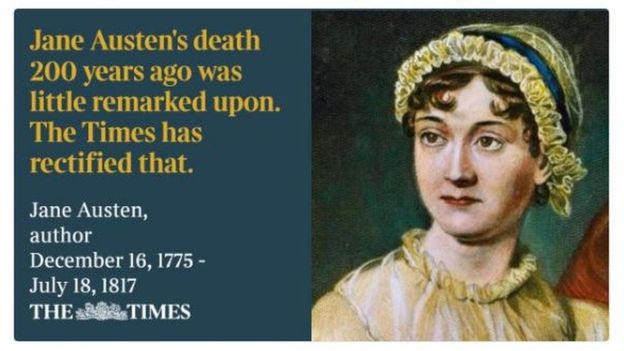
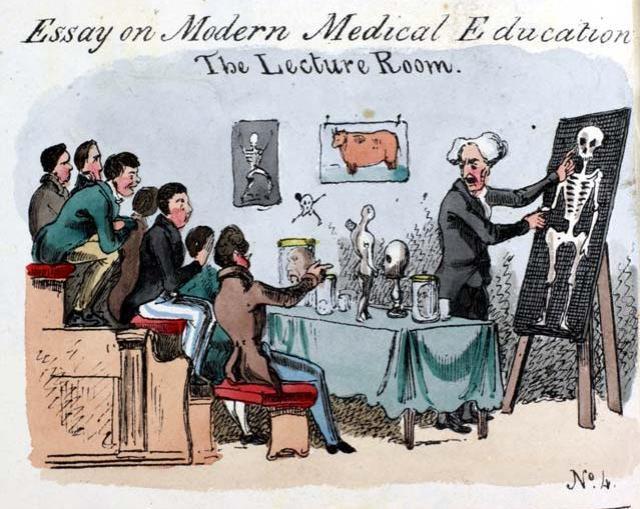
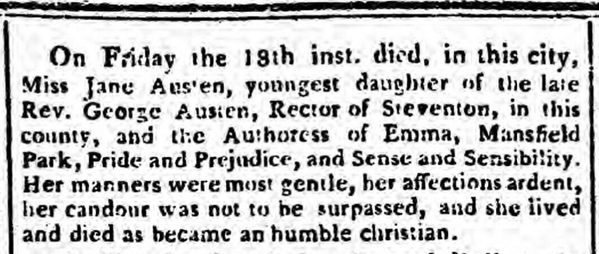
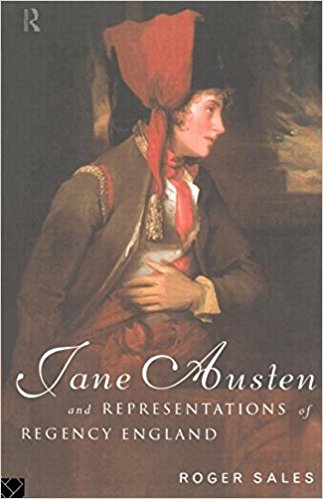 First, there is the determination of Austen herself not to be a “poor honey”, a silly female hypochondriac determined to secure attention for herself by her ailments. Austen could not stand that sort of thing. She complained to her brother Frank Austen in 1813 that







 From the front flap of Wives for Sale: An Ethnographic Study of British Popular Divorce by Samuel Pyeatt Menefee, we learn, “Addressing a bigamous and indigent hawker in the middle of the last century, Justice Maule declared: I will tell you what you ought to have done. … You should have instructed your attorney to bring an action against the seducer of your wife for damages … you should have employed a proctor and instituted a suit in the Ecclesiastical Courts. … When you had obtained a divorce a mensa et thoro, you had only to obtain a private Act for divorce a vinculo matrimonii … and altogether these proceedings would cost you L1000. You will probably tell me that you never had a tenth of that sum, but that makes no difference. Sitting here as an English judge it is my duty to tell you that this is not a country in which there is one law for the rich and another for the poor. You will be imprisoned for one day.
 Congratulations to all the winners of “Pride and Prejudice and a Shakespearean Scholar.”


 Every Woman Dreams...