
 As of Friday, December 22, 2017, thirty (30)of my titles went on sale. The sale will continue through Friday, January 5, 2018. Fill up your eReaders!!!! These 15 Austen-inspired titles should tempt you.
 Darcy’s Passions: Pride and Prejudice Retold Through His Eyes [Austenesque; classics; retelling; Regency era; historical fiction]
FITZWILLIAM DARCY loves three things: his sister Georgiana, his ancestral estate, and Elizabeth Bennet. The first two come easily to him. He is a man who recognizes his place in the world, but the third, Elizabeth Bennet, is a woman Society would censure if he chose her for his wife. Can he risk everything he has ever known to love an impossible woman, a woman who has declared him to be “the last man in the world (she) could ever be prevailed upon to marry”?
Revisit Jane Austen’s beloved novel, Pride and Prejudice, retold from Mr. Darcy’s point of view. Discover his soul-searching transformation from hopeless into the world’s most romantic hero. Experience what is missing from Elizabeth Bennet’s tale. Learn something of the truth of Fitzwilliam Darcy’s pride. Return to your favorite scenes from Austen’s classic: Darcy’s rejection of Miss Elizabeth at the Meryton assembly; the Netherfield Ball; the first proposal; his discovering Elizabeth at Pemberley; and Darcy’s desperate plan to save Lydia Bennet from his worst enemy, George Wickham, all retold through his eyes. Satisfy your craving for Austen’s timeless love story, while defining the turmoil and vulnerability in a man who possesses everything except the one thing that can make him happy.
***********************************************************************
 Captain Frederick Wentworth’s Persuasion: Austen’s Classic Retold Through His Eyes [historical fiction; Regency romance; retelling’ Austenesque; classics]
(Disclaimer: This is not a new title; it is a reworking of “Captain Wentworth’s Persuasion” from Ulysses Press.)
The love affair behind Jane Austen’s classic, Persuasion, rests at the heart of this retelling from Captain Frederick Wentworth’s point of view.
He loved her from the moment their eyes met some eight years prior, but Frederick Wentworth is determined to prove to Anne Elliot that she made a mistake by refusing him. Persuaded by her family and friends of his lack of a future, Anne had sent him away, but now he is back with a fortune earned in the war, and it is Anne, whose circumstances have brought her low. Frederick means to name another to replace her, but whenever he looks upon Anne’s perfect countenance, his resolve wavers, and he finds himself lost once again to his desire for her. Return to the Regency and Austen’s most compelling and mature love story. Jeffers turns the tale upon its head while maintaining Jane Austen’s tale of love and devotion.
***********************************************************************
 Vampire Darcy’s Desire: A Pride and Prejudice Paranormal Adventure [Regency romance; paranormal; Scottish; Austenesque; classics}
[Disclaimer: This work was originally released by Ulysses Press. It has been reworked and self published by the author.]
Vampire Darcy’s Desire presents Jane Austen’s Pride and Prejudice as a heart-pounding vampire romance filled with passion and danger.
Tormented by a 200-year-old curse and his fate as a half human/half vampire dhampir, Fitzwilliam Darcy vows to live a solitary life rather than inflict the horrors of his life upon an innocent wife and his first born son. However, when he encounters the captivating Elizabeth Bennet, his will is sorely tested.
As a man, Darcy yearns for Elizabeth, but as a vampire, he is also driven to possess her. Uncontrollably drawn to each other, they are forced to confront a different kind of “pride” and his enemy’s “prejudice,” while wrestling with the seductive power of forbidden love. Evil forces, led by George Wickham, the purveyor of the curse, attack from all sides, and Darcy learns his only hope to survive is to align himself with Elizabeth, who is uncannily astute in how to defeat Wickham, a demon determined to destroy each generation of Darcys.
Vampire Darcy’s Desire retells Austen’s greatest love story in a hauntingly compelling tale. Can love be the only thing that can change him?
“An engaging and romantic paranormal surprise” ~ JustJane1813
“Jeffers ups the ante even more by basing the core of the plot line on the traditional Scottish ballad.” ~ The Royal Reviews
***********************************************************************
 Mr. Darcy’s Fault: A Pride and Prejudice Vagary (Fiction/Historical Fiction; Romance; Austenesque; Variation; Regency)
What if an accident prevents Elizabeth Bennet from reading Mr. Darcy’s letter of apology? What if said letter goes missing and ends up in the hands of George Wickham? What if Mr. Wickham plans to use the evidence of both Georgiana Darcy’s ruination and Darcy’s disdain for the Bennets to his benefit? How will Darcy counter Wickham’s plans and claim happiness with the woman he loves?
When he notices his long-time enemy in the vicinity of Hunsford Cottage, FITZWILLIAM DARCY means to put an end to an assignation between ELIZABETH BENNET and Mr. Wickham, but Darcy is not prepared for the scene which greets him in Rosings Woods. Elizabeth lies injured and crumpled beneath the trees, and in order to save her, by Society’s standards, Darcy must compromise Elizabeth. Needless to say, Darcy does not mind being forced into claiming Elizabeth to wife, but what of the lady’s affections? Can Darcy tolerate Elizabeth’s regard being engaged elsewhere?
***********************************************************************
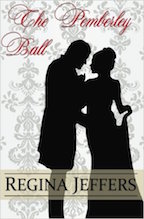 The Pemberley Ball: A Pride and Prejudice Vagary Novella [Austeneque; Regency romance; historical fiction; vagary; multiple endings]
Elizabeth Bennet’s acceptance of his hand in marriage presents FITZWILLIAM DARCY a hope of the world being different. Elizabeth offers warmth and naturalness and a bit of defiance; but there is vulnerability also. With characteristic daring, she boldly withstood Caroline Bingley’s barbs, while displaying undying devotion to her sister Jane. More unpredictably, she verbally fenced with the paragon of crudeness, his aunt, Lady Catherine, and walked away relatively unscathed. One often finds his betrothed self-mockingly entertaining her sisters and friends, and despite Darcy’s best efforts, the woman makes him laugh. She brings lightness to his spirit after so many years of grief.
Unfortunately for ELIZABETH BENNET, what begins gloriously turns to concern for their future. She recognizes her burgeoning fears as unreasonable; yet, she cannot displace them. She refuses to speculate on what Mr. Darcy will say when he learns she is not the brilliant choice he proclaims her to be. Moreover, she does not think she can submit to the gentleman’s staid lifestyle. Not even for love can Elizabeth accept capitulation.
Will Elizabeth set her qualms aside to claim ‘home’ in the form of the man she truly affects or will her courage fail her? Enjoy a bit of mayhem that we commonly call “Happily Ever After,” along with three alternate turning points to this tale of love and loss and love again from Austen-inspired author, Regina Jeffers.
***********************************************************************
 Elizabeth Bennet’s Excellent Adventure: A Pride and Prejudice Vagary [Pride and Prejudice, Fiction, Jane Austen, Regency romance, Historical romance, classics, variation]
The Last Man in the World She Wishes to Marry is the One Man Who Owns Her Heart!
ELIZABETH BENNET adamantly refused Fitzwilliam Darcy’s proposal, but when Maria Lucas discovers the letter Darcy offers Elizabeth in explanation of his actions, Elizabeth must swallow her objections in order to save her reputation. She follows Darcy to London and pleads for the gentleman to renew his proposal. Yet, even as she does so, Elizabeth knows not what she fears most: being Mr. Darcy’s wife or the revenge he might consider for her earlier rebuke.
FITZWILLIAM DARCY would prefer that Elizabeth Bennet held him in affection, but he reasons that even if she does not, having Elizabeth at his side is far better than claiming another to wife. However, when a case of mistaken identity causes Darcy not to show at his wedding ceremony, he finds himself in a desperate search for his wayward bride-to-be.
Elizabeth, realizing Society will label her as “undesirable” after being abandoned at the altar, sets out on an adventure to mark her future days as the spinster aunt to her sisters’ children. However, Darcy means to locate her and to convince Elizabeth that his affections are true, and a second chance will prove him the “song that sets her heart strumming.”
***********************************************************************
 Elizabeth Bennet’s Deception: A Pride and Prejudice Vagary (Fiction/Historical Fiction; Romance; Austenesque; Regency Romance; Vagary; Classics)
What if Fitzwilliam Darcy refused to approach Elizabeth Bennet when he observes her upon the grounds of Pemberley? What if Elizabeth permits Mr. Darcy to think her the one ruined by Mr. Wickham? What if love is not enough to bring two souls together?
FITZWILLIAM DARCY’S pride makes the natural lead to ELIZABETH BENNET’S ruination when the lady appears, without notice, upon Pemberley’s threshold to plead for Darcy’s assistance in locating his long-time enemy, George Wickham. Initially, Darcy cannot look beyond the pain of lost hopes, but when Charles Bingley demands that Darcy act with honor, Darcy assumes the task. Even so, the idea of delivering Miss Elizabeth into the hands of Mr. Wickham leaves Darcy raw with anguish. Yet, Darcy loves Elizabeth Bennet too much to see her brought low. He sets his heartbreak aside to save the woman he affects, but it is not long before Darcy realizes Elizabeth practices a deception, one Darcy permits so he might remain at her side long enough to convince the lady that only in each other can either find happiness.
***********************************************************************
 Mr. Darcy’s Present: A Pride and Prejudice Vagary [Fiction; Romance; Regency; Austenesque; vagary; Christmas; holiday]
The Greatest Present He Would Ever Receive is the Gift of Her Love…
What if Mr. Darcy purchased a gift for Elizabeth Bennet to acknowledge the festive days even though he knows he will never present it to her? What if the gift is posted to the lady by his servants and without his knowledge? What if the enclosed card was meant for another and is more suggestive than a gentleman should share with an unmarried lady? Join Darcy and Elizabeth, for a holiday romp, loaded with delightful twists and turns no one expects, but one in which our favorite couple take a very different path in thwarting George Wickham and Lydia Bennet’s elopement. Can a simple book of poetry be Darcy’s means to win Elizabeth’s love? When we care more for another than ourselves, the seeds of love have an opportunity to blossom.
Words of Praise for Mr. Darcy’s Present… Jeffers takes a familiar story and reinvigorates it with humor, warmth, and wisdom. – Roses and Lilacs Reviews
***********************************************************************
 Mr. Darcy’s Bargain: A Pride and Prejudice Vagary [vagary; Austenesque; Regency romance; scams; Ponzi; historical fiction]
Darcy and Elizabeth are about to learn how “necessity” never makes a fair bargain.
When ELIZABETH BENNET appears on his doorstep some ten months after her refusal of his hand in marriage, FITZWILLIAM DARCY uses the opportunity to “bargain” for her acceptance of a renewal of his proposal in exchange for his assistance in bringing Mr. George Wickham to justice. In Darcy’s absence from Hertfordshire, Wickham has executed a scam to defraud the citizens of Meryton, including her father, of their hard-earned funds. All have invested in Wickham’s Ten Percent Annuity scheme. Her family and friends are in dire circumstances, and more importantly, Mr. Bennet’s heart has taken an ill turn. Elizabeth will risk everything to bring her father to health again and to save her friends from destitution; yet, is she willing to risk her heart? She places her trust in Darcy’s ability to thwart Wickham’s manipulations, but she is not aware that Darcy wishes more than her acquiescence. He desires her love. Neither considers what will happen if he does not succeed in bringing Mr. Wickham before a magistrate. Will his failure bring an end to their “bargain”? Or will true love prevail?
***********************************************************************
 A Dance with Mr. Darcy: A Pride and Prejudice Vagary [Pride and Prejudice; Regency romance; historical fiction vagary; JAFF]
The reason fairy tales end with a wedding is no one wishes to view what happens next.
Five years earlier, Darcy had raced to Hertfordshire to soothe Elizabeth Bennet’s qualms after Lady Catherine’s venomous attack, but a devastating carriage accident left him near death for months and cost him his chance at happiness with the lady. Now, they meet again upon the Scottish side of the border, but can they forgive all that has transpired in those years? They are widow and widower; however, that does not mean they can take up where they left off. They are damaged people, and healing is not an easy path. To know happiness they must fall in love with the same person all over again.
***********************************************************************
 The Road to Understanding: A Pride and Prejudice Vagary [Pride and Prejudice; Inspirational Romance; vagary; historical fiction; Great Valley Road; Colonial romance]
DARIUS FITZWILLIAM’s life is planned down to who he will marry and where he will live, but life has a way of saying, “You don’t get to choose.” When his marriage to his long-time betrothed Caroline Bradford falls through, Darius is forced to take a step back and to look upon a woman who enflames his blood with desire, but also engenders disbelief. Eliza Harris is everything that Darius never realized he wanted.
ELIZA HARRIS is accustomed to doing as she pleases. Yet, despite being infuriated by his authoritative manner, when she meets the staunchly disciplined Captain Fitzwilliam, she wishes for more. She instinctively knows he is “home,” but Eliza possesses no skills in achieving her aspirations.
Plagued with misunderstandings, manipulations, and peril upon the Great Valley Road between eastern Virginia and western Tennessee in the years following the Revolutionary War, Darius and Eliza claim a strong allegiance before love finds its way into their hearts.
This is a faith-based tale based on Jane Austen’s Pride and Prejudice.
***********************************************************************
 Honor and Hope: A Contemporary Pride and Prejudice [romance; contemporary romance; classics; Austenesque; football; winery]
Liz Bennet’s flirtatious nature acerbates Will Darcy’s controlling tendencies, sending him into despair when she fiercely demands her independence from him. How could she repeatedly turn him down? Darcy has it all: good looks, intelligence, a pro football career, and wealth. Attracted by a passionate desire, which neither time nor distance can quench, they are destined to love each other, while constantly misunderstanding one another until Fate deals them a blow from which their relationship may never recover. Set against the backdrop of professional sports and the North Carolina wine country, Honor and Hope offers a modern romance loosely based on Jane Austen’s Pride and Prejudice.
*****************************************************************
 MR. DARCY’S BRIDEs: A Pride and Prejudice Vagary
I much prefer the sharpest criticism of a single intelligent man to the thoughtless approval of the masses.
ELIZABETH BENNET is determined that she will put a stop to her mother’s plans to marry off the eldest Bennet daughter to Mr. Collins, the Bennet heir to Longbourn, but a man that Mr. Bennet considers an annoying dimwit. Hence, Elizabeth disguises herself as Jane and repeats her vows to the supercilious rector as if she is her sister, thereby voiding the nuptials and saving Jane from a life of drudgery. Yet, even the “best laid plans” can often go awry.
FITZWILLIAM DARCY is desperate to find a woman who will assist him in leading his sister back to Society after Georgiana’s failed elopement with Darcy’s old enemy George Wickham. He is so desperate that he agrees to Lady Catherine De Bourgh’s suggestion that Darcy marry her ladyship’s “sickly” daughter Anne. Unfortunately, as he waits for his bride to join him at the altar, he realizes he has made a terrible error in judgement, but there is no means to right the wrong without ruining his cousin’s reputation. Yet, even as he weighs his options, the touch of “Anne’s” hand upon his sends an unusual “zing” of awareness shooting up Darcy’s arm. It is only when he realizes the “zing” has arrived at the hand of a stranger, who has disrupted his nuptials, that he breathes both a sigh of relief and a groan of frustration, for the question remains: Is Darcy’s marriage to the woman legal?
What if Fitzwilliam Darcy and Elizabeth Bennet met under different circumstances than those we know from Jane Austen’s classic tale: Circumstances that do not include the voices of vanity and pride and prejudice and doubt that we find in the original story? Their road to happily ever after may not, even then, be an easy one, but with the expectations of others removed from their relationship, can they learn to trust each other long enough to carve out a path to true happiness?
******************************************************************
 Pride and Prejudice and a Shakespearean Scholar: A Pride and Prejudice Vagary
Unless one knows the value of loyalty, he cannot appreciate the cost of betrayal.
What if Darcy and Elizabeth met weeks before the Meryton assembly? What if there is no barely “tolerable” remark to have Elizabeth rejecting Mr. Darcy’s affections, but rather a dip in a cold creek that sets her against him? What if Mr. Bennet is a renown Shakespearean scholar who encourages Darcy to act the role of Petruchio from Shakespeare’s “The Taming of the Shrew” to bring Elizabeth’s Katherina persona to the line?
ELIZABETH BENNET’s pride has her learning a difficult lesson: Loyalty is hard to find, and trust is easy to lose. Even after they share a passionate kiss outside the Meryton assembly hall and are forced to marry, Elizabeth cannot forget the indignity she experienced at the hands of Fitzwilliam Darcy. Although she despises his high-handedness, Elizabeth appreciates the protection he provides her in their marriage. But can she set her prejudice aside long enough to know a great love?
FITZWILLIAM DARCY places only two demands on his new wife: her loyalty and her trust, but when she invites his worst enemy to Darcy House, he has no choice but to turn her out. Trusting her had been his decision, but proving his choice the right one before she destroys two hearts meant to be together must be hers, and Darcy is not certain Elizabeth is up to the task.
*******************************************************************
Note! I do not yet have the rights back for this title, but the eBook version is reasonably priced by Pegasus Books.
 The Prosecution of Mr. Darcy’s Cousin: A Pride and Prejudice Mystery (Mystery/Suspense/Thriller; Fiction/Historical Fiction)
2016 Finalist for the Frank Yerby Award for Fiction
2016 Finalist for the Daphne du Maurier Award for Excellence in Mystery/Suspense
2016 Finalist Chanticleer International Book Awards
Fitzwilliam Darcy is enjoying his marital bliss. His wife, the former Elizabeth Bennet, presented him two sons and a world of contentment. All is well until Darcy receives a note of urgency from his sister Georgiana. In truth, Darcy never fully approved of Georgiana’s joining with their cousin. Major General Edward Fitzwilliam for Darcy assumed the major general held Georgiana at arm’s length, dooming Darcy’s sister to a life of unhappiness.
Forced to seek his cousin in the slews of London’s underbelly, at length, Darcy discovers the major general and returns Fitzwilliam to his family. Even so, the Darcy’s troubles are far from over. During the major general’s absence from home, witnesses note Fitzwilliam’s presence in the area of two horrific murders. When Edward Fitzwilliam is arrested for the crimes, Darcy must discover the real culprit before his cousin is hanged for the crimes and the Fitzwilliam name is marked by shame.
 For those of you who have never read or seen a production of Taming of the Shrew, here is a brief synopsis provided by
  One of my favorite film adaptations of the story stars Richard Burton as Petruchio and Elizabeth Taylor as Katherina. When I taught school, I often showed my students excerpts from the teenage-geared film Ten Things I Hate About You, starring Julia Stiles as Kat and the late Heath Ledger as Patrick. In both these films, there is a scene where Petruchio/Patrick must “persuade” Katerina/Kat that he means to marry/date her.
  Introducing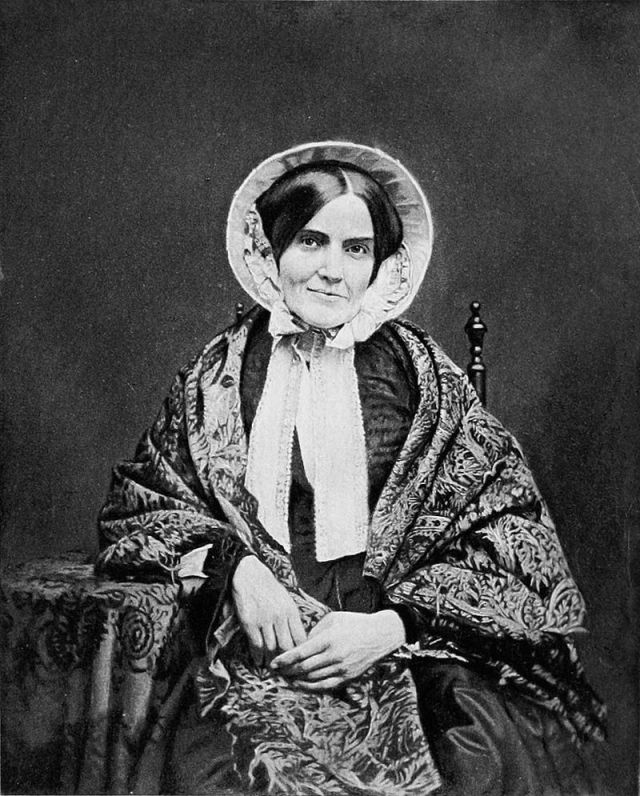
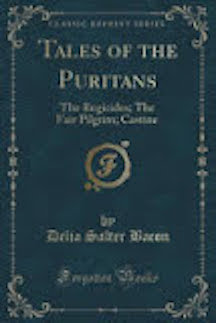 Delia Bacon attended school at Catherine E. Beecher’s School for Girls in Hartford, Connecticut. From 1826 to 1832, she was teacher. At one time she attempted to start her own school, but the venture failed. Her next endeavor was first to write Tales of the Puritans and then a play called The Bride of Fort Edward (1839), which was based on a 1777 story of the murder of Jane McCrea. Bacon also lectured on literary and historical topics to knew some success on the lecture circuit until she became involved with a young minister and was forced to look for other work. This occurred in 1850.
  “Bacon gradually evolved a theory that the works attributed to Shakespeare had in fact been written by a coterie of writers led by Francis Bacon and including Edmund Spenser and Sir Walter Raleigh and were credited by them to the relatively obscure actor and theatre manager Shakespeare largely for political reasons. Becoming thoroughly convinced of the notion, and with some encouragement from Ralph Waldo Emerson, she traveled to England in 1853, ostensibly to seek proof. She was uninterested in looking for original source material, however, and for three years lived in poverty while she developed her thesis out of ingenuity and ‘hidden meanings’ found in the plays. In 1856, for unknown reasons, she abandoned her plan of opening Shakespeare’s grave to look for certain documents she believed would support her position. Nathaniel Hawthorne, at that time U. S. consul in Liverpool, took pity on her, lent her money, and arranged for the publication of her book The Philosophy of the Plays of Shakespeare Unfolded (1857). Immediately after the appearance of the book, she suffered a mental breakdown, and she never learned that it had met with little but ridicule. She was returned to the United States in 1858. The idea that had obsessed her assumed a life of its own, and the theory continued to have its adherents throughout the years.” [
 How does this tie into my new release,
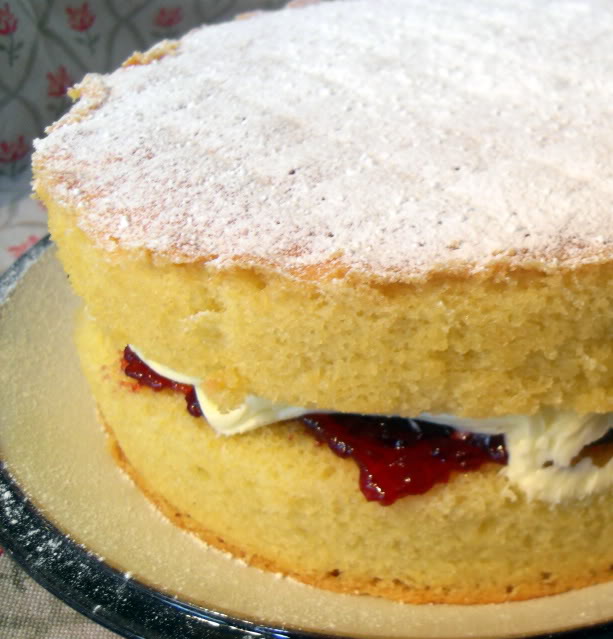
  On Saturday, December 2, I joined fifty+ other ladies and gentlemen for tea at the Lake Park Community Center. Ours was the 2 PM service. There were other services, one at noon and another at 4 PM, and the event was hosted by the local garden club. This was a special treat for me from one of my dearest friends, Kim Withey. At our table, we joined two other ladies and two delightful young ladies, whose mother, we were told, was from Yorkshire, England.



 This is one of those books that floats around in the author’s head for some time before it becomes a reality. Although we have a bit about the letters Princess Charlotte wrote to her supposed lover, it deviates from many of story lines for there is no great angst or mystery. It is simply a story of life and death and new beginnings…the story of a Christmas miracle. This book is essentially Georgiana’s story, but Kitty Bennet plays a major role, as does Elizabeth and Darcy.

 Since I collect antiques, I thought I’d share one with your readers that might have appealed to Jane Austen. It’s my Georgian era writing desk.
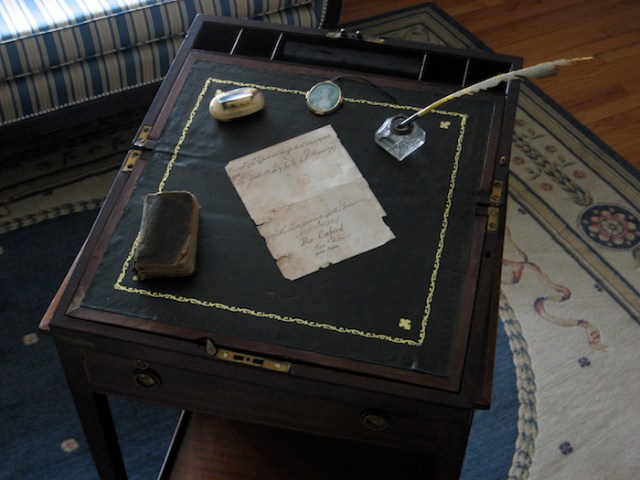


 Laurie Benson
 Her current release,





 Jane Austen:
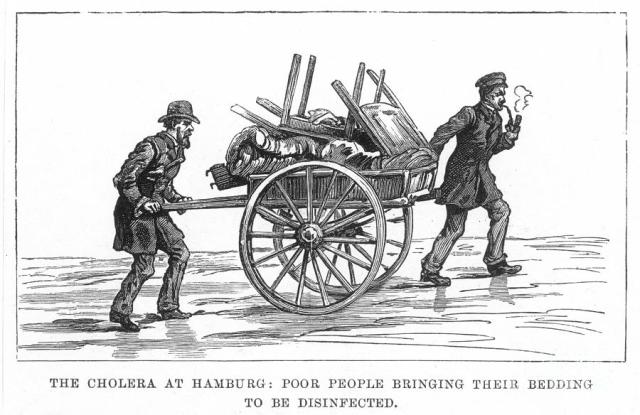 Earlier than the descriptions Lord William Bentinck, cholera was noted in Jessore, India, in 1817. It spread quickly to Russia by 1823, to Hamburg, Germany, by 1831, and the first case in London was documented on 12 February 1832. Thankfully, only about 800 victims were named in the East London slums. “In 1832 more people died of tuberculosis than cholera, and a child born of a labourer in Bethnal Green had a life expectancy of only 16 years. However, cholera evoked a response in social terms, and a contribution to the development of public health, of far more significance that its effect on mortality at the time.
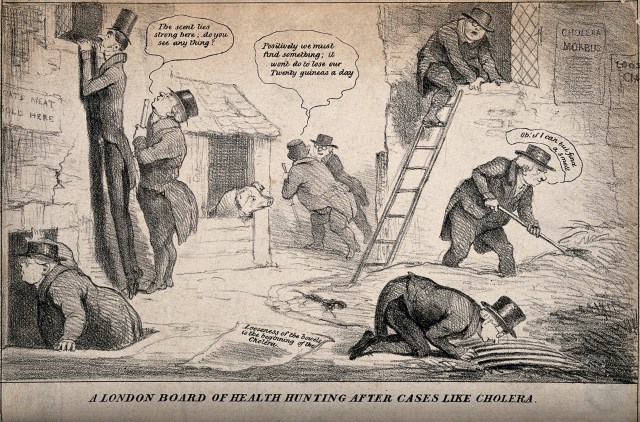 Merrick THHOL
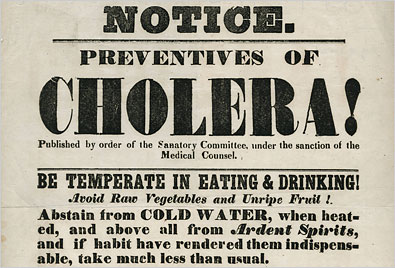 Very unusual remedies against cholera were advertised in the press.
  From the



 Every Woman Dreams...