Lancashire “Hotpot,” The Red Rose Country’s Regional Dish

hotpotlarge.jpgHave you ever eaten Lancashire Hotpot? It is a casserole dish consisting of layers of meat (beef or lamb or lamb with lamb kidney), a root vegetable (carrot, turnip, leeks, etc.), and sliced potatoes.

Then you put the lid on the pot, and place it in a slow oven for several hours. The lid is removed for final hour of cooking to allow juices to thicken, and to brown the top layer of potatoes.

AdobePhotoshopExpress_2014_04_23_17-52-41.jpg

Quantities in a Lancashire Hotpot don’t have to be exact:

  • enough lamb for everyone
  • potatoes — double or a bit more of the amount of lamb
  • onions — about 1/3 the amount of potatoes

“In spring 2011, a loose campaign started forming to propose that the dish be awarded European “Protected Geographical Indication” status. This would mean that commercially the dish could only be prepared for sale in Lancashire, and according to certain methods. The campaign appears to have been launched by people such as Steve Dean, managing director of Lancashire County Developments Limited (LCDL) , chef Nigel Haworth, and Paul Nuttall, European MEP for Lancashire.

500-Lancashire-hotpot-Nigel-Haworth.jpg“Lancashire Hotpot is usually dated back to the start of industrialisation in the area, from the 1750s onwards. It really was designed as an oven dish from the start, as opposed to a stew in a pot over flame. It required potatoes being widely enough accepted to be available, and access to an oven (access to an oven was a luxury throughout much of history.)

“In the television programme “Coronation Street”, the character of Betty Williams is famous for the hotpot she serves at the Rovers Return Inn.” [Lancashire Hotpot-CooksInfo]

Country File Magazine tells us, “What distinguishes the traditional hotpot, though, is its steep-sided cooking vessel, after which the dish gets its name. The pot cradles the long bones of local sheep, which lend flavour to the sliced potato topping. The traditional protruding bones make it an eye-catching, if slightly spooky looking, dish.

“No one knows exactly how or when the hotpot came about, but what’s certain is that it was popular when Lancashire’s cotton industry was at its height in the 19th century. The dish was quick and simple to prepare and could be left to its own devices while its makers – female mill workers – were toiling in the mills and factories that propelled England’s economic prosperity. Hours later, when they returned, the hotpot would have turned into a flavoursome stew, the lamb gently fusing with its bedfellow ingredients. Oysters, which were cheap at that time, were sometimes added to bulk out the mixture.

static1.squarespace.jpgimages.jpg “Hotpot kept miners going too, the pot being wrapped in a blanket to ensure it was still warm at lunchtime. In the novel North and South, Victorian writer Elizabeth Gaskell described how Mr Thornton, a mill owner, dined on hotpot with his workers : “I never made a better dinner in my life… and for some time, when ever that special dinner recurred in their dietary, I was sure to be met by these men, with a ‘Master, there’s hotpot for dinner today win yo’ come?’” 

Htpot.jpg

Resources

BBC Home

By ‘eck! Lancashire hotpot set to become the next English cuisine granted protected status. London: Daily Mail. 5 April 2011.
[Looking for Original Recipes and Historical Mentions]   The Foods of England
Hix, Mark. Lancashire Hot Pot. London: The Independent. 14 October 2006.

Human Beans. Sonja’s Lancashire Hotpot. September 2006. Retrieved October 2010 fromhttp://whatscookinggrandma.humanbeans.net/card/8

The Interesting History of Lancashire Hotpot

Lancashire Hotpot,CooksInfo.com

Posted in British history, food, food and drink | Tagged , , , , , , | Comments Off on Lancashire “Hotpot,” The Red Rose Country’s Regional Dish

Father’s Day

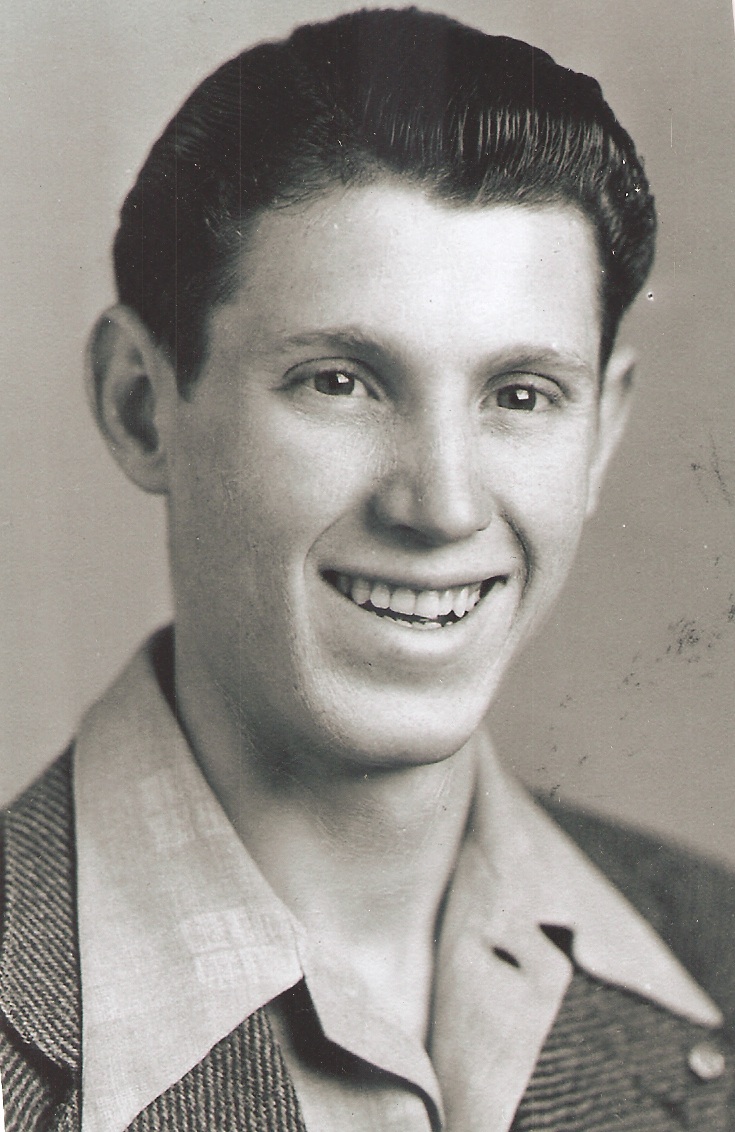
This is my father. He died too young, barely in his mid 40s. I wish I had known him better. 

Posted in Uncategorized | Comments Off on Father’s Day

Father’s Day – Part 2

This is my maternal grandfather. My parents separated when I was quite young. It was a time when divorce was frowned upon, so my parents never “officially” parted ways. Yet, for all intents and purposes, my father was never around. It was my grandfather who saw that I had weekly lunch money, who co-signed for my first car, who “encouraged” me to become a teacher when I wanted to be a journalist, and who died one month before my son was born. I hated that he never knew my son. He was a man who worked for American Car and Foundry during the day – making railroad cars. However, of the evening he was dressed in a white shirt and a suit and a hat. It was quite the contrast to the day job.

Posted in Uncategorized | Comments Off on Father’s Day – Part 2

Love Between Persons of a Certain Age (or) Does the Couple Need to Be Young? a Guest Post from Don Jacobson

This post appeared on Austen Authors on 25 April, 2018. I found it quite interesting to think of “love stories” in novels also including those of a certain age, for I have written several such romances, including one coming out this October. Enjoy!!!

bennets.jpgI have been somewhat cranky over the past several days because The Avenger: Thomas Bennet and A Father’s Lament is slow going.  Most of this is rooted in that I am writing a bit of an espionage book. Yes there will be romance and there will be a ball. And, yes, there are the stories of Denis and Letty (Brouillard) Robard as well as Alois and Elizabeth (Darcy) Schiller.

But, the most important romance will be the rediscovered fervor between the elder Bennets…that which flared brightly in 1789 and slowly dimmed until by 1800…

As I previously have noted, however, Miss Austen did not fill out either of the elder Bennet’s characters. If I were to use them to advance the Bennet Wardrobe arc, I would have to build plausible pasts and realistic futures for both partners in the marriage.

There is a plot reason for this beyond the fact that I believe that Elizabeth Bennet’s observations of her parent’s loveless marriage—which shaped her firm resolution to only marry for the deepest love—were those of an adolescent girl who is utterly convinced of the veracity of her own conclusions (and who has met a teenager who was not that?). Austen never really explored the reason why Mr. Bennet (I have named him Thomas George) was attracted to Mrs. Bennet (Frances Lorinda Gardiner in the Wardrobe’s Universe) in the first place. We know that he was assumed to be a highly educated and bookish man. Are we to believe that he was also so socially inept—as is the trope of what might be termed as being the problem of all geeks, ancient and modern—that his head was turned by an opportunistic solicitor’s daughter? No, there had to be something more…her manner, her eyes, her joie de vivreAdmittedly, I stole this from Lydia because she has always been offered up as the daughter most like her mother.

mr mrs bennett.jpg Using an author’s authoritative voice, I have decided to let my readers know that I believe that Mr. Bennet—and Mrs. Bennet—married for love and not infatuation.

While it would have been logical to have Fanny Gardiner seeking to improve her station by snagging a landowner, that would have put her in the class of Caroline Bingley. Mrs. Bennet, while annoying, was never consciously despicable.

Would Edward Gardiner’s sister, the daughter of a sober legal man who somehow left the impression for his son that marrying for love was to be desired, have sought less than her brother?  As a daughter of a country solicitor—who, none-the-less, had to have received a lawyer’s education at one of the Inns in Town, although he may have clerked in St. Albans—she could have easily focused her physical charms on a son of one of her father’s professional colleagues without being seen as a social climber. Certainly her mother would have been urging her father to place her in front of suitable men, if Fanny’s exhortations about Bingley and Netherfield grew from her own juvenile experience. That individual could have been a London barrister or solicitor, either of whom would have been well-off and steps up from young Miss Gardiner’s rusticated roots.

Tom Bennet would have been a reach for young Fanny even if his mother, who likely would have objected to such a match even though she was only a country rector’s daughter herself, had not died in the fever of ’77. I note that many Austenesque writers have had Fanny entrapping Thomas through a staged compromise. These stories tend to cast Mrs. Bennet in an avaricious light, and she rarely moves beyond this awful image. I have never been satisfied with such a characterization because I wonder why Jane and Lizzy, the daughters most exposed to her nature, are shown to be paragons of gentle womanhood in these same works. T’is inconsistent…

However, I am recounting the story of the Bennet family in the Universe of the Wardrobe.

And so, using an author’s conceit, I have concluded that Frances Gardiner married for love. I determined that the young lady with the sky blue, near purple eyes, was entranced by the wry man with the hazel orbs.

Early on in “The Avenger,” I have taken the Canonical Mrs. Bennet and Mr. Bennet and turned them into humans with foibles rather than being served up as caricatures. I have spent some pages in the earlier books revealing why each parent acted in the manner they did after 1800. Mrs. Bennet’s story is found in the latter pages of Part 1 of “The Exile.” Mr. Bennet changed his behavior first in response to his wife’s depression after the awful summer of the Year Zero and later as her anxiety mounted. Then he responded to the instructions he received in the “reverse” Founder’s Letter delivered in “Lizzy Bennet Meets the Countess.”
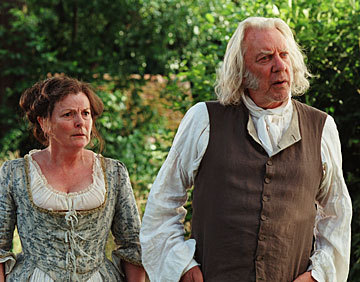
Mr-and-Mrs-Bennet-jane-austens-couples-14290539-360-282.jpg  I believe I am there. In order to rebuild Mr. Bennet’s respect for Fanny, I have portrayed the lady as a clever and practical observer of the world around her. Her fears of society’s treatment of her unmarried daughters after Mr. Bennet’s oft-anticipated death has, by this point in 1814, moderated considerably with the three marriages in 1811 as well as Mary’s betrothal to Mr. Benton who is off in Boston earning his second divinity degree. Now, t’is only left for her to see Kitty settled. And that, of course, is the underlying plot mover…Mrs. Bennet’s desire to see her daughter conflicting with Mr. Bennet’s knowledge that Kitty lives well over 120 years in the future. Except…

In order for Bennet to give Kitty, Jacques, and Schiller justice, he needs to have a confederate who knows him beyond words. This individual also must be utterly committed to the task. While Lord Thomas Fitzwilliam has every motivation to avenge his mother, he only met Mr. Bennet in July 1947. While the two men are of an age, Fitzwilliam does not appreciate the vagaries of Bennet’s weltanschauung. Likewise, he is in awe of his Grandfather. Even though “young” Thomas is the 12th Earl of Matlock, the Managing Director of the Trust, and “M,” he will never be more than a lieutenant to The Founder.

Who better to serve as co-consul than someone who shares the same Georgian/Regency discursive context—in addition to the deeper reaches of a spousal relationship. And, to do that, as I repeat myself, Tom Bennet needs to regain his respect for his wife as well as win back her heart.

This he accomplishes, I believe, in the early chapters of the next book in the Bennet Wardrobe, Volume Three, The Avenger: Thomas Bennet and A Father’s Lament.

Please enjoy this brief excerpt.

&&&&&

This excerpt from a work-in-progress is (c)2018 by Donald P. Jacobson. No republication or other use of this material without the expressed written consent of the creator of this work is permitted. Published in the United States of America.

It is August 1, 1947. Mrs. Bennet has cut through Mr. Bennet’s prevarication about her current where/when. He has decided to read her into the secrets of the Wardrobe and the situation in which they find themselves.  Mr. and Mrs. Bennet have left Longbourn House to seek privacy atop Oakham Mount.

&&&&&

Chapter V

The path up the side of Oakham Mount gradually rose away from Longbourn’s fields and wound gently up through the ancient deciduous woodland. The undergrowth along the furrowed slopes bore testament to the benign neglect that had been the watchword for at least the last two decades. The economic calamities before and then after the most recent war had dictated different priorities for the current Master of Longbourn. That six-year long cataclysm had, itself, been a great winnowing that had stolen away and never repatriated great tranches of young men who might otherwise have been put to work by a competent forester clearing away the brush and juvenile trees that burdened the hump. Thus, the timberland had undertaken that which it had always: exercising its wooded privilege of entropy by reclaiming that which Man had sought to turn to another purpose.

The two figures toiling up the slope would have appeared, to a Twentieth Century observer, to be play-actors stepping directly from the sound stages at Gainsborough Studios in Shepherd’s Bush.[i] Their quaint and stifling garb—she in a long-sleeved muslin gown, gloves, and a broad-brimmed straw sunbonnet and he decked out in pantaloons, waistcoat, and topcoat…as well as his planter’s hat—were redolent of a sesquicentennial celebration honoring Jervis’ great victory.[ii] The mid-summer heat simmered in full intensity above the leafy canopy. However, the couple was shielded from its glaring worst by shadows thrown by massive branches flying up and away from equally colossal trunks. The air beneath eased and freshened as the pair moved further up and away from the manor house now hidden by thickened forest. The great arbor dwarfed both the Master and his Mistress in all but the enormity of their contemplations.

“I always wondered how Lizzy could possibly wear out boots and slippers at the pace which she did,” gasped Fanny Bennet, “And, now I know. That girl was up top of this knob at least five days out of seven! And this trail…t’is new to me, but, and please correct me if I am mistaken, this path is surely age-old when you consider how deeply it has been worn through that ledge up ahead.”

Bennet marveled at Mrs. Bennet’s powers of observation for he had never considered her able to leap beyond household matters where her knowledge and management skills were unparalleled. Yet here she offered another compelling argument against his earlier estimation of her mind. This was no foolish woman, but rather someone with a laywoman’s appreciation of natural philosophy and longue durée history.[iii]

He, himself, had penned a monograph in which he had employed the findings from excavations of the ruins atop Oakham.[iv] His colleagues at Cambridge had been perplexed to find old strongholds or watchtowers using even older stockades as foundations; stacking fortifications like so many pancakes.[v] Bennet had demonstrated, through the use of recovered artifacts, that the Romans as well as certain predecessor Celts had taken advantage of the full-circle field of vision afforded from the crest, effectively pushing the history of the Meryton region back by 2,000 years.

Thus, Fanny had the right of it, almost as if she had read his essay. Not only had the dainty booted feet of Elizabeth Rose Bennet trod this path, but also those sporting medieval English clogs and imperial Roman sandals. Perhaps the leathery bare feet of Wessex warriors were the first to ascend the chalky slopes. Oakham’s prominence above Longbourn’s rolling fields gave its owner control of the reaches of the Mimram Valley as it coursed through the alluvial deposits between the shire and the Thames.

Bennet stopped for a moment—as much to catch his breath as to respond to his wife—and asked, “Have you been listening at the door as Lizzy and I talked about archaeology?”

At his wife’s look of reproof, he raised his hands in defense and quickly added, “I was simply teasing, my dear. I was offering what turned out to be, I am afraid, a backhanded compliment. I am afraid, Fanny, that I will have to relearn proper behavior. I have been lax, and you have been the victim.

“Let me try a ‘forehand’ compliment.

“As you said, you have never climbed Oakham through all the years of your life. Yet, you just offered a sophisticated reading of the apparent antiquity of the path beneath our feet.

“You may recall my journey up to Cambridge in ’03. T’was then that I delivered my paper Considerations On the History and Pre-History of the Mimram Valley in Roman and Celtic Hertford to the fellows at Trinity.[vi] You may have heard me mention the late Professor Gibbons. I thought to revise his assessment of the historiography of the scholars of the last century…”

His voice tailed off when he almost could hear the <click> as she rolled her eyes in response to his rambling soliloquy. Bennet glanced expectantly at her. Those blue to near purple orbs peered up at him from beneath the brim of her hat; said lip fetchingly bowed down beside her ears by a broad azure ribbon tied neatly beneath her chin. A small smile played across her lips and showed a hint of even teeth.

She asked coquettishly, “And the compliment?”

Bennet stammered, having lost his ability to speak when she had speared him with those sparkling beams emanating from her orbs, “Uh…I meant to say…that…you sounded just like Elizabeth. Oh, no, not that…rather that Lizzy sounded like you! No…uuuh.”

He stopped talking, and, using his long legs, loped off up the hill a few paces, leaving Mrs. Bennet standing where she had halted. He then arrested his flight, and froze in place, his back to the lady, one fisted hand planted in the small of his back, the thumb worrying the forefinger as he sought to regain his composure. Mrs. Bennet, using the wisdom earned through a quarter century of managing her husband, waited for his assured return.

After two or three minutes, during which she closed her eyes and focused on the sounds of the birds calling to one another across the forest, he rejoined her.

At first, a solemn Bennet faced his wife. Then the façade cracked to allow the wry Thomas to escape. He had begun to smile before long. Finally, he spoke to her.

“I thought I had become immune to your arts and allurements so long has it been since I have appreciated you as an object of desire. Yet, when you turn those lighthouses of your soul…your incredible eyes…my way, I nearly forget how to breathe.

“Miss Frances, for now I address you as such because you sparkle much like the girl who poured me tea in her mother’s parlor facing out onto Meryton’s High Street, you are nonpareil. You are an original. You are the woman without whom I would not have become half the man I am today.

“Wait, that statement is not well put for you may believe I am implying that I became the indolent man I am because of you.

“On the contrary, I would have only become more lackadaisical and more withdrawn in my own anguish and pain if you had not found your way Home from whatever ring of Hades to which you had consigned yourself after that horrible day. Only the good Lord knows what would have happened to our girls if you had withered like a bloom way past its prime.

“Even though you were distracted, you found a path to becoming the Mistress of my house and the truest, fiercest, and, might I suggest, only defender of our daughters.”

He paused, grief coloring his hazel eyes as he recalled all those years he had closed his heart to the woman he had loved for nearly a dozen before.

In a voice thick with emotion, Bennet continued, “As you so aptly noted earlier, I have the ability to convince myself of the veracity of my acts. And, upon reflection, that is what I did with you.

“T’was easier to ascribe your uneven moods to nerves or silliness. That allowed me to ignore my responsibility to you—for did I not vow to protect you that day you changed your surname to mine? However, what did I do to help you ride the waves of loss? Nothing…absolutely nothing!”

He shook himself like a sheepdog as if doing so would rearrange his turbulent feelings around his longish frame.

“Frances Lorinda, you are the soul that makes my life meaningful. I had forgotten that singular fact and, instead, began to find all the ways I could moderate and diminish my respect for you because I had lost my own self-respect. And convincing myself that you had a second-rate mind was the worst of my transgressions!

“True, you are unschooled as are almost all women in England. And, unlike Madame de Staël, you never had the advantage of a parent who would see to your informal education.[vii] That you bravely entered Longbourn, the estate of a Cambridge don, as the younger daughter of a country solicitor, and meekly submitted to instruction from first Sally Hill and then our current Mrs. Hill, speaks volumes about your modesty and self-effacement.

“Every step of the way you never asked what was best for you, only your family and Longbourn. I could not be prouder of you or your list of accomplishments that, I assure you, would put any female of the ton to shame. I imagine they would succumb to fits of vapors if they had to undertake half of what you have since ’89!

“Now, all that remains is for me to beg your forgiveness, and pray that I will live long enough to earn it.”

There amongst the softly swaying blades growing in the shade of Oakham’s boughs, Mrs. Bennet forgave Mr. Bennet in the tenderness of her wifely embrace.


[i] From the filming of, perhaps, The Young Mr. Pitt (1942). See https://en.wikipedia.org/wiki/The_Young_Mr_Pitt accessed 3/31/18.

[ii] The Battle of Cape St. Vincent (February 1797) is considered to be one of six fleet actions (the others being the Glorious First of June—1794, Howe; Camperdown—1797, Duncan; The Nile—1798, Nelson; Copenhagen—1801, Parker/Nelson/Graves; and Trafalgar—1805, Nelson) across the 25-year long war that confirmed British naval supremacy and enforced the Blockade against Napoleon’s Continental System.

[iii] See Fernand Braudel who argued that the regularities of social life whose change is almost imperceptible except over vast stretches of centuries. http://www.sunypress.edu/pdf/62451.pdf

[iv] Please see Lizzy Bennet Meets the Countess, Ch. XII.

[v] Not an unusual situation in human construction. See the ruins of Troy discovered by von Schliemann in the 1870s where he found over one dozen distinct cities built atop the ruins of the previous town.

[vi] T. M. Bennet, MA, unpublished mss, 1803, Wren Library, Trinity College, Cambridge University.

[vii] A leading French intellectual of the Napoleonic era. https://en.wikipedia.org/wiki/Germaine_de_Sta%C3%ABl

Posted in Austen Authors, book excerpts, excerpt, Guest Post, Jane Austen, Living in the Regency, Pride and Prejudice, Regency era, Vagary | Tagged , , , , , , , | Comments Off on Love Between Persons of a Certain Age (or) Does the Couple Need to Be Young? a Guest Post from Don Jacobson

Very “Real” Estate: Axminster

Axminster is a market town and civil parish of about 6,000 on the eastern border of Devon. The town is built upon a hill and overlooks the River Axe. The town dates back to around 300 BC. There was once a Roman fort on the crossroads at Woodbury Farm, south of the present town center. Axminster is one of only 15 British town on the Peutinger Map (also referred to a Peutinger’s Tabula or Peutinger’s Table). It is an illustrated itinerarium displaying the road network of the Roman Empire. It is a 13th C copy of a Roman original, drawn upon parchment. Aixminster lies on two major Roman roads: the Fosse Way from Lincoln to Seaton and the Dorchester to Exeter road. 

Part_of_Tabula_Peutingeriana

Tabula Peutingeriana (section)—top to bottom: Dalmatian coast, Adriatic Sea, southern Italy, Sicily, African Mediterranean coast ~ Public Domain ~ https://en.wikipedia.org/wiki/Tabula_Peutingeriana#/media/File:Part_of_Tabula_Peutingeriana.jpg

Aixminster was registered in the 1086 Domesday Book as “Ascanmynster,” meaning a monastery located near the river Axe. In 1210, the town was granted the privilege of holding a weekly cattle market. This weekly market continued until the 2006 UK foot-and-mouth breakout. The town was on the London to Exeter coaching route, and in 1760, a coaching inn named The George Hotel opened on the corner of Lyme and Chard streets. Nearly 20 coaches a day stopped at The George. 


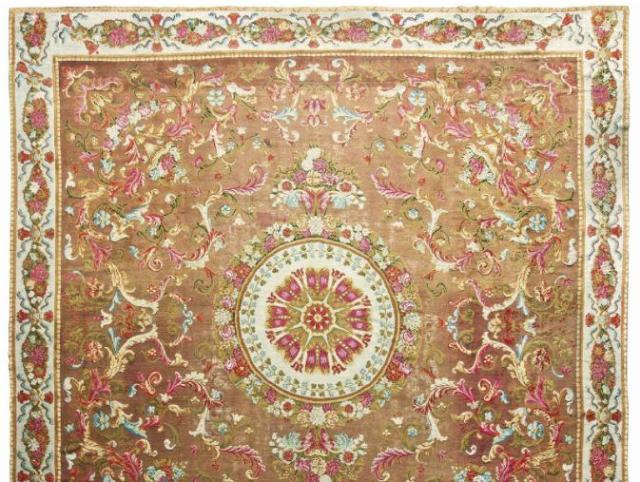
The town has lended its name to a type of carpets, which are known worldwide. The carpets are consider among England’s finest. They were first made (1775) at Court House near the town church. The carpets in those days were hand tufted, and, traditionally, the completion of a carpet was marked by a peal of bells from the parish church. The bells celebrated the hard work put into the carpet, and the town folk would flock to the workshop to have a look at the latest production.

The inspiration for Thomas Whitty’s founding of Axminster Carpets is uncertain. Some claim he was inspired by watching several French carpetmakers at work in Fulham. Others say he saw a large Turkish carpet at the market in London’s Cheapside and was compelled to learn more of the workmanship. It is said he returned to Axminster and went to work creating a piece of similar quality. He invented and built a new type of loom to permit the hand knotting of carpets. Axminster carpets graced the floors of the Brighton Royal Pavilion, Saltram House, Warwick Castle, and Chatsworth House. It is said King George III and Queen Charlotte purchases Axminster carpets and even toured the small factory from which they came. 

axminster-19th-c-george-iii

George III Axminster Carpet, England, by Thomas Whitty, late 18th century ~ This enormous late 18th century Axminster carpet was made by Whitty for the Music Room at Powderham Castle, 1798. Image @Eloge de l’Art par Alain Truong ~ https://janeaustensworld.wordpress.com/tag/samuel-whitty/


18th-c-axminster-christies

Large Axminster carpet, late 18th century. From Cowdray Park and Dunecht House, At Cowdray Park, West Sussex. Image @Christie’s. https://janeaustensworld.wordpress.com/tag/samuel-whitty/


According to Axminster Heritage, “In order to support his young family, Whitty travelled to London to seek a fresh trade. Here, in the warehouse of a William Freke, he saw some carpets imported from Turkey. He marveled not only at their vibrant colours but also their size and the fact that they were seamless. For a long time he puzzled as to how they could be made.

A Turkey Carpet

After much thought, Whitty had some ideas that he wished to try out. On Easter Fair day that year (25 April 1755), as his employees were away at the fair, he conducted some trials and succeeded in making an eight-inch square of ‘Turkey’ carpet. Although excited by his success he realised that he did not know of a loom that would enable him to make them economically.

“Many years later, in a 1790 letter to his sons, Whitty described how he overcame this difficulty. By chance he saw an advertisement for a carpet manufactur- ing company in Fulham owned by Peter Parisot, a French immigrant. He tells how he went to an inn close to the factory with the hope of making the acquaintance of some of the workers. He started talking with a man whose son was an apprentice at the carpet factory and, through him, was able to gain access to the works. Whitty wrote: “Accordingly, I obtained a view of everything I wanted, by which every remaining difficulty was removed from my mind and I was thoroughly satisfied.”

“Although he had seen how to make his carpets at the Fulham factory, he knew that the carpets made there were much too expensive and a cheaper method of production needed to be found. Although he reduced the number of knots per square inch, the labour cost was still too high. Thus, when he started to make his first carpet on Midsummer’s Day 1755, it was his own children, under the watchful eye of their aunt Betty Harvey, who were his first workforce. Throughout his life, Whitty employed mainly girls of between ten and seventeen years. His competitors employed mainly men, so not only was he able to gain the advantage of lower labour costs, but the girls’ fingers were much more nimble than those of the men, giving him an edge in productivity.

“Thomas Whitty’s first carpet was to have been bought by a Mr Cook of Beaminster but was seen by the Countess of Shaftsbury, who insisted on having it herself. Further orders followed and, in 1757 the Society for the Encouragement of Arts, Manufactures and Commerce (the forerunner of the Royal Society for the Arts) ran a competition for the best value carpet submitted to them. Although the carpet submitted by Thomas Moore of Moorfields was judged to be the finest carpet – being made of the highest quality materials – it was very expensive (forty guineas). The one made by Thomas Whitty was deemed the best value in proportion to its price (£15), and the prize was divided between them.

“Whitty’s prize-winning entry was bought by a William Crompton who, putting it on display in his warehouse in Charing Cross, received so many enquiries that he asked Whitty to supply as many carpets as possible for him to sell. In the following year a similar competition was held and again Whitty shared the prize – this time with a Claude Passavant of Exeter. Interestingly, Peter Parisot moved his Fulham factory to Exeter in 1755 and the following year sold it to Passavant. As Whitty had observed in Fulham, the carpets made in Exeter, although very fine, were much too expensive. (The one submitted for the competition was valued at eighty guineas).”

For some 80 years, until a fire in 1828 destroyed the weaving looms, Axminster produced the best hand-knotted carpets in Europe, and they made them with a small staff and only one workshop. Even today, some of the best homes have Axminster carpets. The largest of the carpets produced was for the Sultan of Turkey’s Topkapi Palace in Istanbul. Made in 1822, it measures 74 feet by 52 feet. Alas, the palace is now a museum, but no one can account for the missing carpet. 

In 1835, Samuel Rampson Whitty, the grandson of the founder, declared bankruptcy, having never recovered from the fire seven years earlier. Blackmores of Wilton, near Salisbury, bought the remaining stock and looms and extended their business to include hand-knotted carpets, which are still called “Axminsters.”


Posted in British history, buildings and structures, commerce, Georgian England, Georgian Era, Industrial Revolution, real life tales | Tagged , , , , , , , , | 2 Comments

The Lack of “Reality” in Austen’s “Pride and Prejudice” ~ Does it Matter?

In Jane Austen’s Pride and Prejudice, we often think of the story as being a depiction of the Regency era. But does it truly speak to the time? If so, would not Elizabeth Bennet be more sensitive to her family’s situation? Our heroine turns down two proposals, both of which would “save” her family. Is that realistic? Most of us who love this story consider Elizabeth Bennet a responsible, reasonable, pragmatic and mature young lady. Yet, Elizabeth’s actions prove her to be more like her father: self-centered and casually indifferent. 

Even if none of her other sisters found husbands, Elizabeth could have secured their futures with the acceptance of either Mr. Collins, who is set to inherit Longbourn, or Mr. Darcy, who owns one of the largest estates in England. Naturally, for us readers, we can never imagine our independent Miss Elizabeth with a buffoon of Mr. Collins’s nature, but should she not know a twinge of regret at having failed her family or displayed a bit of sympathy for her mother’s nerves at knowing disappointment. Obviously, Mrs. Bennet, and likely Mary and perhaps Kitty will be left without a home once Collins assumes control of Longbourn. If Elizabeth had married Collins, he would have been duty bound to provide for her mother and her unmarried sisters. Instead, Elizabeth has a jolly laugh, led on by her father, and at Mr. Collins’s expense and Mrs. Bennet’s chagrin. 

mr_collins_proposes_to_lizzie_pandp2005

“An unhappy alternative is before you, Elizabeth. From this day you must be a stranger to one of your parents. — Your mother will never see you again if you do not marry Mr. Collins, and I will never see you again if you do.”

Elizabeth could not but smile at such a conclusion of such a beginning; but Mrs. Bennet, who had persuaded herself that her husband regarded the affair as she wished, was excessively disappointed.

giphy After Mr. Darcy’s proposal, Elizabeth later attacks the man with a litany of his shortcomings: haughtiness, disdain for others, interference in Bingley and Jane’s courtship, open disapproval of her family, and his insults directed to others about her. 
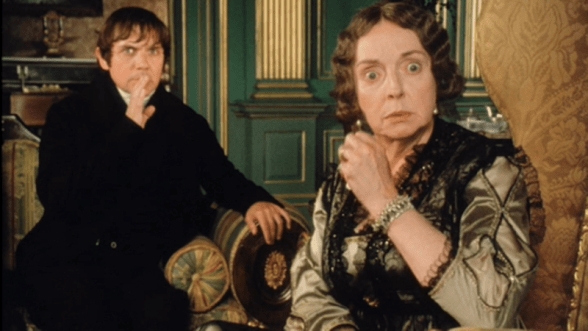
And I might as well inquire why, with so evident a design of insulting me, you chose to tell me that you liked me against your better judgment. If I was uncivil, then that is some excuse. But I have other reasons, you know I have.

What reasons?

Do you think anything might tempt me to accept the hand of the man who has ruined, perhaps for ever, the happiness of a most beloved sister? Do you deny that you separated a young couple who loved each other, exposing your friend to censure of the world for caprice and my sister to derision for disappointed hopes, involving them both in misery of the acutest kind?

Darcy’s has his many faults; there is no denying them. The thing we readers love about him is he is willing to change for the woman he loves. Yet, even with the multitude of his shortcomings, would not it be more realistic (although not as romantic) for Elizabeth, at least, to pause and consider his offer of marriage? In the wealth-obsessed culture depicted in Pride and Prejudice, should not a hesitation exist if this is true to the society of the time? Given at this point in the story, her family is out on their collective keisters if something happens to Mr. Bennet, should not Elizabeth think about her mother and sisters. After all, Collins has married Charlotte Lucas, eliminating all chances of a Bennet sister to become the next mistress of Longbourn, and Mr. Bingley has been persuaded to abandon Jane Bennet, dashing any hopes of a wealthy husband in the form to save them. 

That being said, Elizabeth Bennet does not belong to reality. She is a “romantic” character. Therefore, she does ignore the peril in which her family exists, as do the readers. We would not wish to look upon our heroine as a Gold Digger. Otherwise, the readers might question the depth of their true love when Darcy and Elizabeth finally come together at the novel’s end. In a romance, there is always some form of “happily ever after (HEA).” 

 Romance-Literary Devices tells us, “Etymologically, romance comes from Anglo-Norman and Old French romanz, which means a story of chivalry and love. The word “romance” also refers to romantic love. As far as literature in concerned, the term has an entirely a different concept. It means romantic stories with chivalrous feats of heroes and knights. Romance describes chivalry and courtly love, comprising stories and legends of duty, courage, boldness, battles, and rescues of damsels in distress…. Romanticism is a specific movement and period in English literature during which poems, stories, and novels related to Romantic ideas were created. William Wordsworth, P. B. Shelly, Lord Byron, and John Keats are some of the most famous poets and writers of the Romantic period.”

prideprejudiceIn Pride and Prejudice, it is those crude characters who represent the farce—the comedic buffoonery—who speak of money and think money will solve all their woes. The novel parades the comedic characters across page after page. We have Mr. Collins, who definitely leads the way. He has good company in Mrs. Bennet, Lady Catherine de Bourgh, Anne de Bourgh, Lydia Bennet, Mary Bennet, Sir William Lucas, Caroline Bingley, Louisa Hurst, Mr. Hurst, and Kitty Bennet. The villain, Mr. Wickham, is absolutely obsessed with the idea of money. He goes from Georgiana Darcy’s dowry to the one belonging to Miss King to an elopement with Lydia Bennet to force Darcy into paying him off to save the foolish girl’s reputation, as well as the reputations of all the Bennet sisters. These characters all worry about their financial prospects.

prideprejudicejaneJane Bennet and Charles Bingley are our Cinderella and Prince Charming types. Their personalities are too good to be true. Jane and Bingley forgive Caroline’s and Darcy’s attempts to keep her and Bingley apart. There is nothing of realism in their relationship. They are less comedic than the ones mentioned above, but certainly there is something of silliness about their relationship. 

Only Darcy and Elizabeth come close to realism, and that is because they both possess their faults, prominent among them is “pride” and “prejudice.” Yet, even with the weakness in their character, readers identify with them. There are the romantic elements, separated from the satiric ones. Elizabeth earns the love of a superior man because she is the “superior” Bennet sister. All is well that ends well. Although Collins will one day inherit Longbourn, no one doubts that Darcy and Bingley will join forces to see to the comfort of Mrs. Bennet and any unmarried Bennet daughters. The estate may be lost to the conventions of the day, but the people will not suffer greatly. We have our happy ending, which is not realistic or true to form, but is desired by human kind, for we cannot exist without hope for a better tomorrow. 

maxresdefault


Posted in British history, historical fiction, Jane Austen, political stance, Pride and Prejudice, reading habits | Tagged , , , , | 4 Comments

Regency Men’s Wear: The Coat

During the Regency era, men’s fashion changed dramatically from the powered-wig peacocks of the late 1700s. Throughout the last decade of the 18th Century, men continued to wear the coat, waistcoat, and breeches.  However, changes were seen in both the fabric used as well as the cut of these garments, with each element undergoing stylistic changes. Some believe the growing enthusiasms for outdoor sports and country pursuits planned a role in the changes noted in dress. The elaborately embroidered silks and velvets characteristic of “full dress” or formal attire earlier in the century gradually gave way to carefully tailored woolen “undress” garments for all occasions except the most formal.

Charles_Pettit_by_Charles_Willson_Peale_(1792)

  Charles Pettit wears a matching coat, waistcoat, and breeches. Coat and waistcoat have covered buttons; those on the coat are much larger. His shirt has a sheer frill down the front. United States, 1792. ~ Public Domain ~ https://en.wikipedia.org/wiki/1775%E2%80%9395_in_Western_fashion#/media/File:Charles_Pettit_by_Charles_Willson_Peale_(1792).jpg

The later part of the 1700s saw coats exhibiting a tighter, narrower cut than seen in earlier periods, and they were occasionally double-breasted.Toward the 1780s, the skirts of the coat began to be cutaway in a curve from the front waist. Waistcoats gradually shortened until they were waist-length and cut straight across. Waistcoats could be made with or without sleeves. [Ribeiro, Aileen. The Art of Dress: Fashion in England and France 1750–1820, Yale University Press, 1995.] As in the previous period, a loose, T-shaped silk, cotton or linen gown called a banyan was worn at home as a sort of dressing gown over the shirt, waistcoat, and breeches. Men of an intellectual or philosophical bent were painted wearing banyans, with their own hair or a soft cap rather than a wig. [“Franklin and Friends,” http://www.npg.si.edu/exh/franklin/rush.htm] This aesthetic overlapped slightly with the female fashion of the skirt and proves the way in which male and female fashions reflected one another as styles became less rigid and more suitable for movement and leisure. [Hollander, Anne (1994). Sex and Suits. Kodansha. p. 53.]

A coat with a wide collar called a frock coat, derived from a traditional working-class coat, was worn for hunting and other country pursuits in both Britain and America. Although originally designed as sporting wear, frock coats gradually came into fashion as everyday wear. The frock coat was cut with a turned down collar, reduced side pleats, and small, round cuffs, sometimes cut with a slit to allow for added movement. Sober, natural colors were worn, and coats were made from woolen cloth, or a wool and silk mix. [1775-1795 in Western Fashion]

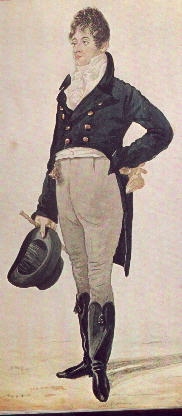
regency_gent_01.jpgThe early 1800s found men’s fashion toning down the colors and the construction, choosing to wear clothes that identified their place in society. Many credit Beau Brummel with the change from intricate embroidery and the overuse of color to a more polish look. the cut of the man’s coat and the quality of the fabric from which it was made became the standard of the day. 


“As fashion promenaded into the Regency era (1800s – 1820s) and strolled into the Romantic era (1830s-1850s), men’s style stepped away from the once-popular look of a powdered-wig peacock and toward that of a notably understated yet impeccably dressed dandy. Gone were flamboyant vests, coats and pantaloons cut from rich fabrics in vivid colors adorned with elaborate embroidery. High heels worn with knee-length breeches and stockings also fell out of favor.

“Instead, the Regency gentleman began donning more practical fabrics such as wool, cotton and buckskin – shapes and drapes changed as well. Limited availability of fine textiles during the French Revolution, along with the fear of looking aristocratic enough to be delivered to the guillotine, were partially behind this swing toward a more sedate silhouette.” [Historical Emporium]

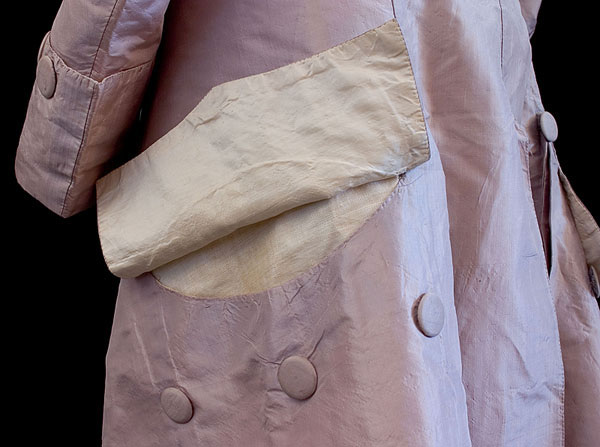
Romance author Isobel Carr tells us, “Coats come in several varieties. The terminology is confusing, and sometimes contradictory. On most of the coats in the Regency (shooting coats excepted) the pocket flap is for decoration only. The actual pocket (if there is one) is inside the coat, usually in the tail (as with the extant example on display at the Jane Austen Center in Bath). This pocket was sometimes reached from the outside of the coat, and sometimes from the inside (which seems inconvenient, to say the least). Later in the period (post 1813) a single breasted pocket, on the inside of the coat, began to be seen.

1682h

https://www.vintagetextile.com/images/Early/1682h.jpg ~ Example of tail-pocket reached from the outside on an extant coat c. 1790

Frock coat was the term used for the skirted coat of the 18th century, and was again applied specifically to the skirted coats that became fashionable in the 1820s (and lived on well into the Victorian period). I have also seen this term used to describe the morning coats of our era (just to confuse things!).

MORNING COATS

 One finds a rounded, sloping edge on what we term as “morning coats.” This edge can be found all the way down from the collar to the tail. Also the buttons were usually decorative only by Regency period.  If they did button, it would have been the top 1-3 only.

18th century coat of the same shape (but fuller, esp. through the skirts), 1770s


Gentlemen's jackets at The Argory, County Armagh.

Gentlemen’s jackets at The Argory, County Armagh ~ ©National Trust Images/Arnhel de Serra http://www.nationaltrustimages.org.uk/image/896170

suit-1770s-pocket

Detail showing 1770s working pocket (the flap, if present at all, would have been merely decorative for our era) http://www.pemberley.com/images/Clothes/suit-1770s-pocket.jpg

Coat with pantaloons, c. 1800-1810 (note how much narrower the whole line has become)

dd489ff2517ca90201984399a58dda14

This is fascinating: a green wool hunt coat, circa 1810-1820, which has lapels with sharp “M” notches. The coat is cut high and square at the waist. It has pocket flaps concealed in the tails. The breeches are made from soft white leather. The lower legs have “extenders” for wearing inside boots, and have mother-of-pearl buttons. ~ https://austenonly.com/category/jane-austen-and-fashion/


edwardwalking

Hugh Grant wearing a morning coat in Sense and Sensibility http://www.songsmyth.com/men/edwardwalking.jpg

DRESS COATS

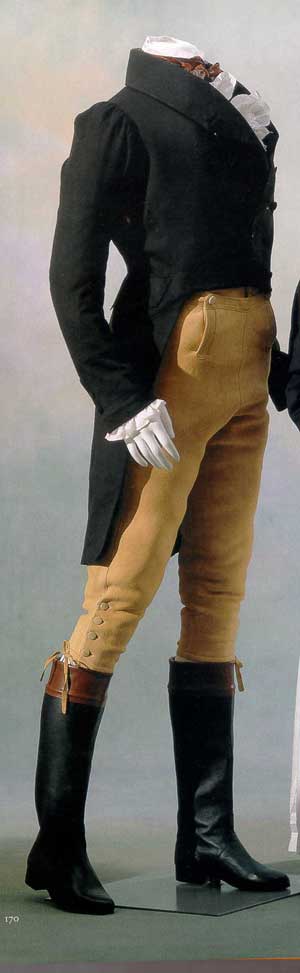
The most common men’s coat of the Regency was the dress coat (also referred to as the “tail coat”). It was open and cut away in the front and had “tails” in the back. Most were single breasted, but double breasted dress coats were worn. Generally, these were made from wool of varying colors, but most often in a solid color. That being said, some were made of linen and of various patterns and plaids. Blue coats are invariably shown with brass/gold buttons, all others with self fabric covered buttons.

Fashion plate of Beau Brummell in a cutaway or tail coat

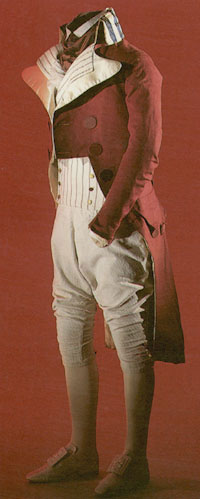
Cutaway coat and breeches, c. 1795

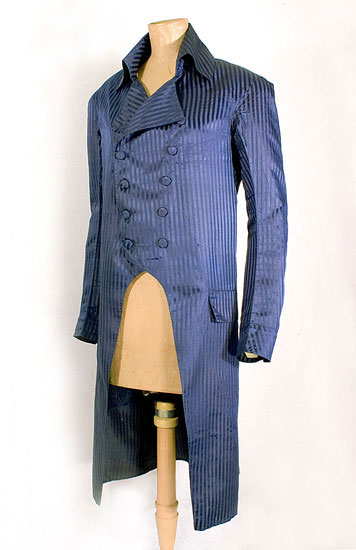
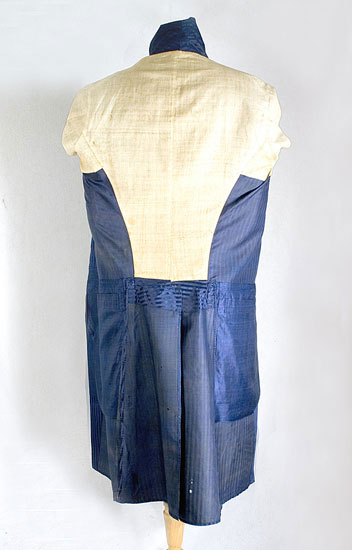
Cutaway coat, c. 1805-1810 (no waist seam = early)

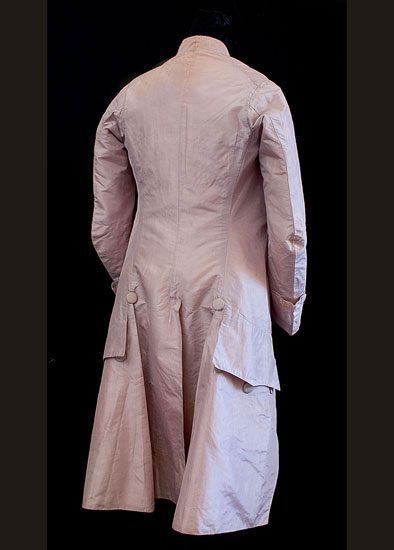
1805-1810 coat inside out

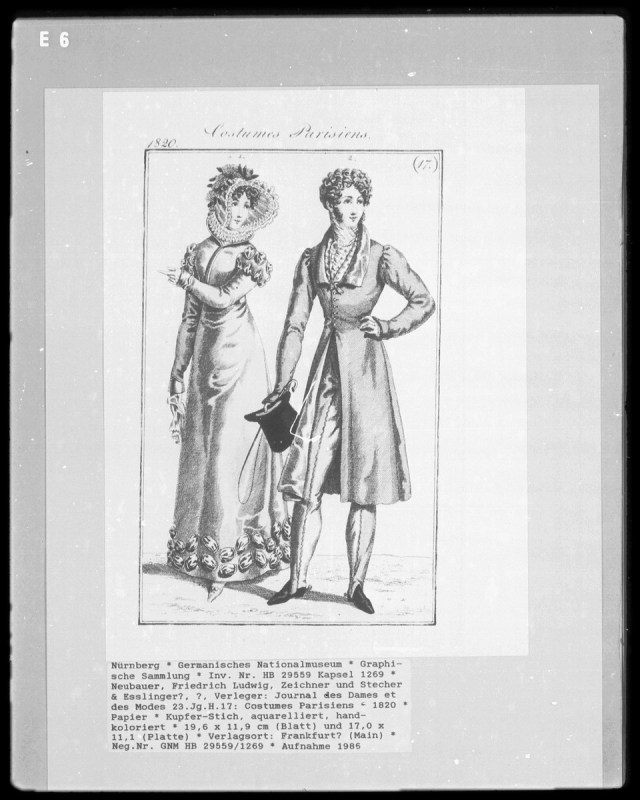
Fashion plate from Costume Parisien, 1820. This one shows the stiff, open tailcoat.

Colonel Fitzwilliam in a recreation of a cutaway with a velvet collar and cuffs.

image9

1967.13.17, “Stonington Plaid” linen check coat, 1800-1810. Gift of Mrs Muriel Buckley, URI Textiles Collection. https://kittycalash.files.wordpress.com/2014/10/image9.jpg

Wool example, c. 1815 (shown with buckskin breeches).

SHOOTING COATS

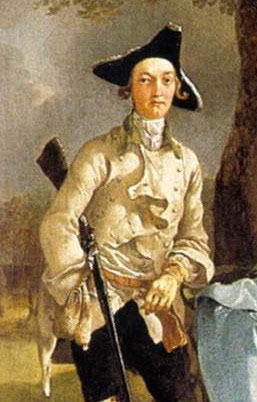
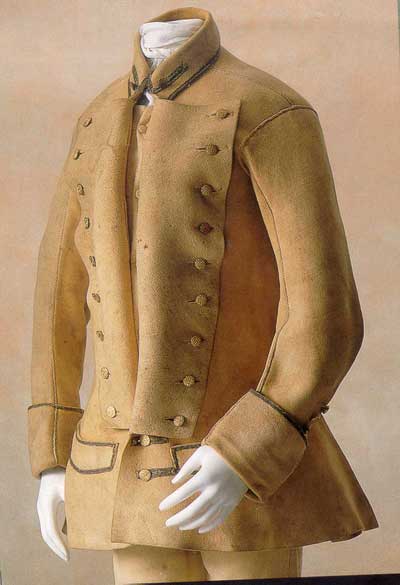
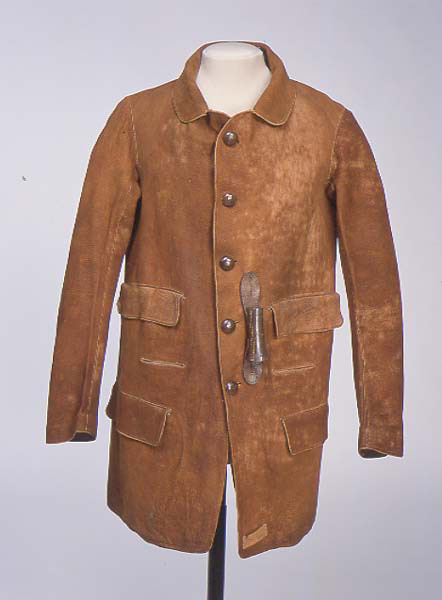
Men also had jackets worn purely for outdoor use. Shooting jackets were cut along the same lines as what we now call a “barn coat.” These were usually double breasted, and could be worn open, with the sides folded back on themselves or buttoned up.

Detail of a Gainsborough painting showing a chamois shooting coat (c. 1740s)

Extant chamois example, mid-late 18th century. Note the gold buttons and gold bullion trim.

Extant example, c. 1800-1830

SKIRTED FROCK COATS

At the end of the Regency period, the skirted frock coat appeared. It was the fashion of the early Victorian age. 

Fashion plate from Costume Parisien, 1820. The man’s coat is long, nipped in, and buttons in a single row up the front. The waistcoat is spotted, and the cravat striped. The trousers have straps on the bottoms.

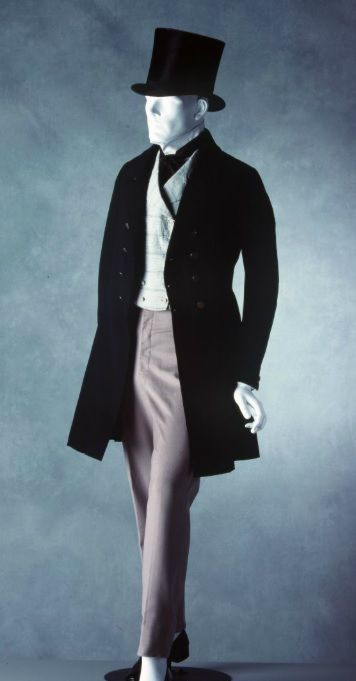
Men’s dark blue suit. Made in the United Kingdom. c 1840. This suit with its skillful tailoring is an excellent example of Nineteenth Century menswear. Suits at this time comprising a jacket, trousers and waistcoat often of non-matching colour and fabric as found in this example. The frock coat was the most popular style of coat for day wear for middle class and professional men, its full skirt modestly hiding the crotch and buttocks. 

THE WELLINGTON COAT

The “Wellington,” named after the country’s hero of the Napoleonic Wars was popular in the 1820s. It was long, with a single row of buttons up the front, always shown with trousers. It seems to have been another style of morning coat.

Caricature (full figure) of William, Sixth Duke of Devonshire – “A View of Devonshire ~ “A View of Devonshire.” Right side view of figure in tan overcoat with brown collar, white trousers and shirt, black top hat and black shoes with spurs. A riding whip is held in the right hand. Figure stands on paved pathway.

Thanks to the lovely ladies and gents at the Beau Monde (the Regency-based chapter of the Romance Writers of America) for the discussion forum. I learn so much from you. Some of the images above came from suggestions from this group. Isobel Carr, in particular, shared a wealth of knowledge on the subject. 

Posted in British history, fashion, Georgian England, Georgian Era, Jane Austen, Living in the Regency, Regency era, research | Tagged , , , | 1 Comment

Why Gretna Green? Marriage Over the Anvil, a Guest Post by Alexa Adams

This post originally appeared on Austen Authors on 23 February 2018. Enjoy!! 

“I am going to Gretna Green, and if you cannot guess with who, I shall think you a simpleton, for there is but one man in the world I love, and he is an angel.” – Lydia Bennet, Pride and Prejudice

My little sister (who you may recall as the illustrator of Darcy in Wonderland) is getting married to a Scotsman on Monday! It will be just a civil ceremony in a Pennsylvania courthouse, necessary for immigration purposes, but they are planning a proper wedding (or at least a reception) near his home outside of Edinburgh once he has a visa. Thank goodness, as I am unable to travel yet post-baby (waiting on a passport). No less of an excuse could keep me away. I cried when I first learned I couldn’t be there.

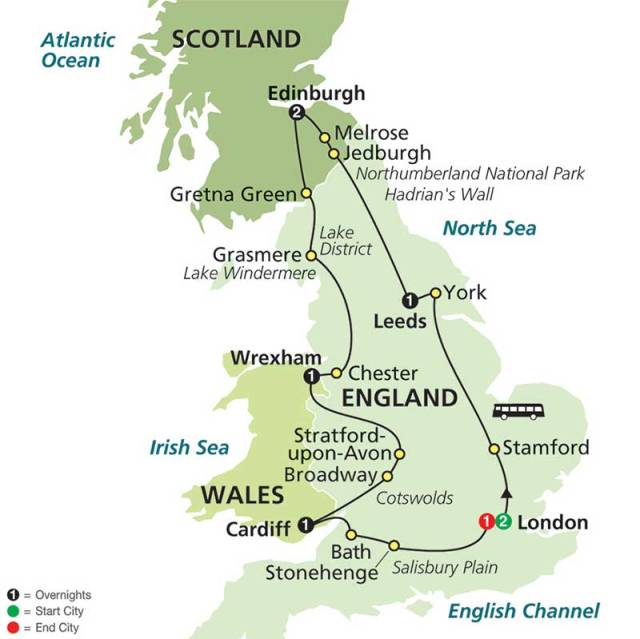
UKmap

As a result of this very exciting event, my thoughts have turned to Scottish marriages in Austen’s novels. Three of her books utilize the device of a Scottish elopement – Sense and SensibilityPride and Prejudice, and Mansfield Park – and it also receives mention in Love and Friendship:

“… Sophia and I experienced the satisfaction of seeing them depart for Gretna-Green, which they chose for the celebration of their Nuptials, in preference to any other place although it was at a considerable distance from Macdonald-Hall.” – Laura, Love and Friendship

Why Gretna? Anywhere in Scotland might do, and several other border towns were well known for performing runaway marriages. The Marriage Act of 1753, aimed at curtailing underage marriages as well as those contrived without parental consent, declared that the banns (an official wedding announcement) must be read on three consecutive Sundays during church services in the home parishes of both bride and groom. This gave anyone objecting to the marriage an opportunity to stop it. Faster marriages could take place by special license but only if the bride or groom were over twenty-one or had parental approval. So what’s your Regency Era Romeo and Juliet supposed to do? Make a run for the border, of course.

“We were within a few hours of eloping together for Scotland. The treachery, or the folly, of my cousin’s maid betrayed us. I was banished to the house of a relation far distant, and she was allowed no liberty, no society, no amusement, till my father’s point was gained.” – Colonel Brandon, Sense and Sensibility

The Old Blacksmith’s Shop, Gretna Green.

It was called marriage over the anvil because Scottish wedding ceremonies did not have to be performed by a clergyman and often the first person available to perform a ceremony would be the local blacksmith, stationed in proximity to the coaching inn. Only two witnesses were required to make the marriage legal. The practice continued unabated until 1856 when Scottish law was changed to require a twenty-one day residency before a ceremony could take place.

“You may not have heard of the last blow–Julia’s elopement; she is gone to Scotland with Yates.” Lady Bertram, Mansfield Park

Gretna remains a popular wedding destination. Tourists flock to the old smithy to touch the historic anvil, which is supposed to convey luck in love. An elopement to Scotland sounds romantic, but as countless Regency heroines learned the hard way the flight for the border was necessarily uncomfortable. Still, the aura of romance persists. I’m really looking forward to my sister and new brother-in-law’s Scottish celebration. Kilts and whiskey are sure to abound.

Posted in British history, Church of England, customs and tradiitons, Georgian England, Georgian Era, Guest Post, Jane Austen, Living in the Regency, marriage, marriage customs, marriage licenses, Regency era, Scotland | Tagged , , , , , , , , | Comments Off on Why Gretna Green? Marriage Over the Anvil, a Guest Post by Alexa Adams

A Closer Look at “The Disappearance of Georgiana Darcy”

JeffersDofGD

When writing any mystery, the author cannot just have a murderer and a victim. He/She must also have suspects, red herrings (false clues), motives, and deception. There must be a balance between the suspense and the story’s pace must be maintained. The red herrings must lead the reader (and likely the hero/heroine) astray, but they cannot hijack the story line. Then one must mix in the subplots without destroying the purpose of solving the crime. In addition, a cozy mystery has other distinct qualities.

Malice Domestic (http://nancycurteman.wordpress.com/2012/06/21/10-characteristics-of-a-cozy-mystery/) lists these characteristics of a cozy mystery:

1. The murder is either bloodless or committed before the story begins.

2. Violence, sex, and coarse language are held to a minimum or referenced off scene.

3. The villain is apprehended and punished at the end of the story.

4. The amateur sleuth who solves the crime is an upstanding person with good values and minor faults.

5. The amateur sleuth has an “occupation” unrelated to detective work. He/she is remarkably capable in deciphering clues and making connections.

6. Standard cozies involved greed, jealousy, or revenge as the motive.

7. The setting is limited in its pool of suspects (likely a small town, neighborhood, an English manor, etc.)

8. Investigating the crime makes the amateur detective the target of the murderer.

9. The cozy is designed for a gradual revelation of clues, which lead to a surprise ending.

10. A bit of romance parallels the main story line in the subplots.

Among my Austenesque works, Colonel Fitzwilliam remains my favorite. Although Austen provides us so little information on the good colonel, I have my own opinions of the man, and in Christmas at Pemberley and The Disappearance of Georgiana Darcy, I have discovered a gentleman I really liked. (Actually, for me, defining Colonel Fitzwilliam in Vampire Darcy’s Desire opened up new possibilities. I was not truly satisfied with my characterization of the Colonel in my earlier works.) He has more layers in Christmas at Pemberley and The Disappearance of Georgiana Darcy – was more than just Darcy’s sidekick. Readers will find him defined by his actions and his code of conduct.

Unlike some other Austenesque authors, I have called my Colonel Fitzwilliam “Edward” because “Edward” is my father’s name. In my later works, the Colonel has become a bit more of an alpha male, meaning he is successful in his chosen field. Although far from perfect, Edward Fitzwilliam acts from honor. He does not rest upon his laurels nor does he use his position as an earl’s son to bend people’s wills for his own benefit. The colonel possesses integrity; there are unwritten laws he will not violate. He is masculine, charismatic, and sensual. In each of my cozy mysteries and in my vampiric tale, Colonel Fitzwilliam does not simply rationalize what is best to solve Darcy’s dilemma, he acts to resolve the situation, and in a reversal of plots, it is Darcy who solves Fitzwilliam’s dilemma in The Prosecution of Mr. Darcy’s Cousin. 

To provide you an opportunity to explore The Disappearance of Georgiana Darcy, I thought I might provide you a taste of the story with three short excerpts and a bit about the historical setting. The Disappearance of Georgiana Darcy begins some three months after the close of Christmas at Pemberley. At the end of Christmas at Pemberley, Georgiana Darcy and Colonel Fitzwilliam have married in a rush before he must join Wellington at Waterloo. At the beginning of The Disappearance of Georgiana Darcy, Georgiana, in anticipation of her husband’s return to England, has traveled to Galloway in Scotland to prepare the Fitzwilliam property for their “honeymoon.” Alone on the Scottish moors, Georgiana receives word her beloved Edward has died on the battlefield. Distraught, she races from the home she had set in preparation for celebrating their joining.

Back at Pemberley, Darcy and Elizabeth are told in a hastily written letter from the Fitzwilliam housekeeper that the staff has conducted a search for Darcy’s sister on the Merrick moor, and Georgiana is presumed dead.The Disappearance of Georgiana Darcy is a cozy mystery based on the Scottish legends of the Merrick Moor and of Sawney Bean.

EXCERPT #1 (A girl has been found upon the moors and placed in a prison cell.)

Although the nightmare had returned, when a brace of candles floated into the room her eyes opened to devour the precious light. She pushed herself to a seated position and shoved several loose strands of hair behind her ears. She no longer possessed an idea of the number of days and nights she had spent curled up on the hard cot.

“I ‘ave brought ye a warmer gown—one of wool,” a female voice said. “If ye will change from yer fine cloth, I’ll be seeing to the stains.” The woman placed the expected food plate on the small stool. “I ’ave brought ye a bit of cheese this time.”

She watched the movements—memorizing the actions. How would it feel to walk across the room—to stretch her cramped muscles? By twisting awkwardly, she had managed to stand beside the cot and to mark her steps in place. To provide her weakened legs some much-required relief. But actually to take a step would be glorious. However, even the slightest shift on her part allowed the manacle to cut into her wrist.

“Come,” the woman said as she unlocked the metal cuff and assisted her to her feet. “There. Doest that not feel better?” The woman rubbed her hands with her own, and life rushed into the girl’s fingertips. She searched the woman’s face, but all she could discern was the lady’s age. Likely her late fifties. Silver-gray hair. Very strong hands. Not dainty like those of a woman of good breeding. Her ministrations indicated the woman did not readily retreat from hard work. Was she someone familiar? She could not be certain for the shadows robbed the girl of her savior’s other features. “Permit me to assist ye with yer laces and yer stays.”

Obediently, the girl turned her back to the woman. “My, yer skin be so smooth,” her captor said. The gown slipped down her body to the floor, and she stepped from it. A cold shiver rocked her spine, but she kept her focus on her surroundings. Where was she? Could she escape? The room resembled a cell–a place for prisoners, which is exactly what she was: someone’s prisoner, and she need never to forget that fact. Breaching the stone walls was not possible. She would require another form of flight.

“This gown should be making ye more comfortable.” The woman dropped the cloth over her head and began to lace the eyelets. Without her stays, she would be able to move more freely. “I ’ave also brought ye some gloves, as well as this strip of cloth. It’ll be keepin’ the shackle from cuttin’ into yer skin.”

She turned to the stranger. “Must I be returned to the cuff?” She wanted to explore her options more fully, but she permitted the woman to refasten the chain.

“I ’ave no right to order it otherwise.” Her captor’s gravelly voice held sadness, but the girl wondered if the woman offered an untruth. Something did not feel right. A shiver ran down the girl’s spine as she bent to accept the fastening.

“Then to whom should I plead my case?” she implored.

The woman’s mouth set in a tight line. “You’ll see in time.” The stranger straightened the gown’s line, tugging at the seams. “It be a bit tighter than I be thinkin’,” the woman said as she bent to retrieve the discarded traveling dress from the floor.

Without considering the gesture, the girl’s hand came to rest upon her abdomen. “My family shall pay whatever you ask for my release,” she said softly.

“Not yer husband?” the woman accused as she strode toward the door.

“My husband is dead,” the girl said softly into the empty room.

EXCERPT #2 (When Elizabeth Darcy discovers the news of Georgiana’s disappearance, she chases her husband into the Scottish countryside. She refuses to permit Darcy to face the possibility of Georgiana’s death alone.)

“How much farther, Mrs. Darcy?” Ruth Joseph asked as she shifted in the coach’s seat.

“Mr. Simpson reports we should be in Gretna Green within the hour. We shall spend the night. I would like to share some time outdoors with Bennet. I miss walking about with my son in my arms.”

“From Gretna, where to next?” Mary asked as she searched the landscape.

“Tomorrow, we shall turn toward Dumfries and then onto Thornhill. The next day we shall arrive at Kirkconnel.” Elizabeth, too, stared at the changing scenery. “The land seems so hard,” she said as she thought of her home. “I once considered Derby and the Peak District quite savage, especially as compared to Hertfordshire. Yet, it was not wild, but wonderfully majestic and as old as time. Now, I look at this rugged terrain and wonder about those who live in the Scottish Uplands.” Elizabeth sighed deeply. “Will these people have nurtured Mr. Darcy’s sister? Is she safe among those who eke out a living in this rocky soil? Will such people treat kindly a girl who until not two years prior shrank from her own shadow?”

EXCERPT #3 (When the girl who was held prisoner falls and strikes her head upon the harden floor, she is moved to a room where her captors can tend her.)

“There. There.” The woman patted the back of her hand. “Ye be safe. We let nothin’ happen to you.”

The girl opened her eyes wider. The room was cleaner and larger than she had expected. “Where am I?” She attempted to sit up, but the woman pressed her back.

“Might be best not to move too quickly,” she said.

The girl sank into the soft cushions. “I am thankful for your consideration, but I would know the name of my rescuers and of my current direction.”

The woman captured her hand. The warmth felt comforting against her chilled fingers; yet, a warning rang in her subconscious. She could not pinpoint the exact moment betrayal manifested itself upon the woman’s countenance, but it had made a brief appearance. The girl’s breathing shallowed in response. “We be the MacBethan family, and you be a guest at our home in Ayr. Me oldest son is the current laird. Of course, ye know me youngest Aulay.” She gestured to a young man in his twenties waiting patiently by the door. “One of arn men found ye and brung ye to arn home. Do ye remember any of wot I tell?”

The girl’s mouth twisted into a frown. “I recall a different room, and I remember your presenting me with a fresh gown.”

“And that be all ye remember?” The woman asked curiously. “Nothin’ of yer home? Yer family befoe ye came to Normanna Hall?”

The lines of the girl’s forehead met. A figure stroking her hair softly fluttered at the edges of her memory. And another of water sucking the air from her lungs. Tentatively, she said, “Only what I have previously said.” She would not speak more of the comfort the figure had given her until she knew what she faced in this house. The woman shot a quick glance at her son. Soothing the hair from her face, she told the girl, “The room must ’ave been the sick-room. Ye be lost on the moor for some time and be in despair. We not be knowin’ if’n ye wud live. The family be thankin’ the gods for yer recovery.”

The girl stared at the woman who tenderly stroked her arm; nothing of what this woman spoke rang true; yet, she could not dispute the obvious. She had suffered, and she was a stranger at Normanna Hall. “May I know your name?”

“Dolina MacBethan. Me late husband, may he rest in peace, and now me son be Wotherspoon.”

“Dost thou raise sheep?” The girl inquisitively asked before she could resist the urge to know more of her surroundings. She knew something of the derivation of the family’s peerage.

The woman pointedly dropped her hand. “The family surname comes from those who tend sheep. It be an honest trade. Although our fortunes are now tied to Galloway cattle. The land be not so fit for farmin’.”

The girl shoved herself to her elbows. “I meant no offense.” The woman’s tone reminded her that she would need to guard her impulsive tongue.

As she watched, her hostess purposely smiled; yet, the gesture did not appear genuine. “Of course, ye not be offering an offense. ye be part of the family. Or very near to being so.”

Suspicion returned, but the girl schooled her tone. “I am a part of the MacBethan family? When did that happy event occur?”

“It not be official.” The woman straightened her shoulders. “Ye have accepted Aulay’s plight, and we be planned a joinin’ in a week or so. As soon as ye be regainin’ yer strength.”

“I am to marry Aulay?” she said incredulously. “How can that be? Until a few hours ago, I held no memory of your son. He is a stranger to me.”

The woman turned quickly toward the door; she shooed her son from the room. “I be givin’ ye time to remember yer promise to this family, Lady Esme, and yer lack of gratitude for our takin’ ye to our bosom.”

“Lady Esme?” The girl called after her. “Is that my name?”

The woman turned to level a steady gaze on her. “Obviously, it be yer name. Ye be Lady Esme Lockhart, and ye be Aulay’s betrothed.

***

“Mam?” Aulay whispered in concern once they were well removed from the closed doorway. “Wot have ye done? She not be Lady Esme Lockhart.” he gestured toward the room where they detained the girl. “She no more be Lady Esme than I be Domhnall.”

Dolina shushed his protest. “Didnae ye hear the gel? She cannae remember her own name. We kin create the perfect mate fer ye. Do ye not comprehend? I knows ye be slow, but it must be as plain as the lines on me face. She cannae rescind her agreement without just cause. It not be the ’onorable thing to do. Besides, when the gel recalls the bairn she carries, then she’ll be glad to ’ave a man who’ll accept another’s child.”

“But we be tellin’ her the truth?” he insisted. “We tell the gel of ’er real family?”

His mother rolled her eyes in exasperation. “Certainly, we’ll tell the gel of ’er roots. But for now, she be Lady Esme.”


This is the Grey Man in Merrick. The snow hill behind him is Benyellary.

Book Blurb:

Shackled in the dungeon of a macabre castle with no recollection of her past, a young woman finds herself falling in love with her captor–the estate’s master. Yet, placing her trust in him before she regains her memory and unravels the castle’s wicked truths would be a catastrophe.

Far away at Pemberley, the Darcys happily gather to celebrate the marriage of Kitty Bennet. But a dark cloud sweeps through the festivities: Georgiana Darcy has disappeared without a trace. Upon receiving word of his sister’s likely demise, Darcy and wife, Elizabeth, set off across the English countryside, seeking answers in the unfamiliar and menacing Scottish moors.

How can Darcy keep his sister safe from the most sinister threat she has ever faced when he doesn’t even know if she’s alive? True to Austen’s style and rife with malicious villains, dramatic revelations and heroic gestures, this suspense-packed mystery places Darcy and Elizabeth in the most harrowing situation they have ever faced – finding Georgiana before it is too late.

This is the infamous “Murder Hole.” Legend has it that many years ago weary travelers were robbed and their bodies dumped in the hole never to be seen again. In summer there is a ring of reeds growing around the hole but none grow in it. Its also rumored that in even the coldest winters, the centre never freeze.

Posted in book excerpts, British history, gothic and paranormal, Industry News/Publishing, Jane Austen, legends and myths, Scotland, Ulysses Press, writing | Tagged , , , , , , , | 3 Comments

The Arts of Fencing and Dueling, a Guest Post from Rebecca Jamison

This post originally appeared on Austen Authors on 9 March 2018. 

For the last several months, I have gone to fencing classes with a group of ninth graders. The instructor told us that fencing has changed very little over the years. Originating in France, it’s been a sport for hundreds of years and was one of the first sports featured in the Olympics.

One of the first things that struck me about fencing is that it would be extremely difficult for any woman in a Regency gown to participate, just based on the fact that most moves involve deep lunging. Here are a few example from 19th Century fencing manuals:


No matter what we may have seen in Pride and Prejudice and Zombies, women really should be wearing pants if they wish to engage in swordplay.

Men, of course, practiced fencing during Jane Austen’s time, mostly as a sport, but also as a way to prepare for duels. Jane Austen mentions dueling twice in her books. Most of you are probably familiar with the slight mention in Pride and Prejudice when Mrs. Bennet fears that her husband will fight Mr. Wickham:

The whole party were in hopes of a letter from Mr. Bennet the next morning, but the post came in without bringing a single line from him. His family knew him to be, on all common occasions, a most negligent and dilatory correspondent; but at such a time they had hoped for exertion. They were forced to conclude that he had no pleasing intelligence to send; but even of that they would have been glad to be certain. Mr. Gardiner had waited only for the letters before he set off.

When he was gone, they were certain at least of receiving constant information of what was going on, and their uncle promised, at parting, to prevail on Mr. Bennet to return to Longbourn, as soon as he could, to the great consolation of his sister, who considered it as the only security for her husband’s not being killed in a duel.

This duel, of course, never happened, thanks in part to Mr. Darcy’s efforts. I can understand Mrs. Bennet’s concern, however. Dueling was a common way to settle disagreements during that time, and Mr. Wickham, being a young militiaman, would have definitely had the advantage.

Another duel did happen, however, in Sense and Sensibility, although it is only mentioned in the dialogue. This one was between Colonel Brandon and Mr. Willoughby. Colonel Brandon describes it thus:

One meeting was unavoidable…I could meet [Willoughby] in no other way. Eliza had confessed to me, though most reluctantly, the name of her lover; and when he returned to town, which was within a fortnight after myself, we met by appointment, he to defend, I to punish his conduct. We returned unwounded, and the meeting, therefore, never got abroad.

Since I have probably watched one too many duels in Western movies, I wasn’t sure what to make of the fact that they both returned unwounded. As it turns out most duels weren’t fought to the death. In fact, there was a great deal of etiquette involved. The Irish wrote up a “Code of Honor” for dueling in 1777 that specifies conduct for duels. I gather from the code that many duels ended just as Brandon and Willoughby’s, with both men remaining unwounded. They were, therefore, much like a modern fencing match. Others were fought to the first sight of blood or to the first wound. (Does this remind anyone else of the sword-fighting scene from The Princess Bride, where they agree to fight to the pain?)

I can also infer from reading the Irish “Code of Honor” that most duels during Jane Austen’s time were fought with pistols. Gunmakers produced special matched pistols for duels, and it seems that pistols weren’t considered any more dangerous than swords. My sister-in-law, who works as an emergency room doctor, has verified that knife wounds can be just as difficult to sew up as bullet wounds. In addition, pistols would place both parties on more equal ground than a sword fight, where a taller or fitter participant could have an unfair advantage.

A set of early 19th century dueling pistols from France


Generally, the offender could avoid the duel altogether by apologizing. However, if he wasn’t willing to apologize, the men exchanged two or three shots, after which the offender had another chance to apologize or explain his actions. They could also choose to keep firing until one of them was wounded. Another alternative was that the offended party could hit the offender with a cane until he was “disabled.” (They were apparently not allowed to fight with their fists.)

The rules for dueling with swords was as follows:

If swords are used, the parties engage till one is well-blooded, disabled or disarmed; or until, after receiving a wound, and blood being drawn, the aggressor begs pardon.

“N.B. A disarm is considered the same as a disable; the disarmer may (strictly) break his adversary’s sword; but if it be the challenger who is disarmed, it is considered ungenerous to do so.

“In case the challenged be disarmed and refuses to ask pardon or atone, he must not be killed as formerly; but the challenger may lay his sword on the aggressor’s shoulder, than break the aggressor’s sword, and say, ‘I spare your life!’ The challenged can never revive the quarrel, the challenger may.

I’d always considered dueling to be a barbarian practice. Watching the teenage boys participate in their fencing lessons, however, I could see how the milder forms of dueling–without wounds–could have a useful function in society. Perhaps when tempers grow heated, young people today could challenge each other to a fencing match or a video game battle to help bring out the offender’s apology. What do you think?

Posted in American History, British history, England, George Wickham, Georgian Era, Guest Post, history, Jane Austen, Pride and Prejudice, reading, tradtions, weaponry | Tagged , , , , , , , , , , , , | Comments Off on The Arts of Fencing and Dueling, a Guest Post from Rebecca Jamison