First, permit me to introduce you to Sir William Blackstone (1723-1780), who shaped much of what we know of law in the Georgian Era. Sir William Blackstone was an English jurist, justice and Tory politician most noted for his Commentaries on the Laws of England, which became the best-known description of the doctrines of the English common law.
Sir William Blackstone – Public Domain
While most of what Blackstone wrote about the law stayed the same for the next century, there were changes, elucidation, and further commentary.
Please note, for example, technically, a wife was not the husband’s property because that was impossible when they were considered by law as the “same person.”
Blackstone had written ~ Commentaries on the Laws of England, vol. 1 The Rights of Persons (1765):“By marriage, the husband and wife are one person in law: that is, the very being or legal existence of the woman is suspended during the marriage, or at least is incorporated and consolidated into that of the husband: under whose wing, protection, and cover, she performs everything; is said to be . . . under the protection and influence of her husband, her baron, or lord; and her condition during her marriage is called her coverture. Upon this principle, of an union of person in husband and wife, depend almost all the legal rights, duties, and disabilities, that either of them acquire by the marriage. . . . For this reason, a man cannot grant any thing to his wife, or enter into [contract] with her: the grant would be to suppose her separate existence; and to [contract] with her, would be only to [contract] with himself . . . .The husband is bound to provide his wife with necessaries [items necessary for subsistence] by law, as much as himself; and if she contracts debts for them, he is obliged to pay them; but for any thing besides necessaries, he is not chargeable. . . . If the wife be injured in her person or her property she can bring no action for redress without her husband’s concurrence, and in his name, as well as her own: neither can she be sued, without making the husband a defendant. . . . In criminal prosecutions, it is true, the wife may be indicted and punished separately . . . but, in trials of any sort, they are not allowed to be evidence for, or against each other; partly because it is impossible their testimony should be indifferent; but principally because of the union of person.
“By marriage . . . [the property] which belonged formerly to the wife, are by act of vested in the husband, with the same degree of property and the same powers, as the wife, when [unmarried], had over them. This depends entirely on the notion of an unity of person between the husband and wife; it being held that they are one person in law . . . . And hence it follows, that whatever personal property belonged to the wife before marriage, is by marriage absolutely vested in the husband. In real estate, he only gains title to the rents and profits during coverture. . . . But, in [other property], the sole and absolute property vests in the husband, to be disposed of at his pleasure, if he chuses [sic] to take possession of them . . . .
“The husband also (by the old law) might give his wife moderate correction. For as he is to answer for his misbehaviour, the law thought it reasonable to intrust him with this power of restraining her, by domestic chastisement, in the same moderation that a man is allowed to correct his servants or children; for whom the master or parent is also liable in some cases answer. . . . But, with us, in the politer reign of Charles the second, this power of correction began to be doubted. . . . Yet the lower rank of people, who were always fond of the old common law, still claim and exert their antient privilege: and the courts of law will still permit a husband to restrain a wife of her liberty, in case of any gross misbehavior.
“These are the chief legal effects of marriage during the coverture; upon which we may observe, that even the disabilities, which the wife lied under, are for the most part intended for her protection and benefit. So great a favourite is the female sex of the laws of England.“
By the time of the Regency, the areas in which a wife could act on her own and be considered as her own person had broadened somewhat, especially in the area of crime. No man wanted to be considered guilty of a crime his wife committed on her own or while associating with another. Though a husband and wife could not testify against each other on most cases, a man could defend himself by distancing himself from the crime of his wife. Also, such distancing would take place out of the court room before the trial began. Notice that a wife could be excused from committing some crimes if she did so because she was forced into it by her husband. The exceptions were murder and treason. In cases of treason and murder, the case was so serious that it justified the wife from not acting under the compulsion of the husband. That said, one wonders how far a wife would get if she opposed a husband when he committed treason or murder? Most likely, her corpse would be alongside the victim.
A wife could use the excuse that she only acted as her husband directed if both were implicated in a crime. By the late 18th century, at least, a wife could be convicted of a crime on her own. A Duchess would be tried in the House of Lords. She could try to implicate her husband but he would not automatically be indicted as a co conspirator.
Women and the Law
By Jone Johnson Lewis, About.com Guide
In the 19th century, American and British women’s rights–or lack of thereof–depended heavily on the commentaries of William Blackstone which defined a married woman and man as one person under the law. Here’s what William Blackstone wrote in 1765:
Source: William Blackstone. Commentaries on the Laws of England. Vol, 1 (1765), pages 442-445. The major elements of this coverture held true through the Regency.
By marriage, the husband and wife are one person in law: that is, the very being or legal existence of the woman is suspended during the marriage, or at least is incorporated and consolidated into that of the husband; under whose wing, protection, and cover, she performs everything; and is therefore called in our law-French a feme-covert, foemina viro co-operta; is said to be covert-baron, or under the protection and influence of her husband, her baron, or lord; and her condition during her marriage is called her coverture. Upon this principle, of a union of person in husband and wife, depend almost all the legal rights, duties, and disabilities, that either of them acquire by the marriage. I speak not at present of the rights of property, but of such as are merely personal. For this reason, a man cannot grant anything to his wife, or enter into covenant with her: for the grant would be to suppose her separate existence; and to covenant with her, would be only to covenant with himself: and therefore it is also generally true, that all compacts made between husband and wife, when single, are voided by the intermarriage. A woman indeed may be attorney for her husband; for that implies no separation from, but is rather a representation of, her lord.
And a husband may also bequeath anything to his wife by will; for that cannot take effect till the coverture is determined by his death. The husband is bound to provide his wife with necessaries by law, as much as himself; and, if she contracts debts for them, he is obliged to pay them; but for anything besides necessaries he is not chargeable. Also if a wife elopes, and lives with another man, the husband is not chargeable even for necessaries; at least if the person who furnishes them is sufficiently apprized of her elopement. If the wife be indebted before marriage, the husband is bound afterwards to pay the debt; for he has adopted her and her circumstances together. If the wife be injured in her person or her property, she can bring no action for redress without her husband’s concurrence, and in his name, as well as her own: neither can she be sued without making the husband a defendant. There is indeed one case where the wife shall sue and be sued as a feme sole, viz. where the husband has abjured the realm, or is banished, for then he is dead in law; and the husband being thus disabled to sue for or defend the wife, it would be most unreasonable if she had no remedy, or could make no defence at all. In criminal prosecutions, it is true, the wife may be indicted and punished separately; for the union is only a civil union. But in trials of any sort they are not allowed to be evidence for, or against, each other: partly because it is impossible their testimony should be indifferent, but principally because of the union of person; and therefore, if they were admitted to be witness for each other, they would contradict one maxim of law, “nemo in propria causa testis esse debet”; and if against each other, they would contradict another maxim, “nemo tenetur seipsum accusare.” But, where the offence is directly against the person of the wife, this rule has been usually dispensed with; and therefore, by statute 3 Hen. VII, c. 2, in case a woman be forcibly taken away, and married, she may be a witness against such her husband, in order to convict him of felony. For in this case she can with no propriety be reckoned his wife; because a main ingredient, her consent, was wanting to the contract: and also there is another maxim of law, that no man shall take advantage of his own wrong; which the ravisher would do, if, by forcibly marrying a woman, he could prevent her from being a witness, who is perhaps the only witness to that very fact.
In the civil law the husband and the wife are considered as two distinct persons, and may have separate estates, contracts, debts, and injuries; and therefore in our ecclesiastical courts, a woman may sue and be sued without her husband.
But though our law in general considers man and wife as one person, yet there are some instances in which she is separately considered; as inferior to him, and acting by his compulsion. And therefore any deeds executed, and acts done, by her, during her coverture, are void; except it be a fine, or the like manner of record, in which case she must be solely and secretly examined, to learn if her act be voluntary. She cannot by will devise lands to her husband, unless under special circumstances; for at the time of making it she is supposed to be under his coercion. And in some felonies, and other inferior crimes, committed by her through constraint of her husband, the law excuses her: but this extends not to treason or murder.
The husband also, by the old law, might give his wife moderate correction. For, as he is to answer for her misbehaviour, the law thought it reasonable to intrust him with this power of restraining her, by domestic chastisement, in the same moderation that a man is allowed to correct his apprentices or children; for whom the master or parent is also liable in some cases to answer. But this power of correction was confined within reasonable bounds, and the husband was prohibited from using any violence to his wife, aliter quam ad virum, ex causa regiminis et castigationis uxoris suae, licite et rationabiliter pertinet. The civil law gave the husband the same, or a larger, authority over his wife: allowing him, for some misdemeanors, flagellis et fustibus acriter verberare uxorem; for others, only modicam castigationem adhibere. But with us, in the politer reign of Charles the second, this power of correction began to be doubted; and a wife may now have security of the peace against her husband; or, in return, a husband against his wife. Yet the lower rank of people, who were always fond of the old common law, still claim and exert their ancient privilege: and the courts of law will still permit a husband to restrain a wife of her liberty, in the case of any gross misbehaviour.
These are the chief legal effects of marriage during the coverture; upon which we may observe, that even the disabilities which the wife lies under are for the most part intended for her protection and benefit: so great a favourite is the female sex of the laws of England.
Source: William Blackstone. Commentaries on the Laws of England. Vol, 1 (1765), pages 442-445.
I love the last line: “…so great a favourite is the female sex of the laws of England.”
I just wanted to say again: a wife might be her husband’s responsibility, but she was not actually his property.
Often, I am asked what might people of the Regency Era celebrate during the year. Now, these are some of the ones I know, though I cannot speak to the types of celebrations for all. Many were related to the Church of England, so “celebrations” as some of you might think were more subdued and a simple acknowledgement of the day.
For example, many who first read Jane Austen’s Pride and Prejudice do not understand the quote: “”Why, my dear, you must know, Mrs. Long says that Netherfield is taken by a young man of large fortune from the north of England; that he came down on Monday in a chaise and four to see the place, and was so much delighted with it, that he agreed with Mr. Morris immediately; that he is to take possession before Michaelmas, and some of his servants are to be in the house by the end of next week,” meaning, Mr. Bingley came to Netherfield Park before Michaelmas, which would be September 29. Have a look at the Timeline for Pride and Prejudice for more insights to that particular tale.
“There were four holidays of importance in the Regency Era: Lady Day, which celebrated the angel Gabriel’s visit to Mary (March 25), St. John’s Day, which coincided with Midsummer (June 24), Michaelmas (September 29), and Christmas (December 25). The four days were known as quarter days and were important celebrations on the English calendar. Of these, only Michaelmas and Christmas are named in Jane’s writings, with Michaelmas mentioned twelve times in five out of six novels, Northanger Abbey excepted, and Christmas referenced at least once or more per novel. But although named, Jane never describes Michaelmas or its traditions, and Christmas, for the most part, is only briefly referenced.” [Jane Austen Literacy Foundation]
1 January – New Year’s Day is observed on 1 January. The festivities begin a day before on 31 December when parties are held to bring in the new year. Public events are also organised where firework displays are arranged.
According to Whistler (2015), during the 18th century, first footing was not known in the South of England. Instead, “glasses were raised at quarter to twelve to “the Old Friend-Farewell!Farewell!Farewell!” and then at midnight to “the New Infant” with three ‘ Hip, hip horrahs!'”. Other customs included dancing in the New Year. In the North of England, first footing has been traditionally observed involving opening the door to a stranger at midnight. The guest is seen as a bringer of good fortune for the coming year.
6 January (or thereabouts) – Plough Monday is the traditional start of the English agricultural year. Plough Monday is the first Monday after Epiphany, 6 January. References to Plough Monday date back to the late 15th century. The day before Plough Monday is referred to as Plough Sunday, in which a ploughshare is brought into the local Christian church (such as the Catholic, Lutheran, and Anglican traditions) with prayers for the blessing of human labour, tools, as well as the land. In the fifteenth century, churches lit candles called “plough lights” to bless farmworkers. Some parishes kept a plough in the church for those who did not own one, and in some parishes, the plough was paraded around the village to raise money for the church. This practice seems to have died out after the Reformation.
13 January – The feast of St Hilary began the Hilary term at schools and law courts–at least, it was called Hilary term, though sometimes it started a week or so later than the actual day on the calendar.
30 January – martyrdom of King Charles I – King Charles the Martyr, or Charles, King and Martyr, is a title of Charles I, who was King of England, Scotland and Ireland from 1625 until his execution on 30 January 1649. The title is used by high church Anglicans who regard Charles’s execution as a martyrdom. His feast day in the Anglican calendar of saints is 30 January, the anniversary of his execution in 1649. The cult of Charles the Martyr was historically popular with Tories. The observance was one of several “state services” removed in 1859 from the Book of Common Prayer of the Church of England and the Church of Ireland. [“Worship > Common Worship > The Calendar > Holy Days”. Prayer & Worship. Church of England.]
2 February – Candlemas, also known as the Feast of the Presentation of Jesus Christ, the Feast of the Purification of the Blessed Virgin Mary, or the Feast of the Holy Encounter, is a Christian feast day commemorating the presentation of Jesus at the Temple by Joseph and Mary.
Falling Between 3 February and 9 March – Shrove Tuesday or “Moveable Feast” (also known as Pancake Tuesday or Pancake Day) is the final day of Shrovetide, marking the end of pre-Lent. Lent begins the following day with Ash Wednesday. Shrove Tuesday is observed in many Christian countries through participating in confession; the ritual burning of the previous year’s Holy Week palms; finalizing one’s Lenten sacrifice; as well as eating pancakes and other sweets. Many Christians, including Anglicans, Lutherans, Methodists and Roman Catholics, make a special point of self-examination, of considering what wrongs they need to repent, and what amendments of life or areas of spiritual growth they especially need to ask for God’s help.
14 February – Saint Valentine’s Day, also known as the Feast of Saint Valentine,[9] is celebrated annually on 14 February. Originating as a Western Christian feast day honouring one or two early saints named Valentinus, Saint Valentine’s Day is recognized as a significant cultural, religious, and commercial celebration of romance and romantic love, although it is not a public holiday.
25 March – Lady’s Day – In the Western liturgical year, Lady Day is the common name in some English-speaking and Scandinavian countries of the Feast of the Annunciation, celebrated on 25 March to commemorate the annunciation of the archangel Gabriel to the Virgin Mary that she would bear Jesus Christ, the Son of God.
Late March – The Church also had some days like Mothering Sunday. (Mothering Sunday is a day honouring mother churches, the church where one is baptised and becomes “a child of the church”, celebrated since the Middle Ages in the United Kingdom, Ireland and some Commonwealth countries on the fourth Sunday in Lent.] The date varies but it is, generally, in the latter part of March.
April 23 – St George Day – In the calendar of the Lutheran Churches, those of the Anglican Communion, and the General Calendar of the Roman Rite, the feast of Saint George is normally celebrated on 23 April. Common Worship (meaning the Church of England) says “When St George’s Day … falls between Palm Sunday and the Second Sunday of Easter inclusive, it is transferred to the Monday after the Second Sunday of Easter,” but it does not say what to do if that day is 25 April – normally St Mark’s Day. This will next occur in 2033.
Hocktide is a very old term used to denote the Monday and Tuesday in the second week after Easter. It was an English mediaeval festival; both the Tuesday and the preceding Monday were the Hock-days. Together with Whitsuntide and the twelve days of Christmastide, the week following Easter marked the only vacations of the husbandman’s year, during slack times in the cycle of the year when the villein ceased work on his lord’s demesne, and most likely on his own land as well. Although the Hocktide celebrations take place over several days, the main festivities occur on the Tuesday, which is also known as Tutti Day. The Hocktide Council, which is elected on the previous Friday, appoints two Tutti Men whose job it is to visit the properties attracting Commoner’s Rights. Formerly they collected rents, and they accompanied the Bellman (or Town crier) to summon commoners to attend the Hocktide Court in the Town Hall, and to fine those who were unable to attend one penny, in lieu of the loss of their rights.
These dates vary within a few days each calendar year:
Ash Wednesday
Easter and Easter Monday and Tuesday
Whitsunday and Monday ( Pentecost)
Mid May – Rush Sunday – Before churches had paved floors, rushes were strewn to keep the earth floors sweet ,and it was common to make a special occasion from their annual renewal. The festival was widespread in Britain from the Middle Ages and well established by the time of Shakespeare, but had fallen into decline by the beginning of the 19th century, as church floors were flagged with stone. The custom was revived later in the 19th century, and is kept alive today as an annual event in a number of towns and villages in the north of England. Nowadays, Rushcart is a tradition of rushbearing that originated in north-west England, whereby decorated carts were loaded with rushes and taken to the local church, accompanied by Morris dancers and other entertainment.
Historically, on May Day Eve, fires were lit and sacrifices offered to obtain a blessing on the newly-sown fields. According to Hutton (2001), England did not observe May Day Eve or May Day fires on a wide scale. There are however isolated instances of such fires in Nottinghamshire and Lincolnshire. However, the exceptions are Cumbria, Devon and Cornwall where May Day Eve or May Day fires were lit.[35] May-Day Eve night was also called ” Mischief night”. According to Roud (2006), people in Lancashire, Yorkshire and surrounding counties played tricks on May Day Eve. Roud also states that there are isolated examples of an English folk belief that May Day Eve was connected to fairies. At the turn of the twentieth century, people in Herefordshire at Kingstone and Thruxton left “trays of moss outside their doors for the fairies to dance upon”.
Maypole dancing 2009 on the Village Green in Tewin, near Welwyn Garden City, with the Rose and Crown Public House in background ~ Wikipedia ~ CC BY-SA 2.0
Start of Summer on the first day of May, the traditional English May Day rites and celebrations include crowning a May Queen and celebrations involving a maypole. Historically, Morris dancing has been linked to May Day celebrations. Much of this tradition derives from the pagan Anglo-Saxon customs held during “Þrimilci-mōnaþ”(the Old English name for the month of May meaning Month of Three Milkings) along with many Celtic traditions. May Day has been a traditional day of festivities throughout the centuries, most associated with towns and villages celebrating springtime fertility (of the soil, livestock, and people) and revelry with village fetes and community gatherings. Seeding has been completed by this date and it was convenient to give farm labourers a day off. Perhaps the most significant of the traditions is the maypole, around which traditional dancers circle with ribbons. The spring bank holiday on the first Monday in May was created in 1978; May 1 itself is not a public holiday in England (unless it falls on a Monday).
Jack in the Green, also known as Jack o’ the Green, is an English folk custom associated with the celebration of May Day. It involves a pyramidal or conical wicker or wooden framework that is decorated with foliage being worn by a person as part of a procession, often accompanied by musicians. Jack in the Green emerged within the context of English May Day processions, with the folklorist Roy Judge noting that these celebrations were not “a set, immutable pattern, but rather a fluid, moving process, which combined different elements at various times”. Judge thought it unlikely that the Jack in the Green itself existed much before 1770, due to an absence of either the name or the structure itself in any of the written accounts of visual depictions of English May Day processions from before that year.
The Jack in the Green developed out of a tradition that was first recorded in the seventeenth century, which involved milkmaids decorating themselves for May Day. In his diary, Samuel Pepys recorded observing a London May Day parade in 1667 in which milk-maids had “garlands upon their pails” and were dancing behind a fiddler. A 1698 account described milk-maids carrying not a decorated milk-pail, but a silver plate on which they had formed a pyramid-shape of objects, decorated with ribbons and flowers, and carried atop their head. The milk-maids were accompanied by musicians playing either fiddle or bag-pipe, and went door to door, dancing for the residents, who gave them payment of some form. In 1719, an account in The Tatler described a milk-maid “dancing before my door with the plate of half her customers on her head”, while a 1712 account in The Spectator referred to “the ruddy Milk-Maid exerting herself in a most sprightly style under a Pyramid of Silver Tankards”. These and other sources indicate that this tradition was well-established by the eighteenth century.
Revivals of the custom have occurred in various parts of England; Jacks in the Green have been seen in Bristol, Oxford and Knutsford, among other places. Jacks also appear at May Fairs in North America. In Deptford the Fowler’s Troop and Blackheath Morris have been parading the tallest and heaviest modern Jack for many decades, either in Greenwich, Bermondsey and the Borough or at Deptford itself.
May Day Hastings East Sussex. Jack in the Green Festival when Hastings is host to Morris Dancers from far and wide. Picture shows Green Jack together with the Mad Jack Morris behind, named after Mad Jack Fuller from Brightling. Jack represents an ancient symbol of nature and fertility. Customs of this nature go back to the 16-17 century. ~ Wikipedia ~ CC BY-SA 2.0
19May (or thereabouts) – Queen Charlotte’s Ball was conducted in celebration of the Queen’s birthday on May 19. The Queen Charlotte’s Ball is an annual British debutante ball. The ball was founded in 1780 by George III as a birthday celebration in honour of his wife, Charlotte of Mecklenburg-Strelitz, for whom the ball is named. The Queen Charlotte’s Ball originally served as a fundraiser for the Queen Charlotte’s and Chelsea Hospital. The annual ball continued after Queen Charlotte’s death in 1818, but was criticised by the British royal family in the 1950s and 1960s and folded in 1976.
1860 Debutantes – Public Domain
29 May – Also known as Restoration Day, Oak Apple Day or Royal Oak Day, was an English public holiday, observed annually on 29 May, to commemorate the restoration of the English monarchy in May 1660.[48] In some parts of the country the day is still celebrated. In 1660, Parliament passed into law “An Act for a Perpetual Anniversary Thanksgiving on the Nine and Twentieth Day of May”, declaring 29 May a public holiday “for keeping of a perpetual Anniversary, for a Day of Thanksgiving to God, for the great Blessing and Mercy he hath been graciously pleased to vouchsafe to the People of these Kingdoms, after their manifold and grievous Sufferings, in the Restoration of his Majesty…” The public holiday was formally abolished in the Anniversary Days Observance Act 1859, however, events still take place at Upton-upon-Severn in Worcestershire, Marsh Gibbon in Buckinghamshire, Great Wishford in Wiltshire (when villagers gather wood in Grovely Wood), and Membury in Devon. The day is generally marked by re-enactment activities at Moseley Old Hall, West Midlands, one of the houses where Charles II hid in 1651. Celebrations include marching at Fownhope in Herefordshire holding flower and oak leaf decorated sticks. At All Saints’ Church, Northampton, a statue of Charles II is garlanded with oak leaves at noon every Oak Apple Day, followed by a celebration of the Holy Communion according to the Book of Common Prayer.
4 June – King George III’s birthday
23/24 June – Midsummer Eve/Saint John’s Eve – The name ‘midsummer’ is attested in Old English as midsumor, and refers to the time around the summer solstice. Astronomically, the solstice falls on 20, 21 or 22 June, but traditionally, in northern Europe, the solstice and midsummer was reckoned as the night of 23–24 June, with summer beginning on May Day. In England, the earliest reference to this custom occurs in the 13th century AD, in the Liber Memorandum of the parish church at Barnwell in the Nene Valley, which stated that parish youth would gather on the day to light fires, sing songs and play games. A Christian monk of Lilleshall Abbey, in the same century, wrote: In the worship of St John, men waken at even, and maken three manner of fires: one is clean bones and no wood, and is called a bonfire; another is of clean wood and no bones, and is called a wakefire, for men sitteth and wake by it; the third is made of bones and wood, and is called St John’s Fire.
June – Each June, Appleton Thorn hosts the ceremony of “Bawming the Thorn”. The current form of the ceremony dates from the 19th century, when it was part of the village’s “walking day”. It involved children from Appleton Thorn Primary School walking through the village and holding sports and games at the school. Bawming means “decorating” – during the ceremony the thorn tree is decorated with ribbons and garlands. According to legend, the hawthorn at Appleton Thorn grew from a cutting of the Holy Thorn at Glastonbury, which was itself said to have sprung from the staff of Joseph of Arimathea, the man who arranged for Jesus’s burial after the crucifixion.
The hawthorn at Appleton is supposedly a descendant of the Holy Thorn at Glastonbury, which was itself said to have sprung from the staff of Joseph of Arimathea. Local children celebrate with a festival each June (a modern invention). ~ Wikipedia ~ CC BY-SA 2.0
12 August – The Prince of Wales’ birthday (later known as King George IV)
Mid August – Lammas, also known as Loaf Mass Day, is a Christian festival in the liturgical calendar to mark the blessing of the First Fruits of harvest, with a loaf of bread being brought to the church for this purpose. Lammas is celebrated on 1 August, annually.] The name originates from the word “loaf” in reference to bread and “Mass” in reference to the Christian liturgy in which Holy Communion is celebrated. It marks the annual wheat harvest, and is the first harvest festival of the year. On this day it is customary to bring to church a loaf made from the new crop. The loaf is blessed, and in Anglo-Saxon England, lammas bread was broken into four bits, which were to be placed at the four corners of the barn, to protect the garnered grain. Christians also have church processions to bakeries, where those working therein are blessed by Christian clergy. The term Lammas “is a contraction of the ninth-century Anglo-Saxon expression Hláf mæsse, “from the hallowed bread [hláf—hence “loaf”] which is hallowed on Lammas Day”] According to Wilson (2011), “at Lammas, the fruits of the first cereal harvest were baked and used as an offering to make the grain storage barn safe”.
22/23 September – Harvest Festival ~ Thanks have been given for successful harvests since pagan times. Harvest festival is traditionally held on the Sunday near or of the Harvest Moon. This is the full Moon that occurs closest to the autumn equinox (22 or 23 September). The celebrations on this day usually include singing hymns, praying, and decorating churches with baskets of fruit and food in the festival known as Harvest Festival.
29 September – Michaelmas was the beginning of school and law court terms.
October 31 – Allhallowtide is celebrated. The festival begins on 31 October. The term Halloween is derived from the phrase All Hallows Even which refers to the eve of the Christian festival of All Saint’s held on 1 November. It begins the season of Allhallowtide, the time in the liturgical year dedicated to remembering the dead, including saints (hallows), martyrs, and all the faithful departed.
October 31 – The practice of Souling originates in the medieval era of Christian Europe, in which soul cakes are given out to soulers (mainly consisting of children and the poor) who go from door to door during the days of Allhallowtide singing and saying prayers “for the souls of the givers and their friends”. The customs associated with Souling during Allhallowtide include or included consuming and/or distributing soul cakes, singing, carrying lanterns, dressing in disguise, bonfires, playing divination games, carrying a horse’s head and performing plays. Souling is still practised in Cheshire and Sheffield. In England, historically Halloween was associated with Souling which is a Christian practice carried out during Allhallowtide and Christmastide.
5 November – Guy Fawkes Day or Bonfire Night – Guy Fawkes Night, also known as Guy Fawkes Day, Bonfire Night and Firework Night, is an annual commemoration observed on 5 November, primarily in the United Kingdom. Its history begins with the events of 5 November 1605, when Guy Fawkes, a member of the Gunpowder Plot, was arrested while guarding explosives the plotters had placed beneath the House of Lords. Celebrating the fact that King James I had survived the attempt on his life, people lit bonfires around London; and months later, the introduction of the Observance of 5th November Act enforced an annual public day of thanksgiving for the plot’s failure.
23 November – St Clement’s Day – St Clement’s Day is celebrated on 23 November. Modern observances include a gathering of blacksmiths at the National Trust’s Finch Foundry in Sticklepath “where they practise their art and celebrate their patron saint, St Clement.” Historically, the festival was celebrated in many parts of England and involved the playing of divination games with apples. The festival was known as Bite-Apple night in places such as Wednesbury (Sandwell) and Bilston (Wolverhampton) when people went “Clementing” in a similar manner to Souling.
25 December to 5 January – the Twelve Days of Christmas or Christmastide
25 December – Christmas – Christmas is an annual commemorating the birth of Jesus Christ, observed on 25 December. A feast central to the Christian liturgical year, it is preceded by the season of Advent or the Nativity Fast and initiates the season of Christmastide, which historically in England lasts twelve days and culminates on Twelfth Night.
December 31 – New Year’s Eve or First Footing – According to Whistler (Whistler, Laurence (5 October 2015). The English Festivals. Dean Street Press. ISBN9781910570494 – via Google Books), during the 18th century, first footing was not known in the South of England. Instead, “glasses were raised at quarter to twelve to “the Old Friend-Farewell!Farewell!Farewell!” and then at midnight to “the New Infant” with three ‘ Hip, hip horrahs!'”. Other customs included dancing in the New Year. In the North of England, first footing has been traditionally observed involving opening the door to a stranger at midnight. The guest is seen as a bringer of good fortune for the coming year.
Also, during the years of the war, especially, the government would announce certain days as fast or thanksgiving days when people were to go to church to either mourn or rejoice.
Another writer some of you might know is Shannon Donnelly. She has in the past recommend getting a copy of a Book of Days for your research shelf—it’s a very useful source, It is also quite expensive coming in at $135 for a copy, but I thought I would mention it here. I can attest that it does give far more details than raw dates. But one must know which raw dates to look up for religious days, Quarter Days and Lady Day, etc. More than fifty dates are listed in different places as days where various offices were closed. It is not always easy to tell which date is celebrated as a royal birthday, for instance. I guess what I am saying is the book is useful, but one must have a “working knowledge” of the typical dates/celebrations/tax days, etc., common to the period.
The Book of Days does not explain all the dates named as holidays in 1819.
That being said, please check out Ms. Donnelly’s post on Regency Holiday Traditions. It gives more than a list of dates, including some insights into the celebrations themselves, food served, etc. Well worth the read.
NOTE: Many of the descriptions for the holidays were served via Wikipedia.
When one’s King is considered mentally ill, one might think there was be some sympathy for the populace, but there assuredly was not.
First, let us look to King George III. King George III was subject to periods of mental illness, especially during the latter years of his reign. The condition is now believed to be porphyria, an inherited disease that presents itself in periods of delirium and hallucinations. Porphyria is NOT insanity. In November 1788, George III suffered his first bout of madness. The government was thrown into a Regency crisis.
The Mayo Clinic tells us, “Porphyria (por-FEAR-e-uh) refers to a group of rare disorders that result from a buildup of natural chemicals called porphyrins in the body. Porphyrins are needed to make heme, a part of hemoglobin. Hemoglobin is a protein in red blood cells. It carries oxygen to the body’s organs and tissues. Symptoms of porphyria vary, depending on the specific type of porphyria and how severe it is. Porphyria is usually inherited. One or both parents pass along a changed gene to their child.”
It is likely that George III’s brother William, Duke of Gloucester, suffered from the same illness as he exhibited similar symptoms. Though I have not read any works of research that proves this idea, it has also been suggested that possibly George IV and even his daughter Princess Charlotte may have inherited the disease too.
Let us look at the case of Lord Portsmouth as an example of the time. John Charles Wallop, 3rd Earl of Portsmouth (18 December 1767 – 14 July 1853), styled Viscount Lymington until 1797, was a British nobleman and lunatic.
Portsmouth’s estate was placed under the control of four trustees, for many knew of his bizarre and sadistic behaviors. He was know to beat his servants, as well as his horses, until they bled. He reportedly killed cattle with an axe. He took pleasure in attending funerals and insisted on tolling the bells at Hurstbourne.
In November 1799, Portsmouth married Grace Norton, the sister of his trustee, William Norton, 2nd Baron Grantley. Another in favor of the marriage was Portsmouth’s brother, Honourable Newton Fellowes, the heir to the earldom. As Grace was 47 at the time of the marriage, she would likely produce an heir to replace Newton. For a period, Grace “managed” to keep Portsmouth’s eccentricity from common knowledge and to control his “fits” when they happened. However, in 1808, Portsmouth’s behaviors had worsened, and one of Grace’s relations was added to the household to keep the mania in tact. That relation was one Dr. John Combe.
At first the Lord Chancellor who deals with the insane, infants, and rich orphans– refused to consider the matter, but the brother kept pushing. First a commission was appointed to investigate Portsmouth’s mental health. No health privacy laws existed at the time, so the investigation and witnesses were heard in a public room of a pub. It took more than 5 years for the commission to declare that the earl had no more idea of marriage than his dog did.
Grace died in 1813, and one of Portsmouth’s solicitors, John Hanson, took the opportunity to arrange a marriage of his daughter, Mary Anne, to the earl. None of the other trustees were aware of this until after the fact. Lord Byron gave the bride away. However, when Portsmouth’s brother Newton attempted to have Portsmouth declared insane, Bryon’s affidavit was instrumental in having the charge dismissed. That did not mean Mary Anne did anything to assist her husband in his mania. Instead, she carried on an adulterous affair with William Alder, who fathered three children with her.
A second petition to declare Portsmouth insane came at his nephew Henry Wallop Fellowes’s hand. This was in 1823. The new commission de lunatico inquirendo proved how badly Portsmouth had been treated by Mary Ann and her lover, who gone so far as to beat the earl. Portsmouth was judged to have been insane since 1809. Mary Anne’s marriage was annulled and her children declared as “bastards.” Moreover, a judgment for the £40,000 cost of the trial was issued against her, and she fled abroad.
Portsmouth died in 1853; his brother Newton succeeded him for less than half a year before his own death.
One of the reasons I took on this post is because I am often asked if mental illness could be used in the court system of the time as evidence. Here is what I know with some certainty …
If the person committed a murder, a coroner’s inquest would be required and then a proper trial. Unless the person is raving at the time so that she couldn’t be tried, it is the judge and jury that would be required to declare the person who committed the crime as innocent by reason of insanity.
If such would occur, then the person’s relatives would be required to pay for a private asylum. The person accused of the murder would have to be guarded so most families would have a house they owned turned into a prison/asylum for their relative and employ guards and attendants to care for the person.
The government did not really have a decent place for the criminally insane.
Sanitariums were a later development.
A coroner’s inquest had to be held over all dead bodies that presented as other than normal — a man on his sick bed with doctor in attendance – even if it was an accident.
Most crimes had to be prosecuted by the individual victim or the family. Murder would be a crown case. If a peer was dead and murder was suspected, all the government agencies would be urging investigation.
Public Domain
Finally, let us take a quick look at the case of Mary Lamb. Mary Anne Lamb (3 December 1764 – 20 May 1847) was an English writer. She is best known for the collaboration with her brother Charles on the collection Tales from Shakespeare (1807). Mary suffered from mental illness, and in 1796, aged 31, she stabbed her mother to death and seriously injured her father during a mental breakdown.
She was confined to private mental facilities for most of her remaining life. Her father would not have her in the house so she was placed in a private asylum until he died and then she went to live with her brother. They lived together until he died. They wrote books together and fostered a child together. If she felt an attack of madness coming on, she would return to the asylum for a short stay.
Her rank isn’t important. What he can afford is. He wouldn’t want her in Bedlam where the treatment was terrible.
Recently, I had another writer ask me about whether a physician could recognize “infertility” in a woman during the Georgian Era.
First, I had to determine whether the woman was a widow, meaning she did not give birth to a child by her first husband. How long was she married the first time?
When I researched this, I found information in IN THE FAMILY WAY by Judith Schneid Lewis very helpful. There are 16 copies available on AbeBooks. Kind of expense, but well worth the money for learning something of the Georgian Era and feminine care. Austen-inspired author, Sophie Turner, gave it a 5 star review on Goodreads. “This is one of the best books I’ve ever read on this era. It’s about far more than childbirth, and delves into the changing role of marriage during this time (from one of duty to family to a more emotional union), as well as the changing role of extended family.”
One might also look to Domestic medicine: or, a treatise on the prevention and cure of diseases by regimen and simple medicines by William Buchan, M.D.
Blurb: The 18th century was a wealth of knowledge, exploration and rapidly growing technology and expanding record-keeping made possible by advances in the printing press. In its determination to preserve the century of revolution, Gale initiated a revolution of its own: digitization of epic proportions to preserve these invaluable works in the largest archive of its kind. Now for the first time these high-quality digital copies of original 18th century manuscripts are available in print, making them highly accessible to libraries, undergraduate students, and independent scholars. Medical theory and practice of the 1700s developed rapidly, as is evidenced by the extensive collection, which includes descriptions of diseases, their conditions, and treatments. Books on science and technology, agriculture, military technology, natural philosophy, even cookbooks, are all contained here.
I think there may even be information in THE MAKING OF MAN-MIDWIFERY by Adrian Wilson.
Blurb: The Making of Man-Midwifery: Childbirth in England, 1660-1770~ In England in the seventeenth century, childbirth was the province of women. The midwife ran the birth, helped by female “gossips”; men, including the doctors of the day, were excluded both from the delivery and from the subsequent month of lying-in.
But in the eighteenth century there emerged a new practitioner: the “man-midwife” who acted in lieu of a midwife and delivered normal births. By the late eighteenth century, men-midwives had achieved a permanent place in the management of childbirth, especially in the most lucrative spheres of practice.
Why did women desert the traditional midwife? How was it that a domain of female control and collective solidarity became instead a region of male medical practice? What had broken down the barrier that had formerly excluded the male practitioner from the management of birth?
This confident and authoritative work explores and explains a remarkable transformation–a shift not just in medical practices but in gender relations. Exploring the sociocultural dimensions of childbirth, Wilson argues with great skill that it was not the desires of medical men but the choices of mothers that summoned man-midwifery into being.
To the best of my research, I do not know of a means to examine a woman for infertility in those days, that is to say, beyond a lack of her periods or very irregular periods or some sort of injury.
Some of the methods I recall being recommended by the accoucheurs were: a change in diet for the lady (less beef and red wine, generally lighter, more vegetable diet), cold baths, going away to a watering place/spa. Also periods of abstinence from sex (believing the woman’s system was somehow over-tired by it and a rest would help). Bloodletting was also something done. Although I have seen just a few suggestions that the husband’s fertility might be the issue, generally what I have read indicates that it was not popular for physicians to say so. They probably did not want to offend the gentlemen and since heirs were desired, would keep coming up with things for the ladies to try.
As with most medical issues of the time period, there were advertisements by doctors who said that they could cure infertility by Galvanism.
However, these methods usually worked in married women because the medical community really did not have a way to say that a virgin was barren.
Nancy Mayer has previously mentioned that there may have been other quack remedies. A midwife might have other suggestions, herbs maybe. It depends on what class your heroine belongs to and whom she might consult. The Regency was a time when the upper class were moving away from using midwives and using male accoucheurs instead. I believe both are story options depending on the situation.
Here is a scene from my Regency novel, A Touch of Scandal, Book 1 of the Realm Series. In it you will see how Lady Eleanor Fowler attempts to assist her future sister-in-law who is in labour. This excerpt from Chapter 12 speaks to the way women of the Regency era used herbs, etc., to increase their ability to deliver a child.
“What in the world is this?” Ella exclaimed as she assisted Lady Linworth undress Georgina.
Lady Amsteadt looked at the linen sash fastened about her middle. “It is a Tansy Bag. The midwife at home insisted I wear it. She and Thomas feared the journey from Devon would be too strenuous on a woman so far advanced, but it was important for me to be home with Father and all.” Ella nodded her understanding; she would have done the same even for William Fowler, but even with that knowledge she wondered if the bag had exasperated Georgina’s condition.
Removing it, Ella laid the poultice on a nearby table. “Tell me what the midwife said of the bag.” Other than being curious about the herbal medicine, Ella wished to keep Georgina Whittington’s mind from the situation.
“Mrs. Woodson swore the bag would prevent a miscarriage if a woman was frightened somehow or there was some other accidental cause.” Georgina took several deep breaths. “You do not think the bag hurt my child, do you, Lady Eleanor? I would die if my foolishness would cause me to lose this child.”
Ella braced Lady Amsteadt’s back as the young woman’s mother slipped a muslin gown over her daughter’s head and shoulders. “I cannot believe you could do anything foolish, Lady Amsteadt,” Ella assured, although Georgina’s description had increased Ella’s concerns regarding the folk remedy. She smoothed the woman’s hair from her face as she removed the pins holding the chignon in place.
“It is just that Mrs. Woodson told me to wear the sack from time to time, sometimes in the morning and sometimes at night.” Ella noted how fear had returned to Georgina’s countenance. “I thought, you see…” She caught Ella’s hand tightly. “I thought if sometimes was good to prevent…to prevent a miscarriage, using the bag every day in the morning and at night would increase my chances of a healthy delivery.”
“Nothing you did was in error,” Lady Linworth declared. “Do not go on so, Georgina.”
Tears misted the girl’s eyes. “But what if it was wrong, Mama?”
Ella took control. “Other than a good handful of leaves of tansy, was there anything else in the sack?”
“Nothing…I swear by all that is holy; there was nothing else in the sack, Lady Eleanor. We just sewed the leaves in the sack of gill and heated it upon a warming pan. Then I laid the bag across my navel,” Georgina’s voice rose with the recitation.
“Georgina, listen to me.” Ella cupped the girl’s chin in her hands, forcing James’s sister to look directly at her. “Lady Linworth and I will let nothing happen to this child. You must believe me.”
For elongated seconds Lady Amsteadt stared deeply at Ella. “I believe you, Lady Eleanor.” Ella prayed she had not made the mistake of promising something she could not deliver. However, it seemed important to win the girl’s trust until assistance arrived.
As Ella picked up the discarded clothing about the room, Lady Linworth came up behind her and whispered, “Could the treatment have hurt Georgina?”
“Probably not the tansy leaves, but maybe the heat,” Ella murmured. “Truthfully, I have no idea. Do you suppose the midwife will arrive soon?”
“I pray so,” James’s mother continued. “What does either of us know of delivering a child?”
There are several versions of how the term “Black Friday” originated. Some say “Black Friday” came about because to the chaos in Philadelphia in the 1950s at the traditional Army-Navy football game. This was a game we always watched in our family for there are more than a few members who had served in the U.S. Navy among us.
Anyway, people flooded into the city on Friday for the game on Saturday. Reportedly, this created a burden for what we now call the “infrastructure” and the “foundation” of the city. It became an “all hands on deck” situation, especially for the city’s police with traffic and additional crowds in restaurants, hotels, stores, etc. Shoplifting, especially, became an issue, as there were not enough staff in stores to oversee the merchandise nor was there enough law enforcement officers available to either prevent the acts or to locate and arrest the thieves.
Over the next decade, the Philadelphia merchants began to take advantage of the situation, by adding more security of their own and setting up sales. They also attempted to change the image of the event by calling it “Big Friday,” but those efforts were for nought. In truth, the term “Black Friday” was still not used consistently throughout the U.S. even into the 1980s, until some big named retailers took up the term to make their own sales pitch. The idea of turning the chaos into from a “red to black” sales point came about in the 1980s. By the time I was rushing about at 4 and 5 A.M. looking for Power Ranger hard to find Power Ranger items in the 1990s, the term “Black Friday” had lost it Philadelphia chaos and taken up its own chaos (not saying there was not still some chaos in Philadelphia, but it no longer dealt with the Army-Navy game as it once did). The choice of the day after Thanksgiving as “Black Friday” was, generally, accepted for in business such is when America’s stores supposedly began to turn a profit for the year.
Since then, we now have Small Business Saturday/Sunday (depending on where one lives) and Cyber Monday. Up until the pandemic, stores started offering hours earlier and earlier, some even opening by 5 P. M. on Thanksgiving Day to capture the dollars of shoppers ready to fight for what they thought were deals. Since my child is now a young man in his 30s and a family of his own, I no longer fight the madness. As is customary for me, I began my Christmas shopping in September and have been finished for nearly a month now. In that manner, I can spread the payments out over several months and not be hit with what I call the “no I didn’t” moment when my credit card bills arrive.
To counter some of these tales, History.com tells us “The first recorded use of the term ‘Black Friday’ was applied not to post-Thanksgiving holiday shopping but to financial crisis: specifically, the crash of the U. S. gold market on September 24, 1869. Two notoriously ruthless Wall Street financiers, Jay Gould and Jim Fisk, worked together to buy up as much as they could of the nation’s gold, hoping to drive the price sky-high and sell it for astonishing profits. On that Friday in September, the conspiracy finally unraveled, sending the stock market into free-fall and bankrupting everyone from Wall Street barons to farmers.
“The most commonly repeated story behind the Thanksgiving shopping-related Black Friday tradition links it to retailers. As the story goes, after an entire year of operating at a loss (‘in the red’) stores would supposedly earn a profit (‘went into the black’) on the day after Thanksgiving, because holiday shoppers blew so much money on discounted merchandise. Though it’s true that retail companies used to record losses in red and profits in black when doing their accounting, this version of Black Friday’s origin is the officially sanctioned—but inaccurate—story behind the tradition.”
By federal law, since 1942, Americans have celebrated Thanksgiving on the fourth Thursday in November since 1942, but numerous other dates were designated in the past.
Most believe that the origin of Thanksgiving came to us via the 53 Pilgrims and the 90 Native Americans in the fall of 1621. As a descendant of John Alden and Priscilla Mullins (my 10th Great Grandparents), whether it is true or not, I love this idea.
However, I must give other sources equal credit. The Partnership With Native Americans tells us, “As the story goes, the English sailed from England on the Mayflower, landed at Plymouth Rock, and had a good harvest in 1621. So, the governor (William Bradford) held a feast to celebrate and invited a group of friendly Native Americans, including the Wampanoag chief Massasoit, and they feasted on fowl and deer…
“But “not exactly,” says Ramona Peters, the Tribal Historic Preservation Officer for the Mashpee Wampanoag Tribe.
“Did you know:
“The holiday wasn’t even proclaimed until 1777.
“The English did not even land at Plymouth Rock.
“The English did not find an empty land.
“The original feast lasted for three days.”
However, in 1668, the holiday we know as Thanksgiving was set to be celebrated every year on November 25. However, that was only true for a few short years.
The National Archives’ “Pieces of History” tells us, “One of the last actions of the first Congress while meeting in New York City was to pass a resolution asking the President to recommend a day of thanksgiving. On October 3, President George Washington issued a proclamation naming Thursday, November 26, 1789, as a day of public thanksgiving and prayer, and that year Thanksgiving was celebrated for the first time under the new Constitution.” Yet, in the years that followed, the holiday bounced informally from month to month and date to date. The last Thursday in November became the norm in 1863 with a declaration by President Abraham Lincoln.
Pieces of History goes on to tell us, “Subsequent Thanksgiving proclamations from Washington, and later James Madison, varied in dates—and even months—with celebrations in February (1795) and April (1815). But it wasn’t until Abraham Lincoln’s October 3, 1863, proclamation that a President proclaimed Thanksgiving to be celebrated on the last Thursday of November.
Even so, “After Lincoln’s death in 1865, Andrew Johnson’s first Thanksgiving proclamation designated the first Thursday in December as a national day of thanksgiving. But for the remainder of his Presidency, he chose the last Thursday in November to celebrate.
“In 1870, Congress passed legislation making Thanksgiving, in addition to Christmas Day, New Year’s Day, and Independence Day, as holidays within the District of Columbia. All other holidays in the legislation had fixed dates—December 25, January 1, and July 4, respectively—but for Thanksgiving the President was given discretion to set the date. For the most part, each President declared the last Thursday of November a Thanksgiving.
“During Franklin D. Roosevelt’s Presidency, the last Thursday in November fell on the last day of the month twice, in 1933 and 1939. Concerned that the shortened Christmas shopping season might dampen the economic recovery, large business owners lobbied Roosevelt to move the holiday up a week. Roosevelt, however, decided to stick with precedence in 1933.”
As mentioned above, in 1939 some Americans had the option of celebrating Thanksgiving on two different dates. Because that year had five Thursdays in November, retailers asked President Franklin D. Roosevelt to push the holiday back a week in order to give people more time for holiday shopping. Roosevelt agreed, but many saw the move as nothing but a money grab by retailers, and several governors declared that the holiday would be celebrated in their states on the traditional last Thursday. The battle was finally settled when Congress passed a law in December 1941 that made Thanksgiving the fourth Thursday of November.
What was the difference between the militia officers found in Regency-based novels such as Mr. Wickham in Pride and Prejudice and the Regulars, such as Colonel Fitzwilliam, in the same book?
At the time of the war with Napoleon, Great Britain did not employ a standing militia. They were only recruited when the Regulars were required to engage the enemy. The militia assumed the “policing” of the country in the absence of the Regulars. They served on home land. They were dispensed to squash riots and seditious actions. They protected British soil while the Regulars engaged the enemy outside of the home land. The militia was often dispatched to shires away from their homes to avoid their sympathizing with those they were charged to dispatch. In Pride and Prejudice, the militia which Mr. Wickham joins in Hertfordshire, is supposedly peppered with Derbyshire volunteers.
“In the novel the anonymous regiment of – shires caused a considerable stir on its arrival in the quiet country town of Meryton – and among the Bennet family of five unmarried daughters. “. . . They were well supplied both with news and happiness by the recent arrival of a militia regiment in the neighborhood; it was to remain the whole winter, and Meryton was the head quarters.” (P&P 28). The regiment and its officers figure prominently in the fortunes of the Bennet family for the remainder of the novel. Jane Austen’s own experience of the militia was probably not too different from that of the Bennet sisters. From about the age of sixteen she began to attend the monthly assembly at the town of Basingstoke, about seven miles distant from her home village of Steventon. Here, during the winter of 1794-95, the assemblies would have been graced by officers of the South Devon Militia: three of their eight companies were quartered in Basingstoke. Their colonel was John Tolle, Member of Parliament for Devonshire since 1780, whose support for William Pitt, the Prime Minister, had made him the butt of the opposition Whigs in the mock-epic Rolliad. The officers of the South Devonshires would have enlivened local society just as the -shires did at Meryton. As they all came from the neighborhood of Exeter, it is likely that Jane Austen heard a great deal about that area from them, and it is probably not coincidence that when she wrote the beginnings of her first mature novel in the summer of 1795 about two girls called Elinor and Marianne, she set their new home, Barton, in South Devon “within four miles northward of Exeter” (SAS 25).” (Breihan and Caplan: Jane Austen and the Militia)
Wickham costume The Militia in Pride and Prejudice – WHS HBL Jane Austen sites.google.com
“Pride and Prejudice takes place in Regency England during the French Revolution, which began in 1789. To combat the threat of Napoleon’s conquest of Europe, militia forces were moved across the countryside to lie in wait of an attack at camps where they were involved in training sessions. Landowning aristocrats generally led the militia of their locality, although the soldiers of each regiment came from various places. Though the militia was made up of volunteers, a commission was needed to enroll. With the Militia Act of 1757, which created a more professional force with proper uniforms and better weapons, the militia became seen as a more respectable occupation, especially for younger sons who would not inherit land.” (The Militia in “Pride and Prejudice”)
Few members of the militia were trained in military tactics, such as shooting, horsemanship, or use of a sword. They were required to have their own guns to be a member of the militia. Those picked or volunteering for militia duty in the rank and file served five years, while some served for seven years. Officer commissions were not available (as opposed to those in the Regulars). Those who held rank in the militia received that rank based on how much land the family held. Captain Denny in Pride and Prejudice would need either to be the heir of land worth at least £400 per year or actually own land worth at least £200 per year. Although we are given nothing of Denny’s background in Austen’s novel, we are told that George Wickham becomes a lieutenant in the Meryton militia. This is a bit confusing to many who know something of military history, for a lieutenant in the militia would be required to hold land worth £50 per year. If Wickham had nothing of his own upon which to depend, how did he receive his lieutenancy? Most experts speak of a lowering of the standards for the few who would qualify as a junior officer otherwise, meaning Wickham held a gentleman’s education, making him “qualify as a junior officer.” The wages presented to the officers was only to cover their expenses, not replace their income from their land.
All Protestant males were required to be available for the militia. There was a quota for each area. A local nobleman (customarily referred to as the Lord Lieutenant) was charged “by the King” (or rather by the King’s spokesman) to gather a force of able-bodied men between the ages of 18 – 45 to serve as part of the country’s militia. A local landowner was appointed as the “colonel” in charge of the men of the unit. These men were “guaranteed” not to know service outside of the homeland, meaning they would not know the battlefield frequented by professional soldiers. They also experienced a steady social life provided by the local gentry. Only clergymen were exempt from this duty.
There were substantial signing bonuses during the wars as the militia, Regulars and volunteers competed for the same pool of men, so anyone from outside the county would and did join the militia for the bonus and pay. Parishes were fined if they did not raise the required numbers of militiamen, so they were happy to have anyone fill the rosters, paying a bonus that was far less than the fine. And of course, sooner or later the parishes and Regular army learned not to pay the bonuses before the men were marched away. More than a few made a living by receiving the bonuses and then skipping out, only to ‘enlist’ again someplace else for bonuses there. A man who did not wish to serve could pay another to serve in his stead. They were offered between £25 and £60, which was equivalent to a year’s wage for many in the Regency.
As part of the community, as well as the neighborhood, there was a certain sense of pomp and circumstance as part of the militia. They would conduct military reviews (much as we see in reenactments today). This would include close order marching, marksmanship contests, and even staged “fights” for the entertainment of the neighborhood.
In any case, when Napoleon returned from Elba, the militia were called up and regular army volunteers were asked for from the militia, both officers and men. A number went to Belgium, but the militias were held in readiness on the coasts during and after Waterloo. After Waterloo, there was an effort to stop the surge in smugglers and ex-patriots trying to escape a now Monarchial France, landing along the English coasts.
Because of the militia riots of 1813, militias were more often kept in the county of origin in small groups across the countryside. Most Regular Army units were not disbanded or reduced until the fall of 1816, so the militia would not have been sent to their homes until about the same time, depending on the mood of the county folks and the coastal activity.
We must recall that what we term as the “Napoleonic Wars” is a twenty year period, 1792-1815. There were several kinds of militia during this time, including yeomanry, fensible, and volunteer organizations. The threat of invasion and the desperate need for manpower in the Regular army also affected how and where militia were used. There were very few barracks at all at the start of the Napoleonic wars, better than 85% of the ones existing for militia and Regular troops in 1815 were built during the wars. And then there are the various militia revolts which colored the way militia was deployed in later years.
Austen began Pride and Prejudice about 1796 and did not publish it until 1813, sixteen years later, so the when of the book and the militia being stationed in her area likely changed quite often based on training for several different reasons… and types of militia.
“Reading Pride and Prejudice, one may notice that there is a conspicuous lack of war in the text despite the historical context of the Napoleonic Wars and the near-constant presence of the militia. The soldiers Austen depicts are more likely to play card games or dance rather than tell tales of bloodshed, partly because the militia received few chances to fight. The aristocrats that led each local militia tended to be corrupt as well, handing out promotions in exchange for money or sexual bribes. Lydia’s fantasies exemplify the moral laxity of the militia; she imagines ‘the streets of that gay bathing place covered with officers… She saw all the glories of the camp; its tents stretched forth in beauteous uniformity of lines, crowded with the young and the gay, and dazzling with scarlet; and to complete the view, she saw herself seated beneath a tent, tenderly flirting with at least six officers at once’ (262). Lydia’s description reveals the militia’s superficial attractions, one of which is novelty–the militia are still a new enough presence in England to appear young and gay and dazzling in their uniforms rather than war-weary. Undercurrents of sexuality run through Lydia’s fantasy in her image of “herself seated… tenderly flirting with at least six officers at once.” Although Lydia’s vision seems romantic enough, sexual deviance was a prominent spectacle of military life. Soldiers invited their mistresses into their tents at night and several prominent aristocrats such as the Duke of York were involved in highly publicized sex scandals.
“Added to the immorality that a military life offered was the anonymity and respectable status, which allowed men to climb social ranks easily. Due to the constant movement of the militia across the country, the new regimentals a man wore, and his new title as an officer, he could escape the hold of his past. Tim Fulford explores this idea in his essay ‘Sighing for a Soldier,’ writing that ‘[a soldier’s] dress and rank might well have been earned not by experience on the battlefield or parade ground but by influence, and the shiny uniforms masked a variety of characters and origins” (Fulford 157). The idea that ‘influence’ can earn a man status is not new to England, a country in which the aristocracy thrive off of patronage, and in the militia ‘influence’ took the form of underhanded bribes and secret deals among officers. ‘[S]hiny uniforms” and the opulence and novelty of militia camps mostly covered up this corruption from the public; however, corruption on such large a scale could never be wholly hidden.” (The Militia in “Pride and Prejudice”)
I had a question from one of my readers recently. She had read a book set in the Regency era, and, in it, an ambulance was called for to fetch a patient to a hospital. Naturally, she wanted to know if this was possible for the early 1800s.
The answer is both yes and no. Ambulances, of sorts, were available for battlefield injuries, but not for civilian cases. An ambulance was necessary on a battlefield because the fighting (and, therefore, the injuries) was often a mile or more from the actual tents set up as as a field hospital. Obviously, some form of “transportation” for the injured had been used for centuries. We are aware that men who fell in battle during the Crusades, which were fought between 1095 and 1291, were transported by horse-drawn wagons for treatment.
Some say, ambulances were first used for emergency transport in 1487 by the Spanish forces during the siege of Málaga by the Catholic monarchs against the Emirate of Granada, and civilian variants were put into operation in the 1830s.
“The modern ambulance—at least the horse-driven version—was cre-ated by Frenchman Dominique-Jean Larrey (1766-1842) in 1792. Larrey, Napoleon’s private surgeon, wanted to improve battlefield treatment of wounded soldiers. He designed a horse-drawn “flying ambulance” to carry surgeons and medical supplies onto the field of battle during the Rhine campaign of 1792.
“For the Italian campaign of 1794, Larrey used light ambulance carriages with stretchers to carry the wounded. In Egypt in 1799, local camels powered Larrey’s ambulances. With fellow surgeon Pierre Percy (1754-1825), Larrey formed a battalion of ambulance soldiers, including stretcher bearers and surgeons. Larrey’s ambulances and the swift medical attention they brought significantly boosted the morale of Napoleon’s troops.
“Ambulance service was expanded from the military to the civilian world in 1869 by Bellevue Hospital in New York City. The Larrey “flying ambulance” remained standard until the first motorized ambulances appeared around the turn of the century. These motorized vehicles were pioneered by the Panhard-Levassor partnership of France.” (Medical Discoveries)
In the city, they would retrieve a cart and take the injured to a person’s home for treatment. The only people who went to hospitals were the very, very VERY poor and only in the major cities. Everyone else was treated at home no matter what the injury. Also, a doctor would not be summoned. A surgeon would be summoned. Doctors only gave out medicine (more in the nature of what we now think of as a pharmacist). Surgeons were the ones who dealt with wounds, cuts, etc. ,anything which had to do with “getting dirty” or doing “work” on a patient.
Larrey was made a Commander of the Légion d’honneur on 12 May 1807. He joined in the Battle of Aspern-Essling, where he operated on Marshall Jean Lannes and amputated one of his legs in two minutes. He became the favorite of the Emperor, who commented, “If the army ever erects a monument to express its gratitude, it should do so in honor of Larrey”, he was ennobled as a Baron on the field of Wagram in 1809. In 1811, Baron Larrey co-led the surgical team that performed a pre-anesthetic mastectomy on Frances Burney in Paris. Her detailed account of this operation gives insight into early 19th century doctor-patient relationships, and early surgical methods in the home of the patient. Larrey was involved in the French invasion of Russia.
When Napoleon was sent to Elba, Larrey proposed to join him, but the former Emperor refused. At Waterloo in 1815 his courage under fire was noticed by the Duke of Wellington who ordered his soldiers not to fire in his direction so as to “give the brave man time to gather up the wounded” and saluted “the courage and devotion of an age that is no longer ours”. Trying to escape to the French border, Larrey was taken prisoner by the Prussians who wanted to execute him on the spot. Larrey was recognized by one of the German surgeons, who pleaded for his life. Perhaps partly because he had saved the life of Blücher’s son when he was wounded near Dresden and taken prisoner by the French, he was pardoned, invited to Blücher’s dinner table as a guest and sent back to France with money and proper clothes.
QUESTION FROM A READER/WRITER: I am curious about ink used for writing, especially how indelible it was when spilled or splashed on someone. If it gets on skin or cloth, how easy was it to remove? I think there might have been a difference in ink used for writing and that for printing, but I am not sure. The ink I want to use is actually in an inkwell, but I am sure I could make other arrangements if this wouldn’t work.
ANSWER: Okay, before we get into ink, we must remember also, that the paper of the time was not paper as we know it today. The vast majority of paper then was rag paper, literally made from shredded, pulled and pressed rags of cloth. So the rate at which it absorbed both ink and water was different from today’s papers.
It quite possibly would be more durable on vellum, simply because, whilst the vellum would absorb water (like a chamois cloth) it would not tend to disintegrate, which would be a risk with rag paper, depending on the quality of the paper manufacture.
I have a dear friend who is somewhat of a pen “aficionado”expert,” and he tells me that the ink used at the time is what is called “iron gall ink (made from oak galls).
“Wikipedia” written with self-made iron gall ink, and photographed at different times. (First image immediately, second after 8 seconds. third after 40 seconds, fourth after 3 minutes.) ~ Public Domain
“Iron gall ink (also known as common ink, standard ink, oak gall ink or iron gall nut ink) is a purple-black or brown-black ink made from iron salts and tannic acids from vegetable sources. It was the standard ink formulation used in Europe for the 1400-year period between the 5th and 19th centuries, remained in widespread use well into the 20th century, and is still sold today. The ink was traditionally prepared by adding some iron sulfate to a solution of tannic acid, but any iron ion donor can be used. The gallotannic acid was usually extracted from oak galls or galls of other trees, hence the name. Fermentation or hydrolysis of the extract releases glucose and gallic acid, which yields a darker purple-black ink, due to the formation of iron gallate. [Diringer, David (1 March 1982). The Book Before Printing: Ancient, Medieval and Oriental. Dover Publications. pp. 551–2.]
“The fermented extract was combined with the iron(II) sulfate. After filtering, the resulting pale-grey solution had a binder added to it (most commonly gum arabic) and was used to write on paper or parchment. A well-prepared ink would gradually darken to an intense purplish black. The resulting marks would adhere firmly to the parchment or vellum, and (unlike india ink or other formulas) could not be erased by rubbing or washing. The marks could only be erased by scraping a thin layer off the writing surface.” [Flemay, Marie (21 March 2013). “Iron Gall Ink”. Traveling Scriptorium.]
My friend says that there were some variety of inks available at the time. Iron gall inks were common and were sometimes referred to as “registrar” inks. They were used for official documents because they were significantly more permanent than the water-soluble inks that were beginning to appear on the market. (For example, in 1832 Carl Hornemann founded a color and ink factory in Hanover, Germany; although it is tradition to consider 28th of April 1838 as the founding date. That was the Pelikan pen, which is still around.)
Iron gall inks are very old and very hearty, this is the same ink that was used in medieval palimpsests that are often still legible today after having been erased and written over multiple times, sometimes going all the way back to the 6th century (although those tended to be written on vellum, rather than paper, which would have made a difference in terms of water resistance.)
As to whether the ink would come out of clothes, etc., like fountain pens today, I believe getting the ink out of clothes would be nearly impossible. If he was able to wash his face immediately, the staining to the skin might not be too bad, but if it has any time to absorb, he would have a significant ink stain on his face for quite a few days. As to the clothes, I would think that anything white would certainly be ruined, if I am not able to wash ink out with modern laundry detergents and machines, I imagine it must have been very difficult indeed back in the day.The short answer is, he thinks that there is a chance you could make something out if it was written in iron gall ink or another registrar ink. With a water-soluble ink, there would be no chance. It is actually possible to buy iron gall ink today, should you like to experiment to be sure!
‘Did You Know? Sources:
Some of my friends have tried calf-skin, but I have not tried writing on it yet. I am basically a vegetarian and got a little grossed-out by the calfskin part. I am confident some of you know about this, but the British Parliament just recently (2017 I think?) decided to stop printing new laws on vellum, which naturally upset Britain’s last producer of vellum. [Vellum: UK’s last producer of calf-skin parchment fights on after losing Parliament’s business https://www.independent.co.uk/news/uk/home-news/vellum-uks-last-producer-of-calf-skin-parchment-fights-on-after-losing-parliaments-business-a6870966.html].
Here’s a nice mini-history of some ink companies if anyone is interested: Exploring the late 19th-century landscape of ink manufacturing via a collection of 90 bottles
A friend of mine who studies Shakespeare did a seminar at the Folger library in DC and one of the things they made everyone do was make their own ink because it was such a routine task in the Renaissance.
William Wordsworth’s sister and wife made his ink, and I have come across accounts of boys in Wordsworth’s time learning to make their own ink in grammar schools.
In the Regency, the worddowagerwas used in newspapers, letters, the Gazette, and on letters. One was never addressed as a “Dowager.” One does not say, “Good day, Dowager Countess.” The woman is simply addressed as a “Lady So-and-So.”
The word “dowager” eventually began to attract negative emotions, and widows began avoiding the use of the word. However, it was in use in the Regency for widows of landed and usually titled men. Though today, widows prefer not to use Dowager, at the time, a widow of a man of property was a dowager, meaning entitled to “dower,” a widow’s share for life of her husband’s estate.
The grandmother usually became the Dowager Countess of Somewhere as soon as she was widowed. Until the woman’s son marries, it is her prerogative to leave off the Dowager and just be Lady Somewhere.
According to Debrett’s Correct Form:
“Officially the widow of a peer is known as the Dowager Countess (or whatever) of X, unless there is already a dowager peeress of the family still living. In the latter event, the widow of the senior peer of the family retains the title of Dowager for life, and the widow of the junior peer in that family is known by her Christian name, e.g., Mary, Countess of X, until she becomes the senior widow. . . . When the present peer is unmarried, by custom the widow of the late peer continues to call herself as she did when her husband was living, i.e., without the prefix of (a) dowager, or (b) her Christian name. Should the present peer marry, it is usual for the widowed peeress to announce the style by which she wishes to be know in future.” (Titles) This last bit is 20th century, and Black’s agrees: most widows do not use “dowager” at all anymore, and simply use the Mary, Countess of X option, announcing in the press the style they will be using.
Invitations to court and the lady’s name in the newspaper or on formal lists (as in the list of those who attended a Queen’s birthday bash) would use dowager if there was another one with her same title. If there was more than one widow, the first widow is the dowager and the others are Mary Countess of X. The main purpose was to avoid confusion between or among ladies. One never addressed the lady as a dowager in person. One only spoke of her as the dowager when it was necessary to distinguish her from any other living Countess of Someplace. As a twelve-year-old girl (Think how girls as young as 12 could marry) could actually be a dowager, the term was not connected to age. However, because older women were usually dowagers (in the upper crust) and people spoke slightingly of sitting among the dowagers and chaperones, the widows decided they did not like the word. If a woman wanted to present her granddaughter at court, or her new daughter-in-law, she would have to describe herself as a DowagerCountess, for instance. Ordinarily, though, she would not use the term, at all.
Technically, the definition according to the Oxford English Dictionary applies to: “A widow with a title or property derived from her late husband.” As in a widow who has estate or property left to her by her right ofdower.In usage, it can be applied to any elder woman of status (a widow who has rank).
The more proper use is that: “…the widow of apeermay continue to use the style she had during her husband’s lifetime, provided that his successor, has no wife to bear the plain title. Otherwise, she more properly prefixes either herforenameor the word Dowager,e.g. “Jane, Countess of Loamshire” or “Dowager Countess of Loamshire”. “As with a lot of styling, it is up to the lady to set how she wishes to be addressed: She may not want to become a dowager just yet and so may resist that push.


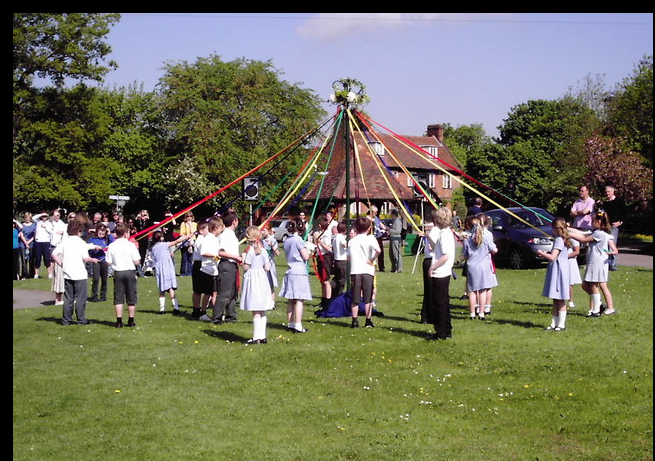


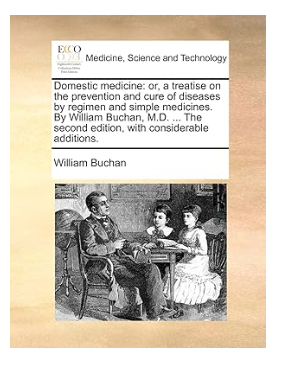
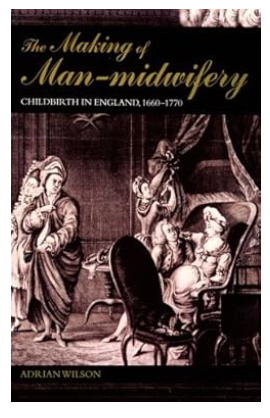


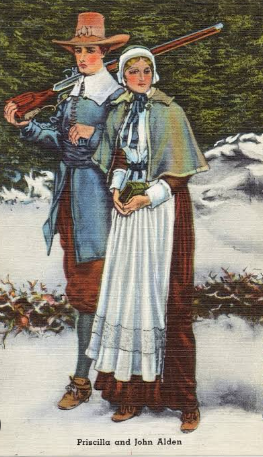
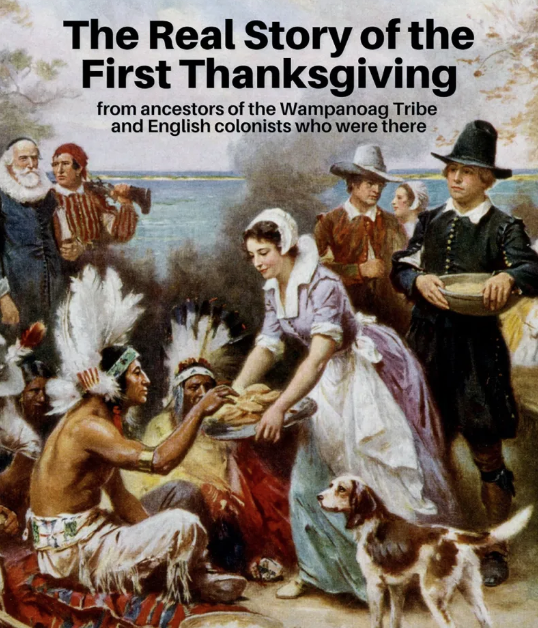
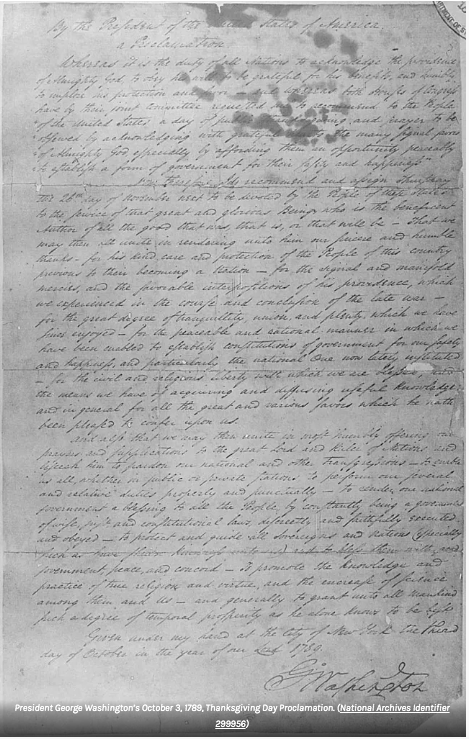

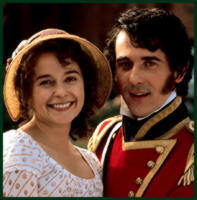 Few members of the militia were trained in military tactics, such as shooting, horsemanship, or use of a sword. They were required to have their own guns to be a member of the militia. Those picked or volunteering for militia duty in the rank and file served five years, while some served for seven years. Officer commissions were not available (as opposed to those in the Regulars). Those who held rank in the militia received that rank based on how much land the family held. Captain Denny in Pride and Prejudice would need either to be the heir of land worth at least £400 per year or actually own land worth at least £200 per year. Although we are given nothing of Denny’s background in Austen’s novel, we are told that George Wickham becomes a lieutenant in the Meryton militia. This is a bit confusing to many who know something of military history, for a lieutenant in the militia would be required to hold land worth £50 per year. If Wickham had nothing of his own upon which to depend, how did he receive his lieutenancy? Most experts speak of a lowering of the standards for the few who would qualify as a junior officer otherwise, meaning Wickham held a gentleman’s education, making him “qualify as a junior officer.” The wages presented to the officers was only to cover their expenses, not replace their income from their land.
 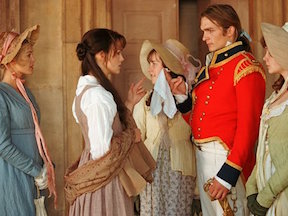 As part of the community, as well as the neighborhood, there was a certain sense of pomp and circumstance as part of the militia. They would conduct military reviews (much as we see in reenactments today). This would include close order marching, marksmanship contests, and even staged “fights” for the entertainment of the neighborhood.




 Every Woman Dreams...

