Proving Oneself the New Peer

I had a recent question from a reader/writer about how after the death of the current peer was one made the new peer. Was it immediate? Is there a process or some sort of hearing. What must he prove to be the new peer?

This particular writer was asking about a nephew assuming the new peerage, as the peer had no male heirs, but the nephew being the son of the peer’s brother.

In such cases, there is very little delay or a contest. The  son of the second brother is immediately the peer, but he would generally wait until after the funeral to assume the title publicly. It is when a title can be inherited by a female and there are no direct descendants. like a daughter or granddaughter that contests arise that delays happen. Delays might also occur if the widow is pregnant or if there is doubt about the young man’s legitimacy.
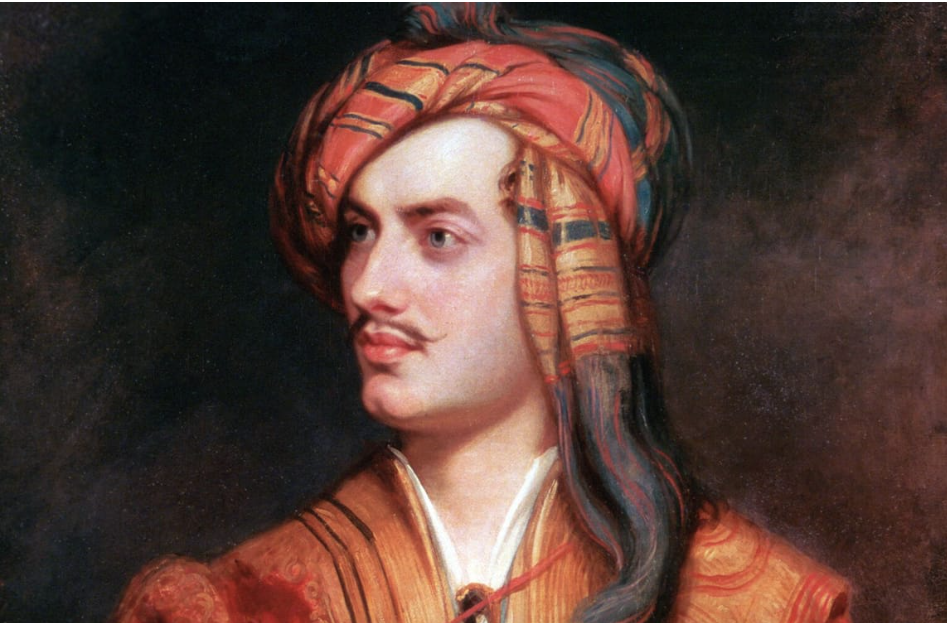
For example, let us have a look at Lord Byron. “George Gordon Noel Byron was born, with a clubbed right foot, in London, on January 22, 1788. He was the son of Catherine Gordon of Gight, an impoverished Scots heiress, and Captain John (“Mad Jack”) Byron, a fortune-hunting widower with a daughter, Augusta. The profligate captain squandered his wife’s inheritance, was absent for the birth of his only son, and eventually decamped for France as an exile from English creditors, where he died in 1791 at age 36.

“With the death in 1798 of his great-uncle, the “Wicked” fifth Lord Byron, George became the sixth Baron Byron of Rochdale, heir to Newstead Abbey, the family seat in Nottinghamshire. He enjoyed the role of landed nobleman, proud of his coat of arms with its mermaid and chestnut horses surmounting the motto “Crede Byron” (“Trust Byron”).” [Poetry Foundation]

Lord Byron’s guardian, Lord Carlisle was ill when Byron turned 21. As mentioned above, Byron inherited at age ten from a great uncle. He thought he was being singled out to prove that his father and his mother were married before he was born, that his father was legitimate, and that his father was the son of a previous deceased baron, that the baron’s sons were all dead without legitimate male issue, and that any contenders were the sons of a son junior to John Byron. Byron gathered all the needed information– he had been the peer for 11 years by then, presented it and was accepted. He castigated Carlisle in one of his poems, but his half sister, Augusta, took him to task for this by letting him know that Carlisle had been ill. Not that the earl did much for the boy. Hanson the solicitor of Chancery handled the practical aspects of the guardianship, but either did not know enough to tell Byron that it was standard operating procedure or just forgot to.

The Hereditary Peer Association explains the official process of claiming a title. Here is the relevant portion of the reply:

The position up to the end of 1999 and the passing of the House of Lords Act 1999, was that on the death of any hereditary peer, his heir would have to prove to the Clerk of the Parliaments his right of succession by appropriate birth marriage and death certificates, and in some cases, affidavits to prove for example, that there was no better claimant. I think other evidence such as parish records can be used as often heirs outside the direct line have to search back many generations to prove their lineage and rights.

Having satisfied the Clerk, the new peer would receive a Writ of Summons to attend the House. The procedure for taking his seat was simply that he would alert the Clerk on the day he wished to take his seat before the start of the day’s business. At the opening of the day’s business, he would take a seat usually on the Bishops’ benches and after the opening prayers, the Clerk would call him to the despatch box where he would take the Oath of Allegiance, walk to the wool sack and shake the hand of the Lord Chancellor or his deputy if the latter was not present. He would then leave the Chamber to be greeted by representatives of the political parties in the Lobby. He would then declare his party allegiance if any and proceed to take a seat on the appropriate benches.

There was no more ceremony than that. Only newly created peers (now days exclusively Life Peers) endured, and still do, an introductory ceremony at which they and their two supporters, wear parliamentary robes over their ordinary suits, and carry Coked Hats which they doff the Lord Chancellor (now Speaker) and to the throne. They also take the Oath and shake hands with the Lord Chancellor or Speaker.

This latter ceremony has recently been simplified but has it origins some centuries ago. Sadly few peers have their own robes, either parliamentary or Coronation and mostly hire them from Ede & Ravenscroft. Coronets are only worn at a Coronation and as you note, only following the actual crowning of the new Monarch. I am fairly certain that a peer had to have received a Writ, sworn allegiance and taken his seat in the House of Lords in order to attend a Coronation. Sadly, there was no ceremony involved in inheriting a peerage, other than a consultation with a parliamentary tailor such as E&R.

According to Titles and Forms of Addresses: A Guide to Correct Usage, in the case of any inheritance it is customary for the new peer to be known as their previous style until after the funeral of the late peer. For instance, Mr. John Doe, the nephew of the Duke of Soandso, inherits, but continues to go by Mr. John Doe until after the funeral; this is the same for a direct heir as well. Also, while the heir takes on the title automatically upon confirmation of his claim, his siblings only gain their honorifics by favour of the Crown. So Mr. John Doe’s brothers and sisters would not be permitted to add “Lord” or “Lady” to his or her name until they apply for them and have it granted. The widow of the new peer’s father, however, is not entitled to a change in title because that honour only comes through the husband, who is dead. So Mr. John Doe’s mother does not become the (Dowager) Duchess of Soandso and is not entitled to apply for the favour from the Crown; she remains Mrs. Doe.

Sources:

Hereditary Peers

Hereditary Peers Removed

House of Lords Act 1999

The Last of the Hereditary Peers in the House of Lords

At the bend of the path, an unexpected meeting.
She is all May. He is December.
But loves knows not time.

Colonel Lord Andrew Whitmire has returned to England after spending fifteen years in service to his country. In truth, he would prefer to be anywhere but home. Before he departed England, his late wife, from an arranged marriage, had cuckolded him in a scandal that had set Society’s tongues wagging. His daughter, Matilda, who was reared by his father, enjoys calling him “Father” in the most annoying ways. Unfortunately, his future is the viscountcy, and Andrew knows his duty to both the title and his child. He imagines himself the last of his line until he encounters Miss Verity Coopersmith, the niece of his dearest friend, the man who had saved Andrew’s life at Waterloo. Miss Coopersmith sets Whitmire’s world spinning out of control. She is truly everything he did not know he required in his life. However, she is twenty-two years his junior, young enough to be his daughter, but all he can think is she is absolute perfection.

Purchase Links:

Kindle: https://www.amazon.com/Courting-Lord-Whitmire-Regency-May-December-ebook/dp/B085QNYHRW/ref=sr_1_1?keywords=courting+lord+whitmire&qid=1584536924&sr=8-1

Read for FREE on Kindle Unlimited https://www.amazon.com/kindle-dbs/hz/subscribe/ku?passThroughAsin=B085QNYHRW&ref_=ku_lp_rw_pbdp&_encoding=UTF8&shoppingPortalEnabled=true

Book Bub https://www.bookbub.com/books/courting-lord-whitmire-a-regency-may-december-romance-by-regina-jeffers

Enjoy this scene from Chapter 5 of my Courting Lord Whitmire, where his lordship claims his peerage before the House of Lords. We view it through the heroine’s eyes.

When they learned at Lady Stephenson’s gathering that the Countess of Savidge had taken a fall earlier in the day and had cancelled her entertainment, Verity had convinced Matilda that they should return to Parliament and plead to be admitted to the gallery to view Lord Whitmire’s introduction to the House of Lords. 

“What if they turn us away?” Matilda had protested, the girl’s earlier bravado fading quickly before the pudding was set. 

“Then we will discover a tea room nearby and wait,” Verity had said without the exasperation she felt. All afternoon, Matilda had bemoaned not being able to join Robinson in the gallery, but now that Verity had suggested their doing so, Matilda wished Verity to beg or to insist, so the girl would not bear any of the blame, if Lord Whitmire disapproved. It was Matilda’s wish not to upset the delicate balance the girl and Lord Whitmire had achieved, but, on this particular day, Verity had no time, or desire, to coddle the child. “Do you not wish to view your father’s elevation?”

“Most assuredly, I would wish to observe the proceedings,” Matilda said softly. Her gaze remained steady, although her tone held unrelenting curiosity. “But I have heard it said only those women who hold exalted positions dare enter the gallery. Father may not be happy with our presence.” 

“Miss Ridenour again?” Verity questioned. She should have known the chit would say something to discourage Matilda from her desire to sit with Robinson in the gallery. 

She did not wait for the girl’s response; instead, Verity decided for them. She had considered Lord Whitmire’s possible disapproval before she had made her suggestion, but she refused to think of his lordship’s disdain when she had the opportunity to look upon him again, especially in such a life-defining moment. Not being a part of this event, even if it were from a distance, was not a choice she could consider. Although he did not recognize her total devotion to him, she wished to share the experience—wished to have the memory to cherish in her old age. Unfortunately for her badly bruised heart, her fascination with the man had not waned; rather, it had intensified the longer she remained in his company. “We shall ask, and, if refused, accept the tradition in which the ceremony is imbued.” 

And so, with heavy reprimands delivered toward them by a clerk for even asking for permission to enter the gallery, along with a generous donation to the man’s purse, she and Matilda had been hidden behind a heavy drape, where they might peer down upon the floor of the House of Lords. After what felt like forever, the House was called to order by the Lord Chancellor. A prayer followed, and Verity’s anticipation rose. She tugged Matilda closer, placing the girl before her, so they could share the small space. 

She explained in Matilda’s ear. “Black Rod, an officer of the Order of the Garter, has already escorted Lord Whitmire and your father’s retinue to the King of Arms, who will lead the trio into the main chamber. Just wait a minute, and they will appear where we can see them.” True to her narration, his lordship and the others appeared, but, for Verity, the thrill was in watching Andrew Whitmire. Looking upon him, she had never known a prouder moment. His countenance remained stern and respectful of the majesty of the ceremony, while also holding a hint of contentment. He was a man meant for the aristocracy—noble and strong. 

“Who is with Father?” Matilda asked softly, destroying the moment for Verity. 

Swallowing the sigh of exasperation rushing to her lips, Verity leaned closer to whisper once again. “According to tradition, his lordship must be escorted by two of his fellow viscounts. When Robinson goes through the ceremony, my brother will be accompanied by two barons. Lord Whitmire asked two of his former soldiers to serve him. Black Rod leads, followed by the Garter King. The peer in front of your father is the junior peer, Lord Franklin. The one behind Whitmire is Lord Lexford.” 

“How did you learn all this?” Matilda asked with what sounded to be a nervous giggle. 

Verity smiled easily, enjoying her confession before she spoke it. “I have the habit of overhearing what I should not. I listened as your father explained the process to Robinson.” Her smile grew. “Some day you will learn that men often think women have no brains to understand of what they speak. They sometimes treat the women in their lives as if they were a silent servant.” 

“They enjoy strutting their colors as much as would an actor upon a stage,” Matilda observed in hushed tones. Verity realized the girl meant the goings on in the Lords, but Matilda’s words fit many situations where men gathered.

“Or as much as a diamond of the first water in a ballroom,” Verity said with another smile. She pointed over Matilda’s shoulder to the area below. “Notice each peer wears a robe designed to indicate his rank. Also notice that the Garter King of Arms carries a silver gilt scepter in his right hand. In his left is the patent of creation for your father.” 

Matilda rose up on her toes and whispered, “Thank you for arranging this. I shall never forget your kindness. I did not think I would enjoy the spectacle of all this, but it is quite remarkable, is it not?” 

“Very remarkable, and it is my pleasure to share this with you,” Verity replied in all seriousness. 

She wished she could resist the pull and the push that always rested between her and Lord Whitmire. She was both perplexed and fascinated by the man. Her heart knew the deepest compassion when his long-time suffering, at no fault of his own, mind you, marked the lines about his mouth and his eyes. The manner of the conversations in which he partook displayed his quick wit and keen intellect. He was accustomed to giving orders and having them obeyed, but he was also one of the most reasonable men she had ever encountered. His lordship had a firm, stubborn nature, and Verity imagined they would have a regular stream of quarrels, followed by a round of passion, the type she had only read of in Minerva novels. She suspected he held the ability to sweep her off her feet, both, figuratively, and, literally, but he kept his desires rigidly under control. She both admired and despised him at the same time.

Carrying their cocked black hats in their left hands, the lords in the procession below reached the Bar of the House. Lord Whitmire carried his Writ of Summons in his right hand. They walked up the temporal side of the House. They bowed first to where the Sovereign would sit, if present, then to the table where the clerks sat, followed by a third bow to the Judges. 

“What now?” Matilda asked. Her excitement showed upon the girl’s face. 

“Your father will next approach the Lord Chancellor.” Verity waited, holding her breath until the Lord Chancellor raised his hat to acknowledge Lord Whitmire. “His lordship will kneel on one knee and present the letters patent of his creation to the Lord Chancellor. Once the Lord Chancellor accepts the patent on behalf of the King, he will hand it to the Reading Clerk to be read aloud to all the peers present.” 

Along with Matilda, Verity held her breath as she listened to the formalities and to his lordship’s resonant, distinct voice. Then, the oddest thought caught her by surprise: She did not simply admire Lord Andrew Whitmire; she loved him. She could not remove her eyes from where the man stood, tall and proud, even when she felt Matilda shift before her. She could no more control the sense of longing in her chest than she could stop the world from spinning on its axis. The air, what there was to be had in their hiding place, thickened. Her breathing grew short. 

“Verity?” Matilda’s voice held the girl’s concern. “Are you unwell? You are so pale. We should leave.” 

Verity quickly shook off the idea. “In a moment,” she assured. “The ceremony nears its conclusion.” She returned her attention to what she could view of the proceedings. When the Reading Clerk finished reading the Summons, Lord Whitmire read the Oath of Allegiance. His full-bodied orotund voice carried to the rafters. “Now your father will sign the Test Rolls.” 

As his lordship bent over the document to add his signature to a list that went back one hundred twenty-five years, Verity caught Matilda’s hand. “Now we may depart. The ceremony is essentially over. Next, your father will change out of the ceremonial constraints and assume his seat in the Lords. Therefore, we should leave before we are seen. We promised the clerk not to be a distraction.” She led the girl through a door and down a set of stairs the clerk had said were rarely used. “I think we should have his lordship’s carriage take us to Whitmire House. Then the driver can return for Lord Whitmire and Robinson. We have no idea how long your father and my brother must tarry before they can leave without being thought poorly of. We might discover ourselves dining alone this evening.” 

The door at the bottom of the stairs led to the outside and fresh air. Stepping into a small bricked circle, Verity inhaled deeply. She needed to clear her thinking. What was she to do? Without realizing it, she had given her heart to a man who would never love her. 

Posted in Act of Parliament, book excerpts, British history, eBooks, excerpt, Great Britain, history, laws of the land, Living in the Regency, peerage, real life tales, Regency era, Regency romance, research, romance, titles of aristocracy | Tagged , , , , , , , , , | Comments Off on Proving Oneself the New Peer

The Cambridge Five: “We need people who could penetrate into the bourgeois institutions. Penetrate them for us!”

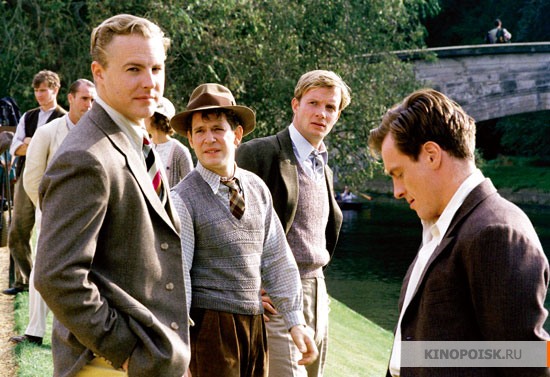
51T3CBEFG2L._SY445_.jpg If you are a great lover of all things British, as am I, you are likely familiar with the BBC2 mini-series, Cambridge Spies. It starred four of my personal favorites: Toby Stephens, Rupert Penry Jones, Tom Hollander, and Samuel West. Also, I adore Benedict Cumberbatch, Simon Woods, and David Savile in the cast. Cambridge Spies is a four-part BBC television drama, broadcast on BBC2 in May 2003, concerning the lives of the best-known quartet of the Cambridge Five Soviet spies, from 1934 to the 1951 defection of Guy Burgess and Donald Maclean to the Soviet Union. (Cambridge Spies)
356248_original.jpg

_40409837_bluntpa238

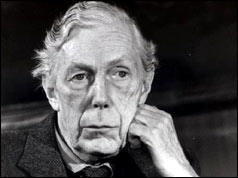
Anthony Blunt

download-1

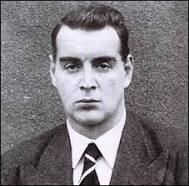
Guy Burgess

download

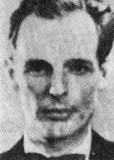
Donald Maclean

download-2

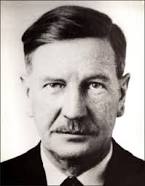
Kim Philby

The Cambridge Spy Ring passed information to the Soviet Union during World War II and was thought to be active until the early 1950s. The members were strong believers of communism being superior to capitalism. Four members of the ring were originally identified: Kim Philby (cryptonym: Stanley), Donald Duart Maclean (cryptonym: Homer), Guy Burgess (cryptonym: Hicks) and Anthony Blunt (cryptonyms: Tony and Johnson). The group supposedly operated during their years at Cambridge University.  Debate surrounds the exact timing of their recruitment by Soviet intelligence; Anthony Blunt claimed that they were not recruited as agents until they had graduated. Blunt, an Honorary Fellow at Trinity College was several years older than Burgess, Maclean, and Philby; he acted as a talent-spotter and recruiter for most of the group save Burgess. Both Blunt and Burgess were members of the Cambridge Apostles, an exclusive and prestigious society based at Trinity and King’s Colleges. John Cairncross, whose identity was not revealed until 1990, was the fifth member of the Five. (Cambridge Five) 

John_Cairncross.jpg Cairncross reportedly leaked details of the Bletchley Park facilities efforts at code-breaking, which permitted the Soviet Union to alter their codes to prevent the British group from discovering them. He also is known to have provided the Soviets with information on atomic weapons research, giving the Soviet efforts to set up their own nuclear program a boost. As a Soviet double agent, he passed to the Soviet Union the raw Tunny decrypts that influenced the Battle of Kursk.

According to a BBC News article from July 2014, “Among the thousands of pages of documents are profiles outlining the characteristics of Britons who spied for the Soviet Union. They include references to Donald Duart Maclean and Guy Burgess, two of the five men recruited while studying at the University of Cambridge during the 1930s. A short passage describes Burgess as a man ‘constantly under the influence of alcohol’. Written in Russian, it goes on to recount one occasion when Burgess drunkenly risked exposing his double identity. ‘Once on his way out of a pub, he managed to drop one of the files of documents he had taken from the Foreign Office on the pavement,’ translator Svetlana Lokhova explained. Moving on to Maclean, the note describes him as ‘not very good at keeping secrets’. It adds he was “constantly drunk” and binged on alcohol. It was believed he had told one of his lovers and his brother about his work as a Soviet agent while he was the worse for wear, the file adds. The notes also provide an insight into the extent of the group’s activity as they helped the KGB penetrate the UK’s intelligence network at the highest level. They describe how Burgess alone handed over 389 top secret documents to the KGB in the first six months of 1945 along with a further 168 in December 1949.”


Wish to Know More? Try Some of These Articles: 

MI5 and MI6 Cover-Up of Cambridge Spy Ring Laid Bare in Archive Papers. The Guardian

Newly released evidence on the Cambridge Spies reveals how, among other revelations, inaction and incompetence on the part of the authorities enabled Guy Burgess and Donald Maclean to make their escape to Moscow.   History Today: New Revelations on the Cambridge Spy Ring

The Cambridge Spy Ring and the Myth of an Upper-Class Cover Up. The Spectator 

The Cambridge Five.  International Spy Museum

First Person Singular: Cambridge Spies? The Truth is Far More Interesting. The Telegraph


Posted in American History, British history, film, history, military, political stance, real life tales, war, world history | Tagged , , , , , | Comments Off on The Cambridge Five: “We need people who could penetrate into the bourgeois institutions. Penetrate them for us!”

What the Heck Is “Abeyance” When Speaking of the English Aristocracy?

I am back again to ramble on about another issue of inheritance, this one has to do with “abeyance.”

Abeyance (from the Old French abeance meaning “gaping”) is a state of expectancy in respect of property, titles or office, when the right to them is not vested in any one person, but awaits the appearance or determination of the true owner. In law, the term abeyance can be applied only to such future estates as have not yet vested or possibly may not vest. For example, an estate is granted to A for life, with remainder to the heir of B. Following A’s death, if B is still alive, the remainder is in abeyance, for B has no heirs until B’s death. Similarly, the freehold of a benefice, on the death of the incumbent, is said to be in abeyance until the next incumbent takes possession. [Chisholm, Hugh, ed. (1911). “Abeyance“. Encyclopædia Britannica. Vol. 1 (11th ed.). Cambridge University Press. p. 61.]

Confused? Do not feel bad, for little about “abeyance” comes in layman’s terms. Let us see what we can do about it.

A man who supposedly inherited could simply refuse to take up the title or touch the money. Technically he would still be the title holder (baron, earl, viscount, etc.), but to have the full title and honors he must be confirmed before Parliament in the House of Lords, and all the legal stuff has to be completed to ensure he is the correct heir. He can simply not do that and not style himself by the title. It remains it place. It was not until 1963 that anyone could duck out of a title.

See my post from March 26, 2025, on the Procedure to Claim a Regency Title for more information.

For a good summary of what hereditary titles mean, choose this Wikipedia post – https://en.wikipedia.org/wiki/Hereditary_peer

The man could theoretically commit treason, in which case he and his family would be stripped of the title. Such would be an extreme measure, but there it is. If you do not understand this concept or want more information, have a look at my piece from February 12, 2025, on Corruption of the Blood (a term for treason).

The Duke of Windsor’s abdication was a very complicated legal process, and one Parliament allowed and had to handle legally due to the duke’s marrying a divorced woman, which actually made him unfit to be head of the Church of England, which is a job the King of England must take up (thank you, Henry XIII), and there are laws about the monarch’s marriages. Immediately after his abdication, upon which he was named the duke of Windsor by his brother Albert, now George VI, Edward left England to live on the European continent. Wallis Simpson’s divorce became final in May 1937, and she had her name changed legally to Mrs. Wallis Warfield. The terms of his continued receipt of a stipend were that he was effectively exiled from his homeland.

This is why there was also a stink over King Charles marrying Camilla–that had to be sorted out legally before Parliament. PRINCE CHARLES and Camilla, Duchess of Cornwall, faced a tricky legal situation over their civil marriage in 2005, when the Human Rights Act saved the day – but the Prince of Wales had previously voiced his strong opposition to the 2000 Act. 

Now, back to the question at hand. The man does not need to send in the writ of summons to the House of Lords, and he can refuse to use the title, but someone must oversee the care for the property, and no one else can have the title while he is alive.

The man could, theoretically, have the title’s Letters Patent amended by an Act of Parliament. If the earldom is Scottish, he could even leave the line of descent unspecified and have Parliament determine the course of inheritance. I have seen this done in several novel, but please know one should research the heck out of all the probabilities before proceeding. The two most famous examples of amending Letters were the Dukedom of Marlborough in 1706 and the Duke of Windsor in 1936.

When the Earl of Berkley died his oldest son applied for a writ of summons to the House of Lords. The Committee on  Privilege turned the young man down and said he and the other brothers born before 1795 were illegitimate and that the earldom would fall to the 16-year-old who was born in 1796. The boy was too young to do anything about the matter, and his oldest brother and mother ran things. When he came of age, he still never put forth a claim to the earldom. However, he was, by right and law, the earl so anything requiring the signature of the earl had to be signed by him. He signed responsibility over to his oldest brother. but the title itself went dormant until the youngest son died.

Somewhere around 1945, men succeeding to a peerage were allowed to disclaim it. If it went dormant during his life time, no one else could assume it. This was done mainly by men who had political power in the House of Commons and did not want to give it up. [See my April 4, 2025, piece on Heirs in the House of Commons for more information.]

The current Duke of  Marlborough can not passover his heir for a more somber younger son. The heir can not be disinherited. If there is a living person who is next in line, the succession cannot be changed. Earlier the  descent of the dukedom was changed because the Duke had no living son and there was slight chance of his having one. The succession was changed to allow his daughters to assume the title and then their sons. This was  during the duke’s life time and was an exception to a general rule. A man who is living and the lawful successor can not have it taken from him except by being convicted of a crime. During the Regency there was no way to disclaim a peerage except by not using it and not sending in a request for a seat in the House of  Lords.

One case of avoiding abeyance occurred back in the beginning because he was too poor.  However, that was never repeated. One had to be convicted of a felony and sentenced to death.  Then there was  attainder and corruption of the blood.  The title wasn’t  actually lost, in most cases, because  he kept it as long as he kept his head. 

Wikipedia provides us a somewhat unreliable and not so thorough list as we might hope, but I thought to share it so you might see the extent of how long some titles have been in abeyance:

Once a man was seated in the House of Lords under a title, the Lords would not take it back. Neither was he able to disclaim it.

If he committed suicide, nothing happened to the title. The son inherited as usual. It would be a rare man of the Georgian era who did not want a title just because his father had disgraced it. He did not have to claim it, but he could not sit in the House of Lords. He could change his name either by signing manual, a deed poll, or just by doing it. However, those were extreme measures, and he would be compounding the failure of his father by not attending to the estate, the workers, the servants, etc., and all the others who depended on the family in one way or another.

Question: Is it possible for all lands to be lost save to pay debts? Or did lands always have to remain with the title?

The answer depends on how the lands were acquired and what deeds, settlements, or entails controlled their disposition. While all of a man’s property could be sold to cover debts, entailed properties and hereditments and such came under a special provision. There were special rules pertaining to peers and debts. Land did not always go with the title, though the family seat was usually tied to it. Titles and property could go in different directions and often did.

Question: In earlier times, the hero of such a situation would not have had a choice. If his father committed treason, the title, lands, etc., EVERYTHING was forfeitted. The family would have nothing. Was this still true in the Regency?

Yes. That was true long after all the other “older” (like beheading, etc.) punishments were discarded. If the father committed treason, the son would not have a choice of accepting the title because there would not be one for him to accept.

Do not quote me on this part, but I think those owed money by the father would be out of luck as well because the son would inherit nothing. NO one would inherit anything. It is doubtful whether the widow would even have a jointure or income unless her husband had been barred from anything except the income from her dowry, which would return to her on his death.I n the case of treason, some sons did change their names and go off to the new world. However, most tried to stay alive and waited and then put in a petition for the restoration of titles and lands. Sometimes it did not come until a grandson made the petition. The title could be lost if the man committed murder. [Note: That scenario is part of the plot of my novel, The Heartless Earl.]

Posted in Act of Parliament, aristocracy, British history, customs and tradiitons, England, Georgian England, Georgian Era, history, Inheritance, laws of the land, Regency era | Tagged , , , , , , , , , | 2 Comments

Orphans and Orphanages in Late Georgian England

I had a recent question regarding what I knew about the conditions inside of orphanages during the Regency and Georgian eras. Below is a mash of all the tidbits I had accumulated on the subject. I have attempted to organize them in some order, but as I am currently recovering from cancer surgery and have a large patch over part of my face, maybe it is not as organized as I hoped. (Note: I wrote this in December 2024, not April 2025.)

All orphanages/foundling homes seem to be run privately as schools. I think the best descriptor I have is with Jane Eyre’s Lowood School, but I have not been able to find any first personal accounts of anyone who attended a school or orphanage such as this in either the Victorian or Regency era. Either I’m a terrible researcher or I’m looking in all the wrong places.

There are official reports by various boards and charitable organizations about the conditions. I have spoken previously about Charitable Organizations During the Regency. This post includes a long list of actual charitable organizations during the late Georgian and early Victorian eras.

Philanthropy in the 19th century was based on religious tradition that was centuries in the making.  Historically, wealthy people in society gave to the poor as a Christian duty. Charity was seen as a way of saving one’s own soul while also helping those in need. Protestants, especially those with strong evangelical leanings, believed that social conscience demanded social action. They held that by coming into contact with human nature, particularly with those in need, that they were able to come in contact with Christ.

Women, in particular, especially those in the middle class, stepped up to the task, but, not always for the reasons one might expect. Certainly, charity was an admirable trait. However, “working outside the home,” even in a charitable manner, provided these women a sense of worth beyond tending to their husband’s homes. Charitable work seemed to be an extension of their “natural” maternal instincts, but it also allowed women to meet and socialize with other women of like minds and education, opening them up to new experiences and ideas

I do not know of any first person narrative regarding the conditions within the orphanages because most were not educated to the level where they could write such.

There is plenty on line about the work houses. The orphanages were often for children of clergymen, sailors, or army men. So many children in the institutions were actually illegitimate and suffered the sins of the fathers and mothers being put on the children.

Each one of these would have a board of governors and be run by their own laws and rules. There were hundreds of schools which were neither registered nor regulated. These ranged from day schools to boarding schools with many masters (mistresses) and  expenses.

There was no requirement that children go to school nor any requirements of what they should be taught.

The better schools for boys prepared them for Eton, Harrow and such.

There were cathedral choir schools.

From what I understand, the infant mortality rate in orphanages was very high. From our perspective now, where we have noted and understood “failure to thrive,” we can see that the care given in a charity orphanage would likely be lacking in the individual attention, like cuddling babies, so even if their basic survival needs were met, many of them would have died.

Another thing is that children were pushed out of orphanages at an early age and either sent into domestic service or to apprenticeships. Dickens’s stories speak to this situation, but that was much later than the Regency era.

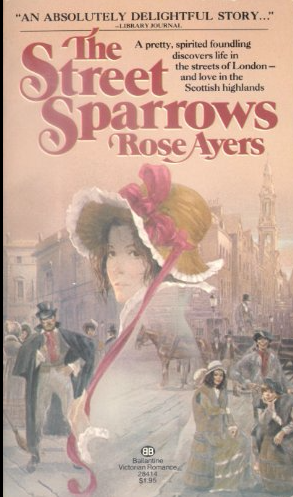
A book that was recommended to me was Rose Ayer’s The Street Sparrows. Again, it is set in 19th C London, but not necessarily the Georgian era. It is more the Victorian experience, but many appear to love this book, if you are interested. Two orphans in 19th-century London lead a precarious existence trying to earn their living any way they can.

It was fairly common early in the Industrial Era to sweep orphans off the streets in cities and put them to work in the mills. Their experience there varied from desperate to just very rough, though a few mill owners had some schooling for the children employed there. Again, though, their life expectancy was not very high.

Children were sent to work in mills and mines or on farms as young as seven. Some chimney sweeps had boys younger than that. Orphan girls were taught domestic tasks and were sent off to be maids. Some 12 year olds were maids of all work. Though not known to be widespread, some of the girls were also regularly raped. Most children of the laboring class had little schooling  They certainly would not be writing memoirs. Now, sometimes a child was fortunate to fall in with a good family who was likely to treat the child as their own. Some one might educate a boy and have him trained up for their business, the church or the law–but that person would not be one to wrote about the conditions of the orphanage.

My late friend Lindsay Downs wrote a piece in 2014 for the English Historical Fiction Authors website, for he had written about a chimney sweep in his book Swept Away. I thought you might find what he had to say interesting:

“During the Regency period, there wasn’t adoption as we know it today. In England, this didn’t come about until the 1920’s.

“If the head of a household brought an orphan in but left no provisions for the child in his will, the new head had no obligation to continue the care. If the head did have unentitled property that could be left to the child in the will, it was probably with conditions until adulthood was reached.

“Another option would be to have a family in the village take the orphan in. This is what I did with my character. Depending on the needs of the family, the child might become a scullery maid or if taken in by a farmer, might become additional help. These are a few of the best possible options for these waifs.

“Another, and better, choice would be that a childless couple might take in a relative’s children. Here, through a provision in the will, the orphan would be able to inherit on the passing of their foster parents. This was not necessarily required of the new parents.

“When the child didn’t find a home with family or friends, they were turned over to the parish. Here an orphan could be contracted to a master under certain conditions. The pact gave control over the child to their, for lack of a better word, owner who was required to feed, clothe, and care for the boy or girl, and apprentice them in a trade. Sometimes the new master might not be as scrupulous as was thought, and he would force the child into dangerous work situations. One which comes to mind is a chimney sweep’s apprentice where they could easily die if care was not taken.”

Posted in British history, Georgian England, Georgian Era, history, Living in the Regency, real life tales, Regency era | Tagged , , , , , | Comments Off on Orphans and Orphanages in Late Georgian England

Did Heirs to a Title Ever Enter the Commons Before Succeeding? Answering a Reader’s Questions…

I am again attempting to answer a variety of questions from a reader on peerages. So, here goes…

Question: I have a question about politics circa 1812. I am constructing my character development fir a story line, and my hero is the son of an earl who hearty and healthy. Therefore, the son is not likely to inherit any time soon. While he holds an honorary title, there is no political privilege associated with that, I assume. 

My hero is an ambitious sort, I planned to write him as having political aspirations.

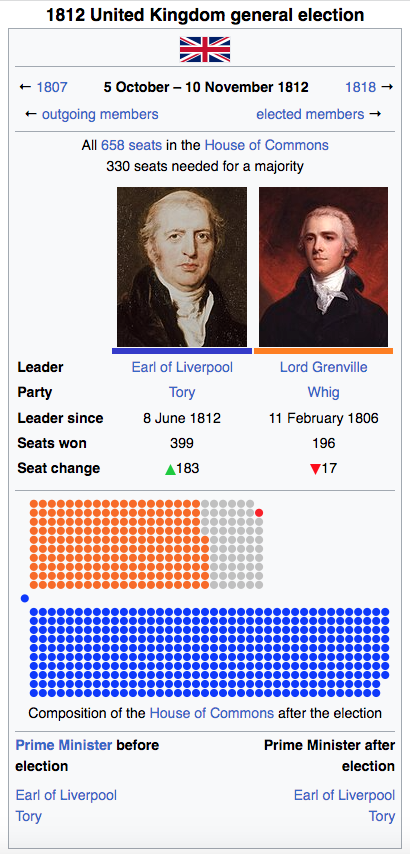
First Part of my response: You must remember that unlike here in the U.S. there were not elections every four years. “The 1812 United Kingdom general election was the fourth general election after the Union of Great Britain and Ireland, held on 5 October 1812 to 10 November 1812, taking place at the height of the Napoleonic Wars.

“The fourth United Kingdom Parliament was dissolved on 29 September 1812, four months after the Earl of Liverpool succeeded to the premiership following the assassination of Spencer Perceval. The new Parliament was summoned to meet on 24 November 1812, for a maximum seven-year term from that date. The maximum term could be and normally was curtailed, by the monarch dissolving the Parliament, before its term expired.”

Question #2: Would a man in his mid twenties have run/been elected to Parliament? Would there have been another way he could have participated in politics without being in the House of Commons? I know there must be reference material out there, just finding abbreviated information thus far.

Response: As the son of an earl, he would not normally enter a mp (member of Parliament) race in 1812 as the House of Lords held more power than it does today. If he is the eldest son, he will inherit his father’s seat in the House of Lords.  He could lend his support very visibly to a cause or a party or a candidate, serve in the diplomatic corps and eventually become an ambassador.  There was a lot of behind the scenes business at Whitehall, and it was not unusual for a peer to work there in the diplomatic offices, etc. Most of the oversight committees (for want of a better description) for the war effort were housed there. Nepotism was alive and well during the Regency.

Question #3: Would a man in his mid twenties have run/been elected to Parliament? Would there have been another way he could have participated in politics without being in the House of Commons?

Response: Absolutely. The lords often controlled many house seats – these were called “pocket buroughs” because they were in the peer’s pocket. So the landlord wanted “his guys” in there, whether they were sons — to allow them time to earn experience to become powerhouses in the Lords later on — or just yes-men. However, that being said, a son did not need to gain his experience by actually holding a seat. He could be appointed to a deputy position in any one of the Cabinet departments. The Exchequer was particularly desirable – nice and close to the money. People became very rich in that department. Sometimes, mysteriously so! The one I am not confident about (I would need to check with my military expert) is the Admiralty. I am not assured if civilians were acceptable on staff there or if they had to have military rank. Of course, for a son of an earl, that might easily be a small matter of purchasing a plum commission.

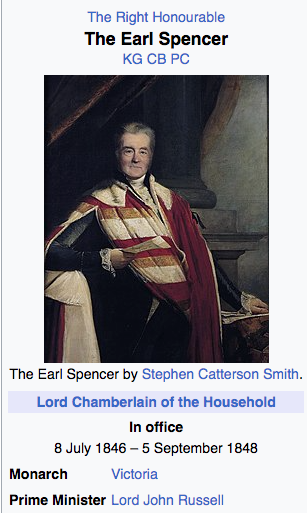
The  secretary of the admiralty was often a peer. Earl Spencer held a position as Secretary of the Navy under Queen Victoria.

“Vice-Admiral Frederick Spencer, 4th Earl Spencer, (14 April 1798 – 27 December 1857), styled The Honourable Frederick Spencer until 1845, was a British naval commander, courtier, and Whig politician. He initially served in the Royal Navy and fought in the Napoleonic Wars and the Greek War of Independence, eventually rising to the rank of Vice-Admiral. He succeeded his elder brother as Earl Spencer in 1845 and held political office as Lord Chamberlain of the Household between 1846 and 1848 and as Lord Steward of the Household between 1854 and 1857. In 1849 he was made a Knight of the Garter.”

Question #4: I’m seeing examples of a member of the House of Commons moving to the House of Lords as he inherits a seat, but now I’m wondering if anyone fills his vacancy.

Response: Yes, they must hold a by election.

There were some by-elections when a man died or succeeded to a peerage. 

The young man’s father or his uncle or his mother’s brother or his mother’s uncle probably had a borough under his control. There were quite a few of these in Cornwall alone. These rotten boroughs were safe seats for sprigs of the aristocracy.

Earl Spencer sent his oldest son into politics  in the House of Commons. The father could be on some committees and hire the son to be a clerk.

Some young men preferred learning to manage the estates to playing politics.

Question #5: Was not William Pitt very young?

Response: “William Pitt was born on 28 May 1759 in Kent, the son of the earl of Chatham (William Pitt the Elder), himself a famous statesman. Pitt studied at Cambridge University, graduating when he was 17. In early 1781, he was elected to parliament aged 21. In 1782, he became chancellor of the exchequer. The following years were marked by the battle between George III and the radical Charles Fox, whom the king detested. Matters deteriorated when Fox forged an alliance with the previously loyal Lord North. The two men defeated the government and George was forced to ask them to take control. Fox became Pitt’s lifelong political rival.

“In December 1783, George III dismissed their coalition and asked Pitt to form a government. He was, at 24, the youngest man to become prime minister. He was immediately defeated in parliament but refused to resign. George III was prepared to abdicate rather than let Fox in again. In 1784, parliament was dissolved for a general election, which Pitt won. His government worked to restore public finances, severely strained by the cost of the American War of Independece and later by war with France. Pitt imposed new taxes – including Britain’s first income tax – and reduced both smuggling and frauds. He also simplified customs and excise duties.” [BBC History]

Question #6: Would he be geographically restricted in running for a seat? Like Congress?

Response: No. They were not restricted to the county in which they lived.

Unless one is dead or is made a peer, one can not resign from the House of Commons. One had to say one was taking the “Chiltern Hundreds” to resign from the House of Commons between elections. 

First off, a seat in the House of Commons was a lifetime position, and there were MPs who found themselves therein against their will and until the early 1700s, they could not resign.

Things changed in 1701with the Act of Settlement (and some subsequent legislation) which made it illegal for any MP who accepted an office of the Crown for profit to remain in the House of Commons. I think it was John Pitt who first used this mechanism to resign – ie taking the Chiltern Hundreds.  

The Chiltern Hundreds refers to the three ‘hundreds’ (administrative areas in Buckinghamshire) of Burnham, Desborough and Stoke. These ‘hundreds’ (the whole country was divided into ‘hundreds’ for administrative purposes), are located around the geographical area known as the Chiltern Hills. Note that only Desborough was actually in the Chiltern Hills. Anyway, the Crown office for profit involved in the Chiltern Hills instance was the (by then) nominal post of Crown Steward and Bailiff of the three Chiltern Hundreds of Stoke, Desborough and Burnham. But at this time, an MP could also resign from the House of Commons if he was given the Stewardship of the Manor of Old Shoreham (about a dozen MPs used this one in the latter half of the 18th century), and in the mid 19th century, the Stewardship of the Manor of Hempholme was used, as have a number of  offer Crown offices from time to time. 

And it was John Peel, not John Pitt who first used the new legislation (and the other significant piece of legislation was the Place Act of 1742.

A ‘Parliament’ refers to the full term served by an elected government (after a national election to fill all seats in the House of Commons).  

A new Parliament does not commence if a sitting member dies (or a member succeeds to a title and leaves the House of Commons to take his seat in the House of Lords). In those cases, a by-election is held to fill the casual vacancy, but it does not ‘re-start’ the life or term of the Parliament.  

The key thing in all this is that the Parliament (UK and Australia) lives and dies by the election of a majority government (lower house) led by a Prime Minister (also seated in the lower house). If the Parliament does not serve out the full term (eg: the 1974 dismissal of Whitlam and his government, or the PM choosing to go to the polls early, which a PM can and frequently does choose to do), that reduced term is still referred to as the ‘life’ of that particular Parliament.

There is nothing to stop your hero from deciding not to contest the seat at the general elections. He just cannot resign the seat while the Parliament is serving its term – ie: between the start of the term and the end of the term when the next general elections are held.

Courtesy  peers and Irish peers had seats in the House of Commons, so the roster is sprinkled with Lords. The number of those who could vote was small. Elections were not secret. There was more secrecy about voting for new members for White’s than there was in voting for an MP. The other term for “pocket boroughs” was “rotten boroughs.

Brittanica defines pocket borough, as an “election district that is controlled by, or “in the pocket” of, one person or family. The term was used by 19th-century English parliamentary reformers to describe the many boroughs in which a relatively small population was either bribed or coerced by the leading family or landowners to elect their representatives to Parliament. As a result, Parliament was controlled by the landed gentry and seats were filled by representatives who wanted to please their patrons rather than their constituents. Reforms passed in 1832 and 1867 ended this practice by widening the franchise and redistributing parliamentary seats to reflect the population shift from rural areas to the industrial towns.”

All that being said, heirs to titles did enter the Commons, and they did so for a variety of reasons. Some were coerced by their fathers to further their fathers’ interests (eg: in the case of the rotten boroughs), and some were forced to take a seat in the Commons in the hope they might develop more responsible ways or behaviours their fathers deemed more fitting in an heir to the title. Others went into the Commons of their own free will, usually because they were keen to enter the political world and become an influencer. A peer who had political goals could gain much ground and attention from those in the Lords through his performance in the Commons and thereby enhance his standing in the Lords when he did enter that House. 

Posted in Act of Parliament, aristocracy, British history, estates, family, Georgian England, Georgian Era, Great Britain, history, Inheritance, laws of the land, Living in the Regency, Napoleonic Wars, Regency era, research, Victorian era | Tagged , , , , , , , , , , | Comments Off on Did Heirs to a Title Ever Enter the Commons Before Succeeding? Answering a Reader’s Questions…

Who the Heck was the Lord Lieutenant of the County in Regency Times?

Question from a Reader: Who or what does the term “Lord Lieutenant of the County” mean?

Answer: Simply speaking, the Lord-Lieutenant represents His Majesty The King or Her Majesty The Queen in his respective county/shire. They were not just in the Georgian era.

The banner flown by lord-lieutenants. ~ Public Domain via Wikipedia

“The office of the Lord-Lieutenant, the permanent representative of The Crown in a county, dates from Tudor times. Its holder was originally concerned mainly with supporting the monarch, protecting the county, being responsible for maintenance of order and for defence through the county militia. The first Lord-Lieutenants were appointed by King Henry VIII in the 1540s. The King was concerned about invasion from England’s enemies, which included at various times Scotland, France and Spain. He appointed Lord-Lieutenants in the counties who could raise and be responsible for militia within their respective counties. The militia not only included standing armies but also yeomen and volunteers.

“The title ‘lieutenant’ originated during the time of Henry VIII; the Lord-Lieutenant’s role was literally to ‘stand in for’ The King, in the battlefield and elsewhere. Important parts of the role were to act as an unpaid recruiting sergeant for The King and to play a major part in keeping law and order by both appointing and managing magistrates. The Lord-Lieutenant was also responsible for looking after state documents in their county and informing The King of what was going on.

“The fact that throughout 150 years the role was dominated by military men and in Oxfordshire by the Dukes of Marlborough says much about what was long thought to be an appropriate CV. In the 18th century, all but one Lord-Lieutenant was a peer and in the 19th century all were peers. Today, and with a changed role, Lord-Lieutenants are increasingly drawn from a widening variety of different backgrounds.” [Oxfordshire County Council]

In Regency stories, we often refer to the Lord Lieutenant when speaking of the militia and its oversight. I have done so in regarding to Mr. George Wickham’s antics in several of my Austen-inspired books. The Lord Lieutenant oversaw the militia of the county and was responsible for calling out the militia in cases of riot.

There are a couple of references with which I am familiar which might help a person find what he/she seeks regarding the role of Lord Lieutenant.

The first is The New British Traveller by James Dugdale. Though it was sold as a “travel” book, it is presented county by county and includes information about each local government. It was published as a four volume set in 1819, but the author had spent a number of years compiling it. And, governments change very slowly, so the details provided for Herefordshire or Hertfordshire or Oxfordshire, etc., should be fairly accurate for the Regency period.

One may find a review of the book at  https://regencyredingote.wordpress.com/2014/01/03/the-new-british-traveller-by-james-dugdale/

This particular post also includes a link to a page on the Internet Archive where a person can download all four volumes in digital format. Fortunately, it was NOT scanned by Google, so the pages are all clean and legible.

Each town, borough village had its own governing body. The civic parish was often the same as the church parish and was often governed by the same group of men. The county was administered by the justices at the Quarter sessions, and the Lord Lieutenant of the county and the man in charge of the court rolls who was often the same man. The Lord Lieutenant was most often a high ranking peer. He had to approve and recommend the local JP’s or Justice of the Peace, who was a person holding a commission from the Crown to exercise certain judicial functions for a particular commission area. JPs are appointed on behalf of and in the name of the Queen/King by the Lord Chancellor and may be removed from office in the same way. (JP’s were appointed to serve in a specific county)

There is a  book about the Lord Lieutenants. He could be mayor of a town, but the way most got involved was as a JP and then in attending Quarter Sessions.

Posted in British history, Georgian England, Georgian Era, Great Britain, history, laws of the land, Living in the Regency, Living in the UK, military, peerage, reading, real life tales, Regency era, research | Tagged , , , , , , , , , , | 4 Comments

Card Playing in the Regency Era

This post is not about the rules of card games, but rather about the cards themselves.

Question from a Reader: I read your Bell, Book, and Wardrobe novel, and I wondered about how one might have cards made up thusly. Do you know if customized playing cards were available during the Regency era? I know a person could purchase hand-painted ones, which were extremely expensive.

Response: Anything was available to be customized if one had money. The scene in Bell, Book, and Wardrobe takes place at a Christmas party in the house of a baron. Cards were not yet printed and sold by big companies so they were not all together standardized. Some gambling clubs could have had their own cards printed up in an effort to avoid card fuzzing. Hand painted ones would usually be customized. 

There are more than a couple of sites about the history of playing cards in the Regency era. Try these:

Jane Austen UK

Jude Knight, Storyteller: Card Games in the Regency

Playing Cards at Balls and Gaming Hells During the Regency: Regina Jeffers

Regency Wagering: Donna Hatch

Women and Cards: Regency Reader

Card printing began in Germany during the 15th century, so yes, they would have been available. 

Printed playing cards were available in America, so they were probably available in England. In America, the cards were printed without numbers because so few people could read. Only the arrangement of spades, diamonds, etc., were on the face of the cards.

Yes, Regency folks definitely could have packs of playing cards printed for them specifically, either to their own design or otherwise.  And as aristocrats ran through playing cards very fast (my research shows tonish gamblers did not play with used, dirty, or bent packs, so a single gambling session generally trashed many packs of cards), I think it is no surprise that there were were multiple playing-card printers in London at the time. Have a look at EKDuncan’s My Fanciful Muse: Regency Era Pictorial Playing Cards: Ackerman’s Respository for examples.

As to creative individual design, though, that would most often be limited to the court cards, as most English playing cards at the time had plain white backs. However, printed backs were preferred in parts of Europe at that time, so if you wanted your character to have cards with a specific design on the back (which I did in my story line), that could work, too, especially if you point out that printed backs were atypical. (I needed a specific playing card to be easily identifiable as coming from a pack that was commissioned by a specific person, and that was the easiest way to do it.)

Just as an interesting tidbit, the English preferred plain backs because they thought it made cheating via marked cards harder, while the Europeans preferred printed backs for the same reason!

In case it helps, here are a few links that might be useful in re playing cards and/or Regency card games:

http://kenlodge.blogspot.com/2012/05/1-playing-cards-their-history.html?q=england

http://kenlodge.blogspot.com/2013/06/30-not-so-minor-cardmakers-of-19th.html?q=english

http://kenlodge.blogspot.com/2013/09/31-not-so-minor-cardmakers-of-19th.html?q=english

http://kenlodge.blogspot.com/2012/10/19th-century-breaks-with-tradition.html?q=england

http://kenlodge.blogspot.com/2012/09/14-back-designs.html?q=england

http://kenlodge.blogspot.com/2013/01/27-cards-at-strangers-hall-norwich.html?q=english

http://kenlodge.blogspot.com/2012/11/20-english-card-makers-1761-1905-new.html?q=english

Enjoy this excerpt from Bell, Book, and Wardrobe.

Bell, Book, and Wardrobe: A Georgian Romance 

They may be able to disguise their appearance, but not the love in their hearts. 

Miss Galla Casson wished with all her being that her cousin Lady Helena Aldrete had consulted her before Helena ran off with a simple “Mr. Groton,” a country solicitor. However, Helena had not. Now, in desperation, Galla must pretend to be her cousin at a Christmas house party where Helena was to meet her intended, but only long enough for the Holy days to come to an end and for Galla to earn employment in London. 

Colonel Ian Coates did not relish pretending to be his brother, Evan, the Earl of Claiborne, but in order to reclaim several precious heirlooms stolen from Evan in a savage attack, Ian practices his deception. The only problem is the woman who is to marry Evan’s assumed attacker is a woman Ian has previously presented a small piece of his heart. 

Ian’s and Galla’s double deception threatens to overset their purpose in being at the same house party until a bell, a book, and a wardrobe lead them to a lifetime of singular devotion.

For Your Enjoyment: Excerpt from Chapter Six

“Perhaps the cards on the table are yours,” Wilton accused. 

“They were in a wooden box displayed on the table when we all sat down together,” Ian declared. “How could I have marked the cards when they belong to you? The box has the Wilton crest on the lid.” 

Lady Mathiesen grabbed another box of cards from a nearby table. “What of these, my lord?” her ladyship asked. She set the deck face down on the table. 

“The first is the nine of hearts,” Ian declared as he flipped the card over to expose it to all standing about the table. 

“Next, ace of spades.” Lady Mathiesen turned over the ace, and a collective gasp of truth filled the air. 

“Seven of clubs.” Her ladyship flipped the card over to expose the seven.

“Should I continue?” Ian asked. 

“You sat at that table two nights prior,” Wilton accused. 

Ian reached into his pocket. “This is the box you hid behind the books on religion in your library. Lady Wilton can testify she discovered me searching that particular shelf earlier today. Should we also have a look at those?” 

“I did find Lord Claiborne perusing that particular shelf, but I did not know of the cards,” her ladyship declared with a frown of displeasure. 

“I assumed you did not, my lady,” Ian assured in sympathy. Bringing Stephen Wilton into her husband’s house and expecting him to perform as had the late baron must be very daunting in this new reality. He then looked to Galla. “I believe Lady Helena found two other boxes, also holding playing cards and marked with the Wilton crest. Her maid spoke to my valet about them. I do not believe Lady Helena had set herself the task of exposing Lord Wilton, but she did not know what to do with the boxes when they fell out from behind the book she had removed from the shelf for her own reading pleasure. Nor did she wish a maid to be punished for sloppy work.” 

“Behind a copy of Clarissa,” the lady managed as she looked on in disbelief. “I could not fit them back behind the other books for the shelf was too high. I thought to use a chair, but Miss Ross and her cousin came in. I was a bit embarrassed. My maid asked Mr. Quinn if he would return them to the shelf later this evening when no one was around.”

“We were with Lady Helena in the library,” Miss Ross said. “We noted the Richardson book when we all looked for a copy of one of Miss Austen’s tales.” 

“This is ridiculous. I have known Wilton for years. Something is more than a bit rotten in Denmark. They cannot all be marked cards,” Lord Hendrics argued. 

“See for yourself,” Ian instructed. “If you wish, I will gladly explain how to read them without turning them over. It is quite simple once a person knows the pattern.” 

Several of those in the room grabbed a few boxes from the other tables and began to inspect them. 

“There is a small notch in the side,” Hendrics declared with a bit of triumph.

“I believe such is the maker’s mark. I, too, was initially distracted by the imperfection,” Ian explained. 

Hendrics appeared disappointed, but the man continued to look for the markings, even pulling out his eyeglass for a better look. 

“A dark dot on the back,” Lady Kingsolver remarked casually. “Small, but it breaks the pattern’s design. Extra ink?” she asked.

Everyone in the room began to study the back of the cards. “The dot is not in the same place on each,” Kingsolver said as he compared his cards to those his wife held. “A drop of ink makes sense.”

“One would think so, would one not? A small imperfection, until one is aware there is a pattern to the drops.” Ian provided a hint. “Think of the card as a square clock face, with an ace as twelve of the clock and the suits in alphabetical order on the left side.” 

“I be a son of a—” Kingsolver hissed, as he shared the markings with his wife. His lordship started naming the cards still resting face down in his deck with ease. “Seven of clubs. Nine of diamonds.” 

Lady Mathiesen studied the backs of the stack in her hands. “Queen of spades. Jack of hearts.”

Some of the others repeated the actions as they two were made aware of Wilton’s deception.

Smithers moved up where he was toe-to-toe with Wilton. “You have won several hundred pounds from me over the last six months. I often thought your luck exceptional, but never did I believe a ‘friend’ would consider me an easy mark.” 

Ian grabbed the opportunity to ask, “Were you with Wilton the night of my attack?”

“I left early, but I was there when a liquid was added to your drink.” Smithers looked about the room. “It was egregious of me to ignore what was going on, but I feared those with whom Wilton associates would look to me for redress.”

“These ‘associates’ of Lord Wilton?” Ian prompted. 

Smithers swallowed hard. “Those at the Red Rooster and some of Solomon King’s men.” 

Lady Wilton finally rallied from the shock of what was transpiring before her very eyes. “Lord Claiborne, with your permission, may I speak to you in Wilton’s study? I assume the rest of you will discover a means to entertain yourselves this evening. Mr. Brady is available to assist you if you require additional refreshments.” 

Note: This story was originally a novella written for a Christmas anthology from Dreamstone Publishing. I have since rewritten it and made it into a novel to be rereleased in 2025.

Posted in book excerpts, British history, Dreamstone Publishing, excerpt, Georgian England, Georgian Era, historical fiction, history, Living in the Regency, Living in the UK, Regency era, Regency romance, research | Tagged , , , , , | 3 Comments

Examining the Character of John Willoughby in Jane Austen’s “Sense and Sensibility”

John Willoughby is one of Dashwood family’s country neighbors in Devon in Jane Austen’s Sense and Sensibility, but what do we know of the character. He and Sir John Middleton serve as bookends in the country society. 

Willoughby, John Biography moviespictures.org ~ Greg Wise

Willoughby, John Biography
moviespictures.org ~ Greg Wise

Willoughby literally sweeps Marianne Dashwood off her feet with his first acquaintance in the novel. He assists her home when Marianne falls and twists her ankle. In Willoughby, Marianne discovers a man she admires for his dash. She comments “that is what a young man ought to be” in describing Willoughby to others, a line which is reminiscent of Jane Bennet’s evaluation of Charles Bingley. In her naive fashion, Marianne does not recognize that a man of Willoughby’s cut MUST marry for money for he loves his horses, society, and women. He is a landed gentleman living beyond his means. His behavior is a statement to the hereditary privileges granted men of his social class. Although Marianne terms him courteous and gallant, but he is a man-about-time. 

Willoughby, John Biography moviespictures.org ~ Dominic Cooper

Willoughby, John Biography
moviespictures.org ~ Dominic Cooper

Willoughby acts as his name implies. He is “pliable, but tough, and with a tenacity for life.” We must wonder if Austen took the name from Frances Burney’s “Evelina.” Sir Clement Willoughby is a baronet who pursues Evelina throughout the novel. He meets her at an assembly and takes umbrage at her refusing a dance with him. Sir Clement “creates” situations around Evelina. He is a smooth talker, but also superficial and obnoxious. His interest in Evelina is motivated purely by lust. [As to the name, we also know that Thomas Willoughby was the first Lord Middleton and a distant relative to Mrs. Austen.]

The character of Willoughby in the novel holds no qualms about how he treats the women he encounters (i.e., what he did to Colonel Brandon’s ward Eliza). His charm is everything for which Marianne could hope: handsome, loves poetry and music, rich, etc. In truth, Willoughby’s gaming debts and his life of debauchery consume him. He will become the typical country squire. The rivalry between Willoughby and Colonel Brandon contrasts the two men in broad strokes. 

Prior to the opening of the novel, Willoughby seduced and abandoned Brandon’s ward, Eliza. The two men fought a duel over the circumstances, and they later become rivals for Marianne’s love. Brandon is modeled in the Cavalier-Roundhead form. [“Roundhead” was the name given to the supporters of the Parliament during the English Civil War. They fought against King Charles I and his supporters, the Cavaliers (Royalists), who claimed absolute pose and the divine right of kings.] 

In truth, most readers feel cheated at Marianne’s abandonment of Willoughby for Brandon at the end of the novel. It is difficult to muster up any of the romance we recognize in “Pride and Prejudice” or “Persuasion.” In Nation & Novel, Patrick Parrinder says, “There are, perhaps, political as well as emotional reasons why this plot resolution is unsatisfactory. Austen’s determination to end the novel with a version of the Cavalier-Roundhead alliance cannot alter the fact that Brandon, Middleton, and (in his final incarnation) Willoughby are all country squires representing broadly similar values and interests. The social tension between Marianne and Brandon is not great enough to become a focus of romantic interest.” (page 191)

In what is one of Austen’s most “contrived” scenes, Willoughby appears at what he thinks is Marianne’s deathbed and confesses his “love” for Marianne to her sister Elinor. The confession amplifies Willoughby’s selfish and spoilt personality, but also shows that he is not totally without principles. After this scene, he marries the appropriately named Miss Grey (a ho-hum type of woman). Miss Grey is wealthy and very proper. Austen tells us Willoughby was one “to exert, and frequently to enjoy himself. His wife was not always out of humor, nor his home always uncomfortable; and in his breed of horses and dogs, and in sporting of every kind, he found no inconsiderable degree of domestic felicity.” 


Posted in Austen actors, books, British history, Great Britain, Jane Austen, Living in the Regency, Regency era, Uncategorized | Tagged , , , | 11 Comments

Procedure for a Man to Claim a Peerage

This seems to be the month when authors and readers send me questions of “procedures” for those living in Georgian/Regency England.

PROCEDURE ON CLAIMS

Most claims are going to be straight forward and having the claim settled will only take a few weeks (Note: This formality does not prevent the claimant from using the title in the meantime, and there is no law stating that the claimant HAS to come forward and make a claim, e.g. the Berkeley case where the elder brother was found to be illegitimate, and the younger never claimed the title ). The heir makes a petition to the Crown to be recognized. This petition is quite detailed (it is more formal than just proving one is the heir to the man who just died). I’ll quote from the book: “The petition should be addressed to the Crown and should state in what way the peerage claimed was originally created, whether by charter or patent, or by girding or by writ and sitting thereon. It should further set out the facts which show that, according to the limitations of its creation, the peerage in question has descended to the claimant, or where the petition claims as a co-heir, the facts which show that the peerage is in abeyance and that the claimant is one of the co-heirs and who are the other co-heirs. The facts elide on should be set out in considerable detail. It is not enough to state generally that the peerage claimed has descended to the claimant, the line of descent must be traced.”

In truth, I have found differing information about just who the petition goes to (I am guessing it changed at some point, and that is the reason for the contractions.). It goes to either the Attorney-General or the Lord Chancellor. The office of each would then review it and if satisfied, present it to the sovereign. If they or the sovereign are unsure or if there is a complication (such as multiple claims), it goes to the Committee for Privileges for review.

There are rules about presenting a printed case and their being no vote allowed for two weeks after it is presented (presumably allowing time for the case to be reviewed). It is at this stage that any secondary claims must be presented. The person who believes they have a claim submits a request to the House of Lords to be heard. After they are heard, the Lords then decide if they can submit their own printed claim. 

What happens when there is a dispute? Well, the Lords are inherently conservative when it comes to reviewing these cases. They have a strong liking for precedent and are, generally, inclined to side with those who have been won the support of the one believed to be the legal heir. When something truly ugly happens, usually both parties walk away with a title. One with the original title and one with a new one. Read the Mar Case (under Peerage Law on Wikipedia), which also illustrates the decisions of the Lords can not be overturned and are considered binding). 

I highly recommend the review of Peerage Law in England to anyone who wants to devise an inheritance plot. It is full of actual case examples and all kinds of juicy tidbits that are perfect for creating a complicated and interesting legal plot. The book even details what kinds of evidence are considered legal and acceptable by the Lords (Charter or patent, sitting in Parliament, public/parish registers [marriage, birth, death], Heralds’ books, family Bibles, letters, diaries, even inscriptions on tombstones).

Fee simple refers to the man/holder of the property who has complete ownership of the property and can sell it or leave it to whomever he wishes.

There were different rules of peerages for Scotland in the 18th century before Scottish peers could sit in the English House of Lords.

Also, Scotland kept baronies by tenure longer than England did–that is a lord who was not a parliamentary lord was considered a member of their peerage. Those peerages went to whomever held the land and could, often, be given away as the current owner wished. I do not think that they had any higher rank than barony, though. Of course, I have been wrong previously and would gladly have someone point in the right direction. I am currently writing about a Scottish lord who sits in the House of Lord, so anything you might wish to share privately would be welcomed.

Lord Lyon was the one who decided  on Scottish peerages in Scotland. “The Office of Lord Lyon stems out of medieval times, but actually goes back further into the Celtic history of Scotland. Scotland and Spain are probably the only countries where a court of heraldry and genealogy still exists, but the Court of the Lord Lyon is the last of the heraldic courts that sits regularly …”

“The Lord Lyon, as the sole judge of the heraldic court in Scotland, has an administrative responsibility for the granting of new arms to individuals or organisations. The Public Register of All Arms and Bearings in Scotland, in which the Lyon Clerk records all Scotland’s coats of arms, was established by the Lyon King of Arms Act 1672. Section 1 of the 1672 Act provides that the Lord Lyon “may give Armes to vertuous and well deserving Persones and Extracts of all Armes expressing the blasoning of the Arms undir his hand and seall of office”.

“An application for a new grant of arms is made by petition to the Court of the Lord Lyon. Where the Lord Lyon decides, in the exercise of his discretion under the royal prerogative, to grant the petition, the determination is set out in a warrant authorising the Lyon Clerk to prepare Letters Patent – a formal title deed from the Crown issued to the petitioner – granting appropriate armorial bearings and to register the arms in the Public Register. In addition to confirming claims to existing arms and determining claims to chiefships of clans, the Lord Lyon also registers and records new clan tartans.” [Scottish Legal News]

A book some have found helpful is . . .

“Remarks Upon Scotch Peerage Law,” by John Riddell, published in 1828

Remarks Upon Scotch Peerage Law: As Connected With Certain Points In The Late Case Of The Earldom Of Devon is a book written by John Riddell in 1833. The book discusses the Scottish law of peerage in relation to the case of the Earldom of Devon. Riddell provides a detailed analysis of the legal principles and precedents that were relevant to the case, and offers his own opinions on the issues at stake. The book is a valuable resource for anyone interested in the history of Scottish peerage law, and provides insight into the legal and social context of the time.To Which Are Added, Desultory Observations Upon The Nature, And Descent Of Scotch Peerages, Etc.This scarce antiquarian book is a facsimile reprint of the old original and may contain some imperfections such as library marks and notations. Because we believe this work is culturally important, we have made it available as part of our commitment for protecting, preserving, and promoting the world’s literature in affordable, high quality, modern editions, that are true to their original work.

The Ministry of Justice, College of the House of Lords, offers guidance notes on succession. They are modern regulations, but steeped in tradition and can provide a write answers to some of his/her questions. https://www.college-of-arms.gov.uk/GuidanceNotes1.pdf

Still Have Questions? See Other Pieces I Have Written on Peerage Claims, Etc.

Claiming a Title in the Regency Era

Peerage, Abdication, Inheritance and Questions of Legality

Peerage Law in Georgian England

The Skinny on Abdicating a Title During the Regency Period

What Is the Difference Between a Peerage that Is “Dormant,” “Extinct,” or in “Abeyance”?

When Might the Heir Style Himself With His New Title in Regency Romances?

Posted in Act of Parliament, British history, estates, Georgian England, Georgian Era, heraldry, history, Inheritance, laws of the land, Living in the Regency, peerage, primogenture, real life tales, Regency era, research, Scotland, terminology, titles of aristocracy | Tagged , , , , , | Comments Off on Procedure for a Man to Claim a Peerage

“Old Lady Day” ~ No It is Not My Birthday!

Quarter Days are the four dates in each year that align with religious festivals. The days are roughly three months apart and are close to the two solstices and the two equinoxes. In British history, these days were the ones on which servants were hired, school terms started, and rents were due. They have been observed since the Middle Ages. They made certain debts and unresolved law suits did not drag on and on forever.  Accounts and a public reckoning were recorded on quarter days.

The English Quarter Days (also observed in Wales and the Channel Islands) are Lady Day (25 March), Midsummer Day (24 June), Michaelmas (29 September), and Christmas (25 December). Lady Day was set aside in commemoration of the angel Gabriel’s announcement to the Virgin Mary that she would become the mother of Jesus Christ.

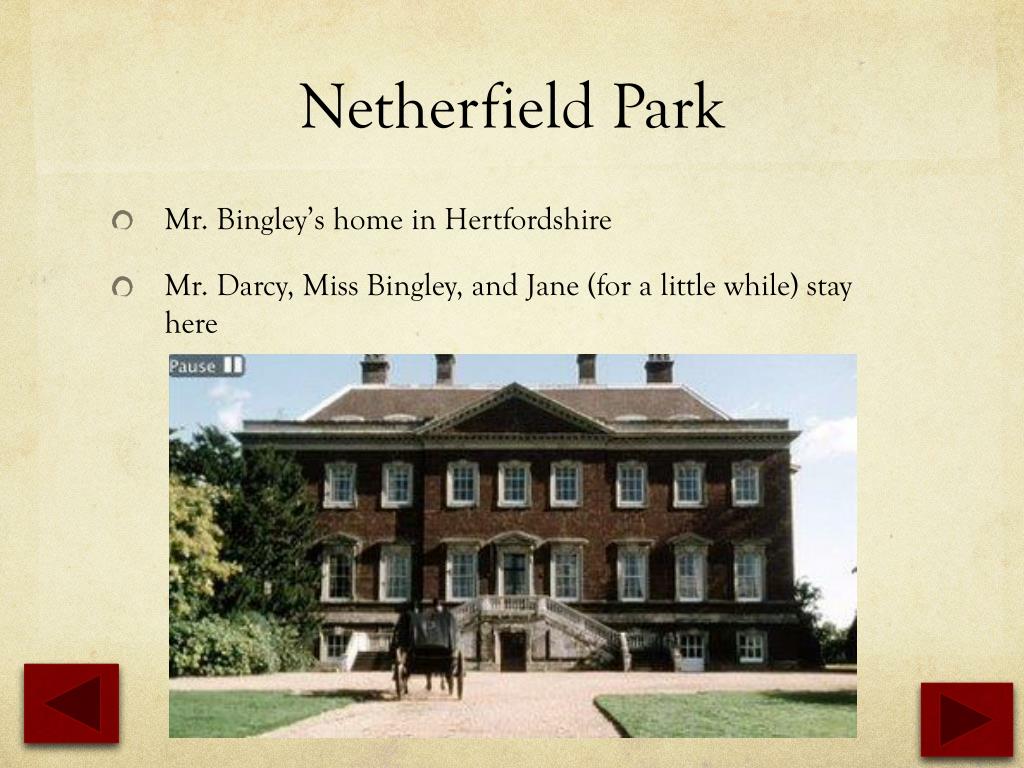
You may recall Mr. Bingley arrives at Netherfield Park at Michaelmas in Austen’s Pride and Prejudice, and many assume Darcy and Colonel Fitzwilliam regularly call at Rosings Park to assist Lady Catherine with her Lady Day accounting.

In England, Lady Day was New Year’s Day from 1155 until 1752, when England adopted the Gregorian calendar (moving from the Julian calendar( making 1 January, rather than 25 March, the beginning of the new year. A vestige of this change remains when it comes to the United Kingdom’s tax year, which starts on 6 April, or what is known as “Old Lady Day,” which takes the original Lady Day of 25 March and adjusts for the 11 “lost days” created by the calendar change, making Tax Day occur on 5 April. The date was moved to 6 April after 1800. Until this change, Lady Day, as mentioned above, was considered the start of the legal year, not the liturgical or historical year, which functioned on a different calendar of sorts.

Year-long contracts between land owners and tenants traditionally began and end on Lady Day. Farming families who were changing farms or setting off to the industrial centers of the late Regency and early Victorian periods would do so on Lady Day.

Theconversation.com explains, “The Julian year was only 11½ minutes longer than a solar year, but by the late 1500s, this had all added up and the Julian calendar was some ten days adrift from the solar calendar. The Roman Catholic church was especially concerned because the celebration of Easter had been gradually getting later than when it had been celebrated by the early church.

And so in October 1582 Pope Gregory XIII instituted a change (to the “Gregorian” calendar) to solve the problem: three leap days were omitted every 400 years by the authority of a papal bull known as ‘Inter Gravissimas’. While Europe adopted the Gregorian calendar, however, England, with its history of conflict with the Roman Catholic church, did not (nor did Russia), and continued with the Julian calendar.

By 1752, when it was 11 days out of alignment with the rest of Europe, England finally accepted that it would have to make a change. The decision was made to drop 11 days from the month of September to catch up, and so September 2 was followed by September 14 that year. To ensure that there was no loss of tax revenues, however, the Treasury extended the 1752 tax year by adding on the 11 days at the end. Consequently, the beginning of the 1753 tax year was moved to April 5.

“In 1800 a further adjustment was made, shifting the start of the tax year forward by one more day to April 6, once again to mitigate for the differences between the Julian and Gregorian calendars. The year 1800 would have been a leap year under the Julian calendar system, but not the Gregorian one, so the Treasury treated 1800 as a leap year for purposes of taxation to get an extra day’s revenue. April 6 has remained the beginning of the tax year ever since, though it was only formalised in 1900. Although some countries, including the US, Canada, France and Germany, have adopted the calendar year as their tax year, the UK and others such as Australia have not.”

It is interesting that with all these date changes, the UK government’s fiscal year still does not align. The financial year in the UK runs from 1 April to 31 March, not coinciding with the tax year dates.

Tudors Dynasty http://www.tudorsdynasty.com/about-lady-day-and-other-major-days-guest-post/

Give Us Our Eleven Days https://www.historic-uk.com/HistoryUK/HistoryofBritain/Give-us-our-eleven-days/


Posted in British history, Chaucer, Christmas, Church of England, Georgian England, Georgian Era, Living in the UK, real life tales, research, servant life, writing | Tagged , , , , , , , , , , | 6 Comments