
In 1931, a former Shropshire police inspector claimed to the rightful heir to the British throne. He was determined to be King Anthony and to displace King George V. His declaration provoked panic at the palace when two doctors refused to silence him by quietly certifying him insane. Hall claimed to have explosive evidence capable of overthrowing the Royal Family in the biggest shake-up in British history. If he had been successful, King George V would have been beheaded while the descendant of a common police inspector would be occupying the throne today. King Anthony I would have been known as a former export trader and author of a vehicle law manual.
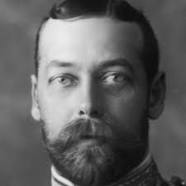 King George V of Great Britain was born on June 3, 1865, the unpromising second son of Edward VII. Initially, he sought a career in the British Navy, but the untimely death of his brother, Albert, placed him on the throne. He became king in 1910 (serving until 1936) and played an active role supporting the troops during World War I. Though lackluster in personality, he won the loyalty of the middle class and many in Great Britain with his steadfast dedication to his country.
Anthony Hall caused widespread panic amongst the authorities, stretching to the King himself. A Special Branch of the British government tracked Hall as the man toured cities with his claim to be the rightful heir to the throne as the descendant of an illegitimate love-child by Henry VIII and Anne Boleyn before they wed. Hall even wrote directly to King George V in February 2, 1931, accusing him of being a German with no claim to the Crown. He wrote: ‘The whole world has been hoodwinked for 328 years. You have no connection with the British Royal Family. You are an outsider.
Therefore leave the country. I claim the Crown.’
He threatened to arrest the King for treason, saying that even if he went to the Prime Minister and ‘pulled his beard,’ King George V would still be chucked out of Britain.
Astonishingly, his scurrilous claims were not only taken seriously by the public, but also the police, Home Office and the King himself.
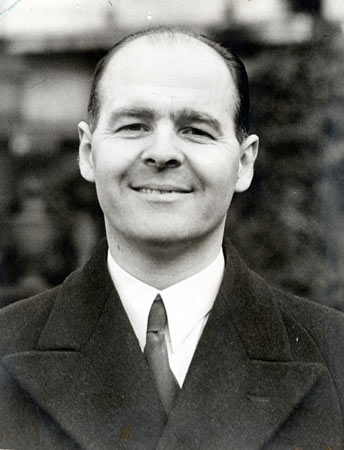 “Details have emerged from the National Archive of the royal family’s anxiety at the way Anthony Hall, who was said to be tall and always impeccably dressed, drew crowds of up to 800 people to hear his claims of direct lineage from Henry VIII. Across the West Midlands, he used his 1931 campaign meetings to denounce King George, the Queen’s grandfather, as a ‘pure blooded German’ with no right to rule Britain. According to a Home Office file, Hall traced his ancestry back to Thomas Hall, a ‘bastard son’ of Henry VIII who died in 1534. To add to his claim to the throne he argued that the real James I of England had been murdered as an infant and his remains lay in a coffin in Edinburgh Castle. His place was taken by an ‘impostor and changeling,’ James Erskine, whom he dubbed ‘goggle-eyed Jim.’ Hall argued that Erskine could not have been the rightful heir, not only because he was goggle-eyed but also his head was too large for his body and his rickety legs meant he couldn’t ride a horse. ‘Having proved he is an impostor it is obvious that all the kings who claim and have claimed to be descendants of his are not entitled to their jobs and are not part of the blood royal,’ he thundered to one large crowd.
“At the height of the great depression, his nightly rants at open air meetings in the Bull Ring, Birmingham, and other West Midlands towns, against the German occupants of Buckingham Palace drew large, approving crowds. But they left the police alarmed. However, King Anthony, a nephew of the high sheriff of Herefordshire, blew hot and cold in his strategy to win back the throne. In one speech he calmly argued that he did not want to start a rebellion or fight a new civil war and the whole matter could be settled in the courts. King George knew that he was an outsider without any connection with the British royal family, Hall claimed, and therefore should face facts and leave the country.
“But Hall, who had driven an ambulance on the Somme during the first world war, occasionally took a far stronger, more violent, line, telling one of his meetings in Birmingham that he would have no hesitation in shooting the king as he would shoot a dog. ‘The King is a German, a pure bred German … I want to become the first policeman to cut off the King’s head.’
“Buckingham Palace asked for him to be declared insane. ‘Would it not to be possible to keep him under observation with a view to his final detention in an institution without actually putting him in prison,’ King George’s private secretary, Sir Clive Wigram, asked the Home Office. So King Anthony was remanded in custody and two doctors called in to examine him. But both refused to certify him as insane. Dr Walter Jordan, a member of the Birmingham public assistance committee and an expert on lunacy, said, to the disappointment of the police and the Home Office: ‘His claim that he is entitled to the kingship of this country is not the mere autogenic delusion of the usual man who says ‘I am king’ but is a case of a sort.’
“At the palace, Sir Clive lamented that locking Hall away in an institution was no longer going to be a practical or effective way of dealing with him: ‘It is true that he is eccentric and wrong-headed, but he is not so obviously demented or insane that he could be dealt with without recourse to court proceedings.’ Sir Clive was convinced that unless something was done Hall would ‘continue with his scurrilous campaign.’ King George was consulted. He agreed that the full force of the law should be used to ‘put a stop to the effusions of the impostor,’ as long as the monarch’s involvement was kept secret and it did not end in Hall’s imprisonment. Buckingham Palace told the Home Office to go ahead ‘so long as it is quite understood that His Majesty is in no way responsible for the initiation of them.’ Hall was arrested and tried for using ‘quarrelsome and scandalous language.’ He was fined £10 and bound over to keep the peace with a surety of £25 or the alternative of two months’ imprisonment with hard labour. The chief constable of Birmingham reported to the palace that, after a swan song meeting in the Bull Ring, Hall finally left the city, ending the public campaign of the last Tudor claimant to the throne. Hall is believed to have died in 1947 leaving no male heirs.
Resources:


 The word “genteel” is an adjective, meaning polite, refined, or respectable, often in an affected or ostentatious way. Its roots can be found in the late 16th century (in the sense ‘fashionable, stylish’): from French gentil ‘well-born’. From the 17th century to the 19th century the word was used in such senses as ‘of good social position’, ‘having the manners of a well-born person’, ‘well bred’. The ironic or derogatory implication dates from the 19th century, in which the Regency era lies. (Dictionary.com)
 Most of us believe we know how the word is defined, and, I imagine, for many, your personal definition of a “gentleman” is based on behavior. However, that was not always the case during the Regency era. A man could be a “rake” or womanizer, but still be considered a gentleman.
 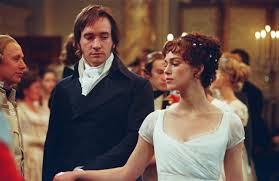 Therefore, when Elizabeth Bennet argues her point regarding Lady Catherine’s objections of Elizabeth setting her sights too high on the “order of precedence” by aspiring to marry Mr. Darcy, her ladyship’s response appears to make more sense. Elizabeth’s father was part of the landed gentry, but Mrs. Bennet’s roots lies in trade, as does Mrs. Bennet’s brother, Mr. Gardiner, and her sister, Mrs. Phillips.
 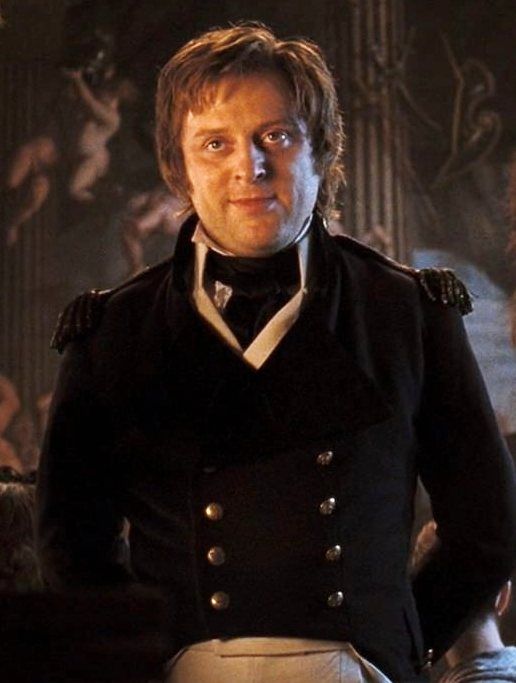 The good colonel’s father, an earl, had enough money to purchase him a position of rank in the Army. He is commissioned as an “officer and a gentleman.” His rank has nothing to do with whether Colonel Fitzwilliam truly behaved as a “gentleman,” as the modern term indicates. He could have been a rascal of a man, but still hold the term “gentleman” as part of his recognition in society.
 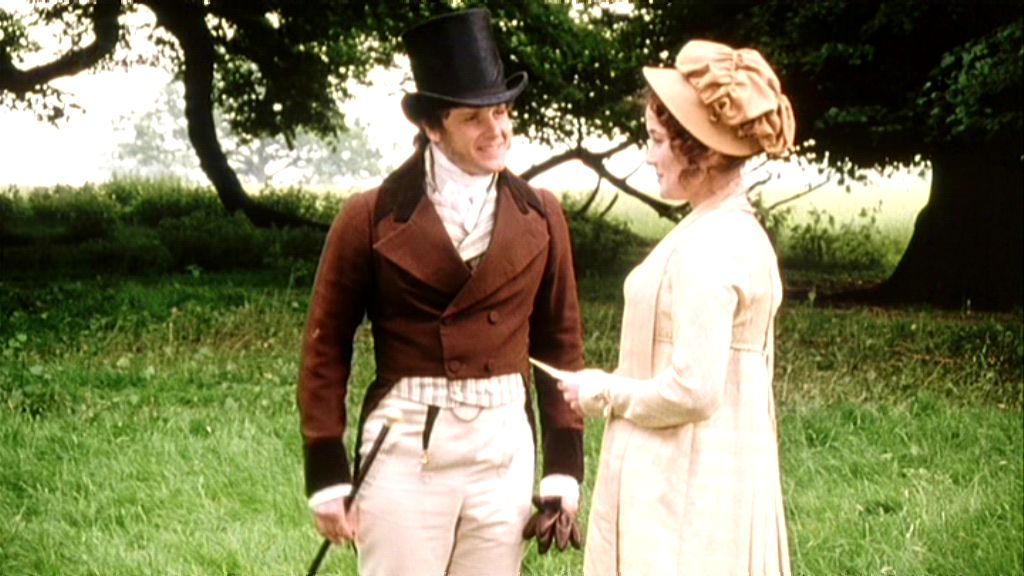 The growing wealth of the middle class purchasing their way into the gentry was another threat. Mr. Bingley in Austen’s Pride and Prejudice is a prime example of this situation. Jane Austen’s books all deal with that question: “What is a true gentleman?” But because of the laws where only the first son inherited, second sons, ostensibly part of the upper class and a gentleman, had to have something to live on Again, I return to Colonel Fitzwilliam in the same book.
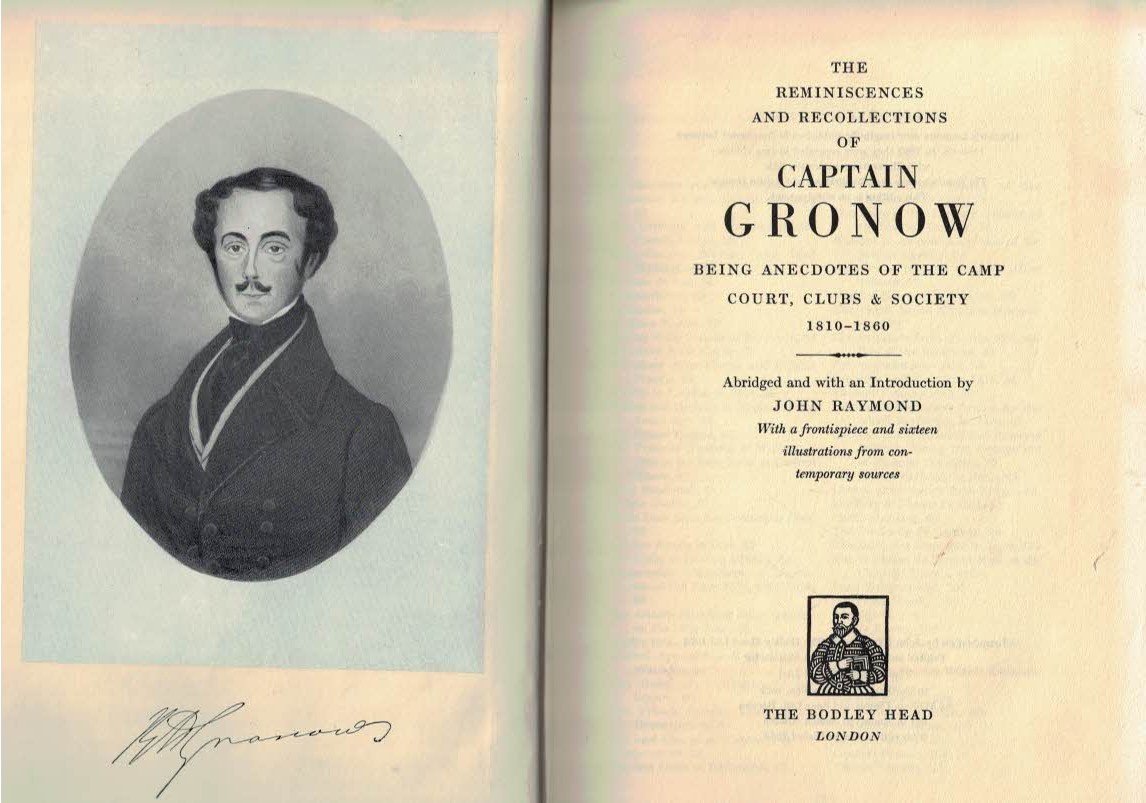 Gronow’s wonderful book is a great illustration of an officer being among the upper classes, but as a war-minted gentleman without much money, he was not fully accepted.


_(14762209806).jpg)


 Every Woman Dreams...