Claridge Hotel + the Upcoming Release of “Lyon in the Way” from Dragonblade Publishers

It is only two more days until the release of the first book of my mystery/romantic suspense series for Dragonblade Publishers releases. The series, which I have nearly finished writing are in different stages of production. They will release three months apart beginning today, June 18 (Lyon in the Way), September 17 (Lyon’s Obsession), December 17 (Lyon in Disguise), and then in 2026, March 18 (Lost in the Lyon’s Garden) and, finally, June 20 (Lyon on the Inside). The first three are finished. I am currently working on book 4, though it is nearly finished. Book five has been in my head for MANY months now. If you do not know of Dragonblade Publishers, they are an author-owned group and specialize in historical romance (meaning pre 20th Century).

In this tale, part of the action takes place at the Claridge Hotel, an actual hotel, still in existence. The History & Heritage of Claridge tells us, “It started life as a single house, but Claridge’s was soon transformed into an art deco masterpiece favoured by royalty and the most distinguished figures of every generation.

1800s, Small beginnings: William and Marianne Claridge are running a hotel in a single house at 51 Brook Street. In an ambitious move to expand their business, they buy the adjoining five buildings in 1854. Claridge’s opens in its own right in 1856.”

https://alinakfield.com/from-the-historical-research-files-regency-era-hotels/ ~ “I don’t want to go to heaven, I want to go to Claridge’s” said actor Spencer Tracy. Wikipedia CC BY-SA 4.0
File: Claridge’s Exterior with people.jpg

The Claridge was originally known as the Mirvat (which is what it is called in my tale). Mivart’s was known as London’s most posh hotel and was founded in 1812 in Mayfair.  The original Regency rooms were situated in five sites of traditional terrace housing.  At the corner of Brook and Davies streets, the location could not be beat for visitors to Town and the Season. [Regency Reader]

What becomes a bit confusing is that the Mirvat Hotel and the original Claridge Hotel were once side by side in terrace homes. Claridge’s was founded in 1812 as Mivart’s Hotel, in a conventional London terraced house, and it grew by expanding into neighbouring houses. In 1854, the founder of the Mirvat (the father of biologist St. George Jackson Mivart, who attempted to reconcile the theory of evolution as propounded by Charles Darwin with the beliefs of the Catholic Church, but was condemned by both Darwin and the Church) sold the hotel to a Mr and Mrs Claridge, who owned a smaller hotel next door. The Claridges combined the two operations, and after trading for a time as “Mivart’s late Claridge’s”, they settled on the current name. 

Alina Fields has a description of hotel rooms that she found in a book about another famous hotel, the Clarendon. It is a travel diary, London Observed, A Polish Philosopher at Large, 1820-1824, by Krystyn Lach-Szyrma, tutor to two Polish princes. Here are some of the excerpts Ms. Fields shared from the book:

It is available for $51 on Amazon, but it was too much for my purse right now, as I am paying for three recent cancer surgeries. [Shoulder shrug!!!]

First, something of the authentic French cuisine shared by Ms. Fields:

On entering a hotel a traveler will be met by a fat doorkeeper, carrying a large silver-plated staff as a symbol of his position, who will tell him if there are any rooms available.

You go through halls and stairs covered with carpets which are so beautiful and clean that it is a pity you have to walk on them. Bedrooms are usually situated on the second floor and a drawing room on the first one… On a bed they use mattresses and one or two flannel blankets, under which they put a sheet, so that they do not rub the body…

The coffee was already made and placed on the table, but it was not good. English coffee is weaker than Polish and its taste is different because they do not roast it for long. So we could do nothing else but start to drink tea.

This image is 1898 (long after my story takes place), but I thought you might find it as interesting as did I. It is a menu from the Claridge Hotel for that year. I used it as inspiration for what my characters chose from the menu for their meal.

Other Resources:

Claridge’s (History of …)

Regency Reader

Laurie Benson’s A Cozy Drawing Room

British History on Line

The Shady Old Lady’s Guide to London

One man wants her dead. Another may love her forever.

For over a year, Lord Richard Orson has been quietly captivated by the unconventional Lady Emma Donoghue. Headstrong, brilliant, and unapologetically involved in causes that rattle Society’s comfort, Emma is nothing like the debutantes he’s expected to court.

But when he finds her bruised, confused, and alone in Covent Garden after midnight, Richard is thrust into a far more dangerous game.

Someone wants Emma silenced. And now, Richard has only moments to uncover the truth, protect her from harm, and keep her out of scandal’s reach. But staying focused is harder than he imagined—especially when every glance, every accidental touch, reminds him how perfectly she fits in his arms.

Tropes you’ll love:
✔ Protective hero / damsel in distress (with a twist)
✔ Bluestocking heroine
✔ Rescue & recovery romance
✔ Unlikely match / opposites attract
✔ Slow burn with rising suspense
✔ One bed (forced proximity)
✔ Hero falls first

As danger closes in and secrets are revealed, Richard must decide whether he’s willing to risk his life—and his heart—for a woman who’s always been worth the fight.

A suspenseful, slow-burn Regency romance where danger ignites desire, and love must outpace the clock.

Purchase Link:

Read in Kindle Unlimited!

Enjoy book one in a new series within The Lyon’s Den Connected world by Regina Jeffers.

Book 1 – Lyon in the Way
Book 2 – Lyon’s Obsession
Book 3 – Lyon in Disguise
Book 4 – Lost in the Lyon’s Garden
Book 5 – Lyon on the Inside

Posted in blog hop, book release, British history, buildings and structures, Dragonblade Publishers, eBooks, Georgian England, Georgian Era, historical fiction, history, Living in the Regency, publishing, reading, real life tales, Regency era, research, writing | Tagged , , , , , , , , , , , , , , , , | Comments Off on Claridge Hotel + the Upcoming Release of “Lyon in the Way” from Dragonblade Publishers

Palmer’s Village? Where is it in Relation to London? What is its significance to “Lyon in the Way” from Dragonblade Publishers

When I write a story, I love to add little “tidbits,” which, first, make the tale more interesting, and, secondly, adds to the reader’s knowledge. In my tale, Taming Lord Truist, I introduced my readers to a place a bit north of London, where Truist kept his long-time mistress. played a big part in a section of that tale.

A bit farther north of London, one finds Palmer’s Village. First, let us discover something about Palmer Street.

Nowadays, Palmer Street is a street in the City of Westminster in London that runs between Petty France in the north and Victoria Street in the south. It is crossed by Caxton Street and Butler Place. The lower half of Palmer Street, below Caxton Street, is pedestrianized. Of course, none of this was true for my tale. London was just beginning its scrawl. Palmer Street and Palmer Village were outside of London proper by several (meaning 10+) miles.

via Wikipedia ~ Palmer Street, London This otherwise unremarkable street is where the west exit from St. James’ Park station on the District and Circle Lines emerges, and as every London Geographer should know, it’s a very short walk to the National Map Centre, very probably the best map shop in the world. ~ CC BY-SA 2.0

The street is named after the priest and philanthropist James Palmer whose almshouses stood on the east side from 1654 to 1881. In the 19th century the lower part was known as Palmer’s Passage and the upper part as Gardner’s Lane

The Abandoned Communities Website tells us, “In 1853 Charles Manby Smith wrote a quite wonderful description of “A Deserted Village in London”, a place known as Palmer’s Village. He tells us that he had lived in the village during many happy years of his youth, some twenty or thirty years earlier. He deplored the way that the village had been swallowed up by the expansion of London and then disappeared altogether when Victoria Street was created between 1845 and 1851.

“A Deserted Village in London” is a chapter in Charles Manby Smith’s “Curiosities of London Life”. You can read it on the Victorian London website.

“The story of Palmer’s Village begins in 1656 with the founding of a school for 20 boys and almshouses for 12 elderly people by Rev. James Palmer. I am going to take the liberty of quoting in full the tribute to James Palmer that formed part of his memorial when his remains were buried in St Margaret’s Church, Westminster:

“Heerunder is interred ye body of James Palmer Batchelor in Divinity borne in this parish of St Margarets in July 1595. A most pious and charitable man exprest in severall places by many remarkeable actions & particularly to this parish in building fayer almes houses for 12 poor olde people with a free school and a comodious habitation for the scoolmaster and a convenient chappell for prayers and preaching where he constantly for divers yeares before his death once a week gave a comfortable sermon. He indowed ye same with a competent yearly revinew of free hold estate comitted to ye trust & care of 10 considerable persons of ye place to be renewed as any dye. He cheerfully ended this life ye 5 of January 1659.

“Palmer’s almshouses were built at the western end of Westminster, adjacent to the burial ground for the parish of St Margaret’s.  They occupied a strip of land at the north eastern corner of Tothill Fields, a large area of scattered market gardens among waste ground that became marshy during wet weather.  A lot of shooting went on in Tothill Fields. Men would go there to practice shooting, an activity still commemorated in the name of Artillery Row. Those who lacked peaceful means of dealing with disputes would go there to resolve their quarrels by duelling.”

One man wants her dead. Another may love her forever.

For over a year, Lord Richard Orson has been quietly captivated by the unconventional Lady Emma Donoghue. Headstrong, brilliant, and unapologetically involved in causes that rattle Society’s comfort, Emma is nothing like the debutantes he’s expected to court.

But when he finds her bruised, confused, and alone in Covent Garden after midnight, Richard is thrust into a far more dangerous game.

Someone wants Emma silenced. And now, Richard has only moments to uncover the truth, protect her from harm, and keep her out of scandal’s reach. But staying focused is harder than he imagined—especially when every glance, every accidental touch, reminds him how perfectly she fits in his arms.

Tropes you’ll love:
✔ Protective hero / damsel in distress (with a twist)
✔ Bluestocking heroine
✔ Rescue & recovery romance
✔ Unlikely match / opposites attract
✔ Slow burn with rising suspense
✔ One bed (forced proximity)
✔ Hero falls first

As danger closes in and secrets are revealed, Richard must decide whether he’s willing to risk his life—and his heart—for a woman who’s always been worth the fight.

A suspenseful, slow-burn Regency romance where danger ignites desire, and love must outpace the clock.

Purchase Link:

Read in Kindle Unlimited!

Enjoy book one in a new series within The Lyon’s Den Connected world by Regina Jeffers.

Book 1 – Lyon in the Way
Book 2 – Lyon’s Obsession
Book 3 – Lyon in Disguise
Book 4 – Lost in the Lyon’s Garden
Book 5 – Lyon on the Inside

Posted in blog hop, book release, books, British history, Dragonblade Publishers, eBooks, Georgian England, Georgian Era, historical fiction, history, Living in the Regency, mystery, publishing, Regency era, Regency romance, research, suspense | Tagged , , , , , , , , , , , , , , , , | Comments Off on Palmer’s Village? Where is it in Relation to London? What is its significance to “Lyon in the Way” from Dragonblade Publishers

Robert Hodgson, Rector of St George’s of Hanover Square: Small Facts to Make a Story Realistic + the Upcoming Release of “Lyon in the Way” from Dragonblade Publishing

“St George’s Hanover Square,” aquatint, by T. Malton. Dated 1787. Courtesy of the British Library, London. ~ Public Domain ~ https://en.wikipedia.org/wiki/St_George_Hanover_Square#/media/File:St_George’s_Hanover_Square_by_T_Malton._1787.jpg

St George’s of Hanover Square Website provides a short bio for all its rectors. For Robert Hodgson, it says:

1803
Robert Hodgson, M.A.

  • He was also Vicar of Hillingdon; 1810-40; Archdeacon of St Alban’s, 1814-16; Dean of Chester, 1816-20; Dean of Carlisle, 1820-44. Through the marriage of his granddaughter to the Earl of Srathmore, he was an ancestor of Queen Elizabeth II and, obviously, to King Charles III.

Having this man’s name correct is the kind of thing Regency writers stress over. Though Robert Hodgson’s part in the tale is pronouncing the vows of the hero’s best friend and the woman Lord Richard Orson does not think is good enough for Sir Hunter Wickersham, it is important for the details to be accurate. [Please do not say this is a spoiler, for we only read Regency romances for that purpose, and Sir Hunter only plays a small part in maneuvering the hero and heroine together.]

Though Robert Hodgson plays only a small part in this series, he will make repeat appearances. Hodgson was born in 1773 to a father with the same name. His mother Mildred (née Porteaus) saw that young Robert was baptised on 22 September 1773 at St Peter’s Church in Congleton. Hodgson was a close relative (by marriage on his father’s side and by blood on his mother’s side) of Beilby Porteus, Bishop of London, about whom he wrote a biography. [Anthony R. Wagner, “Queen Elizabeth’s American Ancestry and Cousinship to George Washington and Robert E. Lee”, Genealogists’ Magazine, 8 (1939):368-75.]

On his mother’s side, he was a descendant of Augustine Warner Jr., who presided as the Speaker of the Virginia House of Burgesses during Bacon’s Rebellion (Warner served before the Rebellion in 1676, and after the Rebellion in 1677.), and through him a relative of America’s first president, George Washington.

Hodgson was educated at Macclesfield School and Peterhouse, Cambridge, where he graduated BA as 14th Wrangler in 1795. [“Hodgson, Robert (HG791R)”A Cambridge Alumni Database. University of Cambridge.] For those of you are not familiar with the term “wrangler,” which I used in my yet to be published, Lady Glynis and the Earl, a “wrangler” is a term used at the University of Cambridge, for a student who gains first-class honours in the Mathematical Tripos competition. The highest-scoring student is the Senior Wrangler, the second highest is the Second Wrangler, and so on. By contrast, the person who achieves the lowest exam marks while still earning a third-class honours degree (that is, while still earning an honours degree at all) is known as the wooden spoon.

Robert Hodgson was rector of St George’s, Hanover Square for over forty years, from 1803 until his death in 1844. [The Gentleman’s Magazine, n.s. 22(Jul-Dec 1844):651.]

One man wants her dead. Another may love her forever.

For over a year, Lord Richard Orson has been quietly captivated by the unconventional Lady Emma Donoghue. Headstrong, brilliant, and unapologetically involved in causes that rattle Society’s comfort, Emma is nothing like the debutantes he’s expected to court.

But when he finds her bruised, confused, and alone in Covent Garden after midnight, Richard is thrust into a far more dangerous game.

Someone wants Emma silenced. And now, Richard has only moments to uncover the truth, protect her from harm, and keep her out of scandal’s reach. But staying focused is harder than he imagined—especially when every glance, every accidental touch, reminds him how perfectly she fits in his arms.

Tropes you’ll love:
✔ Protective hero / damsel in distress (with a twist)
✔ Bluestocking heroine
✔ Rescue & recovery romance
✔ Unlikely match / opposites attract
✔ Slow burn with rising suspense
✔ One bed (forced proximity)
✔ Hero falls first

As danger closes in and secrets are revealed, Richard must decide whether he’s willing to risk his life—and his heart—for a woman who’s always been worth the fight.

A suspenseful, slow-burn Regency romance where danger ignites desire, and love must outpace the clock.

Purchase Link

Read in Kindle Unlimited!

Enjoy book one in a new series within The Lyon’s Den Connected world by Regina Jeffers.

Book 1 – Lyon in the Way
Book 2 – Lyon’s Obsession
Book 3 – Lyon in Disguise
Book 4 – Lost in the Lyon’s Garden
Book 5 – Lyon on the Inside

Posted in blog hop, book release, British history, Church of England, Dragonblade Publishers, Georgian England, Georgian Era, historical fiction, mystery, publishing, Regency era, Regency romance, religion, research, romance, suspense, writing | Tagged , , , , , , , , , , , , , , | Comments Off on Robert Hodgson, Rector of St George’s of Hanover Square: Small Facts to Make a Story Realistic + the Upcoming Release of “Lyon in the Way” from Dragonblade Publishing

Whaddon, Bletchley, and Milton Keynes in Buckinghamshire + the Upcoming Release of “Lyon in the Way” from Dragonblade Publishers

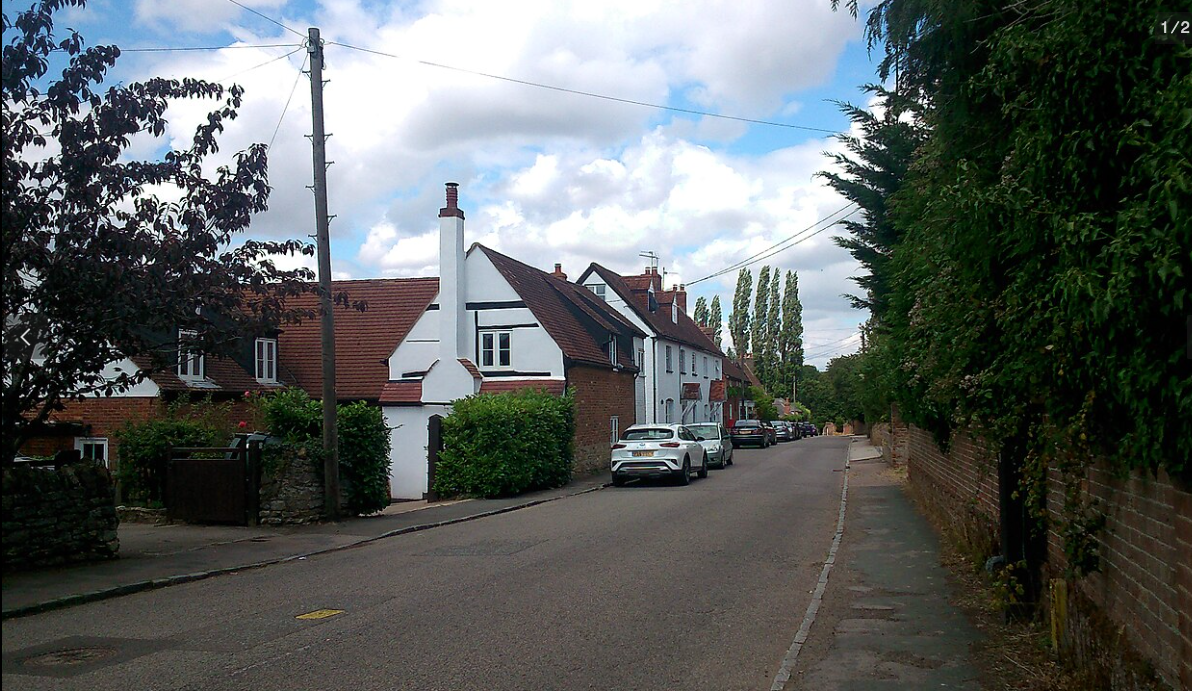
Part of my story has the heroine hiding out in a hunting lodge in Buckinghamshire. At this point, I shan’t tell you why. You must read the book to learn something of her motives and mine. LOL! However, as she journeys to this place of hopeful safety, she passes through the villages of Whaddon, Bletchley, and Milton Keyes. I thought I might share a bit about each so you would have a lovely picture in your mind of the places she saw.

Whaddon is a village in Buckinghamshire, England. It sits just outside of Bletchley, which is a constituent town of Milton Keynes. This connection is the reason I mention all three in the tale. The name “Whaddon” is Anglo Saxon in origin and means “hill where wheat is grown.” The village is referred to several times in the Anglo-Saxon Chronicle generally in the form of Hwætædun.

The village is at the centre of the ancient Whaddon Chase, which is a Royal hunting forest. Whaddon Chase is designated an area of ‘Special Landscape Interest’.

https://bucksmknep.co.uk/boa/whaddon-chase/

Bletchley is a constituent town of Milton Keynes, in the south-west of the city, split between the civil parishes of Bletchley and Fenny Stratford and West Bletchley, which in 2011 had a combined population of 37,114.

Bletchley is best known for Bletchley Park, the headquarters of Britain’s World War II codebreaking organization, and now a major tourist attraction. The National Museum of Computing is also located on the Park.

“The town name is Anglo-Saxon and means Blæcca’s clearing. [“Key to English place names: Bletchley”. Institute for Name-Studies, the University of Nottingham.] It was first recorded in manorial rolls in the 12th century as Bicchelai, then later as Blechelegh (13th century) and Blecheley (14th–16th centuries). Just to the south of Fenny Stratford, there was Romano-British town, MAGIOVINIUM on either side of Watling Street, a Roman road.

“Bletchley was originally a minor village on the outskirts of Fenny Stratford, of lesser importance than Water Eaton. [“Parishes : Bletchley with Fenny Stratford and Water Eaton”. A History of the County of Buckingham: Volume 4. Victoria History of the Counties of England. 1927. p. 274–283.] Fenny Stratford fell into decline from the English Civil War (17C) onwards. The arrival of the London and Birmingham Railway (now part of the West Coast Main Line) from 1838, and particularly of the branch lines to Bedford (1846) and Buckingham (1850) (that together subsequently became the Oxford – Cambridge “Varsity Line”), made the station at Bletchley a substantial one. Bletchley grew to eclipse both its antecedents.”

A view along Queensway, the principal shopping street in Bletchley, Milton Keynes. ~ https://en.wikipedia.org/wiki/Bletchley#/media/File:Bletchley_Queensway.JPG ~ CC BY 3.0

Milton Keynes is a city in Buckinghamshire, England, about 50 miles (80 km) north-west of London. The River Great Ouse forms the northern boundary of the urban area; a tributary, the River Ouzel, meanders through its linear parks and balancing lakes. The area that was to become Milton Keynes was relatively rich: the Milton Keynes Hoard is one of the largest (by weight, 2.2 kg or 4.9 lb) hoard of Bronze Age jewellery ever found in Britain: the British Museum described it as ‘one of the biggest concentrations of Bronze Age gold known from Britain and seems to flaunt wealth’. [“The Milton Keynes hoard”British Museum/Google Cultural Institute.] It was discovered in September 2000 at Monkston (near Milton Keynes village) and consists of two Bronze Age gold torcs and three gold bracelets in a datable clay pot.

“Most of the eighteen medieval villages in Milton Keynes are still extant and are at the heart of their respective districts. But some, such as Old Wolverton, remain only as field patterns marking a deserted village. The desertion of Old Wolverton was due to enclosure of the large strip cultivation fields into small ‘closes’ by the local landlords, the Longville family, who turned arable land over to pasture. By 1654, the family had completely enclosed the parish. With the end of the feudal system, the peasants had lost their land and tillage/grazing rights and were forced to find other work or starve. Thus Old Wolverton was reduced from about thirty peasant families in the mid 16th century to almost none, within the space of a century. There are also deserted village sites in Tattenhoe and Westbury (Shenley Wood).” [History of Milton Keynes]

High Street, Stony Stratford, Buckinghamshire, England. Stony Stratford is a constituent town of Milton Keynes but it was once an important town in its own right, a coaching stop a day’s journey from London by stage-coach on the London-Birmingham Turnpike ((Watling Street, later to become the A5). The legacy of this role is two coaching inns on the High Street, the Bull (seen here in the foreground), and a little further along the Cock. They were known for the tales that travellers would tell and, it is said, gave rise to the expression ‘Cock and Bull story’. ~ https://en.wikipedia.org/wiki/Milton_Keynes#/media/File:Stony_Stratford_-_the_Cock_and_the_Bull.jpg ~ CC BY-SA 4.0

Short Excerpt from Chapter Eight:

She glanced to where Lord Beaufort stirred. He slowly opened his eyes and smiled at her. As she had noted previously, the man was quite a handsome young man with dark blonde hair that shone with bits of copper highlights. His large brown eyes widened beneath darkly arched brows. “We are nearly to Whaddon,” he said as he looked around to know his bearings. “You should not have permitted me to sleep so long,” he chastised as he pushed himself up in the seat. 

“You obviously required your rest,” she remarked. 

One could easily view his Norman ancestors in the man’s features. He was taller than Lord Orson, by whom Emma had come to judge others. When had that happened? She could not say with any confidence, but it was true. 

Even after riding for hours in a cramped carriage, Lord Beaufort could walk into any house in Mayfair and not be shunned for his untidiness. He wore a rust-colored jacket with dark brown lapels and a white cravat and a dark green waistcoat. 

The carriage turned onto an access road. “What should I expect from this ‘lodge’?” she asked. 

“It is not as rustic as you may have imagined,” he said in honest tones. “Not too small nor too large. Imagine a farm house with a half dozen bed chambers, a small kitchen and morning room, and a few sitting rooms. I employ more than a handful of staff to maintain it. A woman will come in each day to cook and two others to clean. Its main advantage is it sits upon a hillside so it will be difficult for anyone to approach without our knowledge.” 

One man wants her dead. Another may love her forever.

For over a year, Lord Richard Orson has been quietly captivated by the unconventional Lady Emma Donoghue. Headstrong, brilliant, and unapologetically involved in causes that rattle Society’s comfort, Emma is nothing like the debutantes he’s expected to court.

But when he finds her bruised, confused, and alone in Covent Garden after midnight, Richard is thrust into a far more dangerous game.

Someone wants Emma silenced. And now, Richard has only moments to uncover the truth, protect her from harm, and keep her out of scandal’s reach. But staying focused is harder than he imagined—especially when every glance, every accidental touch, reminds him how perfectly she fits in his arms.

Tropes you’ll love:
✔ Protective hero / damsel in distress (with a twist)
✔ Bluestocking heroine
✔ Rescue & recovery romance
✔ Unlikely match / opposites attract
✔ Slow burn with rising suspense
✔ One bed (forced proximity)
✔ Hero falls first

As danger closes in and secrets are revealed, Richard must decide whether he’s willing to risk his life—and his heart—for a woman who’s always been worth the fight.

A suspenseful, slow-burn Regency romance where danger ignites desire, and love must outpace the clock.

Purchase Link:

Read in Kindle Unlimited!

Enjoy book one in a new series within The Lyon’s Den Connected world by Regina Jeffers.

Book 1 – Lyon in the Way
Book 2 – Lyon’s Obsession
Book 3 – Lyon in Disguise
Book 4 – Lost in the Lyon’s Garden
Book 5 – Lyon on the Inside

Posted in blog hop, book excerpts, book release, British history, Dragonblade Publishers, eBooks, England, Georgian England, Georgian Era, Great Britain, hero, heroines, historical fiction, history, Living in the UK, mystery, publishing, real life tales, Regency era, Regency romance, research, romance, suspense, travel, writing | Tagged , , , , , , , , , , , , , , , , , , , , , | Comments Off on Whaddon, Bletchley, and Milton Keynes in Buckinghamshire + the Upcoming Release of “Lyon in the Way” from Dragonblade Publishers

Yellow Sapphires + the Upcoming Release of “Lyon in the Way” from Dragonblade Publishers

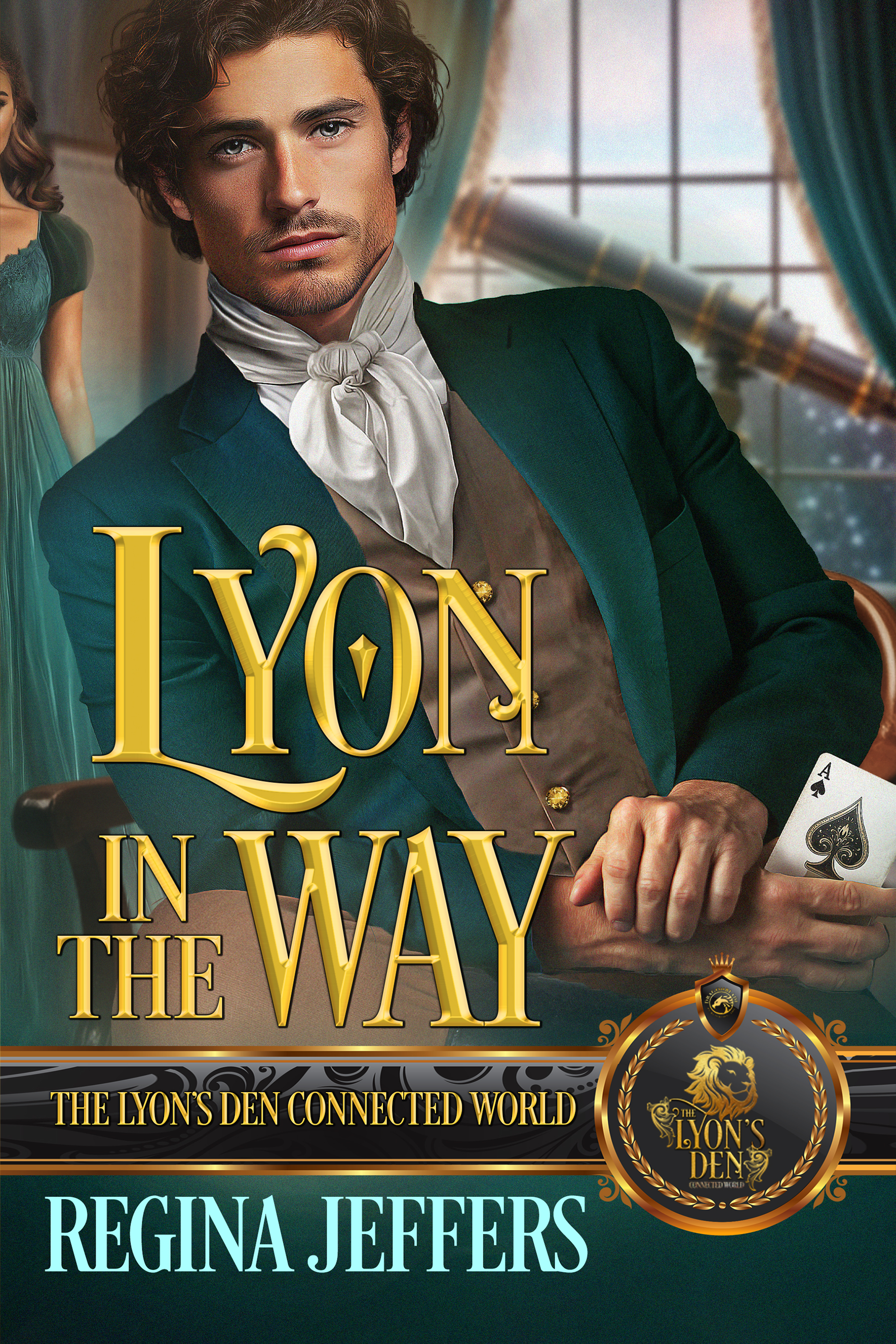
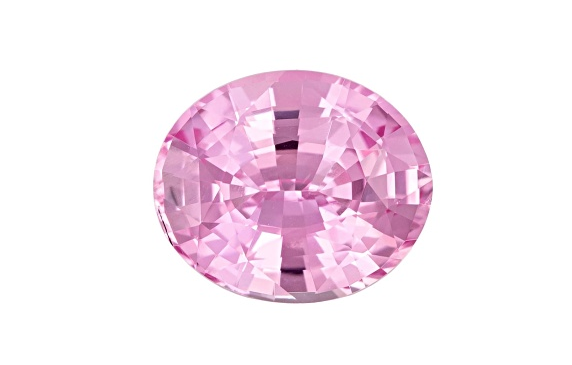
When one sees the lovely cover of Lyon in the Way, he notes the three jewels. Some think they are yellow diamonds, but they are yellow sapphires. I am a bit obsessed with sapphires, for a blue one is my birthstone, but I have come also to love yellow sapphires, and I could not resist adding them to my story.

The blue varieties of sapphires originated in what is now called the Kashmir region of India between the late and early 19th century. However, mining for yellow sapphires goes back some 2000 years, originally noted in the area we now call Sri Lanka. In reality, one can have a pink or a green or even a purple sapphire.

Yellow sapphires are also found in India, Kashmire, Thailand, Myanmar, Cambodia, Australia, and in the state of Montana in the USA. Natural sapphires take millions of years to form. Of course, they can also be “grown” in a lab. The images I shared above ranged in price from $2500 to $5000 just for the stone.

The Natural Sapphire Company has a large range of colors displayed on their website, if anyone is interested. This site tells us, “In addition to being beautiful, yellow sapphires (also called Pukhraj stone) carry meaning. Some believe the stone brings the wearer luck, wisdom, happiness, and prosperity. Some also believe yellow sapphires represent Jupiter in Vedic astrology. Vedic astrology is a system of knowledge in India that is based on the belief that the position of stars and planets impact our lives. Jupiter is the planet of wisdom, knowledge, power, riches, and wealth.”

No immediate response came, but her carriage mate stared at her with what Emma would call apprehension. “What do you want?” Emma continued. “And do not tell me the yellow sapphires, for I have no idea where to search for them. I will pay you to take your tale of woe and go away. Leave me be, and I shall leave you and your stratagems to reside elsewhere.” A long silence followed Emma’s challenge. 

One man wants her dead. Another may love her forever.

For over a year, Lord Richard Orson has been quietly captivated by the unconventional Lady Emma Donoghue. Headstrong, brilliant, and unapologetically involved in causes that rattle Society’s comfort, Emma is nothing like the debutantes he’s expected to court.

But when he finds her bruised, confused, and alone in Covent Garden after midnight, Richard is thrust into a far more dangerous game.

Someone wants Emma silenced. And now, Richard has only moments to uncover the truth, protect her from harm, and keep her out of scandal’s reach. But staying focused is harder than he imagined—especially when every glance, every accidental touch, reminds him how perfectly she fits in his arms.

Tropes you’ll love:
✔ Protective hero / damsel in distress (with a twist)
✔ Bluestocking heroine
✔ Rescue & recovery romance
✔ Unlikely match / opposites attract
✔ Slow burn with rising suspense
✔ One bed (forced proximity)
✔ Hero falls first

As danger closes in and secrets are revealed, Richard must decide whether he’s willing to risk his life—and his heart—for a woman who’s always been worth the fight.

A suspenseful, slow-burn Regency romance where danger ignites desire, and love must outpace the clock.

Purchase Link:

Read in Kindle Unlimited!

Enjoy book one in a new series within The Lyon’s Den Connected world by Regina Jeffers.

Book 1 – Lyon in the Way
Book 2 – Lyon’s Obsession
Book 3 – Lyon in Disguise
Book 4 – Lost in the Lyon’s Garden
Book 5 – Lyon on the Inside

Posted in blog hop, book excerpts, book release, Dragonblade Publishers, eBooks, excerpt, Georgian England, Georgian Era, heroines, historical fiction, mystery, publishing, Regency era, Regency romance, research, romance, suspense, writing | Tagged , , , , , , , , , , , , , , , , | Comments Off on Yellow Sapphires + the Upcoming Release of “Lyon in the Way” from Dragonblade Publishers

Beds? Valances? Dust Skirts? Georgian Bedrooms + the Upcoming Release of “Lyon in the Way” from Dragonblade Publishers

I confess. I knew little to nothing about a Georgian bedroom. I had seen the ones shown at Williamsburg, Virginia, but that is more to show visitors to the estate something of life in America in that time period, not what it was to live in a London town house or an estate. However, for Lyon in the Way, which will be released by Dragonblade Publishers on June 18, 2025, I had to write a brief scene where the heroine hid under a bed in an earl’s house. Could she fit under there? Was there a “valance” and was “valance” the the correct word to use during the Regency to describe the skirt on the bed? Below are tidbits of the research I did for that one little fact, only mentioned once in a story of 84,000+ words. Often I lament why I could not simply write contemporary. I intend no dissing any contemporary fans or writers in my statement, but I wonder, for my own sanity, if contemporary might not have been easier on my 70+ year-old-mind.

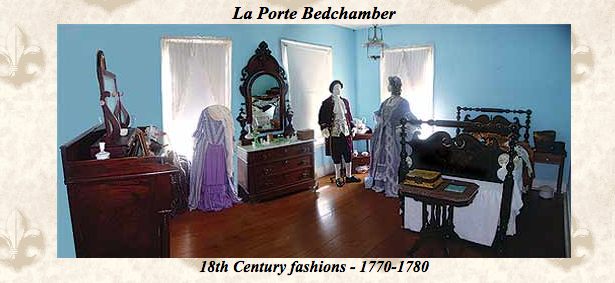
The master bedchamber of the house shows numerous garments that the first aristocratic emigrés might well have found familiar. The standing figures are attired in the most formal garments, while other elegant clothing is shown on the bed. Across the room, more informal wear is draped across a trunk, and waiting on an 18th century style dress stand. ~ https://williamsburgrose.com/faz/2_LaPorteBedchamber.html

Musings of a Romance Writer tells us, “By the end of the eighteenth century, most beds used a woven mesh of ropes or leather to support a mattress. Unlike the previous solid wood base, ropes provided more yielding support and had to be tightened regularly to avoid sagging. If you were lucky enough to be able to afford a mahogany four-poster bed, you were more than well off. It was also important to ensure you had multiple layers of blankets and a counterpane to establish your status. The more work your servants had to do when making your bed the better. Bed hangings for the high-status bed were made from chintz and were stitched directly to the bed frame. Calico Glazers were employed to unstitch the fabric when it needed to be cleaned. They would wash and starch the fabric, then re-glaze the material using heated rollers. The hangings would then be re-attached to the bed frame. 

“One source argued that feather mattresses were not used until later in the century, but I can confirm that they were introduced to England by John Harris Heal around 1810. Heal set up his feather dressing business, Heal & Sons Ltd., that year and then went on to produce furniture from 1818. They still have a shop in London today, although it is no longer run by that family. Feather mattresses were considered so luxurious, that they were even handed down through generations.”

Victoria Linen in the UK provides us a bit of terminology:

“For Beds: A valance, also known as a bed skirt, is used around the base of the bed to hide the box spring or storage underneath, giving the bed a neat and finished appearance. “Valance” is also a decorative drapery over the top part of a window.

“Historically speaking, valances were used to hide unattractive box springs and poorly shaped bed posts. Not unlike the bed skirts of today which often hide items stored beneath the bed as well as the occasionally annoying “dust bunny.”

“It was quickly discovered that bed skirts also served to stop chilly winter drafts which tended to cool the bed from the floor up. In addition, those who had valances on their beds found bed bugs and dust mites were less of an issue in their homes. This, of course, makes perfect sense because the skirt can deflect dust, which is somehow drawn underneath beds. And so, the valance came into its own!”

Meanwhile, Rival Beds speaks of what it was like in a Georgian bedroom. “The Georgian period spanned over 100 years, developing into several eras within this timeframe. There were subtle nuances between the earlier and later Georgian interior styles, but each was known for its elegance and lightness of touch, at least that’s according to the National Trust.

“The graceful architecture of Georgian buildings, with regal Roman temples and grand Greek villas included, made for grand, demanding spaces full of dark, rich furniture, usually made from natural materials such as mahogany.

“The symmetrical architecture of Georgian spaces, sometimes fit with adjacent columns, meant bedrooms were apt for show-stopping bed frames. A Georgian bedroom is really all about the bed and its awe-inspiring structure.

“The height and sheer scale of a Georgian structure also made space for ornate patterns to adorn walls and classic art to be hung.

“Georgian bedrooms remained soft and inviting with pastel colour schemes despite the drama and interest of these projects through their furniture and decorative features. At first, pea green was the preference before regency blue took the front seat where it has stayed ever since, now being reimagined by the best in industry from Farrow & Ball to Graham & Brown.

Other Sources:

https://www.georgianera.wordpress.com/tag/18th-century-beds-and-bedding/

https://www.regencyredingnote.wordpress.com

https://www.reg.com/2013/04/15/regency-furniture-matresses/

https://www.heals.com/heritage

https://www.bensonsforbeds.co.uk/history_of_the_bed

A short scene from Chapter 9 of Lyon in the Way:

Emma wrapped her arms about her middle and rocked herself in place. “Could what I feel be gratitude? Assuredly so. Attraction? His lordship is truly very handsome. Love? How might an accounted passionate advocate for the duty of men to the women they marry have fallen in love with a gentleman in a matter of a few days? Should I not worry regarding how Lord Orson will treat his wife? I know nothing of his lordship except his sense of honor.” She thought as a smile claimed her lips. “And the fact that he is a most excellent kisser.” 

Hearing someone moving along the hall, Emma shoved the pillow and blanket under the bed and wedged herself beneath the furniture, dropping the bed’s valance in place just as a door opened. She held her breath as the person made his or her way about the room. The light danced across the floor, and, for a moment, she thought she might have been found, but the person moved, instead, towards the wardrobe, opening and closing the doors and moving the drapes aside before leaving the room. It also sounded as if he opened the door to the small balcony and looked out upon it. When he departed, the door to the room had been left open, for, from her position, Emma could view the muted lights along the wall, meaning she could not close the door again without someone taking note of her doing so. There was no means of straightening the blanket beneath her shoulders and lying flat; therefore, she worked it free so she might lie on the Persian rug covering the floor. By her estimation, it was close to eleven on the clock. Lord Duncan had told her Lord Beaufort would not come until near three in the morning.

Emma decided she would wait a bit longer before she attempted to make her way from her hiding place. Instead, she had closed her eyes and brought forth Lord Orson’s image—one in which he was looking upon her with a smile she hoped was meant only for her.

Book Blurb: One man wants her dead. Another may love her forever.

For over a year, Lord Richard Orson has been quietly captivated by the unconventional Lady Emma Donoghue. Headstrong, brilliant, and unapologetically involved in causes that rattle Society’s comfort, Emma is nothing like the debutantes he’s expected to court.

But when he finds her bruised, confused, and alone in Covent Garden after midnight, Richard is thrust into a far more dangerous game.

Someone wants Emma silenced. And now, Richard has only moments to uncover the truth, protect her from harm, and keep her out of scandal’s reach. But staying focused is harder than he imagined—especially when every glance, every accidental touch, reminds him how perfectly she fits in his arms.

Tropes you’ll love:
✔ Protective hero / damsel in distress (with a twist)
✔ Bluestocking heroine
✔ Rescue & recovery romance
✔ Unlikely match / opposites attract
✔ Slow burn with rising suspense
✔ One bed (forced proximity)
✔ Hero falls first

As danger closes in and secrets are revealed, Richard must decide whether he’s willing to risk his life—and his heart—for a woman who’s always been worth the fight.

A suspenseful, slow-burn Regency romance where danger ignites desire, and love must outpace the clock.

Read in Kindle Unlimited!

Enjoy book one in a new series within The Lyon’s Den Connected world by Regina Jeffers.

Book 1 – Lyon in the Way
Book 2 – Lyon’s Obsession
Book 3 – Lyon in Disguise
Book 4 – Lost in the Lyon’s Garden
Book 5 – Lyon on the Inside

Posted in blog hop, book excerpts, book release, British Navy, customs and tradiitons, Dragonblade Publishers, eBooks, Georgian, Georgian England, Georgian Era, heroines, historical fiction, history, language choices, mystery, publishing, reading habits, Regency era, Regency romance, research, terminology, word choices, writing | Tagged , , , , , , , , , , , , , , , , , , , | Comments Off on Beds? Valances? Dust Skirts? Georgian Bedrooms + the Upcoming Release of “Lyon in the Way” from Dragonblade Publishers

What Was “Silver Paper” in the Regency? + the Upcoming Release of “Lyon in the Way” from Dragonblade Publishers

One man wants her dead. Another may love her forever.

For over a year, Lord Richard Orson has been quietly captivated by the unconventional Lady Emma Donoghue. Headstrong, brilliant, and unapologetically involved in causes that rattle Society’s comfort, Emma is nothing like the debutantes he’s expected to court.

But when he finds her bruised, confused, and alone in Covent Garden after midnight, Richard is thrust into a far more dangerous game.

Someone wants Emma silenced. And now, Richard has only moments to uncover the truth, protect her from harm, and keep her out of scandal’s reach. But staying focused is harder than he imagined—especially when every glance, every accidental touch, reminds him how perfectly she fits in his arms.

Tropes you’ll love:
✔ Protective hero / damsel in distress (with a twist)
✔ Bluestocking heroine
✔ Rescue & recovery romance
✔ Unlikely match / opposites attract
✔ Slow burn with rising suspense
✔ One bed (forced proximity)
✔ Hero falls first

As danger closes in and secrets are revealed, Richard must decide whether he’s willing to risk his life—and his heart—for a woman who’s always been worth the fight.

A suspenseful, slow-burn Regency romance where danger ignites desire, and love must outpace the clock.

Purchase Link

Read in Kindle Unlimited!

Enjoy book one in a new series within The Lyon’s Den Connected world by Regina Jeffers.

Book 1 – Lyon in the Way
Book 2 – Lyon’s Obsession
Book 3 – Lyon in Disguise
Book 4 – Lost in the Lyon’s Garden
Book 5 – Lyon on the Inside

<<<<<<<<<<<<>>>>>>>>>>>>

In this first book of the 5-book mystery/romantic suspense series, Lord Duncan and his “sons” are searching for a clue to who has made an attempt on Lord Macdonald Duncan’s life. In this scene, Titan, a valued member of Mrs. Bessie Dove-Lyon’s staff at the infamous Lyon’s Den, brings a clue to Duncan Place, one of the “true” clues any of them has had to the identity of the man who shot Lord Duncan when his lordship was departing the Lyon’s Den.

Enjoy this short excerpt …

“My lord,” Titan bowed respectfully. “Mrs. Dove-Lyon asked me to carry this package to Lord Duncan. It came into my mistress’s possession late last evening. Evidently, it had been stuffed in a niche near the privates and the entrance used by the musicians at the back of the Lyon’s Den. I identified it as being similar to the one worn by Lord Duncan’s shooter. Mrs. Dove-Lyon thought it could prove to be useful to those investigating his lordship’s attack. To the best of our knowledge no one but Mrs. Dove-Lyon and I have touched it, but since the attack was a month prior, we cannot speak with any confidence on the matter. Mrs. Dove-Lyon secured the item in her office in a safe for it was very late last evening when it was discovered. We waited until now for the night permits us some passage not available in this part of London, otherwise.” 

“Do you believe the coat has been in this niche this entire time?” Richard asked. He knew Beaufort and Graham had conducted an extensive search throughout the night, with Hartley and Thompson having joined them. Had Duncan’s men overlooked the coat or had it been placed there after they left the area in the morning?

“I wish I could answer you with a response that would solve this mystery, but I can only speak to what I know. Mrs. Dove-Lyon wrapped the garment in silver paper before enclosing it in an old bed sheet, which had been laundered previously and meant to be torn into cleaning rags. Neither of us searched the pockets or examined the material for tears or tats.” 

“Or extra bullets or a receipt?” Richard asked, not in accusation, but with a knowledge of how those at Whitehall would search every thread for information.

“No, my lord,” Titan said with a grin, “but such was quite tempting.” 

“Thank your mistress and inform her Lord Duncan has made great progress in his recovery. Mr. Rheem praised how quickly you and the lady managed to stop the flow of blood. We look forward to another night at the Lyon’s Den. May I send you back to the club in my coach?”

So, what exactly was “silver paper” in the Regency era?

Okay, for those of you who know me as an Austenesque writer, here it goes? The term “silver paper’ was used in Jane Austen’s Emma (Volume III, Chapter IV), which is where I first learned something of it.

“Not the least in the world.—Did he ever give you any thing?”

“No—I cannot call them gifts; but they are things that I have valued very much.”

She held the parcel towards her, and Emma read the words Most precious treasures on the top. Her curiosity was greatly excited. Harriet unfolded the parcel, and she looked on with impatience. Within abundance of silver paper was a pretty little Tunbridge-ware box, which Harriet opened: it was well lined with the softest cotton; but, excepting the cotton, Emma saw only a small piece of court-plaister.

First, the silver paper of which book I speak and Jane Austen once spoke, it NOT some sort of paper one puts in a gift bag or a box. In fact, it was not actually silver in color. Not a silver foil paper or coated paper with a shining side on the top and a plain side on the bottom. It was not even silver in color, but, rather, it had a brightness to it and was white. [Please note by the reign of William IV, silver paper could be found in multiple colors.] If we were to compare it to any modern day paper, it was closer to what we now call tissue paper, though it had a translucence that is not found in today’s paper offerings.

It could be used for a variety of things.

  1. Printers and publishers used silver paper to protect the engraved and lithographed images in many of the finer editions.
  2. Silver paper was also used to protect books when they were being shipped or stored. It was not as thick as printing paper and took up less space.
  3. Artists used silver paper as tracing paper, for it was easier to purchase due to embargoes and blockades of French ports during the Napoleonic War.
  4. Some foreign artists even used the silver paper to create their work. With a particular varnish, it artwork could be hung in a window and illuminated by a candlelight.
  5. Jewelers also wrapped expensive pieces in silver paper.
  6. Lepidopterists used it to press and store butterflies.

For a full accounting of the multiple ways silver paper was used in the Regency, I would refer you to this post by Kathryn Kane on The Regency Redingote website. It is absolutely fabulous and does a much better job at describing the uses above (includes actual examples from the time period) and proves that silver paper had many more uses than even I knew.

Posted in book excerpts, book release, books, British history, commerce, customs and tradiitons, Dragonblade Publishers, Emma, excerpt, George IV, Georgian, Georgian England, Georgian Era, historical fiction, Jane Austen, Living in the Regency, mystery, Napoleonic Wars, publishing, reading, Regency era, Regency romance, research, suspense, William IV, writing | Tagged , , , , , , , , , , , , , , , , , | Comments Off on What Was “Silver Paper” in the Regency? + the Upcoming Release of “Lyon in the Way” from Dragonblade Publishers

When a Young Boy and Girl Finally Are Old Enough to Admit Their Love: A Touch of Emerald: The Conclusion of the Realm Series

Although I disliked the idea of saying farewell to the characters from my Realm series [They had lived in my head for some four years.], writing the conclusion, A Touch of Emeraldwas a satisfying experience. In truth, I waited a bit after the book 7, A Touch of Honor came out before tackling this one. “Honor” had proven to be a difficult book to write—loaded with angst—and I required some time to rethink the ending of the series. 

First, you should know something of my process in writing. I, for example, keep a “History of…” file for each book. In this “History,” I list the the main characters of the book, including any descriptive phrases I used for easy reference later; a timeline, using a calendar from the specific year in which the book was written to check days of the week, etc.; a list of all characters, from those mentioned only once or twice to the pivotal characters that drive the story (again adding description if necessary), and a bulleted chapter-by-chapter of the main action of each. Obviously, for the Realm series, this “History of…” is quite lengthy. That being said, it was important to revisit this document to see what still needed to be resolved in this final book. 

I also thought it important to portray a dose of real-life in the series: Not all marriages end in Happily Ever After. Book 8 is set nearly 15 years into the future from the action of Book 1, A Touch of Scandal. Life happens, and sometimes people do not recover from the “bumpy road” Fate sends them on. So it is with one of our dear couples. 

The hero of Book 8 is the boy we first met in A Touch of Scandal. Daniel Kerrington is the son of James Kerrington by Kerrington’s first wife, Elizabeth. He and his father spend quite a few years apart, and the boy does not really know much of his father until Kerrington marries Lady Eleanor Fowler. We have seen glimpses of him as a boy and a young man, but, in this tale, we see him as a hero who will stand against all to protect the woman he loves.

That woman is Sonalí Fowler. Brantley Fowler, the Duke of Thornhill, is her father. Her mother was from India, which means Sonalí is only “tolerated” by many in Society because her father is a duke. Although I never thought of her as anything but a character I developed throughout the series, Sonalí is for all essential purposes a “person of color,” and being such proves difficult for her and for Daniel, the man who loves her. This is especially true when family members object to their marriage.

Naturally, before the marriage can occur, a bit of drama must sneak into the tale. Shaheed Mir has come to retrieve the missing emerald himself, and Mir is ten times crueler than Murhad Jamoot has proven to be. Be ready to see the worst of mankind.

The Realm is a specialized force serving the English Home Office during the Napoleonic Wars. The men of the Realm are far from being without their flaws, but you love them even more for their fallibilities. You will also admire the strong-willed women who earn their hearts.

After the war ended for each of them, the Realm members returned to England to claim their titles and a bit of happiness, but a long-time enemy, Shaheed Mir, swears one of them stole a fist-size emerald, and the Baloch warlord means to have it back. The series is made of up…


A Touch of Scandal: Book 1 of the Realm Series (aka The Scandal of Lady Eleanor) [James Kerrington, Viscount Worthing, and Lady Eleanor Fowler’s story]ATOV eBook Cover

A Touch of Velvet: Book 2 of the Realm Series [Brantley Fowler, the Duke of Thornhill, and Miss Velvet Aldridge’s story]

A Touch of Cashémere: Book 3 of the Realm Series [Marcus Wellston, the Earl of Berwick, and Miss Cashémere Aldridge’s story]ATOGraceCrop2
A Touch of Grace: Book 4 of the Realm Series [Gabriel Crowden, the Marquis of Godown, and Miss Grace Nelson’s story]

ATOMCrop3A Touch of Mercy: Book 5 of the Realm Series [Aidan Kimbolt, Viscount Lexford, and Miss Mercy Nelson’s story]ATOL4

A Touch of Love: Book 6 of the Realm Series [Sir Carter Lowery and Mrs. Lucinda Rightnour Warren’s story]

ATOHCrop2A Touch of Honor: Book 7 of the Realm Series [Baron John Swenton and Miss Lucinda Neville’s story]HAHS

His American Heartsong: A Companion Novel to the Realm Series [Lawrence Lowery, Lord Hellsman, and Miss Arabella Tilney’s story]

ATOE eBook Cover - Green TextA Touch of Emerald: The Conclusion to the Realm Series 
(Fiction/Historical; Historical Romance/Mystery/Adventure; Regency)

Four crazy Balochs. A Gypsy band. An Indian maiden. A cave with a maze of passages. A hero, not yet tested. And a missing emerald.

For nearly two decades, the Realm has thwarted the efforts of all Shaheed Mir sent their way, but now the Baloch warlord is in England, and the tribal leader means to reclaim the fist-sized emerald he believes one of the Realm stole during their rescue of a girl upon whom Mir had turned his men. Mir means to take his revenge on the Realm and the Indian girl’s child, Lady Sonalí Fowler.

Daniel Kerrington, Viscount Worthing, has loved Lady Sonalí since they were but children. Yet, when his father, the Earl of Linworth, objects to Sonalí’s bloodlines, Worthing thinks never to claim her. However, danger arrives in the form of the Realm’s old enemy, and Kerrington will ignore all caution for the woman he loves.

Amazon   http://www.amazon.com/Touch-Emerald-Conclusion-Realm/dp/1516812069/ref=sr_1_2?ie=UTF8&qid=1441298408&sr=8-2&keywords=A+Touch+of+Emerald

Kindle    http://www.amazon.com/Touch-Emerald-Conclusion-Realm-ebook/dp/B014B6KG02/ref=sr_1_1?ie=UTF8&qid=1441298424&sr=8-1&keywords=A+Touch+of+Emerald

Kindle Unlimited  https://www.amazon.com/kindle-dbs/hz/subscribe/ku?passThroughAsin=B014B6KG02&_encoding=UTF8&shoppingPortalEnabled=true

Book Bub https://www.bookbub.com/books/a-touch-of-emerald-the-conclusion-of-the-realm-series-by-regina-jeffers

Audible (Virtual Voice Narration) https://www.amazon.com/dp/B0CSSVSRQV

Excerpt

Chapter One

London, May 1829

From beside the potted palm, Daniel Kerrington, Viscount Worthing, watched with his customary awareness as the girl’s suitors flocked to her side. Even from this distance, he could view how her face lit with delight from all the attentions she received as the Duke of Thornhill’s daughter.

“I understand Thornhill offered an outrageous dowry for the chit,” Daniel’s school acquaintance Olin Jansing murmured. “Makes a man wonder if the girl’s possesses some sort of malady the duke wishes her future husband to overlook.”

Lady Sonalí made her Come Out earlier in the Season, but Daniel avoided her until now because the Linworth household mourned for his grandfather, the previous earl.

“You mean beyond her dark complexion,” Charles Rivers, the future Baron Rivers, said in bemusement.

Daniel always found Rivers’ company less than appealing, but Jansing rarely went about Society without Charles Rivers at his side.

“I understand her mother was from India,” Rivers whispered sotto voce.
Daniel scowled his disapproval.

“There are many types of beauty, Rivers,” he said in a harsh chastisement. “The color of the lady’s skin does not make it less appealing to a man’s touch.”

He directed his next remarks to Jansing.

“I assure you the size of the girl’s dowry has more to do with the duke and duchess’s consequence than Lady Sonalí’s.”

“Sounds as if you know something we do not,” Rivers taunted.

Daniel offered the man a quelling glare. “As my mother is the duke’s sister, Thornhill remains my family.”

Daniel’s response was not the full truth. In fact, he was eight before he spent more than a few days with his father, who deserted Daniel when the then Viscount Worthing lost his first wife in childbirth. Although his father spent the last fifteen years attempting to erase his absence in Daniel’s life, Daniel was sore to admit his father’s initial rejection still stung. Things bettered when James Kerrington married Lady Eleanor Fowler, a woman who did not once criticize a boy starving for his father’s affections. Even though she bore the current Earl of Linworth other children, the Countess of Linworth treated Daniel as her son. His stepmother’s kindness had proven a balm to Daniel’s bruised soul.

Irritated with the company, he offered an abbreviated bow. “If you will excuse me, my parents arrived, and I should make my addresses known to Thornhill and his duchess.”

Daniel left the pair standing gapped mouth as he crossed the dance floor to intercept his father. He held little patience for most young men his age. His stepmother often said that Daniel was of her nature: an old soul in a young person’s body. Whenever Ella made such statements, Daniel’s father inevitably frowned.

On balance, the Earl of Linworth was but a couple years short of his fiftieth birthday, while Eleanor Kerrington was but four and thirty. In truth, Daniel thought his time upon the Continent as part of his father’s staff as an ambassador to first Spain and later to Germany provided Daniel a different perspective. He learned more of the world than many of his former university chums.

“There you are, darling,” his mother said as she encircled his arm with her gloved fingers. “I thought you would be on the dance floor.”

She was taller than many of the women of the ton, and Daniel celebrated the day he realized he was taller than she. Now, he stood four inches her superior.

“I was simply waiting for the beautiful Countess of Linworth before I made my official appearance,” he teased, bending to kiss the cheek his stepmother offered. Daniel appreciated how Ella always accepted his gestures of affection. “You will save me a dance, Ma’am?” he asked before winking at her.

His mother’s gaze narrowed. “Are you not previously engaged? I would think a future earl would be in high demand among the mamas seeking a fine match.”

Daniel grinned mischievously. “The very reason I prefer my mother’s skirt tails.”

His father’s lips held a staid smile. “Have you claimed a dance from Lady Sonalí tonight? The duke will expect you to make your bow.”

Although Daniel attempted to disguise the hitch in his breathing and the quickening of his pulse, he was certain Ella noted his apprehension. “I am not accustomed to vying for a young girl’s favor,” Daniel said baldly.

“Nonsense,” his father declared. “Sonalí is not just any girl. Thornhill is Ella’s brother and the duchess her cousin, and that is discounting the years the duke and I served together during the war.”

Ella interrupted her husband’s lecture. “Daniel knows his duty, Linworth. More than likely, neither Thornhill nor the duchess took note of Daniel’s absence from Sonalí’s suitors. Look at them, glorying in the deference sent their way. Just because we know their most personal secrets does not mean others of the aristocracy see them as anything less than a duke and duchess.” Eleanor patted his father’s arm to quell any of the earl’s objections. “Come along, Daniel. We will clear the way to the duke’s side.”

“Thank you,” he whispered as they crossed to where the duke and duchess stood upon the first step of a raised dais.

“Your father means well,” she said softly. “But so many years in public service has Linworth always questioning propriety.”

“I remember when Linworth ignored propriety at every turn,” Daniel said in harsh tones.

His mother smiled grimly. “So do I. With our history, your father’s attempts to censure often surprise me. I suspect Linworth is struggling in accepting his role as the earl. I believe, despite your grandfather’s declining health, Linworth always thought his father would live forever. Martin Kerrington’s passing speaks to your father’s mortality. Linworth is built for protection, and he will not accept aging gracefully.”

“I will consider your estimation,” Daniel dutifully said.

They took their place before her brother, and Daniel braced Ella in a curtsy of respect. “Duke. Duchess,” Daniel murmured as he bowed low. “Lady Sonalí.”

He refused to look at the girl for fear he could not withdraw his eyes afterwards. Daniel held no name for when his obsession with Sonalí Fowler began. He suspected it was upon that day long ago when his “Uncle Marcus,” the Earl of Berwick, another of the men who served with his father and Thornhill, taught Daniel and the girl to fish.

Berwick’s attentions upon that particular day were upon Cashémere Aldridge, the duchess’s sister and Sonalí’s aunt, and so the earl placed Sonalí’s hand into Daniel’s with instructions for Daniel to protect her. He considered Berwick’s words a solemn promise.

“Lord Worthing.” Daniel could hear the soft familiarity in her tone, and despite his best efforts, his eyes sought hers. In his opinion, Lady Sonalí was the most beautiful woman he ever beheld. Hair the color of midnight. Silky strains in which a man could lose his reason. A straight edged nose. Almond shaped chocolate eyes. Dark brows. Square chin. High cheek bones. Long black lashes resting upon her cheeks in a delightfully tempting manner. Delicately bronzed skin, which made Daniel’s fingers itch to touch her.

“Good to see you, boy,” the duke declared aristocratically. “Every day, you have more of the look of your father.”

Daniel knew those words an exaggeration. One of the reasons his father could not look upon the child he abandoned was because Daniel held his birth mother’s features. “It would be an honor to be cut from the same cloth as my father, sir.” Daniel chose his words with care.

“If you mean to claim Sonalí’s hand for a dance, I fear you are too late,” the duchess noted.

In many ways Daniel’s heart fought against the disappointment; in others, he rejoiced at not being in the girl’s presence without the barrier of their parents. He did not trust the power Lady Sonalí possessed over him.

“There is the supper waltz,” Lady Sonalí suggested. “That is, if Papa holds no objections.”

Daniel thought he detected a bit of hope in her tone, but he would not place bets on Lady Sonalí’s returning his regard. More likely, the girl did not wish to dance with her father a second time.

Daniel looked on as the duke’s eyebrow rose in characteristic assessment. “I suppose I could relinquish my daughter’s hand to another.”

“I would prefer your company, Thornhill, to that of Lord Sokoloft,” the duchess admitted.

“It is not as if Daniel is a stranger, Brantley,” Ella encouraged.

“I would not wish to deny the duke the honor of escorting his daughter through the supper waltz,” Daniel responded with appropriate politeness. “It is Lady Sonalí’s first Season and very much my fault in being tardy with paying my addresses.” Daniel did not know whether he wished to win or to lose this particular battle.

“Standing upon propriety is not necessary among relations,” Lady Sonalí reasoned. “I would be pleased for Lord Worthing’s company; we have long since spent time in conversation. And it is not as if the duke shuns his duty: Papa will escort me through the opening set.”

A silence fell among their party as they awaited Thornhill’s decision.

“I suspect you should claim my daughter’s hand, Worthing, while I remain amenable,” Thornhill pronounced in the duke’s customary pomp.

Too polite to protest, Daniel felt an internal shrug of destiny’s hand. How would it be to hold her in his arms throughout the set? “Thank you for the honor, Lady Sonalí.”

Daniel kept his eyes upon a spot just past her ear so as not to become lost in the pools of chocolate known as Lady Sonalí’s eyes.

“I imagine our Sonalí would prefer to spend her time with the young people, Thornhill,” Daniel’s father observed.

“I am but one and forty,” the duke declared righteously.

Daniel’s mother soothed the egos of her husband and her brother, a task Daniel witnessed Lady Eleanor do on more than one occasion.

“Both you and Linworth are young for men of your station, Brantley; even so, time marches on without our permission. In truth, it pleases me no longer to claim the status of a debutant in English Society. I find aging is quite delightful. I never tolerated the strictures of Society well.”

Linworth nudged Ella closer to his side. “That is because you and the duchess played foul with time. You two are more beautiful now than when the duke and I claimed your hands.”

Daniel would agree with his father regarding Eleanor, but he was not so certain time was kind to the Duchess of Thornhill. Lady Sonalí’s stepmother held the look of one who experimented with the ointments and compounds available to extend the softness of her skin. In Daniel’s opinion, the creams and salves did not enhance the duchess’s beauty; rather they made the woman appear pale and ghostlike, which was exceptional considering the Duchess of Thornhill was of darker tones and hair than was Lady Eleanor, who was a golden blonde.

Before the banter could begin again, Daniel made his excuses and exited toward the card room. He did not intend to play, but it was a good excuse not to tarry in Lady Sonalí Fowler’s presence. When the music began, he would ask several of the other ladies to dance in order to disguise the fact he only attended the Thornhill’s ball because it would be expected of him.

“If I pay my attentions only to one woman, it will set the gossips’ tongues wagging,” he reasoned privately.

Daniel paused outside the card room to glance to the dance floor filling with couples for the opening set. Quite of their own will, his eyes drifted to where Lady Sonalí stood up with Thornhill. Daniel’s breath came harder as he made himself look away.

“Dancing with a few ladies who cling to the wall and potted palms,” Daniel warned his foolish heart, “will provide the ladies recognition and me a means to pass the hours until I hold Lady Sonalí in my embrace.”

* * *

Daniel danced once with Miss Wilburn and once with Miss Blackstone, but other than those sets, he simply waited for the moment he would claim Lady Sonalí’s hand. The girl had yet to sit through a set, and Daniel watched her joy with each step and each compliment presented by the girl’s dance partners. Despite experiencing a bit of jealousy, he could not wipe the smile from his lips. Lady Sonalí was magnificent.

Once upon the plains in Spain, he saw a black butterfly, and the color of its wings had him thinking upon the inky shade of Lady Sonalí’s hair. He watched the butterfly as it flitted from flower to flower, and a peace claimed his heart. Daniel knew the same contentment now as his eyes traced her steps.

“You should be dancing, Worthing.” Daniel turned his head to observe the wry smile upon Sir Carter Lowery’s lips.

By routine, Daniel bowed. “I prefer to watch.”

The baronet nestled closer to Daniel’s shoulder where they might speak privately. “The duchess must be pleased. Her second ball of the Season is as great a crush as was Sonalí’s Come Out.”

Daniel’s eyes returned to the dance floor. “I lost the feeling in my toes,” he said as a distraction. “I did not move as quickly as I should when Lady Bond cleared the way for her three daughters.”

“The woman should simply accept a rich Cit. It is not so unfashionable to align one’s family with a wealthy man of trade as it once was. Her daughters are not likely to claim an aristocratic match.”

Daniel nodded his agreement. “Especially now that there are three out at the same time. The first has yet to know a proposal,” he remarked.

“You have the right of it.” The baronet’s gaze followed Daniel’s. “Lady Lowery and I mean to escort Sonalí and Simon to see Jerrold’s Black-Eyed Susan on Friday. Perhaps you would care to join us. We mean to see the play one more time before we retreat to Kent. I am certain Lady Sonalí would enjoy your company.”

Daniel fought the panic rising to his throat. Was he too obvious in his regard for the girl? “I doubt either the lady or Mr. Warren would approve of my interference in their plans.”

The baronet lowered his voice.

“Sonalí and Simon are merely friends. My wife’s ward is two years junior to the duke’s daughter and not a candidate for the girl’s hand. Simon must first finish his schooling and then an apprenticeship before he thinks of marrying.”

Daniel heard the slight squeak in his protest. “Do you think I hold an interest in Thornhill’s daughter?” He attempted to appear incredulous when in truth, Daniel felt nothing but humiliation at being found out.

Sir Carter drawled in sardonic appreciation. “You could do worse. Your family and hers would rejoice in the connection.” 

Daniel gazed at the baronet in baffled wonder. “Is this Linworth’s idea?”

Lowery had the grace to shake off Daniel’s question. “As it happens, I doubt Linworth placed your interest, but I am recognized for my keen eye. Yet, if you tell me I erred, I will keep my observations to myself.”

Daniel fought to maintain a calm countenance. “You are mistaken, Sir.”

The baronet studied Daniel speculatively, but at length, Sir Carter shrugged off his conjectures. “Very well. That being said, I pray you will join us for the play. It is a fine farce.”

“I will consider it, sir.” Daniel appreciated Lowery’s candor. “Now, if you will excuse me, I mean to claim Miss Poplin’s hand for the next set.”

* * *

At length, it was time for Daniel to escort Sonalí onto the dance floor.

“Lady Sonalí.” Daniel bowed to her and the group of young bucks attempting to entertain her with their witty banter. “I believe the next set is mine.”

“Certainly, my lord.” Sonalí placed her gloved fingers in his outstretched palm. “Please pardon me.” She nodded her exit to the others as Daniel wrapped her hand about his elbow.

“Thank you for agreeing to replace Papa for the supper dance,” she whispered.

Despite Daniel’s best efforts, a hint of amusement colored his tone. “You had no desire to dine with your father?”

Sonalí laughed lightly, a tinkling sound, which warmed Daniel’s heart. “Fah. I dine with the duke and duchess every evening.”

“And I was a convenient alternative?” Daniel prayed Sonalí would deny her manipulations.

Lady Sonalí’s chin rose in defiance, and her eyes met his. A flash of fire crossed her features. “I did not realize you would feel put upon. There was a time we were friends.”

Daniel said with a sad smile. “What date do you name for our friendship coming to an end?”

Daniel turned Sonalí so she nestled comfortably into his embrace. His fingers rested upon the small of her back, and he itched to permit his palm to slide over her hip and to nudge Sonalí closer. The music began, and they stepped into the pattern.

Although Daniel looked over Sonalí’s shoulder to study the other couples, he knew the exact moment when Sonalí’s regard settled upon his countenance. It was deuced annoying to feel her in every pore of his body.

“Explain to me why you quit writing to me,” Sonalí accused. “From the time you first traveled to the Continent with Linworth and Aunt Ella, we corresponded. Then suddenly, some two years past you no longer found me worthy of your recognition.”

Daniel earnestly analyzed her upturned face. “I did write.”

It was true. Despite the fact they held no understanding, he did write to Sonalí. Her father and his stepmother were brother and sister, and so no one ever questioned why an unmarried couple corresponded. Daniel wrote her long, detailed letters in which he described his days as his father’s assistant, adding particular gems of political intrigue of which he thought Sonalí would enjoy; yet, Daniel never posted them for in 1827, he returned to England with the hope of securing a promise from her, only to discover Sonalí keeping company with two naval officers. He later discovered the two men were the brother and a cousin of Lady Arlene Walker, one of Sonalí’s schoolgirl chums. When Daniel was once more in diplomatic service, he did all he could to forget her. 

“The posts from Germany are exceedingly undependable.” He spun Sonalí around a corner of the dance floor, adding a dipping counterclockwise turn, which he hoped would drive away her questions. Daniel always regretted his cowardice in the matter, but his heart could not bear her rejection. “Better to keep a private counsel than to know Sonalí’s rebuke,” he told his heart.

“I suppose what you say is possible.” Sonalí was silent for several minutes, and Daniel simply enjoyed the heat of her body along his front. She tipped her head to the side and studied him with care. “Then you still think fondly of me? I could not abide it, Worthing, if we were not of a like mind.”

“I doubt I could ever turn from you,” Daniel admitted. “We are as we always were, my lady.” He certainly wished for more, but Daniel knew he could not settle for less. Some day, they would both marry others, but Sonalí would always hold his regard.

* * *

Daniel chose seats where Sonalí might chat with several of her stepmother’s guests. If Daniel had his preferences, they would dine upon the terrace where a cool night breeze would require Sonalí to snuggle into his side for warmth. Unfortunately, they attempted conversation in a too stuffy and too loud dining hall.

Sonalí conversed with Miss Gandy. Daniel, far enough from the girl to ignore the chit’s insipid remarks, instead entertained himself by watching the rise and fall of Sonalí’s breasts. Lady Sonalí filled out nicely since Daniel last spent any significant time with her. He realized he should know regret at seizing the opportunity to fantasize upon what delights rested beneath Sonalí’s very fashionable gown, but his body and his mind held two different senses of honor.

The faint scent of an exotic fragrance filled his nostrils as his eyes feasted at the swell of her breasts above the silver lace trimming her gown. Her skin appeared soft to the touch. Smooth as if bronzed. Firm and luminous. Daniel found himself swallowing hard and fisting his hands to keep from reaching for her. He shrugged internally. His obsession was quite hopeless.

“You spent many years upon the Continent?” Miss Gandy asked with a flirtatious dip of her lashes.

Daniel thought how poor the girl’s efforts were for Miss Gandy was but a far off dot of light in the night sky while Sonalí was the sun, which warmed Daniel’s heart.

“Yes. Some six years as part of my father’s ambassadorial staff; however, I am pleased to return to England.”

“Lady Sonalí says you knew each other for years,” the girl pressed.

Daniel shot a glance to Sonalí, who was smiling mischievously. “I believe my lady was but five when I first took her acquaintance. Thornhill and my father are associates, and my mother is Lady Sonalí’s aunt.” Daniel winked at Sonalí and was rewarded by a flush of her sun-kissed skin. “When we were young, I taught Lady Sonalí to cast a line to fish and assisted her in gathering wild flowers to make a wreath for her head. At the time, my lady was quite into stories of princesses.”

“One of my most treasured memories,” she taunted, but Daniel heard the sincerity in her tone. “And as for you, my lord…” Sonalí pointed a finger at him in mock defiance. “You should know, my Lord Worthing, that I possess tales of your childhood, which you might find equally embarrassing.”

Daniel leaned back in his chair. “Do your worst, my lady. I fear you not.” He enjoyed this playful Sonalí more than he did the social debutant.

Sonalí’s smile lit up her features. “I warned you, my lord.”

Daniel wished with all his heart he were “her” lord. “What of your interest in the healing arts?” Sonalí accused.

“I hold an interest in many subjects, and I possess no shame in wishing to discover a potion to extend my grandfather’s life,” Daniel observed dryly. “My mother once held a similar hope to save her mother. Thankfully, Linworth and the countess always encouraged my varied studies. Those upon the Continent are not so strict regarding class lines as are the English.”

“I surrender. You speak with uncompromised intelligence and graciousness.” Sonalí bowed her head in a mocking taunt.

“I shall never be as accomplished as my Aunt Ella. I know you value the countess’s opinions above all others, and I fall short of knowing your respect.”

Daniel frowned deeply. “Perhaps not above all others, but I am fortunate to possess an intelligent mother and a father who permits his wife her due.”

Before Lady Sonalí could respond, a loud commotion drew their attention. An inebriated Charles Rivers swayed in place.

“I will speak to my father of the bloody debts! Now remove your hand from my person,” Rivers growled in a voice that brought the noisy supper hall to a silent tableau.

The man who caught Rivers’ arm glanced about the room to judge the scene the future baron created. Viscount Gilbert, a man twice Rivers’ age, brought himself up tall. “You have until week’s end,” Gilbert warned. “Then I will call upon your father.”

Gilbert released Rivers’ arm after giving it a hard shake. Daniel studied the scene with piqued interest as Gilbert turned to make his exit, but as the viscount came close to where Daniel and Sonalí sat at the table’s end, Rivers caught his empty glass in his fist and hurled it at the back of Gilbert’s head.

Daniel’s reflexes responded as he jumped up to deflect the glass with an outstretched hand.

“Demme you, Worthing!” Rivers declared as the glass flipped over, turning in the air above Gilbert’s head to crash against the wall.

The supper hall erupted in chaos as several of Thornhill’s servants subdued Rivers, while others rushed to Gilbert’s aid. Daniel turned immediately to Sonalí, who remained behind him throughout the short encounter, to discover her surprisingly pale for a woman of a darker complexion.

“Are you unwell?” Daniel asked anxiously as he knelt before her.

Tears filled Sonalí’s eyes as she opened her palm to display a cut across her upper wrist, just above her short gloves. Blood seeped from the wound.

“Bloody hell,” Daniel groaned as he caught the serviette from Sonalí’s lap to wrap it tightly about her arm. “Come with me,” he demanded as he assisted her to her feet.

With all the commotion, no one seemed to notice Daniel ushered Sonalí through the servants’ entrance. As the door closed behind him, he scooped Sonalí into his arms.

“I have you,” he said as soothingly as he could muster with his heart racing.

She held the cloth to her arm, and Sonalí leaned her head against his shoulder.

As Daniel was as familiar with Briar House as the Fowler family, he rushed along the narrow corridor before exiting at the hall’s end. Using his shoulder to open the door to the duke’s study, Daniel carried Sonalí to the leather covered chaise before placing her gently upon the loose pillows.

Kneeling beside her, Daniel caught Sonalí’s arm. The serviette displayed the wound’s continued bleeding.

“Permit me to examine the cut for glass.”

It bothered Daniel that Sonalí had yet to speak to him, but he had no time for questions.

“I am grieved,” Daniel said as he dabbed at the cut to wipe away the blood, “that my heroics brought this upon you.”

He could not look upon her. Sonalí’s tears would rip the soul from Daniel’s body.

His hands trembled as his finger traced the cut searching for shards of glass.

“We must clean the wound and stanch the flow of blood,” he assessed.

Daniel looked about the room for water. Finding an ewer, he filled a large tumbler with water and turned to look upon her. Sonalí kept her eyes averted from the wound, but they met his in open assessment.

“Please say you will forgive me,” Daniel pleaded; yet, before Sonalí could answer, he returned to her side.

He soaked his handkerchief in the water and gently dabbed at the cut, which was much deeper than Daniel first thought.

“Does Thornhill keep more handkerchiefs in his desk?”

“Top drawer on the right,” Sonalí whispered.

Daniel scrambled to find the duke’s monogrammed cloths. “I should summon a physician.” He rushed to Sonalí’s side to wrap the large square about her wrist. “Forgive me. I must tie this tight.” Daniel’s fingers were never so stiff, and he silently cursed his ineptitude.

“Daniel.” He lifted his eyes to meet hers. “Yes?” It was most inconvenient to feel his groin tighten, but that was the effect Sonalí’s closeness had on him.

“You were wonderfully masterful.” The fingers of Sonalí’s free hand brushed an errant curl from Daniel’s forehead, and his breath caught in Daniel’s chest.

Forcibly clearing his throat, he spoke in irony. “I brought tears to your eyes. I would not term such foolhardiness as masterful.”

“You prevented Lord Gilbert from knowing harm,” Sonalí argued.

“I would prefer the viscount injured than you,” Daniel admitted.

Her fingers brushed his cheek, and it was all Daniel could do to keep from catching her hand to plant a kiss upon her palm. “You were my knight.” Sonalí’s gaze ran over him in what appeared to be a possessive manner. If only, Daniel thought.

His mind whirled with possibilities. What would Sonalí do if he claimed her lips in a declaration of his devotion? Uncertainty flickered over her features. Did Sonalí anticipate his intentions? Her lips parted in expectation, and Daniel felt himself leaning closer. He was within inches of heaven when a heavy tread outside the study had Daniel scrambling to his feet.

“My lord?” Thornhill’s most trusted footman eyed where Sonalí rested upon the chaise.

“Ah, Murray,” Daniel said with more enthusiasm than he felt. “I am pleased you came. Lady Sonalí knew an injury during the supper hall’s melee. Would you fetch Thornhill and Lady Linworth? Lady Sonalí’s maid should also be summoned, as well as the duke’s personal physician.”

The footman’s eyebrow rose in curiosity, but he nodded his agreement before rushing off to do Daniel’s bidding.

“Permit me to apply more pressure. I believe the blood slowed.” Daniel returned to tending her wound.

Sonalí sat forward. “Murray has abominable timing.”

Sonalí’s breath warmed Daniel’s ear, but he did not turn his head. “It is for the best,” he said grudgingly.

“I suppose.” A bit of what sounded of disappointment laced Sonalí’s tone.

“Daniel?” his mother’s voice called from the hall. He shot a quick glance to Sonalí to make certain no tell tale signs of passion remained upon her countenance.

“In here!” Daniel knew Eleanor Kerrington would see to Sonalí’s wound, but he was sore to release Sonalí’s hand.

Within seconds Daniel’s mother knelt by his side. “Tell me what occurred.”

“The glass Rivers hurled at Gilbert broke against the wall behind Lady Sonalí. Somehow a fragment cut Sonalí’s arm,” Daniel explained.

His mother unwrapped the cloth to examine the wound. “Did you wash it?”

“Only with water.”

Ella lightly touched Daniel’s arm. “Ring for a servant to bring us warm water and some soap.” She smiled in appreciation at him. “You acted with foresight. I am proud of you.”

“I was no longer frightened once Daniel took control,” Sonalí noted.

His mother’s smile widened. Daniel had no doubt the countess knew of Daniel’s infatuation. Thankfully, Eleanor never questioned him on his behavior. “My son engenders protection. Daniel is very much his father in that respect.”

In truth, Daniel thought Ella modeled the behavior he practiced, but he did not argue with his stepmother. Instead, he rose to do as Ella bid. Daniel just reached for the cord when he heard Ella gasp. Spinning on his heels, his eyes followed his mother’s steady gaze. The patio door to Thornhill’s study stood ajar. A man with skin darker than Sonalí’s stood in the shadows of the open door, and the countess pulled Sonalí to her feet and shoved the girl behind her. When Daniel meant to place himself between the women and the intruder, a flick of his mother’s wrist kept Daniel in place.

“What do you mean coming here on such a night?” Ella demanded frostily.

A wry smile graced the man’s lips. “It has been too long, my lady. I believe the last time we met we tussled over Lord Lexford’s body.” The stranger glanced about the room as if assessing the situation. “In case you wondered,” he continued in a mocking tone, “I have a scar marking where you shot me.”

Daniel knew immediately the man was the infamous Murhad Jamot, a man who once hunted each of the Realm members.

Ella’s chin rose in defiance. “You did not answer my question.”

The Baloch warrior shrugged away her challenge. “Let us call this a bit of goodwill upon the entrance into Society of Ashmita’s daughter.” The intruder’s gaze traveled over Sonalí’s body, and Daniel instinctively took several steps in the man’s direction before a slight shake of his mother’s head again stilled his supposed assault.

“The girl has the look of her mother,” Jamot announced.

“You knew my mother?” Sonalí pleaded.

Daniel understood. Despite his deep regard for Eleanor Kerrington, he wished often to speak of his real mother. Daniel rarely encountered any of Elizabeth Morris’s family, and he felt deprived of a part of his history because of it. He would not be whole until he knew more of his Morris ancestry.

“Aye, Child,” the man said wistfully. “Long before you were born.”

Ella edged Sonalí further behind her. “This is not a social call,” his stepmother declared. “State your business and be gone from this house.”

Dark eyebrows drew together in exasperation. “Tell Thornhill, Lowery, and Linworth I am no longer the threat. Mir has come in person for the emerald, and the peace of the past decade will be no more.”

“Shaheed Mir?” Ella paled, but no answer from the man was forthcoming.
As quickly as he appeared, the Baloch vanished into London’s darkness. 
ATOE eBook Cover - Green Text

Posted in book excerpts, British history, eBooks, Georgian England, Georgian Era, Great Britain, Living in the Regency, Regency era, Victorian era | Tagged , , , , , , , , , , , , , , , , , | 5 Comments

“The Spy,” an Edinburg Periodical, and the Upcoming Release of “Lyon in the Way” from Dragonblade Publishers

In my upcoming book from Dragonblade Publishers, Lyon in the Way, my hero, Lord Richard Orson, has a memory of a popular periodical that had recently stopped publishing, while he is in the midst of following a suspicious man in Covent Garden. The periodical was called The Spy. This is just one example of how historical authors are not only writing a romance [in my case, a historical romantic suspense/mystery], but they are also providing tidbits of actual history for the reader.

The Spy: A Periodical Paper of Literary Amusement and Instruction (The Stirling / South Carolina Research Edition of the Collected Works of James Hogg, available on Amazon) ~ Hogg’s extremely rare periodical of 1810-11 shows him reacting to the writers, personalities, and locales of Scotland’s capital city after his move to Edinburgh from Ettrick and his career-change from shepherd and farmer to professional author. His characteristically astute and idiosyncratic vision reveals a rather different city from that of Walter Scott and Francis Jeffrey, and his band of contributors form another audience for his work than the middle-class Tories associated with the later Blackwood’s Edinburgh MagazineThe Spy includes early versions of some of Hogg’s best-known poetry and prose besides a wealth of fascinating lesser-known material. This is the first edition of The Spy since the original edition of 1810-11 was published, and offers a carefully corrected text, full annotation, notes on Hogg’s contributors to his paper, and a history of its making. It represents an advance in our knowledge both of Hogg’s early writing career and of the city he encountered early in the nineteenth century.

As mentioned in the Amazon listing, The Spy was a periodical directed at the Edinburgh market and edited by James Hogg, with himself as principal contributor. It appeared from 1 September 1810 to 24 August 1811. To set itself apart, Hogg combined features of two distinct types of periodicals, established in the 18th century, the essay periodical and the miscellany. As an outsider, Hogg used his periodical to give a critical view of the dominant upper-class culture of Edinburgh, with Walter Scott and Francis Jeffrey as its leading lights, and to launch his career as a writer of fiction as well as poetry.

Public Domain

Hogg took a great chance on the success of this endeavor. Before beginning The Spy, he was a farmer in the southern part of Scotland.

The Spy combined features of essay periodicals such as The Spectator and The Rambler and miscellanies such as The Scots Magazine. [James Hogg, The Spy, ed. Gillian Hughes (Edinburgh, 2000), xxvii.] The format that the periodical followed had : (1) customarily eight pages in length; (2) usually containing an essay; and (3) containing one or more original poems. Hogg wrote over half the material himself, with James Gray, Classics master at the Royal High School, Edinburgh and his wife Mary Gray as his principal contributors. In six numbers (19, 35, 36, 39, 48, and 52) Hogg makes use, without acknowledgment, of passages by Samuel Johnson from The Rambler and The Idler. [Ibid., xxxii]

“The first 13 numbers were printed, rather crudely, by James Robertson, who usually produced popular booklets and chapbooks. The remainder were more expertly printed by Andrew and James Aikman. It is not known how many copies were produced: Hogg indicated there were more than 100 subscribers by the second number; 73 of them withdrew after the fourth number in which the narrator is seduced by his housekeeper, but enough support survived to make it possible to complete 52 issues. As soon as The Spy had finished the year-long run it was made available in volume form, published in Edinburgh by Archibald Constable & Co. with the title The Spy. A Periodical Paper of Literary Amusement and Instruction. Published Weekly, in 1810 and 1811.” [See image above.]

Several of Hogg’s own contributions to The Spy were included, with smaller or greater revisions, in some of his later publications: most notably, for prose items, Winter Evening Tales (1820) and, for poems, Poetical Works (1822). Two of the longer poems, ‘King Edward’s Dream’ (No. 20) and ‘Macgregor, a Highland Tale’ (No. 40) were republished as part of The Queen’s Wake (1813).

A critical edition of The Spy, by Gillian Hughes, appeared as Volume 8 in the Stirling/South Carolina Research Edition of The Collected Works of James Hogg, published by Edinburgh University Press in 2000, which is what shows above from Amazon.

All items are by Hogg unless otherwise indicated

“No. 1: The editor (‘the Spy’) introduces himself and his plan to compare Scottish poets and reviewers with each other, noting especially inconsistencies of judgment by individuals.

“No. 2: Mr Giles Shuffleton conjures up the characteristic muses of Walter Scott, Thomas Campbell, James Hogg, and John Leyden (continued in Nos 5 and 10). The number ends with two verse epitaphs on Alexander Gibson Hunter of Blackness and Mrs Quin, a prostitute.

“Nos. 3 and 4: A (fictitious) correspondent tells of his unstable life, as a moral lesson to readers. No. 3 ends with an ‘Elegy on Lady Roslin’.

“No. 5: Mr Shuffleton’s display continues from No. 2 with the muses of James Grahame, Hector Macneill, James Nicol, William Gillespie of Kells (1776‒1825), and James Montgomery. The number ends with an imitation of Catullus by James Park (c. 1778‒1817) and an epitaph by Hogg on Dr John Borthwick Gilchrist and his wife.

“No. 6 (by James Gray): A correspondent tells of his stubborn childhood (continued in Nos 8, 9, and 11). The number ends with Gray’s ‘Elegy on Mrs H[ay] of D[rumelzie]r’.

“No. 7: The number contains three letters to the editor: ‘Alice Brand’ objects to her husband’s arranging dinner parties for entertaining and enlightening conversation, which is never forthcoming; ‘Fanny Lively’ argues against the separation of the sexes on social occasions; and in the third letter (by John Ballantyne) the correspondent censures coarse and immoral features in the earlier issues. The number ends with a poem, ‘The Fall of the Leaf’.

“Nos. 8‒9 (by James Gray): The correspondent of No. 6 continues his life story with an account of his throwing away his prospects as a promising student at Edinburgh. No. 9 ends with ‘The Battle of Assaye’ by John Leyden, introduced by Walter Scott.

“No. 10: Mr Shuffleton’s display continues from No. 5 with the muses of Thomas Mounsey Cunningham and Allan Cunningham, James Kennedy, Joanna Baillie, Anne Bannerman, Janet Stuart, and Anne Grant. There is strong popular support for Thomas Campbell, but Walter Scott’s supporters prevail, dethroning Reason and appointing Scott judge in his place. The number ends with two poems: ‘A Fragment’ (‘Lord Huntly’s sheets …’), and ‘Epitaph on a Living Character’ (‘Warrior, when the battle’s o’er …’).

“No. 11 (James Gray): The stubborn correspondent of Nos 6, 8, and 9 concludes his life story with his descent into bigamy and utter perdition.

“No. 12: The editor explains the obstacles that ‘John Miller’, fresh from the country, will encounter in pursuing a literary career in Edinburgh. He includes as specimens of Miller’s writing ‘Description of a Peasant’s Funeral’ and a song, ‘Poor Little Jessy’. The number ends with ‘A Fragment’ (‘And ay she sat …’).

“No. 13: The editor gives a review of the opening night of The Clandestine Marriage by David Garrick and George Colman the Elder at the Theatre Royal, Edinburgh, including remarks by John Miller. The number ends with a letter giving an account of the strange death in 1800 of John Macpherson of Lorick, and a poem ‘The Druid’ by Janet Stuart.

“No. 14 (by William Gillespie): ‘Philanthropus’ writes in a letter of his experience of the superficial wit prevalent among Edinburgh students. The number ends with two poems by Hogg: ‘The Dawn of July, 1810’, and ‘Scotch Song’ (‘What gars the parting day-gleam blush?’).

“No. 15 (by James Gray): A foreign gentleman writes to complain of his difficulty in making the acquaintance of Edinburgh citizens, who are devoted to ostentatious and extravagant parties. The number ends with Hogg’s ‘Scotch Song’ (‘Could this ill warl’ … ‘).

“No. 16: The editor, a reluctant bachelor, tells of his early love adventures. The number ends with a poem by James Aikman, ‘To the Evening Star, Written at Sea by an Emigrant’.

“No. 17 (by John Black): ‘Metropolitanus’ writes from London of the difficulty of producing creative writing in the face of publishers’ exploitation. The rest of the number contains Hogg’s ‘Story of Two Highlanders’ and James Gray’s poem ‘Maria, A Highland Legend’.

“No. 18: The editor, unrecognised in a reading room, tells of hearing two different views as to what The Spy should contain and quotes a published argument that it is impossible to please everybody. [The passage quoted appeared as the greater part of C. A., ‘On the Desire of Pleasing’, The Universal Magazine of Knowledge and Pleasure, 97 (July 1793), 28‒31 (29‒31).] The number ends with ‘Story of the Ghost of Lochmaben’ by ‘John Miller’ and a poem by Miss Lockhart Gillespie, ‘The Night Gale’.

“No. 19: The new year prompts the editor to express a set of moral and religious sentiments. The number ends with a poem, ‘The Close of the Year’.

“No. 20 (author unknown, ascribed to Walter Scott or Hogg): [See James Hogg, The Queen’s Wake, ed. Douglas S. Mack (Edinburgh, 2004), lxxxi (note 49) and The Collected Letters of James Hogg, Volume 1: 1800–1819, ed. Gillian Hughes (Edinburgh, 2004), 151–52.] ‘Well-wisher and Constant Reader’ writes on the arguments for and against card-playing, himself preferring the singing of old songs and ballads. The second half of the number consists of Hogg’s poem ‘King Edward’s Dream’.

“No. 21 (by James Gray): The writer advocates firm but sympathetic and fair treatment of servants. The number ends with two poems: ‘To Mary’ by Robert Southey, and ‘Song of Wallace’ by John Leyden.

“No. 22 (probably by Hogg with John Black): ‘M. M.’ writes with the story of her seduction, to act as a warning. The number ends with ‘Will and Davy, A Scotch Pastoral’.

“No. 23: In the first half of the number, by James Lister (1750‒1832), ‘An Observer’ writes to complain about the unfair treatment of prisoners in the Canongate Tolbooth. The second half, by Robert Sym, consists of a letter on card-playing in response to No. 20, and a poem, ‘The Twa Craws’.

“Nos 24‒26: In ‘The Country Laird. A Tale by John Miller’ a young laird befriends and eventually marries the secret wife of his late brother and mother of that brother’s son. No. 24 ends with a poem ‘The Battle of Busaco’, and No. 26 with the poem ‘The Sailor Boy’, probably by William Dimond.

“No. 27: In the first half of the number, by Robert Sym, ‘T. M.’ counters the strictures of ‘An Observer’ in No. 23. The second half consists of a poem by James Gray, ‘Glencoe’.

“No. 28 (by Mary Gray): The writer tells of a couple ruined by adversity in the country and then in Edinburgh, and their rescue by a benevolent doctor who, it transpires, had known the wife when they were both children. The number ends with a poem by W[illiam] G[illespie], ‘Address to the Setting Moon’.

“No. 29: The editor argues against ‘extreme impatience under misfortunes’, with an illustrative anecdote. The number ends with a poem by ‘John Miller’, ‘The Auld Man’s Farewell to his Little House’.

“No. 30 (by William Gillespie): In a letter to the editor the writer observes the importance of choosing a wife carefully, bearing in mind the desirability of good nature, good sense, and sensibility. The number ends with a Hogg poem, ‘The Lady’s Dream’.

“No. 31: The editor offers ironical advice on (in)appropriate ways of observing the Sabbath. The number ends with two poems: ‘Moor-Burn: A Simile’ by Miss Lockhart Gillespie, and Hogg’s ‘Border Song’ (‘Lock the door, Lariston …’).

“No. 32 (by Mary Gray): In a letter to the editor ‘C. D.’ tells of how he accompanied his daughter to Edinburgh and was unimpressed by the fashionable influences to which she was exposed there. Two songs by Mary Gray conclude the number: ‘Song’ (‘Do not ask me why I languish’) and ‘The Reason Why’.

“No. 33 (by James Gray): The writer argues that much Classical education is wasted on boys, and that it is valuable only when pursued with application and a sense of its usefulness, in achieving which mothers can play a crucial cole. The number ends with a poem by James Aikman, ‘Maelstrom’.

“No. 34 (by Mary Gray): ‘C. D.’ tells of his visits to contrasting Edinburgh ladies, one of them an admirably balanced bluestocking.

“No. 35: The editor tells a story which he maintains illustrates the taking advantage of a man’s passion for eminence. In a letter to the editor ‘A. Solomon’ says he has been ruined by the predominant ruling passion of vanity.

“No. 36: The editor writes, generally favourably, of curiosity. He prints, from manuscript, a letter of James Thomson. There follows a contribution by Robert Anderson enclosing an alleged translation of a letter from ancient Rome. The number ends with two poems: ‘The bittern’s quavering trump …’ by Hogg, and ‘The Harper of Mull’ by James Aikman.

“No. 37 (by James Gray): The writer describes the consolation afforded by a belief in a ‘particular providence’, with an illustrative story. The number ends with a ‘Scottish Song’ by Hogg (‘Ah Peggy! Since thou’rt gane away’).

“No. 38 (by Thomas Gillespie, 1778‒1844): ‘A Scots Tutor’ tells of his education up to his student days in Edinburgh (continued in Nos 42 and 46). The number ends with Hogg’s poem ‘Morning’.

“No. 39: The editor identifies a number of behavioural traits undesirable in society, principally ‘affected singularity’. The number ends with an ‘Elegy’ (‘Fair was thy blossom …’).

“No. 40: ‘Malise’ relates his tour of the Trossachs with many allusions to Walter Scott’s poem The Lady of the Lake and a versification of a story heard on the trip, ‘Macgregor.—A Highland Tale’.

“No. 41 (by Mary Gray): In a letter to the editor, ‘J. S.’ argues from his own experience that absence of female contact during prolonged bachelorhood can lead a man to relinquish the idea of marriage.

“No. 42 (by Thomas Gillespie): ‘A Scots Tutor’ takes up his narrative from No. 38, telling of a happy appointment. The number ends with ‘To-Morrow’, a poem by a Miss Ainslie.

“No. 43: The number begins with a letter from ‘Metropolitanus’ (by John Black) warning of the difficulties facing newcomers to London. There follow a short letter by Robert Sym ‘On Monumental Honours’, and another (possibly also by Sym) from ‘Christian Capias’ enumerating her marriageable accomplishments, by which the editor is unimpressed. The number ends with two poems by Hogg: ‘Regret’, and ‘To Time’.

“No. 44: Malise’s account of his tour of the Trossachs in No. 40 is concluded. The number ends with a poem, ‘The Admonition’.

“No. 45 (by Mary Gray): Two country girls respond differently to Edinburgh: Elen is industrious, Jessie feckless with predictable consequences.

“No. 46 (by Thomas Gillespie): ‘A Scots Tutor’ concludes the story in Nos 38 and 42 with an account of his unhappy engagement by Lord Chesterrook [the Earl of Wemyss]. The number ends with two poems: ‘To the Patriots of Spain’ by John Wightman (1762‒1847), and ‘A Winter Scene’ by Miss Lockhart Gillespie.

“No. 47 (by James Gray): The writer points out that human aspirations are liable to be unfulfilled, and that genius is liable to calumny as in a case known to the writer [that of Robert Burns]. The number ends with a poem by Burns, ‘Ah! woe is me my mother dear’.

“No. 48 (by Hogg, perhaps with Rev. John Gray): ‘J. G.’ argues against routine ill-speaking, citing a philosophical friend of his acquaintance as a notorious offender. The number ends with two poems: ‘Antient Fragment’ by Hogg, and ‘To Miss Helen K——’ by Rev. John Gray.

“No. 49: The editor tells the story of the Highland boy Duncan Campbell and his beloved collie dog Oscar (continued in No. 51). The number ends with ‘Hymn to the Evening Star’.”

“No. 50 (by John Clinton Robertson): The writer laments the decline, with the sophistication and corruption of society, in the force and morality of songs and ballads. At the end of the number, a David Black writes ‘On the Advantages of Literary Societies’.

“No. 51 (continued from No. 49): The editor tells of his friendship with Duncan Campbell, who turns out to be heir to a Highland estate and marries the editor’s sister.

“No. 52: The editor takes his leave of his readers, defending The Spy against its critics.” [The Spy (periodical)]

Now, I know some of you are going to wonder how my hero, Lord Orson, would know anything of The Spy, an Edinburgh periodical. The thing is Richard and his five “brothers” have all been taken in by Lord Macdonald Duncan and his wife Lady Elsbeth when they were young and protected them from great danger. These young men are not truly related, though they have been raised in the same house by his lordship, but they formed a family, of sorts, and Lord Duncan has kept each of them safe from those who would have seen them dead.

Short Excerpt from Chapter One …

Hanging back in the shadows, which was easy to do in this part of London, the figure’s clothes appeared the blackest shade of darkness Richard had ever viewed, though there was a hint of smoothness about the material. Silk, perhaps. If Richard had been drunk, he would have thought he had encountered the Devil himself. The man or demon, depending on who Richard might ask, stood hunched over, as if he carried the weight of the world, or perhaps he nursed a wound or a sour stomach, but, more likely, a great sin rested upon his shoulders. The man’s face was not readable, but, if Richard had been one who made serious bets, rather than a fanciful one about a woman who was a pain in society’s side, he would bet the figure’s interest rested as much on him as his did on the stranger. 

A half dozen men and women exited another of the buildings in the close, and Richard’s attention was drawn to them for a matter of seconds, but when he again sought the dark figure, the man was nowhere to be found. 

For some unknown reason, Richard’s curiosity had claimed his normal cautiousness, and so, he nodded to the group and picked up his pace. “I doubt I could describe the man,” he mumbled, and he realized the fellow was probably just a man searching for a woman, but fearing his “shortcomings,” whatever they may be, would not have one of the Covent Garden’s prioresses having their fun at his expense. 

Richard finally caught a glimpse of the stranger walking quickly in the direction of Drury Lane and the Theatre Royal. The fellow looked back once before hailing a hack and jumping in quicker than Richard could reach the corner. But there was something unusual. Where Richard thought the man was all in black, when the man turned the fellow’s cape was lined with a blood red silk.

A frown marked Richard’s forehead, as he turned back to where Hunt’s coach would be waiting. “Just a man who wanted to be with a woman, but decided against it,” he told himself. “Mayhap someone who recognized me and did not wish me to name the day the fellow had fallen off his pedestal.” A smile crossed Richard’s lips. He could easily name a half dozen Bible-thumpers, as James Hogg described them in his periodical, The Spy, who fit that description. “More likely the man had been waiting for one of the women to leave her house of ill-repute and to walk these streets alone. Someone to rob for her coins or claim a free night in her bed. Perhaps the woman was his former love, who has been set upon by hard times. “Someone the man loved, once upon a time,” Richard said whimsically. 

Satisfied the stranger had abandoned his plans, Richard was again in search of Hunt’s carriage, but he had somehow made a wrong turn in his pursuit of the unknown man in black. “Foolish,” he chastised himself. “I am no better than the other drunks peppering these streets.” 

He made two more ill turns in quick succession and had to backtrack. “It would be nice to have a street light here and there,” he grumbled as he found himself in what he thought was the old market area. “I understand now why the Duke of Bedford wishes Parliament to regulate this area.” He paused to look around him to claim his bearings. Thinking himself assured of where to find Hunt’s carriage, Richard took a side street and a short alley, ignoring a man throwing up his oats and a woman chastising him in her best “fishwife” imitation for ducking under her line of clean laundry and knocking part of the rope down. 

Richard had cleared the pair and stepped upon the wooden walkway when a woman staggered from the shadows and, quite literally, into his arms. At first, he thought another of the area’s many pickpockets thought to make him her mark, but somehow Richard recognized her. The woman was not inebriated, nor did she appear to be on some sort of black powder, she was injured. 

One man wants her dead. Another may love her forever.

For over a year, Lord Richard Orson has been quietly captivated by the unconventional Lady Emma Donoghue. Headstrong, brilliant, and unapologetically involved in causes that rattle Society’s comfort, Emma is nothing like the debutantes he’s expected to court.

But when he finds her bruised, confused, and alone in Covent Garden after midnight, Richard is thrust into a far more dangerous game.

Someone wants Emma silenced. And now, Richard has only moments to uncover the truth, protect her from harm, and keep her out of scandal’s reach. But staying focused is harder than he imagined—especially when every glance, every accidental touch, reminds him how perfectly she fits in his arms.

Tropes you’ll love:
✔ Protective hero / damsel in distress (with a twist)
✔ Bluestocking heroine
✔ Rescue & recovery romance
✔ Unlikely match / opposites attract
✔ Slow burn with rising suspense
✔ One bed (forced proximity)
✔ Hero falls first

As danger closes in and secrets are revealed, Richard must decide whether he’s willing to risk his life—and his heart—for a woman who’s always been worth the fight.

A suspenseful, slow-burn Regency romance where danger ignites desire, and love must outpace the clock.

Purchase Link:

Read in Kindle Unlimited!

Enjoy book one in a new series within The Lyon’s Den Connected world by Regina Jeffers.

Book 1 – Lyon in the Way
Book 2 – Lyon’s Obsession
Book 3 – Lyon in Disguise
Book 4 – Lost in the Lyon’s Garden
Book 5 – Lyon on the Inside

Posted in Uncategorized | Comments Off on “The Spy,” an Edinburg Periodical, and the Upcoming Release of “Lyon in the Way” from Dragonblade Publishers

Finding Love the Hard Way: A Touch of Honor: Book 7 in the REALM Series

iStock_000003550914_Large.jpg

What can I say about this book? I never planned it, but it has become one of my favorites in the Realm series. Originally, I planned four books. The other three gentlemen of the Realm would possibly have their own novellas. However, as I added more depth to those minor characters, soon I had a full-fledge series.

The hero of A Touch of Honor is Lord Swenton (John Swenton), a baron living in Yorkshire. He joined the Realm after his father’s passing, under circumstances which become clearer as the novel progresses. He is the strong, quiet type who rarely smiles, so if one engenders the turning up of his lips, one has received a great gift. His mother deserted him and the previous baron. The former Lady Swenton lives on the Continent, where she is well known for her flamboyant ways and her love of art and artists. Swenton managed to reconnect with her when he became part of the Realm, but he never speaks of this woman he visits often as being his mother. Many think she could be his lover.

The book opens with Swenton planning to bring his mother’s body home to the family estate. He uses the opportunity to visit with Miss Satiné Aldridge, who he has assisted in the past. Swenton was among those who recovered the Misses Satiné and Cashémere Aldridge from a collapsed glass cone in book 3 of the series. Satiné had been kidnapped by a spurned courter of Cashémere. As the women are identical twins, the man did not realize he had taken the wrong girl. When he learns of his mistake, he attempts to rape (trigger warning for those sensitive to such scenes, although the event is more implied that described) Satiné as revenge on Cashémere. Satiné’s reputation is ruined, and so her uncle, Lord Ashton, a baron, escorts her to the Continent. He travels with her and sees Satiné settled in Italy before returning to England. We learn from Ashton how Satiné considers herself a “fallen” woman, so she acts as such. 

During the recovery mission, Swenton takes a liking to the girl. In reality, he is fooling himself, for all his former comrades have chosen to marry and find happiness, and he thinks it will be easy to give his heart to the the emotionally wounded Satiné, for he himself has known great sorrow in his life. He assumes she will accept his overtures and all will be well. [For those of you who have followed the series, you will recall I originally planned for Satiné to marry Aidan Kimbolt, Lord Lexford, back in book 4. However, I found I did not much care for her character and did not feel she deserved one of my heroes.] 

In Italy, Swenton calls upon Satiné’s residence, where he encounters Miss Isolde Neville. This is the woman his solicitor has hired as Miss Satiné’s companion. John has made it his business to know something of Satiné’s life and to keep a connection to the woman he admires. Although they do not know each other personally, Miss Neville regularly corresponds with him regarding Satiné’s household. He thinks of offering Miss Aldridge his hand, but Satiné’s does not immediately receive him upon his arrival. She claims to be ill, but, in truth, she is recovering from a pregnancy. She fell in love with a prince, who wooed her, seduced her, and left her.  John agrees to assist her. He says he will claim the child as his, but he arrived too late for the child to be his legitimate heir. They will marry, and he will provide for Satiné and the child. 

Satiné reluctantly agrees, but she is not satisfied with what appears to be her only choice in life. Her sisters have married a duke and an earl. Being a baroness would place her below them. Being a princess would establish her superiority. Secretly, she contacts the prince with news of the boy’s birth while setting sail with John for England. She arranges a “fake” wedding before they leave, and she postpones the consummation of their vows, over and over again.  Obsessed with her beauty and her figure, Satiné starves herself to remain thin. She consumes more laudanum than she should to ease the pain of her starvation. 

Meanwhile, John’s true attraction to Miss Neville grows. Isolde Neville is the only daughter of an Irish baron, who is part of the men attempting to bring the Elgin Marbles to England, Her father’s ship went down in a storm, and Isolde is on the Continent in hopes of finding leads to his survival of the disaster. She has taken the position as Miss Aldridge’s companion for enough money to continue her search.

Like John, Isolde proves true and loyal and honorable—a woman with scruples. She teaches John how to care for and how to tend the ailing Satiné. They become quite a force together until she learns of her father’s presence in a hospital in an English port. Only the need to see her father well can force this pair apart. [Just as a side note, I adored John and Isolde so much that they make a return visit in book 2 of my Twins’ Trilogy, The Earl Claims His Comfort, as Comfort Neville, the heroine of the tale, is Isolde’s cousin.]

Although his feelings for Isolde grow stronger each day, John is above all things, a man of honor. Even after learning something of Satiné’s treachery, he remains by Miss Aldridge’s side, for the world thinks them married. When the prince arrives on John’s doorstep to claim his child, the charade John has played begins to crumble. There are more twists and turns in this story than any of the others, and you will not be disappointed. 

And do not forget the Realm’s enemies. Murhad Jamoot is determined to find the emerald he believes one of the Realm has stolen. He has been thwarted at each turn, but as Swenton is the only member of the group left, Jamoot’s attempts become more desperate and more devious…

Purchase Links: 

Kindle   https://www.amazon.com/Touch-Honor-Book-Realm-ebook/dp/B00IUU5W8M/ref=tmm_kin_swatch_0?_encoding=UTF8&qid=&sr=

Amazon   https://www.amazon.com/Touch-Honor-Book-Realm/dp/149600051X/ref=tmm_pap_swatch_0?_encoding=UTF8&qid=&sr=

Kindle Unlimited https://www.amazon.com/kindle-dbs/hz/subscribe/ku?passThroughAsin=B00IUU5W8M&_encoding=UTF8&shoppingPortalEnabled=true

Book Bub https://www.bookbub.com/books/a-touch-of-honor-book-7-of-the-realm-series-by-regina-jeffers

Audible (Virtual Voice Narration) https://www.amazon.com/dp/B0CSR8729V

ATOH eBook Cover Concept.jpgA Touch of Honor: Book 7 of the Realm Series

For two years, BARON JOHN SWENTON has thought of little else other than making Satiné Aldridge his wife; so when he discovers her reputation in tatters, Swenton acts honorably: He puts forward a marriage of convenience that will save her from ruination and provide him the one woman he believes will bring joy to his life. However, the moment he utters his proposal, Swentons instincts scream he has made a mistake: Unfortunately, a man of honor makes the best of even the most terrible of situations.

MISS SATINE ALDRIDGE has fallen for a man she can never possess and has accepted a man she finds only mildly tolerable. What will she do to extricate herself from Baron Swentons life and claim the elusive Prince Henrí? Obviously, more than anyone would ever expect.

MISS ISOLDE NEVILLE has been hired to serve as Satiné Aldridges companion, but her loyalty rests purely with the ladys husband. With regret, she watches the baron struggle against the impossible situation in which Miss Aldridge has placed him, while her heart desires to claim the man as her own. Yet, Isolde is as honorable as the baron. She means to see him happy, even if that requires her to aid him in his quest to earn Miss Satiné’s affections.

The first fully original series from Austen pastiche author Jeffers is a knockout. Publishers Weekly

Sacrifice and honor, betrayal and redemption, all make for an exceptionally satisfying romance. A Touch of Honor is a mesmerizing story of extraordinary love realized against impossible odds. Collette Cameron, Award-Winning Author

Enjoy an Excerpt from Chapter 16…

The sound of a ruckus below interrupted her thoughts. Isolde rushed from her rooms to encounter the man over whom she had spent too many hours in daydreams. Lord Swenton carried his wife toward the lady’s quarters. Lady Swenton’s limp form announced the baroness had discovered a new supply of laudanum.

“My Goodness!” she rasped and then raced ahead of the baron to open the connecting doors. She jerked the counterpane free of the bed to permit him to deposit Lady Swenton upon the mattress. “What happened?” Isolde asked as she undressed her mistress.

“Did you know?” the baron asked in accusatory tones. He stood beside his wife’s bed, his hands fisting and unfisting, arms akimbo.

Isolde’s fingers released the clasp of the baroness’s necklace and turned her mistress to her stomach so she could unlace Lady Swenton’s gown. Out of breath, she asked testily, “Did I know what?”

Lord Swenton’s voice had turned cold. “When you convinced me to escort my mother’s remains to York, did you know Lady Swenton meant to remain in London to meet her lover? Or was it your purpose for me to encounter Prince Henrí tonight? You did say this evening would be a monumental event.”

Isolde’s fingers froze in their task. “Have you taken leave of your senses?” Her hands wildly brushed away his allegations. “I have been nothing but loyal to you. Other than Lord Morse, I am ignorant of a potential lover, and I have never heard of Prince Henrí.”

“What of a heated spat between your mistress and Lady Fiona?” he accused.

“Nothing!” Isolde said defiantly. “When I came to Miss Aldridge’s service, the baroness was some four months with child. She withdrew from her social engagements shortly after my taking the position. I never held the pleasure of an acquaintance with the former baroness.” With a huff of exasperation, Isolde returned to Lady Swenton’s unconscious state. “If you will pardon me, I must attend to your wife.” Despite her best efforts, a soft sob escaped. He had never spoken to her harshly.

Within a heartbeat, the baron had circled the bed and had caught her to him. He drove Isolde backward until her spine was pressed against the interior door and his hard body plastered her front. “Forgive me,” he whispered roughly against her temple. “I never meant to harm you. Please Isolde, I have acted a fool.”

Some dark, inexplicable passion rushed through her, and Isolde instinctively pressed her center to his manhood. The white fire of need ripped the breath from her chest, and she buried her face into the crook of his neck. “We should not…”

“Should not what?” His voice sounded as breathy as did hers. “Should not claim one moment of happiness?”

Isolde could not dismiss how aware she was of this man’s masculinity. “One moment would never be enough.” She could taste the salt upon his skin, and Isolde ran her tongue along the crease of his neck. A groan of desire rewarded her efforts.

A rush of silence followed before Lord Swenton placed his hands against the wall on either side of her head and lifted his body from hers. Immediately, she experienced the bleakness of his withdrawal. “Some way,” he rasped as he gently cuffed her cheek. “I mean to finish this. For now, please assist me with Lady Swenton. I cannot fathom what the future holds, but please know somehow my soul will find its way to you.”

After they had undressed Satiné, they tucked his baroness into her bed to sleep away the effects of the medicinal. Then by silent consent, he escorted Miss Neville into his sitting room to discuss what had happened earlier.

“Evidently, my wife has discovered someone within my household to keep her confidences,” he disclosed when he had seated Miss Neville across from him and had poured a small sherry for her and for him a well-deserved brandy.

No doubt Sally,” she asserted. “The girl has ambitions, but has not yet learned subtlety.”

Deep in thought, John nodded his agreement. “I will return the girl to Thornhill tomorrow. The duke has sent Mrs. Tailor and the boy ahead to Marwood Manor. I will see Sally returned to him.”

Miss Neville sat straighter. “Might you inform me of what occurred this evening?”

John closed his eyes to the shame racing to his heart. He dealt better with chaos when he could keep busy; this “rush” to wait endlessly vexed him greatly. “Lady Swenton could barely speak or move. If not for Lady Worthing’s assistance, the prince and much of the ton would have learned of Satiné’s dependency on laudanum. The only saving grace was my wife will likely not recall the appearance of Prince Henrí.”

“Is this prince Rupert’s father?” she asked quietly.

“In appearance, it would seem so. The boy has the countenance of the Prince of Rintoul. However, Prince Henrí claimed no previous knowledge of Rupert until he received an anonymous note announcing the child’s birth. He accused Lady Swenton of keeping secrets.” John recalled the familiar way the prince had spoken to Satiné, and fury rushed to his mind again.

“What does the prince mean to do?”

John attempted to place the tumult of his soul aside. “I have convinced Prince Henrí to call upon my household in a week. I did not think it wise for him to be seen entering Swenton Hall, but the prince made it clear he means to claim Rupert.”

“What will you do?” she whispered into the familiar silence that rested between them. John required these moments or he would run mad into the streets. The lady held no idea how important she had become to his sanity.

“What will I do?” he repeated. Every emotion within John rushed into the dark void of helplessness. “The question is what will my baroness do when her former lover and the father of her child makes an appearance on my threshold?”

Posted in book excerpts, British history, Georgian Era, historical fiction, Ireland, Living in the Regency, marriage, mystery, publishing, reading habits, Regency era, Regency romance, romance, suspense | Tagged , , , , , , , , , , , , | 1 Comment