It is our delight to welcome Lona Manning, author of A Contrary Wind, a variation on Mansfield Park. Lona’s extensive research on the French Revolution is for our benefit today.
Did you ever read The Scarlet Pimpernel by Baroness Orczy? It’s a romantic and thrilling classic about the French Revolution. I’d like to share some of my research about the real lives of the refugees from that time.

Between 1789 and 1794, thousands of Frenchmen and women left their native country when their lives were threatened by the turmoil of the French Revolution. Many of these refugees, known as émigrés, fled to England. Of course, France had been England’s traditional enemy for hundreds of years, despite the growing commercial ties between them. At best, France and England could be described as frenemies.
Some leading English intellectuals, notably the firebrand Thomas Paine, were enthusiastic about the French Revolution at the outset. Reform-minded Englishmen, well aware of the miserable condition of the French peasants, saw the French aristocracy as effeminate, decadent and the authors of their own destruction. But the tragic plight of the émigrés awakened much compassion from Englishmen and women from all walks of life.
It has often been remarked that Jane Austen never wrote about dramatic political events such as the French Revolution or the Napoleonic Wars. However this does not mean she was untouched by them. There was an émigré in her own family – her cousin, Eliza Hancock De Feuillide. Eliza was not a Frenchwoman, although she had an exotic childhood in India. She married a member of the French aristocracy, who met his end on the guillotine when Austen was 18 years old. Eliza returned to England where she must have made quite an impression on the imaginative teenager. The sophisticated and flirtatious Eliza, who eventually married Jane’s brother Henry, is thought to be Austen’s inspiration for the calculating anti-heroines Lady Susan and Mary Crawford.
A portrait of Madame de Fouler, Comtesse de Relingue, by Louis Boilly
Madame de Fouler’s husband was an aide to Napoleon. Women who had lost relatives during the Revolution sometimes wore red chokers or necklaces to symbolize the guillotine, and even cut their hair short, just as the victims’ hair had been cut before their executions. I liked this lady’s serene, candid expression so much that I chose it for the cover of my novel, A Contrary Wind, even though Fanny Price’s eyes are described as light blue and Madame de Fouler has brown eyes!


Eliza had family in England to help her, but of course many émigrés were not so fortunate. Those who managed to escape persecution by crossing the English channel in whatever boats they could hire, often arrived with little more than the clothes on their backs, or at best, with a few jewels to sell. Fortunately, the English sprang into action to help the flood of refugees who washed up on their shores. John Wilmot, an English MP, raised public and private funds to support them. Dr. Charles Burney, father of the writer Fanny Burney, was instrumental in helping some of the most destitute widows and orphans.
Not everyone reacted generously to the émigrés. Some Englishmen were vehemently anti-Catholic, seeing the influx of so many French Catholics — the natural allies of the Irish and Scots Catholics — as a political and religious threat. But in an act that was quite liberal-minded for the time, the University of Oxford printed 2,000 Catholic bibles for distribution to the émigré priests.
As well, some English political leaders were concerned that the unchecked flood of refugees might include revolutionaries in disguise, infiltrating England with the purpose of fomenting rebellion among England’s working class. This fear provided a convenient excuse to repress home-grown English reform movements such as trade unions and pro-democracy societies, which were labelled seditious, that is, treasonous. However, the violence, anarchy and atheism of the radical Jacobins, a clique who seized power in France in 1793, turned public opinion in England against the Revolution.
The enduring symbol of the French Revolution is the blade of the guillotine, dripping with blood, dispatching its blue-blooded victims to the shrill cries of the assembled mobs in a Paris square. Not all of the victims were titled members of the aristocracy. The increasingly bloodthirsty revolutionaries persecuted the nobility, but also priests, nuns, Jews, and eventually anyone suspected of harboring Royalist sympathies. The Terror spread throughout France; in the city of Nantes, hundreds of ordinary men, women, and children were packed aboard barges and drowned in the river Loire by the Jacobins, who were later overthrown and executed themselves.

Many émigrés settled in London, which was already a multi-cultural metropolis, owing to England’s long history as a trading nation. As with expatriates everywhere, they tended to settle together, many finding lodgings and employment in the neighbourhoods of Marylebone and Soho. They learned that poverty was a great equalizer, doing away with the rigid class structure of their former lives. Former aristocrats, used to living in splendour, had to eke out a living as dancing instructors or French teachers or straw hatmakers. One of the characters in my Mansfield Park variation, A Contrary Wind, is a survivor of the Revolution who became a lady’s maid. Many great ladies turned to dressmaking and embroidery to keep body and soul together. The Duchesse de Gontaut painted miniatures, the Comtesse de Boisgelin gave music lessons, and the Duc d’Aiguillon copied sheet music for the opera house.
While acknowledging the generous reception they had been given in England, an overwhelming majority of the émigrés lived for the day when they might return home. When Napoleon rose to power, most of them went back to France in 1802, bringing to an end the romantic but tragic period of the émigré in England.
Primary source: Refugees of the French Revolution, Émigrés in London, 1789–1802, by Kirsty Carpenter, MacMillan Press Ltd., 1999
 Lona Manning loves reading, choral singing, gardening and travel. She has worked as an administrator for several charities, and is currently teaching English as a Second Language in China. She has written true crime articles for www.CrimeMagazine.com. “A Contrary Wind” is her first novel.
BlueInk Review writes: “Many try to emulate Austen; not all succeed. Here, Manning triumphs. She has retained Austen’s spirit, while providing a stronger Fanny who will surely win today’s readers.”
Lona’s website and blog: www.lonamanning.ca
A Contrary Wind
 Fanny Price, niece to Sir Thomas Bertram of Mansfield Park, is an intelligent but timid girl from a poor family, who is grateful for the advantages of education and breeding conferred upon her as result of growing up with her wealthier cousins.
But the cruelty of her Aunt Norris, together with a broken heart, compel Fanny to run away from Mansfield Park and find employment as a governess.
Far away from everything she ever knew and the one man she loves, will Fanny grow in fortitude and independence? Will a new suitor help her to forget? Or will a reckless decision threaten to destroy her own life and the lives of those she holds most dear?
This variation of Jane Austen’s novel includes all the familiar characters from Mansfield Park, as well as some new acquaintances. Note to readers: There are some mature scenes and situations not suitable for all readers.
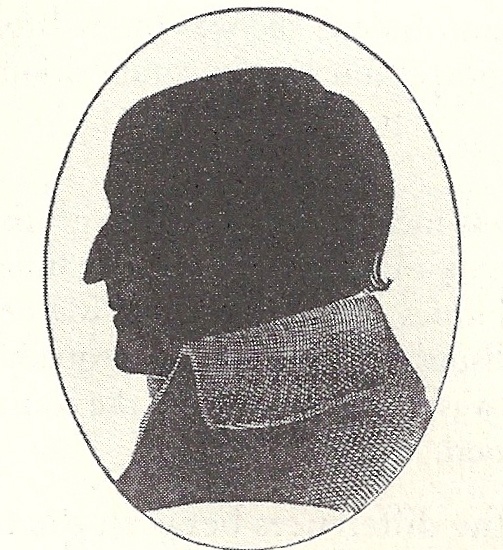
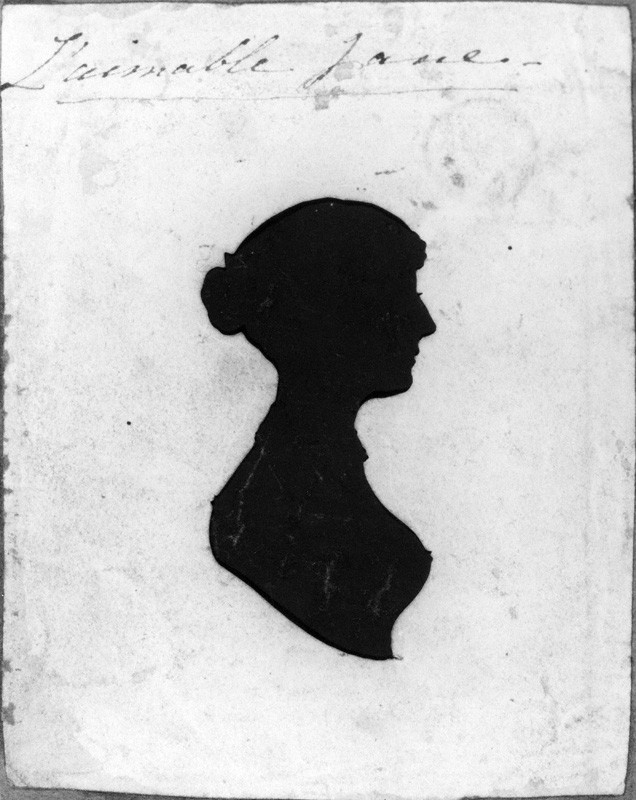
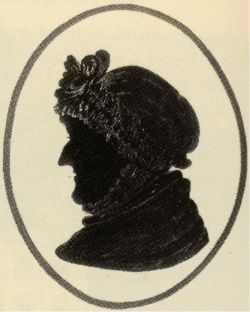
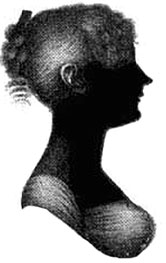 A complicated silhouette with painted touches, such as Cassandra’s, would take a skilled artist like John Miers a reputed three minutes to produce. With such speed, an artist working in a busy area could create enough portraits to make a decent living at a penny a likeness.
 A few years ago, I read an article about a book, Shades from Jane Austen by Honoria Marsh, which was published in 1975-1976 in a series of limited editions. It contains colored illustrations, mostly silhouettes, and a few reproductions of Jane Austen’s writings. Though out of print, I managed to acquire a copy for my editor for Christmas.


 Mr. Darcy’s Fault: A Pride and Prejudice Vagary

 Women’s lack of educational and professional opportunities throughout history prevented them from acquiring their own wealth and independence. This situation was exacerbated by the common law practice of primogeniture, which left women with little choice but to secure their social status and economic welfare through marriage.
 To understand primogeniture as it is practiced in England, one must possess a working knowledge of the history of the custom. Sir Henry Maine, a British comparative jurist and historian of the mid 1800s, tells us,
 In William Blackstone
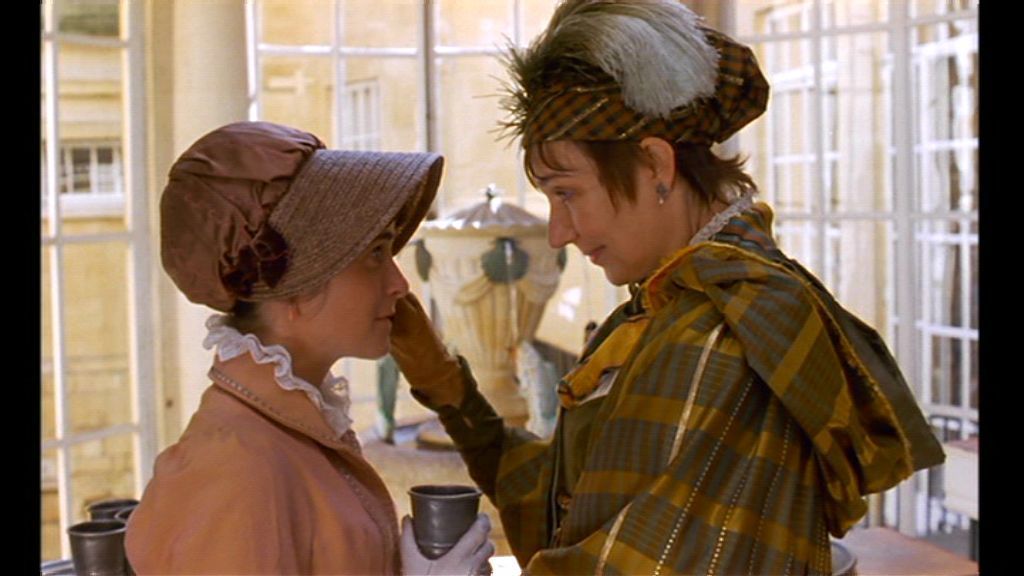
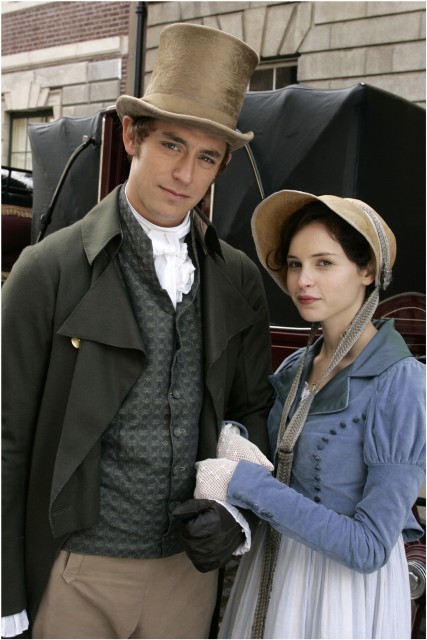
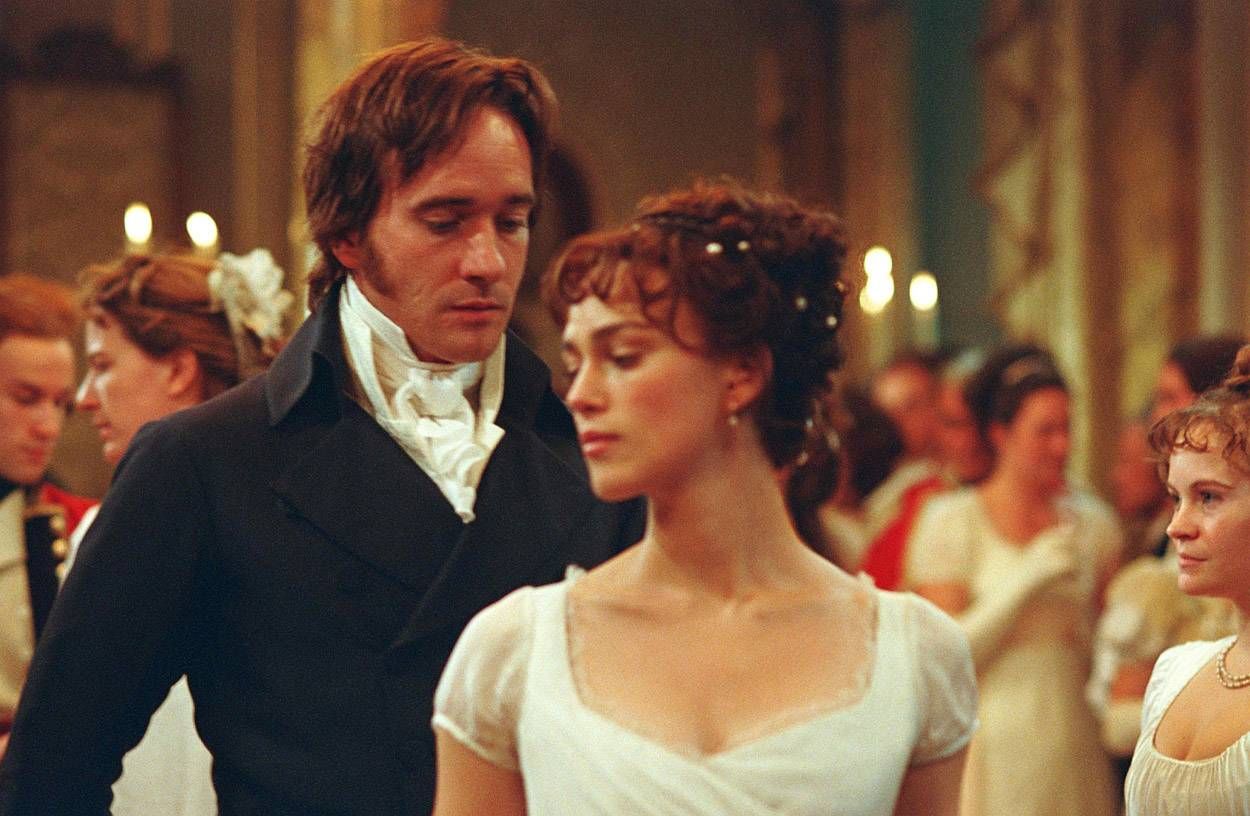




 And, while we may think of these stories within the historical fiction genre, they were often cutting-edge contemporary novels at publication, breaking new literary ground and digging into issues previously untouched – pushing the boundaries of storytelling, setting and character. In fact, Jane Eyre is credited for single-handedly ushering in the more emotional, character-focused novel. Today we call it “literary fiction.”
 Bram Stoker’s Dracula. How did this one ever pass by my radar? I finally dug into it a few months ago and loved it! It’s incredibly creepy and I love that a book written in 1897 can still make my skin crawl. Death and decay seeped into every page and my dreams. Wow!
 Jane Austen’s Persuasion. It has to be mentioned – not only because this is “Austen Authors,” but because this book is never far from me. It is my all-time favorite novel (and Lizzy’s favorite in Lizzy & Jane –not a coincidence.) And in this quiet story, Austen is brilliant at laying out huge character struggles in her own understated way and often within a single line.
 Meet Katherine Reay:



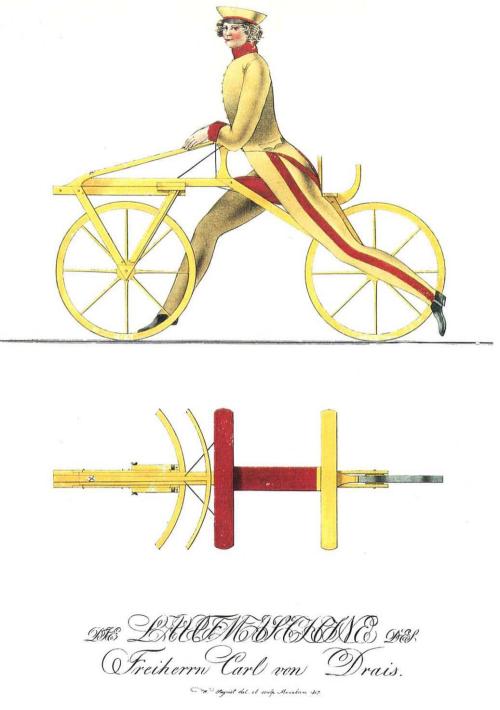
 I have changed my diet and added exercise to my daily regime. I am avoiding sugar and glutton, while adding a good bike ride or a long walk to my day. Naturally, as my brain is likely to do, I began to wonder who invented that first bicycle. I had heard that Pierre and Ernest Michaux, the French father and son team of carriage-makers, invented the first bicycle during the 1860s. Historians now disagree and there is evidence that the bicycle is older than that.