
 In Northanger Abbey, Henry Tilney chastises Catherine Morland for romanticizing foreign settings (from the Gothic romances she reads) and forgetting her “nationalism.”
Dear Miss Morland, consider the dreadful nature if the suspicions you have entertained. what have you been judging from? Remember the country and the age in which we live. Remember that we are English, that we are Christians. Consult your own understanding, your own sense of the probable, your observation of what is passing around you. Does our education prepare us for such atrocities? Do our laws connive at them? Could they be perpetrated without being known, in a country like this, where social and literary intercourse is on such a footing? Where every man is surrounded by a neighborhood of voluntary spies and where roads and newspapers lay everything open?
Catherine responds by thinking upon her national duty.
 Her thoughts being still chiefly fixed on what she had with such causeless terror felt and done, nothing could shortly be clearer than that it had been all a voluntary, self-created delusion…Among the Alps and Pyrenees, perhaps, there were no mixed characters…[but] among the English, she believed, in their hearts and habits, there was a general though unequal mixture of good and bad.
This passage is from Volume II, Chapter X. It shows that Catherine has learned something from her wild speculation about General Tilney and her subsequent scolding by Henry for thinking such a terrible thing. “The Alps and the Pyrenees” refers to the settings of the Gothic novels that Catherine reads. Here Catherine recognizes the fact that in those novels, people are either all good or all bad, and a bad-tempered widower is an obvious murder suspect. But in the real world of England, Catherine realizes, people can be both good and bad. The real world Catherine refers to is actually a fictional world created by Austen, who suggests that even in fiction, characters need not be purely good or purely evil. In this passage, Austen makes it clear that her project is to create fiction that accurately reflects the world as it is.
We know that Henry himself has made attempts to be as actively concerned as his father over politics. General Tilney stays up late to study the latest political pamphlets. We are never told which party the general prefers, but it obvious that General Tilney is a “party man.”Likely, he represents the Whig oligarchy, which would be opposing the Morland’s Toryism. Austen has been described as the “Tory daughter” of a “Tory parson,” who wrote “Tory pastorals.” She never mentions political parties in her novels, but there are signals within the novels. The gentry of the time were VERY devout and patriotic. She came from a rural, Anglican background. Her books express the need for moral accountability. Patriotism is an element we find in Austen. Most experts on the novel think that Catherine’s marrying Henry will bring a sense of moral reclamation (of a Whig).
In Patrick Parrinder’s Nation and Novel: The English Novel from its Origin to the Present Day (page 182-183), we find, “There was an intense loyalist reaction to the French Revolution and the threat posed by Napoleon’s armies ‘orchestrated by the rich’, as one historian writes, but spreading to all classes. Jacobin novelists like Charlotte Smith tried to warn their readers against the dangers of nationalism, balancing England against France and Royalism against republicanism. The heroine of Smith’s Marchmont studies English history and concludes that, for one who has gone beyond the abridged histories written for children, since the reign of Elizabeth I ‘there is hardly an interval that can be read with pleasure’. Jane Austen’s outspokenly Royalist teenage History of England, admittedly a burlesque, reveals the ‘strong political opinions’ which later mellowed into her family’s moderate Toryism.”
Henry, on the other hand, expresses only complacency when he attempts to engage a group of females with a “short disquisition on the state of the nation.” Henry also remarks on the inferiority of women, in general.
The advantages of natural folly in a beautiful girl have been already set forth by the capital pen of a sister author; and to her treatment of the subject I will only add, in justice to men, that though to the larger and more trifling part of the sex, imbecility in females is a great enhancement of their personal charms, there is a portion of them too reasonable and too well informed themselves to desire anything more in woman than ignorance. But Catherine did not know her own advantages — did not know that a good–looking girl, with an affectionate heart and a very ignorant mind, cannot fail of attracting a clever young man, unless circumstances are particularly untoward. In the present instance, she confessed and lamented her want of knowledge, declared that she would give anything in the world to be able to draw; and a lecture on the picturesque immediately followed, in which his instructions were so clear that she soon began to see beauty in everything admired by him, and her attention was so earnest that he became perfectly satisfied of her having a great deal of natural taste. He talked of foregrounds, distances, and second distances — side–screens and perspectives — lights and shades; and Catherine was so hopeful a scholar that when they gained the top of Beechen Cliff, she voluntarily rejected the whole city of Bath as unworthy to make part of a landscape. Delighted with her progress, and fearful of wearying her with too much wisdom at once, Henry suffered the subject to decline, and by an easy transition from a piece of rocky fragment and the withered oak which he had placed near its summit, to oaks in general, to forests, the enclosure of them, waste lands, crown lands and government, he shortly found himself arrived at politics; and from politics, it was an easy step to silence. The general pause which succeeded his short disquisition on the state of the nation was put an end to by Catherine, who, in rather a solemn tone of voice, uttered these words, “I have heard that something very shocking indeed will soon come out in London.”
And listen to what Henry says of history, children, and reading.
“Yes, I am fond of history.”
“I wish I were too. I read it a little as a duty, but it tells me nothing that does not either vex or weary me. The quarrels of popes and kings, with wars or pestilences, in every page; the men all so good for nothing, and hardly any women at all — it is very tiresome: and yet I often think it odd that it should be so dull, for a great deal of it must be invention. The speeches that are put into the heroes’ mouths, their thoughts and designs — the chief of all this must be invention, and invention is what delights me in other books.”
“Historians, you think,” said Miss Tilney, “are not happy in their flights of fancy. They display imagination without raising interest. I am fond of history — and am very well contented to take the false with the true. In the principal facts they have sources of intelligence in former histories and records, which may be as much depended on, I conclude, as anything that does not actually pass under one’s own observation; and as for the little embellishments you speak of, they are embellishments, and I like them as such. If a speech be well drawn up, I read it with pleasure, by whomsoever it may be made — and probably with much greater, if the production of Mr. Hume or Mr. Robertson, than if the genuine words of Caractacus, Agricola, or Alfred the Great.”
“You are fond of history! And so are Mr. Allen and my father; and I have two brothers who do not dislike it. So many instances within my small circle of friends is remarkable! At this rate, I shall not pity the writers of history any longer. If people like to read their books, it is all very well, but to be at so much trouble in filling great volumes, which, as I used to think, nobody would willingly ever look into, to be labouring only for the torment of little boys and girls, always struck me as a hard fate; and though I know it is all very right and necessary, I have often wondered at the person’s courage that could sit down on purpose to do it.”
“That little boys and girls should be tormented,” said Henry, “is what no one at all acquainted with human nature in a civilized state can deny; but in behalf of our most distinguished historians, I must observe that they might well be offended at being supposed to have no higher aim, and that by their method and style, they are perfectly well qualified to torment readers of the most advanced reason and mature time of life. I use the verb ‘to torment,’ as I observed to be your own method, instead of ‘to instruct,’ supposing them to be now admitted as synonymous.”
“You think me foolish to call instruction a torment, but if you had been as much used as myself to hear poor little children first learning their letters and then learning to spell, if you had ever seen how stupid they can be for a whole morning together, and how tired my poor mother is at the end of it, as I am in the habit of seeing almost every day of my life at home, you would allow that ‘to torment’ and ‘to instruct’ might sometimes be used as synonymous words.”
“Very probably. But historians are not accountable for the difficulty of learning to read; and even you yourself, who do not altogether seem particularly friendly to very severe, very intense application, may perhaps be brought to acknowledge that it is very well worth–while to be tormented for two or three years of one’s life, for the sake of being able to read all the rest of it. Consider — if reading had not been taught, Mrs. Radcliffe would have written in vain — or perhaps might not have written at all.”
 We also have this passage early on regarding “reading” and writing of novels.
And what are you reading, Miss—?” “Oh! it is only a novel!” replies the young lady…in short, only some work in which the greatest powers of the min are displayed, in which the most thorough knowledge of human nature, the happiest delineation of its varieties, the liveliest effusions of wit and humor are conveyed to the world in the best chosen language.
This passage comes from Volume I, Chapter V, when the narrator gives a long and fervent defense of novel-reading. In Austen’s time, novels were looked down upon by many people, especially people of the upper classes. The young Jane Austen, writing her first novel, likely felt she had to launch a preemptive strike against critics who would disparage her work. This passage is one of the few places where the narrator makes a long address to the reader. By the second half of the novel, the narrator will have given over to Austen’s famous free indirect discourse style of narration.
But what other lessons do we learn from Austen’s spoof of the Gothic novels of her day?
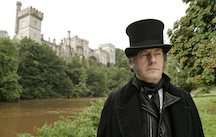 There is the theme of “wealth” having its privileges, one found in all Austen’s novels. For example, although the Thorpes hold strong opinions of the prideful Tilneys, they scramble to be noticed by them. John Thorpe says of General Tilney, “A very fine fellow; as rich as a Jew.” Isabella Thorpe says of the Tilney family, “…all pride, pride, insufferable haughtiness and pride,” but she succumbs to Captain Frederick Tilney’s seduction for she wishes to align herself with the rich rather than the provincial such as James Morland. General Tilney boasts himself to be the owner of “as considerable a landed property as any private man in the county.”
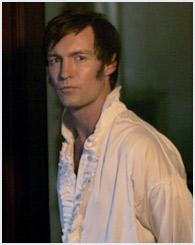
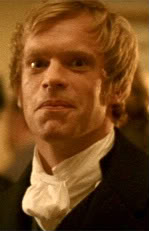 We also find the reoccurring appearance of the “bounder,” this time in the form of John Thorpe. [We have seen the type in Mr. Wickham in Pride and Prejudice, Mr. Willoughby in Sense and Sensibility, Frank Churchill in Emma, Tom Musgrave in The Watsons, etc.] Each causes the heroine a great deal of pain and a lesson in humility. The heroine is wooed by the bounder, but ends up giving her heart to the prig [Mr. Darcy, Colonel Brandon, Mr. Knightley, and Lord Osborne, respectively].
Resources:
Fuller, Miriam. “Let me go, Mr. Thorpe; Isabella, do not hold me!”: Northanger Abbey and the Domestic Gothic. JASNA.
Merrett, Robert. Consuming Modes in Northanger Abbey: Jane Austen’s Economic View of Literary Nationalism. JASNA.
Schaub, Melissa. Irony and Political Education in Northanger Abbey. JASNA



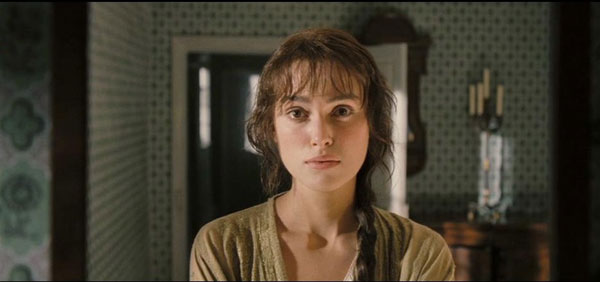 Often in the visual representations of Jane Austen’s works, the media employs props or artifacts as visual cues to Austen’s themes of flawed impressions, misconceptions, and false interpretations. For example, in Austen’s Emma, Harriet’s sketch serves as a means to reveal how the other characters feel about Emma’s friend. Mr. Elton flatters Emma’s representation of her subject rather than remark on Harriet. Mr. Woodhouse’s sensibility and his need for fires in all the hearths shows through when he says Harriet has been subjected to the elements when she is portrayed without a shawl. Even Mr. Knightley gives the viewer a clue to how he feels about Emma’s efforts to raise Harriet up in Society. Upon observing the sketch, he says Emma has made Harriet “too tall.”




 Have you ever eaten Lancashire Hotpot? It is a casserole dish consisting of layers of meat (beef or lamb or lamb with lamb kidney), a root vegetable (carrot, turnip, leeks, etc.), and sliced potatoes.

 “Lancashire Hotpot is usually dated back to the start of industrialisation in the area, from the 1750s onwards. It really was designed as an oven dish from the start, as opposed to a stew in a pot over flame. It required potatoes being widely enough accepted to be available, and access to an oven (access to an oven was a luxury throughout much of history.)

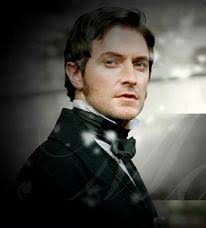 “Hotpot kept miners going too, the pot being wrapped in a blanket to ensure it was still warm at lunchtime. In the novel North and South, Victorian writer Elizabeth Gaskell described how Mr Thornton, a mill owner, dined on hotpot with his workers : “I never made a better dinner in my life… and for some time, when ever that special dinner recurred in their dietary, I was sure to be met by these men, with a ‘Master, there’s hotpot for dinner today win yo’ come?’”


 I have been somewhat cranky over the past several days because The Avenger: Thomas Bennet and A Father’s Lament is slow going. Most of this is rooted in that I am writing a bit of an espionage book. Yes there will be romance and there will be a ball. And, yes, there are the stories of Denis and Letty (Brouillard) Robard as well as Alois and Elizabeth (Darcy) Schiller.
 Using an author’s authoritative voice, I have decided to let my readers know that I believe that Mr. Bennet—and Mrs. Bennet—married for love and not infatuation.

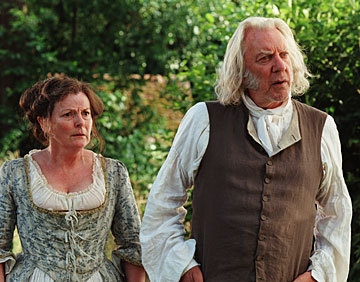 I believe I am there. In order to rebuild Mr. Bennet’s respect for Fanny, I have portrayed the lady as a clever and practical observer of the world around her. Her fears of society’s treatment of her unmarried daughters after Mr. Bennet’s oft-anticipated death has, by this point in 1814, moderated considerably with the three marriages in 1811 as well as Mary’s betrothal to Mr. Benton who is off in Boston earning his second divinity degree. Now, t’is only left for her to see Kitty settled. And that, of course, is the underlying plot mover…Mrs. Bennet’s desire to see her daughter conflicting with Mr. Bennet’s knowledge that Kitty lives well over 120 years in the future. Except…


