Jane Austen’s “Naughty” Lady Susan

loveandfriendship-mv-5 After Austen’s death, several unpublished works remained. One of those was “Susan,” a short novel that made fun of the convention of Gothic fiction. Originally, it had been sold to Benjamin Crosby & Co. in 1803. Shortly before Jane’s passing, her brother Henry bought back the still unpublished manuscript from Crosby for £10 (the amount advanced for the privilege of publishing the story). Needless to say, Crosby had no idea at the time of 1803 purchase that he held a manuscript from “A Lady,” the authoress of Pride and Prejudice and Sense and Sensibility

Although ill, Austen made some changes in the story line, most obvious was the renaming of the heroine to Catherine Morland. Northanger Abbey and Persuasion were released after Austen’s death. But what of her “Juvenilia”? Three unfinished (but nearly complete) manuscripts remained, along with other snippets and poetry. Among those was a complete novella (about 23,000 words in total) entitled “Lady Susan.” If you have not read it, join the Austen Authors’ Read-Along. “Lady Susan” is written in letter format (epistolary style), which are in first person, with the ending being summed up by a third person narrator. 

We assume the story was written when Austen was about twenty years of age. The watermark on the paper she used for the manuscript is 1805. Why was “Lady Susan” not published along with the other novels that made an appearance after her death? Some would argue the length of “Lady Susan” did not lend itself to publication in a time where publication was often a hardship on the author. Others would say the nature of the character of Lady Susan was not in line with the image Austen’s family wished to portray to the world of first their sister and later their favorite aunt. 

Austen’s niece Caroline said in a letter to James Edward Austen Leigh (1 April 1869) that “Lady Susan” was written “when the nonsense was passing away and before her [Jane Austen’s] wonderful talent had found its proper channel.”

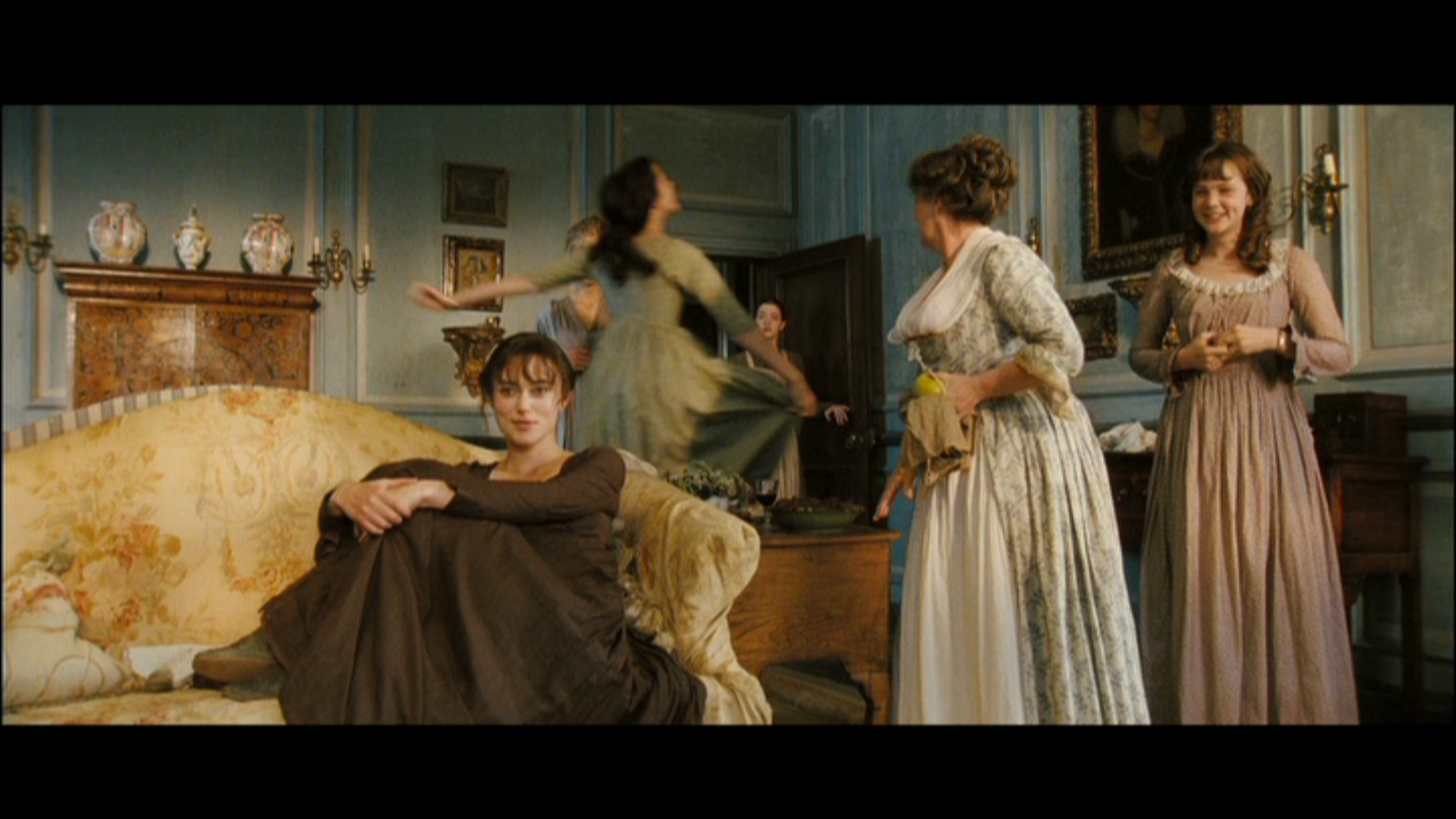
love-and-friendship Like me, I am certain many of you have seen “Love and Friendship.” If you have not seen the flick, but plan to do so, know that the character of Lady Susan is NOT your usual Austen fare. Lady Susan is beautiful and enchanting, excessively so. [Heck, Kate Beckinsale plays her…enough said.] Lady Susan is also quite amoral. She is an amorous and sensual widow. 

The letters that comprise the story line allow Austen to reveal Lady Susan’s personal thoughts without the “filter” of a third person narrative. We learn of her seduction of a married man, Mr. Manwaring…of her flirtations with Sir James Martin supposedly to detach him from Miss Manwaring so he takes up with her daughter Frederica instead, etc. Lady Susan is not the type of character for whom the audience with cheer, but she is one for which those who read the story will know empathy. 

IMG_20150311_231128-1243x829 The image of the “squeaky clean” Jane Austen does not completely fit with the character of Lady Susan. Our “Jane” is a vicar’s daughter. She does not have knowledge of sexually manipulative women! LOL!  One must remember that this story was written in the mid 1790s. The style and the use of the letters would be acceptable by those of the era. Austen read such stories herself. However, by the end of King George III’s reign, tastes had changed. Moreover, Henry Austen, who saw to the publication of Northanger Abbey and Persuasion, may have thought Lady Susan resembled his late wife. In the 1790s when Jane wrote the novella, Eliza de Feuillide was also a flirtatious widow. Did “Cousin Eliza” serve as the model for Lady Susan? Henry’s biographical notes upon his sister describe Jane as “thoroughly religious and devout.” The story of “Lady Susan” would not lend itself well to that image. 

Although quite young at the time, in the novella, Austen controls the tension and the tone of the piece. She employs the techniques of what could be called black comedy. [A black comedy (or dark comedy) is a comic work that makes light of serious, disturbing and/or taboo subject matter.] Critics say, “The reader’s complicity is constantly caught and compromised during the course of the narrative.” (The Free Library)

Note! This post originally appeared on Austen Authors.


Posted in Austen actors, film, film adaptations, Jane Austen, writing | Tagged , , , , , , , , , , , | 5 Comments

Scottish Irregular Weddings + the Release of “The Earl Claims His Comfort”

Clandestine/Irregular Weddings in Scotland

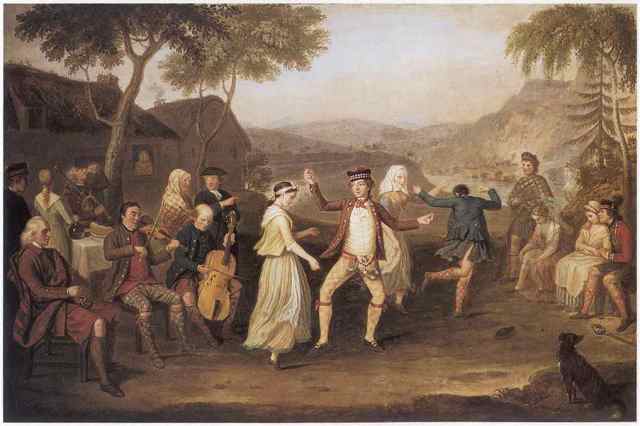
DavidAllan-highlandwedding1780.jpgA clandestine wedding plays a key role in solving the mystery that occurs in my latest Regency romantic suspense, The Earl Claims His Comfort: Book 2 of the Twins’ Trilogy. But exactly what constituted a clandestine or irregular marriage during the Regency Period?

A clandestine/irregular marriage is what we today might call a “de facto” (describing practices that exist in reality, even if not legally authorized) wedding or even a “common law wedding.”  Irregular marriages were considered legal in Scotland up until the mid 1900s. The laws in Scotland varied greatly from other European countries. Marriages in the European Catholic countries were only legal if they were conducted by a priest of the Roman Catholic Church. In England, marriages were only legal if conducted by an Anglican clergyman. The Hardwicke Act of 1753 saw to that. A couple wishing to marry in England agreed to both a religious sacrament and a legal contract. English couples had to have the consent of one or both parents if they were under the age of 21, and the wedding ceremony had to take place in a parish church and conducted by a man ordained by the Church of England.

But in Scotland, we have a totally different structure. A regular marriage did not require a church as the setting for the wedding or parental consent. It did require the proclamation of the banns in the parish church and an authorized clergyman from the Scottish Church.

Four forms of irregular marriages were considered valid marriages in Scotland until 1 July 1940. An irregular marriage could be considered valid (1) if there was mutual agreement between the man and the woman, a declaration of per verba de presenti—declaring before two witness to take someone as one’s wife or husband, (2) if there was a public promise of per verba de futuro subsequente copula followed by consummation, (3) if the marriage was contracted by correspondence, or (4) if there was cohabitation and repute.

The first two conditions were abolished by the Marriage (Scotland) Act of 1939. All four forms included the agreement of the couple to be married and some form of witnesses or evidence offered as proof of the agreement. Any citizen could witness a public promise. Thus, the reason many English couples rushed to Scotland to be married by a “blacksmith.” The marriage did not actually have to be performed by a blacksmith, just by a citizen of a Scottish border town or village. A marriage of cohabitation and repute was still acceptable until the 2008 Family Law (Scotland) Act. “Repute” was the part upon which divorces were granted or not. This was a common law marriage, and Scotland was the last of the European countries to abolish it. For this law to apply, the minimum time the couple had lived together continuously had to exceed 20 days. Until this act, the only regular marriage available in Scotland was a religious marriage. Irregular marriages were not socially acceptable, and many people who decided to contract them did so where they were relatively unknown.

annesley-elopement.jpgAccording to Eleanor Gordon in “Irregular Marriages: Myth and Reality,” “The distinctive marriage arrangements of Scotland and England had very real consequences, most notoriously, the vogue for runaway marriages to Scotland, particularly Greta Green and other border towns, by young English couples seeking to avoid the need for parental consent for their marriage and to take advantage of the more flexible and informal marriage laws. Although Lord Brougham’s Act of 1856 attempted to stem the flow of young couples across the border by extending the residential qualification so that one of the parties had to be resident for 21 days, Gretna marriages continued to excite the disapproval of the authorities on both sides of the border into the twentieth century. Indeed it was the resurgence of these border marriages that prompted calls for reform of the marriage laws in the 1920 and 1930s. Although Dr. James Stark, Superintendent of Statistics under Scotland’s first Registrar General, William Pitt Dundas, described Scotland’s marriage laws as simple in comparison with “the complicated marriage laws of England,” they were in fact characterized more by ambiguity and uncertainty than clarity. For example, there were innumerable legal wrangles about whether particular situations demonstrated sufficient proof of exchange of consent as well as general misunderstanding of the nature of consent required, that is whether it needed to be expressed, written or tacit. Indeed when Scotland’s marriage laws were reviewed in both 1868 and 1935, it was the legal ambiguities surrounding irregular marriage that was one of the key reasons proffered for abolishing it.” [W. D. H. Seller, “Marriage by Cohabitation with Habit and Repute: Review and Requiem?” in D. L. Carey and D. W. Meyers (eds.), Comparative and Historical Essays in Scots Law (Edinburgh, 1992): 117–36.]

If contested, marriage by cohabitation was never legal in England. The fact was that most of the marriages by cohabitation or that of wife selling were invalid made little difference to the majority of the populace. Such distinctions only mattered when a child was declared legitimate or not and when a parish had to decide whether or not to give assistance to a woman in need. A couple who were married by cohabitation were, generally, not considered “respectable.” To be valid a marriage had to be started with a wedding in front of a clergyman. That is why so many went to the Fleet to get married by clergymen debtors. Women who lived with their betroths or declared themselves married without more than consummation, in England, found themselves unable to claim any property, any money or any benefits for themselves or the children because they were not considered legally married.

The world wars of the 1900s put a greater demand upon having a regular marriages. Inheritance and widows’ pensions required proof of a marriage beyond two witnesses marking a public commitment between a man and a woman. Registry offices served the need to legitimatize a marriage.

Nicol Warren on the Family Ancestry Detective Website suggests, “The National records of Scotland holds some irregular marriage information, on their website they have a pamphlet that gives the contact details of local society’s that may have more specific records. At the time of the marriage records may have been kept by priests and the couples, however it’s the kirk sessions where couples come before their local parish church that are the most kept records of an irregular marriage. With the birth of the first child meant paperwork would become an important part of legitimising the birth and registration generally happened hastily around that time. Kirk sessions like the South Leif kirk sessions recorded 1500 marriages. With the digitalisation of records all the time, it is always good to search through paid subscription sites to see whether the information is there.”

http://www.nrscotland.gov.uk/research/guides/birth-death-and-marriage-records/irregular-border-marriage-registers

In this example from 1773 (National Records of Scotland reference OPR 818/2) a couple made a public acknowledgement of their irregular marriage and paid a fine of a guinea to the poor. The entry is followed by a note of the kirk session’s concern at the frequency of irregular marriages in the parish and their decision to increase the fine!

irregular-marriage-from-1773-reference-opr-818-2-small.jpg

Resources:

Gordon, Eleanor. “Irregular Marriage: Myth and Reality.” Journal of Social History, Volume 47, Issue 2, 1 December 2013, pp. 507-525. https://academic.oup.com/jsh/article/47/2/507/1325355/Irregular-Marriage-Myth-and-Reality

Leneman, Leah, and Rosalind Mitchison. “Clandestine Marriage in the Scottish Cities 1669-1780.” Journal of Social History. Oxford University Press. Vol 26, No. 4 (Summer 1993), pp. 845-861. https://www.jstor.org/stable/3788783?seq=1#page_scan_tab_contents

Nicol Warren. “Irregular Marriages in Scotland.” The Family Ancestry Detective. 31 March 2015. http://familyancestrydetective.com/irregular-marriages-in-scotland/

“Old Parish Registers – Marriages and Proclamation of Banns.” National Records of Scotland. © Crown copyright, 2014. https://www.nrscotland.gov.uk/research/guides/birth-death-and-marriage-records/old-parish-registers/marriages-and-proclamation-of-banns

Images

The Elopement, or Lovers Stratagem Defeated. Courtesy of the British Museum. from All Things Georgian https://georgianera.wordpress.com/2015/10/01/an-irregular-marriage-arthur-annesley-powell-did-he-go-willingly/

Irregular Marriage from The Family Ancestry Detective http://familyancestrydetective.com/irregular-marriages-in-scotland/

Old Parish Registers https://www.nrscotland.gov.uk/research/guides/birth-death-and-marriage-records/old-parish-registers/marriages-and-proclamation-of-banns

_____________________________

front cover-2 copyIntroducing The Earl Claims His Comfort: Book 2 in the Twins’ Trilogy, releasing September 16, 2017, from Black Opal Books

– a 2016 Hot Prospects finalist in Romantic Suspense

Hurrying home to Tegen Castle from the Continent to assume guardianship of a child not his, but one who holds his countenance, Levison Davids, Earl of Remmington, is shot and left to die upon the road leading to his manor house. The incident has Remmington chasing after a man who remains one step ahead and who claims a distinct similarity—a man who wishes to replace Remmington as the rightful earl. Rem must solve the mystery of how a stranger’s life parallels his, while protecting his title, the child, and the woman he loves.

Comfort Neville has escorted Deirdre Kavanaugh from Ireland to England, in hopes that the Earl of Remmington will prove a better guardian for the girl than did the child’s father. When she discovers the earl’s body upon a road backing the castle, it is she who nurses him to health. As the daughter of a minor son of an Irish baron, Comfort is impossibly removed from the earl’s sphere, but the man claims her affections. She will do anything for him, including confronting his enemies. When she is kidnapped as part of a plot for revenge against the earl, she must protect Rem’s life, while guarding her heart.

Currently Available: 

Amazon https://www.amazon.com/dp/1626947457/ref=sr_1_2?ie=UTF8&qid=1505774153&sr=8-2&keywords=the+earl+claims+his+comfort

Black Opal Books https://black-opal-books.myshopify.com/products/the-earl-claims-his-comfort

Nook https://www.barnesandnoble.com/w/the-earl-claims-his-comfort-regina-jeffers/1127101127?ean=2940158592270

Kobo https://www.kobo.com/us/en/ebook/the-earl-claims-his-comfort

Kindle https://www.amazon.com/Earl-Claims-His-Comfort-ebook/dp/B075B323MN/ref=sr_1_1?ie=UTF8&qid=1505561066&sr=8-1&keywords=the+earl+claims+his+comfort

Barnes and Noble

https://www.barnesandnoble.com/w/the-earl-claims-his-comfort-regina-jeffers/1127101127?ean=9781626947450

________________________________

51Qc31W5ZSL._SX326_BO1,204,203,200_Also Check Out Angel Comes to the Devil’s Keep: Book 1 of the Twins’ Trilogy

a 2017 Daphne du Maurier Award for Excellence in Mystery/Suspense finalist

– a SOLA’s Eighth Annual Dixie Kane Memorial Award finalist for Historical Romance

Huntington McLaughlin, the Marquess of Malvern, wakes in a farmhouse, after a head injury, being tended by an ethereal “angel,” who claims to be his wife. However, reality is often deceptive, and Angelica Lovelace is far from innocent in Hunt’s difficulties. Yet, there is something about the woman that calls to him as no other ever has. When she attends his mother’s annual summer house party, their lives are intertwined in a series of mistaken identities, assaults, kidnappings, overlapping relations, and murders, which will either bring them together forever or tear them irretrievably apart. As Hunt attempts to right his world from problems caused by the head injury that has robbed him of parts of his memory, his best friend, the Earl of Remmington, makes it clear that he intends to claim Angelica as his wife. Hunt must decide whether to permit her to align herself with the earldom or claim the only woman who stirs his heart–and if he does the latter, can he still serve the dukedom with a hoydenish American heiress at his side?

___________________________________

Excerpt

Actually, he received two letters upon the same day. The first was from Comfort, and Rem relished her newsy letter that not only announced the arrival of Lord Swenton’s daughter Iróna, but also the confirmation of Isolde’s and her father’s presence for their joining. “Despite his dislike of Isolde being so far from Ireland, uncle is exceedingly pleased to welcome a new granddaughter. He claims Iróna has the look of Isolde’s mother. Meanwhile, my father is speaking of our claiming a family soon. He has asked of my affections for you, and I have assured him that you own my heart. That I love you ardently.”

Her written words ripped the air from Rem’s chest. “She writes of loving me,” he whispered. He realized belatedly that his fingers trembled. He closed his eyes to capture the moment. “I must write Comfort to speak of my deepest regard.”

Yet the letter was not written, at least not for several days, for the second letter, the one from Malvern, set Remmington a task. As with Lord Swenton, the marquess took great pleasure in the announcement of the birth of his son, Henry Thomas Cadon McLaughlin, a sennight prior.

“Devilfoard struts about as if he was the one to birth the child,” Malvern wrote. “To have the dukedom secured brings both the duke and the duchess great happiness. Lady Malvern charges me with telling you that she hopes one of your daughters will take a liking to our Henry.”

Rem held no objections to a daughter of his marrying into the dukedom. “But only if she admires Lord Henry as much as she does his title,” he said with a nod of his head. “Affection is important to a successful marriage.”

Rem’s eyes returned to the page. Malvern wrote, “Now for news of a different sort. Devilfoard reports that Sir Alexander has yet to return to the Home Office. The duke spoke of how Sir Alexander’s superiors are at a loss in discovering his whereabouts. They covered his absence with tales of his secret stratagems in the government’s name. Yet as we both are aware, Sir Alexander departed for Scotland at the beginning of September to investigate the tale of your imposter. Plainly, there is a likely connection for Lord Angus’s estate is in Scotland. I cannot leave Lady Malvern. Moreover, you are better suited for finding the baronet. From your previous occupations, you have sources I have yet to develop.”

And so Rem had spent some three weeks along the Scottish border and in the west central lowlands before a rumor brought him to a small hospital on the outskirts of Glasgow.

“I have discovered your whereabouts at last,” he said in concern when he noted the many bandages wrapped about Sir Alexander’s body.

“Remmington?” the baronet asked.

“Did you expect another? A fetching female perhaps?”

The baronet frowned. “My vision is still recovering. It is difficult to see with this patch over one eye.”

Rem pulled a straight-back chair close to the bed. “Everyone worries for your absence,” he said softly. “What occurred?”

The baronet spoke in secretive tones. “A carriage accident. Broke my leg, my opposing ankle, and both arms. Took a blow to the head.”

Rem’s eyes traced the splints and bandages marking Sir Alexander’s injuries. “That explains why you did not write, but why not ask another to pen a letter?”

“The way I understand things, I was unconscious for a little more than a sennight. When I came about for several days I held no memory of what occurred or even who I was. Those who described the accident said I was fortunate to survive. Neither my coachman nor the footman did. When my senses returned, I recalled my mission to Scotland, and I worried someone planned for my carriage to leave the road in such a violent manner. I did not know if I could trust those who tended me to send word. What if I sent you a message, and then I discovered I dragged you into some sort of trap?”

Posted in Black Opal Books, blog hop, book excerpts, book release, books, British history, Church of England, customs and tradiitons, eBooks, excerpt, historical fiction, Inheritance, marriage, marriage customs, marriage licenses, publishing, reading, research, romance, Scotland, suspense, writing | Tagged , , , , , , , , , , , , | Comments Off on Scottish Irregular Weddings + the Release of “The Earl Claims His Comfort”

The Real Georgiana Darcy, a Guest Post from Eliza Shearer

This post recently appeared on Austen Authors, but I thought an encore appearance here would prove beneficial to all admirers of Jane Austen’s works. 

chatsworth-719385_1920.jpg

The Janeite community was recently torn with the news that a new TV adaptation of Pride and Prejudice is in the works. It’s going to be a “dark” and “adult” interpretation of the novel, and I must admit I’m intrigued by the vision of the producers and what they intend to achieve. But, above all, I can’t wait to see what Mr Darcy’s little sister Georgiana looks like in this new adaptation.

Although Georgiana Darcy doesn’t have a single line in Pride and Prejudice, she is crucial to the story: through her existence, we see that her brother has a soft side, and that Wickham lacks any kind of moral compass. Georgiana’s near-elopement also contributes to explain Darcy’s motives and behaviour towards the end of the novel, when Wickham and Lydia Bennet run away together.

Georgiana is sweet, naive, shy and very accomplished, but, as it’s often the case in Austen, we have scant detail about her appearance. Nevertheless, since the mostly superb 1995 TV series adaptation, the collective subconscious has embraced a very particular look for Georgiana, which the 2005 film confirmed. In both versions, Georgiana (played by Emilia Fox and Tamzin Merchant respectively) is blonde, petite and beautiful – quite unlike Jane Austen portrayed her.

Granted, we cannot be sure about Georgiana’s hair colour, or about her brother’s for that matter; it’s simply not discussed in Pride and Prejudice. However, we have some clues as to Georgiana’s height and figure in the novel. When Elizabeth Bennet is in Netherfield during her sister Jane’s indisposition, she witnesses Miss Bingley trying to establish a conversation with Mr Darcy which includes the following exchange:

“Is Miss Darcy much grown since the spring?” said Miss Bingley; “will she be as tall as I am?”

“I think she will. She is now about Miss Elizabeth Bennet’s height, or rather taller.”

(Pride and Prejudice, Chapter 8)

That Georgiana is rather tall for her age is later confirmed when Elizabeth finally meets Georgiana and gives her account of what the girl looks like:

Miss Darcy was tall, and on a larger scale than Elizabeth; and, though little more than sixteen, her figure was formed, and her appearance womanly and graceful. She was less handsome than her brother; but there was sense and good humour in her face, and her manners were perfectly unassuming and gentle.

(Pride and Prejudice, chapter 44)

The above description suggests that Georgiana Darcy is tall, curvy, and robust, particularly so if compared to Elizabeth’s petite proportions. It makes sense if we consider that one of the few things we know for sure about Mr Darcy is that he is tall.

Elizabeth’s thoughts on Georgiana also suggest that Mr Darcy’s little sister doesn’t share his good looks. All other characters, including the Bingleys and the Pemberley housekeeper, declare Georgiana to be handsome, but we should take their comments with a pinch of salt. Georgiana is most likely not ugly, but neither is she beautiful. A far cry, then, from the type of girl the screen adaptations insist on showing us.

The fact is that casting decisions of TV and film versions of Jane Austen’s works have often given viewers distorted portraits of much-loved characters, including but not limited to Colonel Fitzwilliam, Fanny Price and Captain Wentworth. However, in the case of Georgiana Darcy, it’s a shame that casting directors have chosen to ignore whatever little is stated about her in Pride and Prejudice, because it makes the story a lot more interesting, especially if one reads between the lines.

Here are two examples of what I’m talking about. First, take Georgiana’s extreme timidity: it might be worsened by the fact that she is aware that she is no beauty, in spite of her brother’s handsome looks. Then, there’s Wickham’s seduction attempt; if there was any doubt that he is exclusively motivated by money, Jane Austen makes it clear that the type of woman he likes – dainty, pretty and lively girls such as Elizabeth and Lydia Bennet – is Georgiana’s polar opposite.

Jane Austen teases us with glimpses of Georgiana as much more than a timid young woman haunted by a past mistake, and I for one always believed that Miss Darcy had the emotional depth to be a great heroine. There was so much to explore in her; fear of the unknown, insecurity, jealousy, fleeting fancies, but also generosity, kindness, love. After much consideration, I finally put pen to paper to write Miss Darcy’s Beaux, a Pride and Prejudice continuation that follows Georgiana to London in search of a husband, chaperoned by Lady Catherine de Bourgh. horse-drawn-carriage-1157187.jpg

Miss Darcy’s Beaux gives answers to some of the most enticing questions at the end of Pride and Prejudice. How will Elizabeth fare as Mrs Darcy? Will the Bennets make themselves at home in Pemberley? Whatever happens to Lady Catherine and Anne de Bourgh after Darcy marries Elizabeth? What does fate have in stock for Colonel Fitzwilliam? And will Georgiana grow out of her extreme shyness and find happiness, as her brother did?

Above all, I believe that Miss Darcy’s Beaux is faithful to the essence of the character as described in Pride and Prejudice. I like to think that my Georgiana is just like Jane Austen imagined – or at least a much closer depiction than that of most casting directors to date. However, there is always the anticipation that the next time around someone will get it just right. Here’s hoping that the new Pride and Prejudice adaptation will do Georgiana justice, at last.

Miss-Darcys-Beaux-Generic.jpg Introducing Miss Darcy’s Beaux: Fitzwilliam Darcy’s beloved sister Georgiana is now a woman of twenty. After living in the enclosed safety of Pemberley for years, she is sent to London for the season with Lady Catherine de Bourgh as her chaperone. Lady Catherine is determined that her niece shall make a splendid match. But will Georgiana allow her domineering aunt to decide for her? Or will she do as her brother did, and marry for love?

You will find Miss Darcy’s Beaux on Amazon, Kobo, Nook and CreateSpace eStore, as well as GoodReads.

Thanks for reading!

Eliza Shearer.png About Eliza Shearer

Eliza Shearer is a long-time an admirer of Jane Austen’s work and writer of Jane Austen variations. She can often be found enjoying long walks and muddying her petticoats, or re-reading Jane Austen’s novels by the fireside. She is very partial to bread and butter pudding, satin slippers and bonnets and ribbons, but has never cared much for cards. You can find Eliza Shearer on:

Twitter: https://twitter.com/Eliza_Shearer_

Facebook: https://www.facebook.com/ElizaShearerWriter/

Instagram: https://www.instagram.com/eliza_shearer/

Goodreads: https://www.goodreads.com/author/show/16794765.Eliza_Shearer

Website/Blog: https://elizashearerblog.wordpress.com/  

Posted in Austen actors, Austen Authors, book release, eBooks, film adaptations, Guest Post, Jane Austen, Pride and Prejudice, publishing, Regency romance, Vagary | Tagged , , , , , , , | Comments Off on The Real Georgiana Darcy, a Guest Post from Eliza Shearer

Could an American Inherit a Peerage? Release of “The Earl Claims His Comfort” + Excerpt & Giveaway

Could an American Inherit an English Title or Peerage?

In both of my first two books from the Twins’ trilogy, the issue of whether an American could inherit a title/peerage comes into play as part of the plot. In Angel Comes to the Devil’s Keep, Angelica Lovelace’s parents had run off to America, specifically the United States, to live because they married against the wishes of their families and were disowned. As the third son, Horace Lovelace never thought to inherit, but fate (especially in the hands of a writer) has a way to make his inheritance a reality, while staying within the law of the land at that time. For Lovelace, in determining whether he could inherit a peerage in England after living in the United States for more than twenty years, we must first consider that he and his wife were both born in England. However, the question would arrive as to whether they became American citizens by denouncing their English roots or perhaps by simply living in the States and “presenting” themselves in business and socially as an “American.” Moreover, if Lovelace can inherit, what happens to his son’s rights to the earldom when the boy comes of age? What laws would affect the Lovelace’s situation when he returns to England?

In The Earl Claims His Comfort, Book 2 of the Twins’ Trilogy, I present a different sort of “inheritance” question. The man in question was born in England, but was taken to live in Canada from the time he was a toddler until his mid twenties. Eventually, he is told that he is the rightful heir of the 15th Earl of Remmington. The man was English by birth, and Canada was a British province at the time. Would that make a difference?

What was the law about those born elsewhere during the Regency?  If a person was born in England, would he automatically be a citizen and not an alien?

Before we address British law, let us first look at the U. S. laws. The U. S. Constitution contains the Title of Nobility Clause (Article I, Section 9, Clause 8). This clause prohibits the federal government from granting titles of nobility. It also restricts members of the government from receiving gifts, emoluments, offices or titles from foreign states without the consent of the United States Congress. The idea was to shield the young “republic” being created by the founders of the U.S.  Also known as the Emoluments Clause, this piece of legislation was written to eliminate so-called “corrupting foreign influences.” A corresponding prohibition exists on state titles of nobility in Article I, Section 10, and is reinforced by the Republican Guarantee Clause in Article IV, Section 4. The Framers’ intentions for this clause were twofold: to prevent a society of nobility from being established in the United States and to protect their republican form of government from being influenced by other governments. (Title of Nobility Clause

Now for the English side of the issue. The British Empire came into existence between the 16th and 18th Centuries. During that time, The Crown’s dominion included not only those person within the United Kingdom, but also the British colonies and the self-governing dominions of Australia, Canada, Newfoundland, New Zealand, and South Africa. Children born in the dominions were British citizens, regardless of the status of their parents. Children born to visitors or foreigners acquired citizenship through Jus soli, meaning “right of the soil,” commonly referred to as birthright citizenship, which is the right of anyone born in the territory of a state to citizenship. This reflects the rationale of natural-born citizenship: that citizenship was acquired because British-born subjects would have a ‘natural allegiance’ to the Crown as a ‘debt of gratitude’ to the Crown for protecting them through infancy. Therefore, citizenship by birth was perpetual and could not, through common law, be removed or revoked regardless of residency.

In opposition, a foreign-born resident was seen as being unable to revoke his relationship with his place of birth. Therefore, foreign-born individuals could not become citizens through any procedure or ceremony. Under common law, children born to those serving the British Crown as diplomats, etc., were the exception. The Status of Children Born Abroad Act 1350 (25 Edw. 3 Stat. 1) permitted children born abroad to two English parents to be English. The British Nationality Act 1772 (13 Geo. 3 c. 21) permitted natural-born allegiance if the father alone was British.

None of this permitted a “foreigner” born to non-British parents to become a British citizen. In such an instance, the person could, however, gain some rights of citizenship if he became ‘naturalised.’ This process would provide him all the legal rights of citizenship, except holding political office and the like. Naturalisation required an act of parliament, making it a legislative issue. He could also consider denization, which permitted the person all rights of citizenship except political rights. Denization was granted by the monarch, making it an executive issue, as royal prerogative through letters patent.

Denization was the customary manner by which foreign-born persons became British citizens. The subjects would swear an allegiance to the Crown. There were some naturalisation acts passed that aided the situation, but they would be some 20+ years later than the settings in the first two books of the trilogy. Naturalisation Acts were passed in 1844, 1847 and 1870. The 1870 act preserved the process of denization. However, by introducing administrative procedures for naturalising non-British subjects naturalisation became the preferred process. The 1870 legislation also introduced the concept of renunciation of British nationality, and provided for the first time that British women who married foreign men should lose their British nationality. This was a radical break from the common law doctrine that citizenship could not be removed, renounced, or revoked.

Are you still confused? If not, I would be surprised, for attempting to get the history correct in my books often has my head spinning. In the situation with Angel Comes to the Devil’s Keep, as long as Horace Lovelace has not renounced his British citizenship, he is British and could inherit. His son, Carson, however, was born in the United States. The boy is only ten years of age in the book, and the issues could easily be addressed. Lovelace possesses important friends/associates that would have the King’s ear, if necessary. When the boy became of age, naturalisation or denization could be achieved. In The Earl Claims His Comfort, the hero encounters a man putting claims on the earldom. The man was born in England and has lived in Canada. By all rights, he is English and could be considered as a legitimate heir to replace the hero, Levison Davids’s title as the 17th Earl of Remmington.

_______________________

front cover-2 copyIntroducing The Earl Claims His Comfort: Book 2 in the Twins’ Trilogy, releasing September 16, 2017, from Black Opal Books

– a 2016 Hot Prospects Award finalist in Romantic Suspense

Hurrying home to Tegen Castle from the Continent to assume guardianship of a child not his, but one who holds his countenance, Levison Davids, Earl of Remmington, is shot and left to die upon the road leading to his manor house. The incident has Remmington chasing after a man who remains one step ahead and who claims a distinct similarity—a man who wishes to replace Remmington as the rightful earl. Rem must solve the mystery of how a stranger’s life parallels his, while protecting his title, the child, and the woman he loves.

Comfort Neville has escorted Deirdre Kavanaugh from Ireland to England, in hopes that the Earl of Remmington will prove a better guardian for the girl than did the child’s father. When she discovers the earl’s body upon a road backing the castle, it is she who nurses him to health. As the daughter of a minor son of an Irish baron, Comfort is impossibly removed from the earl’s sphere, but the man claims her affections. She will do anything for him, including confronting his enemies. When she is kidnapped as part of a plot for revenge against the earl, she must protect Rem’s life, while guarding her heart.

Currently Available:

Amazon https://www.amazon.com/dp/1626947457/ref=sr_1_2?ie=UTF8&qid=1505774153&sr=8-2&keywords=the+earl+claims+his+comfort

Black Opal Books https://black-opal-books.myshopify.com/products/the-earl-claims-his-comfort

Nook https://www.barnesandnoble.com/w/the-earl-claims-his-comfort-regina-jeffers/1127101127?ean=2940158592270

Kobo https://www.kobo.com/us/en/ebook/the-earl-claims-his-comfort

Kindle https://www.amazon.com/Earl-Claims-His-Comfort-ebook/dp/B075B323MN/ref=sr_1_1?ie=UTF8&qid=1505561066&sr=8-1&keywords=the+earl+claims+his+comfort

Barnes and Noble

https://www.barnesandnoble.com/w/the-earl-claims-his-comfort-regina-jeffers/1127101127?ean=9781626947450

________________________________

51Qc31W5ZSL._SX326_BO1,204,203,200_ 

Angel Comes to the Devil’s Keep: Book 1 of the Twins’ Trilogy

-a 2017 Daphne du Maurier Award for Excellence in Mystery/Suspense finalist

-a SOLA’s Eighth Annual Dixie Kane Memorial Award finalist for Historical Romance

Huntington McLaughlin, the Marquess of Malvern, wakes in a farmhouse, after a head injury, being tended by an ethereal “angel,” who claims to be his wife. However, reality is often deceptive, and Angelica Lovelace is far from innocent in Hunt’s difficulties. Yet, there is something about the woman that calls to him as no other ever has. When she attends his mother’s annual summer house party, their lives are intertwined in a series of mistaken identities, assaults, kidnappings, overlapping relations, and murders, which will either bring them together forever or tear them irretrievably apart. As Hunt attempts to right his world from problems caused by the head injury that has robbed him of parts of his memory, his best friend, the Earl of Remmington, makes it clear that he intends to claim Angelica as his wife. Hunt must decide whether to permit her to align herself with the earldom or claim the only woman who stirs his heart–and if he does the latter, can he still serve the dukedom with a hoydenish American heiress at his side?

Excerpt from Chapter 10:

“You have visitors, my lord.”

Rem looked up from the letter he drafted to discover his butler standing in the open door to his study. He frowned in disapproval. “I thought I made it clear that unless it was my cousin Lord Howard, Viscount Rowan, or Sir Alexander, I am not receiving.”

Mr. Bodwin swallowed hard. Since Rem had placed his London staff on notice, his servants had walked about as if on “tiptoes” so as not to meet his wrath. “I understand, your lordship, but the lady was most insistent.”

His frown lines deepened. “Which lady?” he asked suspiciously.

If Miss Dandridge had invaded his house to renew her pleas for protection as his mistress, he would personally drive the woman into the street.

“The Marchioness of Malvern, who is accompanied by Lord Harrison, my lord.”

Rem rolled his eyes to Heaven for patience. He meant to depart for Yorkshire as quickly as he could dispense with his business. He swore under his breath in resignation for he certainly required no apology from Lady Malvern. Rem held no doubts such was the lady’s intent—to speak her regrets in the form of this impromptu call.

“Show the marchioness and Lord Harry into the front drawing room. And have tea served.”

“As you wish, my lord.”

Defiantly, Rem finished his letter to Mr. Holliman regarding Phillips’s agreement to permit Deirdre to remain in Rem’s care before he made his way to the drawing room.

The marchioness and Lord Harrison McLaughlin rose in greeting when Rem entered the room. He purposely did not look upon Lady Malvern with any interest. The idea that she carried Malvern’s child instead of his still foolishly stung Rem’s pride. Men are nothing without their pride, he told himself.

“My lady. Lord Harry,” he pronounced in polite tones. “How kind of you to call upon me. If I had known you were in London, I would have made an appearance at Malvern’s Town house.” He took the hand the marchioness extended to bow over it. “Please return to your seats. There is no need for such formalities.”

Lord Harry supported his sister in marriage as the marchioness lowered her weight to the cushions. Lady Malvern was more than pleasingly plump with child. Even so, in Rem’s opinion, Lady Angelica McLaughlin remained a beautifully delicate woman.

“Thank you for receiving us, my lord,” she said in breathy tones.

Rem eyed her again. Was the marchioness overheated? She appeared a bit flushed.

“It is my pleasure again to be in company, my lady. I’ve ordered tea, but would you prefer something cooler, perhaps?”

Lord Harry answered with a grin. “You must pardon Lady Malvern. We believe my sister is claiming the family tradition of multiples. The least movement causes her to flush with color.”

With the back of her hand, her ladyship swatted Lord Harry’s arm. “How often must I remind you, I shall always be a hoyden in the minds of the ton if you repeat such twitter to the aristocracy.”

Lord Harry protested, “Remmington is not high in the instep. And anyone with eyes can tell you are nearly as large as Henrietta when our sister delivered her latest pair.”

“But most will not observe me,” the marchioness countered. “Women with child are not out in Society.”

“Then why are we making social calls?” Lord Harry demanded.

“Lord Remmington knows my purpose in coming this day,” Lady Malvern said with confidence.

Yet, before Rem could respond, Bodwin entered with the teacart. “Shall I pour, my lord?”

Rem turned to Lady Malvern for confirmation. A nearly imperceptible nod indicated her agreement. “Please do, Bodwin.”

While his butler filled the teacups and handed around an assortment of cakes, Rem studied Lady Malvern carefully. He had once thought to claim the woman to wife, but the appeal no longer was so pressing. He held no doubt the former Miss Lovelace would have made him an excellent countess, but Malvern was correct when he declared that the lady belonged with the marquess. Rem preferred the blazing tresses of Miss Neville to the silver blonde of Lady Malvern. Odd as it was to consider, Rem realized that despite her streak of independence, Miss Lovelace would not have fared well in the wild Yorkshire countryside. And although both women were intelligent and brave, Rem’s heart knew only Miss Neville would satisfy him. Only Comfort enflamed his passion.

With Bodwin’s exit, it was necessary for his response. “There is no need for my forgiveness, my lady. I have spoken my previous disdain to Malvern. We agreed the rift between us was poorly played. It grieves me that you suffered because of my pride.”

“Malvern assures me there is hope for another,” she said with her customary directness.

“Malvern thinks if I choose another it will relieve him of fault,” Rem said with a smile to lessen the rebuke.

Lady Malvern leaned forward as if sharing a secret. “My husband is not entirely at fault, my lord.”

“No,” Rem conceded. “We each thought the other responsible, but no fault exists—only an undeniable love. The theater was badly executed, but in truth, what occurred was for the best.”

“So Miss Neville is your choice?” the lady pressed.

Rem shook off the suggestion. “Until this business with my imposter is settled, I can commit to no one.” He quickly changed the subject. “I pray your apology was not the reason you traveled to London.”

“My father and his countess mean to call upon Lord Gunnimore. Sir Alexander’s letter, followed closely by your own, and the one from Gunnimore to his mother regarding Lady Jarvis’s dilemma brings them to Town. As Malvern had business with the Earl of Liverpool, I thought to claim my last opportunity for fittings and to spend time with Lord and Lady Sandahl.”

“The names do not roll so easily off the tongue, do they, my lady?” Rem charged.

“No, but it is less problematic to accept another in my mother’s place when I view the contentment upon my father’s countenance. On our return to Warwickshire, I will retrieve my brother Carson from school and escort him to Devil’s Keep. Etta’s boys will join us at the estate in a fortnight. It will be good for Carson to be with the twins again. An American-born heir to the earldom has much to learn of England. Father has had papers drawn up so Carson may deny his American citizenship and become a British citizen when he becomes of age. In that manner, Car might someday inherit the titles belonging to the Lovelace family.”

“I am pleased to hear that Sandahl is coming to terms with all the changes in his life.” Rem sat a bit straighter to indicate their conversation should come to an end. Odd. There was a time he delighted in keeping the lady company. “I mean to set out for my country seat later today.”

“Then you possess a lead in your mystery?” Lady Malvern inquired.

Rem’s gaze switched to Lord Harry. “What I am about to say goes no further than Lord Malvern.”

Lord Harry readily agreed. “Most certainly.”

Rem presented Malvern’s younger brother a warning glare. “I do not wish Lady Kavanagh’s name bantered about more than necessary, but Viscountess Phillips swears the man Lady Delia knew as the father of her child was me. I am convinced my imposter has operated in England for longer than we initially expected. There is the possibility the scoundrel was in Yorkshire and at Tegen Castle while I was away in the war. Thus, learning more of this Troutman character in my home shire is my purpose in returning to my estate.”

“Does Sir Alexander accompany you?” the marchioness questioned.

“The baronet has government business,” Rem informed her.

Lady Malvern struggled to her feet. “Come along, Lord Harry. We must return to Malvern’s home and inform my husband that he will accompany Lord Remmington to Yorkshire.”

Rem protested as he rose. “It is not necessary, my lady.”

The marchioness turned on him. “It is necessary. You are recovering from an attack upon your person. Moreover, I wish to see you happy. You were my champion long before Malvern or Devilfoard took up my cause, and I intend to be your champion in return. If not for my current condition, I would be traveling to Yorkshire with you. The least I can do is to send Malvern. You will wait for the marquess to arrive, sir.”

Disapproval laced Rem’s tone. “I suppose I possess no choice. You would order Malvern after me if I departed without him.”

The marchioness smiled sweetly. “It pleases me that we remain of a like mind, my lord.”

Now for the GIVEAWAY. I have an eBook copy of The Earl Claims His Comfort available to those who comment below. The giveaway will end at midnight EDST on Friday, September 29.

Posted in Act of Parliament, Black Opal Books, blog hop, book excerpts, book release, British history, Church of England, estates, excerpt, Georgian Era, heroines, historical fiction, Inheritance, Ireland, marriage, primogenture, Regency romance, romance, suspense, titles of aristocracy, writing | Tagged , , , , , , , , , , , | Comments Off on Could an American Inherit a Peerage? Release of “The Earl Claims His Comfort” + Excerpt & Giveaway

The Irish Rebellion with Guest Author, Alina K. Field, and the Release of “The Viscount’s Seduction”

Today, I welcome one of my newer Beau Monde friends, Alina K. Field. She brings us a bit of the history that influenced her latest release, The Viscount’s Seduction and a lovely excerpt that is certain to entice you. 

Research into the life and work of British Spy Master William Wickham for a blog post led me into the often tragic history of Ireland in the late 18th and early 19th centuries. My muse took bits and pieces of that information and spun the backstory of the heroine of the The Viscount’s Seduction, the second book in my Sons of the Spy Lord series.

In the 17th century, the people of Ireland had endured dreadful trials under Oliver Cromwell. By the Georgian era, conditions for the Irish people were still dismal, especially for Roman Catholics.

Inspired by rebellions in America and France, Irish rebels organized as the United Irishmen launched two significant attempts to throw off British rule in 1798 and in 1803. For each attempt, the Irish people had a major martyr, Lord Edward Fitzgerald in 1798 and Robert Emmet in 1803.

497px-Lord_Edward_Fitzgerald_by_Hugh_Douglas_Hamilton.jpg Lord Edward Fitzgerald was the charismatic, well-traveled younger son of a Duke who fought on the British side in the American Revolutionary War, and later served with the British army in Canada. He was radicalized in revolutionary France by Thomas Paine.

arrest of fitzgerald by cruikshank.jpg In 1798, Fitzgerald and the United Irishmen were betrayed by one of their own. The authorities were reluctant to arrest a member of a noble Protestant family and would have preferred his escape. His continued plotting forced the government’s hand and a reward was offered for his capture. During his arrest, Fitzgerald received what was thought to be a minor wound, but he died several days later from infection.

To bring the rebellious Irish under political control, the English forced through the Act of Union, abolishing the Irish Parliament and creating the United Kingdom of Great Britain and Ireland. Promises of Catholic emancipation were vetoed by the king, and Irish rebels, both Catholic and Protestant, continued to plot.

Robert_Emmet_-_Portrait.jpg  Robert Emmet was a Protestant doctor’s son who became involved in the cause of Irish nationalism at Trinity College. During the 1798 revolt, he avoided arrest by fleeing to the Continent, and once there, tried again to secure French help for the Irish cause. His 1803 rebellion failed, and he was arrested and executed in Dublin.

800px-Robert_Emmet_-_Execution.jpg

Throughout this period, the British paid bribes, recruited spies, and turned some rebels into informers, trying to stay ahead of the revolutionaries. William Wickham was Irish Chief Secretary during the 1803 rebellion, and he resigned soon after the execution of Emmet. He is quoted as saying he couldn’t enforce laws that were “unjust, oppressive, and unchristian,” and regarding Emmet “had I been an Irishman, I should most unquestionably have joined him.”

This is the background for my heroine, Lady Sirena Hollister, daughter of an Irish earl and sister of a man believed to be an Irish traitor.

_________________________________

TVS 2017-08-08-finaldigital 600 x 900.jpg 

Introducing The Viscount’s Seduction: Book Two of the Sons of the Spy Lord Series, releasing September 12, 2017

He’s in no rush to marry…until the dreadfully unsuitable Lady Sirena Hollister crosses his path.

Searching for the Truth

Lady Sirena Hollister has lost her family, her home, and even her fey abilities, but somehow the fairies have handed her an unexpected chance at a Season in London. From her place on the fringes of high society, she resolves to find the truth about her only brother’s vanishing, and settle her family’s score with the wily English Spy Lord, the Earl of Shaldon. Soon enough, her schemes stir up an unknown enemy…and spark danger of a different sort, in the person of the Earl’s handsome heir, Viscount Bakeley.

Seducing the Beauty

The impertinent hoyden Bakeley met years earlier was as wild as her Irish roots, and just as unlucky. And she’s still an Irish traitor’s sister! But Lady Sirena has grown into a beauty whose charm and courage intrigue him. When danger threatens, Bakeley comes to her rescue, risking scandal, the ton’s disapproval, his interfering father’s ire…and his own heart.

Purchase Links…

Amazon   

Kobo  

iBooks    

Nook  

GooglePlay  

________________________________________

Excerpt…

Thump-thump. “Go and rescue that fool. He’s attempting to stand up with her again,” Lord Shaldon said.

Bakeley sighed.

“Go. I know you’re in no danger of beguilement.”

“I’m in no danger of getting another glass of punch either.” 

He searched the room for his brother’s tawny hair. Charley was indeed preparing to stand up again with the same partner. Nodding to acquaintances, he wove through the crowd, reached his brother, and moved him aside.

And his heart launched into a gallop. The beauty that Charley was with—and she was a rare beauty—stared soulfully up at him. The blondest of hair shimmered and gray eyes glowed luminous in the light of many candles.

“How do you do?” Only manners honed by many years of encounters with the fairer sex kept him from stumbling over his words. He bowed. “Charles, Father commands your appearance. I am Bakeley, miss. I hope you do not mind dancing with an older brother.”

Charley sighed, and then shrugged, a grin spreading. “My apologies, my lady. This is not a proper introduction, but it will have to do. This is my brother, Lord Bakeley.”

The lady’s cheeks went unaccountably pink and she ducked her head in a curtsey.

Drat. She perhaps knew him, but he didn’t recognize her. So she was a lady, and beautiful. Was she also rich?

They took their place in the line. Damn, but he should have examined her when Charley had picked her out.

When she moved in a turn around the next gentleman, he looked her over as discreetly as possible. She was a thin little thing in her blue silks, not as plump as he normally liked. What he knew about dresses was almost nothing, but this one seemed to fit with the current fashions, though it had less of the flounces, ribbons, and fluttering pieces.

Which, in his estimation was good.

And it was not white, which meant she was not making her first bows.

A widow, perhaps. She smiled up at him on the next turn. A young widow, and not terribly willing. That smile had been tight and polite.

They went down the middle together and waited through a set. “I don’t believe we’ve met before. Is your family in town for the Season? Is your husband active in Parliament?”

She blinked and her eyes widened.

Not married, then. “I beg your pardon. Your title is from your father?”

They were interrupted again by the need to turn, and he concentrated momentarily on the dance.

When they came together again, her lips had curved up and her eyes gleamed with humor. “You are Shaldon’s heir, are you not?”

“Yes.”

More infernal turning. Would this dance never end so he could find out who she was?

They marched down the center together again. Where her hand touched his arm, he felt a delicate heat.

“And isn’t this always the problem, Lord Bakeley, when a lord and lady dispense with a proper introduction?”

He heard it then: the slightest lilt, the tiniest burr. They parted to go round the next couple in line and came together again.

“You are Irish.”

The dance ended and she curtsied, dipping her chin and rising again with a grin.

headshot resized.jpg Meet Alina K. Field…

Award winning author Alina K. Field earned a Bachelor of Arts Degree in English and German literature, but her true passion is the much happier world of romance fiction. Though her roots are in the Midwestern U.S., after six very, very, very cold years in Chicago, she moved to Southern California and hasn’t looked back. She shares a midcentury home with her husband, her spunky, blonde, rescued terrier, and the blue-eyed cat who conned his way in for dinner one day and decided the food was too good to leave.

She is the author of several Regency romances, including the 2014 Book Buyer’s Best winner, Rosalyn’s Ring. She is hard at work on her next series of Regency romances, but loves to hear from readers!

Visit her at:

http://alinakfield.com/

https://www.facebook.com/alinakfield

https://twitter.com/AlinaKField

https://www.goodreads.com/author/show/7173518.Alina_K_Field

https://www.pinterest.com/alinakf/

https://www.instagram.com/alinak.field/

https://www.bookbub.com/authors/alina-k-field

Newsletter signup:    http://eepurl.com/4nU5T

51afF8diRKL.jpg 51sSQZ-aGhL.jpg 51iI37AuJyL.jpg 51scZvcvOhL.jpg 51HpKNCzUYL.jpg


Posted in blog hop, book excerpts, book release, British history, eBooks, Georgian England, Georgian Era, historical fiction, Ireland, political stance, publishing, real life tales, Regency romance, suspense | Tagged , , , , , , , , , , , , , | 9 Comments

How Do We Define the Genre for Jane Austen’s Novels? a Guest Post from Victoria Kincaid

This piece appeared on Austen Authors in May 2017, but I thought some of you might enjoy Ms. Kincaid’s analysis. Read on. 

images.jpg Earlier, I wrote of Austen and the Rise of the Novel and how Jane Austen played a role. I thought that in today’s post I would address the simple question: Into what genre of fiction does Austen fit? But answering that question turned out to be a lot harder than I expected.

I had actually expected the question to be fairly easy to answer. She was a…Well…she wrote like a…Okay, her style was…. The fact is that Austen’s genre is hard to pin down. Today many people would consider her genre to be historical romance, but of course, that category didn’t exist in her day, and her books wouldn’t have been considered historical when she was writing them. The idea of “romantic” doesn’t necessarily fit either. Romantic literature at that time often had to do with prioritizing human emotions and imagination—as well as emphasizing the beauty of nature. It didn’t have the same connotation that it does today: primarily concerning romantic/erotic love between two human beings. Thus Austen’s readers would have considered Wordsworth’s poems, Walter Scott’s novels, or Mary Shelley’s Frankenstein to be examples of romanticism; but they would not necessarily have given that label to most of the novels we consider romances today. 41VnNmKAL2L._AC_US218_.jpg

51Y05iwfDGL._AC_US218_.jpg 51hOy7hXGZL._AC_US218_.jpgAnother label that has been suggested for Austen’s works is comedy of manners, which is exemplified by Restoration comedies or Oscar Wilde’s The Importance of Being Earnest. Yet, those plays have a brittle humor not demonstrated by Austen’s works and lack her seriousness of purpose. In those works, poking fun at social convention is the primary goal and the happiness of the characters is secondary. Shakespeare’s Much Ado About Nothing is also called a comedy of manners; and Elizabeth and Darcy sometimes resemble a Regency era Beatrice and Benedick. However, both Much Ado and Austen’s works have more drama and a greater seriousness of purpose than many of the typical comedies of manners—so I would not say it is an entirely accurate description.

Since the novel itself was still a relatively new literary form when Austen was writing, it was still quite malleable and without as many established traditions as older forms. Still, many novels had been written before Austen herself started to write. Many of the novels Austen read were in the “sentimental novel” tradition—which valorizes “fine feeling” and emphasizes scenes of distress and tenderness—and many others were in the gothic tradition—full of crumbling castles, thrilling villains, and trapped heroines. Austen’s novels (particularly Northanger Abbey and Emma) famously poked fun at these genres, but she was not free of their influence either. Her novels do feature women who face distress and tenderness and threats to their virtue or who are trapped by social circumstances, if not by portcullises and moats. So her novels can be said to have elements of these genres while not fully belonging to them.

51495bmpIAL._AC_US218_.jpg 51s7y+Js4UL._AC_US218_.jpg 51TlkLOul1L._AC_US218_.jpg Austen herself often saw her books fitting into a genre of realism which had a slender yet noble tradition that included Daniel Dafoe (Robinson Crusoe), Henry Fielding (Tom Jones), and Samuel Richardson (Pamela). All of these novels were considered to have greater realism—often greater psychological insight—than other novels of the era. Yet, even in this tradition, Austen stands out. These “realistic” novelists tend to pick sensationalistic subjects and larger-than-life characters. Austen described ordinary people in everyday situations: dances, walks in the country, dinners, polite conversation. One critic calls this approach “social realism.”

And there is yet another candidate for Austen’s genre; there is no doubt that her stories are comedies or that that describe romances. So “romantic comedy” seems like an obvious label. Yet Austen’s books don’t exactly follow the familiar formula from today’s romantic comedies. Much of Austen’s comedy, for example, comes from social satire of the people around the hero and heroine, rather than that typical romantic comedy staple: humorous situations that the couple find themselves in. In fact, I find Austen’s use of comedy strikingly specific—as if humor helped to leaven the criticism that Austen, a woman, was aiming at a male-dominated world.

Maybe the answer is that it’s impossible to actually categorize Austen into a specific genre. Perhaps because she started writing when the novel was so new and unformed, Austen’s work doesn’t easily fit into a specific category. Or maybe Austen is so hard to categorize because she’s a genre unto herself.

Meet Victoria Kincaid: Victoria has a Ph.D. in English literature and has taught composition to unwilling college students. Today she teaches business writing to willing office professionals and tries to give voice to the demanding cast of characters in her head. She lives in Virginia with her husband, two children who love to read, a cute (but clumsy) puppy, and an overly affectionate cat. A lifelong Jane Austen fan, Victoria confesses to an extreme partiality for the Colin Firth miniseries version of Pride and Prejudice.

Please visit her website at www.victoriakincaid.com.

51xdPvwIXzL._UY250_.jpg51rtWgbpoqL._UY250_.jpg51axkbw+EDL._UY250_.jpg51Dedr8WOhL._UY250_.jpg5182VyYtFTL._UY250_.jpg51tmypWfA6L._UY250_.jpg515W3liNGcL._UY250_.jpg51-9OMOqM6L._UY250_.jpg

Posted in Austen Authors, British history, Georgian England, Guest Post, historical fiction, Jane Austen, writing | Tagged , , , , , , , , , , | Comments Off on How Do We Define the Genre for Jane Austen’s Novels? a Guest Post from Victoria Kincaid

Awarding Guardianship of a Minor Child + Release of “The Earl Claims His Comfort” + Excerpt & Giveaway

In my latest Regency romantic suspense, The Earl Claims His Comfort, my main character, Levison Davids, the 17th Earl of Remmington, has been summoned home from his assignment for the Home Office upon the Continent to assume the guardianship of a child everyone believes to be his, but he adamantly denies siring.

So, who or what determined whether a person was a fit guardian? Guardianship during the Regency era held its strictures. For example, guardianship was not hereditary. If a guardian dies, someone had to apply to the Court in Chancery to be appointed the minor child’s next guardian. All children over the age of 14 had a right to suggest the person he or she wanted as guardian. Quite often two or three guardians were named in case one of them died before the child reached his/her majority. At one time, the guardians were the child’s godparents—2 males and 1 female for a male child and 2 females and 1 male for a female. The mother and her brother were often named. However, the mother lost her rights as guardian if she remarried.

Minor children, especially girls, were customarily left to the joint guardianship of the child’s mother and a specifically-named male, a brother, cousin, etc. The mother would make the ordinary decisions about the child(ren), but the male would deal with money, any lawsuits,  or business matters. Usually, the male was happy enough to leave the upbringing of the girls to the mother unless the lady was considered immoral or otherwise a bad example for the child.

If he took offense against the mother’s character, it would be necessary for her to plead her case before the Chancery court, where there was no knowing how the judge would rule. Women held so little power in the Regency, the court could choose to strip her of her children based only upon the word of a “so-called gentleman.”

Generally, the heir of the deceased would assume the guardianship without any legal appointment if the original guardian died. However, if any of the children have money settled upon them through wills and marriage settlements, or if they are entitled to peerage, entailed land or unentailed land, the one (customarily a solicitor) in charge of the money held for the child was not to give it to any except official guardians.

As to access to the minor’s funds, the guardians could have access, especially if a separate trustee had not been appointed to deal with the money. The trustees for settled land/property were different from those for money or a trust fund. It was possible for a ward to sue his/her guardians if they discovered, upon reaching his/her majority, that the guardian squandered away the child’s inheritance. Often the ward won the case. A well drawn up will set up for guardianship would make it difficult for the guardian to misuse the funds.

Often we see stories where a young man, usually holding a peerage, “inherits” a young woman as his ward. In reality, this would not happen unless the father specifically named the man as the young lady’s future guardian in his will or, at a minimum, named a second guardian to assist the gentleman in the woman’s care.

An exception to this is that a peer has the right to be guardian over his heir apparent or heir presumptive if no other guardian is named for the child—but this situation does not apply to his siblings. 

The guardian had to be at least 21 years old. If the named guardian died before the father, the father could name another or the mother would be considered the natural guardian as long as she  did not remarry.

However, none of these scenarios apply to my character, for he is not the child’s legal guardian. Once the girl’s legal father has his heir to the barony, he sends his first born child away, for Lord Kavanagh purposely married Miss Delia Phillips for a substantial payment from her parents, even though Kavanagh knew Miss Phillips was with child.

As in the case of Lord Remmington, an unofficial guardian cannot legally give permission for a minor to marry by license. Neither can an unofficial guardian force his/her ward to marry nor can he act in a lawsuit as the guardian. If a lawsuit is necessary, he can only act as a “friend” to the minor. It is all quite convoluted.

front cover-2 copyIntroducing The Earl Claims His Comfort: Book 2 of the Twins’ Trilogy (releasing September 16, 2017, from Black Opal Books) ~ Finalist for the 2016 Hot Prospects Award

Hurrying home to Tegen Castle from the Continent to assume guardianship of a child not his, but one who holds his countenance, Levison Davids, Earl of Remmington, is shot and left to die upon the road leading to his manor house. The incident has Remmington chasing after a man who remains one step ahead and who claims a distinct similarity—a man who wishes to replace Remmington as the rightful earl. Rem must solve the mystery of how Frederick Troutman’s life parallels his while protecting his title, the child, and the woman he loves.

Comfort Neville has escorted Deirdre Kavanaugh from Ireland to England, in hopes that the Earl of Remmington will prove a better guardian for the girl than did the child’s father. When she discovers the earl’s body upon road backing the castle, it is she who nurses him to health. As the daughter of a minor son of an Irish baron, Comfort is impossibly removed from the earl’s sphere, but the man claims her affections. She will do anything for him, including confronting his enemies. When she is kidnapped as part of a plot for revenge against the earl, she must protect Rem’s life, while guarding her heart.

Black Opal Books      Nook        Kobo      

Kindle

Excerpt from Chapter 2…

Rem would have preferred to scramble to his feet and turn the blasted woman over his knee to exact his revenge, but today was not a “scrambling” kind of day. Today was a roll-onto-one’s-side-and-bite-one’s-tongue to disguise the pain type of day.

“Ma’am,” he heard the marquess say with kindness, “perhaps you should assist the young miss with his lordship’s horse. Draco is remarkably strong, and such a pretty miss should not muddy her dress in an attempt to hold the animal. I will assist the—”

“Marquess,” Rem groaned. For some reason Rem did not want the woman to know his identity. It was more than his angry response to an innocent. He did not know who wanted him dead. The woman was a stranger, and she would not be the first female who had practiced a deceit against him.

“Yes, the Marquess of Malvern,” Huntington McLaughlin said in what sounded of confusion.

Rem remained curled in a tight ball as the marquess approached. McLaughlin knelt beside him and gently rolled Rem to his back. “Where are you injured?” he asked in quiet tones.

Rem draped an arm across his eyes, not wishing to observe the sympathy on the marquess’ features. More than a year prior, he had wished Malvern to the devil when Rem had received word that Miss Angelica Lovelace had accepted Malvern’s proposal. Now Fate meant to throw him and his former friend together again.

“Cut on the back of my head.” He repeated the litany of aches and pains. “More bruised pride than for which I care to account. Loss of blood. There’s a bullet in my upper thigh.”

Malvern growled, “Dear Lord, Rem, why did you not say so previously? I will ride to the castle to summon a surgeon.”

Rem lowered his arm to catch Malvern’s shoulder. “I told the woman I wanted no surgeon. Someone shot me less than a quarter mile from the threshold of my manor house. I do not know whom I can trust. You can remove the bullet.”

Malvern grinned sheepishly. “How do you know you can trust me?”

Rem presented the marquess a hard stare. “I have known your betrayal previously, and I survived. You already have Miss Lovelace to wife, and you are the heir to the Duke of Devilfoard. I own nothing of interest to invite your dishonesty.”

Malvern’s frown lines deepened. “One day soon you must agree to listen to my explanation. I promised the marchioness I would speak to you as I should have done long ago.”

Rem did not wish to hear the marquess’s apology. There was nothing the words could change. Marriage was forever. “Not today. I am too weak to stomach your portion of humble pie.”

“As you wish, but know this chasm between us will be closed whether you care for the return of our association or not.” Malvern braced Rem to a seated position before wrapping one of Rem’s arms about the marquess’ shoulders to heft Rem to his feet. “Steady now,” Malvern cautioned.

Rem gritted his teeth. As they took short, stumbling steps toward where the woman waited with his horse, Rem hissed from the corner of his mouth, “Do you know her identity?”

“Mrs. Stoddard explained that the woman and the child were the reason your housekeeper sent for you.” Malvern spoke in tones so soft Rem had to listen with care to hear his former friend. “The child is Miss Phillips’s daughter,” the marquess shared.

Rem halted their progress. “That explains why the girl appeared so familiar.” He scowled his disapproval. “Though for a moment I thought that God changed all his angels to childlike forms. Why is the girl in the neighborhood? Is Lady Kavanagh’s father not at Phillips Hall?”

Malvern tightened his hold on Rem before responding. “From Mrs. Stoddard I learned that Phillips Hall was not Phillips’s primary seat, nor was it entailed upon the title. Viscount Phillips disposed of it recently to a Mr. Haughton.”

“Then who tends the child?” Rem asked suspiciously.

Malvern nodded toward where the pair waited. “Kavanagh employed the woman to escort the child to York, not to Phillips Hall, but rather to Tegen Castle.”

Rem’s reasoning was not so sharp as customary. He missed a few details in Malvern’s explanation. “Why here? Was Kavanagh aware of Phillips’s exit from the neighborhood? You said the land purchase was a recent one.”

“By recent, I mean some time after Miss Phillips married her Irish baron. It is my understanding that Kavanagh disowned the child after Lady Kavanagh’s passing. The baron instructed the woman who came to your aid to deliver Miss Deirdre to her real father.”

It took an extra heartbeat for Rem to understand the marquess’ words. “Oh hell, no,” Rem declared vehemently. “I was in Spain when Delia conceived her first born.”

“Keep your voice down,” Malvern cautioned. “It is not the child’s fault her legal father is a prig. Kavanagh has his heir so the baron has no more need of Lady Kavanahg or the child. With his wife’s demise, after a reasonable time, he can remarry and produce a brood of little Irish babes.” The marquess paused dramatically. “According to your housekeeper, Miss Deirdre possesses your eyes, Remmington.”

Rem turned his head to disguise his ire from the watchful eye of the ladies. “I do not care what shade the child’s eyes claim. Although I dreamed often of bedding the girl’s mother, a woman to whom I was promised, I was up to my ears in Froggies when Miss Phillips permitted another what she promised me.”

51Qc31W5ZSL._SX326_BO1,204,203,200_ Also check out Angel Comes to the Devil’s Keep: Book 1 of the Twins’ Trilogy ~ from Black Opal Books ~ Finalist for Eighth Annual Dixie Kane Awards for Historical Romance; 2017 Finalist for the Daphne du Maurier Award for Excellence in Mystery/Suspense in Historicals

Huntington McLaughlin, the Marquess of Malvern, wakes in a farmhouse, after a head injury, being tended by an ethereal “angel,” who claims to be his wife. However, reality is often deceptive, and Angelica Lovelace is far from innocent in Hunt’s difficulties. Yet, there is something about the woman that calls to him as no other ever has. When she attends his mother’s annual summer house party, their lives are intertwined in a series of mistaken identities, assaults, kidnappings, overlapping relations, and murders, which will either bring them together forever or tear them irretrievably apart. As Hunt attempts to right his world from problems caused by the head injury that has robbed him of parts of his memory, his best friend, the Earl of Remmington, makes it clear that he intends to claim Angelica as his wife. Hunt must decide whether to permit her to align herself with the earldom or claim the only woman who stirs his heart–and if he does the latter, can he still serve the dukedom with a hoydenish American heiress at his side?

Now, for the Giveaway. I have an Amazon eBook copy of The Earl Claims His Comfort: Book 2 of the Twins’ Trilogy to those who comment below. The giveaway will end at midnight EDST on Thursday, September 21.

Posted in Black Opal Books, book excerpts, book release, eBooks, excerpt, Georgian Era, historical fiction, Inheritance, marriage customs, primogenture, publishing, Regency era, Scotland, suspense, titles of aristocracy | Tagged , , , , , , , , , , , | 2 Comments

Princess Louise, the Marchioness of Lorne, Travels to Canada

220px-Disraeli

Benjamin Disraeli via Wikipedia

In 1878, prime minister Benjamin Disraeli tagged the John Campbell, Marquess of Lorne, to become the governor general of the Dominion of Canada. This would take Queen Victoria’s daughter Louise away from England, for Princess Louise was married to the marquess. As the queen’s son-in-law, Lorne would prove to be a valuable asset to Victoria’s reign. A royal princess accompanying her husband to Canada was an added incentive. Although Lorne was a member of England’s Liberal party, Disraeli, a staunch Conservative, believe Lorne’s presence in Canada could unite a country that remained fragmented. Lorne and Princess Louise symbolized imperial accord. 

220px-John_Campbell,_9th_Duke_of_Argyll

John Campbell, the Marquess of Lorne ~ via Wikipedia

“The office began in the 16th and 17th centuries with the Crown-appointed governors of the French colony of Canada followed by the British governors of Canada in the 18th and 19th centuries. Subsequently, the office is, along with the Crown, the oldest continuous institution in Canada. The present incarnation of the office emerged with Canadian Confederation and the passing of the British North America Act, which defines the role of the governor general as “carrying on the Government of Canada on behalf and in the Name of the Queen, by whatever Title he is designated”. Although the post initially still represented the government of the United Kingdom, the office was gradually Canadanized.” (Governor General of Canada)

1837 saw changes in the role of governor general change after the rebellion that occurred during that year. The British granted responsible governments to the individual Canadian provinces. This move made the viceroys named by Britain largely nominal heads rather than rulers of the country. The democratically elected legislatures crafted Canada’s laws. This arrangement continued after the reunification of Upper and Lower Canada in 1840 into the Province of Canada, and the establishment of the Dominion of Canada in 1867. 

Upon his arrival in the country, Lorne became the highest ranking person in Canada. He was head of state with the prime minister as his subordinate, but in truth, the head of the government. Lorne would serve as a surrogate for the British government. Jerrold Packard in Victoria’s Daughters (St. Martin’s Press, 1998, page 188), “Like the monarch in the United Kingdom, he would be constitutionally responsible for ministerial succession were a government to resign or be defeated at the polls, though in reality he was constrained to appoint as prime minister whichever political leader commanded a majority in the Canadian Parliament. In addition to these broad duties, which left limited leeway for independent action on the incumbent’s part, Lorne would be unofficially expected to settle any number of administrative and diplomatic problems arising between London and Ottawa. Finally—and the role in which Louise was regarded as a tremendous boon—Lorne and his wife would stand indisputably at the peak of Canadian society, where the governor general’s wife was every bit as important as her husband.”

Queen Victoria did not wish to lose Louise to the Canadian wilderness, but she was wise enough to realize that Lorne’s success in the position would esteem not only her reign, but also Louise’s position. As governor general, Lorne would finally outrank his “princess” bride. Moreover, Lorne’s popularity as a member of the parliament had waned, and it was likely he might lose his place in the House of Commons soon. His party was out of favor at the time, and Lorne’s budding career as a poet had never taken off. Perhaps in Canada, he would know the success and popularity he desired. The honor of being governor general would save Lorne a loss of face among the aristocracy. Lorne had hoped that the Canadian position might lead him to more important posts, such as the Lord Lieutenant of Ireland or Governor-General of India. 

 download.jpg Princess Louise held several objections to her husband’s taking the post: She would be required to abandon her interest in London’s literary world. Louise did not wish to miss out upon her brother’s, Prince Arthur, Duke of Connaught and Strathearn, marriage to Princess Louise Margaret of Prussia. She also worried that Canada’s bitter cold would affect the facial neuralgia from which she suffered. However, the sense of duty to office instilled in her by both her mother and father had Louise agreeing to support her husband’s appointment to the post. 

Victoria presented Lorne with a Knight Grand Cross of the Order of St. Michael and St. George honorific before he sailed to Canada. Lorne and Princess Louise departed on 14 November 1878. The marquess and marchioness sailed on the Allan Line steamer, Sarmatiain, rather than a ship of the Royal Navy suggested by his mother-in-law. 


Posted in history, marriage, poetry, political stance, real life tales, Victorian era | Tagged , , , , , , , | Comments Off on Princess Louise, the Marchioness of Lorne, Travels to Canada

Great Scott: The Difficulties in Reading One of Austen’s Favorite Authors, a Guest Post from Jennifer Petkus

This particular post first appeared on Austen Authors from Jennifer Petkus in November 2015. I thought it worthy to share with others. 

320px-Walter_Scott_Waverley_illustration_(Pettie-Huth)

“Disbanded”. Illustration to Walter Scott’s novel Waverley, engraving after a painting by w:John Pettie, as found in 1893 illustrated print edition now available on Project Gutenberg and elsewhere on the web.

I recently started reading Waverley, Sir Walter Scott’s novel that many consider the first historical novel. I am sad to say that it’s a difficult read, despite Jane Austen’s admiration of Scott.

Jane wrote:

Walter Scott has no business to write novels, especially good ones. It is not fair. He has fame and profit enough as a poet, and should not be taking the bread out of other people’s mouths. I do not like him, and do not mean to like Waverley if I can help it, but fear I must.

And it was something of a mutual admiration society, for Scott wrote:

That young lady had a talent for describing the involvements and feelings and characters of ordinary life, which is to me the most wonderful I ever met with. The Big Bow-wow strain I can do myself like any now going; but the exquisite touch, which renders ordinary commonplace things and characters interesting, from the truth of the description and the sentiment, is denied to me. What a pity such a gifted creature died so early!

So I had high hopes for Waverley and the timing was appropriate for I would soon be arriving at Waverley station in Edinburgh, a city that has a rather outsize monument to the man. I figured if not only Austen but a whole city liked him, his stuff must be good.

Unfortunately times and tastes have changed and I’ve found Waverley almost unreadable, and certainly unreadable with any real enjoyment. I am still plugging away at it out of duty, but without any real sense of comprehension of what I’m reading.

The 1814 novel depicts the events of 1745, when Scottish Jacobites hoped to restore the Stuart dynasty to the English throne in the person of Bonnie Prince Charlie. They hoped to supplant George II, whose father acceded to the throne because he was the nearest Protestant heir after the death of Queen Anne, who had no surviving children.

Sir_Henry_Raeburn_-_Portrait_of_Sir_Walter_Scott.jpg Already I can sense your eyes closing. If you’re not already fascinated by English history, some of this stuff gets pretty dense. Anyway, the Highland clans were supporters of Charles Edward Stuart, aka Bonnie Prince Charlie, who was the grandson of James II (or James VII of Scotland and Ireland), who’d been deposed in the Glorious Revolution of 1688 (which had put William III on the English throne). The Highland clans hoped that BPC would be more kindly disposed to their interests than the ruling Hanovers. After all, the Stuarts were ousted partly because of their Catholic faith, which had historically been shared by the Highlanders.

In the novel, the English Captain Edward Waverley, a sheltered, romantic young man, travels to Scotland and visits a family friend, Baron Bradwardine of Tully-Veolan. Scott has some fun with the baron, presenting him as a know-it-all blowhard but with a fundamentally good soul and a pretty daughter (who’s not well provided for in the event of her father’s death). He’s a Jacobite as well, but the baron is content to merely mutter about the current monarch. Unfortunately, Edward is about to visit Fergus Mac-Ivor Vich Ian Vohr, a Highland chieftain who’s going to persuade Edward to take up arms for BPC. It doesn’t hurt that Fergus also has a pretty daughter.

Which is about where I’m stalled out. I know that Edward will be present at many famous battles, including Prestonpans, where he will help a fellow English soldier from being killed; that Edward will be captured; that he will be freed; and that at some point he’ll encounter BPC at Holyrood Palace.

If you made this into a movie (which I don’t think it has been), it would be great stuff. Walter Scott pretty much created our modern-day conception of what it is to be Scottish. When George IV visited Scotland, Scott set the tone of the whole thing and is responsible for much of what it means to be a Highlander in the popular imagination. So it’s easy to imagine how colorful and overwrought such a movie would be. In prose, however, it’s about as palatable as the image of George IV wearing that too short kilt. Here’s a quote from Baron Bradwardine:

The Baron returned at the dinner-hour, and had in a great measure recovered his composure and good-humour. He not only confirmed the stories which Edward had heard from Rose and Bailie Macwheeble, but added many anecdotes from his own experience, concerning the state of the Highlands and their inhabitants. The chiefs he pronounced to be, in general, gentlemen of great honour and high pedigree, whose word was accounted as a law by all those of their own sept, or clan. “It did not indeed,” he said, “become them, as had occurred in late instances, to propone their prosapia, a lineage which rested for the most part on the vain and fond rhymes of their seannachies or bhairds, as aequiponderate with the evidence of ancient charters and royal grants of antiquity, conferred upon distinguished houses in the Low Country by divers Scottish monarchs; nevertheless, such was their outrecuidance and presumption, as to undervalue those who possessed such evidents, as if they held their lands in a sheep’s skin.”

Now it’s not fair to judge the book from any dialog of the baron, because he’s meant to be a figure of fun who’s too fond of flowery language, but honestly, aequiponderate and outrecuidance? It’s almost impossible to read any of the baron’s dialog because you’re constantly looking up words that often defy definition.

It’s very much like the scene in the episode Ink and Incapability of Blackadder the Third, where the good Doctor Johnson matches wits with Edmund Blackadder. Johnson has been boasting that his dictionary “contains every word in our beloved language,” and to prove him wrong, Blackadder replies: “Oh, well, in that case, sir, I hope you will not object if I also offer the Doctor my most enthusiastic contrafribblarities.”

Reading Waverley, you’d swear Scott is making up words willy-nilly. Admittedly many of these words are Scottish or Gaelic and so they’re naturally foreign to me, but even in the narration, Scott uses words and phrase that have me scratching my head. Add to that all the Latin and a higher percentage of songs and laments than even The Lord of the Rings, and it’s tough going. On top of that, so far the hero of our story, Edward Waverley has hardly said a word. The character is a bit of cipher, although I hope he might have more room to expound once he’s left the baron’s home. However, I’ll bet Fergus Mac-Ivor will suck all the air out of any scene he’s in. And that’s the other problem so far: these primary characters expound, declaim and orate rather than talk.

I mentioned to my local JASNA (Jane Austen Society of North America) group my difficulties reading Waverley, which led to a comparison of how readable Austen is. Austen introduces occasional words and concepts foreign to modern readers, but they don’t get in the way of enjoying the narrative. Her prose and especially her dialog, comes across as very modern.

This naturally led to several people relating that heartbreak so many Janeites have experienced, when we’ve suggested to someone we like and respect that they read Austen. You know what it’s like: your friend complains that nothing really happened in the book, that the language was too complex or that no one really cares what happens to women whose only goal in life is to get married.

You start explaining the importance of a good marriage, how a woman’s identity disappeared once she was married, about primogeniture and entailments, about voting and dowries and pin money. You really get worked up about it. And then you suggest that maybe they should watch one of the adaptations first and dangle the wet shirt or maybe you say an audio book is a better introduction or that they should read Jane Austen fan fiction first.

I have come to realize that reading and enjoying Austen requires a lot of groundwork. I watched all the adaptations before first reading the novels, and I think that greatly helped me get through some of those difficult bits of Austen.

It’s just that Waverley seems to be nothing but difficult bits and so it requires a lot more groundwork. I’m reading How the Scots Invented the Modern World and have just come to the section about the 1745 Jacobite uprising. It actually makes some of the details of Waverley understandable, like the invention of blackmail by the Highland chieftains, the Disarming Act that left Baron Bradwardine defenseless against the cattle raiding Mac-Ivor, or the draconian punishments inflicted on the Highland clans, such as the persecution of the MacGregors. I also have a better understanding of what might have influenced Scott’s writing style and his need to flaunt his education and his command of the English language, in comparison’s to Austen’s “exquisite touch.”

So I will continue reading Waverley, feeling a little sympathy for it, for all the times others have complained about my writing—“nothing really happens in it” and “that kind of complicated sentence structure makes it hard to read.”

As a side note, I wonder what others have done to help friends who have expressed difficulty reading Austen. I think it might be a good idea to create a “How to read Austen” talk to present at libraries and book stores. I hate to think of all those people who gave up on Austen and who might have enjoyed her had the proper groundwork been done first.

PS There is a one-hour adaptation of Waverley narrated by David Tennant that I plan to listen to (scroll down to 2013). Maybe I can rouse some enthusiasm listening to that.

You might also enjoy Collins Hemingway’s post on Austen and the Great Bow-Wow, also found on Austen Authors. 

61gaooT+TnL._UX250_.jpg MEET JENNIFER PETKUS: Jennifer Petkus divides her time creating websites for the dead, writing Jane Austen-themed mysteries, woodworking, aikido and building model starships. She has few credentials, having failed to graduate from the University of Texas with a journalism degree, but did manage to find employment at the Colorado Springs Sun newspaper as a cop reporter, copy editor and night city editor before the paper died in 1986. She lives in fear of getting a phone call from her dead Japanese mother. Her husband is the night editor at The Denver Post. Her best friend is a cop. She watched Neil Armstrong walk on the Moon live.

51JSUSe7vQL._UY250_.jpg 51e1IHOdkWL._SY346_.jpg

Posted in Austen Authors, British history, Jane Austen, JASNA, Living in the Regency, reading habits, Regency personalities | Tagged , , , , , | 2 Comments

Cover Reveal for Caroline Warfield’s “Lady Charlotte’s Christmas Vigil”

Cover Reveal from Caroline Warfield…

This beautiful cover for Caroline Warfield’s 2017 Christmas Novella comes with the announcement that the book is available for pre-order from various retailers.

Lady Charlotte Cover front 1800x2700 300-dpi.jpg

Love is the best medicine and the sweetest things in life are worth the wait, especially at Christmastime in Venice for a stranded English Lady and a dedicated doctor.

About the Book

Lady Charlotte Tyree clings to one dream—to see the splendor of Rome before settling for life as the spinster sister of an earl. But now her feckless brother forces her to wait again, stranded in Venice when he falls ill, halfway to the place of her dreams. She finds the city damp, moldy, and riddled with disease.


As a physician, Salvatore Caresini well knows the danger of putrid fever. He lost his young wife to it, leaving him alone to care for their rambunctious children. He isn’t about to let the lovely English lady risk her life nursing her brother.


But Christmas is coming, that season of miracles, and with it, perhaps, lessons for two lonely people: that love heals the deepest wounds and sometimes the deepest dreams aren’t what we expect.

Pre-Order Links:

Amazon Kindle: 

Smashwords:

A14XvdSzQ+L._UX250_.jpg About the Author

Traveler, poet, librarian, technology manager—award winning and Amazon best-selling author Caroline Warfield has been many things (even a nun), but above all she is a romantic. Having retired to the urban wilds of eastern Pennsylvania, she reckons she is on at least her third act, happily working in an office surrounded by windows where she lets her characters lead her to adventures while she nudges them to explore the riskiest territory of all, the human heart. She is enamored of history, owls, and gardens (but not the actual act of gardening). She is also a regular contributor to History Imagined, a blog at the intersection of history and fiction, and (on a much lighter note) The Teatime Tattler, a blog in the shape of a fictional nineteenth century gossip rag.

Her current series, Children of Empire, set in the late Georgian/early Victorian period, focuses on three cousins, driven apart by lies and deceit, who must find their way back from the distant reaches of the empire.

51cXGrkSgPL.jpg 518U82l3daL._SY346_.jpg


Click here to find out more here.

Posted in book release, books, British history, buildings and structures, eBooks, Georgian Era, Guest Post, medicine, publishing, romance, Victorian era | Tagged , , , , , | Comments Off on Cover Reveal for Caroline Warfield’s “Lady Charlotte’s Christmas Vigil”