
The Whiteboys and Levellers were mid 18th C and early 19th C secret agrarian societies located in Ireland, more specifically in the southwestern part of Ireland. The Whiteboys got their start in 1762 in County Waterford, when 18 men met act against those blocking common grazing. There were numerous groups in Limerick and Cork. They were opposed by the Catholic Church for the use of secret oaths of loyalty and sworn warnings against betrayal. The groups retaliated against the priests speaking out against them with their own brand of threats. They also spoke out against Catholic practices, such as an increase of fees collected at mass and charges for baptisms and marriages.
Most people and many historians believe these groups were loosely organized and took up local issues only, mainly a defense of the peasants, tenant farmers, etc. Such groups had formed during the famines of 1741 and the one in 1756. In 1756, an act was passed to prevent the formation of such groups, especially those speaking out against tithes.
Over the series of articles I have planned in conjunction with the release of Lady Chandler’s Sister: Book Three of the Twins’ Trilogy, I hope to show these men were more politically engaged than many thought. They were also the sentinels, crying out their warnings of the coming potato famine and devastation. Unfortunately, few listened beyond their personal issues.
Although not a new phenomenon in rural Ireland, one of the first acts of resistance came in 1761 in Clogheen, a village in County Tipperary. Originally, the men in the group leveled the ditches that had been erected by landlords and graziers to keep others out of what was known as “common” grazing areas. Originally referred to a Levellers, the name changed when the groups took up other causes: rents, tithes, etc. Because the men wore white shirts, they became known as Whiteboys or Buachailli Bana. Nicholas Sheeby is a former Catholic parish priest serving the area. He was killed in 1766 because he was a vocal opponent of the practice of Anglican Church tithes. Elements of the Protestant Ascendancy [The Protestant Ascendancy, known simply as the Ascendancy, was the political, economic, and social domination of Ireland between the 17th century and the early 20th century by a minority of landowners, Protestant clergy, and members of the professions, all members of the Church of Ireland or the Church of England.] decided to make an example out of Sheeby. He was put on trial for murder and treason, but it was not a fair gathering. With no witnesses or proof offered, Sheeby was hung. [Full Text of “The Literary Life and Correspondence of the Countess of Blessington”]

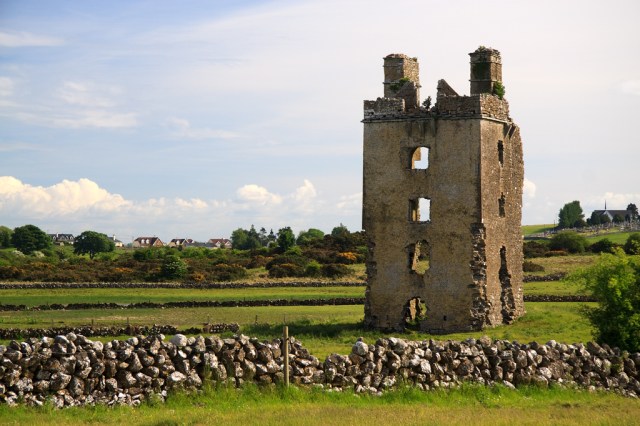
Shanrahan Graveyard, where Nicholas Sheehy is buried ~ https://en.wikipedia.org/wiki/Clogheen,_County_Tipperary#/media/File:Shanrahan.jpg
In his article “Whiteboys and Ribbonmen,” Pat Feeley writes, “There was a swing towards grazing and beef cattle farming between 1735 and 1760. There were a number of reasons for this: the exemption of pasture land from tithes, the lifting of the ban on exports of live cattle to Britain, the outbreak of the Seven Years’ War, with a consequent demand for provisions, and, finally, wealthy Catholics wishing to evade the Penal Laws had found that grazing was the safest form of farm investment. This development led to a drop in tillage, with landlords and farmers switching over to the rearing of cattle. As a result there was high unemployment among the labourers, and the smaller tenant farmers were forced off the land to make way for open pastures. Most labourers, if they were not to starve, had to rent potato ground, and they now found that the competition of pasture farming forced up the rents.
“There was an act of parliament which laid down that five out of every hundred acres should be devoted to tillage, There was, however, no machinery for enforcing it. There was not in Ireland at the time any statutory provision for the maintenance of poor and displaced people, who accordingly, when the bad times came, starved or were thrown back on the charity of their relatives and neighbours.”
Irish Media Man tells us, “Tithe payment was an obligation on those working the land to pay ten per cent of the value of certain types of agricultural produce for the upkeep of the clergy and maintenance of the assets of the Church.
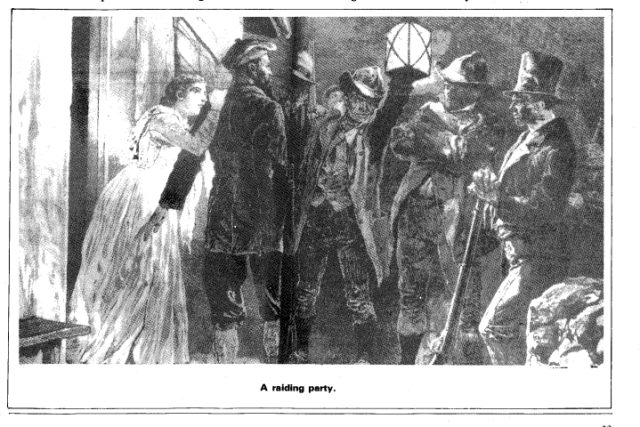
“Among the features which differentiated the Whiteboy movement from earlier combinations was the almost universal use of oaths to bind its adherents together. Every member was compelled to take an oath and those who refused to swear, were threatened with being buried alive. Of the 14,000 insurgents estimated to be in arms in County Tipperary in 1763 practically all were sworn to be true to the cause. Though scholars have so far discovered no clear examples of secret societies that were oath bound before the Whiteboys, the notion that earlier associations of peasants or urban tradesmen had never implied such a simple device seems on its face highly improbable. But even if oath bound popular organizations did exist on at least a local scale before the early 1760s, the Whiteboys should still be considered innovators because they invested oaths with great practical and symbolic importance in fusing local activists into the wider network of a regional movement.

“Some oaths expressed specific aims of the insurgents, while others dealt with matters of organization and discipline, as did one oath found in the possession of a number of Whiteboys apprehended in April 1762. This source and other contemporary documents indicate many Whiteboys enrolled under the banner of the mystical leader Sieve Oultagh, whom they designated their queen. Precisely how this usage originated is unknown, but it almost certainly derived its currency from the popular tradition in song and poetry of personifying Ireland as a woman and its people as her children.
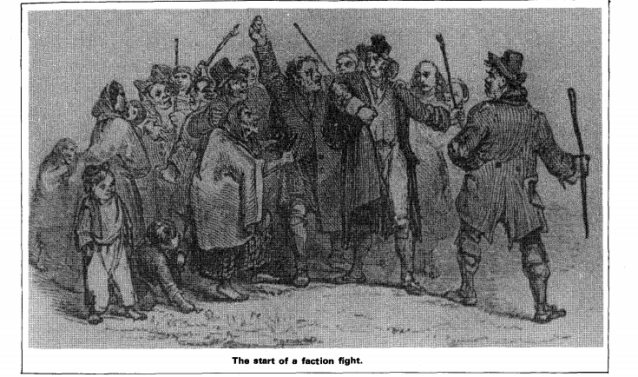
“The Whiteboys had other symbols and customs that were explicit and functional. The Levellers of Waterford and other counties erected gallows, made coffins, and dug graves in the public roads, all obviously intended as portents of the fate awaiting those who refuse to obey their mandates. To a number of prominent Whiteboy practices some contemporaries also attributed a revolutionary meaning which in all probability they did not possess. Many of the Whiteboys sported white cockades which carried an implication of Jacobitism. Some saw in this agrarian movement a popish plot to overthrow, with French help, the Protestant constitution in church and state. The Whiteboys attire was patterned after the dress of the French Camisards who had rebelled in the year 1702. No doubt, some Whiteboys, expecting a foreign invasion, boasted they would change or put down governments. But the cry commonly heard from many Whiteboys was long King George III and Queen Sive, more accurately, if still somewhat ambivalent, reflected their political sentiments.”
Other Sources:
Captain Rock: the Irish Agrarian Rebellion of 1821-1824
Captain Rock and the Irish Agrarian Rebellion of 1821-1824
Ireland’s Forgotten ‘Rockite’ Rebellion
Political Dimension of Irish Rockite Movement
Arriving March 25, 2019
Lady Chandler’s Sister: Book Three of the Twins’ Trilogy
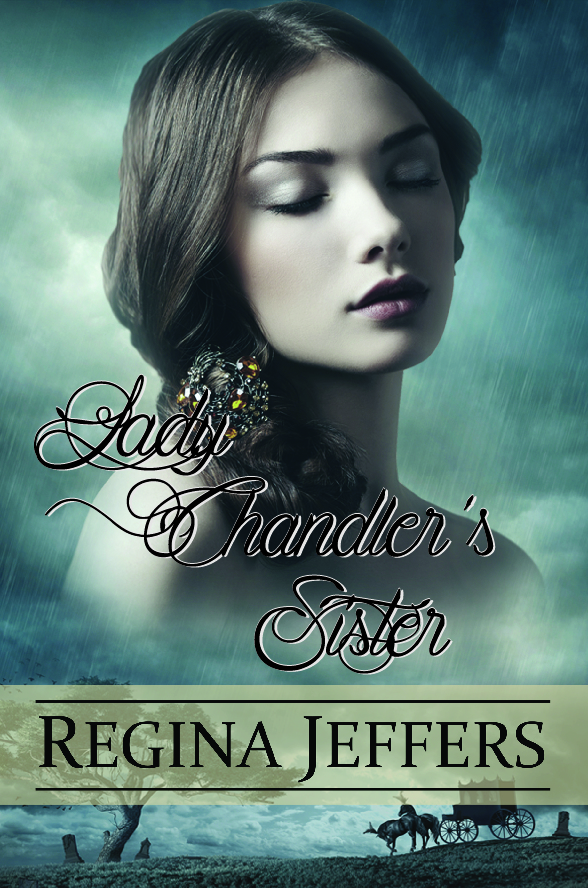
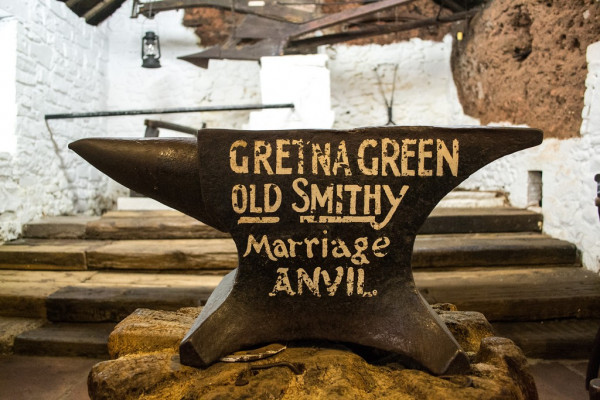
Sir Alexander Chandler knows his place in the world. As the head of one of the divisions of the Home Office, he has his hand on the nation’s pulse. However, a carriage accident on a deserted Scottish road six months earlier has Sir Alexander questioning his every choice. He has no memory of what happened before he woke up in an Edinburgh hospital, and the unknown frightens him more than any enemy he ever met on a field of battle. One thing is for certain: He knows he did not marry Miss Alana Pottinger’s sister in an “over the anvil” type of ceremony in Scotland.
Miss Alana Pottinger has come to London, with Sir Alexander’s son in tow, to claim the life the baronet promised the boy when he married Sorcha, some eighteen months prior. She understands his responsibilities to King and Crown, but this particular fiery, Scottish miss refuses to permit Sir Alexander to deny his duty to his son. Nothing will keep her from securing the child’s future as heir to the baronetcy and restoring Sir Alexander’s memory of the love he shared with Sorcha: Nothing, that is, except the beginning of the Rockite Rebellion in Ireland and the kidnapping of said child for nefarious reasons.
An impressive ending to the beautifully crafted Twins’ Trilogy – Starr’s ***** Romance Reviews
Love. Power. Intrigue. Betrayal. All play their parts in this fitting conclusion to a captivating, romantic suspense trio. – Bella Graves, Author & Reviewer
Kobo https://www.kobo.com/us/en/ebook/lady-chandler-s-sister
Nook https://www.barnesandnoble.com/w/books/1131002644?ean=2940161421314

 Who was Captain Rock? First, let’s begin with a quick overview, simply to set some parameters. “

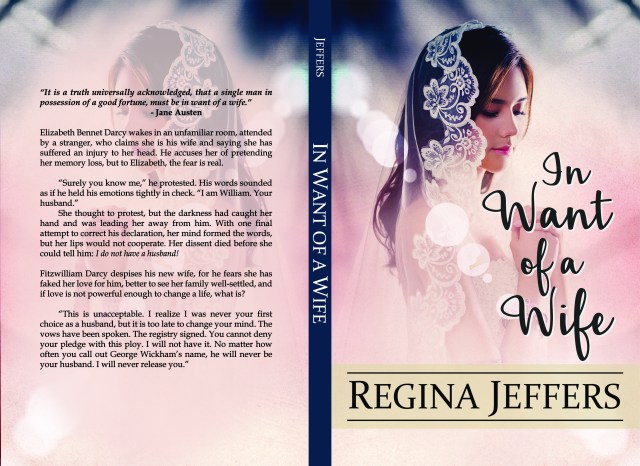
 In a day and age where concussion protocol is practiced on sports fields and courts throughout America, the idea of amnesia as a plot point may appear a bit lame, but we all likely know someone who had been knocked out or fainted for a brief second or two, or perhaps minutes, who then wakes and takes a bit of time to recall where they are and what is going on. That is what happens to Elizabeth, but instead of minutes, she waits weeks to get her bearings again. In the meantime, she and Darcy are thrown together as husband and wife. One must remember that in the Regency era, marriage was FOREVER. Death do us part, and all that jazz. Divorces were very public and very expensive and, literally, took an act of Parliament. By making Elizabeth also not remember her family, she can no longer depend on others to right her mistakes. Only on Darcy and on herself.


 The Ratcliffe Highway Murders served as a model for my highly acclaimed mystery,
 The
The 

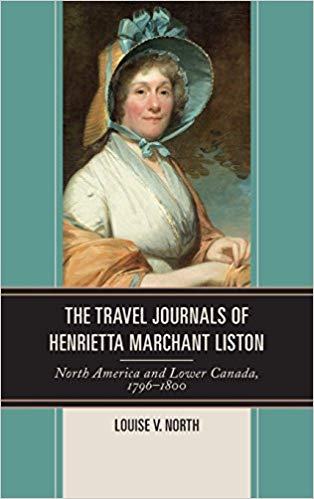 Hamilton, as ladies often were, but does not like Thomas Jefferson much. The Listons also met George Washington and his wife, Martha, and became good friends.




 Every Woman Dreams...

_p103_LIBERLIP,_THE_PRIEST_KILLER.jpg)


