A Widow’s Rights? What Was English Law on the Matter? + Release of “His Christmas Violet: A Regency Second Chance Romance”

In my tale, His Christmas Violet, Lady Violet Graham, is a widow. Being a widow at the time, particularly, women in the aristocracy or gentry class, provided a woman more freedom than she ever could expect in remarrying. She would customarily receive some sort of allowance to live on. Often, she would have access to the dower house. Lady Violet believes she has “earned” those rights, and, so, when Sir Frederick Nolan announces his intentions to make her his new wife, Violet wants NONE of the matter, even though, she has privately loved Sir Frederick since she was a young girl. Yet, our Violet worries Sir Frederick will be as high-handed as was her late husband, Lord Giles Graham.

Therefore, a basic understanding of a woman’s rights after her husband passes is required to move the story along. Here are some of the key points.

English Common Law provided a widow a life interest in one-third of the freehold lands her husband owned at the time of their marriage. She could not be denied these rights unless she was found guilty of treason, felony, or adultery. The law of dower gave a wife one-third of any property a man held on his death. That excluded entailed property, for the most part. However, the husband could defeat dower by leaving his wife as little as £50. The Court of Chancery did rectify such lapses if the widow had the resources or the  friends to help her bring suit and there was any property or money to be had. The court looked to the amount of the dowry and the position the widow had held as wife. Obviously, the court would see that a countess was provided for better than the widow of a vicar. Unfortunately in this cases, the countess had had a father or guardian who made sure iron-clad settlements were drawn up, whereas the vicar’s wife might not have been so lucky.

Even if the father did not bother to arrange the marriage settlements before the actual marriage (i.e., an elopement), and the husband did not leave his widow anything in his will, she was, as previously explained, supposedly entitled to one-third of his own estate. This is called her dower. She was to ask the sheriff to see that this was arranged properly. However, quite often the husband had no property he owned outright, as it was all entailed. Then, she would have to petition the Court of Chancery for a sum upon which to live.

It was difficult for a husband to set up a trust for his wife during his lifetime, other than in a will, if doing so was not accomplished before the marriage. Because a husband and wife, under law, were considered one, he could not legally give himself his own money. There were cases where a husband did give the wife money and wrote it out that this money was to be hers to do with as she would. However, in such one case where the woman took that money and purchased houses, she lost the property without recompense when her husband died, and the heir sued to have the houses declared part of the estate. Other situations that were deemed illegal included where the husband gave his wife money in a trust and then raided the trust, presented her property and then sold it for his profit, etc.

The Oxford Reference defines the Statue of Uses as, “The use was a legal device whereby property could be held by one person for the benefit of another, e.g. when a landowner was absent on crusade. But, by extension, it might be employed to evade or avoid obligations, defraud creditors, or escape legislation against mortmain. Henry VIII pressed strongly that uses should be restricted, arguing that his revenue was affected, but the Parliament of 1532 was unwilling to legislate and was told sharply ‘not to contend with me’. In 1535 Parliament accepted 27 Hen. VIII c. 10, which complained of ‘subtle inventions and practices’ and restored obligations to the beneficiary.” The “jointure” came into practice with the Statue of Uses. It was a settlement on a bride by her future husband of a freehold piece of property to be used to secure her widowhood. The bride was required to surrender her dower (not her “dowry,” although the terms can be confusing). 

Later in the 19th Century, wives lost their right to inherit, meaning in the 1830s, if the woman had no jointure rights recorded in her husband’s will, the widow could be left without anything upon which to survive. She could also lose the right to the property if she remarried. It would automatically revert back to his heir. 

Jointures were usually payable be the heir of the estate as an annual payment, which was equal to one-tenth of the dowry she brought to the marriage. This number was established because it was assumed that the wife would outlive her husband by ten years, for that was often the difference in their ages when they married. She would receive this payment for the remaining days of her lifetime. Thereafter, the principle would be allotted to her children. Providing the widow one-tenth of what she brought into the marriage meant she received back her dowry. The percentages were per year. The amounts were generally paid quarterly. The formula generally followed this plan: pin money was 2% of the dowry, while jointure was 10%.

As stated above, the jointure is usually set forth in the marriage settlements, which is a prenuptial or ante nuptial agreement. These funds are supposed to come to the widow without let or hindrance. However, it is often set up to be the income from some piece of land. If there is no income from said land, she is out of luck.

Yet, if the husband had not set up a jointure (her annual annuity), but, rather, left her a small sum in his will, that was all she would receive. Or if the heir was not her son, and the estate was encumbered by a mortgage, she might have a problem receiving either the jointure or the dower.

She was supposed to receive a sum large enough to allow her to live decently according to her rank, but not all knew equality under the law. There were even cases where the man left most of his cash to a grandson of a child by his first wife. In a few such cases, the courts felt the widow should have the return of most of her dowry, if nothing else.

Book Blurb:

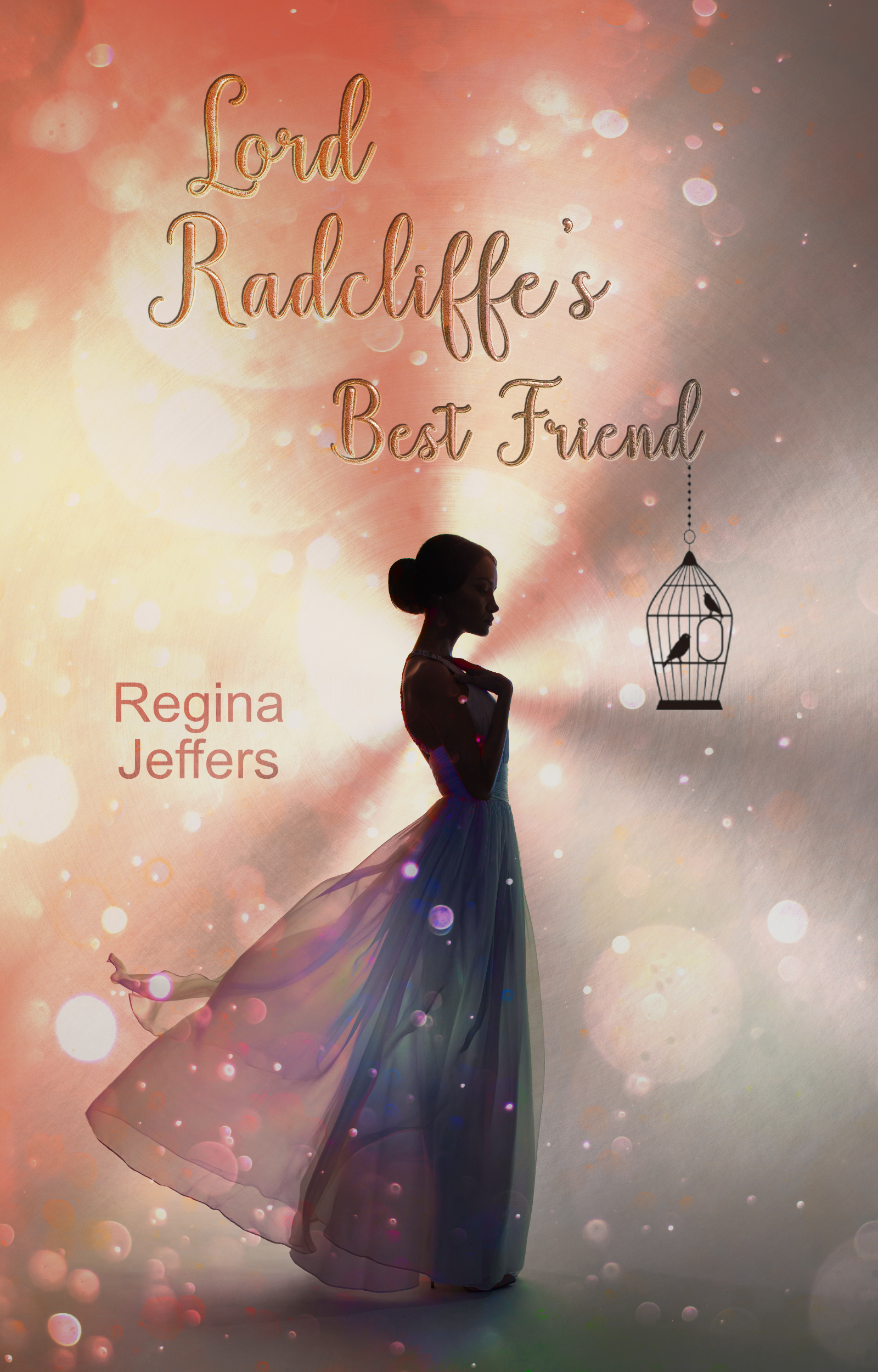
His Christmas Violet: A Second Chance Regency Romance 

Sir Frederick Nolan has stayed true to his late wife through all their years of marriage, but now he is widower and has waited the proper mourning period, he sees no reason he should not finally know the happiness of having Lady Violet Graham at his side. He meant to marry Violet when he was fresh from his university years and she was but a young lady; however, the realization she was perfect for him had come too late, and Violet had already accepted the proposal of Lord Graham. 

Lady Violet Graham had never strayed from the love she held for Sir Frederick, but she had proven herself a good wife to her late husband, serving dutifully as Lord Giles Graham’s chatelaine and presenting him three sons. Now, her widow’s pension and the use of the dower house will provide her the only freedom she has ever known as a woman. She cannot think to become another man’s “property,” even when that man is the only one she has every loved. Enough is enough of not having a voice in her own future. 

They have loved each other since they were children, but how does Sir Frederick convince Lady Violet to marry him, when she is most determined never again to permit any man dominion over her person?

Book Excerpt from the second half of Chapter One of His Christmas Violet (read the first half on Wednesday’s post)

“To where did you disappear?” his best chum, Mr. Lawrence Clements, asked. “One minute we were looking at a horse, and the next you were gone.”

“I noted the Graham coach turning onto the street beyond,” Frederick admitted. 

Lawrence grinned widely. “Still dallying with that idea, are we?”

“Afraid so,” Frederick said as he looked back toward the street upon which the tea room sat. 

Clements stepped up beside him. “If you wish another wife, why not seek out a younger woman?”

“I do not desire a wife I must tend to all the time and one set on stirring up my comforts. Nor do I wish to subject my grown children to a woman likely younger than are they. I want a woman who knows something of family and trials, but one not focused on the idea of dying.” 

“Was your Alice focused on dying?” Clements asked in honest seriousness. 

“Alice proved to be a good wife, better than I thought she would be, and, even though she knew she was not my first choice, we carved out a satisfying life together. Then, she took ill. After that, all she spoke of—day and night—was when she expected to die. She no longer shared my interest in our children, the estate, the birth of our grandchildren—nothing. She no longer welcomed me into her bed, even to offer her comfort.” 

Clements said softly, “I did not realize everything had changed so dramatically for you. Why did you not say something previously?”

Frederick shrugged with a tinge of embarrassment. “What was there to say? You could not resolve the problem. Hell! I could not solve it! There was no need to burden you with my tale of woe.” 

“And you think Lady Violet Graham is the solution? In my few interactions with her, I always thought her ladyship a bit standoffish.” His friend presented him a like shrug of discomfort. “I know you do not want to hear this, but there must be several dozen candidates waiting for your attentions if you chose to travel to London. I heard from Mrs. Clements that Lady Graham has no desire to remarry. What makes you believe you can convince her otherwise?”

“Lady Violet is the most strong-willed woman I have ever known,” Frederick declared with a large smile upon his lips as he thought about the woman he would marry. “She will never cower before me, and I have no doubt when I am in the wrong, I will hear more than a few ‘I told you so’s.’” He chuckled easily while he conjured up an image of Violet, as a young girl, taking him to task. “I am looking forward to those disagreements and the coming together of one mind afterwards.” 

“You think Lady Violet will welcome you into her bed?” his friend asked with a lift of his brows, indicating his skepticism. 

“Have you never truly conversed with Lady Graham?” Frederick asked in seriousness. He had long contemplated the pleasure ahead of him, if, and when, he claimed Violet. She was quite unlike any other woman of his acquaintance. 

“I cannot say I have, at least, not beyond pleasantries,” Clements admitted. 

“I admit winning Violet’s affection will certainly not be for the faint of heart,” Frederick stated. “She will not concede easily. It will take a hundredweight of effort and more than a dash of both creativity and stubbornness to claim the lady’s hand, but I believe I am up to the task.” 

“I am returning to my initial question,” Clements said. “What makes you think her ladyship would serve you well as a wife?”

“Part of my reason has to do with the . . . . God, how do I explain the unexplainable? There has always been an ‘awareness’ of each other which has passed between us. As two of the highest-ranking families of the landed class in the shire, we were often in company. Even when our mates were still alive, there was ‘something’ indescribable which often marked our coming together in social situations. Although I should not admit this, I often asked Lady Graham to dance or asked if I might escort her in to supper while in attendance at various gatherings. You know how in society it is generally considered gauche for a man to dance with his own wife or sit beside her at an event.

“In the beginning, I thought the slight warmth skittering up my arm each time we touched was simply the appreciation of partnering an attractive woman. Yet, whenever we encountered each other, the notice of ‘awareness’ always remained, and it was not present when I sat beside any other woman, not even Lady Nolan. In fact, the more often the unusual cognizance occurred, the more I became relatively certain her ladyship felt something similar to what I was experiencing. So much so, she began to shun those moments in the last few years of Lord Giles Graham’s life. I am passably assured Lady Graham felt guilt over what passed between us.” 

In response, Clements’s eyebrow hitched higher. “If Lady Graham avoided you then, other than the fact you have both buried your mates, why would she change her mind now? You are both mourning your partners in marriage is not reason to assume she will now turn herself over to your care.” 

Frederick grinned widely. “Did I not tell you previously how we came to know each other? Not only do her ladyship and I have a history here in the neighborhood, but we have known each other since she was but a small child. Before my father rose to the baronetcy, my family resided in Yorkshire, where our family estate marched along with her father’s estate. Her brother George and I were constant companions in those days, and the then Miss Violet Kerr followed us everywhere. 

“She was so much enthralled with me, at the age of twelve, Miss Violet confessed her love for me. Naturally, I was too full of my own worth to take her avowals seriously, for I am nearly seven years her senior. However, now, I am betting her first love could some day be her last love.” 

Purchase Links:

Posted in book excerpts, book release, British history, customs and tradiitons, eBooks, family, Georgian England, Georgian Era, heroines, historical fiction, holidays, Living in the Regency, marriage, marriage customs, publishing, reading habits, Regency era, Regency romance, romance, writing | Tagged , , , , , , , , , , , , , , , , , | Comments Off on A Widow’s Rights? What Was English Law on the Matter? + Release of “His Christmas Violet: A Regency Second Chance Romance”

Female Inheritance and the Release of “His Christmas Violet, a Regency Second Chance Romance”

Under English law, women were subordinate to their husbands. It was expected that the woman was under the “protection and influence of her husband, her baron, or lord.” The law stated the old adage of “two shall become one.” She was her husband’s “feme covert.” Any property she owned—real or personal—came under his control. A married woman could not draft a will or dispose of any property without her husband’s consent.

Women rarely inherited property. She could inherit “personal” belongings such as, furniture, jewelry, clothing, moveable goods, etc. But that does not mean that a woman could NOT inherit real property (which means she could inherit land, or what we now call “real estate”). The practice of primogeniture under English law presented the oldest son with the real property upon the death of the father. [Note: Matrilineal primogeniture, or female-preference uterine primogeniture, is a form of succession practiced in some societies in which the eldest female child inherits the throne, to the total exclusion of males. The order of succession to the position of the Rain Queen is an example in an African culture of matrilineal primogeniture: not only is dynastic descent reckoned through the female line, but only females are eligible to inherit.] Daughters could only inherit in the absence of a male heir. The law of intestate primogeniture remained on the statue books in Britain until the 1925 property legislation simplified and updated England’s archaic law of real property.

Aware of their daughters’ unfortunate situation, fathers often provided them with dowries or worked into a prenuptial agreement pin money, the estate which the wife was to possess for her sole and separate use not subject to the control of her husband, to provide her with an income separate from his.

In contrast to wives, women who never married or who were widowed maintained control over their property and inheritance, owned land and controlled property disposal, since by law any unmarried adult female was considered to be a feme sole. Some of the peeresses, in their own right had property, as well as the title which the husband couldn’t touch. Still, inheritance through the female of a peerage by patent was  extremely rare and usually only  put into the patent while the 1st peer was alive. Usually, the patents didn’t allow for female inheritance. It was rare for a woman to be able to inherit a peerage created by patent. The Duke of Marlborough had his patent changed when it was obvious he would not have a son, but that was a rare occurrence. Most females succeeded to a lesser peerage created by writ. Once married, the only way that women could reclaim property was through widowhood.

Book Blurb:

His Christmas Violet: A Second Chance Regency Romance 

Sir Frederick Nolan has stayed true to his late wife through all their years of marriage, but now he is widower and has waited the proper mourning period, he sees no reason he should not finally know the happiness of having Lady Violet Graham at his side. He meant to marry Violet when he was fresh from his university years and she was but a young lady; however, the realization she was perfect for him had come too late, and Violet had already accepted the proposal of Lord Graham. 

Lady Violet Graham had never strayed from the love she held for Sir Frederick, but she had proven herself a good wife to her late husband, serving dutifully as Lord Giles Graham’s chatelaine and presenting him three sons. Now, her widow’s pension and the use of the dower house will provide her the only freedom she has ever known as a woman. She cannot think to become another man’s “property,” even when that man is the only one she has every loved. Enough is enough of not having a voice in her own future. 

They have loved each other since they were children, but how does Sir Frederick convince Lady Violet to marry him, when she is most determined never again to permit any man dominion over her person?

Excerpt from the first part of Chapter One of His Christmas Violet

      Lincolnshire, mid November, 1819

Lady Violet Graham smiled upon her friend Mrs. Emily Bowers, even though, Violet thought her ears would soon begin to bleed from overuse. She and Emily were supposed to be “enjoying” tea together, but since Emily had claimed her seat in the tea room, her friend had barely come up for air, listing a litany of complaints about her various aches and pains, as well as belying the merits of the number of gentlemen who had refused to do more than provide Emily a “Good day.” 

“What is the use of sporting a new bonnet if no one is polite enough to comment on it?” her friend demanded. 

Violet also had not commented on the bonnet, not that doing so was beyond her notice, but because her friend’s headwear was so extravagant Violet wondered how Emily had fit through the tea shop’s door while wearing it. Instead, when the opportunity arrived, she suggested, “You are not likely to entice another gentleman into extending his hand in marriage if you provide him a complete list of your ailments beforehand. It would seem to me, a man of a certain age would prefer a woman who would tend to his complaints, rather than him attending to hers. Most gentlemen of society expect their wives to do more than sniff smelling salts all day.” 

Emily’s frown lines deepened. “I suppose you are correct. The late Mr. Bowers was very rarely sympathetic to my issues.” She asked in doubtful tones, “Do you suppose either of us will ever marry again?”

Violet laughed easily. It was necessary for her to allay such notions immediately. She and Emily were often in agreement, but not on this particular subject. “I have no desire to remarry. My life at Graham Hall is all for which I could ask. My daughter-in-marriage has assumed many of the duties I once shouldered, and I am considering moving into the dower house soon, for my Jeremiah and Ruth are expecting their first child by early spring. I shall then be a grandmother once more. 

“Gabriel and Elizabeth will spend Christmastide with us, and we will all be able to, at last, enjoy baby Henry. Simon means to offer for Miss Applebaum once her father returns to Lincolnshire upon completing his service to England on the Continent. Soon the care of each of my sons will be in the hands of a young lady I admire. 

“In truth, I do not require a man to complete my identity. Lord Giles Graham and I rubbed along well together. He provided for me upon his death. Jeremiah and Ruth have asked me to stay on at Graham Hall, but, if I choose, the dower house is set aside for my use. There is nothing a new husband could provide which I require in my life.” For Violet, the concept of freedom—of not having a man in control of each of her choices—was too liberating to abandon. 

Emily leaned closer to whisper, “Not even the closeness you shared in Lord Graham’s bed? I miss the heat of Charles’s body along mine. A Lincolnshire winter can be very cold for a woman of my nature. I would be remiss if I did not say I often wish for Mr. Bowers’s tenderness.”

“I recall,” Violet said with a lift of her eyebrows in challenge, “how you complained about Mr. Bowers withholding your pin money and his forbidding you afternoons such as this one.” Violet had learned to hold Giles Graham in affection, as was proper for a woman in her position, but she could not look with any favor upon how Giles controlled every facet of her life. To her, the bit of liberty she had already claimed had proven quite intoxicating. She refused to submit to another man: She would not make the same type of mistakes as she did at age sixteen. 

“Most assuredly,” Emily said, “every man likes to have his own way in the world.” 

“You may wish for the type of relationship you describe, but I cannot readily concur,” Violet admitted. “I prefer the freedom of widowhood. I have legal rights and social rights I have never known previously. If you miss a man in your bed, why not take a lover?” 

Violet thoroughly believed she had finally grown into her “independence.” She was certainly no ape leader or bluestocking, but she enjoyed the few privileges bestowed upon her as a widow. She could now own land and sign legal contracts and documents. Moreover, she was permitted an opinion, which was certainly not a guarantee when Giles was alive. Her late husband only permitted her to speak when her thoughts aligned with his. 

Emily asked in a whisper, “Would you consider taking a lover?”

Violet shook off the idea, but, in truth, there was one man with whom she wished she could spend an afternoon. He had fascinated her since she was a child. “I do not desire anything which can be stolen away by a man’s dominion over me.”  

Emily attested, “Mr. Bowers could upon occasion be a bit dictatorial, but not always. Many times, he showed me a great kindness. In truth, my lady, I am fond of the idea of another making the ‘grand’ decisions for me. Essentially, I require a man in my life.” 

“Whereas, my courage rises with every attempt to intimidate me,” Violet declared, although she knew such was not completely the truth. More times than often, she had permitted Giles his way so as to avoid an argument. 

“You may keep your cold bed,” Emily countered. Her friend glanced around as if to assure their privacy. “I asked the vicar if he knew of a gentleman of a certain age who was seeking a second wife, or, even, a first for that matter.” 

“And did Mr. Williams have any suggestions?” Violet asked with a conspiratorial grin. She would have enjoyed listening in on that particular conversation. She was certain Mr. Williams found the visit from Emily quite uncomfortable. 

“There are only a few within the neighborhood,” Emily admitted. “Benjamin Chaud’s wife passed recently, but it is likely too soon for him to consider taking another wife. A few tradesmen and merchants in the area, according to Mr. Williams, could be considering a possible mate, but such would mean my no longer living on an estate. I could possibly tolerate a large farm, but I am not so pleased with how easily those in town take to drink. I would fear a man who was too often in his cups.” 

“Mr. Matthews is a widower,” Violet suggested, “and, like mine, his two children are full-grown. They still live on the estate. Just keep in mind, in such a match, you would be taking on three men, all set in their ways.” 

The last of her words had barely left Violet’s lips before the door to the tea room opened, and Sir Frederick Nolan stepped inside. His muscular frame and dark countenance were impressive enough to draw the attention of the room’s occupants, including Violet’s. His eyes scanned the room until they collided with her steady gaze, and then his smile turned up the corners of his lips. 

Surprisingly, or not so surprisingly, there had been a time they had often been in company. Sir Frederick, or “Freddie,” as her brother George had called him, had been George’s best chum, and the three of them had grown up together in another shire. Frederick and George had been inseparable, and she had followed them about, attempting to be a part of all their schemes. As a girl of twelve, she had professed her “love” to Freddie, but he and George were beginning their first university terms, and Frederick had had no use for “a silly girl.” Heartbroken, she had sworn never to speak to him again. 

Later, he had had second thoughts and had come to call upon her; yet, she was then betrothed to Giles. At the time, it had felt like sweet revenge to offer her denials of his hand. Ironically, Frederick had then married one of Violet’s childhood friends, Alice Wooden, and, as luck would have it, the estate he inherited had proven to be the second largest one in the same shire as was Giles’s. Not unlike Giles’s barony, Sir Frederick’s baronetcy was an important part of the shire, and she and Giles had often spent time with Sir Frederick and Lady Nolan.

During those brief interludes, Violet realized her attraction to the man still existed. In those instances, she had felt guilty for pining for something which was not meant to be. Unfortunately, for her, the man had an unspoken power over her. 

Even now, awareness zinged through her veins as he approached the table. Violet unconsciously licked her lips, her mouth suddenly quite dry. Emily turned in her chair to view what, or rather who, had captured Violet’s attention. She heard her friend say, “What about him?” Like it or not, Violet frowned in what could only be jealousy, that is, if she dared to present the emotion she was experiencing with a name. 

Sir Frederick stopped before her, removed his hat and bowed. “Good afternoon, my lady. Mrs. Bowers,” he said politely. “Might I join you?”

Emily responded before Violet could gather her wits about her. “Please do, sir.” Violet noted Emily’s use of coquettish tones, and she turned to her friend to present Emily a “how dare you” glare, but Emily was too busy batting her eyelashes at Sir Frederick to take note of Violet’s disapproval. Thankfully, Frederick had yet to present Emily more than a cursory glance. Instead, his attention had landed fully on Violet, and she resisted the urge to squirm. 

He adjusted his chair and sat between her and Emily before motioning the owner to deliver a fresh pot of tea. “And what are you ladies doing in town?”

Violet said, “I was just about to ask the same of you.” 

He smiled at her. “I came to speak to my man of business and thought I might also call in at the stable. You see, my lady, I am seriously considering in acquiring both a new horse and a new wife. I wish to make certain the lady will be provided for properly.” 

His news was a shock for Violet, but, before she could compose her thoughts, Emily asked, “You have already chosen a new mate?” Her friend appeared quite dumbfounded by the possibility. 

“I have, ma’am,” he said simply. 

“Have you made an offer of your hand?” Emily continued to question him. 

He glanced to Violet, but appeared quite satisfied in answering Emily’s inquiries. “I have yet to win the lady’s permission to court her, but I pray she will agree. She is the only woman I might consider marrying.” 

“I . . . I see,” Emily stammered, as she gathered her belongings. “Then . . . then I wish you success, sir.” She turned to Violet. “I despise leaving so suddenly. I just took note of the time and realized I promised Mrs. Williams I would call upon her today about the charity’s need to assist the poor.” 

Violet knew Emily had already called upon the vicar’s wife on this day, but she assumed her friend knew a bit of mortification for flirting with a man who meant to marry another. “I am sorry you must leave so soon. I shall send a note around later in the week, and we may continue our conversation then.” 

Emily nodded her agreement and rose quickly. Frederick also rose to bid her a ‘“Farewell,” and within seconds Emily was gone. 

“That was odd,” Sir Frederick said as he resumed his seat. “Was it something I said which offended her?” 

Violet frowned again. “Emily is at sixes and sevens since her widowhood. The Williamses provide her counsel, and she finds the church’s charities worthy of her time.” 

Frederick tilted his head in serious consideration. “Then she was truly flittering with me? I assumed so, but I did not want to appear presumptuous.” 

“Some women are lost without a man’s guidance,” Violet observed. 

The tea arrived, and their conversation paused until they were alone again. 

“I assume you are not one of those women,” he observed with a lift of his brows. 

“If you are asking if I ever see myself remarrying, I would be remiss if I did not dissuade you or anyone else foolish enough to ask. Lord Giles Graham was a good man, but you and I are both aware my late husband was also a very regimented man, who despised any sort of spontaneity or disorder. You have known me since I was a child and will likely realize ‘perfect order’ was often difficult for me. Therefore, I do not wish to place myself under the rule of another man.”

Feeling a bit uncomfortable with her statement, Violet sipped her tea before saying, “Now, tell me, who is the fortunate woman on the receiving end of your affection?”

He chuckled easily. The sound of his laughter rumbling about in his chest brought a shiver of awareness to Violet’s spine. “After your most eloquent speech, I should likely be silent on the subject, but, as I know how ‘spontaneity’ is part of your nature, you will recognize a certain plainspoken tendency as part of mine.”

“I do,” she murmured, waiting with anticipation for his pronouncement. 

“Then you will hear my honesty when I say, I have no wish to remarry unless my next bride is you, Lady Violet.” 

The deep timbre of his voice and his closeness set her heart racing. 

It was her turn to be dumbfounded, but she had no opportunity to respond, for he stood suddenly. “Think upon it, Violet.” With that, he turned and placed several coins in the hand of the proprietor, before exiting the shop. 

All Violet could do was stare at the door through which he had departed. Sir Frederick Nolan wished to marry her? Her? She shook her head in denial. Even for the most compelling gentleman of her acquaintance, and Sir Frederick definitely fit those words perfectly, Violet was not about to abandon her well-earned freedom. Setting her shoulders in renewed resolve, she rose also, gathered her belongings, thanked the proprietor for his service and returned to her carefully constructed life. It would be a cold day in purgatory before she placed her life in the hands of another man, no matter how deliciously handsome her pursuer might be.

Purchase Links:

Posted in book excerpts, book release, books, British history, customs and tradiitons, eBooks, excerpt, family, Georgian England, Georgian Era, giveaway, heroines, historical fiction, Living in the Regency, marriage, marriage customs, publishing, reading habits, Regency era, Regency romance, research, romance, writing | Tagged , , , , , , , , , , , , , , , , , | Comments Off on Female Inheritance and the Release of “His Christmas Violet, a Regency Second Chance Romance”

Happy 11th Book Birthday to “Christmas at Pemberley: A Pride and Prejudice Holiday Vagary, Told Through the Eyes of All Who Knew It”

December must mark a Christmas romance. ®Hallmark does it. Therefore, this month I mean to highlight a few if the Christmas tales I have written over the years. “Christmas at Pemberley” was the first. It is a sweet tale, but it really spoke to me (and to several of my Austen fans), who had experienced difficulties with childbirth. In my tale, Elizabeth has had two miscarriages, and she is quite depressed. Darcy has planned a great celebration at Pemberley, bringing in her family, in hopes his wife can return to her “free spirited” self. He takes her on a business journey with him, so everyone will be at Pemberley when they return, but a snow storm delays their journey. They seek shelter at an inn, where they end up sharing their quarters with a couple who deliver their first child. It is both a bittersweet moment for Elizabeth, but also one filled with hope for her own future. Enjoy the excerpt below, and keep the Christmas spirit in your life all year round. 

Christmas at Pemberley: A Pride and Prejudice Holiday Vagary, Told Through the Eyes of All Who Knew It

from Regina Jeffers

Classics; Regency romance; inspirational romance; sequel; Jane Austen Fan Fiction

To bring a renewed sense joy to his wife’s countenance, Fitzwilliam Darcy secretly invites the Bennets and the Bingleys to spend the Christmastide festive days at Pemberley. But as he and Elizabeth journey to their estate to join the gathered families, a snowstorm blankets the English countryside. The Darcys find themselves stranded at a small out-of-the-way inn with another couple preparing for the immediate delivery of their first child, while Pemberley is inundated with friends and relations seeking shelter from the storm.

Without her brother’s strong presence, Georgiana Darcy desperately attempts to manage the chaos surrounding the arrival of six invited guests and eleven unscheduled visitors. But bitter feuds, old jealousies, and intimate secrets quickly rise to the surface. Has Lady Catherine returned to Pemberley for forgiveness or revenge? Will the manipulative Caroline Bingley find a soul mate? Shall Kitty Bennet and Georgiana Darcy know happiness?

Written in Regency style and including Austen’s romantic entanglements and sardonic humor, Christmas at Pemberley places Jane Austen’s most beloved characters in an exciting yuletide story that speaks to the love, the family spirit, and the generosity that remain as the heart of Christmas.

Christmas at Pemberley: A Holiday Sequel to Pride and Prejudice Booksellers’ Best Award Finalist, Inspirational Romance; New England Book Festival, 2nd Place, General Fiction

Excerpt 

“A small gift from Nan,” Elizabeth said as she handed the hastily made child’s dressing gown to Mary. The woman had dutifully completed the delivery, and with Mrs. Washington’s help, Elizabeth had assisted Mary to fresh clothing. Now, the new mother rested once again in the bed. She held the sleeping child in the bend of her arm.

“I shall thank the girl properly,” Mrs. Joseph mumbled.

Elizabeth patted the lady’s hand. “Why do you not rest?”

“You require rest also,” Mrs. Joseph sleepily protested.

“First, I believe I shall go downstairs and have a proper supper with Mr. Darcy. I require time to rest my back.” She stretched out her arms. “I shall send Mr. Joseph to sit with you.”

“Let Matthew be. No one needs to watch me sleep.” Mary’s eyelids closed slowly, but then sprung open again. “That is unless you require private time with Mr. Darcy.”

Elizabeth smiled easily. “I never tire of the man’s company. Even after two years.”

“Then by all means send Mr. Joseph up. A woman of your infinite powers should have her every wish.” She caught Elizabeth’s hand in a tight grip.

Elizabeth’s finger gently touched the sleeping child’s hair. “My wish is to have what you have, Mary,” she whispered.

“You will, Elizabeth.” Mrs. Joseph assured. “You shall know your own happiness . . . you and Mr. Darcy.” She paused and took a deep breath. “My child’s birth . . . I was never afraid because God placed the incomparable Elizabeth Darcy in my life. My prayers . . . those I recited before Matthew and I left Stoke-on-Trent—they were for God to send an angel to protect my child, and on the third day of travel, I walked into this out of the way inn; and there you were. My own angel.”

Elizabeth snorted. “I have been called many things, but angelic was never one of them.”

“That is where the world erred, Elizabeth. They see those defenses you show to anyone who barely knows you. They do not see your magnificent heart—your indomitable spirit—the purity of your soul.”

Elizabeth laughed self-consciously. “Do not bestow me with too many exemplary qualities. If so, I must find something good of which to say of Miss Bingley.”

Mary’s eyebrow rose in curiosity. “Miss Bingley?”

Elizabeth chuckled lightly. “The younger sister of Jane’s husband. She did poor Jane a disservice, and the lady had once upon a time set her sights on Mr. Darcy.”

“Angels can feel jealousy, Elizabeth.” Mary squeezed Elizabeth’s hand.

“So, there are shades of angelic behavior?” Elizabeth’s voice rose in amusement.

Mary laughed also. “Absolutely. God’s love is the purist, but mankind can possess levels of the benevolent spirit.”

“Then, in your opinion, I hold God’s attention.” Elizabeth puzzled over that concept.

“We all hold God’s attention, but I believe He has chosen you among his favorites.”

Before she could stifle her words, Elizabeth defensively said, “Then how could God allow my children to die before I knew them? Before I could tell them of my love?” Tears trickled from her eyes.

Mrs. Joseph swallowed hard. “That is the question which most frightens you. Is it not, Elizabeth? You wonder how if you serve God, how He could not honor you with a child of your own. How the rest of the world can know such happiness? How no one, except Mr. Darcy, understands the depth of your fear?”

“Yes,” Elizabeth murmured.

“I have no answer that would satisfy your heart: God gives us what we require when we require it. Matthew holds different ideas on such matters, but I believe when the Bible says God created man in his own image such means God has his own foibles. He is a bit selfish. God wished to surround himself with the laughter of children—the most magical sound in the world. Therefore, sometimes He does the selfish thing and calls the child home early. It is the only explanation which makes any sense.”

Elizabeth brushed away her tears. “I shall endeavor to accept your explanation, Mary. It makes as much sense as any other.”

“You cannot argue with a woman named Mary so close to the celebration of our Lord’s birth,” Mrs. Joseph teasingly reasoned.

Elizabeth smiled easily. “No, I suppose, I cannot.”

Buy Links:

Kindle  https://www.amazon.com/Christmas-Pemberley-Prejudice-Holiday-Through-ebook/dp/B07L9G7YTV/ref=sr_1_7?ie=UTF8&qid=1544626483&sr=8-7&keywords=christmas+at+Pemberley

Nook  https://www.barnesandnoble.com/w/christmas-at-pemberley-regina-jeffers/1101005215?ean=2940161697221

Kobo  https://www.kobo.com/us/en/ebook/christmas-at-pemberley-2

Author Biography:

Regina Jeffers, an award-winning author of historical cozy mysteries, Austenesque sequels and retellings, as well as Regency era romances, has worn many hats over her lifetime: daughter, student, military brat, wife, mother, grandmother, teacher, tax preparer, journalist, choreographer, Broadway dancer, theatre director, history buff, grant writer, media literacy consultant, and author. Living outside of Charlotte, NC, Jeffers writes novels that take the ordinary and adds a bit of mayhem, while mastering tension in her own life with a bit of gardening and the exuberance of her “grand joys.”

Social Media Links:

Every Woman Dreams: https://reginajeffers.wordpress.com

Website: http://www.rjeffers.com

Facebook:  https://www.facebook.com/Regina-Jeffers-Author-Page-141407102548455/?fref=ts

Twitter: https://twitter.com/reginajeffers

Amazon Author Page: https://www.amazon.com/Regina-Jeffers/e/B008G0UI0I/ref=sr_ntt_srch_lnk_1?qid=1479079637&sr=8-1

Pinterest https://www.pinterest.com/jeffers0306/

BookBub https://www.bookbub.com/profile/regina-jeffers

Instagram: https://www.instagram.com/darcy4ever/

You Tube Interview: https://www.youtube.com/watch?v=vzgjdUigkkU

The tale The Disappearance of Georgiana Darcy: A Pride and Prejudice Mystery is the sequel to Christmas at Pemberley. 


Posted in Austen Authors, book excerpts, books, British history, Christmas, excerpt, family, George Wickham, Georgian England, Georgian Era, Jane Austen, mystery, Pride and Prejudice, publishing, reading habits, Regency era, Regency romance, romance, writing | Tagged , , , , , , , , , , , | 2 Comments

An Old-Fashioned Holiday Season. Perhaps Not! Be Careful for What You Wish!

booksillustrated.com
A Christmas Carol – Cratchits Celebrate Christian Birmingham

Have we lost the meaning of the holidays? As many of us have already run through our budget for gifts, others are wondering how we lost the true meaning of the Christmas season. Christians bemoaned the lost of the story of Jesus in the manger to the idea of Santa Claus, shopping, and parties.

In reality, Christmas has only been celebrated by Christians in the past two hundred plus years. Until the 1800s, Christmas was very much a pagan celebration. For centuries, Christmas was greeted with bawdy songs, high spirits and rabble-rousing. Laws were ignored and citizens were terrorized. Mummers roamed the streets of England, stopping periodically to perform short plays or sing songs (not carols with religious overtones). People would attend church in costume to gamble and to hear “sermons” of a secular nature. After services, the poor would roam the streets, demanding food and drink from the more affluent families. If the wealthy refused, the “mob” would break into the homes and steal what they wanted. All this mayhem was reminiscent of the drunken, self-indulgent celebrations of the Greeks and Romans, who celebrated the winter solstice. These irreverent displays turned Christians from the day, naming Christmas as “sinful.”

Six Christmas Traditions from Pagan Rituals

from Mimosa Sisterhood

It took over 300 years for the Church to decide upon a day to recognize the birth of Christ. Church leaders wished to create a holy day to oppose the ancient wild festivals. Early cultures celebrated the “rebirth” of the sun within days of the shortest day of the year. Egyptians and Babylonians celebrated midwinter festivals, as did early Germans. On December 25, those in Phrygia marked the birth of the sun god Attis and those in Persia did the same for the sun god Mithras. The Romans celebrated Saturnalia, a festival dedicated to Saturn, the god of peace and plenty. This festival lasted from 17 December to 24 December, a party of wild abandon. To protect themselves from prosecution, newly-minted Christians also decorated their homes for Saturnalia.

Telesphorus, the second bishop of Rome, was the first to declare a day to memorialize the Nativity. This was in 125 A.D. Those first Christmas services was held in September, during the Jewish Feast of Trumpets (not known as Rosh Hashanah). In truth, for many years more than a dozen different days were designated for the celebration. Finally, the Epiphany (now January 6 on the calendar, but January 17 on the old British calendar) was chosen as the proposed date of the birth of Jesus. This lack of consistency demonstrates the lack of emphasis on Christmas.

When the Roman Empire “converted” to Christianity (approximately during the 4th Century), more importance was placed on Christian celebrations, but even then, Christmas was not a major holiday because Saturnalia still thrived. In 274, the Roman emperor Aurelian declared December 25 Natalis Solis Invicti, the festival of the birth of the invincible sun.

In 320, Pope Julius I specified 25 December as the official date of Jesus’s birth. In 325, Constantine the Great declared the celebration of an immovable feast for Christmas on 25 December. Constantine also named Sunday as a holy day in each seven-day week. However, Saturnalia had not seen its last days. Christians with an attitude of “if you can’t beat them, join them” marked the day with wild carousing. “Party today. Repent later.” became the status quo. The lack of religion in the celebrations became part of the overthrow of the English monarchy in 1649.

Oliver Cromwell led a rebellion to overthrow King Charles I. Cromwell was a political conservative of the Puritan sect. He was the figurehead for the Protestant movement of the era and served as Britain’s “Lord Protector.” He set his sights on restoring order in society and establishing a democracy. Many changes came to England under Cromwell’s fifteen year reign, but to common people, the banning of Christmas activities was a hard blow. Those who participated in the lewd and bawdy celebrations (drinking and merrymaking) were arrested, fined, and jailed.

Cromwell and other religious leaders believed Christmas should be a reverent marking of Christ’s birth – a day of reflection rather than celebration. Unless Christmas fell on a Sunday, people were to go about their daily work and deeds. No gifts. No drinking. No carols. It was a somber, uneventful day.

With Cromwell’s passing, his son Richard came into the office once held by his father. Richard attempted to keep his father’s tenets in place, but with the promise of a return to the most “joyful” Christmas celebrations, Charles II was welcomed to the throne, and the Puritans were out of power. A period song says…

Now thanks to God for Charles’ return,
Whose absence made old Christmas mourn,
For then we scarcely did it know,
Whether it Christmas were or no.

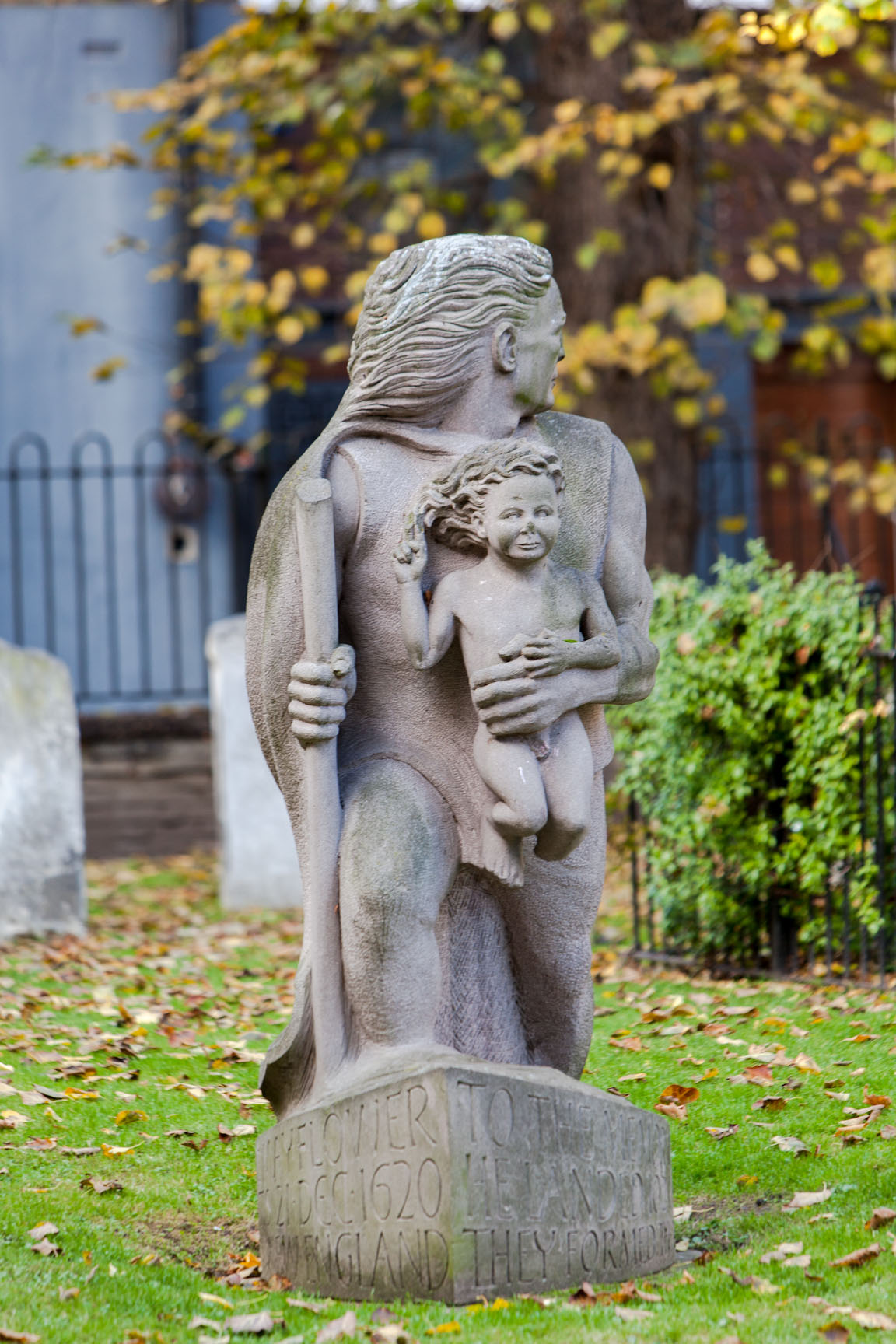
The return of the drunken melees meant many churches closed their doors and ignored Christmas’s significance. In London, people feared going into the streets for fear of being attacked or robbed. For nearly two centuries, Christmas was anything but holy in English-speaking countries. During this time, the Puritans attempted to outlaw Christmas completely in America. The holiday was banned throughout New England from the time of the landing at Plymouth Rock in 1620. Churches did not meet and business stayed open. Celebrating Christmas in any manner was punishable by an arrest and a fine. As a point of reference, Congress met on December 25 every year from 1789 to 1856.

Unfortunately for the Puritans, other immigrants to America did not easily fall into line with the banishment of Christmas. “The Lords of Disorder” took to the streets on 25 December to “party” throughout the night. In New York City, a special police force was formed in 1828 to meet and subdue unlawful activities.

Ironically, while those in England and America celebrated wildly, those in Germany had chosen to acknowledge the day with food and fellowship. Christmas became the second most holy day of the year. When Queen Victoria chose her cousin, Germany’s Prince Albert, as her husband, German traditions “invaded” Windsor Castle. English citizens mimicked the traditions practiced by the royal family. Even so, it took several elements to make Christmas the day we know today.

Children became prominent to the picture of Christmas after Clement Moore’s (a minister and educator) A Visit from St. Nicholaswas printed in the New York Sentinel. In 1843, Charles Dickens’s A Christmas Carol stressed the true meaning of Christmas. “At the heart of Dickens’s story were charity, hope, love, and family. This book was written at a time when the Industrial Age had created a culture in which money and hard labor seemed to rule every facet of society. Holidays had been all but eliminated. Men worked twelve hours a day, six days a week. Children were often put to work in factories at the age of eight or nine. No one had time to stop for even a moment to examine the wonder of life, much less to reflect on the birth of a Savior. With Scrooge representing the common thinking of almost all industrialists of the time in both England and the United States. A Christmas Carol made people take a second look at their values.” (Ace Collins, page 18, Stories Behind the Great Traditions of Christmas)

By the early 1870s, Christmas had taken on the elements we now associate with the holiday. There are religious aspects, and there are more worldly images. No more do the Lords of Disorder rule the night.

Posted in British history, Christmas, customs and tradiitons, food and drink, Great Britain, history, holidays, medieval, religion, research | Tagged , , , , , , , , , , , , | 3 Comments

The Rise of the Paston Family from Yeomanry to the Ranks of the Greatest Landowners in England and The Paston Letters

Although they are not held as a single collection, the Paston Letters provide insight into 15th Century life, which no other set of documents can. They are a record of a family’s correspondence, from different members of the Paston family, their staff, and their acquaintances, written between the years 1422 and 1509. The collection of over 1000 letters also includes some important documents and state papers of the time. 

The Pastons rose from humble peasants to landowning aristocrats over two generations. Clement Paston was a yeoman farmer in the village of Paston, Norfolk. During the time of the Black Death and the War of the Roses, Clement quietly annexed the land of those who died. He used the women he acquired to educate his son William as a man reading the law. The feudal system was quickly disintegrating at the time, and those who ruled by law, rather than force, knew success. 

William became a highly respected judge, and he made an advantageous marriage in the form of Agnes Berry, an heiress, who marriage settlements included more land and the beautiful manor of Oxnead in Norfolk. 

William’s son, John, also a lawyer, made an advantageous marriage to Margaret Mauteby, daughter of John de Mauteby and Margaret Barney, bringing even more land into the family holdings. She bore John Paston seven children: John Paston II, Sir John Paston III, Margery Call, Walter Paston, Edmund Paston, William Paston, and Anne Paston.

John Paston established a strong friendship with Sir John Falstolf, a gentleman from Norfolk. 

Falstolf was an English knight in the Hundred Years’ War. He was reportedly the prototype of Shakespeare’s character of Sir John Falstaff. He married the 41-year-old Millicent Tibetot, heiress of Robert, Lord Tiptoft and widow of Sir Stephen Scrope. She owned estates at Castle Combe in Wiltshire, Oxenton in Gloucestershire and in Yorkshire. He gave her half of the moneys he earned from the estates after their marriage, but held the estates for himself, eliminating her son Stephen’s claims to his father’s properties. Fastolf, like other English soldiers, profited from the wars in France by obtaining lands in the conquered territories. Fastolf made large sums of money in France, which he managed to transfer back to England and invest in land and property. At the time, his reputation was mixed. One servant wrote of him: “cruel and vengible he hath been ever, and for the most part without pity and mercy” (Paston Letters, i. 389); and this remark has become famous because it was recorded in the letter. Besides his share in his wife’s property he had large estates in Norfolk and Suffolk, a house at Southwark in London and where he also owned the Boar’s Head Inn. 

John Paston somehow ended up as Falstolf’s beneficiary, inheriting all of Falstolf’s estates, including the castle at Caister. Naturally, Falstolf’s relations were not happy with this outcome. The dispute that forms the bulk of the dispute, especially over the Caister Castle, is covered in the Paston Letters. They were written by the two sons of John Paston Senior, who assumed control of the Castle when their father died. Many of the letters are between the sons and their mother, Margaret, who was living at Oxnead. You will note above that John and Margaret had two sons named “John,” Elder and Younger. 

Unfortunately, Thomas Mowbray, the Duke of Norfolk, a distant relation of Falstolf, took advantage of the lawless state of England at the time, seized Casiter by force. Even so, his force of 3000 men took a year before they were successful. The Pastons, though, were not without means of sweet revenge. After all, they were a family of lawyers. They dragged the Duke of Norfolk through the court systems for nearly eleven years in an effort to recover Caister Castle. The Pastons even fought against Norfolk on the side of Henry VI at the Battle of Barnet in 1471. When Norfolk finally passed in 1476, John the Elder requested the return of the castle from Henry VI, who granted it to his supporters. 

The King’s agreement moved the Pastons from yeomanry to being some of the courtiers in a manner of three generations. They ruled at Caister for 200 years, eventually becoming the Earls of Yarmouth. The castle was sold in the 17th Century to pay the debts of a desolate descendant and eventually fell into ruin. 

Luminarium explains how the letters moved from one source to another and how they were located in different places. “The bulk of the letters and papers were sold by William Paston, 2nd Earl of Yarmouth, the last representative of the family, to the antiquary Peter Le Neve early in the 18th century. On Le Neve’s death in 1729 they came into the possession of Thomas Martin of Palgrave, who married his widow; and upon Martin’s death in 1771 they were purchased by John Worth, a chemist at Diss, whose executors sold them three years later to John Fenn of East Dereham. In 1787 Fenn published a selection of the letters in two volumes, and general interest was aroused by this publication. In 1789 Fenn published two other volumes of letters, and when he died in 1794 he had prepared for the press a fifth volume, which was published in 1823 by his nephew, Serjeant Frere. In 1787 Fenn had received a knighthood, and on this occasion, the 23rd of May, he had presented the originals of his first two volumes to King George III. These manuscripts soon disappeared, and the same fate attended the originals of the three other volumes.”

“In these circumstances it is not surprising that some doubt should have been cast upon the authenticity of the letters. In 1865 their genuineness was impugned by Herman Merivale in the Fortnightly Review; but it was vindicated on grounds of internal evidence by James Gairdner in the same periodical; and within a year Gairdner’s contention was established by the discovery of the originals of Fenn’s fifth volume, together with other letters and papers, by Serjeant Frere’s son, Philip Frere, in his house at Dungate, Cambridgeshire. Ten years later the originals of Fenn’s third and fourth volumes, with ninety-five unpublished letters, were found at Roydon Hall, Norfolk, the seat of George Frere, the head of the Frere family; and finally in 1889 the originals of the two remaining volumes were discovered at Orwell Park, Ipswich, the residence of Captain E. G. Pretyman. This latter batch of papers are the letters which were presented to George III, and which possibly reached Orwell through Sir George Pretyman Tomline (1750-1827), the tutor and friend of William Pitt. 

“The papers which had been in the hands of Sir John Fenn did not, however, comprise the whole of the Paston letters which were extant. When the 2nd Earl of Yarmouth died in 1732 other letters and documents relating to the Pastons were found at his seat, Oxnead Hall, and some of these came into the hands of the Rev. Francis Blomefield, who failed to carry out a plan to unite his collection with that of Martin. This section of the letters was scattered in various directions, part being acquired by the antiquary John Ives. The bulk of the Paston letters and documents are now in the British Museum; but others are at Orwell Park; in the Bodleian Library, Oxford; at Magdalen College, Oxford; and a few at Pembroke College, Cambridge.

“Fenn’s edition of the Paston Letters held the field until 1872, when James Gairdner published the first volume of a new edition. Taking Fenn’s work as a basis, the aim of the new editor was to include all the letters which had come to light since this publication, and in his careful and accurate work in three volumes (London, 1872-1875) he printed over four hundred letters for the first time. Gairdner’s edition, with notes and index, also contained a valuable introduction to each volume, including a survey of the reign of Henry VI; and he was just completing his task when the discovery of 1875 was made at Roydon. An appendix gave particulars of this discovery, and the unpublished letters were printed as a supplement to subsequent editions. In 1904 a new and complete edition of the Paston Letters was edited by Gairdner, and these six volumes, containing 1088 letters and papers, possess a very valuable introduction, which is the chief authority on the subject.”

The perturbed state of affairs revealed by the Paston Letters reflects the general condition of England during the period. It was a time of trouble. The weakness of the government had disorganized every branch of the administration; the succession to the crown itself was contested; the great nobles lived in a state of civil war; and the prevailing discontent found expression in the rising of Jack Cade and in the War of the Roses. The correspondence reveals the Pastons in a great variety of relations to their neighbors, friendly or hostile; and abounds with illustrations of the course of public events, as well as of the manners and morals of the time. Nothing is more remarkable than the habitual acquaintance of educated persons, both men and women, with the law, which was evidently indispensable to persons of substance.


Resources: 

John Paston (from Wikipedia)

Luminarium Paston Letters

Luminarium Paston Text

This is Paston 

Posted in British history, buildings and structures, history, medieval, military, political stance, real life tales, research | Tagged , , , , , , , | Comments Off on The Rise of the Paston Family from Yeomanry to the Ranks of the Greatest Landowners in England and The Paston Letters

Words that “Snarl” and Words that “Purr”

My undergraduate degree was a comprehensive major (no minor) that covered English, speech, journalism, and theatre. As such, many years ago, I came across these terms: snarl-words and purr-words in a book on rhetoric that was one of my textbooks. The expressions stuck with me because they speak to the interactive nature of language, whether it is written or spoken. 

Recently in one review on Amazon, a reader criticized my use of the word “mayhap.” Now, if the person knew me, he or she would know “mayhap” is a word I have used all my life. I learned it from the “old folks,” as we say in Appalachia from whence I came. The person said, “Jane Austen does not use it,” but does such make it from place. ” It is true, according to Dictionary.com only about 15% of the people of Austen’s time used the word, but it was not as if the word was extinct or had never been used. “Mayhap” has been around since the 16th Century (circa 1531). Merriam-Webster tells us that: “If “mayhap” looks to you like a relative of its synonym “perhaps,” you’re right – the words are related. Both ultimately derive from the Middle English noun hap, meaning “chance” or “fortune.” “Mayhap” was formed by combining the phrase “(it) may hap” into a single word. “Hap” here is a verb essentially meaning “happen” (the word maybe, another synonym of “mayhap” and “perhaps,” was developed similarly from “may” and the verb “be”), and the verb “hap” comes from the noun “hap.” “Perhaps” came about when “per” (meaning “through the agency of”) was combined directly with the noun “hap” to form one word. Today “mayhap” is a rare word in contrast with the very common “maybe” and “perhaps,” but it does show up occasionally.” For the reviewer, “mayhap” is a snarl word. For me, it is a “purr” word. She/he despises it, where for me there are pleasant memories of listening to great-grandparents tell tales. 

large.jpgWords spoken aloud are draped in connotations. Words can make us angry, a response to powerful stimuli. Our body chemistry changes, and we respond with more inflammatory words. We “snarl.” Other times, the words can create a feeling of warm and comfort, like the contented “purr” of a sleeping kitten. Words, whether written or spoken, create judgments. How often have you sent off a quick email or text only to have it misunderstood by the person receiving it? 

51715137-snarl-word-on-keyboard-button.jpg Political speeches and sales pitches invoke the same type of personal response—positive or negative. In both, we make the assumption that we are hearing something “quite intellectual,” when, in reality, we are only hearing what the speaker thinks we should hear. It is more of a these are bad and the things that are good. Political speeches and sales pitches are loaded with snarl words and purr words. 

We cannot control the number of snarl words and purr words we encounter each day, but we can control how meaning is added to the words. Both types of words tell us something about the speaker’s state of mind. We must recognize that fact. Both types also reveal assumptions about the subject of the speech. If I say, “He is a radical!” or “She is an angel!” the reader/listener now knows something of my mind and something of the subject of my statements. The reader/listener now must assume the responsibility to determine what I consider to be a “radical” or my assessment of “angel.”  What is my personal definition of the terms? He/she must also determine whether there is any truth to my accusation of radicalism or my praise of the woman’s angelic nature. In an age of fake news, this might be more difficult than it once was, but it is a worthy cause. Even so, we should make the effort to look at both snarl words and purr words with a bit of skepticism, for they only leave us with the question of “Why do you feel as such?”

3367512-343229.jpgAnd so, I will continue to use my “mayhap,” mixed with a dose of “perchance” and “perhaps,” and said reader, who has stated she/he will NEVER read another of my books, will go elsewhere. The person wishes to remain mysterious, but I recognized his “handle” as being the name of the murderer in Agatha Christie’s And Then There Were None.

Posted in Uncategorized, word origins, writing | Tagged , , , , | Comments Off on Words that “Snarl” and Words that “Purr”

Happy 6th Book Birthday to “Mr. Darcy’s Bargain”

Mr. Darcy’s Bargain: A Pride and Prejudice Vagary came to life from a bit of research I was doing at the time for another book. I came across an interesting character who I thought would make the “perfect Wickham” in a new Pride and Prejudice vagary. Remember: a “vagary” or “variation” in the Jane Austen fan fiction realm changes one thing in the original story (actually, some JAFF writers change MANY things), but I attempt to make my vagary retain elements of Jane Austen’s novel. In this story, Darcy does not encounter Elizabeth again after his disastrous first proposal, and he has no inkling of her change of opinion regarding his person. 

 NYT-25-Nov-1899-300x261.png Now back to said research. How was I to transform Wickham into a man capable of swindling all those in Meryton. Before Charles Ponzi, there was William “520 Percent” Miller. In 1899, Miller opened for business as the “Franklin Syndicate” in Brooklyn, New York. Miller promised 10% a week interest and exploited some of the main themes of Ponzi schemes such as customers re-investing the interest they made. [Tada!!! I had a plot point around which I could construct a story.] As a footnote on the real swindler, William Miller defrauded buyers out of $1 million and was sentenced to jail for 10 years. After he was pardoned, he opened a grocery store on Long Island. During the Ponzi investigation, Miller was interviewed by the Boston Post to compare his scheme to Ponzi’s brilliant manipulation – the interviewer found them remarkably similar, but Ponzi’s became more famous for taking in seven times as much money.

To learn more of Miller, check out these resources: 

A Century of Ponzi Schemes

The Franklin Syndicate

MILLER CONFESSES FRAUD; ” Syndicate” Manager Says Whole Plan Was a Swindle. In First Day’s Testimony Does Not Implicate Col. Ammon, and Counsel Protests. 

William Miller, the Original Schemer

So, how do I change the story of Fitzwilliam Darcy and Elizabeth Bennet?

With her Uncle Gardiner in tow, Elizabeth calls at Darcy’s townhouse in London. Her father has suffered a heart attack after learning something of Mr. Wickham’s schemes, for without Darcy’s return to Hertfordshire, there has been no one who could speak to Wickham’s true character. Mr. Bennet has invested heavily in Wickham’s promises and has encouraged others in the area to do the same. Elizabeth blames herself for the trouble, which has beset those she loves, for she learned something of Mr. Wickham’s indiscretions after reading Darcy’s letter. Elizabeth decides she must save her father’s fortune, Mr. Bennet’s reputation, and the investments of all her dear friends and neighbors. To do so, she requires the assistance of the one man who knows Mr. Wickham better than anyone: Fitzwilliam Darcy. She places her pride aside and calls on the man. However, she does not anticipate the “bargain” Mr. Darcy will strike: She must marry him if he is successful in stopping Wickham.  

  • MDBFrontCover4x6

Mr. Darcys Bargain: A Pride and Prejudice Vagary

Darcy and Elizabeth are about to learn how necessitynever makes a fair bargain.

When ELIZABETH BENNET appears on his doorstep some ten months after her refusal of his hand in marriage, FITZWILLIAM DARCY uses the opportunity to “bargain” for her acceptance of a renewal of his proposal in exchange for his assistance in bringing Mr. George Wickham to justice. In Darcy’s absence from Hertfordshire, Wickham has executed a scam to defraud the citizens of Meryton, including her father, of their hard-earned funds. All have invested in Wickham’s Ten Percent Annuity scheme. Her family and friends are in dire circumstances, and more importantly, Mr. Bennet’s heart has taken an ill turn. Elizabeth will risk everything to bring her father to health again and to save her friends from destitution; yet, is she willing to risk her heart? She places her trust in Darcy’s ability to thwart Wickham’s manipulations, but she is not aware that Darcy wishes more than her acquiescence. He desires her love. Neither considers what will happen if he does not succeed in bringing Mr. Wickham before a magistrate. Will his failure bring an end to their bargain? Or will true love prevail?

Amazon:   https://www.amazon.com/dp/1540317218/ref=sr_1_1?ie=UTF8&qid=1479045960&sr=8-1&keywords=mr.+Darcy%27s+Bargain

Kindle:  https://www.amazon.com/dp/B01N3VELUT/ref=sr_1_2?ie=UTF8&qid=1479045960&sr=8-2&keywords=mr.+Darcy%27s+Bargain

Kindle Unlimited https://www.amazon.com/kindle-dbs/hz/subscribe/ku?passThroughAsin=1540317218&_encoding=UTF8&shoppingPortalEnabled=true

________________________________

I have two excerpts for you. The first comes from Chapter 1 of the book where the “bargain” is struck. The second demonstrates Mr. Wickham’s doublespeak in executing his misdirection with the stocks. 

Chapter One

“The young lady says she will not leave without speaking to you, sir.”

Darcy scowled at his butler. His servant had interrupted Darcy’s meeting with his solicitor to say a Mr. Gardiner pleaded for a bit of Darcy’s time. “What young lady?” Darcy demanded.

Even as he asked the question, he was aware of the hitch in his voice. How often had he fantasized about the woman who haunted his dreams marching into his home and demanding he love her? He fought the urge to close his eyes and bring forth an image of Elizabeth Bennet. More than ten months had passed since he left her in the parlor of Mr. Collins’ cottage at Hunsford–—left her to her misinterpretations. He had thought to present her with a letter of explanation regarding his part in separating her elder sister from Mr. Bingley and a defense of his interactions with Mr. Wickham, but after walking the length of the plantation at Rosings Park three times, Darcy abandoned the task. The letter remained unopened in the drawer of the night table beside his bed.

“A Miss Bennet, sir.”

Darcy did not know whether satisfaction was a proper response, but he knew the emotion nonetheless.

He spoke to the solicitor, “If you will pardon me, Hess, I suspect I should discover what brings these strangers to my threshold.”

Mr. Hess stood to gather his papers. “I understand, Mr. Darcy. I will have someone deliver the new documents later today. If you require my services after you have had time to examine the contract, send me word.”

“Thacker, see Mr. Hess out and then provide me ten minutes before you escort Mr. Gardiner and the lady up.”

“As you wish, Mr. Darcy.”

Darcy felt a bit foolish requesting a few minutes to settle his composure before he looked upon Elizabeth Bennet again. Obviously, the “Miss Bennet” waiting below could be another of Mr. Bennet’s daughters or even another young lady with the same surname, but Darcy doubted any other female would act so boldly as to call upon him and to demand to speak to him. Only Miss Elizabeth would dare to invade his privacy.

Although it was early in the day, Darcy poured himself a stiff drink and swallowed it quickly. He thought he had placed the memory of Elizabeth Bennet behind him, but, in truth, doing so was impossible. A book lying open on a table with an embroidered bookmark keeping the place brought him anguish. The scent of fresh cut lavender had him searching his house for a lost dream. Little things brought the lady’s image rushing to his memory. The passion she prompted in him was not an emotion Darcy knew previously or since.

“Yet, the lady shunned your offer of marriage,” he reminded his foolish hope. “If she were coming to Darcy House for you, Miss Elizabeth would not require another’s escort.”

To rid himself of misplaced aspirations, over the previous months, Darcy had relived each of Elizabeth’s accusations until they had shredded his heart completely. “The feelings which you tell me have long prevented the acknowledgment of your regard can have little difficulty in overcoming it after this explanation.” and “Can you deny that you have done it? and “Who that knows what his misfortunes have been can help feeling an interest in him?” and “You are mistaken, Mr. Darcy, if you suppose that the mode of your declaration affected me any other way than as it spared me the concern which I might have felt in refusing you, had you behaved in a more gentleman-like manner.”

“Perhaps I should have taken the lady into my arms and kissed her into submission,” he murmured.

A knock upon his study door sent Darcy’s musings darting off into the deepest recesses of his mind. He turned as the door opened, and Thacker ushered “her” into his private retreat. He noted a man of some girth and dark hair stood behind her, but Darcy’s gaze remained locked upon Elizabeth’s countenance.

God! But he had missed her! She was more beautiful than he recalled.

Although he told himself repeatedly it was best to forget her, in reality, his heart sang with the possibility of renewing their acquaintance. Perhaps he could claim an opportunity to make amends. When Elizabeth refused him, for the first time in his life, Darcy held no means of solving the problem before him—that of his obsession with the woman.

A clearing of the gentleman’s throat brought Darcy from his considerations. He belatedly recalled his manners and offered the pair a bow of greeting. Schooling his expression, he said, “Miss Elizabeth, what a pleasant surprise.”

Surprise was the correct word, but how pleasant the experience would be was yet to be seen.

“Mr. Darcy,” she said so softly he found the experience disconcerting. Did she fear he would turn her away?

“Please come in and have a seat. Would you care for refreshments?” He gestured her to the chairs arranged before his desk.

“No, sir,” Elizabeth said in politeness. “We shall attempt to keep our business short.” She folded her hands upon her lap. “If you will permit it, sir,” she continued in stiff tones, “I would give you the acquaintance of my uncle.”

The man remained standing. Darcy knew the look of her Uncle Phillips for he took Phillips’s companionship on several occasions when Darcy resided at Netherfield. The man before him must be the uncle from Cheapside.

“Certainly.”

Elizabeth repeated the required niceties. “Mr. Darcy, may I present my uncle, Mr. Gardiner. Uncle, this is Mr. Darcy, the gentleman from Derbyshire of whom I spoke.”

Darcy liked the idea of Elizabeth speaking of him without absolute disdain.

“Thank you, Mr. Darcy, for receiving us without notice,” the gentleman repeated as he assumed the seat beside his niece.

Darcy sat carefully so as not to crease his breeches. Somehow, he wished to appear at his best before Elizabeth. He thought it odd. Up until this very moment gray clouds filled the London skies outside his Town house’s windows, but as he turned to rest his gaze upon the woman who owned his heart, a single ray of sunshine claimed its target: the back of Elizabeth Bennet’s head. The effect was a flicker of fire dancing through the red strands of her auburn locks.

He could never know enough of her. Darcy permitted his eyes to drift over her features. Dark circles rested upon her cheeks. Most assuredly she had experienced more than one sleepless night, and Darcy wondered what brought her to distress.

“It has been nearly a year, Miss Elizabeth,” he stated the obvious as a beginning to their conversation. “I pray your family is in health.”

Tears misted Elizabeth’s eyes. “All but my father, sir,” she pronounced in strained tones. “Mr. Bennet experienced an episode recently.”

Mr. Gardiner reached for Elizabeth’s hand, and Darcy wished to slap the man’s hand away so Darcy might comfort her instead.

“Something serious?” he asked in empathetic tones.

Darcy knew first hand the devastation of losing a parent. He had felt at a loss since his revered father’s passing. That is until he encountered Elizabeth Bennet in Hertfordshire. He had latched his hopes to the woman, praying she would assist him in making sense of his obligations, but he found himself still adrift.

“Perhaps I should answer for our Lizzy,” Mr. Gardiner suggested. “The doctor believes my Brother Bennet knew a spell with his heart. We pray for a speedy recovery.”

“I am sorry to hear it, Miss Elizabeth,” Darcy said in sincere sympathy. “I long recognized your devotion to Mr. Bennet. Yours is a relationship many would admire.”

Her voice held her emotions, but Elizabeth pronounced, “Such is my purpose in calling upon your household, sir. I would never think to disturb your peace unless the situation was not dire. I require your assistance.”

“My assistance?” Darcy questioned. “Are you in need of a more knowledgeable physician? I assure you Doctor Nott is excellent. I will gladly speak to the man upon your behalf.”

Elizabeth shot a pleading glance to her uncle, but Gardiner only nodded his encouragement. It shook Darcy to his core to view Elizabeth so distraught. In his memories of her, she was the most independent woman of his acquaintance.

“Although I am certain Mr. Bennet would thrive under Doctor Nott’s care, I was hoping you might intervene in a business affair, which brought on my father’s condition.”

Darcy struggled not to flinch. “You wish me oversee one of Mr. Bennet’s business negotiations?” Darcy would find doing so beyond the pale. He could not fathom Mr. Bennet asking him to act in the man’s place.

Before Elizabeth could respond, Gardiner smoothly claimed the lead.

“Mayhap I should explain the situation.”

Despite remaining uncomfortably tense, Darcy nodded his agreement. He suspected Gardiner’s tale would set Darcy’s sedate world into a whirlwind.

“Mr. Bennet, my Brother Phillips, Sir William Lucas, and many others among Meryton’s elite foolishly invested large sums in what they assumed was an offer that would provide them a quick tidy profit. Unfortunately, if what Elizabeth and I believe proves true, Mr. Bennet’s neighbors will lose more than their initial investments. As the situation appeared dire, when she realized the farce, our Elizabeth spoke to her father of her fears.”

“Which precipitated Mr. Bennet’s attack,” Elizabeth said with a catch in her throat. “My father’s current situation is my fault. I should have kept my counsel. If my foolish tongue causes Papa to…” She looked away quickly, but Darcy noticed how her bottom lip trembled.

“Like my Sister Bennet and Lizzy’s sisters,” Mr. Gardiner stated the obvious, “Elizabeth does not only fear the loss of a beloved husband and father, but also the eventual ascension of Mr. Collins as master of Longbourn.”

“Is Mr. Bennet’s condition so severe?” Darcy inquired in earnest.

“My Brother Bennet is not upon his death bed,” Gardiner assured, “but the physician believes him more fragile because of the questionable nature of this situation. Doctor Doughty knows of the financial maneuverings for the good physician also placed funds in the scheme. He remains silent on the subject only at Elizabeth’s encouragement. Our Lizzy convinced Doughty to hold his tongue until she could recruit my assistance and…”

“And mine,” Darcy finished the man’s sentence. “If you would, Mr. Gardiner, please explain the nature of this investment.”

Gardiner appeared relieved by Darcy’s response. “When Elizabeth summoned me to Longbourn, I took the liberty to study the papers presented to Mr. Bennet. Only a man who held knowledge of the law would recognize the circular nature of the contracts. The terms appear quite simple, but there is no means for this venture to prove anything but a disaster. How my Brother Phillips overlooked the obvious is beyond my understanding!”

Darcy said evenly, “Most country men of law rarely encounter complicated contracts.”

“I suppose so,” Gardiner continued, “but I make it fair practice never to sign any legal papers I do not fully understand. Yet, Bennet and the others trusted the man with whom they did business. Moreover, the lure of a quick profit was more than any of Mr. Bennet’s neighbors could withstand.”

“What were the terms of the proposition?” Darcy asked, intrigued by the tale.

Gardiner shook his head in what appeared to be disbelief. “Pure profit,” the man announced. “Ten percent interest paid bi-weekly. If a person invested a hundred pounds, he would earn more than twenty pounds per month.”

Darcy’s eyebrow shot upward in recognition of the ludicrous scheme. “Invest one hundred and earn an additional twenty,” he said in honest disapproval. “How could anyone think earning a fortune so easy?”

“The legal language provides the contract the appearance of complicated negotiations. Obviously, not all the investors provided one hundred pounds. If I understand the situation correctly, some of Mr. Bennet’s servants combined their savings with others from Sir William’s staff. They agreed to split the profit, while others placed more than a hundred in the scheme.”

“And has anyone known the stated profit?” Darcy inquired. It interested him how someone could devise such an ingenious plan.

Elizabeth resumed the tale. “All were presented with the required first interest payment.” She glanced in worry to Darcy. “Then the master of this plan encouraged the investors to add the interest to the initial fund. Next time they would receive eleven pounds for each one hundred ten pounds. That would be one and twenty pounds for a one month’s profit.”

“The investors readily agreed,” Darcy summarized.

“Naturally,” Elizabeth acknowledged. “The easiest coins anyone ever made.” Sarcasm marked her tone.

“And who managed to convince the good citizens of Meryton to part with their hard-earned funds?” he asked.

Elizabeth glanced away as if she hoped to earn reassurance. At length, her gaze returned to Darcy’s. “Mr. Wickham,” she said without emotion.

At length, Darcy understood the lady’s turning to him for assistance. Elizabeth had placed her trust in Wickham only to have the man betray her. The idea of her coming willingly to his household had taken root, and a flicker of expectation had claimed Darcy’s heart, only to be drenched by the woman’s tears for a scoundrel.

“Elizabeth tells me you hold knowledge of Mr. Wickham’s previous manipulations,” Gardiner spoke in businesslike tones, but Darcy’s interest in the investigation had waned.

“I do, but…” he began.

Elizabeth interrupted. “Please, Mr. Darcy. I know we last parted with ill-chosen words, but there is no other who could devise a means to recover the initial funds from a man such as Mr. Wickham. I fear he has spent the hard-earned pennies of so many. I blame myself for I did not listen to the doubts I held long before returning to Longbourn from Kent. I egregiously disabused your chronicle of Mr. Wickham’s reputation, as well as the warnings of my Aunt Gardiner and Mrs. Collins. I fully accept my faults, but I beg you not to punish others who require your benevolence because you wish no contact with me.”

Mr. Gardiner opened his mouth to chastise his niece for her familiarity, but Darcy motioned the man to silence. The “business” between him and Elizabeth required settlement before they could address Mr. Wickham’s schemes.

Without polite humor, Darcy asked, “Do you regret your choices?”

“Some,” she said softly. Elizabeth turned to her uncle to ask, “Might Mr. Darcy and I have a private moment? There are unfinished discussions to address.”

“I will not have your reputation spoiled by leaving you alone with Mr. Darcy,” Gardiner protested.

Darcy gestured to two chairs seated close together before the hearth.

“Miss Elizabeth and I will remove to the chairs my sister and I regularly use after supper. You may view us at all times.”

Gardiner scowled, but he nodded his agreement. Elizabeth stood immediately, and Darcy followed her to the seating. As perverse as it may seem to others, he enjoyed the display of the gentle sway of her hips; yet, he missed the spirited stride through which she moved through life.

Once seated, Elizabeth continued in hushed tones. “What you wish to know is if I regret denying your plight?”

“Do you?” Darcy asked in humorless tones.

Elizabeth paused in consideration. “I am known within my family as the one who speaks her opinions openly, but such is a false assumption. I do speak with some fervor when I feel a wrong was perpetrated. Even so, I never speak without careful examination, and I always reevaluate my interactions. Unfortunately, sometimes only experience proves the true tutor.”

“You avoid the question, Miss Elizabeth.”

She smiled knowingly. “I suppose I do for I possess no answer that satisfies me.”

Darcy slowly sucked in a deep breath. “Before I can assist you, I must know when you recognized Mr. Wickham’s talents for persuasion.”

“Must we revisit that night in Kent, Mr. Darcy?” Elizabeth’s gaze sharpened. “Must we dissect each accusation before you will agree to assist me?”

“It is not the only means to secure my agreement,” Darcy proclaimed.

Elizabeth countered, “Did I err in arriving on your threshold today?”

“Your uncle has identified Mr. Wickham’s deceit. Surely a man of Mr. Gardiner’s aplomb can devise a plan to secure Mr. Wickham’s return of the Meryton funds.”

“If we do not act quickly, there may be nothing remaining to claim for the recovery. From what I have learned from Mrs. Forster, the Meryton militia will soon depart for Brighton, and eventually on to the northern shires. For the moment, Mr. Wickham regularly chronicles the steady climb of the profits for any who ask. Such is what the good people of Meryton spend in the village shops. They purchase items on credit, living on the dream fed to them by Mr. Wickham. Why does it matter when I recognized Mr. Wickham’s manipulations? What matters are the lives of innocents!” Her voice rose quickly, but Darcy shushed Elizabeth’s growing ire. “Do you wish me to beg, Mr. Darcy? If so, you may hold the pleasure of seeing me thoroughly chastised and upon my knees. Simply tell me what you desire, sir, and it is yours.” She inhaled sharply and waited Darcy’s reply.

“I want you, Elizabeth. I want you at my side as my wife—as the mistress of my households, and…” Darcy paused for dramatic effect. He meant to shock her. “And I want you in my bed at night.”

Elizabeth responded as Darcy expected. She blushed prettily, but her eyes sparked with anger. “Surely you jest, sir. As simple as that. You expect me to agree to a marriage proposal?”

Darcy leaned back into the cushions. “It is not as if you have not had time to ‘reevaluate our previous interactions,’” he said with practiced calm. “I suppose you must decide how badly you wish to save the meager funds of your Meryton neighbors and how much value you place upon Mr. Bennet’s reputation. I assume many will blame your father for their losses for at your and your sisters’ encouragement, Mr. Bennet welcomed Mr. Wickham into his home.”

Elizabeth’s bottom lip trembled, but her chin notched higher. Those eyes that had haunted him for months met his in feminine outrage, mixed with desolation. Darcy always admired her tenaciousness, even when he could easily read upon her features the creative means Elizabeth constructed for his absolute destruction, but today, tarring and feathering was the least of his worries. He wished to corner a wild animal and tame it to his liking. In truth, he wondered if he were up to the task.

“If I refuse your most excellent offer,” she asked in cynicism.

Darcy did not move a muscle. “I will permit you and Mr. Gardiner your leave,” he said without the emotions screaming for him to do the begging. “You refused me previously, but before you do so a second time, realize what you are denying. Look about you, Miss Elizabeth. Would being Mistress of Darcy House be so dire a consequence? Would not securing your mother’s and your sisters’ futures be a bargain? You know I would never treat you without respect. Is my offer such a hard one to swallow?”

“Purely business?” she questioned.

“A marriage of convenience.”

Elizabeth leaned in Darcy’s direction and lowered her voice further. “Why would you set such conditions, sir?”

Darcy leaned forward to meet her inquiry. “Do you wish the truth or the soft parlor talk Society demands?” He had attempted to win Elizabeth’s heart by following Society’s strictures and had failed miserably. He assumed one could not lose something he never owned so he pushed against the boundaries of good breeding.

“The truth, sir,” Elizabeth said boldly.

In brutally honest tones, Darcy pronounced aloud what he never permitted another to know. “For more than a year, I thought of you as my future wife. I can imagine no other to replace you, but even if you refuse me a second time, I will exhaust a good portion of each day praying you know health and happiness. I wish you to marry me so I might spend the remainder of my days watching a smile of delight claiming your lips, knowing the pride of observing you heavy with our children, and observing you grow old within my embrace.”

A surprised look crossed Elizabeth’s feature. “Oh?” she whispered.

Darcy smiled easily at her. It was gratifying to leave the woman speechless for a change. “I am certain Mr. Gardiner wonders of our secrecy. I will step from the room for a few minutes so you might make your explanations. I will order us a light meal, and we can continue our negotiations while we eat.” He stood to glance down upon her upturned face. His body blocked Mr. Gardiner’s view, and so Darcy stroked a finger lightly along Elizabeth’s cheek. “Before you depart Darcy House today, Elizabeth,” he whispered, “you must decide whether being my wife would be so undesirable. But know there will be no more opportunities for you to change your mind. Like marriage, your choice today is forever.”

* * *

Her cheek still burned where he had stroked it. Elizabeth could not believe Mr. Darcy’s touch could be so seductive. Certainly, on more than one occasion over the months that followed her refusal of the man, she had marveled at the idea Mr. Darcy could affect her. Heaven help her, the man’s touch could prove addictive if she permitted it. Elizabeth wished to race after him and beg the gentleman to caress her cheek again just to determine if it was as she thought and not some aberration. She wished to find protection in his embrace. This business with Mr. Wickham was too devastating, and she wanted to place the responsibility upon another’s shoulders. Without thinking, she closed her eyes to consider Mr. Darcy’s classically handsome features and how confidence never failed him.

“Lizzy?” Her uncle claimed the seat Mr. Darcy had vacated. “Did Mr. Darcy dismiss you? Are we to be shown the door?”

“No, Uncle,” she explained. “The gentleman asked us to dine with him so we might discuss the Meryton dilemma in more detail.”

“Then what has you so visibly moved? You appear quite pale.”

With a stern effort, Elizabeth gave herself a mental shake. “Only a bit of mayhem from the ordinary,” she assured her relation. “Mr. Darcy agreed to assist us if I accept his hand in marriage.”

Mr. Gardiner blustered, “Surely you speak an untruth. If Mr. Darcy truly wished to claim you to wife, taking advantage of your current circumstances is beyond good ton. And he calls himself a gentleman,” her uncle said in disgust. “We will depart this moment. I will not have you subjected to Mr. Darcy’s manipulations.”

Elizabeth stayed her uncle’s rise by resting her hand upon his forearm. “Mr. Darcy’s offer is not a manipulation, Uncle. I have not confided a private secret to anyone until now. Mr. Darcy proposed when we were in Kent last April.”

“I do not understand, Lizzy. Did you refuse the man? I congratulate you for your denial of Mr. Collins for the man is a pompous prat, but how could you turn from the offer of a man of Mr. Darcy’s stature?”

Elizabeth rolled her eyes in exasperation. “I thought my opinions absolutes. I suspected Mr. Darcy had a hand in Mr. Bingley’s removal from Netherfield, and I foolishly believed Mr. Wickham’s accusations against Mr. Darcy.”

“Obviously, you learned the hard lesson of believing a scoundrel of Wickham’s nature, and as to Mr. Bingley, I am not impressed with any man who permits his opinions to be so easily swayed. I doubt Bingley deserves a woman as sweet-natured as our Jane.” Her uncle caught Elizabeth’s hand. “You know I adore my youngest sister, but your mother is an excessively foolish woman. Mrs. Bennet never understood your nature, and therefore, she meant to mold you into another Jane. You have listened to your mother’s criticisms too often, and although you pretend to hold no care for Mrs. Bennet’s opinions, you bear them as if they were a cherished cloak. I suspect Mr. Darcy offered you more than his hand during the course of your acquaintance. A set down, perhaps? Or a snub you could not forgive?”

Scouring her brain for some sort of clever retort, Elizabeth finally settled upon the truth. “Both. Mr. Darcy expressed a desire for finer society than he discovered in Meryton.”

“I imagine those with Town bronze would think as such. Like Mr. Darcy, I am not always best pleased with many I discover in your Aunt Phillips’ parlor.”

Elizabeth paused to weigh her response. “I wish I had your good sense always whispering in my ear,” she confessed.

“Will you accept Mr. Darcy this time?” Mr. Gardiner inquired.

Elizabeth glanced to the still open door. “I do not wish to submit to Mr. Darcy simply to convince him to assist us. Neither do I wish to claim the title of Mrs. Darcy for the sole purpose of securing the futures of my mother and sisters.”

“What if the gentleman held you in affection?”

“The man has me at a disadvantage,” Elizabeth admitted. “There’s no means to determine his emotional attachment. I know the words of his affections that he spoke in Kent. I also know what he says now, but how am I to recognize the depth of his regard if he uses our joining as a bargaining tool in our negotiations.”

Her uncle’s eyes sparked with mischief. “Then I suspect you should accept the man and sort out the madness afterward. You may always cry off if you no longer wish the connection.”

____________________________________________

Excerpt #2

Already apprehensive over Mr. Bingley’s news, when Mr. Wickham again appeared upon their threshold, Elizabeth was sore to keep her composure. “If it would not upset Mr. Bennet, I would prefer to present him the certificates you requested,” the lieutenant announced after they exchanged greetings. 

It had been three days since his last visit. Elizabeth could not help but wonder if Lieutenant Wickham had actual certificates available. She shot a quick glance to her uncle. “Lizzy will call upon Mr. Bennet to see if my brother is awake. Doctor Doughty still provides him with several powders. While Elizabeth tends her father, come join me in the small drawing room.”

Elizabeth reluctantly followed her uncle’s instructions. Tapping lightly upon Mr. Bennet’s door, she was gladden to observe his sitting before the window and reading a book. Such was one of her favorite memories of her father–always with a book in his hand. “Ah, Lizzy,” he called when she peeked in. “Come to keep your old papa company?”

“Anytime, sir,” she said with a true smile. “If I had known you were awake, I would have happily made an appearance.”

Her father’s cheeks claimed a bit of color. “Then join me. Surprisingly, I am in need of gossip from the lower levels of my house. With Mrs. Bennet still claiming the periodic role of invalid, unless, of course, she deems it her role to oversee Jane’s return to Mr. Bingley’s side, I possess no one to keep me abreast of the comings and goings under my roof. I feel somewhat bereft of the tattling, but do not speak a word of this to Mrs. Bennet, otherwise my lady will fill my remaining days with her chattering.”

“I fear I shall not deliver the latest news of Mr. Hill’s carbuncle with the same enthusiasm as does Mrs. Bennet, but I am certain I can present you with the abbreviated version,” she said with bemusement.

“Come sit with me,” her father instructed.

Elizabeth bit her bottom lips in indecision. “Actually, sir, Lieutenant Wickham has called and has asked to speak to you. When the gentleman last called upon Longbourn, uncle inquired of stock certificates. Mr. Wickham says he would prefer to present yours to you personally.”

Her father’s expression hardened in disapproval. “Gardiner has kept me informed of the latest developments. I wish you were not so deeply involved in this madness.”

“I am no longer a little girl upon your knee,” she argued.

“And more is the pity,” her father countered. “I would prefer the adoring eyes of my dearest Lizzy rather than the assessing gaze of Miss Elizabeth Bennet.”

“Are you well enough to speak to Lieutenant Wickham? If you are too tired, I will ask Uncle Gardiner to continue to act in your stead,” she asked in concern.

Her father sighed deeply. “I have avoided this chaos my foolishness has created long enough. See Mr. Wickham up.”

Elizabeth was not happy with this choice, but she nodded her acceptance. “I shall return in a few moments, sir.”

Her father reached for her hand as she turned to go. “Elizabeth, leave the door to my dressing room open so Mr. Gardiner may hear my conversation with Lieutenant Wickham. I wish I possessed Gardiner’s aplomb in business. I will require his advice after Mr. Wickham’s departure. I would also prefer that you remain in the room. Mayhap your presence will remind me of all I will lose if Gardiner and Darcy cannot catch Mr. Wickham in the act of fraud.”

“I shall tell the gentleman I mean to record some of what he says to assist your memory.”

On her way downstairs she called upon her aunt’s room to explain, “Lieutenant Wickham is below. He wishes to speak to Mr. Bennet. Father requests that Uncle Edward secret himself away in Mr. Bennet’s dressing room to listen to the conversation. Could you relay the message while I see Mr. Wickham to father’s quarters?”

Aunt Gardiner agreed to use the servants’ stairs so as not to draw Mr. Wickham’s interest. Within a few minutes, Elizabeth directed the lieutenant into the small sitting room attached to her father’s bedchamber. In her absence, Mr. Bennet had moved his chair to face the open dressing room door with an empty chair backing the door behind which Mr. Gardiner would hide. He had placed a blanket across his lap and mussed his hair. He appeared less robust than previously.

“You will forgive me, Wickham,” her father said jovially, “for not rising. I fear struggling to my feet is still quite tedious.”

“I understand, sir,” Wickham repeated in practiced respect. “I shan’t keep you long.” He glanced to Elizabeth. “I am assuming your daughter has explained the purpose of my call.”

“She did,” her father acknowledged. “I asked Elizabeth to remain. I pray you hold no objections. My grip on a pen is not what it once was. Nor is my memory as sharp.” Her father demonstrated the tremble of his hand. The realization of his infirmity shook Elizabeth to her core. Tears rushed to her eyes. Had she missed that infirmity somehow?

“No objection, sir.” Mr. Wickham’s “show” of agreement opened her eyes further to how well the man could perform to his audience. The idea that the lieutenant saw her as insignificant crossed her mind. Whereas Wickham looked upon her as a conquest, Mr. Darcy valued her intelligence. He would seek her opinions, as her father often did. The acknowledgment only proved how her earlier judgments of the man were faulty.

Once seated, Mr. Wickham reached into a leather satchel to remove a rolled document. “I have brought you the official certificate of annuities.”

“Annuities?” her father asked. “I thought we discussed investing in canals in both Surrey and Lancashire or shipping fleets to the West Indies.”

Wickham’s obsession with lint upon his uniform had returned. “We did, sir,” he confessed with an easy smile, “but after conferring with Kiernaugh, it was decided that the funds would do better in an annuity. I would have discussed the change with you, but with your illness, I did not have the heart to disturb you further. Moreover, I spoke to Sir William and several others within the neighborhood, and each assured me you would hold no objections. I pray I did not err in securing your investment, sir.”

Elizabeth studied her father’s customarily animated features. The fact she could read none of his thoughts in his expression worried her.

“I should learn more of these annuities before I comment,” Mr. Bennet said evenly. He folded his hands upon his lap, a sign that indicated his displeasure. Needless to say, Mr. Wickham did not understand her father’s unconscious gesture.

Wickham cleared his throat in importance. “I do not pretend expertise in the matter, but I have learned much of government annuities of late. Over the years under King George’s rule, for example, we have seen stocks created by loans to Germany and Ireland before the union. Some of the annuities are called consols, or consolidated, from the stock having been informed by the consolidation of several debts of government.”

Elizabeth scratched out notes of which she hoped her uncle could make sense.

Wickham continued, “Consolidated annuities are formed by the consolidation of several stocks bearing the same interest. In the past there have been three, four, and five percent stocks.”

Mr. Bennet observed, “I doubt there are many ten percent consolidated annuities.”

Lieutenant Wickham returned to the invisible lint, and Elizabeth bit her bottom lip to hide her smile. “Not as many as we would like, but there are a few.” His voice sounded stiff with what was likely false pride for he did not expect her father to question his actions. “What we have chosen as investments are a form of bank stocks with which the bank has accommodated the government with various loans and with which to conduct banking business, such as purchasing bullions. The dividends on the bank stock are now ten percent, which could easily prove twelve hundred pounds per annum for the steady investor.”

Her father asked, “And this is the Bank of England of which you speak?”

“Most assuredly,” Wickham declared. “I think I should point out that India stock, which forms the trading capital of the East India Company, produces an annual dividend of more than ten percent.”

Mr. Bennet had yet to express his favor or disapproval. “I suppose I should see this certificate.” Lieutenant Wickham passed the rolled paper to her father. “Come here, Lizzy,” he instructed. “I will require your steady hand and your clear eyes.”

Elizabeth knelt beside her father, unrolled the paper, and held it where he could study it.

“Read it for me, Lizzy,” Mr. Bennet said with what sounded of exhaustion. She shot him a look of concern, but she did as he asked.

Swallowing back her tears, she read aloud, “The United Kingdom of Great Britain and Ireland Ten Per Cent Annuities. Received this 26th day of January of 1813, of Thomas Bennet the sum of one thousand pounds being the consideration for one thousand pounds. Interest or share in the capital of joint stock of the Ten Per Cent Annuities, (erected by an Act of Parliament of the 53rd year of the reign of His Majesty King George III Entitled, an all for granting annuities to satisfy certain Navy, Victualling and transportation bills, and ordnance debentures, and by other subsequent acts) transferable at the Bank of England, together with the proportional annuity attending the same, by Jasper Kiernaugh this day transferred to the said Thomas Bennet. There are also the names of the witnesses, as well as when dividends are paid, etcetera.”

Her father winked at her, and Elizabeth breathed easier. She had not known until that moment that he pretended to be an invalid. To Wickham he said, “Everything appears in order. Needless to say, I should have my solicitor look at this.”

“I assure you Mr. Philips approves of the investment,” Wickham said in confidence.

Her father motioned her to roll the certificate again and place it on the table. “I am pleased to hear that Philips has examined the document.” He coughed heavily and then rested his head against the cushion of the chair back. “If you will pardon me, Lieutenant,” he said breathlessly. “I find my energies are thin. Lizzy, ring for Mrs. Hill to show Mr. Wickham out. I will require your assistance, child.”

“Certainly, sir,” Wickham said as he rose. “If you have additional questions, do not hesitate to send word. I remain your servant, sir.”

Mr. Bennet nodded genially, but as Wickham made his way to the door, her father said nonchalantly, “I am surprised that Kiernaugh chose a loan to the English government. I thought the man an American. Are we not at war with the country?” He had not raised his head from the cushioned back.

Mr. Wickham stumbled to a halt as his expression betrayed how his mind raced to form a response. “I must have misspoke,” he said in what sounded of earnestness. “Kiernaugh has been in America for the better part of ten years, but his loyalties remain with England, as do all who serve His Majesty.”

Posted in American History, Austen Authors, book excerpts, books, British history, commerce, eBooks, Georgian England, Georgian Era, Great Britain, heroines, historical fiction, Jane Austen, Living in the Regency, marriage, Pride and Prejudice, reading, reading habits, real life tales, Regency era, Regency romance, Vagary | Tagged , , , , , , , , , , | Comments Off on Happy 6th Book Birthday to “Mr. Darcy’s Bargain”

Egyptians and Birthstones, and the Release of Bell, Book, and Wardrobe + a Giveaway

On December 1, 2022, Dreamstone Publishing will release our latest Christmas anthology, this one entitled A Regency Christmas Doubled, for it is all about twins. Double your pleasure! My tale, Bell, Book, and Wardrobe is one of the tales. In it, my hero and heroine arrange for his mother to have a special brooch made up with birthstones of family members. This is near the end of the book, but I thought would enjoy the scene for its “sweetness.”

The Egyptian culture has fascinated many. Gemstones are an integral part of Egyptian beliefs. The birthstones by month are based on rocs mounted into Aaron’s breastplate. The interpretation of the gems depends heavily on Ancient Egyptian writings and beliefs, as well as the Egyptian “Book of the Dead.” According to birthstone.guide, “It is believed there is a mystical and spiritual bond between the person born in that month and their birthstone. The owner of a jewelry piece set with a birthstone is impressed with the idea of possessing something more intimately associated with their personality then any other gem.”

“Most likely, the 1st mention of birthstones go back to the 1st and the 5th centuries A.D. Both Flavius Josephus and St Jerome declared a clear connection between the breastplate of the high priest and the 12 months of the year as well as the 12 zodiac signs. Josephus wrote that there were “twelve stones upon the Breastplate, extraordinary in largeness and beauty: and they were an ornament not to be purchased by men because of their immense value”.

“The breastplate of the high priest in Jewish tradition was treated with deepest respect, and gems set in it were believed to be emblematic of many things. Birthstone names in some cases aren’t identical to those given in the book of Exodus most likely due to different versions of translation from Hebrew and Greek. The original order in which the foundation stones are given in Revelation determine the order of birthstones starting from March – the month of spring Equinox.

“Despite the early mention of the birthstones, documented wearing of them as birth symbols or birth gems dates as late as the 16th century. The tradition originates from either Poland or Germany. It is also believed that Arabian astrologists may have originally brought the idea to Europe in the 15th century.

“The 12 foundation stones mentioned in the Revelation of St. John are directly associated with the 12 apostles. The assignment of each gem to the respective apostle happened at a later time, around the 8th century. Besides this, even later, we would see the 12 angels associated with the months and signs of zodiac. Guardian angels birthstones are also commonly called ‘talismanic gems’. 

“As we already know, there were multiple birthstone by month lists circulating, and in an attempt to unify it in August 1912 in Kansas City the National Association of Jewelers agreed on the standard birthstone by birth month list, which has been revised in 2019  by the Gemological Institute of America (GIA). Great Britain uses a list of birthstones similar to the GIA one with some small changes.” (Birthstones by Months)

https://www.birthstone.guide/birthstones-by-month

Back on August 18, 2022, author Heather Moll had a tweet up on Twitter about a Georgian piece of jewelry. It was a topaz and pearl cluster brooch, circa 1800, measuring approximately 2 x 2.2 cm. It caught my eye and became the inspiration for the brooch Ian and Galla present his mother at Christmas, only instead of all pearls, they place the birthstones of themselves, his twin and Lady and their children. The brooch plays a big part in the end of the story. Here is the image Heather shared on that day.

Book Blurb:

Bell, Book, and Wardrobe: A Georgian Romance 

They may be able to disguise their appearance, but not the love in their hearts. 

Miss Galla Casson wished with all her being her cousin Lady Helena Aldrete had consulted her before Helena ran off with a simple “Mr. Groton,” a country solicitor. However, Helena had not. Now, in desperation, Galla must pretend to be her cousin at a Christmas house party where Helena was to meet her intended, but just long enough for the Holy days to come to an end and for Galla to earn employment in London. 

Colonel Ian Coates did not relish pretending to be his brother, Evan, the Earl of Claiborne, but in order to reclaim several precious heirlooms stolen from Evan in a savage attack, Ian practices his deception. The only problem is the woman who is to marry Evan’s assumed attacker is a woman Ian has previously presented a small piece of his heart. 

Ian’s and Galla’s double deception threatens to overset their purpose in being at the same house party until a bell, a book, and a wardrobe lead them to a lifetime of singular devotion.

This excerpt is an endearing post from near the end of the story. Enjoy!

Galla sat beside Lady Alberta as honored guests in the Coates’s largest drawing room. Somehow, Lady Claiborne had managed gifts for all her guests, including an exquisite silk scarf for Galla and a similar one for Lady Alberta. 

The jeweler had been excited to have a commission for Lady Claiborne, and he had delivered the pin into Ian’s hands after church services yesterday. The family had hosted a supper for some of the neighbors on both Thursday and Friday evenings of this week leading to Christmas. Lady Claiborne had spent extensive time with Galla for each, instructing her on arranging a table where people sat near those of like minds. “This will be especially important when Ian decides to place his name in for the Commons,” her ladyship explained. She allowed Galla to draft the menu for one of the meals, making only minor changes to Galla’s selections. Although Ian was not so happy about their waiting for the wedding, Galla had begun to see the logic behind the wait. Both she and Ian had much to learn. 

At each of the suppers, Lady Claiborne had announced the upcoming marriages of her sons, and all in attendance appeared quite pleased. Lady Mathiesen was well satisfied to have both her daughter and niece recognized by Lady Claiborne and have each young lady interest several possible suitors among the gentry in attendance at the meals. 

Now it was Christmas day, and the drawing room buzzed with excitement. Galla could not keep up with the packages being passed back and forth across the room. 

Then Ian had cleared his throat for an announcement. “My brother believes I should propose to Miss Casson a second time so you might all stand as witness to my agreeing to abandon my bachelorhood.” He stood to kneel before her, and Galla knew both she and he blushed. “I shan’t say the words a second time, for they should remain private thoughts and promises between we two,” he said with a grin. “Yet, I willingly mark the occasion of your acceptance.” He slipped a ring onto her hand, one she had noted at the jewelers, thinking it perfect in its simplicity, but had never thought he had paid attention. “You were listening,” she said with a grin, as she hugged his neck. 

“Not all the time,” Lady Kingsolver declared with a laugh. “No man listens to his wife all the time.” 

Galla knew the woman likely correct, but she prayed Ian was different. “Your mother,” she whispered as he kissed Galla’s cheek. 

Ian winked at her in that playful way of his, which she had come to adore. “Now, for the other woman in my life.” He stood briefly to kneel again before his mother. “Countess, Miss Casson and I thought we would begin a new tradition in the Coates family.” He took the jewel box from his pocket. Galla watched as the countess’s hands began to tremble and tears formed in her ladyship’s eyes. Ian opened the box to explain, “Miss Casson suggested the Countess of Claiborne should also possess a pin representing her role in the family. Father’s pin, the one Evan sports on his jacket was our father’s—the one you presented Martin Coates on your wedding night. Evan will present it to his heir and a new tradition will begin.” He glanced to Galla. “Miss Casson has designed a means to represent your most important role—that of ‘mother’ and mentor to me and that fellow on the other side of the room who some say resembles me.” 

“The one who is your elder!” Claiborne called out. 

“Fifteen minutes does not make you my elder,” Ian teased. Galla had heard them banter as such often over the last few days. Ian returned his attention to the countess. “I know it will not surprise you when I say, my future bride knows something of Egyptian history, of which I doubt many in the room, including me, was aware. I found the idea unique, just as are you, Mother. It seems the Egyptians associated certain jewels with particular months of the year. You, for example, were born in November, which is associated with a topaz. Therefore, such is the center stone.” He touched it with his finger as he described the brooch. “There are leaves around the stone, and they will carry other jewels. Evan and I were born in early June, which, again according to my lovely betrothed is controlled by Gemini, the sign for twins. Who would have thought it possible?” he said with an engaging smile. 

Galla realized how he could be successful in the courtroom, and likely in the Commons, for her betrothed was a natural “talker.” 

He continued, “In the Egyptian study of the stars, Evan and I are represented by a pair of goats.” 

Lord Claiborne objected. “I am not certain I wish to be characterized as a ‘goat.’”

Galla spoke up in Ian’s defense. “If you prefer, in the Ottoman studies, it is a pair of peacocks.” 

Ian laughed easily. “We will permit Claiborne to be the strutting peacock. Meanwhile, I will embrace the idea of being as ‘stubborn’ as a goat.” He turned to the pin his mother held in the palm of her right hand. “There is a small pearl for each of your sons.” Ian pointed them out before adding, “Although my lovely Miss Casson objected, I insisted the other two stones currently on the brooch indicate your two ‘daughters,’ especially as they will have some say over the remaining leaves on the pin. Lady Alberta was born in May and is represented by the emerald. Miss Casson is the sapphire. We thought the other leaves could be filled by each of your grandchildren.” 

Her ladyship’s tears finally escaped as she hugged Ian’s neck. Galla knew he was a bit embarrassed by being the center of attention, but he permitted his mother a moment of sentimentality before saying, “Only God can predict how poorly arranged this pin may appear. It is likely to be quite gaudy.” 

The countess overrode his comment. “I shall wear it proudly, even if it holds eleven different gems on the leaves.”

Posted in anthology, book excerpts, book release, British history, Dreamstone Publishing, excerpt, George IV, Georgian England, Georgian Era, giveaway, historical fiction, holidays, publishing, reading habits, real life tales, writing | Tagged , , , , , , , , , , , , , , | Comments Off on Egyptians and Birthstones, and the Release of Bell, Book, and Wardrobe + a Giveaway

Menai Suspension Bridge + the Release of “Bell, Book, and Wardrobe” + a Giveaway

On December 1, 2022, A Regency Christmas Doubled, an anthology with romantic stories all about twins will be released. My story, Bell, Book, and Wardrobe, is one of the four delightful tales to read on a cold December night. My story takes place toward the end of the Georgian period in England. The main character, Colonel Ian Coates, while home on leave from his duties to the British Army in Burma, travels to the Menai Suspension Bridge on government business.

One of the major events of 1826, when the story is set, was the Menai Suspension Bridge, between Anglesey and the mainland. a distance of 176 metres (580 feet). It ran between Bangor, Wales, to the Isle of Anglesey.

When Ireland joined the United Kingdom in 1800 through the Act of Union the route between London and Holyhead became a physical link between Parliament and Ireland. Before the Menai Suspension Bridge this journey was a notoriously dangerous undertaking.

Telford’s original design for a bridge across the Menai Strait. ~ https://menaibridges.co.uk/history/menai-suspension-bridge/

Thomas Telford began working on this project in 1819. His construction was truly a groundbreaking piece of civil engineering. Completed on 30 January 1826 and spanning the Menai Strait at its narrowest point, the Menai Suspension Bridge was then the biggest suspension bridge in the world. Composed of 935 iron bars each (a total of 2000 pounds of wrought iron), sixteen enormous chains held up 579 feet of decking, leaving 100 feet of space beneath. This space permitted large sailing ship to navigate the seaway by passing underneath. The journey from London to Holyhead was reduced by some 8 hours (from 36 to 27 hours). The deck was designed to permit two carriageways, suspended by iron chains from masonry towers at either end.

The Menai Bridge from the Anglesey side, after an illustration by Henry Gastineau for Wales Illustrated, London, 1830. ~ https://www.britannica.com/topic/Menai-Bridge

Though damaged by storms, the bridge survived because of the addition of transverse bracing and trussed railing. In 1939, to accommodate increased automobile traffic, the chains were replaced by steel cables.

In my new tale, Bell, Book, and Wardrobe, my hero, Colonel Ian Coates is one of the representatives of the English government celebrating the opening of the Menai Suspension Bridge. It is on his return to London, he first meets the heroine Miss Galla Casson.

https://www.britannica.com/topic/Menai-Bridge

Book Blurb:

They may be able to disguise their appearance, but not the love in their hearts. 

Miss Galla Casson wished with all her being her cousin Lady Helena Aldrete had consulted her before Helena ran off with a simple “Mr. Groton,” a country solicitor. However, Helena had not. Now, in desperation, Galla must pretend to be her cousin at a Christmas house party where Helena was to meet her intended, but just long enough for the Holy days to come to an end and for Galla to earn employment in London. 

Colonel Ian Coates did not relish pretending to be his brother, Evan, the Earl of Claiborne, but in order to reclaim several precious heirlooms stolen from Evan in a savage attack, Ian practices his deception. The only problem is the woman who is to marry Evan’s assumed attacker is a woman Ian has previously presented a small piece of his heart. 

Ian’s and Galla’s double deception threatens to overset their purpose in being at the same house party until a bell, a book, and a wardrobe lead them to a lifetime of singular devotion.

NOW ON PREORDER AT ONLY $0.99 ON AMAZON. WILL ALSO BE AVAILABLE TO READ ON KINDLE UNLIMITED WITH A RELEASE DATE OF DECEMBER 1, 2022.

PURCHASE LINK

GIVEAWAY: I HAVE 2 eBOOK COPIES OF “A REGENCY CHRISTMAS DOUBLED” TO SHARE WITH THOSE WHO COMMENT ON THE POST. THE WINNERS WILL BE NOTIFIED IN ADVANCE, BUT THE eBOOK WILL NOT BE DELIVERED UNTIL DECEMBER 1.

Posted in anthology, book release, books, British history, Dreamstone Publishing, Georgian England, Georgian Era, giveaway, historical fiction, history, real life tales, research, writing | Tagged , , , , , , , , , , , , , , , | 5 Comments

The Battle of Prome and the Upcoming Release of “Bell, Book, and Wardrobe” + a Giveaway

Bell, Book, and Wardrobe is part of the A Regency Christmas Doubled Regency romance anthology, four delightful tales all about twins, being released December 1, 2022, by Dreamstone Publishing.

My hero of Bell, Book, and Wardrobe is a British colonel during the Burmese War, specifically in December 1825. Ian Coates is the younger brother and twin to Evan, Earl of Claiborne. He is sent home after this battle, for he is injured. In late February 1826, he, quite by accident meets Miss Galla Casson at a coaching inn in Oxfordshire. This meeting is pivotal to the plot of Bell, Book, and Wardrobe, but first let us learn something of one of the wars which followed the Napoleonic Wars, the First Anglo-Burmese War (1824-1826).

In November 1825, the Burmese forces under Maha Ne Myo mainly consisted of several Shan regiments led by their own Shan sawbwas, made a daring push to recapture Pyay, and nearly succeeded. But by early December, the superior firepower of the British had won out and defeated the last-ditch effort by the Burmese.

Following the rainy season, the Burmese army in three columns approached Prome. Both flanks of the British position were threatened, but the control of the river was maintained by the command of the flotilla and a detachment, 26th Madras Native Infantry, at Padaung on the right bank. Despite their superiority in numbers, the Burmese forces remained in the protection of the cover of the jungle for several days after their arrival and maintained harassments against the British flanks. As noted by The Annual Register, Burmese warfare style at that time involved “creeping onwards slowly and certainly, stockading and entrenching … at every step, risking no general engagement …”

British Army passing through forests
Victor Surridge, Illustrations by A.D. Macromick – Romance of Empire India ~ Public Domain ~ https://en.wikipedia.org/wiki/First_Anglo-Burmese_War#/media/File:Through_pathless_forests_and_fever_-_laden_Jungles.gif

On 1 December General Campbell left four regiments of native infantry in Prome and marched against the division of Maha Ne Myo at Sinbaik, on the left position. To divert the attention of the centre position, a cannon barrage of the flotilla, led by Sir James Brisbane, commenced against the works on the river coordinated with Campbell’s march. The barrage was maintained for approximately two hours to maintain the diversion. At the Nawin (Naweng) river, the British army was divided into two columns, and the two columns marched parallel to each other along the river. The right column, led by Brigadier-General Cotton, first encountered the left division of Burmese army, estimated to be 10,000 men strong. The British stormed the Burmese position with a bayonet charge, and caused the Burmese to rout. The left column encountered the retreating Burmese finished their rout. Despite their swift defeat, the Shans troops were noted for their bravery; according to The Annual Register, the Shans ” … fought bravely … [and] maintained the contest till the greater part of them were cut down.”

On 2 December, after the rout of Maha Ne Myo of the left division, Campbell was quick to follow up with an attack on the centre division of the Burmese army, led by Kee-Woonghee, on the Napadi hills. An attack against the defence at the base of the hills was led by six companies of the 87th regiment, and the Burmese army was quickly overwhelmed, retreating to the defensive positions on the hills. The Burmese army maintained a strong position on the Napadi hills, which were accessible only by a narrow road and guarded with artillery. The British army employed a multi-prong attack on the hills: the 13th and 38th regiment of the 1st Bengal brigade engaged the Burmese army from the front while the 87th regiment engaged from the right. The Burmese army was driven from the hills subsequently, and as a result, the two divisions positioned on the eastern shore of the Irrawaddy river had been routed.

On 5 December an attack on the Burmese division led by Minhla Minkhaung commenced with the transport of the troops to the western shore of Irrawaddy river. A rocket brigade and a mortar battery opened fire at the Burmese position and the Burmese troops retreated from the artillery attack. A manned attack led by General Cotton, Brigadier Richard Armstrong, and Colonel Godwin stormed the Burmese position immediately following the artillery attack and dispersed the remaining Burmese troops. [Wikipedia]

Book Blurb:

Bell, Book, and Wardrobe: A Georgian Romance 

They may be able to disguise their appearance, but not the love in their hearts. 

Miss Galla Casson wished with all her being her cousin Lady Helena Aldrete had consulted her before Helena ran off with a simple “Mr. Groton,” a country solicitor. However, Helena had not. Now, in desperation, Galla must pretend to be her cousin at a Christmas house party where Helena was to meet her intended, but just long enough for the Holy days to come to an end and for Galla to earn employment in London. 

Colonel Ian Coates did not relish pretending to be his brother, Evan, the Earl of Claiborne, but in order to reclaim several precious heirlooms stolen from Evan in a savage attack, Ian practices his deception. The only problem is the woman who is to marry Evan’s assumed attacker is a woman Ian has previously presented a small piece of his heart. 

Ian’s and Galla’s double deception threatens to overset their purpose in being at the same house party until a bell, a book, and a wardrobe lead them to a lifetime of singular devotion.

Book Excerpt from first half of Chapter One:

1826, Late Georgian England

Ian Coates claimed a spot near the fireplace. This evening would determine whether his deception would prove true or not. Despite Ian’s and Evan’s countenances being nearly identical, such was all they held in common. 

“Not true,” he murmured beneath his breath. Most importantly, they shared a loyalty to family, especially to their mother whose idea this charade had been. Martin Coates may have been the powerful Earl of Claiborne, but it was the Countess of Claiborne who had crafted the rise of the earldom to its current prominence. Lady Geraldine Woolf had been a lady-in-waiting to Queen Charlotte, and his mother had honed her connections carefully, so when she married the future Earl of Claiborne, she set her husband’s steps on the road to success. By the time their father had passed two years prior from a weak heart, Ian’s elder brother, Evan Coates, had inherited not only a much-coveted peerage, but also a number of their father’s mannerism, while Ian was their “passionate” mother made over, through and through. 

“I did not expect you to attend this house party, Claiborne,” Lord Kingsolver said as he approached. 

Ian had to remind himself all in attendance at Wilton Hall thought him to be his twin. He had spent the last three weeks practicing Evan’s mannerisms, which were much more fastidious than were his own. Therefore, he touched his fingertip to his mouth as if wetting it and reached up to smooth his eyebrow. Such was a habit Evan often practiced, as if his elder brother meant to add the “spit and polish” before he spoke. “Why should . . . I not?” Ian asked, making certain to add the occasional elongated pause between the words, another characteristic his brother had developed while speaking for his party in the House of Lords, where gentlemen were often obliged to speak over the shouts of objections from others. Timing the words to fall in between the few silent spaces was an unspoken, but true, skill of successful members of the aristocracy.

“Heard you were near death,” Kingsolver explained. 

“Only a bit shaken,” Ian repeated, while lifting his cane as proof of his injury. In reality, Evan had been robbed and beaten nearly to death. His brother was fortunate to be alive. 

Such was the reason for Ian’s presence at the Christmas house party being hosted by Lady Jarvis Wilton for her nephew Lord Stephen Wilton. Wilton reportedly had been one of the last men with Evan before the attack occurred.

“I am not assured I can be Evan with any degree of truth,” Ian had told his mother as they watched over his brother. There were few patches of skin on Evan’s person not sporting cuts and bruises. 

“Who knows our Evan better than you?” his mother had argued. “You have been connected since before your birth.” 

Ian knew her correct, but the path of their lives had been quite different. They had naturally attended school and university together, sharing all their experiences, but Evan had been groomed to be the next Earl of Claiborne while Ian was to be simply the Honourable Mr. Coates, more importantly, Colonel Coates, late of the British Army, a man who often found himself adrift, but few others knew of the turmoil he carried about. Ian worked hard to keep such a secret, especially from those who viewed him as an earl’s son. 

“Look what they did to my son!” his mother had said with a mix of despair and resolve in her voice. 

Such was when Ian had put his mind to the task his mother had designed. The surgeon had said it would be a month to six weeks before Evan could even rise from his bed and likely another month or two before he would be back to some sort of normal, although Lady Claiborne had other ideas, and few dared stand against her ladyship when she set her mind to a task. 

Somehow, after the attack, his mother had managed to whisk Evan off to the family’s home estate in Hampshire before anyone could learn of the extent of Evan’s injuries. She had even managed to postpone Evan’s marriage to Lady Alberta Jamison, the eldest daughter of the Marquess of McElmurray, without raising questions of a breach of promise suit. It was impossible to hide the fact Evan had been attacked, for it was in the newsprints of the day, but the extent of his injuries and the need to find the missing family jewels was a secret his mother had managed to contain, for they all wanted the marriage to happen, for it was a brilliant match for both families. 

“I wish I could tell you more of what occurred when Evan foolishly followed several of his ‘so-called friends’ to one of London’s most notorious gaming halls,” his mother had declared as she watched the shallow rise and fall of Evan’s chest, “but those involved shut down communications immediately.” 

Ian had opened his mouth to protest his brother’s innocence, but their mother had raised her hand to halt his words. “I know Evan is far from being a saint,” she said without looking at Ian. “I have always been cognizant of the foibles belonging to each of my sons. However, Evan had made me a solemn promise to cut ties with certain gentlemen before his marriage to Lady Alberta.” 

“Evan never makes a promise he does not mean to keep,” Ian had said softly. In that manner, they were more than alike.

“Exactly,” his mother had confirmed. She grinned at him then. “You will be required to permit your beard to grow out before you attend the Wiltons’ Christmas party, as well as become accustomed to styling your hair differently if you are to pretend to be your brother.” 

Ian did not relish the idea of pretending to be Evan, but he would deny his mother nothing within his power. “What do you know of what occurred?”

The countess again looked hard upon Evan’s bruised face. “Your brother has said only one word since the Metropolitan Police carried him to my door. He said what sounded of ‘Smithers,’ but it could equally have been ‘Wilkerson’ or ‘Wilton.’ They were all seen with him earlier in the evening and briefly with him at the Red Rooster. Evan was reported to have been so inebriated as to be staggering frequently and falling down. His purse was missing; he had no jewelry upon him, not the jeweled stick pin and diamond ring I presented your father on our wedding night and Evan has worn since Martin’s passing or the family’s signet ring holding the family’s crest. As you know, such has been passed down for five generations.” 

With no further arguments, Ian had permitted his beard to grow enough to cover the slight scar he had along his chin line, as well as to favor his brother’s style of dress and mannerisms. He had allowed Evan’s valet to alter several of his brother’s jackets and waistcoats to fit him and placed his personal toilette in the hands of the venerable Mr. Quinn, leaving his batman, Mr. Cutlar, to assist the countess with Evan, and had set out for the Wilton estate, where he meant to pretend he did not suspect any of his brother’s acquaintances of an act most foul. 

“I am glad your ‘little’ evening out brought you no real harm,” Kingsolver continued. “Likely, it will be your last escapade before Lady Alberta brings you up to toe the line, heh?”

Ian fought the urge to tell the man of how it was not in Evan’s nature to be involved in an “escapade” of any kind, but such was not his mission at this house party, nor was he so convinced of Evan’s “goodness” as was his mother. He had heard more than one reference to his brother’s taste for cards and a possible mistress since Ian had returned to England from the latest war. Yet, he knew his mother was not a fool. Lady Geraldine Coates knew each of her son’s “stories.” If she was convinced Ian could find his father’s stick pin and the family rings, he would put his mind to discovering who had arranged the attack on his brother. Ian had employed his skills of reconnaissance often enough for the British Army and would do his best to return the family jewelry to his mother’s care. 

“I thought my appearance at Wilton Hall would soften the speculation of my demise,” he said in bored tones. 

“What of that brother of yours?” Kingsolver asked, apparently testing the idea Ian could be Evan. 

“Ian is in Wales, I believe, handling some of the legal matters dealing with the Menai Suspension Bridge. Not aware of what all that entails, but he has a head for such matters. I am simply glad the government puts their trust in my family.” 

In truth, Ian had been recently in Wales on both personal business, carrying the news of the demise of several of his fellow soldiers to their families, as well as revisions to the contracts for the bridge built by Thomas Telford, an engineer. The bridge had opened in January of this very year and connected the island of Anglesey and the mainland of Wales. 

Before more could pass between him and Kingsolver, Lady Hendrics slid her arm through Ian’s and nestled close to him. His lordship’s eyebrow rose in a bit of disapproval when she said, “Claiborne, darling. I am delighted you are here. I thought this would be a most dull entertainment, but it shan’t be with you among Wilton’s guests.” 

Kingsolver bowed and quietly withdrew. If Ian had had a choice, he would have followed the man. 

Instead, he declared in a voice which he hoped would reach the lady’s husband, who notedly kept company with Wilton and Smithers, “I fear I shan’t be such good company.” He lifted his cane as proof. “I am not so agile as one might assume. I will not be available for walks in the garden or standing up on the dance floor.” 

Her ladyship smiled up at him as she leaned in to say seductively, “I can name an activity in which you will not require your cane.” 

Ian had not spent as much time in society as had his brother, but he prayed Evan had never lain with the likes of Lady Hendrics. Remembering to respond as Evan, he unlaced their arms. “I am . . . to be a married man in a matter . . . of months, my lady,” he hissed in warning tones. 

Her eyebrows rose in derision. “A little indiscretion never bothered you previously.” She licked her bottom lip in what he supposed to be a seductive manner, but all Ian could think was she appeared frightened or desperate, before she patted his supposedly bruised cheek with a gentle caress. As she moved away, Ian noted the deathly glare Lord Hendrics presented him. Before he could decide how to respond, Lady Wilton escorted another guest into the room. Ian’s eyes landed upon a familiar face, and, like it or not, his breathing hitched higher. 

He had spent two hours with the lady some months back at a coaching inn outside of Oxfordshire. A torrential rain had made traveling too dangerous and so the passengers from two different coaches, as well as a number of gentlemen making their way on horseback, sought shelter within. He had been using the family’s traveling coach at the time, on his way to his home seat to spend time with his mother and brother and learn to be a civilized human being once again after so many years at war. Seating at the inn had been limited, and the innkeeper had asked the lady’s permission to seat a married couple and Ian at her table. 

Mr. and Mrs. Daversham had eaten quickly and then carried their chairs over to join several of others of their traveling companions for cards, essentially leaving Ian and an unescorted female to share a table and a meal. He had had no complaints, for she was the most intelligent and amiable and beautiful woman he had encountered in more years than he could name, although he was relatively assured other men would not find her as strikingly handsome as did he, for, in his humble opinion, the lady’s intelligence and amiability were equally as important as was her comely countenance. She spoke to him fluently on literature and history and political issues, and Ian had been quite mesmerized by the woman. 

Unfortunately, he learned she was traveling on to Berkshire to assume a position in a relative’s home. With embarrassment, she had explained something of her father’s passing and having no one else to claim as a relation. He knew, as a companion to a cousin, the lady was below him socially, even as a second son, but he had thought of the woman often and had been tempted upon more than one occasion to seek her out. She had told him she would be living with Lord Aldrete. He did not know much of his lordship, but Ian assumed the earl would have welcomed him into his home if Ian had been brave enough to pursue his connection to the woman, which he was not. He had proven himself brave in other ways, but not in that manner. 

“Ladies and gentlemen,” Lady Wilton was saying when he realized he had been daydreaming, “please permit me to give you the acquaintance of my grandniece, Lady Helena Aldrete. It is our hope Lady Helena will soon be joined to my nephew, Lord Wilton.” 

With effort, Ian swallowed the protest rushing to his lips. 

NOW ON PREORDER AT ONLY $0.99 ON AMAZON. WILL ALSO BE AVAILABLE TO READ ON KINDLE UNLIMITED WITH A RELEASE DATE OF DECEMBER 1, 2022.

PURCHASE LINK

GIVEAWAY: I HAVE 2 eBOOK COPIES OF “A REGENCY CHRISTMAS DOUBLED” TO SHARE WITH THOSE WHO COMMENT ON THE POST. THE WINNERS WILL BE NOTIFIED IN ADVANCE, BUT THE eBOOK WILL NOT BE DELIVERED UNTIL DECEMBER 1.

Posted in book excerpts, book release, British history, Dreamstone Publishing, eBooks, Georgian England, Georgian Era, historical fiction, military, real life tales, research, romance, war, writing | Tagged , , , , , , , , , , , , , , , , | 2 Comments