The honours of the table, or, Rules for behaviour during meals : with the whole art of carving, illustrated by a variety of cuts. Together with directions for going to market, and the method of distinguishing good provisions from bad; to which is added a number of hints or concise lessons for the improvement of youth, on all occasions in life.
Names
Trusler, John, 1735-1820.
Created / Published
London, The author, 1791.
Headings
– Table etiquette
– Carving (Meat, etc.)
– Grocery shopping
Notes
– By John Trusler, the editor of Lord Chesterfield’s Principles of politeness.
This is how the RareTome website listing describes the book as . . .
A delightful work, by a self-proclaimed 18th century jack-of-all trades and master-of-all, John Trusler.
Prepared and published by the author, Honours of the Table functions as a how-to for considerations of the 18th century dinner table; it still holds strong interest for what it did accomplish (meat carving and market guide) and what it endeavored to accomplish (burdensome and humorous late 18th century social guidelines).
This work has developed particular interest for culinary collectors; it contains an early illustrated guide to properly cutting various meats, The Art of Carving, and a guide to selecting meat, eggs, etc. at the market.
The chapters on appropriate 18th century table behavior, for both “youth” and “young women”, contain a number of eyebrow raising guidelines.
Just a few quotes, from many:
“Smell not your meat when eating.”
“Spit not on the carpet.”
“Punch no one in conversation.”
For young women:
“Dread becoming cheap.”
“Read no novels, but let your study be in history, etc.”
“Trust no female acquaintance.”
Trusler, in contemporary advertisements, was proud of his works; regarding his The Progress of Man and Society, he states:
“… it will be found to be the most entertaining and informing book that ever yet was published, and what every parent or instructor should put in the hands of youth…”
And when discussing the woodcuts he prepared for Proverbs Exemplified:
“… so well designed, and the characters in human life so well drawn and preserved, the persons of taste may examine them with pleasure; and Dr. Trusler ventures to say, are no ways inferior to Hogarth’s.”
Unfortunately this copy does not include his aggrandizing advertisements.
Title Page –
Not uncommon to this period, the title page attempts to describe the entire work:
The Honours of the Table, or, Rules for Behaviour During Meals; with the whole Art of Carving, illustrated by a variety of cuts. Together with Directions for Going to the Market, and the Method of Distinguishing Good Provisions from Bad; to which is added A Number of Hints or Concise Lessons for the Improvement of Youth, on all Occasions in Life. By the Author of Principles of Politeness, etc. For the Use of Young People.
Physical Attributes –
Measures approx. 16 x 10 x 1 cm, Calf binding. Illustrated. Pages – 120.
Of all the graceful accomplishments, and of every branch of polite education, it has long been admitted, that a gentleman and a lady never shew themselves to more advantage, than in acquitting themselves well in the honours of their table; that is to say, in serving their guests and treating their friends agreeable to their rank and situation in life. John Trusler
Above is the opening line of the Reverend John Trusler’s The Honours of the Table, a book describing proper behavior at the dinner table. Reprinted five times, i was initially published in 1791 and was still used during the Regency and late Georgian eras.
As we learned in last Monday’s post, Trusler had been ordained, but the church was not what held his interest. He studied medicine on the European continent—ran a literary society—taught oratory skills. As the book above proves, he was an author, an author of an extensive number of books. He did abridgments of famous books so the common man could claim they had read them. He wrote travelogues such as one might find in the book store Hugh Grant ran in the movie, Notting Hill. He wrote both drama and romances, as well as tomes on farming, husbandry, law, language, and mannersYou may find a list of his contributions on The Online Book Page for John Trusler.
As you saw in the previous post, Trusler wrote anything demanded of him as long as he was paid for the piece. The book I featured there was The Works of William Hogarth: In a Series of Engravings; With Description, and a Comment on Their Moral Tendency. In this book, Trusler attempted to explain Hogarth’s work to the common man, but the book comes off as simply another means to make money.
The Buzzy’s Bonnet Live Journal tells us, “Of all his writing, by far the most popular was The Honours of the Table. It is an invaluable resource to writers of historical fiction of the era, as it describes in detail a wide variety of customs that were rarely discussed in texts of the time. After all, if you were of the class of people who practiced such customs, you already knew what they were. Conduct manuals of the time were mostly guides to proper comportment for young females, targeted at those aspiring to marry above their birth. But Trusler wrote for the newly emerging middle class, the products of the Industrial Revolution and the explosion of consumerism that enriched merchants and manufacturers, allowing them to aspire to upper class lifestyles. And Trusler wrote them guides, which in turn provide us with insight into how their betters behaved. Honours covers topics like how to carve, where dishes should be set, what servants should be doing during the meal, etc. Below is the section on seating, something no one actually of the upper classes needed to be taught, as it was common knowledge in their circles, but which aspiring entrants to that class would get wrong at their peril.
“One quick aid to reading – you can tell the difference between the letters “f” and “s” by the strong middle bar in the “f”. This is the word “first” – note the difference between the two letters:
So, here’s Trusler on seating at dinner parties:
“In the Regency era, there were no carefully planned seating arrangements, no place-cards, and no careful manipulation of positions for romantic purposes. Neither did the gentlemen escort particular ladies into dinner. If everyone was aware of both the relative ranks of the company and the preference of the hostess for traditional or mixed seating, then the only organization necessary was for the hostess to say something like, ‘shall we go in to dinner?’ whereupon everyone would arrange themselves in the proper order. If the hostess wanted to make sure it was done properly, she would invite her guests, one at a time, to go in, either as Trusler describes or in alternating male-female order.
“Even casual family dinners would follow the same sort of precedence, as we see in P&P when the family is entering the dining parlor and Elizabeth observes in disgust as, ‘Lydia, with anxious parade, walk up to her mother’s right hand, and hear her say to her eldest sister, ‘Ah, Jane, I take your place now, and you must go lower, because I am a married woman!’ Of course, in the freewheeling atmosphere of the Regency era, either host or hostess could override tradition and be seen, not as radical, but as modern and daring. Something along the lines of, ‘Let’s hang tradition, Miss Bennet. I simply must have your company,’ from a gentleman, or ‘My dear Miss Bennet, do sit by me,’ from a lady would do the trick nicely.”
If your interest has been piqued, one can find a reproduction of the book on Amazon for around $25. Walmart has it for $26. Otherwise, most copies I found are considered “rare” and run from around $700 to over $3200.
In my Regency romantic suspense release, The Heartless Earl, Sterling Baxter, the Earl of Merritt, has married a woman who left him as quickly as she gave birth to their son. He is cuckolded in the eyes of Society and trapped in a marriage neither he nor Lady Merritt wish.
Meanwhile, his grandmother, the woman who essentially raised him, brings a woman into his household she intends to sponsor during the London Season. However, Ebba Mayer stirs something in Sterling he has difficulty concealing. Yet, before he can act, Sterling’s estranged wife turns up dead, and he is accused of killing her. Moreover, someone has kidnapped his young son. As the authorities move in to arrest him, Sterling must find a means to prove both his innocence and recover his child, but outside forces are vexing his every move. Only Miss Mayer’s good sense can save him and reunite his family, but does he dare to put her into danger?
ALL BOOKS FEATURED THIS MONTH ARE ON SALE IN eBOOK FORMAT FOR $1.39. GRAB THEM WHILE THE PRICE IS RIGHT. THE SALE ENDS SUNDAY, 5 NOVEMBER 2023.
The Common Elements Romance Project included a variety of authors and genres, as well as settings, each including the same FIVE elements hidden within their novels. Those elements (in no particular order) are…
a Lightning Storm
a Set of Lost Keys
a Haunted House (or the Rumor of Its Being Haunted)
a Stack of Thick Books
a Character Called “Max”
Hopefully, you will recognize the elements in this novel, as well as the others available in this project. Happy Reading!
The Heartless Earl is a historical romantic suspense.
STERLING BAXTER, the Earl of Merritt, has married the woman his father has chosen for him, but the marriage has been everything but comfortable. Sterling’s wife, Lady Claire, came to the marriage bed with a wanton’s experience. She dutifully provides Merritt his heir, but within a fortnight, she deserts father and son for a baron, Lord Lyall Sutherland. In the eyes of the ton, Lady Claire has cuckolded Merritt.
EBBA MAYER, longs for love and adventure. Unfortunately, she’s likely to find neither. As a squire’s daughter, Ebba holds no sway in Society; but she’s a true diamond of the first water. Yet, when she meets Merritt’s grandmother, the Dowager Countess of Merritt creates a “story” for the girl, claiming if Ebba is presented to the ton as a war widow with a small dowry, the girl will find a suitable match.
LORD LYALL SUTHERLAND remains a thorn in Merritt’s side, but when the baron makes Mrs. Mayer a pawn in his crazy game of control, Merritt offers the woman his protection. However, the earl has never faced a man who holds little strength of title, but who wields great power; and he finds himself always a step behind the enigmatic baron. When someone frames Merritt for Lady Claire’s sudden disappearance, Merritt must quickly learn the baron’s secrets or face a death sentence.
Sterling had stayed with Abbey longer than usual. With his grandmother’s arrival later in the day, he did not expect another opportunity to sneak off to The Gold Ring any time soon. Sated, he rode his favorite horse leisurely through the mid-morning London streets. Abbey had repeatedly seen to his needs, and Sterling languidly sat astride the animal, permitting the reins to remain slack. However, the chaos awaiting him on his doorstep changed his mood. “What is amiss?” he demanded as he slid from the saddle.
Lord Brayton turned to meet him. Evidently, the viscount and Sterling’s butler had argued over his whereabouts. “Merritt, thank God.” The viscount caught Sterling’s arm and directed him away from the waiting servants. “I came searching for you. It is your grandmother. Her ladyship has taken ill. She is at an inn some fifteen miles north. At the King’s Galley. They are seeing to her needs, but the countess has no medication with her.”
“Damn!” Sterling growled. “Do you know her condition?” The news had destroyed the indolent feelings of a few moments prior.
“Her ladyship has been given several herbal remedies. She was resting quietly when I took my leave of the inn.”
Sterling started away. “Thank you, Brayton.” He remounted. “I must be to her ladyship’s personal physician and then ride north.”
“Mrs. Mayer suggested you send your larger coach to bring the countess to London.” Brayton trailed Sterling to the waiting mount.
He nodded his agreement. “Would you instruct Mr. Sprout to order the coach and to send a change of clothing for me?” Sterling turned the horse in a tight circle. “I must hurry.”
“Certainly,” Brayton called as Sterling rode away.
It was only after he had interrupted an examination the physician conducted at his Brook Street office and was on the road again that Sterling asked himself, “Who in the hell is Mrs. Mayer?”
>>>>
“Where is my grandmother?” Sterling demanded.
Fortunately, her ladyship’s maid waited for him in the common room. He should berate the woman for not attending to her mistress, but he possessed no time for foolish servants.
“This way, my lord.” Alberta led him through the common room and up the stairs.
When the maid held the door for him, he beheld only his grandmother’s fragile form on the bed. Fearing the worst, he rushed to her side, completely oblivious to the nondescript woman seated on the bed’s edge. “I am here, Gram,” he whispered hoarsely as he caressed her cheek. “It is Sterling.”
Her eyes flitted open and then closed again, but she gave him the hint of a smile. Sterling leaned forward to kiss her cheek.
“Did you bring her ladyship’s medication?” a voice behind him demanded.
Sterling reached into his inside pocket and removed the powder packets the physician had provided him. He extended his arm to the side, but his eyes never left his grandmother’s face. “Here.”
“Thank God.” The woman snatched them from his fingers. “Alberta, fetch fresh water and a clean glass.”
“Yes, miss.”
Sterling caught his grandmother’s hand in his. He rubbed it gently between his two. “Do you remember how you used to rub my hands just like this? I was so foolish. I would rush outside to build snowmen and forget my gloves. But you never reprimanded me for being a boy. You would laugh and then tend to my frozen fingertips with the most gentle touch.” He stroked the rheumatic hand with his fingertips. “Gram, Jamie desperately requires your touch as much as I once did. He has no one to love him but we two.”
>>>>
Ebba watched in fascination as the earl tended his grandmother. Tears misted her eyes at seeing his gentleness. She had always longed for someone to care for her. Had never known it within her own family. Surprisingly, she felt a twinge of jealousy. What she would not give to have someone’s undeniable devotion. Such had been her dream for as long as she could remember. But the likelihood of such love would ever exist for her. Instead, she must choose a different route: an adventure to fill her days when no one else cared to think upon her.
“Here, miss.” Alberta returned with a fresh ewer of water.
Ebba poured a glass. “What is the dosage?” she said to the earl’s back.
“The whole packet,” he ordered without turning around.
Ebba stirred the powder into the glass to dissolve it. “If you will support her ladyship, sir, I shall spoon in the medicine.”
The earl stood and maneuvered into the tight space where he might lift the countess to a seated position. He braced her against his shoulder and held her head securely in place without Ebba needing to instruct him.
“Countess,” Ebba encouraged. “His lordship has brought your medication, ma’am.” She gently tapped the countess’s chin. “I shall feed you spoonfuls.”
Thankfully, the woman opened her eyes. “Ebba,” she murmured.
“Yes, ma’am. It is Ebba. I am here, and so is your grandson, Lord Merritt. We shall personally see to your care.” She began to spoon in the medicine. After each mouthful, she held the countess mouth closed and waited for the woman to swallow before offering another.
>>>>
Sterling dutifully braced his grandmother’s frail body and waited for the woman to tend to his kin. He had thought the stranger unremarkable, but then he had looked upon her face. Heart shaped. Sun kissed skin. Reddish gold hair pulled back in a tight braid. Several strands had worked their way loose and brushed her cheeks and ears with the lightest of wisps and his fingers itched to touch them. The sun streaked across her features, emphasizing the fatigue that marked the lines around her mouth, but it was still a pouty mouth, one begging to be kissed properly. And she sported the bluest eyes he had ever beheld. The sunlight glistened off her eyelashes in flakes of gold, making the blue mesmerizingly enticing. Sterling forgot to breathe as he concentrated on her. Her small breasts pushed against the square neckline of her dress. And desire went straight to his groin. Barely seven hours earlier, he had taken his pleasure in Abbey’s soft and very curvy body, but somehow this was different. This woman did not flaunt her wares.
>>>>
Ebba spooned the medication into the countess’s mouth, but she was completely aware of the man who supported Lady Merritt’s back. She could feel his concern for his grandmother. It was fierce. Primitive even. Protection with which she held few personal examples, but thankful to view its existence. From her eye’s corner, she could see his long fingers holding his grandmother’s shoulders. His hands fascinated her. They spoke of strength and love and dependability. Then she foolishly raised her eyes to meet his. Steel-gray. Nearly black. Framed by dark brows. Dark pools so deep, she sat transfixed.
“Is that all, miss? Anything else I should fetch her ladyship?” Alberta asked from somewhere behind Ebba.
She blushed. “That…that should be adequate,” she stammered. She placed the glass and spoon on the end table. “Do you wish to sit up, your ladyship?” She reached to straighten the countess’s clothing.
The earl moved from behind his grandmother. “Here, Gram. Permit me to assist you.” He gently lifted the woman as Alberta adjusted the pillows. Then he sat beside the countess again. “You gave me quite a scare. Thank goodness Lord Brayton knew to come to Baxter Hall.”
His grandmother motioned to the water pitcher, and he poured some in an empty glass before bracing her again so she might sip. Finally, she said, “I suspect Ebba sent the viscount.”
“Ebba?” Lord Merritt turned her. “Would that be you, miss?” She could hear the caution in his tones.
Instinctively, her chin rose in defiance. It appeared that the countess was the exception in the Baxter family. “I am Ebba Mayer, sir.”
He stared at her as if considering her for the first time. “Ah, yes. Lord Brayton mentioned you.” He stood and offered Ebba a bow. “I thank you, ma’am, for your attention to her ladyship. It was most kind of you to give up your travels to remain with the countess.” His words were meant as a dismissal—an arrogant dismissal, at that.
“No, Sterling.” His grandmother reached for his hand. “You do not understand.” She paused to catch her breath. “I have asked.” Pause. “Mrs. Mayer…to be my companion.” Pause. “And I shall provide her…my sponsorship for the Season.”
Lord Merritt stiffened, and he eyed Ebba cautiously. “From the time I returned to London to your departure from Yorkshire, you have made Mrs. Mayer’s acquaintance and taken on her sponsorship?” He stood by the countess’s bed and held her frail hand, but he did not remove his eyes from Ebba. “What might we know of Mrs. Mayer?”
“I know all I need to know, Sterling.” Pause. “Without Ebba, I would not have survived the night,” the countess declared. “Her quick thinking made the difference.”
He replied, “Then the lady has earned my deepest gratitude.” However, his body language spoke of his suspicions. Ebba recognized his critical eye: The earl had assessed her plain clothing and had drawn the conclusion she had taken advantage of his grandmother’s kindness. He said with circumspection, “I believe I will seek a room. At Mrs. Mayer’s suggestion, I have requested the traveling coach. When you have recovered, we will return to London in style.” He squeezed his grandmother’s hand.
Holding silent, Ebba lifted her chin and ignored the earl’s glare. “Alberta, shall you require assistance with her ladyship’s needs?”
“No, miss. I can attend the countess.”
“Then I shall freshen my things. I shall order a tray, Lady Merritt,” she said with more confidence than she felt. “Let us see if you can eat something.” Ebba started toward the door.
As she expected he would do, the earl followed. “May I have a word, Mrs. Mayer?” He caught her elbow and directed her to the hallway, politely closing the door behind him. Then he guided her along the passage. “Which is yours?”
She pulled up, breaking his hold. “I am afraid, sir, that despite my affection for your grandmother, I shall not entertain you in my chambers.”
Surprisingly, he reached for her again, jerking her into his body. “When I ask for something, Mrs. Mayer, I am not in the habit of being denied,” he hissed.
In bold disobedience, she stared intensely in his eyes, her pure fury unmistakable. “I would have thought you had had your pleasure satisfied already today,” she challenged.
Lord Merritt set his mouth in a tight line. “Explain, Mrs. Mayer.”
Undaunted, she accused, “Even after riding for hours across the English countryside, you still reek of your ladybird.” She could not disguise the look of triumph from her features when he reacted to her charge. His cheeks knew a slight flush of color.
“How does a genteel lady even know the word ladybird?” He gave her a little shake to emphasize his point.
Despite being held awkwardly against him, Ebba straightened her shoulders. “First, I never claimed sophisticated breeding,” she declared. “I am but a gentleman’s daughter and a squire’s sister, yet, I can attest neither ever came home from a night with their women, clothes rumpled, unshaven, and covered with the scent of a woman’s perfume. I suppose I should have pretended not to notice, but acting was never my strong point.” She braced herself for his retort.
The earl gritted his teeth in what appeared to be frustration. “Ours is not a conversation I care to have in this dark passageway,” he growled, but then swallowed his next remark before saying more calmly, “You will join me, Mrs. Mayer, in the inn’s private room for supper.”
His demand had surprised her, and she found herself saying, “As you wish, Lord Merritt. Now if you will pardon me, I wish to freshen my clothing before returning to your grandmother’s care.” Defiantly, she broke his grasp and strode away.
>>>>
Despite the anger she had engendered in him, Sterling could not resist the vision of her hips’ gentle sway as she stormed away. Without thinking, he brought his sleeve to his nose and took a deep whiff. An amused eyebrow rose in recognition. The lady was correct. Abbey’s expensive perfume, a gift from him, in fact, lingered on his clothes. He heard the bolt shot seconds after the woman’s door slammed shut. He chuckled when he considered how he had treated her. “Not proper for a woman of the gentry,” he chastised himself in a soft whisper. Yet, he wondered: Would it be his relation or him who would suffer with the loss of Mrs. Mayer?
ALL BOOKS FEATURED THIS MONTH ARE ON SALE IN eBOOK FORMAT FOR $1.39. GRAB THEM WHILE THE PRICE IS RIGHT. THE SALE ENDS ON 5 NOVEMBER 2023.
Today, I bring you Lady Chandler’s Sister, the third book in the Twins’ trilogy, a romantic suspense set in 1820 England, five years after the end of the Napoleonic War and the first year on the throne for George IV. An overview on Wikipedia provides the following events of importance for 1820. Key to my story, are these events:
For those of us who write Regency era tales, on 29 January 1820, George IV of the United Kingdom ascended to the Throne on the death of his father George III (after 59 years), ending the period known as the English Regency, which began in 1811 when Prince George served as Prince Regent for his ailing father.
Over 1–2 April 1820, a Proclamation, signed “By order of the Committee of Organisation for forming a Provisional Government”, is distributed in the Glasgow area, beginning the “Radical War” in Scotland. The following day, around 60,000 – particularly weavers – stop work across a wide area of central Scotland. Disaffection spreads to the West Riding area of Yorkshire
The Rockite movement has taken root in Ireland. In early 1821, it was probably William Courtenay’s lack of interest in his 34,000-acre estate around Newcastlewest in County Limerick that helped light the spark that became the explosion of Rockite violence. Alexander Hoskins was appointed as agent to look after the Courtenay estate. Living like a lord and behaving like a mafia boss, Hoskins evicted many tenants and treated others harshly, to the extent where he could only go about his business with a police guard. Nevertheless, his enemies succeeded in murdering his son, Thomas.(Irish Examiner)
These are all important facts for the hero of the story, Sir Alexander Chandler, for he is the head of one of the offices overseeing sedition, treason, and the like for the Home Office. The problem is Sir Alexander suffered a traumatic “accident” some six months prior (part of the plot of Book 2, The Earl Claims His Comfort, and he has no memory of what occurred upon a lonely Scottish road.
Award-Winning Finalist in Fiction: Romance
2019 International Book Awards
Sir Alexander Chandler knows his place in the world. As the head of one of the divisions of the Home Office, he has his hand on the nation’s pulse. However, a carriage accidenton a deserted Scottish road a year earlier has Sir Alexander questioning his every choice. He has no memory of what happened before he woke up in an Edinburgh hospital, and the Unknown frightens him more than any enemy he ever met on a field of battle. One thing is for certain: He knows he did not marry Miss Alana Pottinger’s sister in an “over the anvil” type of ceremony in Scotland.
Miss Alana Pottinger has come to London, with Sir Alexander’s son in tow, to claim the life the baronet promised the boy when he married Sorcha, some eighteen months prior. She understands his responsibilities to King and Crown, but this particular fiery, Scottish miss refuses to permit Sir Alexander to deny his duty to his son. Nothing will keep her from securing the child’s future as heir to the baronetcy and restoring Sir Alexander’s memory of the love he shared with Sorcha: Nothing, that is, except the beginning of the Rockite Rebellion in Ireland and the kidnapping of said child for nefarious reasons.
An impressive ending to the beautifully crafted Twins’ Trilogy – Starr’s ***** Romance Reviews
Love. Power. Intrigue. Betrayal. All play their parts in this fitting conclusion to a captivating, romantic suspense trio. – Bella Graves, Author & Reviewer
Lady Chandler’s Sister: Book 3 of the Twins’ Trilogy
“Sir Alexander?” his assistant shook Alexander’s shoulder, and his head jerked up in alarm. “It is I, sir. Bradley.”
Alexander’s conscious mind accepted control, and he left the now familiar, yet constantly disturbing, dream behind: There had been a girl, and she was screaming for his assistance, but somehow he was restrained, and then there was the combined sound of horses shrieking in pain and of the ripping of wood about him. After that, all turned black. He had thought the images of what had occurred in Scotland would no longer haunt him, for it had been months since they had flashed before his eyes at the most inopportune moments or had crept into his always restless sleep. Today, for a brief second, he could hear the cry of men in pain and see the blinding flash of light hitting the silver encrusted knob on the top of his walking cane—the one supposedly no one had seen after the accident, the harsh white light spinning in tight circles as the cane flipped end-over-end. The walking stick had been a gift from his father on Alexander’s sixteenth birthday, and it grieved him to have lost it. “I apologize, Bradley,” he murmured, as he sat straighter. “I have had very little sleep of late.”
“Perfectly understandable, sir.” Bradley retrieved the displaced papers from Alexander’s desk. “The months since George IV’s coronation in July and the passing of the Queen Consort in August have been filled with more dissent than any of us would like.”
Alexander ran a hand through his hair to set it in place. “We must not forget, Bradley, without the dissent, there would be no need for our services in the Home Office.”
His assistant moved toward the door. “Then we must say a prayer for more economic, social, and political distress.” Sarcasm marked Bradley’s style, which was one of the reasons Alexander had employed the man. Although their relationship was relatively new by the standards of those customarily employed by the Home Office, Bradley kept Alexander sane by pointing out the absurd.
“I do not think we must beg our dear Lord for additional turmoil,” Alexander cautioned. “Humanity is quite adept at creating opposition.”
Bradley caught the latch. “Your coach will be at the main door in thirty minutes, sir. You are to have supper at the Duke of Devilfoard’s house this evening. His Grace will frown upon your being tardy.”
“The only thing upon which Devilfoard does not frown these days is his grandson. You would think Devilfoard fathered the child rather than Lord Malvern.”
“His Grace can name the future of the dukedom. It is the way of the aristocracy,” Bradley observed as he made his exit.
Alexander sighed heavily. For more than a year he had felt the emptiness in his life, and paying attendance upon Devilfoard and Malvern would only exacerbate the depth of loneliness marking his days. He supposed his regrets had something to do with losing his most cherished companions to blessed matrimony. He was a single in a world where a man of his age was expected to marry. Huntington McLaughlin, the Marquess of Malvern, Alexander’s long-time chum from their years at university, had known marital felicity for two years, and Malvern and his marchioness had produced the duke’s grandson and secured the dukedom for two more generations. Alexander expected tonight’s supper would include an announcement of another McLaughlin making an appearance sometime in the new year.
“And Remington will know fatherhood in the spring and perhaps a son upon which to bestow the earldom,” Alexander spoke his qualms aloud as he rose to look out his window upon the patch of brown below. “My most loyal friend Levison Davids has claimed his marital comfort in the form of Miss Comfort Neville, an aptly named and compelling woman, and the earl has never appeared more content. Where does that leave me? An empty Town house and country estate. My mother serving as my hostess when matters require me to entertain. I cannot recall the last time a woman of merit piqued my interest. Hard to appreciate a woman’s finer qualities when I spend my days, and many of my nights, analyzing the possibility of sedition against the Crown.”
With a shrug of resignation, Alexander retrieved his coat and hat. He had chosen this life when he had refused to sell out his commission in the army and had returned to England in those final days of the Napoleonic action to serve his country in a different manner. For years he had known satisfaction in his life, but, of late, the promise of “completion” remained elusive.
“It has something to do with what occurred in Scotland,” he whispered to the icy pane, as he shot a final glance toward the bit of December sunshine searching for a place to mark its arrival. Nothing had been the same since the day he nearly died on a back road in Scotland. Perhaps if he could remember what had occurred—whether his injuries had been a result of a freak accident or whether they were from something more sinister—he could move forward. For now, he was simply treading water. Not drowning in misery, nevertheless, not moving forward in his life.
He took out his pocket watch to check the time. He would be early for his coach if he went down now, but Alexander thought it would do him good to claim a bit of fresh air, not that London was known for its clean air; yet, he would be away from his office desk and the doldrums haunting him there.
“When you finish transcribing the letter to Lord Liverpool, you are excused for the evening,” he instructed as he passed Bradley’s desk on his way out of the suite of rooms housing his division of the Home Office.
“The letter is complete,” Bradley assured him. “I am simply waiting for the courier from the Prime Minister’s office.”
Alexander nodded his understanding. “I have an early appointment tomorrow. I shan’t be in until ten.” He left Bradley making notations in an appointment ledger.
Reaching the outside, Alexander paused to suck in a fortifying breath before crossing to a spot upon the walkway paralleling the building. Before he settled his back to the wall, he examined the area. He had always been careful, which had proven providential while he was on the Continent serving under Wellington, but since that maddening incident in Scotland, he had come to take extra precautions.
Nothing appeared from place, although the street was always busy with tradesmen, gentlemen, and those of the canting crew. Cautiously, he glanced to his left to notice a woman’s approach. She held the appearance of intent upon her features, and the idea of his being her “intent” sent a shiver up his spine. He stirred restlessly. He thought to leave. To return to the safety of his office. The need was absolute and unquestionable, but he made himself remain in place, shoving aside the panic of a few seconds prior.
She was not dressed in the first tier of fashion nor was she of the working class. It was as if she were a woman from time—but whose time—the cut of her dress beneath her cloak appeared to be of the fashion of some twenty years prior, and Alexander experienced a twinge of regret at not holding the lady’s acquaintance. It would do him well to speak to such a breathtakingly beautiful woman. To engage her in conversation and to enjoy a few minutes respite from his recent downheartedness. Instinctively, he swallowed hard against the rising interest gnawing at his chest.
“Pardon, sir,” she said in a voice that could likely tame a wild beast, and he was instantly prepared to do her biding.
“May I be of service, miss?” he asked dutifully before shooting a glance to the street behind her. There was no sign of a maid or a companion, and he wondered if she meant to proposition him. Was she a lightskirt? He customarily did not lie with those of the demimonde, but he might make an exception in her case. There was something about her that had his body on alert.
She did not respond. Instead, her gaze boldly met his. She was taller than he had expected, and at such close proximity, he could easily view the myriad of emotions crossing her features. “I’ve a small matter of which I’ll be requiring your assistance,” she announced.
There was a soft Scottish burr lacing her words, and Alexander experienced an odd sense of danger scrambling up his spine. The flash of light from the dream raised its ugly head again and stole away the image of her person for what could not have been more than a second, but which felt much longer. He blinked several times to bring her again into focus. Performing a variety of duties for the Crown, he had spent much time in Scotland, and he recalled them all except what was reportedly the two in the last seventeen months. Somehow, they were connected, but from what he had learned of the first journey to Edinburgh, there could be no connection. Unlike the first, which was meant as a holiday of sort, the second one had been shorter and more violent. After a carriage accident and a long recovery in an Edinburgh hospital, he now sent men to perform the duties he would have customarily assumed. Rather than performing the tasks himself, several of his best men completed the investigation into those who had attacked Lord Remmington. Yet, Alexander was never satisfied with the outcome of the investigation or the resulting all-encompassing fear he felt with just the mention of the word Scotland. He could not shake the feeling that something was missing from the findings, something that had left him more than a little disenchanted. He was a man who routinely turned every stone, and there was a gaping hole in his memory that taunted him.
Even as he opened his mouth to speak to her, the memory flitted just out of reach, drifting closer and then darting away. He swallowed a second time. “Have you no servant, ma’am?” he asked. Was she a married lady or not?
“Maude waits beyond.” She gestured toward an older woman whom he had not noted previously, a fact that had him again examining the area for dissidents. The older woman, who held a bundle close to her chest, stared at him, refusing to lower her gaze, something few in service dared to do, and Alexander could not help but tense when she shifted the weight of whatever she carried. Was the item a well-concealed weapon? His gaze swept the area for others whose attentions were squarely upon him, but he found none. He wished to view his carriage’s approach, for danger crackled upon the crisp December air, and he suspected he would require the assistance of Mr. Clarence, his coachman, and Roberts, his footman.
“Should I hail you a hack?” The words came out gruffer than he intended.
She fixed her eyes upon him. They were the most enchanting shade of green he had ever beheld, but even as he thought so, another’s eyes appeared in his memory, not green, but hazel, yet equally as enticing. He gave his head a hard shake to clear his thinking. Beyond the color, the woman’s eyes were marked by frantic weariness—dark circles marred the pale skin of her cheekbones.
“I thought…” She never had the opportunity to explain what she thought, for a gunshot rang out, and the bullet ricocheted off the brick some two feet above his head. Alexander caught the woman to him, shoving her to the ground to shield her with his body. Pure chaos filled the air. Screams. People running. The braying of a donkey. A dog barking repeatedly. He waited for another attack. His nerves taut. His mind racing as if it were a thoroughbred set free at the Derby. But other than the cries of those upon the street, there was no second round.
He turned his head to look upon the scene. People had halted their flights, and although apprehensive, they looked around for the source of the threat. “I believe we are safe,” he said with more calm than he felt. Gently, he assisted the woman to her feet. “Are you injured?” Again, she possessed no opportunity to respond. A dozen of his agents rushed from the building.
“Are you well, sir?” Eaton asked as his men took up a protective stance.
“Just a bit dusty. The bullet struck the wall above my head. Mark a sighting and have our men work their way backward to discover where the culprit stood when he took the shot. Ask those still about what they know. Was it an accident or purposeful?”
“Yes, sir.”
The woman turned to grasp his lapels in tight fists. “Attack?” she pleaded. “Why would anyone…” She spun frantically in a circle, searching the crowd. “Maude? Where is Maude? Greer? Please God!”
He caught her shoulders and turned them to where the older woman crouched in the doorway of a nearby building. The one called Maude still clutched her bundle close to her chest. He spoke softly in the lady’s ear, “Permit me to see you from the area. Do you have a coach nearby or do you require public transportation?”
He should have known that the day would prove foul. The mood that had taunted him throughout the long hours he had been enclosed in his office should have warned him this day would not end well. For a third time, he never learned her response. A second shot off to his right had him catching the woman’s hand to drag her along behind him. Reaching the point where her maid hid in the shadows, he called, “Follow us. I have a coach up ahead.” He could see Mr. Clarence pulling up on the reins as the matched horses balked at the onslaught of people running at them. Reaching the coach, Alexander jerked open the door before lifting the woman to shove her inside. He turned to see the older woman struggling to keep up with them.
The younger of the two knelt at the opening. “Hand it here,” she instructed as the elder thrust the bundle into her mistress’s arms.
With that, Alexander lifted the maid into the coach. “Find us a means from this place,” he ordered Clarence, before following the ladies inside. “Roberts, be at the ready.” His coach lurched forward before moving cautiously through the throngs.
While the women huddled together, he slid across the seat to peer out the window as his men stopped his coach’s progress when they noted his crest on the side. Eaton appeared at the opening. “Discover anything?” Alexander demanded.
“Harmon caught the shooter,” his agent reported.
“Pass along my gratitude to Mr. Harmon,” Alexander ordered. “Place the assailant in a cell. Once I have seen the ladies to safety, I will return.”
“Aye, sir.” Eaton stepped back to motion Alexander’s carriage through the barricade his agents had formed outside the Home Office.
He settled back into the squabs to look upon the pair on the opposing bench. The elder woman sat with her arm about the other while the bundle rested upon the younger’s lap. The elder held a resemblance to the younger, and he realized the pair were more than mistress and servant, as he had first assumed. There was a relationship he had not expected.
“I must apologize for my earlier rough handling of your person,” he said dutifully. “I doubt you expected such ill treatment when I offered my assistance.”
“I would have expected nothing less than honorable care from a man of your consequence,” she stated.
He frowned. What did this woman know of his consequence? “Where might I have Mr. Clarence set you down?” he asked, but his mind was already thinking upon his return to his office to learn more of the shooter’s motives.
The two women exchanged a questioning glance. “We’d not thought of rooms, sir. We did’nae consider the need.” The younger woman’s accent proved more pronounced than he previously thought. Her hands stroked the bundle upon her lap. He belatedly realized whatever she carried inside was wrapped in an exquisitely trimmed blanket.
“I find it is my turn to know confusion,” he admitted. “You are newly arrived in London?”
“Yes.”
“Have you no relations with whom you may reside? What of your bags? Surely you own more than the clothes upon your back?” he studied the woman more carefully. Had she approached him in hopes he would choose her for his mistress? Newly arrived in the Capital? Was she seeking a protector? More than one country miss was known to apply her skills at seduction. It was the way of the City.
“The coachin’ inn’s mistress promised to store our bags till we discovered a place to stay. Aunt Maude and I did’nae know where we should begin our search,” she answered readily, which was at odds with how stiffly she held her shoulders. “We’ve only one relation in the Capital.”
“I am more than familiar with all the areas of London,” he offered. “Without wishing to speak an offense, perchance if you could describe what type of lodging you require, I can be of assistance.”
Another worried glance passed between the women. “We’ve vary few funds, sir,” the one called Maude disclosed. Her accent was thicker than her niece’s.
He glanced out the window. Mr. Clarence appeared to be circling the streets framing the Home Office. Alexander had yet to provide the driver with directions for the women. “I find I must again break with propriety,” he stated. “I do not understand how two women could consider the idea of coming to London being the best for their futures.”
“It be necessary,” the younger of the two declared. “Our choices be few. The road south was the only logical one.”
He despised enigmatic answers. Yet, before he could demand an explanation, Maude caught the younger’s arm. “Be you injured,” she said anxiously. “Why did’nae you speak of it?”
Alexander’s gaze narrowed upon the blood oozing from the woman’s forearm. He snatched his handkerchief from an inside pocket and shifted to where he could tend her. “Any injury is dangerous,” he grumbled as he wrapped the cloth about her arm. He knew personally how even the smallest cut could be as dangerous as a sword through one’s chest. It had taken him some two months to heal from the injuries he sustained in Scotland. “We must have it examined. It does not appear as if the bullet pierced your skin. Likely a piece of the brick cut you.” He tapped upon the hatch. When his coachman responded, he instructed, “Chance Hall, Clarence.”
“There is no need,” the woman protested.
“There is a need,” he corrected. “My mother is in residence, and you have your aunt. I can afford to see you settled for a day or two.”
Exhaustion claimed her features. “If you insist,” she whispered, but there was a hint of indecision in her tone.
He sat back upon the bench. Why had he volunteered to assist the woman? To go so far as to take her into his home?Demme! He did not even know her name! It was not as if he thought to claim this stranger to wife, which would be the only reason an established bachelor would escort a female into his home to take his mother’s acquaintance. He cursed the fact he possessed a strongly developed sense of protection. Such was why he had known success in his role at the Home Office, but this was a whole different matter.
Instead of looking upon her again, Alexander chose to stare out the coach’s window. He knew the lady studied him, and he considered rescinding his invitation, for deep in his soul he knew this encounter was more than it appeared. Yet, there was no means for a gentleman to withdraw an offer of charity. Perhaps his mother would insist he place the women in a hotel instead of housing them at Chance Hall. If so, he could save face while avoiding what he feared was some sort of deception being practiced against his person.
Within minutes, Clarence eased the coach to the curb before Chance Hall. Roberts opened the door and set down the steps. Alexander exited and turned to assist the women down. He expected the younger, but found himself assisting “Aunt Maude,” who turned to accept the bundle. The way each woman reverently passed the covered treasure spoke of its importance in their lives. From its size, he expected the covered package held a cherished clock or sculpture. Perhaps they thought to sell it in order to stake their time in the City. The manner in which they passed it from one to the other said the item was quite fragile.
“Roberts,” he instructed, “fetch Doctor Dalhauser. The lady was injured in today’s incident.”
His long time footman cocked an eyebrow, but said, “Yes, sir,” before he darted along the street to bring the physician. He understood his servants’ curiosity, for Alexander rarely took an interest in any woman. He had no time for performing the pretty to woo a potential bride. And this particular lady was definitely not from his circle of acquaintances.
Once the elder held the covered bundle safely, the younger permitted him to lift her down. Despite fearing she executed some sort of duplicity, Alexander permitted himself the pleasure of leaving his hands upon her waist a little longer than necessary. He noted the blood still seeped from her wound when she placed her hand upon his shoulder for balance. There was a chance the injury was deeper than it first appeared. Even so, he admired how she played off the pain and the wound’s insignificance. Most women he knew would be in hysterics.
“Please. Let us go inside.” He noted the flakes of snow peppering the cobblestones. “The streets will soon become impassable.” He caught Maude’s elbow to steady the woman upon the steps so she would not drop her possession. “Clarence, I mean to return to the office before dining with Devilfoard tonight. Return in an hour.”
“Aye, sir.”
His coach edged its way toward the mews behind the row of upscale houses. Alexander suspected more than one of his neighbors had spied upon him and the two unfashionable ladies he escorted inside. His name would be upon the lips of multiple Society hostesses this evening.
Once within, he assisted the younger of the two with her cloak while his butler did likewise with the elder. “Mr. Tyler,” he instructed, “the ladies will join us this evening. Prepare two rooms.”
“Oh, no,” the younger lady protested. “One room will be sufficient. Aunt Maude and I will share the quarters.”
Alexander thought to object, but he permitted the woman her manipulations. Why should he care if she and her aunt would know less than a pleasurable rest? “As you wish,” he said politely before instructing his waiting servant, “Roberts is fetching Doctor Dalhauser for the lady.”
“Yes, sir.”
“Is my mother in her favorite drawing room?”
“Yes, sir. Lady Chandler asked on the time of your arrival only a quarter hour past.”
Alexander nodded his understanding. His mother thought his choice to join the Home Office foolish for a man who had inherited a wealthy baronetage. She thought he should be overseeing his country seat rather than planning a means to protect the British government. She often expressed her dismay at his sense of duty to country and lack of duty to his title. It was not as if Alexander ignored his responsibilities to his manor house, the farms, or his cottagers, for he oversaw every detail personally. Ignoring his obligations was not in his nature. He simply preferred, at least until the last few months, to reside in London and be about the government’s business rather than to live at his manor house.
“Show Dalhauser in when he arrives.”
He escorted the ladies into the drawing room before it dawned upon him that he could not provide his mother their identities.
“Alexander,” his mother called from a chair before the hearth. She had yet to look in his direction. “I feared you would be tardy for your evening with the duke and duchess. I asked your man…” The words died upon her lips when she viewed his company.
“Good evening, Mother,” he said with more calmness than he actually could give credit. He had never accepted anyone into his home until he was well-acquainted with the person. His mother would pronounce this situation extraordinary. Against his careful nature, he had invited two strangers into his private quarters. Two women who could rob him or worse. He wondered if his mother had not the right of his lack of intelligence of late. “I brought two guests.”
“I can see that,” his mother countered. She rose gracefully. “Perchance you would care to make the introductions.”
He shot a glance to the women, who stood some two feet removed. The younger’s urgent gaze said he should know her identity, but for the life of him, he did not. Hers was not a face he thought anyone could easily forget. If he had ever taken her acquaintance, he would remember her. “I fear I …” he began.
Sadness crossed the lady’s expression, but she responded as if nothing unusual had occurred. “I believe Sir Alexander still plays the role of Galahad. I had a most unfortunate accident earlier. Your son insisted I be treated by his physician.” She gestured to her arm where his handkerchief encircled it. “I’m Miss Alana Pottinger.” He noted how her aunt’s head did a double take, but the older woman recovered her expression quickly. “My aunt, Mrs. Steele, and I be newly arrived in London.” Although the lady pronounced the necessary words, Alexander had the feeling something was not quite right. Had she just practiced some sort of fabrication?
“From Scotland?” his mother inquired with a lift of her brow.
“I suppose my accent appears more prominent in an English drawing room. My father was Scottish, and I was raised in Scotland, but my mother was a gently bred English woman.”
“My question was not offered as an offense,” his mother said in apology. “It is just that my son…”
Alexander interrupted. “Please come in where it is warmer. You will discover Lady Chandler is very fair spoken. My mother prefers I not take myself off to Scotland again. The last time I was there, I had a carriage accident that laid me up for several months.”
This time it was the younger who reacted; she reached up as if to cradle his cheek in comfort—studying him with what appeared to be turbulent emotions, but then thought better of her actions and hid her hand behind her back.
Once more, anxiety skittered up his spine. Although concerned, he did the proper thing: He settled the pair in opposing chairs near the fire. “May I take your package, ma’am?” he asked the elder with an encouraging smile. “I will place it here upon the floor at your feet.”
Miss Pottinger’s aunt hesitated before relinquishing the bundle into his grasp. It was lighter than Alexander had expected. “Be gentle,” Mrs. Steele cautioned.
“Absolutely,” he assured the woman before gingerly placing the bundle upon the floor.
At that moment, Mr. Tyler showed Dalhauser into the room. “Heard of your skirmish today,” Dalhauser announced without preamble. “Roberts assured me you were not again my patient.”
“Was there an altercation, Alexander?” his mother questioned in sharp tones. “I do not like all these demands for reform.”
Alexander attempted to soothe her worries. “It was just a man deep in his cups. Mr. Harmon easily captured him. Nevertheless, the scoundrel wounded Miss Pottinger. Permit Dalhauser to tend the lady. I expect both Miss Pottinger and Mrs. Steele could do with tea after their ordeal.”
“Certainly.”
While his mother arranged for the tea service, he moved closer where he might view Dalhauser’s work. Studying the surgeon’s long fingers, without thinking, Alexander rubbed the furrow marking his brow. Such was a nervous habit he had yet to conquer. The lady looked up into his eyes, and for an elongated second, time held its place. Nothing stirred. Not the crackle of the fire. Not even the sound of his breath or hers. Then she schooled her features. Her anxiousness settled into a deliberately constructed calm, all the fears she had displayed not a second prior were gone, wiped away and replaced with delicate perfection. Instinctively, his brow crinkled in annoyance. He certainly did not require another responsibility in his already demanding life, but he held the distinct feeling he had inherited one. The problem was he possessed no idea whether the lovely Miss Pottinger was friend or foe.
In researching something on another piece on William Blake, I came across a letter from Blake to Reverend John Trusler, who I will address in a moment. Yet, for those not familiar with William Blake (remember I spent many years of my life teaching British Literature so forgive me if I forget some people do not read poetry), William Blake was an English poet, painter, and printmaker, living from 1757 to 1827, part of the Georgian Era. His prophetic works were not very well read until the later part of the 1900s. His visual artistry is often proclaimed as coming from “the greatest artist Britain has ever produced.” Many of his contemporaries thought him mad, for he was more than a bit idiosyncratic. He was a committed Christian, but despised the Church of England and all forms of organized religion.
The Reverend John Trusler commissioned a pair of watercolors centered around the concept of “malevolence.” The artist hired was the poet William Blake. According to Write Science, “As a philosophical construct, we often regard concepts such as malevolence as being aspects of human behaviour that are part of our free will, not as natural phenomena that are able to exist independent of our free thinking. Does malevolence exist outside of humans, in Nature itself? Philosophers may differ, and certainly artists’ interpretations may vary widely. Perhaps not surprisingly, Trusler was not happy with the first painting he received. The two shared a contentious exchange in a pair of letters that month about Blake’s depiction. In a letter on August 23, Blake admonished Tusler that we all see the world differently, writing: “The tree which moves some to tears of joy is in the eyes of others only a green thing that stands in the way. Some see Nature all ridicule and deformity…and some scarce see Nature at all. But to the eyes of a man of Imagination, Nature is Imagination itself.” Blake’s exhortations to Trusler dance around an interesting and lovely conundrum — what is Nature and how do we separate what Nature is from what we perceieve or think of it?”
1799 William Blake (English, 1757–1827) Blake himself described the subject of this watercolor in a letter of 16 August 1799, to the man who commissioned it, the Reverend Dr. John Trusler: “A Father, taking leave of his Wife & Child, Is watch’d by Two Fiends incarnate, with intention that when his back is turned they will murder the mother & her infant. If this is not Malevolence with a vengeance, I have never seen it on Earth.” Defending himself against Trusler’s criticism of an unnatural use of fantasy in the work, Blake stated that in this composition he was “compell’d by my Genius or Angel to follow where he led,” which was to an original and independent style. In the end Trusler rejected the watercolor, and Blake accused him of having “fall’n out with the Spiritual World” and of having an eye “perverted by caricature prints.”
This is the transcript of the letter I mentioned above. The letter sent me looking for more on Reverend Trusler, which I will discuss below:
Rev d Sir
I really am sorry that you are falln out with the Spiritual World Especially if I should have to answer for it I feel very sorry that your Ideas & Mine on Moral Painting differ so much as to have made you angry with my method of Study . If I am wrong I am wrong in good company . I had hoped your plan comprehended All Species ‘ of this Art & Especially that you would not reject that Species which gives Existence to Every other. namely Visions of Eternity You say that I want somebody to Elucidate my Ideas. But you ought to know that What is Grand is necefsarily obscure to Weak men. That which can be made Explicit to the Idiot is not worth my care. The wisest of the Ancients considered what is not too Explicit as the fittest for Instruction because it rouzes the faculties to act. I name Moses Solomon Esop Homer Plato
But as you have favord me with your remarks on my Design permit me in return to defend it against a mistaken one, which is . That I have supposed Malevolence without a Cause. – Is not Merit in one a Cause of Envy in another & Serenity & Happinefs & Beauty a Cause of Malevolence . But Want of Money & the Distrefs of A Thief can never be alledged as the Cause of his Thievery. for many honest people endure greater hard ships with Fortitude We must therefore seek the Cause elsewhere than in want of Money for that is the Misers pafsion not the ThiefsDear Cumberland
I ought long ago to have written to you to thank you for your kind recommendation to Dr Trusler which tho it has faild of Succefs is not the lefs to be remembered by me with Gratitude.
I have made him a Drawing in my best manner he has sent it back with a Letter full of Criticisms in which he says It accords not with his Intentions which are to Reject all Fancy from his Work . How far he expects to please I cannot tell . But as I cannot paint Dirty rags & old Shoes where I ought to place Naked Beauty or simple ornament. I despair of Ever pleasing one Clafs of Men. Unfortunately our authors of books are among this Clafs how soon we Shall have a change for the better I cannot Prophecy . Dr. Trusler says “Your Fancy from what I have seen of it . & I have seen variety at Mr Cumberland, seems to be in the other world or the World of Spirits . which accords not with my Intentions . which whilst living in This World Wish to follow the Nature of it” I could not help Smiling at the difference between the Doctrines of Dr Trusler & those of Christ .
Now, something of John Trusler. At age 10, Trusler was sent to Westminster School, but transferred to the seminary at Marylebone at age 15. He next attended Emmanuel College, Cambridge. He took orders in 1759. He was curate at a number of churches between 1759 and 1761, before being employed as assistant to Dr Bruce at Somerset House, where Bruce procured for him the chaplaincy to the Poultry Compter, a small prison at Poultry in Cheapside. The prison was used to house minor criminals and was finally closed in 1815. Trusler also held a lectureship in the city at this time.
Trusler was not satisfied with performing clerical work. In 1762, he established an academy for teaching oratory ‘mechanically,’ but, as it did not pay, he soon gave it up. To acquire a knowledge of physic he admitted himself a perpetual pupil of Drs Hunter and Fordyce. He then went to Leyden University to take the degree of M.D., but his name does not appear in the catalogue of graduates in that university. However, he either obtained or assumed the title of doctor, and he is frequently styled LL.D. He superintended for some time the Literary Society established in 1765 with the object of abolishing publishers.
In 1769, Trusler came up with another “scheme,” of sorts. He sent circulars to every parish in England and Ireland with a proposal to print in script type about 150 sermons at the price of one shilling each. This would save the clergy both study and the trouble of transcribing.
Trusler next established a printing and bookselling business, which proved quite lucrative. He not only resided in multiple housing in London, but, for a time, he lived at Bath and, later, on his own estate at Englefield Green, Middlesex. He published the first half of his autobiography, The Memoirs of the Life of the Revd. Dr. Trusler in 1806. Only part i. appeared, and, it is said, the author sought to suppress it.The remainder of the memoirs in Trusler’s autograph were in 1851 in the possession of James Crossley of Manchester. Trusler died in 1820 at the Villa House, Bathwick, Bath.
Published by J Sharpe, London & R Griffin, Glasgow, 1821 ~ A two volume set of The Works of William Hogarth, in very attractive contemporary green morocco binding. Containing one hundred and fifty-nine engraved plates by Messrs Cooke and Davenport. The work contains descriptions of “many beauties that have hitherto escaped notice with a comment on their moral tendency by the Rev. John Trusler”.
The Buzzy’s Bonnet Live Journal tells us something about Trusler efforts in commenting on The Works of William Hogarth, “This (meaning the comments by Trusler) was little more than an excuse to illustrate and discuss the licentiousness of the work. The book does contain the occasional moral lesson, but what is more obvious is the florid prose and vivid imagery. ‘Entered into the path of infamy, the next scene exhibits our young heroine the mistress of a rich Jew, attended by a black boy, and surrounded with the pompous parade of tasteless profusion. Her mind being now as depraved, as her person is decorated, she keeps up the spirit of her character by extravagance and inconstancy.’ … Trusler is not a preacher driven by his passionate faith to bring the true teachings of moral behavior to the people. He’s a silver-tongued huckster out for a buck, writing for the popular market.”
TRUSLER, John (1735-1820). Proverbs Exemplified, and Illustrated by Pictures from Real Life. Teaching Morality and a Knowledge of the World. John BEWICK (1760-1795), illustrator. London: 1 May 1790.
ALL BOOKS FEATURED THIS MONTH ARE ON SALE IN THE eBOOK VERSION FOR $1.39. GRAB THEM WHILE THE PRICE IS RIGHT. THE SALE ENDS SUNDAY, 5 NOVEMBER, 2023.
In most historical romances, the idea of a peerage passing from one male in the family to another is part of the plot line. But exactly what was the procedure when a peer holding a title passed?
First, let us clear up some misconceptions. The first of those is the difference between an heir apparentand an heir presumptive. The heir apparent can only be the peer’s oldest living son or the oldest of his grandsons ( son of the oldest son), if the peer’s oldest son is deceased. What’s most important to remember is that “if a man inherits a peerage, it is because he is the eldest surviving legitimate male who can trace a direct (father to son) lineage back to an earlier holder of the peerage. In other words, he doesn’t inherit because he was the brother or the cousin or the uncle of his predecessor, but because his own father, or grandfather, or great-grandfather, or great-great-grandfather, etc., was an earlier holder of the peerage. [“Eldest” in this context doesn’t mean that he happens to be the oldest of several different living men who can trace adirect line back to an earlier holder of the peerage, but rather that his line is the eldest, i.e., eldest son of eldest son; and all other lines senior to his have died out.]” (“Hereditary Peerages”)
Letters patent customarily state the order of descent, usually through the male line. Only legitimate children (meaning the parents are married at the time of the child’s birth—not necessarily the time of his conception) are permitted to succeed to a peerage. This means that the peer has NO choice as to whom will succeed him. He CANNOT disown his heir. Without a son as the heir apparent, most patents will have the peerage become extinct. Occasionally, the letters patent will permit a brother or nephew or cousin to inherit (as in the case of Admiral Lord Nelson), and rarely females/daughters may inherit. All is determined by how the the letters patent are worded. Nothing can be changed after the patent by which the peerage was created are signed.
Meanwhile, an heir presumptive can be the peer’s brother, uncle, cousin, etc. The heir presumptive will never be the heir apparent. He can NEVER be presented with one of the courtesy titles associated with the peerage.
What of tradition? If a peer dies, his heir does not automatically assume the peerage’s seat in the House of Lords. For several reasons, there is a “waiting” period. The most obvious reason to wait is to determine if the deceased peer’s widow is pregnant. This would also be in effect if the heir apparent likewise dies, as in, for example, a father and son killed in a carriage accident. If so, the heir presumptive must wait to determine if there is to be a child and if that child is a son.
If an obvious heir is available (with no question of waiting) the new peer is not presented by his new title right away. Likely, the estate servants, solicitors, and other who serve him, will call him by his new title, but as a matter of courtesy to the widow and any children, he is not summoned to the House of Lords until after the funeral. This was not a legal matter, but more a matter of etiquette. However, because it was not a matter of law, but of custom, there was a wide variation in the observance. After the funeral and the will are addressed by the executor, the new peer sends a petition to the Lord Chancellor, asking that a writ of summons to the House of Lords be sent so he can take his seat in the current or next session of Parliament. The heir must PROVE to the HOL that his parents were married at the time of his birth, that he is the son they delivered from the mother’s pregnancy, that he is 21 years of age (reached his majority), and that he is a member of the Church of England.
If no son exists, the heir presumptive must assume the burden of proof. He follows the same procedure, except that he must also prove that he and his father and all others between him and the deceased were legitimate descendants of the original holder of the letters patent and that they are dead. Once the proofs are accepted, a writ of summons is sent to the new peer for him to take his seat in the House of Lords.
So what happens if the heir held an honorary title of viscount or such at the time of the peer’s death, would the HOL call him to the House under that title? The answer is NO. He would only be called to the House of Lords in his father’s barony—if the father had one. He would be a viscount socially, but a baron in Parliament.
____________________________
2016 Hot Prospects Finalist
_____________________________
The Earl Claims His Comfort: Book 2 in the Twins’ Trilogy
Hurrying home to Tegen Castle from the Continent to assume guardianship of a child not his, but one who holds his countenance, Levison Davids, Earl of Remmington, is shot and left to die upon the road leading to his manor house. The incident has Remmington chasing after a man who remains one step ahead and who claims a distinct similarity—a man who wishes to replace Remmington as the rightful earl. Rem must solve the mystery of how a stranger’s life parallels his, while protecting his title, the child, and the woman he loves.
Comfort Neville has escorted Deirdre Kavanaugh from Ireland to England, in hopes that the Earl of Remmington will prove a better guardian for the girl than did the child’s father. When she discovers the earl’s body upon a road backing the castle, it is she who nurses him to health. As the daughter of a minor son of an Irish baron, Comfort is impossibly removed from the earl’s sphere, but the man claims her affections. She will do anything for him, including confronting his enemies. When she is kidnapped as part of a plot for revenge against the earl, she must protect Rem’s life, while guarding her heart.
“Cannot recall the last time I slept in my own bed,” he murmured to no one in particular as he stood to gain his bearings. The room swirled before his eyes, but Rem shook off the feeling. Of late, it was common for him to know a dull vibrating sound marring his thinking.
Levison Davids, the 17th Earl of Remmington, set the glass down harder than he intended. He had consumed more alcohol than he should on this evening, but as his home shire often brought on a case of maudlin, he had drowned his memories. He turned toward the door, attempting to walk with the confidence his late father always demanded of his sons. Lev was not trained to be the earl. His father had groomed Rem’s older brother Robinson for the role, but Fate had a way of spitting in a man’s eye when he least expected it.
Outside, the chilly air removed the edge from the numbness the heavy drink provided him, and for a brief moment Rem thought to return to the common room to reinforce the black mood the drink had induced. A special form of “regret” plagued his days and nights since receiving word of his ascension to the earldom some four years prior, and he did not think he would ever to be comfortable again.
“Storm comin’,” the groom warned when he brought Rem’s horse around.
“We’re in Yorkshire,” Remmington replied. “We are known for the unpredictable.”
Customarily, he would not permit the groom to offer him a leg up, but Rem’s resolve to reach his country estate had waned. He had received a note via Sir Alexander Chandler that Rem’s presence was required at the Remmington home seat, and so he had set out from France, where he had spent the last year, to answer a different call of duty.
Sir Alexander offered little information on why someone summoned Rem home, only that the message had come from the estate’s housekeeper. Not that it mattered who had sent for him. Tegen Castle was his responsibility. The journey from France had required that Rem leave an ongoing investigation behind, a fact that did not please him, even though he knew the others in service to Sir Alexander were excellent at their occupations. Moreover, the baronet had assured Rem that several missions on English shores required Remmington’s “special” skills, and he could return to service as quickly as his business knew an end.
He caught the reins to turn the stallion in a tight circle. Tossing the groom a coin, Rem kicked Draco’s sides to set the horse into a gallop.
As the dark swallowed them up, Rem enjoyed the feel of power the rhythm of the horse’s gait provided. He raced across the valley before emerging onto the craggy moors. At length, he skirted the rocky headland.
He slowed Draco as the cliff tops came into view. When he reached Davids’ Point, he urged the stallion into a trot. Rem could no longer see the trail, but his body knew it as well as it knew the sun would rise on the morrow. After some time, he jerked Draco’s reins hard to the left, and, as a pair, they plunged onto the long-forgotten trail. He leaned low over the stallion’s neck to avoid the tree limbs before he directed Draco to an adjacent path that led upward toward the family estate, which sat high upon a hill overlooking the breakwaters.
When he reached the main road again, he pulled up on the reins to bring the animal to a halt. Rem patted Draco’s neck and stared through the night at his childhood home, which was framed against the rising moonlight. It often made him sad to realize how much he once loved the estate as a child and how much he now despised it.
“No love left in the bricks,” he said through a thick throat. “Even the dowager countess no longer wishes to reside here. How can I?”
It was not always so. Although he was a minor son, Rem always thought to share Tegen Castle with his wife and children—to live nearby and to relate tales of happier days.
“But after Miss Phillips’s betrayal and then, likewise, that of Miss Lovelace, I possess no heart to begin again.”
In truth, of the two ladies, Rem had only loved Miss Delia Phillips.
“Fell in love with the girl when I was but fourteen and she, ten.”
He crossed his arms over the rise of the saddle to study the distant manor house.
“Perhaps Delia could find no solace here,” he murmured aloud.
Even today, it bothered him that Delia had not cared enough for him to send him a letter denying their understanding. He had learned of Delia’s marrying Baron Kavanagh from Sir Alexander, with whom Rem had served upon the Spanish front. Sir Alexander’s younger brother delivered the news in a cheeky letter.
“I suppose Delia thought being a baroness was superior to being Mrs. Davids. Little did she know I would claim the earldom. More is the pity for her.” A large raindrop plopped upon the back of his hand. “If we do not speed our return to the castle, my friend, we will arrive with a wet seat.”
He caught up the loose reins, but before he could set his heels into Draco’s sides, a shot rang out. By instinct, Rem thought to dive for the nearby ditch. Yet, the heavy drink slowed his response, and before he could act, Remmington knew the sharp sting of the bullet in his thigh.
Draco bolted forward before Rem had control of the stallion’s reins. He felt himself slipping from the saddle, but there was little he could do to prevent the impact. He slammed hard into the packed earth just as the heavens opened with a drenching rain. The back of his head bounced against a paving stone, and a shooting pain claimed his forehead. Even so Rem thought to sit up so he might take cover, but the effort was short coming. The piercing pain in his leg and the sharp sting claiming his vision fought for control. The blow to his head won, and Rem screwed his eyes closed to welcome the darkness.
ALL BOOKS FEATURED THIS MONTH ARE ON SALE IN THE eBOOK VERSION FOR $1.39. GRAB THEM WHILE THE PRICE IS RIGHT. THE SALE ENDS SUNDAY, 5 NOVEMBER, 2023.
Angel Comes to the Devil’s Keep was originally released by Black Opal Books. Recently, I managed to receive back the rights to this book and have rereleased it, hopefully to new readers, who missed it the first time around.
Angel Comes to the Devil’s Keep is the first book in the Twins’ Trilogy. The Earl Claims His Comfort and Lady Chandler’s Sister follow. All three books in the trilogy have been recognized with a number of awards and recognitions.
HUNTINGTON McLAUGHLIN, the Marquess of Malvern, wakes in a farmhouse, after a head injury, and being tended by an ethereal “angel,” who claims to be his wife. However, reality is often deceptive, and ANGELICA LOVELACE is far from innocent in Hunt’s difficulties. Yet, there is something about the woman that calls to him as no other ever has. When she attends his mother’s annual summer house party, their lives are intertwined ins a series of mistaken identities, assaults, kidnappings, overlapping relations, and murders, which will either bring them together forever or tear them irretrievably apart.
As Hunt attempts to right his world from problems caused by the head injury have robbed him of parts of his memory, his best friend, the Earl of Remmington, makes it clear he intends to claim Miss Lovelace as his wife. Hunt must decide whether to permit Angelica to align herself with the earldom or to claim the only woman who stirs his heart – and if he does the latter, can he still serve the dukedom with a hoydenish American heiress as his wife?
Review: The story is charming, with interesting and realistic characters, a complex plot with plenty of surprises, and a sweet romance woven through it all. The author has a good command of what it was like to be a woman in 19th Century England–almost as if she had been there.
*****************************
Third Place: Historical Romance SOLA’s Eight Annual Dixie Kane Memorial Awards
We have an excerpt of when Huntington McLaughlin and Angelica Lovelace first notice each other, which can be found here: Chapter 1
Excerpt from Chapter 3 (The first time Huntington and Angelica meet, but it is far from auspicious…)
Angel cursed the Fates with every soggy step she took. Her half boots sank into the quick-forming mud as she attempted to climb the steep slope. Her cloak caught upon every bramble and every twig, but the rain was too heavy and too cold to abandon the outer garment.
She caught at one of the rough-shaped bushes clinging to the side of the slope, pawing for a finger hold that would prevent her leather soles from sliding down the way she just came. As the rain swelled the river into which her coach had pitched, she refused to turn her head and look upon Lord Mannington’s second coachman, whose body rested against the back of the coach’s box, his life long removed. The broken left side of the coach sat upon Mr. Brothers’s chest, and the man’s neck was bent at an odd angle. Angel had offered prayers of deliverance for the man’s soul as she knelt beside him while searching for a sign of life before she made the choice to leave the man in God’s benevolence.
When the coach dipped over the road’s edge to turn upon its side, she did not scream. Instead, she braced herself against the coach’s backbench to keep from tumbling head first into the air.
With the sound of tumult drowning out her heartbeat, Angel made a resolution to survive, for she knew word of her demise would kill her father. All he would have remaining in the world would be her younger brother Carson, and Car remained in America with Papa’s business partner. So, Angel fought for her entire family.
She knew Horace Lovelace’s nature. He would blame himself for not accompanying her, as if his presence would have prevented the disaster. Her father remained at Fordham Hall because he contracted the sniffles and a slight cough with a low fever.
“I will wait with you,” Angel had insisted.
“No,” her father protested. “To be invited to the Duchess of Devilfoard’s house party will translate into your acceptance among the beau monde. You cannot give insult by not arriving when expected. I will follow in a few days. I sent a note to your mother’s dear friend, Countess Gunnimore, to explain my delay. Lady Gunnimore will assume your chaperoning until I arrive. Lord Harrison showed us a great service in procuring an invitation for his family’s fête. We must not disappoint.”
As the Manningtons were invited elsewhere, Angel set out for Warwickshire with only a maid in tow. Unfortunately, at the last stop, Mari claimed a like illness as to what struck Angel’s father, and so she had sent the girl home with the single footman to escort her.
“Thank Goodness only Mr. Brothers suffered,” she grunted as she clawed her way up the hill, bit by bit. “This situation could be much worse. Mari and Dono could also have been killed.”
Hunt cursed his decision to send Etch and his carriage ahead. The rain came down so violently, he could no longer see the road. He was now riding purely from instinct. There was not a dry thread upon his body, but he meant to reach The Yellow Hen, which was less than three miles if he guessed correctly. He thought himself near Halford, still some ten miles to Shakespeare’s reported home of Stratford-on-Avon and many more to his home outside of Bedworth. From the corner of his eye, Hunt could make out the muddy approach of the River Stour flowing over its banks. The Stour to the Avon to the Severn, he thought, but that would take him to the west, when he needed to reach the River Anker instead.
Fingers of watery rivulets joined the standing water upon the stone road. He began to wonder if, while racing the approaching storms, he had made a wrong turn. The sheets of water streaming over Alibi’s neck convinced him to act without caution, and although Hunt thought himself still in Oxfordshire when the rain caught him, perhaps he had achieved Warwickshire. If so, The Yellow Hen was long since forgotten.
He gave his head a good shake to clear both his vision and his thinking, and Alibi mimicked Hunt’s actions. As if entranced by the mighty horse’s movements, Hunt did not see the attacker’s approach until it was too late!
Angel pulled herself over the lip of the stone roadway before collapsing into a cold muddy puddle. Several inches of water stood upon the odd-shaped stones while the excess cascaded over the edges sliding down the slope to meet the rising stream crawling its way upward. If the rain continued for much longer, one would not be able to tell where the road ended and the water began. Pulling herself to her knees, Angel rose slowly, exhaustion claiming its due. She did not hear the stranger’s approach over the rumble of the thunder and the beating of her heart pounding in her ears.
It was only afterward that she realized her sudden appearance frightened the man’s horse. The beautifully powerful animal rose up on his hind legs to paw the air above Angel’s head. On impulse, she covered her head with her arms. She heard the man attempting to calm the animal and the shrill cries of the beast in counterpoint to the continued war with nature. She shuddered, but before she could respond, a hard thump announced one of the battles was lost.
Without considering the consequences, she bolted into action. Accustomed to being around horses, Angel caught the animal’s reins before it ran off into the shadowy mist.
“Easy, boy,” she pleaded as the animal jerked its head to free her grip. “Easy.” She stroked the stallion’s neck to quiet its fear. “I shan’t hurt you.” The horse showed its teeth, but it did not bite her. Her hand traced the animal’s neck to its shoulder. “Permit me to see to your rider.” Gently, Angel patted the steed’s neck before dropping the loose reins and praying the animal was trained to remain in place when the reins went slack.
Lifting her rain soaked cloak and gown, Angel sloshed her way toward where the man lay upon his side in the muddy water.
“Sir?” she said with true regret. “How badly are you injured?”
Angel prayed this stranger did not share Mr. Brothers’s fate. She could not bear another innocent’s death upon her conscience. The thought of the kindly coachman brought tears to Angel’s eyes, but she had no time for grief. The stranger offered no response nor did he move beyond a single breath escaping his lungs.
Carefully, she edged the man onto his back before running her hands up and down his legs and arms. She realized he could have an injured ankle, but removing his boots was not an option at the moment. It was imperative for her to assist him to his horse before he, literally, drowned in the muddy waters rushing across the road.
“Sir.” Angel placed her hand upon his shoulder to give it a good shake.
Immediately his eyes sprang open, and a string of curse words announced that she had discovered his injury.
The man grabbed at his shoulder. “Bloody hell!”
Angel jumped away, not wishing to touch him again. “I apologize, sir. I did not mean to bring you pain. Are you able to stand?” She shot a glance at the rising water sloshing against his side. “We are in a tenuous situation. We must seek higher ground.” In hesitation, she knelt beside him. “Have you suffered injuries beyond your shoulder?”
Hunt looked up into the most mesmerizing eyes that he ever beheld: A bluish green, the shade of the ocean upon a sunny day. For a moment, he could not think. His head hummed a song Hunt did not recognize.
“Where am I?” He was aware of a cold rain dripping from her worn bonnet to splash upon his chest.
She watched him with an indefinable emotion. “We are somewhere in Warwickshire.” A quick glance to the right preceded her frown. “At least, I think we are.” Her scowl deepened. “We are in a steady rain, and the water is rising quickly. I insist upon supporting you to your horse. I doubt I could lift you to the saddle, but I would endeavor to do so if your injury prevents your mounting on your own.”
Her words amused him. Unless Hunt underestimated her stature, she would not reach his shoulder. “Assist me to sit, instead.”
He noted how the water sloshed against his jacket’s sleeve as she made her way behind him. He was lying in a stream of water!
Her fingers crawled beneath his shoulders and nudged him upward. Despite lying in a pool of cold rainwater, heat shot straight to his chest. Hunt never experienced anything like it in his eight and twenty years. He used the hand, which did not throb with shooting pains, to shove himself to a seated position. Everything about him swirled into a mixture of gray and green and brown. He felt his stomach turn over, but he breathed through the darkness that sought to consume him. The woman did not err in her estimation. They were in danger, and he must reach Alibi if they were to survive.
Hunt did not know when “he” became a “they,” but it had. The moment his eyes rested upon hers, he claimed himself her protector. Surely the woman lived nearby. He would assist her home and beg for a physician to be called.
Crawling to his knees and then to his feet, Hunt bit into his bottom lip to keep from calling out in pain. He swayed in place, and the woman hurried to brace his weight. Although she was beautiful enough—her skin pearly white—to be a fine lady, Hunt could not imagine her so. What lady of Society would wallow through the mud to tend him?
“Can you cross to the horse or should I bring him to you?” She shoved her wet body underneath his arm to keep Hunt from tipping forward.
With a deep steadying breath, Hunt again clenched his teeth. “Lead on,” he gritted through tight lips. With a knee-buckling lurch, he took a dozen steps to reach Alibi’s rump. “Easy,” he cautioned as he used the horse to brace his weight.
Muddy tracks of water streamed down from his hair, and Hunt used his free hand to sweep it back from his forehead. His hat had long-since drifted away in the narrow stream of water carving a deeper rut in the road.
“Hold his reins,” he instructed the woman, a woman whose name he had yet to learn. All in good time, he thought.
The lady lifted his arm so he might catch the rise of the saddle before she moved away to hold Alibi’s head still. When she nodded her preparedness, Hunt captured a deep breath, placed a foot in the stirrup, and lifted his frame to swing a leg over his horse. His settling heavily into the saddle made Alibi skittish again, but the woman’s melodic voice—one that reminded him of God’s angels—coaxed the stallion to stillness. Even so, in spite of his best efforts, Hunt thought the ground rose up to greet his descent. Desperately, he wrapped his arm about Alibi’s neck and slumped forward.
“Oh, no. Oh, no. Oh, no,” she reprimanded as she rushed to secure the man to the horse. He rested against the animal’s neck, his face buried in the horse’s wet mane. Angel thought again of those dratted Fates who meant to vex her. Jerking the ruined bonnet from her head, she ripped the ribbons from their fastenings. Tearing them loose, she tied the two pieces together, lapped one end around the carbine bucket and the other around the stranger’s wrist, and tightened the makeshift rope to balance the man in place.
Self-consciously, Angel looked around before hiking her skirt to her knees.
“Papa would be furious,” she chastised, as she put her booted foot upon the stranger’s, caught the tails of the man’s jacket, and pulled her weight into the saddle behind him.
The stranger did not move, and again Angel placed her hand upon his back to feel the rise and fall of his chest before noting the red mark of dried blood upon the back of his head. The water continued to rise—likely some two inches deeper.
“We cannot wait any longer,” she said as she caught the reins from the stranger’s loose grip, wrapped her arms about his waist, and kicked the stallion’s side to set the horse in motion.
“I pray we find assistance soon,” she said as the animal walked smartly through the running water. “I fear my…” Angel did not know what to call the man. They had not even exchanged names. “I fear my acquaintance hit his head on the road’s stones.”
After my post on Friday regarding Wellington’s “Waterloo Dispatch,” I received several email regarding the contents of the dispatch. First, permit me to share it with you (from Wikisource), and then I will make a few comments on the news of the British victory.
Wellington’s Waterloo dispatch to Lord Bathurst, 19 June 1815 (Remember: Henry Bathurst, 3rd Earl Bathurst was Secretary of State for War and the Colonies during the premiership of Lord Liverpool.)
Source:
Wellington, Arthur Wellesley Duke of (1838), Gurwood, John, ed., The Dispatches of Field Marshal the Duke of Wellington, K.G.: France and the Low Countries, 1814–1815, J. Murray, pp. 478–484
Issue: 17028, The London Gazette Extraordinary, 22 June 1815, pp. 1213–1215.
Note: “Buonaparte” is the Italian version of Bonaparte, used by contemporaries in Britain, particularly by those in official positions, to emphasise that his imperial title was not recognised by the British government and that he was not of French origin.
To Earl Bathurst.
Waterloo, 19th June, 1815
My Lord,
Buonaparte, having collected the 1st, 2nd, 3rd, 4th, and 6th corps of the French army, and the Imperial Guards, and nearly all the cavalry, on the Sambre, and between that river and the Meuse, between the 10th and 14th of the month, advanced on the 15th and attacked the Prussian posts at Thuin and Lobbes, on the Sambre, at day-light in the morning.
I did not hear of these events till in the evening of the 15th; and I immediately ordered the troops to prepare to march, and afterwards to march to their left, as soon as I had intelligence from other quarters to prove that the enemy’s movement upon Charleroi was the real attack.
The enemy drove the Prussian posts from the Sambre on that day; and General Ziethen, who commanded the corps which had been at Charleroi, retired upon Fleurus; and Marshal Prince Blücher concentrated the Prussian army upon Sombref, holding the villages in front of his position of St. Amand and Ligny.
The enemy continued his march along the road from Charleroi towards Bruxelles; and, on the same evening, the 15th, attacked a brigade of the army of the Netherlands, under the Prince de Weimar, posted at Frasne, and forced it back to the farm house, on the same road, called Les Quatre Bras.
The Prince of Orange immediately reinforced this brigade with another of the same division, under General Perponcher, and, in the morning early, regained part of the ground which had been lost, so as to have the command of the communication leading from Nivelles and Bruxelles with Marshal Blücher’s position.
In the mean time, I had directed the whole army to march upon Les Quatre Bras; and the 5th division, under Lieut. General Sir Thomas Picton, arrived at about half past two in the day, followed by the corps of troops under the Duke of Brunswick, and afterwards by the contingent of Nassau.
At this time the enemy commenced an attack upon Prince Blücher with his whole force, excepting the 1st and 2nd corps, and a corps of cavalry under General Kellermann, with which he attacked our post at Les Quatre Bras.
The Prussian army maintained their position with their usual gallantry and perseverance against a great disparity of numbers, as the 4th corps of their army, under General Bülow, had not joined; and I was not able to assist them as I wished, as I was attacked myself, and the troops, the cavalry in particular, which had a long distance to march, had not arrived.
We maintained our position also, and completely defeated and repulsed all the enemy’s attempts to get possession of it. The enemy repeatedly attacked us with a large body of infantry and cavalry, supported by a numerous and powerful artillery. He made several charges with the cavalry upon our infantry, but all were repulsed in the steadiest manner.
In this affair, His Royal Highness the Prince of Orange, the Duke of Brunswick, and Lieut. General Sir Thomas Picton, and Major Generals Sir James Kempt and Sir Denis Pack, who were engaged from the commencement of the enemy’s attack, highly distinguished themselves, as well as Lieut. General Charles Baron Alten, Major General Sir C. Halkett, Lieut. General Cooke, and Major Generals Maitland and Byng, as they successively arrived. The troops of the 5th division, and those of the Brunswick corps, were long and severely engaged, and conducted themselves with the utmost gallantry. I must particularly mention the 28th, 42nd, 79th, and 92nd regiments, and the battalion of Hanoverians.
Our loss was great, as your Lordship will perceive by the enclosed return; and I have particularly to regret His Serene Highness the Duke of Brunswick, who fell fighting gallantly at the head of his troops.
Although Marshal Blücher had maintained his position at Sombref, he still found himself much weakened by the severity of the contest in which he had been engaged, and, as the 4th corps had not arrived, he determined to fall back and to concentrate his army upon Wavre; and he marched in the night, after the action was over.
This movement of the Marshal rendered necessary a corresponding one upon my part; and I retired from the farm of Quatre Bras upon Genappe, and thence upon Waterloo, the next morning, the 17th, at ten o’clock.
The enemy made no effort to pursue Marshal Blücher. On the contrary, a patrole which I sent to Sombref in the morning found all quiet, and the enemy’s vedettes fell back as the patrole advanced. Neither did he attempt to molest our march to the rear, although made in the middle of the day, excepting by following, with a large body of cavalry brought from his right, the cavalry under the Earl of Uxbridge.
This gave Lord Uxbridge an opportunity of charging them with the 1st Life Guards, upon their débouché from the village of Genappe, upon which occasion his Lordship has declared himself to be well satisfied with that regiment.
The position which I took up in front of Waterloo crossed the high roads from Charleroi and Nivelles, and had its right thrown back to a ravine near Merke Braine, which was occupied, and its left extended to a height above the hamlet Ter la Haye, which was likewise occupied. In front of the right centre, and near the Nivelles road, we occupied the house and gardens of Hougoumont, which covered the return of that flank; and in front of the left centre we occupied the farm of La Haye Sainte. By our left we communicated with Marshal Prince Blücher at Wavre, through Ohain; and the Marshal had promised me that, in case we should be attacked, he would support me with one or more corps, as might be necessary.
The enemy collected his army, with the exception of the 3rd corps, which had been sent to observe Marshal Blücher, on a range of heights in our front, in the course of the night of the 17th and yesterday morning, and at about ten o’clock he commenced a furious attack upon our post at Hougoumont. I had occupied that post with a detachment from General Byng’s brigade of Guards, which was in position in its rear; and it was for some time under the command of Lieut. Colonel Macdonell, and afterwards of Colonel Home; and I am happy to add that it was maintained throughout the day with the utmost gallantry by these brave troops, notwithstanding the repeated efforts of large bodies of the enemy to obtain possession of it.
This attack upon the right of our centre was accompanied by a very heavy cannonade upon our whole line, which was destined to support the repeated attacks of cavalry and infantry, occasionally mixed, but sometimes separate, which were made upon it. In one of these the enemy carried the farm house of La Haye Sainte, as the detachment of the light battalion of the German Legion, which occupied it, had expended all its ammunition; and the enemy occupied the only communication there was with them.
The enemy repeatedly charged our infantry with his cavalry, but these attacks were uniformly unsuccessful; and they afforded opportunities to our cavalry to charge, in one of which Lord E. Somerset’s brigade, consisting of the Life Guards, the Royal Horse Guards, and 1st dragoon guards, highly distinguished themselves, as did that of Major General Sir William Ponsonby, having taken many prisoners and an eagle.
These attacks were repeated till about seven in the evening, when the enemy made a desperate effort with cavalry and infantry, supported by the fire of artillery, to force our left centre, near the farm of La Haye Sainte, which, after a severe contest, was defeated; and, having observed that the troops retired from this attack in great confusion, and that the march of General Bülow’s corps, by Frischermont, upon Planchenois and La Belle Alliance, had begun to take effect, and as I could perceive the fire of his cannon, and as Marshal Prince Blücher had joined in person with a corps of his army to the left of our line by Ohain, I determined to attack the enemy, and immediately advanced the whole line of infantry, supported by the cavalry and artillery. The attack succeeded in every point: the enemy was forced from his positions on the heights, and fled in the utmost confusion, leaving behind him, as far as I could judge, 150 pieces of cannon, with their ammunition, which fell into our hands.
I continued the pursuit till long after dark, and then discontinued it only on account of the fatigue of our troops, who had been engaged during twelve hours, and because I found myself on the same road with Marshal Blücher, who assured me of his intention to follow the enemy throughout the night. He has sent me word this morning that he had taken 60 pieces of cannon belonging to the Imperial Guard, and several carriages, baggage, &c., belonging to Buonaparte, in Genappe.
I propose to move this morning upon Nivelles, and not to discontinue my operations.
Your Lordship will observe that such a desperate action could not be fought, and such advantages could not be gained, without great loss; and I am sorry to add that ours has been immense. In Lieut. General Sir Thomas Picton His Majesty has sustained the loss of an officer who has frequently distinguished himself in his service; and he fell gloriously leading his division to a charge with bayonets, by which one of the most serious attacks made by the enemy on our position was repulsed. The Earl of Uxbridge, after having successfully got through this arduous day, received a wound by almost the last shot fired, which will, I am afraid, deprive His Majesty for some time of his services.
His Royal Highness the Prince of Orange distinguished himself by his gallantry and conduct, till he received a wound from a musket ball through the shoulder, which obliged him to quit the field.
It gives me the greatest satisfaction to assure your Lordship that the army never, upon any occasion, conducted itself better. The division of Guards, under Lieut. General Cooke, who is severely wounded, Major General Maitland, and Major General Byng, set an example which was followed by all; and there is no officer nor description of troops that did not behave well.
I must, however, particularly mention, for His Royal Highness’s approbation, Lieut. General Sir H. Clinton, Major General Adam, Lieut. General Charles Baron Alten (severely wounded), Major General Sir Colin Halkett (severely wounded), Colonel Ompteda, Colonel Mitchell (commanding a brigade of the 4th division), Major Generals Sir James Kempt and Sir D. Pack, Major General Lambert, Major General Lord E. Somerset, Major General Sir W. Ponsonby, Major General Sir C. Grant, and Major General Sir H. Vivian, Major General Sir O. Vandeleur, and Major General Count Dornberg.
I am also particularly indebted to General Lord Hill for his assistance and conduct upon this, as upon all former occasions.
The artillery and engineer departments were conducted much to my satisfaction by Colonel Sir George Wood and Colonel Smyth; and I had every reason to be satisfied with the conduct of the Adjutant General, Major General Barnes, who was wounded, and of the Quarter Master General, Colonel De Lancey, who was killed by a cannon shot in the middle of the action. This officer is a serious loss to His Majesty’s service, and to me at this moment.
I was likewise much indebted to the assistance of Lieut. Colonel Lord FitzRoy Somerset, who was severely wounded, and of the officers composing my personal Staff, who have suffered severely in this action. Lieut. Colonel the Hon. Sir Alexander Gordon, who has died of his wounds, was a most promising officer, and is a serious loss to His Majesty’s service.
General Kruse, of the Nassau service, likewise conducted himself much to my satisfaction; as did General Tripp, commanding the heavy brigade of cavalry, and General Vanhope, commanding a brigade of infantry in the service of the King of the Netherlands.
General Pozzo di Borgo, General Baron Vincent, General Muffling, and General Alava, were in the field during the action, and rendered me every assistance in their power. Baron Vincent is wounded, but I hope not severely; and General Pozzo di Borgo received a contusion.
I should not do justice to my own feelings, or to Marshal Blücher and the Prussian army, if I did not attribute the successful result of this arduous day to the cordial and timely assistance I received from them. The operation of General Bülow upon the enemy’s flank was a most decisive one; and, even if I had not found myself in a situation to make the attack which produced the final result, it would have forced the enemy to retire if his attacks should have failed, and would have prevented him from taking advantage of them if they should unfortunately have succeeded.
Since writing the above, I have received a report that Major General Sir William Ponsonby is killed; and, in announcing this intelligence to your Lordship, I have to add the expression of my grief for the fate of an officer who had already rendered very brilliant and important services, and was an ornament to his profession.
I send with this dispatch two eagles, taken by the troops in this action, which Major Percy will have the honor of laying at the feet of His Royal Highness. I beg leave to recommend him to your Lordship’s protection.
I have the honour to be, &c.
Wellington.
Notes on what the dispatch shows of the incident.
Wellington explains something of Napoleon’s movements on Charleroi, as well as the retreat of the Dutch troops took at Quatre Bras on 15 June.
Wellington offers praise for the Prussians soldiers.
Wellington claims he was under attack and could not assist Marshal Gebhard Blücher.
He indicates it was foolish of Napoleon not to pursue the Prussians on the night of 16 June.
The duke confirms Blücher’s promise to send more troops to assist Wellington by either the Ohain or Wavre road.
He admits he made a mistake when he believed on the French III Corps followed Blücher towards Wavre.
Château d’Hougoumont is a walled manorial compound, situated at the bottom of an escarpment near the Nivelles road in the Braine-l’Alleud municipality, near Waterloo, Belgium. Wellington said the successful defense of the Hougoumont farm was critical to the success of their campaign.
He praises several dozen officers and laments the loss of lives for others.
Meanwhile, the British government offered their own interpretation of how the French soldiers fought valiantly, but they had not considered the British coalition were “their betters.” The British government painted a picture of Napoleon being a coward and a “calculating kind of man” and that he chose to run away rather than fight, which I did not quite understand. I must have missed something in my reading. I assume the comment has something to do with Napoleon’s first abdication to save himself.
18 June 1815 saw what has become known as The Battle of Waterloo. The French Army was led by Napoleon Bonaparte, a man still attempting to capture the glory of the French empire of 1810. France of 1815 had lost some of its “chutzpah.” Tired of war which had dragged on for more than 20 years, France had basically lost all for which it had fought. It was a final stand for Napoleon.
France was made to pay the allied forces led by the Duke of Wellington and Marshal Blücher. Moreover, the allies’ forces occupied the French capital of Paris. Louis XVIII was determined to claim rule and control of his own country after Napoleon’s defeat.
Ironically, nearly as soon as it was completed, a debate began as to what to call this battle which had seen the British forces and its allies successful. The French named the battle after the village of Mont-Saint-Jean, for such was the name of the village situated in the middle of Wellington’s line. “Waterloo” was the small village from which the dispatch sent to England by Wellington was written; therefore, the British called it the Battle of Waterloo. Meanwhile, the Prussians, Britain’s strongest ally in the battle called it “La Belle Alliance,” for the symbolized the spot on the battlefield where Wellington and Blücher met at the end of the battle. The name was settled when Wellington claimed his forces had already set the French back before the Prussians arrived.
Sir Arthur Wellesley, 1st Duke of Wellington ~ Public Domain ~ via Wikipedia
The decisive battle of its age, it concluded a war that had raged for 23 years, ended French attempts to dominate Europe, and destroyed Napoleon’s imperial power forever.
In truth, less than half of Wellington’s forces were from Great Britain, and the British government was paying citizens of countries and their governments to join the allies assisting Wellington. The army Wellington led was composed of a large number of Dutch, those from Belgium, and Germans.
Some say Wellington “stretched the truth” when he claimed himself outnumbered by the French and simply trying to hold on until Blücher arrived. Wellington’s army outnumbered the French by what one might call a “smidgeon.” Therefore, Wellington calling the victory a “near-run thing,” was likely the duke crafting a story of the victory to play out again and again for the British public. One must give credit to Wellington for his sharp handling of the situation. He was smart enough to know his version of the battle would be one remembered. For the government’s sake, he was justifying all the money spend on this campaign and this last battle. For his future career, it was important to claim the victory as a British one.
This is not to say, the British did not do their job is bringing Napoleon to his knees. They did. They held the French forces, slowing down their approach upon Brussels. Yet, it was the Prussians who ultimately overwhelmed the French.
The Prussians might have been able to claim more of the victory, but Marshal Blücher’s forces has suffered a defeat at Ligny only the day before the Waterloo battle took place. Their arrival prevented the French from overrunning Wellington’s forces. Friedrich Wilheim Freiherr von Bülow’s men were the key to the victory. Blücher arrived late to battle, but Bülow arrived early. In the Waterloo Campaign, Bülow commanded the IV Corps of Blücher’s army. He was not present at Ligny when Blücher knew defeat, but his corps headed the flank attack upon Napoleon at the Battle of Waterloo, and bore the heaviest part in the fighting of the Prussian troops around Plancenoit. [Chisholm, Hugh, ed. (1911). “Bülow, Friedrich Wilhelm, Freiherr von”. Encyclopædia Britannica. Vol. 4 (11th ed.). Cambridge University Press. p. 795.]
General Friedrich Graf Bülow von Dennewitz, a capable Prussian corps commander who, in the campaign of 1813, defeated the French at Grossbeeren and Dennewitz. He also played a prominent part at Waterloo in 1815. ~ Public Domain ~ via Wikipedia
The British saw to it that their version of the war was the one history would remember. They received the credit for the victory. They imprisoned Napoleon Bonaparte on Saint Helena. The world calls the confrontation “The Battle of Waterloo.”
When the battle had come to an end with the French surrender on 19 June 1815, Wellington made the short jaunt to the village of Waterloo, a bit over a mile north of the actual battle site. There at the Brabant Inn, Wellington penned his account of the battle. The account was sent off to Henry Bathurst, 3rd Earl of Bathurst and the British Secretary of War at the time. Some four days later, The Times in London published Wellington’s letter, sending a grateful nation into celebration. The famous moment was captured in Sir David Wilkie’s painting, entitled Chelsea Pensioners Reading the Waterloo Dispatch.
The Age of Revolution tells us, “In this painting by Sir David Wilkie, a group of retired soldiers living at the Royal Hospital in London are shown reacting to news of the British victory at Waterloo. Wilkie’s painting, first exhibited in 1822, depicts Waterloo as the climax of British military efforts during the previous half-century.
“The Duke of Wellington’s dispatch, describing the battle, arrived in London on the night of the 21 June 1815. Widespread celebration greeted the news that Napoleon had finally been defeated, ending 23 years of war against France.
“The central figure is shown reading a special edition of the London Gazette of Thursday 22 June 1815, which printed the Duke of Wellington’s dispatch. His audience is a motley collection of Londoners outside a pub, but the main group are Chelsea Pensioners in their distinctive red uniforms and black tricorn caps. The scene is Jew’s Row, near the Royal Hospital in Chelsea.
“These were soldiers who had retired because of injury, and lived at the Royal Hospital in Chelsea, London. By 1815 there were of these over 38,000 of these veterans drawing a pension from the Hospital – a reflection of Britain’s long and bloody wars around the world.
“The Duke of Wellington commissioned this painting from Sir David Wilkie, the most popular genre painter of his day. In 1822, 7 years after the Battle of Waterloo, it was exhibited at the Royal Academy, and was so popular that rails had to be erected to protect it from the crowds. Even today it still captures the popular jubilation after the Battle of Waterloo and the vibrant life of London at that time.”
“Calling cards first became popular in Europe in the 18th century and were favored by royalty and nobility. Their popularity spread across Europe and to the United States and soon calling cards became essential for the fashionable and wealthy. Society homes often had a silver tray in the entrance hall where guests left their cards. A tray full of cards (with the most prominent cards on top) was a way to display social connections.
“Both men and women used calling cards and they were distinguishable by size. Men’s cards were long and narrow so they could fit in a breast pocket. Women’s cards were larger and during the Victorian era, became more ornate and embellished. According to this article from 1890, a typical society woman handed out nearly three thousand cards each year.” (Let Me Leave You My Calling Card)
Making calls was a necessary aspect of Regency era social life. It was part of the accepted pattern of social life. Paying calls and leaving cards was a “ritual” of sorts. It kept the social wheel turning.
Social calls were a means to exchange polite civilities. One was expected to maintain any connections and, hopefully, improve upon the relationship by extending cordial conversations, showing an interest in the person, etc.
Some such social calls were paid for a particular reason, such as to offer congratulations for a particular event or at the other extreme to offer condolences for something tragic in a person’s life.
Remember, being “at home” or “not at home” just meant whether the person was receiving callers or not. It does not refer to whether the person is actually aways from his house at the time.
Some people chose to be “at home” only to those with whom they previously held a close relationship, though it would seem more polite to receive all those who called. Other chose only to receive callers upon set days.
There were times when the person calling had no real desire to speak to the person inside. In a polite manner, they would recognize someone simply by calling and leaving their card with the servant who answered the bell. Leaving cards was a polite means of social recognition.
ETIQUETTE OF CALLS
In the matter of making calls it is the correct thing:
For the caller who arrived first to leave first.
To return a first call within a week and in person.
To call promptly and in person after a first invitation.
For the mother or chaperon to invite a gentleman to call.
To call within a week after any entertainment to which one has been invited.
You should call upon an acquaintance who has recently returned from a prolonged absence.
It as proper to make the first call upon people in a higher social position, if one is asked to do so.
It is proper to call, after an engagement has been announced, or a marriage has taken place, in the family.
For the older residents in the city or street to call upon the newcomers to their neighborhood is a long recognized custom.
It is proper, after a removal from one part of the city to another, to send out cards with one’s new address upon them.
To ascertain what are the prescribed hours for calling in the place where one is living, or making a visit, and to adhere to those hours is a duty that must not be overlooked. A gentleman should ask for the lady of the house as well as the young ladies, and leave cards for her as well as for the head of the family.
A calling card was often presented, especially in London. No one would think Mrs. Bennet in Pride and Prejudice used a calling card when rushing off to call on Lady Lucas to inform the woman of Jane’s engagement to Mr. Bingley nor did Lady Lucas use a calling card when bringing news of how her daughter Charlotte had accepted Mr. Collins’s proposal. Rather, we are speaking of a more formal situation.
In Sense and Sensibility chapter 27 we are told that “[t]he morning was chiefly spent in leaving cards at the houses of Mrs. Jennings’s acquaintance to inform them of her being in town[.]” Later in that chapter we learn that Willoughby has left a card when he called while Mrs. Jennings and her charges were out driving. In Persuasion, Sir Walter says that he will send his card to Lady Russell when she arrives in Bath and is overjoyed when he receives the cards of his cousins Lady Dalrymple and Miss Carteret.
Calling cards served the purpose of saying “who” called.
Calling cards during the 19th Century stated “who a person was” and leaving them told the recipient the person had called upon them.
For a time in the late 1800s, for example, cards were quite extravagant. Scrolled style writing. Crests, Monograms. Yet, for much of the Georgian period, the calling card had a “classic’ look to them.
The bearer’s name and title (which includes Mr, Mrs, and Miss, as well as peerages/rank, were included. “Honourable,” generally, was not included on the card. A name was not used unless one needed to be distinguished from another with the same name. Mr Darcy of Pride and Prejudice fame would only be “Mr Darcy” on the card after his father passed, but when both were alive, his card would likely be “Mr Fitzwilliam Darcy.” The same might also be true if a woman wished to be distinguished from her mother-in-law. A wife’s card would use her husband’s name, so our dear Elizabeth, would be “Mrs Fitzwilliam Darcy,” NOT “Mrs Elizabeth Darcy.”
Some married couples shared cards: “Mr and Mrs Fitzwilliam Darcy”.
A young unmarried lady would not have her own cards. Her name would be added to her mother’s card. A calling card in this situation might read “Mrs Dawson and Miss Dawson”. If there were multiple daughters, it would read “Mrs Dawson and The Misses Dawson.”
Those located in London might also include their directions in the upper left-hand corner, but this was mostly a practice in the latter part of the 1800s.
An officer, such as Colonel Fitzwilliam, might choose to include his regiment in the upper right-hand corner of the card.
Today, I celebrate the birth of what was my 48th book baby. Now I am well over 60 titles and counting. The idea shocks me!!!
Mr. Darcy’s Bet: A Pride and Prejudice Vagaryis a story which came to me one night in my sleep. I had been thinking all day (outside weeding flower beds, where I do some of my best thinking) of how Elizabeth must have felt when moving into Mr. Darcy’s world. After all, Mrs. Bennet was not the best example of the mistress of an estate, nor of the wife of a man of the landed gentry. Despite her remarks to the contrary to Lady Catherine, surely Elizabeth held doubts about whether finally to accept Mr. Darcy, if the gentleman renewed his proposal. How would she serve as Pemberley’s mistress? It would take more than her bravado to see her through what she might encounter there. What of his relations? Obviously, Lady Catherine would never accept her, but what of his mother’s brother, whom most of us who write JAFF refer to as Lord Matlock? That concept became the base the basis of this story.
Book Blurb:
“Our doubts are traitors and make us lose the good we oft might win, by fearing to attempt.” – Act 1, Sc. 4, William Shakespeare’s Measure for Measure
FITZWILLIAM DARCY has done everything within his power to prove his devotion to ELIZABETH BENNET. He believes they are so close to knowing happiness; however, when his aunt, Lady Catherine de Bourgh, accosts Elizabeth with predictions of Elizabeth never being able to fit in with his social connections, everything changed. Although the lady sent his aunt packing with words to the contrary, a bit of doubt has slipped under Elizabeth’s shield of confidence, and she again refuses his hand in marriage, this time to protect him from the gossiping beau monde.
Therefore, Darcy has taken a leap of faith, he has proposed to her before the congregation gathered for the marriage of Elizabeth’s sister and his friend Bingley. A public proposal from which he cannot legally or morally withdraw, one only Elizabeth Bennet can refuse. He bets he can win not only her heart this time, but also her consent. With the assistance of her family and his, a plan is put into motion to prove Elizabeth Bennet, not only worthy of his attentions, but also the only one he should consider marrying.
This story begins on Jane and Bingley’s wedding day.
Excerpt:
He glanced up from his musings to view the woman whose image haunted his dreams coming towards him, and his heart sang its song of love and devotion. “Is it time?” he asked when she took her place beside him, for they were to stand up with Bingley and Miss Bennet during the ceremony.
“Mama agrees, so here I am,” she said with a grin. “In truth, I assume she means to present Jane the talk regarding what to expect on the wedding night. Mrs. Bennet does not know Mrs. Gardiner has already spoken to each of us.”
Darcy grinned. Whether the lady realized it or not, Elizabeth Bennet considered him one of her closest confidants, for she spoke to him on a level not afforded “indifferent” acquaintances. “May I say you look lovely?” he whispered.
Her brows drew together in disapproval. “Your tone says you would place an addendum to the compliment.”
He hesitated before answering. “If such were possible, I believe you would be more lovely if you were wearing jewels in your hair, rather than the flowers.”
A sound at the rear of the church drew everyone’s attention—everyone’s but his. From the corner of his eye, Darcy noted Mrs. Bennet scampering up the aisle to assume a place on the front pew. Miss Bennet paused at the head of the aisle, the lady’s attention on Bingley as Jane Bennet approached them.
“Is she not beautiful?” Elizabeth murmured.
Darcy’s eyes, however, remained on Elizabeth. “Not as exquisite as you,” he said in hushed tones.
She glanced up at him, displeasure crossing her expression.
Yet, before she could react, Darcy took the ultimate leap of faith. “When we marry, would you prefer a large wedding or a more private affair?”
“Neither,” she hissed. Embarrassment, or perhaps it was anger, colored her cheeks.
“You would prefer one comparable to the future Mrs. Bingley?” he asked in what he hoped sounded of innocence. Convincing Elizabeth to agree with him would take all his skills at negotiation.
“We are not marrying, large, small, or—” Her voice increased in volume with each denial. “Or—”
“Or would you prefer to leave for Gretna Green? Is a marriage over the anvil more to your liking?”
“Enough, Mr. Darcy!” she exclaimed in a voice and tone rarely used in a church.
“Elizabeth Bennet!” her mother warned from her position on the pew. “This is not your day.”
Elizabeth nodded her apologies, but Darcy ignored everyone but the woman he loved. “Autumn has already made itself known. If you hold no objections, I would prefer we pronounced our vows before Christmastide. You have not lived until you celebrate a Christmas and Twelfth Night at Pemberley.”
She spun around to face him. Pointing her finger at him, as if he was a misbehaving child, she enunciated each of her words slowly. “I once told you I would not marry you even if you were the last man in the world.”
“But we both know you did not mean those words. You have had a change of heart. No absolutes!”
“I am not marrying you, sir,” she growled.
Darcy thought her adorable when she was so angry she had lost her ability to reason. “Never? Let us ask your mother,” he said with a smile.
“You would not dare.” Elizabeth no longer spoke in soft tones.
“Before I do, answer me this: Are you set against me? Completely set against me?”
“Not if we were the last two people on earth,” she said with a stomp of her foot to emphasize her irritation.
“We would require at least one more person,” he continued logically. “To witness the joining.” He thought it exhilarating to watch the passion flowing through his Elizabeth when she was angry. Just imagine how it will be when we are alone together, he cautioned his heart. “Simply explain what obstacles remain to prevent us from marrying.”
She shot a glance to the congregation, who was watching their interactions with great interest. Darcy refused to look, knowing his daring would die if he encountered a scowl upon her father’s face or those of her neighbors. “You know my reasons without my pronouncing them aloud.”
Off to the side, he heard Miss Bingley announce, “I knew the chit did not have the brains of a sluggard.”
“Mr. Bennet,” Darcy called out; yet, his eyes remained on Elizabeth. “Do I have your permission to marry Miss Elizabeth?”
Her father’s voice held his amusement. “As I said, son, you must convince Lizzy on your own.”
“Understood, sir. But you hold no objections?”
“Not if Elizabeth is happy.”
Mrs. Bennet shot to her feet, finally comprehending what was happening. “Elizabeth Bennet, you present Mr. Darcy your assent this very moment.”
Bingley stepped up beside him. “In case neither of you have noticed, this is my and Miss Bennet’s wedding day, not a battlefield.”
“All this is Mr. Darcy’s fault,” Elizabeth accused, refusing to abandon her anger.
Bingley growled, “I do not care for faults. All I care about is my Jane and our pronouncing our vows. I swear one more interruption, and I will personally escort you both outside.”
“I apologize, Bingley,” Darcy said in contrition.
“I will be silent,” Elizabeth said obediently.
Darcy listened in as Bingley leaned closer to speak to Elizabeth without an audience. “You do know something of Darcy’s dogged determination once he sets his mind to a task. It might be best if you offered your consent now. It would please both Jane and me to see the two of you happy.”
Darcy noted how Elizabeth stiffened in denial. “I am determined I will not marry him. No matter how may proposals he issues, I shall not be moved. In fact, some find ‘my’ stubbornness endearing.”
“My money is on Mr. Darcy,” Colonel Forster called out.
“Then you will lose, Colonel,” Elizabeth declared adamantly. “I remain unmoved.”
Sir William announced, “Those who wish to place a bet, see me outside after the ceremony. For now, Mr. Bingley wishes to claim his bride.”
Before the focus switched away from him and Elizabeth, Darcy called to the man, “Put me down for fifty pounds. Before this is over, Miss Elizabeth will change her mind. She will accept my proposal. I mean to prove I possess more resolve than does Miss Elizabeth.”
***
“You coxcomb!” she growled when Darcy finally cornered her in the churchyard. “Do you have any idea how miserable you have made my life? My mother will not rest until she browbeats me into accepting your proposal,” Elizabeth hissed.
Darcy caught her elbow and directed her steps further from those still gossiping about the spectacle he had caused. He still could not quite believe he had acted so boldly—the man who had always preferred the outside rim of a crowded ballroom had strode to the center of the floor for all to observe his most vulnerable moments. She jerked her arm from his hold, drawing his attention back to the exhibition he had created. Despite his qualms over how things had turned out, a grin still marked his lips.
With a sigh of resignation, he schooled his countenance and suggested, “You could change Mrs. Bennet’s dudgeon to elation by accepting my proposal now.”
“N—O—T ever a possibility,” she growled in elongated syllables.
“Are you so set against me?” he demanded. “What happened to the vibrant Elizabeth Bennet I knew in Derbyshire?”
“Life,” she said, her shoulders dropping in obvious defeat. “Reality. Lady Catherine. Lydia. Mr. Wickham. Miss Darcy. They all happened.” She looked up at him, tears forming in her eyes. “I am begging you to leave me in Hertfordshire. Return to Derbyshire and your life.”
Holding himself stiff so as not to reach for her, he whispered. “A life without you would be a shadow of what God intended for either of us.”
Her bottom lip trembled when she responded, “Is it your wish to force me into a marriage not of my choosing?”
“You know it is not. I hold you in great affection, and I had hoped—” Her tears, just as they had at the inn in Hunsford when she had received word of Miss Lydia’s elopement with Mr. Wickham, were like a fist to his midsection, only this time, he had proven to be the source of her misery. Darcy took a step back, placing distance between them. “If such is your true desire, I will leave Meryton immediately.”
She glanced about in bewilderment. “You mean tomorrow, do you not? You cannot think to leave today. We hold obligations to Mr. Bingley and Jane. The wedding breakfast. People will expect us both there. If you are absent, the guests will assume I sent you away.”
“Which is exactly what you are doing,” he insisted.
“But—” she began.
“You cannot have it both ways. You asked me to leave, and I have agreed to do so. Now, you insist I stay. I must assume you wish me to shoulder my share of the blame for interrupting your sister’s marriage. Or do you have another motive? Do you mean to ring a pell over my head before your neighbors and friends to demonstrate your indifference to me? If such is so, my leaving will prove your denials equally as well and without either of us facing further embarrassment. Permit me a bit of dignity. Your adamant rejection will indicate your triumph.”
“What of Mr. Bingley?” she protested.
“My friend will have nothing but his new wife on his mind,” Darcy argued. “He will offer a mild denial and then return to his elation. Moreover, your declaration of your disgust for me will embolden Miss Bingley. I shan’t chance her taking it in her head I am now vulnerable to her charms simply to satisfy your pride. If I must choose another, then the woman will be someone to my liking.” He presented her a brief bow. “If you will pardon me, I will make my excuses to Bingley. Please know I wish you all the happiness life has in store for you.”

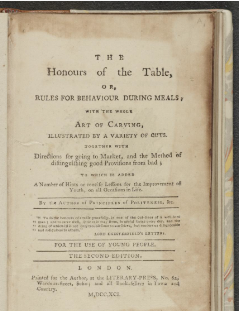







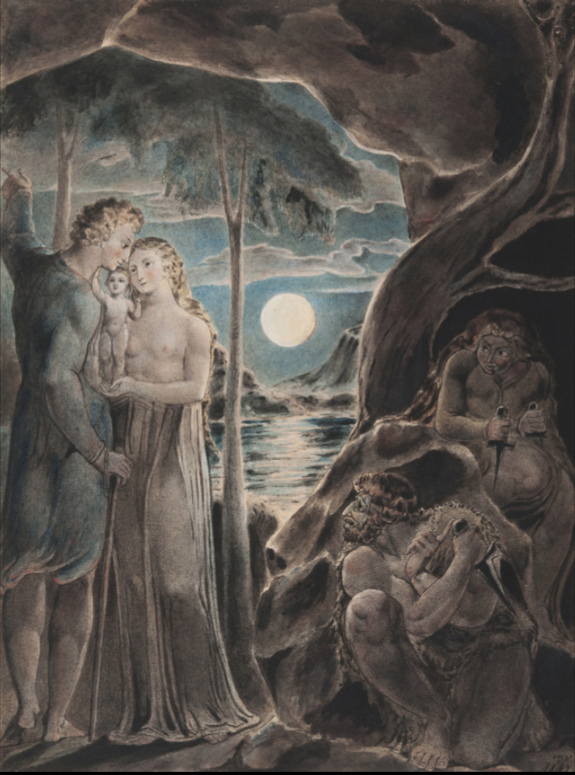








 Every Woman Dreams...
