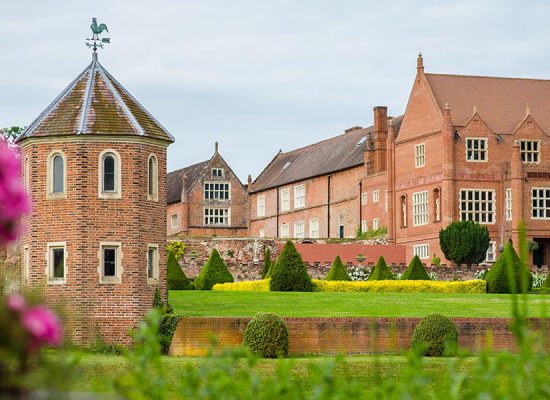
Twelfth Night Sale on Regency Romance and Suspense, December 26, 2022, to January 5, 2023

All of the stories listed below will be on sale, starting today through January 5, 2023. Fill up your eReaders!!!! All books will be $0.99. These books are historical romantic suspense and Regencies, as well as two contemporary tales. Moreover, most are available to read on Kindle Unlimited.  MERRY CHRISTMAS!!!!! [For Jane Austen Fan Fiction titles, see Friday’s post, December 23, 2022.]

Lady Joy and the Earl: A Regency Christmas Romance

Award-Winning Finalist in the Fiction: Novella category of the 2019 International Book Awards

They have loved each other since childhood, but life has not been kind to either of them. James Highcliffe’s arranged marriage had been everything but loving, and Lady Joy’s late husband believed a woman’s spirit was meant to be broken. Therefore, convincing Lady Jocelyn Lathrop to abandon her freedom and consider marriage to him after twenty plus years apart may be more than the Earl of Hough can manage. Only the spirit of Christmas can bring these two together when secrets mean to keep them apart.

Kindle                  (Available to read on Kindle Unlimited)

************************************************************************

Letters from Home: A Regency Christmas Romance 

Second Place in Short Historical Category ~ 2019 International Digital Awards 

She is the woman whose letters to another man kept Simon alive during the war. He is the English officer her late husband claimed to be incomparable. In her, his heart whispers of finally being “home.” In him, she discovers a man who truly stirs her soul. Unfortunately for both, the lady fears no longer being invisible to the world and assuming a place at his side. Can Major Lord Simon Lanford claim Mrs. Faith Lamont as his wife or will his rise to the earldom and his family’s expectations keep them apart?
“This was both a heart-breaking and heart-warming second chance love story, made all the more satisfying by the Christmas setting.” – Calico Hearts Review

Kindle      (Available to read on Kindle Unlimited)

*************************************************************************

Courting Lord Whitmire: A Regency May-December Romance

At the bend of the path, an unexpected meeting.

She is all May. He is December. 

But loves knows not time.

Colonel Lord Andrew Whitmire has returned to England after spending fifteen years in service to his country. In truth, he would prefer to be anywhere but home. Before he departed England, his late wife, from an arranged marriage, had cuckolded him in a scandal that had set Society’s tongues wagging. His daughter, Matilda, who was reared by his father, enjoys calling him “Father” in the most annoying ways. Unfortunately, his future is the viscountcy, and Andrew knows his duty to both the title and his child. He imagines himself the last of his line until he encounters Miss Verity Coopersmith, the niece of his dearest friend, the man who had saved Andrew’s life at Waterloo. Miss Coopersmith sets Whitmire’s world spinning out of control. She is truly everything he did not know he required in his life. However, she is twenty-two years his junior, young enough to be his daughter, but all he can think is she is absolute perfection.

Kindle (Available to Read on Kindle Unlimited)

*****************************************************************************

Last Woman Standing: A Regency Holiday Tale

JACKSON SHAW, the Marquess of Rivens, never considered the “gypsy blessing” presented to his family during the time of Henry VIII truly a blessing. He viewed it more as a curse. According to the “blessing,” in his thirtieth year, at the Christmas ball hosted by his family, he was to choose a wife among the women attending. The catch was he possessed no choice in the matter. His wife was to be the one who proved herself to be his perfect match, according to the gypsy’s provisions: a woman who would bring prosperity to his land by her love of nature and her generous heart. In his opinion, none of the women vying for his hand appeared to care for anything but themselves. 

EVELYN HAWTHORNE comes to River’s End to serve as the companion to the Marchioness of Rivens, his lordship’s grandmother. However, Lady Rivens has more than companionship in mind when she employs the girl, whose late father was a renown horticulturalist. The marchioness means to gather Gerald Hawthorne’s rare specimens to prevent those with less scrupulous ideas from purchasing Hawthorne’s conservatory, and, thereby, stealing away what little choice her grandson has in naming a wife, for all the potential brides must present the Rivenses with a rare flower to demonstrate the lady’s love of nature. Little does the marchioness know Hawthorne’s daughter might not only know something of nature, but be the person to fulfill the gypsy’s blessing.

Kindle (Available to Read on Kindle Unlimited)

*****************************************************************************

The Courtship of Lord Blackhurst

What happens when a lady falls in love, not with her betrothed, but rather with his cousin?

Miss Priscilla Keenan has been promised to the Marquess of Blackhurst since her birth. The problem is: She has never laid eyes upon the man. So, when Blackhurst sends his cousin to York to assist Priscilla in readying Blackhurst’s home estate for the marquess’s return from his service in India, it is only natural for Priscilla to ask Mr. Alden something of the marquess’s disposition. Yet, those conversations lead Cilla onto a different path, one where she presents her heart to the wrong gentleman. How can she and Alden find happiness together when the world means to keep them apart? Inspired by Henry Wadsworth Longfellow’s “The Courtship of Miles Standish,” this tale wants for nothing, especially not a happy ending, which it has, but that ending is not what the reader anticipates.

Kindle

(Available to Read on Kindle Unlimited)

**********************************************************************

Lord Radcliffe’s Best Friend

Hendrake Barrymore, Lord Radcliffe, is a typical male, a bit daff when it comes to the ways of women, especially the ways of one particular woman, Miss Adelaide Shaw, his childhood companion, a girl who plays a part in every pleasant memory Drake holds. 

Yet, since he failed to deliver Addy’s first kiss on her fifteenth birthday, his former “friend” has struck him from her life just at a time when Radcliffe has come to the conclusion Adelaide is the one woman who best suits him. 

This tale is more than a familiar story of friends to lovers for it presents the old maxim an unusual twist.

Kindle

(Available to Read on Kindle Unlimited)

**********************************************************************

The Jewel Thief and the Earl

Grandison Franklyn, 8th Earl Harlow, has earned the moniker “Grandison, the Great” for a variety of reasons: his well-honed attitude of superiority; his appearance; and a string of mistresses, most notably Lady Jenest, who created a “great” row when he cut her loose.

Miss Colleen Everley is the daughter of England’s most notorious thief, a man called “Brook’s Crook.” Colleen has been taught many of her father’s skills, along with an eye for the value of each item in a room. Unfortunately, the lady does not possess Thomas Everley’s daring.

Harlow and Miss Everley must combine forces to return Queen Charlotte’s sapphire necklace before Her Majesty learns it is missing. Toss in a healthy sprinkling of quirky characters and missteps in the investigation, and the reader will find a delightful tale that goes beyond the “Cinderella” effect and opposites attract.

Kindle

(Available to Read on Kindle Unlimited)

*********************************************************************************

His Christmas Violet

Sir Frederick Nolan has stayed true to his late wife through all their years of marriage, but now he is widower and has waited the proper mourning period, he sees no reason he should not finally know the happiness of having Lady Violet Graham at his side. He meant to marry Violet when he was fresh from his university years and she was but a young lady; however, the realization she was perfect for him had come too late, and Violet had already accepted the proposal of Lord Graham. 

Lady Violet Graham had never strayed from the love she held for Sir Frederick, but she had proven herself a good wife to her late husband, serving dutifully as Lord Giles Graham’s chatelaine and presenting him three sons. Now, her widow’s pension and the use of the dower house will provide her the only freedom she has ever known as a woman. She cannot think to become another man’s “property,” even when that man is the only one she has every loved. Enough is enough of not having a voice in her own future. 

They have loved each other since they were children, but how does Sir Frederick convince Lady Violet to marry him, when she is most determined never again to permit any man dominion over her person?

Kindle

(Available to Read on Kindle Unlimited)

*****************************************************************************

Second Chances: The Courtship Wars (Contemporary Romance, Psychology, Sexology, Reality TV, Downs Syndrome, Eccentric Hermits)

Rushing through the concourse to make her way to the conference stage, GILLIAN CORNELL comes face-to-face with the one man she finds most contemptible, but suddenly her world tilts. His gaze tells stories she wants desperately to hear. As he undresses her with his eyes, Gillian finds all she can do is stumble through her opening remarks. The all-too-attractive cad challenges both her sensibility and her reputation as a competent sexologist. 

DR. LUCIAN DAMRON never allows any woman to capture his interest for long. He uses them to boost his career and for his pleasure. Yet, Lucian cannot resist Gillian’s stubborn independence, her startling intelligence, and her surprising sensuality. Sinfully handsome, Lucian hides a badly wounded heart and a life of personal rejection. 

Thrown together as the medical staff on “Second Chances,” a new reality TV show designed to reunite previously married couples, Lucian and Gillian soon pique the interest of the American viewing public, who tune in each week, fascinated by the passionate electricity coursing between them. Thus begins an all-consuming courtship war, plagued by potential relationship-ending secrets and misunderstandings and played out scandalously on a national stage. 

Kindle       

(Also available to read on Kindle Unlimited)

********************************************************************

  One Minute Past Christmas: Tale of an Appalachian Christmas Miracle [short story, Appalachia, holidays, Christmas, family relationships, legends]

One Minute Past Christmas is the story of a Greenbrier County, West Virginia, family in which a grandfather and his granddaughter share a special ability — they call it a “gift”– that enables them to briefly witness each year a miraculous gathering in the sky. What they see begins at precisely one minute past Christmas and fills them with as much relief as it does wonder. But they worry the “gift” — which they cannot reveal to anyone else — will die with them because it has been passed to no other relative for forty-four years.

   Kindle       

 (Also available to read on Kindle Unlimited)

******************************************************************

Posted in books, contemporary, contemporary romance, eBooks, Georgian England, Georgian Era, historical fiction, marriage, publishing, reading, reading habits, Regency era, research, romance, writing | Tagged , , , , , , , | Comments Off on Twelfth Night Sale on Regency Romance and Suspense, December 26, 2022, to January 5, 2023

Twelfth Night Sale on Jane Austen Fan Fiction Titles, December 26, 2022, through January 5, 2023

On Monday, December 26, several of my JAFF titles will go on sale for my annual Twelfth Night Sale! The sale runs from December 26, 2022, to January 5, 2023.  Fill up your eReaders!!!! All books will be $0.99. These books are Austen-inspired tales set in the Regency era, with one being on the American continent and another a modern tale. Moreover, many are available to read on Kindle Unlimited.  MERRY CHRISTMAS!!!!! [Many of my Regency tales will be on sale on Monday. Check out that post then.]

***********************************************************************

Mr. Darcys Bargain: A Pride and Prejudice Vagary

Darcy and Elizabeth are about to learn how “necessity” never makes a fair bargain.

When ELIZABETH BENNET appears on his doorstep some ten months after her refusal of his hand in marriage, FITZWILLIAM DARCY uses the opportunity to “bargain” for her acceptance of a renewal of his proposal in exchange for his assistance in bringing Mr. George Wickham to justice. In Darcy’s absence from Hertfordshire, Wickham has executed a scam to defraud the citizens of Meryton, including her father, of their hard-earned funds. All have invested in Wickham’s Ten Percent Annuity scheme. Her family and friends are in dire circumstances, and more importantly, Mr. Bennet’s heart has taken an ill turn. Elizabeth will risk everything to bring her father to health again and to save her friends from destitution; yet, is she willing to risk her heart? She places her trust in Darcy’s ability to thwart Wickham’s manipulations, but she is not aware that Darcy wishes more than her acquiescence. He desires her love. Neither considers what will happen if he does not succeed in bringing Mr. Wickham before a magistrate. Will his failure bring an end to their “bargain”? Or will true love prevail?

Kindle

Kindle Unlimited 

(Also available to read on Kindle Unlimited)

**************************************************************************
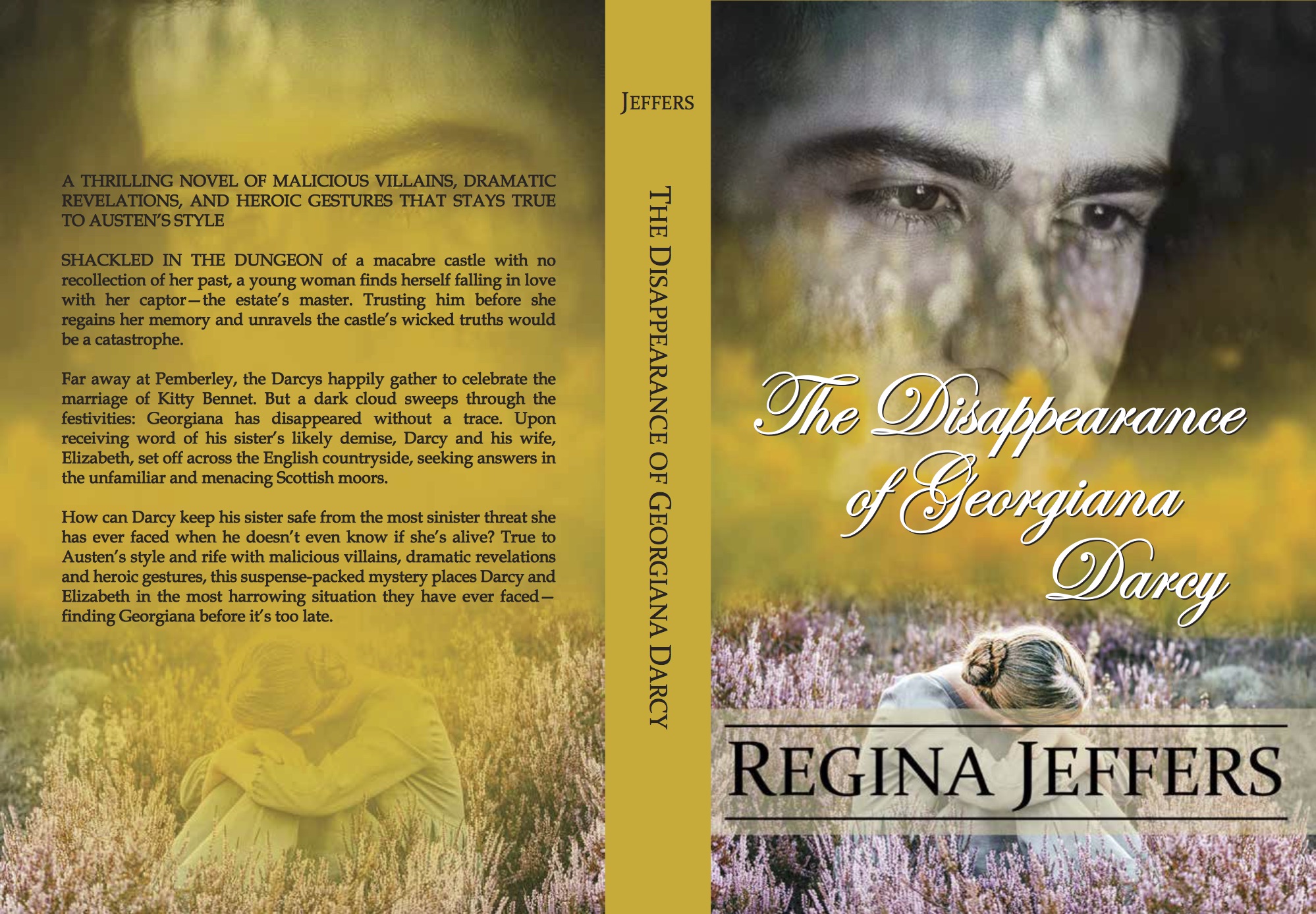
 Mr. Darcy’s Fault: A Pride and Prejudice Vagary 

What if an accident prevents Elizabeth Bennet from reading Mr. Darcy’s letter of apology? What if said letter goes missing and ends up in the hands of George Wickham? What if Mr. Wickham plans to use the evidence of both Georgiana Darcy’s ruination and Darcy’s disdain for the Bennets to his benefit? How will Darcy counter Wickham’s plans and claim happiness with the woman he loves?

When he notices his long-time enemy in the vicinity of Hunsford Cottage, FITZWILLIAM DARCY means to put an end to an assignation between ELIZABETH BENNET and Mr. Wickham, but Darcy is not prepared for the scene which greets him in Rosings Woods. Elizabeth lies injured and crumpled beneath the trees, and in order to save her, by Society’s standards, Darcy must compromise Elizabeth. Needless to say, Darcy does not mind being forced into claiming Elizabeth to wife, but what of the lady’s affections? Can Darcy tolerate Elizabeth’s regard being engaged elsewhere?

Kindle       

(Also available to read on Kindle Unlimited)

***********************************************************************

 The Pemberley Ball: A Pride and Prejudice Vagary

Elizabeth Bennet’s acceptance of his hand in marriage presents FITZWILLIAM DARCY a hope of the world being different. Elizabeth offers warmth and naturalness and a bit of defiance; but there is vulnerability also. With characteristic daring, she boldly withstood Caroline Bingley’s barbs, while displaying undying devotion to her sister Jane. More unpredictably, she verbally fenced with the paragon of crudeness, his aunt, Lady Catherine, and walked away relatively unscathed. One often finds his betrothed self-mockingly entertaining her sisters and friends, and despite Darcy’s best efforts, the woman makes him laugh. She brings lightness to his spirit after so many years of grief.

Unfortunately for ELIZABETH BENNET, what begins gloriously turns to concern for their future. She recognizes her burgeoning fears as unreasonable; yet, she cannot displace them. She refuses to speculate on what Mr. Darcy will say when he learns she is not the brilliant choice he proclaims her to be. Moreover, she does not think she can submit to the gentleman’s staid lifestyle. Not even for love can Elizabeth accept capitulation.

Will Elizabeth set her qualms aside to claim ‘home’ in the form of the man she truly affects or will her courage fail her? Enjoy a bit of mayhem that we commonly call “Happily Ever After,” along with three alternate turning points to this tale of love and loss and love again from Austen-inspired author, Regina Jeffers.

Kindle       

(Also available to read on Kindle Unlimited)

***********************************************************************

 Elizabeth Bennet’s Excellent Adventure: A Pride and Prejudice Vagary 

The Last Man in the World She Wishes to Marry is the One Man Who Owns Her Heart!

ELIZABETH BENNET adamantly refused Fitzwilliam Darcy’s proposal, but when Maria Lucas discovers the letter Darcy offers Elizabeth in explanation of his actions, Elizabeth must swallow her objections in order to save her reputation. She follows Darcy to London and pleads for the gentleman to renew his proposal. Yet, even as she does so, Elizabeth knows not what she fears most: being Mr. Darcy’s wife or the revenge he might consider for her earlier rebuke.

FITZWILLIAM DARCY would prefer that Elizabeth Bennet held him in affection, but he reasons that even if she does not, having Elizabeth at his side is far better than claiming another to wife. However, when a case of mistaken identity causes Darcy not to show at his wedding ceremony, he finds himself in a desperate search for his wayward bride-to-be.

Elizabeth, realizing Society will label her as “undesirable” after being abandoned at the altar, sets out on an adventure to mark her future days as the spinster aunt to her sisters’ children. However, Darcy means to locate her and to convince Elizabeth that his affections are true, and a second chance will prove him the “song that sets her heart strumming.”

Kindle     

(Also available to read on Kindle Unlimited)

**********************************************************************************

 Mr. Darcy’s Present: A Pride and Prejudice Vagary

The Greatest Present He Would Ever Receive is the Gift of Her Love…

What if Mr. Darcy purchased a gift for Elizabeth Bennet to acknowledge the festive days even though he knows he will never present it to her? What if the gift is posted to the lady by his servants and without his knowledge? What if the enclosed card was meant for another and is more suggestive than a gentleman should share with an unmarried lady? Join Darcy and Elizabeth, for a holiday romp, loaded with delightful twists and turns no one expects, but one in which our favorite couple take a very different path in thwarting George Wickham and Lydia Bennet’s elopement. Can a simple book of poetry be Darcy’s means to win Elizabeth’s love? When we care more for another than ourselves, the seeds of love have an opportunity to blossom. 

Words of Praise for Mr. Darcy’s Present…     Jeffers takes a familiar story and reinvigorates it with humor, warmth, and wisdom. – Roses and Lilacs Reviews

Kindle   

(Also available to read on Kindle Unlimited)

*******************************************************************

Mr. Darcy’s Bet: A Pride and Prejudice Vagary 

“Our doubts are traitors and make us lose the good we oft might win, by fearing to attempt.” – Act 1, Sc. 4, William Shakespeare’s Measure for Measure

FITZWILLIAM DARCY has done everything within his power to prove his devotion to ELIZABETH BENNET. He believes they are so close to knowing happiness; howbeit, when his aunt, Lady Catherine de Bourgh, accosts Elizabeth with predictions of Elizabeth never being able to fit in with his social connections, everything changes. Although the lady sent his aunt packing with words to the contrary, a bit of doubt has slipped under Elizabeth’s shield of confidence, and she again refuses his hand in marriage, this time to protect him from the gossiping beau monde.

Therefore, Darcy must take a leap of faith; he proposes to her before the congregation gathered for the marriage of Jane Bennet and his friend Charles Bingley—a public proposal from which Darcy cannot legally or morally withdraw, one only Elizabeth Bennet can refuse. He bets, this time, he can win not only her heart, but also her consent. With the assistance of his family and hers, a plan is put into motion to prove to all comers that Elizabeth Bennet is not only worthy of his attentions, but also the only one Darcy should consider marrying.

Kindle 

(Also available to read on Kindle Unlimited

*******************************************************************
Mr. Darcy’s Inadvertent Bride: A Pride and Prejudice Vagary

Love or Honor or Both?

Miss Elizabeth Bennet cannot quite believe Lieutenant George Wickham’s profession of affection, but young ladies in her position do not receive marriage proposals every day, and she does find the man congenial and fancies she can set him on the right path. However, the upright, and, perhaps uptight, figure of another man steps between them and sets her world on its head. 

When Fitzwilliam Darcy spots Miss Elizabeth Bennet slipping from the Meryton Assembly to follow a man who favors George Wickham into the darkness, he must act. Although he has not been properly introduced to the young woman, he knows Wickham can be up to no good. Later, when he comes across the lady in London and searching for Wickham, Darcy does the honorable thing and assists her. Yet, when they are discovered alone in her uncle’s house, the pair find themselves being quickstepped to the altar for all the wrong reasons. Can they find happiness when they are barely speaking acquaintances?

Kindle

(Available to Read on Kindle Unlimited) 

**************************************************************************

Pemberley’s Christmas Governess: A Holiday Pride and Prejudice Vagary

Two hearts. One kiss. 

Following his wife’s death in childbirth, Fitzwilliam Darcy hopes to ease his way back into society by hosting a house party during Christmastide. He is thrilled when his cousin Colonel Fitzwilliam sends a message saying not only will he attend, but the colonel is bringing a young woman with him of whom he hopes both Darcy and the colonel’s mother, Lady Matlock, will approve. Unfortunately, upon first sight, Darcy falls for the woman: He suspects beneath Miss Elizabeth Bennet’s conservative veneer lies a soul which will match his in every way; yet, she is soon to be the colonel’s wife. 

Elizabeth Bennet lost her position as a governess when Lady Newland accuses Elizabeth of leading her son on. It is Christmastide, and she has no place to go and little money to hold her over until after Twelfth Night; therefore, when Lieutenant Newland’s commanding officer offers her a place at his cousin’s household for the holy days, she accepts in hopes someone at the house party can provide her a lead on a new position. Having endured personal challenges which could easily have embittered a lesser woman, Elizabeth proves herself brave, intelligent, educated in the fine arts of society, and deeply honorable. Unfortunately, she is also vulnerable to the Master of Pemberley, who kindness renews her spirits and whose young daughter steals her heart. The problem is she must leave Pemberley after the holidays, and she does not know if a “memory” of Fitzwilliam Darcy will be enough to sustain her.

Kindle 

(Available to Read on Kindle Unlimited)

**********************************************************************

The Mistress of Rosings Park: A Pride and Prejudice Vagary

I much prefer the sharp criticism of a single intelligent man to the thoughtless approval of the masses. – Johannes Kepler 

When she arrives at Hunsford Cottage for a visit with her long-time friend Charlotte Collins, Elizabeth Bennet does not expect the melodrama awaiting her at Rosings Park. 

Mrs. Anne Darcy, nee de Bourgh, has passed, and Rosings Park is, by law, the property of the woman’s husband, Mr. Fitzwilliam Darcy; yet, Lady Catherine de Bourgh is not ready to abandon the mansion over which she has served as mistress for thirty years. Elizabeth holds sympathy for her ladyship’s situation. After all, Elizabeth’s mother will eventually be banished from Longbourn when Mr. Bennet passes without male issue. She inherently understands Lady Catherine’s “hysterics,” while not necessarily condoning them, for her ladyship will have the luxury of the right to the estate’s dower house, and, moreover, it is obvious Rosings Park requires the hand of a more knowledgeable overseer. Therefore, Elizabeth takes on the task of easing Lady Catherine’s transition to dowager baronetess, but doing so places Elizabeth often in the company of the “odious” Mr. Darcy, a man Lady Catherine claims poisoned her daughter Anne in order to claim Rosings Park as his own.

Kindle

(Available to Read on Kindle Unlimited)

************************************************************************

The Road to Understanding: A Pride and Prejudice Vagary  

DARIUS FITZWILLIAM’s life is planned down to who he will marry and where he will live, but life has a way of saying, “You don’t get to choose.” When his marriage to his long-time betrothed Caroline Bradford falls through, Darius is forced to take a step back and to look upon a woman who enflames his blood with desire, but also engenders disbelief. Eliza Harris is everything that Darius never realized he wanted.

ELIZA HARRIS is accustomed to doing as she pleases. Yet, despite being infuriated by his authoritative manner, when she meets the staunchly disciplined Captain Fitzwilliam, she wishes for more. She instinctively knows he is “home,” but Eliza possesses no skills in achieving her aspirations.

Plagued with misunderstandings, manipulations, and peril upon the Great Valley Road between eastern Virginia and western Tennessee in the years following the Revolutionary War, Darius and Eliza claim a strong allegiance before love finds its way into their hearts.

This is a faith-based tale based on Jane Austen’s Pride and Prejudice.

Kindle    

(Also available to read on Kindle Unlimited)

*************************************************************************

Honor and Hope: A Contemporary Pride and Prejudice

Liz Bennet’s flirtatious nature acerbates Will Darcy’s controlling tendencies, sending him into despair when she fiercely demands her independence from him. How could she repeatedly turn him down? Darcy has it all: good looks, intelligence, a pro football career, and wealth. Attracted by a passionate desire, which neither time nor distance can quench, they are destined to love each other, while constantly misunderstanding the other until Fate deals them a blow from which their relationship may never recover. Set against the backdrop of professional sports and the North Carolina wine country, Honor and Hope offers a modern romance loosely based on Jane Austen’s Pride and Prejudice.

Kindle        

(Also available to read on Kindle Unlimited)

***********************************************************

Posted in Georgian England, Georgian Era, Jane Austen, modern adaptations, Pride and Prejudice, publishing, reading habits, writing | Tagged , , , , , , , , , , , , , | Comments Off on Twelfth Night Sale on Jane Austen Fan Fiction Titles, December 26, 2022, through January 5, 2023

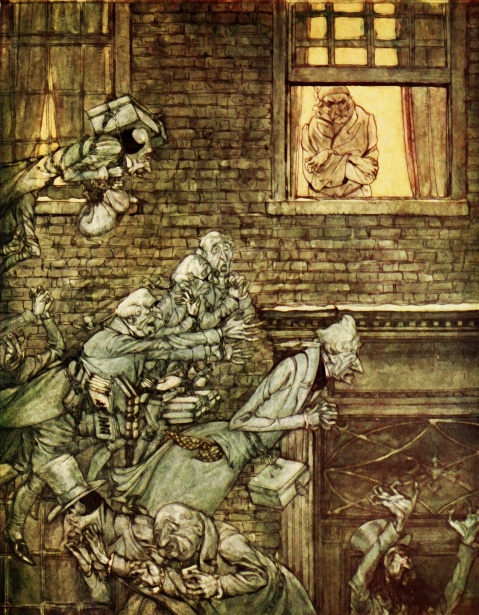
Creation of “A Christmas Carol,” a Guest Post from Colin Rowland

This post originally appeared on the Austen Authors’ blog on December 14, 2021. Enjoy!

Because Christmas is little less than a week from today, I decided to share the story behind the creation of Charles Dickens’ masterpiece, a work as popular now as when it was first published. It is to me an inspiring account, and a message of love during this most precious and sacred time of year.

A Christmas Carol, or to use its proper title of A Christmas Carol. In Prose. Being a Ghost Story of Christmas, is one of Mr. Dickens’ best known and most beloved literary creations. For many, myself included, the story illustrates the true meaning of many aspects of the season.

The account, first published in the form of a novella in 1843, concerns Mr. Ebenezer Scrooge, an elderly miser who is haunted on Christmas Eve by the ghosts of his former business partner Jacob Marley and those of Christmas Past, Present, and Yet to Come. The effect of these visits is to transform this penny-pinching, ill-tempered curmudgeon into a kinder and gentler man.

Dickens wrote the story at a time when the British were re-evaluating their traditions of Christmas, and adopting different ideas  to help them commemorate the festive occasion. Many of these new customs were essential parts of his story and provide us, as readers, with incredibly clear mental images of Christmas observances during this time in England.

Celebrations of the Christmas season had grown in popularity throughout England, beginning in the Georgian era and extending into the Victorian. The practice of decorating an indoor Christmas tree, a German tradition first introduced by Queen Charlotte and adopted by Queen Victoria and Prince Albert, was copied in many homes throughout the country. The early part of the 19th century had also seen a revival of interest in singing Christmas carols, reversing their decline in popularity over the preceding few hundred years, when the observance of Christmas had actually been against the law. The publication of numerous books of carols, complete with music and lyrics, fed this growing appreciation.

Many of the author’s own experiences and history were included in the narration, as his childhood had been anything but blessed and happy. He was born into a middle class family, but his father was a spendthrift who was committed to Marshalsea, a debtor’s prison in Southwark, London. As a result Charles, who was only twelve at the time, was forced to pawn his book collection, leave school, and work in a rat-infested shoe-blacking factory. This change in his circumstances heavily influenced both his writing and his general outlook on life, giving him what was described as a “deep personal and social outrage”.

Dickens loved Christmas, and his first story on the subject, Christmas Festivities, was published in 1835; it was then republished as A Christmas Dinner in “Sketches by Boz”, a Dickens periodical from 1836. Many of his stories from this time contain ideas and themes that were included in A Christmas Carol and indeed, all Dickens’ stories up to this point influenced the final iteration of this wonderful tale.

By 1842 he was a well-established and popular author, having written and published six major works and a number of novellas, short stories, and other pieces. At the end of the year he introduced Martin Chuzzlewit as a monthly serial, but though the novel was his personal favorite, it was not as popular with the public, and Dickens faced potentially serious difficulties. Sales had fallen off and his wife, Catherine, was pregnant with their fifth child.

To add insult to injury, his publisher threatened to reduce his monthly income by £50 if the buying public continued to ignore the work. Desperate for a story that would solve his financial problems once and for all, he came up with the idea for one of Christmas redemption.

Mr. Slater says that A Christmas Carol was: “intended to open its readers’ hearts towards those struggling to survive on the lower rungs of the economic ladder and to encourage practical benevolence, but also to warn of the terrible danger to society created by the toleration of widespread ignorance and actual want among the poor”.

Interestingly, his hand-written manuscript of the story does not contain the sentence in the penultimate paragraph “…and to Tiny Tim, who did NOT die,”; it was added later, during the printing of the novella.

Reviews of the work were for the most part uniformly kind. The Illustrated London News described how the story’s “impressive eloquence … its unfeigned lightness of heart—its playful and sparkling humour … its gentle spirit of humanity” all put the reader “in good humour with ourselves, with each other, with the season and with the author”. Other reviews echoed the same sentiment, although there were some that were not as impressed with the story. The reception in the US was less enthusiastic, but by the end of the Civil War the book was widely circulated in North America.

Published on 19 December, the first edition sold out  by Christmas Eve. By the end of 1844 thirteen editions had been released. In 1849 Mr. Dickens began public readings of the story, which were so successful that he continued doing them. He personally read the account one hundred and twenty-seven times, the last in 1870, the year of his death. In the end, while he initially set out to write a story that would give him financial security for the rest of his life, what he created was a tale that transformed him spiritually, and has touched the world with its themes of hope, love, and the spirit of Christmas, sentiments that for me take on a special importance at this wonderful time of year.

My mother and sisters are great fans of the Alistair Sims and George C. Scott film versions of the tale. I am not, as I find both of them depressing, to put it mildly. I have two versions I watch every year. One is Scrooged, starring Bill Murray, and the other is A Muppet Christmas Carol. These movies stay more or less true to the original tale while interjecting humor into the plot. When Carol Kane, as the ghost of Christmas Present, tells Bill Murray “It’s a toaster!” while using it to lay him out, I lose it. One of my favourite scenes in the Muppet’s version is Rizzo screaming: “Light the lamp, not the rat! Light the lamp, not the rat!” Again, it might be my infantile sense of humor, but those scenes crack me up every year.

Above all, though, I appreciate the message contained in every version of this story. Scrooge’s redemption and transformation is a lesson much needed in the world today, and it continues to touch my heart. 

It is my hope that everyone, including those who do not celebrate the season, feels an extra measure of love from friends, acquaintances, and the people you meet as you go about your business. May the season be filled with the joy of giving and the companionship of family and loved ones. This year will be a special one for me and my wife, as we are expecting children and grandchildren to spend the holiday with us in our new home, as I mentioned last month. I even went out and purchased a seven foot pre-lit Christmas tree in defiance of Debbie’s wishes because our little three footer just didn’t do it for me, and we now have the room for a decent tree.

That’s not to say the former was relegated to the dustbin of history. Au contraire, I put it to use in my new office, and gave it a place of honor on my desk. I’m doing my darndest to feel the joy of the season and decorated it all by myself, as you can probably tell. With luck my wife will help with the big tree, because for me, the ability to decorate is lacking in a major way. I hope that the kitten we just adopted can be convinced to leave my little tree alone, but I have my doubts. The little twit keeps trying to climb it, and doesn’t seem to understand why it falls on him.

I haven’t yet decided whether to bring out my Charlie Brown tree; that one doesn’t say Christmas to me. I might, but doing so could get me in trouble with my sainted wife, and I don’t want to push my luck too far.

In closing, let me quote from Mr. Dickens’ work: “…and it was always said of him, that he knew how to keep Christmas well, if any man alive possessed the knowledge. May that be truly said of us, and all of us! And so, as Tiny Tim observed, God bless Us, Every One!”

I wish you a very Merry Christmas, and to those who purchase my latest, Duplicity and Deceit, thank you from the bottom of my heart. I’d love to hear what you thought of it.

Posted in Austen Authors, British history, Christmas, Guest Post, holidays, publishing, Victorian era, writing | Tagged , , , , , , , , | Comments Off on Creation of “A Christmas Carol,” a Guest Post from Colin Rowland

Celebrating the Birth of Jane Austen: 16 December 1775 – What I Learned from Jane Austen

(This post was originally published on December 16, 2010. However, I could not permit Austen’s birthday to pass without notice.)

It is a truth universally acknowledged that Jane Austen remains an inspiration to throngs of readers more than two centuries after her birth. Yet, what keeps readers craving Austen’s unique twist on the world? Beyond her elegant prose, her biting wit, and her telling dialogue, Austen captures the truth of human behavior. She understands people. I often describe what she so masterly did with the stroke of a pen as “peeling an onion.” There are layers to Austen’s characters. She creates each one with consummate skill. Lord Brabourne said of Austen, “She describes men and women exactly as men and women really are.” And that dear friends is Austen’s secret. She creates believable characters because Austen was an astute observer of the human condition.

What have I learned from reading Jane Austen?
“If things are going untowardly one month, they are sure to mend the next.” (Mr. Weston in Emma)

Nothing is more deceitful that the appearance of humility. It is often only carelessness of opinion, and sometimes an indirect boast.” (Mr. Darcy in Pride and Prejudice)

“Nothing can compare to the misery of being bound without Love, bound to one, & preferring another. That is a Punishment which you do not deserve.” (from a letter to her niece Fanny Knight)

“Those who do not complain are never pitied.” (Mrs. Bennet in Pride and Prejudice)

“One man’s ways may be as good as another’s, but we all like our own best.” (Admiral Croft in Persuasion)

“Seldom, very seldom, does complete truth belong to any human disclosure; seldom can it happen that something is not a little disguised, or a little mistaken.” (from Emma)

“My idea of good company is the company of clever, well-informed people who have a great deal of conversation; that is what I call good company.” (Anne Elliot in Persuasion)

“Vanity and pride are different things, though the words are often used synonymously. A person may be proud without being vain. Pride relates more to our opinion of ourselves; vanity to what we would have others think of us.” (Mary Bennet in Pride and Prejudice)

“Selfishness must always be forgiven you know because there is no hope of a cure.” (Mary Crawford in Mansfield Park)

“There is nothing like staying at home for real comfort.” (Mrs. Elton in Emma)

“The person, be it gentleman or lady, who has not pleasure in a good novel, must be intolerably stupid.” (Henry Tilney in Northanger Abbey)

“Friendship is certainly the finest balm for the pangs of disappointed love.” (from Northanger Abbey)

“I do not want people to be very agreeable, as it saves me the trouble of liking them a great deal.” (Austen in a letter to her sister Cassandra)

“How little of permanent happiness could belong to a couple who were only brought together because their passions were stronger than their virtue.” (from Pride and Prejudice)

“If a woman doubts as to whether she should accept a man or not, she certainly ought to refuse him. If she can hesitate as to ‘Yes,’ she ought to say ‘No’ directly. It is not a state to be safely entered into with doubtful feelings, with half a heart.” (Emma Woodhouse in Emma)

“There are certainly not so many men of large fortunes in the world, as there are pretty women to deserve them.” (from Mansfield Park)

“… the more I know of the world the more I am convinced that I shall never see a man whom I can really love. I require too much.” (Marianne Dashwood in Sense and Sensibility)

“It is not time or opportunity that is to determine intimacy; it is disposition alone. Seven years would be insufficient to make some people acquainted with each other, and seven days are more than enough for others.” (Marianne Dashwood in Sense and Sensibility)

Add your own quotes or comments below. I’d love to hear from you. 

Posted in British history, Great Britain, Jane Austen, Living in the Regency, real life tales, Regency era, Uncategorized | Tagged , , , , , , , , , | 95 Comments

Happy 5th Book Birthday to “Pride and Prejudice and a Shakespearean Scholar: A Pride and Prejudice Vagary”

old-gorhambury-hero.jpgBack in 2017, I landed upon an idea that became part of an Austen-inspired book. You see, there is this whole faction of people/experts who believe Francis Bacon and others within Bacon’s circle wrote Shakespeare’s plays. And guess what? Francis Bacon’s home is in the St Albans area of Hertfordshire. Old Gorhambury House [see image above] is an Elizabethan mansion, which now lies in ruins. It is an example of what was called an Elizabethan prodigy house, a term for large and showy English Tudor and Jacobean houses built by courtiers and other wealthy families. In the case of Old Gorhambury House, it was built by Sir Nicholas Bacon, Lord Keeper of the Great Seal of England. It is said that Elizabeth I visited the home upon multiple occasions. 13259-004-BD9D7AB8.jpg  bacon_francis.jpg
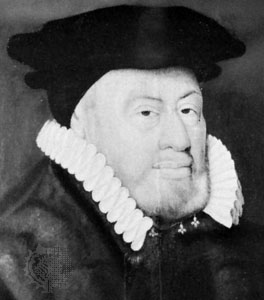
The house was built from the bricks of St Albans Cathedral, which had been demolished a quarter century earlier. Sir Francis Bacon lived there for many years before Bacon bequeath it to his secretary, Sir Thomas Meautys, who married Anne Bacon, the great-granddaughter of Sir Nicholas. Between the years 1777 and 1784, James Bucknall Grimston, 3rd Viscount Grimston  commissioned the notable architect, Sir Robert Taylor, to build a new Gorhambury House, this one in the Palladian-style. The Grimston family came in possession of the estate when Anne Bacon Meautys remarried after her husband passed. She then married Sir Harbottle Grimston, Master of the Rolls and Speaker in the Convention Parliament in 1660.

6154537031_8de4e55d56_b.jpg

For more images of the original house, visit http://www.hertsmemories.org.uk/content/herts-history/topics/literary_hertfordshire/francis-bacon/old-gorhambury-house-2

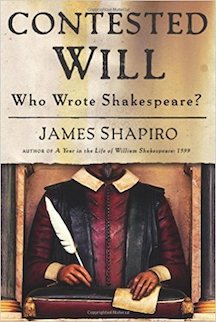
Contested Will.jpg  In my Austen-inspired title, Pride and Prejudice and a Shakespearean Scholar, Mr. Bennet is a renown Shakespearean academic, a man of whom Darcy and Bingley know only from their years at Cambridge. What they do not know of Mr. Bennet helps to drive the story. But what of those Shakespearean plays? Is there any chance William Shakespeare is not the author? In Contested Will: Who Wrote Shakespeare by James Shapirio, the author tells us of several “conspiracy theories” regarding the authorship of Shakespeare’s plays. One involved Miss Delia Bacon, an American playwright, whose best known work was The Philosophy of the Plays of Shakespeare Unfolded, in which she attributes the plays to social reformers such as Francis Bacon and Sir Walter Raleigh. She speaks of Bacon, Raleigh, Lord Buckhurst, Edmund Spenser, the Earl of Oxford, and others as being disappointed and defeated politicians, who collaborated and used drama (an art form coming into itself during the Elizabethan period and one enjoyed by both the wealthy and the common man) to oppose the “despotism” of Queen Elizabeth and King James.  For example, there are many who think Shakespeare’s Macbeth comments on the 1605 Gunpowder Plot.

Shakespeare’s Globe tells us, “Shakespeare’s ‘Scottish Play’ was probably written in 1606, just three years after James I was crowned as Elizabeth’s successor, and so undoubtedly seems to be paying homage to the succession of the Scottish King to the English throne. But within that time, in November 1605, the Gunpowder Plot had been discovered: the plan to blow up the Houses of Parliament, kill James and replace him with a Catholic monarch failed and the plotters were tortured and horribly executed. The impact of the event was so dramatic that we still remember it today on Bonfire Night, so we can only imagine the enormity of the event for Shakespeare and his contemporaries.

“Why are the Gunpowder plot and Macbeth connected?

“Firstly, many of Macbeth’s themes resonate with the attempted revolt: it’s a play about treason, the overthrow of a King, and the downfall of his murderers. Even more importantly, King James was commonly believed to be descended from Banquo the thane of Lochquhaber, the historical counterpart of Shakespeare’s Banquo, the friend who Macbeth betrays and has murdered. With this in mind the witches’ prophesy that Banquo’s ancestors will be kings takes on a new meaning: it is referring to Banquo’s ancestor James Stuart, King of Scotland and England. By extension, it has been suggested that the escape of Fleance, Banquo’s son, from Macbeth’s murder plot is designed to echo James’s own escape from the Gunpowder plot and to subtly compliment the House of Stuart as legitimate and truly-descended rulers.”

Okay. Does such not play with all we hold most dear in English literature? Obviously, I do not have Darcy and Elizabeth back in the 1600s, but what I do have is a “puppet master,” of sorts in Mr. Bennet, who encourages Darcy to “tame” Elizabeth much as does Petruchio with Katherine in Shakespeare’s Taming of the Shrew. However, what if neither Darcy nor Elizabeth wish to be a part of such a farce? Within the story, you will find other examples from Shakespeare’s works, and I do acknowledge the Bacon theory when Darcy, Elizabeth, Mr. Bennet, Jane and Bingley visit the old ruins and tour Gorhambury House, much as Elizabeth and the Gardiners did at Pemberley in Austen’s original tale.

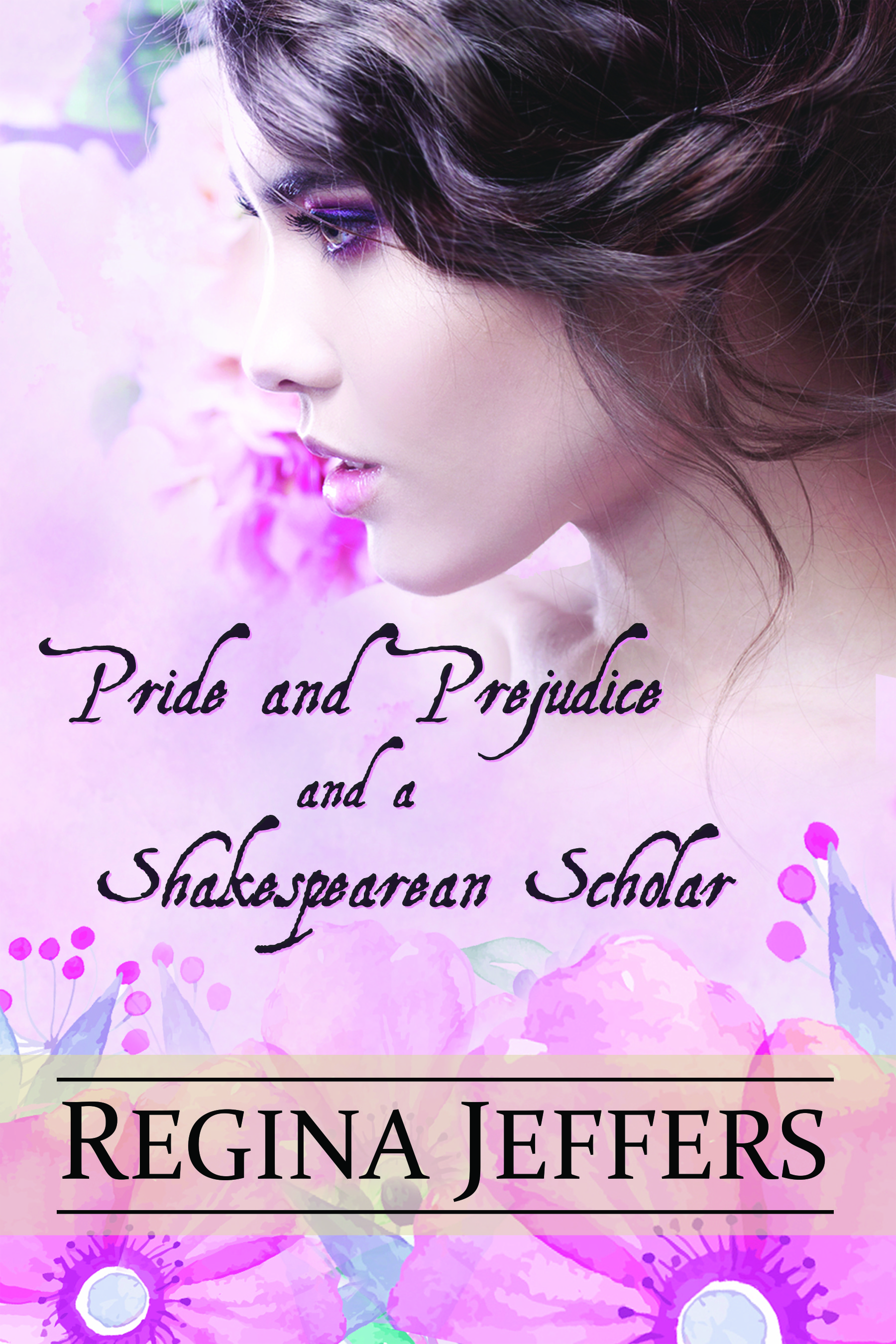
PP+SS Cover-01Introducing Pride and Prejudice and a Shakespearean Scholar: A Pride and Prejudice Vagary

Book Blurb

Unless one knows the value of loyalty, he cannot appreciate the cost of betrayal.

What if Darcy and Elizabeth met weeks before the Meryton assembly? What if there is no barely “tolerable” remark to have Elizabeth rejecting Mr. Darcy’s affections, but rather a dip in a cold creek that sets her against him? What if Mr. Bennet is a renown Shakespearean scholar who encourages Darcy to act the role of Petruchio from Shakespeare’s “The Taming of the Shrew” to bring Elizabeth’s Katherina persona to the line.

ELIZABETH BENNET’s pride has her learning a difficult lesson: Loyalty is hard to find, and trust is easy to lose. Even after they share a passionate kiss outside the Meryton assembly hall and are forced to marry, Elizabeth cannot forget the indignity she experienced at the hands of Fitzwilliam Darcy. Although she despises his high-handedness, Elizabeth appreciates the protection he provides her in their marriage. But can she set her prejudice aside long enough to know a great love?

FITZWILLIAM DARCY places only two demands on his new wife: her loyalty and her trust, but when she invites his worst enemy to Darcy House, he has no choice but to turn her out. Trusting her had been his decision, but proving his choice the right one before she destroys two hearts meant to be together must be hers, and Darcy is not certain Elizabeth is up to the task.

Chapter Two Excerpt

Darcy watched her storm away. “Magnificent,” he murmured in admiration. He held no idea what had come over him. He certainly did not set out to flirt with the lady. Perhaps it was his recent confrontation with Lady Catherine that had him looking to potential mates other than Anne. Or perhaps is was Georgiana’s encouraging words regarding his need to look beyond the obvious. Or more likely it was the loneliness that had invaded his soul of late that had spurred him on. “The lady is certainly from the norm.”

He brushed the dirt and water droplets from his hat as he privately enjoyed the sway of her hips as she marched angrily across the field. Those hips were made more enticing by the damp muslin clinging to her skin and undergarments. He chuckled. She was a real virago. As he turned, he noticed something dark lying in the long grass and bent to retrieve it. It was the book in which the woman had been writing when he approached her. He had meant simply to inquire of Netherfield’s location, but when he had looked down upon the enticing globes of her breasts peeking from the neckline of her day dress, something primal had caught his good sense and had emphatically announced: Mine.

He glanced in the direction of her retreating form, momentarily considering whether to chase after her to return the book in his hand, but he thought it likely she would throttle him if he acted, even if he did so in good conscience. Moreover, she had set herself a good clip, especially for one walking without boots. She was nearing the far side of the field.

“Perchance Bingley will know something of the lady,” he said aloud, as he opened the book to view her last entry. The words brought a smile to his lips as he read…

Mama has no idea that I prefer Juliet’s words when she speaks of the necessity of our marrying before Papa passes to the prescribed sensibility of society on the matter.

’O bid me leap, rather than to marry Paris,

From off the battlements of any tower,

Or walk in thievish ways, or bid me lurk

Where serpents are. Chain me with roaring bears,

Or hide me nightly in a charnel-house

O’ercovered quite with dead men’s rattling bones,

With reeky shanks and yellow chapless skulls.

Or bid me go into a new-made grave,

And hide me with a dead man in his shroud—

Things that, to hear them told, have made me tremble—

And I will do it without fear or doubt.

To live an unstained wife to my sweet love.

Darcy was not certain he was comfortable reading the lady’s most intimate thoughts. On one hand, he was impressed by her knowledge of Shakespeare, her having quoted from Macbeth, The Taming of the Shrew, and now Romeo and Juliet with accuracy. “She even recognized my walking song,” he said in real respect. “I know few men—and fewer women—who hold knowledge of so many of Shakespeare’s finest pieces.” But on the other hand, the notation regarding her need to marry was troubling. “When she discovers my identity, will the lady transform into another Caroline Bingley? Will the need arise for me to avoid her as I do Miss Bingley?” Darcy thought that would be a true shame, for he did wish to take the lady’s acquaintance properly just to see if they could be in each other’s company for more than a few minutes without freely tossing accusations holding no merit about. “Certainly, she had a right to be angry, for I placed her down, but not as she wished, but there was that moment when I kissed her hand. Something resembling interest passed between us.”

Reluctantly, Darcy placed the journal in the pocket of his greatcoat. He would return the book when the opportunity arrived. “To think all I wished was to ask directions to Netherfield.” With a shrug of resignation, he set out the way he had come. This time he would pay more attention to locating the marker leading him to Netherfield.

* * *

When she was certain the man had not followed her, Elizabeth had sat upon the opposing stile from the one she had foolishly crossed earlier to don her stockings, garters, and boots. Mrs. Hill would have something to say about the moss stains on both her gown and her smock, but there was nothing for it. Surprisingly, tears stung her eyes. She had never encountered such an overbearing man, but she had to admit, if only to herself, she had enjoyed the heat and the strength of his body as he held her in his arms. For just a moment, she felt protected and foolishly a bit cherished. “Even so,” she announced to the birds above her in the trees lining the field, “I wish the cad the fate of Prometheus. A vulture forever nibbling upon his liver. Or perchance his cold heart instead.” With a satisfied nod of her head, she shook out her skirts to loosen them from her legs and then said a prayer that she could sneak into Longbourn without her mother’s notice.

However, God meant to vex her day, for although she managed to cross the kitchen and mount the servants’ stairs without anyone’s notice, when she reached the entrance hall, the sound of female voices filled the front drawing room. On silent feet, she tiptoed along the carpet, wordlessly asking the Fates to permit her invisibility.

“Lizzy!” her mother bellowed when the floor board popped from her weight pressing down upon it, and everyone in the room looked up to see her standing awkwardly in place outside the open room door.

Biting back a curse no lady should utter, Elizabeth straightened her shoulders to face those within the room. “Good morning, Lady Lucas. Charlotte. I did not realize you meant to call upon us today.” She remained a step outside the room’s entrance, where the shadows might mask the condition of her clothing.

“Do you wish tea?” Jane asked kindly.

“Perhaps later,” Elizabeth said with a well-placed smile. “I must to speak to Papa first.”

“You leave your father to his studies,” her mother warned. “I told Mr. Bennet that no one would disturb him this afternoon if he would promise to be agreeable over supper when Mr. Bingley comes calling this evening. Now, stop dilly-dallying in the hall. Come join us. I am certain Charlotte is desirous of your conversation.”

Elizabeth sighed in resignation and stepped forward where they all might view the condition of her dress. “I fear I have taken a tumble,” she said with a hard swallow.

Charlotte Lucas’s dark head turned away so her friend might smother her laughter in her serviette. Meanwhile, the rest of the room gasped upon viewing her smudged and wet appearance.

“Elizabeth Ruth Elaine Bennet!” her mother shrieked. “What am I to do with you?” Mrs. Bennet threw her head back in despair, her mother’s mobcap draping to one side.

Lydia mocked, “I have seen drier fish.”

Jane and Charlotte were both quickly at Elizabeth’s side. “Oh, Lizzy,” Jane whispered in sympathy. “Come, I shall assist you in changing your clothing.”

“No, I shall do it,” Charlotte corrected. She shot a glance to Mrs. Bennet. “It might be best if you see to your mother. I would dislike seeing her suffer from a fit of her nerves.” Mrs. Bennet had retrieved her handkerchief from her sleeve and was waving it about in agitation.

Elizabeth shook her head in the negative. “Both of you remain. I am a bit sore from my tumble. I believe I shall lie down after I change my clothes. It is imperative that I not disappoint Mama twice in one day. I just require a bit of rest.”

“Are you certain?” Jane asked.

Elizabeth placed a smile upon her features. “Absolutely. I have suffered no harm more than a few bruises, sodden skirts, and wounded pride.”

With acceptance in her stance, Jane nodded her agreement and turned toward her mother. Elizabeth squeezed the back of Charlotte’s hand. “Do not permit Lady Lucas to tarry too long. Mama calms faster when she has no audience.”

Charlotte smiled knowingly. “No more than a quarter hour. Now, go change before you catch your death from being cold.”

Elizabeth quietly departed, although the sound of her mother’s “It did me little good to forbid her to go out. Lizzy never listens to me.” followed her down the hall. Without a glance backwards, Elizabeth turned to her father’s study. She required someone of sense to vet out the truth of her encounter with the stranger.

She tapped lightly upon the door, but did not wait for her father to bid her to enter. Instead, she turned the latch and slipped into the room, closing the door behind her. “Papa, I know you are extremely busy with your research, but may I claim five minutes of your time?”

He did not look up immediately, rather he finished his notation before placing his pen in the well. It was the way with him. How many times had she waited until he finished his thoughts before he addressed her? “Lizzy?” he remarked in distracted tones. “Is something amiss?”

Although she had closed it behind her, she had not moved from the door. “Something is amiss, sir. Yet I do not know the best course.”

“Come sit,” he instructed, gesturing to the chair pulled close to his desk. She crossed to the cushioned seat. As always, the odor of musty manuscripts and cigars and leather filled the space. He folded his hands across and middle and said, “You appear quite disheveled. I assume your tale will include an explanation of what occurred to your gown.”

Both of her parents had expressed their concern over her appearance, but their approaches were as different as their histories. Her father was of the gentry—a country squire, educated at Cambridge and considered one of England’s finest intellects. Her mother was the daughter of a rich man with connections to trade. Elizabeth doubted that Fanny Bennet had ever read an entire book. Her mother was not illiterate, but Mrs. Bennet saw no reason to educate her girls unless one of them took a special interest in a social skill, such as her sister Mary’s love of music. “I walked to Oakham Mount after Mama returned to her quarters for a restorative nap.”

“I imagine this was against Mrs. Bennet’s orders,” he surmised. Immediately Elizabeth experienced guilt. Although he did not yell and fuss over her deception, her father’s simple statement told Elizabeth that he did not approve of his daughter’s acting behind Mrs. Bennet’s back.

Elizabeth dropped her eyes. “Mama did not specifically forbid my leaving,”  she offered as an excuse that made her feel more at fault than if she had admitted her manipulation. “It was only implied, sir.”

Her father snorted his amusement. “The fool considers himself as wise as Solomon, while a man of intellect realizes we are all fools.”

Elizabeth protested, “I did not intend to act a fool. It was all the strange gentleman’s fault.”

“What strange gentleman?” he asked with a lift of his brows.

She leaned forward to press her point. “The one who accosted me on Oakham Mount.”

“Accosted you?” he questioned in serious tones. “Did he harm you? Treat you poorly?”

“Certainly he treated me in an ill manner,” she declared.

“You would know the men from the neighborhood.” His gaze remained steady, and Elizabeth resisted the urge to squirm. “The only stranger is Mr. Bingley. Was it he who approached you? I would not wish to sit with the man if he does not respect my daughter.”

Elizabeth shook off the suggestion. “You described Mr. Bingley as having hair a shade or so darker than Jane’s, with reddish tints to his locks. The man I encountered was tall and dark and…”

Her father chuckled. “And handsome?”

She bristled, “Reasonably fair of countenance.” The unguarded admission shocked her.

His brows drew together in what appeared to be mock thoughtfulness, and Elizabeth suddenly felt the fool her father had described previously. “How did the man touch you?”

Frustration ate at her. She would be forced to admit her temper. “He kissed my hand.”

“How did he come in possession of your hand?” Mr. Bennet ran his palm across his features to smooth his expression.

Despite her best efforts, her voice rasped, cutting like shards of glass. “I was sitting upon a log. He came up behind me and extended his hand to assist me to my feet.”

“So, you presented your hand to the man, and he kissed it?” He spared her a shake of his head in denial. “Quite a scoundrel. Is there more I should know of the this stranger?”

This had to be one of the most uncomfortable conversations in which she had ever participated. Determined to make her point, Elizabeth declared, “He picked me up in his arms to carry me across the brook between Mr. Olsen’s and Mr. Kincaid’s farms.”

Her father tilted his head to one side in consideration. “Why would the man assume you could not cross alone?”

Elizabeth again dropped her eyes in shame, for she knew her father would not approve. “I had removed my half boots and stockings before he arrived. I was writing in my diary. But after the stranger kissed my hand without permission…” her voice rose in consternation.

“I thought we established that you offered the gentleman your permission by presenting him your hand,” he argued.

Elizabeth rolled her eyes in vexation. “Please, Papa, permit me to finish.”

Her father sat forward, and his smile had lost its amusement. “Instead, permit me to summarize the obvious,” he said in serious tones. “You rushed away from the man when his kiss of your proffered hand offended you. You wore no boots, but still you meant to cross the cold stream despite the foolishness of your actions. By your own admission, the man presented you no offense beyond the brush of his lips across your bare knuckles. When he offered to carry you across the stream’s stones, you again objected to his forwardness.”

“He did not offer!” she protested. “I told him when he would not turn aside and go away that he was no gentleman, and he took it upon himself to prove me in error.”

“Knowing my Lizzy, you did not take well to his defending his pride. How did you make him pay for his presumptuous nature?”

“I struck him with the boot I carried in my left hand.”

Relief eased the lines of weariness etched upon her father’s forehead. “I imagine you struck him harder than I could have if I chose to challenge him for his behavior.”

“Then you will do nothing to defend my honor?” she charged.

“I would bend Hell over the Devil’s anvil to defend your honor, Elizabeth. You are now and forever my dearest Lizzy, but I will not challenge a much younger man to defend your pride. He would dispatch me in less than a minute, then you and your sisters and your mother would be set out in the hedgerow when my heir presumptive claims Longbourn.”

“But the man set me in the water when I demanded that he place me down,” she protested. Her arguments were having little effect upon her father, for he disguised a laugh behind his hands as he pretended to cough.

At length, he asked skeptically, “Did you unknowingly provoke the man?”

Standing defiantly, she snapped, “I repeated lines from Shakespeare, as did he.”

“Obviously, I cannot fault a man the improvement of his mind, but if you encounter the gentleman again, point me in his direction. I promise to present the fellow a earful laced with my disdain for his handling of my daughter.”

Posted in Austen Authors, blog hop, book excerpts, book release, British history, drama, excerpt, Georgian England, historical fiction, Jane Austen, Living in the Regency, playwrights, Pride and Prejudice, publishing, reading habits, Vagary | Tagged , , , , , , , , , , , , | 16 Comments

A Widow’s Rights? What Was English Law on the Matter? + Release of “His Christmas Violet: A Regency Second Chance Romance”

In my tale, His Christmas Violet, Lady Violet Graham, is a widow. Being a widow at the time, particularly, women in the aristocracy or gentry class, provided a woman more freedom than she ever could expect in remarrying. She would customarily receive some sort of allowance to live on. Often, she would have access to the dower house. Lady Violet believes she has “earned” those rights, and, so, when Sir Frederick Nolan announces his intentions to make her his new wife, Violet wants NONE of the matter, even though, she has privately loved Sir Frederick since she was a young girl. Yet, our Violet worries Sir Frederick will be as high-handed as was her late husband, Lord Giles Graham.

Therefore, a basic understanding of a woman’s rights after her husband passes is required to move the story along. Here are some of the key points.

English Common Law provided a widow a life interest in one-third of the freehold lands her husband owned at the time of their marriage. She could not be denied these rights unless she was found guilty of treason, felony, or adultery. The law of dower gave a wife one-third of any property a man held on his death. That excluded entailed property, for the most part. However, the husband could defeat dower by leaving his wife as little as £50. The Court of Chancery did rectify such lapses if the widow had the resources or the  friends to help her bring suit and there was any property or money to be had. The court looked to the amount of the dowry and the position the widow had held as wife. Obviously, the court would see that a countess was provided for better than the widow of a vicar. Unfortunately in this cases, the countess had had a father or guardian who made sure iron-clad settlements were drawn up, whereas the vicar’s wife might not have been so lucky.

Even if the father did not bother to arrange the marriage settlements before the actual marriage (i.e., an elopement), and the husband did not leave his widow anything in his will, she was, as previously explained, supposedly entitled to one-third of his own estate. This is called her dower. She was to ask the sheriff to see that this was arranged properly. However, quite often the husband had no property he owned outright, as it was all entailed. Then, she would have to petition the Court of Chancery for a sum upon which to live.

It was difficult for a husband to set up a trust for his wife during his lifetime, other than in a will, if doing so was not accomplished before the marriage. Because a husband and wife, under law, were considered one, he could not legally give himself his own money. There were cases where a husband did give the wife money and wrote it out that this money was to be hers to do with as she would. However, in such one case where the woman took that money and purchased houses, she lost the property without recompense when her husband died, and the heir sued to have the houses declared part of the estate. Other situations that were deemed illegal included where the husband gave his wife money in a trust and then raided the trust, presented her property and then sold it for his profit, etc.

The Oxford Reference defines the Statue of Uses as, “The use was a legal device whereby property could be held by one person for the benefit of another, e.g. when a landowner was absent on crusade. But, by extension, it might be employed to evade or avoid obligations, defraud creditors, or escape legislation against mortmain. Henry VIII pressed strongly that uses should be restricted, arguing that his revenue was affected, but the Parliament of 1532 was unwilling to legislate and was told sharply ‘not to contend with me’. In 1535 Parliament accepted 27 Hen. VIII c. 10, which complained of ‘subtle inventions and practices’ and restored obligations to the beneficiary.” The “jointure” came into practice with the Statue of Uses. It was a settlement on a bride by her future husband of a freehold piece of property to be used to secure her widowhood. The bride was required to surrender her dower (not her “dowry,” although the terms can be confusing). 

Later in the 19th Century, wives lost their right to inherit, meaning in the 1830s, if the woman had no jointure rights recorded in her husband’s will, the widow could be left without anything upon which to survive. She could also lose the right to the property if she remarried. It would automatically revert back to his heir. 

Jointures were usually payable be the heir of the estate as an annual payment, which was equal to one-tenth of the dowry she brought to the marriage. This number was established because it was assumed that the wife would outlive her husband by ten years, for that was often the difference in their ages when they married. She would receive this payment for the remaining days of her lifetime. Thereafter, the principle would be allotted to her children. Providing the widow one-tenth of what she brought into the marriage meant she received back her dowry. The percentages were per year. The amounts were generally paid quarterly. The formula generally followed this plan: pin money was 2% of the dowry, while jointure was 10%.

As stated above, the jointure is usually set forth in the marriage settlements, which is a prenuptial or ante nuptial agreement. These funds are supposed to come to the widow without let or hindrance. However, it is often set up to be the income from some piece of land. If there is no income from said land, she is out of luck.

Yet, if the husband had not set up a jointure (her annual annuity), but, rather, left her a small sum in his will, that was all she would receive. Or if the heir was not her son, and the estate was encumbered by a mortgage, she might have a problem receiving either the jointure or the dower.

She was supposed to receive a sum large enough to allow her to live decently according to her rank, but not all knew equality under the law. There were even cases where the man left most of his cash to a grandson of a child by his first wife. In a few such cases, the courts felt the widow should have the return of most of her dowry, if nothing else.

Book Blurb:

His Christmas Violet: A Second Chance Regency Romance 

Sir Frederick Nolan has stayed true to his late wife through all their years of marriage, but now he is widower and has waited the proper mourning period, he sees no reason he should not finally know the happiness of having Lady Violet Graham at his side. He meant to marry Violet when he was fresh from his university years and she was but a young lady; however, the realization she was perfect for him had come too late, and Violet had already accepted the proposal of Lord Graham. 

Lady Violet Graham had never strayed from the love she held for Sir Frederick, but she had proven herself a good wife to her late husband, serving dutifully as Lord Giles Graham’s chatelaine and presenting him three sons. Now, her widow’s pension and the use of the dower house will provide her the only freedom she has ever known as a woman. She cannot think to become another man’s “property,” even when that man is the only one she has every loved. Enough is enough of not having a voice in her own future. 

They have loved each other since they were children, but how does Sir Frederick convince Lady Violet to marry him, when she is most determined never again to permit any man dominion over her person?

Book Excerpt from the second half of Chapter One of His Christmas Violet (read the first half on Wednesday’s post)

“To where did you disappear?” his best chum, Mr. Lawrence Clements, asked. “One minute we were looking at a horse, and the next you were gone.”

“I noted the Graham coach turning onto the street beyond,” Frederick admitted. 

Lawrence grinned widely. “Still dallying with that idea, are we?”

“Afraid so,” Frederick said as he looked back toward the street upon which the tea room sat. 

Clements stepped up beside him. “If you wish another wife, why not seek out a younger woman?”

“I do not desire a wife I must tend to all the time and one set on stirring up my comforts. Nor do I wish to subject my grown children to a woman likely younger than are they. I want a woman who knows something of family and trials, but one not focused on the idea of dying.” 

“Was your Alice focused on dying?” Clements asked in honest seriousness. 

“Alice proved to be a good wife, better than I thought she would be, and, even though she knew she was not my first choice, we carved out a satisfying life together. Then, she took ill. After that, all she spoke of—day and night—was when she expected to die. She no longer shared my interest in our children, the estate, the birth of our grandchildren—nothing. She no longer welcomed me into her bed, even to offer her comfort.” 

Clements said softly, “I did not realize everything had changed so dramatically for you. Why did you not say something previously?”

Frederick shrugged with a tinge of embarrassment. “What was there to say? You could not resolve the problem. Hell! I could not solve it! There was no need to burden you with my tale of woe.” 

“And you think Lady Violet Graham is the solution? In my few interactions with her, I always thought her ladyship a bit standoffish.” His friend presented him a like shrug of discomfort. “I know you do not want to hear this, but there must be several dozen candidates waiting for your attentions if you chose to travel to London. I heard from Mrs. Clements that Lady Graham has no desire to remarry. What makes you believe you can convince her otherwise?”

“Lady Violet is the most strong-willed woman I have ever known,” Frederick declared with a large smile upon his lips as he thought about the woman he would marry. “She will never cower before me, and I have no doubt when I am in the wrong, I will hear more than a few ‘I told you so’s.’” He chuckled easily while he conjured up an image of Violet, as a young girl, taking him to task. “I am looking forward to those disagreements and the coming together of one mind afterwards.” 

“You think Lady Violet will welcome you into her bed?” his friend asked with a lift of his brows, indicating his skepticism. 

“Have you never truly conversed with Lady Graham?” Frederick asked in seriousness. He had long contemplated the pleasure ahead of him, if, and when, he claimed Violet. She was quite unlike any other woman of his acquaintance. 

“I cannot say I have, at least, not beyond pleasantries,” Clements admitted. 

“I admit winning Violet’s affection will certainly not be for the faint of heart,” Frederick stated. “She will not concede easily. It will take a hundredweight of effort and more than a dash of both creativity and stubbornness to claim the lady’s hand, but I believe I am up to the task.” 

“I am returning to my initial question,” Clements said. “What makes you think her ladyship would serve you well as a wife?”

“Part of my reason has to do with the . . . . God, how do I explain the unexplainable? There has always been an ‘awareness’ of each other which has passed between us. As two of the highest-ranking families of the landed class in the shire, we were often in company. Even when our mates were still alive, there was ‘something’ indescribable which often marked our coming together in social situations. Although I should not admit this, I often asked Lady Graham to dance or asked if I might escort her in to supper while in attendance at various gatherings. You know how in society it is generally considered gauche for a man to dance with his own wife or sit beside her at an event.

“In the beginning, I thought the slight warmth skittering up my arm each time we touched was simply the appreciation of partnering an attractive woman. Yet, whenever we encountered each other, the notice of ‘awareness’ always remained, and it was not present when I sat beside any other woman, not even Lady Nolan. In fact, the more often the unusual cognizance occurred, the more I became relatively certain her ladyship felt something similar to what I was experiencing. So much so, she began to shun those moments in the last few years of Lord Giles Graham’s life. I am passably assured Lady Graham felt guilt over what passed between us.” 

In response, Clements’s eyebrow hitched higher. “If Lady Graham avoided you then, other than the fact you have both buried your mates, why would she change her mind now? You are both mourning your partners in marriage is not reason to assume she will now turn herself over to your care.” 

Frederick grinned widely. “Did I not tell you previously how we came to know each other? Not only do her ladyship and I have a history here in the neighborhood, but we have known each other since she was but a small child. Before my father rose to the baronetcy, my family resided in Yorkshire, where our family estate marched along with her father’s estate. Her brother George and I were constant companions in those days, and the then Miss Violet Kerr followed us everywhere. 

“She was so much enthralled with me, at the age of twelve, Miss Violet confessed her love for me. Naturally, I was too full of my own worth to take her avowals seriously, for I am nearly seven years her senior. However, now, I am betting her first love could some day be her last love.” 

Purchase Links:

Posted in book excerpts, book release, British history, customs and tradiitons, eBooks, family, Georgian England, Georgian Era, heroines, historical fiction, holidays, Living in the Regency, marriage, marriage customs, publishing, reading habits, Regency era, Regency romance, romance, writing | Tagged , , , , , , , , , , , , , , , , , | Comments Off on A Widow’s Rights? What Was English Law on the Matter? + Release of “His Christmas Violet: A Regency Second Chance Romance”

Female Inheritance and the Release of “His Christmas Violet, a Regency Second Chance Romance”

Under English law, women were subordinate to their husbands. It was expected that the woman was under the “protection and influence of her husband, her baron, or lord.” The law stated the old adage of “two shall become one.” She was her husband’s “feme covert.” Any property she owned—real or personal—came under his control. A married woman could not draft a will or dispose of any property without her husband’s consent.

Women rarely inherited property. She could inherit “personal” belongings such as, furniture, jewelry, clothing, moveable goods, etc. But that does not mean that a woman could NOT inherit real property (which means she could inherit land, or what we now call “real estate”). The practice of primogeniture under English law presented the oldest son with the real property upon the death of the father. [Note: Matrilineal primogeniture, or female-preference uterine primogeniture, is a form of succession practiced in some societies in which the eldest female child inherits the throne, to the total exclusion of males. The order of succession to the position of the Rain Queen is an example in an African culture of matrilineal primogeniture: not only is dynastic descent reckoned through the female line, but only females are eligible to inherit.] Daughters could only inherit in the absence of a male heir. The law of intestate primogeniture remained on the statue books in Britain until the 1925 property legislation simplified and updated England’s archaic law of real property.

Aware of their daughters’ unfortunate situation, fathers often provided them with dowries or worked into a prenuptial agreement pin money, the estate which the wife was to possess for her sole and separate use not subject to the control of her husband, to provide her with an income separate from his.

In contrast to wives, women who never married or who were widowed maintained control over their property and inheritance, owned land and controlled property disposal, since by law any unmarried adult female was considered to be a feme sole. Some of the peeresses, in their own right had property, as well as the title which the husband couldn’t touch. Still, inheritance through the female of a peerage by patent was  extremely rare and usually only  put into the patent while the 1st peer was alive. Usually, the patents didn’t allow for female inheritance. It was rare for a woman to be able to inherit a peerage created by patent. The Duke of Marlborough had his patent changed when it was obvious he would not have a son, but that was a rare occurrence. Most females succeeded to a lesser peerage created by writ. Once married, the only way that women could reclaim property was through widowhood.

Book Blurb:

His Christmas Violet: A Second Chance Regency Romance 

Sir Frederick Nolan has stayed true to his late wife through all their years of marriage, but now he is widower and has waited the proper mourning period, he sees no reason he should not finally know the happiness of having Lady Violet Graham at his side. He meant to marry Violet when he was fresh from his university years and she was but a young lady; however, the realization she was perfect for him had come too late, and Violet had already accepted the proposal of Lord Graham. 

Lady Violet Graham had never strayed from the love she held for Sir Frederick, but she had proven herself a good wife to her late husband, serving dutifully as Lord Giles Graham’s chatelaine and presenting him three sons. Now, her widow’s pension and the use of the dower house will provide her the only freedom she has ever known as a woman. She cannot think to become another man’s “property,” even when that man is the only one she has every loved. Enough is enough of not having a voice in her own future. 

They have loved each other since they were children, but how does Sir Frederick convince Lady Violet to marry him, when she is most determined never again to permit any man dominion over her person?

Excerpt from the first part of Chapter One of His Christmas Violet

      Lincolnshire, mid November, 1819

Lady Violet Graham smiled upon her friend Mrs. Emily Bowers, even though, Violet thought her ears would soon begin to bleed from overuse. She and Emily were supposed to be “enjoying” tea together, but since Emily had claimed her seat in the tea room, her friend had barely come up for air, listing a litany of complaints about her various aches and pains, as well as belying the merits of the number of gentlemen who had refused to do more than provide Emily a “Good day.” 

“What is the use of sporting a new bonnet if no one is polite enough to comment on it?” her friend demanded. 

Violet also had not commented on the bonnet, not that doing so was beyond her notice, but because her friend’s headwear was so extravagant Violet wondered how Emily had fit through the tea shop’s door while wearing it. Instead, when the opportunity arrived, she suggested, “You are not likely to entice another gentleman into extending his hand in marriage if you provide him a complete list of your ailments beforehand. It would seem to me, a man of a certain age would prefer a woman who would tend to his complaints, rather than him attending to hers. Most gentlemen of society expect their wives to do more than sniff smelling salts all day.” 

Emily’s frown lines deepened. “I suppose you are correct. The late Mr. Bowers was very rarely sympathetic to my issues.” She asked in doubtful tones, “Do you suppose either of us will ever marry again?”

Violet laughed easily. It was necessary for her to allay such notions immediately. She and Emily were often in agreement, but not on this particular subject. “I have no desire to remarry. My life at Graham Hall is all for which I could ask. My daughter-in-marriage has assumed many of the duties I once shouldered, and I am considering moving into the dower house soon, for my Jeremiah and Ruth are expecting their first child by early spring. I shall then be a grandmother once more. 

“Gabriel and Elizabeth will spend Christmastide with us, and we will all be able to, at last, enjoy baby Henry. Simon means to offer for Miss Applebaum once her father returns to Lincolnshire upon completing his service to England on the Continent. Soon the care of each of my sons will be in the hands of a young lady I admire. 

“In truth, I do not require a man to complete my identity. Lord Giles Graham and I rubbed along well together. He provided for me upon his death. Jeremiah and Ruth have asked me to stay on at Graham Hall, but, if I choose, the dower house is set aside for my use. There is nothing a new husband could provide which I require in my life.” For Violet, the concept of freedom—of not having a man in control of each of her choices—was too liberating to abandon. 

Emily leaned closer to whisper, “Not even the closeness you shared in Lord Graham’s bed? I miss the heat of Charles’s body along mine. A Lincolnshire winter can be very cold for a woman of my nature. I would be remiss if I did not say I often wish for Mr. Bowers’s tenderness.”

“I recall,” Violet said with a lift of her eyebrows in challenge, “how you complained about Mr. Bowers withholding your pin money and his forbidding you afternoons such as this one.” Violet had learned to hold Giles Graham in affection, as was proper for a woman in her position, but she could not look with any favor upon how Giles controlled every facet of her life. To her, the bit of liberty she had already claimed had proven quite intoxicating. She refused to submit to another man: She would not make the same type of mistakes as she did at age sixteen. 

“Most assuredly,” Emily said, “every man likes to have his own way in the world.” 

“You may wish for the type of relationship you describe, but I cannot readily concur,” Violet admitted. “I prefer the freedom of widowhood. I have legal rights and social rights I have never known previously. If you miss a man in your bed, why not take a lover?” 

Violet thoroughly believed she had finally grown into her “independence.” She was certainly no ape leader or bluestocking, but she enjoyed the few privileges bestowed upon her as a widow. She could now own land and sign legal contracts and documents. Moreover, she was permitted an opinion, which was certainly not a guarantee when Giles was alive. Her late husband only permitted her to speak when her thoughts aligned with his. 

Emily asked in a whisper, “Would you consider taking a lover?”

Violet shook off the idea, but, in truth, there was one man with whom she wished she could spend an afternoon. He had fascinated her since she was a child. “I do not desire anything which can be stolen away by a man’s dominion over me.”  

Emily attested, “Mr. Bowers could upon occasion be a bit dictatorial, but not always. Many times, he showed me a great kindness. In truth, my lady, I am fond of the idea of another making the ‘grand’ decisions for me. Essentially, I require a man in my life.” 

“Whereas, my courage rises with every attempt to intimidate me,” Violet declared, although she knew such was not completely the truth. More times than often, she had permitted Giles his way so as to avoid an argument. 

“You may keep your cold bed,” Emily countered. Her friend glanced around as if to assure their privacy. “I asked the vicar if he knew of a gentleman of a certain age who was seeking a second wife, or, even, a first for that matter.” 

“And did Mr. Williams have any suggestions?” Violet asked with a conspiratorial grin. She would have enjoyed listening in on that particular conversation. She was certain Mr. Williams found the visit from Emily quite uncomfortable. 

“There are only a few within the neighborhood,” Emily admitted. “Benjamin Chaud’s wife passed recently, but it is likely too soon for him to consider taking another wife. A few tradesmen and merchants in the area, according to Mr. Williams, could be considering a possible mate, but such would mean my no longer living on an estate. I could possibly tolerate a large farm, but I am not so pleased with how easily those in town take to drink. I would fear a man who was too often in his cups.” 

“Mr. Matthews is a widower,” Violet suggested, “and, like mine, his two children are full-grown. They still live on the estate. Just keep in mind, in such a match, you would be taking on three men, all set in their ways.” 

The last of her words had barely left Violet’s lips before the door to the tea room opened, and Sir Frederick Nolan stepped inside. His muscular frame and dark countenance were impressive enough to draw the attention of the room’s occupants, including Violet’s. His eyes scanned the room until they collided with her steady gaze, and then his smile turned up the corners of his lips. 

Surprisingly, or not so surprisingly, there had been a time they had often been in company. Sir Frederick, or “Freddie,” as her brother George had called him, had been George’s best chum, and the three of them had grown up together in another shire. Frederick and George had been inseparable, and she had followed them about, attempting to be a part of all their schemes. As a girl of twelve, she had professed her “love” to Freddie, but he and George were beginning their first university terms, and Frederick had had no use for “a silly girl.” Heartbroken, she had sworn never to speak to him again. 

Later, he had had second thoughts and had come to call upon her; yet, she was then betrothed to Giles. At the time, it had felt like sweet revenge to offer her denials of his hand. Ironically, Frederick had then married one of Violet’s childhood friends, Alice Wooden, and, as luck would have it, the estate he inherited had proven to be the second largest one in the same shire as was Giles’s. Not unlike Giles’s barony, Sir Frederick’s baronetcy was an important part of the shire, and she and Giles had often spent time with Sir Frederick and Lady Nolan.

During those brief interludes, Violet realized her attraction to the man still existed. In those instances, she had felt guilty for pining for something which was not meant to be. Unfortunately, for her, the man had an unspoken power over her. 

Even now, awareness zinged through her veins as he approached the table. Violet unconsciously licked her lips, her mouth suddenly quite dry. Emily turned in her chair to view what, or rather who, had captured Violet’s attention. She heard her friend say, “What about him?” Like it or not, Violet frowned in what could only be jealousy, that is, if she dared to present the emotion she was experiencing with a name. 

Sir Frederick stopped before her, removed his hat and bowed. “Good afternoon, my lady. Mrs. Bowers,” he said politely. “Might I join you?”

Emily responded before Violet could gather her wits about her. “Please do, sir.” Violet noted Emily’s use of coquettish tones, and she turned to her friend to present Emily a “how dare you” glare, but Emily was too busy batting her eyelashes at Sir Frederick to take note of Violet’s disapproval. Thankfully, Frederick had yet to present Emily more than a cursory glance. Instead, his attention had landed fully on Violet, and she resisted the urge to squirm. 

He adjusted his chair and sat between her and Emily before motioning the owner to deliver a fresh pot of tea. “And what are you ladies doing in town?”

Violet said, “I was just about to ask the same of you.” 

He smiled at her. “I came to speak to my man of business and thought I might also call in at the stable. You see, my lady, I am seriously considering in acquiring both a new horse and a new wife. I wish to make certain the lady will be provided for properly.” 

His news was a shock for Violet, but, before she could compose her thoughts, Emily asked, “You have already chosen a new mate?” Her friend appeared quite dumbfounded by the possibility. 

“I have, ma’am,” he said simply. 

“Have you made an offer of your hand?” Emily continued to question him. 

He glanced to Violet, but appeared quite satisfied in answering Emily’s inquiries. “I have yet to win the lady’s permission to court her, but I pray she will agree. She is the only woman I might consider marrying.” 

“I . . . I see,” Emily stammered, as she gathered her belongings. “Then . . . then I wish you success, sir.” She turned to Violet. “I despise leaving so suddenly. I just took note of the time and realized I promised Mrs. Williams I would call upon her today about the charity’s need to assist the poor.” 

Violet knew Emily had already called upon the vicar’s wife on this day, but she assumed her friend knew a bit of mortification for flirting with a man who meant to marry another. “I am sorry you must leave so soon. I shall send a note around later in the week, and we may continue our conversation then.” 

Emily nodded her agreement and rose quickly. Frederick also rose to bid her a ‘“Farewell,” and within seconds Emily was gone. 

“That was odd,” Sir Frederick said as he resumed his seat. “Was it something I said which offended her?” 

Violet frowned again. “Emily is at sixes and sevens since her widowhood. The Williamses provide her counsel, and she finds the church’s charities worthy of her time.” 

Frederick tilted his head in serious consideration. “Then she was truly flittering with me? I assumed so, but I did not want to appear presumptuous.” 

“Some women are lost without a man’s guidance,” Violet observed. 

The tea arrived, and their conversation paused until they were alone again. 

“I assume you are not one of those women,” he observed with a lift of his brows. 

“If you are asking if I ever see myself remarrying, I would be remiss if I did not dissuade you or anyone else foolish enough to ask. Lord Giles Graham was a good man, but you and I are both aware my late husband was also a very regimented man, who despised any sort of spontaneity or disorder. You have known me since I was a child and will likely realize ‘perfect order’ was often difficult for me. Therefore, I do not wish to place myself under the rule of another man.”

Feeling a bit uncomfortable with her statement, Violet sipped her tea before saying, “Now, tell me, who is the fortunate woman on the receiving end of your affection?”

He chuckled easily. The sound of his laughter rumbling about in his chest brought a shiver of awareness to Violet’s spine. “After your most eloquent speech, I should likely be silent on the subject, but, as I know how ‘spontaneity’ is part of your nature, you will recognize a certain plainspoken tendency as part of mine.”

“I do,” she murmured, waiting with anticipation for his pronouncement. 

“Then you will hear my honesty when I say, I have no wish to remarry unless my next bride is you, Lady Violet.” 

The deep timbre of his voice and his closeness set her heart racing. 

It was her turn to be dumbfounded, but she had no opportunity to respond, for he stood suddenly. “Think upon it, Violet.” With that, he turned and placed several coins in the hand of the proprietor, before exiting the shop. 

All Violet could do was stare at the door through which he had departed. Sir Frederick Nolan wished to marry her? Her? She shook her head in denial. Even for the most compelling gentleman of her acquaintance, and Sir Frederick definitely fit those words perfectly, Violet was not about to abandon her well-earned freedom. Setting her shoulders in renewed resolve, she rose also, gathered her belongings, thanked the proprietor for his service and returned to her carefully constructed life. It would be a cold day in purgatory before she placed her life in the hands of another man, no matter how deliciously handsome her pursuer might be.

Purchase Links:

Posted in book excerpts, book release, books, British history, customs and tradiitons, eBooks, excerpt, family, Georgian England, Georgian Era, giveaway, heroines, historical fiction, Living in the Regency, marriage, marriage customs, publishing, reading habits, Regency era, Regency romance, research, romance, writing | Tagged , , , , , , , , , , , , , , , , , | Comments Off on Female Inheritance and the Release of “His Christmas Violet, a Regency Second Chance Romance”

Happy 11th Book Birthday to “Christmas at Pemberley: A Pride and Prejudice Holiday Vagary, Told Through the Eyes of All Who Knew It”

December must mark a Christmas romance. ®Hallmark does it. Therefore, this month I mean to highlight a few if the Christmas tales I have written over the years. “Christmas at Pemberley” was the first. It is a sweet tale, but it really spoke to me (and to several of my Austen fans), who had experienced difficulties with childbirth. In my tale, Elizabeth has had two miscarriages, and she is quite depressed. Darcy has planned a great celebration at Pemberley, bringing in her family, in hopes his wife can return to her “free spirited” self. He takes her on a business journey with him, so everyone will be at Pemberley when they return, but a snow storm delays their journey. They seek shelter at an inn, where they end up sharing their quarters with a couple who deliver their first child. It is both a bittersweet moment for Elizabeth, but also one filled with hope for her own future. Enjoy the excerpt below, and keep the Christmas spirit in your life all year round. 

Christmas at Pemberley: A Pride and Prejudice Holiday Vagary, Told Through the Eyes of All Who Knew It

from Regina Jeffers

Classics; Regency romance; inspirational romance; sequel; Jane Austen Fan Fiction

To bring a renewed sense joy to his wife’s countenance, Fitzwilliam Darcy secretly invites the Bennets and the Bingleys to spend the Christmastide festive days at Pemberley. But as he and Elizabeth journey to their estate to join the gathered families, a snowstorm blankets the English countryside. The Darcys find themselves stranded at a small out-of-the-way inn with another couple preparing for the immediate delivery of their first child, while Pemberley is inundated with friends and relations seeking shelter from the storm.

Without her brother’s strong presence, Georgiana Darcy desperately attempts to manage the chaos surrounding the arrival of six invited guests and eleven unscheduled visitors. But bitter feuds, old jealousies, and intimate secrets quickly rise to the surface. Has Lady Catherine returned to Pemberley for forgiveness or revenge? Will the manipulative Caroline Bingley find a soul mate? Shall Kitty Bennet and Georgiana Darcy know happiness?

Written in Regency style and including Austen’s romantic entanglements and sardonic humor, Christmas at Pemberley places Jane Austen’s most beloved characters in an exciting yuletide story that speaks to the love, the family spirit, and the generosity that remain as the heart of Christmas.

Christmas at Pemberley: A Holiday Sequel to Pride and Prejudice Booksellers’ Best Award Finalist, Inspirational Romance; New England Book Festival, 2nd Place, General Fiction

Excerpt 

“A small gift from Nan,” Elizabeth said as she handed the hastily made child’s dressing gown to Mary. The woman had dutifully completed the delivery, and with Mrs. Washington’s help, Elizabeth had assisted Mary to fresh clothing. Now, the new mother rested once again in the bed. She held the sleeping child in the bend of her arm.

“I shall thank the girl properly,” Mrs. Joseph mumbled.

Elizabeth patted the lady’s hand. “Why do you not rest?”

“You require rest also,” Mrs. Joseph sleepily protested.

“First, I believe I shall go downstairs and have a proper supper with Mr. Darcy. I require time to rest my back.” She stretched out her arms. “I shall send Mr. Joseph to sit with you.”

“Let Matthew be. No one needs to watch me sleep.” Mary’s eyelids closed slowly, but then sprung open again. “That is unless you require private time with Mr. Darcy.”

Elizabeth smiled easily. “I never tire of the man’s company. Even after two years.”

“Then by all means send Mr. Joseph up. A woman of your infinite powers should have her every wish.” She caught Elizabeth’s hand in a tight grip.

Elizabeth’s finger gently touched the sleeping child’s hair. “My wish is to have what you have, Mary,” she whispered.

“You will, Elizabeth.” Mrs. Joseph assured. “You shall know your own happiness . . . you and Mr. Darcy.” She paused and took a deep breath. “My child’s birth . . . I was never afraid because God placed the incomparable Elizabeth Darcy in my life. My prayers . . . those I recited before Matthew and I left Stoke-on-Trent—they were for God to send an angel to protect my child, and on the third day of travel, I walked into this out of the way inn; and there you were. My own angel.”

Elizabeth snorted. “I have been called many things, but angelic was never one of them.”

“That is where the world erred, Elizabeth. They see those defenses you show to anyone who barely knows you. They do not see your magnificent heart—your indomitable spirit—the purity of your soul.”

Elizabeth laughed self-consciously. “Do not bestow me with too many exemplary qualities. If so, I must find something good of which to say of Miss Bingley.”

Mary’s eyebrow rose in curiosity. “Miss Bingley?”

Elizabeth chuckled lightly. “The younger sister of Jane’s husband. She did poor Jane a disservice, and the lady had once upon a time set her sights on Mr. Darcy.”

“Angels can feel jealousy, Elizabeth.” Mary squeezed Elizabeth’s hand.

“So, there are shades of angelic behavior?” Elizabeth’s voice rose in amusement.

Mary laughed also. “Absolutely. God’s love is the purist, but mankind can possess levels of the benevolent spirit.”

“Then, in your opinion, I hold God’s attention.” Elizabeth puzzled over that concept.

“We all hold God’s attention, but I believe He has chosen you among his favorites.”

Before she could stifle her words, Elizabeth defensively said, “Then how could God allow my children to die before I knew them? Before I could tell them of my love?” Tears trickled from her eyes.

Mrs. Joseph swallowed hard. “That is the question which most frightens you. Is it not, Elizabeth? You wonder how if you serve God, how He could not honor you with a child of your own. How the rest of the world can know such happiness? How no one, except Mr. Darcy, understands the depth of your fear?”

“Yes,” Elizabeth murmured.

“I have no answer that would satisfy your heart: God gives us what we require when we require it. Matthew holds different ideas on such matters, but I believe when the Bible says God created man in his own image such means God has his own foibles. He is a bit selfish. God wished to surround himself with the laughter of children—the most magical sound in the world. Therefore, sometimes He does the selfish thing and calls the child home early. It is the only explanation which makes any sense.”

Elizabeth brushed away her tears. “I shall endeavor to accept your explanation, Mary. It makes as much sense as any other.”

“You cannot argue with a woman named Mary so close to the celebration of our Lord’s birth,” Mrs. Joseph teasingly reasoned.

Elizabeth smiled easily. “No, I suppose, I cannot.”

Buy Links:

Kindle  https://www.amazon.com/Christmas-Pemberley-Prejudice-Holiday-Through-ebook/dp/B07L9G7YTV/ref=sr_1_7?ie=UTF8&qid=1544626483&sr=8-7&keywords=christmas+at+Pemberley

Nook  https://www.barnesandnoble.com/w/christmas-at-pemberley-regina-jeffers/1101005215?ean=2940161697221

Kobo  https://www.kobo.com/us/en/ebook/christmas-at-pemberley-2

Author Biography:

Regina Jeffers, an award-winning author of historical cozy mysteries, Austenesque sequels and retellings, as well as Regency era romances, has worn many hats over her lifetime: daughter, student, military brat, wife, mother, grandmother, teacher, tax preparer, journalist, choreographer, Broadway dancer, theatre director, history buff, grant writer, media literacy consultant, and author. Living outside of Charlotte, NC, Jeffers writes novels that take the ordinary and adds a bit of mayhem, while mastering tension in her own life with a bit of gardening and the exuberance of her “grand joys.”

Social Media Links:

Every Woman Dreams: https://reginajeffers.wordpress.com

Website: http://www.rjeffers.com

Facebook:  https://www.facebook.com/Regina-Jeffers-Author-Page-141407102548455/?fref=ts

Twitter: https://twitter.com/reginajeffers

Amazon Author Page: https://www.amazon.com/Regina-Jeffers/e/B008G0UI0I/ref=sr_ntt_srch_lnk_1?qid=1479079637&sr=8-1

Pinterest https://www.pinterest.com/jeffers0306/

BookBub https://www.bookbub.com/profile/regina-jeffers

Instagram: https://www.instagram.com/darcy4ever/

You Tube Interview: https://www.youtube.com/watch?v=vzgjdUigkkU

The tale The Disappearance of Georgiana Darcy: A Pride and Prejudice Mystery is the sequel to Christmas at Pemberley. 


Posted in Austen Authors, book excerpts, books, British history, Christmas, excerpt, family, George Wickham, Georgian England, Georgian Era, Jane Austen, mystery, Pride and Prejudice, publishing, reading habits, Regency era, Regency romance, romance, writing | Tagged , , , , , , , , , , , | 2 Comments

An Old-Fashioned Holiday Season. Perhaps Not! Be Careful for What You Wish!

booksillustrated.com
A Christmas Carol – Cratchits Celebrate Christian Birmingham

Have we lost the meaning of the holidays? As many of us have already run through our budget for gifts, others are wondering how we lost the true meaning of the Christmas season. Christians bemoaned the lost of the story of Jesus in the manger to the idea of Santa Claus, shopping, and parties.

In reality, Christmas has only been celebrated by Christians in the past two hundred plus years. Until the 1800s, Christmas was very much a pagan celebration. For centuries, Christmas was greeted with bawdy songs, high spirits and rabble-rousing. Laws were ignored and citizens were terrorized. Mummers roamed the streets of England, stopping periodically to perform short plays or sing songs (not carols with religious overtones). People would attend church in costume to gamble and to hear “sermons” of a secular nature. After services, the poor would roam the streets, demanding food and drink from the more affluent families. If the wealthy refused, the “mob” would break into the homes and steal what they wanted. All this mayhem was reminiscent of the drunken, self-indulgent celebrations of the Greeks and Romans, who celebrated the winter solstice. These irreverent displays turned Christians from the day, naming Christmas as “sinful.”

Six Christmas Traditions from Pagan Rituals

from Mimosa Sisterhood

It took over 300 years for the Church to decide upon a day to recognize the birth of Christ. Church leaders wished to create a holy day to oppose the ancient wild festivals. Early cultures celebrated the “rebirth” of the sun within days of the shortest day of the year. Egyptians and Babylonians celebrated midwinter festivals, as did early Germans. On December 25, those in Phrygia marked the birth of the sun god Attis and those in Persia did the same for the sun god Mithras. The Romans celebrated Saturnalia, a festival dedicated to Saturn, the god of peace and plenty. This festival lasted from 17 December to 24 December, a party of wild abandon. To protect themselves from prosecution, newly-minted Christians also decorated their homes for Saturnalia.

Telesphorus, the second bishop of Rome, was the first to declare a day to memorialize the Nativity. This was in 125 A.D. Those first Christmas services was held in September, during the Jewish Feast of Trumpets (not known as Rosh Hashanah). In truth, for many years more than a dozen different days were designated for the celebration. Finally, the Epiphany (now January 6 on the calendar, but January 17 on the old British calendar) was chosen as the proposed date of the birth of Jesus. This lack of consistency demonstrates the lack of emphasis on Christmas.

When the Roman Empire “converted” to Christianity (approximately during the 4th Century), more importance was placed on Christian celebrations, but even then, Christmas was not a major holiday because Saturnalia still thrived. In 274, the Roman emperor Aurelian declared December 25 Natalis Solis Invicti, the festival of the birth of the invincible sun.

In 320, Pope Julius I specified 25 December as the official date of Jesus’s birth. In 325, Constantine the Great declared the celebration of an immovable feast for Christmas on 25 December. Constantine also named Sunday as a holy day in each seven-day week. However, Saturnalia had not seen its last days. Christians with an attitude of “if you can’t beat them, join them” marked the day with wild carousing. “Party today. Repent later.” became the status quo. The lack of religion in the celebrations became part of the overthrow of the English monarchy in 1649.

Oliver Cromwell led a rebellion to overthrow King Charles I. Cromwell was a political conservative of the Puritan sect. He was the figurehead for the Protestant movement of the era and served as Britain’s “Lord Protector.” He set his sights on restoring order in society and establishing a democracy. Many changes came to England under Cromwell’s fifteen year reign, but to common people, the banning of Christmas activities was a hard blow. Those who participated in the lewd and bawdy celebrations (drinking and merrymaking) were arrested, fined, and jailed.

Cromwell and other religious leaders believed Christmas should be a reverent marking of Christ’s birth – a day of reflection rather than celebration. Unless Christmas fell on a Sunday, people were to go about their daily work and deeds. No gifts. No drinking. No carols. It was a somber, uneventful day.

With Cromwell’s passing, his son Richard came into the office once held by his father. Richard attempted to keep his father’s tenets in place, but with the promise of a return to the most “joyful” Christmas celebrations, Charles II was welcomed to the throne, and the Puritans were out of power. A period song says…

Now thanks to God for Charles’ return,
Whose absence made old Christmas mourn,
For then we scarcely did it know,
Whether it Christmas were or no.

The return of the drunken melees meant many churches closed their doors and ignored Christmas’s significance. In London, people feared going into the streets for fear of being attacked or robbed. For nearly two centuries, Christmas was anything but holy in English-speaking countries. During this time, the Puritans attempted to outlaw Christmas completely in America. The holiday was banned throughout New England from the time of the landing at Plymouth Rock in 1620. Churches did not meet and business stayed open. Celebrating Christmas in any manner was punishable by an arrest and a fine. As a point of reference, Congress met on December 25 every year from 1789 to 1856.

Unfortunately for the Puritans, other immigrants to America did not easily fall into line with the banishment of Christmas. “The Lords of Disorder” took to the streets on 25 December to “party” throughout the night. In New York City, a special police force was formed in 1828 to meet and subdue unlawful activities.

Ironically, while those in England and America celebrated wildly, those in Germany had chosen to acknowledge the day with food and fellowship. Christmas became the second most holy day of the year. When Queen Victoria chose her cousin, Germany’s Prince Albert, as her husband, German traditions “invaded” Windsor Castle. English citizens mimicked the traditions practiced by the royal family. Even so, it took several elements to make Christmas the day we know today.

Children became prominent to the picture of Christmas after Clement Moore’s (a minister and educator) A Visit from St. Nicholaswas printed in the New York Sentinel. In 1843, Charles Dickens’s A Christmas Carol stressed the true meaning of Christmas. “At the heart of Dickens’s story were charity, hope, love, and family. This book was written at a time when the Industrial Age had created a culture in which money and hard labor seemed to rule every facet of society. Holidays had been all but eliminated. Men worked twelve hours a day, six days a week. Children were often put to work in factories at the age of eight or nine. No one had time to stop for even a moment to examine the wonder of life, much less to reflect on the birth of a Savior. With Scrooge representing the common thinking of almost all industrialists of the time in both England and the United States. A Christmas Carol made people take a second look at their values.” (Ace Collins, page 18, Stories Behind the Great Traditions of Christmas)

By the early 1870s, Christmas had taken on the elements we now associate with the holiday. There are religious aspects, and there are more worldly images. No more do the Lords of Disorder rule the night.

Posted in British history, Christmas, customs and tradiitons, food and drink, Great Britain, history, holidays, medieval, religion, research | Tagged , , , , , , , , , , , , | 3 Comments

The Rise of the Paston Family from Yeomanry to the Ranks of the Greatest Landowners in England and The Paston Letters

Although they are not held as a single collection, the Paston Letters provide insight into 15th Century life, which no other set of documents can. They are a record of a family’s correspondence, from different members of the Paston family, their staff, and their acquaintances, written between the years 1422 and 1509. The collection of over 1000 letters also includes some important documents and state papers of the time. 

The Pastons rose from humble peasants to landowning aristocrats over two generations. Clement Paston was a yeoman farmer in the village of Paston, Norfolk. During the time of the Black Death and the War of the Roses, Clement quietly annexed the land of those who died. He used the women he acquired to educate his son William as a man reading the law. The feudal system was quickly disintegrating at the time, and those who ruled by law, rather than force, knew success. 

William became a highly respected judge, and he made an advantageous marriage in the form of Agnes Berry, an heiress, who marriage settlements included more land and the beautiful manor of Oxnead in Norfolk. 

William’s son, John, also a lawyer, made an advantageous marriage to Margaret Mauteby, daughter of John de Mauteby and Margaret Barney, bringing even more land into the family holdings. She bore John Paston seven children: John Paston II, Sir John Paston III, Margery Call, Walter Paston, Edmund Paston, William Paston, and Anne Paston.

John Paston established a strong friendship with Sir John Falstolf, a gentleman from Norfolk. 

Falstolf was an English knight in the Hundred Years’ War. He was reportedly the prototype of Shakespeare’s character of Sir John Falstaff. He married the 41-year-old Millicent Tibetot, heiress of Robert, Lord Tiptoft and widow of Sir Stephen Scrope. She owned estates at Castle Combe in Wiltshire, Oxenton in Gloucestershire and in Yorkshire. He gave her half of the moneys he earned from the estates after their marriage, but held the estates for himself, eliminating her son Stephen’s claims to his father’s properties. Fastolf, like other English soldiers, profited from the wars in France by obtaining lands in the conquered territories. Fastolf made large sums of money in France, which he managed to transfer back to England and invest in land and property. At the time, his reputation was mixed. One servant wrote of him: “cruel and vengible he hath been ever, and for the most part without pity and mercy” (Paston Letters, i. 389); and this remark has become famous because it was recorded in the letter. Besides his share in his wife’s property he had large estates in Norfolk and Suffolk, a house at Southwark in London and where he also owned the Boar’s Head Inn. 

John Paston somehow ended up as Falstolf’s beneficiary, inheriting all of Falstolf’s estates, including the castle at Caister. Naturally, Falstolf’s relations were not happy with this outcome. The dispute that forms the bulk of the dispute, especially over the Caister Castle, is covered in the Paston Letters. They were written by the two sons of John Paston Senior, who assumed control of the Castle when their father died. Many of the letters are between the sons and their mother, Margaret, who was living at Oxnead. You will note above that John and Margaret had two sons named “John,” Elder and Younger. 

Unfortunately, Thomas Mowbray, the Duke of Norfolk, a distant relation of Falstolf, took advantage of the lawless state of England at the time, seized Casiter by force. Even so, his force of 3000 men took a year before they were successful. The Pastons, though, were not without means of sweet revenge. After all, they were a family of lawyers. They dragged the Duke of Norfolk through the court systems for nearly eleven years in an effort to recover Caister Castle. The Pastons even fought against Norfolk on the side of Henry VI at the Battle of Barnet in 1471. When Norfolk finally passed in 1476, John the Elder requested the return of the castle from Henry VI, who granted it to his supporters. 

The King’s agreement moved the Pastons from yeomanry to being some of the courtiers in a manner of three generations. They ruled at Caister for 200 years, eventually becoming the Earls of Yarmouth. The castle was sold in the 17th Century to pay the debts of a desolate descendant and eventually fell into ruin. 

Luminarium explains how the letters moved from one source to another and how they were located in different places. “The bulk of the letters and papers were sold by William Paston, 2nd Earl of Yarmouth, the last representative of the family, to the antiquary Peter Le Neve early in the 18th century. On Le Neve’s death in 1729 they came into the possession of Thomas Martin of Palgrave, who married his widow; and upon Martin’s death in 1771 they were purchased by John Worth, a chemist at Diss, whose executors sold them three years later to John Fenn of East Dereham. In 1787 Fenn published a selection of the letters in two volumes, and general interest was aroused by this publication. In 1789 Fenn published two other volumes of letters, and when he died in 1794 he had prepared for the press a fifth volume, which was published in 1823 by his nephew, Serjeant Frere. In 1787 Fenn had received a knighthood, and on this occasion, the 23rd of May, he had presented the originals of his first two volumes to King George III. These manuscripts soon disappeared, and the same fate attended the originals of the three other volumes.”

“In these circumstances it is not surprising that some doubt should have been cast upon the authenticity of the letters. In 1865 their genuineness was impugned by Herman Merivale in the Fortnightly Review; but it was vindicated on grounds of internal evidence by James Gairdner in the same periodical; and within a year Gairdner’s contention was established by the discovery of the originals of Fenn’s fifth volume, together with other letters and papers, by Serjeant Frere’s son, Philip Frere, in his house at Dungate, Cambridgeshire. Ten years later the originals of Fenn’s third and fourth volumes, with ninety-five unpublished letters, were found at Roydon Hall, Norfolk, the seat of George Frere, the head of the Frere family; and finally in 1889 the originals of the two remaining volumes were discovered at Orwell Park, Ipswich, the residence of Captain E. G. Pretyman. This latter batch of papers are the letters which were presented to George III, and which possibly reached Orwell through Sir George Pretyman Tomline (1750-1827), the tutor and friend of William Pitt. 

“The papers which had been in the hands of Sir John Fenn did not, however, comprise the whole of the Paston letters which were extant. When the 2nd Earl of Yarmouth died in 1732 other letters and documents relating to the Pastons were found at his seat, Oxnead Hall, and some of these came into the hands of the Rev. Francis Blomefield, who failed to carry out a plan to unite his collection with that of Martin. This section of the letters was scattered in various directions, part being acquired by the antiquary John Ives. The bulk of the Paston letters and documents are now in the British Museum; but others are at Orwell Park; in the Bodleian Library, Oxford; at Magdalen College, Oxford; and a few at Pembroke College, Cambridge.

“Fenn’s edition of the Paston Letters held the field until 1872, when James Gairdner published the first volume of a new edition. Taking Fenn’s work as a basis, the aim of the new editor was to include all the letters which had come to light since this publication, and in his careful and accurate work in three volumes (London, 1872-1875) he printed over four hundred letters for the first time. Gairdner’s edition, with notes and index, also contained a valuable introduction to each volume, including a survey of the reign of Henry VI; and he was just completing his task when the discovery of 1875 was made at Roydon. An appendix gave particulars of this discovery, and the unpublished letters were printed as a supplement to subsequent editions. In 1904 a new and complete edition of the Paston Letters was edited by Gairdner, and these six volumes, containing 1088 letters and papers, possess a very valuable introduction, which is the chief authority on the subject.”

The perturbed state of affairs revealed by the Paston Letters reflects the general condition of England during the period. It was a time of trouble. The weakness of the government had disorganized every branch of the administration; the succession to the crown itself was contested; the great nobles lived in a state of civil war; and the prevailing discontent found expression in the rising of Jack Cade and in the War of the Roses. The correspondence reveals the Pastons in a great variety of relations to their neighbors, friendly or hostile; and abounds with illustrations of the course of public events, as well as of the manners and morals of the time. Nothing is more remarkable than the habitual acquaintance of educated persons, both men and women, with the law, which was evidently indispensable to persons of substance.


Resources: 

John Paston (from Wikipedia)

Luminarium Paston Letters

Luminarium Paston Text

This is Paston 

Posted in British history, buildings and structures, history, medieval, military, political stance, real life tales, research | Tagged , , , , , , , | Comments Off on The Rise of the Paston Family from Yeomanry to the Ranks of the Greatest Landowners in England and The Paston Letters