On 4 August 2023, I shared an excerpt from Book 1 of the Twins’ Trilogy, Angel Comes to the Devil’s Keep, Book 1 of the Twins’ Trilogy, for that book was celebrating its 7th’s Book Birthday.
Today I have an excerpt in celebration of the 6th Book Birthday of The Earl Claims His Comfort, which is Book 2 of the Twins’ Trilogy. In the previous book, Levison Davids, the Earl of Remmington, loses Miss Angelica Lovelace to his best friend, Huntington McLaughlin, the Marquess of Malvern. Rem has attempted “love” twice – once with his long-time first love, Lady Delia, and then with Angel. He is a bruised soul, and only a “white witch,” a woman who deals in herbs and potions, can heal him. But before Miss Comfort Neville can cure what ails Remmington, a mystery that threatens to steal away his earldom must be solved.
The Earl Claims His Comfort, Book 2 of the Twins’ Trilogy
2016 Hot Prospects Award Finalist, Romantic Suspense
Hurrying home to Tegen Castle from the Continent to assume guardianship of a child not his, but one who holds his countenance, Levison Davids, Earl of Remmington, is shot on the road and left to die. The incident has Remmington chasing after a man who remains one step ahead and who claims a distinct similarity—a man who wishes to replace Remmington as the rightful earl. Rem must solve the mystery of how Frederick Troutman’s life parallels his own while protecting his title, the child, and the woman he loves.
Comfort Neville has escorted Deirdre Kavanaugh from Ireland to England, in hopes the Earl of Remmington will prove a better guardian for the girl than had the child’s father. When she discovers the earl’s body upon road backing the castle, it is she who nurses him to health. As the daughter of a minor son of an Irish baron, Comfort is impossibly removed from the earl’s sphere, but the man claims her affections. She will do anything for him, including confronting his enemies. When she is kidnapped as part of a plot for revenge against the earl, she must protect Rem’s life, while guarding her heart.
Purchase Links:
Kindle https://www.amazon.com/dp/B08PQ8TQR1/ref=sr_1_2?dchild=1&keywords=the+earl+claims+his+comfort&qid=1607179295&sr=8-2
Kindle Unlimited https://www.amazon.com/kindle-dbs/hz/subscribe/ku?passThroughAsin=B08PQ8TQR1&_encoding=UTF8&shoppingPortalEnabled=true
Amazon https://www.amazon.com/dp/B09DMTZJZT/ref=tmm_pap_swatch_0?_encoding=UTF8&qid=1607179295&sr=8-2
Chapter One
“Cannot recall the last time I slept in my own bed,” he murmured to no one in particular as he stood to claim his bearings. The room swirled before his eyes, but Rem shook off the feeling. Of late, it was common for him to know a buzzing in his brain.
Levison Davids, the 17th Earl of Remmington, set the glass down harder than he intended. He had drunk more than he should, but it was the only means to bolster his waning resolve. His home shire often brought on a case of maudlin.
Attempting to walk with the confidence his late father always demanded of his sons, he turned toward the door.
Lev was not supposed to be the earl. His father groomed Rem’s older brother Robbie for the role, but Fate had a way of spitting in a man’s eye when he least expected it.
Outside, the chilly air took the edge off the numbness the heavy drink provided him, and for a brief moment Rem thought to return to the common room to reinforce the black mood the drink induced. A special form of “regret” plagued his days and nights since receiving word of his ascension to the earldom.
“Storm comin’,” the groom warned when he brought Rem’s horse around.
“We’re in York,” Remmington replied in explanation.
Customarily, he would not permit the groom to offer him a leg up, but Rem’s determination to reach his country estate had waned in the hours he had spent at the inn. Nearly a month prior, he received a note via Sir Alexander Chandler that Rem’s presence was required at his home seat, and so he set out from France, where he had spent the last year, to answer another call of duty.
Sir Alexander offered little information on why someone summoned Rem home, only that the message came from his housekeeper. It did not matter that the journey required that Rem leave an ongoing investigation behind for he knew the others in service to Sir Alexander also possessed the knowledge and the stealth to see a successful end. Moreover, the baronet had assured Rem that several missions on English shores required Remmington’s “special” skills.
He caught the reins to turn the stallion in a tight circle. Tossing the groom a coin, he kicked Draco’s sides to set the horse into a gallop.
Even when the dark swallowed them up, Rem enjoyed the power the rhythm of the horse’s gait provided. He and the animal raced across the valley before emerging onto the craggy moors. At length, Rem skirted the rocky headland, and he slowed Draco as the cliff tops came into view. When he reached Davids’ Point, he urged the stallion into a trot. Rem could no longer see the trail, but his body knew it as well as it knew the sun would rise on the morrow. Eventually, Rem jerked Draco’s reins hard to the left, and as a pair they plunged onto the long-forgotten trail.
Rem leaned low over the stallion’s neck to avoid the tree limbs before he directed Draco to an adjacent trail that led upward toward the family estate, setting high upon a hill overlooking the breakwaters.
When he reached the main road again, Remmington pulled up on the reins to bring the animal to a halt. He patted Draco’s neck, as he stared through the night at his childhood home framed against the rising moonlight. It often made Rem sad to realize how much he once loved the estate as a child and how much he now despised it.
“No love left in the bricks,” he said through a thick throat. “Even the dowager countess no longer wishes to live here. How can I?”
It was not always so. Although he was a minor son, Rem always thought to share Tegen Castle with his wife and children. To relate tales of happier days.
“But after Lady Delia’s betrayal and then likewise that of Miss Lovelace, I possess no heart to begin again.”
In truth, of the two ladies, Rem had only loved Lady Delia. “Fell in love with the girl when I was but fourteen and she ten.” Rem crossed his arms over the saddle’s point to study the distant manor house. “Perhaps Delia could find no solace here,” he murmured aloud.
Even today, it bothered Lev to realize Delia did not care enough for him to send Rem a letter denying their understanding. He learned of Delia’s marrying Baron Kavanagh from Sir Alexander with whom Rem served upon the Spanish front. Sir Alexander’s younger brother delivered the news in a cheeky letter.
“I suppose Lady Delia thought being a baroness was superior to being Mrs. Davids. Little did she know I would claim the earldom. More is the pity for her.”
A large raindrop plopped upon the back of Remmington’s hand.
“If we do not speed our return to the castle, my friend, we will arrive with a wet seat.”
Rem caught up the loose reins, but before he could set his heels into Draco’s sides, a shot rang out. By instinct, Rem prepared to dive for the nearby ditch; yet, the heavy drink slowed his response, and Remmington knew the sharp sting of the bullet in his thigh.
Draco bolted forward before he had control of the stallion’s reins. Rem felt himself slipping from the saddle, but there was little he could do to prevent the impact.
He slammed hard into the packed earth just as the heavens opened with a drenching rain. The back of his head bounced hard against a paving stone, and a shooting pain claimed his forehead.
Even then, Rem thought to sit up so he might take cover, but the effort was short coming. The biting pain in his leg and the sharp pain claiming his vision fought for control. The blow to his head won, and Rem closed his eyes to welcome the new darkness.
* * *
“It still be raining, Miss Comfort,” the child said as she crawled into bed.
Comfort tucked the blankets about the girl. Little did she know when Baron Kavanagh ordered her to deliver Miss Deirdre to the Earl of Remmington that she would be more than a month tending the child without any sign of His Lordship.
“The weather shall not stop us from gathering herbs in the morning,” Comfort assured.
Deirdre took to the study of herbs and healing as quickly as had her mother.
Poor Lady Delia had tried every herb possible to increase her chances of delivering an heir for Kavanagh, but the baroness was not made to carry full term. She had lost several babes before Comfort had seen her to a successful delivery. Lady Kavanagh had drawn a shot straw in marrying the baron, and Comfort never understood the woman’s choice. Kavanagh treated his wife poorly and only when Lady Delia delivered the title’s heir did the man permit his baroness any surcease.
“Good,” the child declared. “I enjoy the days when we search for herbs for our food and for assisting His Lordship’s tenants.”
Comfort smiled easily at the child: the girl was truly the spirit and image of her late mother.
Poor Deirdre suffered the venomous attack of Baron Kavanagh before Comfort and the child departed Ireland. It was a wonder the girl did not fear the world, but the child walked about with hope resting plainly upon her sleeve. Comfort supposed childhood resilience had something to do with how Deirdre had accepted her father’s words as the truth.
“I want Remmington’s bastard from my sight,” Kavanagh thundered as Miss Deirdre cowered behind Comfort’s skirts. “I cannot claim another to marriage while the earl’s by-blow wears my name.”
Comfort wanted to remind the baron that legally Deirdre would always be his responsibility and would never claim the name of Davids. She also wished to warn Kavanagh against using such crude language before the child, but she did neither. Instead, Comfort negotiated additional funds to tend to Miss Deirdre’s needs until Lord Remmington could claim the girl’s guardianship. Although she doubted there was a legal means for Lord Remmington to do so, she prayed the earl would treat Miss Deirdre more kindly than did the child’s father.
She set a candle on the far table to provide the child solace until Comfort could finish her chores and joined the child in the bed.
“My sweet Deirdre,” she thought as she glanced again to the countenance of the sleeping girl.
Comfort wondered at the irony of the choice of the child’s name. Deirdre was a tragic figure in an Irish legend that died of a broken heart when she was forced to marry Ulster’s King Conchobhar. The King killed her lover Naoise. Every true Irishman recognized the name “Deirdre” as coming from the old Gaelic name “Derdriu,’ meaning unknown.
The girl, less than six years of age, certainly held no identity. Kavanagh refused to claim his first born, and Lord Remmington knew nothing of the baron’s accusation.
“What vice have I executed against the child by escorting her to York?” she wondered.
“I pray the earl returns soon,” Comfort murmured. “This not knowing Miss Deirdre’s future has both of us playing a game I fear will break the child’s heart.”
* * *
Rem held no idea how often he had come to only to succumb to the darkness of his soul rushing in once again. Twice he attempted to reach where Draco ate his fill of the wet grass. Once he managed to lift his head to whistle for the stallion. Draco responded as Rem trained the horse to do, but Rem’s efforts to catch the stirrups proved fruitless. At length, Draco moved away to take up his unexpected feast, and Rem permitted the exhaustion to claim him.
Partially conscious throughout his ordeal, Rem knew when the heavy rain dwindled to the steady dripping from the trees. He recognized the slow decline in the temperature as the coolness slipped into every bone of his body except the one supporting the area where the bullet filled his veins with fire.
Will I die on this lonely road? His mind asked the question again and again. Irony. I am but a half mile from my childhood home, and there is no one to tend me.
Except perhaps his mother and his sister, Rem considered again how others would not think his demise worthy of note. He would be simply the latest Earl of Remmington to meet an unexpected death. His father tripped on a loose board upon the stairs and plunged head first to the foyer of the main hall, while his brother had an equally unprecedented accident less than a year into his reign as the 16th Earl of Remmington: Robinson Davids cleaned his favorite gun one too many times. The servants discovered Robinson slumped over his desk with a bullet hole in his chest.
Summoned home from the Continent to assume the earldom, Rem examined all the evidenced that Sir Alexander accumulated, but like the baronet, Rem uncovered nothing more suspicious than a dozen unanswered questions.
At long last, perhaps the baronet will know success, Rem considered. No one can call the bullet in my leg an accident.
* * *
Comfort tugged harder on the vegetable cart she rescued from the shed behind the dowager house she shared with Miss Deirdre. The three-wheeled cart bounced along the root-filled path.
When she and the child arrived at Tegen Castle, the earl’s butler refused them admittance, literally driving her and Miss Deirdre from the threshold. Only by the goodness of Mrs. Stoddard, the castle’s housekeeper, did they find a means to survive.
Against Mr. Flood’s wishes, Mrs. Stoddard presented Comfort the key to the dower house. “Her Ladyship retired to another of Lord Remmington’s properties, but if you are handy with a pot and a few chores, you may remain until I send for the earl.” Mrs. Stoddard caressed Deirdre’s cheek. “His Lordship would expect me to protect Lady Delia’s child. I will have the servants bring you firewood and as many supplies as I can spare from Mr. Flood’s oversight. Can you do as I ask, Girl?”
Needless to say, Comfort made all the necessary promises, but now she held second thoughts. Before she departed Ireland, she sent a letter and a promise to her cousin to join Isolde’s household to tend the Baroness Swenton’s delivery of the baron’s first child. Isolde married the baron six months prior, and Comfort was to assist Isolde’s time. Unfortunately, Comfort was more than a week tardy in her arrival at Swenton Hall.
“For what do we search today?” Deirdre called as she danced along the rutted path before Comfort.
Comfort brought her thoughts to task at hand. “Soapwort for Mr. Thorne’s carbuncle,” she pronounced with a grunt of effort to right the cart when it veered to the left. “Devil’s claw for Mr. Pratt’s sore knee.”
When Mrs. Stoddard learned that Comfort had the gift of healing, the housekeeper turned several of the earl’s tenants to Comfort’s care.
“Shepherd’s purse for Mrs. Stoddard’s niece, Pearl,” Comfort thought aloud. “We can always use dandelion root, watercress, rosemary, parsley, and winter savory for the meals, so keep your eyes sharp for any of those.
“Can we not use the herbs in the estate’s garden?” Deirdre reasoned.
“I would prefer not to be more indebted to Mrs. Stoddard than we already are. The lady places her position in jeopardy to protect us. Moreover, we hold no knowledge of His Lordship’s ready return.”
Deirdre nodded her understanding, but the child appeared distracted by something up ahead.
“What is amiss, Deirdre?” Comfort called as she maneuvered the cart up the incline to the main road leading behind the estate.
Deirdre stood squinting into the early morning sun. “Do you see a bit of red where the forest opens for the lane leading to the manor?”
Comfort wiped her brow against her sleeve and used her arm to block the sun. A sense of dread skittered up her spine. “We should have a closer look,” she murmured. “Likely nothing more than a wildflower or a lady’s ribbon.”
Comfort took up the handles of the cart once more and started toward the spot Deirdre noted. She glanced to the child who walked a half step behind her. The girl knew fright, but she trusted Comfort to protect her. The idea pleased Comfort, but it also brought on her own anxiety. They approached the spot slowly. Neither of them spoke; the road curved at an odd angle, and a deceptively steep incline kept them from discovering the answer until they were within yelling distance of the place.
“It is a horse,” Deirdre declared as she rushed forward.
Comfort abandoned the cart and raced to reach the animal before the child.
“Wait, Deirdre,” she cautioned. “We must be certain a gentleman is not…”
“Not what?” The child screwed up her face in confusion.
Comfort swallowed her embarrassment. “Men are obstinate creatures, and we women cannot predict their ways.”
Her answer made little sense in relation to the child’s question, but Deirdre appeared satisfied.“You wait here. If I tell you to run,” Comfort warned. “Go quickly. Find Mrs. Stoddard.”
“Yes, Ma’am,” Deirdre said in quiet fear.
Comfort edged closer to the horse. It was a beautiful stallion. Strong hindquarter. Black as coal. The bit of red was a line detailing the saddle’s engraving.
“Éasca, mo áilleacht,” she said as she stroked the animal’s neck. “Where is your master?”
Comfort noted the saddle and harness were wet. The horse had been out in the rain all night. “An bhfuil tú gortaithe?” She ran her hands along the animal’s legs to search for swelling or a cut. Catching the harness, she turned the animal back toward the road.
“He is a mighty one,” Deirdre said in admiration. The child always wished for a pony of her own, but Lord Kavanagh denied the girl a place in his heart.
“He is at that,” Comfort spoke in caution. “I just wish I knew the whereabouts of his rider.”
“Do you think he is in the forest somewhere?” Deirdre’s fear flared again. “Should we not seek out Mr. Flood? He’d know if the horse belongs to one of His Lordship’s neighbors.”
Comfort glanced about them. “The horse was out in the rain overnight. A gentleman would never leave such a fine animal unless something amiss occurred. I think we should look about before we seek out Mr. Flood. His Lordship’s servant already holds us in contempt. If we bring a false tale to his attention, Mr. Flood will use it against us when Lord Remmington arrives. The earl’s butler will not be pleased if we set up a stir without proof.”
The child did not appear convinced, but Deirdre followed Comfort’s lead.
“Look for hoof prints. They should be clear after the rain,” she instructed. “But do not go into the woods alone. Just look for where the horse exited the forested area onto the road.”
“Yes, Ma’am.”
Comfort looped the animal’s reins loosely about one of the cart’s handles.
“I shall search this side of the road. You take the other side.”
Deirdre nodded her agreement.
They moved slowly along the lane, inspecting each marking. Comfort smiled when she noted how Deirdre squatted to look at several loose stones: The child embraced every task Comfort presented her. It was a true shame Baron Kavanagh treated the child so poorly. Lord Kavanagh would be blessed by Miss Deirdre’s pure affection.
“I plan to inspect the path upon which we discovered the horse,” Comfort instructed. “I shan’t go far, just deep enough into the passage to determine if the stallion and his rider followed the lane.” She pointed to a large elm overspreading the main road. “You are to go no further than the large tree at the fork. Wait for me there. Call out if you discover anything.”
* * *
In the deepest recesses of Rem’s mind, he thought he could hear someone talking, but the words remained garbled. His last conscious thought was of his impending death, so were the voices that of God’s angels.
Although he was certain his expression did not change physically, the thought brought a smile to Rem’s lips. “More likely the Devil’s disciples,” Rem’s mind announced. “You are not likely to know God’s mercy.”
The voices dwindled to an uncomfortable silence, and Rem fought for the clarity his injury denied him. For several elongated moments, his unconscious mind claimed dominance, and Rem found himself tumbling toward the darkness once again, but just as he abandoned the hope of the angels claiming him, a comfortably heavy weight landed upon his chest.
Thump.
The suddenness of the attack had Rem searching for his next breath.
“Here!” A screeching voice demanded. “Down here!”
There was fear and anxiousness in the tone, and something in Rem’s body reacted to the cry for assistance. His mind shut the door leading to the dark pit and began its climb toward the speck of light beckoning to him.
“Wake up!” the voice demanded.
Hands caught the lapels of Rem’s jacket to tug him forward. Even so, it was several seconds before he ventured to open his lids. When Rem did so, the light pierced his eyes causing him to blink hard to protect his sight.
“Can you hear me?” the voice asked as a body blocked out the sunlight to tower over him.
“I’m not deaf, demme it,” he hissed as he cracked his eyelids open to claim the light once more.
At length, the face hovering above his took on a familiar form. Dark curls. A heart-shaped face. The soft complexion of youth. The image brought him comfort while it frightened him beyond reason for he knew the figure before him dead.
“So, it is true?” Rem struggled through a dry throat, swallowing hard against the unreality of the situation. “God prefers his angels to possess the innocence of children.”
“I am no angel,” the face assured.
“You are…” Rem stumbled over the familiar name.
“Deirdre.”
“Delia.”
They said together.
“What?” Rem squeezed his eyes shut to clear his vision, but when he opened them again, the childlike image remained. “Are you Delia or not?” he demanded testily.
“Not,” the figure pronounced as confusion crossed her features.
Yet before Rem could gather his thought, the image retreated to be replaced by another. Blue-green eyes. Golden-red wisps of hair flamed with the light behind it. Full lips. Creamy white skin touched with flecks of the sun’s kiss. This was Remmington’s idea of an angel. Unfortunately, concern crossed the celestial being’s expression.
“Can you tell me what occurred? Are you injured?”
The “angel” ran her hands over Rem’s body to search for his wounds, but Rem held no thoughts of the woman’s charity. Her clean, slightly floral scent tempted him as nothing had in some two years. It claimed his reason and his desire to know the truth of the one “not” called “Delia.”
“Oh, my,” the woman said on a gasp as her fingers grazed his bloody leg. She jerked a scarf from her head and leaned over Rem’s body to wrap the cloth about his leg.
Rem knew he should warn her not to touch his wound, but the heat of her body draped over his danced through his veins. Her breasts brushed against his manhood, and despite his every limb feeling the numbness of inaction and the overnight rain, his body reacted to her closeness.
“We must remove you to safety,” she said in anxiousness as her image returned to a point above him. Without the scarf to cover her locks, the woman was more spectacular than before, and Rem permitted himself the hint of a smile.
“I shall return to the manor and plead for assistance,” she said as she prepared to stand. “You must have the services of a surgeon.”
Her words cleared the fog clinging to Rem’s mind. “No!” he snapped as he caught the stranger’s arm to stay her rise.
“You require a surgeon,” she reiterated.
Rem knew her correct, but his wound was no accident: He did not know whom he might trust among those at Tegen Castle.
“Even though I recovered your horse, I simply cannot permit you to attempt to ride on your own.”
“You found Draco?” he asked with an attempt to sit up only to have the woman shove downward on his shoulders.
“You cannot ride without assistance,” she insisted.
“You are not my demme mother,” Rem accused.
She shoved hard against his frame, and although he knew the woman meant it as part of her chastisement, his mind returned to the pleasure of having her so draped across his body. It was the first time in more than a year that he had felt an instant attraction to a woman.
“First, Sir, will not speak so freely before the child. If you continue to act without respect for Miss Deirdre’s tender nature, I shall leave your carcass here to rot.” The woman poked Rem’s chest with one of her fingers to punctuate her threat.“Moreover, from the cut of your clothes, I presume you to be a gentleman; therefore, you are expected at Tegen Castle.”
“Is Remmington not at the castle?” Rem said suspiciously. Some of his renowned reasoning had returned: After all, the woman leaning over him was a stranger. Perhaps she was involved in the attack upon his person.
“The earl is expected,” the woman repeated in what sounded of earnestness.
When she looked with more purpose upon his countenance, Rem noted a flicker of confusion crossed her expression.
“Even though you object,” Rem spoke with the authority he developed during his time serving under Wellington, “I mean to mount Draco and seek my own assistance.”
The woman continued to study Rem’s expression closely–too closely for his ease.
“Very well,” she said at length. “Permit me to lead your stallion to the shade of the tree. Draco will be waiting for you there.”
With that, the woman strode away to catch the girl by the hand and tug the child along behind her. In her anger, the female was magnificent. Rem raised himself to his elbows so he might observe her retreat. It was as he expected: He enjoyed the sway of her hips as she sidestepped her way across the short expanse leading to the back road of his estate.
Swallowing a cry of pain as he lifted his weight to a seated position, Rem calculated how many steps it would take to reach the large elm. “Twelve,” he grunted while rolling to his one good knee. Grabbing the spindle-like branches of a large shrub, Rem pulled himself to a standing position, purposely not placing weight on his left leg.
Blowing out a short breath, he took a tentative step forward, followed by a hobble step. His good leg remained numb from lack of use, while his injured one shot pains through his body to lodge in his tightened jaw. “Four,” Rem hissed as he repeated the maneuver, and his determination took hold.
However, the rocky path had a mind of its own. It rose up to claim his footing, and he stumbled to land face first in the mud.
“Hold the horse,” the woman instructed the child. She was scampering over the short distance to reach him.
“Keep back?” Rem growled as he shoved himself upward. The woman came to a stumbling halt. “I require no assistance.”
Biting down on his stubborn will, Rem slowly repeated the process of standing–this time without the aid of the shrubbery. Yet, his resolution had suffered a blow with his fall, and he swayed in place. His disorientation was enough to send the woman into action again. She rushed forward to brace Rem’s stance, and her floral scent filled his lungs, causing the dizziness to increase.
“Please permit me to assist you,” she pleaded.
“It is not necessary,” Rem insisted.
“Allow the woman her due,” a very masculine voice called out from behind where the child waited with Draco.
“What the bloody hell are you doing here?” Rem snapped as he took in the countenance of his former friend.
Yet before the Marquess of Malvern could respond, the woman shoved hard against Rem’s chest, sending him backward to land upon his posterior.
“I warned you, Sir, I would not tolerate your foul tongue!”








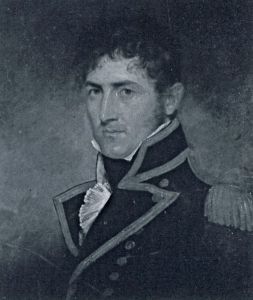 Before discussing Fanny Austen, we must, first, establish the lady’s relationship to the author Jane Austen by mentioning the lady’s husband, Rear Admiral Charles John Austen (23 June 1778 – 7 October 1852), who was the sixth and youngest son of the Reverend George Austen. Like his elder brother, Sir Francis Austen, Charles joined the Royal Navy Academy, eventually becoming a midshipman on HMS Daedalus and served throughout the French Revolution, the Napoleonic Wars, and beyond, achieving the rank of Rear Admiral.
 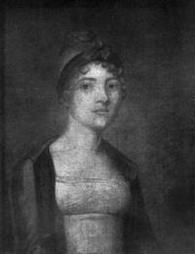 Austen married Frances Palmer, the subject of this piece, in 1807. She was the youngest daughter of the late Attorney-General of Bermuda. Together, they had three children. [Please note: After the death of Frances in 1814, Charles married his late wife’s sister, Harriet Palmer in 1820, which was, at that time contrary to the law of the land and considered a
 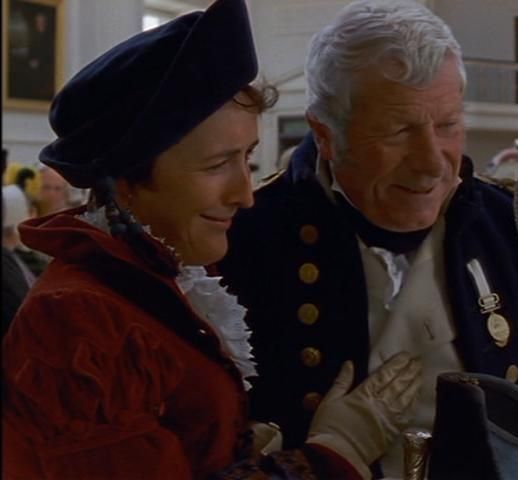 Yet, this piece is designed to use Fanny Austen as the model for Mrs. Croft in Jane Austen’s novel, Persuasion. Do you recall this scene?
 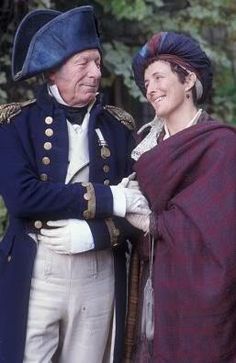 “Oh! Frederick! But I cannot believe it of you. –All idle refinement! –Women may be as comfortable on board, as in the best house in England. I believe I have lived as much on board as most women, and I know nothing superior to the accommodations of a man-of-war. I declare I have not a comfort or an indulgence about me, even at Kellynch Hall,” (with a kind bow to Anne), “beyond what I always had in most of the ships I have lived in; and they have been five altogether.”
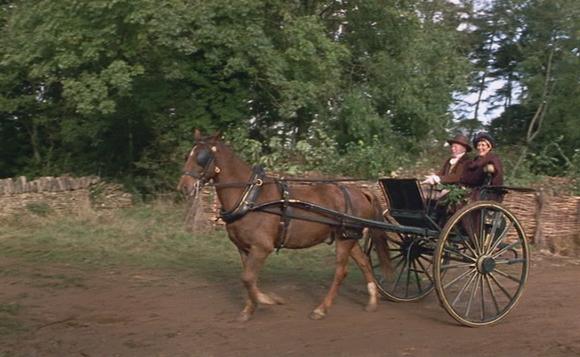 From Austen’s letters, as well as others in her family such as Caroline Austen (Fanny’s niece) and Fanny Knight who wrote in her diary in May 1807, “Uncle Charles and the lovely Fanny Palmer are married at Bermuda.” (Deidre Le Faye’s Chronology of Jane Austen and Her Family, page 339)
 As did Mrs. Croft when she said:
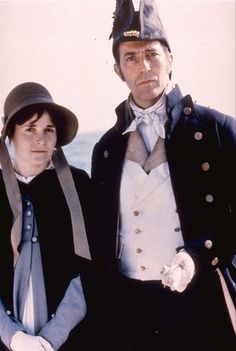 We know that Fanny made several journeys with her husband, especially between Bermuda and Halifax on a variety of ships. She also made a transatlantic voyage back to England in June 1811. As noted above, Mrs. Croft lived on five of her husband’s ships and crossed the Atlantic four times. Also above, one must note how Mrs. Croft tells Mrs. Musgrove, “[W]e do not call Bermuda or Bahama, you know, the West Indies.” One can easily assume Jane Austen learned something of Bermuda from Frances Austen, her sister-in-law.


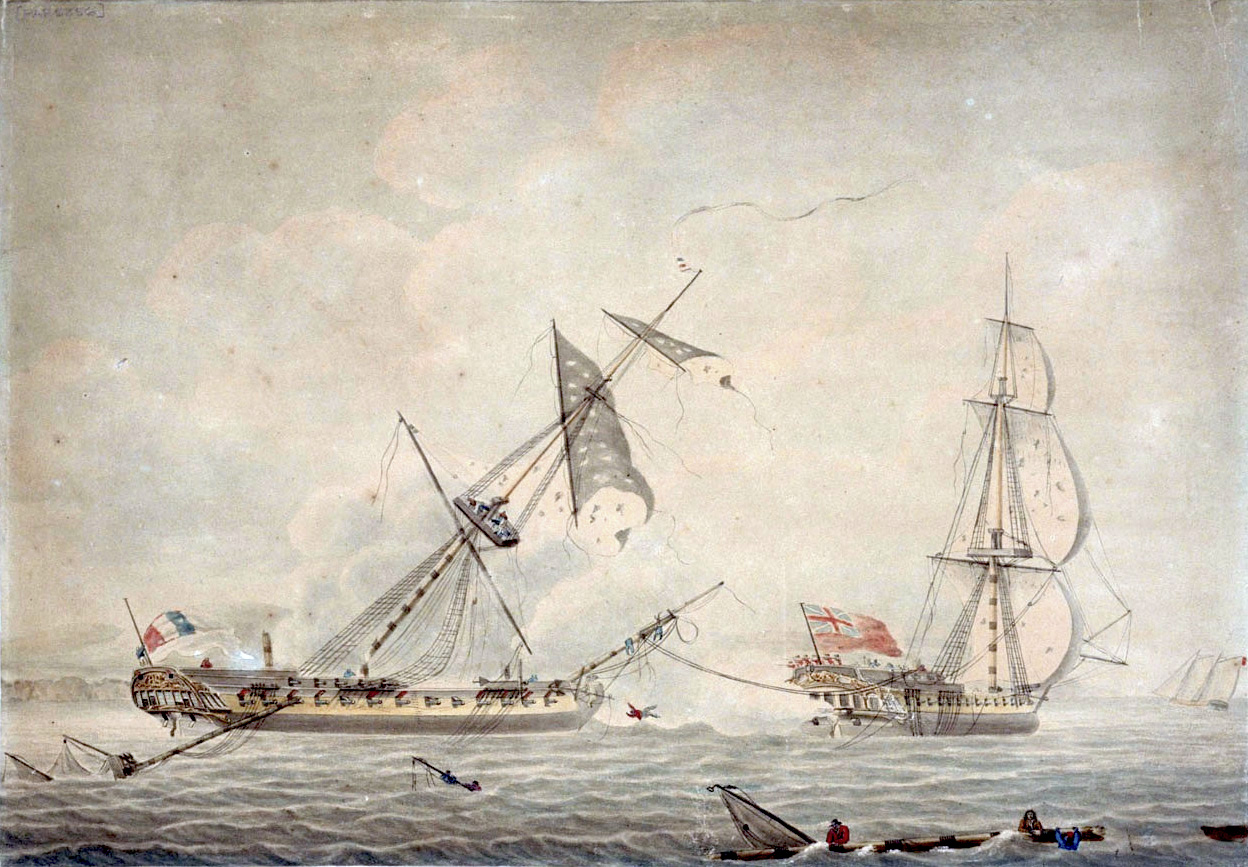
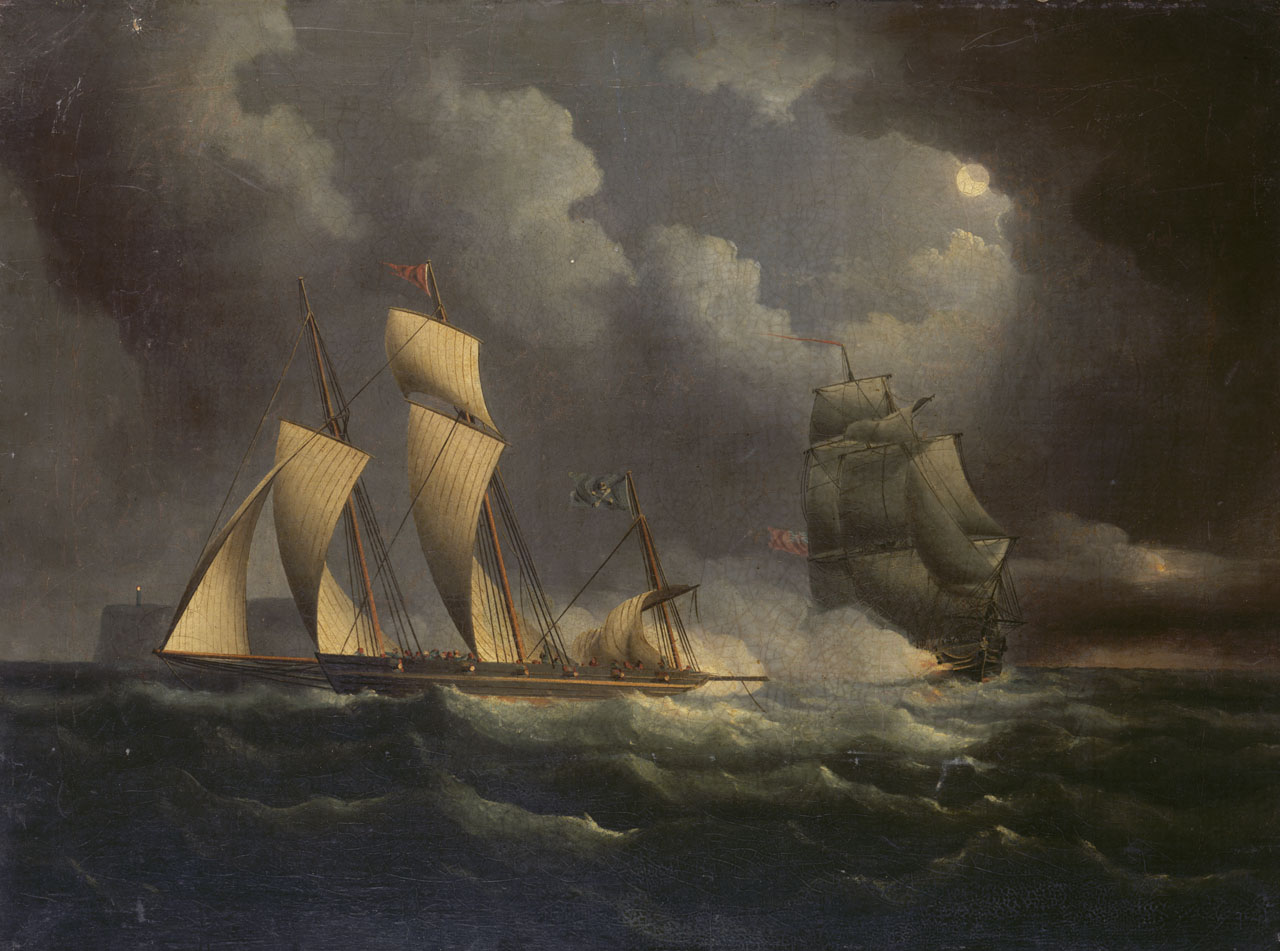
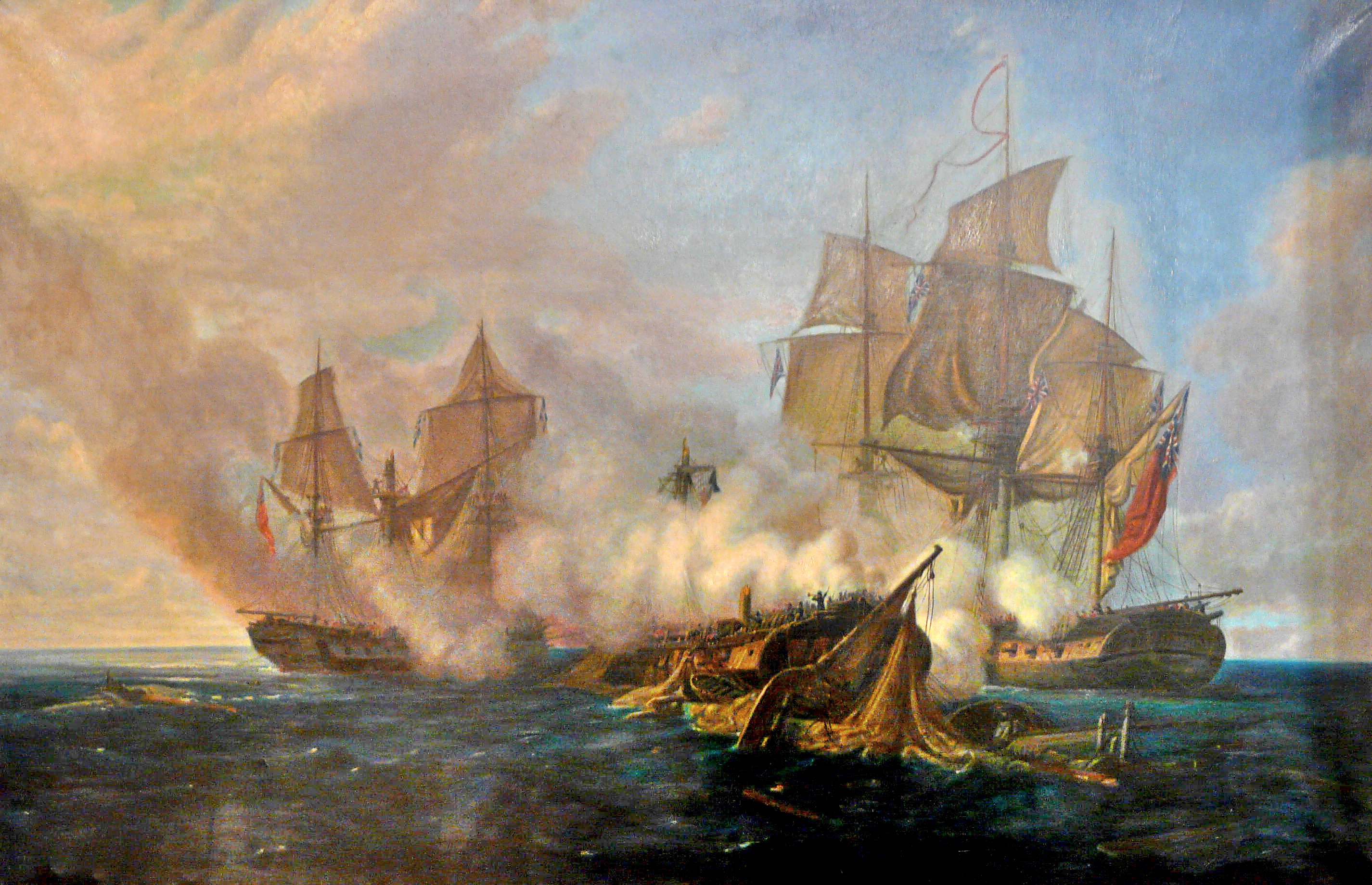


 Recently, one of my author friends sent me her Work in Progress manuscript for me to comment on what she had written to that point. She and I often bounce ideas off each other. Although beautifully written, making me sorry not to be more eloquent in my word choices, the initial plot possessed a major flaw from an historical standpoint. Her heroine runs the family estate in the absence of her father, who has passed, and the notion that her brother has gone missing—or, rather, the military cannot account for him being absent, after a major battle. The story takes place some two years after the end of the Napoleonic War, and she has heard nothing of her brother’s demise or a possible act of cowardice.
 My friend’s story is one I have read “before,” meaning this is a relatively common plot line in Regency-based novels. I used something similar in one of my JAFF (Jane Austen Fan Fiction) vagaries. In Where There’s a FitzWILLiam Darcy, There’s a Way, Elizabeth Bennet returns earlier to Longbourn from Rosings Park, than in the original novel, because she has received a letter announcing the death of her dear father, Mr. Bennet. Having often imagined that Mr. Bennet’s love of his second daughter had him sharing something of the running of Longbourn with Elizabeth, I have her struggling to keep the estate afloat until Mr. Collins arrives to assume control of the property. Even so, I was cognizant that such a situation would not be accepted in the Regency. Quite quickly, Darcy arrives, having been pressed into service by his aunt, Lady Catherine de Bourgh, to act in Mr. Collins’s stead until she can employ a new clergyman for the living at Rosings. If you are interested, that particular plot line discusses what can and cannot be inherited by the females of the family. Moreover there is a WILL (notice the title) that provides some solace for the Bennet females.
 Generally speaking, a woman would not have been left to manage an entailed estate. Instead, a group of predetermined trustees would have assumed that role. In the running of any estate, there were many legal documents, contracts, tenant agreements, purchases for the running of the estate, selling goods produced upon the estate (wheat, wool, etc.), paying taxes, paying tithes, etc., which required a male to sign the papers. (Some of you may recall that in my novel, A Touch of Scandal: Book 1 of the Realm Series, Lady Eleanor Fowler had her father, in the month’s leading up to his demise, sign blank pages when he was conscious enough to do so. Therefore, she could create the necessary documents to keep the estate running until she could convince her brother, Brantley, to return home and assume the dukedom. Please note, be that as it may, I added a cousin who would inherit if Brantley Fowler did not return to claim the peerage, which would keep everything legal. In fact, Eleanor knows where to discover her brother. It is simply a matter of convincing him to return to a place he despises.)



 Every Woman Dreams...


