Thank a Veteran This Memorial Day for His/Her Service and Know Gratitude For … “Some Gave All”

images

In 1868, Commander in Chief John A. Logan of the Grand Army of the Republic issued General Order Number 11 designating May 30 as a memorial day “for the purpose of strewing with flowers or otherwise decorating the graves of comrades who died in defense of their country during the late rebellion, and whose bodies now lie in almost every city, village, and hamlet churchyard in the land.”

For a sampling of the sources available on the history of Memorial Day, start here:

The U.S. Army’s Airborne and Special Operations Museum

History Channel 

The Library of Congress

U. S. Department of Veterans’ Affairs

Billy Ray Cyrus singing “Some Gave All” 

Posted in American History, history, holidays, military, music, real life tales, war | Tagged , , , , , , , , | Comments Off on Thank a Veteran This Memorial Day for His/Her Service and Know Gratitude For … “Some Gave All”

Georgian Era Lexicon – “L” Is Followed by “M”

In the singular form the lexicon of a particular subject is all the terms associated with it. The lexicon of a person or group is all the words they commonly use. As a plural noun, a lexicon is an alphabetical list of the words in a language or the words associated with a particular subject. To distinguish lexicon from a dictionary, it is an alphabetical list of the words in a language or the words associated with a particular subject.

These examples are a mix of what one might hear upon the lips of the aristocracy, as well as examples of Cant used upon London’s streets and those terms used by farmers and like in the country.

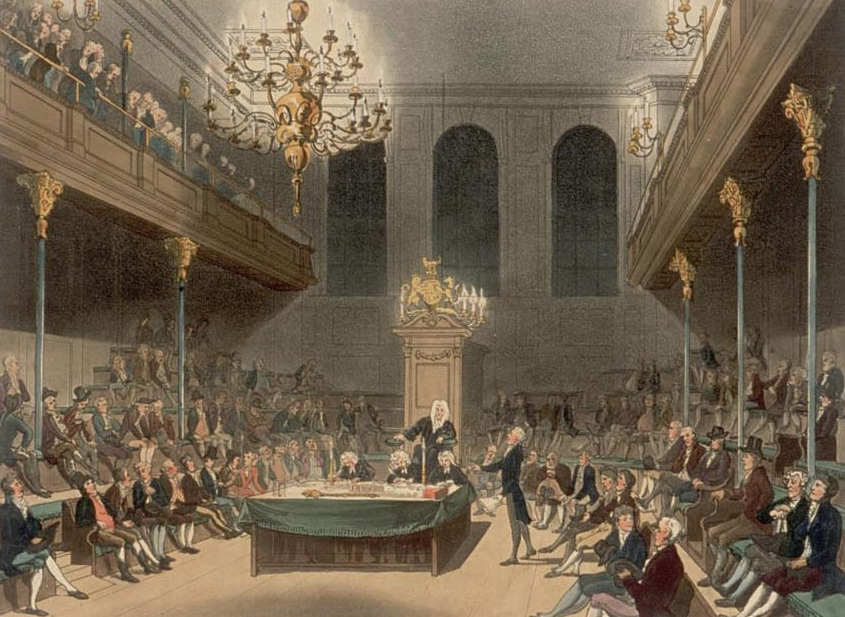
M.P. – a member of Parliament

macadam – John Loudon Mcadam (21 September 1756 – 26 November 1836) was a Scottish engineer and road-builder. He invented a new process, “macadamisation”, for building roads with a smooth hard surface, using controlled materials of mixed particle size and predetermined structure, that would be more durable and less muddy than soil-based tracks. In two treatises written in 1816 and 1819 (Remarks on the Present System of Road-Making and Practical Essay on the Scientific Repair and Preservation of Roads) he argued that roads needed to be raised above the surrounding ground and constructed from layered rocks and gravel in a systematic manner.

McAdam had also been appointed surveyor to the Bristol Turnpike Trust in 1816, where he decided to remake the roads under his care with crushed stone bound with gravel on a firm base of large stones. A camber, making the road slightly convex, ensured rainwater rapidly drained off the road rather than penetrate and damage the road’s foundations. This construction method, the greatest advance in road construction since Roman times, became known as “macadamisation”, or, more simply, “macadam”.

macaroni – an Italian pasta made of flour and eggs; also a fop, which name came from a club called the Maccaronis, which was instituted by some of the most dressy traveling gentlemen about town, who led the fashions; when a man foppishly dressed was supposed a member of that club

“A macaroni (formerly spelled maccaroni) was a pejorative term used to describe a fashionable fellow of 18th-century Britain. Stereotypically, men in the macaroni subculture dressed, spoke, and behaved in an unusually epicene and androgynous manner.

“In the 18th century, wealthy young British men traditionally took a trip around Europe upon their coming of age, known as his Grand Tour. Italy was a key destination of these tours. During their trip, many developed a taste for maccaroni, a type of pasta little known in Britain then, and so they were said to belong to the Macaroni Club, founded in 1764 by those returning from the Grand Tour. They would refer to anything that was fashionable or à la mode as “very maccaroni”.

“The Macaroni suit, made up of a shorter, tighter fitting coat, colourful stockings, and shoes adorned with large buckles, and, fastened in a large bow, the Macaroni cravat, made from lace-edged muslin, were developed and worn in the 1770s.[6] A prominently large nosegay of flowers was often worn (on the left side of the chest or shoulder of the coat), along with a very small tricorne style hat.

“The song “Yankee Doodle” from the time of the American Revolutionary War mentions a man who “stuck a feather in his hat and called it macaroni.” Dr. Richard Shuckburgh was a British surgeon and also the author of the song’s lyrics; the joke which he was making was that the Yankees were naive and unsophisticated enough to believe that a feather in the hat was a sufficient mark of a macaroni. Whether or not these were alternative lyrics sung in the British army, they were enthusiastically taken up by the Americans themselves.” [Wikipedia]

“The Macaroni. A real Character at the late Masquerade”, mezzotint by Philip Dawe, 1773 ~ Public Domain ~ https://en.wikipedia.org/wiki/Macaroni_(fashion)

macintosh – (not a computer by Apple) invented by Charles Macintosh in the 1820s; rubberized waterproof clothing; originally these smelled “terrible”

madam – a kept mistress

madeira – a sweet white wine

376px-magic-lantern

magic lantern – The magic lantern has a concave mirror in front of a light source that gathers light and projects it through a slide with an image scanned onto it. The light rays cross an aperture (which is an opening at the front of the apparatus), and hit a lens. The lens throws an enlarged picture of the original image from the slide onto a screen. Main light sources used during the time it was invented in the late 16th century were candles or oil lamps. These light sources were quite inefficient and produced weak projections. The invention of the Argand lamp in the 1790s helped to make the projected images brighter. The invention of the limelight in the 1820s made it even brighter.

magistrate – another term for a justice of peace; where justices were usually unsalaried country gentlemen, magistrates received a stipend

Mahometan gruel – coffee (because formerly used chiefly by the Turks)

maid-of-all-work – a maid who performed all the chores in those households, which could afford only one servant

mail coaches – replaced the ill-conceived post boys in 1784; delivered the post to and from rural areas; was also a means of transportation for many

make an offer – propose marriage

malkintrash – one in dismal garb

malmsey nose – covered in carbuncles and rubies

“making love” – During the Regency, this phrase held no physical or sexual connotations. It simply meant verbal flirting or visual flirting (as in a knowing glance across a crowded ballroom).

“making violent love” – is telling the person of the depth of one’s love (i.e., Mr. Elton in “Emma”)

male inheritance defines a “gentleman’s status” – a true gentleman was a man of property; very likely he inherited his country estate and manor from his father; no other requirements were needed to define a “gentleman”

220px-mangle

mangle – A mangle (as it is called in the United Kingdom) or wringer (as it is called in the United States) is a mechanical laundry aid consisting of two rollers in a sturdy frame, connected by cogs and, in its home version, powered by a hand crank.

man of the town – a rake; debaucher

man of the turf – a horse racer or jockey

man-of-war – large ship built specifically for warfare; The term often refers to a ship armed with cannon and propelled primarily by sails, as opposed to a galley which is propelled primarily by oars. The man-of-war was developed in England in the early 16th century from earlier roundships with the addition of a second mast to form the carrack.

man-trap – used to catch poachers; steel traps weighing up to 80 pounds

mantua-maker – a term for a dressmaker, based on the type of gown she made

marquise/marchioness – wife or widow of a marquis

marl – soil used as a fertilizer; it contained clay

mantuamaker: a shop that makes clothing, a dressmaker

marplot – a spoil sport

marquis/marquess – the second highest rank of the peerage after a duke

marriage – was more of a business arrangement than a romantic attachment; the girl’s father/guardian assured her financial protection

marriage settlement/articles – a contract between the future bride and groom, which stipulated how the gentleman’s money would be settled upon the wife and future children upon his death

Martin’s Day- Martinmas, November 11; “Martin’s summer” was used to describe a period of good weather continuing into the late autumn

Master of Ceremonies – employed to oversee the protocol of the large public assemblies (especially those held at the Upper and Lower Rooms in Bath); introduced young ladies and gentlemen to each other so they might dance together (i.e., Henry Tilney and Catherine Morland in “Northanger Abbey”); held knowledge of people’s backgrounds and shared information discreetly; Mr. James King was the MC for the Lower Rooms from 1785-1805, then moved to the Upper Rooms

mawkish – excessively and objectionably sentimental; sickening or insipid in taste; cloying; oversentimental

Mayfair – a half mile square in London’s West End; bounded by Oxford Street on the north, Bond Street on the east, Piccadilly on the south, and Hyde Park on the west; contains Pall Mall, Grosvenor Square, and Berkeley Square; the most elite residential area of London. The most desirable residential neighborhood in Regency London

merino – a superior wool from Spain

Merry Andrew – A buffoon, fool

mews – any lane or open area where a group of stables could be found

Michaelmas – the feast of St. Michael, which is held on September 29; one of the quarter days

Middlesex – the county in which London north of the Thames was located (to the south was Surrey)

Midsummer Day – another quarter day; celebrated on June 24, which was also the feast of John the Baptist

militia – volunteer soldiers; unlike the regular army, a man from a lower class could enter the militia as an officer; an army composed of ordinary citizens rather than professional soldiers. In Jane Austen’s time militias were called on to protect the homeland from overseas invasion if needed. Commissions in the militia could be purchased.

Arthur William Devis; The Staffordshire Militia on Parade at Windsor Castle; courtesy National Army Museum (out of copyright).

milliner – a maker of women’s hats and bonnets; the proprietor may also sell fabric, spencers, pelisses, various hats, ribbons, handkerchiefs, and aprons

minuet – a French dance for two people; a stately dance that began in 17th century France that consisted of small steps in time with slow music. This dance was usually the first dance at an assembly or ball.

https://en.wikipedia.org/wiki/Minuet#/media/File:Minuet_(PSF).png

“Miss” – used with a surname meant the eldest of several sisters (as in Jane Bennet in Austen’s “Pride and Prejudice,” she is Miss Bennet, while the other girls are Miss Elizabeth, Miss Mary, Miss Catherine, and Miss Lydia, respectively)

“Mister” – used with the man’s surname to indicate a surgeon or apothecary; a physician was “Doctor”; also males not of the aristocracy; of the gentry class (as in Mr. Bennet in “Pride and Prejudice”)

missish – an adjective for a girl who is naive and inexperienced in society and tends to be silly or easily cowed; demure, prim; affected; OED’s [Oxford English Dictionary] earliest evidence for missish is from 1795, in the writing of Fanny Burney, writer.

greenleaf_mob_cap

mobcap – a standard indoor headgear; A mob cap or mob-cap is a round, gathered or pleated cloth (usually linen) bonnet consisting of a caul to cover the hair, a frilled or ruffled brim, and (often) a ribbon band, worn by married women in the era.

modiste – a fashionable and expensive lady’s dressmaker, often French (or pretending to be so)

monkey – 500 pounds Sterling (Cant)

moor – a wild, desolate area in Yorkshire, which is usually covered by heather; a term used in northern England and southern Scotland to designate a boggy or marshy area

morning calls – ceremonial visits paid by the genteel to ladies “at home” in their drawing rooms; Less formal visits, morning calls were actually paid between the time of rising and that of eating dinner, effectively between eleven in the morning and three in the afternoon. Earlier calls might interfere with breakfast or a lady’s morning household duties. Later visits might suggest indecorous attempts at securing an invitation for dinner. The earlier in the day, the less close the acquaintance, the later the greater degree of intimacy between the parties.

muslin – a fine quality of cotton; very thin material; some young women wore muslin dresses with damped down chemises underneath

mute – a person hired to attend a funeral and mourn

Other Sources: 

Candice Hern

Donna Hatch

18th Century Vocabulary 

Georgette-Heyer: Regency Cant and Expressions 

Jane Austen Organization

Kathleen Baldwin

Messy Nessy Chic

Regency Reader

Sara Ramsey

Sharon Lathan

Posted in British history, etymology, Georgian England, Georgian Era, Great Britain, history, Jane Austen, language choices, Living in the Regency, Regency era, research, terminology, word choices, word origins, word play | Tagged , , , , , , , , , , | 2 Comments

What Do You Love About Austen’s “Persuasion” and Captain Fredrick Wentworth?

More than a few years back, Karen Cox hosted a panel of Austen-inspired authors, who had, at that time, written Persuasion-based tales. [More have obviously been added since that time.] The panel included Laura Hile, author of the Mercy’s Embrace trilogy, So Rough a Course, So Lively a Chase, & The Lady Must Decide; Regina Jeffers, author of Captain Frederick Wentworth’s Persuasion; Susan Kaye author of the Frederick Wentworth, Captain books None But You and For You Alone; Melanie Stanford, author of Sway, and Shannon Winslow, author of The Persuasion of Miss Jane Austen. If you are interested in the responses of my fellow authors, the original panel discussion was posted to Goodreads. 

That being said, below are Karen’s questions and my responses. 

CFWP CropWhat do you love about Persuasion and why? Is it your favorite Jane Austen novel? If not, where would you rank it?

Needless to say, Persuasion offers the reader Austen’s most mature voice. Although we acknowledge her genius in earlier novels, in Persuasion, Austen has mastered character development, the providential incident to advance the plot, and the universal truths that mark all of humanity. We, the readers, view the world through the lens of an English landscape. In this novel, Austen perfected the art of showing the full gamut of emotions plaguing life in its simplest forms: The interesting things in life can happen at home.

I grew up in the turbulent 50s and 60s when there was a strong awareness of social change, and although they cannot control the “how” and the “why,” in Persuasion, the upwardly mobile naval officers symbolize this change. Anne Elliot faces a future with Wentworth with the fear of another war. Such fears and pride spoke to me. I came from a military family, and I lived through the Korean and Vietnam wars, with a front row seat to those who served. I knew people, such as Wentworth and Anne, whose marriage had a national, as well as a domestic, significance. Therefore, Persuasion remains one of my favorite Austen tales. I do not think I could exist without hearing Elizabeth Bennet’s declaration to Lady Catherine to marry Darcy and to celebrate the brilliance of their unequal marriage. Nor could I abandon the intelligent, masterful, ruthless, yet generous and considerate hero I discovered in Wentworth. It depends upon my mood, which one I tackle.

What made you want to write a variation of Jane Austen’s last novel?

Captain Wentworth’s Persuasion was my third novel for Ulysses Press, which had joined the Jane Austen Fan Fiction rage of the first decade of the 2000s. I had already written a retelling of Pride and Prejudice (Darcy’s Passions in 2008) and a sequel to Pride and Prejudice (Darcy’s Temptation in 2009). Because I adore Persuasion and always taught it when I was still in the classroom. I pitched it to Ulysses, and they accepted the story.

Also, at the time, I was in the midst of reading Debra White Smith’s Austen novels. Her Possibilities is a modern Christian-based version of Persuasion. It is set in Charlotte, where I live, and I thought it would be a good thing to write my own version, a retelling of Persuasion from Captain Wentworth’s point of view.

Do you think Jane Austen would consider Wentworth to be “gentlemanly”? Why or why not?

I am a big believer that happiness is a result of merit — of acting with humanity and grace — of performance with tenderness of manner. I first read Pride and Prejudice at the age of twelve, and I immediately fell in love with Fitzwilliam Darcy, for he loved a woman for her mind, as well as her comely countenance. Next, I met Mr. Knightley. Although I was quite taken with how tenderly he treated Emma, I must admit I was a bit put out by the age difference between the pair, for at the time I did not understand the reasons men chose younger wives during the era. Finally, I found Captain Wentworth. As I said above, I come from a military family. In fact, I am a naval brat, and so Wentworth became a steady favorite. In truth, some of his least “appealing” qualities — being headstrong and intractable — were qualities I admired in the strong-willed men with whom I interacted upon a daily basis. I witnessed the devotion of the sailors upon the naval base upon which we lived to their families and to our country. I knew admiration for the men they had become.

Wentworth is likely, by birth, the son of a clergyman (based on his brother being a curate), which in Austen’s society would provide him “gentleman” status and a gentleman’s education, but moreover, he performs as a gentleman. For instance, he patiently consoles Mrs. Musgrove and listens attentively to the woman’s remembrances of Richard Musgrove. Although he knows he does not affect the girl, Wentworth is willing to marry Louisa Musgrove, for he acted foolishly by flirting with her. He takes note of Anne’s fatigue upon the return walk from Winthrop and arranges for her to ride with his sister and Admiral Croft. I think Wentworth is Austen’s most perfect hero, for he lacks perfection. He transforms himself into the man Anne Elliot deserves.

Do you think Wentworth never got over Anne? Or do you think he fell in love with her again when he returned eight years later?

I always felt that Wentworth achieved his exalted position — his acclaim — because he wished to prove Sir Walter and Lady Russell had erred. His success was a matter of pride. Although Sir Walter did not withhold his consent to Anne and Wentworth’s marriage, he “[gave] it all the negative of great astonishment, great coldness, great silence, and a professed resolution of doing nothing for his daughter.” (Persuasion 28) Lady Russell spoke to Anne of Wentworth’s “spending freely, what had come freely” and the fact he had nothing of consequence to show for his previous prize money act at his motivation. This was Wentworth’s wake-up call. Wentworth was insulted to be judged as a “failure” by his betters.

As to whether Wentworth falls in love with Anne again, I am of a mind to think there is a thin line between love and hate. Upon his return to the area, Wentworth thought to despise Anne, but slowly Providence, or Fate, or whatever one wishes to call it, chips away at his resolve. He notices that other men recognize Anne’s goodness and her blossoming attractiveness — specifically Mr. Elliot. He is “obliged to acknowledge that only at Uppercross had he learned to do her justice, and only at Lyme had he begun to understand himself.” (262)

What was the biggest challenge you faced as you wrote your Persuasion-inspired story?

I think Persuasion possesses an overtone of “sexuality” not found in other Austen’s novels. At the concert venue, Wentworth says, “The day has produced some effects, however; has had some consequence, which must be considered as the very reverse of frightful,” and we view the captain’s emotional rollercoaster. He embraces the unexpected turn of events. He begins to realize the consequences of desires and malleability. Wentworth fears displaying his jealousy. His feelings for Anne frighten him. Nothing in his experience has lessened his affection for Anne.

That being said, finding a proper balance between strong emotions and an “Austenesque” approach was the most difficult part of writing this variation. In truth, I toned down some of the scenes when I re-released the story. Captain Wentworth’s Persuasion is currently out of print from Ulysses Press, but my contract with Ulysses permits me to self publish the book. Captain Frederick Wentworth’s Persuasion is available from all book sources.

Let’s face it, most Austen-inspired fiction is based on Pride and Prejudice. What would you tell a reader to convince her to cast her reading eye from Mr. Darcy to Captain Wentworth?

Despite those who idealize the relationships found in Austen’s novels, especially the one between Darcy and Elizabeth in Pride and Prejudice, I am of the opinion that Austen’s works do not provide us with paragons of suitable male and female roles. Therefore, Wentworth is as noble and as flawed as Mr. Darcy, Austen’s most popular hero, but Wentworth also possesses the ill-considered nature of George Wickham. In Persuasion, the codes and values of the Napoleonic era are changing. The novel addresses not only self-realization for women, but also for men. Anne and Wentworth prove to be models of emotional stability. Julia Prewitt Brown in “Jane Austen’s England” says, “Anne and Wentworth inherit the England of Persuasion, if only because they see it, and will experience it, as if really is: fragmented and uncertain. For the first time in Jane Austen, the future is not linked with the land.”

___________________________________________

CFWP Crop2.jpg Captain Frederick Wentworth’s Persuasion: Austen’s Classic Retold Through His Eyes

The love affair behind Jane Austen’s classic, Persuasion, rests at the heart of this retelling from Captain Frederick Wentworth’s point of view.

He loved her from the moment their eyes met some eight years prior, but Frederick Wentworth is determined to prove to Anne Elliot that she made a mistake by refusing him. Persuaded by her family and friends of his lack of a future, Anne sent him away, but now he is back with a fortune earned in the war, and it is Anne, whose circumstances have brought her low. Frederick means to name another to replace her, but whenever he looks upon Anne’s perfect countenance, his resolve wavers, and he finds himself lost once again to his desire for her. Return to the Regency and Austen’s most compelling and mature love story. Jeffers turns the tale upon its head while maintaining Jane Austen’s tale of love and devotion.

Kindle  https://www.amazon.com/Captain-Frederick-Wentworths-Persuasion-Austens-ebook/dp/B00IJZOR20/ref=asap_bc?ie=UTF8

Available to Read on Kindle Unlimited

Amazon   https://www.amazon.com/Captain-Frederick-Wentworths-Persuasion-Austens/dp/1495463206/ref=tmm_pap_swatch_0?_encoding=UTF8&qid=&sr=

Book Bub https://www.bookbub.com/books/captain-frederick-wentworth-s-persuasion-jane-austen-s-classic-retold-through-his-eyes-by-regina-jeffers-and-a-lady

Audible https://www.amazon.com/Captain-Frederick-Wentworths-Persuasion-Austens/dp/B0CS79FB2P/ref=tmm_aud_swatch_0?_encoding=UTF8&dib_tag=se&dib=eyJ2IjoiMSJ9.Gi1pMXVSb4-qzgCIYwqZPCZLwscTZhT5UKktFe6dR0bH1dtSkCG63bjnSZ-Oqdxu2V0_udjzKJoYKEwv_DDyptLuuV9utKReWoHAkds6UhUbNWRjpyV2h35mCDSTN2cCwphthYev8mU3MwQmprGnKcn2sJuOdRWO_y0nlNop7rRmjD5j-0H2R3BU9Bk-OCrvjkhJLPnVcgpf8cLGP3DjtOroj_MFf7HzcCrxDd7kMGU.mTQHgedWyl8cMPDGrssHKiV1rOqUvwrCQ8Rnif5a8Qc&qid=1705611538&sr=1-1

___________________________________________

You might also like . . .

PoMDC Cover-3 copy.jpg Captain Wentworth plays a key role in my Austen-inspired mystery, The Prosecution of Mr. Darcy’s Cousin, where we see him team up with Colonel Fitzwilliam in post war England. A novel involving the two is in the works.

Posted in Austen Authors, British Navy, eBooks, historical fiction, interview, Jane Austen, language choices, Living in the Regency, Persuasion, Vagary | Tagged , , , , , | 6 Comments

Dukes: a Dime a Dozen… British Peerages

Those of us who write historical romances love our dukes. We create them left and right. I have two, which is not a large number when one considers I have 67 novels available: Brantley Fowler from A Touch of Velvet: Book 2 of the Realm Series is the Duke of Thornhill and Huntington McLaughlin from Angel Comes to the Devil’s Keep, Book 1 of the Twins’ Trilogy, will be the Duke of Devilfoard upon his father’s death. 

In truth, there were barely two dozen dukes during what we consider to be the Regency Era. 

Year           Dukes    Marquesses    Earls      Viscounts      Barons    Total

1790           21                6                    86             13                  81            207

1800          19               11                    87             15                  125          257

1810           17                12                   94             23                 138         284

1820          18                17                 100             22                 134          291

There were nine peeresses in their own right in1790, who are not included in these totals. Ten peeresses are counted in 1800 and eight peeresses in 1810.

Sixteen Scottish peers were elected to take seats in the English House of Lords during each Parliament. 

Year              Scottish peers              Holding English titles       Without English titles 

1800                   88                                         16                                       72

1810                   85                                          23                                      62

1820                  80                                          26                                      54

In addition to the peers holding English titles, 28 men with Irish titles were elected for life to hold seats in the English House of Lords. 

Year                Irish Peers               Holding English titles         Without English titles 

1800                   208                                   41                                       167

1810                    221                                   44                                       177

1820                   217                                   42                                        175

The title of DUKE originally signified Sovereign status, for example William the Conqueror was Duke of Normandy, and it was not adopted as a peerage title until 1337, when King Edward III conferred the Dukedom of Cornwall upon his eldest son, the Black Prince. The first person to receive a dukedom (not a member of the royal family) was Sir William de la Pole, Marquess of Suffolk, who became Duke of Suffolk in 1448.

“At present there are 24 dukes (not including royal dukes). The premier duke and earl of England is the Duke of Norfolk. His ancestor John Howard was created Duke of Norfolk in 1483, but because he inherited his dukedom through his mother, Margaret Mowbray, the duke’s precedence (ie his seniority in terms of the antiquity of his title) is dated 1397, which is when Margaret Mowbray’s father was created Duke of Norfolk. The premier peer of Scotland is the Duke of Hamilton and Brandon (created 1643). The premier duke, marquess and earl of Ireland is the Duke of Leinster (created 1766). The most recent (non-royal) dukedom to be created is Westminster in 1874.” (Debrett’s

King Richard II was the first to bestow the title of MARQUESS in England. He conferred the title of Marquess of Dublin upon Robert de Vere, Earl of Oxford, in 1385. The title was conferred by letters patent under the Great Seal, which represents the Sovereign’s authority. Those holding the title of “earl” did not like the idea that the new title of marquess was given precedence over them, which caused a great “stink.” Therefore, de Vere’s patent was revoked in 1386.

“At present there are 34 marquesses (not including courtesy marquesses). The premier marquess of England is the Marquess of Winchester (created 1551), who lives in South Africa. The premier marquess in Scotland is the Marquess of Huntly (created 1599). Since 1989 only one marquessate has become extinct, Ormonde, in 1997.” (Debrett’s)

During the reign of King Canute, the Danish equivalent of an EARL was found in England. With the Norman kings the title became hereditary; however, an ‘ealdorman’ was a term used in the 900s for a person who administered a shire for the King. Later, this was the auspices of the Sheriff of the county. From the time of King Richard II (1377-1399) all earldoms were either life creations or hereditary with “remainder to heirs male.” Only Scottish earldoms could pass through the female line. 

“At present there are 191 earls (not including the Earl of Wessex and courtesy earldoms), and four countesses in their own right. The premier earl of England and Ireland is the Earl of Shrewsbury and Waterford (created 1442). The premier earl on the Union Roll is the Earl of Crawford and Balcarres (created 1398). The most recent earldom to be created is Stockton, created in 1984. Since 1989 four earldoms have become extinct, Amherst, Monsell, Sondes and Munster, and Breadalbane is dormant.” (Debrett’s)

VISCOUNTS were originally the lieutenant (vice-comes) of a count. As a title it was often used for the Sheriff of a county. The firs recorded British peerage of viscount occurred when Henry VI combined two titles for John Lord Beaumont, who became Viscount Beaumont in England and in France (1440). As a peerage it was the 17th Century before it knew any popularity among the elite. 

“At the present time there are 115 viscounts (not including courtesy viscounts). The premier viscount of England is Viscount Hereford (created 1550). The premier viscount of Scotland on the Roll is Viscount Falkland (created 1620), and the premier viscount of Ireland is Viscount Gormanston (created 1478). Since 1989 eight viscountcies have become extinct: Muirsheil, Furness, Watkinson, Lambert, Leverhulme, Greenwood, Cross and Ingleby, and Barrington is dormant or extinct.” (Debrett’s)

BARONS were once land-holding noblemen, not part of the peerage. As such, they were often summoned to appear before the King, usually by Royal writ to attend Parliament. By the time of King Edward III (1300s), baronies became hereditary dignities. John Beauchamp de Holt was the first baron to receive letters patent. Again, this was during the reign of King Richard II. After 1400, most baronies were created by letters patent. 

“In Scotland the equivalent of Barons in England are Lords of Parliament.
The rank of baron is easily the most populated in the peerage. There are currently 426 hereditary barons and lords of Parliament (not including courtesy baronies and lordships), and nine hereditary baronesses and ladies of Parliament in their own right. The premier baron of England is Lord de Ros (created 1264), and the premier baron of Ireland is Lord Kingsale (created 1223), who lives in New Zealand. Since 1989, 24 baronies have become extinct, one (Kinnaird) is dormant or extinct, and another (Audley) is in abeyance.” (Debrett’s)

Posted in Anglo-Normans, Anglo-Saxons, British history, customs and tradiitons, Georgian England, Georgian Era, kings and queens, legacy, Living in the UK, peerage, titles of aristocracy | Tagged , , , , , , , , , , , | 1 Comment

Georgian Era Lexicon – We’re Up to the Letter “L”

In the singular form the lexicon of a particular subject is all the terms associated with it. The lexicon of a person or group is all the words they commonly use. As a plural noun, a lexicon is an alphabetical list of the words in a language or the words associated with a particular subject. To distinguish lexicon from a dictionary, it is an alphabetical list of the words in a language or the words associated with a particular subject.

These examples are a mix of what one might hear upon the lips of the aristocracy, as well as examples of Cant used upon London’s streets and those terms used by farmers and like in the country.

£ – symbol for the pound, a monetary unit

Ladies’ Mile – a road in Hyde Park set aside for women

Lady – used in the following manner: colloquially used for a man’s wife; the wife of a baronet or a knight; the wife of a peer below the rank of duke; the wife of a younger son of a duke or marquis; the daughter of a duke, marquis, or earl

ladybird – slang for a prostitute

Lady Day – March 25; a quarter day; until 1752, it was the start of the year for official business; the day the Angel Gabriel announced the birth of Jesus to the Virgin Mary

lady’s maid – the woman who tended to the mistress’s clothes and grooming; was an upper servant in the household

lag fever – a term of ridicule applied to men who being under sentence of transportation, pretend illness to avoid being sent from gaol to the hulks of the ships

Lambeth Palace – the official residence of the Archbishop of Canterbury

landau – an open carriage with four wheels; had a hood at each end and two seats opposite

land pirates – highwaymen

larder – where perishable goods were kept in a great house

lark – a bit of merriment

latitat – a nickname for an attorney, comes from the name if a writ

Laudanum_poison_100ml_flasche

laudanum – opium in a solution of alcohol

law – “to give law to a hare” is a sporting term, signifying presenting the hare a chance of escaping by not setting the dogs after the hare until the hare is at some distance; it is also more figuratively used for giving another a chance of succeeding in a scheme or project

lawn – a fancy linen

league – a measure of distance that was not precise; somewhere between 2 and 4 miles

leaping over the sword – an ancient ceremony said to constitute a military marriage; a sword is laid on the ground and the parties to be married join hands, while the sergeant or corporal of the company repeated these words: “Leap rogue, and jump whore/And then you married for evermore.” Some believe this has been passed down from Norse weddings. “Traditionally, the groom would break into the tomb of an ancestor and retrieve a sword to be given to the bride. The bride would also exchange a sword to represent the transfer of protection between the two families, who were now responsible for supporting one another.” (The Knot)

to make a leg – to bow

levee – a formal reception for presenting men to the sovereign

liberty – an area outside the formal city limits but was still subject to the law’s representatives of the city

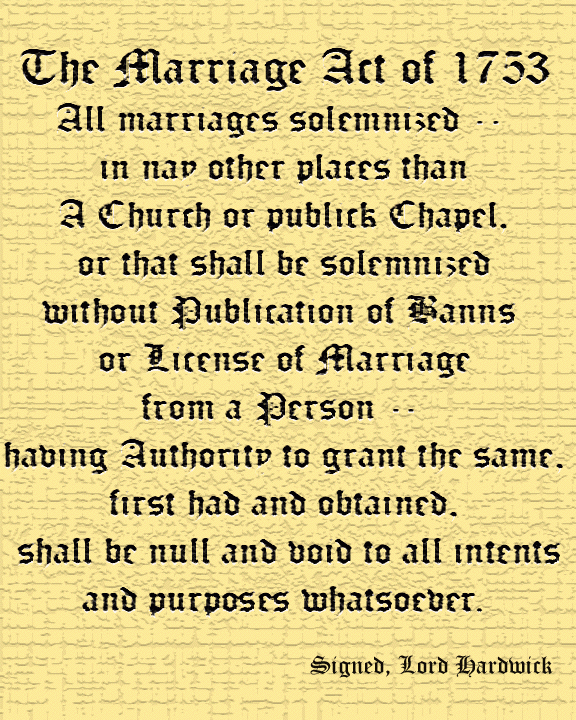
license to marry – there were three different licenses/means to marry: common/ordinary license, which was purchased from a clergyman and the couple married in the parish in which one of them lived; calling of the banns, in which the intention to marry was announced over a period of three consecutive Sundays – the couple could marry within 90 days of the last calling of the banns; a special license could only be afforded by the wealthy and those of the haut ton, but they permitted the couple to marry at any time and place

lifeholder – land/property leased for a period of time equivalent to the life of the leasee

life peerage – meant the title died with the holder; not a hereditary title [My friend Brian in Australia has this to say of a “life peerage”: Actually the ‘Life Peers’ is a relatively new thing, they were first created in 1958 by the Conservative party to boost their numbers in the House of Lords. The hereditary lords couldn’t be bothered attending Parliament so they decided to make (sell) life peerages, The Labour party saw the wisdom of doing this and followed suit stacking the upper house ( The Lords) to get their legislation through once they got into power, I look on them as pseudo lords/lady’s (Baron / Baronesses.) They are dished out to any party hack or big contributor to a political party’s coffers and in my mind are farcical.]

light-fingered – apt to pilfer

linen – a generic term for fine shirts and underwear

link – torches carried by “linkboys,” who ran ahead of a carriage to light its way through the city streets at night

linsey-woolsey – material made of wool and linen

list – a cloth’s edge from which slippers were sometimes made

from the PBS website for "Manor House" http://www.pbs.org/ manorhouse/thepeople/ charlie_duties.html
from the PBS website for “Manor House” http://www.pbs.org/
manorhouse/thepeople/
charlie_duties.html

livery – the uniform worn by the servants of a house

 living – a benefice

loggerhead – a stupid person; a blockhead

a mother’s loll – a favourite child

 London Corresponding Society –  founded in 1792 to oppose the war with France, fight hunger, and compel parliamentary reform; comprised mainly of small craftsmen

London Riots of 1795 – London Corresponding Society stoned the coach of George III as he traveled through London’s streets to open Parliament; later they rioted to pass acts forbidding Seditious Meetings, etc.

loo – a card game; must win the trick with the high card or the trump card

looby – an awkward, ignorant fellow

lord – member of the peerage; also a form of address; also a courtesy title given to the eldest sons of the peerage and to the younger sons, but only if the Christian and surnames were added (Lord James Landry)

low tide or low water – when there’s no money in a man’s pocket

Royal arms of Aragon, lozenge-shaped and crowned. CC BY-SA 3.0
Royal arms of Aragon, lozenge-shaped and crowned.
CC BY-SA 3.0

 lozenge – the shape of the coat of arms on a carriage for a spinster or   a widow (rather than the shape of a shield used by the male heir of a   line)

 Low Church – people who did not practice the rituals of the Church   of England (for example, the Evangelicals); stressed the Church’s  Protestantism; tolerated Dissenters; supported Latitudinarianism or  latitude within the church

a lumping penny-worth – a great quantity for the money; a bargain

 lych-gate – a covered gateway at a church entrance where people attending a funeral would wait for the minister before moving the coffin to the graveyard

Other Sources: 

Candice Hern

Donna Hatch

18th Century Vocabulary 

Georgette-Heyer: Regency Cant and Expressions 

Jane Austen Organization

Kathleen Baldwin

Messy Nessy Chic

Regency Reader

Sara Ramsey

Sharon Lathan

Posted in British history, etymology, Georgian England, Georgian Era, Great Britain, holidays, language choices, lexicon, Living in the Regency, Regency era, research, word choices, word origins, word play, writing | Tagged , , , , , , , , , | 2 Comments

School Terms During the Regency Era

Many schools, universities and law courts had Easter terms.  The fact that Easter was a moveable feast meant that one could not always tie the terms to the calendar nor have them be the same length every year. All schools were closed for Holy week preceding  Easter and  then most did not reopen until the Wednesday after Easter as Monday and Tuesday were holidays.

Many other dates were calculated as being so many days after Easter.

The names for the various terms aligned with the Church of England calendar, as did the court sessions.

The eight weeks after the Feast of St. Michael (September 29) was known as the Michaelmas term. It customarily started shortly after October 1. 

At Oxford and at Dublin University, the Hilary Term, so named because the feast day of St Hilary of Poitiers (January 14) begins in January after Christmastide and runs to March. The Hiliary Term is usually 10 weeks in length and is determined by counting the number of Sundays following the feast day. 

Five weeks after the Hiliary Term, the Trinity Term begins. It is 15 Sundays to 21 Sundays after the feast of St Hiliary, meaning it is six weeks in length. Trinity Sunday is the first Sunday after Pentecost. Pentecost is celebrated fifty days after Easter Sunday. The holy day is also called “White Sunday” or “Whitsunday” or “Whitsun,” especially in the United Kingdom. 

Gaelen Foley has a fabulous post listing 10 Fun Facts about Easter in the Regency Period. Check it out. 

To give you an idea about the School Terms, below are ones listed for the 1819 Terms of Schools

Oxford

Hilary Term, ran from  January 14 to April 3

Easter term, April 21 to May 26

Trinity Term, June 2 to July 19

Michaelmas Term, October 11 – December 17

Students were home between terms and from July 19 to October 11.

Cambridge

Hilary term, January 13 to April  2

Easter Term, April 21 to July 9

Michaelmas term, October 11 to December 16

Did not have a Trinity term and the Easter terms was longer.

Eton seemed to have called terms “halves”, though there were at least three of them in the school year. Eton terms basically followed this pattern:

September to two weeks before Christmas

Christmas holidays: a fortnight before and after Christmas

January to Palm Sunday.

Easter holidays were a fortnight from Palm Sunday.

For a more extensive list of school terms, check out Nancy Regency Researcher

Posted in British history, Church of England, Georgian England, Georgian Era, Living in the UK, Regency era, Uncategorized | Tagged , , , | Comments Off on School Terms During the Regency Era

The Film Adaptation of “Persuasion” [1971]

MV5BMjU0NDQ1OTMzOF5BMl5BanBnXkFtZTcwMjczODUyMQ@@._V1_SY317_CR5,0,214,317_AL_This adaptation of Persuasion was an ITV/Granada mini-series, directed and produced by Howard Baker, with a screenplay by Julian Mitchell. The cast included…
Anne Firbank……………..Anne Elliot
Bryan Marshall……………Captain Frederick Wentworth
Basil Dignam …………….Sir Walter Elliot
Valerie Gearon …………….Elizabeth Elliot
Marian Spencer……………Lady Russell
Georgine Anderson………Mrs. Croft
Richard Vernon …………..Admiral Croft
Morag Hood………………..Mary Elliot Musgrove
David Savile ……………….Mr. William Elliot
Mel Martin………………….Henrietta Musgrove
Zhivila Roche………………Louisa Musgrove

Unknown-3This version stayed very close to the original story line. “Dramatic license” is minimal. Ms. Firbank, who plays Anne Elliot, has had a long acting career, especially in television. Ann Firbank was born on January 9, 1933, in Secunderabad, Andhra, India. She is an actress, known for Anna and the King (1999), A Passage to India (1984) and The Servant (1963). (imdb) She was seen most recently in the 2014 version of The Crucible as Rebecca Nurse (along with the very handsome Richard Armitage). In this version of Austen’s novel, the viewer sees very little change in the “looks” of Miss Anne. Firbank is seen as the well dressed daughter of a baronet. Her dresses/gowns are more colorful while she is in Bath, but there is no view of Anne Elliot being in her decline. Nothing is done to show Anne Elliot with a loss of her “bloom.” We hear the Lady Russell character say “You were very attractive then,” in reference to when Anne turned down the proposal of Charles Musgrove. The thing with Firbank’s portrayal is there is little sympathy for Anne’s situation. The viewer does not experience the despair that Anne suffers for her poor choice. She is just “ho-hum” in the portrayal. 

imagesBryan Marshall is Captain Wentworth in this TV version. Marshall, too, has had a storied television career. Bryan studied drama at RADA and soon made an impression on TV in the footballing drama “United” and on film working for Hammer studios in “Quatermass And The Pit” and “The Witches.” Perhaps his most major film role is the duplicitous Councillor Harris in “The Long Good Friday.” (imdb)

The Costume Designer (Esther Dean) for this series dresses Marshall in Regency wear for a gentleman, but not in the garb of a captain in His Majesty’s Royal Navy. In fact, this adaptation dresses all the men very much the same. It makes no effort to delineate between the social classes of the Elliots, the Musgroves, the Harvilles, or Captain Benwick. Although Austen never tells the reader of Wentworth’s back story, we assume in the story that Wentworth had a “gentleman’s” education for his brother Edward is a curate, having studied to take his orders. But can we say the same of Harville and Benwick (who is a great reader)? Needless to say, Mr. Charles Musgrove (both elder and junior) are country squires [in the vein of Mr. Bennet in Pride and Prejudice]. They are not of the same social class as Sir Walter Elliot [a baronet]. Moreover, Sir Walter would die of shame if he discovered Wentworth [a man he refused earlier for being unworthy] was equally as well dressed as he. One of the “joys” of Austen’s Persuasion is that we see more of the so-called lower gentry and the working class than we did in many of her previous tales.


-Persuasion-1971-persuasion-21454503-1024-768Another striking difference to the 1995 film is the treatment of the Musgroves. The elder couple [William Kendall and Noel Dyson] are shown to be jovial and kind. Their house is very orderly and spanky clean, as opposed to the one we see in the 1995 version. Even the Uppercross Cottage is well furnished, with elegant pieces displayed about the room. When Anne visits the Musgroves, Charles and a maid must carry off Charles and Mary’s two boys, which provides Mrs. Musgrove the opportunity to speak to Anne about Mary’s poor parenting skills. Earlier, Mary makes the same complaint to Anne about Charles spoiling his sons and how Mrs. Musgrove feeds the boys too many sweets [Sugar High, anyone?].  In the 1971 version, we do have a scene from the book but omitted from the 1995 film: That is the one where Captain Wentworth speaks to Mrs. Musgrove about the service of her rascal son, Richard “Dick” Musgrove. 

Morag Hood portrays Mary Musgrove quite differently from Sophie Thompson’s portrayal in 1995. Hood emphasizes the state of her health concerns, her complaints about her husband Charles’ inattention, and the elder Musgroves’ slights to her status as the Uppercross’s future mistress. All the while, Hood is well-dressed and slender and attractive, as opposed to Thompson’s rather dowdy look. 

Henrietta Musgrove (Mel Martin) is seen more in the vein of the novel in this adaptation: The girl cannot make her mind whether she prefers Charles Hayter or Captain Wentworth. The viewer sees Henrietta absent-mindedly leaving Hayter in mid sentence to rush to the window to view Wentworth’s approaching the manor house. Louisa Musgrove (Zhivilar Roche), on the other hand, is willful and impetuous, just as the book describes her, but she comes off as grating. Many find her so irritating that they wonder why Wentworth would even look twice at her as a possible mate.  David Savile portrays Mr. Elliot in striking contrast to Captain Wentworth. Elliot possesses a fine countenance and excellent manners. 

The 1971 version is similar in the way Wentworth overhears Anne speaking of whether men or women love longest. Afterwards, Wentworth encounters Anne on the street and she takes his arm. As they walk along they speak of the frustration of coming together again, their many misconstructions, jealousy, etc. He admits, “I never loved anyone but you, Anne.” The scene ends with their walking slowly across a lawn. 

A series of summary scenes end the adaptation. Anne tells Lady Russell that she loves Frederick. Elizabeth Elliot looks for Mrs. Clay only to learn from Colonel Wallis that Mr. Elliot and Mrs. Clay escaped in a waiting coach for London. The scene where Wentworth tells Anne that he will make an effort to forgive Lady Russell’s previous interference in their lives, and he assumes the blame for now returning to Anne sooner. Anne admits that if he had returned earlier, she would have left with him. They kiss slowly twice, but in contrast to the 1995 film, they are not on a public street when this happens. Wentworth’s last speech is… “I shave have to put up with being far happier than I deserve,” which is close to the actual speech in the novel. 001ctk85

JaneAusten.co.uk says of this television version, “Filmed in 1971, Persuasion was the first of the “old” BBC Austen films (though by no means the BBC’s first Austen adaptation, it is the first available on film.) The script, written by Julian Mitchell (Elizabeth R, Inspector Morse) is at times almost painfully true to the book, while at others, as in the case of “The Letter,” it deviates most jarringly. Directed by Howard Baker (The Return of Sherlock Holmes, 1986) it contains many scenes cut from the later version (Mrs. Smith’s account of Mr. Elliot’s perfidy, Mr. Elliot’s elopement, “Poor Dick”) and a few invented ones. With a run time of nearly four hours, this film certainly has the time to develop the story and characters that most modern adaptations lack.

“Persuasion1 (or P1 as it is known to fans) may be one of the most controversial films in Austen history. Those who love it do so unabashed- those who don’t are perhaps even more vocal. There are many reasons this film is disparaged. Many complain about the obviously ‘60’s inspired hairstyles(“…what is it about Anne’s hair?! It gives new meaning to the term “Big Hair!”*)Ann Firbank and costume color choices- a few of the orange and green combinations are quite distracting. (Has a period film ever been so dated?) Some find the characters personally irritating (“…don’t you wonder how ANYONE could even consider this Louisa Musgrove as a possible wife? She is by far the most annoying character I’ve come across in any Austen adaptation.*) One author even complained about the use of scenes where “Anne is forced to confide her secrets in Lady Russell . . . in order to make her feelings clear to the audience.” Most criticism, however, stems from how they handled the last few scenes. Interestingly Sony’s 1995 version repeated the same mistakes.”

Posted in acting, British history, film adaptations, Great Britain, Jane Austen, Living in the Regency, Regency era | Tagged , , , , , , | 24 Comments

It Is Here! “The Colonel’s Ungovernable Governess: A Pride and Prejudice Vagary” ~ Do You Have Your Copy?

Rather than be forced to marry a man not of her choice, Miss Jocelyn Romfield runs away. She believes spending her life as a governess would be superior to a loveless marriage. 

An arrangement has been made by his father for Colonel Edward Fitzwilliam to marry a woman related to his Aunt Catherine’s last husband, Sir Lewis de Bourgh. Yet, how is Fitzwilliam expected to court his future bride, who has proven to be elusive during each of his attempts to take her acquaintance, when the governess of his brother’s stepchildren fills his arms so perfectly?

Jocelyn has no idea the man she has purposely avoided is the same one who fills her heart with love. 

Kindle https://www.amazon.com/dp/B0CZZCMWW7

Available to Read on Kindle Unlimited 

Amazon https://www.amazon.com/dp/B0D11KC196

BookBub   https://www.bookbub.com/books/the-colonel-s-ungovernable-governess-a-pride-and-prejudice-vagary-by-regina-jeffers

This is my 32nd Jane Austen-inspired story. I have penned 31 Regency stories and 2 contemporary ones. Four others are in various stages of completion (two completed, but not edited, and two needing the final chapters to know completion). That is 69 novels since February 2009 when Ulysses Press released Darcy’s Passions for the first print run of the book.

Novels from Regina Jeffers 

Jane Austen-Inspired Novels 

Darcy’s Passions: Pride and Prejudice Retold Through His Eyes

Darcy’s Temptation: A Pride and Prejudice Sequel 

Captain Frederick Wentworth’s Persuasion: Jane Austen’s Classic Retold Through His Eyes

Vampire Darcy’s Desire: A Pride and Prejudice Paranormal Adventure

The Phantom of Pemberley: A Pride and Prejudice Mystery

Christmas at Pemberley: A Pride and Prejudice Holiday Sequel

The Disappearance of Georgiana Darcy: A Pride and Prejudice Mystery

The Mysterious Death of Mr. Darcy: A Pride and Prejudice Mystery

The Prosecution of Mr. Darcy’s Cousin: A Pride and Prejudice Mystery

Mr. Darcy’s Fault: A Pride and Prejudice Vagary

Mr. Darcy’s Bargain: A Pride and Prejudice Vagary

Mr. Darcy’s Present: A Pride and Prejudice Holiday Vagary

Mr. Darcy’s Brides: A Pride and Prejudice Vagary

Mr. Darcy’s Bet: A Pride and Prejudice Vagary

Mr. Darcy’s Inadvertent Bride: A Pride and Prejudice Vagary

Elizabeth Bennet’s Deception: A Pride and Prejudice Vagary

Elizabeth Bennet’s Excellent Adventure: A Pride and Prejudice Vagary

Elizabeth Bennet’s Gallant Suitor: A Pride and Prejudice Vagary

The Pemberley Ball: A Pride and Prejudice Vagary

A Dance with Mr. Darcy: A Pride and Prejudice Vagary

The Road to Understanding: A Pride and Prejudice Vagary

Pride and Prejudice and a Shakespearean Scholar: A Pride and Prejudice Vagary

Where There’s a FitzWILLiam Darcy, There’s a Way: A Pride and Prejudice Vagary

In Want of a Wife: A Pride and Prejudice Vagary

Losing Lizzy: A Pride and Prejudice Vagary

The Mistress of Rosings Park: A Pride and Prejudice Vagary

Pemberley’s Christmas Governess: A Pride and Prejudice Vagary

Amending the Shades of Pemberley: A Pride and Prejudice Vagary

Mr. Darcy and the Designing Woman: A Pride and Prejudice Vagary

The Colonel’s Ungovernable Governess: A Pride and Prejudice Vagary

Honor and Hope: A Contemporary Pride and Prejudice 

Order and Disorder: A Pride and Prejudice Short Story Mystery (arriving 2025)

Regency and Contemporary Novels 

The Scandal of Lady Eleanor: Book 1 of the Realm Series (aka A Touch of Scandal)

A Touch of Velvet: Book 2 of the Realm Series

A Touch of Cashémere: Book 3 of the Realm Series 

A Touch of Grace: Book 4 of the Realm Series 

A Touch of Mercy: Book 5 of the Realm Series 

A Touch of Love: Book 6 of the Realm Series 

A Touch of Honor: Book 7 of the Realm Series

A Touch of Emerald: Book 8 of the Realm Series 

His American Heartsong: A Companion Novel to the Realm Series 

His Irish Eve

Angel Comes to the Devil’s Keep: Book 1 of the Twins’ Trilogy

The Earl Claims His Comfort: Book 2 of the Twins’ Trilogy

Lady Chandler’s Sister: Book 3 of the Twins’ Trilogy

The Heartless Earl: A Common Elements Romance Novel

I Shot the Sheriff: A Tragic Heroes in Classic Lit Series Novel 

Captain Stanwick’s Bride: A Tragic Heroes in Classic Lit Series Novel 

Lady Joy and the Earl: A Second-Chance Regency Romance 

Letters from Home: A Regency Romance 

Courting Lord Whitmore: A Regency May-December Romance 

Last Woman Standing: A Regency Christmas Romance 

The Courtship of Lord Blackhurst: A Regency Romance 

Lord Radcliffe’s Best Friend: A Regency Friends to Lovers Romance 

The Jewel Thief and the Earl: A Regency Romance 

His Christmas Violet: A Regency Second Chance Romance 

The Earl’s English Rose: A Regency Summer Romance

Bell, Book and Wardrobe: A Regency Romance

Loving Lord Lindmore: Book 1 of the Strong Regency Women Duo

Beautified by Love: Two Regency Novellas 

Something in the Air: Two Regency Novellas

Escape to Love: Two Regency Novellas

Two Earls to Love: Two Regency Novellas

Second Chances: The Courtship Wars 

One Minute Past Christmas, a Holiday Short Story

Coming Soon . . .  

Obsession: The One Where the Princess Saves Herself 

Lady Glynis and the Earl

Taming Lord Truist: Book 2 of the Strong Regency Women Duo (August 2023)

The Marchioness’s Madness

Follow Me Here:

Every Woman Dreams (Blog)  https://reginajeffers.wordpress.com

Always Austen (Group Blog) https://alwaysausten.com/

Facebook  https://www.facebook.com/Regina-Jeffers-Author-Page-141407102548455/?fref=ts

Twitter  https://twitter.com/reginajeffers

Amazon Author Page https://www.amazon.com/Regina-Jeffers/e/B008G0UI0I/ref=sr_ntt_srch_lnk_1?qid=1479079637&sr=8-1

Pinterest  https://www.pinterest.com/jeffers0306/

BookBub  https://www.bookbub.com/profile/regina-jeffers

Instagram  https://www.instagram.com/darcy4ever/

You Tube Interview  https://www.youtube.com/watch?v=vzgjdUigkkU

Website  https://rjefferscom.wordpress.com/

Posted in blog hop, book excerpts, book release, eBooks, Georgian Era, historical fiction, Pride and Prejudice, publishing, Regency romance, writing | Tagged , , , , , , , , , | Comments Off on It Is Here! “The Colonel’s Ungovernable Governess: A Pride and Prejudice Vagary” ~ Do You Have Your Copy?

Serendipity in the Writing Process + the Coming Release on Friday of “The Colonel’s Ungovernable Governess” + a Giveaway

Those of you who know me, know something of my writing process. For example, I still compose in a wide ruled spiral notebook. I choose wide ruled because I can write such words as “timeline” in the margin without breaking my concentration on the flow of the story while still noting markers of which I must be aware. Today, I will first read what I wrote yesterday and correct spelling, add words, etc., then I move on. Yes, I very much write every day.

When the story is complete, I type my first draft, which serves as another round of edits, though I admit I sometimes type “the the” in this draft. While I type this version, I also keep a separate document, a running “History of …” document that has a list of characters (good to take note that I have not included the same name more than once, especially for minor characters, as well as to change up the names so I have not included five characters whose names all beginning with “s.” Do you not despise reading a story and you cannot keep the characters straight in your head?), a timeline to make certain events in the story line up (in the Regency era, Sundays still happen, and things like travel, parties, etc., did not), place names (especially made-up names for houses and estates), a bulleted chapter by chapter main events so I can go back and find a particular detail without reading the whole story, and a list of possible post topics, such as this one.

I am a pantser, meaning I write by the seat of my pants. I abhor outlines, perhaps because I taught English for 40 years and was required to drag my students, kicking and screaming, through the process. Before I put pen to paper, I know ahead of time the key points of the story. How I will move my characters from point A to point B is generally not in my head.

While writing, I particularly love those moments of serendipity that appear. For example, when I wrote The Colonel’s Ungovernable Governess, there is a scene early on in the book where the heroine, Miss Jocelyn Romfield teaches young Lord Vincent something of being a gentleman. They are crossing the lawn together to the stables. Vincent, as many of you will recognize, is somewhere on the high performing end of the spectrum. In the scene, he starts off across the lawn ahead of Jocelyn. She remains in place. When he notices she is not following him, he turns to question her, and Jocelyn says a “gentleman,” and especially an earl, would walk beside a lady. When I wrote the scene, I wanted it purely to show the beginning of a true, trusting relationship between the boy, who is, yet again, with another new governess.

However, later in the book, I appreciated the serendipitous moment. For the child is brought before the family home, where he is the earl at age 10, and he is instructed to lead the party of adults inside. He is more than a bit terrified until Jocelyn whispers, “just as we walked to the stables.” I did not preplan the moment, but it was a perfect full circle moment to demonstrate how much the child had grown in the short time he has been under Jocelyn’s care. He politely asks her to walk beside him.

Another such bit of serendipity occurred when I had Mr. Darcy teach the boy something of the child’s ancestors. From the beginning of my composing the story, the boy’s surname, as I wrote it, was “Jennings,” and he is the Earl of Babcock and with his family seat at Babbington Hall in North Yorkshire. When I came to this part of the story, I did my own research on names and ended up doing my HAPPY DANCE (I shall not describe the dance, but it is much better than Steve Urkel’s in Family Matters, for at one time I danced professionally). “Babcock” is related to the name “de Bourgh.” Get it!!!! From the first pages of the book, I had written that Jocelyn’s mother is sister to Sir Lewis de Bourgh, Lady Catherine’s late husband. Her ladyship has suggested an arrange marriage between her nephew, Colonel Fitzwilliam, and her late husband’s niece, Miss Jocelyn Romfield, who has run off rather than be given to a man she does not know (and is, shush, do not tell anyone, currently serving as governess to Lord Vincent Jennings.) Trust me I was patting myself on the back for something that simply fell into my lap.

Enjoy this scene where the child learns his lesson from Mr. Darcy, and grab the book now while it is on preorder. The Colonel’s Ungovernable Governess releases on Friday, May 10, just in time for Mother’s Day, here in the U.S.

Excerpt from Chapter Nine:

“Might I steal Lord Vincent away, Miss Lambert?” Edward asked. 

The boy looked up from his book in concern. 

“Most assuredly, Colonel,” the woman responded. “Lady Victoria and I were just taking up our needlepoint, and Lord Vincent was asked to spend time in reading.” 

The boy stood tentatively. “Have I . . . displeased you . . . sir?”

“Lord, no. Mr. Darcy and I thought we might share something with you. It is time you begin your instruction on becoming the next earl. And you will be reading history.” 

“Truly, sir?” the boy asked, looking about for something to hold in his hands. “Is it not . . . too soon?” 

“Actually, someone should have addressed it previously. My cousin has suggested it would be best if you begin with a knowledge of the Jennings family history in this country. When you are old enough to be called before the House of Lords, you will likely be asked such questions. Even if you are not, you should be made aware of your ancestral line. Once you do, you will better understand the pride with which those of the aristocracy speak of their roots.” 

Miss Lambert said, “How grand, Vincent. If I am hearing the colonel correctly, you possess an exemplary lineage.” 

Edward chuckled, “There were a few scoundrels. What good is it to have ancestors without a colorful history? Come along, Vincent, Mr. Darcy has discovered some gigantic book, just like those my cousin and you adore, that deals with lineage and the sort. You will provide me a gentle jab in my side if my eyes glaze over.” 

The boy looked to him as if Edward had a tick in his head, but he fell in step beside him. “Will I truly . . . be required . . . to know this . . . to be an earl?”

Edward paused to look down upon the child. Your man-of-business with legal matters will prepare your written request to assume the earldom, but you will eventually be called before the Lords, and they will ask many questions of your claim to the title. You will be expected to prove you are your father’s heir and he had the right to the earldom.” 

“What of . . . Uncle Philip?” the boy asked, indicating he had heard of his uncle’s desire to displace him.” 

“Although I have not looked at the letters patent, which are documents used to create peerages, to the specifics of your earldom, they are generally legal documents which express who may inherit. For example, the Matlock earldom includes limitations to ‘heirs of the male body.’ That means only lineal, as in your lineage, which Darcy will explain more in a few minutes, descendants of the original peer may succeed to the peerage. You will be asked to prove that you are the rightful descendant of the First Earl Babcock, just as I might be asked to prove I am a rightful descendant of the First Earl Matlock, if something occurred to both my father and my brother.” 

“Could you be . . . Lord Matlock?” the boy asked in obvious concern. 

“Those of us who are part of the peerage must always be aware of such matters. None of us are invincible. A man might fall from his horse or his carriage might overturn. Only God knows how long our days will be numbered. Such is the reason your mother brought you to William’s Wood. If something occurs to bring you harm, then your Uncle Philip will be asked to prove himself the next heir. Until you marry and produce a son of your own, your uncle is your heir. With Mrs. Darcy’s father, he had no sons, so a cousin is his heir. Does that make any sense?” he asked.

“I will be . . . expected to . . . produce an . . . heir?” the child said in wonder. 

“We all must marry eventually,” he told the child. “I know it must sound quite daunting to you. Trust me. It sounds equally daunting to me, and I am more than twenty years your senior.” 

“You are . . . to marry, sir?” the boy asked. 

“So says my father,” he told the child. “But we should not keep Darcy waiting longer. My cousin is quite excited by what he wishes to share with you.” 

As they walked, the child asked, “When will I . . . be called . . . to the Lords?”

“Not before your guardian, which is my brother, makes an official request. As it stands now, my brother and father would make the request for you. You will be consider the ‘remainder’ until you may assume the title. You are ‘remaining’ in place until it is your time to serve, which is customarily when you reach your majority. You will be the earl for all practical purposes, but it will not be official until you go before the Lords.” 

“Then I am . . . the earl . . . now?” the boy asked. 

“Yes. You will serve with your guardians to aid you. Those guardians are my brother, my father, and your mother. A male child is presented two males and one female guardian. It would be reversed for your sisters—two females and one male. Just as it is customarily executed with godparents. For example, I am one of Bennet Darcy’s godfathers, along with Mr. Bingley and Mrs. Bingley. Your guardians will assist you with the oversight of the estate and other such legal points.” 

The child nodded his understanding, but Edward noted a shift in the boy’s shoulders. as if the lad prepared for this new reality. Edward was beginning to think the child was not so unable to understand things, but rather no one had cared to speak to him of his responsibilities. Surely the boy was a bit eccentric, but the same could be said of Darcy and even of him. Ever human likes his own way best. 

“Ah!” Darcy said when they entered the library. “I am glad Miss Lambert could spare you.” 

Edward laughed. “I warned you Mr. Darcy would already have found several large books for you.” 

“Nonsense,” Darcy declared with a grin. “Lord Vincent and I understand each other. Am I correct, boy?”

“Yes, sir.” 

Though the boy agreed, he still appeared tentative. He sat on the chair to which Darcy had gestured. “There are many books that keep records of each peerage. They tell of when the peerages were created. If they became extant. Whether they changed names as additional peerages came under the same family crest. My own family and that of the colonel’s can trace their beginnings in what is known as the Doomsday Book. It is a manuscript record of the Great Survey of much of England and parts of Wales completed in 1086 at the behest of King William, the Conqueror. It is called ‘Doomsday’ because its decisions were unalterable.”

“Just as Lord Lindale is . . . part of the Matlock . . . earldom?” the boy asked. 

“Exactly,” Darcy confirmed. “So let us first look at the meaning of your name and names you recognize.” He glanced to Edward. “My cousin’s surname is easy. ‘Fitz’ come the French word fiz, which means ‘son.’ So the first Fitzwilliams in England were so called because they were the sons of a man called ‘William.’”

The boy smiled upon Edward. “The colonel’s father is not a ‘William.’” 

“No,” Darcy chuckled, “but if we look from father to grandfather to great-grandfather and so on, we would find more than one ‘William’ in the Fitzwilliam family.”

“And you, sir?” the child asked. 

“I am equally as easy. My family name also arrived in England during the Norman Conquest. It comes from the French barony of Arcy or d’Arcy.” 

Edward added, “In my cousin’s case, it could just as easily have come from the Irish word ÓDorchaide, which means a descendant of the dark-haired one, for the French first conquered Ireland before they came to England.”

The child had finally relaxed. “And ‘Jennings’?”

“Let us look in the book.” Darcy had marked the page with a slip of paper. “Would you please read what it says, my lord?”

Vincent sat straighter in the chair and moved the book closer before reading aloud. “An English patro . . .”

Patronymic,” Darcy supplied, “meaning it is derived from the name of a male ancestor, typically by the addition of a prefix or suffix, as it was with ‘Fitzwilliam.’”

The child nodded his understanding, though he still stumbled somewhat over the correct pronunciation of “patronymic.” He began again, “An English patrony . . . mic family name. Derived from Middle English ‘Janyn’ or ‘Jenyn,’ a variation of ‘John.’” He turned to Edward. ‘Just like you from ‘William,’ sir. I am from ‘John.’” 

“Yes, indeed. Much the same,” Edward replied, before encouraging, “What else does it say?” 

“First recorded in the 13th century. Found in Wales and Scotland, but also Ulster. That means in Ireland, correct, sir?”

“It is one of the four provinces of Ireland,” Edward confirmed. 

The child appeared proud to know something of what he read, and he continued, “Before the 17th and 18th centuries, people called ‘Jennings’ as a surname were found in Cambridgeshire, Derbyshire, Hertfordshire, Somerset, Suffolk, Surrey, Worcestershire, and Yorkshire. That would be my family, would it not, Mr. Darcy?”

“It very well could be referring to your nearest ancestors. Now, turn to the other page I have marked,” Darcy encouraged. 

“What is this?” the boy asked. 

“This part speaks of the ‘Babcock’ name of your earldom. I do not expect you to read it all to the colonel and me, but it does speak to the specifics of the Babcock earldom. You should copy it out and begin to learn something of those who came before you. However, it is the name ‘Babcock’ I wanted you to explore. You will see one of the first notices of a written form of the word can be found in Lancashire.” 

“Unlike Jennings,” the boy’s finger traced the words as he read, “which has masculine roots, ‘Babcock’ has a matrony . . . mic . . . that means ‘mother’ or ‘woman,’ does it not, colonel? The ‘patron’ was a male.” 

“‘Matronymic’ does refer to women. Very good,” Edward said with a ruffling of the boy’s hair with his hand. 

With a large smile, the boy continued, “Matrony . . . mic origin. The first Babcock was likely the son of a woman named ‘Barbara. ‘Saint Barbara is honored by the Church for standing up for Christianity against the pagan household in which she dwelled. She was beaten and tortured, but she would not de . . . nounce her faith.

“The surname was first recorded in Essex in 1259 when ‘Nicholas Bab’ registered it in the Calendar of Wills at the Court of Husting.” 

“That is a court in London and is the oldest court in the capital,” Darcy quickly explained. “Continue.”  

“The word ‘cock’ is generally sob . . .” the boy broke off again. 

“‘Sobriquet,’” Darcy supplied. “It is a French word that originally meant a ‘tap under the chin’ or of unknown origin.” 

“Miss Lambert said Victoria and I must begin French lessons in earnest this week,” the child said obediently. 

“Excellent,” Edward declared. “Such will assist you with many of this country’s early documents, for French was the language of the English court from the Norman Conquest in 1066 to the late 1300s.” 

“Back to ‘sobriquet,’” Darcy instructed. 

“The word ‘cock’ is generally sobriquet for a sharp, forward boy.” 

Edward supplied several examples, “Such as Wilcox or Hancock.”

The boy admitted, “I never knew so much history goes into names.” 

“Your given name of ‘Vincent’ means ‘prevailing.’ It comes from the Latin word ‘vincere,’ meaning ‘to conquer,’” Darcy explained.

“I like my name much better now,” the child admitted. “And ‘Victoria’?” 

“From the Latin word for ‘victory.’ In Roman mythology,” Darcy explained, ‘Victoria’ was the name of the goddess of victory, who the Greeks called ‘Nike.’” 

The child smiled largely. “I will tell her, but she would prefer being the goddess of beauty.” 

He returned his finger to the page, as Darcy shared, “Babcock is an English surname, which can be pronounced as ‘Bartcock,’ which means ‘son of Bartholomew.’” 

Edward said, “Ironic indeed. You have much to study about both your family name and the title you will receive, but there was something special Mr. Darcy and I wished you to consider.” He turned the boy so he might take the child’s hands in his. “It was not by coincidence that my brother reached out to your mother to make her an offer of marriage. You see, the family name of ‘Jennings’ has more than the English derivation. There is also the Irish Gaelic surname of ‘Mac Sheoinin,’ meaning the son of Séan, or as we say in England, son of ‘John.’” 

“Is that not the same as before?” the boy asked. 

“It is,” Edward assured patiently. “Yet, there is or was a man called ‘John Burke,’ who was the Lord of Connacht with land in both County Mayo and County Galway. The Burke family in Ireland has lines which overlap with the French-based names in England. The Burkes had intersecting lines with the De Burgh and the de Bourgh families in England.” 

“And?” the boy’s expression spoke of his confusion. 

Edward smiled on the child. “I do not explain things as well as does Darcy. I never did. My cousin scored nearly perfect scores on his oral exams at university.” He sighed heavily. “You are Lord Babcock, which provides your connections to both the Burkes, as in the John Burke I just mentioned, as well as the De Burghs. Darcy and Lindale and Lord Matlock and I have connections to the French de Bourgh family. Our Aunt Catherine is Lady de Bourgh. She married Sir Louis de Bourgh. She is my father’s eldest sister.” 

“We are related?” the child asked in apparent bewilderment. 

“Loosely so,” Edward explained, “but family, nevertheless. It was our Lady Catherine who suggested your mother to Lindale.” 

The child appeared stunned by the possibility. He turned to Darcy, “Could you assist me, sir, in learning how best to read these lines and trace them to my ancestors. When I know how the family lines are connected, I would like to write to my mother and thank her for bringing my family and yours and the colonel’s together. I do not feel so . . . so . . . I do not know the word to describe it.” 

“I understand,” Darcy said softly. 

“Perhaps when I learn them, Miss Lambert will assist me in drawing a picture linking all of us together.” 

“Excellent idea,” Edward declared. “As I have my own correspondence to which I must see, I will leave you in Darcy’s most capable hands.” 

The Colonel’s Ungovernable Governess 

Rather than be forced to marry a man not of her choice, Miss Jocelyn Romfield runs away. She believes spending her life as a governess would be superior to a loveless marriage. 

An arrangement has been made by his father for Colonel Edward Fitzwilliam to marry a woman related to his Aunt Catherine’s last husband, Sir Lewis de Bourgh. Yet, how is Fitzwilliam expected to court his future bride, who has proven to be elusive during each of his attempts to take her acquaintance, when the governess of his brother’s stepchildren fills his arms so perfectly?

Jocelyn has no idea the man she has purposely avoided is the same one who fills her heart with love. 

Kindle https://www.amazon.com/dp/B0CZZCMWW7

Available to Read on Kindle Unlimited 

Amazon https://www.amazon.com/dp/B0D11KC196

BookBub   https://www.bookbub.com/books/the-colonel-s-ungovernable-governess-a-pride-and-prejudice-vagary-by-regina-jeffers

Giveaway! This giveaway ends TOMORROW, May 9, 2024. I have three eBook copies of The Colonel’s Ungovernable Governess available to those who comment on this post or any posts associated with the book’s release. Random.org will choose the winners. They will be contacted tomorrow and books will be delivered on May 10, 2024.

Posted in Anglo-Normans, Anglo-Saxons, book excerpts, book release, books, eBooks, etymology, excerpt, family, Georgian England, Georgian Era, giveaway, historical fiction, history, Inheritance, Jane Austen, language choices, Living in the Regency, Pride and Prejudice, primogenture, publishing, Regency era, Regency romance, research, terminology, word origins, writing | Tagged , , , , , , , , , , , , , , , , , , | 9 Comments

Easingwold and Its Relevance to “The Colonel’s Ungovernable Governess” + a Giveaway

The Colonel’s Ungovernable Governess is on preorder. Do you have your copy?

Rather than be forced to marry a man not of her choice, Miss Jocelyn Romfield runs away. She believes spending her life as a governess would be superior to a loveless marriage. 

An arrangement has been made by his father for Colonel Edward Fitzwilliam to marry a woman related to his Aunt Catherine’s last husband, Sir Lewis de Bourgh. Yet, how is Fitzwilliam expected to court his future bride, who has proven to be elusive during each of his attempts to take her acquaintance, when the governess of his brother’s stepchildren fills his arms so perfectly?

Jocelyn has no idea the man she has purposely avoided is the same one who fills her heart with love. 

Kindle https://www.amazon.com/dp/B0CZZCMWW7

Available to Read on Kindle Unlimited 

Amazon https://www.amazon.com/dp/B0D11KC196

BookBub   https://www.bookbub.com/books/the-colonel-s-ungovernable-governess-a-pride-and-prejudice-vagary-by-regina-jeffers

In this tale, where Colonel Fitzwilliam takes the lead and finds his true love, part of the action takes place in Easingwold, Yorkshire. It is the home of the young earl who both the colonel and Miss Jocelyn Romfield, his betrothed, mean to protect. I thought you might like to see something of Easingwold so you would have it in your mind while reading.

Easingwold is a market town and civil parish in North Yorkshire, England. Historically, part of the North Riding of Yorkshire, it is located about 12 miles (19 km) north of York, at the foot of the Howardian Hills.

Yorkshire Banking Company and Post Office ~ Edwardian era image from the Easingwold Facebook page ~ https://www.facebook.com/photo/?fbid=910813814387786&set=pcb.910813871054447
Howardian Hills ~ https://en.wikipedia.org/wiki/Howardian_Hills#/media/File:The_Howardian_Hills_-_geograph.org.uk_-_1938414.jpg ~ Named after the Howard family who still own local land in the area. High grade arable land, pasture, and managed woodland makes this rich farming country whose diversity contributes to its attractive rural character.

Can you not imagine the colonel and Darcy riding across these hills?

The town is mentioned in the Domesday Book of 1086 as “Eisicewalt” in the Bulford hundred. At the time of the Norman Conquest the manor was owned by Earl Morcar, but subsequently passed to the King. In 1265, the manor was passed to Edmund Crouchback by his father, Henry III. The manor was caught up in the dispute between the 2nd Earl of Lancaster and Edward I and the manor passed back to the crown following the Battle of Boroughbridge in 1322 which resulted in the execution of the Earl at Pontefract. The manor was restored to the Earl’s brother some six years later, but he left no male heir, so the lands passed to his son-in-law, John of Gaunt in 1361. The lands were next granted to his son-in-law, Ralph Neville. Following the War of the Roses, the lands were declared forfeit to the Crown until 1633, when they were granted to Thomas Belasyse and subsequently became the possession of the Wombwell family.

The town is an amalgamation of two smaller villages, Uppleby and Lessimers. The former being a settlement, or -by of a Dane called Upple, and the latter being an Angle settlement on the lease-mires, meaning leased land frequently waterlogged.

The name of Easingwold is Anglo Saxon in origin, with wold being a derivation of wald meaning forest, and the former part being a Saxon family name, possibly Esa. King John had a hunting lodge there and the royal Forest of Galtres once surrounded the area.

The market place was the site of an old toll booth. The base of the old market cross still exists next to Easingwold Town Hall, which was built as a public hall. It replaced an old row of ‘shambles’ where butchers sold their wares. The market place was also the site of a bullring used for baiting. Records show that markets have been held in the town since 1221, but were formalised under letters patent from Charles I.

Under the Poor Law Amendment Act 1834 a Poor law union was established in Easingwold in 1837. The town had a workhouse built in 1756 on Oulston Road. 

The town is the focal point for many nearby villages and the nearest larger settlements are York 12 miles (19 km) to the south; Boroughbridge 8 miles (13 km) to the west; Thirsk 10 miles (16 km) to the northwest and Malton 16 miles (26 km) to the east. The highest point in the town is at the town’s edge on the Oulston Road at 200 feet (60 m).

A church in the town is dedicated to St John and All Saints. There has been a church here since Saxon times, though the present building dates from the 15th century. ~ https://en.wikipedia.org/wiki/Easingwold#/media/File:St_John’s_Church,_Easingwold.jpg

A church in the town is dedicated to St John and All Saints. There has been a church here since Saxon times, though the present building dates from the 15th century. In my tale, this is where the colonel and Miss Romfield marry. It will be easier for you to view that scene in your head now.

GIVEAWAY: To enter the giveaway, leave a comment on this post or any posts associated with the book’s release. Winners will be chosen on May 9 and presented their prizes on May 10, 2024, when the book releases. I am picking (rather Random.org is picking) three winners. Good luck!

Posted in book release, books, British history, buildings and structures, eBooks, England, Georgian England, Georgian Era, giveaway, historical fiction, history, Jane Austen, Living in the Regency, Living in the UK, Napoleonic Wars, Pride and Prejudice, publishing, Regency era, Regency romance, research, Vagary, writing | Tagged , , , , , , , , , , , , , , , , , , , | 10 Comments