A Lost Food, “Irish Moss” Recipe + “Lord Fearghal’s English Bride” + a Giveaway of “Regency Summer Weddings Anthology”

Book Blurb:

HERS WAS A CONVENIENT ARRANGEMENT 

Lady Claire Waterstone has spent more years out of England than she has enjoying English society. In fact, she feels very odd in making her Come Out with girls four to five years her junior. Claire has never known a “home” of her own. And while several gentlemen are eager to claim her hand, she knows their ardor has more to do with the size of her dowry than true affection. Then she encounters Lord Ainmire Fearghal, an impoverished Irish earl, whose tales of how he sees his land creates in her a desire to share it with him. Claire, therefore, abandons decorum and proposes to Lord Fearghal. However, his roguish charm soon has her wishing for more than a marriage of convenience. 

HE BARGAINED FOR HER FORTUNE, NOT HER HEART

Fearghal has only one purpose in marrying Lady Claire: Save his estate. Melhman Manor reeks from inherited debt, and Fearghal requires a wealthy wife immediately. Originally, he thought to leave Claire in London, but his wife soon puts an end to those thoughts, but when she suggests Ainmire’s cousin could be working against Ainmire’s efforts to save his land, Fearghal and Lady Claire strike a different type of bargain – one based in trust and loyalty and the beginnings of love.

Five delightful Regency stories, from USA Today bestselling and Award winning authors, all focused around summer weddings. Lose yourself in the Regency world, and be swept away by love!
***** READ NOW ON KINDLE UNLIMITED *****
This anthology contains:

This anthology contains:
Her Wily Duke by Arietta Richmond ~ A Marquess desperate to protect the Dukedom from his increasingly unstable older brother, a highwayman apparently bent on the destruction of the ducal estates, a young music teacher caught in the middle of it all, a desperate plan which, in the end, leads to love.


Lord Fearghal’s English Bride by Regina Jeffers ~When an Irish Lord, who needs to marry an heiress to save his estates, meets an aristocratic Englishwoman who seeks an interesting life, there is an instant attraction, and a very rapid marriage. But there are those who do not wish them well, and desperate action is called for if they are both to reach their Irish home alive, and save his estate from foreclosure. Will they survive long enough for that attraction to grow into lasting love?


Contradance by Janis Susan May ~ Life looks bleak for Miss Rosemary Coyningham as plans proceed apace for her cousin’s wedding to the Earl she was betrothed to as a child. Once Matilda is married, what will happen to Rosemary? Surely her uncle will no longer wish to have her living in his house? When Matilda’s intended returns from the continent, with a Princely friend, it all gets more complicated… for Rosemary is drawn to Matilda’s betrothed, when she meets him for the first time… and Matilda seems struck with admiration for the Prince… Will there still be a summer wedding?


The Baron Banishes His Rival by Olivia Marwood ~ Lady Anne Calthorpe is delighted when her closest friend and neighbour returns from his studies at Oxford, and even more so when he steps in to protect her from the man who had bullied her as a child – a man who now seems most intent on paying attentions to her. George Marlestone, Lord Houghton, finds his breath stolen when he sees Lady Anne again, and desire for more than friendship fills him. But before he can act on that desire, he will have to overcome the machinations of those who would drive him away from Lady Anne… Will they succeed, between them, in driving off her pursuer, or will their love be torn apart?

Mother of the Bride by Victoria Hinshaw ~ Widowed Amy, Countess of Blakemore is utterly focused on the arrangements for her daughter’s wedding. She needs no distractions, or surely it won’t all get done on time! Then, for the first time, she meets her son-in-law-to-be’s much older half-brother, who proves to be more distracting then she could ever have imagined. William Easton, Baron Hartley, had shown no interest in marrying again, since the mother of his two daughters died. Now, as his half-brother is about to marry, the idea suddenly seems much more appealing. Of course, that might just be because he can’t take his eyes off the beautiful mother of the bride-to-be. But will she accept his suit?

Purchase Link:

Amazon Kindle

Available to Read on Kindle Unlimited

Now a bit more about my story:

My heroine, Lady Claire Waterstone, has never truly lived in England, so when, first, her mother dies, and, then, her father, she is brought back to England and rushed into the “marriage mart” to find a husband. She is as ill at ease in London society is Lord Ainmire Fearghal, an Irish earl who requires a rich wife, while Claire requires a home.

Once she is in Ireland, Claire is determined to leave her mark on her husband’s estate and the surrounding community, by starting a school and providing his lordship’s tenants with what we might nowadays call “cottage industry.” Enjoy this short scene about some of her goals and about something called Irish moss, and it has nothing to do with that green stuff growing on rocks.

Book Excerpt:

“Would you object, my lady, if I make these used linens and drapes and so forth available to his lordship’s tenants?” Mrs. Galax asked. “The previous Lady Fearghal kept that as a standing order, but she passed some seventeen years prior, and neither Lord Ainmire nor his father thought the gesture necessary.” 

“Would they want them?” Claire asked and then quickly remembered the “untouchables” in India and how they wished for the smallest bit of cloth to cover themselves. 

“Most be handy with a needle and their children require clothes, especially during the winter,” the housekeeper shared. 

“Assuredly, I hold no objections. If they have a use for the worn sheets and drapes, I am not opposed to you presenting them what is left.” She asked, “Do the children attend school?”

“No, my lady. Most work the farms along with their fathers. The land be all they know.” 

“Yet, how do they recognize someone who means to cheat them if they cannot read the signs nor the bills presented to them?” Claire asked in shock. “Has not Lord Fearghal addressed this matter? How is a future to be achieved if one’s feet are planted in the mud of the past?”

“In truth, I not be confident that his lordship has thought much on it. His father invested in one bad scheme after another. Yer husband, ma’am, inherited an empty dream. He has fought for years to revive the estate. From dawn and into the night.” 

“I would like to see a school for the children, even if they learn nothing more than their basic sums and common everyday words. I shall speak to his lordship when he returns. I was also thinking of other means for the cottagers to earn money. There are sections of England where many of the households specialise in producing a particular food, like blueberry jam or lemon curd or even lace making. You said many of the women were good with a needle. Do any make lace?”

“I doubt if they would ever see the thread required, but I imagine many of them could be taught,” Mrs. Galax said with a look of contemplation on her features. “Can people earn money in such a manner? There are machines that can turn out yards and yards of lace a day.” 

“But not all of it is of good quality. There are women of society who turn their noses on machine made clothing and lace and buttons. They want what they have always had: A piece of lace on their dresses that is one of a kind.” 

“Well, is that not something?” Mrs. Galax said in appreciation. 

“Some areas of England are known for their confectionaries, such as the Dorset House shop on Fleet Street in London or those of the Cadbury brothers. I understand there is a food in Ireland that those in England have forgotten. Lord Fearghal called it ‘carrageen pudding.’”

“Yes, it is also called ‘Irish moss,’” Mrs. Galax said. “Now would that not be something to be able to best the English in such a manner.” 

Carrageen Pudding (This information comes from the website British Food: A History. I am quoting much of it.) In truth, the only thing I knew of carrageen was it can be found in low fat yogurt to help thicken it. I was warned against it years ago. Therefore, I am depending on someone more knowledgeable than I.

“Carrageen pudding is a set dessert akin to jellies, blancmanges and flummeries, but it is made from the gelatinous seaweed carrageen, also known as Irish moss. It used to be gathered in Yorkshire and South-West England, going by the name ‘Dorset Moss’. … flavoured it the traditional way with sugar, lemon and brandy. … there was something of a Lemsip about it. … it wasn’t the flavour that put people off; it is more gummy than a gelatine set dessert, and doesn’t dissolve cleanly in the mouth. As John Wright puts it: it doesn’t have an acquired taste – it barely has any  – ‘more of an acquired texture.’ … I refined the recipe, adding some whipped cream to give it a mousse-like texture and flavoured it with elderflowers. 

“Carrageen is a common seaweed found throughout the coasts British Isles, except for parts of Lincolnshire and East Anglia.2 It is found in rockpools, is branched and a dark red colour. The wonderful food writer Theodora Fitzgibbon describes it as ‘a branching mucilaginous seaweed found on all rocks in Ireland’, which does not sound appetising, I realise. She goes on the comfort the reader, telling us that ‘it does not taste at all marine when properly prepared.’3 It is picked and dried in the sun, typically in April and May, and during the process it lightens from a dark red-brown to a creamy brownish beige, tinged with a pink-red hue.

“To prepare carrageen, it is reconstituted in cold water, drained and then simmered in fresh water. It quickly turns viscous, bubbling away like the contents of a witch’s cauldron. The gloopiness is caused by the release of a trio of closely-related carbohydrates together called carrageenan.2 To extract it properly, the whole lot has to be squeezed through some muslin (cheesecloth). These carbohydrates are not digested by the body, and are therefore an excellent source of soluble fibre. Indeed, carrageen has been used as a treatment for a range of stomach and digestive complains and it ‘is considered extremely salutary for persons of delicate constitutions’.4

These are also the references included in this article if anyone is interested:

References

  1. Hartley, D. Food in England. (Little, Brown & Company, 1954).
  2. Wright, J. River Cottage Handbook No.5: Edible Seashore. (Bloomsbury, 2009).
  3. FitzGibbon, T. Irish Traditional Food. (St. Martin’s Press, 1983).
  4. Leslie, E. Miss Leslie’s Complete Cookery: Directions for Cookery, in Its Various Branches. (Summersdale Publishers Limited, 1851).

Giveaway: Comment on any or all of the six posts featuring Regency Summer Weddings Anthology for a chance to win an eBook copy of the book. The giveaway ends on Friday, July 5. Winners will receive their copies of the book then. Good luck to all!


Posted in anthology, book excerpts, book release, British history, Dreamstone Publishing, eBooks, food, Georgian England, Georgian Era, giveaway, historical fiction, publishing, Regency era, Regency romance, research, romance, tradtions, writing | Tagged , , , , , , , , , , , , , , , | Comments Off on A Lost Food, “Irish Moss” Recipe + “Lord Fearghal’s English Bride” + a Giveaway of “Regency Summer Weddings Anthology”

Traveling Through Ireland (He Said …) + “Lord Fearghal English Bride” + a Giveaway of “Regency Summer Weddings”

HERS WAS A CONVENIENT ARRANGEMENT 

Lady Claire Waterstone has spent more years out of England than she has enjoying English society. In fact, she feels very odd in making her Come Out with girls four to five years her junior. Claire has never known a “home” of her own. And while several gentlemen are eager to claim her hand, she knows their ardor has more to do with the size of her dowry than true affection. Then she encounters Lord Ainmire Fearghal, an impoverished Irish earl, whose tales of how he sees his land creates in her a desire to share it with him. Claire, therefore, abandons decorum and proposes to Lord Fearghal. However, his roguish charm soon has her wishing for more than a marriage of convenience. 

HE BARGAINED FOR HER FORTUNE, NOT HER HEART

Fearghal has only one purpose in marrying Lady Claire: Save his estate. Melhman Manor reeks from inherited debt, and Fearghal requires a wealthy wife immediately. Originally, he thought to leave Claire in London, but his wife soon puts an end to those thoughts, but when she suggests Ainmire’s cousin could be working against Ainmire’s efforts to save his land, Fearghal and Lady Claire strike a different type of bargain – one based in trust and loyalty and the beginnings of love.

Five delightful Regency stories, from USA Today bestselling and Award winning authors, all focused around summer weddings. Lose yourself in the Regency world, and be swept away by love!
***** READ NOW ON KINDLE UNLIMITED *****
This anthology contains:

This anthology contains:
Her Wily Duke by Arietta Richmond ~ A Marquess desperate to protect the Dukedom from his increasingly unstable older brother, a highwayman apparently bent on the destruction of the ducal estates, a young music teacher caught in the middle of it all, a desperate plan which, in the end, leads to love.


Lord Fearghal’s English Bride by Regina Jeffers ~When an Irish Lord, who needs to marry an heiress to save his estates, meets an aristocratic Englishwoman who seeks an interesting life, there is an instant attraction, and a very rapid marriage. But there are those who do not wish them well, and desperate action is called for if they are both to reach their Irish home alive, and save his estate from foreclosure. Will they survive long enough for that attraction to grow into lasting love?


Contradance by Janis Susan May ~ Life looks bleak for Miss Rosemary Coyningham as plans proceed apace for her cousin’s wedding to the Earl she was betrothed to as a child. Once Matilda is married, what will happen to Rosemary? Surely her uncle will no longer wish to have her living in his house? When Matilda’s intended returns from the continent, with a Princely friend, it all gets more complicated… for Rosemary is drawn to Matilda’s betrothed, when she meets him for the first time… and Matilda seems struck with admiration for the Prince… Will there still be a summer wedding?


The Baron Banishes His Rival by Olivia Marwood ~ Lady Anne Calthorpe is delighted when her closest friend and neighbour returns from his studies at Oxford, and even more so when he steps in to protect her from the man who had bullied her as a child – a man who now seems most intent on paying attentions to her. George Marlestone, Lord Houghton, finds his breath stolen when he sees Lady Anne again, and desire for more than friendship fills him. But before he can act on that desire, he will have to overcome the machinations of those who would drive him away from Lady Anne… Will they succeed, between them, in driving off her pursuer, or will their love be torn apart?

Mother of the Bride by Victoria Hinshaw ~ Widowed Amy, Countess of Blakemore is utterly focused on the arrangements for her daughter’s wedding. She needs no distractions, or surely it won’t all get done on time! Then, for the first time, she meets her son-in-law-to-be’s much older half-brother, who proves to be more distracting then she could ever have imagined. William Easton, Baron Hartley, had shown no interest in marrying again, since the mother of his two daughters died. Now, as his half-brother is about to marry, the idea suddenly seems much more appealing. Of course, that might just be because he can’t take his eyes off the beautiful mother of the bride-to-be. But will she accept his suit?

Purchase Link:

Amazon Kindle

Available to Read on Kindle Unlimited

Now a bit more about my story …

In Wednesday’s post, I spoke of Lady Claire’s travels to reach her husband’s estate of Melhman near Kanturk, Ireland. Today, we are following Lord Ainmire Fearghal’s journey, which was a more arduous one and a more dangerous one. Ainmire and his cousin, Mr. Simon Fitzlaud, took the coast road (which generally backs up against the Wicklow Mountains) from Dublin to Waterford.

Day 1, LEG #1 – Ainmire travels from Dublin to Bray, which is about 23 miles. Bray was turned into a resort town in the 1800s. The River Dargle, which enters the sea at the north end of Bray rises from a source near Djouce in the Wicklow Mountains. Bray Head is situated at the southern end of the Victorian Promenade with paths leading to the summit and along the sea cliffs. The rocks of Bray Head are a mixture of greywackes and quartzite. There is a large cross on the summit.

https://en.wikipedia.org/wiki/Bray,_County_Wicklow#/media/File:Brayview.JPG ~ aerial view of modern day Bray

Day 1, LEG #2 – From Bray, Ainmire and Simon traveled to Greystones, which is about 5.5 miles from Bray. It is the second largest town in County Wicklow. Its newer name is “Delgany.” The town was named after a half-mile stretch if grey stones between two beaches on the seafront. The North Beach is a stony beach and is overlooked by the southern cliffs of Bray Head. The South Beach is a broad sandy beach about one kilometer long.

Greystones’s harbour ~ https://en.wikipedia.org/wiki/Greystones#/media/File:Greystones_harbour.jpg ~ CC BY-SA 4.0

Day 1, LEG #3 – From Greystones, the pair traveled to Wicklow, which would be a little over 14 miles. Wicklow’s weather is very much like the rest of northwestern Europe, with cool summers and milk winters, with little temperature fluctuation. May is the sunniest month and October is the wettest. Wicklow is sheltered from the rain by Ballyguile hill and more distantly by the Wicklow Mountains. It enjoys a higher average temperature than much of Ireland proper. Though it is protected from the westerly and southwesterly winds one finds in much of Ireland, Wicklow is particularly exposed to easterly winds, meaning one might experience sharp temperature drops in winter for short periods of time.

https://en.wikipedia.org/wiki/Wicklow#/media/File:County_Wicklow_-_Black_Castle,_Wicklow_-_20180806185252.jpg ~ Black Castle, County Wicklow ~ CC BY-SA 4.0

Day 2, LEG #1 – Ainmire’s cousin takes ill, and so Lord Fearghal must travel alone. He leaves Wicklow and travels to Arklow. Ballymoyle Hill overlooks and some say dominates the town. Arklow is situated in the southeastern section of the Wicklow Mountains, with the actual coastline being a little over a mile away. From Wicklow, it would be a little over 14 miles to Arlow.

Arklow sets at the mouth of the River Avoca, which divides the town, with the northern side called Ferrybank. The Nineteen Arches Bridges is the longest handmade stone bridge in Ireland. It was built between 1754 and 1756 by Andrew Noble. Before the bridge, all the crossings were made by small boats, which were pulled across the five on a rope, with landing platforms on both banks. The south terminal was the “town bank” while the north was known as the “ferry bank.” Wicklow as a major seafaring town, with both fishing and shipping firms using the port, with shipbuilding also a major industry.

https://en.wikipedia.org/wiki/Arklow#/media/File:IMG_Arklow19Arches1551.jpg ~ Public Domain ~ River Avoca estuary and the Nineteen Arches bridge.

Day 2, LEG 2 – From Arklow, Ainmire traveled 15.5 miles to the market town of Gorey in County Wexford. Among the earliest recordings of the parish and town of Gorey, also sometimes historically known as Kilmichaelogue (Irish: Cill Mhocheallóg, meaning ‘church of Mocheallóg’), are Norman records from 1296 which record an existing town on the site. Several centuries later, in 1619, the town was granted a charter as a borough, under the name Newborough. However, as noted by cartographer Samuel Lewis and publisher George Henry Bassett, this name “never [grew] into general use” as the “inhabitants did not take kindly to the name chosen for the town”. Together with other developments in the area, and as the principal local landlords, the Ram family built a large estate to the north of the town. The manor house of this estate, Ramsfort, was burned following the Irish Rebellion of 1641, and again during the Irish Rebellion of 1798. Ramsfort house was rebuilt in the 19th century to designs attributed to architect Daniel Robertson.

Shops on Gorey Main Street, c.1920s ~ https://en.wikipedia.org/wiki/Gorey#/media/File:Street,_Gorey,_Co._Wexford_(26760823523).jpg

Day 2, LEG 3 – Ainmire leaves Gorey, meaning to reach, first, Einniscorty (18 miles), then Wexford (another 15 miles), Waterford (36 miles), then turn inward to cross through the mountains (123 miles) to Mallow (the same town Claire traveled through), and another 13 miles on to Kanturk. However, he was attacked upon the road.

Book Excerpt:

Late March, 1814

Lord Ainmire Fearghal watched his cousin watching him and Ainmire’s new wife. Simon Fitzlaud had been Ainmire’s best friend since they were children, but now Ainmire had wondered if his cousin held his own ambitions. Fitzlaud had gone to London with him, for Ainmire required a rich wife to save his impoverished estate in Ireland. Having had the “luxury” of an English education, Ainmire knew something of what was and was not acceptable in an English ballroom; therefore, his cousin had agreed to play the role of his valet and stay in the let rooms Ainmire had secured in one of the small towns surrounding London proper. To reach London, it was an hour on horseback. Naturally, they had also had to let a carriage, which took a bit longer, but was considered more acceptable. A man could not woo a prospective bride smelling of horseflesh. 

His cousin believed Ainmire should not have married Lady Claire Waterstone, for Claire was, most assuredly, like no woman he had encountered on English soil. “She be too assured of herself,” Simon had said more often than Ainmire cared to remember. “Ye be needin’ someone more docile.” 

However, from the beginning, Ainmire had enjoyed Claire’s willingness to hold an actual conversation with him about the things she had seen as the daughter of a British soldier stationed all over the empire and how she listened to his hopes for a better life for his cottagers. He had held nothing back in those private moments, for he found he admired the woman more than he should. It was one thing to claim her fortune, but, unlike his cousin, Ainmire could not betray her trust in him to protect her for the remainder of their days. 

He had no idea why she had chosen him, but he was more than a bit excited to be spending his life with Lady Claire by his side. Surely, she knew he had pockets to let, or she found out quite quickly. He had required a rich wife, and with the woman’s “encouragement,” he had thrown his hat into the ring, along with a half dozen other young lords wishing to claim both the woman’s beauty and her substantial dowry. 

Ainmire admittedly was not immune to his wife’s beauty, for she was without a doubt fair of face. Any man alive would be happy to have her by his side. But things were not quite as they seemed to be. So, they two placed their heads together and decided to learn the truth. There were things upon his estate that had gone missing or were torn down by mistake or even had caught fire when there was no lightning to set the blaze.

Giveaway: Comment on any or all of the six posts featuring Regency Summer Weddings Anthology for a chance to win an eBook copy of the book. The giveaway ends on Friday, July 5. Winners will receive their copies of the book then. Good luck to all!

Posted in anthology, book excerpts, book release, British history, Dreamstone Publishing, estates, Georgian England, Georgian Era, historical fiction, Ireland, marriage, publishing, reading, Regency era, research, writing | Tagged , , , , , , , , , , , , , | Comments Off on Traveling Through Ireland (He Said …) + “Lord Fearghal English Bride” + a Giveaway of “Regency Summer Weddings”

Traveling Through Ireland (She Said…) + “Lord Fearghal’s English Bride” + a Giveaway of “Regency Summer Weddings Anthology”

HERS WAS A CONVENIENT ARRANGEMENT 

Lady Claire Waterstone has spent more years out of England than she has enjoying English society. In fact, she feels very odd in making her Come Out with girls four to five years her junior. Claire has never known a “home” of her own. And while several gentlemen are eager to claim her hand, she knows their ardor has more to do with the size of her dowry than true affection. Then she encounters Lord Ainmire Fearghal, an impoverished Irish earl, whose tales of how he sees his land creates in her a desire to share it with him. Claire, therefore, abandons decorum and proposes to Lord Fearghal. However, his roguish charm soon has her wishing for more than a marriage of convenience. 

HE BARGAINED FOR HER FORTUNE, NOT HER HEART

Fearghal has only one purpose in marrying Lady Claire: Save his estate. Melhman Manor reeks from inherited debt, and Fearghal requires a wealthy wife immediately. Originally, he thought to leave Claire in London, but his wife soon puts an end to those thoughts, but when she suggests Ainmire’s cousin could be working against Ainmire’s efforts to save his land, Fearghal and Lady Claire strike a different type of bargain – one based in trust and loyalty and the beginnings of love.

Five delightful Regency stories, from USA Today bestselling and Award winning authors, all focused around summer weddings. Lose yourself in the Regency world, and be swept away by love!
***** READ NOW ON KINDLE UNLIMITED *****
This anthology contains:

This anthology contains:
Her Wily Duke by Arietta Richmond ~ A Marquess desperate to protect the Dukedom from his increasingly unstable older brother, a highwayman apparently bent on the destruction of the ducal estates, a young music teacher caught in the middle of it all, a desperate plan which, in the end, leads to love.


Lord Fearghal’s English Bride by Regina Jeffers ~When an Irish Lord, who needs to marry an heiress to save his estates, meets an aristocratic Englishwoman who seeks an interesting life, there is an instant attraction, and a very rapid marriage. But there are those who do not wish them well, and desperate action is called for if they are both to reach their Irish home alive, and save his estate from foreclosure. Will they survive long enough for that attraction to grow into lasting love?


Contradance by Janis Susan May ~ Life looks bleak for Miss Rosemary Coyningham as plans proceed apace for her cousin’s wedding to the Earl she was betrothed to as a child. Once Matilda is married, what will happen to Rosemary? Surely her uncle will no longer wish to have her living in his house? When Matilda’s intended returns from the continent, with a Princely friend, it all gets more complicated… for Rosemary is drawn to Matilda’s betrothed, when she meets him for the first time… and Matilda seems struck with admiration for the Prince… Will there still be a summer wedding?


The Baron Banishes His Rival by Olivia Marwood ~ Lady Anne Calthorpe is delighted when her closest friend and neighbour returns from his studies at Oxford, and even more so when he steps in to protect her from the man who had bullied her as a child – a man who now seems most intent on paying attentions to her. George Marlestone, Lord Houghton, finds his breath stolen when he sees Lady Anne again, and desire for more than friendship fills him. But before he can act on that desire, he will have to overcome the machinations of those who would drive him away from Lady Anne… Will they succeed, between them, in driving off her pursuer, or will their love be torn apart?

Mother of the Bride by Victoria Hinshaw ~ Widowed Amy, Countess of Blakemore is utterly focused on the arrangements for her daughter’s wedding. She needs no distractions, or surely it won’t all get done on time! Then, for the first time, she meets her son-in-law-to-be’s much older half-brother, who proves to be more distracting then she could ever have imagined. William Easton, Baron Hartley, had shown no interest in marrying again, since the mother of his two daughters died. Now, as his half-brother is about to marry, the idea suddenly seems much more appealing. Of course, that might just be because he can’t take his eyes off the beautiful mother of the bride-to-be. But will she accept his suit?

Purchase Link:

Amazon Kindle

Available to Read on Kindle Unlimited

Now a bit more about my story …

For reasons yet to be disclosed, when Lord Ainmire Fearghal and his wife Lady Claire reach Ireland, they decide to travel separately to his estate. Such would not be uncommon, especially if a large sum of money was involved. Therefore, Lady Claire choses to travel the simpler of the two routes. I must tell you, I have written two books of late where my characters are traveling in Ireland. Those dang mountains are a real challenge. I am from West Virginia originally, and many of my ancestors are either Scottish or Irish. I now understand completely how the Appalachian Mountains would have felt like home to them.

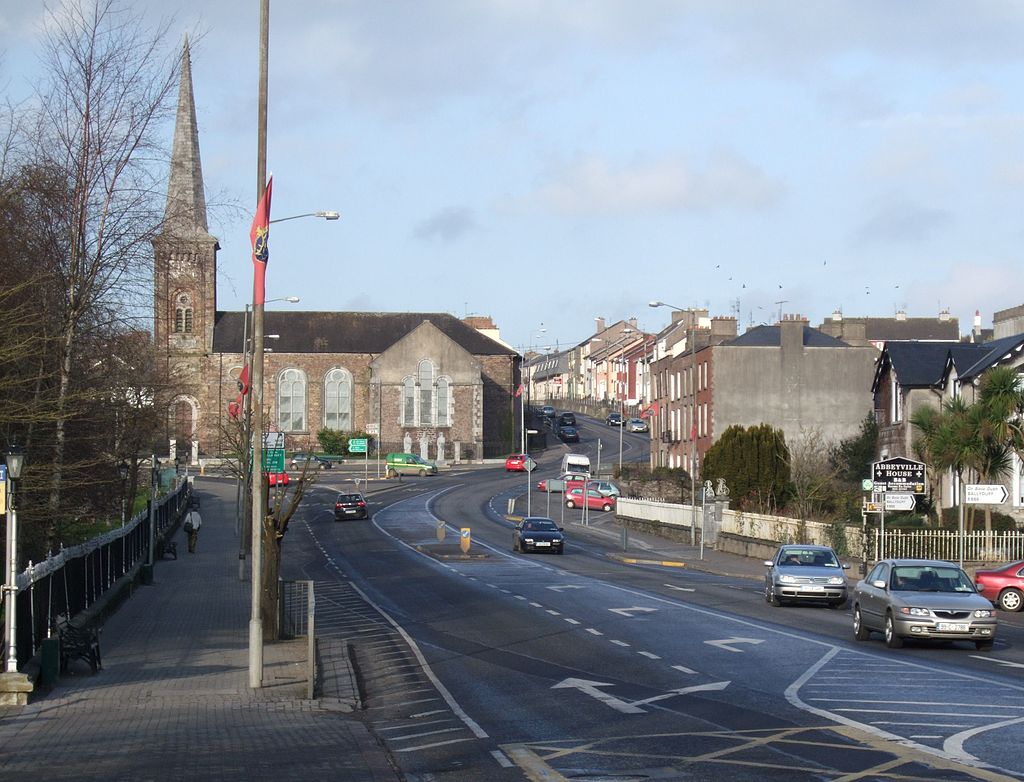
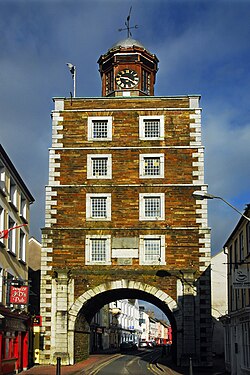
Day 1 of the Journey: I have Lady Claire first traveling by ship from Dublin to Youghal in County Cork. Youghal is located on the estuary of the River Blackwater and sits on a steep riverbank. It has a long and narrow layout. As a historic walled seaport town on an East Cork coastline, it has a number of beaches and has been a tourist destination since the mid 1800s.

Older buildings in the town include Sir Walter Raleigh’s home “Myrtle Grove” and the St Mary’s Collegiate Church, thought to have been founded by St. Declan around 450. It is one of the few remaining medieval churches in Ireland to have remained in continuous use as a place of worship. The Vikings used Youghal as a base for their raids on monastic sites along the south coast of Ireland, and a stone in St Mary’s Collegiate Church bears the ancient etched outline of a longboat.

The Clock Gate, Youghal, Co. Cork ~ Wikipedia

Day 2 of the Journey: Leg #1: Lady Claire next travels from Youghal inland to Fermoy, (about 27 miles) which is also in County Cork, Ireland. The name “Fermoy” means “monastery of the men of the plain.” The town’s name comes from a Cistercian abbey founded by Domnall Mór Ya Briain, King of Thomond in the 13th century. In 1791, the lands around Fermoy were bought by a Scotsman, John Anderson. He was an entrepreneur who developed the roads and started the mail coach system in Ireland. He designed the town and the streets remain much the same as they were originally built. In 1984, some of his descendants, living in Australia, named a winery, Fermoy Estate, after the town he established. [Zekulich, Michael (2000). Wine Western Australia (all new ed.). Perth: St George Books. p. 159.]

Day 2: LEG #2: From Fermoy, Lady Claire travels to Mallow, also in County Cork. The distance would be approximately 18 miles. The town of Mallow also sets in the barony of Fermoy. The earliest form of the name is Magh nAla, meaning “plain of the stone.” On 16 September 1690, shortly after the failed Siege of Limerick but before the Siege of Cork, Colonel Moritz Melchior von Donop, commanding of the second regiment of Danish cavalry, reconnoitred Mallow and destroyed the bridge. He reported encountering a group of Jacobite raparees in Mallow, perhaps 3000 strong. Following his return Major General Ernst von Tettau and Major General Scravenmore devised a ruse whereby a small force of 100 cavalry and 50 dragoons was detached from the overall force of 1200 Horse, 300 Dragoons, and 2 Companies of Danish Foot. These acted as bait and successfully lured out the Jacobites commanded by Patrick Sarsfield, 1st Earl of Lucan and routing them, with 300 raparees dead. Some accounts claim that only Sarsfield and five companions escaped the battle. [“A True and faithful account of the present state and condition of the kingdom of Ireland together with the intire defeat of a body of Irish under the command of Colonel Sarsfield by a detached party of 1200 horse and 300 dragoons by Lieut. Gen. Scravenmore within 14 miles of the city of Cork”Bodleian library. April 2011.]

https://en.wikipedia.org/wiki/Mallow,_County_Cork#/media/File:Rth_Mallow_Town_02.10.12R_edited-2.jpg

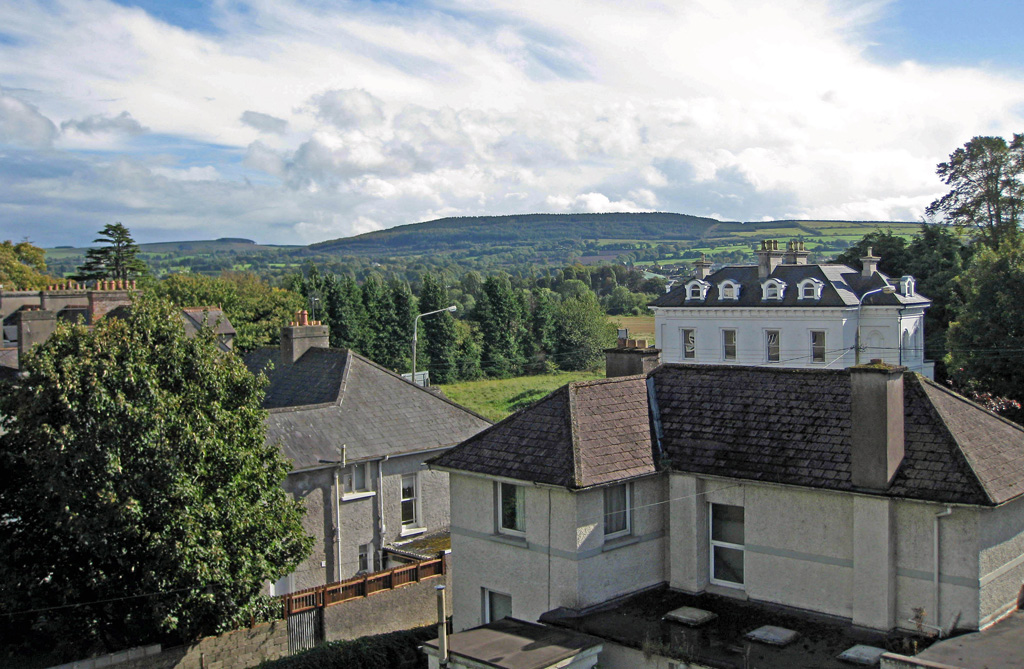
Day 3 of the Journey, LEG #1 – From Mallow, Lady Claire was required to travel a more southerly route to Lombarstown, but the distance was only around six miles. Lombardstown (Irish: Baile Lombaird) is a village west of the town of Mallow. It takes its name from the Lombard family who came to Ireland from Lombardy in Northern Italy in the Middle Ages and became rich and prominent, with branches of the family in Waterford and Cork. Lombardstown is within the Dáil constituency of Cork North-West.

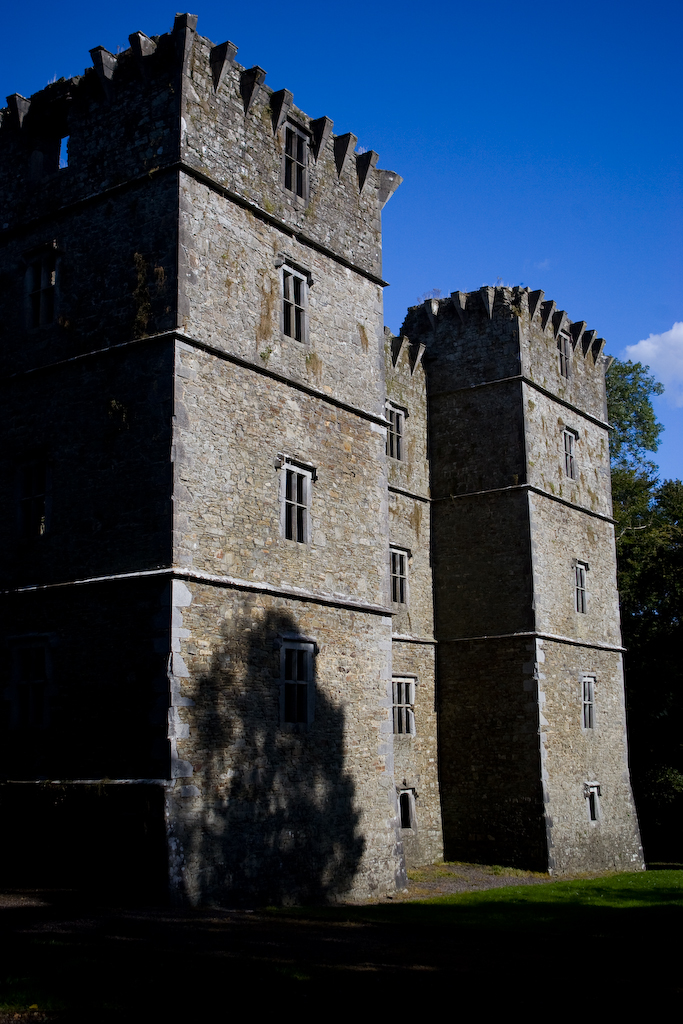
Day 3 of the Journey, LEG #2: Kanturk is only 7 miles or so from Lombardstown. Both serve as the area where Lord Fearghal’s family reside. It is a town in the north west of County Cork, Ireland. It is situated at the confluence of the Allua (Allow) and Dallow (Dalua) rivers, which stream further on as tributaries to the River Blackwater. It is about 50 kilometres (31 miles) from Cork and Limerick. To the south of the town, in Paal East townland, is Kanturk Castle. Known locally as the Old Court, this fortified house was built c. 1601 for MacDonogh McCarthy as a defence against English settlers during the Plantation of Ireland.

https://en.wikipedia.org/wiki/Kanturk#/media/File:Kanturk,_County_Cork_-_Kanturk_Castle.jpg

Giveaway: Comment on any or all of the six posts featuring Regency Summer Weddings Anthology for a chance to win an eBook copy of the book. The giveaway ends on Friday, July 5. Winners will receive their copies of the book then. Good luck to all!

Posted in anthology, book excerpts, book release, British history, Dreamstone Publishing, eBooks, excerpt, Georgian England, Georgian Era, giveaway, historical fiction, Ireland, publishing, Regency era, Regency romance, research, travel, writing | Tagged , , , , , , , , , , , , , , | 2 Comments

Dung Cakes, Not Something to Eat + “Lord Fearghal’s English Bride”+ a Giveaway of “Regency Summer Weddings Anthology”

HERS WAS A CONVENIENT ARRANGEMENT

Lady Claire Waterstone has spent more years out of England than she has enjoying English society. In fact, she feels very odd in making her Come Out with girls four to five years her junior. Claire has never known a “home” of her own. And while several gentlemen are eager to claim her hand, she knows their ardor has more to do with the size of her dowry than true affection. Then she encounters Lord Ainmire Fearghal, an impoverished Irish earl, whose tales of how he sees his land creates in her a desire to share it with him. Claire, therefore, abandons decorum and proposes to Lord Fearghal. However, his roguish charm soon has her wishing for more than a marriage of convenience.

HE BARGAINED FOR HER FORTUNE, NOT HER HEART

Fearghal has only one purpose in marrying Lady Claire: Save his estate. Melhman Manor reeks from inherited debt, and Fearghal requires a wealthy wife immediately. Originally, he thought to leave Claire in London, but his wife soon puts an end to those thoughts, but when she suggests Ainmire’s cousin could be working against Ainmire’s efforts to save his land, Fearghal and Lady Claire strike a different type of bargain – one based in trust and loyalty and the beginnings of love.

Five delightful Regency stories, from USA Today bestselling and Award winning authors, all focused around summer weddings. Lose yourself in the Regency world, and be swept away by love!
***** READ NOW ON KINDLE UNLIMITED *****
This anthology contains:

This anthology contains:
Her Wily Duke by Arietta Richmond ~ A Marquess desperate to protect the Dukedom from his increasingly unstable older brother, a highwayman apparently bent on the destruction of the ducal estates, a young music teacher caught in the middle of it all, a desperate plan which, in the end, leads to love.


Lord Fearghal’s English Bride by Regina Jeffers ~When an Irish Lord, who needs to marry an heiress to save his estates, meets an aristocratic Englishwoman who seeks an interesting life, there is an instant attraction, and a very rapid marriage. But there are those who do not wish them well, and desperate action is called for if they are both to reach their Irish home alive, and save his estate from foreclosure. Will they survive long enough for that attraction to grow into lasting love?


Contradance by Janis Susan May ~ Life looks bleak for Miss Rosemary Coyningham as plans proceed apace for her cousin’s wedding to the Earl she was betrothed to as a child. Once Matilda is married, what will happen to Rosemary? Surely her uncle will no longer wish to have her living in his house? When Matilda’s intended returns from the continent, with a Princely friend, it all gets more complicated… for Rosemary is drawn to Matilda’s betrothed, when she meets him for the first time… and Matilda seems struck with admiration for the Prince… Will there still be a summer wedding?


The Baron Banishes His Rival by Olivia Marwood ~ Lady Anne Calthorpe is delighted when her closest friend and neighbour returns from his studies at Oxford, and even more so when he steps in to protect her from the man who had bullied her as a child – a man who now seems most intent on paying attentions to her. George Marlestone, Lord Houghton, finds his breath stolen when he sees Lady Anne again, and desire for more than friendship fills him. But before he can act on that desire, he will have to overcome the machinations of those who would drive him away from Lady Anne… Will they succeed, between them, in driving off her pursuer, or will their love be torn apart?

Mother of the Bride by Victoria Hinshaw ~ Widowed Amy, Countess of Blakemore is utterly focused on the arrangements for her daughter’s wedding. She needs no distractions, or surely it won’t all get done on time! Then, for the first time, she meets her son-in-law-to-be’s much older half-brother, who proves to be more distracting then she could ever have imagined. William Easton, Baron Hartley, had shown no interest in marrying again, since the mother of his two daughters died. Now, as his half-brother is about to marry, the idea suddenly seems much more appealing. Of course, that might just be because he can’t take his eyes off the beautiful mother of the bride-to-be. But will she accept his suit?

Purchase Link:

Amazon Kindle

Available to Read on Kindle Unlimited

Now, a bit more about my tale . . .

In writing this tale, my heroine, Lady Claire Waterstone, has been the majority of her life in India, as the daughter of a diplomat. When she first arrives in Ireland as Lord Ainmire Fearghal’s bride, her guide to the estate explains the use of peat bricks, and she mentions “dung cakes.” But what are dung cakes? First, a short excerpt.

“The confluence of the River Allow and the River Dalia,” McFarlane said as he dropped back to ride beside her. “Kanturk Castle be in that direction,” he pointed to an adjoining road leading south. “Yer husband’s place is a mile or so along this road.” 

Claire sat taller in the saddle, knowing she would soon be on display and first impressions were more important than many believed. 

Soon McFarlane was again pointing out markers to her. “A stone cairn marking the southeastern corner of Fearghal land.” They continued their ride for another quarter hour, along a road which was assuredly the property line. Miraculously, the property itself was marked by a brick wall spanning the length of the road and leading off in the other direction from a bricked entrance and a gatehouse, that was empty at the moment, which she thought odd, but Claire made no remark. So, they entered through the gate and followed a well-worn lane. 

She studied it all. Up ahead was a small lake and a stand of trees. If they had been in England, herds of deer would be seen crisscrossing the road, but here, there was not even a rabbit, which confirmed her husband’s tales of want and famine. 

Off to the right, she viewed a group of men labouring in a muddy field. 

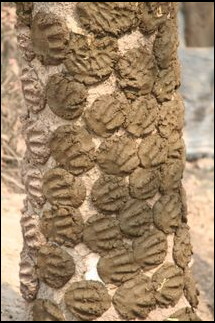
“Cutting peat bricks to burn in their hearths,” McFarlane responded before she could ask the question. “They do something similar in India,” she observed, “only rain and water is scarce. Dung cakes were used in a domestic hearth they called a ‘chulha.’ Dung cakes were also called gosse or uple. The cakes are moulded by hand with a curvature to help them to stick to the walls so they can dry. I would be interested in learning something about the process used here.”

The site ClimateLinks tells us, “The use of cow-patties/ cow-dung cakes are a rural tradition in India. They are a sustainable fuel material that form part & parcel of the traditional way of village life in India. Dung cakes, made from the by-products of animal husbandry, are traditionally used as fuel in India for making food in a domestic hearth called a Chulha. They are made by hand by village women & are traditionally made from cow or buffalo dung. One dung cake, on average, gives 2100 KJ worth of energy.”

Dung is undigested waste of plant-feeding animals, meaning what is left from the plant-matter after it has been chewed up and passed through the animal´s guts. The dung of cattle, goats, sheep, yaks, elephants, llamas etc. are all popular cooking fuels. Fresh dung needs to be dried before it can be used as a fuel, It is either left in in its natural shape or it is formed into round dung balls, flat dung cakes, or moulded around a stick. In some regions, dung is mixed with other kinds of fuel such as coal dust, or agricultural residues in order to enhance the burning performance by increasing the energy-density. – from Cooking with Dung

Additional Information:

Giveaway: Comment on any or all of the six posts featuring Regency Summer Weddings Anthology for a chance to win an eBook copy of the book. The giveaway ends on Friday, July 5. Winners will receive their copies of the book then. Good luck to all!

Posted in anthology, book excerpts, book release, Dreamstone Publishing, eBooks, England, estates, etymology, Georgian England, Georgian Era, heroines, historical fiction, Ireland, Living in the Regency, publishing, Regency era, Regency romance, research, romance, writing | Tagged , , , , , , , , , , , , , , | 1 Comment

On PreOrder & Available July 5! ~ “Regency Summer Weddings Anthology” ~ Enjoy my “Lord Fearghal’s English Bride” + a Giveaway

Five delightful Regency stories, from USA Today bestselling and Award winning authors, all focused around summer weddings. Lose yourself in the Regency world, and be swept away by love!
***** READ NOW ON KINDLE UNLIMITED *****
This anthology contains:

This anthology contains:
Her Wily Duke by Arietta Richmond ~ A Marquess desperate to protect the Dukedom from his increasingly unstable older brother, a highwayman apparently bent on the destruction of the ducal estates, a young music teacher caught in the middle of it all, a desperate plan which, in the end, leads to love.


Lord Fearghal’s English Bride by Regina Jeffers ~When an Irish Lord, who needs to marry an heiress to save his estates, meets an aristocratic Englishwoman who seeks an interesting life, there is an instant attraction, and a very rapid marriage. But there are those who do not wish them well, and desperate action is called for if they are both to reach their Irish home alive, and save his estate from foreclosure. Will they survive long enough for that attraction to grow into lasting love?


Contradance by Janis Susan May ~ Life looks bleak for Miss Rosemary Coyningham as plans proceed apace for her cousin’s wedding to the Earl she was betrothed to as a child. Once Matilda is married, what will happen to Rosemary? Surely her uncle will no longer wish to have her living in his house? When Matilda’s intended returns from the continent, with a Princely friend, it all gets more complicated… for Rosemary is drawn to Matilda’s betrothed, when she meets him for the first time… and Matilda seems struck with admiration for the Prince… Will there still be a summer weddind?


The Baron Banishes His Rival by Olivia Marwood ~ Lady Anne Calthorpe is delighted when her closest friend and neighbour returns from his studies at Oxford, and even more so when he steps in to protect her from the man who had bullied her as a child – a man who now seems most intent on paying attentions to her. George Marlestone, Lord Houghton, finds his breath stolen when he sees Lady Anne again, and desire for more than friendship fills him. But before he can act on that desire, he will have to overcome the machinations of those who would drive him away from Lady Anne… Will they succeed, between them, in driving off her pursuer, or will their love be torn apart?

Mother of the Bride by Victoria Hinshaw ~ Widowed Amy, Countess of Blakemore is utterly focused on the arrangements for her daughter’s wedding. She needs no distractions, or surely it won’t all get done on time! Then, for the first time, she meets her son-in-law-to-be’s much older half-brother, who proves to be more distracting then she could ever have imagined. William Easton, Baron Hartley, had shown no interest in marrying again, since the mother of his two daughters died. Now, as his half-brother is about to marry, the idea suddenly seems much more appealing. Of course, that might just be because he can’t take his eyes off the beautiful mother of the bride-to-be. But will she accept his suit?

Purchase Link:

Amazon Kindle

Available to Read on Kindle Unlimited

Book Blurb:

HERS WAS A CONVENIENT ARRANGEMENT

Lady Claire Waterstone has spent more years out of England than she has enjoying English society. In fact, she feels very odd in making her Come Out with girls four to five years her junior. Claire has never known a “home” of her own. And while several gentlemen are eager to claim her hand, she knows their ardor has more to do with the size of her dowry than true affection. Then she encounters Lord Ainmire Fearghal, an impoverished Irish earl, whose tales of how he sees his land creates in her a desire to share it with him. Claire, therefore, abandons decorum and proposes to Lord Fearghal. However, his roguish charm soon has her wishing for more than a marriage of convenience.

HE BARGAINED FOR HER FORTUNE, NOT HER HEART

Fearghal has only one purpose in marrying Lady Claire: Save his estate. Melhman Manor reeks from inherited debt, and Fearghal requires a wealthy wife immediately. Originally, he thought to leave Claire in London, but his wife soon puts an end to those thoughts, but when she suggests Ainmire’s cousin could be working against Ainmire’s efforts to save his land, Fearghal and Lady Claire strike a different type of bargain – one based in trust and loyalty and the beginnings of love.

As the anthology contains stories of Regency summer weddings, I, naturally, followed suit. In fact, I have two weddings in my tale, but I shan’t share more than that, for it is a major plot point. We readers do not stand witness to Ainmire and Claire’s first wedding, but we do learn that it took place at St George’s of Hanover. St George’s, Hanover Square, is an Anglican church, the parish church of Mayfair in the City of Westminster, central London, built in the early eighteenth century as part of a project to build fifty new churches around London (the Queen Anne Churches) and is part of the ancient parish of St Martin in the Fields. The church was designed by John James; its site was donated by General William Steuart, who laid the first stone in 1721. The building is one small block south of Hanover Square, near Oxford Circus. Because of its location, it has frequently been the venue for society weddings. Robert Hodgson would have served as rector at St George’s from 1803 to 1844.

St George’s Hanover Square in 1787 ~ Public Domain

Enjoy this short teaser and do not forget to leave a comment. I have 5 eBook copies of Regency Summer Weddings for those who comment on this post and the series of posts leading up to the anthology’s release on 5 July 2024.

“My lord,” Lady Ellison had said when she approached him at the Sherbathan ball, “May I give you the acquaintance of my niece, Lady Claire Waterstone?”

“My lady,” he had said, totally taken by surprise for the woman to approach him first. It just was not executed by a lady of quality. Moreover, she was dressed in a deep purple gown. Young women entering the marriage mart customarily wore white or pale shades of yellow and blue: This woman wore the colour of royalty. Perhaps she was a war widow. There were plenty of them in society these days. He did not care as long as the woman had a fortune which could save his beloved estate. 

“I am humbled, my lady,” he said with a proper bow, or at least English ballroom proper. Such “formalities” were less strict among those in Ireland. “I understand you are newly arrived in England.” 

“As are you,” she said in reply. What he had liked about her was she looked at him when she spoke to him. Her eyes were not on the floor. 

“Theoretically, Ireland is a part of the United Kingdom,” he countered. 

“As is India,” she said with a sly smile, which had caught him off guard, for he had been in London for nearly six weeks and had yet to earn the appreciation of any English lady he had thought could be a possible mate. He had been considering a return to his home, be it empty-handed. 

There had been a few women he had found attractive, but none wishing to hold more than a five minutes’ conversation with him. Ironically, Ainmire would not have initially chosen this particular woman to woo, but he had quickly changed his mind, for there was something unique about her that he found extremely attractive.

“I suppose it is, my lady,” he said with an answering smile. The musicians were tuning their instruments for the next set, and so, he said, “If you are not previously engaged to another for this set, I would be pleased to claim your hand.” 

“I fear the set is promised, my lord, but perhaps the one after supper.”

He had not planned to stay for the remainder of the ball and “do the pretty,” but, nevertheless, he had stayed “for her.” Though Ainmire had barely admitted his fascination to himself, he had assuredly not done so to his few acquaintances in England. Her initial refusal had not prevented him from securing her hand for a country waltz. 

Three weeks later, he had made her his wife.

Giveaway: Comment on any or all of the six posts featuring Regency Summer Weddings Anthology for a chance to win an eBook copy of the book. The giveaway ends on Friday, July 5. Winners will receive their copies of the book then. Good luck to all!
Posted in anthology, book excerpts, book release, British history, eBooks, Georgian England, Georgian Era, giveaway, historical fiction, Ireland | Tagged , , , , , , , , , , , , , | 1 Comment

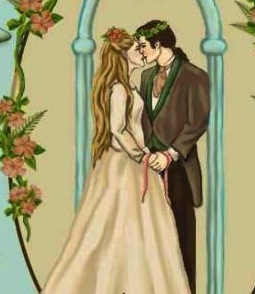
June ~ the Month of Love and Marriage: Handfasting as a Means to Marriage

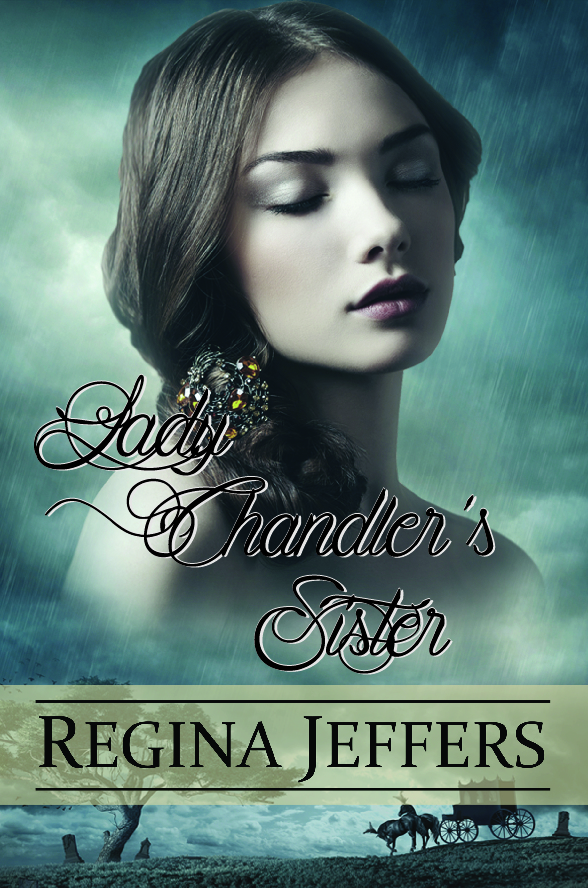
Although Sir Alexander Chandler and Miss Alana Pottinger do not come to their Happily Ever After in Lady Chandler’s Sister through handfasting, it is a subject of discussion. They met in Scotland, and handfasting was a more common practice there. But what was handfasting?

hf3 Historically, marriage towards the latter part of the medieval period in Scotland could be executed by the exchange of consent between a man and a woman. This was what we say in the modern setting, i.e., “I Edward take you Margaret to be my wife.” During the medieval times, witnesses were not necessary to make the marriage valid. Basically, this marriage by consent held true from the early 1200s to the Reformation. This was a practice of canon law, essentially the Roman Catholic Church, not civil law. Oddly, this practice went against the earlier precepts of parental consent and the marriage only being binding after it was consummated. However, the Catholic church argued that these “clandestine” marriages, as they were termed, were as legal and as binding as were those performed by a priest.

Some of these practices changed with the Council of Trent (1563). Roman Catholic law then insisted upon a priest performing the marriage for it to be legal. However, Scottish Reformation did not get around to “reforming” the marriage laws as quickly as did other Protestant countries. Both the Protestant Kirk and Scottish civil law did not change. Consent between the couple remained as the basis for a legal joining. That being said, the Protestant Kirk did not approve of “clandestine” marriages, any more than did the Catholic contingent. Many Scottish Protestants attacked the practice, calling it a form of “fornication” and declaring it illegal.

So, how does this apply to “handfasting”? In late medieval Scotland (and northern England), “handfasting” was a term for “betrothal.” In A. E. Anton’s “‘Handfasting’ in Scotland” (The Scottish Historical Review, October 1958), we learn:

“Among the people who came to inhabit Northumbria and the Lothians, as well as among other Germanic peoples, the nuptials were completed in two distinct phases. There was first the betrothal ceremony and later the giving-away of the wife to the husband. The betrothal ceremony was called the beweddung in Anglo-Saxon because in it the future husband gave weds or sureties to the woman’s relatives, initially for payment to them of a suitable price for his bride but later for payment to her of suitable dower and morning-gift. The parties plighted their troth and the contract was sealed, like any other contract, by a hand-shake. This joining of hands was called a handfæstung in Anglo-Saxon, and the same word is found in different forms in the German, Swedish and Danish languages. In each it means a pledge by the giving of the hand.

42de8778344bbcd5a555f3be0709922f “… The joining of the hands became a feature of betrothals in Scotland and in England during the medieval period. A Scottish protocol narrates that on 24 July 1556, the Vicar of Aberdour ‘ministrat and execut the office anent the handfasting betwix Robert Lawder younger of the Bass and Jane Hepburn docter to Patrick Errl Botwell in thir vordis following: “I Robert Lawder tak thow Jane Hepburne to my spousit wyf as the law of the Haly Kirk schawis and thereto I plycht thow my trewht and syklyk I the said Jane Hepburne takis you Robert Lawder to my spousit husband as the law of the Haly Kirk schaws and therto I plycht to thow my trewth,” and execut the residew of the said maner of handfasting conforme to the consuetud usit and wont in syk casis’ What this ‘consuetude’ was may be gathered from a protocol on the sponsalia of David Boswell of Auchinleck and Janet Hamilton, daughter of the Earl of Arran. After the consents had been exchanged ‘the curate with the consent of both parties with their hands joined betrothed the said David and Janet who took oath as is the custom of the Church’. In fact, the ceremony of joining hands became so closely associated with betrothals in medieval times that in Scotland, and apparently the north of England, the ordinary term for a betrothal was a handfasting. The use of the term in this sense persisted in Elgin as late as 1635.”
One catch in all this is the idea that if a couple had sex after becoming handfasted, they were no longer betrothed, but rather legally married. Handfasting could result in marriage if the couple made their consents to marry or if the pair enjoy conjugal relationships. If they did not exchange consents and did not have marital relationships, they were not married (simply betrothed, which means the betrothal could still be broken).

Resources:

For more on Handfasting, visit Sharon L. Krossa on Medieval Scotland   

“Handfasting History” 

“History of Marriage in Great Britain and Ireland”  via Wikipedia ~ 

LCS eBook Cover-01

Sir Alexander Chandler knows his place in the world. As the head of one of the divisions of the Home Office, he has his hand on the nation’s pulse. However, a carriage accident  on a deserted Scottish road six months earlier has Sir Alexander questioning his every choice. He has no memory of what happened before he woke up in an Edinburgh hospital, and the unknown frightens him more than any enemy he ever met on a field of battle. One thing is for certain: He knows he did not marry Miss Alana Pottinger’s sister in an “over the anvil” type of ceremony in Scotland.

Miss Alana Pottinger has come to London, with Sir Alexander’s son in tow, to claim the life the baronet promised the boy when he married Sorcha, some eighteen months prior. She understands his responsibilities to King and Crown, but this particular fiery, Scottish miss refuses to permit Sir Alexander to deny his duty to his son. Nothing will keep her from securing the child’s future as heir to the baronetcy and restoring Sir Alexander’s memory of the love he shared with Sorcha: Nothing, that is, except the beginning of the Rockite Rebellion in Ireland and the kidnapping of said child for nefarious reasons.

An impressive ending to the beautifully crafted Twins’ Trilogy – Starr’s ***** Romance Reviews

Love. Power. Intrigue. Betrayal. All play their parts in this fitting conclusion to a captivating, romantic suspense trio. – Bella Graves, Author & Reviewer

2019 International Book Award Finalist in Historical Romance

Kindle: https://www.amazon.com/dp/B07PVT5GQ9/ref=sr_1_2?keywords=lady+chandler%27s+sister&qid=1553390378&s=gateway&sr=8-2

Available to Read on Kindle Unlimited

Amazon: https://www.amazon.com/dp/1091376581/ref=sr_1_2?keywords=lady+chandler%27s+sister&qid=1553430979&s=gateway&sr=8-2

Audible (Virtual Voice Narration) https://www.amazon.com/Lady-Chandlers-Sister-Twins-Trilogy/dp/B0CQ7CQXZX/ref=monarch_sidesheet

Book Bub https://www.bookbub.com/books/lady-chandler-s-sister-book-3-of-the-twins-trilogy-by-regina-jeffers

Posted in Black Opal Books, book release, British history, eBooks, George IV, Georgian England, Georgian Era, giveaway, historical fiction, marriage, marriage customs, marriage licenses, real life tales, Regency era, Regency romance, romance, Scotland, suspense | Tagged , , , , , , , , , , , | Comments Off on June ~ the Month of Love and Marriage: Handfasting as a Means to Marriage

June ~ the Month of Love and Marriage: Marriage by Proxy, Possible or Myth?

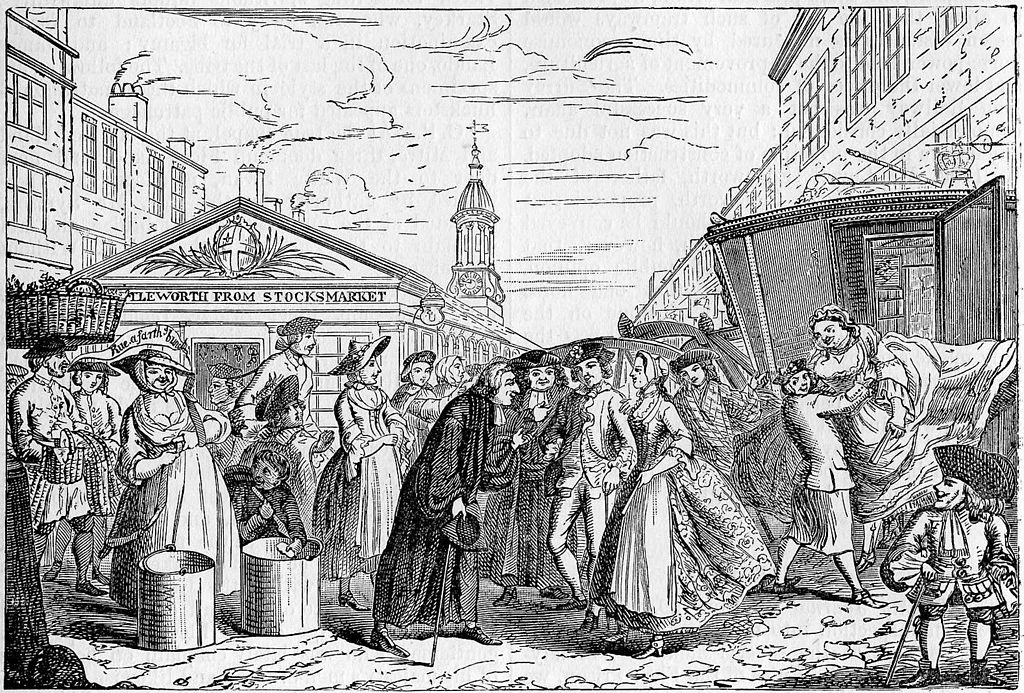
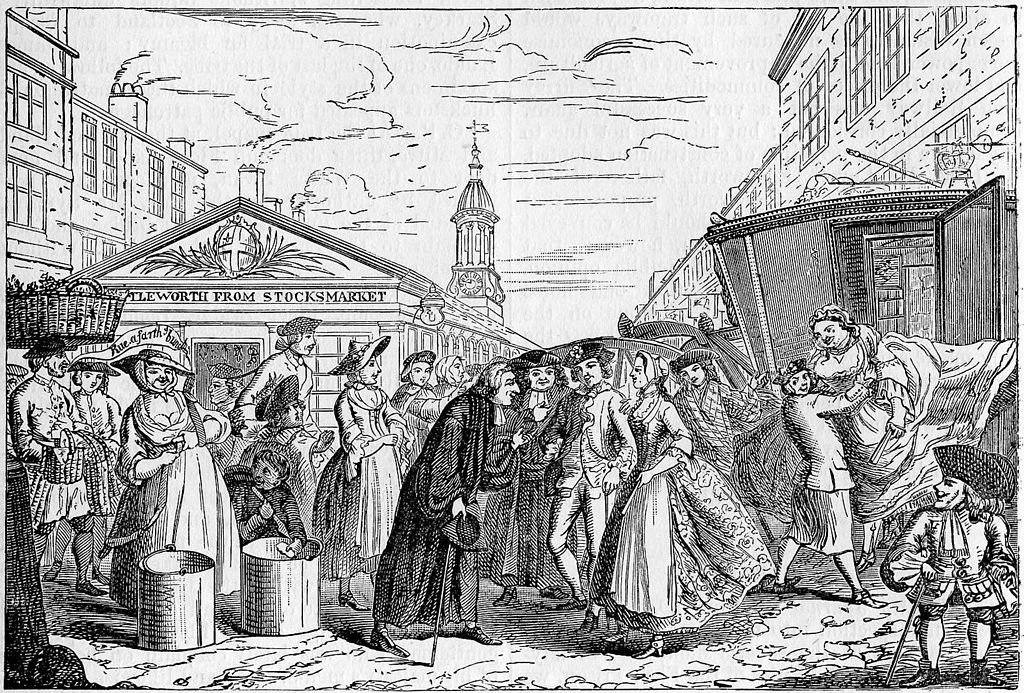
When the Hardwick Act for the Prevention of Clandestine Marriages went into effect in March of 1754, the rules for marrying in England changed dramatically. Prior to that time, all the couple had to do was to pronounce their vows before a clergyman of the Church of England. Heck, it did not even have to be one’s local clergyman or even one’s local church. In fact, the Fleet Street prison saw quite a few marriages in those days. “A Fleet Marriage was a common example of an irregular or a clandestine marriage. An “irregular” marriage was one that took place either away from the home parish of the spouses (but after banns or licence), or at an improper time. “Clandestine” marriages were those that had an element of secrecy to them: perhaps they took place away from a home parish, and without either banns or marriage licence.

Caricature of a Fleet Marriage ~ https://en.wikipedia.org/wiki/Fleet_Marriage#/media/File:FleetStreetMarriage_300dpi.jpg
Image scanned from Robert Chambers’ Book of Days, 1st edition. Chambers’ died in 1871, so the work is in the Public Domain ~ a Victorian depiction of Fleet Marriages, likely derived from an earlier, contemporary un-named source.

“It is often asserted, mistakenly, that under English law of this period a marriage could be recognized as valid if each spouse had simply expressed (to each other) an unconditional consent to their marriage. While, with few local exceptions, earlier Christian marriages across Europe were by mutual consent, declaration of intention to marry and upon the subsequent physical union of the parties,[3][4] in 1563 the Council of Trent, twenty-fourth session, required that a valid marriage must be performed by a priest before two witnesses. By the 18th century, the earlier form of consent-based marriages (“common-law marriages” in modern terms) were the exception. Nearly all marriages in England, including the “irregular” and “clandestine” ones, were performed by ordained clergy. [Fleet Marriage]

Meanwhile, Nancy Researcher tells us, “The new act was meant to make marriages more public and regular.  Though people had always been encouraged to have the banns called, it now became a requirement that they do so unless the couple obtained a license from the local bishop or the Archbishop of Canterbury. By 1811 the cost of a special license was £5.  It was mostly used by the aristocracy and men in the public eye. The standard license from a bishop required a bond for £100 to be forfeit if the couple lied about any allegation as well as a slight fee. This license named the parish in which the wedding would be held.  This license entailed a wait of seven days.”

According to many sources, no provisions existed for proxy marriages in the British Isles. HOWEVER, if a marriage by proxy took place in a country where they were permitted, then such a marriage would be valid in England. Supposedly, none of the cases which were brought before the court involved men or women who had been born and baptized in England. YET, WHAT IF NO ONE QUESTIONED THE MARRIAGE? WHAT IF ITS LEGALITY WAS NEVER UNDER DEBATE BY THE COURT SYSTEM?

After all, Royal brides who were married by proxy in their country of origin–more as a protective measure than a legal marriage–but were married in a Church of England ceremony on arrival in England.

And that being said, there is just enough of an opening in law to make the possibility believable. Under English Common Law, if a proxy marriage is valid by the law of the place where the marriage took place (lex loci celebrations), then it is recognized in England and Wales. “Recognition of Marriages by Proxy Abroad” from the Yale Law Review, tells us, “At common law the mutual consent of both parties per verba de praesenti sufficed without more to create the marital status. . . . Since the mutual consent need not be expressed by the parties in the presence of each other, . . . the English courts had early adopted the provisions of the canon law recognizing the validity of marriages by proxy.”

There upon is what I latched my plot twist in Amending the Shades of Pemberley.

Kindle https://www.amazon.com/Amending-Shades-Pemberley-Prejudice-Vagary-ebook/dp/B0C1HLTW2M/ref=tmm_kin_swatch_0?_encoding=UTF8&qid=&sr=

You will also be able to Read the book on Kindle Unlimited, beginning April 26. 

Amazon Print Copy https://www.amazon.com/dp/B0C1J2GT3F/ref=tmm_pap_swatch_0?_encoding=UTF8&qid=&sr=

BookBub https://www.bookbub.com/books/amending-the-shades-of-pemberley-a-pride-and-prejudice-vagary-by-regina-jeffers

“You have willfully misunderstood me, Miss Bennet. You have no worry of my releasing you, for I do not wish you to perform as a governess to my daughter, but rather as my wife and the mistress of my hereditary estate.”  

Elizabeth Bennet had thought the stranger quite handsome; yet, she had ignored those first tendrils of interest, for she was in no position for the gentleman to pursue her. She and her sister Mary were all who remained of their family. Moreover, Longbourn and its furnishings were to be sold. They were destitute, and, if fortunate, headed for service in some stranger’s household. 

Fitzwilliam Darcy’s proposal of marriage would save both Mary and her, for her sister had agreed to assist with the gentleman’s young daughter. But what of the man’s tale of having corresponded with her father and of Mr. Bennet having purported a marriage between this stranger and her? Elizabeth knew nothing of the arrangement nor of the man’s existence. Though their marriage would solve all her troubles, what if the man’s tale was not completely truthful? Would Mr. Darcy become her enemy or a man she could learn to love? 

Enjoy this short excerpt from Chapter Three:

“Yes, sir,” the servant said, “may I be of assistance?”

“Mr. Darcy to speak to Mr. Phillips. His niece, Miss Elizabeth, asked me to speak to him on a matter of importance.” 

“Step in, sir. I’ll fetch Mr. Phillips.” 

Darcy waited in the foyer but a handful of moments before a middle-aged man, perhaps a few years older than Mr. Bennet, appeared. “Come in, sir. I recognized your name from my wife’s tale of how much of her late sister’s life you purchased at the auction. My office away from my actual office is just along this hall.” 

Darcy was a bit impressed by the size of Mr. Phillips’s house. Many country solicitors lived well, but Mr. Phillips appeared to be doing quite well. When they entered the man’s office, Phillips closed the door behind him. “Claim a seat, sir. The servant said you came on behalf of my niece Elizabeth.” 

“Miss Elizabeth asked me to call on you and secure your attendance at her wedding, rather, I should say ‘our’ wedding.” 

“Most assuredly, Mrs. Phillips and I will be happy to attend, although I admit Elizabeth could have given us the happy news when she and Mary arrived today to stay with us while things are settled with the estate. I would much prefer our girl knew a home of her own rather than the prospects of service.” 

Darcy recognized Elizabeth’s honor would not permit her to become a “poor relation” instead of a servant in another’s home. In that manner, he and she were much alike. He toiled alongside the men he had hired to work the mine, though they thought him a bit daft for doing so.

“When is the wedding?” Phillips asked. 

“Today. In an hour when Mr. Williamson comes to Longbourn. I brought a special license with me today.” 

“A special license?” Phillips asked. “Those are reserved for the aristocracy. Should I be addressing you as ‘my lord’ rather than ‘sir.’”

My late mother was the daughter of an earl.” Darcy grinned. “The Archbishop is my godfather.” 

“Does Elizabeth know this?”

“I mentioned it when I explained about the special license; however, I do not think it completely registered with my betrothed, though I expect several questions on the subject when Miss Elizabeth has time to consider what I said. I believe, today, your niece was more concerned with whether I would accept Miss Mary into my household,” Darcy explained. 

“And you agreed?” Phillips asked suspiciously. 

Darcy unwrapped the strings from the satchel he carried. “Mr. Bennet and I corresponded for nearly six years. This is the copy of the marriage settlements we agreed upon a little over five years back.” He placed the papers on the desk. “Before you ask, Miss Elizabeth knows nothing of these negotiations between her father and me. She does know Mr. Bennet and I held a friendship and her father thought she would make me a good wife.” 

“I knew something of Thomas Bennet’s correspondence with a young fellow in India, but I did not know you two began negotiations for a marriage between you and Elizabeth. Bennet must have thought highly of you if he took it upon himself to make such an arrangement. Elizabeth is of her grandmother’s nature and was something of a favorite of Mr. Bennet’s, but I assume you know all this. Yet, I must say, this arrangement is all quite odd,” Phillips declared. He read the first few lines of the paper. “Mr. Bennet openly states you hold no obligation to act upon the agreement if you do not find Elizabeth to your liking.” The man’s eyebrow rose in question. “I assume you believe my niece acceptable.”

Darcy cut through the series of questions. “Miss Elizabeth Bennet is handsome enough to tempt any number of men, and you may count me among them. However, more importantly, she possesses other qualities I admire and actually require in a wife.  Your niece has demonstrated the care she takes with all she encounters. I watched her at the auction with Mr. Bingley and her neighbors, and even calculated her interactions with me, a complete stranger. Moreover, thanks to Mr. Bennet’s letters, I know much about Miss Elizabeth’s exemplary character and even some of her faults. My family legacy is in tatters, the estate, though grand, suffers, which means I must spend a great deal of time out of my house to set it aright. I have a five-year-old daughter who requires a strong woman with a caring heart to make a home for her, something my Alice has never known, for, in India, I was often away earning a living. Alice is frightened and requires a stable influence in her life, something other than her doll upon which clings for comfort. I also require a capable mistress for my estate, and, naturally, I will eventually require an heir for all my labors.”

“And you can afford to keep Elizabeth as she deserves to be kept?” Phillips demanded. 

“Before I departed England, the family estate easily brought in ten thousand a year. We will not be looking at such amounts for some time, but, within a few years, your niece will be one of England’s most revered women. I made a fortune in India, which I will use to set it all aright. If you require more information, Mr. Bingley can speak to my family’s position in society.

“Mr. Bennet’s personal papers should have a copy of this agreement among them. I am certain you may read it more thoroughly among his will and so forth, at your leisure, and find it legally binding if Elizabeth and I wish it. Your niece is of age and can choose where she may. We both understand, I could demand Miss Elizabeth marry me, and she would have little recourse but to agree. Denying me could place her back in the ranks of poverty or even in debtor’s prison. However, I would prefer she enter our marriage on her own stated conditions. It would serve neither of us well to be on contentious ground, for there is much to be done and little time to do it.” 

Other Sources:

Proxy Marriages: Valid or Invalid?

What Were Proxy Weddings?

Posted in Act of Parliament, book excerpts, book release, British history, customs and tradiitons, England, Georgian England, Georgian Era, giveaway, historical fiction, history, Jane Austen, laws of the land, Living in the Regency, marriage, marriage customs, marriage licenses, Pride and Prejudice, publishing, reading, real life tales, Regency era, Regency romance, research, Vagary, writing | Tagged , , , , , , , , , , , , , , , , , , , , , , , | 14 Comments

Georgian Era Lexicon – The Letter “R”

In the singular form the lexicon of a particular subject is all the terms associated with it. The lexicon of a person or group is all the words they commonly use. As a plural noun, a lexicon is an alphabetical list of the words in a language or the words associated with a particular subject. To distinguish lexicon from a dictionary, it is an alphabetical list of the words in a language or the words associated with a particular subject.

These examples are a mix of what one might hear upon the lips of the aristocracy, as well as examples of Cant used upon London’s streets and those terms used by farmers and like in the country.

R. A. – member of the Royal Academy, which was founded by George III

race courses – There were five famous racecourses for horses during this time: (1) Newmarket in Surrey; (2) Goodwood in West Sussex; (3) Epsom Downs, also in Surrey; (4) Royal Ascot in Berkshire; and (5) Doncaster in South Yorkshire

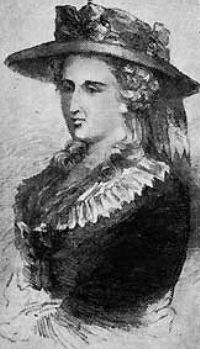
Radcliffe, Ann – was an English author, and a pioneer of the Gothic novel. Her style is romantic in its vivid descriptions of landscapes, and long travel scenes, yet the Gothic element is obvious through her use of the supernatural. It was her technique of explained Gothicism, the final revelation of inexplicable phenomena, that helped the Gothic novel achieve respectability in the 1790s.

Ann Radcliffe – Wikipedia

radical – extreme liberals who demanded governmental reforms leading to the Reform Act of 1832

rag-and-bone shop – a shop that bought and sold rags that could be made into paper, as well as bones the could be ground up into manure

ragbag – servants had the privilege to place discarded rags from their master’s household in a ragbag to be sold later for a profit

rake – A dissolute man who indulges in excessive drinking, gambling, and debauchery. In romance novels, most often rake is incorrectly used interchangeably with “libertine” or “roué” however, the latter two terms mean a womanizer, not necessarily one who is also excessive with gambling and drinking – so Mr. George Wickham would be a libertine or roué, not a rake.

Ramsgate – Ramsgate was/is a seaside town in the neighborhood of Thanet in England. It is on the southern coast of the island. In Jane Austen’s time it was a place of high standards.

rank – a person’s social standing

ranker – an officer who had advanced to his position from the ordinary soldiers instead of purchasing his commission; gentlemen rankers were the opposite situation as they were gentlemen who sought anonymity among the ranks of the ordinary soldiers, likely due to some disgrace or scandal from which they wished to escape

rasher – a thin slice of ham or bacon

ratafia – a macerated fruit punch liqueur, flavored with almond extract.; often a touch of brandy is added

rate – the rate of a ship-of-war was based on the number of guns; first-rates carried 100+ guns; second-rates carried between 75-100, etc., down to sixth-rates

rate – a local parish tax

read himself in – the incumbent reads the Thirty-nine Articles aloud to his congregation upon assuming his new office

recusant – a person who refused to attend Church of England services (originally used only for Catholics and Dissenters)

Red Book – a list of everyone who worked for the government

reddle – a red chalk used for marking the sheep’s owners before they are sheared

reddingote – a long, fitted coat generally worn for colder temperatures; could have a belt and be trimmed with fur

http://standrewspanama. com/folklore_dancing.html
http://standrewspanama.
com/folklore_dancing.html

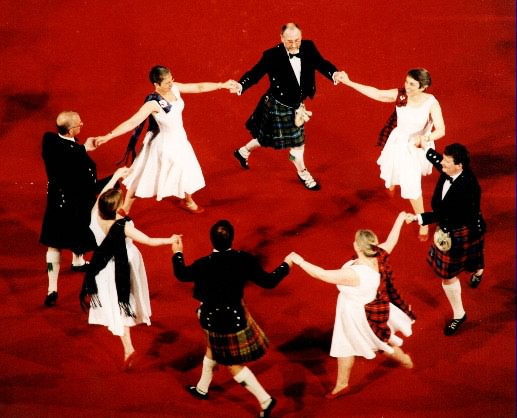
reel – a Scottish dance that involved a series of figure 8s

Reform Act of 1832 – brought about to eliminate the underrepresentation of the lower classes (especially the middle class) by redistributing the parliamentary seats among the boroughs

regent – a person who reigned on behalf of a monarch (George IV became the Prince Regent when his father was declared insane in 1810)

Regency – the years 1811-1820 when Prince George IV ruled as Regent during his father, King George III’s, mental illness

register – a record of the births, deaths, and residents of a parish

regular – the enlisted army of the British government as opposed to the irregulars (militia and volunteers)

repeater – an old-fashioned watch that struck the last hour or quarter hour when a person pushed the handle on it; very useful in the dark in providing the time; A repeater is a complication in a mechanical watch or clock that audibly chimes the hours and often minutes at the press of a button. There are many types of repeater, from the simple repeater which merely strikes the number of hours, to the minute repeater which chimes the time down to the minute, using separate tones for hours, quarter hours, and minutes. They originated before widespread artificial illumination, to allow the time to be determined in the dark, and were also used by the visually impaired. Now they are mostly valued as expensive novelties by watch and clock enthusiasts.

resurrectionist – a body snatcher (Before 1833, only the bodies of criminals could be used in medical schools for the teaching of anatomy.)

retainer – a servant who had been with a family for extended years

https://jasnactsummer camp.wordpress.com/ 2013/06/16/summer-getaway-workshop-regency-reticule-wallet-making/
https://jasnactsummer
camp.wordpress.com/
2013/06/16/summer-getaway-workshop-regency-reticule-wallet-making/

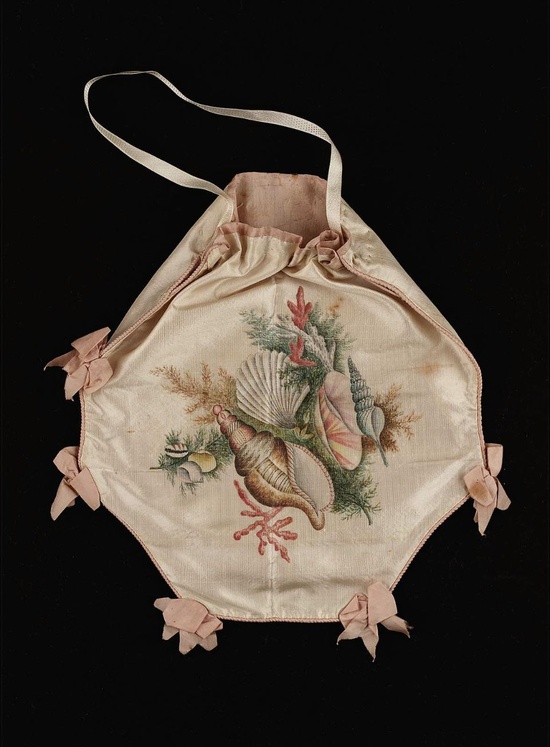
Reticule – (sometimes called a “ridicule”) a Regency purse in which ladies carried their essential calling cards, handkerchief, comb, etc.; held about the wrist with a long drawstring closure

Right Honourable – the formal way to address earls, viscounts, barons, and privy councillors; also used for a peer’s eldest son bearing as a “courtesy title”

ring a peal over someone’s head – to scold

Riot Act – (originally the Riot Act of 1714) a justice of the peace would, literally, read a troublesome crowd “the riot act,” meaning he would read his instructions to disperse to the group; after an hour, if more than 12 remained those arrested would be guilty of a felony

river tick – to have no money; to be deeply in dept. Credit was drawn on a ticket—hence the shortened word ‘tick.’

Robin Redbreast – the colloquial name for the Bow Street Runners because of their vests

roly-poly – a very old word based on two origins: 1. Biscuit dough spread with jam.  2. rowle powle, a worthless fellow. This term originates from a 16th century rolling ball game

rotten borough – a parliamentary borough with few inhabitants; part of the Reform Act of 1832 was to eliminate such boroughs

Rotten Row – a walkway for horses in the southern part of Hyde Park; the word comes from a corruption of the phrase route de roi meaning “King’s Row” in French

round gown – A dress with the bodice and skirt joined in a single garment (during the Regency and earlier, these pieces were generally separate), with the skirt closed all around, ie not opened to expose an underskirt.

roué – a man who is lascivious or unrestrained sexually, an immoral womanizer

rout – a crowded party with no music or dancing or places to sit; yet, people attended in order to be to see and to be seen

http://austenonly.com/ 2010/02/14/austenonly-northanger-abbey-season-the-crescent-bath/
http://austenonly.com/
2010/02/14/austenonly-northanger-abbey-season-the-crescent-bath/

Royal Crescent (Bath) – The Royal Crescent, one of Bath’s most iconic landmarks, was built between 1767 and 1775 and designed by John Wood the Younger. This impressive landmark forms a sweeping crescent of 30 Grade I Listed terrace houses, and is without doubt one of the greatest examples of Georgian architecture anywhere in the UK.

Royal Exchange – where the various trades met in London; each trade met with others of a like trade and were allotted a particular area in the Royal Exchange; Lloyd’s of London was also house in the Exchange

Royal Naval College – The Royal Naval Academy (1733 – 1837) was established at Portsmouth Dockyard as a facility to train officers for the Royal Navy. The founders’ intentions were to provide an alternative means to recruit officers and to provide standardised training, education and admission. The officers learned not only military strategies, but were taught social skills such as dancing.

In 1733, a shore side facility was established in the dockyard for 40 recruits. A comprehensive syllabus provided theoretical and practical experience in the dockyard and at sea. Graduates of the Academy could earn two years of sea time as part of their studies, and would be able to take the lieutenant’s examination after four years at sea instead of six. The Academy did not, however, achieve the objective of becoming the preferred path to becoming a naval officers. The traditional means of a sea-going ‘apprenticeship’ remained the preferred alternative. The vast majority of the officer class was still recruited in this manner based on family ties, and patronage. Family connections, ‘interest’ and a sincere belief in the superiority of practical experience learned on the quarterdeck ensured that the officer class favoured the traditional model. William IV summed up this view when he remarked that “there was no place superior to the quarterdeck of a British man of war for the education of a gentleman.”

There was a clear prejudice against Academy graduates. The then rating of midshipman-by-order, or midshipman ordinary, was used specifically for graduates of the Royal Naval Academy, to distinguish them from midshipmen who had served aboard ship, who were paid more. After two years at sea, graduates of the academy were eligible to be promoted to midshipman.

The college closed as a young officer training establishment in 1837 meaning that from that date all youngsters setting out on a naval career proceeded directly to sea. Two of Jane Austen’s brothers, Francis and Charles, attended the Academy in 1786 and 1791 respectively. Both went on to become Admirals.

Royal Navy – The Royal Navy (RN) is the principal naval warfare service branch of the British Armed Forces. Tracing its origins to the 16th century, it is the oldest service branch and is known as the Senior Service. From the end of the 17th century until well into the 20th century it was the most powerful navy in the world.

rubber – required gamers to win two out of three or three out of five hands of whist, etc.

rushlight – ordinary rushes, which have been dipped in drippings of oil or grease, so they can be easily set alight; used in place of candles by the poor

If Interested, Check Out These Other Resources:

Other Sources: 

Candice Hern

Donna Hatch

18th Century Vocabulary 

Georgette-Heyer: Regency Cant and Expressions 

Jane Austen Organization

Kathleen Baldwin

Messy Nessy Chic

Regency Reader

Sara Ramsey

Sharon Lathan

Posted in British history, England, Georgian England, Georgian Era, Great Britain, history, language choices, Living in the Regency, Living in the UK, Regency era, research, Uncategorized, vocabulary, word choices, word origins, word play | Tagged , , , , , , , , , , , , , , | 4 Comments

June ~ the Month of Love and Marriage: Scottish Marriages and Elopements in the Regency Era

Those of us who read and write Regency novels have all heard of elopements to Gretna Green. Harking back to 1754 and the introduction of a new controversial Marriage Act in England, Gretna Green flourished as a haven for runaway couples. It even receives mentions in not just 1 but amazingly 3 of Jane Austen novels, Pride & Prejudice, Sense & Sensibility and Mansfield Park.

“MY DEAR HARRIET, You will laugh when you know where I am gone, and I cannot help laughing myself at your surprise to-morrow morning, as soon as I am missed. I am going to Gretna Green, and if you cannot guess with who, I shall think you a simpleton, for there is but one man in the world I love, and he is an angel.” – Lydia Bennet in Pride and Prejudice, Chapter 47

From Austenonly, we learn, “References to Scotland in Jane Austen’s adult works are few, but she did  make use of the different marriage laws in Scotland in three of her novels: Sense and Sensibility, Pride and Prejudice and Mansfield Park. In Sense and Sensibility, Colonel Brandon had planned to elope to Gretna with his poor Eliza but was thwarted at the last minute by the folly of her maid exposing their plans. In Pride and Prejudice Wickham planned to elope with Georgiana Darcy to Gretna Green, but his dastardly plan was foiled by Georgiana’s confession to Darcy before they could set out on the road. Quite typically he had no such plans to take Lydia Bennet there, though she was initially under the misapprehension that Gretna was to be their final destination. In Mansfield Park, Julia Bertram and Mr Yates run off to Gretna to be married amid the turmoil of the adulterous goings on between Maria Rushworth and Mr Crawford.

Why Gretna Green? Gretna, or Scotland as Jane Austen mostly wrote when she used the term in her novels, was, in the late 18th Century a place where couples thwarted in their plans to marry legally in England and Wales could resort, in order to marry legally without parental consent. From the implementation of the Clandestine Marriages Act of 1753, it was impossible for anyone under the age of 21 years age to legally marry without their parents ( or guardians) consent.”

We must remember that Scotland is approximately 320 miles from London. The main thoroughfare from London to Edinburgh followed the Great North Road or a series of turnpike roads on the western side of the country. The journey was not an easy one. The average carriage travelled between 5-7 miles per hour––that is not accounting for poor weather, tolls, meals, changing out the horses, etc. Even traveling 12 hours per day, it would take a couple some 4 days to reach Scotland, more than likely 5 days. Do not forget that many times irate family members were in hot pursuit.

 But Gretna Green was not the only place for elopements in Scotland. The Great North Road took couples to Scotland via Northumberland. Lamberton, Berwickshire, Scotland, for example, is 4 miles north of Berwick-upon-Tweed in Northumberland. The now demolished Old Toll House at Lamberton, situated just across the border in Scotland, was notorious for its irregular marriages. From 1798 to 1858 keepers of the Toll, as well as questionable men-of-the-cloth, married couples in a hurry to escape relations.

Paxton, Berwickshire, Scotland, lies 1 mile west of the border with Northumberland, Berwick-upon-Tweed. Mordington, another Scottish village, was 5 miles from Northumberland. It is said that many chose to be married by the toll keepers of these two border towns.

1024px-Marriage_and_Toll_House_at_Coldstream_Bridge_built_for_resident_engineer_Robert_Reid

Marriage and Toll House at Coldstream Bridge on the Scottish side of the border https://en.wikipedia.org/wiki/Marriage_in_Scotland

Sometimes the couple chose to cross the Coldstream Bridge, which links Cornhill-on-Tweed, Northumberland, to Coldstream, a civil parish in the Scottish Borders area of Scotland. Much like Gretna Green, it was a popular centre for runaway marriages. As with the other towns mentioned, couples were joined in marriage at the toll house.

Who performed these marriages? The simple answer is: anyone who wanted to do so. Declaring one’s vows to live together before witnesses could constitute a binding marriage. One did not require a clergyman to be deemed a wedded couple. These ceremonies would also provide a certificate as proof of the marriage, for when the couple returned home.

Irregular Scottish marriages simply required the couple’s agreement and witnesses to the act to be legal. A couple could publicly promise to abide in marriage, which could be followed by consummation as proof or simply by cohabitation with repute. Any citizen could witness a public promise. The idea of “marrying over the anvil” in the legend of Gretna Green came about by the blacksmith being one of the first building encountered by the couple seeking a Scottish marriage in the village, and the blacksmith was a “citizen.” A marriage of “cohabitation with repute” was an old style of common-law marriage.

MDF eBook Cover

MR. DARCY’S BRIDEs: A Pride and Prejudice Vagary 

I much prefer the sharpest criticism of a single intelligent man to the thoughtless approval of the masses.

ELIZABETH BENNET is determined that she will put a stop to her mother’s plans to marry off the eldest Bennet daughter to Mr. Collins, the Bennet heir to Longbourn, but a man that Mr. Bennet considers an annoying dimwit. Hence, Elizabeth disguises herself as Jane and repeats her vows to the supercilious rector as if she is her sister, thereby voiding the nuptials and saving Jane from a life of drudgery. Yet, even the “best laid plans” can often go awry.

FITZWILLIAM DARCY is desperate to find a woman who will assist him in leading his sister back to Society after Georgiana’s failed elopement with Darcy’s old enemy George Wickham. He is so desperate that he agrees to Lady Catherine De Bourgh’s suggestion that Darcy marry her ladyship’s “sickly” daughter Anne. Unfortunately, as he waits for his bride to join him at the altar, he realizes he has made a terrible error in judgement, but there is no means to right the wrong without ruining his cousin’s reputation. Yet, even as he weighs his options, the touch of “Anne’s” hand upon his sends an unusual “zing” of awareness shooting up Darcy’s arm. It is only when he realizes the “zing” has arrived at the hand of a stranger, who has disrupted his nuptials, that he breathes both a sigh of relief and a groan of frustration, for the question remains: Is Darcy’s marriage to the woman legal?

What if Fitzwilliam Darcy and Elizabeth Bennet met under different circumstances than those we know from Jane Austen’s classic tale: Circumstances that do not include the voices of vanity and pride and prejudice and doubt that we find in the original story? Their road to happily ever after may not, even then, be an easy one, but with the expectations of others removed from their relationship, can they learn to trust each other long enough to carve out a path to true happiness?

Kindle  https://www.amazon.com/Mr-Darcys-Bride-Prejudice-Vagary-ebook/dp/B074CKDK9J/ref=sr_1_1?ie=UTF8&qid=1508939279&sr=8-1&keywords=mr.+darcy%27s+brides

Available to Read on Kindle Unlimited

BookBub https://www.bookbub.com/books/mr-darcy-s-brides-a-pride-and-prejudice-vagary-by-regina-jeffers-and-a-lady

Audible (Virtual Voice Narration) https://www.amazon.com/dp/B0CXJM3RXL

Amazon https://www.amazon.com/MR-DARCYS-BRIDEs-Prejudice-Vagary/dp/1974028321/ref=sr_1_4?ie=UTF8&qid=1508939279&sr=8-4&keywords=mr.+darcy%27s+brides

Excerpt from Chapter 11 of MR. DARCY’S BRIDEs.

Darcy handed her down from the let carriage before a small inn. They were a little less than three hours removed from Allard’s estate, but he had noticed how with each mile of the journey, Elizabeth’s shoulders had relaxed a bit more.

Their return to the manor house had been executed in relative silence. As he walked beside her, Darcy’s mind had reviewed all his interactions with Allard and how he had failed to notice the weaknesses in the man’s business aplomb before arriving on the man’s threshold. Thankfully, Elizabeth had not attempted to tease or cajole him from his self-chastisements. She was not that kind of woman, one who chattered on, filling the air with nonsense. No. Elizabeth Bennet was a woman who used language as she did every other facet of her life, with a combination of intelligence and economy.

It was only when the manor came into view that she offered, “I must beg your pardon, Mr. Darcy, for I have again interfered in your well-structured life.”

He halted their progress and turned her to him. “I consider your presence in my life a blessing, and you are not to think otherwise. You have prevented me from making two monumental mistakes. How can you think me from sorts?”

She searched for the sincerity in his expression for several elongated seconds before the worry set her features transformed into a smile that had Darcy’s heart skipping a beat. “Shall that be my role in your life, Mr. Darcy? Savior?” Good humor filled her tease, and he found himself smiling in return.

“My personal guardian angel,” he said softly as he brought her gloved hand to his lips, where he kissed the inside of her wrist.

A flush of color raced to her cheeks, but she did not rip her hand from his grasp. Instead, with a delightful laugh, one that had a rush of warmth filling his abdomen, she taunted, “Mrs. Bennet will testify that I am more devil than angel, and you, sir, would do well to remember as such.”

“May I be of assistance, sir?” The innkeeper rushed forward to greet them.

Darcy tucked Elizabeth closer to his side. “My cousin and I require rooms,” he announced. They had agreed that as they traveled in the direction of the Flynns’ estate that it was probable that they would encounter others from Flynn’s household, who might recognize Elizabeth, and so she was now Darcy’s relation instead of his wife. He would go to extremes to protect Elizabeth’s reputation, for he had grown truly fond of her.

The innkeeper eyed them suspiciously. “Not many of your ilk come this way.”

Darcy understood the man’s insinuation. “My cousin and I were guests at the Allard estate outside of Edinburgh, but measles have struck some of those employed upon the estate. We thought it best to depart early before the illness spreads to those in the main house.” He told the truth—just not the complete truth.

“Measles, heh?” the man asked as he turned the register so Darcy might sign it. “That be a bad business.” He handed Darcy the pen, but did not place the ink well upon the table. “Before ye be signing, sir, ye shud know there be a weddin’ occurrin’ here this evening. Not exactly the weddin’, more along the lines of the celebration. There be no assembly hall or meeting place large enough to hold the sizable family gathering. Most in the area call in here regularly. Might’n be a bit loud.”

Darcy did not wish to climb back into the crowded let carriage with Sheffield and Hannah observing his every interaction with Elizabeth, but he dutifully asked, “And the next decent inn?”

“For the likes of you, sir, some twelve miles along the main road south.”

Darcy leaned down to ask, “What say you, Elizabeth?”

“In truth,” she said softly, “I could sleep through the roughest storm God chose to deliver.  A few partiers will not disturb me. A good meal and a bath are all I require for the evening.”

“Then we will stay.” He grinned at her. “You heard the lady. Two rooms as far removed from the jubilation as possible.”

Within a quarter hour, they dined in the common room of the inn. Only three others occupied the room, so they were relatively alone and could speak freely. “I wish to extend my apologies,” he said in serious tones. “I thought myself in charge of what has occurred between us since you ran from the church, but I fear I have done you irreparable harm. I have placed you in a abrasive surrounding and opened you to further accusations. You must permit me to do more than present your sisters with a larger dowry.”

She looked up in alarm. “Such as?”

“I would not be opposed to our joining,” he stated honestly. Since taking her acquaintance, Darcy had often considered the possibility of calling her wife.

Elizabeth shook off the idea. “I could not entertain your address, Mr. Darcy. Even if you had not brought me aboard your yacht, my actions at the church discredited my name. It was foolish of me to think such cheekiness could be ignored. Even if I had simply thwarted Mr. Collins’s plans, I named my fate. I doubt either the gentleman or your aunt would have remained silent regarding my purposeful slight. And I find it hard to believe that my father will be capable of controlling Mrs. Bennet’s aspersions. He has failed miserably in the past when Mrs. Bennet sets her mind to such misery. Most certainly, all in the neighborhood know something of my ill-advised bravado by now.”

He did not approve of her decision, but Darcy nodded his agreement. “I must abide by your choice.”

Silence settled between them, and it was not the kind of silence that caused distress. It was more of the manner in which two friends can sit together, even when they disagree upon something important. He searched for a means to change her mind, but he knew Elizabeth adamant in her opinions. Before he could form an argument to persuade her, the wedding party, literally, carried the newly-wed couple into the inn. The bride and the groom were perched on the shoulders of four bulky Scotsmen, who proudly hefted the pair higher, to the cheers of all those trailing behind them.

“Oh,” Elizabeth sighed heavily as she looked on. “Is she not beautiful? Such joy upon her countenance. Do you suppose they are in love?”

Darcy studied the pair as their escorts set them upon the floor. “The groom appears enthralled with his bride.” He noted the look of longing upon Elizabeth’s face, and he felt a bit sad that because of him, she would never know such happiness. “Is that your desire? To marry for love?” Such would go a long way in explaining why she had refused him, for Darcy knew her affections had not been stirred by their acquaintance.

She shrugged off his questions. “Do you find it odd, Mr. Darcy, that I am as susceptible to the idea of discovering a man who holds me in deep regard as are my sisters? Is it not foolish for a woman of my years to carry the wish of the Cinder Maid buried deep in her heart?”

“My parents married for love,” he admitted. “Together, they were a force with which to be reckoned.” Darcy chuckled in remembrance. “They were quite remarkable. I always believed if I could replicate their devotion to each other in my own marriage that Pemberley could survive and prosper.”

“Then when did you have a change of heart?” she challenged. “From your own lips, Miss De Bourgh did not claim your heart.”

“I do not know exactly how to define that particular moment.” He sat staring out the window over her shoulder. “I thought I had several years before I must choose a wife. Thought myself above entering the marriage mart. But…” He closed his eyes to drive away the taste of bile rising to his throat whenever he considered the betrayal practiced at George Wickham’s hands.

“But?” Elizabeth prompted, as she slipped her hand into his. “Know that I can serve as your confidante, Mr. Darcy.”

He opened his eyes to study her beautiful countenance. How was it possible that they had known each other less than a fortnight; yet, she was essential to all that he held most dear? “But a former friend used our relationship to attempt a seduction of my sister.” He had said the words aloud, and all his fears of the world swinging away from its axis had proved false. “I blundered—not giving her the attention she required,” he explained, “and Georgiana is so broken that I am desperate to restore her good humor. I thought that Anne might prove a comforting force for Miss Darcy. Mayhap even lead my sister to a better understanding of Georgiana’s lack of fault in the matter.”

Tears pooled in Elizabeth’s eyes. “And who is to lead you to a better understanding of your role in the matter, Mr. Darcy?” she asked in sympathetic tones.

He squeezed her hand. “My fault will never be obliterated. It is Georgiana’s heart that requires protection. She is not yet sixteen and was easily misled by a man she recognized as part of our family’s legacy. Miss Darcy trusted him, but all Mr. Wickham, who was my childhood chum and the son of my father’s steward, wished was my sister’s substantial dowry.”

“Oh, William,” she whispered. “You cannot take the blame for some blackguard’s disposition. You can only execute your life with honor.” She smiled weakly. “I know young girls. I was one very recently.” A bit of a tease entered her tone. “We give our hearts away many times before we discover a man worth knowing.”

“Pardon, friends,” the innkeeper said as he set two steaming plates before them. “Wanted to get yer meal out before the celebration became too rowdy.” He chuckled good-naturedly as he glanced over his shoulder at the wedding party. “The bride be the daughter of Sir James Metts, a knight who earned his title via our local bishop. She be a good girl. Don’t know much of the groom. He be Greek. And Catholic. Never knew a Greek before. Some sort of diplomat, I hears. They met in London at a musicale, whatever that may be.” He set two tea cups upon the table without saucers. “Don’t know ‘bout the spirits, but the young man claims this a traditional drink for those of his kind. Says it tastes of aniseed or fennel. Wishes you to join him in a toast to his bride.” The innkeeper poured two fingers full in the cups.

Elizabeth eyed the drink suspiciously. “And what does the gentleman call these spirits?”

“Ouzo.”

She glanced to Darcy. “Are you familiar with the drink?”

“It may surprise you, my dear,” he said with a genuine smile, “but I never experienced a grand tour nor do I associate with high rollers.”

Her mouth formed a teasing pout. “Then I suppose it falls to me to taste the brew first. I would not wish to stain your immaculate reputation by demanding that you imbibe first.”

Darcy’s smile widened. “We will partake of the brew together.” He lifted his cup to tap it gently against hers. “To life.”

“To love,” she added.

Then they turned as one toward the happy couple, and with the others gathered in the room, they declared, “To a happy marriage.”

Posted in Austen Authors, book excerpts, book release, British history, Church of England, eBooks, excerpt, Gretna Green, Jane Austen, Living in the Regency, marriage, marriage customs, marriage licenses, Pride and Prejudice, publishing, Regency era, romance, Vagary, writing | Tagged , , , , , , , , , , | 4 Comments

June ~ the Month of Love and Marriage: Fleet Prison Marriages of the 1700s

Marriage ceremonies associated with the Fleet Prison is London were many in the mid to late 1700s. It is estimated that in the 1740s over half of London’s marriage ceremonies took place in “marriage shops” surrounding the Fleet Prison. By some accounts, 800,000 people named in the marriage records of the times were married in this manner. These were what some termed as “clandestine” or “irregular” marriages. According to GenGuide, “A marriage without banns or licence or conducted away from the parish of residence of both parties was considered ‘clandestine’ and a marriage that took place in one of the party’s parishes without banns or licence or away from the parish of either party by banns or licence was considered ‘irregular’. Whichever way was chosen, the union was in the eyes of the law a legally binding contract. Many nonconformists married in this manner often in their own meeting houses.

“Marriage registers from ceremonies conducted in and around the Fleet Prison in London, with many taking place in local taverns and coffee houses. As clergymen were often confined to the Fleet as debtors, they performed marriage ceremonies for other inmates for a fee without licence or other formalities. This practice was stopped in 1711, but clergy carried on conducting irregular but legal marriage ceremonies in nearby taverns. These so called ‘marriage shops’ could also be found in the grounds of the May Fair Chapel and the King’s Bench prison and other centres such as the Holy Trinity, Minories and St. James, Dukes Place. The ceremonies were conducted by individuals who had taken holy orders without licence who could legally marry two people at any time and at any place. Although they ignored the official rules on using banns and licences the marriages were still legally valid.” 

Between 1613 and 1754, a legal loophole created a situation where on-the-spot marriages could be carried out in an area surrounding the Fleet Debtors’ Prison, known as the ‘Liberties of the Fleet’. There is suspicion that some illicit matches took place, against the will of one or other of the parties, but judging from the number of unions made (estimated to be almost 250,000 in just 60 years up to 1753), it seems more likely that the ability to marry without parental consent might well have been the more common motivation.

Clergymen  who were imprisoned for debt, set up shop in the Liberty of Fleet Prison  and conducted weddings. At the time, marriage needed only to be conducted by an ordained clergyman of the Church of England for the ceremony to be valid. Many of these weddings passed unnoticed into history.  Sometimes these marriages were bigamous  and quite often fraudulent. A man, for example, might marry a woman with a bit of money or property and  then relieve her of it before decamping. He might then go elsewhere and marry another with the due reading of the banns.

While the courts accepted all sorts of evidence that a couple had been joined together in a valid marriage, they were very reluctant to accept the certificate or register of a Fleet parson. This reluctance was based on numerous examples of fraud, forgery, and false entries.

s-l300.jpg The Lord Chancellor, Lord Hardwicke thought to close those loopholes. The Marriage Act 1753, full title “An Act for the Better Preventing of ClandestineMarriage“, popularly known as Lord Hardwicke’s Marriage Act (citation 26 Geo. II. c. 33), was the first statutory legislation in England and Wales to require a formal ceremony of marriage. It came into force on 25 March 1754. “The legislation stipulated that marriage must take place in a licensed Anglican parish church in the bride or bridegroom’s own parish and be recorded in a special book with a numbered space for each entry, to prevent fraud. Banns were read publicly on three separate Sundays, which allowed for objections to be raised possibly by parents of children under the age of 21 or previous spouses to call a halt to the proposed wedding. The legislation also allowed marriage by licence in a different parish to that of the couple’s residence. The only exceptions allowed were for Quakers and Jews, so all other non conformists including Roman Catholics had to marry in an Anglican church.
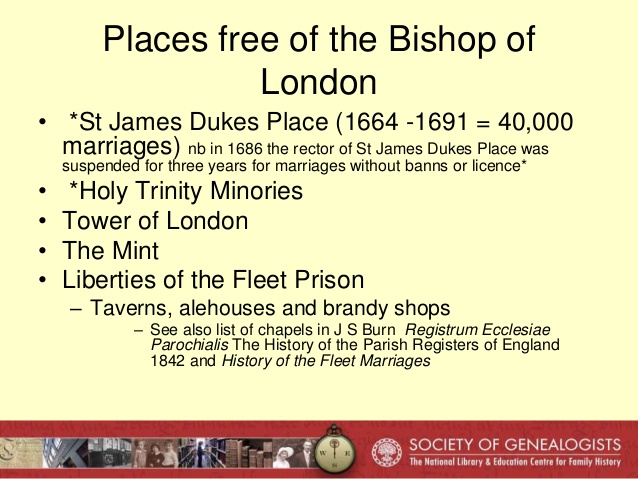
“As the Hardwicke’s Act did not apply in Scotland, English ‘runway’ couples were able to obtain a valid marriage certificate in the Scottish border towns such as Ayton, Chain Bridge, Coldstream, Gretna Green, Halidon Hill, Ladykirk, Lamberton, Mordington, Norham and Paxton. Less well known areas for ‘irregular’ marriages were the coaching inns in the Canongate district of Edinburgh and South Leith marriages which are transcribed in Marshall’s Calendar of Irregular Marriages in the South Leith Kirk Sessions Records 1697-1818. The English Episcopal Chapels in Scotland during the 19th century also married English runaways.

“In Scotland a marriage was considered ‘regular’ after the reading of banns and if the marriage ceremony was conducted by a minister of the established Church of Scotland. The 1834 Marriage (Scotland) Act extended ‘regular’ marriages by permitting dissenting clergy to conduct marriage ceremonies. If these requirements were not adhered to the marriage was deemed ‘clandestine’ and illegal but crucially could be valid in the eyes of the state. Under Scots Law a marriage was considered valid (but not legal) under certain conditions as follows:

§  Both parties declared themselves married in the presence of witnesses.

§  Marriage ceremony followed by sexual intercourse.

§  Simply living together with the status of man and wife – by habit and repute.

“Irregular marriages in Scotland were abolished with the passing of the Marriage (Scotland) Act 1939 which introduced civil marriages with marriages only becoming legal and valid on production of a certificate proving publication of banns or a notice of intended marriage and if celebrated in an office of an authorised Registrar. Irregular marriages were unrecorded in the statutory marriage registers.” (Fleet and Other Irregular Marriages)

genealogy-in-the-sun-2015-17th-century-sourcesgeneral-pre-1700-12-638.jpg

Other Resources: 

http://www.historyextra.com/feature/weird-and-wonderful/10-facts-history-london

http://british-history.ac.uk/report.aspx?compid=45111 (Extract from ‘Old and New London: Volume 2’ (1878) by Walter Thornbury entitled The Fleet Prison)
www.bmdregisters.co.uk/help/aboutRG7.htm#whatis (Guide to the Fleet registers held at TNA in RG 7)
www.hertsfhs.org.uk/hfphs42.html (Fleet Marriages of Hertfordshire People to 1754)

Posted in British history, buildings and structures, Church of England, customs and tradiitons, Georgian England, Georgian Era, marriage, marriage customs, marriage licenses, real life tales, Scotland | Tagged , , , , , , , , | 6 Comments