
One of the fun parts of writing for me is to learn something of the time period. Therefore, I have added the game Shove Half Penny to my story. Do you know it? Here are the basics of the game:
About Shove Halfpenny
Dating back to the taverns of medieval times this game was originally known as ‘Shoffe-grote’.
Still popular today, Shove Ha’penny sees players attempt to push coins so they land between the horizontal lines (beds). The objective is to push the coins so that they land squarely in the beds without touching the horizontal lines.

The Rules of Shove Ha’Penny
Shove Ha’penny is a very old English pub game played by two people or two pairs.
The board is placed flat on a table so that the bar underneath is against the table’s edge. The ha’pennies are placed partly over the edge of the board, one at a time.A sharp tap with the ball of the palm will send the ha’penny up the board.
The object is to slide each ha’penny up the board and get it to stop between two lines without touching either, in which case it scores. The area between the lines is known as a ‘bed’. The first player or pair to score three times in each bed is the winner. The beds can be filled in any order. Once a bed is filled it can be marked with chalk on the scoring area on the side of the board.
If a player scores more than three times in any bed their opponent gains the score. This rule applies unless it is the final point of the game. A player can only win the last point with a clean shove, not by default.
Each player shoves five half pennies in each turn. If a ha’penny stops on a line it does not score, so the player may try to bump it into place with his next shot. This is known as cannoning and is an important feature of the game.
All ha’pennies are left in place until all five have been played. They are then gathered up for the next player’s turn.
Learn more about Shove Ha’penny on Wikipedia.

Enjoy this excerpt from Chapter Ten of the tale.
When they returned to the house, they followed the sound of laughter coming from the sitting room. “What have we here?” Darcy asked as they entered.
The colonel looked up with a smile. “Mr. Bennet and I have taken on the Misses Elizabeth and Mary in Shove Ha’Penny.”
“Who is winning?” Darcy inquired with a smile as he handed off his hat and gloves to Mrs. Hill.
“Miss Elizabeth and her father, but Miss Mary has claimed another bed for us,” the colonel continued to respond for the group.
Darcy drifted over to watch the game, while Miss Bennet crossed to sit beside her mother.
“Only two more beds,” Darcy counted the chalk marks on the sides of the boards. “You could still win if you can claim the last two beds, Fitzwilliam.”
Mr. Bennet declared, “But Lizzy and I only require one more to claim the victory.” He squeezed his daughter’s hand. “I am counting on you, Lizzy, my girl.”
Darcy smiled upon the woman. He could easily imagine calling her “Lizzy” in the throes of passion, which was not an idea he should give credit, for it was truly an impossibility.
Miss Elizabeth teased his cousin. “You are a mere soldier, sir, while I am named after a famous queen.”
“I, too, am named after royalty,” the colonel retorted. “More than one king bears the name ‘Edward,’ while there was only one ‘Elizabeth.’” His cousin played his coins and claimed a bed that still remained open. The score was tied.
“It only took one ‘Elizabeth’ to clean up the mess of nine ‘Edwards,’” the lady said with a smile of confidence. “And Elizabeth I reigned for five and forty years and did so alone on the throne.”
In a means to intimidate her, the colonel retorted, “If you place your coin in the same bed as mine,” he warned, “yours does not count.” To Miss Mary, Fitzwilliam said, “Be prepared to call ‘mine’ if such happens so we may claim the bed as our own.”
Miss Mary offered his cousin a playful salute, and Darcy finally noticed a bit of comeliness in the girl’s features he had not observed previously.
“All on your shoulders, Lizzy,” Mr. Bennet whispered, but they had heard him. “Just do not bet on love.”
“I have never bet on love, Papa,” the lady said with complete seriousness. “In truth, I know very little of affection beyond a Shakespeare sonnet or two.”
“Your favorite sonnet, Miss Elizabeth?” Darcy asked, though doing so before an audience had been pure whimsy.
As if the result was scripted, the lady placed her coin on the board. Eyeing the only open bed—the second to the last one on Fitzwilliam’s side, she studied the space, as if she was willing her success.
At length, she released her breath in a steady exhale and with a quick press of the heel of her hand, she sent her ha’penny sliding across the board’s polished surface to land dead center in the only bed still available.
His cousin groaned and covered his eyes with his hands.
Miss Mary declared, “Unbelievable!”
Mr. Bennet exclaimed, “I taught her everything I know!”
Darcy said, “Well done, Miss Elizabeth.”
“Sonnet 29, Mr. Darcy,” she announced, “is my favorite.” As she pranced past him, under her breath, she retorted, “I am confident a man of your intelligence also knows it by heart.”
Book Blurb and Purchase Links for
Leave Her Wild: A Pride and Prejudice Vagary
A Mandate from His Uncle
The only reason Fitzwilliam Darcy has come to London for the Short Season is to save his beloved Pemberley. He requires a bride fast. Unfortunately, only a man’s of Darcy’s prideful nature would laggardly think one female is the same as another. Quickly, he realizes he is in love with his betrothed’s hazel-eyed and highly-opinionated sister, and he has proposed to the wrong sister, but propriety demands he must not abandon Miss Jane Bennet.
Sitting on the Shelf
After Lydia’s elopement with Mr. Wickham and the family’s ruin, Elizabeth Bennet understands the need for her sister Jane to marry well, but why must Jane bring home the one man Elizabeth both despises and loves? Elizabeth’s one ball…one dance…had been ruined by the man her sister means to marry. Unfortunately for Elizabeth, Mr. Darcy’s opinion remains the marker by which she looks upon all others. Can she deny the tender feelings she carries for the gentleman and silence her traitorous heart?
Note: The title comes from a quote from the poet Atticus on Instagram.
Kindle – https://www.amazon.com/dp/B0DQL8CJ2R

Comment below for a chance to win one of FIVE eBook copies available for the giveaway of Leave Her Wild. Winners will be chosen on Saturday, February 8, with the books delivered on February 10, 2025, when the tale goes live on Amazon and Kindle Unlimited. Regina will contact the winners by email. Good Luck!




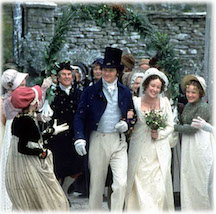 For most of Western history, marriage was a private contract between two families. Until the 16th-century, Christian churches accepted the validity of a marriage on the basis of a couple’s declarations. If two people claimed that they had exchanged marital vows—even without witnesses—the Catholic Church accepted that they were validly married. During the Regency, couples who chose to marry could be joined by several means. Many chose to purchase what was known as an ordinary, common or standard license. Others chose to have what was known as a calling of the banns.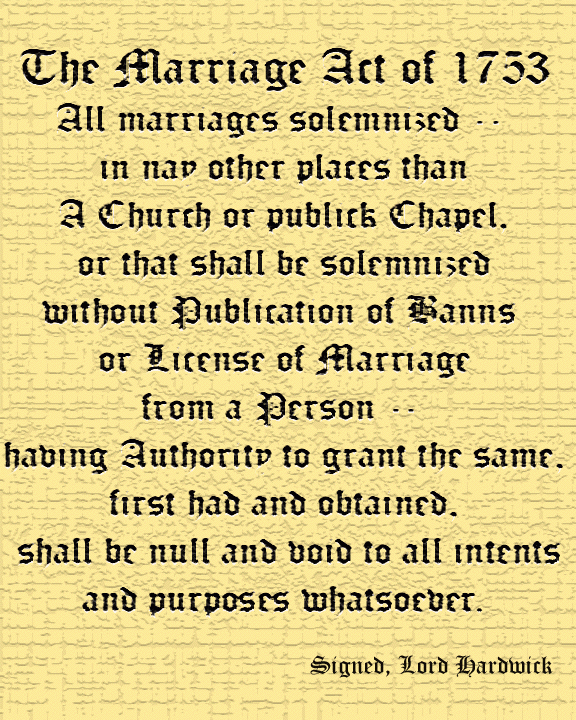
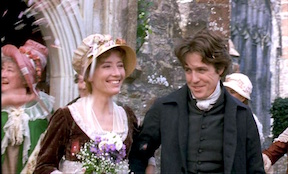 “There were two kinds of marriage licences that could be issued: the usual was known as a common licence and named one or two parishes where the wedding could take place, within the jurisdiction of the person who issued the license. The clergyman who administered the ceremony had to be associated with the Church of England. He would issue the licence as a cost of a few shillings to a pound, depending upon the wealth of those applying. The license was valid for 15 days. The couple had the option of marrying in either the parish of the bride or that of the groom. They must be a resident of the parish in which they were to marry. (Do you recall Wickham had to wait to marry to Lydia Bennet until he could establish residency. “We were married, you know, at St. Clement’s, because Wickham’s lodgings were in that parish. And it was settled that we should all be there by eleven o’clock.”) Both the groom and the bride had to make sworn statements that no impediments existed that would cancel their marriage vows.
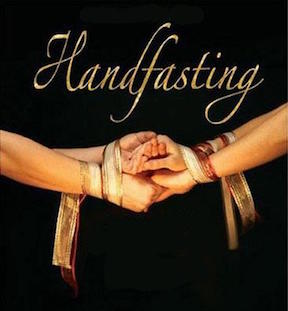 The poor often married without benefit of clergy or ceremony–they just called themselves married and that was that (made divorce a lot easier and possible, too). Needless to say, the Church of England heartily disapproved. The old custom–marriage by cohabitation had been legal before the Hardwick Act of 1753, and there was the even older custom of handfasting–often held with the very poor, particularly since marriage was more about a legal agreement as to the disposition of property and inheritance from a legal alliance.





 Every Woman Dreams...