Lozenge, Heraldry for Women

One of yesterday’s words was “lozenge.” It brought my interest and sent me looking for a tidbit or two on the topic.The lozenge in heraldry is a diamond-shaped charge (an object that can be placed on the field of the shield), usually somewhat narrower than it is tall.

3 fusils—Per fess azure and vair ancient; three fusils in chief and a crescent in base, or; a bordure engrailed argent—Freeman of Murtle, Scotland

3 fusils—Per fess azure and vair ancient; three fusils in chief and a crescent in base, or; a bordure engrailed argent—Freeman of Murtle, Scotland

It is to be distinguished in modern heraldry from the fusil, which is like the lozenge but narrower, though the distinction has not always been as fine and is not always observed even today. A mascle is a voided lozenge—that is, a lozenge with a lozenge-shaped hole in the middle—and the rarer rustre is a lozenge containing a circular hole in the centre. A field covered in a pattern of lozenges is described as lozengy; similar fields of mascles are masculy, and fusils, fusily.

The lozenge has for many centuries been particularly associated with women as a vehicle for the display of their coats of arms (instead of the escutcheon or shield). In modern English and Scottish, but not Canadian, heraldry, the arms of an unmarried woman and of widows are usually shown on a lozenge rather than an escutcheon, without crest or helm. An oval or cartouche is occasionally also used instead of the lozenge for such women.

Examples of escutcheon shapes: 1: mediaeval French & English "heater style"; 2: modern French; 3: cartouche (oval); 4: lozenge (usually borne by women); 5: rectangular; 6: Italian; 7: Swiss, 8: English, Tudor arch (16th century); 9: à bouche; 10: Polish; 11: traditional Iberian View author information CC BY-SA 3.0

Examples of escutcheon shapes: 1: mediaeval French & English “heater style”; 2: modern French; 3: cartouche (oval); 4: lozenge (usually borne by women); 5: rectangular; 6: Italian; 7: Swiss, 8: English, Tudor arch (16th century); 9: à bouche; 10: Polish; 11: traditional Iberian
View author information
CC BY-SA 3.0

Married women, however, always display their arms on a shield (except peeresses in their own right, who use the lozenge for their peerage arms even during marriage).

The shield of a married woman (and the lozenge of a widow) may combine her own arms with the arms of her husband, either by impalement side by side or (in the case of an heraldic heiress in English heraldry, but not Scottish) in the form of a small “escutcheon of pretence” displaying the wife’s arms over a larger shield (or, in the case of a widow, lozenge) of her husband’s arms.

As a result of rulings of the English Kings of Arms dated 7 April 1995 and 6 November 1997, married women in England, Northern Ireland, and Wales and in other countries recognising the jurisdiction of the College of Arms in London (such as New Zealand) also have the option of using their husband’s arms alone, marked with a small lozenge as a brisure to show that the arms are displayed for the wife and not the husband, or of using their own personal arms alone, marked with a small shield as a brisure for the same reason.

This curved octagon is a lozenge adapted to provide an area in which it is easier to arrange the charges. The original arms of Baroness Thatcher: Per chevron, Azure and Gules.  A double key in chief between two lions combatant; a tower with portcullis in base, all Or.. Crest. A Baron's coronet. Motto:.Cherish Freedom. Supporters: Dexter:  An admiral of the British Navy. Sinister:  Sir Isaac Newton, both proper. http://www. internationalheraldry.com

This curved octagon is a lozenge adapted to provide an area in which it is easier to arrange the charges. The original arms of Baroness Thatcher: Per chevron, Azure and Gules. A double key in chief between two lions combatant; a tower with portcullis in base, all Or.. Crest. A Baron’s coronet. Motto:.Cherish Freedom. Supporters: Dexter: An admiral of the British Navy. Sinister: Sir Isaac Newton, both proper. http://www.
internationalheraldry.com

Divorced women may theoretically until remarriage use their ex-husband’s arms differenced with a mascle.

The lozenge shape is also used for funerary hatchments for both men and women.

Pretoria High School for Girls in South Africa is one of the few all-girls schools that was granted permission to use the lozenge as part of its coat of arms.

In civic heraldry, a lozenge sable is often used in coal-mining communities to represent a lump of coal.

The information for this post comes from International Heraldry and Heralds, as well as Wikipedia,

Posted in British history, Great Britain, heraldry | Tagged , , , , | Comments Off on Lozenge, Heraldry for Women

Rame Head

FWCCoverjpgcrop
Rame Head is a coastal headland, southwest of the village of Rame in southeast Cornwall, United Kingdom. The area plays a prominent role in the climax of my Regency romance, The First Wives’ Club, which earned an honorable mention in historical romance at the SOLA’s Seventh Annual Dixie Kane Awards.

The site was used for a hill fort in the Iron Age. The headland has a prominent chapel, dedicated to St Michael, accessible by a steep footpath. The chapel was first licensed for Mass in 1397 and is probably on the site of a much earlier, Celtic, hermitage. It remains as an intact shell. Earl Ordulf, who was the owner of vast estates in the West Country and was the uncle of King Ethelred, gave Rame to Tavistock Abbey (which Ordulf had founded) in 981.

Fourteenth century chapel on Rame Head, Cornwall. Public Domain http://en.wikipedia.org/ wiki/Rame_Head# mediaviewer/File: Ramechapel.jpg

Fourteenth century chapel on Rame Head, Cornwall. Public Domain http://en.wikipedia.org/
wiki/Rame_Head#
mediaviewer/File:
Ramechapel.jpg

The headland is prominent to sailors and fishermen leaving Plymouth through Plymouth Sound. It is often the last piece of land they see leaving England, and the first they see when returning home; Rame Head thus appears in the sea shanty “Spanish Ladies.”

Due to its exceptionally high and panoramic vantage point, there is a volunteer National Coastwatch Institution lookout on the top of the headland.

The headland forms part of Rame Head & Whitsand Bay SSSI (Site of Special Scientific Interest), noted for its geological as well as biological interest. The SSSI contains 2 species on the Red Data Book of rare and endangered plant species; early meadow-grass (poa infirma) and slender bird’s-foot-trefoil (from the lotus genus).

Rame Head is a part of Mount Edgcumbe House and Country Park which is jointly owned and run by Cornwall Council and Plymouth City Council.  Information from Wikpedia images1

Posted in British history, Great Britain, Living in the Regency, real life tales, Regency era, Uncategorized | Tagged , | Comments Off on Rame Head

Have You Heard of “Forlorn Hope”?

From 1911 Encyclopedia Britannica, we find “forlorn hope” as defined as, “FORLORN HOPE (through Dutch verloren hoop, from Ger. verlorene Haufe=”lost troop”; Haufe, “heap,” being equivalent in the 17th century to “body of troops”; the French equivalent is enfants perdu), a military term (sometimes shortened to “forlorn”), used in the 16th and 17th centuries for a body of troops thrown out in front of the line of battle to engage the hostile line, somewhat after the fashion of skirmishers, though they were always solid closed bodies. These troops ran great risks, because they were often trapped between the two lines of battle as the latter closed upon one another, and fired upon or ridden down by their friends; further, their mission was to facilitate the attacks of their own main body by striking the first blow against or meeting the first shock of the fresh and unshaken enemy. In the following century (18th), when lines of masses were no longer employed, a thin line of skirmishers alone preceded the three-deep line of battle, but the term “forlorn hope” continued to be used for picked bodies of men entrusted with dangerous tasks, and in particular for the storming party at the assault of a fortress. In this last sense “forlorn hope” is often used at the present time. The misunderstanding of the word “hope” has led to various application of “forlorn hope,” such as an enterprise offering little hope of success, or, further still from the original meaning, to the faint or desperate hope of such success.”

A forlorn hope is a band of soldiers or other combatants chosen to take the leading part in a military operation, such as an assault on a defended position, where the risk of casualties is high.

Etymology
The term comes from the Dutch verloren hoop, literally “lost troop”. The Dutch word “hoop” can mean “hope” but is in this context etymologically equivalent to the English word “heap”. The term was used in military contexts to denote a troop formation. The Dutch word hoop (in its sense of heap in English) is not cognate with English hope: this is an example of false folk etymology. The mistranslation of “verloren hoop” as “forlorn hope” is “a quaint misunderstanding” using the nearest-sounding English words. This false etymology is further entrenched by the fact that in Dutch the word hoop is a homograph meaning “hope” as well as “heap,’ though the two senses have different etymologies.

William Barnes Wollen - 'Battles of the Nineteenth Century' by Archibald Forbes, G.A. Henty and Arthur Griffiths Illustration of Colin Campbell leading the 'forlorn hope' at the Siege of San Sebastián, 1813 - Public Domain http://en.wikipedia.org /wiki/Forlorn_hope# mediaviewer/File: Forlorn_hope.jpg

William Barnes Wollen – ‘Battles of the Nineteenth Century’ by Archibald Forbes, G.A. Henty and Arthur Griffiths
Illustration of Colin Campbell leading the ‘forlorn hope’ at the Siege of San Sebastián, 1813 – Public Domain http://en.wikipedia.org
/wiki/Forlorn_hope#
mediaviewer/File:
Forlorn_hope.jpg

History
In the days of muzzle-loading muskets, the term was most frequently used to refer to the first wave of soldiers attacking a breach in defences during a siege. It was likely that most members of the forlorn hope would be killed or wounded. The intention was that some would survive long enough to seize a foothold that could be reinforced, or at least that a second wave with better prospects could be sent in while the defenders were reloading or engaged in mopping up the remnants of the first wave.

A forlorn hope may be composed of volunteers and led by a junior officer with hopes of personal advancement. If the volunteers survived, and performed courageously, they would be expected to benefit in the form of promotions, cash gifts and adding glory to their name. The commanding officer himself was almost guaranteed both a promotion and a long-term boost to his career prospects. As a result, despite the risks, there was often competition for the opportunity to lead the assault. The French equivalent of the forlorn hope, called Les Enfants Perdus or The Lost Children, were all guaranteed promotion to officer rank should they survive, with the effect that both enlisted men and officers joined the dangerous mission as an opportunity to raise themselves in the army.

By extension, the term forlorn hope became used for any body of troops placed in a hazardous position, e.g., an exposed outpost, or the defenders of an outwork in advance of the main defensive position. This usage was especially common in accounts of the English Civil War, as well as in the British Army in the Peninsular War of 1808–1814.

Starring: Henry Arousell, Thomas Boqvist, Marko Kattilakoski, Johan Klint, Bengt Westin, Dennis Åhs Genre: 40 min short, 17th century war/horror. Honorable mention Best Period Film H. P. Lovecraft Film Festival 2009, Portland Oregon USA. Directed By: Johan Karlsson http://www.imdb.com/title/tt1813317/

Starring: Henry Arousell, Thomas Boqvist, Marko Kattilakoski, Johan Klint, Bengt Westin, Dennis Åhs
Genre: 40 min short, 17th century war/horror. Honorable mention Best Period Film H. P. Lovecraft Film Festival 2009, Portland Oregon USA.
Directed By: Johan Karlsson
http://www.imdb.com/title/tt1813317/

There is a recent 40 minute short film that portrays “Forlorn Hope,” which I found interesting. A group of scattered soldiers that are lost after the Battle of Breitenfelt meets a man who guides them on a forlorn mission. Soon death and mistrust are spreading within the group and a a horrifying showdown becomes inevitable.

The movie represents an occurrence where one of Nyarlathotep forms makes its presence known in307839_164980863576954_3325660_n Germany 1631. A group of scattered soldiers that are lost after the battle of Breitenfelt meets a man who guides them on a forlorn mission. Soon death and mistrust are spreading within the group and  a horrifying showdown becomes inevitable. (imdb)

Parts of this piece are furnished by Wikipedia. Other references are so noted.

Posted in American History, British history | Tagged , , , | 5 Comments

Do You Know the Origins of These Words and Phrases?

Iron Curtain – This phrase was coined after World War II by Prime Minister Winston Churchill of Great Britain to describe the rise of Russian influence over Eastern Europe. Churchill found the rigid censorship of the citizenry and the closing of borders frightening. In a visit to the United States in 1946, he expressed his disdain in a speech on 5 March at Fulton, Missouri, where he was to accept an honorary degree from Westminster College.

From Stettin in the Baltic to Trieste in the Adriatic, an iron curtain has descended across the continent. Behind that line lie all the capitals of the ancient states of central and eastern Europe, Warsaw, Berlin, Prague, Vienna Budapest, Belgrade, Bucharest, and Sofia, all the famous cities and the populations around them lie in what I might call the Soviet sphere, and all are subject, in one form or another, not only to Soviet influence but to a very high and in some cases increasing measure of control from Moscow. (A Hog on Ice & Other Curious Expressions by Charles Earle Funk ©1948)

To Give Short Shrift To – This phrase means to cut short; to make quick work of. The phrase comes to us from Shakespeare’s The Tragedy of King Richard III, Act Iv, scene 4. In the play, the Duke of Gloucester (later to be Richard III) has sentenced to death one Lord Hastings, but he Ratcliff interrupts Gloucester’s declarations. Ratcliff says: “Dispatch, my lord; the duke would be at dinner: Make a short shrift; he longs to see your head.” Ratcliff is suggesting the criminal should not be given an infinite amount of time to confess (or ‘shrift’). To speed up the executions in the 17th Century, “short shrift” became a synonym for “least possible delay.” (Heavens to Betsy & Other Curious Sayings by Charles Earle Funk ©1955)

Mind Your Ps and Qs – This phrase means to be on one’s best behaviour; be careful of one’s language.
Ps and Qs are just the plurals of the letters P and Q. There is some disagreement amongst grammarians about how to spell Ps and Qs – either upper-case or lower-case and either with or without an apostrophe.
Doubts also exist as to the original meaning. Francis Grose, in his 1785 edition of The Dictionary of the Vulgar Tongue, defines it like this:
“To mind one’s P’s and Q’s; to be attentive to the main chance.”

The date of the coinage of ‘mind your Ps and Qs’ is uncertain. There is a citation from Thomas Dekker’s play, The Untrussing of the Humorous Poet, 1602, which appears to be the earliest use of the expression:

Afinius: …here’s your cloak; I think it rains too.
Horace: Hide my shoulders in’t.
Afinius: ‘Troth, so thou’dst need; for now thou art in thy Pee and Kue: thou hast such a villanous broad back…

‘Pee and Kue’ in that citation seem to be referring to a form of clothing, but that is somewhat ambiguous. It is also not clear that the ‘Pee and Kue’ in Dekker’s work are the same as those in ‘mind one’s Ps and Qs’. Dekker later used the term in West-ward Hoe, a joint work with John Webster, 1607:

At her p. and q. neither Marchantes Daughter, Aldermans Wife, young countrey Gentlewoman, nor Courtiers Mistris, can match her.

In that piece it is less apparent that ‘p. and q.’ refer to a form of clothing.

So, both the spelling and meaning of the phrase are debatable. Now we come to what is really uncertain – the derivation. Nevertheless, it is one of those phrases of which many people are sure they know the origin. When such folk are pressed, what they usually mean is that the person they first heard explain the origin had made a random choice from the list of proposed derivations below: ‘Mind your Ps and Qs’ probably derives from one of these:

1. Mind your pints and quarts. This is suggested as deriving from the practice of chalking up a tally of drinks in English pubs (on the slate). Publicans had to make sure to mark up the quart drinks as distinct from the pint drinks. This explanation is widely repeated, but there is little to support it, apart from the fact that pint and quart begin with P and Q.
2. Advice to printers’ apprentices to avoid confusing the backward-facing metal type lowercase Ps and Qs, or the same advice to children who were learning to write. Nevertheless, the fact that handmade paper was an expensive commodity and that the setting of type in early presses was very time comsuming makes the printing story a strong candidate. The fact that type had to be set upside down and backwards made the need for a warning to be careful doubly appropriate.
3. Mind your pea (jacket) and queue (wig). Pea jackets were short rough woollen overcoats, commonly worn by sailors in the 18th century. Perruques were full wigs worn by fashionable gentlemen. It is difficult to imagine the need for an expression to warn people to avoid confusing them.
‘Pee’, as a name for a man’s coarse coat, is recorded as early as 1485, so it is possible that that is what Dekker was referring to in his 1602 citation. If so, that usage long predates all others and we have the definitive origin of ‘pee and kue’. ‘Kue’ or ‘cue’ as the name of a man’s wig isn’t known until well after 1602 though, so it still isn’t certain what Dekker meant by it.
4. Mind your pieds (feet) and queues (wigs). This is suggested to have been an instruction given by French dancing masters to their charges. This has the benefit of placing the perruque in the right context – as long as we accept the phrase as being originally French. However, there’s no reason to suppose it is from France and no version of the phrase exists in French.
5. Another version of the ‘advice to children’ origin has it that ‘Ps and Qs’ derives from ‘mind your pleases and thank-yous’.’ That is widely touted as an origin but seems to be a back-formation, that is, an explanation fitted to explain the phrase after it was coined in some other context. ‘Pleases and thank-yous’ does not appear to lead to ‘Ps and Qs’. (Phrases.org.uk)

Nepenthe – is a medicine for sorrow, literally an anti-depressant – a “drug of forgetfulness” mentioned in ancient Greek literature and Greek mythology, depicted as originating in Egypt.The carnivorous plant genus Nepenthes is named after the drug nepenthe.
The word nepenthe first appears in the fourth book of Homer’s Odyssey:

ἔνθ᾽ αὖτ᾽ ἄλλ᾽ ἐνόησ᾽ Ἑλένη Διὸς ἐκγεγαυῖα:
αὐτίκ᾽ ἄρ᾽ εἰς οἶνον βάλε φάρμακον, ἔνθεν ἔπινον,
νηπενθές τ᾽ ἄχολόν τε, κακῶν ἐπίληθον ἁπάντων.
(which means)
Then Helen, daughter of Zeus, took other counsel.
Straightway she cast into the wine of which they were drinking a drug
to quiet all pain and strife, and bring forgetfulness of every ill.
Odyssey, Book 4, v. 219–221 (Wikipedia)

Figuratively, nepenthe means “that which chases away sorrow”. Literally it means ‘not-sorrow’ or ‘anti-sorrow’: νη, ne, i.e. “not” (privative prefix), and πενθές, from πένθος, penthos, i.e. “grief, sorrow, or mourning”. In the Odyssey, in the passage quoted above, nepenthes pharmakon (i.e. an anti-sorrow drug) is a magical potion given to Helen by Polydamna the wife of the noble Egyptian Thon; it quells all sorrows with forgetfulness.

Keep a Stiff Upper Lip – This phrase has come to mean to remain resolute and unemotional in the face of adversity, or even tragedy.
This is such a clichéd expression that it is difficult to imagine doing anything else with a stiff upper lip apart from keeping it. If you try to hold your upper lip stiff your facial expression will appear aloof and unsmiling, betraying little of any feeling you might be experiencing. That demeanour is the source of ‘keep a stiff upper lip.’ The phrase is similar to ‘bite the bullet,’ ‘keep your chin up,’ and (to the amusement of many Americans) ‘keep you pecker up.’ It has become symbolic of the British and particularly of the products of the English public school system during the age of the British Empire. In those schools the ‘play up and play the game’ ethos was inculcated into the boys who went on to rule the Empire. That ‘do your duty and show no emotion’ attitude was expressed in Alfred, Lord Tennyson’s The Charge of the Light Brigade:

Theirs not to make reply,
Theirs not to reason why,
Theirs but to do and die:
Into the valley of Death
Rode the six hundred.

In more recent years the stiff upper lip has gone out of favour in the UK and British heroes have been able to show more emotion. Footballers now cry when they lose, and soldiers cry at comrades’ funerals, both of which would have been unthinkable before WWII.
Where did the ‘stiff upper lip’ originate? In 1963, P. G. Wodehouse published a novel called Stiff Upper Lip, Jeeves, and you can’t get much more English than that.
Strange then that a phrase so strongly associated with the UK should have originated in America. The first printed reference is in the Massachusetts Spy, June 1815:

“I kept a stiff upper lip, and bought [a] license to sell my goods.”

That citation doesn’t explicitly refer to keeping one’s emotions in check, but a slightly later one, from the Ohio newspaper The Huron Reflector, 1830, makes the meaning unambiguous:
“I acknowledge I felt somehow queer about the bows; but I kept a stiff upper lip, and when my turn came, and the Commodore of the Police axed [sic] me how I come to be in such company… I felt a little better.”
The expression can be found in several U.S. references from the early 19th century and was commonplace there by 1844, which is the date of the earliest example from a British source. (Phrases.org.uk)

imagesElementary, My Dear Watson – This famous line is the supposed explanation Sherlock Holmes gave to his assistant, Dr. Watson, when explaining deductions he had made.
In fact the line doesn’t appear in the Conan Doyle books, only later in Sherlock Holmes’ films.
He does come rather close at a few of points. Holmes says “Elementary” in ‘The Crooked Man’, and “It was very superficial, my dear Watson, I assure you” in ‘The Cardboard Box’. He also says “Exactly, my dear Watson, in three different stories.
The phrase was first used by P. G. Wodehouse, in Psmith Journalist, 1915. (Phrases.org.uk)

To Return to One’s Muttons – The source of this English phrase is the French, revenon á now muttons, which is found in the 6th Century play, Pierre Pathelin, written by the French poet, Pierre Blanchet. “Pathelin (often spelled ‘Patelin’) is a lawyer who has, through flattery, hoodwinked Joceaume, the local draper, into giving him six ells of cloth. While this injury is still rankling, Joceaume also discovers that his shepherd has stolen some of his sheep. He has the shepherd haled before the magistrate and there finds to his amazement that the shepherd has the rascally Pathelin as his lawyer. The draper, sputtering in indignation, tries to tell the magistrate about his loss of the sheep, but each time that he sees Pathelin he begins to rave about the cloth of which he has been defrauded. The judge begins to get somewhat confused, but tries to keep Joceaume to his charges against the shepherd: ‘Revenon á now moutons (Let us return to our sheep),’ he repeats time and again.” (A Hog on Ice & Other Curious Expressions by Charles Earle Funk ©1948)

Posted in British history, Great Britain, Uncategorized, word play | Tagged , , , | 1 Comment

Why Do We Not Know Whether Elizabeth Bennet Learns to Despise Mr. Wickham?

By Regina Jeffers

Recently, I was writing a scene for an upcoming Austen release, and in it, I attempted to explain Elizabeth Bennet’s lack of “hatred” for George Wickham. Even after having read “Pride and Prejudice” well over 50 times during my lifetime, I found myself sadly lacking in this endeavour for I held no idea what Elizabeth really thought of Mr. Wickham. Certainly, Pride and Prejudice is told from Elizabeth’s point of view, and we are quite inundated with the alteration of her feelings for Mr. Darcy, but what of her feelings for Mr. Wickham? Did they not also go through an equal unveiling? I went searching for proof within the novel itself, and for better or worse, this is what I discovered.

First, it is a given that without Mr. Wickham’s deceptions, our favorite couple might not have discovered each other. However, let us revisit the scene where Elizabeth takes Mr. Wickham’s acquaintance:

george-wickham-lost-in-austenBut the attention of every lady was soon caught by a young man, whom they had never seen before, of most gentlemanlike appearance, walking with an officer on the other side of the way. The officer was the very Mr. Denny, concerning whose return from London Lydia came to inquire, and he bowed as they passed. All were struck with the stranger’s air, all wondered who he could be; and Kitty and Lydia, determined if possible to find out, led the way across the street, under pretence of wanting something in an opposite shop, and fortunately had just gained the pavement when the two gentlemen, turning back, had reached the same spot. Mr. Denny addressed them directly, and entreated permission to introduce his friend, Mr. Wickham, who had returned with him the day before from town, and he was happy to say had accepted a commission in their corps. This was exactly as it should be; for the young man wanted only regimentals to make him completely charming. His appearance was greatly in his favour; he had all the best part of beauty, a fine countenance, a good figure, and very pleasing address.

Then there is the scene where Wickham studies Darcy’s reaction to encountering him with Elizabeth upon the streets of Meryton.

pandp3_wickham2wThe introduction was followed up on his side by a happy readiness of conversation — a readiness at the same time perfectly correct and unassuming; and the whole party were still standing and talking together very agreeably, when the sound of horses drew their notice, and Darcy and Bingley were seen riding down the street. On distinguishing the ladies of the group the two gentlemen came directly towards them, and began the usual civilities. Bingley was the principal spokesman, and Miss Bennet the principal object. He was then, he said, on his way to Longbourn on purpose to inquire after her. Mr. Darcy corroborated it with a bow, and was beginning to determine not to fix his eyes on Elizabeth, when they were suddenly arrested by the sight of the stranger, and Elizabeth, happening to see the countenance of both as they looked at each other, was all astonishment at the effect of the meeting. Both changed colour; one looked white, the other red. Mr. Wickham, after a few moments, touched his hat — a salutation which Mr. Darcy just deigned to return. What could be the meaning of it? — It was impossible to imagine; it was impossible not to long to know.

Elizabeth’s account of the incident is quite exquisite, but what was she thinking of Darcy at that moment? Of Wickham? And more importantly, did Wickham possess the wherewithal to note Darcy’s attention to Elizabeth? Likely, Wickham knows Darcy better than many of Darcy’s acquaintances, except perhaps Colonel Fitzwilliam. In hindsight, we all realize Wickham is a master manipulator, especially of Darcy.

I do not know about you, but I often wondered if Wickham’s appearance in Meryton was coincidental. Perhaps, Wickham and Mr. Denny held an acquaintance in London. Mayhap, in passing, Denny mentioned dining with Mr. Bingley and Darcy and the other officers. [“My brother and the gentleman are to dine with the officers.” – from Caroline Bingley’s note to Jane Bennet in Chapter 7] Is it possible Wickham came to Meryton because Darcy is there? Even more so, if Miss Bingley took note of Darcy’s interest in Elizabeth, could not Denny have reported as such to Wickham’s inquiries on his old friend? Do you recall how at the Netherfield Ball that Denny tells Elizabeth, “I do not imagine his [Wickham’s] business would have called him away just now, if he had not wished to avoid a certain gentleman here.” (Chapter 18) I always read this line to mean that Wickham knew something of Meryton and its residence prior to his coming to Hertfordshire. Even if Wickham did not know of Darcy being in the village prior to his joining the militia, we must assumeDenny and the other officers tell him of Elizabeth and Jane being several days under the same roof as Darcy at Netherfield, of his former friend’s close study of Elizabeth, and after the Netherfield ball, of Darcy’s singularity in partnering Elizabeth on the dance floor.

In a time when being closed lipped was considered a cherished quality, when I read the novel, I thought it most circumspect that Wickham immediately proceeds to inform Elizabeth of Darcy’s contemptuous character.

 Mr. Wickham was the happy man towards whom almost every female eye was turned, and Elizabeth was the happy woman by whom he finally seated himself; and the agreeable manner in which he immediately fell into conversation, though it was only on its being a wet night, and on the probability of a rainy season, made her feel that the commonest, dullest, most threadbare topic might be rendered interesting by the skill of the speaker. (Which was followed by…)

pandp2_fitzwilliam1wMr. Wickham was therefore at leisure to talk to Elizabeth, and she was very willing to hear him, though what she chiefly wished to hear she could not hope to be told — the history of his acquaintance with Mr. Darcy. She dared not even mention that gentleman. Her curiosity, however, was unexpectedly relieved. Mr. Wickham began the subject himself. He inquired how far Netherfield was from Meryton; and after receiving her answer, asked in an hesitating manner how long Mr. Darcy had been staying there.
   “About a month,” said Elizabeth; and then, unwilling to let the subject drop, added, “He is a man of very large property in Derbyshire, I understand.”
   “Yes,” replied Wickham; “his estate there is a noble one. A clear ten thousand per annum. You could not have met with a person more capable of giving you certain information on that head than myself; for I have been connected with his family in a particular manner from my infancy.”
Elizabeth could not but look surprised.
   “You may well be surprised, Miss Bennet, at such an assertion, after seeing, as you probably might, the very cold manner of our meeting yesterday. Are you much acquainted with Mr. Darcy?”
   “As much as I ever wish to be,” cried Elizabeth warmly. “I have spent four days in the same house with him, and I think him very disagreeable.”
   “I have no right to give my opinion,” said Wickham, “as to his being agreeable or otherwise. I am not qualified to form one. I have known him too long and too well to be a fair judge. It is impossible for me to be impartial. But I believe your opinion of him would in general astonish — and perhaps you would not express it quite so strongly anywhere else. Here you are in your own family.”
    “Upon my word I say no more here than I might say in any house in the neighbourhood, except Netherfield. He is not at all liked in Hertfordshire. Everybody is disgusted with his pride. You will not find him more favourably spoken of by any one.”
    “I cannot pretend to be sorry,” said Wickham, after a short interruption, “that he or that any man should not be estimated beyond their deserts; but with him I believe it does not often happen. The world is blinded by his fortune and consequence, or frightened by his high and imposing manners, and sees him only as he chuses to be seen.” 
Wickham shares the news that Darcy is to marry his cousin Miss de Bourgh. Is this to put any “hopes” that Elizabeth may be carrying to rest?

The whist party soon afterwards breaking up, the players gathered round the other table, and Mr. Collins took his station between his cousin Elizabeth and Mrs. Philips. The usual inquiries as to his success were made by the latter. It had not been very great: he had lost every point; but when Mrs. Philips began to express her concern thereupon, he assured her with much earnest gravity that it was not of the least importance, that he considered the money as a mere trifle, and begged she would not make herself uneasy.
    “I know very well, madam,” said he, “that when persons sit down to a card-table they must take their chance of these things — and happily I am not in such circumstances as to make five shillings any object. There are undoubtedly many who could not say the same, but thanks to Lady Catherine de Bourgh, I am removed far beyond the necessity of regarding little matters.”
   Mr. Wickham’s attention was caught; and after observing Mr. Collins for a few moments, he asked Elizabeth in a low voice whether her relation were very intimately acquainted with the family of de Bourgh.
   “Lady Catherine de Bourgh,” she replied, “has very lately given him a living. I hardly know how Mr. Collins was first introduced to her notice, but he certainly has not known her long.”
   “You know of course that Lady Catherine de Bourgh and Lady Anne Darcy were sisters; consequently that she is aunt to the present Mr. Darcy.”
   “No, indeed, I did not. I knew nothing at all of Lady Catherine’s connexions. I never heard of her existence till the day before yesterday.”
   “Her daughter, Miss de Bourgh, will have a very large fortune, and it is believed that she and her cousin will unite the two estates.”
   This information made Elizabeth smile, as she thought of poor Miss Bingley. Vain indeed must be all her attentions, vain and useless her affection for his sister and her praise of himself, if he were already self-destined to another.

Is it not wonderful our Miss Austen has us looking at the “dastardly Darcy” at this point and not at the reason Wickham chooses to share such intimate details of his acquaintance with Darcy with what is essentially a stranger? What was his motivation and why did Elizabeth Bennet (who claims to be an astute observer of human nature) not have “red flags” going off in her head? How can I accept Elizabeth as the intelligent female we all admire and not wonder how she could be so gullible?

Elizabeth does tell us after her Aunt Gardiner presses her to beware of Mr. Wickham that…

At present I am not in love with Mr. Wickham; no, I certainly am not. But he is, beyond all comparison, the most agreeable man I ever saw — and if he becomes really attached to me — I believe it will be better that he should not. I see the imprudence of it. — Oh! that abominable Mr. Darcy! My father’s opinion of me does me the greatest honor; and I should be miserable to forfeit it. My father, however, is partial to Mr. Wickham. In short, my dear aunt, I should be very sorry to be the means of making any of you unhappy; but since we see every day that where there is affection, young people are seldom withheld by immediate want of fortune from entering into engagements with each other, how can I promise to be wiser than so many of my fellow creatures if I am tempted, or how am I even to know that it would be wisdom to resist? All that I can promise you, therefore, is not to be in a hurry. I will not be in a hurry to believe myself his first object. When I am in company with him, I will not be wishing. In short, I will do my best.’’

At this point in the story, I considered Mr. Wickham pursuit of Elizabeth another attempt upon Wickham’s part as revenge directed toward Darcy. If the man held real affection for Elizabeth, Wickham would not have abandoned her for Miss King’s fortune. That is my reasoning. What of yours?

wickham“…And so, my dear sister, I find, from our uncle and aunt, that you have actually seen Pemberley.”
She replied in the affirmative.
“I almost envy you the pleasure, and yet I believe it would be too much for me, or else I could take it in my way to Newcastle. And you saw the old housekeeper, I suppose? Poor Reynolds, she was always very fond of me. But of course she did not mention my name to you.”
“Yes, she did.”
“And what did she say?”
“That you were gone into the army, and she was afraid had—not turned out well. At such a distance as that, you know, things are strangely misrepresented.”
“Certainly,” he replied, biting his lips. Elizabeth hoped she had silenced him; but he soon afterwards said:
“I was surprised to see Darcy in town last month. We passed each other several times. I wonder what he can be doing there.”
“Perhaps preparing for his marriage with Miss de Bourgh,” said Elizabeth. “It must be something particular, to take him there at this time of year.”
“Undoubtedly. Did you see him while you were at Lambton? I thought I understood from the Gardiners that you had.”
“Yes; he introduced us to his sister.”
“And do you like her?”
“Very much.”
“I have heard, indeed, that she is uncommonly improved within this year or two. When I last saw her, she was not very promising. I am very glad you liked her. I hope she will turn out well.”
“I dare say she will; she has got over the most trying age.”
“Did you go by the village of Kympton?”
“I do not recollect that we did.”
“I mention it, because it is the living which I ought to have had. A most delightful place!—Excellent Parsonage House! It would have suited me in every respect.”
“How should you have liked making sermons?”
“Exceedingly well. I should have considered it as part of my duty, and the exertion would soon have been nothing. One ought not to repine;—but, to be sure, it would have been such a thing for me! The quiet, the retirement of such a life would have answered all my ideas of happiness! But it was not to be. Did you ever hear Darcy mention the circumstance, when you were in Kent?”
“I have heard from authority, which I thought as good, that it was left you conditionally only, and at the will of the present patron.”
“You have. Yes, there was something in that; I told you so from the first, you may remember.”
“I did hear, too, that there was a time, when sermon-making was not so palatable to you as it seems to be at present; that you actually declared your resolution of never taking orders, and that the business had been compromised accordingly.”
“You did! and it was not wholly without foundation. You may remember what I told you on that point, when first we talked of it.”
They were now almost at the door of the house, for she had walked fast to get rid of him; and unwilling, for her sister’s sake, to provoke him, she only said in reply, with a good-humoured smile:
“Come, Mr. Wickham, we are brother and sister, you know. Do not let us quarrel about the past. In future, I hope we shall be always of one mind.”
She held out her hand; he kissed it with affectionate gallantry, though he hardly knew how to look, and they entered the house.

Now, this is the part I found most vexing when I was writing my scene: Is Wickham’s ruining of Lydia more revenge on Darcy (by also ruining Elizabeth’s chances at a good marriage) or is it revenge upon Elizabeth for her “desertion”? Could not Elizabeth (now that she knows of Wickham’s true nature) not think of him as something more than Darcy’s enemy? Is Wickham hers, as well? If I could answer these questions, my scene would flow smoother. Do you hold an opinion on this topic?

Posted in George Wickham, Jane Austen, Living in the Regency, Regency era | Tagged , , , | 3 Comments

King George III’s Children – Part 2

King George III’s Children – Part 2

Before succumbing to his illness, George III had a sometime tempestuous relationship with members of his family.

Frederick, Duke of York

Frederick, Duke of York

The king’s second son, Prince Frederick, Duke of York, found himself in a scandal, along with his mistress, Mary Ann Clarke. They were both accused of profiting from the sale of army promotions during the Napoleonic campaign. The Duke was found not guilty of corrupt practices, but he was relieved of his duties as Commander-in-Chief of the Army. As the king’s favorite, this was a great blow to the Royal family. Earlier in his career, Frederick had fought a duel in defense of his brother, the Crown Prince. One of the queen’s ladies had insulted both Frederick and Prince George. Frederick gave the woman a good set down. Then the lady’s son challenged Frederick to a duel. His opponent came within an inch of placing his bullet in the prince’s head.

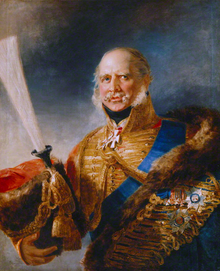
Ernest Augustus I of Hanover George Dawe - National Portrait Gallery: NPG 3309  ~ Public Domain

Ernest Augustus I of Hanover
George Dawe – National Portrait Gallery: NPG 3309 ~ Public Domain

Ernest, Duke of Cumberland, was once brought under suspicion of murder. He was the least likeable of the king’s sons. Ernest was said to be vain and easily rowed to anger. He had an war injury, which caused his left eye to have a sunken look. Ernest often spread malicious gossip about his family members. Some felt that Ernest was “too fond” of his sister Sophia. Many thought the prince to be bisexual or homosexual. When the duke’s valet (Joseph Sellis) was found in the ducal apartments with his throat slit, people believed the two had had a homosexual relationship, and that the valet was blackmailing Ernest. Sellis’s death was ruled a suicide, but the finding was questioned. For the wound to be self-inflicted, Sellis would have had to be right handed. Ironically, the man was left-handed.

King George preferred Frederick to his heir, Prince George. The king found his eldest son too effeminate. By the Golden Jubilee, the king was 72 years old, and the Crown Prince was 50. By this time, the two very much despised each other…more than likely wishing the other would “meet his Maker.”


Princess Amelia

Princess Amelia

George III preferred his daughters over his sons; however, she and her sisters lived in fear of their mother. The princesses were well-educated but raised in a rigidly strict household. Though he disliked the idea of matrimony for his daughters, King George had intended to find them suitable husbands when they came of age. However, the King’s recurring bouts of madness, as well as the Queen’s desire to have her daughters live their lives as her companions, stopped would-be suitors from offering for the most of the princesses. As a result, Sophia and all but one of her sisters grew up in their mother’s cloistered household, which they frequently referred to as a “Nunnery”.

As George III prepared for his Golden Jubilee, his daughter, the Princess Amelia (age 27) lay dying within the palace. Princess Amelia was born on 7 August 1783, at the Royal Lodge, Windsor, the youngest of George III and Queen Charlotte’s fifteen children as well as the only of her siblings born at Windsor Castle. It is often said that she was her father’s favourite; he affectionately called her “Emily”. She was born after the early deaths of her two elder brothers, Octavius (23 February 1779 – 3 May 1783) and Alfred (22 September 1780 – 20 August 1782). These deaths left a gap of almost six years between Amelia and her nearest surviving sibling, Princess Sophia. She was twenty-one years younger than her eldest sibling, George, and nearly seventeen years younger than her eldest sister, Charlotte. As the daughter of the monarch, she was styled Her Royal Highness the Princess Amelia from birth. The girl gave her father a keepsake by which to remember her. It was a ring containing one of her jewels and a lock of her hair. The inscription read: “Remember Me.” Amelia had fallen in love with Charles Fitzroy, one of the king’s equerries, but had not been allowed to marry him. Ironically, she left everything to Fitzroy in her will.

By the Golden Jubilee, only Princess Charlotte had married. The king’s other daughters were approaching middle aged (for that time period). They were not “attractive” women, and they found few prospects.

Princess Charlotte

Princess Charlotte

Princess Sophia

Princess Sophia

Though she never wed, rumours spread that Princess Sophia became pregnant by Thomas Garth, an equerry of her father’s, and gave birth to an illegitimate son in the summer of 1800. Other gossips declared the child was the product of rape by her elder brother the Duke of Cumberland, who was deeply unpopular. Historians are divided on the validity of these stories, as some believe she gave birth to Garth’s child while others call them tales spread by the Royal Family’s political enemies. A third set of rumors say the family spent a great deal of time trying to hide from the king the fact that Princess Sophia had borne an illegitimate child, whose father was an ugly, dwarf, some 33 years older than Sophia.

Wikipedia was used for the information in this post.

Posted in British history, Great Britain, Living in the Regency, real life tales, Regency era | Tagged , | Comments Off on King George III’s Children – Part 2

The Children of King George III

The Children of King George 

George III’s and Charlotte of Mecklenburg-Strelitz’s many children and grandchildren included:

(1) George Augustus Frederick, Prince of Wales (and later King George IV) was the heir apparent (1762-1830). George IV married Caroline of Brunswick. Princess Charlotte Augusta of Wales was their only child (1796-1817).

(2) Frederick Augustus, Duke of York (1763-1827), who married Fredericka of Prussia had no legitimate children.

(3) William Henry, Duke of Clarence (and later King William IV) (1765-1837) married Adelaide of Saxe-Meiningen. Their children included Princess Charlotte Augusta Louisa, who was born in 1819 but who did not survive, and Princess Elizabeth Georgina Adelaide, who suffered a similar fate.

(4) Charlotte Augusta Matilda, Princess Royal (1766-1828) married Frederick I of Wurtemburg. They had no children.

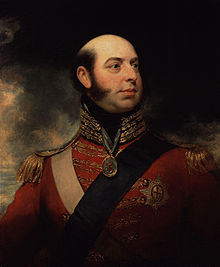
Edward, Duke of Kent and Strathearn, by Sir William Beechey (died 1839).  William Beechey - National Portrait Gallery: NPG 647 ~Public Domain

Edward, Duke of Kent and Strathearn, by Sir William Beechey (died 1839).
William Beechey – National Portrait Gallery: NPG 647 ~Public Domain

(5) Edward Augustus, Duke of Kent (1767-1820) married Victoria Mary of Saxe-Coburg-Saalfield. These were the lucky parents of the future queen, Alexandrina Victoria of Kent. QUEEN VICTORIA (1818-1901) married Albert of Saxe-Coburg-Gotha.

(6) Princess Augusta Sophia (1768-1840) did not marry.

(7) Princess Elizabeth (1770-1840) married Frederick of Hesse-Homberg, but they had no children.

(8) Ernest Augustus, Duke of Cumberland (and later King Ernest of Hanover) (1771-1851) married Fredericka of Mecklenberg-Strelitz. King George V of Hanover was their son.

(9) Augustus Frederick, Duke of Sussex (173-1843) first married Lady Augusta Murray, by whom he sired Augustus Frederick d’Este (1794-1848) and Augusta Emma d’Este (1801-1866). Later, he married Lady Cecilia Letitia Buggin. Lady Cecilia presented Augustus with no children.

Ernest Augustus I of Hanover George Dawe - National Portrait Gallery: NPG 3309  ~ Public Domain

Ernest Augustus I of Hanover
George Dawe – National Portrait Gallery: NPG 3309 ~ Public Domain

(10) Adolphus Frederick, Duke of Cambridge (1774-1850) married Augusta of Hesse-Cassel. Their children included George, Duke of Cambridge (1819-1904), Princess Augusta of Cambridge (1833-1927), and Princess Mary Adelaide of Cambridge (1837-1897).

(11) Mary (1776-1857) married William Frederick, Duke of Gloucester of Edinburgh. They had no children.

(12) Princess Sophia (1777-1848) never married.

(13)Prince Octavius (1779-1786) died in infancy.

(14) Prince Alfred (1780-82) died in infancy.

(15) Princess Amelia (1783-1810) died in infancy.

Tomorrow, we will take a closer look at the intrigues surrounding the Royal family and the “madness” of King George III.

Posted in British history, Great Britain, Living in the Regency, real life tales, Regency era | Tagged , | Comments Off on The Children of King George III

Regency Era “Hell’s Kitchen”: Marie-Antoine Carême, the First Celebrity Chef and One Time Head Chef for the Prince Regent

TX719_C27c2v1In Private Households during the Regency, the lord and lady of the manor took great pride in employing chefs of great renown. The most influential great French chef of the time was Marie-Antoine (Antonin) Carême (8 June 1784–12 January 1833), the one time head chef to the Prince Regent.

Marie-Antoine Carême was an early practitioner and exponent of the elaborate style of cooking known as grande cuisine, the “high art” of French cooking: a grandiose style of cookery favored by both international royalty and by the newly rich of Paris. Carême is often considered as one of the first internationally renowned celebrity chefs.

Royalty and noblemen throughout Europe courted Carême. Carême’s history was recorded by the French novelist and gastronome, Alexandre Dumas père, who relates how Carême was the sixteenth child of a stonemason.

Abandoned by his parents at the age of 11 in Paris in 1794, at the height of the French Revolution, he worked as a kitchen boy at a cheap Parisian chophouse in exchange for room and board. In 1798, he was formally apprenticed to Sylvain Bailly, a famous pâtissier with a shop near the Palais-Royal. The post-revolutionary Palais Royal was a high profile, fashionable neighborhood filled with vibrant life and bustling crowds. Bailly recognized his talent and ambition. By the time he was prepared to leave Bailly, he could stipulate that he should be free to leave his new employer when a better offer came along. He opened his shop, the Pâtisserie de la rue de la Paix, which he maintained until 1813.

Piece montee caleche

Piece montee caleche

Carême gained fame in Paris for his pièces montées, elaborate constructions used as centerpieces, which Bailly displayed in the pâtisserie window. He made these confections, which were sometimes several feet high, entirely out of foodstuffs such as sugar, marzipan, and pastry. He modeled them on temples, pyramids, and ancient ruins, taking ideas from architectural history books that he studied at the nearby The Bibliothèque nationale de France, thanks to the enlightened attitude of his first employer Bailly. He is credited with the inventions of gros nougats and grosses meringues, croquantes, made of almonds and honey, and solilemmes.

He did freelance work creating pieces principally for the French diplomat and gourmand Charles Maurice de Talleyrand-Périgord, but also other members of Parisian high society, including Napoleon. While working on his confections at many private kitchens, he quickly extended his culinary skills to main courses.

Napoleon was famously indifferent to food, but he understood the importance of social relations in the world of diplomacy. In 1804, he gave money to Talleyrand to purchase Château de Valençay, a large estate outside Paris. The château was intended to act as a kind of diplomatic gathering place. When Talleyrand moved there, he took Carême with him.

Carême was sent a test by Talleyrand: to create a whole year’s worth of menus, without repetition, and using only seasonal produce. Carême passed the test and completed his training in Talleyrand’s kitchens. After the fall of Napoléon, Carême went to London for a time and served as chef de cuisine to the Prince Regent, later George IV. Returning to the continent he followed the invitation of Tsar Alexander I to come to St. Petersburg, where he lived so briefly he never prepared a meal for the Tsar before returning to Paris, where he was chef to banker James Mayer Rothschild.

He died in his Paris house on the Rue Neuve Saint Roche at the age of 48, due perhaps to many years inhaling the toxic fumes of the charcoal on which he cooked. He is remembered as the founder of the haute cuisine concept and is interred in the Cimetière de Montmarte.

In his first major position, Carême worked as chef de cuisine to Talleyrand who actively encouraged Carême in the development of a new refined food style using herbs and fresh vegetable, simplified sauces with few ingredients. Talleyrand became a famous host during the Congress of Vienna – when the congress disbanded, not only the map of Europe but also the culinary tastes of its upper classes were thoroughly revised.

Carême studied architecture, especially classical Grecian, Roman, and Egyptian buildings. His passion for architecture showed itself in the elaborate pièces montées he created. Carême’s tables were decorated with exact replicas of classical temples, bridges, etc., created from spun sugar and pastry. The centerpieces were held together with wax and poisonous glues and so were not edible.

Carême’s impact on culinary matters ranged from trivial to theoretical. He is credited with creating the standard chef’s hat, the toque; he designed new sauces and dishes, he published a classification of all sauces into groups, based on four mother sauces. He is also frequently credited with replacing the practice of service à la française (serving all dishes at once) with service à la russe (serving each dish in the order printed on the menu) after he returned from service in the Russian court, but others say he was a diehard supporter of service à la française.

Carême wrote several books on cookery, above all the encyclopedic L’Art de la Cuisine Française (5 vols, 1833–34, of which he had completed three before his death), which included, aside from hundreds of recipes, plans for menus and opulent table settings, a history of French cookery, and instructions for organizing kitchens.

Le Pâtissier royal parisien, ou Traité élémentaire et pratique de la pâtisserie moderne, suivi d’observations utiles au progrès de cet art, et d’une revue critique des grands bals de 18
Le Maître d’hôtel français, ou Parallèle de la cuisine ancienne et moderne, considéré sous rapport de l’ordonnance des menus selon les quatre saisons. (Paris, 2 vols. 1822)
Projets d’architecture pour l’embellissement de Sainte Petersburg. (Paris, 1821)
Projets d’architecture pour l’embellissement de Paris. (Paris, 1826)
Le Pâtissier pittoresque, précédé d’un traité des cinq orders d’architecture (Paris, 1828; 4th edition, Paris, 1842)
Le Cuisinier parisien, Deuxième édition, revue, corrigée et augmentée. (Paris, 1828)
L’Art de la cuisine française au dix-neuvième siècle. Traité élémentaire et pratique. (Volumes 1-5. [Work completed after Carême’s death by Armand Plumerey.] Paris, 1833-1847)
The royal Parisian pastrycook and confectioner ([From the original of Carême, edited by John Porter] London, 1834)

Information for this post came from…

CooksInfo.com, Encyclopedia Britannica, and Wikipedia.

Posted in food, Great Britain, Living in the Regency, real life tales, Regency era | Tagged , , | 2 Comments

An Age of Indulgence, Supper with the Prince Regent

Gillray's take on the Prince Regent's fete decor: admiring the table-top canal. The public were invited to view the party decorations after it all was over. http://zipzipinkspot.blogspot.com/2014/08/journal-journey-into-year-1811-la-belle.html

Gillray’s take on the Prince Regent’s fete decor: admiring the table-top canal. The public were invited to view the party decorations after it all was over. http://zipzipinkspot.blogspot.com/2014/08/journal-journey-into-year-1811-la-belle.html

This long excerpt comes from “The Age of Indulgence” in Venetia Murray’s An Elegant Madness: High Society in Regency England. It is the menu for a supper served on 15 January 1817 by Careme at the Prince Regent’s Brighton Pavilion. There are more than 100 hot foods on the list.

Table de S.A.R. Le Prince Regent

Servie au pavillon de Brighton, Angleterre

15 Janvier 1817

Menu de 36 entreés

QUATRE POTAGES

Le potage à la Monglas

Le potage d’orge perleé à la Crécy

La parbure aux chous

Le potage de poisons à la Russe

QUATRE RELEVÉS DE POISSONS

La matelote au vin de Bordeaux

Les truites au bleu à lad Provençale

Le turbot à l’Anglaise, sauce aux homards

La grosse anguille à la régence

QUATRE GROSSES PIÈCES POUR LES CONTRE-FLANCS

Le jambon à la brouche, au Madere

L’oie braisée aux raciness glacéea

Les poulardes à la Périgeux

Le rond de veau à la royale

TRENTE-SIX ENTRÉES, DONT QUATRE SERVENT DE CONTRE-FLANCS

Les filets de volaille à la maréchale

Le sauté de merlans aux fines herbes

La timbale de macroni à la Napolitaine

La noix de veau à la jardinière

Les filets de volaille à l’Orléans

Le Jambon à la Broche

La darne de saumon au beurre de Montpellier

Le sauté de faisans aux truffles

La fricassee de poulets à l’Italienne

Le turban de filets de lapereaux

Les Truites au Bleu

Les boudin de volaille à la Bechamel

Le sauté de ris de veau à la Provençale

Les ailes de poulardes glacées à la chicorée

Les galantine de perdreaux à la gelée

L’Oie Braisée aux Racines Glacées

Les petites canetons de volaille en haricots vierges

Les poulets à la reine, à la Chevry

Les petities croustades de mauviettes au gratin

Les côtelettes de mouton à l’Irlandaise

Les filets de sarcelles à la Bourguignotte

Les petits poulets à l’Indienne

Les petites patés de mouton à l’Anglaise

L’épigramme de poulardes, purée de céleri

Le faisan à la Minime, bordure de racines

Les Poulardes à la Périgueux

L’aspic de blanc de volaille à la rivigote

Les filets de perdreaux à la Pompadour

L’emincé de poulardes au gratin

La cote de boeuf aux oignons glacés

Le Turbot à l’Anglaise

Le sauté de poulardes làa Provençale

Le salmis de cailles au vin de Madére

Les escalopes de volaille aux truffles

La salade de filets de brochets aux huîtres

Le Rond de Veau à la Royale

Le pain de carpes au beurre d’anchois

Les côtelettes d’agneau glacées à Toulouse

Le vol-au-vent de quenelles à l’Allemande

Les ailerons de poulardes aux champignons

Les pigeons à la Mirepoix financière

POUR EXTRA, DIX ASSIETTES VOLANTES DE FRITURE

5 De filets de soles

5 De filtets de gelinottes à l’Allemande

HUIT GROSSES PIÈCES DE PÂTISSERIE

La brioche au fromage

Le croque-en-brouche aux pistaches

Le nougat à la Françasise

Le biscuit àà l’Orange

La ruine d’Antioche

L’hermitage chinois

L’hermitage Syrien

La ruine de las mosquée turque

QUATRE PLATS DE ROTS

Les coqs de Bruyères

Les canards sauvages

Les poulets gras bardés

Les gelinottes

TRENTE-DEUX ENTREMETS

Les truffles à la cendre

La gelée d’oranges moulée

Les épinards à l’essence

La Brioche au Fromage

Les homards a gratin

Les petits pains à la duchesse

Les sckals au beurre

Le pouding de pommes au Muscat

Les mirlitons aux citrons

Les Canards Sauvages

Les bouchées perlées aux groseilles

Les oeufs brouillés aux truffles

Le Nougat à la Française

Les pommes de terre à la Hollandaise

La gelée de punch renversée

Les champignons à la provençale

Les navets glacés à la Chartre

Les coqs de Bruyères

Les gâteux glacés aux abricots

Le fromage bavarois aux

La purée de haricots

L’Hermitage Chinois

Les petits panniers aux confitures

Les Poulets Gras Bardés

Les génoises glacées au café

La charlotte à l’Amérucaube

Les choux-fleurs au Parmesan

L’Hermitage Syrien

Le céleri en cardes à l’Espagnole

La crème Française à l’ananas

Les petits soufflés d’abricots

Les Gelinottes

Les gateaux de feuilletage pralines

Les huîtres au gratin

Les Croques-en-Bouche

Les petites carottes à l’essence

La gelée de citrons moulée

Les laities farcies à la Béchamel

Les Biscuits de Fécule à l’Orange

Les truffles à l’Italienne

POUR EXTRA, DIX ASSIETTES VOLANTÉS

5 De Petites soufflés de pommes

5 De petites soufflés chocolat

Below is a rough translation of the dishes for those of you who have forgotten your French lessons. This is from a French-English translating program. My French and Spanish often become mixed in a not so kind manner. LOL!!! Disclaimer! This is not a perfect translation, but it will assist those of you would are most curious. In other words, do not ask me what “spinach gasoline” is.

Table S.A.R. The Prince Regent

Served at the Pavilion in Brighton, England

January 15, 1817

Menu of 36 entries

FOUR SOUPS

Soup to Monglas

The pearl barley soup at Crécy

Parbure to the cabbages

Soup of poisons Russian

FOUR FISH RECORDS

The stew wine from Bordeaux

Trout in blue lad Provençale

The English turbot, lobster sauce

The big eel in the regency

FOUR LARGE PARTS FOR COUNTER-SIDES

The Ham brouche at Madeira

The braised goose with raciness glacéea

Pullets to Périgeux

The round veal Royal

THIRTY-SIX INPUTS WHICH SERVE FOUR SIDES OF COUNTER

Fillets of chicken with Marshal

Sauté whiting herbs

The timbale Macroni the Neapolitan

Nuts gardener Veal

Nets Poultry Orleans

Ham to Pin

Salmon steak butter Montpellier

Sauté pheasant with truffles

The fricassee of chicken with Italian

The turban nets rabbits

The Trout in Blue

The roll of chicken with Bechamel

The sautéed sweetbreads Provencal

Pullets wings glazed chicory

The galantine partridge in aspic

Goose Braised with Glazed Roots

Small ducklings poultry beans virgin

Chickens to the queen, the Chevry

The Small pies wimps au gratin

The mutton chops to the Irish

Nets teal to Burgonet

Small chickens Indian

Patés small sheep in English

The epigram pullets, celery puree

The pheasant Minimal, border roots

Pullets in Périgueux

The aspic of chicken stock to rivigote

Nets partridge in Pompadour

The pullets Sliced ​​au gratin

The cote de boeuf with glazed onions

Turbot in English

The LAA jumped pullets Provençale

The quail stew of Madeira wine

Cutlets of chicken with truffles

Salad filet of pike oyster

The Round Veal Royale

Bread carp anchovy butter

Lamb chops glazed Toulouse

The vol-au-vent with German dumplings

Fins pullets mushroom

Pigeons in Mirepoix financial

FOR EXTRA TEN FLYING PLATE OF FRIED

5 From sole fillets

5 From filtets of grouse in German

EIGHT LARGE PARTS OF PASTRY

Brioche cheese

The croque-en-brouche pistachios

The nougat to Françasise

The biscuit àà Orange

The ruin of Antioch

L’hermitage Chinese

The Syrian hermitage

Ruin las Turkish mosque

FOUR DISHES ROTS

Bruyères cocks

Wild ducks

Wrapped chicken fat

The grouse

THIRTY-TWO CAKES

The truffles to ash

Jelly orange molded

Spinach gasoline

Cheese Brioche

A lobster gratin

Buns Duchess

The sckals butter

Pudding apples Muscat

The kazoos lemons

The Wild Ducks

Bites beaded gooseberry

Scrambled eggs with truffles

Nougat in French

Potatoes to the Dutch

Jelly reverse punch

Mushrooms Provencal

The turnips to the Charter

Bruyères cocks

The senile frozen apricots

Bavarian cheese

Mashed beans

The Hermitage Chinese

Small baskets with jams

Chickens Gras Bardés

The Genoese chilled coffee

The charlotte Amérucaube

Cauliflower with Parmesan

The Hermitage Syrian

Celery chard in Spanish

French cream with pineapple

Small apricot soufflé

Grouse

The pastry cakes chocolates

Oysters au gratin

The Croques-in-Mouth

Baby carrots with gasoline

Lemon jelly molded

The laities stuffed with Béchamel

Biscuits of starch in Orange

The truffles with Italian

FOR EXTRA~TEN flying disks

5 Of Small puffed potatoes

5 Small chocolate soufflés

Posted in British history, food, Great Britain, Living in the Regency, real life tales, Regency era | Tagged , , | 5 Comments

“Fertile” Fortunes: The 19th Century’s Importation of Guano

Living in one of the Southern states in the U.S., the season when I do not “fight” the battle of bird droppings on my Buick Lacrosse does not exist. It is a fact of life that I pay for the sunshine and days of moderate temperatures. That being said, I found my recent research on Alexander von Humboldt and guano had me looking at the “gifts” from my fine feathered friends a bit differently.

Guanay Cormorant (Phalacrocorax bougainvillii) in the Walsrode Bird Park, Germany.  uploaded to Wikipedia by Quarti CC BY-SA 3.0

Guanay Cormorant (Phalacrocorax bougainvillii) in the Walsrode Bird Park, Germany.
uploaded to Wikipedia by Quarti CC BY-SA 3.0

What is “guano”? Guano is the excrement of sea birds (especially the Guanay cormorant, the Peruvian pelican, and the Peruvian booby) , cave-dwelling bats, pinnipeds, and birds, in general. The fertilizer created from these leavings is known for its high levels of nitrogen, phosphate, and potassium, all essential to plant growth. The guano trade rose in the 19th Century becoming a soil builder for land greatly depleted from over production.

Before Humoldt’s expeditions, the Andean indigenous population collected guano from the sea islands along the Peruvian coast. Spanish colonists documented the means to which the rulers of the Inca Empire went to restrict access to guano, even punishing offenders with death. [Cushman, Gregory T. (2013). Guano and the Opening of the Pacific World: A Global Ecological History. Cambridge and New York: Cambridge Univ. Press] The Incas reportedly divided the guano-bearing islands among the provinces within their kingdom and dictated when and where it could be harvested.

Europe learned of guano’s use as a fertilizer from Alexander von Humboldt, who brought samples back to Paris from his 1806 voyage. Humboldt investigated guano’s fertilizing properties at Callao in Peru and later wrote of the topic. He gave the samples to Pourcroy and Vanquelin of Paris, who published the results of their experiments in the “Annales de Chimie” (volume 56). The western scientific community began to replicate the experiments.

One must recall “the Year without Summer” (1816) left much of Europe, England, and the United States in a devastated state. What the Napoleonic Wars had not destroyed upon the face of Europe the volcanic ash of Tambora did. Also, the early use of a three-crop rotation in England had taken its toll on the soil.

The first practical application of guano came in 1824. The editor of American Farmer purchased two barrels of guano and gave samples of it to various people in the Baltimore area. Edward Lloyd, the ex-governor of Maryland, declared guano “the most powerful manure he had ever seen applied to corn.” (Archipelago Bat Guano)

Twenty barrels of guano were received in England in 1840. “But notwithstanding the astonishing results from its application to the soil, the fear that enormous crops realized under its stimulus exhaust the land of its productive elements, deterred the great body of farmers availing themselves of so valuable a fertilizer.” [Journal of the American Geographical and Statistical Society (1895)]. Yet, the initial fears proved fruitless, and from 1841-1857, the United Kingdom imported over two million tons of guano fertilizer.

During the guano boom years, large quantities of the bird droppings were removed from the Peruvian guano islands, the Caribbean, the Central Pacific atolls, and the islands off the coast of Namibia, Oman, Patagonia, and Baja California. Some deposits were 50 meters deep. In 1856, the United States passed the Guano Islands Act, which gave U. S. citizens exclusive rights to unclaimed island deposits. A Peruvian-Chilean alliance fought the a war against Spain from 1864-1866 over the guano deposits. Saltpeter replaced guano as a fertilizer of choice by 1870. [“Guano”] Current DNA testing has suggested that new potato varieties imported alongside Peruvian seabird guano in 1842 brought a virulent strain of potato blight that began the Irish Potato Famine. [Dwyer, Jim (10 June 2001). “June 3-9; The Root of a Famine.” The New York Times. p. 2.]

1884 Advertisement for Guano - Public Domain

1884 Advertisement for Guano – Public Domain

In his Presidential address of 1850, President Millard Fillmore said, “Guano has become so desirable an article to the agricultural interest of the United States that is the duty of the Government to employ all the means properly in its power for the purpose of causing that article to be imported into the country at a reasonable price. Nothing will be omitted on my part toward accomplishing this desirable end.” [Salon]

By 1900, chemical fertilizers had replaced guano, but not before fortunes were made. Peru exported 20 million tons of guano and made a profit of $2 billion. Corporate giants such as W. R. Grace & Company, a Maryland chemical conglomerate, grew from their association with guano importation.

The Peruvian government “transferred the contract for the extraction of the guano to Anthony Gibbs & Sons” in 1855. “The firm’s profits from the guano trade were between £80,000 and £100,000 a year in the 1850s and 1860s with William [Gibbs] receiving between 50% and 70% of this until 1864, when he began to withdraw his capital. [Mark Girouard (1979). The Victorian Country House. Yale University Press.] William became the richest non-noble man in England, and remembered in the Victorian music hall ditty: “William Gibbs made his dibs, Selling the turds of foreign birds.” [James Miller (25 May 2006). Fertile Fortune – The Story of Tyntesfield. National Trust.] William Gibbs used the fortunes they earned from guano importation to build Tyntesfield Estate (Wraxall, North Somerset) and St. Michael and All Angels Church (Exeter).

Popular Fiction References:

• In Joseph Conrad’s 1900 novel Lord Jim the characters Chester and Captain Robinson attempt to recruit the eponymous lead character for an expedition harvesting guano.
• The setting of Ian Fleming’s 1958 installation in the James Bond series Dr. No is on a Caribbean guano island, and the villain dies at the end buried in guano.
• In Stanley Kubrick’s 1964 film Dr. Strangelove, Colonel “Bat” Guano leads an attack on the airbase responsible for sending a nuclear attack order to bomb the Soviet Union.
• The 1994 film Men of War centers on a band of mercenaries who are hired by an investment firm to seize a tropical island for its extensive guano deposits.
• In the 1995 film Ace Ventura: When Nature Calls, Jim Carrey’s character attempts to save an African tribe from being dispossessed of a fortune in bat guano. (“Guano”)

Meet Regina Jeffers:
A master teacher, for thirty-nine years, Regina passionately taught thousands of students English in the public schools of West Virginia, Ohio, and North Carolina. Yet, “teacher” does not define her as a person. Ask any of her students or her family, and they will tell you Regina is passionate about so many things: her son, children in need, truth, responsibility, the value of a good education, words, music, dance, the theatre, pro football, classic movies, the BBC, track and field, books, books, and more books. Holding multiple degrees, Jeffers often serves as a Language Arts or Media Literacy consultant to surrounding school districts and has served on several state and national educational commissions.

Coming in 2015:
The Prosecution of Mr. Darcy’s Cousin: A Pride & Prejudice Mystery
Mr. Darcy’s Fault: A Pride & Prejudice Vagary
Angel Comes to the Devil’s Keep
A Touch of Emerald: The Conclusion to the Realm Series

Posted in Uncategorized | 2 Comments