

Pride and Prejudice – Pride and Prejudice 2005 Photo (17217510 …
http://www.fanpop.com
“To be fond of dancing was a certain step towards falling in love.” (Pride and Prejudice, Chapter 3) During Austen’s time, young people looked for a potential mate at dances. Austen, herself, enjoyed a good dance, and, therefore, she often used dance as part of her plot line. In a 1798 letter to her sister Cassandra, Austen wrote, “There were twenty Dances & I danced them all, & without any fatigue.” Dancing well was a “necessary evil.” Those who trod on their partners toes (i.e., Mr. Collins) were seen as gauche. Children of the gentry learned the latest dance steps early on.
Public balls or assemblies and private balls formed the two types of formal dances. Assemblies took place in large ballrooms in market towns and cities. They were constructed for the purpose of public gatherings. One might also hold a dance in the ballrooms at country inns (as in the Crown Inn in Emma) or in formal ballrooms in large houses (as in the Netherfield Ball in Pride and Prejudice or Sir Thomas’s ball in Mansfield Park).
Occasionally, the gentry would roll up the rugs for an impromptu dance. These were more characteristic of country life.

PRIDE AND PREJUDICE” (1995) Review: miniseries_anon
miniseries-anon.livejournal.com
Characters discussing “dancing” and participating in “dance” occurs often in Austen’s story lines. From Pride and Prejudice, we find, “Elizabeth Bennet had been obliged, by the scarcity of gentlemen, to sit down for two dances…” (and) “Come, Darcy,” said he, “I must have you dance. I hate to see you standing about by yourself in this stupid manner. You had much better dance.” (as well as) “She had known him only a fortnight. She danced four dances with him at Meryton…”
“Every savage can dance.” Sir William only smiled. (and)
“You would not wish to be dancing when she is ill.” (and)
“…and Elizabeth thought with pleasure of dancing a great deal with Mr. Wickham…” In fact, Austen uses “dance” eight and sixty times during the story line.

Persuasion 1995 – Part 4 / VBOX7
http://www.vbox7.com
From Persuasion, the reader finds these references to “dancing.”
“The girls were wild for dancing; and the evenings ended, occasionally, in an unpremeditated little ball.” (and) “This evening ended with dancing.” (as well as) “Oh, no; she has quite given up dancing.” (and)
“Yes, I believe I do; very much recovered; but she is altered; there is no running or jumping about, no laughing or dancing…” There are ten references to dance in Persuasion.

The Rush Blog: April 2012
rushblogg.blogspot.com
The reader comes across nine and forty mentions of the word “dance” in Mansfield Park. We have such gems as, “…for it was while all the other young people were dancing, and she sitting, most unwillingly, among the chaperones at the fire…” (and) “…been a very happy one to Fanny through four dances, and she was quite grieved to be losing even a quarter of an hour.” (as well as) “…but instead of asking her to dance, drew a chair near her, and gave her an account of the present state of a sick horse…” (and) “I should like to go to a ball with you and see you dance. Have you never any balls at Northampton? I should like to see you dance, and I’d dance with you if you would, for nobody would know who I was, and I should like to be your partner once more.”

Best Country Dancer – Reviews of Jane-Austen Films
http://www.theloiterer.org
“Dancing” is mentioned nine and sixty times in Emma. “She was in dancing, singing, exclaiming spirits…” (and) “She had suffered very much from a cramp from dancing, and her first attempt to mount the bank brought on such a return of it as made her absolutely powerless…” (and) “Indeed I will. You have shewn that you can dance, and you know we are not really so much brother and sister as to make it at all improper.” (as well as) “Pleasure in seeing dancing! – not I, indeed – I never look at it – I do not know who does. Fine dancing, I believe, like virtue, must be its own reward.”
From Love and Freindship, one finds, “The Dancing, however, was not begun as they waited for Mis Greville.” (and) “I soon forgot all my vexations in the pleasure of dancing and of having the most agreeable partner in the room.” (as well as) “I can neither sing so well nor Dance so gracefully as I once did.” There are ten references to “dance” in Love and Freindship.

Jane Austen – Sense and Sensibilty on Pinterest | Emma Thompson, Kate Winslet and Alan Rickman
http://www.pinterest.com
One and twenty references to “dance” appear in Sense and Sensibility. They include: “In the country, an unpremeditated dance was very allowable…” (and) “Never had Marianne been so unwilling to dance in her life…” (and) “They speedily discovered that their enjoyment of dancing and music was mutual…”
Seven and sixty uses of “dance” can be found in Northanger Abbey. One can find, “He wants me to dance with him again, though I tell him that it s a most improper thing, and entirely against the rules.” (and) “Oh, no; I am much obliged to you, our two dances are over; and, besides, I am tired, and do not mean to dance any more.”

Northanger.Abbey.(2007).BDRip.720p.AC3.X264-7SinS – sharethefiles.com
sharethefiles.com
My favorite quote regarding dancing comes from Northanger Abbey. In it, Henry Tilney makes a comparison between “dancing” and “matrimony.” He says, “…that in both, it is an engagement between man and woman, formed for the advantage of each; and that when once entered into, they belong exclusively to each other till the moment of its dissolution; that it is their duty, each to endeavor to give the other no cause for wishing that he or she had bestowed themselves elsewhere, and their best interest to keep their own imaginations from wandering towards the perfections of their neighbours, or fancying that they should have been better off with any one else.”

Thoughtful Spot: Miss Austen
thoughtfulspot.typepad.
com
So, what are your favorite scenes in Austen’s novels that are associated with dancing? Are there other poignant Austen moments centering around dance? Please share your favorite scenes with all of us.
 Previously, we looked at what a servant in an upper house, or even in a second-class household, of the late Regency Period or early Victorian times, might encounter. We spoke of wages, delineation of duties, and additional compensation. Today, we wish to examine the “snobbery” found among the servant class. As mentioned in the previous’s article, the servants in upper households expected “tips” from the master’s guests. If he did not receive it, he might still exact his revenge on those who paid a second visit to the estate. On his return, a guest might find himself in a one of the draftier bedchambers or he might be met at the train in a cart rather than an estate carriage.

 This situation reminds me of the chauffeur in the play Sabrina Fair (basis of the movie Sabrina, which starred Humphrey Bogart and Audrey Hepburn) who earns a fortune by simply listening to his employer conduct business in the backseat of the car and then buying and selling stocks based on Linus Larrabee’s knowledge of the stock market.






 Congratulations to
 Sin and Sensibility by Suzanne Enoch; An Avon Romantic Treasure Book; Copyright December 2004; ISBN 0-06-054325-6
 Book Blurb: After all, what could be more tantalizing than teaching the beautiful Witfeld sisters all the special ways of driving a man into submission—and marriage? And leading exquisite Caroline Witfeld, the most spirited and least frivolous sister, to temptation would be wildly delicious.
 It was lust at first sight . . .
 Book Blurb: Lust is a Sin . . .
 Book XIII:
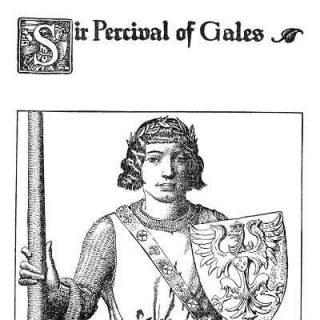 “Outside the ship, they meet Sir Percivale’s sister, who explains the history of the boat and the marvelous sword they will find inside it. The knights encourage Galahad to take the sword, which he does, naturally. The knights and maiden reboard the other ship (the one that bore Percyvale and Bors), which carries them to the Castle of Carteloyse in the Scottish Marches. There, they meet with hostile occupants and kill them all. Then they learn from the priest of the castle that they rescued the castle from three brothers who committed incest with their sister. Next, the knights and maiden come to a desolate forest, where they glimpse four lions led by a white hart. The four lions change into a man, lion, eagle, and ox. They learn that the hart represents Christ, and the lions stand for the four gospel-writers. The company arrives at a castle, where the knights must fight to prevent Percivale’s sister from having to give a basin full of blood. When the fight ends in a draw, the party agrees to lodge in the castle for the night and continue fighting the next day.When Percivale’s sister learns that the custom of the castle that involves bleeding a maiden is to save the life of its lady, she agrees to be bled, but loses her life in the process.” (

 In March of 2010,
 he flood ofwriting continued and the tap hasn’t turned off since. I’ve completed many other novels since Belle Bridge Books published
 My latest adventure has been
 With the popularity of Upstairs, Downstairs and Downtown Abbey, the populace has become more aware of the British servant class. So what do we know of those who lived “below stairs”? First, rank and precedence ruled those of the servant class as much as it did their masters. What was known as the “pugs procession” was commonplace among servants. Instead of the chatty scenes between upper and lower servants on Downtown Abbey, most household were ruled by “silence.” All the servants would take their dinner together in the servants’ hall, but then the upper servants (the house steward, the butler, and the housekeeper) would move to a private sitting room for their dessert.
 Being neither seen nor heard would be the order of the day. It was not unusual for maids to turn and face the wall if she encountered her master or mistress in the passageways. The upper housemaids were responsible for the appearance of the rooms. They addressed the draperies, the floral arrangements, the chair covers, etc. The under housemaids did the physical duties of laying a fire, polishing, cleaning the grates, etc. In Letters from England, Elizabeth Davis Bancroft, the wife of the U.S. Minister to England (1846-49), wrote, “The division of labour, or rather ceremonies, between the butler and the footman I have now mastered, I believe in some degree, but that between the upper and under housemaid is still a profound mystery to me, though the upper has explained to me for the twentieth time that she did only ‘the top of the work.”


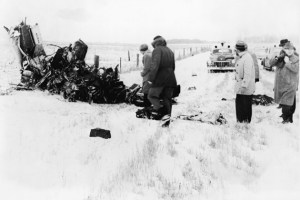
 The Big Bopper was next on the program. Richardson wore a leopard jacket and carried a toy telephone. When he said, “Hellloooo baaaaaaby, this is the Big Bopper speakin’” the audience came to their feet. He continued with several mashups, including “The Big Bopper Wedding,” “Little Red Riding Hood,” and “The Purple People Eater Meets the Witch Doctor,” which was the novelty song on the flip side of his hit “Chantilly Lace.” (Memories, February/March 1989)
 Valens was up next. He wowed the crowd with “La Bamba,” “Donna,” and “Come On, Let’s Go.” After the intermission, Dion and the Belmonts took the stage. With Bunch’s illness, Buddy had agreed to play drums for Dion, but he set up the drum set in the shadows of the stage’s lighting so as not to distract from the Belmonts’ performance.


