Word Origins? Are These Ones You’ve Used Incorrectly?

sitsshow.blogspot.com

sitsshow.blogspot.com

We had some great discussions on Facebook over the last patch of words I included in a post on word origins. Let us see if you find any of these appealing?

Escort – This is a late 16th Century word coming to us via French and from the Italian word “scorta,” which is the feminine past participle of scourger, which means to conduct or to guide. The word is based on the suffix “ex,” meaning “out of,” combined with the root “corrigere,” meaning “to set right.” In its original sense, the word meant  a body of armed men protecting travelers. The idea of keeping company with a woman is of U.S. origin dating to the end of the 19th Century. 

The word Cote is of Germanic origin. It comes to the language from Old English to indicate a “cottage.” The word transformed to mean a shelter for mammals or for birds, such as pigeons. 

Scapegoat is a mid 16th Century word. The word comes to us from the ritual of the Day of Atonement (Leviticus 16: 7-10). 

7 And he shall take the two goats, and present them before the Lord at the door of the tabernacle of the congregation. /8 And Aaron shall cast lots upon the two goats; one lot for the Lord, and the other lot for the scapegoat. /9 And Aaron shall bring the goat upon which the Lord’s lot fell, and offer him for a sin offering. /10 But the goat, on which the lot fell to be the scapegoat, shall be presented alive before the Lord, to make an atonement with him, and to let him go for a scapegoat into the wilderness. [King James Version of the Bible]

The idea of escaping death did not come into the language until the early 19th Century. 

Espouse – This is a late Middle English word coming to us from the Old French espouser, which came into the language from the Latin sponsare to be “betroth.” The context of “to make one’s own, adopt, or embrace” when thinking of a cause, a doctrine, or a way of life, etc., dates to the early 17th Century. In William Wordsworth’s “The White Doe of Rylstone,” we read in Canto II… 

All prayers for this cause, or for that I/ Weep, if that aid thee; but depend/ Upon no help of outward friend;/ Espouse they doom at once, and cleave/ To fortitude without reprieve.

Also from Wordsworth’s poem, we have Couchant. This is a late Middle English word coming from the late 1400s. It is of Middle French origin, the present participle of coucher meaning “to lay or lie.” It means “lying down or crouching.” In Heraldry, we often see an animal (customarily a lion) lying on its stomach with its hind legs and forelegs pointed forward and its head up.  

Of facts divulged, wherein appear
Substantial motive, reason clear,
Why thus the milk-white Doe is found
Couchant beside that lonely mound;
And why she duly loves to pace 

Emolument, which currently means “a salary, fee, or profit from employment or office,” is a late Middle English word coming to the language from the Latin [from the verb emolere] emolumentum, which was a payment made to a miller for grinding corn. 

A closely connected word to emolument is the word Salary. This one comes to us from the Anglo-Norman French word of salade, which comes from the Latin salarium. It originally came into the language to indicate the allowance provided to Roman soldiers to purchase salt. From [approximately] 1390 to 1520, people applied the word to the stipend afforded to a priest. 

Also related is the word Wage. It is an Anglo-Norman French and Old Northern French word of Germanic origin. It is related to the Middle English word gage, meaning “pledge or warrant,” and the Scottish word wed, meaning a “pledge.”  Early on the word wage came to used in terms of “payment for services rendered.” The word is sometimes used in the sense of “waging war.” Surprisingly, this phrase has its roots in Middle English, meaning to “offer promises that something would be fulfilled.” 

Scandal is a Middle English word, coming to the English language from the Old French scandale, from the ecclesiastical Latin scandalum, meaning “cause of offence,” from Greek skandalon, meaning “snare or stumbling block.” It originally meant “discredit to religion, especially in reference to the poor behavior of a cleric.” In Shakespeare’s Comedy of Errors (Act 5, Scene 1), we find…

Angelo. ‘Tis so; and that self chain about his neck
Which he forswore most monstrously to have. 1435
Good sir, draw near to me, I’ll speak to him.
Signior Antipholus, I wonder much
That you would put me to this shame and trouble;
And, not without some scandal to yourself,
With circumstance and oaths so to deny 1440
This chain which now you wear so openly:
Beside the charge, the shame, imprisonment,
You have done wrong to this my honest friend,
Who, but for staying on our controversy,
Had hoisted sail and put to sea to-day: 1445
This chain you had of me; can you deny it?

Combe is an Old English word, entering the language as cwm, a Celtic word referring to a rounded hollow in the Welsh mountains. It is found in charters dating from the period late 16th Century, appearing as the word cumb, meaning a small valley or hollow. The word survives, especially in southern England) to mean a short valley or hollow on a hillside or coastline. 

Scamp comes to the language via Middle Dutch schampen, meaning “slip away,” via Old French eschamper. In the mid 18th Century, the word meant “highwayman.” It comes from obsolete scamp meaning “to rob on the highway.” It was a derogatory term whose early usage was found in West Indian English. The term is thought to be more “playful” than “vicious” in tone in the current usage. 

Many of the definitions and examples provided above can be found in The Oxford Dictionary of Word Histories (edited by Glynnis Chantrell, Oxford University Press, 2002).
Posted in Anglo-Normans, British history, Great Britain | Tagged , , , , , | Comments Off on Word Origins? Are These Ones You’ve Used Incorrectly?

Anglo-Norman Literature: Part III ~ Romantic Verse Beyond “Sir Gawain and the Green Knight”

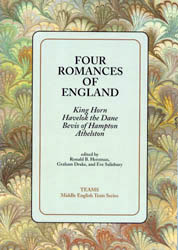
Four Romances of England: King Horn, Havelok the Dane, Bevis of Hampton, and Athelston www.goodreads.com

Four Romances of England: King Horn, Havelok the Dane, Bevis of Hampton, and Athelston
http://www.goodreads.com

The French epic arrived in England early on. Some historians believe that Chanson de Roland was sung at the Battle of Hastings. We have evidence of “chansons de geste” from the period, which serves even today. The chanson de geste, Old French for “song of heroic deeds,” are medieval narratives, a type of epic poem that appears at the dawn of French literature. Although they are considered “English” literature, many of the earliest manuscripts were written in French.

The Romance of Horn rose during the Anglo-Norman period.Romance of Horn is an Anglo-Norman literature romans d’aventure (“adventure story”) tale written around 1170 by an author apparently named ‘Thomas.’

“The hero, named Horn, is the son of the king Aälof of Suddene (probably somewhere near Devon). Horn is orphaned after the Saracens kill his parents. He and twelve companions then set sail in a boat only to end up on the shores of Brittany, where he grows to manhood and falls in love with the king’s daughter Rigmel. There Horn defends the kingdom from invading Saracens, but the king banishes him to Ireland after Horn is wrongfully accused of trying to usurp the throne. In Ireland, Horn again proves his heroism and is offered the hand of the king’s daughter. Horn refuses it and after some time returns to Brittany to rescue and marry Rigmel. The story became the base for one of the earliest Middle English romances King Horn,” written around 1225 to 1250. (Wikipedia)

According to his legend, King Horn is the son of King Murry and Godchild, rulers in Suddene (the Isle of Man). The Paynim conquer the Suddenese and set Horn adrift in a boat with his companions. Eventually, Horn arrives in Almari’s country, where he takes up with the king’s daughter, Rimenild. Yet, before Horn and Rimenild can come together in marriage, he must prove his worth as a knight. Horn slays a hundred Saracens, but Almair learns of the alliance between his daughter and Horn, and he banishes Horn from the land for seven years. 

After seven years, Horn receives news that Rimenild is to marry another. Dressed in disguise as a beggar, he returns for her. Remenild recognizes him for Horn wears the ring she presented him. He kills Fikenhild, the man who would claim Rimenild and finally claims the woman to wife. 

Medieval manuscripts blog: August 2012 britishlibrary.typepad.co. uk  Detail of a bas-de- page scene of a messenger approaching  a king (King Horn?) and queen, from  the Smithfield Decretals, southern France  (probably Toulouse)

Medieval manuscripts blog: August 2012
britishlibrary.typepad.co.
uk Detail of a bas-de-
page scene of a messenger approaching
a king (King Horn?) and queen, from
the Smithfield Decretals, southern France
(probably Toulouse)

Like most pieces of romantic verse of the period, King Horn is simple, direct, manly, completely untouched by the elaborate analysis and courtly code of the later romances. In expression and feeling, King Horn foreshadows the popular ballads and was, in fact, reworked into ballad form at a later date. [History of English Literature: Part I – Early Saxon Through Milton, Hymarx Outline Series, Student Online Company, Boston, MA]

We also know something of Bevis of Hampton from the period. Bevis is the son of Guy, Count of Hampton (Southhampton) and his wife, a daughter of the King of Scotalnd. The Countess of Hampton asks a former suitor to kill her husband. The plot knows success, and the countess marries her co-conspirator, Doon. Although only 10 years of age, Bevis threatens future retribution for his father’s death. The boy’s mother plans to kill him also, but the child’s tutor saves him by selling the bod to pirates. Bevis reaches the court of King Hermin. While dwelling with Hermin, Bevis defeats Ascapart, woos the Hermin’s daughter, Josiane, makes a journey to King Bradmond of Damascus where he is imprisoned for several years. Eventually, Bevis returns to Hampton to kill his stepfather. Even so, Bevis is driven from his home and separated from Josiane. The story details his death and the rise of his two sons to power. 

The oldest extant version of Boeve de Haumtone dates from the first half of the 13th Century. It is some 3850 verses written in alexandrines, which is a line of poetic meter comprised of 12 syllables. 

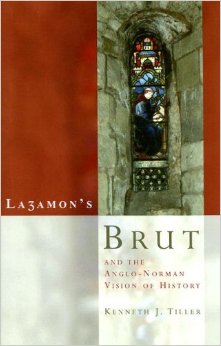
 Layamon's Brut and the Anglo-Norman Vision of History www.amazon.co.uk


Layamon’s Brut and the Anglo-Norman Vision of History
http://www.amazon.co.uk

Laymon’s Brut is a rimed chronicle of the history of Britain. Written by Layamon, a priest well renowned in the early 1200s, “Brut” is in Middle English and alliteration. In the “Brut,” we find “The Passing of Arthur,” which tells of Modred’s treachery. Modred was Arthur’s nephew, but he plots against Arthur. 

The story goes that Modred assembles 60,000 men to fight Arthur so Modred might claim the throne. This takes place at Whitsand on the French coast. During the battle, Arthur’s other nephew, Gawain is slain. Arthur laments Gawain’s death and discloses his earlier dream of foreboding determining Gawain’s passing. 

Thinking themselves doomed by the Fates, Modred and his men flee to London. Modred goes to Winchester, from where he manages to escape to Hamtone (Southhampton) and to steal ships for his retreat. Merlin prophesies that the earth shall swallow Modred. 

Thinking she lost her husband, Wenhaver [Guinevere], Arthur’s queen, departs Eouwerwic [Evorwic or York] to go to Caerleon, where she will become a nun. 

Modred manages to amass a new army, and he meets Arthur’s forces at Camelford, near the River Tambre. Modred is killed and Arthur severely wounded. Over 200,000 men lose their lives in the battle. On his death bed, Arthur presents his kingdom to Cador’s son, Constantine. Arthur will arrive in the heavenly Avalon, where he will be restored to health and dwell with fellow Brutten [Britains]. 

In the tale, the body of the wounded Arthur is borne away in a boat by two women. The women are wondrously clad [“wunderliche idihte”], and they bear Arthur across the river to Avalon.


Posted in Anglo-Normans, British history, literature, romantic verse | Tagged , , , , , , , | 2 Comments

Congratulations to the Winners of Jeanna Ellsworth’s “Inspired by Grace”

winner-is-badgeI would like to congratulate Becky C and Dung for being chosen as winners of Jeanna Ellsworth’s “Inspired by Grace” Giveaway. I will be contacting you, Ladies, on how to claim your prize. 

Posted in giveaway | Tagged , , | 1 Comment

Bride Inheritance? A Cultural Allowance for a Widow or a Means to Control Property?

[PDF] Women's Inheritance Rights to Land and Property in South Asia: A ... www.landesa.org Women's Inheritance Rights to Land and Property in South Asia: A Study of Afghanistan, Bangladesh, India, Nepal, Pakistan, etc.

[PDF] Women’s Inheritance Rights to Land and Property in South Asia: A …
http://www.landesa.org
Women’s Inheritance Rights to Land and Property in South Asia: A Study of Afghanistan, Bangladesh, India, Nepal, Pakistan, etc.

Bride Inheritance or Widow Inheritance is a cultural practice sometimes related to a levirate marriage. In this practice, a woman must marry a kinsman of her late husband. This kinsman is often her brother-in-law. 

From Bible Study Tools, we learn, “Words that occur in the general semantic field of the term “widow” in the Bible shed light on both her personal experience and social plight. Weeping ( Job 27:15 ; Psalm 78:64 ), mourning ( 2 Sam 14:2 ), and desolation ( Lam 1:1 ) describe her personal experience after the loss of her spouse. Poverty ( Ruth 1:21 ; 1 Kings 17:7-12 ; Job 22:9 ) and indebtedness ( 2 Kings 4:1 ) were all too often descriptive of her financial situation, when the main source of her economic support, her husband, had perished. Indeed, she was frequently placed alongside the orphan and the landless immigrant ( Exod 22:21-22 ; Deuteronomy 24:17 Deuteronomy 24:19 Deuteronomy 24:20-21 ) as representative of the poorest of the poor ( Job 24:4 ; 29:12 ; 31:16 ; Isa 10:2 ) in the social structure of ancient Israel, as well as in the ancient Near East. With minimal, if any, inheritance rights, she was often in a “no-man’s land.” She had left her family, and with her husband’s death the bond between her and his family was tenuous.

“Nonetheless, the loss of a husband in ancient Israel was normally a social and economic tragedy. In a generally patriarchal culture, the death of a husband usually meant a type of cultural death as well. Although the denotation of widow referred to a woman whose husband had died, because of the social context the word quickly acquired the connotation of a person living a marginal existence in extreme poverty. The widow reacted with grief to her plight, and probably wore a distinct garb as a sign of her status ( Genesis 38:14 Genesis 38:19 ; 2 Sam 14:2 ; cf. Judith 8:5-6; 10:3; 16:8). Disillusionment and bitterness could easily result ( Ruth 1:20-21 ). Her crisis was aggravated if she had no able-bodied children to help her work the land of her dead spouse. To provide for her children, to maintain the estate, and to continue payments on debts accrued by her husband imposed severe burdens. Since she was in an extremely vulnerable economic position, she became the prime target of exploitation. The fact that she was classed with the landless stranger and Levite indicates that she was often unable to keep her husband’s land.

 [PDF] Women's Inheritance Rights to Land and Property in South Asia: A ... www.landesa.org Women's Inheritance Rights to Land and Property in South Asia: A Study of Afghanistan, Bangladesh, India, Nepal, Pakistan, and Sir Lanka


[PDF] Women’s Inheritance Rights to Land and Property in South Asia: A …
http://www.landesa.org
Women’s Inheritance Rights to Land and Property in South Asia: A Study of Afghanistan, Bangladesh, India, Nepal, Pakistan, and Sir Lanka

“In general, the widow’s inheritance rights were minimal. Some scholars believe that Israelite widows could inherit land as was the case with their Mesopotamian counterparts. But the evidence is sparse. The general rule was that the land was inalienably connected to the family of the male to whom it was apportioned. The fact that an individual desired to marry the widow of a king did not assume that the woman had inherited her husband’s estate; it was simply an attempt to legitimize a claim to royalty (cf. 1 Kings 2:13-18 ). The fact that widows had land within their possession probably indicated that they held it in trust for their children ( 1 Kings 17:7-9 ; 2 Kings 4:1-2 ; cf. Prov 15:25 ). If a widow had male children, the land would pass to her sons when they reached maturity if she was able to maintain the land and the sons survived. If she had only female children, the land would be transferred to them provided they married within the tribe ( Num 27:8-11 ). If she was childless and of marriageable age (i.e., still able to reproduce), it was the duty of the closest male relative on her husband’s side (normally the brother-in-law [Lat. levir]) to marry her and provide an heir for the land of her dead husband, and to continue his name in Israel ( Deut 25:5 ). The story of Judah and Tamar ( Gen 38 ) is an example of this custom of “levirate” marriage. Later, Deuteronomy 25:5-10 codifies legislation for such unions. The Book of Ruth provides a historical example of the application of the law. If no relative would marry a childless widow, it seemed that she could return to her father’s house ( Gen 38:11 ; cf. Lev 22:13 ) and dispose of the land to the husband’s family ( Ruth 4:1-3 ).

“The distribution of the term ‘widow’ is found approximately one-third of the time in legal texts, one-third in prophetic texts, and one-third in wisdom and historical literature. But the vast majority of the contexts are legal in nature, either dealing with justice (the legal protection of the widow) or injustice (the exploitation of her status). In the former case the Old Testament is replete with legislation that attempted to provide a social security net for the widow: she was not to be exploited ( Exod 22:21-22 ; Deut 27:19 ); she was specifically permitted to glean the fields and vineyards during harvest time ( Deut 24:19-21, ; cf. Ruth 2 ); tithes were to be shared with her ( Deut 14:29 ; 26:12-13 ); provision was to be made for her at the main religious feasts ( Deut 16:9-15 ); her garment could not be taken as collateral for a loan ( Deut 24:17 ); and the levirate institution would not only provide an heir for the land for childless widows, it would help them be integrated back into society. Moreover, the supreme measure by which a ruler in Israel was to be judged was whether such powerless ones were cared for ( Psalms 72:4 Psalms 72:12-14 ; Jer 22:16 ).

“At the same time, the legislation acknowledged the fact of the vulnerability of the widow and many Old Testament texts indicate that she was victimized repeatedly ( Exod 22:22-23 ; Isa 1:23 ; 10:2 ; Ezek 22:7 ; Mal 3:5 ). The prophets were the champions of exploited widows. As far as they were concerned, repentance began with redressing wrongs done to such unfortunate women ( Isa 1:17 ; Jer 7:6 ; 22:3 ; Zech 7:10 ). Wisdom texts encouraged a benevolent attitude toward widows. Job’s comforters accused him of heinous crimes, particularly of oppressing the widow ( Job 22:9 ), but he countered with the argument that he never sent away a begging widow without food and he often made her broken heart sing ( 29:13 ; 31:16 ).”

Wikipedia explains that “It [widow inheritance] is common in certain African groups, for example the Luo in Kenya and Uganda around Lake Victoria. Households headed by widows are often one of the poorest groups. Under customary law, it is assumed widows and their children will be taken care of by the deceased’s kin. When there is a will, often all property is left to the children with the stipulation that the wife be taken care of. With no will, widow is allowed 25% of the estate and the children inherit the remaining 75%.

“In 1998, a study by FAO/IFAD in Ghana found that women’s access to land was through their husbands. When a husband dies, and the wife has no children or only daughters, women are likely to loose all rights to the land. Often, the deceased’s family do not take good care of the widow and her children and widow inheritance was identified as a major obstacle to household food security.” [ “Uganda, Ghana and Cote d’Ivoire – The situation of widows”. http://www.ifad.org. Retrieved 2015-05-27.]

An excellent source of information is A Report by the Rural Development Institute(RDI) for the World Justice Project entitled Women’s Inheritance Rights to Land and Property In South Asia: A Study of Afghanistan, Bangladesh, India, Nepal, Pakistan, and Sir Lanka, December 2009. 

Posted in Africa, Levirate marriage, world history | Tagged , , , | Comments Off on Bride Inheritance? A Cultural Allowance for a Widow or a Means to Control Property?

Celebrating the Release of “Inspired By Grace,” with Jeanna Ellsworth + Excerpt + a Giveaway

Today, I welcome one of compatriots on austenauthors.net with a non-Austen inspired release plus a giveaway of Inspired by Grace. 

Finale, Goodbyes, and The End!

Jeanna Ellsworth

Jeanna Ellsworth

Thanks so much Regina for hosting me on this final stop on the blog tour of Inspired by Grace. It has been a whirlwind month of stops and blogs, so much so that time has flown by!

I wanted to stop and talk a little bit about endings. There will be times in all of our lives that something will come to an end. It might be a relationship or a job or for me, the final chapter of a book. This week I am having not only an end to the blog tour but also an end of having all my kids under my roof. I just took my eldest daughter, Paige, who Grace, in Inspired by Grace is based off of, to Brigham Young University. It was a bitter-sweet moment, one that choked me up a few times. But I got to be thinking about endings, all kinds of endings.

I will, however, focus in this blog on writing an ending to a book. I feel like to really know how to write an ending, one must really know the beginning. As I write, I frequently will reread what I wrote dozens of times before the final chapters appear. I will make a final read through and jot notes about what needs concluded, what is only worthy of a short side note, which things require a full scene, and what should be the final moment. That final moment is one that leaves the reader with that fabulous book hangover feeling of fulfillment. I hope all my books leave readers with book hangovers, but it is not an easy feat to accomplish

But knowing where you began is more important than you realize, because if you can remind the reader of the growth in the characters, they will feel that they just went on a fulfilling journey and let’s face it, we all love to observe progress.

One of my favorite things  in books that I read is a sense of character progression. I like to see the reformed rake that turned into an honest gentleman. Or the distrustful widow who learned to love again. I really feel like when the reader can see where the characters started and be reminded of how they got to the present, then the reader will more fully appreciate the final happily-ever-after. The beginning is just as important as the end, but as humans, we forget about that. I might wax philosophical for a moment, but everyday really can be just a beginning of something great.

So I thought I’d share an excerpt with you that has to do with the ending of Inspired by Grace. It will be short, and I will admit that reading it out of context does not make it nearly as sweet as it is after reading the whole book from the beginning, but I promise it doesn’t contain any spoiler alerts. Just a sweet moment that I reread at times when I needed that swoon-worthy moment. I hope it has the same effect on you.

Here is the back cover intrigue to help you understand what the book is about too.

InspiredbyGraceFINAL
*****

“She was never the demure lady who was afraid of getting her petticoat dirty. He was never the calm and collected lad who coddled her. What started as friendship evolved into something quite tangible . . .”

A lady always hopes that the man she falls in love with will sweep her off her feet in a dramatic and graceful way. Well, for Grace Iverson, at least it was dramatic. Her childhood best friend, Gavin Kingston—now His Grace, the Duke of Huntsman—is still just as clumsy as ever.

Despite their painful separation as children, a chance encounter has offered them a second opportunity for happiness. But after ten years apart, they both carry hidden scars. Trust takes time. And soon, forces from the past threaten to destroy the love they both have hoped for all of their lives.

Can Grace’s best friend break down her emotional fortress and prove his love before she disappears from his life a second time?
This lovely Regency romance started well before either of them knew what they wished for in a partner; but it will surely be one that stands the test of time.

*****
EXCERPT

Gavin relished the sight of Grace coming toward him. She had changed into a gown that he had not seen before. It was pale ivory with a green ribbon around the waist, accenting her narrow form. She walked toward him, and he saw how she carried herself gracefully, entirely congruent to her nature. There was nothing more attractive than a woman who knew who she was and carried no airs.

Of course, Grace had her weaknesses. She was sometimes a bit hot under the collar, but he could not imagine his life without her passion and devotion. Her eyes were as honest and loyal as any he ever had ever seen. It matched her deeply compassionate heart. She was a prize that he was astounded he had won; he doubted he deserved her, but he would never take her for granted.

She smiled sweetly at him, igniting a warmth to counteract the chill that still lingered from the carriage ride. She glanced one way and then the other, and then went on her tiptoes and kissed him soundly.

She murmured softly, “I hope you have good news.”

“Hmm . . . I might. I might not.”

“Are you not going to tell me what happened?”

He smiled mischievously and tapped her nose with his finger. “I believe you must buy my secrets.”

She raised her eyebrow at him so temptingly that he had to pull her into his arms. She rested her cinnamon-scented head of hair on his chest, and he took the moment to inhale deeply, which sent ripples of pleasure throughout his body. It was going to be painful to have her return to her sister’s house. Painful, truly painful.

“And how shall I pay for such secrets?” she whispered. The flirtation in her voice was so thick he could touch it.

He lifted her chin toward his and with punctuated tender kisses said, “You. Must. Pay. For. Them. One. Kiss. At. A. Time.” Then he let his lips linger. She reached her hands up to his face and pulled him down to her. Her lips found a rhythm that was entirely to Gavin’s liking. A moment ago, in the carriage, he did not think he would ever be warm again; now he feared he would never be cool again.

*****

I hope you enjoyed this little tidbit. Thank you all for being a part of the blog tour and thank you for supporting me in my writing with all your fabulous comments and word-of-mouth advertising. I love hearing from a friend I trust that she just read a fabulous book that I must read. I hope that you all get a chance to share your latest find and spread the good word.

Since this is the final stop on the blog tour, I am going to pick two winners from the commenters! The winners have their choice of either a paperback (if they have a U.S. address) or an eBook (open internationally). So make certain to comment on the blog or the book or anything else to enter for a chance to win it free! Of course, if you simply can’t wait, it is available on Amazon.com.[The giveaway will end at midnight on Friday, August 7, 2015, EDST.]

Thank you Regina again for hosting me! Good luck everyone on the giveaway. Until my next release, which will not be until June 2016, farewell!

Posted in Austen Authors, giveaway, Guest Post, Living in the Regency, Regency era | Tagged , , , , , | 23 Comments

Introducing Black Opal Author, Jerry Otis + an Excerpt from “The Gaf Killer” + a Giveaway


BOBI believe many of you are aware that I signed a contract with Black Opal Books for a new Regency romance [Angel Comes to the Devil’s Keep] to be release soon. In doing so, I am now part of a new group of authors, and I asked several of them to join us here. Hopefully, you will discover someone new to add to your TBR list. I certainly have. 

02  8-27-14First up, is Jerry Otis: Jerry Otis is a SAG Actor who turned to writing about a half dozen years ago. The entire publishing process has taught him one thing, “Never give up.” Even after getting over 40 rejection letters from other literary agencies or editors, he continued to forge ahead. He’s found out that if you have a good story, a literary agency, or editor out there somewhere will recognize your manuscript for what it is and decide to sign you.

Otis lives in northern California in the rural town of Pollock Pines. Although he’s now going to be a newly published author with Black Opal Books, it’s something that in his earlier years he would have never dreamed of becoming, considering the crappy grades he received in English classes, from elementary all the way up through high school. It wasn’t until he got into college that he found out he liked to write, and it was at that point in time he realized it’s not just the grammar that’s important, it’s the story telling. Remember this, “Without a good story, you have nothing but a bunch of rambling, mumbo jumbo, so no matter what kind of degree you have in Literature/English etc., that degree will get you nowhere unless you’re a good story teller. Grammar can be corrected, but story telling can’t be faked.” His novel The Gaf Killer ~ Son of Zodiac will be released by Black Opal Books on Saturday, August 1.

05 Postcard_FrontThe Gaf Killer

A serial killer, calling himself The Gaf, starts an interstate killing spree that quickly propels him to the top of the FBI’s most wanted list. Special Agent David Drake and his hand-picked team of agents drop everything and form a taskforce with one purpose—to track down this psychopath and bring him to justice. Crisscrossing the country from one crime scene to the next, Drake and his team can only hope the killer gets careless and makes a mistake. But this killer is no novice. His father, serial killer The Zodiac from the late 1960s and early ’70s, has taught him well and the taskforce has its hands full. How many more innocent victims must die before Drake and his team can track down this monster and stop the carnage?

Kindle 
00 bokmark off FBook

Excerpt

CHAPTER 1

The Call

I was sitting in my office in Phoenix when the phone rang. “Special Agent Drake here,” I said.

“Agent Drake, this is Ms. Janson, from the director’s office in Washington, DC. Hold please, I’m transferring you to Director Becker.”

Director Becker and I went way back, once working as partners out of the Washington, DC office, tracking down and arresting several interstate and international murder suspects on the FBI’s Most Wanted list. Director Becker was old-school FBI with several more years of experience than me, and for the last five years had been director of the FBI. He was gray-haired, slightly overweight, and never wore designer clothing. Becker bought his suits right off the rack at the local Walmart.

“Hello, David,” he said when he got on the line. “I’ve got an assignment I want you to head up. I’ll need you here at headquarters tomorrow morning, then I’ll fill you in on the details. I can tell you this, it’s a taskforce I want you to head up to track down and arrest a serial killer who’s now on our Most Wanted list. This case is the number one priority of the FBI, so drop what you’re working on at the Phoenix office, and catch the first flight out.”

“No problem, Director Becker, I’ll see you in the morning.”

I hung up the phone, and right away let my supervisor at the Phoenix office know that I’d been requested by Director Becker to meet with him and told him what I could, going on to add,

“That’s pretty much all I know right now.”

With that, I headed back to my duplex on the outskirts of Phoenix, and gathered up a few things I’d need for the trip, fully knowing I might be gone for who knew how long. I knew I stood a good chance of never coming back here.

I caught a non-stop flight on FTTA-Air to DC at three p.m., landing at ten p.m. DC time. By the time I picked up a rental car and made it to my room at the Hilton, it was midnight. I set my iPhone alarm for five a.m. It was going to be a short night.

***

I arrived at headquarters around seven-forty-five a.m. then went straight up to the director’s office on the fifth floor, checking in at Ms. Janson’s desk. Then she let the director know I was here. “Go right in, Special Agent Drake, the director is ready for you.” As she opened the door to the director’s office, I thanked Ms. Janson, walked toward Director Becker, shook his hand, and took a seat at one of the three, rather cushy-looking, cordovan brown leather chairs that were situated in a semi-circle in front of his huge desk. This office seemed as large as my thousand square foot duplex in Phoenix and was done in cherry wood paneling.

Both the director and I got right into it with Becker explaining to me that he wanted this sum-bitch tracked down and arrested ASAP.

“If need be, shoot and kill this lowlife scumbag no matter whether the killer’s a man or woman,” the director went on to explain. “Those are the perimeters. Are we clear, David? I want this motherfucker caught. It doesn’t matter to me how you do it, but make sure you don’t fuck up and kill some innocent person. If that happens, we here at headquarters, and that means me, we’re gonna declare you’re a rogue FBI agent out on some kind of vindictive payback.”

He paused and studied me, letting his words sink in.

“Any questions, David? Are we clear? You’re free to get up and leave this office with no hard feelings if you decide you don’t wanna head up this case.”

I had to admit, I thought about walking right out of the director’s office and kissing this assignment off, but I knew I wasn’t going to leave. After all, my job as an FBI special agent was to track down murdering lowlifes.

“No problem, Director. I’m on the case, but I do have one question and one request. First question is, do you have any leads on this case?”

“We don’t have much to go on, except for one female by the name of Sandy Bandfield living in Norfolk, Virginia, who escaped after being confronted by a burglar in the middle of the night, while sleeping, three nights ago. We think that burglar is the serial killer, mainly by comparing MOs of other unsolved murders with the MO of this attempt.

“What makes this attempt different is what was said to Ms. Bandfield just before she jumped up and bolted out of her condo. From what I understand from reading the police report, the burglar nudged her while she was sound asleep, at approximately three a.m. in the morning, telling her ‘I’m Gaf. Are you ready to die?’ I want you to meet with her and do an in depth interview. Get all the particulars and make sure nothing was missed, no matter how insignificant it may seem. That’s a start. And, by the way, what was your request?”

“My request is that I handpick my team of FBI agents for this taskforce. I figured this isn’t gonna be a run of the mill track down, so I have several FBI agents in mind who are all highly experienced in their fields, whom I’ve worked with in the past and would feel comfortable working with again. I have a list I’ve put together, narrowing it down to these three FBI agents.”

“Okay, who are they?”

I opened my briefcase and pulled out a list I had typed up on my laptop during the flight out, noting the fields these agents specialized in, and handed the list to the Director.

The director eyeballed the list. “It’s a rather impressive list. I know we’ve both worked with these three agents in the past, and I have to say they definitely are the ‘Cream of The Crop,’ as far as FBI agents go. They’re like bulldogs. They don’t let up. And, I might add, Carla Simmons is easy on the eyes. By the way, David, that last remark I just made stays in this office. That’s all I need–a sexual harassment lawsuit brought on by a female agent.”

The director then chuckled as he continued studying the list.

“FBI Special Agent Carla Simmons. Fifteen years of experience specializing in criminal profiling and also as an FBI sketch artist. FBI Special Agent Joe Vack. Has nearly twenty years of experience with the Bureau. Vack Believes in old-school gumshoe investigations–making calls, following up on every lead, and taking lots of notes in his small spiral notepad, while leaning on informants for info. Special Agent Vack’s an exact clone of TV’s Detective Columbo. FBI Special Agent Juan Martinez. Ten years of experience doing dual duties as an expert at analyzing crime scenes, and as a crime scene photographer with the Bureau.

“Okay, David, I like the list. Now go down the hall to a spare office and start calling these agents. I want them all here in my office by eight a.m. tomorrow morning, then we’ll start working on a plan. I want your taskforce to hit the streets running. I want this serial killer bad. Do you have any other questions, thoughts, or requests?”

“Tomorrow morning, we’ll need a spare office and any additional background you may have.”

“No problem, you’ll have total access to all FBI resources. Anything you need that’ll help in catching this sum-bitch, you got it. If you have any problems along the line in getting help from any of my divisions here–well, you know what to do. You have my cell number.”

With that, we both shook hands, with me knowing as I walked out of Director Becker’s office, that this would be a tough case to crack. But I was confident that I and my team of experienced FBI special agents would catch the serial killer the bureau had labeled the Gaf Killer.

I called all three agents and gave them the rundown on what little I knew. They all agreed to come on board and meet at headquarters tomorrow morning. I especially enjoyed talking to Special Agent Carla Simmons again. Unbeknownst to Director Becker, Carla and I did have a fling while working on a case in New Orleans a few years ago. It had just happened. It was a mutual attraction between the two of us at the time, with no commitments. It was just sex. Fuck Buddies would be a better name for it, I guessed.

Director Becker was right about one thing, she was easy on the eyes, but I’d put it in modern terms–Carla was a looker with a great personality, brains, and a smokin’ bod to match.

I knew I’d have to keep my cool as much as possible. After all, our main focus was to track down the Gaf Killer.

© 2015 by Jerry Otis

____________________________________

Jerry extends his gratitude for the following for their assistance in bringing the idea for this book to a reality:

Proof reader and dear friend, Kimberly Lovoy 

Friend, Jacqueline Miu, who is an author, publisher, and book cover designer living in Milan, Italy
She designed the Gaf Killer Book cover

Editors at Black Opal Books, who did an excellent job turning Gaf Killer into a polished readable crime thriller.
Faith and Lauri at BOB

Now for the giveaway, leave a comment below for the chance to win an eBook copy of The Gaf Killer. The contest will end a midnight Tuesday, August 4, 2015, EDST. 

Posted in Black Opal Books, Guest Blog, mystery | Tagged , , , , , , , | 6 Comments

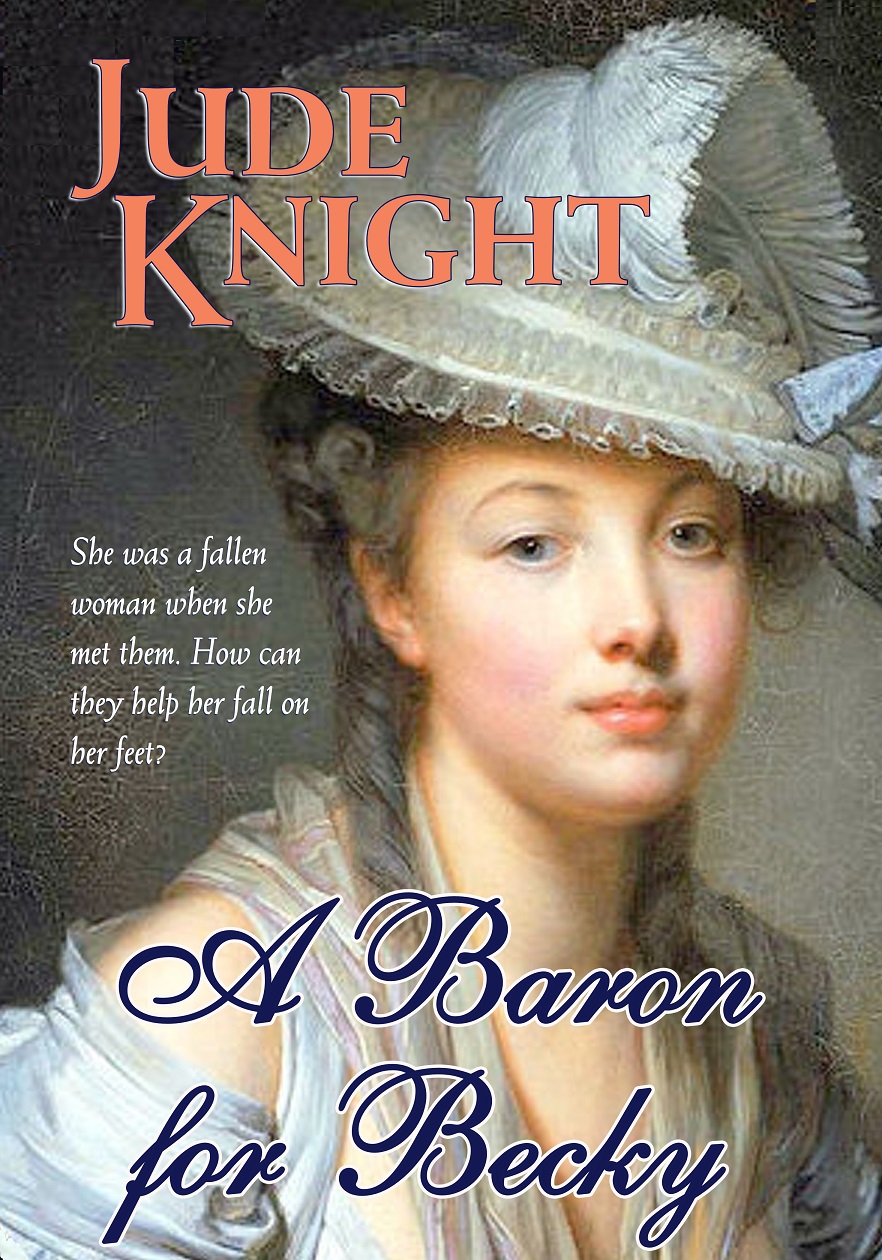
Congratulations to the Winner of Jude Knight’s “A Baron for Becky”

winner-is-badgeCongratulations go out to Glenda, who Random.org chose to receive an eBook copy of Jude Knight’s “A Baron for Becky.” Congratulations! BfB cover final small

Posted in Uncategorized | 4 Comments

Common Riding, a Langholm Tradition Celebrated on the Last Friday of July

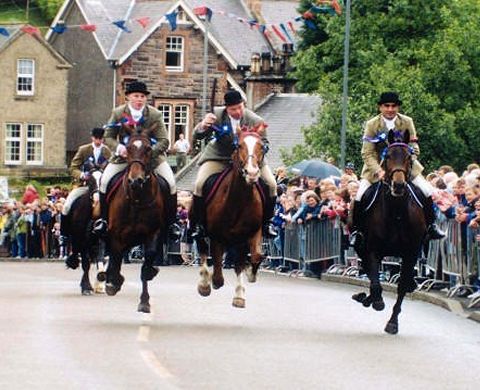
Riders returning from riding the Selkirk Marches gallop in at The Toll ~ Public Domain ~ https://en.wikipedia.org/wiki/Common_Riding#/ media/File:Thetoll.jpg

Riders returning from riding the Selkirk Marches gallop in at The Toll ~ Public Domain ~ https://en.wikipedia.org/wiki/Common_Riding#/
media/File:Thetoll.jpg

Common Riding is an annual event celebrated in Scottish Border towns and in some other places, to commemorate the times of the past when local men risked their lives in order to protect their town and people. Common Riding, a tradition dating from the 1700s, happens on the last Friday of July in Langholm. The tradition is set from a time when Langholm received the rights to common lands. According to Mysterious Britain and Ireland, “These lands were marked out by ditches, cairns, and beacons, which originally fell to the responsibility of one man. The duty eventually passed to a local landlord who rode out on horseback with other townsfolk, this was the start of the Common Riding, and from then until the present time a Cornet has been elected from Langholm to be the master of the riding. The ceremony eventually became a fair. (1) The horsemen hold aloft several different symbols as they ride through town. (2) A spade, used for cutting pits, and digging turf that marked part of the common boundary. (3) A salted herring nailed to a bannock on a wooden plaque. (3) A Scottish thistle, the symbol of Scotland. (4) A floral crown, the meaning of which is obscure.”

Border-Reiver-Country-Langholm-Common-Riding | A blog about the history of the Border Reivers from the 13th to the 17th centuries. wwwborderreiverstories-neblessclem.blogspot.com

Border-Reiver-Country-Langholm-Common-Riding | A blog about the history of the Border Reivers from the 13th to the 17th centuries.
wwwborderreiverstories-neblessclem.blogspot.com

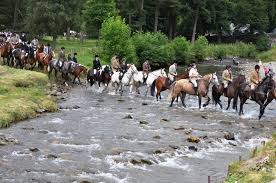
Calendar Customs adds, “The Common Riding at Langholm takes place on the last Friday in July. Common Ridings are a boundary marking custom on horseback. They are mainly held at locations across the Scottish Borders, perhaps because this area suffered from centuries of raiding and reiving between local families and the English, and the locals needed to protect their lands from encroachment. Long after this was necessary, the Ridings survived to become major festivals and a great day out! As with all the common riding customs, expect lots of equestrians and flag waving and , uniquely to Langholm, the four emblems of the festival which are carried in the procession. They are a barley bannock & a salted herring on a pole, a spade, a giant thistle and a crown. Watch out for the spectacular gallop up Kirk Wynd and the Fair Crying, when the proclamation is read by a man standing on the back of a horse! The equestrians ford the river to get to Castleholm, where racing follows; dancing and other sporting events take place around town throughout the day.”

In 2015 it will take place on Friday July 31st.

Click here for more info: http://www.langholm-online.co.uk/pages/content.asp?PageID=122

and for a detailed schedule click here : http://www.atasteofnorthumberland.co.uk/langholm-common-riding-timetable-1.739882?referrerPath=2.3214


Posted in British history, Great Britain, real life tales, Scotland | Tagged , , , , , , , | 6 Comments

Anglo-Norman Literature: Part II ~ Sir Gawain and the Green Knight

Gawain ~ Passage Analysis csis.pace.edu

Gawain ~ Passage Analysis
csis.pace.edu

This romantic verse is dated to the late 14th Century, but it may have developed a bit earlier. The author of the piece remains as “anonymous”; however many scholars view the author of “Sir Gawain and the Green Knight” to be the same as the author of “Pearl,” another poem of merit from the time period. 

The metric romance is composed of staves in varying length, with each stave ending in five short rhyming lines, known as a bob and wheel. The lines forming the stave do not rhyme, but are alliterative, nonetheless. The original dialect used in the poem was that of West Midland, likely from the area around Lancashire and is difficult to understand by the modern ear. We must recall that English language was in that VERY early stage of development at the time. 

Some have compared the temptation of the hero’s honour as a reflection of the Biblical story of Joseph and Potiphar’s wife, a motif often employed by Medieval writers and occurs in what scholars call the Launfal group of stories. However, certain points of interest have modern scholars of English literature questioning the grouping. A main difference in the story line is the fact that the Green Knight’s wife acts with the knowledge and encouragement of her husband, rather than the actual seduction episode.

From The Camelot Project, we read, ” In my Studies on the Legend of Sir Gawain, already referred to, I have suggested that the character of the lady here is, perhaps, a reminiscence of that of the Queen of the Magic Castle or Isle, daughter or niece of an enchanter, who at an early stage of Gawain’s story was undoubtedly his love. I think it not impossible that she was an integral part of the tale as first told, and her rôle here was determined by that which she originally played. In most versions of the story she has dropped out altogether. It is, of course, possible that, there being but a confused reminiscence of the original tale, her share may have been modified by the influence of the Launfal group; but I should prefer to explain the episode on the whole as a somewhat distorted survival of an original feature.

“But in any case we may be thankful for this, that the author of the most important English metrical romance dealing with Arthurian legend faithfully adheres to the original conception of Gawain’s character, as drawn before the monkish lovers of edification laid their ruthless hands on his legend, and turned the model of knightly virtues and courtesy into a mere vulgar libertine.

“Brave, chivalrous, loyally faithful to his plighted word, scrupulously heedful of his own and others’ honour, Gawain stands before us in this poem. We take up Malory or Tennyson, and in spite of their charm of style, in spite of the halo of religious mysticism in which they have striven to enwrap their characters, we lay them down with a feeling of dissatisfaction. How did the Gawain of their imagination, this empty-headed, empty-hearted worldling, cruel murderer, and treacherous friend, ever come to be the typical English hero? For such Gawain certainly was, even more than Arthur himself. Then we turn back to these faded pages, and read the quaintly earnest words in which the old writer reveals the hidden meaning of that mystic symbol, the pentangle, and vindicates Gawain’s title to claim it as his badge–and we smile, perhaps, but we cease to wonder at the widespread popularity of King Arthur’s famous nephew, or at the immense body of romance that claims him as its hero.”

eng431 [licensed for non-commercial use only] / Religion in Sir ... eng431.pbworks.com The Pear Poet's "Sir Gawain and the Green Knight" is a complex poem that introduces two different courts to the reader.

eng431 [licensed for non-commercial use only] / Religion in Sir …
eng431.pbworks.com
The Pear Poet’s “Sir Gawain and the Green Knight” is a complex poem that introduces two different courts to the reader.

The story goes as such…  On New Year’s Day, King Arthur sits down to break his fast, but it was his custom not to eat on a holiday until some knightly tale was told or a joust was held. A huge man enters the hall. He is clad all in free and he rides a horse with green trappings. The stranger rides the horse to the dais where Arthur sat with his knights. The man challenges anyone to hit him a blow with the huge axe he carries. He would then claim the right to return a like blow to his challenger’s neck at the end of one day and one year. Sir Gawain accepts the challenge in Arthur’s name. Sir Gawain beheads the Green Knight, but the knight picks up his head, mounts his horse, and tells Gawain he will expect him at the Green Chapel on the appointed day. Then the Green Knight rides away. 

Gawain goes searching for the Green Chapel when his time is due. He carries an embroidered shield, known as a pentangle with him. After much searching, Sir Gawain discovers a castle in woods on Christmas Eve, where a knight and his lady provide Gawain with shelter. The knight of the castle tells Sir Gawain he will lead Sir Gawain to the Green Chapel on New Year’s Day. The two men make an agreement: the castle’s lord would go hunting each day and give his catch to Sir Gawain; Sir Gawain would remain at the castle and give the lord whatever he received at the castle. For three days, the lord’s wife comes to Gawain’s bed and begs him to make love to her. 

Day 1, Gawain receives one kiss from the mistress of the house, which he presents to his host, while Gawain receives hinds. Day 2, Gawain passes along 2 kisses and receives a boar. On Day 3, Gawain receives 3 kisses and a magic belt from the lady and a fox from the master of the house, but he only passes along the three kisses. 

On New Year’s Day, a servant leads Gawain to the Green Chapel, where the Green Knight is sharpening his blade. When time comes for the beheading, Gawain flinches at the first strike and the blade misses. The second stroke misses him completely. The third severs his skin, but does not take his life. The Green Knight says the misses were for the first two nights and Gawain’s truthful response in returning the kisses. The third blow is a symbol of Gawain’s half truths. The Green Knight admits he is the lord of the castle and that the “test” was arranged by Merlin’s mistress, who despised Arthur. Gawain returns to Arthur’s hall wearing the embroidered girdle as a symbol of his weakness.

The Pentangle shield supposedly represented Gawain’s frankness, fellowship, purity, courtesy, and compassion. 

The chief theme of the piece is the code of chivalry. Gawain’s adherence to the virtues expected of a knight in King Arthur’s court is tested throughout the poem, but the poem does more than discuss Gawain’s virtue: It asks if virtue can exist in a fallen world. Gawain learns he possesses the foibles of all humans, but he can continue to strive fro the perfection of living a chivalrous life. 

Posted in Anglo-Normans, British history, Great Britain, literature | Tagged , , , , | 5 Comments

Am Fear Liath Mòr, a Yeti-Like Creature in Scotland

The second highest mountain range in the UK is a mountain range in the eastern Highlands of Scotland. In modern terms, these mountains are known as the “Cairngorms.”  The Cairngorms include the highest, coldest, and snowiest plateaux in the United Kingdom. Five of the six highest mountains in Scotland come from this mountain range: Ben Macdhui (1309 m); Braeriach (1296 m); Cairn Toul (1293 m); Sgor an Lochaine Uaine (1258 m); and Cairn Gorm (1245 m). 

But our tale today is not one speaking of each of these mountains beings Munros, but the mystery surrounding Ben Macdui, for upon Ben Macdui’s summit, one might encounter the gaelic creature known as Am Fear Liath Mòr (meaning “Big Gray Man”). The tale goes that Am Fear Liath Mòr takes great umbrage with climbers who attempt to scale the mountain. 

Professor Norman Collie. Image Credit: UCL Chemistry Collections – http://www.ucl.ac.uk/maps-faculty/potw/potw/potw1328/. CC BY 3.0 ~ http://www.historicmysteries.com/am-fear-liath-mor/

Professor Norman Collie. Image Credit: UCL Chemistry Collections – http://www.ucl.ac.uk/maps-faculty/potw/potw/potw1328/. CC BY 3.0 ~ http://www.historicmysteries.com/am-fear-liath-mor/

The tales came before Professor Norman Collie chronicled his experience on the mountain, but the good professor’s story brought the situation to light. Collie was respected scientist and Professor of Organic Chemistry at University College London. He was the first man to use a medical X-ray photograph. Collie was also a Fellow of the Royal Society. 

Collie was also a well respected climber. He pioneered many climbs on the Isle of Skye, as well as in the Alps. “In 1895, he was part of the first ever attempt on the 8000 meters peak in the Himalayas, Nanga Parbat. He later went on to make 21 first ascents in the Canadian Rockies. He is remembered in the names of Mount Collie in Canada and Sgurr Thormaid (“Norman’s Peak”) on Skye.” (Undiscovered Scotland

Ben Macdui Seen from Cairn Gorm http://www.undiscovered scotland.co.uk/usscotfax/ outdoors/greyman.html

Ben Macdui Seen from Cairn Gorm http://www.undiscovered
scotland.co.uk/usscotfax/
outdoors/greyman.html

“So when, in late 1925, the still eminent and active Professor Collie stood up to give a speech to the 27th Annual General Meeting of the Cairngorm Club in Aberdeen, he was a man whose words carried a great deal of weight with his audience. Which added all the more to the impact of part of what he had to say, about an experience he had while alone on the summit of Ben Macdui (as the name is now spelled) in the Cairngorms, 34 years earlier in 1891:

‘I was returning from the cairn on the summit in a mist when I began to think I heard something else than merely the noise of my own footsteps. For every few steps I took I heard a crunch, and then another crunch as if someone was walking after me but taking steps three or four times the length of my own. I said to myself, “This is all nonsense”. I listened and heard it again, but could see nothing in the mist. As I walked on and the eerie crunch, crunch, sounded behind me, I was seized with terror and took to my heels, staggering blindly among the boulders for four or five miles nearly down to Rothiemurchus Forest. Whatever you make of it, I do not know, but there is something very queer about the top of Ben MacDhui and I will not go back there again by myself I know.'” (Undiscovered Scotland)

Collie’s story had others scrambling to tell their tales. One of the more “sinister” reports came from a man called Alexander Twenion. In 1943, Twenion claimed he wounded a creature he encountered on Ben Macdui. According to the man, a gray “shadowy” beast trailed Twenion’s descent along the Coire Etchachan path. The creature stalked him, and Twenion fired three shots before fleeing in the direction of Glen Derry. (Historic Mysteries)

Descriptions of the creature vary somewhat, but it is generally is thought to be a man of some ten feet in height, who walks erect. He possesses broad shoulders. long, ape-like arms, which he gesticulates wildly. He is covered in short, brown fur/hair and holds an olive complexion. Those who see (or more likely feel) the creature’s presence do so just below the skyline near what the locals call Lairg Ghru Pass. “Witnesses report feelings of dread or stark terror and can become so intense and overwhelming that the urge to jump off the cliff at Lurcher’s Crag is seriously considered as an option. Some people are of the opinion that this is precisely what the Grey Man is attempting to do.” (Historic Mysteries)

“Alastair Borthwick’s superb 1939 book about climbing in Scotland, “Always a Little Further” relates the accounts of two climbers he knew who had experienced what by then was becoming known as Am Fear Lithe Mòr, or Ferlas Mor, or the Big Grey Man of Ben Macdui, because of its appearance when briefly glimpsed by a few of those who encountered it.

‘The first was alone, heading over MacDhui for Corrour on a night when the snow had a hard, crisp crust through which his boots broke at every step. He reached the summit and it was while he was descending the slopes which fall towards the Larig that he heard footsteps behind him, footsteps not in the rhythm of his own, but occurring only once for every three steps he took.

‘I felt a queer crinkly feeling in the back of my neck,” he told me, “but I said to myself, ‘This is silly, there must be a reason for it.’ So I stopped, and the footsteps stopped, and I sat down and tried to reason it out. I could see nothing. There was a moon about somewhere, but the mist was fairly thick. The only thing I could make of it was that when my boots broke through the snow-crust they made some sort of echo. But then every step should have echoed, and not just this regular one-in-three. I was scared stiff. I got up, and walked on, trying hard not to look behind me. I got down all right – the footsteps stopped a thousand feet above the Larig – and I didn’t run. But if anything had so much as said ‘Boo!’ behind me, I’d have been down to Corrour like a streak of lightning!”

‘The second man’s experience was roughly similar. He was on MacDhui, and alone. He heard footsteps. He was climbing in daylight, in summer; but so dense was the mist that he was working by compass, and visibility was almost as poor as it would have been at night. The footsteps he heard were made by something or someone trudging up the fine screes which decorate the upper parts of the mountain, a thing not extraordinary in itself, though the steps were only a few yards behind him, but exceedingly odd when the mist suddenly cleared and he could see no living thing on the mountain, at that point devoid of cover of any kind.

‘Did the steps follow yours exactly?’ I asked him.

‘No,’ he said. ‘That was the funny thing. They didn’t. They were regular all right; but the queer thing was that they seemed to come once for every two and a half steps I took.’

He thought it queerer still when I told him the other man’s story. You see, he was long-legged’ and six feet tall, and the first man was only five-feet-seven.

‘Once I was out with a search-party on MacDhui; and on the way down after an unsuccessful day I asked some of the gamekeepers and stalkers who were with us what they though of it all. They worked on MacDhui, so they should know. Had they seen Ferlas Mor? Did he exist, or was it just a silly story? They looked at me for a few seconds, and then one said: ‘We do not talk about that.'” (Undiscovered Scotland)

Is there a reasonable doubt to these tales? “Witnesses that report something happening on the mountainside are often reluctant to return to the scene of their encounter. Professor Collie went on record with that sentiment. Researchers into these sightings do offer something in the realm of a possible explanation as to what exactly is going on at Ben Macdui. The phenomenon known as a Brocken Spectre is a possible culprit. Sometimes referred to as the Brocken Bow or Mountain Spectre, it is a trick of light played on the eye which makes you believe an enormous shadow creature is facing an observer. This effect is caused by a projection of the observer’s own shadow cast onto a mountain side or cloud bank at an altitude that is either manipulated or magnified by the terrain. First identified by Johann Silberschlag in 1780 in the German Harz mountain range, it can even be seen from inside airborne aircraft.” (Historic Mysteries)

Posted in British history, Great Britain, real life tales, Scotland, Victorian era | Tagged , , , , , , , , , | 2 Comments