
 Congratulations go out to Martha Claycomb, who will receive a DVD copy of the film Leap Year. Martha, please contact Regina at jeffersregina@gmail.com to claim your prize. In your email, include your mailing address.


 St Michael Paternoster Royal is a church in the London proper. The original building, which was first recorded in the 13th century, was destroyed in the Great Fire in 1666. The church was rebuilt under the aegis of Sir Christopher Wren. However St Michael’s was severely damaged during the London in WWII. It was restored between 1966 and 1968. In 1423 Richard “Dick” Whittington, the fabled Lord Mayor of London, was buried within its precincts; although the tomb is now lost. The earliest record of St Michael’s is as St Michael of Paternosterchierch and is dated 1219. Richard Whittington, four time Lord Mayor of London, founded the College of St Spirit and St Mary within the church, so that St Michael’s became a collegiate church, i.e. it was administered by a college of priests, in this case five, instead of a rector. It was commonly known as Whittington’s College, or Whittington College. Adjacent to the Church, Whittington also founded an almshouse. The College was dissolved by Edward VI in 1548; but was re-established in a new entity a few years later under Queen Mary. The title seems in any case to have persisted for the church, giving the names of College Street, and College Hill. The almshouses moved to Highgate in 1808 and later to their present location in East Grinstead in 1966. (
 From
From  Whittington College is a Gothic almshouse built around three sides of a quadrangle. The chapel is the center point of the structure. The Whittington charity called College Hill home, but eventually moved to the another site near the Whittington Stone in 1822. “St Michael’s is rectangular in plan, with only the west front on College Hill being slightly out of true. Before the Second World War the south front was hemmed in by buildings. Following bomb damage, these buildings were cleared and Whittington Garden laid out on their site, so that St Michael’s main façade is now on the south, along Upper Thames Street. The south front is faced with Portland stone and has six round-headed windows with cherub keystones. The less prominent north and east fronts are of brick. The roof is balustraded.
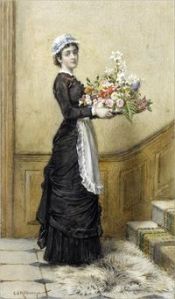
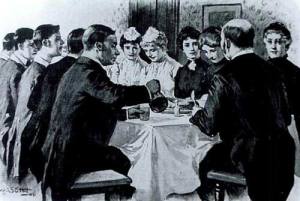 The English aristocrat often lived beyond his means. Maintaining country houses (often several of them) and a large Georgian town house in Mayfair took its toll on his purse strings. In addition to owning the property, Society forced him to maintain an extensive staff, which would see to his family’s needs.
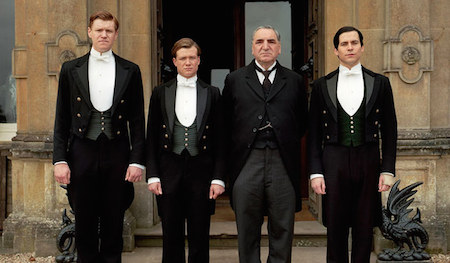 Even a modest staff was costly. Characteristically, a land owner maintained 40-50 servants. A large number of male servants was an indication of a man’s wealth. Employing males, instead of females, created a greater expense because a tax on male servants was introduced by Lord North in 1777. The tax was to be used for the cost of fighting the Americans and the war with the French. It cost a landowner £7 for each male servant if there were eleven or more in the household. Although it was gradually reduced over the years, the tax continued until 1937.
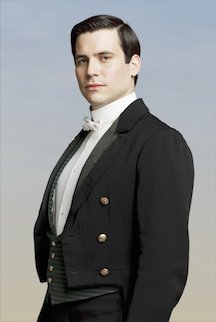 Footmen and other male servants were provided tailored livery. In the mid 1800s, it would cost 3 guineas for a footman’s uniform. Typically, a footman received 2-3 suits per year. Only the wealthiest aristocrat could afford to employ a house steward, groom of the chambers, valet, cook, butler, under-butler, footmen, footboy, usher, page, “tiger,” coachmen, grooms, a man-of-all-work, gardeners, etc.
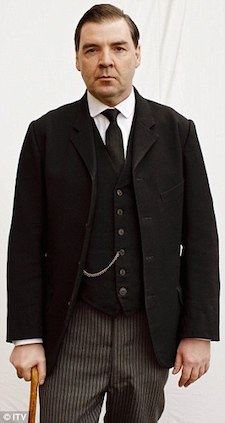 The valet was usually at least 30 years of age. He was expected to have a superficial air of aristocracy about him. He saw to his master’s dress and was expected to be abreast of social gossip to aid his master in social engagements, etc. He did not wear livery. He would rise before his master. The aristocrat’s clothes were prepared, a bath drawn, and everything his master required for his ablutions prepared. He might also be required to dress the master, or he might need to know how to load a gun quickly so that his master could shoot with his friends.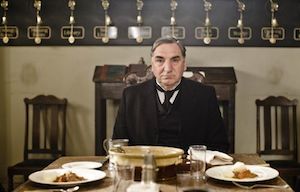
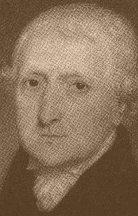 During the Regency Period, wealth and social class separated the English citizenry. Beginning with the Royals, citizens found their place based on birthright and wealth. The nobility stood above the gentry, who stood above the clergy, who stood above the working class, etc. As part of the gentry, Jane Austen’s family held certain privileges, but also lacked political power. Although he was a rector, the Reverend George Austen was a “gentleman,” meaning man of the gentry class. Austen’s novels are populated with those of the gentry. Occasionally, her readers encounter the nobility, as in Lady Catherine De Bourgh and the Dowager Viscountess Dalrymple or the clergy as with Mr. Collins or Mr. Elton.
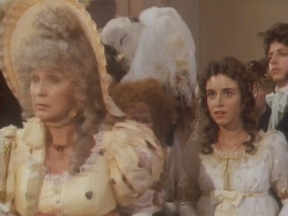 People of lower rank were expected to wait to be introduced to someone of a higher rank. (Do you recall Catherine Morland and Mrs. Allen at Bath? They must wait for an introduction to Henry Tilney, who calls upon the evening’s master of ceremonies to do the deed.) Women of the period were to be obedient to their fathers and husbands, docile and without opinions, have refined qualities, and attendant to their families. Education was not a prerequisite for women. In Austen’s stories, her heroines often shun these predisposed qualities. One must remember that Darcy admires Elizabeth Bennet’s desire to improve her mind by extensive reading.


 Previously, we looked at what a servant in an upper house, or even in a second-class household, of the late Regency Period or early Victorian times, might encounter. We spoke of wages, delineation of duties, and additional compensation. Today, we wish to examine the “snobbery” found among the servant class. As mentioned in the previous’s article, the servants in upper households expected “tips” from the master’s guests. If he did not receive it, he might still exact his revenge on those who paid a second visit to the estate. On his return, a guest might find himself in a one of the draftier bedchambers or he might be met at the train in a cart rather than an estate carriage.
 This situation reminds me of the chauffeur in the play Sabrina Fair (basis of the movie Sabrina, which starred Humphrey Bogart and Audrey Hepburn) who earns a fortune by simply listening to his employer conduct business in the backseat of the car and then buying and selling stocks based on Linus Larrabee’s knowledge of the stock market.







 Congratulations to
 Follow Me!


-
Recent Posts
- Purchasing Commissions During the Napoleonic Wars
- RULE AGAINST PERPETUITIES: Could Someone, for example, Disinherit a Second Son?
- Traitor Tuesday ~ Celebrating 250 Years of the United States as a Separate Nation: Lyman Hall, Signer of the Declaration of Independence and Founder of the University of Georgia
- Freemasonry in the Regency Era
- Anna Larpent, 18th Century Diarist and Lover of Plays
Recent Comments
Archives
- April 2026
- March 2026
- February 2026
- January 2026
- December 2025
- November 2025
- October 2025
- September 2025
- August 2025
- July 2025
- June 2025
- May 2025
- April 2025
- March 2025
- February 2025
- January 2025
- December 2024
- November 2024
- October 2024
- September 2024
- August 2024
- July 2024
- June 2024
- May 2024
- April 2024
- March 2024
- February 2024
- January 2024
- December 2023
- November 2023
- October 2023
- September 2023
- August 2023
- July 2023
- June 2023
- May 2023
- April 2023
- March 2023
- February 2023
- January 2023
- December 2022
- November 2022
- October 2022
- September 2022
- August 2022
- July 2022
- June 2022
- May 2022
- April 2022
- March 2022
- February 2022
- January 2022
- December 2021
- November 2021
- October 2021
- September 2021
- August 2021
- July 2021
- June 2021
- May 2021
- April 2021
- March 2021
- February 2021
- January 2021
- December 2020
- November 2020
- October 2020
- September 2020
- August 2020
- July 2020
- June 2020
- May 2020
- April 2020
- March 2020
- February 2020
- January 2020
- December 2019
- November 2019
- October 2019
- September 2019
- August 2019
- July 2019
- June 2019
- May 2019
- April 2019
- March 2019
- February 2019
- January 2019
- December 2018
- November 2018
- October 2018
- September 2018
- August 2018
- July 2018
- June 2018
- May 2018
- April 2018
- March 2018
- February 2018
- January 2018
- December 2017
- November 2017
- October 2017
- September 2017
- August 2017
- July 2017
- June 2017
- May 2017
- April 2017
- March 2017
- February 2017
- January 2017
- December 2016
- November 2016
- October 2016
- September 2016
- August 2016
- July 2016
- June 2016
- May 2016
- April 2016
- March 2016
- February 2016
- January 2016
- December 2015
- November 2015
- October 2015
- September 2015
- August 2015
- July 2015
- June 2015
- May 2015
- April 2015
- March 2015
- February 2015
- January 2015
- December 2014
- November 2014
- October 2014
- September 2014
- August 2014
- July 2014
- June 2014
- May 2014
- April 2014
- March 2014
- February 2014
- January 2014
- December 2013
- November 2013
- October 2013
- September 2013
- August 2013
- July 2013
- June 2013
- May 2013
- April 2013
- March 2013
- February 2013
- January 2013
- December 2012
- November 2012
- October 2012
- September 2012
- August 2012
- July 2012
- June 2012
- May 2012
- April 2012
- March 2012
- February 2012
- January 2012
- December 2011
- November 2011
- October 2011
- September 2011
- August 2011
- July 2011
- June 2011
- May 2011
- April 2011
- March 2011
- February 2011
- January 2011
- December 2010
- November 2010
- October 2010
- September 2010
- August 2010
- July 2010
Categories
- Act of Parliament
- acting
- Africa
- Age of Chaucer
- Always Austen
- America
- American History
- Anglo-Normans
- Anglo-Saxons
- anthology
- Appalachia
- architecture
- aristocracy
- art
- Austen actors
- Austen Authors
- ballads
- Barbara Kyle
- Bells
- birthdays
- Black Opal Books
- blog hop
- book excerpts
- book release
- books
- British currency
- British history
- British Navy
- buildings and structures
- business
- Canterbury tales
- castles
- Chaucer
- Christmas
- Church of England
- citizenship test
- commerce
- company
- contemporary
- contemporary romance
- contest
- customs and tradiitons
- dancing
- Declaration of Independence
- Do You Remember?
- Dorset
- Dragonblade Publishers
- drama
- Dreamstone Publishing
- dueling
- eBooks
- editing
- education
- Education in NC
- Edward III
- Elizabeth I
- Elizabethan drama
- Emma
- England
- estates
- etymology
- euphemisms
- excerpt
- exploration
- family
- fashion
- film
- film adaptations
- finance
- food
- food and drink
- George IV
- George Wickham
- Georgian
- Georgian England
- Georgian Era
- giveaway
- gothic and paranormal
- Great Britain
- Gretna Green
- Guest Blog
- Guest Post
- heraldry
- herbs
- hero
- heroines
- historical fiction
- history
- holidays
- horology
- Industrial Revolution
- Industry News/Publishing
- Inheritance
- interview
- inventions
- Ireland
- Jane Austen
- JASNA
- King Arthur
- kings and queens
- language choices
- laws of the land
- legacy
- legends
- legends and myths
- Levirate marriage
- lexicon
- literature
- Living in the Regency
- Living in the UK
- love quotes
- Mansfield Park
- manuscript evaluation
- marriage
- marriage customs
- marriage licenses
- medicine
- medieval
- military
- modern adaptations
- music
- mystery
- Napoleonic Wars
- Northanger Abbey
- paranormal
- peerage
- Pegasus Books
- Persuasion
- Peterloo Massacre
- playwrights
- poetry
- political stance
- Pop Culture
- presidents
- Pride and Prejudice
- primogenture
- publishing
- quotes
- reading
- reading habits
- real life tales
- Realm series
- Regency era
- Regency personalities
- Regency romance
- religion
- research
- review
- romance
- romantic verse
- royalty
- Scarsdale Publishing
- science
- science fiction
- Scotland
- Sense & Sensibility
- series
- servant life
- servants
- Seven Years War
- Seven Years' War
- Shining Light on Our Ladies
- South Wales
- spooky tales
- sports history
- St. Andrew
- suspense
- tall tales
- tea
- terminology
- Thanksgiving
- theatre
- titles of aristocracy
- toys and games
- tradtions
- travel
- trilogy
- Tudor
- Tudors
- Ulysses Press
- Uncategorized
- Vagary
- vampires
- Victorian era
- vocabulary
- Wales
- war
- War of 1812
- weaponry
- weather
- West Virginia
- Whigs
- White Soup Press
- William IV
- witchcraft acts
- word choices
- word origins
- word play
- world history
- writing
Meta


 Every Woman Dreams...