

The History of Theatre According to Dr Jack: Medieval Theatre I heironimohrkach.blogspot.com
Drama arose in the Tenth Century in certain monasteries when modifications to the mass occurred. Scenes of the Master’s life began to be represented in the churches, especially during the holier holidays. Many could not read and so the use of “plays” told the tales the monks wished to share. It was a means to explain a new religion to the illiterate. Dramatized versions of particular Biblical stories were included to vivify annual celebrations. Using symbolic objects to convey the tale’s meaning, the priests used pantomime to explain the events of Christian ritual celebrations. “These performances developed into liturgical dramas, the earliest of which is the Whom do you Seek (Quem-Quaeritis) Easter trope, dating from ca. 925. Liturgical drama was sung responsively by two groups and did not involve actors impersonating characters. However, sometime between 965 and 975, Æthelwold of Winchester composed the Regularis Concordia (Monastic Agreement), which contains a playlet complete with directions for performance.” (Medieval Theatre)
The plays were performed in or near a church. “Although they had their roots in the Christian liturgy, such plays were not performed as essential parts of a standard church service. The language of the liturgical drama was Latin, and the dialogue was frequently chanted to simple monophonic melodies. Music was also used in the form of incidental dance and processional tunes.” (Liturgical Drama)

Hrosvitha of Gandersheim, the first dramatist of the post-classical era. Wikipedia Public Domain
Among the offerings in what we might call Medieval theatre we have liturgical dramas, mystery plays, morality plays, farces and masques. Hrotsvitha of Gandersheim was the first person to compose drama in the Latin West. She was a 10th Century German secular canoness, dramatist, and poet. The work of those during this period were moral and religious in nature, themes, and stagings. Among the most famous of the plays from this period are the York Mystery Plays, the Chester Mystery Plays, the Wakefield Mystery Plays and the N-Town Plays, as well as the morality play, Everyman.
Early on guilds, students, and scholars performed plays based on the Old Testament from Creation to the Last Judgment. By 1300, the religious plays had become guild plays. Simply speaking, a “miracle play” is a dramatic representation of the life of a saint, including the miracles associated with his/her life; while a “mystery play” is one dealing with gospel events concerning any phase of the life of Christ.
“Miracle play, also called Saint’s Play, one of three principal kinds of vernacular drama the European Middle Ages. A miracle play presents a real or fictitious account of the life, miracles, or martyrdom of a saint. The genre evolved from liturgical offices developed during the 10th and 11th centuries to enhance calendar festivals. By the 13th century they had become vernacularized and filled with unecclesiastical elements. They had been divorced from church services and were performed at public festivals. Almost all surviving miracle plays concern either the Virgin Mary or St. Nicholas, the 4th-century bishop of Myra in Asia Minor. Both Mary and Nicholas had active cults during the Middle Ages, and belief in the healing powers of saintly relics was widespread. In this climate, miracle plays flourished.” (Miracle Play)
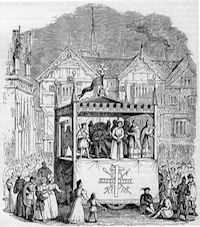
Nineteenth-century engraving of a performance from the Chester mystery play cycle. Wikipedia Public Domain
According to Britannica, mystery plays were “one of three principal kinds of vernacular drama in Europe during the Middle Ages. The mystery plays, usually representing Biblical subjects, developed from plays presented in Latin by churchmen on church premises and depicted such subjects as the Creation, Adam and Eve, the murder of Abel, and the Last Judgment. During the 13th century, various guilds began producing the plays in the vernacular at sites removed from the churches. Under these conditions, the strictly religious nature of the plays declined, and they became filled with irrelevancies and apocryphal elements. Furthermore, satirical elements were introduced to mock physicians, soldiers, judges, and even monks and priests. In England, over the course of decades, groups of 25 to 50 plays were organized into lengthy cycles, such as the Chester plays and the Wakefield plays. In France a single play, The Acts of the Apostles by Arnoul and Simon Gréban, contained 494 speaking parts and 61,908 lines of rhymed verse; it took 40 days to perform. They died out in many areas with the Reformation.”
In their prime, Miracle plays were acted on wooden platforms mounted on wheels. There were two stories to those movable stages, with the upper level used as the stage. In York, once a year, the whole history of the religious world would be viewed by the populace. Each company (trade guild) was assigned a time and place for its pageant.
Much to the delight of the audience, a comic element crept into the plays occasionally. In the “2nd Shepherd’s Play,” for example, a character named Mak steals a sheep and takes it home to his wife. A knock is heard on the door. The wife puts the sheep in the crib and pretends it is a new born babe. Thus, she fools the shepherds searching for the sheep. They, however, return to give the new born a present only to discover the sheep.

The Body of Christ | Humanities http://www.neh.gov Illustration of medieval mystery play.
Morality plays were “an allegorical drama popular in Europe especially during the 15th and 16th centuries, in which the characters personify moral qualities (such as charity or vice) or abstractions (as death or youth) and in which moral lessons are taught. The action of the morality play centres on a hero, such as Mankind, whose inherent weaknesses are assaulted by such personified diabolic forces as the Seven Deadly Sins but who may choose redemption and enlist the aid of such figures as the Four Daughters of God (Mercy, Justice, Temperance, and Truth). Morality plays were an intermediate step in the transition from liturgical to professional secular drama, and combine elements of each. They were performed by quasi-professional groups of actors who relied on public support; thus the plays were usually short, their serious themes tempered by elements of farce.” (Morality Play)
Morality plays gave more scope to the imagination for new plots and incidents and afforded the chance for delineation of characters. They were not confined to scriptures. They were first dull, but with the introduction of Vice, who played pranks similar to those of modern-day clowns, interest was aroused. The morality generally ended in the triumph of virtue, the devil leaping into Hell with Vice on his back.
Visit History of Theatre for more information. One might also read The Finer Times.
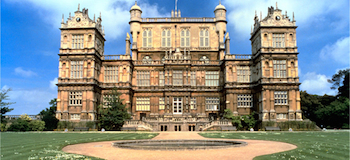 Robert Smythson began work on Wollaton Hall in 1580. The Hall was to be the home of Sir Francis Willoughby. Most experts think Smythson, who also designed Hardwick Hall, in the same area, appears to have used Mount Edgcumbe in Cornwall as his inspiration. Masons from Italy reportedly worked on the house. The Italian connection explains the rather odd series of rings for mooring gondolas affixed to the Hall’s exterior walls. The house is an astounding example of English Renaissance architecture. The interior was remodelled after a fire in 1642 and again in the early 19th century, but the exterior remains essentially as it would have looked when it was finished in 1588. (
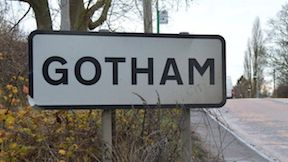 “In 2011, key scenes from the Batman movie The Dark Knight Rises were filmed outside Wollaton Hall. The Hall was featured as the latest Wayne Manor. The Hall is five miles north of Gotham, Nottinghamshire where Gotham City got its name.” (
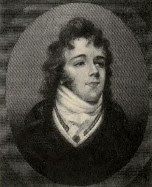 Although the term referred to fashionable sect, that does mean the actual members of the “ton” used the word to stipulate members of their group. It is more likely that they would speak of those without manners or those who preened too much as the dandy set or fops
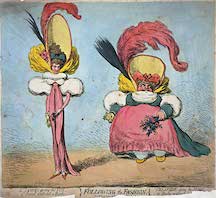 What do y’all think about using James Gillray’s print “Following the Fashion, St. James’s Giving the Ton a Soul Without a Body” from 1796 as documentation of the ton? (One can find the image at
  I particularly like Hannah Greig’s The Beau Monde: Fashionable Society in Georgian London from Oxford University Press. The book contains…
 (Image via Wikipedia) The first use of the phrase as we now know it is from Shakespeare’s The Merchant of Venice, 1596:
  “The English comic actor, the late Sid James, typified the type both on and off stage and was typecast in such roles; for example, he played Sir Sidney Ruff-Diamond in the Ealing comedy Carry On Up The Khyber. That was particularly appropriate as it turns out – Sid James worked in a diamond mine in South Africa before becoming an actor.”
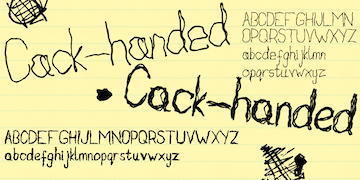 (Image by Kelly Gunn, https://www.elance.com/samples/cack-handed-image-font-pen-ink-fontlab/76521237/)
 From the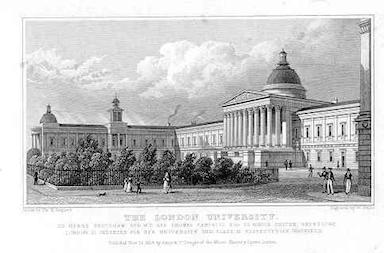


 Congratulations go out to


 St Michael Paternoster Royal is a church in the London proper. The original building, which was first recorded in the 13th century, was destroyed in the Great Fire in 1666. The church was rebuilt under the aegis of Sir Christopher Wren. However St Michael’s was severely damaged during the London in WWII. It was restored between 1966 and 1968. In 1423 Richard “Dick” Whittington, the fabled Lord Mayor of London, was buried within its precincts; although the tomb is now lost. The earliest record of St Michael’s is as St Michael of Paternosterchierch and is dated 1219. Richard Whittington, four time Lord Mayor of London, founded the College of St Spirit and St Mary within the church, so that St Michael’s became a collegiate church, i.e. it was administered by a college of priests, in this case five, instead of a rector. It was commonly known as Whittington’s College, or Whittington College. Adjacent to the Church, Whittington also founded an almshouse. The College was dissolved by Edward VI in 1548; but was re-established in a new entity a few years later under Queen Mary. The title seems in any case to have persisted for the church, giving the names of College Street, and College Hill. The almshouses moved to Highgate in 1808 and later to their present location in East Grinstead in 1966. (
 From
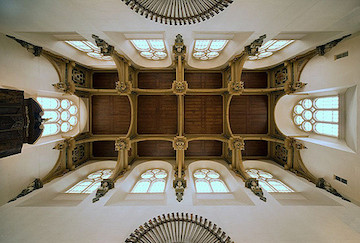
From  Whittington College is a Gothic almshouse built around three sides of a quadrangle. The chapel is the center point of the structure. The Whittington charity called College Hill home, but eventually moved to the another site near the Whittington Stone in 1822. “St Michael’s is rectangular in plan, with only the west front on College Hill being slightly out of true. Before the Second World War the south front was hemmed in by buildings. Following bomb damage, these buildings were cleared and Whittington Garden laid out on their site, so that St Michael’s main façade is now on the south, along Upper Thames Street. The south front is faced with Portland stone and has six round-headed windows with cherub keystones. The less prominent north and east fronts are of brick. The roof is balustraded.


 Every Woman Dreams...
