If Elizabeth, when Mr. Darcy gave her the letter, did not expect it to contain a renewal of his offers, she formed no expectations at all of its contents. No longer encumbered by his sudden appearance or his equally speedy exit, she could now stomp her foot in annoyance and complain under her breath, both of which brought little relief to her anxiousness.
“Dratted man! I should have thrown his letter at his too stiff back.”
Yet, instinctively, Elizabeth clasped the letter to her chest.
“It is not as if the man plans to offer you his hand a second time,” Elizabeth told the rising hopes she fought hard to quash. “Foolish girl,” she warned her racing heart. “A man of Mr. Darcy’s importance could not be made to beg for my acquiescence.”
After Mr. Darcy’s withdrawal last evening, the realization of what she had done made inroads into Elizabeth’s resolve.
“Even though the connection would benefit my dearest family, my esteemed father would never have permitted me to marry purely for the bond.” Elizabeth sought justification for what others would perceive as a moment of pure foolhardiness. “And God knows I could never tolerate the man’s control of my life. I am not cut of the same cloth as Jane: I cannot act the martyr.”
Thoughts of the pain Mr. Darcy brought to her sister’s door only riled Elizabeth further.
“I have no wish in denying that I did everything in my power,” Mr. Darcy had replied to Elizabeth’s accusation with assumed tranquility, “to separate my friend from your sister, or that I rejoice in my success. Toward him I was kinder than toward myself.”
Elizabeth looked in the direction Mr. Darcy had walked: The gentleman had turned once more into the plantation. “I should follow him, tear up this declaration of his superiority, and throw it into his face. How would you like that, Mr. Darcy?” Elizabeth taunted the spot where she last saw the gentleman.
Although she would never admit it aloud, recovering from Mr. Darcy’s proposal had not yet been achieved: Since his hurried departure from Hunsford Cottage last evening, Elizabeth had thought of little else. Such was the reason she had begged off assisting Charlotte in the garden to indulge her need for air and exercise.
“After last evening’s headache, I fear I am totally indisposed for employment,” Elizabeth had told her friend.
When she left upon her walk, she purposely chose the lane, which led farther from the turnpike road rather than to face the possibility of encountering Mr. Darcy in the parkland. But Elizabeth’s efforts proved fruitless for Mr. Darcy appeared suddenly from a grove, which edged the park. She had thought to retreat, but he had seen her, and Elizabeth was not of the nature to cower; therefore, she stood her ground, moving again toward the gate, which led to the groomed grounds.
“Miss Elizabeth,” he called while she refused to acknowledge his approach with either a curtsy or verbal reply. Mr. Darcy held out the letter, which she took without thought. He said with what Elizabeth termed as haughty composure, “I was walking in the grove some time, in the hope of meeting you. Will you do me the honor of reading that letter?”
Elizabeth looked down at the letter held tight in her grasp.
“I suppose I should read the poisonous missive and be done with it,” she grumbled.
Reluctantly she returned to the path leading further into the woods. As she walked, Elizabeth broke the wax seal and opened the letter, two sheets of foolscap, written quite through, in a very close hand covered by an envelope, itself likewise full.
“Rosings. Eight of the clock,” she read aloud the first line. Her steps slowed, but Elizabeth continued along the prescribed path. “Be not alarmed, madam, on receiving this letter by the apprehension of its containing any repetition of the sentiments, or renewal of those offers, which were last night so disgusting to you.”
As I expected, she thought, there will be no renewal of Mr. Darcy’s proposal. Elizabeth did not know whether that particular fact disappointed her or brought gladness for the finality of the man’s regard.
“I write without any intention of paining you, or humbling myself, by dwelling on wishes which, for the happiness of both, cannot be too soon forgotten; and the effort which the formation and the perusal of this letter must occasion should have been spared, had not my character required it to be written and read.”
Elizabeth paused suddenly to huff her indignation.
“Naturally Mr. Darcy’s unbridled pride would demand the last word on the matter. Heaven forbid Mr. Darcy practiced the idea of going one’s own way and letting others do likewise. I wish he were before me so I might bring the gentleman more clarity upon the subject.”
With a growl of resignation, she returned to both her walk and the letter.
“You must therefore pardon,” she read through tight lips, “the freedom with which I demand your attention; your feelings, I know will bestow it unwillingly, but I demand it of your justice. Demand?” she hissed. “When did you not demand, Mr. Darcy? And do not flatter yourself to think you know my disposition!”
Despite the fact she unwillingly gave into her strong curiosity to read what would amount to nothing but untruths, Elizabeth was not about to give the gentleman an inch of rightness.
With anger’s bile rising to her throat, she raised her eyes to the heavens, saying a quick prayer for patience. Elizabeth stood perfectly still, seeking the goodness Jane would practice in this sham, but she could not seem to bring her emotions into check. In frustration, she sat a bruising pace, knowing she could not return to the Cottage and her friend without first burning away some of her animosity toward the man. If Mr. Collins learned of Mr. Darcy’s proposal, her cousin would likely drag Elizabeth by her hair to Rosings Park to apologize to Lady Catherine for having drawn the attention of Her Ladyship’s nephew.
“It is very unladylike of me to think so, but I would enjoy throttling the gentleman!” Elizabeth fumed as she marched along smartly while ignoring the beauty of God’s hand, which she would customarily cherish. “How is this madness ever to end? How may I face Mr. Darcy and his aunt when all I can think upon is the gentleman’s umbrage? It will be a difficult fortnight before I can escape to Longbourn.”
Elizabeth glanced at the pages she held tightly to her cloak.
“Should I continue with this deceit or place it in one of Mrs. Collins’s replaces?” she mocked.
She shook the offending letter harshly. Determined to have no more to do with Mr. Darcy, with trembling fingers, Elizabeth began to refold the pages. Yet, before she could complete the task, her eyes fell upon the lines from which she last read.
Her pace slowed once more, and unwittingly, Elizabeth read, “Two offenses of a very different nature, and by no means of equal magnitude, you last night laid to my charge. The first was that, regardless of the sentiments of either, I detached Mr. Bingley from your sister.”
The man possessed a way of forthright speaking, which always challenged Elizabeth’s best efforts of equanimity. Never having fully subsided, her anger roared again.
“Do you mean to deny your involvement, Mr. Darcy? You bragged of your success in the matter only last evening,” she huffed.
Ignoring where her steps led her, as well as the thickening of the vegetation surrounding her, Elizabeth bit out the words as she continued reading Mr. Darcy’s recitation aloud:
“My second offense, that I had, in defiance of various claims, in defiance of honor and humanity, ruined the immediate prosperity and blasted the prospects of Mr. Wickham. Willfully and wantonly to threw off the companion of my youth, the acknowledged favorite of my father, who had scarcely any other dependence than on our patronage, and who was brought up to expect its exertion, would be a depravity to which the separation of two young persons whose affection could be the growth of only a few weeks, could bear no comparison. But from the severity of that blame which was last night so liberally bestowed, respecting each circumstance, I shall hope to be in the future secured, when the following account of my actions and their motives are read. If, in the explanation of them, which is due to myself, I am under the necessity of relating feelings, which may be offensive to yours, I can only say that I am sorry. The necessity must be obeyed, and further apology would be…”
“Absurd!” Elizabeth screeched as she stumbled upon a tree root, pitching forward. Before she could right her stance, a loud click announced she wandered too far from the customary path through the woods. All she could do was scream as the trap meant for a fox snapped shut about her ankle. Her half boots did not prevent the sharp claws of the leg trap from piercing her skin.
~ ~ ~
Darcy quickened his pace, but even so, by the time he reached where the lane leading to the turnpike road marched along with the parkland’s paling, he lost sight of the figure. In frustration, he turned in a circle to survey the various paths leading to Hunsford Cottage, the woodlands, and the park.
“Which way did the scoundrel flee?” He ground out the words. “I thought the dastard in Meryton.” But then the obvious connections arrived. “Could Mr. Wickham’s presence in Kent be the reason for Miss Elizabeth’s refusal?”
Darcy’s mind became a red-hot haze.
“Has Miss Elizabeth renewed her interest in the gentleman?” he whispered in harsh tones. “Perhaps an elopement is afoot. Would than not be the pinnacle of irony?” A deep sigh of acceptance escaped Darcy’s lips. “If the lady’s heart is engaged elsewhere, you escaped a miserable marriage, Darcy.”
More determined than ever to be quickly fromRosings, Darcy crossed to the gate to return to his aunt’s manor house. He knew he should make the effort to ensure the unwelcome visitor left the area, but he could not engender the effort. He would instruct Lady Catherine’s head groom to send out men to drive Darcy’s long-time enemy from the estate’s land.
“And if Miss Elizabeth chooses to follow Mr. Wickham, then more the pity for the Bennets.”
The sound of a dog barking somewhere off to his right had Darcy’s ears straining to locate the noise. Lady Catherine’s games keeper used several Springer spaniels and bloodhounds to keep poachers at bay, as well as to rid the parkland of the creatures Her Ladyship deplored.
“Perhaps the hound cornered a different breed of poacher,” Darcy declared with a wry twist of his lips. “As much as I hold no desire to come upon a lover’s tryst, my pride demands I know the truth.”
~ ~ ~
Face first, Elizabeth smacked the ground hard. With nothing upon which she could catch a handhold, she struck the earth with a resounding thud, one that drove the air from her lungs and literally, shook every bone in her body.
“Lord in Heaven,” she groaned when a breath was finally possible, as she attempted to shove her body upward upon her elbows, only to collapse again from the pain shooting up her calf. She sputtered against the clump of grass and dead leaves at her lips. “What have you done, Elizabeth Bennet?” she chastised. The pain coursed through her leg, and tears formed in her eyes. Raising her head to claim her bearings, she made a second attempt to right her position, only to be held firmly in place.


 Mr. Darcy’s Fault: A Pride and Prejudice Vagary
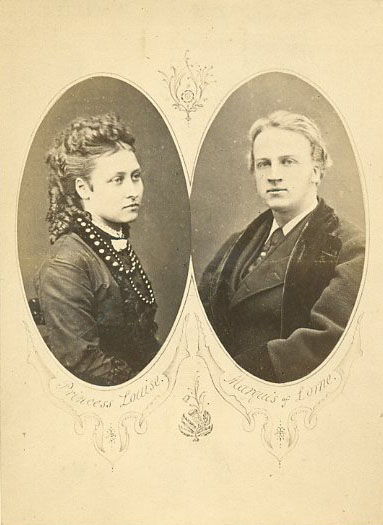
 Women’s lack of educational and professional opportunities throughout history prevented them from acquiring their own wealth and independence. This situation was exacerbated by the common law practice of primogeniture, which left women with little choice but to secure their social status and economic welfare through marriage.
 To understand primogeniture as it is practiced in England, one must possess a working knowledge of the history of the custom. Sir Henry Maine, a British comparative jurist and historian of the mid 1800s, tells us,
  In William Blackstone
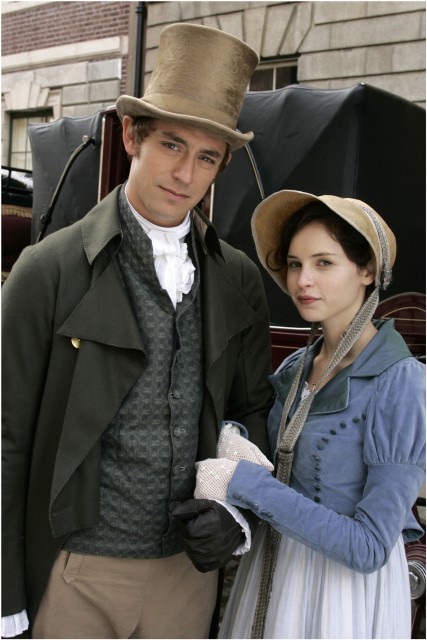



 And, while we may think of these stories within the historical fiction genre, they were often cutting-edge contemporary novels at publication, breaking new literary ground and digging into issues previously untouched – pushing the boundaries of storytelling, setting and character. In fact, Jane Eyre is credited for single-handedly ushering in the more emotional, character-focused novel. Today we call it “literary fiction.”
 Bram Stoker’s Dracula. How did this one ever pass by my radar? I finally dug into it a few months ago and loved it! It’s incredibly creepy and I love that a book written in 1897 can still make my skin crawl. Death and decay seeped into every page and my dreams. Wow!
 Jane Austen’s Persuasion. It has to be mentioned – not only because this is “Austen Authors,” but because this book is never far from me. It is my all-time favorite novel (and Lizzy’s favorite in Lizzy & Jane –not a coincidence.) And in this quiet story, Austen is brilliant at laying out huge character struggles in her own understated way and often within a single line.
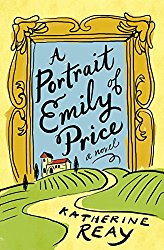
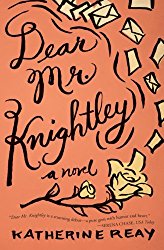
 Meet Katherine Reay:

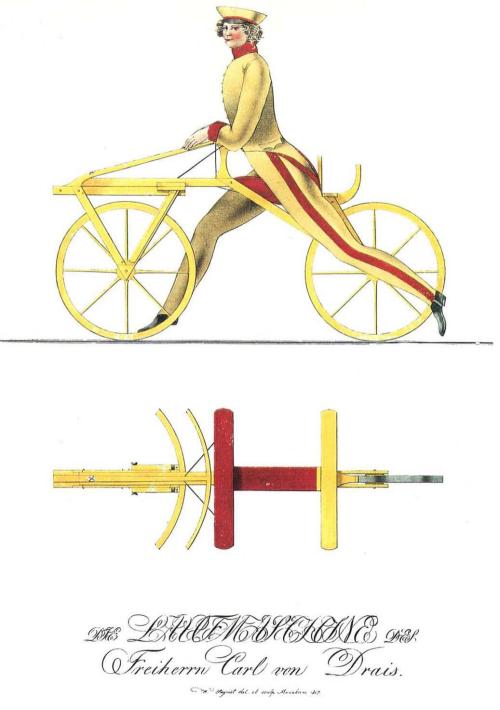
 I have changed my diet and added exercise to my daily regime. I am avoiding sugar and glutton, while adding a good bike ride or a long walk to my day. Naturally, as my brain is likely to do, I began to wonder who invented that first bicycle. I had heard that Pierre and Ernest Michaux, the French father and son team of carriage-makers, invented the first bicycle during the 1860s. Historians now disagree and there is evidence that the bicycle is older than that.




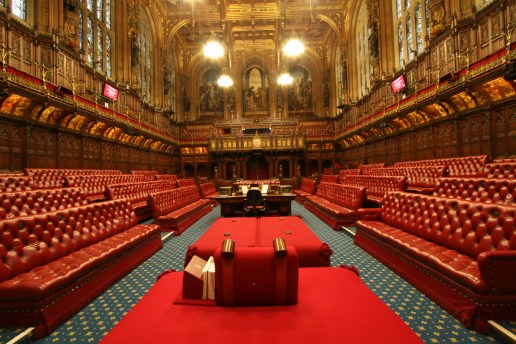
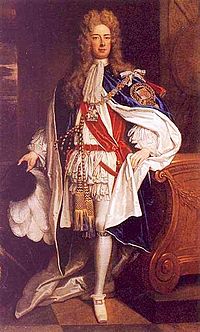
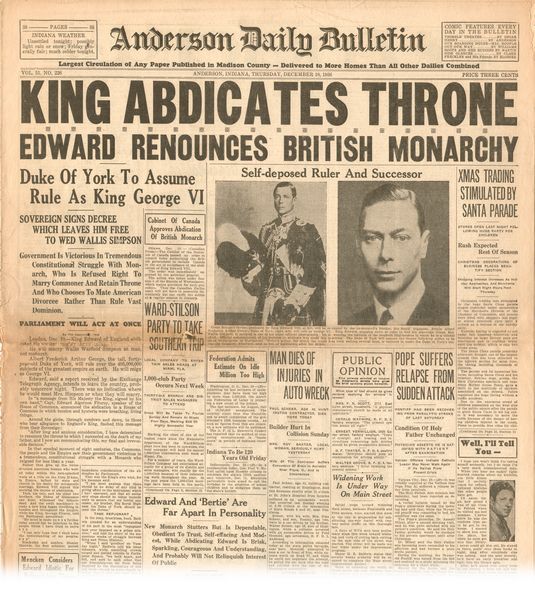 The Duke of Windsor’s (Edward VIII) abdication was a very complicated legal process, and one Parliament allowed and had to handle legally due to the duke’s marrying a divorced woman, which actually made him unfit to be head of the Church of England, which is a job the King of England must claim, and there are laws about the monarch’s marriages. This situation carried itself forward to the present with Prince Charles marrying Camilla, another situation sorted out legally before Parliament.


