

Jennifer and I are happy to announce that Mary Olson and Laura Capio are the recipients of an eBook copy of Ms. Redlarczyk’s A Holiday to Remember. Congratulations, Ladies. Jen will be in contact to deliver the eBook. Happy Thanksgiving!!!!
Jennifer and I are happy to announce that Mary Olson and Laura Capio are the recipients of an eBook copy of Ms. Redlarczyk’s A Holiday to Remember. Congratulations, Ladies. Jen will be in contact to deliver the eBook. Happy Thanksgiving!!!!
To be a Princess
Have you heard the joke about the girl who wanted to be treated like a princess? So her father married her off to a stranger to cement his trade alliance.
That’s not the modern view of a princess, but it’s certainly the lived experience of real life princesses throughout history. From ancient Egypt and Babylonia through to more recent history in Britain and Europe, few princesses have been free to choose a life mate, and for those who did, the marriage was often their second and more likely to be a political choice than a romantic one.
 Cleopatra, for example, was first married to her younger brother Ptolemy, as the custom was in Egypt at that time. The pharaoh, being a god, could have god children only with another god, which meant a sister or a cousin. The physical deformities associated with inbreeding were controlled by dedicating such children to Sobek, the Nile crocodile god.
The affair between the young Cleopatra and Julius Caesar, who was in his 50s, was almost certainly an astute decision to help her win a civil war. She required Roman support against her brother. The affair with Mark Antony might also have been political – he was now one of the most powerful men in the Roman Empire, but certainly the myth of their love affair has been enduring.
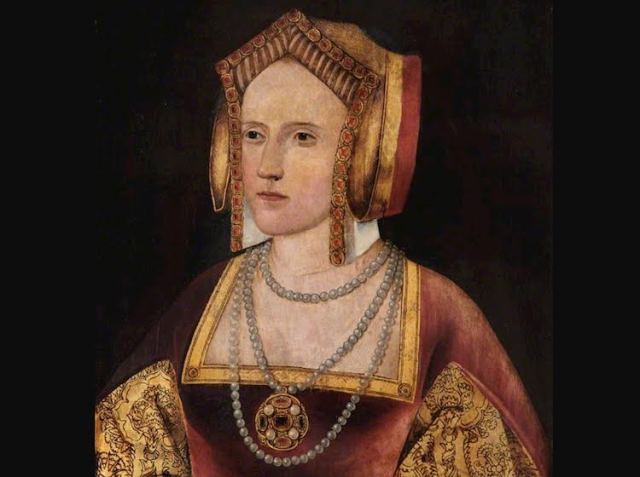 Catherine of Aragon was sent to England as a teenager to marry Arthur, heir to the throne. When he died shortly after their marriage, her brother-in-law had the marriage annulled so he could marry her himself. By all accounts, she loved her husband, Henry VIII, despite his roving eye. But when she failed to give him a living son, he set the marriage aside (even splitting with the Pope and setting up his own church when the obstinate man refused to un-annul Catherine’s first marriage so that Henry could marry his pregnant mistress).
Henry himself was descended from another royal mistress, later the wife of John of Gaunt, the third son of Edward III.
Amonute, known to history as Pocahontas, learnt a little English when she was a child  and the leader of the English colonists was a prisoner of her people for a few months. John Smith was 27 and she was probably around 10. John Smith later told stories about her saving his life and defying her father to bring food to Jamestown. Not true.
She married a young warrior of her people and became pregnant, but when the English threatened violence against her village, she was forced to give up her baby and go with the troops. Oral history in her tribe tells that she was raped while a prisoner, and she gave birth to a child, Thomas, before being married to John Rolfe, who later took her to England where she died.
Being a princess isn’t all it’s cracked up to be.

Follow Your Star Home
Divided sweethearts seek love and forgiveness in this collection of eight seasonal novellas.
Forged for lovers, the Viking star ring is said to bring lovers together, no matter how far, no matter how hard.
In eight stories, covering more than half the world and a thousand years, our heroes and heroines put the legend to the test. Watch the star work its magic, as prodigals return home in the season of good will, uncertain of their welcome.
Follow Your Star Home
25% of proceeds benefit the Malala Fund.
Follow Your Star Home, the Bluestocking Belles’ latest holiday box set, features eight stories set across time. In my story, Paradise Regained, the heroine is a princess who has run away from the fate of princesses, as the excerpt below shows.
Buy links and more blurb at: https://bluestockingbelles.net/belles-joint-projects/follow-your-star-home/

Paradise Regained
In discovering the mysteries of the East, James has built a new life. Will unveiling the secrets in his wife’s heart destroy it?
James Winderfield yearns to end a long journey in the arms of his loving family. But his father’s agents offer the exiled prodigal forgiveness and a place in Society — if he abandons his foreign-born wife and children to return to England.
With her husband away, Mahzad faces revolt, invasion and betrayal in the mountain kingdom they built together. A queen without her king, she will not allow their dream and their family to be destroyed.
But the greatest threats to their marriage and their lives together is the widening distance between them. To win Paradise, they must face the truths in their hearts.
Paradise Regained is a novella in Follow Your Star Home. For information about the other novellas and buy links, see the Bluestocking Belles’ website. https://bluestockingbelles.net/belles-joint-projects/follow-your-star-home/
Excerpt
“You will be destined for the Emperor’s own women’s quarters, Mahzad,” Mamani said. “As a wife, no less. Just imagine! Your son could be Emperor.”
Only, Mahzad wanted to say, if they could successfully avoid trouble in the broken lands that had once been the Uzbek empire. Only if she had sons. Only if one of those sons survived the machinations of the zenana and then of the divan, the government bureaucracy, to become ruler. She had no intention of putting all her faith in a child as yet not even conceived, but she could clearly expect no support from her grandmother, so she said nothing.
She was not the only high-ranking trophy bride in the caravan. They would negotiate their way East, giving gifts to the rulers of kingdoms and cities along the way, and most of the other girls felt as she did.
“But what can we do?” asked Fatimah, daughter of a satrap and his Uzbekistan concubine and therefore probably the first to be traded for the safety of the caravan. “That Englishman of your grandmother’s has us closely watched.”
Fatimah was another favored daughter, allowed freedoms and training beyond the feminine arts, petted and praised by her father, and then sent to be used with as little compunction as if she were a pawn of ivory or jet, rather than flesh and blood.
“How much do you wish to escape?” Mahzad asked.
In the end, nine of them made the attempt, including Mahzad’s maid. The other three promised to cover for them and helped them gather the men’s clothes they would wear to avoid the risks of women travelling without a male escort.
Their chance came after a bandit attack in the mountains. The would-be robbers were killed or driven off, and the triumphant guard relaxed around their fires, celebrating their success, while Mahzad and her friends followed the English serveries’ instructions to stay in their tent. “Drunk men may forget themselves, princess,” he told her. “And I would not wish to have to cut off a man’s hand because one of you failed to hide when I told you to.”
After midnight, as the noise around the men’s fires died down, the runaway brides kissed their friends goodbye. They had long since sent their maids off to bed, and now, they helped one another into their new clothes, shushing one another’s giggles as they struck male poses.
They were nine slim lads, gliding through the shadows to the horse pickets, where the guards, praise be to all the saints, nodded over a jug of wine.
Each woman saddled and bridled her own horse, and Mahzad breathed another prayer of thanks. Some of them had never waited on themselves in their whole pampered lives. The travel and the English serkerde’s insistence that they each learn to do some of the daily tasks, such as looking after their own horses, had hardened them and readied them for this adventure.
Mahzad was about to give the order to mount when one of the guards lifted his head and spoke.
“Going somewhere, princess?”
Startled, she could do nothing but stare into the face of the Englishman who commanded the caravan. Jakob. James, as his own people said it. In that frozen moment, the other three guards moved, standing and raising their weapons.
The other brides looked to Mahzad. For orders or for inspiration? She raised her chin. She was descended from royal houses in China, Persia, Turkmenistan, and England, and would not give up.
“You are four, and we are nine,” she pointed out. “We are leaving, James Beg.”
“I am impressed,” he replied, and his eyes gleamed. “I would not have thought of men’s clothes.”
“We are leaving,” she repeated, clutching at her mare’s reins until the horse sidled.
“Princess, I made a promise to your grandmother that I would defend you against all dangers. How can I do that if I let you leave?”
“You are four, and we are nine,” she repeated, but even she was unconvinced. Nine pampered ladies who had never used their weapons in earnest against four hardened warriors?
“Forgive me. I have not made myself clear. If I let you leave without me, I should have said. But I have no more desire than you ladies,” he bowed to include them all, “to continue with this mission now it has brought us within reach of our freedom. Will you consent to take us as partners in your escape?”
 Meet Jude Knight
Jude Knight wants to transport you to another time, another place, to enjoy adventure and romance, thrill to trials and challenges, uncover secrets and solve mysteries, and delight in a happy ending.
She writes everything from Hallmark to Regency Noir, in different eras and diverse places, short, medium and extra-long. Expect decent men with wounded hearts, women who are stronger than they think, and villains you’ll want to smack or worse. and all with a leavening of humour.
Newsletter: http://judeknightauthor.com/newsletter/
Learn more about Jude at:
judeknightauthor.com/
bookbub.com/profile/jude-knight
Tags
Late 18th century, Georgian, #Englishexplorer, #ducalson, #Persianprincess, #mountainbandits, #explorersinIran, #Englishadventurers, #historicalromance, #friendstolovers, #secondchanceromance #ParadiseRegained #FollowYourStarHome @BellesInBlue @judeknightbooks
Other Books by Jude Knight:




Regina, thank you so much for having me back on Every Woman Dreams with my new book, A Holiday to Remember. This time last year I was giving voice lessons over at Merrillville High School in Indiana when I heard the advanced choir rehearsing for their December concert. What could be better than these inspiring words set to a catching tune and sung by energetic young people?
It’s a holiday to remember, feel the joy that’s in the air.
Once a year each December comes a magical time
When your spirits will climb,
A time to share, A time to give and a time to care
It’s a holiday to remember
A season filled with love!
A Holiday to Remember – by Mac Huff
Here is a YouTube link if you would like to hear the Merrillville Choirs singing some Christmas Concert Highlights. https://youtu.be/KRwxcp3TqGY
Merrillville HS is a multi-racial lower income community where many of the students are living in homes with single parents or in several cases, grandparents and other relatives. For those students who participate in the arts, music is such an important part of their lives. It not only gives them a chance to excel at something they love, but it gives them a chance to reach out to the surrounding community when they perform.
For many, their participation continues past the academic school year. The
Director, Melinda Reinhart and her husband, Mike run a summer theater for young people who live in Merrillville and the surrounding communities. For over fifty years the Reinhart family has been involved in this type of community service.
Last summer’s production of The Hunchback of Notre Dame was exceptional. If you have a chance, please to listen to this short link which features two of my students who are brothers. Lucas – Quasimodo (17) and his older brother, Jacob – Frollo (21), are doing the solo parts. The outstanding vocal ensemble is comprised of primarily high school students.
Hunchback https://www.youtube.com/watch?v=0jvkIFJzKoI
In short, Melinda Reinhart and her choirs were the inspiration for my story. In this modern P&P variation, Elizabeth Bennet is a dedicated choral director and teacher at Meryton Academy for the Performing Arts and William Darcy is the aloof CEO of Darcy Enterprises. The two of them met when unfortunate circumstances brought them together during a summer music festival in Chicago where tempers flared and unpleasant words were exchanged. Find out what happens when their paths cross again in December. Will their animosity continue, or will their reunion turn out to be A Holiday to Remember?

From Chapter One
Meryton Academy for the Performing Arts
Monday, 4 December
Present day
“Liz Bennet! Please tell me I didn’t hear what I just thought I heard!” Charlotte Lucas burst through the doors of the choir room and marched straight to the keyboard where Elizabeth was working out the final arrangements for A Holiday to Remember—part of the music academy’s final showcase before the winter break.
“Char, I have no idea what you’re talking about, and I’m kind of on a deadline here. Uh … you do remember I have a major rehearsal at six o’clock tonight?” She arched a questioning eyebrow in her friend’s direction before entering the final chords on the master lead sheet in her computer.
“Right, but for your information, Mr. Billy Collins just told everyone in the teacher’s lounge he has a big date with you on New Year’s Eve. He says he’s escorting you to the Pemberley Foundation’s charity gala at Forest Ridge. What gives? Don’t those tickets start at five hundred a pop? Not to mention any woman who would dare to go out with that nutter would have to be a marble short.”
Elizabeth stopped what she was doing and burst into laughter. “Char, do you honestly think BC would actually shell out that kind of money just to have a date with me? The man is so tight he probably wouldn’t spend five dollars on his own mother. Don’t worry. The Vocalteens were asked to perform at the gala and will be doing the opening act right after dessert. Since Reeves will be out of town, I’m making do with Billy-boy to run sound. You’re welcome to join us if you don’t have a date. I can always use an extra chaperone. Plus, after the kids leave, the adults are invited to stay and enjoy the rest of the party. There’s going to be a live band, dancing, loads of food and some kind of a silent auction. It could be fun, even without dates.”
“Sorry, Liz. As a matter of fact, I do have a date.” Charlotte straightened up and fluttered her eyelashes in jest. “And … as much as I’d like to hobnob with the rich and famous, Brexton Denny is taking me to the Signature Room to celebrate the New Year. Who knows, this might turn out to be my Holiday to Remember, if you don’t mind me borrowing the title from your medley.”
“Go right ahead. The Signature Room is pretty impressive. Is there any chance your Mr. Denny might finally be getting serious?”
“Not to my knowledge. Still, there’s no way I’m going to pass up a date with a buff trainer from the fitness club, fireworks over Lake Michigan, and a kiss at midnight.”
“A kiss at midnight,” Elizabeth sighed, kind of dreamy-eyed. “Aunt Maddy says being kissed at midnight by someone special is magical, and although I’ve yet to meet that perfect someone, I believe her.”
“Girl, you’ve been watching way too many holiday romance movies on your favorite channel, if you ask me. I could never be like you. At any rate, if you need an escort, you can always ask my brother. I know Johnny isn’t ideal, but he’s okay in a pinch. On second thought, what about that cute drummer from the music store? Didn’t you go out with him a couple of times? Maybe you can take him.”
“George Wickham?! I think not! And no, we never dated. Char, your memory fails you. I only agreed to sing backups for that smooth talker’s band at the Lollapalooza Music Festival last summer because he was desperate. Believe me; dating was not part of the chord chart. Besides, I’m hardly interested in a fly-by-night drummer or any freelance musician for that matter. And I’m definitely considering adding your brother to my no-go list of men. If Johnny stands me up for one more transmission or any other mechanical failure, the man is toast. As it turns out, I’ll probably hand him his marching orders once he escorts me to Charles Bingley’s holiday party on Friday. Who knows, I may end up following Jane’s lead and using her professional dating service after all. I mean, who could complain about Mr. Bingley?”
“Are you serious?”
“Absolutely! Charles is exceptional. He’s considerate and has a great sense of humor. Plus, he brings Jane flowers, sends her cards, and takes her out to dinner, concerts, company functions, yada, yada…. And to top it all off, it was Charles Bingley who recommended the Vocalteens for the Pemberley gig. As one of the corporate lawyers who work for the foundation, he was happy to submit my PR materials to the marketing director. Mr. Reynolds thinks our Holiday to Remember medley will be perfect for the charity gala.”
“I agree; it’s bound to be a hit. The kids are already looking pretty good, and you still have until next Thursday to pull it all together for the showcase. Speaking of the gala, I hear the CEO of Darcy Enterprises is pretty hot.” Charlotte wiggled her eyebrows as if in the know. “William Darcy has been in all of the tabloids lately. They say he’s some kind of aloof, mystery man—tall, dark, and handsome. I wonder if he’ll be there.”
“William Darcy?” Elizabeth frowned. “His sister, Georgiana, was studying piano with Aunt Maddy at the music store until….” Her voice trailed off. “Are you sure he’s connected to the foundation? Mr. Reynolds never mentioned him.”
“Small world! According to Google, the foundation is run by Darcy Enterprises.” Glancing at the wall clock, Charlotte changed the subject. “It looks like the bell is about to ring, so I’d better head over to my advanced ballet class. Do you still need help tonight with choreography for the opening number?”
“I’d really appreciate it, since I’m going to have my hands full with the pit orchestra. If you can take over while we run through my new arrangements, it would mean one less thing for me to juggle at practice.”
“No problem. I’ll be there. Catch you later.”
“Thanks.”
After Charlotte left, Elizabeth minimized her music program and quickly googled William Darcy, CEO of Darcy Enterprises. “I can’t believe it. It is him! So, Mr. Darcy,” she continued to babble while glaring at the computer screen. “Your Mr. Reynolds booked us for the gala. How was he to know you never wanted to see me again?” She shrugged her shoulders. “Oh well, I guess we’ll just have to make the most of it, won’t we?”


I hope you enjoyed this excerpt and once again, thank you, Regina, for having me today. Please feel free to leave your comments below as I will be giving away two eBooks (International). And if you have a musical experience that you would like to share, that would be great! THE GIVEAWAY WILL END AT MIDNIGHT EST ON TUESDAY, NOVEMBER 20.

Jennifer Redlarczyk (Jen Red) ♫
My Pinterest page for A Holiday to Remember https://www.pinterest.com/jenred88/a-holiday-to-remember-a-pride-and-prejudice-novell/
A Holiday to Remember on Amazon
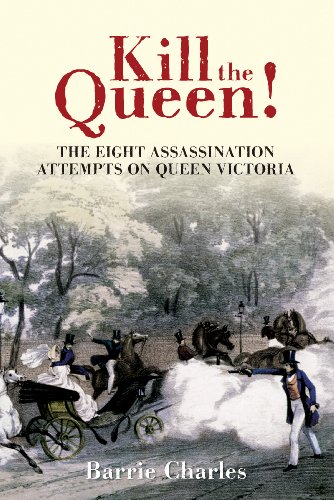
Kill the Queen!: The Eight Assassination Attempts on Queen Victoria by Barrie Charles
Thursday, 19 May 1849, William Hamilton, a 22-years-old, orphaned, unemployed Irish bricklayer, fired a pistol at the Queen Victoria, as she drove, yet again, down Constitution hill toward Buckingham Palace. This was shortly after the birth of her seventh child. Hamilton had stationed himself in Green Park. On the evening of the official commemoration of her birthday, Queen Victoria rode through Hyde and Regent’s Park with three of her children, including the future King Edward VII.
The head keeper of Green Park subdued the shooter. Hamilton was turned over to Police-Constable Topley. Topley escort Hamilton to the Palace, where he was turned over to Inspector Walker. Later, Hamilton was taken to the King Street station house and placed in the custody of an Inspector Darkin. According to History.com, Hamilton had immigrate from Ireland to London in the 1840s at the onset of the Irish Famine/Great Hunger. He told the police he had fired the gun loaded only with powder “for the purpose of getting into prison, as he was tired of being out of work.”
“The prisoner was about twenty-two years of age and was only about five feet six or seven inches tall. He had a fair complexion and hair and was dressed in a flannel jacket, corduroy trousers, black waist coat and cap. His name, he finally admitted, was William Hamilton. He was a bricklayer by trade and an Irishman and an orphan. He was raised in the poor school of the Protestant Orphan Society at Cork in Ireland.” (The Social Historian)

Shooting Victoria: Madness, Mayhem, and the Rebirth of the British Monarchy by Paul Thomas Murphy
It is said Hamilton was briefly imprisoned for taking part in the Parisian arm of the 1848 European uprisings while he was in France. Hamilton returned to London and, frustrated with Britain’s lack of assistance during the years of the Irish famine, set about killing the Queen. Considered “insane,” Hamilton claimed his intention had been “to frighten the English Queen with a home-made pistol.” Reportedly, realizing the foolishness of such an action, he borrowed an actual pistol from his landlady. Unlike the news report below, Raymond Lamont-Brown in How Fat Was Henry VIII (The History Press, ©2008, page 148) says that the gun had no bullet in it at the time.
“Upon the learned judges taking their seats upon the bench, the prisoner William Hamilton was placed at the bar, to plead to the indictment charging him with a misdemeanour, having unlawfully discharged a pistol at her Majesty. The indictment alleged that the prisoner, on the 19th day of May, at the parish of St. Martin-in-the-Fields, having in his possession a certain pistol loaded with an explosive substance—to wit, gunpowder—unlawfully, wilfully, and maliciously discharged the said pistol at her Majesty, with intent thereby to injury to her person. In other counts of the indictment the intent the prisoner was laid to be to alarm her Majesty, and to cause a breach of the peace. Manchester Courier and Lancashire General Advertiser – Saturday 16 June 1849 Hamilton pleaded guilty.” (The Social Historian)
The Chief Justice transported Hamilton “for the term of seven years” as a warning to others. Hamilton sent to a prison colony in Gibraltar to perform hard labor for five years, before disappearing into obscurity in Freemantle, Western Australia.
Barrie Charles, author of The Lucky Queen, gives a bit more information on Hamilton’s last days. “Afterwards, to much merriment, his erstwhile landlord asked the court for his gun back as he had been offered £40 for it, more than a labourer’s annual pay. William was taking to Pentonville and then, with a small group of other convicts, by warship to Gibraltar, where he spent 5 years living on a prison hulk and employed with the hard labour gangs on government works. Just when he must have been counting the days until his release, he was consigned to another convict ship and taken round the world to Fremantle in Western Australia. Little is known for certain of his subsequent life, but it appears that he went north and probably worked in one of the lead mines. Finally, his health broken, he died at the age of 58 in Perth.”
Other Sources:
Barrie Charles, Historical Researcher and Author
Helen Rappaport, Queen Victoria, a Biographical Companion
#Review – Lady Joy And the Earl : A Christmas Novella by Regina Jeffers (@reginajeffers) #Christmas #Regency #Romance – Happy Dance to Follow!!!!
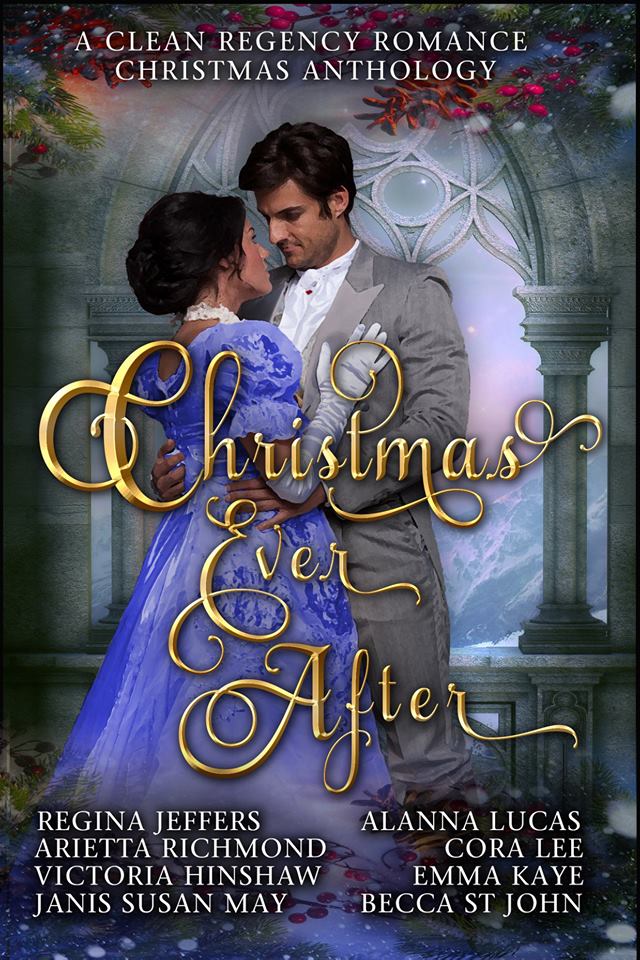
THIS PAST MONDAY, OCTOBER 15, saw the release of another new Regency for me. This release is a culmination of five weeks of releases and a bit of chaos, beginning on September 8. Permit me to explain, beginning with this most recent release.

What began as a project from writers of the Beau Monde, the Regency-based chapter of the Romance Writers of America, CHRISTMAS EVER AFTER is a Christmas anthology, featuring 8 fabulous writers and best-selling authors of “clean” Regencies.
This anthology contains:
Letters from Home by Regina Jeffers
How the Duke Stole Christmas by Alanna Lucas
Courting a Spinster for Christmas by Arietta Richmond
Kissing by the Mistletoe by Cora Lee
Miss Hadley’s Holly by Victoria Hinshaw
The Duke’s Christmas Wish by Emma Kaye
The Resurrection of Regina by Janis Susan May
Lady Eleanor’s Christmas by Becca St. John
876 pages of wonderful romantic reads that will put you in the mood for love and for the holidays from Dreamstone Publishing for $0.99.
Kindle
https://www.amazon.com/gp/product/B07J1GH6ZM/ref=dbs_a_def_rwt_bibl_vppi_i48

“Letters from Home”
She is the woman whose letters to another man kept Simon alive during the war. He is the English officer her late Scottish husband praised as being incomparable. She stirs his soul; in her, his heart whispers of being home. However, the lady wishes to remain “invisible.” Can Major Lord Simon Lanford claim Mrs. Faith Lamont as his wife or will his rise to the earldom and his family’s expectations keep them apart?
Teaser from Chapter Three:
He must apologize to the lady. Simon had watched Mrs. Lamont throughout the previous evening’s meal and entertainment. She sat with several of the other chaperones. but never once did she look in his direction. He had been paired with Lady Sophia, then Miss DeLong, and finally Lady Annabelle, while the one lady who held his interest made light conversation with people old enough to be her parents.
“She’ll not avoid me today,” he told the mirror in his room. “I have questions.”
“Pardon, sir?” Riggs, his former batman turned valet, asked.
Simon debated but a few elongated seconds before instructing, “I wish to learn more of Miss DeLong.” Riggs’s eyebrows shot upward, but his man made no remark, which was unusual, and so Simon explained, “Not because I have intentions toward the chit, but because I wish to rid myself of her advances. She is the most forward of those gathered in Aunt Josephine’s drawing room. When I was forced to claim her as a partner for the games last evening, her hands often found my person and not all she whispered in my ear had to do with strategy to win the match. Aunt Josephine warned me to keep my doors locked, and I agree. I wish you to bed in the dressing room for the time being. Moreover, I wish you to question her maid—”
“The lady does not employ a maid,” Riggs added before Simon could continue.
“No lady’s maid for the daughter of a baron?” Simon questioned.
Riggs gruffly bit out his reply, “Caro, the maid your aunt assigned to clean the woman’s rooms says Mrs. Lamont dresses her cousin.”
“Naturally,” Simon hissed. “The lack of a maid speaks to Miss DeLong’s circumstances and her appearance on our threshold, claiming an invitation my aunt swears was never issued.” Simon frowned. “I do not like the games the ton plays.” With a sigh of resignation, he added, “Learn what you can of Mrs. Lamont. I discovered yesterday that she is a widow, lost her husband at Quatre Bras.”
“Quatre Bras?” Riggs asked. “I recall no one at Quatre Bras by the name of Lamont among the English contingent.”
“Neither do I,” Simon admitted. “But if the lady has been reduced to the circumstances of serving Miss DeLong, I would consider it my responsibility to see the woman to a better way, especially if Mr. Lamont served honorably.”
Riggs asked in concerned tones, “Do you think this Lamont fellow be one of those who deserted?”
“Such might explain the woman’s current situation,” Simon concluded. “Surely, she should have a widow’s pension to sustain her, otherwise.”
“The fact Mrs. Lamont possesses the same connections as Miss DeLong should provide a better position than she has.”
“True. I had not considered her position in those terms. Perhaps I should consult DeBrett’s to learn more of Mrs. Lamont’s relationship to the barony. Is she a first cousin or one further down the family tree? Does she deserve my consideration or not?”
____________________________________________________________

Originally, there were to be four boxed sets: clean, sensual, spicy, and steamy. Unfortunately, some who volunteered for the project found themselves over extended. Eventually, the group agreed, for this first year, we would combine the clean and sensual sets into one anthology and the spicy and steamy sets into another. For me, that became a problem, for I was to have a story in both the “clean” set and in the “sensual” set. My story for the “sensual” set is entitled “Lady Joy and the Earl.” What was I to do with the tale? I could hold onto it until next Christmas, but that is not of my nature. Moreover, at age 71, another year may not be God’s plan for me.
According to the publishing contract, “Letters from Home” cannot be published individually as an eBook until after March 2019, but it can be released in print. Therefore, I decided to release “Lady Joy and the Earl” on Kindle and Kindle Unlimited and then combine “Lady Joy…” with “Letters from Home” in a print edition, entitled Beautified by Love.

Blurb for Beautified by Love:
“Letters from Home”
She is the woman whose letters to another man kept Simon alive during the war. He is the English officer her late Scottish husband praised as being “incomparable.” Can Major Lord Simon Lanford claim Mrs. Faith Lamont as his wife or will his rise to the earldom and his family’s expectations keep them apart?
“Lady Joy and the Earl”
They have loved each other since childhood, but life has not been kind to either of them. James Highcliffe’s arranged marriage had been everything but loving, and Lady Joy’s late husband believed a woman’s spirit was meant to be broken. Therefore, convincing Lady Jocelyn Lathrop to abandon her freedom and consider marriage to him after twenty plus years apart may be more than the Earl of Hough can manage. Only the spirit of Christmas can bring these two together when secrets mean to keep them apart.
Bonus Story:
“One Minute Past Christmas”
An Appalachian grandfather and his granddaughter are blessed with a special ability—a gift that enables them briefly to witness a miraculous gathering in the sky each year at exactly one minute past Christmas. The experience fills them with wonder, but they worry their secret “gift” will end with them because, in forty-four years, no other relative has displayed an inclination to carry it on to a new generation.
Teaser from Chapter One of “Lady Joy and the Earl”
Even before she turned around, Jocelyn knew Lord Hough had entered the ballroom. A hush fell over those in attendance, followed by a swell of whispers. Slowly, she pivoted to take in the magnificence of the man. James Highcliffe stood beneath the archway, his still muscular frame filling the opening. A tall figure dressed in black. Except for the blue hue of his waistcoat, he reminded her of a character from a Minerva Press romance. He was not as lean as she remembered, but there was nothing amiss with the manner in which his evening clothes set off his figure.
Irritably, she realized she held her breath until his gaze found hers. A slight smile lifted his lips. Their gaze held for several elongated ticks of the clock. Jocelyn could not look away. She knew she should turn and pretend not to notice his presence; yet, like a ninny, she studied his approach, enjoying the ease with which he moved. He was the one by whom she judged all other males—unfortunately, he was the one who had broken her young heart.
Jocelyn purposely turned to remind her niece Constance not to appear too eager to greet Lord Hough. “It would be unseemly,” she whispered her caution.
“But it was kind of his lordship to agree to escort us, Aunt.”
“It was,” Joy reluctantly agreed. When she learned her brother had made arrangements with Lord Hough without consulting her, she was most upset at the prospect of encountering the earl again. She had been in Kent with Lathrop when James Highcliffe spoke his vows to another, and she was glad for it. Such was the reason she had agreed to an earlier date for her nuptials than the one James had named. Jocelyn knew she was not strong enough to witness his marrying another. “I forget you see Lord Hough often at home.”
“More so since the death of his wife,” Constance explained. “But often enough, at church and such. How long has it been since you encountered Lord Hough?”
“Twenty-two years, four months, and eighteen days,” his lordship responded before Jocelyn could claim her wits about her.
Constance’s mouth stood agape in astonishment. “How can you be so certain, my lord?”
Lord Hough winked at Constance before presenting Jocelyn’s niece a proper bow, a reminder to Constance to respond accordingly. “I recall clearly, Lady Constance, for that was the day Lady Jocelyn married Lord Lathrop, and the viscount spirited away Aberford’s sunshine.”
Jocelyn willed the embarrassment from her cheeks. “Lord Hough bams you, Constance. His lordship possesses a great sense of humor.” The fact the numbers he quoted were accurate to the day of her exchanging her vows with Harrison Lathrop not only surprised her, but irritated her. Lord Hough had walked away from their blossoming romance when he was nineteen and she several months on the other side of sixteen. Two years later, she became Lady Lathrop. Four months later, James married Lady Louisa Connick, a woman he had never courted. For more than two decades, except for one brief encounter after her father’s death, they had never stood in the same room together, certainly never side-by-side.
Before Jocelyn could continue, Lord Sheldon appeared at Constance’s side. “Lady Constance, I believe this is our dance. The set is forming.”
“May I be excused, Aunt?”
“Certainly.” Jocelyn deliberately nodded to Lord Sheldon. “I shall be waiting here for my niece’s return.”
“Yes, ma’am.”
Attempting to ignore the very masculine man standing beside her, Jocelyn watched Constance as her niece and Sheldon took their places in the set.
“Would you care to dance, Joy?” Hough asked softly.
Despite her best efforts, Jocelyn’s heart hitched higher just hearing her family’s pet name for her on Lord Hough’s lips.
In a frustrated warning to control her emotions, her eyebrows drew together in a fierce frown. “A chaperone does not dance,” she chastised.
When she turned to him, his cinnamon-colored eyes presented her a long, slow look. Staring into those eyes, Jocelyn recognized the familiar merriment she had known years prior. “Do you not recall the steps, my lady?” he teased.
“When was the last time you danced, James Highcliffe?” she challenged.
“Your sixteenth birthday,” he said without hesitation.
The idea shocked her. “Surely you and Lady Hough shared a dance upon occasion.”
His brow climbed a fraction. “I am not accustomed to exaggerating when speaking of momentous events. I assure you, Louisa and I never danced. My late wife despised the exercise, but I recall your being quite fond of twirling about a dance floor, as well as your being excessively light on your feet and on mine.”
Jocelyn blushed and covered the emotion with a flick of her fan. “Not any longer,” she said tersely. “Girlish fantasies. A woman who has borne two sons can no longer be termed light on her feet.”
Lord Hough leaned closer to whisper in her ear. “Do not fish for compliments, Joy, for you must surely own a looking glass. But if you do not, simply know, in my eyes, you remain the most beautiful woman of my acquaintance.”
“Your lordship—” She meant to caution him against such forwardness, but her eyes landed upon his lips, and all thoughts of anything but whether his kiss would be as exciting as the last one they had shared filled her brain.
“No reprimands,” he said in what appeared to be bemusement, “or I will be compelled to kiss you into silence.”
Joy struggled against the shiver of desire skittering up her spine. There was a time the man standing before her was her world. She would not make that mistake again. Lathrop had taught her all the lessons she required about disappointment.
“No kissing, my lord,” she hissed through tight lips. “No cuddling. No dancing. No flirting. I am Constance’s chaperone, and, until my brother’s return, you are our escort. If you are interested in female companionship, I am certain there are many in this ballroom willing to oblige you, whether you desire a mistress or a wife.”
His voice, when responding, was both low and demanding. “We will kiss, Lady Lathrop.” His words were quiet and deliberately stressed. “And cuddle and flirt and dance. And when I choose a wife, it will be you. I will have no mistress—only you, Joy, as the chatelaine of my manor and of my life.”
“Most assuredly, you jest. We have not laid eyes on each other for twenty years, and you expect me to consider marriage to a man I barely know.”
“You know me, Joy. It was Lathrop you did not know.”
Purchase Link for “Lady Joy and the Earl”
Purchase Link for Beautified by Love
___________________________________________________________
 My month (plus) of releases began with the release of my latest JAFF book, Where There’s a Fitzwilliam Darcy, There’s a Way. I had no trouble releasing the eBook of this novel, but, as many of you know, the print copy became an obstacle that nearly broke me. I was ready to hang my pen on a string in my office and admit I finally knew defeat.
For those of you unfamiliar with the situation, I will attempt to make a quick explanation.
Many who self published used the services of a company called CreateSpace for the print copies of their books, and used Kindle, Kobo, Nook, etc., for the eBook versions. Although Amazon owned CreateSpace, until recently, if there were slight variations in the info. submitted on CreateSpace and that submitted on Kindle, there was no problem. Of late, however, Amazon has closed down CreateSpace and migrated books on the CS site into Kindle Direct Publishing. Amazon uses computers to scan the books to make certain there are no discrepancies. I published Where There’s a FitzWILLiam Darcy about the same time as my books on CS migrated over to KDP. I admit part of the problem was me. On the print copy, I listed “There’s a Way” as the subtitle. On the eBook copy, I used the long title. When the print copy went “into review,” the Amazon computers determined I had infringed on the copyright of one of their “high performing authors in our catalog.” As all this is computerized, I could not get a real life person to realize the person I was infringing on was ME. They kept asking if I had a contract with Regina Jeffers to publish her book in print form.
Eventually, I contacted Jeff Bezos. The first time he gave my plea to someone who sent me the same “infringement” email. I contacted him a second time and included two screen shots of the book on my KDP page showing it was still “in review,” meaning it was locked and no changes could be made. Another four days later, I spoke to an actual person, who unlocked the file. I immediately went in and made certain the book details for both files were identical. Then, I hit publish. Twelve hours (and 24 days later) the print copy of the book went live. Of course, I’ve lost all those sales that might have been, but it is available.
Where There’s a FitzWILLiam Darcy, There’s a Way
To him that will, ways are never wanting.
ELIZABETH BENNET’s world has turned upon its head. Not only is her family about to be banished from their beloved Longbourn after her father’s sudden death, but Mr. Darcy has appeared upon her threshold, not to renew his proposal, as she first feared, but, rather, to serve as Mr. Collins’s agent in taking an accounting of the estate’s “treasures” before her father’s cousin steals away all her memories of the place.
FITZWILLIAM DARCY certainly has no desire to encounter Elizabeth Bennet again so soon after her mordant refusal of his hand in marriage, but when his aunt, Lady Catherine de Bourgh, strikes a bargain in which her ladyship agrees to provide his Cousin Anne a London Season if Darcy will become Mr. Collins’s agent in Hertfordshire, Darcy accepts in hopes he can convince Miss Elizabeth to think better of him than she, obviously, does. Yet, how can he persuade the woman to recognize his inherent sense of honor, when his inventory of Longbourn’s entailed land and real properties announces the date she and her family will be homeless?
Kobo https://www.kobo.com/us/en/ebook/where-there-s-a-fitzwilliam-darcy-there-s-a-way
Teaser from Chapter Three:
“Uncle, come quickly!” Elizabeth called. “Mama has lost all reason!”
She had warned her Uncle Gardiner informing Mrs. Bennet of her husband’s missing will would be a mistake, but Gardiner had argued that having a purpose would ease Mrs. Bennet’s despondency. Obviously, Elizabeth’s uncle had forgotten the force of chaos always surrounding his youngest sister.
“What has Fanny done now?” he growled as he followed Elizabeth through Longbourn’s passageways.
“You must see it to believe it,” she cautioned, as she led the way up the stairs. Reaching her father’s former quarters, she flung the door open and stepped from his way, so her uncle could view the havoc Mrs. Bennet had orchestrated.
“Dear Lord,” he groaned. “Francis Margaret Gardiner, what is this madness?”
Elizabeth stood with her back to the door. She did not know whether to laugh or to cry. Her mother and two youngest sisters had annihilated her father’s bedchamber. Papers were strewn across the floor. Drawers turned upon their heads, spilling their precious contents onto the Persian rug, which Mr. Bennet had chosen over his wife’s objections, saying the rug would keep the floors warmer in the winter than the plain wooden floor. Kitty stood before their father’s wardrobe, tossing his best jackets and waistcoats over her shoulder to litter the floor, while Lydia, with scissors in hand, cut open pillows to dump the feathers into a pile at her feet.
With her and Uncle Gardiner’s entrance, her mother had frozen in place, the hammer she had been wielding raised above her head. Large gaping holes appeared in the walls. Plaster dust and splintered wood marked the outline of the walls.
Her mother swiped at the dust peppering her cheeks. “I am searching for Mr. Bennet’s will,” she announced royally. “Is that not what you asked me to do?”
Elizabeth watched in fascination as her Uncle Gardiner schooled his expression, looking very much like her Grandfather Gardiner must have when dealing with Francis Gardiner as a child. “Let me understand all this.” He gestured to the debris scattered across Mr. Bennet’s quarters. “You believe your husband, a man with whom you resided for four and twenty years, knocked a hole in his wall, hid his will, and then repaired the wall, to perfection, I might add, with such skill that no one took note for months-on-end of the alteration.”
Before Elizabeth’s mother could respond, he turned to Lydia. “And you think Mr. Bennet hid his will in his pillows? When, may I ask, did you ever observe Thomas Bennet use a needle and thread, for if he were so foolish as to hide his will within, Mr. Bennet would be called upon to remove the previous stitches, stuff the will inside the casing, and repair the seams.”
Lydia looked upon him as if their uncle had asked her to prove the world was not round.
“Did it occur to you that one could simply feel the pillow and know whether it contained a written document the thickness of an estate will?”
“But Mama—” Lydia protested lamely.
“And you, Kitty,” Mr. Gardiner continued, completely ignoring Lydia’s pout. “Did you think your father walked around since last November with his will in his jacket pocket? I suppose moving it from coat to coat with each change of his clothes. Or worse,” he gestured to the clothes littering the floor, “did you suspect he carried it about in his small clothes.”
Turning back to his sister, he continued his chastisements, “Fanny, this is ridiculous! I want this room put in order. Place Mr. Bennet’s clothes upon the bed, folded in neat stacks. All drawers will be replaced and their contents organized appropriately.”
Her mother huffed her disapproval. “Then send Hill up. I shall be in my room grieving my loss.” Mrs. Bennet placed the hammer upon the window seat and started toward the door, but Uncle Gardiner was faster.
“You are going nowhere until this room is set to order,” he growled.
“But my nerves,” her mother protested.
“Will be better served by activity than time spent brooding over your trials,” he countered.
Even though her head barely reached her brother’s chest, Mrs. Bennet pulled herself up to her full height. “Until Mr. Collins arrives with that traitorous wife of his, I am still Longbourn’s mistress.”
“You speak foolishness,” he argued. “With Mr. Bennet’s passing, you and the girls became the responsibility of my Brother Philips and me. I know for certain when we discover Mr. Bennet’s will, it will name me as executor, for Thomas and I discussed his doing so extensively on more than one occasion. Therefore, as both your brother and your late husband’s confidant, I am taking control of this family. You will remain here in all this debris until you restore the room to some sense of order.” He turned to Elizabeth. “Lizzy, fetch me a chair and the mail. I will make use of the time while I wait for the room to be set aright.”
“Yes, sir.” She scooted past him. Elizabeth had noted the look of contempt her mother presented her for Elizabeth’s part in her uncle’s arrival in Mr. Bennet’s quarters. “Another black mark on her tally sheet,” she grumbled, as she wrestled a straight-backed chair across Mrs. Bennet’s sitting room. In frustration, she thought to pick up the offending piece of furniture and toss it into the passageway. Instead, she permitted her tears a moment of release. Collapsing onto the chair, she buried her face in her hands. “How shall we survive?” she hiccupped on a loud sob.
Since arriving at Longbourn seven days prior, she had not been permitted even one minute to mourn her dearest father privately. She had crossed Longbourn’s threshold to discover pure chaos. Jane’s attempts to organize the household were being ignored by all until Elizabeth had raised her voice and demanded calm, while, in reality, all she really wanted to do was to sneak into the room where her father’s body rested in repose and grieve for the loss of the most important person in her life. Since that moment, they had all turned to her to handle the correspondence required for Mr. Collins’s succession as the new master of Longbourn. “How can I do this, God?” she whispered. “I am not strong enough. I need my father. Whom may I trust? Who will give a care for my future?”
“Lizzy?”
Mary’s voice caught Elizabeth unaware, and Elizabeth sighed with deep regret. Once again, she had not been permitted five minutes even, to dwell upon her misery. Aggravated, she wiped her tears away with the heels of her hands. “Yes, Mary.”
Her sister said apologetically, “You have a visitor in the front parlor.”
With a deep steadying breath, she rose. “A visitor? Has not everyone in the neighborhood made his condolence call?” She did not think she could hear another go on about her father’s unconventional character or hint the need for payment of an outstanding bill, one her father had not addressed before his passing. Perhaps tomorrow. But not today. “Who can it be?”
“Mr. Darcy.”
NOW FOR THE GIVEAWAYS: ALL THREE GIVEAWAYS WILL END AT MIDNIGHT EST ON SATURDAY, OCTOBER 27, 2018. LEAVE A COMMENT BELOW TO BE A PART OF THE DRAWING.
GIVEAWAY #1: I have 3 eBook copies of Christmas Ever After available to those who comment below.
GIVEAWAY #2: I have 2 eBook copies of “Lady Joy and the Earl” available to those who comment below.
GIVEAWAY #3: I have 2 eBook copies of Where There’s a FitzWILLiam Darcy, There’s a Way available to those who comment below.
Today, Christmas Ever After will be available from Dreamstone Publishing. It is an anthology of Regency Christmas novellas from Victoria Hinshaw, Regina Jeffers, Emma Kaye, Cora Lee, Alanna Lucas, Janis Susan May, Arietta Richmond, and Becca St. John. Four of the stories on the anthology are “sweet” and four are mildly “sensual.”
My contribution to this project is a lovely story entitled “Letters from Home.” I rarely toot my own horn, but I dearly love this piece, for it has a bit of angst, some light-hearted moments, and a very satisfying happily ever after.

It also features a unique Yorkshire Christmas tradition. “The Devil’s Knell” is a Dewsbury tradition based on a tale from the 1400s. Supposedly, in 1434, a knight/landowner called Black Tom de Soothill became very angry when learning a servant boy did not attend Church, so angry that the knight threw the lad into a pond, where he drowned. To atone for his sin of murder, the knight donated a tenor bell to the church and requested it be rung each Christmas Eve. The bell would toll for each year that has passed since the birth of Christ. The ringing signifies the forgiveness of sins. “The tenor bell which was donated by the murderer was known as Black Tom. The bell was featured on a 31p stamp, part of a set issued by the British Post Office in 1986 — Traditions of England. The inscription on the bell reads ‘I shall be there, if treated just, when they are smouldering in the dust.’ The Bell Tower at Dewsbury Minister now has an octave of eight bells. They were recast in 1875 and rehung in 1964.” [Yorkshire Post]
Other versions of the tradition’s origin say the bells are rung because the Devil died when Jesus was born.
Originally, one of the unique things about the bell was how the ringing was timed to be completed within a 24 hour period. Nowadays, they start before midnight and end after midnight the following day, for they must be rung over 2000, but not so in my tale. I took some dramatic liberties with the ringing of the bells in my story, for I have three churches, in close proximity, each in turn, ringing a bell spaced equally apart to complete cycle. My story takes place in December of 1815, after the Battle of Waterloo and the end of the Napoleonic Wars. The belsl will, therefore, ring 1815 times.
Blurb: She is the woman whose letters to another man kept Simon alive during the war. He is the English officer her late Scottish husband praised as being “incomparable.” Can Major Lord Simon Lanford, 11th Earl of Clarendon, claim Mrs. Faith Lamont, a woman serving as a companion to her younger cousin, as his wife or will his rise to the earldom and his family’s expectations keep them apart? It is Christmas, and Simon prays for a miracle because in his heart he recognizes neither of them are as expendable as their families believe.
This excerpt from chapter 5 of “Letters from Home” demonstrates how the Dewsbury tradition plays out in my tale.
When Simon returned to the drawing room, he joined in the planned parlor games and conversation and the lighting of the yule log at midnight, and through all the activities, like all in attendance, he ignored Mrs. Lamont. Not that he could truly ignore her, but he gave the impression of indifference because he knew such was the lady’s request.
However, his opportunity to speak to her again came at midnight through a gift of the village churches. “Ah, the bells have begun,” Lady Harvey-Patterson sang out from her place before the fire. “It is Christmas Day at last. Time for an old woman to seek her bed.”
“What bells?” Sir Boling inquired. “I heard no bells.”
“There are bells,” Simon assured. “Mr. Wickersham, might I implore you to open the windows.”
“Certainly, Clarendon.” Wickersham rushed to do Simon’s bidding.
“It is too cold to open the windows,” Miss DeLong complained.
“We will close them again momentarily,” Simon said with a twist of his lips in amusement. “Gather around and listen.”
As the various couples and chaperones made their way to the open windows, a bell rang out in the distance.
“I hear one,” Lady Sophia said in excitement. “But where are the others? Is there to be just one?”
“It is called ‘The Devil’s Knell,’ and the bells have chimed as such for some four hundred years.”
His guests gathered closer together before the windows while Simon explained, “The parish churches’ bells will toll once for every year that has passed since the birth in the sacred manger.”
“This is 1815,” Miss Mitchell declared in awe.
“Yes,” Simon continued. “The bells will chime one thousand eight hundred and fifteen times. There are three churches participating.”
“When will they end?” Lord Seton inquired.
“At midnight Christmas Day,” Wickersham explained. “I’ve experienced the tradition previously while staying at Clarence Hall. One time the previous Lord Clarendon and some of the others in attendance rode into the village to have a closer listen. It is quite remarkable. The locals time the bells so the last one is rung exactly at midnight on Christmas Day.”
“Twenty-four hours. I would go mad if I lived within the village,” Miss DeLong complained in her spoiled manner.
Wickersham ignored her. Instead he said, “Wait until you hear Mr. Eggleston’s service tomorrow. He times his points so the bells do not drown out his words. Quite remarkable to observe.”
“There is another,” Mr. Mitchell called. “Someone should time them. Fetch the mantel clock, Wickersham.”
As Wickersham followed the gentleman’s suggestion, Simon motioned those waiting behind him, including Mrs. Lamont, forward. When she joined the others before the window, he drifted in her direction as he shared, “The sound of the bells is meant to remind Satan that Christmas marks the end of the Devil’s reign on earth.”
“How long between each bell’s chiming?” Lord Seton asked. “It cannot be the same each year.”
“With the passing of a new year,” his aunt observed, “the chimes grow closer together. Fortunately, at Clarence Hall we cannot hear them clearly unless the conditions are right, and we can barely hear the ones from the church on the road to Leeds.”
Simon thought Aunt Josephine sounded very much of Miss DeLong’s nature, where he had always found the idea of the bells magical. When he was a child, he and his mother would sit up late, wrapped in blankets, and listen to the bells while the rest of the household slept. It was one of his fondest memories, one he would endeavor to replicate with his children.
“How far apart are they?” Seton reiterated.
Wickersham studied the clock. “Everyone remain quiet so we can listen carefully.
With the tone of the next bell, all in attendance held their collective breaths as the clock ticked away the seconds. Meanwhile Simon nestled behind Mrs. Lamont. He noticed how she silently counted the seconds. At forty-eight, another bell rang. By mutual consent, in whispered tones, the group began to count to forty-eight again. The third bell was fainter, but still discernible on the cold night air. Again, the count began.
Carefully, Simon nudged Mrs. Lamont’s hand with his note. For a few of the counted seconds, he thought she would refuse him, but, at length, her fingers wrapped around the paper, and it disappeared under her shawl and into the sleeve of her opposing hand, just as his guests shouted, “Forty-eight!” and broke into laughter.
Simon seized the moment, “Meet me in the library once the house has settled in,” he whispered in her ear as he pushed his way into the middle of those enjoying the tradition of the bells. “Enough counting,” he said in good-natured amusement. “If we do not lock up the windows, the drawing room will be covered in ice.” He looked upon his guests. “Thank you for embracing our Yorkshire traditions with such enthusiasm. I appreciate good company, and Lady Plankston has gathered some of the best here this evening. You are welcome to stay longer and enjoy the yule log, but I must claim my bed. Unfortunately, the French left me a fairing no man would want unless he was an old soldier, and such wounds marked his devoted service to the King. I must attend to my leg before I am too crippled to join you tomorrow for Christmas services and supper. Therefore, I bid you a good evening.”
As he walked from the room, Simon prayed Mrs. Lamont would take pity on him and come to the library. If not, he would find another means to spend time with the lady. She would soon learn how loneliness was a sign changes are required in one’s life.
Other Stories/Articles on Dewsbury’s “Devil’s Knell.”
The Devil’s Knell, West Yorkshire
Dewsbury Tolling the Devil’s Knell
York Minster Bells’ First Christmas Day Silence for 600 Years
GIVEAWAY: I have three eBook copies of Christmas Ever After for those who comment below. The giveaway will end at midnight EST, Monday, October 22.
 You can also purchase a PRINT copy of Beautified by Love, which includes two Christmas novellas: “Letters from Home” and “Lady Joy and the Earl.” A bonus story of “One Minute Past Christmas” from George T. Arnold and me can also be found in this edition.
“Letters from Home”
She is the woman whose letters to another man kept Simon alive during the war. He is the English officer her late Scottish husband praised as being “incomparable.” Can Major Lord Simon Lanford claim Mrs. Faith Lamont as his wife or will his rise to the earldom and his family’s expectations keep them apart?
“Lady Joy and the Earl”
They have loved each other since childhood, but life has not been kind to either of them. James Highcliffe’s arranged marriage had been everything but loving, and Lady Joy’s late husband believed a woman’s spirit was meant to be broken. Therefore, convincing Lady Jocelyn Lathrop to abandon her freedom and consider marriage to him after twenty plus years apart may be more than the Earl of Hough can manage.
Bonus Story:
“One Minute Past Christmas”
An Appalachian grandfather and his granddaughter are blessed with a special ability—a gift that enables them briefly to witness a miraculous gathering in the sky each year at exactly one minute past Christmas. The experience fills them with wonder, but they worry their secret “gift” will end with them because, in forty-four years, no other relative has displayed an inclination to carry it on to a new generation.
I am so blessed to bring you two fabulous Regency Christmas novellas. You learned something of “Lady Joy and the Earl” on Monday; today, I wish to concentrate on “Letters from Home,” which will be part of a Regency Christmas Anthology, “Christmas Ever After,” releasing on Monday. The anthology contains stories from Victoria Hinshaw, Emma Kaye, Regina Jeffers, Cora Lee, Alanna Lucas, Janis Susan May, Arietta Richmond, and Becca St. John. The anthology is only in an eBook format; therefore, I have chosen to place my “Letters from Home” in a print format, along with “Lady Joy and the Earl,” which is available on Kindle and Kindle Unlimited, and a Bonus Story from George T. Arnold and me, entitled, “One Minute Past Christmas” in one volume.
Beautified by Love: Two Regency Christmas Novellas from Regina Jeffers
“Letters from Home”
She is the woman whose letters to another man kept Simon alive during the war. He is the English officer her late Scottish husband praised as being “incomparable.” Can Major Lord Simon Lanford claim Mrs. Faith Lamont as his wife or will his rise to the earldom and his family’s expectations keep them apart?
“Lady Joy and the Earl”
They have loved each other since childhood, but life has not been kind to either of them. James Highcliffe’s arranged marriage had been everything but loving, and Lady Joy’s late husband believed a woman’s spirit was meant to be broken. Therefore, convincing Lady Jocelyn Lathrop to abandon her freedom and consider marriage to him after twenty plus years apart may be more than the Earl of Hough can manage. Only the spirit of Christmas can bring these two together when secrets mean to keep them apart.
Bonus Story:
“One Minute Past Christmas”
An Appalachian grandfather and his granddaughter are blessed with a special ability—a gift that enables them briefly to witness a miraculous gathering in the sky each year at exactly one minute past Christmas. The experience fills them with wonder, but they worry their secret “gift” will end with them because, in forty-four years, no other relative has displayed an inclination to carry it on to a new generation.
Excerpt from Chapter One of “Letters from Home”
Chapter One
Friday, 22 December 1815
Major Simon Lanford shifted his weight to his good leg as he again scanned his Aunt Josephine’s drawing room—his drawing room now. His drawing room. His study. His library. His servants. His master chambers. His home. Had Clarence Hall ever truly been his home? Since he entered school, other than holidays, Simon had spent but a few dozen days at the Hall. And as quickly as he finished his tenure at Cambridge, his father had purchased him a commission, as was customary for second sons, and sent him off to the Continent to fight Napoleon.
Even when provided the opportunity to return to Clarence Hall, Simon had remained on the Continent, assisting Wellington or one of the others in charge. Just like his mother, Simon had been the expendable one. The spare. In his father’s lifetime, Lord Geoffrey Lanford had shown love to but two people while the man occupied this earth: his first wife, Lady Alice Lanford, and his heir, Lord Richard Lanford. Neither Simon or his mother, Lady Victoria Lanford, had known the previous earl’s favor.
As he looked about the room, Simon knew his father would despise the fact Simon was the new earl, for it had been Simon’s half-brother, Richard, who had been the anointed one, the one instructed in the ways of managing a large estate and the peerage, but Richard had, literally, choked to death on his own spew, too drunk to realize he needed to sit up in bed or die. Although Simon had never prayed for Richard’s demise, he had not grieved for the loss of his half-brother, a man he barely knew, but one he despised for all the right reasons.
“Home,” he whispered, as he steadied his stance and attempted to feel as if he deserved to be the new earl standing before the gentlemen and ladies with whom his aunt conversed. Simon had no doubt every eye in the room was upon him. After all, he was the 11th Earl of Clarendon, and many of the ladies in the room had set their caps for him, or so he had been told by Riggs, his valet, a man he admired for his stealth on the battlefield and for his cunning means of learning the latest gossip below stairs.
Dear God, I despise this! he grumbled silently. The women his aunt had invited to spend Christmastide at the Hall were more to Richard’s taste than his. Only once had he and Richard agreed on the comeliness of a woman. Lady Gwendolyn Bastian had been Simon’s first and only love, but Richard could not resist the idea of stealing her away. And so his half-brother executed a seduction of the lady; however, Richard’s intentions, as was typical of his character, had not proven as true as were Simon’s, but that particular fact meant nothing to the lady. She wished to be the Countess of Clarendon, rather than The Honorable Mrs. Lanford. The last Simon heard of her, shamed by her loose morals, the Bastians had sent Lady Gwendolyn away to live with a distant relative in Ireland, while Simon had been sent to a certain death on the European Continent. But he had fooled them all. He had out lived his father and his brother and said “good riddance” to a woman so ambitious she would bargain her virginity to gain a title. No more. When he married, Simon would choose a woman of merit and a loving nature, title or not.
“We are pleased to have Clarendon finally return to us,” his paternal aunt, Lady Josephine, Dowager Viscountess of Plankston, said loud enough to draw Simon’s attention. She wished him to join her, so she might introduce him to yet another young lady. “Young” was the operative word, for he did not think any prospects gathered before him were older than nineteen. Simon was not but seven and twenty; unfortunately, what he had seen of the world made him feel ancient in comparison to so many fresh-scrubbed faces seeking his attention.
As he carefully picked his way across the room, he wondered, How many women in this room would recoil at the sight of my mangled leg? The answer was easy: All. Their sensibilities were too tender.
“You were saying, Aunt?” He bowed stiffly to the group seated before the fire.
His Aunt Josephine smiled courteously. “I was just telling Lady Mareau and her daughter Lady Sophia that it was a shame you did not arrive in England during the summer, so you could have partaken in all the festivities honoring those supporting Wellington and his great victory.”
More gore than glory, he thought, but he said, “I am simply thankful to be standing on English soil at last, Aunt.” He had learned of Richard’s death some three and a half months before Simon fell at the Battle of Quatre Bras, but before he could make arrangements to return to Yorkshire, Napoleon escaped Elba, and the planned victory celebration transformed into another military front. He supposed, in hindsight, he should have insisted upon returning to England, but as Richard had already passed, Simon could offer no succor to those who remained at Clarence Hall. He had always been the interloper here. The Hall offered him nothing but ill memories. Moreover, Simon was never one to leave an occupation undone.
“Your aunt speaks of your glorious connection to Wellington,” Lady Sophia said in what sounded of awe. “We certainly enjoyed the celebrations.” She glanced to her mother for approval of what she said. “It was quite reverential, viewing, of course, from a distance, both His Grace, the Duke of Wellington, and Prince George while in attendance. And the fireworks were quite spectacular, as was the burning of the Castle of Discord. However, the heat was quite unbearable, making all quite uncomfortable. And the streets were full of food vendors and filth. The odors were quite pungent. The air filled with smoke from the staged battles, and I found the sound of the parades quite thunderous.”
“Quite so,” Simon commented in reluctant amusement. The girl’s use of “quite” so often in her speech would surely drive him “quite” insane within a few days if he were foolish enough to claim her. Moreover, she contradicted herself. How could one enjoy something that was so unappealing?
The girl, rather say, any lady he might encounter in an English drawing room, would know nothing of one’s senses being bombarded by the worst of humanity: Dining on stirabout, a watery concoction of oatmeal. The sudden roll of drums along the whole of the enemy’s line. The burst of music from the bands of a hundred battalions. Great columns of infantry advancing over the brow of the hill and marching straight at a man. Two hundred guns firing at the same time. Shot and shell ploughing up the earth at one’s feet. The bagpipes of the Highland brigades. Mist and smoke filling the valley. The tremendous cannonade from two hundred and fifty French guns, firing in close succession. The noise fearful. Loud reports renting the air. A rolling cheer of victory and an equally loud gasp of defeat.
Yet, there was no one in this room who would willingly listen to his stories of undertakings being nothing more than futile feats of bravery. Therefore, he admitted with more calm than he felt, “Despite my exceedingly long stay in a Belgian hospital, I am glad to have missed the celebrations. My memories are too fresh to enjoy such a display.”
“No maudlin,” his aunt warned quietly. “It is nearly Christmastide, a time for hope and for faith’s renewal.”
Simon would soon need to do something about his aunt’s hold on the household. Perhaps both his father and his brother had accepted her tight-fisted maneuvering, but he did not. His Aunt Josephine had come to stay at Clarence Hall after Simon’s mother passed, and it had become evident to everyone that his father did not mean to marry for a third time. She remained to serve Richard in the same capacity, but Simon had never cared for the idea of another woman commanding the household that was once his mother’s domain. Even if he did not claim a bride soon, he would insist on his aunt returning to Derbyshire and her role as the Dowager Viscountess of Plankston, rather than serving as the chatelaine of his manor. Moreover, she had never once expressed an affection for him. Even now, she appeared to tolerate Simon’s presence at the Hall only for the sake of the earldom.
“I meant no offense, your ladyship,” he said dutifully.
Lady Mareau hinted tactfully, “I suppose your injury will keep you from the dance floor at the assembly on the eve of the New Year. I know Sophia had hoped for you to escort her to the floor for the first dance at the assembly.”
Simon glance to the girl, who could not be more than eighteen. He had a decade on the chit. How could his aunt think him so shallow? “I fear my dancing days are long removed, my lady, but I am certain Lady Plankston has invited a number of gentlemen to our Christmastide gathering who will gladly assist you in dancing the evening away.” He nodded his head in respect. “Now if you will pardon me, I note Mr. Thomas has sought my attention. Likely more guests have arrived.” With a curt bow, he carefully negotiated his way across the room, trying not to favor his ailing leg, but failing miserably.
What do I care, he told himself for the hundredth time, if the women gathered about the room look upon me with pity? In truth, the household was just coming out of full mourning for his brother. They should not be hosting a house party, but the invitations had been sent out before Simon had arrived, and there was little he could do without sending up an alarm in Society regarding his mental state. Therefore, beyond what was necessary as the host, he would have no use for the ladies his aunt thought worthy of becoming his countess. He had little doubt, thinking he would wish it, each prospective bride would tolerate his aunt’s presence at the Hall. Absolutely not. Simon had no desire to do the pretty and court any of them. Bloody hell! He was having difficulty even remembering their names, for none had made an impression on him. Some were blonde and some with dark tresses. Some with blue eyes and some with brown. But to Simon there was nothing unique about any. They were all patterns of the same well-bred woman.
As he entered the foyer, he noted Mr. Thomas was assisting another lady with her cloak. “How many bloody women does Aunt Josephine think I can entertain at one time?” he grumbled under his breath. This one would make eleven. Nearly one for each day of Twelfth Night. He did not possess Richard’s easy way with people. When he was still with the Army, Simon had made a conscious endeavor to praise his men’s efforts, but such was the extent of his “smooth” talk, and his speech used upon the battlefield would be termed far from smooth in an English drawing room.
“I must send someone to prepare your rooms, Miss DeLong,” Mr. Thomas explained to the girl as Simon approached.
“I pray they look out over the lawn or over the gardens. I despise a room without a view,” the woman declared with a majestic wave of her hand.
Before he could respond, another female, behind the demanding one, said politely, “All rooms with a window possess a view, Claire. One must simply discover the beauty presented in the world.”
Although Simon did not agree with the sentiment, for he had seen too much destruction over the past five years, he enjoyed the sound of the words: soft and melodic, the type to soothe a man’s soul. The idea had him stumbling in his wake, staying upright only with the aid of his trusted cane.
The one called Miss DeLong spun in his direction when Thomas murmured, “my lord,” and Simon worked to keep the frown from his features. The girl appeared to be another of the well-bred ornaments of Society, typical of all the women he had encountered since his return to England. She dipped a deep curtsey to display her assets. When she rose, she said, “My lord, I assume I am in the presence of Lord Clarendon.”
Perhaps the girl was not one of the pattern he had observed recently: Simon had not encountered so forward a woman previously, at least not one of the genteel sect. He considered himself liberal, especially when it came to the plight of women, but he had the feeling this one would prove beyond the pale. “I am, miss. But we should wait for a proper introduction before we converse. Perhaps one of your parents could perform the deed or, if not, permit me to send for my aunt.”
When no one stepped forward, Simon nodded to Thomas, who scurried away without a word. Secretly, he was thankful the soothing voice he heard earlier was not that of the girl’s mother or guardian, for the lady’s soft words had him thinking the right woman could ease his disappointment at his new situation.
Miss DeLong did not blush from her boldness, which he assumed was a purposeful ploy, nor did she wait for his aunt to appear. “My mother passed some six years removed, sir, and my father is too ill to attend country parties. He permits me to set my own social calendar.”
“I see.” Simon shot a glance over his shoulder in hopes of spying his aunt. “How liberating.” He was not one to stand on protocol. The military had taught him a man’s worth was more than his title or his education, but he would not wish to tie himself to such a girl by breaking with propriety too quickly. After a long awkward pause in which his aunt had yet to respond, Simon swallowed his trepidation. “I am Major Lord Simon Lanford, the Earl of Clarendon, lately of His Majesty’s service.” He executed a stiff bow, balancing his weight upon his cane.
The girl’s eyebrow rose as she looked upon him. He knew the exact instant she realized he required the cane for mobility, rather than it being a fashion accessory. Her features displayed her disappointment for a brief second before she recaptured her inviting expression. “I was not told you required a cane,” she said without much sympathy. “But I suppose such cannot be helped.”
“Claire, please,” the same soft voice as before pleaded, before he could offer his retort.
“Miss DeLong?” His aunt’s arrival surprised even him, for he had not heard her approach. “We were unaware you planned to join us for our festivities.”
“Certainly I planned to join you,” the girl said in petulant tones. “Was not an invitation sent to my father’s manor some months ago?”
Aunt Josephine shot Simon a look of alarm before saying, “Such was when poor Richard was alive. And I do not observe Lord DeLong in your company.”
“Father was too ill to travel,” the girl countered.
“I see.” His aunt took a deep steadying breath before making her decision, one he was certain would go against her better judgment. “Unfortunately, Lord Buchholtz’s party cancelled. Mr. Thomas, you will have someone see Miss DeLong and —”
“My cousin,” the girl supplied.
“At least DeLong did not permit you to travel alone,” his aunt hissed under her breath. Aunt Josephine’s tone spoke of her lack of respect for the girl, as well as the less-than-welcoming attitude she would practice with Miss DeLong. “Again, Thomas, you will see—”
The butler nodded his understanding and darted away before his aunt could finish. Simon suspected Mr. Thomas meant to speak to the housekeeper. Obviously, a young woman attending a party without a parent or guardian was a scandal waiting to occur. Mrs. Osborne would place the chit away from any of the gentlemen’s quarters.”
“While Mr. Thomas organizes the necessary rooms, perhaps you might conduct a proper introduction, Lady Plankston,” Simon suggested gently. “Although I will admit I have broken with propriety to make myself known to our guests.”
“Certainly, Clarendon.” Aunt Josephine’s shoulders stiffened. “My lord, this is Miss DeLong, daughter of Lord DeLong.” Nothing of may I give you the acquaintance. “Miss DeLong’s father holds a barony of the same name. The young lady was a particular friend of your late brother,” she said pointedly.
Ah, now the situation made sense. His brother had made promises to the girl, and Miss DeLong expected him to keep Richard’s pledges. If such were the case, the chit was in for a rude awakening. Now that he understood the situation, when he looked upon the young woman, Simon could imagine his brother taking a fancy to the girl. She possessed “the look” Richard preferred in his women: golden-haired, heart-shaped face, pouty mouth, svelte figure, blue eyes, and, likely, she was a plaguey nuisance.
“Miss DeLong, welcome to Clarence Hall. The party has gathered in the drawing room. Please feel free to join us after you’ve had time to freshen your things.” Realizing he ought also to welcome the girl’s companion, he glanced over Miss DeLong’s shoulder to discover the most enchanting creature looking at him with the appearance of steady intent. There was a sturdiness in her gaze.
Not a classical beauty, like her fair cousin, but delectable, just the same. Blondish-brown curls escaped the bonnet she wore. He imagined them to be soft and smooth and absolutely feminine. A small, straight nose covered with a sprinkle of freckles on golden cheeks, as if she had recently spent time in the sun. Not so thin as her cousin, but with a well-defined waist and ample breasts, against which a man might rest his weary head. Since arriving in England, everyone had reminded Simon of his duty to secure the earldom. He had ignored all reminders of his siring an heir until this very moment. “And your companion?” he murmured. “Would you please extend an introduction, Miss DeLong?”
The girl glanced to her cousin and back to him, and her brows drew together in obvious disapproval. Realizing he had betrayed his interest in the woman, Simon made himself smile on Miss DeLong. The girl’s features followed suit. At length, she said, “My lord, permit me to give you the acquaintance of my cousin, Mrs. Lamont.”
Missus. The word ricocheted through Simon’s body. The woman was married. Naturally, he thought. He knew of few men who would not rejoice at having a woman of Mrs. Lamont’s fine looks on his arm. He made himself say through his disappointment, “Welcome, Mrs. Lamont. I pray you do not find Clarence Hall wanting.”
“I am certain I shall not, my lord.”
With Thomas’s return, Simon said in dismissal, “Anticipating continuing our conversation later, I will release you into Mr. Thomas’s most capable hands.”
“This way, ladies.”
Even though he could not approach the most interesting woman attending his aunt’s house party, Simon watched as Mrs. Lamont gracefully climbed the stairs toward the guest quarters.
“Beware Miss DeLong,” his aunt whispered near his ear. “The chit means to claim a title. Richard led her to believe she might become his countess. Make certain you are not alone with her. And lock the doors to your quarters at night.”
“Perhaps if Napoleon had employed a female strategist,” Simon said with a sad chuckle, “he could have outwitted Wellington.”
“You make light,” his aunt reprimanded, “but do not underestimate a conniving woman. A female soldier would have taken note of the weather and realized cannons cannot move easily and quickly over wet ground,” she remarked. “Although Miss DeLong is young, she learned her arts from her mother, a former opera dancer who lured Lord DeLong in.”
“Then why was an invitation issued to Miss DeLong?” Simon inquired.
“That is a matter I must investigate. The girl was on the list of a previous party when Richard was still alive. It was when your brother first took her acquaintance and when he became quite enchanted by her independent spirit. Personally, I never cared for the family. People say the former Lady DeLong used some sort of aphrodisiac to trap the baron into marriage. Lady Smithson says her husband heard rumors at his club that DeLong has contracted—” His aunt broke off with a blush.
“I should say a woman of quality should know nothing of such matters, but I am not as antiquated as many of my fellow peers,” Simon said with a smile to ease her embarrassment.
“My dearest Plankston never treated me as a mere female,” she admitted.
“Then Lord Plankston was an oddity, but an oddity I wish to emulate in my own marriage. Thank you for the words of wisdom, Aunt. Now, we should return to our guests.”
Now for the Giveaway!! I have TWO eBook copies of Christmas Ever After and TWO eBook copies of “Lady Joy and the Earl” available to those who comment below. The giveaway will end at midnight EST on Tuesday, October 16, 2018.
The mourning rites we customarily think of as being so strict during the Regency era, were actually those imposed by Queen Victoria after the death of her husband, Prince Albert. Victoria was known to wear black for many years and strict forms of comportment during the mourning period. The Georgian Era/Regency held its moments, especially during the country’s mourning for King George III and later, King George IV. But the mourning of individuals differed.
The wealthy might have an open coffin in a drawing room where the deceased could be viewed by the family and others could pay their respects. More than likely, the poor permitted the body to decompose in one of the rooms and later the bones were buried. If a coffin was used, the poor were more likely to “rent” a coffin. The deceased was sewn into a wool shroud. The coffin had an open end and the shrouded body would be tipped into the grave and covered up with dirt. The coffin would be used again for another service. Funeral meats were served at the home of the deceased.
From WordOrigins.org, we find: “Funeral baked meats” is famous from Hamlet and I had assumed baked meats referred to roast beef/venison/pork/suckling pig etc.
E. Cobham Brewer 1810–1897. Dictionary of Phrase and Fable. 1898.
Baked Meatmeans meat-pie. “The funeral baked meats did coldly furnish forth the marriage table” (Hamlet); i.e. the hot meat-pies (venison pasties) served at the funeral and not eaten, were served cold at the marriage banquet.
“Presumably those pies and pasties were cooked in shortcrust pastry, and such meat (and veg) pies are still popular in the UK and the Antipodes, but not in the States where pies are fruit with a different kind of pastry I believe. (This is true of British fruit pies anyway.)”
Dictionary.com has:
bake⋅meat
/ˈbeɪkˌmit/ Show Spelled Pronunciation [beyk-meet] Show IPA
–noun Obsolete.
1. pastry; pie.
2. cooked food, esp. a meat pie.
Also, baked meat.Origin:
1350–1400; ME bake mete, OE bacen mete baked food. See bake, meat
This is reminiscent of the legend of the Sin-Eater. A sin-eater is a person who consumes a ritual meal in order to take on the sins of a person or household. The food was believed to absorb the sins of a recently deceased person, thus absolving the soul of the person. Sin-eaters, as a consequence, carried the sins of all people whose sins they had eaten. A local legend in Shropshire, England, concerns the grave of Richard Munslow, who died in 1906, [“Last ‘sin-eater’ to be celebrated with church service”. BBC News. 19 September 2010.] said to be the last sin-eater of the area:
By eating bread and drinking ale, and by making a short speech at the graveside, the sin-eater took upon themselves the sins of the deceased”. The speech was written as: “I give easement and rest now to thee, dear man. Come not down the lanes or in our meadows. And for thy peace I pawn my own soul. Amen.
 There is an episode of Rod Sterling’s 1970s Night Gallery (Season 2, Episode 59) entitled “The Sins of the Fathers,” and starred Richard Thomas of “The Waltons” fame as the sin-eater’s son and Geraldine Page as his mother. When I saw it years ago, it creeped me out and the images of it stayed with me all these years. Ethan Renoe tells us something about the episode: “The episode takes place in 13th century Wales, where famine is destroying the country. An old man has just died, so his family is looking for a sin-eater to come and relinquish the man of his sins. The belief is that this person, known as the sin-eater, comes and feasts on fine foods from the chest of the corpse and, once the meal is complete and the proper prayers are recited, the sins of the deceased enter into the soul of the sin-eater. He screams in agony and the family watching knows that the dead man is relieved of his trespasses.
“If you know anything about Rod Serling, creator of The Twilight Zone, you know that creepy and weird is just what lives inside his head. The episode follows a midget as he rides his pony 12 miles to fetch the sin-eater, who, it turns out, has also just died. His wife coerces their son to go instead and eat the sins of the dead man.” Obviously, if you read the title above, you know the ironic twist at the end.
THE SINS OF THE FATHERS
Teleplay by Halsted Welles • Story by Christianna Brand
Directed by Jeannot Szwarc
Not for the squeamish is “The Sins of the Fathers,” based on the old Welsh custom of sin-eating: cleansing a man of his sins
by feasting in the presence of his corpse.
Geraldine Page as Mrs. Evans
Richard Thomas as Ian Evans
Michael Dunn as the Servant
Barbara Steele as the Widow Craighill
Cyril Delevanti as the First Mourner
Alan Napier as the Second Mourner
Terence Pushman as the Third Mourner
John Barclay as the Fourth Mourner

In my story, Where There’s a FitzWILLiam Darcy, There’s a Way, Mr. Bennet has passed and the Bennet family is thrust into mourning. During the Regency, Mrs. Bennet would be expected to mourn her husband for a year, while the daughters were only required to mourn their father for six months. This meant wearing black or dark gray. After six months, Mrs. Bennet would be in half mourning, meaning she should could wear a combination of black and white. After that she could wear black, gray, or lavender until the year was complete. Many women continued to wear mourning long after their husbands had passed.
The “rules of propriety” said a year of mourning for a husband or wife, and six moths for a parent or one’s in-laws. Donna Hatch has a full breakdown of how long one must grieve for aunts, uncles, siblings, cousins, and the like on her Mourning Customs in Regency England. I know many of you will find the excerpts she quotes quite interesting.
Geri Walton has a wonderful post entitled “Mourning in the Georgian Era,” in which she tells us:
Mourning rules were also associated with families, relatives, and servants in the Georgian Era. In the Life of Harriot Stuart, written in 1750 by the English poet and authoress, Charlotte Lennox, she noted:
“[The] length of time devoted to mourning, and the apparent intensity with which one mourned, were determined to a large extent by the relationship that … existed between the two people and the ‘public knowledge of that relationship’ … mourning was usually only done for kindred, and … the formal rules that governed mourning, which specified an exact amount of time for each degree of kinship, ‘showed that servants were excluded from family.’”
**********************************
Where There’s a FitzWILLiam Darcy, There’s a Way
ELIZABETH BENNET’s world has turned upon its head. Not only is her family about to be banished to the hedgerows after her father’s sudden death, but Mr. Darcy has appeared upon Longbourn’s threshold, not to renew his proposal, as she first feared, but, rather, to serve as Mr. Collins’s agent in taking an accounting of Longbourn’s “treasures” before her father’s cousin steals away all her memories of the place.
FITZWILLIAM DARCY certainly has no desire to encounter Elizabeth Bennet again so soon after her mordant refusal of his hand in marriage, but when his aunt, Lady Catherine de Bourgh, strikes a bargain in which her ladyship agrees to provide his Cousin Anne a London Season if Darcy will become Mr. Collins’s agent in Hertfordshire, Darcy accepts in hopes he can convince Miss Elizabeth to think better of him than she, obviously, does. Yet, how can he persuade the woman to recognize his inherent sense of honor, when his inventory of Longbourn’s entailed land and real properties announces the date she and her family will be homeless?

The eBook is available from these outlets:
Kobo https://www.kobo.com/us/en/ebook/where-there-s-a-fitzwilliam-darcy-there-s-a-way
Excerpt from Chapter Ten of Where There’s a FitzWILLiam Darcy, There’s a Way. In this section, Darcy and Elizabeth have been inspecting the home farms as part of Darcy’s duty to Mr. Collins. They stop to enjoy a meal he brought for them.
Darcy knew he could never permit such a future for her, but he could not speak promises without the bonds of an engagement, and having such at this time would drive her away, so he swallowed the words on the tip of his tongue. “I, too, find London difficult,” he said lamely.
Again, they sat in quiet contemplation for several minutes, each finishing the food on their plates. It amazed him how those silent moments between them no longer felt awkward, for there was an understood acceptance now. At length, she returned their plates and silver to the basket. When finished, she turned to him to ask, “I know this will sound personal, and you must not respond, if doing so makes you uncomfortable, but after your father passed, did you ever walk into a room and believe you could feel his presence? Smell the soap he used or the cigar he had just smoked?”
“Often,” he admitted. “My sister claims she has been awakened by his touch on her shoulder, but I have not experienced such an encounter. However, I have repeatedly thought that if I turn my head, I would find George Darcy watching me go about my daily business to the estate.”
“Does such frighten you? This feeling, I mean?” she asked quietly.
Darcy sipped his wine before responding. “No. I find it comforting, especially when I am addressing a pressing or a difficult problem. My father always wished my success; therefore, why should I be frightened?” He took a longer drink of the wine before he asked, “Do you feel Mr. Bennet’s presence?”
She nodded in embarrassment. “More than I would have thought. Even when I was at Hunsford. The last night.” She brought her eyes to meet his. “The night of your—”
“Proposal,” he said softly.
“Yes.” Sunlight filtered through the leaves to slant across her beloved features. “It was as if, for the first time in many years, my father looked upon me with disapproval.”
“I suppose you realize that evening would have been the day of his passing.” A brief breathless moment slid between them, and Darcy reached across the blanket to cover her hand with his.
“I thought of little else upon my return to Longbourn,” she admitted.
He dared not ask what she considered to be the source of her father’s disdain. Did Mr. Bennet disapprove of Darcy’s proposal? Of her refusal? Or the fact his favorite daughter was not at Longbourn so Bennet could speak his farewells?”
“Have you seen him since?” he asked, at last.
“No, but I often feel him—his warm embrace—my nestling into his sturdy body.” With a sigh, she entwined their fingers. “Much as it was with us in the orchard.”
Darcy relished the ease with which she reached for him and the comfort she appeared to take in his touch, but he did not wish to replace her father in her life. He desired her affection.
“It is natural for you to seek the security Mr. Bennet provided your family,” he assured. “You were not at Longbourn when the incident happened, and your life has been full of the repercussions since. You must promise me you will permit yourself time to grieve.”
“Would grieving not mean I accept Mr. Bennet’s loss?” Tears formed in the corner of her eyes.
He caressed her cheek. “Not accepting will not alter what has occurred. It will only delay your healing.”
“I know you speak the truth,” she said on a sob. “But how do I make myself believe my father will never sit at his desk again and enjoy a book from his library?”
“Things will settle once you know the disposition of your father’s will. You are much of the same nature as I in that manner. You are strong and willing to face whatever life delivers to your door. It is the unknown that brings you anxiousness. Such is what has you questioning yourself.”
“Did you question yourself with your father’s passing?”
“I lost my mother when I was but thirteen. My father met his end some five years past. The loss of my mother was devastating. Lady Anne Darcy was my champion, and her passing left a gaping hole in the happiness we all had known at Pemberley. Yet, we knew for months that Lady Anne’s passing was inevitable. We had time to prepare ourselves for the void. But it was my father’s sudden collapse that frightened me to my core. I did not wish to accept that I was now not only Pemberley’s master, with all that entails, but I was also Georgiana’s guardian. It was quite daunting. In many ways, it still is.”
“How old is Miss Darcy?”
Darcy realized Elizabeth had yet to read his letter. “Barely sixteen. Georgiana is twelve years my junior. I treasure her and worry every day if I am serving her well.”
She smiled upon him. “Surely, you have never failed her.”
However, before he could respond, the sound of laughter from some place along the road leading to where they sat had them jerking apart.
“My sisters,” she mouthed.
He leaned close to whisper. “I will circle around to the orchard and pretend to have been examining it.”
She nodded her agreement and stood quickly. “What of the basket and blanket?
“I will think of something.” He gave her a gentle nudge in the direction of her sisters’ approach.
* * *
Elizabeth strolled casually from the woods to encounter her two youngest sisters. “Where are you about?”
Lydia and Kitty pulled up short. “We could ask the same of you,” Lydia said smartly.
Elizabeth gestured to the empty phaeton. “Mr. Darcy wished to walk through the orchard. To observe the condition of the trees or some such nonsense,” she said with what she hoped sounded of boredom.
“What were you doing in the woods?” Lydia taunted. “Please tell me you did not permit Mr. Darcy a kiss.”
“If you must know,” she said in hushed tones. “I was seeing to my personal needs while the gentleman was not about.”
“Were you not ashamed?” Kitty questioned.
Elizabeth gestured to them to keep their voices low. “It is not as if we were within a hundred yards of each other. Besides, sometimes urgency outweighs embarrassment. Now tell me where you were going.” She meant to change the subject before her sisters questioned her too closely.
“Mama said we could walk into Meryton,” Kitty responded before Lydia could warn Kitty with an elbow to their sister’s ribs.
“It is too soon,” Elizabeth protested. “It has been but twelve days since our father’s passing, even less since his burial. You cannot go about in society as if Mr. Bennet meant nothing to us.”
“But there is little to entertain us at Longbourn,” Lydia protested.
Elizabeth shook her head in denial. “It is not a time for entertainment. Surely you cannot mean to insist we go about our days as if nothing of importance has occurred in our lives. Our father is dead, and we all will be soon at the mercy of charitable relations.”
“But the militia means to go to Brighton soon,” Lydia reasoned. “What if Denny and Mr. Wickham and the others leave without our speaking our farewells?”
“Lydia, you must accept the fact we no longer hold the exalted position we once did in the neighborhood. Mr. Collins is now Longbourn’s master, and, within a month, we will be vacating our home forever. The militia has no place in our future.”
“But Mrs. Forster has asked me to go to Brighton with her. Harriet says we will have a jolly good time,” Lydia argued.
Elizabeth said in strict tones. “Mrs. Forster’s invitation was extended prior to Mr. Bennet’s death. We are all in mourning. You cannot leave on a holiday.”
“But Mama said—”
“Mrs. Bennet had no right to make such promises. Even if we were not newly in mourning, neither Uncle Gardiner or Uncle Philips can afford to send you off on a holiday. We will each be farmed out to relatives or be expected to work for our keep. Our days of socializing and enjoying balls are over.” She glanced behind her to note Mr. Darcy’s approach from the far side of the orchard. “Now no more arguing, especially before Mr. Darcy,” she warned.
As he came near, Elizabeth said, “I am pleased you have returned, sir. If you will pardon me, I mean to walk back to Longbourn with my sisters.”
“I do not want—” Lydia began, but Elizabeth shot her sister a glare of fury.
“I said we would walk back together,” she hissed.
“Certainly,” Mr. Darcy was quick to say. “I will finish my examination of the orchard and then rejoin you at Longbourn.” He bowed to them. Thankfully, the gentleman understood her need to accompany her sisters’ return to the manor, and he protected her reputation. Elizabeth was determined not to permit her sisters to continue to embarrass the family and their father’s good name.

Catherine, Duchess of Suffolk (Wikipedia)
Briefly, Richard Bertie (ca. 1517 – 9 April 1582) was an English landowner and religious evangelical. He was the second husband of Catherine Willoughby, 12th Baroness Willoughby de Eresby and Duchess Dowager of Suffolk. As his wife was a baroness in her own right, Bertie made claims to be styled as “baron.” The claim was denied, but it was appealed. In the opinion of Bertie and his wife, her right to her father’s Barony held no relevance to his claim to bear the title in her right, but was rather the cause of his claim being initiated. They based this appeal on the grounds that her right to the Barony had been upheld against her uncle’s claim against it. Moreover, her uncle’s son was refused the title of Willoughby of Eresby and assigned the title of Willoughby of Parham in 1547. Therefore, why could Bertie not bear the title of Lord Willoughby and Eresby?

William Cecil, Lord Burghley ~ via Wikipedia
Two years after the first ruling against them, Bertie was granted a second hearing to make his claim. In a letter dated 14 April 1572, Bertie writes to William Cecil, Lord Burghley, Elizabeth I’s chief advisor throughout most of her reign. The draft of that letter is among Burghley’s papers. In the letter, Bertie included a list of other men who had made claim in right of their wives and who enjoyed the dignity of “baron” and who had been called to Parliament in every King’s government since the Conquest.
That list included one “John Talbot, a Norman, who came to England with William the Conqueror and married Matilda daughter of Richard, Lord Talbot of Longhope, in whose right the sayde John was Lord Talbot of Longhope, of whom the Earl of Shrewsbury is descended.” (Peerage and Pedigree, Study in Peerage Law and Family History)
The Domesday book states that during the time of William the Conqueror, Longhope belonged to William the son of Baderon. Longhope descended through William’s line, who were called the Lords of Monmouth. Eventually, the line ran out of male heirs. Some 200+ years after the Norman Conquest, Longhope passed into the hands of a Talbot.
The list also included Josselyne (Jocelin), son of the duke of Brabant, who married Agnew, the daughter and heir to William Lord Percy. Josselyne was styled as Lord Percy. The earl of Northumberland descends from this line. (Collins, Arthur. The Peerage of England: Containing a Genealogical and Historical Account of All the Peers of That Kingdom. Vol. VI of VIII)
The complete list was sent to Burghley in April 1572. Bertie pressed for an agreement on two points: the right of an heiress to inherit a barony and to transmit said right to her heirs. The Berties won on this account. The the claim of Richard Bertie to hold his wife’s title and to be summoned to Parliament in her right had proven obsolescent, falling out of use and unable to be transferred from one situation to another.
Many experts believe that Richard Bertie’s petition was ignored because it came at a time when people argued over the legality of such claims. How far was Bertie’s claim valid? It was determined that “the writ of summons to his son (in his own lifetime) on his mother’s death (1580) was, in this, an epoch-marking event, being absolutely fatal to the view that a barony could be held by ‘the curtesy of England.’
“The lawyers’ perplexity is seen in the report on Bertie’s claim by the Attorney General and Solicitor General, to whom Burghley had referred it:—
‘We have conferred with four of the judges that be now in London concerning Mr. Bertie’s case, and they be all of opinion that he cannot challenge to have the Barony and the Title thereof in right of his wife, or else as tenant by the courtesy after her decease. We did make doubt whether her Majesty might not do. But because the course if very rare, they desired to have conference with the rest of the judges, when they shall come to town, etc.” (Peerage and Pedigree, Study in Peerage Law and Family History)


 | Regina Jeffers on “Mirror, Mirror on the W… |
 | Jennifer Redlarczyk on “Mirror, Mirror on the W… |
 | Beatrice Nearey on “Mirror, Mirror on the W… |
| Regina Jeffers on Celebrating the Release of… |
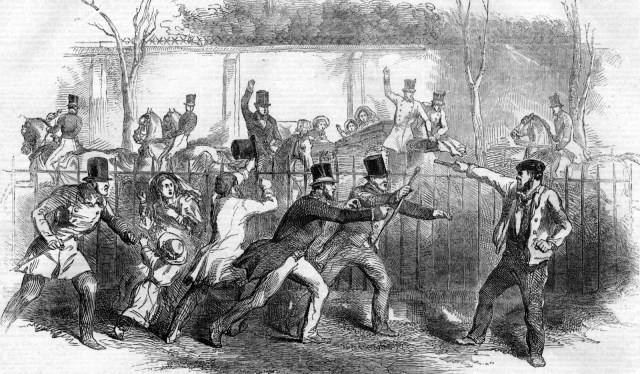
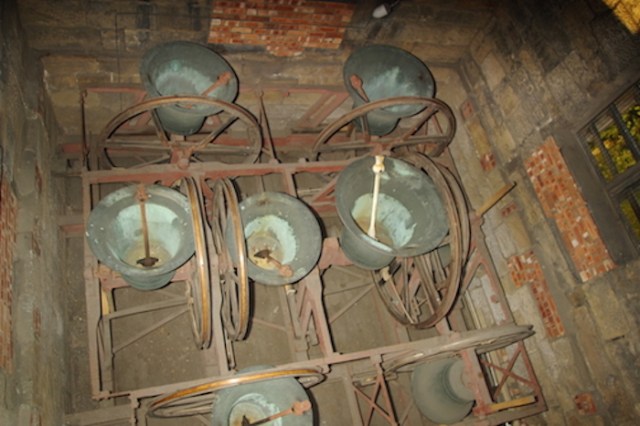
 Every Woman Dreams...