
 In the Roman Catholic church, “bell, book, and candle” came to be synonymous with “major excommunication,” or “anathema.” The phrase dates back to the 9th Century and has symbolic meaning. The “bell” came to mean the public character of the action taken by the church and its presiding bishop against the one to be excommunicated. The “book” represented the church’s authority over the person charged. The “candle” represented the hope of the ban eventually being lifted, through the person’s repentance and an open show of having changed his ways. The ceremony would be a very public one, and the bishop would write letters to other bishops to report the fact. In that manner, the person could not simply up and move himself into another “see,” the area of a bishop’s ecclesiastical jurisdiction.
In the traditional ceremony, the bishop and 12 priests would preside, each carrying a lighted candle. “The bishop, wearing violet vestments, then recited the formula, ending thus: ‘We separate him, together with his accomplices and abettors, from the precious body and blood of the Lord and from the society of all Christians; we exclude him from our holy mother the church in heaven and on earth; we declare him excommunicate and anathema; we judge him damned, with the devil and his angels and all the reprobate, to eternal fire until he shall recover himself from the toils of the devil and return to amendment and to penitence.’ Those present answered, ‘So be it!’ Then the bishop and the 12 priests extinguished their candles by dashing them to the ground, and, as a general rule, the ceremony then ended.” [Bell, Book, and Candle]
A form of ecclesiastical censure, what we call excommunication excludes a person from the communion of believers, the rites or sacraments of a church, and the rights of church membership. Sometimes the governing body goes so far as exclusion.
The Roman Catholic Church distinguishes between two kinds of excommunication. In the first kind, the person is termed to be “toleratus,” or tolerated. The second form is more severe. The person is termed “vitandus,” or one to be avoided. The person is announced by name in a public “shaming,” generally at the See, itself, but for the gravest of crimes, this could take place at the Vatican. The accused is barred from the church sacraments, as well as Christian burial. The Catholic Church has a specified list, set out in the Codex Juris Canonici, of actions that end in excommunication. In January 1983, Pope John Paul II revised the list to “include abortion, violation of the confidentiality of confession, absolution by a priest of one who has committed a sin with the priest’s assistance, profanation of the consecrated communion host, consecration of a bishop without Vatican approval, a physical attack on the pope, and heresy and ‘abandoning the faith.’
 “If excommunicated persons confess their sins and undergo penance, they are absolved; in some cases this absolution may come from any priest, but in many others it is reserved to the bishop or even to the Holy See alone, save in periculo mortis (‘in danger of death’). Excommunication should be distinguished from two related forms of censure, suspension and interdict interdict [a remedy granted by a magistrate on the sole basis of his authority, against a breach of civil law for which there is no stipulated remedy. Interdicts can be provisionary, opening the way for further action or final.] Suspension applies only to clergy and denies them some or all of their rights; interdict does not exclude a believer from the communion of the faithful but forbids certain sacraments and sacred offices, sometimes to an entire area, town, or region.” [Excommunication]
Various churches handle the situation differently. In fact, some churches do not use the term excommunication, preferring to speak of church discipline. Reformed churches vest the authority for exercising discipline and, if need be, carrying out excommunication, in the session, which consists of the minister and the elders. The 30th article of the Westminster Confession of 1646 specified ‘admonition, suspension from the sacrament of the Lord’s Supper for a season, and excommunication from the church’ as the proper steps of discipline. The Lutheran tradition has followed Martin Luther’s catechism in speaking of ‘the power of the keys’ and in defining excommunication as the denial of the communion to public and obstinate sinners; the clergy and the congregation together have the right to exercise such discipline. In the Anglican Church the bishops have the right to excommunicate, but this right is almost never exercised. Where a Congregational polity and the principle of ‘believers’ Baptism’ are observed, discipline is often very rigorous. In American denominations of the Free Church tradition the term ‘churching’ a sinner refers to excommunication, while in the Mennonite-Amish tradition excommunication also entails social ‘shunning.’ [Excommunication]
During the Georgian Era, in which most of my books occur, two types of excommunication existed: Lesser and greater.
Some changes were made in 1813, which allowed the ecclesiastical courts to send people to the secular courts for contempt, instead of excommunicating them. Also, offense of church rites and tithes were to be sent to the secular courts instead of through excommunication. In such cases, one simply deprives the offender of church services and sacraments–including marriage and a Christian burial. This is pronounced in those who are obstinate and disobedient, such as not appearing at church court when summoned, not submitting to a penance, or not obeying another injunction of the court.
Google Books ~ Ecclesiastical Law by Richard Burns
The Doctrine of the Trinity Act 1813 (53 Geo. III c. 160. sometimes called the Trinitarian Act 1812) was an Act of the Parliament of the United Kingdom. It amended the Blasphemy Act of 1697 in respect to it Trinitarian provisions. The Blasphemy Act applied only to those educated in or having made profession of the Christian religion. The Act, passed July 21, was also variously known as the Unitarian Relief Act (Trinity Act), The Unitarian Toleration Bill, and Mr William Smith’s Bill, after Whig politican William Smith. The Act granted toleration for Unitarian worship, as previously the Toleration Act 1689 had only granted toleration to those Protestant dissenters who accepted the Trinity. [Note! The Blasphemy Act was repealed in 1967, implicitly taking the Doctrine of the Trinity Act with it.]

The English Reports: Ecclesiastical, Admiralty, and Probate and Divorce https://books.google.com/books?id=fJRDAQAAMAAJ&pg=PA990& amp;lpg=PA990&dq=Lady+Ferrars +and+divorce&source=bl&ots= pU6j3dqWUT&sig=ACfU3U3sQ207 LvdC_GS82CI8Nav7GgjAlw&hl=en& amp;sa=X&ved=2ahUKEwiO8MHwze 7jAhVlmeAKHaTQBdMQ6AEwEnoECAgQAQ #v=onepage&q=Lady%20Ferrars%20 and%20divorce&f=false (link broken on purpose)
As one can see, there were several incidents brought for excommunication against gentlemen of the Realm. For example, Lady Ferrers went to the House of Lords to request a separation from her husband the earl. She told the HOL members that her husband had no fear of the church courts or of being excommunicated so she feared he would not allow her to live in peace apart from him.
========================================
Lady Vane v. Lord Vane. Mich. Term, 3rd Session, 1736.
Cheslyn returned citation and prayed an appearance, or that Lord Vane be pronounced in contempt. The judge pronounced Lord Vane in contempt, but reserved his pain, and continued the assignation to next Court
Lady Ferrers v. Laurence Lord Ferres. Mich. Term, 2nd Session, 1757.
Proclamation for Laurence Earl Ferrers, and he not appearing, Crespigny accused his contumacy and prayed him to be decreed excommunicate for not giving in his answers.
The assignation and certificate to next Court, upon which day Earl Ferrers being thrice called and not appearing Crespigny accused his contumacy, and the judge (Sir Edward Simpson) at his petition pronounced him contumacious for not giving in his answers, but reserved his pain and continued the certificate and assignation to next Court. From which the assignation was continued to the by-day, when the earl not appearing, Crespigny accused his contumacy, and porrected a schedule of excommunication, which the judges read and signed in the presence of Stevens, and continued the rest of the assignation to the first session of next term.
11 January, 1757-8. — A requisition to take Lord Ferrers’ oath for absolution at the petition of her proctor, and also for his answers.
Lady Ferrers v. Robert Lord Ferrers* 23 May, 1792.
Heseltine alleged that Lord Ferrers had not paid the alimony due to his client pursuant to the monition with which he had been personally served; and therefore prayed the Judge to decree Lord Ferrers excommunicate, and porrected a schedule of excommunication which he prayed the Judge to read and sign; but the Judge (Sir Wm. Scott) declined doing so, and continued the certificate to the next Court.
Note. — The certificate was continued for several Court-days; and the alimony was at length alleged to have been paid.
============================================================
The greater excommunication deprived the man of church services and published his name abroad so that no church members who wanted to stay in good standing or have any communication or business with him. The church members were not to patronize the man’s shop, if he were a tradesman. He was not to be invited to dine or to visit or to attend a ball. One was supposed to shun his society until he repented.
One could be excommunicated for refusing to have a child baptized or for refusing the sacraments of the Lord’s Supper, or for idolatry, usury, simony, or perjury. All of these were brought before the ecclesiastical courts. One could be excommunicated for fighting in church. Though the clergyman was to say the person was excommunicated right then and there, it was truly necessary to have the bishop endorse the sentence to have the desired effect. If a plaintiff is excommunicated, a defendant can tell the court so. He must do this before he answers the plaintiff. If he can prove the excommunication, he need not answer the plaintiff in court until the plaintiff has been admitted back into the good graces of the church.
- All excommunicated persons were not to step into the church.
- Any one who pronounced himself an atheist and spoke out against the church could be excommunicated.
- One who refused to pay his tithes or who shortchanged the rector and vicar of their tithes could be excommunicated, but after 1813, were likely to be sued in a secular court, rather than be brought before an ecclesiastical court.
- One guilty of defamation could be excommunicated.
- One could also be excommunicated for refusing to go to church.
- Those who socialize with a excommunicated person or trade with him could be excommunicated as well.
- An excommunicated person could not be a witness in a court.
- He could not be buried in church grounds. He could not have the burial service read over his body.
- If a person remains obstinate in refusing to answer or attend a church court, the church could ask the High Court of Chancery to send out a writ, which was to be answered in the Court of Kings’ bench. The writ was to be opened in King’s bench with all the justices present and handed to the sheriff to enforce. The Bench of Kings Court could put out notices to every sheriff and assize that the person is to be summoned, if not found at the usual address. If it takes all these people and writs, to find the person, he can be put into prison. He can be fined for not obeying. If arrested, he cannot have bail.

 There were a lot of cries of ‘”Not my Simon!” and “But Simon has blue eyes!” and, frankly, I found it all just as distasteful as the uproar over a black girl being cast to play Ariel.



 Characters discussing “dancing” and participating in “dance” occurs often in Austen’s story lines. From Pride and Prejudice, we find,
 From Persuasion, the reader finds these references to “dancing.”




 Introducing MR. DARCY’S BRIDEs…
 A Taste of Peanut Butter
 Elizabeth ran out from back stage, waved at the crowd, and confidently put her jar of American peanut butter on the island countertop. “Thank you all for the warm welcome and to the Pemberley Network for this extraordinary opportunity to compete. I must say that I love a challenge and shall look forward to giving you my best.” The crowd cheered as she took her place behind the first work station.
 A tall, skinny redhead sauntered in through the kitchen door, briefly stopping to give Elizabeth a rather demeaning look. With a flip of her head and a wave of dismissal, she faced the audience with an air of triumph in accepting her applause. Decisively placing her bag of shredded coconut next to Elizabeth’s peanut butter, she boasted, “For the record, I should like all of you to know that I will not be bested by an American. I shall triumph over all other contestants with integrity and honour.”
 “Our third contestant comes to us from the humble village of Meryton in Hertfordshire,” announced Gigi. “A stay-at-home mother with five children, please welcome Madame Martha Long.”
 Nervously peeking through the opening to the staging area, a rather portly man with thinning hair suddenly found his courage and walked straight to the counter where he placed his tray of assorted coffees alongside the other offerings. Feeling a little more at ease, he began to orate as if he were giving a sermon.


 In my novella, “Last Woman Standing,” which is to be a part of a Christmas anthology, the heroine’s father is a horticulturalist. He has an unusual monkey flower species called the “Calico” in the book. In case you are interested, here is what the website

 In case you want to know more of the book
 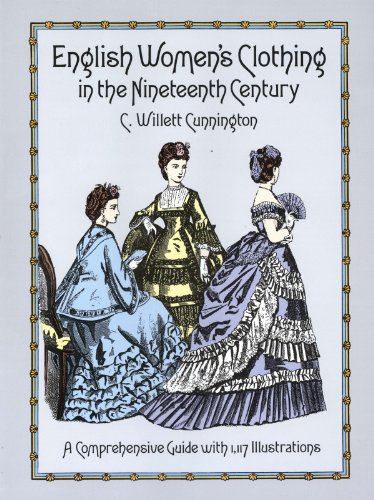 You might consider an investment in C. Willett Cunningham’s,
  I was recently looking for names and titles to use for characters in a list of extinct and abeyant peerages in an online copy of Debrett’s from the mid 1800s. Some of the titles in abeyance had been in that state since the 13th Century. It got me thinking as to whether the readers of Regency romances know the difference between dormant, extinct, or in abeyance as a plot point. Does it matter to the average reader whether the history is accurate or not?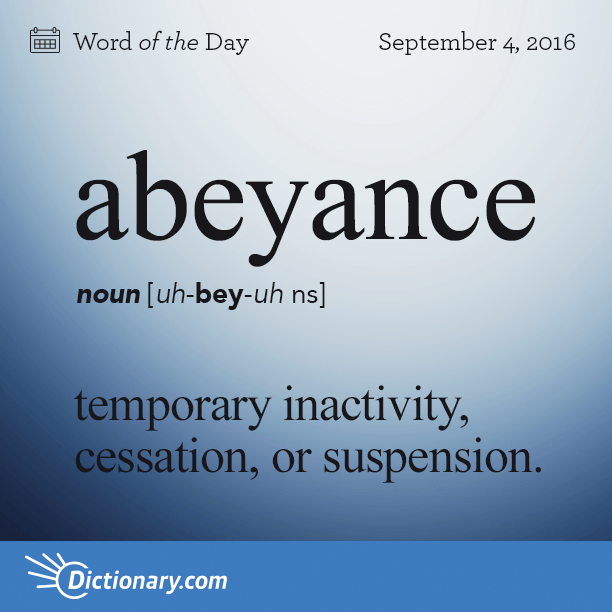


 Every Woman Dreams...
