

Today, I turn the ripe old age of 71. I am a VIRGO. Some of you know what that means. Some of you are about to learn.
Horoscope.com tells us these Virgo Facts
 Symbol: The Virgin
- Element: Earth
- Polarity: Negative
- Quality: Mutable
- Ruling Planet: Mercury
- Ruling House: Sixth
- Spirit Color: Silver
- Lucky Gem: Peridot
- Flower: Sunflower & marigold
- Top Love Matches: Cancer
- Key Traits: Graceful, organized, kind
- Motto: “My best can always be better.
Smart, sophisticated, and kind, Virgo gets the job done without complaining. Virgos are amazing friends, always there to lend a hand and also lend advice. Practical Virgos are incredibly adept at big picture thinking, and planning out their life, their vacations, and what they’re going to do today isn’t a drag it makes them feel in control and secure.
Virgos have a rich inner life, and can sometimes seem shy at first meeting. A Virgo will not spill secrets right away, and it is important to earn a Virgo’s trust. But once you do, that Virgo will be a friend for life.
 Virgos expect perfection from themselves, and they may project those high standards on the other people in their lives. A Virgo hates when someone lets him or her down, even if the indiscretion is minor and unavoidable, like a last-minute cancellation. Virgos never want to disappoint the people in their lives, so they may spread themselves too thin and put themselves last.
Intelligent and a lifelong learner, Virgos loves trying new things, reading books, and learning about the world. They will happily sign up for an adult-education course, and they consider an afternoon in bed with a book pretty much ideal. A Virgo prefers an evening with good friends to a huge party and values downtime just as much as socializing. This sign does not need to fill their calendar to be content.
According to Metro, these are some of the reasons being born in September is special.
“September is the best month to be born in. Fact. Birthdays are a highlight of the year for us all because it is the one day of the year when everyone has to be nice to us. We get to eat as much as possible, people sometimes sing a little jingle and fancy presents are involved. In fact, birthdays are even better than Christmas. But the only way to make a birthday even better is by having it in September.
“Perfect weather September babies don’t need to fret over the implications of the weather on their fierce birthday outfit when celebrating. The weather is in that blissful stage when it’s not so humid that within ten minutes your back gets sweaty, and it’s not so cold that you’ll freeze your fabulous birthday socks off. So basically werk it.
“Excellent timing The fact that summer is now over doesn’t even register on your radar, because you’re far too busy counting down until your birthday. Summertime sadness isn’t a thing for September babies, and in fact you’re a bit glad when it’s over because you know it’s time to dig out the birthday badge. Yay.
“So many outfit choices If your birthday lands in September you don’t have to deal with the trauma of squeezing yourself into a tiny dress, or a tight vest. Nope, instead you can bask in the greatness of autumn fashion, and wear the nicest jumper that you have.
“And food choices As the weather gets a little cooler it’s goodbye to salads and fruit juices, and hello to lovely stodgy food like cheese potato pie and roast dinners. May as well have a roast dinner for your birthday meal.
“Cool star signs September babies are either a Virgo or a Libra. So you’re basically the most sexiest star sign around (fact) or have a strong sense of justice. None of this boring water carrier nonsense over here.
“Birthday drinks Does anyone else have a special type of alcohol dedicated to their birthday month? Probably not. September is all about Jack Daniels, and because no-one is quite sure when he was actually born the whole month is dedicated to him. A perfect excuse to have several Jack Daniels drinks.

“So much fun ahead A September birthday is a great way to kick off an entire period of absolute fun. A birthday just before the return of the Pumpkin Spiced Latte from Starbucks followed by Halloween, Bonfire Night, the new TV season and Christmas? Yeah, go on then.
“Sapphire is your birthday stone Titanic pretty much cemented the fact that September babies are the best. Not convinced? Well does your birthday stone have an entire movie based around an expedition searching for a necklace known as ‘The Heart of the Ocean’? No, no it does not.
“Birthday getaways are cheaper We all know the best birthday present is a cheeky little getaway. And thanks to kids going back to school, you can be guaranteed to pick up a really good holiday bargain. Barcelona return flight for £50, when in August it was £200? Amazing. [It’s $1415 for a nonstop flight to London when I wrote this post on 18 July 2018. It is estimated to be $455 in mid September, with connecting flights.]
“New beginnings Everyone foolishly assumes that January is the month for a fresh start, but we all know that this is a lie. Have you ever started something in January and followed it through? Probably not. But in September you’ll actually stick to any new ventures you take up, like that new TV series that has just started, or your commitment to try everything on the new autumn Costa menu.
“Turns you into a smarty pants Apparently babies born in September have 25% more chance of getting into Oxford or Cambridge than a baby born in August. [Unfortunately, according to Facebook, which never shares Fake News, Virgos outnumber other signs of the Zodiac as serial killers. Perhaps people shouldn’t piss us off. Just saying!]
“Empty theme parks Going to a theme park is probably the best way to celebrate your birthday, and because all the annoying little kids are back at school, September babies can indulge in queue free fun. The lack of queues and perfect weather make for the most fun you can have in the daytime. And if you make enough of a scene about it being your birthday you can probably get in for free.
All this talk of birthdays got me thinking about the lack of birthday celebrations in Austen’s novels. It is quite disheartening to have others forget one’s birthday, but it was not so for Jane Austen and her family. We know Christmas had not the “glorious significance” as it does these days, but what of birthdays? Quite simply, as Anglicans, such humoring of a person, would have been frowned upon.
 Can you think of one person in Austen’s books who even mentions a birthday? The only one which springs to mind to me is Harriet Smith in “Emma.” Harriet speaks of hers and Robert Martin’s birthdays occurring within a fortnight, and those birthdays were separated only by one day.
As readers we know many of the characters’ ages. Lydia Bennet is but fifteen when we first meet her, but she is sixteen when she marries George Wickham. Marianne Dashwood is seventeen at the beginning of “Sense and Sensibility” and is nineteen when she marries Colonel Brandon. Fanny Price is a child when she first comes to “Mansfield Park”; yet, never once are her birthdays mentioned as a passing of time. Jane Fairfax is approaching one and twenty and the prospect of becoming a governess. Charlotte Lucas at seven and twenty has “become a burden to her family.” Elizabeth Elliot is nearly thirty and not married, and Anne Elliot is seven and twenty when Captain Wentworth returns to claim her. Catherine Morland turns eighteen just before Henry Tilney claims her as his wife. Even Elizabeth Bennet must have had a birthday somewhere in the year she had taken Mr. Darcy’s acquaintance. But when? There is no mention of her chronological aging, only her emotional aging. The closest we come to knowing something of Elizabeth’s age is when she admits to being twenty to Lady Catherine. But we do not know if she was nineteen when the book began and turned twenty some time between November when she dance with Mr. Darcy at the Netherfield Ball, or whether, like me, she is a September baby, turning one and twenty after she encounters Darcy again at Pemberley. Is such true for all of Austen’s characters? Austen wrote from her life experiences. If she did not “celebrate” such milestones, why would her characters? Tell me what you think. Am I being bizarre or is there some truth in this assumption?








 “The older Baronies descended to heiresses who, although they could not take their place in the assembly of the estates, conveyed to their husbands a presumptive right to receive a summons. Of the countless examples of this practice, which applied anciently to the earldoms also, etc., and although some royal act of summons, or creation or both was necessary to complete their status, the usage was not materially broken down until the system of creation with limitation to heirs male was established.”
  Sir Nicholas Harris Nicolas in his The Historic Peerage of England, Exhibiting Under Alphabetical Arrangement, the Origin, Descent, and Present State of Every Title of Peerage which Has Existed in This Country Since the Conquest; Being a New Edition of the Synopsis of the Peerage of England [London, John Murray (1857)], purports,


 Our modern concept of “obscenity” is heavily nestled in history—the history of Charles II, to be exact. Charles II was king of England, Scotland and Ireland. He was king of Scotland from 1649 until his deposition in 1651, and king of England, Scotland and Ireland from the restoration of the monarchy in 1660 until his death in February 1685. Before we discuss Charles II’s influence upon English drama, let us have a look at one of Charles II’s close associates, Sir Charles Sedley, 5th Baronet (March 1639 – 20 August 1701), an English noble, dramatist, and politician. Sedley is famous as a patron of literature in the Restoration period, and was the Francophile Lisideius of Dryden’s Essay of Dramatic Poesy. Sedley was reputed as a notorious rake and libertine, part of the “Merry Gang” gang of courtiers which included the Earl of Rochester and Lord Buckhurst.

 Along with Charles Sackville, 6th Earl of Dorset and 1st Earl of Middlesex (Lord Buckhurst), and Sir Thomas Ogle [some accounts say the third member of the group was John Wilmot, 2nd Earl of Rochester], Sedley spent a lovely afternoon drinking heavily in a tavern near Covent Garden on Bow Street. Young men being foolish, they began to boast of their sexual prowess. Sedley went so far as to claim that women chased after him because of his stamina in the bedroom. Inebriation drove them to a balcony overlooking a busy street, where they undressed and pantomimed a series of sexual acts. They finished off their performances by urinating in bottles and throwing said bottles at those who had gathered below to gawk at them in amazement. The crowd responded by throwing stones at the fools until the drunkards fled the scene. [Why is it, with this description, that I think of drunken frat parties or college spring break shenanigans?]
 Unlike today, self expression at the time was not considered unlawful, no matter how lascivious or pornographic, unless doing so was an act of sedition, heretical, or blasphemous. Sedley, therefore, was arrested, tried and convicted. He was made to pay “2000 mark, committed without bail for a week, and bound to his good behaviour for a year, on his confession of information against him, for shewing himself naked in a balcony, and throwing down bottles (pist in) vi et armis among the people in Covent Garden, contra pacem and to the scandal of the government.” [Nussbaum, Martha C., and Alison L. Lacroix, eds. Subversion and Sympathy: Gender, Law and the British Novel. New York, NY: Oxford University Press, 2013, page 70] In other words, Sedley was convicted for inciting a riot, not for public nudity and profanity.
  Collier’s work spoke out against what he considered to be profane in the productions of the era. He also addressed what would be called the impact on the moral degeneration of the populace as a whole. His works ranged from general attacks on the morality of Restoration theatre to very specific indictments of playwrights of the day. Collier argued that a venue as influential as the theatre—it was believed then that the theatre should be providing moral instruction—should not have content that is morally detrimental.


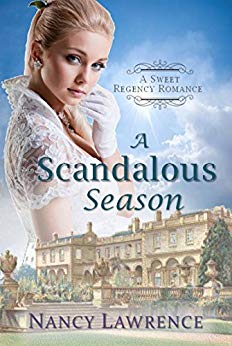
 Meet Nancy Lawrence:


 Laurel Ann at
 According to Nussbaum, Martha C., and Alison L. Lacroix, eds., of
 Marriage provided women with financial security. Henry Tilney in Northanger Abbey explains, “
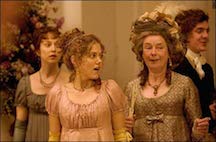 The ladies of Sense and Sensibility have this reality thrust upon them when Uncle Dashwood changes his will and leaves Norland to his grandnephew. In Uncle Dashwood’s thinking, this change will keep Norland in the Dashwood family. However, the four Dashwood ladies suddenly find themselves living in a modest cottage with an income of £500 annually. As such, they have no occasion for visits to London unless someone else assumes the expenses. Their social circle shrinks, and the opportunities to meet eligible suitors becomes nearly non-existent. With dowries of £1000 each, the Dashwood sisters are not likely to attract a man who will improve their lots.


 Every Woman Dreams...
