Rites of Mourning and the Recent Release of “Where There’s a FitzWILLiam Darcy, There’s a Way”

The mourning rites we customarily think of as being so strict during the Regency era, were actually those imposed by Queen Victoria after the death of her husband, Prince Albert. Victoria was known to wear black for many years and strict forms of comportment during the mourning period. The Georgian Era/Regency held its moments, especially during the country’s mourning for King George III and later, King George IV. But the mourning of individuals differed. 

The wealthy might have an open coffin in a drawing room where the deceased could be viewed by the family and others could pay their respects. More than likely, the poor permitted the body to decompose in one of the rooms and later the bones were buried. If a coffin was used, the poor were more likely to “rent” a coffin. The deceased was sewn into a wool shroud. The coffin had an open end and the shrouded body would be tipped into the grave and covered up with dirt. The coffin would be used again for another service. Funeral meats were served at the home of the deceased. 

From WordOrigins.org, we find: “Funeral baked meats” is famous from Hamlet and I had assumed baked meats referred to roast beef/venison/pork/suckling pig etc.

E. Cobham Brewer 1810–1897. Dictionary of Phrase and Fable. 1898. 
Baked Meat 

means meat-pie. “The funeral baked meats did coldly furnish forth the marriage table” (Hamlet); i.e. the hot meat-pies (venison pasties) served at the funeral and not eaten, were served cold at the marriage banquet.

“Presumably those pies and pasties were cooked in shortcrust pastry, and such meat (and veg) pies are still popular in the UK and the Antipodes, but not in the States where pies are fruit with a different kind of pastry I believe. (This is true of British fruit pies anyway.)”

Dictionary.com has:

bake⋅meat 
  /ˈbeɪkˌmit/ Show Spelled Pronunciation [beyk-meet] Show IPA 
–noun Obsolete. 
1.  pastry; pie. 
2.  cooked food, esp. a meat pie. 
Also, baked meat.

Origin: 
1350–1400; ME bake mete, OE bacen mete baked food. See bake, meat

This is reminiscent of the legend of the Sin-Eater. A sin-eater is a person who consumes a ritual meal in order to take on the sins of a person or household. The food was believed to absorb the sins of a recently deceased person, thus absolving the soul of the person. Sin-eaters, as a consequence, carried the sins of all people whose sins they had eaten. A local legend in Shropshire, England, concerns the grave of Richard Munslow, who died in 1906, [“Last ‘sin-eater’ to be celebrated with church service”BBC News. 19 September 2010.] said to be the last sin-eater of the area:

By eating bread and drinking ale, and by making a short speech at the graveside, the sin-eater took upon themselves the sins of the deceased”. The speech was written as: “I give easement and rest now to thee, dear man. Come not down the lanes or in our meadows. And for thy peace I pawn my own soul. Amen.

ngsinsof16.jpgThere is an episode of Rod Sterling’s 1970s Night Gallery (Season 2, Episode 59) entitled “The Sins of the Fathers,” and starred Richard Thomas of “The Waltons” fame as the sin-eater’s son and Geraldine Page as his mother. When I saw it years ago, it creeped me out and the images of it stayed with me all these years. Ethan Renoe tells us something about the episode: “The episode takes place in 13th century Wales, where famine is destroying the country. An old man has just died, so his family is looking for a sin-eater to come and relinquish the man of his sins. The belief is that this person, known as the sin-eater, comes and feasts on fine foods from the chest of the corpse and, once the meal is complete and the proper prayers are recited, the sins of the deceased enter into the soul of the sin-eater. He screams in agony and the family watching knows that the dead man is relieved of his trespasses.

“If you know anything about Rod Serling, creator of The Twilight Zone, you know that creepy and weird is just what lives inside his head. The episode follows a midget as he rides his pony 12 miles to fetch the sin-eater, who, it turns out, has also just died. His wife coerces their son to go instead and eat the sins of the dead man.” Obviously, if you read the title above, you know the ironic twist at the end.

NIGHT GALLERY #27
(Air date: February 23, 1972)

THE SINS OF THE FATHERS
Teleplay by Halsted Welles • Story by Christianna Brand
Directed by Jeannot Szwarc
Not for the squeamish is “The Sins of the Fathers,” based on the old Welsh custom of sin-eating: cleansing a man of his sins
by feasting in the presence of his corpse.

Geraldine Page as Mrs. Evans
Richard Thomas as Ian Evans
Michael Dunn as the Servant
Barbara Steele as the Widow Craighill
Cyril Delevanti as the First Mourner
Alan Napier as the Second Mourner
Terence Pushman as the Third Mourner
John Barclay as the Fourth Mourner

SinsFathersMarquee.jpg

In my story, Where There’s a FitzWILLiam Darcy, There’s a Way, Mr. Bennet has passed and the Bennet family is thrust into mourning. During the Regency, Mrs. Bennet would be expected to mourn her husband for a year, while the daughters were only required to mourn their father for six months. This meant wearing black or dark gray. After six months, Mrs. Bennet would be in half mourning, meaning she should could wear a combination of black and white. After that she could wear black, gray, or lavender until the year was complete. Many women continued to wear mourning long after their husbands had passed.

The “rules of propriety” said a year of mourning for a husband or wife, and six moths for a parent or one’s in-laws. Donna Hatch has a full breakdown of how long one must grieve for aunts, uncles, siblings, cousins, and the like on her Mourning Customs in Regency England. I know many of you will find the excerpts she quotes quite interesting. 

Geri Walton has a wonderful post entitled “Mourning in the Georgian Era,” in which she tells us: 

Mourning rules were also associated with families, relatives, and servants in the Georgian Era. In the Life of Harriot Stuart, written in 1750 by the English poet and authoress, Charlotte Lennox, she noted:

“[The] length of time devoted to mourning, and the apparent intensity with which one mourned, were determined to a large extent by the relationship that … existed between the two people and the ‘public knowledge of that relationship’ … mourning was usually only done for kindred, and … the formal rules that governed mourning, which specified an exact amount of time for each degree of kinship, ‘showed that servants were excluded from family.’”

**********************************

Where There’s a FitzWILLiam Darcy, There’s a Way 

ELIZABETH BENNET’s world has turned upon its head. Not only is her family about to be banished to the hedgerows after her father’s sudden death, but Mr. Darcy has appeared upon Longbourn’s threshold, not to renew his proposal, as she first feared, but, rather, to serve as Mr. Collins’s agent in taking an accounting of Longbourn’s “treasures” before her father’s cousin steals away all her memories of the place.

FITZWILLIAM DARCY certainly has no desire to encounter Elizabeth Bennet again so soon after her mordant refusal of his hand in marriage, but when his aunt, Lady Catherine de Bourgh, strikes a bargain in which her ladyship agrees to provide his Cousin Anne a London Season if Darcy will become Mr. Collins’s agent in Hertfordshire, Darcy accepts in hopes he can convince Miss Elizabeth to think better of him than she, obviously, does. Yet, how can he persuade the woman to recognize his inherent sense of honor, when his inventory of Longbourn’s entailed land and real properties announces the date she and her family will be homeless?


WTaFD eBook Cover-01

The eBook is available from these outlets: 

Kindle https://www.amazon.com/dp/B07H69N1P1/ref=sr_1_1?ie=UTF8&qid=1536421253&sr=8-1&keywords=Where+There%27s+a+Fitzwilliam+Darcy

Kobo https://www.kobo.com/us/en/ebook/where-there-s-a-fitzwilliam-darcy-there-s-a-way

Nook https://www.barnesandnoble.com/w/where-theres-a-fitzwilliam-darcy-theres-a-way-regina-jeffers/1129490646?ean=2940161708804

Excerpt from Chapter Ten of Where There’s a FitzWILLiam Darcy, There’s a Way. In this section, Darcy and Elizabeth have been inspecting the home farms as part of Darcy’s duty to Mr. Collins. They stop to enjoy a meal he brought for them. 

Darcy knew he could never permit such a future for her, but he could not speak promises without the bonds of an engagement, and having such at this time would drive her away, so he swallowed the words on the tip of his tongue. “I, too, find London difficult,” he said lamely.

Again, they sat in quiet contemplation for several minutes, each finishing the food on their plates. It amazed him how those silent moments between them no longer felt awkward, for there was an understood acceptance now.  At length, she returned their plates and silver to the basket. When finished, she turned to him to ask, “I know this will sound personal, and you must not respond, if doing so makes you uncomfortable, but after your father passed, did you ever walk into a room and believe you could feel his presence? Smell the soap he used or the cigar he had just smoked?”

“Often,” he admitted. “My sister claims she has been awakened by his touch on her shoulder, but I have not experienced such an encounter. However, I have repeatedly thought that if I turn my head, I would find George Darcy watching me go about my daily business to the estate.”

“Does such frighten you? This feeling, I mean?” she asked quietly.

Darcy sipped his wine before responding. “No. I find it comforting, especially when I am addressing a pressing or a difficult problem. My father always wished my success; therefore, why should I be frightened?” He took a longer drink of the wine before he asked, “Do you feel Mr. Bennet’s presence?”

She nodded in embarrassment. “More than I would have thought. Even when I was at Hunsford. The last night.” She brought her eyes to meet his. “The night of your—”

“Proposal,” he said softly.

“Yes.” Sunlight filtered through the leaves to slant across her beloved features. “It was as if, for the first time in many years, my father looked upon me with disapproval.”

“I suppose you realize that evening would have been the day of his passing.” A brief breathless moment slid between them, and Darcy reached across the blanket to cover her hand with his.

“I thought of little else upon my return to Longbourn,” she admitted.

He dared not ask what she considered to be the source of her father’s disdain. Did Mr. Bennet disapprove of Darcy’s proposal? Of her refusal? Or the fact his favorite daughter was not at Longbourn so Bennet could speak his farewells?”

“Have you seen him since?” he asked, at last.

“No, but I often feel him—his warm embrace—my nestling into his sturdy body.” With a sigh, she entwined their fingers. “Much as it was with us in the orchard.”

Darcy relished the ease with which she reached for him and the comfort she appeared to take in his touch, but he did not wish to replace her father in her life. He desired her affection.

“It is natural for you to seek the security Mr. Bennet provided your family,” he assured. “You were not at Longbourn when the incident happened, and your life has been full of the repercussions since. You must promise me you will permit yourself time to grieve.”

“Would grieving not mean I accept Mr. Bennet’s loss?” Tears formed in the corner of her eyes.

He caressed her cheek. “Not accepting will not alter what has occurred. It will only delay your healing.”

“I know you speak the truth,” she said on a sob. “But how do I make myself believe my father will never sit at his desk again and enjoy a book from his library?”

“Things will settle once you know the disposition of your father’s will. You are much of the same nature as I in that manner. You are strong and willing to face whatever life delivers to your door. It is the unknown that brings you anxiousness. Such is what has you questioning yourself.”

“Did you question yourself with your father’s passing?”

“I lost my mother when I was but thirteen. My father met his end some five years past. The loss of my mother was devastating. Lady Anne Darcy was my champion, and her passing left a gaping hole in the happiness we all had known at Pemberley. Yet, we knew for months that Lady Anne’s passing was inevitable. We had time to prepare ourselves for the void. But it was my father’s sudden collapse that frightened me to my core. I did not wish to accept that I was now not only Pemberley’s master, with all that entails, but I was also Georgiana’s guardian. It was quite daunting. In many ways, it still is.”

“How old is Miss Darcy?”

Darcy realized Elizabeth had yet to read his letter. “Barely sixteen. Georgiana is twelve years my junior. I treasure her and worry every day if I am serving her well.”

She smiled upon him. “Surely, you have never failed her.”

However, before he could respond, the sound of laughter from some place along the road leading to where they sat had them jerking apart.

“My sisters,” she mouthed.

He leaned close to whisper. “I will circle around to the orchard and pretend to have been examining it.”

She nodded her agreement and stood quickly. “What of the basket and blanket?

“I will think of something.” He gave her a gentle nudge in the direction of her sisters’ approach.

* * *

Elizabeth strolled casually from the woods to encounter her two youngest sisters. “Where are you about?”

Lydia and Kitty pulled up short. “We could ask the same of you,” Lydia said smartly.

Elizabeth gestured to the empty phaeton. “Mr. Darcy wished to walk through the orchard. To observe the condition of the trees or some such nonsense,” she said with what she hoped sounded of boredom.

“What were you doing in the woods?” Lydia taunted. “Please tell me you did not permit Mr. Darcy a kiss.”

“If you must know,” she said in hushed tones. “I was seeing to my personal needs while the gentleman was not about.”

“Were you not ashamed?” Kitty questioned.

Elizabeth gestured to them to keep their voices low. “It is not as if we were within a hundred yards of each other. Besides, sometimes urgency outweighs embarrassment. Now tell me where you were going.” She meant to change the subject before her sisters questioned her too closely.

“Mama said we could walk into Meryton,” Kitty responded before Lydia could warn Kitty with an elbow to their sister’s ribs.

“It is too soon,” Elizabeth protested. “It has been but twelve days since our father’s passing, even less since his burial. You cannot go about in society as if Mr. Bennet meant nothing to us.”

“But there is little to entertain us at Longbourn,” Lydia protested.

Elizabeth shook her head in denial. “It is not a time for entertainment. Surely you cannot mean to insist we go about our days as if nothing of importance has occurred in our lives. Our father is dead, and we all will be soon at the mercy of charitable relations.”

“But the militia means to go to Brighton soon,” Lydia reasoned. “What if Denny and Mr. Wickham and the others leave without our speaking our farewells?”

“Lydia, you must accept the fact we no longer hold the exalted position we once did in the neighborhood. Mr. Collins is now Longbourn’s master, and, within a month, we will be vacating our home forever. The militia has no place in our future.”

“But Mrs. Forster has asked me to go to Brighton with her. Harriet says we will have  a jolly good time,” Lydia argued.

Elizabeth said in strict tones. “Mrs. Forster’s invitation was extended prior to Mr. Bennet’s death. We are all in mourning. You cannot leave on a holiday.”

“But Mama said—”

“Mrs. Bennet had no right to make such promises. Even if we were not newly in mourning, neither Uncle Gardiner or Uncle Philips can afford to send you off on a holiday. We will each be farmed out to relatives or be expected to work for our keep. Our days of socializing and enjoying balls are over.” She glanced behind her to note Mr. Darcy’s approach from the far side of the orchard. “Now no more arguing, especially before Mr. Darcy,” she warned.

As he came near, Elizabeth said, “I am pleased you have returned, sir. If you will pardon me, I mean to walk back to Longbourn with my sisters.”

“I do not want—” Lydia began, but Elizabeth shot her sister a glare of fury.

“I said we would walk back together,” she hissed.

“Certainly,” Mr. Darcy was quick to say. “I will finish my examination of the orchard and then rejoin you at Longbourn.” He bowed to them. Thankfully, the gentleman understood her need to accompany her sisters’ return to the manor, and he protected her reputation. Elizabeth was determined not to permit her sisters to continue to embarrass the family and their father’s good name.


Posted in Austen Authors, book excerpts, book release, books, British history, eBooks, estates, Georgian England, Georgian Era, historical fiction, history, Jane Austen, Living in the Regency, Living in the UK, Pride and Prejudice, reading, research, romance, tradtions, Vagary, Wales, word origins, writing | Tagged , , , , , , , , , , , , | 4 Comments

The Tale of Richard Bertie Continues, Part III


800px-Catherine,_Duchess_of_Suffolk_by_Hans_Holbein_the_Younger

Catherine, Duchess of Suffolk (Wikipedia)

Briefly, Richard Bertie (ca. 1517 – 9 April 1582) was an English landowner and religious evangelical. He was the second husband of Catherine Willoughby, 12th Baroness Willoughby de Eresby and Duchess Dowager of Suffolk. As his wife was a baroness in her own right, Bertie made claims to be styled as “baron.” The claim was denied, but it was appealed. In the opinion of Bertie and his wife, her right to her father’s Barony held no relevance to his claim to bear the title in her right, but was rather the cause of his claim being initiated. They based this appeal on the grounds that her right to the Barony had been upheld against her uncle’s claim against it. Moreover, her uncle’s son was refused the title of Willoughby of Eresby and assigned the title of Willoughby of Parham in 1547. Therefore, why could Bertie not bear the title of Lord Willoughby and Eresby?

William_Cecil,_1st_Baron_Burghley_from_NPG_(2)

William Cecil, Lord Burghley ~ via Wikipedia

Two years after the first ruling against them, Bertie was granted a second hearing to make his claim. In a letter dated 14 April 1572, Bertie writes to William Cecil, Lord Burghley, Elizabeth I’s chief advisor throughout most of her reign. The draft of that letter is among Burghley’s papers. In the letter, Bertie included a list of other men who had made claim in right of their wives and who enjoyed the dignity of “baron” and who had been called to Parliament in every King’s government since the Conquest. 

That list included  one “John Talbot, a Norman, who came to England with William the Conqueror and married Matilda daughter of Richard, Lord Talbot of Longhope, in whose right the sayde John was Lord Talbot of Longhope, of whom the Earl of Shrewsbury is descended.” (Peerage and Pedigree, Study in Peerage Law and Family History)

The Domesday book states that during the time of William the Conqueror, Longhope belonged to William the son of Baderon. Longhope descended through William’s line, who were called the Lords of Monmouth. Eventually, the line ran out of male heirs. Some 200+ years after the Norman Conquest, Longhope passed into the hands of a Talbot. 

The list also included Josselyne (Jocelin), son of the duke of Brabant, who married Agnew, the daughter and heir to William Lord Percy. Josselyne was styled as Lord Percy. The earl of Northumberland descends from this line. (Collins, Arthur. The Peerage of England: Containing a Genealogical and Historical Account of All the Peers of That Kingdom. Vol. VI of VIII)

The complete list was sent to Burghley in April 1572. Bertie pressed for an agreement on two points: the right of an heiress to inherit a barony and to transmit said right to her heirs. The Berties won on this account. The the claim of Richard Bertie to hold his wife’s title and to be summoned to Parliament in her right had proven obsolescent, falling out of use and unable to be transferred from one situation to another. 

Many experts believe that Richard Bertie’s petition was ignored because it came at a time when people argued over the legality of such claims. How far was Bertie’s claim valid? It was determined that “the writ of summons to his son (in his own lifetime) on his mother’s death (1580) was, in this, an epoch-marking event, being absolutely fatal to the view that a barony could be held by ‘the curtesy of England.’

“The lawyers’ perplexity is seen in the report on Bertie’s claim by the Attorney General and Solicitor General, to whom Burghley had referred it:—

‘We have conferred with four of the judges that be now in London concerning Mr. Bertie’s case, and they be all of opinion that he cannot challenge to have the Barony and the Title thereof in right of his wife, or else as tenant by the courtesy after her decease. We did make doubt whether her Majesty might not do. But because the course if very rare, they desired to have conference with the rest of the judges, when they shall come to town, etc.” (Peerage and Pedigree, Study in Peerage Law and Family History)

Posted in British history, England, estates, heraldry, Inheritance, marriage, marriage customs, peerage, primogenture, research, titles of aristocracy | Tagged , , , , , , , | Comments Off on The Tale of Richard Bertie Continues, Part III

That’s Right, It’s a Post about Privies, a Guest Post from Sophia Turner

This post originally appeared on Austen Authors on 6 July 2018.

It’s much more fun to view the Regency era through rose-colored historical glasses, focusing on the flattering empire-waisted dresses, pretty bonnets, beautiful countryside, well-stocked elegant country house libraries, and of course the handsome men wearing handsome clothes. Better to ignore the position of women (as the property of either their fathers or their husbands), the fact that most of us would have been scrubbing away in the kitchen rather than sitting in the drawing-room, the lack of good medical or dental care, and of course all of those other less-savory details, am I right?

But in this post, I’m going to go there anyway! The topic of where to, um, go, came up in the comments of one of my posts a while back, and as I’ve captured quite a few photos over the years, I decided for this month’s installment to go digging and show the various ways people went to the bathroom/restroom/toilet/water closet (the difference in terminology for this between the US and the UK never ceases to amuse me) back then.

In medieval times, the place for this would have been the garderobe, ironically a bit closer to what we have today than what followed it. This was a portion of a castle that hung over the side, and had a seat (or very often seats) with a hole in them. You, uh, went, and it would land on the ground below, where it was some unfortunate soul’s responsibility to periodically clear it away.

A garderobe at the medieval portion of Dover Castle.

For those in the Regency era still living in castles that were more than just castle in name only, these might still have been within old portions of the building, but they wouldn’t have been in use. They’d been replaced by the outdoor privy, which might be more genteelly referred to as a cabinet d’aisance, and the chamber pot. Outdoor toilets don’t tend to be something that survives from historic houses – perhaps, again, because they detract from the romance of history, and are less likely to be saved. But I have run across a few in my travels. See if you can spot this one at Mompesson House in Salisbury:

The garden at Mompesson House.

Don’t see it? We’ll get a little closer…

Outdoor privy at Mompesson House.
Presumably they’ve omitted the hole in the restoration to avoid some prankster trying to use it, or this is a hinged cover; I can’t recall.

Here’s another, at Mount Vernon in Virginia, also located within the garden. It’s a farther hike from the house than the one at Mompesson House, and shows that the old communal medieval setup has not at all gone away:

The privy at Mount Vernon.
Communal privy at Mount Vernon.

This raises a lot of questions for me, particularly: just who would have been in here together? I have to assume that the sexes would not mix, and so presumably one would wait if someone of the opposite sex was in there. But is my assumption correct? Caricatures from the era do seem to bear it out.

I have to think, as well, that women would not have gone out there alone. Consider the Netherfield Ball, for example. All of those ladies and gentlemen were there for many hours, and I have to think most of them would have needed a visit outdoors at some point. I think the ladies would all have found at least one other person to go with, and they would then have gone in together if it was communal. For a lady, she could only have gone alone at risk to her reputation, to be out in the gardens in the dark by herself.

There was, of course, that other indoor option, the chamber pot (which I’ve once seen referred to as a voilder, and have picked up for use in my writing because, again…romance; who wants to be reminded of the existence of chamber pots in a romance novel?). Many historic houses show these in a sort of traditionally expected location under the bed, but in truth they were often cleverly hidden away in public rooms:

Hidden chamber pot in a parlour at Number One Royal Crescent in Bath.
Close up of the hidden chamber pot in Number One Royal Crescent.

The guide in this room indicated that anyone would have just used this chamber pot as needed when the family was sitting around in the morning, which I am a bit dubious of, both because I heard a few other inaccuracies going through the house, and because it doesn’t quite jive with what I’ve heard and read about elsewhere. Perhaps in the time of wider Georgian skirts this could have been done discreetly, but during that era the more purpose-made bourdaloue would have been more likely to be used.

Based on everything else I’ve seen and heard, it’s more likely that use of the chamber pot was also not done in a mixed-sex environment. The story that comes up most frequently is that of the gentlemen making use of the chamber pot within the dining room after the ladies had departed. You can see evidence of this in the Robert Adam-designed dining-room at Saltram:

Dining-room at Saltram.
Hidden away in a beautiful cabinet like this one…
…are a pair of chamber pots.

The separation of the sexes after dining was something England was famous for during this time, and nobody quite knew how it had come about. One of the better explanations I’ve read is that it started when tea-drinking became popular, and began with the ladies departing to the drawing-room to prepare the tea. The gentlemen would at first join them when it was ready, but before long they got to talking about politics and drinking port and brandy for longer and longer periods of time, therefore delaying the tea preparation as well.

Yet I wonder if the cause was even simpler…did the sexes separate so they could each relieve themselves in these hidden chamber pots after a long dinner of eating and drinking?

They are also to be found within bedrooms, yet again hidden away in bedside tables or even stairs:

Bedside table with built-in pot at Number One Royal Crescent.
Bedstairs with a built-in pot, at Chatsworth.
Here’s a rather pretty one, along with a basin, hidden away in a little closet in Jane and Cassandra Austen’s bedroom at Chawton.
This chamber pot in a bedroom at Saltram was given a lid and matched with the decor, rather than being hidden away.
Poorer households, such as this one recreated at Buckler’s Hard, would also use chamber pots, although they made no attempt to hide them. In Edinburgh’s medieval skyscrapers, people of the city were infamous for crying “garde loo!” and dumping them into the street.

Round about now, you might be wondering about the water closet. They had been invented for centuries by now – indeed, Queen Elizabeth I had one – and Joseph Bramah had obtained a patent in 1778 for what might be called the first fully functional flush toilet.

Water closet at George III’s Kew Palace.

Yet while some great houses installed them, they were by no means commonplace. Labor was cheap, and it was easy enough to pay servants to carry the chamber pots downstairs and dispose of them. Indeed the biggest development in great houses related to this was to build separate stairs so the wealthy did not need to meet servants carrying their nocturnal effusions on the stairs, rather than the widespread installation of water closets.

Part of the reason water closets didn’t catch on was the lack of more modern plumbing – without sufficient plumbing to thoroughly carry away the waste they could be no more convenient than a chamber pot. Still, in the Regency era, when you consider the comfort of seating and the lack of residual, err, waste, I think the people who actually had it best were naval captains. In the great cabin of any naval ship of size, there is what’s called a quarter gallery, a toilet very similar to the old medieval garderobes, except that it emptied into the water (something we now, of course, know to be an environmental problem). With an unlimited supply of seawater to regularly flush it out, I think it probably would have been my choice for that time:

Quarter gallery in HMS Victory.
Officers’ “seat of ease” on HMS Victory.
Seamen did not have it quite so good: there are two seats in that box-looking structure on the left, the “head.”

It was ultimately the need for sanitation in the Victorian era that led to the spread of the water closet; the rise of cholera (which may be linked to the year without a summer in 1816; more on that in future posts) meant that the olden days of dumping waste in streets and rivers could not continue. London was by necessity a pioneer in sanitation and plumbing, and English potter Thomas William Twyford invented the single piece ceramic toilet. Thomas Crapper commonly gets credit for inventing the flush toilet, but he was merely a major manufacturer.

An old Crapper toilet, in underground Seattle.

Interestingly, many water closets continued to look much like the old medieval garderobe, or that naval quarter gallery:

The water closet at Agatha Christie’s Georgian house, Greenway.

And the chamber pot took a while to completely go away! Here is one in Winston Churchill’s bedroom, at the World War II Cabinet War Rooms:

Winston Churchill’s bedroom in the underground Cabinet War Rooms.

I hope you’ve enjoyed this look at one VERY behind-the-scenes aspect that would have been going on in Jane Austen’s novels. Now let us return to those rose-colored glasses, and be grateful for our lovely modern flush toilets!                                           

sign saying, "Now wash your hands"


91LI0634PlL._UX250_ Meet Sophie Turner: 

Sophie Turner worked as an online editor before delving even more fully into the tech world. Writing, researching the Regency era, and occasionally dreaming about living in Britain are her escapes from her day job.

She was afraid of long series until she ventured upon Patrick O’Brian’s 20-book Aubrey-Maturin masterpiece, something she might have repeated five times through. Alas, the Constant Love series is only planned to be seven books right now.

61ob969WyHL.jpg 51KFArRyPZL._SY346_.jpg 51nyDo79Y5L._SY346_.jpg 51Yk4JK5e3L._SY346_.jpg


Posted in architecture, British history, buildings and structures, Georgian England, Georgian Era, Guest Post, inventions, real life tales, writing | Tagged , , , , , , , , , , , , , | 2 Comments

Winners from the “Where There’s a FitzWILLiam Darcy, There’s a Way” Giveaways

congratulations(4).gif

These are the winners of an eBook of Where There’s a FitzWILLiam Darcy, There’s a Way. All eBooks have been ordered and claimed.  The list includes those from Austen Authors, More Agreeably Engaged, My Jane Austen Book Club, and those from this blog. They are listed alphabetically. 

Kate B.

Butterflykel

Buturot

Mary Campbell

Charlene Capodice

darcybennett

Eva Edmonds

Delores Erwin 

Ginna Hoppes 

Sahadha Kadirbaks

katzanne

lynnchar

Daniela Q

Katherine Voroshuk

Amy Zelenka

WTaFD eBook Cover-01


Posted in book release, eBooks, giveaway, Uncategorized | Tagged , , | 1 Comment

Mean Girls in Jane Austen’s Books, a Guest Post from Bronwen Chisholm

This post was originally posted on Austen Authors on 7 July 2018.

Most of my readers are not aware that my husband and I have a non-profit organization for teens. It is a long story how it all came about and that is not the focus of this blog, so I will just put a link to our website here and an article that was written about it and move on. (www.teenenrichment.org, https://www.fredericksburg.com/discover/difference-maker-spotsylvania-s-donald-robinson-works-overtime-to-help/article_e499c4c5-333f-5ab3-8a98-f60bf4ec39a0.html)

The reason I mentioned it now is that being part of this organization brought me into contact with many talented young writers who were searching for a writing group where they could learn and share their talents. Through a series of events that I now realize God set in motion a decade earlier, I became the coordinator of the Riverside Young Writers. The blessings of working with these kids and bringing in speakers to open their eyes to possibilities have been overwhelming.

One of these beautiful, bright young ladies was invited by one of our speakers to write a blog and she chose to discuss The Evolution of Strong Female Characters: From the Classics to Today’s Young Adult Fiction (https://klkranes.com/2018/04/15/the-evolution-of-strong-female-characters-from-the-classics-to-todays-young-adult-fiction-guest-blogger-cara-hadden/). I cannot tell you how tickled I was when she focused a good portion of her blog on Jane Austen, listing her as one of our “Founding Writer Mothers”.

With that in mind, a recent discussion about feminism with my Darcy-in-training son, and watching some of the teen dramas with my fifteen year old Elizabeth-like daughter made me start thinking about women, real and fictional, and how we treat each other. (As my son pointed out, men don’t “slut shame”; they have no problems with a girl who is easy.)

Though many things have changed since I was in high school, one always seems to remain the same: the way girls treat each other. When I first started playing with this topic, I immediately zeroed in on Caroline Bingley of Pride and Prejudice, Fanny Dashwood of Sense and Sensibility, and Mrs. Elton of Emma.

Caroline Bingley and Mr. Darcy, Pride and Prejudice, 1995
Mrs. Elton, Sense and Sensibility, 2009
Mrs. Dashwood and Fanny Dashwood, Sense and Sensibility, 1995

Who could deny that these “ladies” mastered the ability to undercut any woman who dared to consider drawing the attention of one of their gentlemen, whether brother or imagined suitor? But when I sat down with a list of characters from each book, I found myself having difficulty putting the women in categories of guilty vs. innocent of affronts to women-kind. Sure there is Jane Bennet who will only find the good in others, but even Lizzy admits uncharitable thoughts regarding Mary King following Lydia’s description of her as “a nasty little freckled thing”.

Elizabeth Bennet, Pride and Prejudice, 1995

“Elizabeth was shocked to think that, however incapable of such coarseness of expression herself, the coarseness of the sentiment was little other than her own breast had harboured and fancied liberal!” (Pride and Prejudice, Chapter 39)


Mr. Willoughby and Marianne Dashwood, Sense and Sensibility, 1995

It does not surprise us when Marianne Dashwood displays an “invariable coldness of her behaviour towards (the Steele sisters), which checked every endeavour at intimacy on their side” (Sense and Sensibility, Chapter 22), but would we want our daughters to treat others in this manner?

Though I rarely admit it in public, and will probably hear about it for saying it here, I am not a fan of Emma. The only adaptation that I watch on a regular basis is Clueless.

Emma, 1996, and Cher from Clueless, 1995

In reading passages to find examples for this blog, I zeroed in on why Emma has always been a struggle for me. I don’t like her. Emma Woodhouse is the queen bee, the Regina George (Mean Girls), the Heather Chandler (Heathers).

Rachel McAdams as Regina George in Mean Girls, 2004
Poster from Heathers the Musical based on the 1988 movie, Heathers

She is the one who thinks it is her place to decide what and who all the other women around her should be. Okay, I will allow that she is not as cruel as some of the examples I have mentioned, but she is no saint either. Her own creator had this to say of her:

“The real evils, indeed, of Emma’s situation were the power of having rather too much her own way, and a disposition to think a little too well of herself; these were the disadvantages which threatened alloy to her many enjoyments. The danger, however, was at present so unperceived, that they did not by any means rank as misfortunes with her.” (Emma, Chapter 1)

And Mr. Knightley seemed to always be correcting her, reminding her to think of others.

“Emma, I must once more speak to you as I have been used to do: a privilege rather endured than allowed, perhaps, but I must still use it. I cannot see you acting wrong, without a remonstrance. How could you be so unfeeling to Miss Bates? How could you be so insolent in your wit to a woman of her character, age, and situation?—Emma, I had not thought it possible.” (Emma, Chapter 7)

In attempting to draw this blog to a close, I was at a loss. Mean girls will always exist, sometimes within ourselves. I suppose that all we can do is try to pay more attention to what we say and how we say it, and to encourage our daughters to be more accepting of each other. Jane Bennet might sound naïve at times and be a bit too trusting, but perhaps a page from her book is the best place to end.

“I (Jane) would not wish to be hasty in censuring anyone; but I always speak what I think.”

“I know you do; and it is that which makes the wonder. With your good sense, to be so honestly blind to the follies and nonsense of others! Affectation of candour is common enough—one meets with it everywhere. But to be candid without ostentation or design—to take the good of everybody’s character and make it still better, and say nothing of the bad—belongs to you alone.” (Pride and Prejudice, Chapter 4)

Jane an Elizabeth Bennet, Pride and Prejudice, 1995


Who is your favorite Austen mean girl?


711-vO68COL._UX250_.jpgMeet Bronwen Chisholm: 

Bronwen Chisholm began her writing career working on Women’s Fiction and Suspense Romance, but finally became a published author with her Pride and Prejudice Alternatives. She takes great pleasure in searching for potential “plot twists” and finding the way back to a happy ending. Her current work is told entirely from Georgiana Darcy’s point of view and should be released by late summer, 2016. 

Her love of writing has led her to several writing groups, and she is currently serving as the Vice President of The Riverside Writers.

For more information, visit her at http://www.bronwenchisholm.wordpress.com

41+558MG4XL.jpg 41cvk-JwvnL.jpg 51WZHeT5OBL._SY346_.jpg 514Uj-8GbRL._SX331_BO1,204,203,200_.jpg 41hiOT2qeNL._SY346_

Posted in Austen Authors, Guest Post, Jane Austen, Mansfield Park, Pride and Prejudice, reading, reading habits, Vagary, writing | Tagged , , , , , , , , , , , | Comments Off on Mean Girls in Jane Austen’s Books, a Guest Post from Bronwen Chisholm

Richard Bertie’s Attempt to Become Lord Willoughby d’Eresby ~ Part II

This post is a continuation of the one from September 3, which introduced my readers to Richard Bertie and his unsuccessful attempt to become Lord Willoughby d’Eresby. 

800px-Catherine,_Duchess_of_Suffolk_by_Hans_Holbein_the_Younger

Catherine, Duchess of Suffolk (Wikipedia)

Richard Bertie married the widowed Duchess of Suffolk and had issue by her, a son named Peregrine. Bertie made a claim to the Barony of Willoughby, for his wife was the 12th Baroness Willoughby in addition to her title as duchess. Bertie’s claim considered the two Baronies of Willoughby and Eresby.  He did so in right of his wife, Catherine, as tenant of the curtesy. The claim was referred to Queen Elizabeth I, who turned it over to Lord Burghley and two other Commissioners. There was an additional claim to the same dignity by Peregrine Bertie, the son of the claimant. The commissioners made their report in favor of the son, who was accordingly admitted to the dignity, in the lifetime of his father. (Cruise, William, Esq. A Treatise on the Origin and Nature of Titles of Honor: All the Cases of Peerage, Together With the Mode of Proceedings in Claims of This Kind, London, Joseph Butterworth and Son, 1823.)

But there was more going on than a simple proceeding. For example, Henry VIII declared he would not permit a female heir to provide him his barons. Two questions were to be addressed in this claim: (1) Could a female could inherit as a right and later transmit said peerage to her heirs, a Barony in fee. (2) If she had that privilege, was her husband entitled to the barony or to style himself as a baron in her right?

In reality, little of this case was settled until 1674 when “the judges expressed an opinion that Gervas Clifton (who was summoned to Parliament in the sixth year in the reign of James I) was by virtue of the writ of summons and sitting in Parliament ‘a Peer and Baron of this kingdom, and his blood thereby ennobled,’ and that ‘his honour descended from him to Katherine, his sole daughter and heir and successively after several descents to the petitioner,’ who was his great-granddaughter. The House of Lords thereupon resolved ‘that the claimant Katherine O’Brien had right to the Barony of Clifton. Even this was a decision upon a particular case than an enunciation of a general principle. It appears, however, to have been a sufficient precedence for all subsequent cases in which the circumstances were the same, but to have left open the question of the period at which a summons to Parliament following by a sitting first operated to create an hereditary barony.” (Pike, Luke Owen. A Constitutional History of the House of Lords, from Original Sources, Burt Franklin, New York, first published in London, 1894, page 131.)

In his case, Bertie argued with another precedence. His wife Catherine was named the heir to the dukedom. At her father’s death, Catherine became the ward the King, who on 1 March 1528, sold it to his brother-in-law, Charles Brandon, 1st Duke of Suffolk. Catherine was reportedly betrothed to Suffolk’s son by his third wife, Mary Tudor. Mary Tudor died at Westhorpe on 25 June 1433, and six weeks later at the ages of 49 for Suffolk and 14 for Catherine, the pair wed. [Henry Brandon, 1st Earl of Lincoln, Suffolk’s son died in 1534. Although Suffolk was forty-nine and Catherine only fourteen, the marriage was a successful one. The Willoughby inheritance was not fully settled until the reign of Queen Elizabeth I, but Suffolk was able to force Sir Christopher Willoughby to relinquish possession of some of the contested Willoughby estates, and Suffolk eventually became the greatest magnate in Lincolnshire. Suffolk and Catherine had two sons, Henry Brandon, 2nd Duke of Suffolk and Charles Brandon, 3rd. Duke of Suffolk.

Lord Brandon succeeded his father as 2nd Duke of Suffolk on 22 August 1545. He and his younger brother were both minors and continued their education by going up to St John’s College, Cambridge. During an epidemic of the sweating sickness, the two youths died, Suffolk first and his younger brother about an hour later. They died at the Bishop of Lincoln’s Palace in the village of Buckden, near Huntingdon, where they had fled in an attempt to escape the epidemic.

More importantly, to Bertie’s case, Suffolk had influenced a decision in favor of his wife, who as her father’s daughter, had usurped her father’s younger brother, the male heir, after Lord Willoughby’s death in 1525. Bertie claimed that Catherine’s right had been established against her uncle’s claim, and that said uncle’s son was denied the title of Willoughby of Eresby (and assigned that of Willoughby of Parham) when he was raised to the peerage in 1547. 

More than two years passed before Bertie could secure a hearing on the matter. On 14 April 1572, Bertie writes to Lord Burghley, “I send to your Lordship by this bearer my servant (1) the bill for confirmation, having used therein the advice of Mr. Attorney General. I send also (2) a collection of such as have in the right of their wives enjoyed titles of honour; though you required but a few names, yet, I send many; … And, to prove the use of it in the Barony of Willoughby, I send (3) two Court Rolls where you shall find it in the title etc.” (British History Online. Calendar of the Cecil Papers in Hatfield House: Volume 15, 1603. Originally published by His Majesty’s Stationery Office, London, 1930.)

The two questions presented above were decided in opposition. Beyond dispute, it was decided that not only could a female inherit a barony, but she could transmit said barony to her heirs. However, the claim of the husband to right of her title was not upheld. The thing we must remember about is Bertie’s claim came about when there was little precedent on the books to support his claim. It was questionable then whether Richard Bertie’s claim was valid. Much debate on the issue occurred. The writ of summons to his son Peregrine, especially occurring during Richard’s own lifetime, was a landmark decision, one that was fatal to the view that a barony could be held by “the curtsey of England.” In other words, Richard Bertie could not succeed to the Barony of Willoughby d’Eresby at the same time as his son was named to that peerage. There could not be two Barons of Willoughby operating at the same time. 

Posted in Act of Parliament, British history, Elizabeth I, estates, Inheritance, kings and queens, marriage, peerage, research, titles of aristocracy | Tagged , , , , , , , , , , , | Comments Off on Richard Bertie’s Attempt to Become Lord Willoughby d’Eresby ~ Part II

Not Celebrating Birthdays with Jane Austen


Today, I turn the ripe old age of 71. I am a VIRGO. Some of you know what that means. Some of you are about to learn. 

Horoscope.com tells us these Virgo Facts

  • Symbol:   The Virgin
  • Element:   Earth
  • Polarity:   Negative
  • Quality:   Mutable
  • Ruling Planet:   Mercury
  • Ruling House:   Sixth
  • Spirit Color:   Silver
  • Lucky Gem:   Peridot
  • Flower:   Sunflower & marigold
  • Top Love Matches: Cancer   
  • Key Traits:   Graceful, organized, kind
  • Motto:   “My best can always be better.

Smart, sophisticated, and kind, Virgo gets the job done without complaining. Virgos are amazing friends, always there to lend a hand and also lend advice. Practical Virgos are incredibly adept at big picture thinking, and planning out their life, their vacations, and what they’re going to do today isn’t a drag it makes them feel in control and secure.

Virgos have a rich inner life, and can sometimes seem shy at first meeting. A Virgo will not spill secrets right away, and it is important to earn a Virgo’s trust. But once you do, that Virgo will be a friend for life. 

Virgos expect perfection from themselves, and they may project those high standards on the other people in their lives. A Virgo hates when someone lets him or her down, even if the indiscretion is minor and unavoidable, like a last-minute cancellation. Virgos never want to disappoint the people in their lives, so they may spread themselves too thin and put themselves last.

Intelligent and a lifelong learner, Virgos loves trying new things, reading books, and learning about the world. They will happily sign up for an adult-education course, and they consider an afternoon in bed with a book pretty much ideal. A Virgo prefers an evening with good friends to a huge party and values downtime just as much as socializing. This sign does not need to fill their calendar to be content.

According to Metro, these are some of the reasons being born in September is special. 

September is the best month to be born in. Fact. Birthdays are a highlight of the year for us all because it is the one day of the year when everyone has to be nice to us. We get to eat as much as possible, people sometimes sing a little jingle and fancy presents are involved. In fact, birthdays are even better than Christmas. But the only way to make a birthday even better is by having it in September.

“Perfect weather  September babies don’t need to fret over the implications of the weather on their fierce birthday outfit when celebrating. The weather is in that blissful stage when it’s not so humid that within ten minutes your back gets sweaty, and it’s not so cold that you’ll freeze your fabulous birthday socks off. So basically werk it.

“Excellent timing The fact that summer is now over doesn’t even register on your radar, because you’re far too busy counting down until your birthday. Summertime sadness isn’t a thing for September babies, and in fact you’re a bit glad when it’s over because you know it’s time to dig out the birthday badge. Yay.

“So many outfit choices If your birthday lands in September you don’t have to deal with the trauma of squeezing yourself into a tiny dress, or a tight vest. Nope, instead you can bask in the greatness of autumn fashion, and wear the nicest jumper that you have.

And food choices As the weather gets a little cooler it’s goodbye to salads and fruit juices, and hello to lovely stodgy food like cheese potato pie and roast dinners. May as well have a roast dinner for your birthday meal.

Cool star signs  September babies are either a Virgo or a Libra. So you’re basically the most sexiest star sign around (fact) or have a strong sense of justice. None of this boring water carrier nonsense over here.

“Birthday drinks Does anyone else have a special type of alcohol dedicated to their birthday month? Probably not. September is all about Jack Daniels, and because no-one is quite sure when he was actually born the whole month is dedicated to him. A perfect excuse to have several Jack Daniels drinks. 


“So much fun ahead A September birthday is a great way to kick off an entire period of absolute fun. A birthday just before the return of the Pumpkin Spiced Latte from Starbucks followed by Halloween, Bonfire Night, the new TV season and Christmas? Yeah, go on then.

“Sapphire is your birthday stone  Titanic pretty much cemented the fact that September babies are the best. Not convinced? Well does your birthday stone have an entire movie based around an expedition searching for a necklace known as ‘The Heart of the Ocean’? No, no it does not.

“Birthday getaways are cheaper We all know the best birthday present is a cheeky little getaway. And thanks to kids going back to school, you can be guaranteed to pick up a really good holiday bargain. Barcelona return flight for £50, when in August it was £200? Amazing. [It’s $1415 for a nonstop flight to London when I wrote this post on 18 July 2018. It is estimated to be $455 in mid September, with connecting flights.]

“New beginnings Everyone foolishly assumes that January is the month for a fresh start, but we all know that this is a lie. Have you ever started something in January and followed it through? Probably not. But in September you’ll actually stick to any new ventures you take up, like that new TV series that has just started, or your commitment to try everything on the new autumn Costa menu.

“Turns you into a smarty pants Apparently babies born in September have 25% more chance of getting into Oxford or Cambridge than a baby born in August. [Unfortunately, according to Facebook, which never shares Fake News, Virgos outnumber other signs of the Zodiac as serial killers. Perhaps people shouldn’t piss us off. Just saying!]  

“Empty theme parks Going to a theme park is probably the best way to celebrate your birthday, and because all the annoying little kids are back at school, September babies can indulge in queue free fun. The lack of queues and perfect weather make for the most fun you can have in the daytime. And if you make enough of a scene about it being your birthday you can probably get in for free.

All this talk of birthdays got me thinking about the lack of birthday celebrations in Austen’s novels. It is quite disheartening to have others forget one’s birthday, but it was not so for Jane Austen and her family. We know Christmas had not the “glorious significance” as it does these days, but what of birthdays? Quite simply, as Anglicans, such humoring of a person, would have been frowned upon.

Sense-and-Sensibility-007Can you think of one person in Austen’s books who even mentions a birthday? The only one which springs to mind to me is Harriet Smith in “Emma.” Harriet speaks of hers and Robert Martin’s birthdays occurring within a fortnight, and those birthdays were separated only by one day.

As readers we know many of the characters’ ages. Lydia Bennet is but fifteen when we first meet her, but she is sixteen when she marries George Wickham. Marianne Dashwood is seventeen at the beginning of “Sense and Sensibility” and is nineteen when she marries Colonel Brandon. Fanny Price is a child when she first comes to “Mansfield Park”; yet, never once are her birthdays mentioned as a passing of time. Jane Fairfax is approaching one and twenty and the prospect of becoming a governess. Charlotte Lucas at seven and twenty has “become a burden to her family.” Elizabeth Elliot is nearly thirty and not married, and Anne Elliot is seven and twenty when Captain Wentworth returns to claim her. Catherine Morland turns eighteen just before Henry Tilney claims her as his wife. Even Elizabeth Bennet must have had a birthday somewhere in the year she had taken Mr. Darcy’s acquaintance. But when? There is no mention of her chronological aging, only her emotional aging. The closest we come to knowing something of Elizabeth’s age is when she admits to being twenty to Lady Catherine. But we do not know if she was nineteen when the book began and turned twenty some time between November when she dance with Mr. Darcy at the Netherfield Ball, or whether, like me, she is a September baby, turning one and twenty after she encounters Darcy again at Pemberley. Is such true for all of Austen’s characters? Austen wrote from her life experiences. If she did not “celebrate” such milestones, why would her characters? Tell me what you think. Am I being bizarre or is there some truth in this assumption?

Read more: https://metro.co.uk/2017/09/01/15-reasons-why-september-birthdays-are-the-best-2-6894594/?ito=cbshare

Posted in customs and tradiitons, Great Britain, Jane Austen, Living in the UK, Pride and Prejudice, Regency era, Regency personalities, writing | Tagged , , , , , , , , | 9 Comments

The Rame Peninsula, Setting for Parts of “Where There’s a FitzWILLiam Darcy, There’s a Way” + Giveaway

In writing Where There’s a FitzWILLiam Darcy, There’s a Way, I wanted the Bennet ladies to end up in an area more remote than Hertfordshire after the death of Mr. Bennet—to be out of their element. I wanted them not to be close to either Bingley or Darcy—to be in a place where they would need to adapt and stand on their own. I also provided them some interesting legal issues with which to deal.

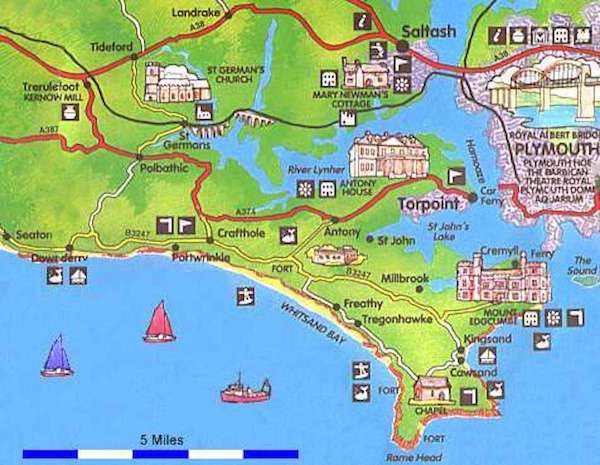
I chose the Rame Peninsula in Cornwall. Visit Cornwall tells us, “Known as Cornwall’s forgotten corner, the Rame Peninsula is an Area of Outstanding Natural Beauty with a landscape of tidal creeks, sandy beaches, lush farmland and country parks. Small villages hide at the heads of creeks, waiting to be discovered, whilst the stretch of coast fronting onto Whitsand Bay offers fantastic views, great walking along the South West Coast Path and one of the few surfing beaches in this part of Cornwall. The Rame Peninsula is bordered on three sides by water; the River Lynher, River Tamar and Plymouth Sound and the English Channel. It encompasses the villages of Antony, Cremyll, Kingsand, Cawsand, Millbrook, St.John, Sheviock, Antony, Wilcove, Crafthole, Downderry, Portwrinkle, Seaton, Freathy and Torpoint.”

Cawsand Cornwall c VCShutterstock

This is Cawsand, where the Bennet ladies will reside in my story. https://www.visitcornwall.com/places/rame-peninsula


I specifically chose the village of Cawsand for their new home. Cawsand (Porthbugh in Cornish) and Kingsand are twin villages in Cornwall. Kingsand, at the time the story is set, was in Devon. The border has since been moved and now is situated on the River Tamar. They were once renowned for the smugglers along the Plymouth Sound. Cawsand is within the Mount Edgcumbe Country Park. 

In my story, Darcy stays at Mount Edgcumbe Country Park with a friend named, Captain Ralston. When they arrive in Cornwall, the Bennets, specifically, Elizabeth, does not initially realize the size of the the park. Mount Edgcumbe Country Park is 885 acres (3.58km) park. It overlooks Plymouth Sound and the River Tamar. The Edgcumbe family created formal gardens, temples, follies, and woodlands, all surrounding the Tudor-style house. Wild deer are found upon the estate. The South West Coast Path runs through the park for nine miles (14km) along the coastline. The park contains the villages of Kingsand and Cawsand, as well as Mount Edgcumbe House itself. The Formal Gardens are grouped in the lower part near Cremyll. Originally an 17th Century wilderness garden, the Edgcumbes transformed the park in the 18th Century. The Formal Gardens contain an Orangery, an Italian garden, a French Garden, an English Garden and a Jubilee Garden, which opened in 2002, to celebrate the Queen’s Golden Jubilee.  Although the park covers a large area, the park has limited formal maintenance. This gives it a rough and ready rural feel in all except the Formal Gardens.

rame-map

e71d56c7828660af0c524ea0d69c4cf8.jpg

080808 pho 67 French Garden.jpg

mount-edgcumbe-view-from

View from the deer park to Drake’s Island, a 6.5 acre island in the Plymouth Sound

Where There’s a FitzWILLiam Darcy, There’s a Way : A Pride and Prejudice Vagary

ELIZABETH BENNET’s world has turned upon its head. Not only is her family about to be banished to the hedgerows after her father’s sudden death, but Mr. Darcy has appeared upon Longbourn’s threshold, not to renew his proposal, as she first feared, but, rather, to serve as Mr. Collins’s agent in taking an accounting of Longbourn’s “treasures” before her father’s cousin steals away all her memories of the place.

FITZWILLIAM DARCY certainly has no desire to encounter Elizabeth Bennet again so soon after her mordant refusal of his hand in marriage, but when his aunt, Lady Catherine de Bourgh, strikes a bargain in which her ladyship agrees to provide his Cousin Anne a London Season if Darcy will become Mr. Collins’s agent in Hertfordshire, Darcy accepts in hopes he can convince Miss Elizabeth to think better of him than she, obviously, does. Yet, how can he persuade the woman to recognize his inherent sense of honor, when his inventory of Longbourn’s entailed land and real properties announces the date she and her family will be homeless?

The eBook is available at these outlets: 

Kindle https://www.amazon.com/dp/B07H69N1P1/ref=sr_1_1?ie=UTF8&qid=1536421253&sr=8-1&keywords=Where+There%27s+a+Fitzwilliam+Darcy

Kobo https://www.kobo.com/us/en/ebook/where-there-s-a-fitzwilliam-darcy-there-s-a-way

Nook https://www.barnesandnoble.com/w/where-theres-a-fitzwilliam-darcy-theres-a-way-regina-jeffers/1129490646?ean=2940161708804

Excerpt from Chapter 18 where Darcy tells the Bennets what he has learned of Eugenia Gardiner’s bequest. 

With the express he received earlier, he was able to clarify several details Mr. Bennet’s papers did not include.

“The house has eight rooms for sleeping purposes on the third storey and several common use rooms on the second. It is not so large as Longbourn, but more than adequate for your needs. Repairs are regularly addressed by the trustees, who accept requests from the land steward when the house has no residents. The rent moneys are used for repairs to the main house and those of the twenty home farms. The estate is relatively small, but it has sheep herds, milk cows, vegetable gardens, and the like. The lease is one hundred twenty-five pounds per year.”

When the others girls remarked that their mother could easily afford the rent with the moneys provided by Mr. Bennet, Elizabeth asked, “How can it be so? Is there some sort of manipulation being practiced?”

He admired how she looked for all the possibilities, while her sisters accepted things without question. If she could see her way clear to marry him, Elizabeth would serve Pemberley well as its mistress. “First,” he explained, “the former Mrs. Gardiner made the arrangements to provide for the women in her family who could not care for themselves. You must remember, when the lady initially came to the estate, she was still a Sommers. Your relation was quite wealthy, her family owned several tin and copper mines, as well as a diamond mine on the African coast. She took possession of this property when she was but one and twenty. She did not marry until she was nearing thirty; therefore, the provisions on age included in her bequest make more sense. According to the men I hired in the area, several female cousins were reported to have lived with her during those years she remained at the manor.

“Secondly, the area is not as readily accessible as Hertfordshire. Kingsand in Devon and Cawsand in Cornwall are fishing villages, not villages in the image of Meryton. They are twin villages. Supposedly there is one house sitting on the border between the two shires, but I do not know whether that is legend or fact. The villages have been around since the 1600s, and, at one time, were renowned for smuggling activities. The area is beautiful, part of the Rame Peninsula, and the villages are within the Mount Edgcumbe Park, the expansive estate owned by George Edgcumbe, the Earl of Mount Edgcumbe. The beach is sand and shingle and offers views of ships coming and going on the Plymouth Sound. There are ferries at Torpoint and at Cremyll. Plymouth is some ten miles by land from the Gardiner estate.”

“It sounds magnificent,” Miss Jane declared. “A new start for our family.”

Darcy continued his recital of all they should expect, without making comments on the suitability of the estate of their choice to remove to the property. He wished the decision to be one belonging to the Bennets, even if their doing so would destroy his dream of claiming Elizabeth to wife. “It will take us close to a week to reach Mrs. Gardiner’s property. There are horseboats to move your belongings as part of the ferries or Mr. Hill may choose the longer land route along the peninsula. Either way, Hill should depart Longbourn by this time next week to provide him time to make the journey there and return before Collins summons him to Kent.”

“What is the name of the estate?”

“What do you mean by ‘us’?”

Miss Kitty and Miss Elizabeth spoke over each other.

He smiled at Miss Kitty before saying, “Gardenia Hall, but its original name was Peninsula Place. Your relation changed the name when she married and joined her husband’s home.”

“I think Gardenia is the perfect name,” Miss Kitty declared. “It is the mix of Gardiner and Eugenia, and it sounds more inviting than Peninsula Place.”

“There is nothing inviting about it,” Miss Lydia grumbled, until Mrs. Bennet snapped her fingers and ordered the girl from the room. Darcy did his best to hide his smirk, but it was difficult. At least for now, Mrs. Bennet remained adamant about her daughter’s inconsiderate nature.

“And to answer your question, Miss Elizabeth,” he said in tones which brooked no argument, although he suspected she would argue with him, nevertheless, “you must realize I mean to escort you and your family to Cornwall. A gentleman would never permit six females to travel alone. Moreover, neither of your uncles can afford to spend two weeks away from his business. It will be that long to see you to Cornwall and return safely to their homes.”

“But your obligation is to Mr. Collins, not us,” Elizabeth challenged.

“My obligation to Mr. Collins is nearly complete, and if I do not finish before your family must depart, I will leave your cousin detailed instructions chronicling what I have completed and what still must be done. I will not move on this matter, so another argument will serve no purpose.” He wanted to tell her he loved her too much ever to desert her, but, with an audience, his stubbornness would have to serve as his rebuttal.

“It is best, Elizabeth,” Mrs. Gardiner said. “Your family will require a gentleman to act upon your behalf in securing the property. It is the way of the world. Even if you were a rich heiress, you would require a man to perform as your agent in terms of property.”

Miss Elizabeth scowled at her aunt, but she said, “So be it. Mr. Darcy will serve as our escort.”

“If the area around the estate is less accessible than what is in Meryton, how will we get about after we return Mr. Bennet’s carriage to Mr. Collins?” Mrs. Bennet asked.

Although he would prefer to pacify Elizabeth’s questions, Darcy answered, “The estate is but a little more than a mile from Cawsand, but there is a work wagon and a small carriage available. The annual feed and the cost of running the estate are currently paid by the trust set aside by the late Mrs. Gardiner, but those items will be a part of what you must furnish while you remain in residence at Gardenia Hall. The trust which oversees the estate says the late Mrs. Gardiner spoke to her relations knowing independence, not charity. I will leave the letter I received today for each of you to read at your leisure.” He handed it off to Mr. Gardiner. “It outlines the responsibilities your family must meet to be a recipient of the bequest. I must caution you all, but specifically you, Mrs. Bennet, although it will be the funds Mr. Bennet supplied you which will support your family during this period, it will be whichever daughter oversees the estate at the time who must make all the decisions. The accounts will be in that daughter’s name.”

“But my daughters can accept my suggestions? Can they not?” Mrs. Bennet frowned deeply.

Darcy chose a diplomatic response. “As you and your daughters are part of a loving family, I am certain no contention will be present, but the late Mrs. Gardiner was very specific in her instructions. The lady wished those using her property to learn how to survive the death of the family patriarch, something with which she personally struggled. Therefore, the reason for the choices to be only in one person’s hands is clear. Your role will be to advise each of your daughters in turn.”

GIVEAWAY!!!! I have two eBook copies of Where There’s a FitzWILLiam Darcy, There’s a Way available for those who comment below. The giveaway ends at midnight EDST on Tuesday, September 18, 2018. 

Posted in Austen Authors, book excerpts, book release, books, excerpt, Georgian England, giveaway, Inheritance, Jane Austen, Living in the Regency, Pride and Prejudice, Regency era, Vagary, writing | Tagged , , , , , , , , , , , , , , , | 14 Comments

Tenant of the Curtesy and the Release of “Where There’s a FitzWILLiam Darcy, There’s a Way” + a Giveaway

Tenant of the Curtesy or Courtesy tenure is a legal term indicating the life interest which a widower (meaning the wife’s former husband) may claim in the lands of the deceased wife, under certain conditions. Those requisites to create a tenancy by courtesy are: 

1. A legal marriage existed between the man and the woman

2. The estate claimed in courtesy must have been an estate in possession of which the wife must have been actually seised. (Seisin (or seizin) denotes the legal possession of a feudal fiefdom or fee, that is to say an estate in land.  It was used in the form of “the son and heir of X has obtained seisin of his inheritance,” and thus is effectively a term concerned with conveyancing in the feudal era. The person holding such estate is said to be “seized of it,” a phrase which commonly appears in inquisitions post mortem (i.e. “The jurors find that X died seized of the manor of …”). The monarch alone “owned” all the land of England by his allodial right and all his subjects were merely his tenants under various contracts of feudal tenure. Seisin is believed to have been applicable only to freehold tenures, that is to say a tenure for a term of life, which was heritable, on condition of payment of the appropriate feudal relief  to the overlord. A “freeman” was a man who held by freehold tenure, and thus freehold tenure was anciently said to be the only form of feudal land tenure worthy to be held by a free man. Tenure, and the variety thereof, was the very essence of feudal society and the stratification thereof, and the possession of a tenure (i.e., holding, from Latin teneo “to hold”) was legally established by the act of seisin.

3. Issue must have existed born alive and during the mother’s existence, though it is immaterial whether the issue subsequently live or die, or whether it is born before or after the wife’s seisin. 

 The tenure relates only to those lands of which his wife was in her lifetime actually seised (or sasined in Scots law) and not therefore to an estate of inheritance.  By definition, it is said of a who becomes such in his wife’s estate of inheritance by the birth of a child, but whose estate is not consummated until the death of the wife.  

In the case of lands held under gavelkind tenure [Gavelkind was a system of land tenure associated chiefly with the county of Kent in England, but also found in Ireland and Wales. Under this law, land was divided equally among sons and other heirs.], the husband has a right to courtesy tenure whether there is issue born or not but the courtesy extends only to a moiety (i.e. half) of the wife’s lands and ceases if the husband marries again. The issue must have been capable of inheriting as heir to the wife, so that if for example a wife were seised of lands in tail male [also know as fee tail or entail; a form of trust established by deed or settlement which restricts the sale or inheritance of an estate in real property; instead, it passes automatically by operation of law to an heir pre-determined by the settlement deed.], the birth of a daughter would not entitle the husband to a tenancy by courtesy.

  • The title to the tenancy vests only on the death of the wife.

The Married Women’s Property Act 1882 has not affected the right of courtesy so far as it relates to the wife’s undisposed-of-realty, and the Settled Land Act 1884, section 8, provides that for the purposes of the Settled Land Act 1882, the estate of a tenant by courtesy is to be deemed an estate arising under a settlement made by the wife.  

The application of Courtesy (as spelled in Scots law) was abolished by Section 10 of the Succession (Scotland) Act 1964, in respect of all deaths occurring after the date of that Act. The right of Terce (being the equivalent claim by a wife on her husband’s estate) was also abolished by the same provision.

Resources: 

Chisholm, Hugh, ed. (1911).Curtesy“. Encyclopædia Britannica7 (11th ed.). Cambridge University Press. p. 651.

Baron and Feme 

WTaFD eBook Cover-01

Where There’s a FitzWILLiam Darcy, There’s a Way: A Pride and Prejudice Vagary 

ELIZABETH BENNET’s world has turned upon its head. Not only is her family about to be banished to the hedgerows after her father’s sudden death, but Mr. Darcy has appeared upon Longbourn’s threshold, not to renew his proposal, as she first feared, but, rather, to serve as Mr. Collins’s agent in taking an accounting of Longbourn’s “treasures” before her father’s cousin steals away all her memories of the place.

FITZWILLIAM DARCY certainly has no desire to encounter Elizabeth Bennet again so soon after her mordant refusal of his hand in marriage, but when his aunt, Lady Catherine de Bourgh, strikes a bargain in which her ladyship agrees to provide his Cousin Anne a London Season if Darcy will become Mr. Collins’s agent in Hertfordshire, Darcy accepts in hopes he can convince Miss Elizabeth to think better of him than she, obviously, does. Yet, how can he persuade the woman to recognize his inherent sense of honor, when his inventory of Longbourn’s entailed land and real properties announces the date she and her family will be homeless?

The eBook is available at these outlets: 

Kindle https://www.amazon.com/dp/B07H69N1P1/ref=sr_1_1?ie=UTF8&qid=1536421253&sr=8-1&keywords=Where+There%27s+a+Fitzwilliam+Darcy

Kobo https://www.kobo.com/us/en/ebook/where-there-s-a-fitzwilliam-darcy-there-s-a-way

Nook https://www.barnesandnoble.com/w/where-theres-a-fitzwilliam-darcy-theres-a-way-regina-jeffers/1129490646?ean=2940161708804

In this excerpt, Darcy and the Bennets discuss the possibility of Mrs. Bennet and her daughters claiming an unusual bequest from Mrs. Bennet’s great-great-grandmother, Eugenia. 

“When we reach Longbourn, I mean to sit my sisters and my mother down and explain to them the necessity for economy and how we must be prepared to leave Longbourn by month’s end. Trunks must be packed and transportation arranged. With Mama’s allowance, there is the chance we could discover a small cottage if Eugenia’s property cannot be arranged. We can share rooms, if necessary. I wish Mr. Bennet had not been so quick to make finding his will a game. We could have spent our time searching for a cottage in which we could all live together. If it is viable, I wish my family to leave Longbourn unbroken, instead of being scattered to the wind.”

“I am your servant in this matter,” he said solemnly.

“I despise asking it of you, but would you join us for this difficult conversation? I am certain Mrs. Bennet will possess a multitude of questions.”

“If it is your wish,” he assured her.

And so, before he returned to his lodging at Netherfield, Darcy found himself in a prominent place, beside Elizabeth, at a table holding her mother, her sisters, her Aunt and Uncle Gardiner and Mr. Philips.

“I find it quite disheartening,” Mrs. Bennet announced to the group, “that neither my brother, my sister’s husband, nor Mr. Bennet thought me capable of understanding the situation in which we find ourselves.”

“Your nerves,” Mr. Philips said lamely.

“Are a result of being omitted from such decisions,” the lady corrected. “It is quite disconcerting to worry over one’s future, especially as I am permitted no say in my life.”

Miss Elizabeth squeezed the back of her mother’s hand in support. “I agree. Mrs. Bennet’s allowance is our only source of income; therefore, she must thoroughly be made to understand what is expected of her. I know my mother can practice economy. I have witnessed her doing so previously. As Papa made adjustments when they first came to Longbourn, so did she. When Jane and I were small, Mama spoke often to us of the differences in prices of goods, for she realized we must some day run our husbands’ households. Mrs. Bennet came from trade, but that proved an advantage when her husband required a wife who could be frugal.”

“Elizabeth is correct. Mama can be quite adept at running a household when it is necessary. We were never hungry, nor did we go without the necessities. It is only of late that we knew the luxury of new gowns and so forth,” Jane acknowledged in serious tones.

Darcy suggested, “You must wait until I receive word on the Cornwall property to know the extent of the provisions placed on it by the late Mrs. Gardiner, but, meanwhile, you should pursue the possibility of a cottage for let. Lady Catherine informed us that her new clergyman will be in place by the first week of June. Your days at Longbourn are, therefore, truly numbered. I have completed my accounting of all your quarters and the common use areas. You can begin to pack your belongings. As you have expressed your desire not to be in the house when Mr. Collins arrives, you should place the last of your energies in preparing for your removal. Is it possible for you to use Mr. Bennet’s carriage and for Mr. Hill to transport your belongings to your new home?”

“I will see to it,” Mr. Philips replied, but Darcy decided he would write to Mr. Collins to learn when the man would send for the coach to bring him and Mrs. Collins to Longbourn. As he had come to expect, Elizabeth knew the right of the matter: Her family should be gone before the Collinses arrived.

Elizabeth addressed her family, “Do we still wish to pursue the Gardiner property with its possible provisions for our possession or pursue an available cottage instead?”

Miss Jane said, “I would not wish to remain in the area, even in a cottage. We would constantly encounter the Collinses and the Lucases and—” Darcy understood the lady was thinking of Mr. Bingley. “Even though we will not live in penury, we will be facing reduced circumstances. I choose not to know the gossips who will rejoice in our loss of face. In a different neighborhood, no one will know our history unless we choose to share it with them.”

Miss Lydia still complained, “I would prefer a cottage nearby. I do not wish to wait until my sisters marry before I do.”

Mrs. Bennet scowled at her youngest daughter. “Your recent actions have proven I made a mistake in permitting you and Kitty to join in society before you were prepared to do so. Jane and Elizabeth and Mary served their time waiting to be presented to others, and I should have seen such was best for all of you. Your father attempted to warn me, but I did not listen. That being said, you will listen to me now, or know my wrath. Your selfish disregard for your sisters and for me speaks loudly of my error in trusting you with so much responsibility. Thankfully, being in mourning will deny you the freedom you demand and provide you time on reflection. We will begin again with your studies as soon as we are settled elsewhere. None of us will enjoy society for six months, and there will be no balls or assemblies or the like for another six. Wherever we settle, our interactions will be limited to church services and the occasional call upon our neighbors. Your preference holds no significance in this conversation. How do you ever expect to attract a proper husband when you waste your time with the likes of Mr. Wickham?”

Miss Lydia countered, “Only recently you defended Wickham to Elizabeth.”

“That was before I learned of his many debts to the local shopkeepers. Your father and I were very conscious of our debts to others, and we never spent more than we had available. I cannot entertain the idea of any of my daughters residing in debtor’s prison with those of Mr. Wickham’s ilk. Your actions in this matter were unacceptable. You placed yourself before your family, when family is all a person has when adversity knocks upon his door. You have injured each of your sisters. You injured me. It shall be many years before I can trust you again.”

NOW FOR THE GIVEAWAY!!! I have two eBook copies of Where There’s a Fitzwilliam Darcy, There’s a Way for those who comment below. The giveaway will end at midnight EDST, Thursday, September 13, 2018. 


Posted in Austen Authors, book excerpts, book release, British history, George Wickham, Georgian Era, Jane Austen, Living in the Regency, Pride and Prejudice, Vagary, writing | Tagged , , , , , , , , , , , , , | 16 Comments

Preparing for the September 10 Release of “Where There’s a FitzWILLiam Darcy, There’s a Way” + a Giveaway

IT IS ON ITS WAY!!! The release of Where There’s a FitzWILLiam Darcy, There’s a Way is scheduled for Monday, September 10. The premise behind the story is Mr. Bennet has passed from a heart attack, which, ironically, occurred on the same day as Darcy’s failed proposal at Hunsford Cottage. Darcy has time to shove his letter of explanation in Elizabeth’s hands before Charlotte Collins delivers the express sent by Elizabeth’s family, demanding her immediate return to Longbourn. She rushes away to pack to return home, leaving Darcy  to feel foolish for worrying whether she will accept his version of his involvement in Bingley’s separation from Jane and in Wickham’s tales of woe. He thinks never to see Elizabeth Bennet again. However, his aunt decides Darcy would be the perfect person to travel to Hertfordshire to assure Mr. Collins’s interests in Longbourn. The story involves Darcy taking an inventory of what must remain at Longbourn and what the Bennets may take with them when they vacate Longbourn, putting him in an awkward position, but his duty to Collins also allows Elizabeth to observe a different side of Fitzwilliam Darcy—a man of honor and loyalty. Will this allow them finally to come together or will Elizabeth’s reduced circumstances and her pride keep them apart? How can Darcy prove himself as the man she requires in her life when he is, literally, in a position to name which of her father’s books stay at Longbourn and which she can keep to foster memories of her father? 


Inheritance was a tricky situation during the Regency, especially for a woman and her daughters. Women rarely inherited property. Remember Mr. Bennet’s warning to his family: “When I am dead, (Collins) may turn you all out of this house as soon as he pleases.” A woman could inherit “personal” belongings such as, furniture, jewelry, clothing, moveable goods, etc. But that does not mean a woman could NOT inherit real property (meaning land, or what we now call “real estate”). After the death of a person owning property, an accounting of all the belongings within a household occurred—to compare what was previously recorded as being part of the inheritance and what was still available or what had been added since the last accounting. William Savage, who has a fabulous blog called Pen and Pension, wrote a recent article about “The Wealth of an 18th Century Butcher,” in which he listed all the items belonging to a butcher in Kent during the reign of Queen Anne. I will quote just a bit from the piece of what a man of trade owned. After reading these minute details, imagine an accounting of all Pemberley held, and then think upon Longbourn. How many books did Mr. Bennet own? What about the silver? The furniture? The sheets and pillow coats? Clocks? Persian rugs? Mrs. Bennet’s jewelry? Or the ribbons Kitty and Lydia shared? Knick-Knacks and What Nots? Quite a task. 

Take, for example, this inventory of the goods of a local butcher in Kent, one Thomas Burwash, who died in 1705. It begins like this:

Ane Inventary of all and singular the goods & chattels and credits of Thomas Burwash, late of the parish of Gillingham in the County of Kent, Butcher, deceased taken & appraised the 24th day of Aprill Anno Domini 1705 by Mathew Tilden of Gillingham aforesaid, yeoman, and John King of the same yeoman as ffolloweth vizt:

These are two local tenant farmers and were presumably either the executors of the butcher’s will or friends. They are going to go through Thomas Burwash’s house, room by room, listing what they found and assigning it a value for the purpose of obtaining probate from the consistory court of the diocese.

Inpri[mi]s (First) in the Best Chamber
his wearing apparel, purse with money: xx li (£20.00)

Item one ffeather Bedd and all its ffurniture: v li (£5.00)

Item 3 Chests and a base of drawers: i s vj d (1s 6d)

Item ½ a doz. of Leather Chaires: ix s (9s)

Item One looking glass and some Earthen ware: v s (5s)
Item 20 pair of sheets and 10 paire of pillow Coates: iv li xv s (£4 15s)
Item three Dozen of Napkins and Towells: i li ix s (£1 9s)

Now, enjoy this excerpt from Where There’s a FitzWILLiam Darcy, There’s a Way

ELIZABETH BENNET’s world has turned upon its head. Not only is her family about to be banished to the hedgerows after her father’s sudden death, but Mr. Darcy has appeared upon Longbourn’s threshold, not to renew his proposal, as she first feared, but, rather, to serve as Mr. Collins’s agent in taking an accounting of Longbourn’s “treasures” before her father’s cousin steals away all her memories of the place.

FITZWILLIAM DARCY certainly has no desire to encounter Elizabeth Bennet again so soon after her mordant refusal of his hand in marriage, but when his aunt, Lady Catherine de Bourgh, strikes a bargain in which her ladyship agrees to provide his Cousin Anne a London Season if Darcy will become Mr. Collins’s agent in Hertfordshire, Darcy accepts in hopes he can convince Miss Elizabeth to think better of him than she, obviously, does. Yet, how can he persuade the woman to recognize his inherent sense of honor, when his inventory of Longbourn’s entailed land and real properties announces the date she and her family will be homeless?

The eBook is available from these outlets: 

Kindle https://www.amazon.com/dp/B07H69N1P1/ref=sr_1_1?ie=UTF8&qid=1536421253&sr=8-1&keywords=Where+There%27s+a+Fitzwilliam+Darcy

Kobo https://www.kobo.com/us/en/ebook/where-there-s-a-fitzwilliam-darcy-there-s-a-way

Nook https://www.barnesandnoble.com/w/where-theres-a-fitzwilliam-darcy-theres-a-way-regina-jeffers/1129490646?ean=2940161708804

Chapter One

Chapter One

“I certainly will not return to Hertfordshire,” Fitzwilliam Darcy groused. “And most definitely not on Mr. Collins’s behalf.” The idea of seeing Elizabeth Bennet again so soon after her refusal of his hand was not to be fathomed.

He had been with her when Mrs. Collins had come running to bring Miss Elizabeth an express from Longbourn. Only moments earlier, he had met Elizabeth at the gate where the grove edged the park and placed his letter of explanation in her hands. He had wanted more time to study her sweet countenance—time to memorize every feature to cherish when he considered giving his heart to another, but he had no more said, “I have been walking the grove some time in the hope of meeting you. Will you do me the honor of reading that letter?” before another called to her.

In what appeared to be panic, Miss Elizabeth had stuffed his letter into a pocket of her pelisse and turned away from him. “Pardon,” she murmured before moving off in the direction of the lane, which led further from the turnpike road. With nothing else to do, he had presented her retreating form a slight bow, before turning again into the plantation without a proper farewell between them. It was only through his cousin that he had learned the express had come from Miss Mary Bennet, delivering the news of their father’s passing. The Collinses had received a similar letter from Sir William Lucas. Darcy had immediately extended an offer of his traveling coach for her journey, and his cousin had personally seen her off to Hertfordshire, while all Darcy could do was to stare out the window in the direction of Hunsford Cottage and say a private prayer for the quick healing of her heart.

He wished he had been in a position to rush to the Collinses’ cottage and offer Miss Elizabeth his comfort—to hold her until she had spent her tears and to whisper words of assurance that he would see to her care and her protection. However, he did not have the right, for he was the last man in the world whom she could ever be prevailed upon to marry.

“There is no one else,” Lady Catherine’s shrill voice dragged him from his musings. “Even if there was a decent inn in Meryton, and Mr. Collins assures me there is not, I cannot go. It would not be proper. Mr. Collins is my rector, not my relation. Moreover, I must interview those who wish to replace him. I cannot rush off to assure myself the Bennets do not take more from the estate than is their due.”

“Should that not be Mr. Collins’s responsibility? To secure his inheritance? Certainly the Bennets have an executor of the estate in place,” he remarked with disinterest in anything but Elizabeth Bennet’s welfare. “The man has inherited the property. He should be the one counting the silverware and examining the household books.” Darcy did not think he could bear viewing Miss Elizabeth brought low. He seriously doubted Mr. Bennet had dutifully provided for his family.

“Collins has agreed to stay on until I can find a replacement; therefore, I have promised to protect his interests in Hertfordshire,” his aunt said in that matter-of-fact tone she often employed.

Darcy shook his head, refusing to give in. “I still do not see how any of this becomes my burden.”

He waited. Counted to ten and ten more. Waited for his aunt to rap her cane upon the floor to express her displeasure. Waited for her outrage. Instead, she responded in what sounded of calmness, a fact that set Darcy’s equilibrium off balance. “You are correct: Collins is not your responsibility, but Anne is.”

Darcy’s frown deepened. It would be necessary for him to proceed cautiously, guarding his words, until he knew his aunt’s intent. When Lady Catherine spoke of Anne and him in the same sentence, he knew something was afoot. “How has Anne become my charge? If something were to happen to you, Matlock would assist his niece. Moreover, Anne is of age. My cousin may name her way if she so chooses.”

“Your idealism is your weakness, Darcy,” his aunt responded with a challenging lift of her eyebrows. “You believe Anne can find her way without a man to guide her.”

“I will not entertain this conversation again,” he said stubbornly. “I adore Anne, but I will not marry her. We would not suit.”

“So says my daughter.” His aunt’s sudden change of heart had Darcy’s every nerve on alert. “Anne has begged for a Season, but I have been reluctant to agree. However, I might be persuaded to alter my opinion if—”

“If what?” Darcy demanded. Lady Catherine’s gestures and features were too amiable for Darcy to know ease.

“As you well know,” she began again in what sounded of reasonable tones, “I am most attentive to my duties.” Darcy resisted the urge to roll her eyes. “I have made a promise to Mr. Collins to see him well situated in Hertfordshire.” In other words, his Aunt Catherine wished to brag to all those under her tutelage of her assisting Collins. “However, aiding my current rector, while employing his replacement would consume too much of my time. I could not oversee Anne’s entrance into society. Matlock’s countess has offered to introduce Anne at several events, but anyone who knows my sister-in-marriage knows she was never the most attentive mother. How can I expect Lady Matlock to tend to Anne’s delicate nature? I am one of the few people who know my daughter’s frangible side.”

As realization dawned, Darcy’s eyes narrowed. “You mean to make me the thief who steals away Anne’s opportunity for a Season,” he accused.

“Certainly not,” she protested, but Darcy noted the shift of her shoulders, as if Lady Catherine assumed an enviable position. “Anne is sensible enough to realize Mr. Collins’s future must take priority over a few balls and afternoon teas. After all, my daughter possesses no one depending upon her for his support. She has not known a day of labor.”

As much as Darcy despised his aunt’s manipulations, a part of him admired how easily she had assaulted his sense of honor. Lady Catherine knew he was incapable of denying those he loved, and he was excessively fond of his sickly cousin. “Yet I would imagine if I chose to oversee Collins’s interest, say for a month, you would feel comfortable in allowing Anne to claim a husband, who is not me.” He stressed the facts upon which they must still come to an agreement, for they both knew he would relent in such a matter. If Anne was not successful during the Season, he did not want Lady Catherine again to take up her pleas for him to marry his cousin.

“Naturally,” she agreed readily, having won her concessions. “Without worrying over Collins’s inheritance, I would have more time to devote to Anne’s comportment. It is not my wish to have my daughter leave me, but in the natural order of things, I possess no choice, but I consider it my duty to make certain a man who sees her only as an heiress does not turn her head.”

Darcy held his tongue. He understood Lady Catherine completely: His aunt wished Anne to marry a man her ladyship could control, just as she controlled Mr. Collins and all her tenants. Otherwise, the gentleman could banish her to one of the other properties, which were part of the De Bourgh inheritance, or to the dower house.

His aunt continued. Their negotiation was not over. “I would assume your cousin will require more than a month to claim success in Society.”

“Six weeks maximum,” Darcy bargained. “I have my own estate to which to attend. Naturally, you and Anne are welcome to spend longer in London, but you must have a replacement for Mr. Collins by that time or else your rector must name another to act in his stead. He has a father-in-marriage who has been knighted by the King. Sir William Lucas can assume the duties, or you might suggest another to Collins. I am certain your man of business could successfully oblige you.” The idea of spending more than a few weeks in the neighborhood with Elizabeth Bennet, especially as Wickham was still part of the Meryton militia, shook Darcy to his core. But perhaps his presence in Hertfordshire could convince Elizabeth she had judged him harshly. Although he knew there was no hope for them, he would prefer not to leave her thinking poorly of his character. “More importantly,” he emphasized, “I insist Anne should remain in the Capital long enough to discover a gentleman to her liking.”

“I suppose I can conduct my interviews while in London,” his aunt observed. Darcy instantly knew such was her intent all along. “And although Anne will know disappointment at losing your attention, she will recover. The newness of a Season should resolve any lingering doubts.”

Darcy wondered if Anne would be permitted truly to experience life in London, but all he could do would be to provide his cousin the opportunity to discover someone who would cherish her for herself. He would speak to his uncle and ask Lord Matlock to intervene with his sister once Lady Catherine and Anne arrived in London. Perhaps the earl could “encourage’ several suitors to seek out Anne.

“Then instruct Mr. Collins to draft a letter naming me as his agent. Also ask him to provide me copies of any correspondence he has received from Mr. Bennet’s man of business or his solicitor since it became known that he was the heir to Longbourn. Meanwhile, I will contact Mr. Bingley regarding the use of Netherfield Park. You are correct: The inn in Meryton could only be termed as mediocre at best.” In addition, I am less likely to encounter Wickham if I am not in the village, he thought. “I must see to Colonel Fitzwilliam’s return to Town. I assume you do not intend to travel to London in the next few days.”

“Certainly not,” his aunt declared. “It shall take a sennight, at least, before we can depart. There is so much to do. Appointments for fittings. Making arrangements to stay at Matlock House or to let a house. Making inquiries of a suitable replacement for Mr. Collins.”

“In that case, perhaps Collins could forward me the necessary papers to Darcy House. Bingley should still be in Town, and I can speak both to him about the availability of Netherfield Park and to Matlock upon your behalf when I return Fitzwilliam to his duties.”

“You mean to depart so soon?” she questioned.

“Mr. Farrin should return with my coach later this evening,” he explained. “I will set a course for London tomorrow. Now if you will pardon me, I have much to accomplish.” Darcy did not wait for his aunt’s acknowledgement. His decision made, he anticipated the opportunity to look again upon Elizabeth Bennet. He had presented her his letter. Surely sometime between yesterday morning’s encounter and next week, when he would arrive in Hertfordshire, Miss Elizabeth would recognize something of his worth.

Leave a comment below to be a part of the giveaway of two eBooks of Where There’s a FitzWILLiam Darcy, There’s a Way. The prizes will be awarded after the book’s release on September 10, 2018. The giveaway ends Tuesday, September 11. 

Posted in Austen Authors, book excerpts, book release, excerpt, Georgian England, giveaway, historical fiction, history, Inheritance, Jane Austen, Living in the Regency, Pride and Prejudice, publishing, reading, Regency era, research, Vagary, writing | Tagged , , , , , , , , , , , | 38 Comments