
One of the “what ifs” in my latest Pride and Prejudice vagary, A Dance with Mr. Darcy, revolves around Lydia’s marriage to Mr. Wickham. What if the marriage could be voided? What would it entail to break her bond to the gentleman?

Annulment Cartoons https://www.cartoonstock.com/directory/a/annulments.asp
In my tale, after less than two months of marriage, Mr. Wickham has sent Lydia home to Longbourn. She believes he did so to protect her, for he was to be sent to the Continent with the Newcastle forces of King George’s Army. In reality, Wickham has abandoned her. He means to ditch her permanently. We must understand that during the Regency, Wickham’s doing so would indicate to the world that his wife was immoral. Realizing the shame Lydia’s new situation brings to the family, Elizabeth has accepted a man who is cruel and abusive, but who agrees to allow Elizabeth to bring Lydia with her into his household. The problem is that Lydia is in a state of perpetual limbo. She cannot remarry as long as Mr. Wickham lives. She has no future. And divorce at this time was expensive, very public, and literally, an act of Parliament.
However, Lydia attracts the attention of Sir Robert Karn, an Englishman living on the Scottish border, and he means to discover a way to release her from Mr. Wickham. Sir Robert considers an annulment or to have the marriage voided, but the reasons for an such an action were not easy to achieve.
So how did one go about getting an annulment? Annulments were only granted if one or both of the couple were not of age, were too closely related (Remember first cousins could marry, but a man could not marry the sister of his late wife, so “related” was not always as clear cut as we might think in modern times.), the gentleman was impotent at the time of marriage, one of the pair had committed fraud, one or both could be considered insane at the time of marriage, or one of the pair was already married to another. Even if one of the couple was not of age, if they did not stop living together when they became of age (12 for women and 14 for men), then they were still considered married. I think it’s worth mentioning that the fraud, force, or lunacy had to have occurred during the wedding ceremony (or before, if it pertained to the permission granted to a minor), not after the couple were lawfully wed. Even wealthy peers were stuck with a spouse if problems arose only after the ceremony. For example, both the 11th Duke of Norfolk and the 4th Earl of Sandwich were stuck in unfortunate marriages when their wives went insane. In the Duke of Norfolk’s case, his wife was locked up before giving him an heir, so that the dukedom eventually passed to his cousin.
In the Regency period, fraud as a means to voiding the marriage rested in the question of parental permission. The fraud was not the type where a person misrepresented himself by saying he owned property that he did not or held a title that he did not. Lying about circumstances was not fraud. Being drunk at the wedding was not a cause as long as one knew what he was doing. And insanity had to previous to the wedding–simplemindedness came under that category as well.
Also the idea of forcing someone into a marriage changed over the 19th century. At first force was considered only as more than a reasonable man could withstand. Over the period of time, the courts acknowledged that women were weaker and less force was necessary to overpower them. One had to literally run away or protest at the ceremony or at the signing of the register or in some other way express one’s denial of acceptance. The court did not take into consideration such things as a threats.
 Marriages could be annulled if the spouse was a previous in-law or if one was impotent. I know you have seen it in numerous romance novels, but non-consummation was not grounds for an annulment. Consummation could strengthen a claim of marriage in Scotland and could throw doubt over a claim of being forced into marriage, but non-consummation was not grounds. The church always assumed that the couple would get around to it sooner or later if they were able.
Impotence and real frigidity, on the other hand, were grounds as was a physical deformity of the necessary parts. An impenetrable hymen was also grounds, though that could be fixed by a surgeon.
Invalid marriages were those by minors by license without proper permission or the situation involved bigamy.
English law did not require consummation. Scottish law used it as proof in clandestine marriages, but only if the other forms were not followed. The Consistory court of the Church of England handled annulments. This was located in London. The Courts within Doctors Commons were very much associated in the public mind with the making and unmaking of marriage from the 17th century forward. Gradually the London Consistory Court assumed a virtual monopoly in matrimonial suits and became the most important matrimonial court for the whole of the country. It became the court of first instance for most matrimonial cases.
The Hardwicke Act simplified the betrothal contract. It was generally believed that 15 and 16-year-old girls were too young to marry. However, the law still allowed parents to marry off children as young as seven. The children could request an annulment at age 12 for girls or 14 for boys as long as the pair had not been intimate. By the Regency period, the idea of force and “own free will” was beginning to change, but change came slowly to the law and especially to the ecclesiastical law.
* * *
Now that you know more of Regency era annulments, enjoy this scene from A Dance with Mr. Darcy: A Pride and Prejudice Vagary.

The reason fairy tales end with a wedding is no one wishes to view what happens next.
Five years earlier, Darcy had raced to Hertfordshire to soothe Elizabeth Bennet’s qualms after Lady Catherine’s venomous attack, but a devastating carriage accident left him near death for months and cost him his chance at happiness with the lady. Now, they meet again upon the Scottish side of the border, but can they forgive all that has transpired in those years? They are widow and widower; however, that does not mean they can take up where they left off. They are damaged people, and healing is not an easy path. To know happiness they must fall in love with the same person all over again.
===========================
“Well…well,” Sir Robert said in what sounded of satisfaction. “Now I know which former Bennet sister interests you.”
Darcy withdrew his eyes from the sway of Elizabeth’s hips as she sidestepped her way toward the kitchen. “Will that be another obstacle to our friendship?” he asked with a skeptical lift of his brow.
Sir Robert returned to his breakfast. “Most certainly not, for I prefer the younger.”
Darcy found himself frowning. It was not that he wished another admirer for Elizabeth’s charms, but he could not help but challenge the gentleman’s reasoning. “Mrs. McCaffney is the superior sister.”
Sir Robert shrugged his indifference. “Perhaps for you,” he declared. “But I possess a mother and two elderly aunts to keep my feet upon the right path. What I lack is a bit of spontaneity.”
“Does not the lady possess a husband? Speaking of which, is not Mr. Wickham about?”
Sir Robert put down his fork to study Darcy carefully. “Are you attempting to persuade me that you know nothing of Wickham or the ladies since last you encountered them?”
Darcy did not approve of Sir Robert’s accusation. “I am not the type of man to gossip,” he countered. “But if you must know, I have not seen any of the Bennet sisters or Mr. Wickham since we parted during the first part of November of ’13.”
“You appear quite certain,” Sir Robert said suspiciously.
Darcy recalled the day perfectly. He had argued with his aunt regarding the suitability of Miss Elizabeth to be his wife. “I suffered a serious carriage accident around that time. It was after my cautious return to society some six months later that Mr. Bingley informed me of the marriages of both Miss Bennet and Miss Elizabeth. I held no knowledge of the Bennet family’s fortuitous joinings until then.”
“Fortuitous?” Sir Robert accused. “And what may I ask did Mr. Bingley share of the future of the Bennet sisters?”
“Not much beyond the notice of the marriages of the two eldest,” he confessed. “Bingley encountered the Bennets’ neighbor Sir William Lucas in London. I fear Bingley was most upset at the loss of Miss Bennet.”
“The gentleman held no right to injury. It was Mr. Bingley’s choice to abandon the lady,” Sir Robert argued.
Darcy spoke through tight lips. Sir Robert’s censorious tones had Darcy’s backbone stiffening. “I suppose it was Bingley’s fault. I knew nothing of my friend’s withdrawal from Hertfordshire until some five months after the marriages of the Bennet sisters. The accident was severe enough that the surgeon provided me regular doses of laudanum, a medication I despise even when it is required. It was after my recovery began and my withdrawal from the opiate that I learned that the Bingley sisters had persuaded their brother to cry off from his proposal to Miss Bennet and to refuse his option to retain Netherfield as his estate. Miss Bingley informed me with some satisfaction that her brother provided Mr. Bennet with five hundred pounds to satisfy the Bennet family’s claim to retribution.”
Sir Robert shoved his plate aside as if in disgust. “Then you are truly ignorant of what occurred?”
Not certain whether to be offended or amused, Darcy suggested, “Perhaps you should enlighten me. Clear my nescience.”
Sir Robert presented Darcy a pitying look, one meant as acceptance of a bedraggled stray seeking a warm place to spend the night. “You shan’t like what I must disclose,” he announced. “But before I speak of the Bennet sisters, you should know that I was familiar with your name, although not your face, before today’s meeting.” He raised his hand when Darcy thought to respond. “I will explain all. Just bear with me.”
Darcy placed his fork upon his plate. He wished to know how the incomparable Elizabeth Bennet came to this existence and what the man knew of him. “Then I would demand to know both tales.”
Sir Robert curtly nodded his agreement. “You must understand I heard very little of what I am about to share from Mrs. McCaffney, so you will likely possess questions for which I hold no answers.”
“I comprehend that Mrs. McCaffney would be more tight-lipped than would be Mrs. Wickham. From my previous observations, such are their particular personalities,” he said to fill up the space between them.
Sir Robert smiled at Darcy’s attempt at tactfulness. “I knew I would enjoy our acquaintance when I first laid eyes upon you. Mrs. McCaffney has never made the effort to introduce me to another, so I assumed she held you with some regard. I am pleased to be proved correct.” He removed a flask from a pocket in his jacket and added a splash of what smelled of brandy to his tea, as well as to Darcy’s. “You will thank me for my forethought,” he assured when Darcy’s frown found a place upon his forehead. With an ironic smile upon his lips, the man began. “Some six weeks into their marriage, Mr. Wickham sent his wife home with a letter to Mr. Bennet stating that the dastard would not be returning for his lady. Only a few days short of her sixteenth birthday, Mr. Wickham abandoned his wife to a life of perpetual widowhood.”
“What brought Mr. Wickham to such a decision?” Darcy demanded. “What did Wickham do regarding his commission? The agreement was—“ He suddenly recalled that Elizabeth knew nothing of his involvement in Wickham and Miss Lydia’s marriage.
“Do not fret,” Sir Robert assured. “Mrs. Wickham has yet to comprehend your role in the matter. The lady shared with me how you tracked her and Mr. Wickham down and assisted her uncle in arranging her marriage, but I doubt if she has said so to Mrs. McCaffney, for Mrs. McCaffney has never uttered a word to speak to your involvement, and she and I have had numerous conversations upon the subject of the Wickhams’ marriage. I am the one who has placed the pieces of the puzzle together. Lydia thinks her husband asked you, his former companion, to stand up with him after Mr. Bennet pleaded for your intercession in the necessary negotiations for her marriage to the man. She assumes your long standing knowledge of Mr. Wickham’s habits caused her father to seek your assistance. I must admit that it took me several attempts on the subject before your interference made sense. I assumed you either had your heart set on Lydia and would not see her harmed or it was one of her sisters who stirred your passion.”
Darcy ignored Sir Robert’s probing. “Does the family possess any knowledge of Mr. Wickham’s whereabouts?” He wondered why Colonel Fitzwilliam had not mentioned the situation to him. Did his cousin have no knowledge of Wickham’s duplicity, or had the colonel shielded Darcy during his recovery? A letter would be on its way to Fitzwilliam as quickly as the weather permitted its delivery.
Following a sip of his tea, Sir Robert said, “Now that is an enigma. According to Mrs. Wickham, her husband met with an elderly, but immaculately dressed, woman the day before he announced Lydia’s departure for Hertfordshire. Afterwards, the lieutenant announced the necessity of his wife’s return to her parents’ household. He claimed the soldiers training at Newcastle were being sent to the Continent, and she could not remain alone in the city.”
Darcy summarized, “And so Mrs. Wickham returned to Meryton, thinking her husband treasured her safety.”
“It was only after Mr. Bennet read the lieutenant’s letter did the family understand Mr. Wickham’s true intentions of ‘returning’ his wife to her family.”
Darcy sat forward in tense anticipation. “Did not the Bennets protest?”
“By the time Mrs. Wickham traveled from Northumberland to Hertfordshire, and then their Uncle Gardiner made a journey to Newcastle, there was little the Bennets could do. According to Wickham’s commanding officer, the lieutenant volunteered to be part of the unit serving as reinforcements and being shipped to the Spanish-French border.”
Darcy’s mind raced with how well Wickham had executed another scheme. “Such does not sound of Mr. Wickham’s nature. If caught in the line of fire, he would fight to live, but he is not the type to volunteer for what was likely a death sentence,” he surmised.
Sir Robert nodded his agreement. “It was not. Within a week of Mr. Wickham’s arriving on the Continent, the lieutenant deserted his post. No one has heard of or seen the man since.”
“Wickham is a man who lives by his wits, and his not contacting anyone in England makes little sense. Surely he must have cohorts who aided him in this farce!”
Sir Robert’s expression was more troubled than Darcy cared to observe. “One of the few things Mrs. McCaffney shared in a moment of anger at her poor sister’s fate came when Mrs. Wickham described the woman who met with Mr. Wickham. Mrs. McCaffney told me in private conversation that the woman who met with Mr. Wickham resembled the relation of a gentleman she once knew. As you are the only gentleman of whom she has spoken of beyond Mr. Bingley, I assumed it was you. I formed the distinct impression that Mrs. McCaffney blamed herself for her sister’s fate.”
Now for the GIVEAWAY. I have two eBook gifts of A Dance with Mr. Darcy available to those who comment below. The giveaway ends at midnight EDST on Friday, February 7.
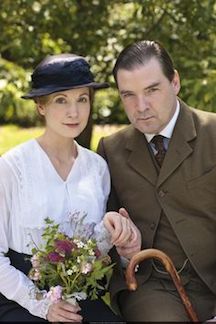 “Such marriages were commonplace in ‘silly, sensational’ magazines, but much more exceptional in real life. The peak of most girls’ possibilities had been reached, if they were fortunate enough to marry an honest butler or footman (Downton Abbey plot between Daisy and William Mason, as well as Carson and Mrs. Hughes), who might then set up as a shopkeeper, a cabbie, a publican or a boarding house keeper on their joint savings, small businesses which seem to have failed almost as often as they succeeded. Otherwise, they could hope to marry a man of no higher social standing than a groom, a tradesman, a policeman, a soldier, or a sailor. Many of them returned home, with their little nest eggs, to marry the ‘penny post correspondent’ whom they had left behind in their own village years before.”
  (Image via
  Was Sawney Bean Real or a Legend?
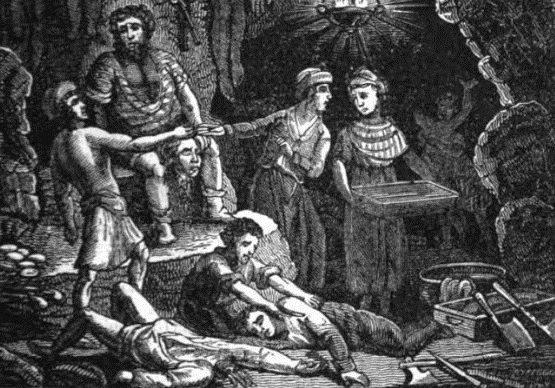 Unfortunately, the authorities of the time had few crime investigation skills available to them. In a time when people still believed in witches and vampires, many innocent people stood accused of Sawney’s crimes and lost their lives. As travelers were traced back to the inns in which they took shelter, local innkeepers were often charged with the crimes. Naturally, travelers began to shun the area.


 The Disappearance of Georgiana Darcy


 Upper servants (cook, lady’s maid, governess, parlour maid, and nurse) usually got an extra hour sleep while others began their days as early as 5 A.M. The cook was responsible for 4 meals daily for the master and mistress and their guests, the children, and the other servants. She prepared a different type of meal for each group. All the servants, minus the nursery staff, sat down to breakfast shortly after 8 A.M. They would dine on leftovers of yesterday’s roast or cold meat pie and a slice of bread, along with a weak tea or home brewed beer. A tea break for the servants came at approximately 11 A.M. The cook would meet regularly with the mistress to discuss the menus for the day. The servants had their “dinner” between midday and one o’clock. Generally, it was a roast and vegetables with a rice or suet pudding. Beer was served with the meal. The nursery staff were given a shepherd’s pie or mutton stew. The master and mistress and the older children had a luncheon served by liveried footmen. This was a more formal meal than was breakfast. The course was usual fish, which was followed by hot dishes and then a sweet dessert or fresh fruit. The ladies would be out the door for afternoon social calls.

 Nursery maids swept and cleaned the day nursery and lit the hearth for warmth. The governess saw to the children. Upper class ladies rarely visited their children in the nursery for longer than 30 minutes per day. With infants, a wet nurse was engaged. Ladies of quality never breast fed their children. Governesses were occasionally accused of using a bit of laudanum to keep the children in order. The first duty of the day was to bath and feed the babies/children. A mixture of milk and barley water was used for the infants. The governess was also responsible for administering prescribed medicines and purges of castor oil, senna, or peppermint. They took the children out for morning and afternoon excursions. Older children were bathed and dressed. Even little boys wore stays until the age of 7 or 8. Breakfast was a porridge or gruel. It was quite bland when compared to what the parents ate.
 On 22 January 1879, one of the world’s most remarkable military engagements took place. It was a short, but intense, battle in what is known as the Anglo- Zulu Wars. For two days, some 150 British soldiers defended Rorke’s Drift mission station from an estimated 4,000 Zulu warriors.
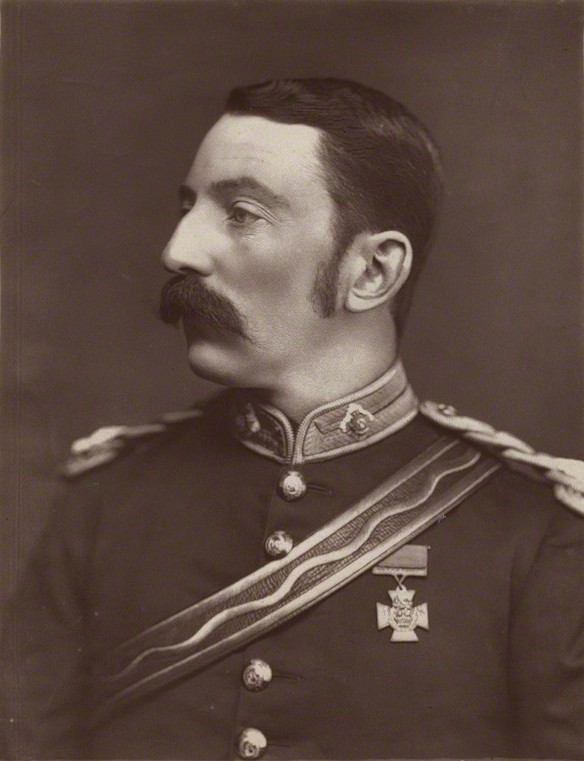 As preparations were nearing completion, a group of cavalry on retreat from Isandlwana arrived and offered to take position on a hill near the station in the direction the Zulus would be coming from. They added their numbers to between 100 and 350 foot soldiers from Natal who had been ordered to remain at the garrison to support B Company. At this point there were several hundred men in the vicinity of Rorke’s Drift, including ‘walking wounded’ in the hospital, and Chard felt his force was sufficient to stave off the coming threat.


 Introducing


 What do you think of The New Game of Human Life? Do you enjoy boardgames, or think you will find one under the Christmas tree?
  Early on, I convinced my traditional publisher, Ulysses Press, to print one of my Regency romances – a book I originally called A Touch of Gold and later called A Touch of Scandal. Ulysses released the book under the title The Scandal of Lady Eleanor. That book has been followed by seven others, each the tale of one of the members of a fictional covert military group operating out of the Home Office during the Napoleonic Wars and known as “the Realm.” The men of the Realm have served their country honorably and have returned home to claim their titles and a chance at love, a fleeting hope each held during their service. Unfortunately, a Baloch warlord claims one of the group has stolen a fist-sized emerald, and Shaheed Mir means to have the jewel’s return, or he will know his revenge.






 Introducing


 Every Woman Dreams...