
The hero of my latest Regency tale has spent fifteen years of his life is service to the Crown, first upon the Continent in the Napoleonic Wars and then upon the Canadian front, in what was known as Rupert’s Land, which was a large part of Canada that was under the control of the Hudson Bay Company.
At Waterloo, Lord Andrew Whitmire witnessed the death of his best friend, Mr. Robert Coopersmith, an act of war that has haunted him for five years. In this scene from “Courting Lord Whitmire,” the reader learns something of what it was like for the survivors.
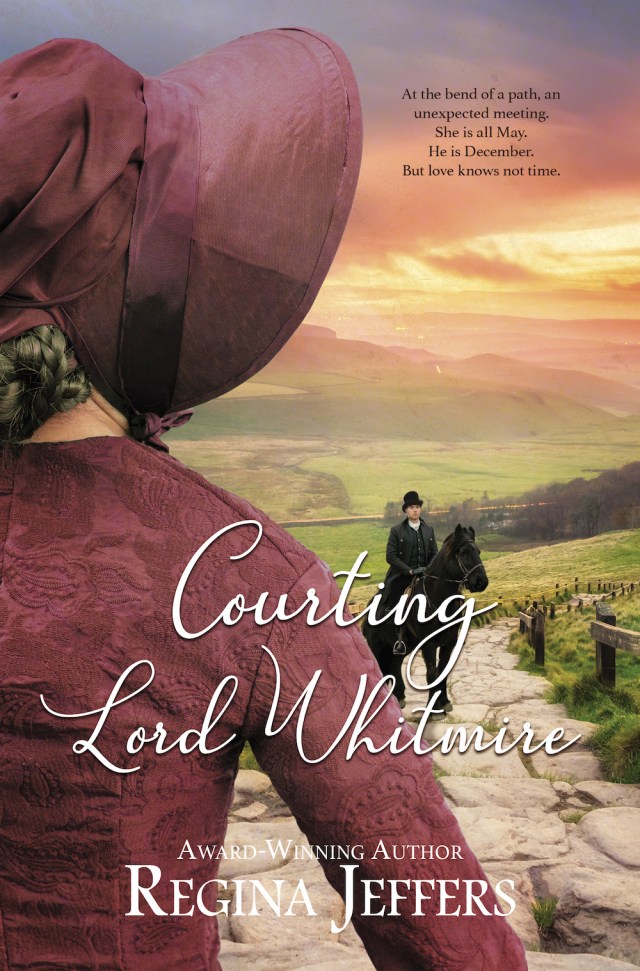 Courting Lord Whitmire: A May-December Regency Romance
At the bend of the path, an unexpected meeting.
She is all May. He is December.
But loves knows not time.
Colonel Lord Andrew Whitmire has returned to England after spending fifteen years in service to his country. In truth, he would prefer to be anywhere but home. Before he departed England, his late wife, from an arranged marriage, had cuckolded him in a scandal that had set Society’s tongues wagging. His daughter, Matilda, who was reared by his father, enjoys calling him “Father” in the most annoying ways. Unfortunately, his future is the viscountcy, and Andrew knows his duty to both the title and his child. He imagines himself the last of his line until he encounters Miss Verity Coopersmith, the niece of his dearest friend, the man who had saved Andrew’s life at Waterloo. Miss Coopersmith sets Whitmire’s world spinning out of control. She is truly everything he did not know he required in his life. However, she is twenty-two years his junior, young enough to be his daughter, but all he can think is she is absolute perfection.
Read for Free on Kindle Unlimited
Only. $0.99
Excerpt from Chapter 4
Before Andrew could respond to such a wild assertion, the unthinkable arrived. From somewhere off to his right, an explosion occurred, and, instinctively, he dived for the hard floor of the balcony, taking Miss Coopersmith down with him. For a few brief seconds he relived the horrors of war. Covering her with his body, he clasped his hands on the back of his head to protect it and waited for the debris to rain down upon them. However, nothing happened. The ground did not tremble beneath him, nor did another round of explosions follow closely after the first. He attempted to remind himself to breathe, but his mind searched for an end to the nightmare passing before his eyes.
He held his breath, fearing even to inhale or exhale. At length, a soft hand caressed his cheek. An angel’s touch permitting him a taste of heaven. “My lord? Whitmire? My lord, do you hear me?”
Slowly, he opened his eyes to discover the concerned expression upon the face of the woman who had executed havoc upon his dreams of late. “Forgive me, Miss Coopersmith,” he murmured in embarrassment. What had he done? The lady would certainly despise him after his most unbecoming of actions. Moreover, if it were Matilda beneath him, instead of Miss Coopersmith, he would have frightened his daughter to complete distraction. Was he any better off than Robert Coopersmith? Robert would have been embarrassed by his learned behaviors, while he, Andrew Whitmire, would be the laughing stock of the shire for ducking his head at each loud noise he encountered.
Again, the lady’s fingers stroked his cheek providing him comfort. “Forgive you, my lord? Should I forgive you for placing yourself between me and what you perceived as danger?”
Andrew attempted to make sense of what had taken place, but his heart still raced in anticipation. “There was an explosion,” he said without satisfaction.
“I know.” She continued to speak in quiet tones. “You were very brave.”
How could she think so? Miss Coopersmith held no idea of the savagery of war. “Perhaps today,” he spoke in sorrowful tones. “But I was not always brave. I was not the brave one at Waterloo,” he confessed. Odd that he would tell another—someone who was essentially a complete stranger what he had never spoken to anyone. Was not confession a weakness? And he had never considered himself weak. He had always thought to suffer his punishments in silence, but he spoke to the one person his heart said would not betray him, “I sidestepped a French officer charging at me, pulling him from his horse and dispatching him to his God. Then, I turned to view my end. I froze in place.”
Despite his best effort, tears formed in his eyes, knowing the final scene before the action began, while praying for a different outcome. “Robert was close by, as he always was when we were in battle, literally, fighting all comers, back-to-back, and he knocked me from the way. A cannonball.” His breath caught painfully in his chest. “Hit him, not me.” Again, he had no idea what had driven him to speak so intimately to her—of all people—of that fateful day. Without knowing the reason of it, he had accepted the fact she would not judge him. Looking into her eyes, he could do nothing less than to confess the secrets of his soul. “I should not have burdened you with the truth of your cousin’s death.”
“Oh, my darling,” she whispered, before tugging him into a loose embrace. “Listening to your story does not mean you have placed a burden upon my shoulders, for I know we share the load together.” She rested on the base of the balcony with him now bent over her. “You were not to blame,” she continued. “You simply did not recognize the vagaries of Robert’s personality. It is said within the family that Robert was excessively merry, followed by periods of equally imprudent unhappiness.”
Andrew lifted his head a few inches, so he might look more fully upon her. “Are you saying Robert meant to die that day?” This was a new realization for him, one he had never considered. An image of Robert on that fateful day flashed before Andrew’s eyes. In reality, his friend had taken more than the usual number of chances during the battle. However, Andrew had always thought Robert was as sick of the fighting as had been he and fought with such ferociousness because his friend wished to return home as much as had Andrew, but Miss Coopersmith was suggesting something he had never considered. Part of him wished to permit himself absolution, while part of him rebuked the idea.
The lady presented him a faint shrug. “No one will ever know, but even Uncle Spenser has considered the possibilities aloud. We all knew Robert did not wish to return to England. As the battle turned toward a British victory, perhaps he made his decision to end it all in glory benefitting his family. My brother would be next in line: The title would not suffer. Then again, it might simply have been Fate, or his faithfulness to you, but my cousin’s death was not your fault.”
A stunned silence fell between them as Andrew considered her words. “I wish I could be so certain,” he murmured. He might have returned home after Waterloo if he had not set himself a penitence to pay for what had happened on the battlefield. How could he claim both his title and happiness if he was the reason Robert Coopersmith was dead? Yet, if he had permitted himself some forgiveness, he may have been able to salvage a relationship with Matilda and nurse his father during the former viscount’s last days. The idea was too preposterous! He did not deserve forgiveness, especially one so easily handed to him. He could not allow himself to assume a normal life when the world, as he knew it, was no longer normal.
“If it is exoneration you seek, you will find it among those gathered at Cooper Hall,” she assured.
Unfortunately, before he could claim the lady’s hand in forgiveness and possibly steal the kiss he had been craving since he took the woman’s acquaintance, the sound of voices approaching from the distance had Andrew scrambling to his feet. Spotting Mr. Spenser Coopersmith leading a group of visitors toward the house restored his sensibilities. When Coopersmith waved, Andrew warned the lady, “Do not move until your uncle and his guests pass. It would not do for you to be seen in a disheveled state.”
“Am I disheveled?” she asked in that now familiar tone that said he was acting his age, which he most assuredly was. Did she not understand he was only attempting to keep her reputation intact?
He studied her and, for a brief moment, wished to see her thusly arranged beneath him. Nevertheless, he said, “You know my opinion of your comely face. Now, be silent until they pass below us.”
Assuming a casual stance, he returned his attention to the party crossing the side lawn. From her place stretched out on the balcony floor, she said, “During his lectures, Uncle Spenser enjoys setting off one of the small cannons he secured from the days of Charles II. He says the house’s visitors love to feel the earth rumble.”
Andrew did not turn to look at her for fear of drawing the notice of those approaching the house; yet, he smiled. “I managed to draw that conclusion,” he said from the corner of his mouth. “Your uncle still carries the rammer.”
Miss Coopersmith giggled, a sound he found delightfully uplifting. He anticipated her tease before she spoke it. “At least, my uncle only uses the small cannon for his lectures. He owns one of the large ones that some say required sixteen horses to move into place, but it remains at the smaller estate outside of Manchester. Can you imagine your reaction if he possessed cannonballs for such a weapon? I might never convince you to leave my person again.” Another giggle accented her words.
Andrew waited until the last of the visitors were from view before he answered. Turning in her direction, he extended his hand to assist Miss Coopersmith to her feet. “I would have responded the same, except a man of my ‘advanced years’ might not have survived the shock of large guns being fired once again in Worcestershire.”
The lady brushed off her dress and moved a few curls into place. At length, she looked upon him, directing the full impact of her charm his way, and Andrew knew, no matter how long he lived, he would never know another woman so magnificent. He was beginning to regret the idea that when her brother became the new baron, he would often be in her company; yet, no longer possess the right to converse with her as they had today.
She pronounced in a voice of reason, “I would never wish you to know troubles, my lord, but I would be proud to accept your protection any time you care to extend it.”
NOW FOR THE GIVEAWAY: I HAVE THREE eBOOK COPIES OF “COURTING LORD WHITMIRE” AVAILABLE TO THOSE WHO COMMENT BELOW. THE GIVEAWAY WILL END AT MIDNIGHT EST ON SATURDAY 28 MARCH 2020. GOOD LUCK!
 The heir apparent is the only son (or) eldest son of the holder of the peerage. The only exception would be the holder’s grandson would become the heir apparent if the holder’s son is deceased. Only an heir apparent’s death can remove him from the line of succession.

 As my novels are set in the early part of the 1800s, attempting to discover appropriate words to express “dismay” or “disgust” often sends me searching out my online copy of
  From Wikipedia, we find this list of his works:
 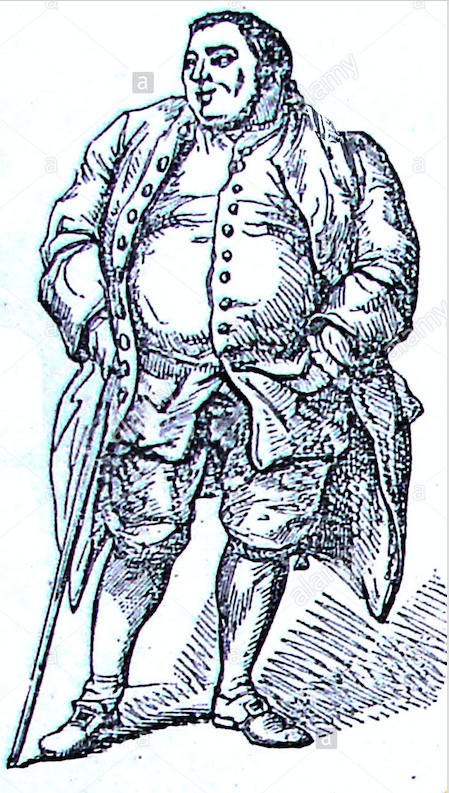 The Dictionary of National Biography says of Grose, “Grose has been described as a sort of antiquarian Falstaff. He was immensely corpulent, full of humour and good nature, and ‘an inimitable boon companion’ (Noble, Hist. of the College of Arms, pp. 434-438, Gent. Mag., 1791, vol.lxi, pt. ii. p. 660). There is a full-length portrait of him, drawn by N. Dance and engraved by F. Bartolozzi, at the beginning of his ‘Antiquities of England,’ vol. i. 1st ed. (for other portraits, see Noble, pp. 436-7; and Gent. Mag. 1791, vol. lxi. pt. i. pp. 493-494). Grose lived chiefly at Mulberry Cottage, Wandsworth Common (Brayley, Surrey, iii. r99). He married Catherine, daughter of Mr. Jordan of Canterbury, by whom he had two sons and five daughters. The eldest son, Colonel Francis Grose, was deputy-governor of Botany Bay (Notes and Queries, ser. ii. 47, 257, 291).”

 The Rest of the Cast


 Emma’s snobbish attitude is very evident when she tells Harriet:

 “In Emma, says Harris, the heroine’s openness is preferable to Jane Fairfax’s reserve, even if Emma ‘says too much too often.’ She, ‘like Elizabeth Bennet, speaks too freely because her father’s power is weak.’ But Austen shields these two outspoken, intelligent heroines from being labelled shrews by the use of free indirect speech – so we sometimes find them thinking uncharitable thoughts that they are too tactful to express out loud. Austen was highly conscious of the effect of gender on language. Anne Elliot in Persuasion comments that ‘men have every advantage of us in telling their story. Education has been theirs in so much higher a degree.'” [


 In Jane Austen’s novels, we meet characters in very different financial circumstances, but even most of those bordering on poverty manage to have servants of some kind. In Emma,
 Servants knew a lot about the families they worked for. Anything done or discussed in the house was at risk of being talked about. In Pride and Prejudice, Mrs Reynolds, the housekeeper, gives plenty of information about Mr Darcy and Georgiana, and “had evidently great pleasure in talking of her master and his sister.” Mrs Reynolds’ praise contributes to changing Elizabeth’s perception of Darcy.
 Austen also shows us some grey areas in the relationships between master or mistress and servant. In Mansfield Park, Fanny Price’s position in the Bertram household is unclear. She is quiet and accepting of her fluctuating status, but how would someone with more spirit react to the way she is sometimes treated by the Bertrams and Aunt Norris in particular?
 Stage coaches averaged about 7 miles per hour on the turnpikes, but much slower on secondary roads, which they traversed often since they were the only real public transportation connecting smaller towns. They also operated across the country instead of always radiating from London like the mail coaches did. They pushed their horses hard and carried LOTS of passengers, so the horses rarely lasted even three years of service, often being sold to farmers as plow horses afterwards.
  A traveler would hire horses every 15-20 miles if he wanted to make any time. But the coach was required to stop at all toll gates, slow for all the numerous villages, and give way whenever a mail coach came up behind them. By the 1830s, that speed was doubled due to macadamization, which started in 1814.
 One of my author friends recently posted her top ten “love” quotes from movies. In response, I have chosen some of my favorites (in no particular order). I had a great time doing this, but I ran out of space. I think I will revisit the idea again soon. (P.S. Tell me some of your favorites. Perhaps we can start a trend and post them on imbd.) Now, I must pull several of these from my collection and have a “love fest” of my own making. A great film and a glass of wine. Enjoy!
 Dirty Dancing (1987)
 Notting Hill (1999)
 Titanic (1997)
 The Last of the Mohicans (1992)
 When Harry Met Sally (1989)
 The Notebook (2004)
 Sleepless in Seattle (1993)
 Casablanca (1942)
 Jerry Maguire (1996)
 Sense and Sensibility (1995)
 An Affair to Remember
 Doctor Zhivago
 Wuthering Heights
  A Room with a View
 The Way We Were
 The Time Traveler’s Wife
 Ten Things I Hate About You
 The Bridges of Madison County
 Under the Tuscan Sun
 It Happened One Night
  Up Close & Personal
 Two Weeks’ Notice
 Notting Hill
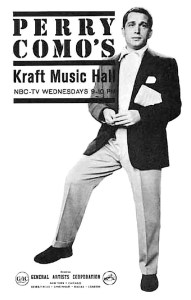 On the Perry Como Show, which began back in 1955, the chorus customarily sang: “Letters, we get letters. We get stacks and stacks of letters.” However, during the Regency Period, the mail was expensive. MPs were the only ones who had a “free” ride for the mail delivery. Until 1840, MPs could “frank” their own letters, but they were supposed only to use this privilege for letters dealing with business for the Crown. That did not stop MPs from leaving pre-franked sheets with a friend for that friend’s personal use; therefore, the system was not perfect. Wax seals were used for the MPs letters.


 Every Woman Dreams...