Congratulations to the Winners!!!

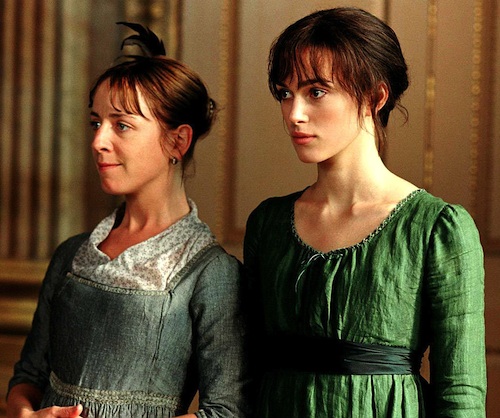
These lucky winners just won an eBook copy of my latest novel, Losing Lizzy: A Pride and Prejudice Variation. The Kindle notice should be in your email box.

The list below reflects the winners on my blog, Every Woman Dreams, and those from Austen Authors and the other blogs hosting this release: 

Aimee J

Amy Z

Beth

charlene 

deborahanne2

Glenda M

G Sw

Juliana 

lesliegb

Lüthien84

Kayelem 

Susan 

Teresa

Vanessa M

Zahra

Posted in Austen Authors, blog hop, book release, eBooks, giveaway, Jane Austen, Pride and Prejudice, Vagary | Tagged , , , , , | 3 Comments

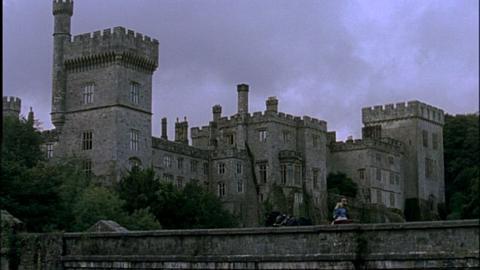
Deadman’s Island, Setting as Character in “Losing Lizzy: A Pride and Prejudice Vagary”

Deadman’s Island, located at the mouth of The Swale, opposite the town of Queenborough on the Isle of Sheppey, off the north Kent coast, plays a major role in my new JAFF story, entitled Losing Lizzy: A Pride and Prejudice Vagary

As mentioned above, Deadman’s Island is a flat, raised area of marshland approximately 1200 metres long and 200 metres wide. It is found in the estuary of the River Medway in Kent in England near where the Swale flows into the Medway. It lies among the tidal sand banks on the southern side of the estuary and is separated from the mainland of Chetney Marshes by a narrow channel known as Shepherd’s Creek. The town of Queenborough lies a kilometer to the east of the West Swalle channel. The island is crossed by several narrow tidal channels, which means at high tide, the island is separated into several smaller islands. 

This island is a fascinating place, but, unfortunately, it is not one the general public can visit. The uninhabited mudbank is owned by Natural England, who lease it to two people.The wetland site is protected land, and is a Site of Special Scientific Interest (SSSI) and recognised to be of international importance under the Ramsar convention. The Ramsar Convention is a Convention on Wetlands, an intergovernmental treaty that provides the framework for national action and international cooperation for the conservation and wise use of wetlands and their resources. Deadman’s Island is also an important bird breeding and nesting site.

Back in January 2017, the BBC’s Inside Out South East programme took a boat across to investigate whether any of the rumours were true. The Inside Out team was only allowed to visit after receiving permission from the leaseholder and because it was not the bird breeding season.

FERRARI PRESS AGENCY…Dozens of bodies are being uncovered by the elements at mysterious Deadman’s Island off the coast of Sheppey, Kent. A BBC Inside Out South East programme revealed grisly bones which are now littering the remote island’s beaches. Credit: BBC Inside Out South East. See Ferrrari copy.

Bodies were buried on Deadman’s Island as early as the 1600s, but it became a “burial ground” of sorts for those who died upon ships carrying diseases. The ships were quarantined on nearby Burntwick Island, and the dead were buried on Deadman’s Island. Both islands set at the mouth of the Thames. The quarantine and burials were meant to prevent another “plague” to reach London. Later, Deadman’s Island was used as a port for Prison Hulks. Originally, prison hulks were used to detain prisoners who were used for work details during the day and imprisoned upon the hulks at night.

In 2016, the remains of more than 200 humans were found on the island. The remains are believed to be those of men and boys who died of contagious diseases or on board floating prisons, known as prison hulks, which were moored off the Isle of Sheppey more than 200 years ago.

They were buried in unmarked coffins in six feet of mud.

They were originally buried in wooden coffins under six feet of mud. Unfortunately, rising sea levels and coastal erosion over the years have begun to slowly wash away their final resting place, leaving wooden coffins and skeletal remains sticking out of the mud. They are only visible when the tide is out. The remains are being washed out into the sea, and would be difficult to rebury. The island is marked with wooden posts across it, though these are probably to help identify the island and prevent erosion and not grave markers as sometimes claimed.

Locals in the Sheppey town of Queenborough grew up with the legend of a red-eyed hound who ate the heads of its victims on the eerie land mass. But historians have shown it was used a cemetery for inmates onboard prison hulks – converted warships used as floating jails for criminals waiting to be transported to the colonies in the 1820s and 30s.

FERRARI PRESS AGENCY…Dozens of bodies are being uncovered by the elements at mysterious Deadman’s Island off the coast of Sheppey, Kent. A BBC Inside Out South East programme revealed grisly bones which are now littering the remote island’s beaches. Credit: BBC Inside Out South East. See Ferrrari copy. https://www.dailymail.co.uk/news/article-4184394/Bones-19th-century-prison-ship-inmates-uncovered.html

Experts say more than 1,000 men and boys were incarcerated in floating fortresses ‘Retribution’ and ‘Bellerophon’ anchored at Sheerness, made of decommissioned Ships of the Line stripped of their masts and sails. Naval historian Professor Eric Grove said: ‘Obviously when people died on board these prison hulks they had to be buried somewhere and island close-by was the obvious place.’ There has been debate about how bad the conditions were on board, but it is believed a cholera outbreak on Retribution on the 1830s may help explain the dozens of bodies now littering the island.

Coincidentally, during the Napoleonic wars, many French prisoners of war were held around the coast at Chatham, with those who died buried on the nearby marshes.

Deadman’s Island Gives Up Its Secrets

Deadman’s Island Reveals the Grisly History of Kent 

Six Things to Know About Deadman’s Island

Thousands of Bodies Dumped (Deadman’s Island) 

Losing Lizzy: A Pride and Prejudice Vagary 

She thought him dead. Now only he can save their daughter.

When Lady Catherine de Bourgh told Elizabeth Bennet: “And this is your real opinion! This is your final resolve! Very well. I shall now know how to act. Do not imagine, Miss Bennet, that your ambition will ever be gratified. I came to try you. I hoped to find you reasonable; but, depend upon it, I will carry my point,” no one knew how vindictive and manipulative her ladyship might prove, but Darcy and Elizabeth were about to discover the bitter truth for themselves.

This is a story of true love conquering even the most dire circumstances. Come along with our dear couple as they set a path not only to thwart those who stand between them and happiness, but to forge a family, one not designed by society’s strict precepts, but rather one full of hope, honor, loyalty and love.

Amazon https://www.amazon.com/dp/B0884F86FP

Kindle  https://www.amazon.com/Losing-Lizzy-Pride-Prejudice-Vagary-ebook/dp/B08886PXQG/ref=tmm_kin_swatch_0?_encoding=UTF8&qid=&sr=

Kobo https://www.kobo.com/us/en/ebook/losing-lizzy

Nook https://www.barnesandnoble.com/w/losing-lizzy-regina-jeffers/1137038434?ean=2940162951087

Posted in Austen Authors, book release, British history, eBooks, England, Georgian England, Georgian Era, Great Britain, historical fiction, Jane Austen, Living in the Regency, Living in the UK, Pride and Prejudice, reading habits, Regency era, Regency romance, suspense, Vagary, writing | Tagged , , , , , , , , , , , , , , | 4 Comments

Announcing the Release of “Losing Lizzy” with an Excerpt + a Giveaway

Okay, I admit it. This idea for a new Pride and Prejudice variation has been floating about in my head for more than two years, likely closer to three. Each time it resurfaced, however, I have placed the premise aside because for the story to happen, Darcy and Elizabeth needed to anticipate their vows, and, in truth, I tend to avoid those type of stories myself. So, if you are one of those who prefers our dear couple to wait for their marriage bed, I pray you will give this story a chance before rejecting it. The story starts nearly four years after Darcy does not show for his wedding. Please know, other than a few kisses, this story is squeaky clean. 

I also admit this tale goes further away from canon than do most of my stories. It takes its roots from the scene where Lady Catherine de Bourgh calls at Longbourn and attempts to convince Elizabeth to abandon her hopes of ever being Mrs. Darcy. For those of you who require a reminder: 

“You are then resolved to have him?”

“I have said no such thing. I am only resolved to act in that manner, which will, in my own opinion, constitute my happiness, without reference to you, or to any person so wholly unconnected with me.”

“It is well. You refuse, then, to oblige me. You refuse to obey the claims of duty, honour, and gratitude. You are determined to ruin him in the opinion of all his friends, and make him the contempt of the world.”

“Neither duty, nor honour, nor gratitude,” replied Elizabeth, “have any possible claim on me, in the present instance. No principle of either would be violated by my marriage with Mr. Darcy. And with regard to the resentment of his family, or the indignation of the world, if the former were excited by his marrying me, it would not give me one moment’s concern — and the world in general would have too much sense to join in the scorn.”

“And this is your real opinion! This is your final resolve! Very well. I shall now know how to act. Do not imagine, Miss Bennet, that your ambition will ever be gratified. I came to try you. I hoped to find you reasonable; but, depend upon it, I will carry my point.

The question answered in my story is how far will Lady Catherine carry her point to separate Elizabeth from Darcy?

____________________

She thought him dead. Now only he can save their daughter.

When Lady Catherine de Bourgh told Elizabeth Bennet: “And this is your real opinion! This is your final resolve! Very well. I shall now know how to act. Do not imagine, Miss Bennet, that your ambition will ever be gratified. I came to try you. I hoped to find you reasonable; but, depend upon it, I will carry my point,” no one knew how vindictive and manipulative her ladyship might prove, but Darcy and Elizabeth were about to discover the bitter truth for themselves.

This is a story of true love conquering even the most dire circumstances. Come along with our dear couple as they set a path not only to thwart those who stand between them and happiness, but to forge a family, one not designed by society’s strict precepts, but rather one full of hope, honor, loyalty and love.

Excerpt from Chapter One (Read the beginning of this chapter at AustenAuthors.net today and enter to win there, as well.)

Even after reaching England, it had taken them another two days to maneuver up the Thames and dock in London. In all, he had spent three weeks with the crew of The Resolution, an appropriate name for a ship that brought about an ending to his ordeal, who once they had retrieved him from the water and had heard his tale, had altered their course to trap those on The Lost Sparrow in the cove before the pirates could respond. They may have made it to England sooner if they were not required to tow The Lost Sparrow into port, but Darcy knew satisfaction when he finally stepped down on the docks in London, where his nightmare had begun. The clothes he wore had been borrowed from various members of The Resolution’s crew. They were ill-fitting, but so much more than the rags he had known since being pressed into service on The Lost Sparrow.

Wilder had hired a hackney to return Darcy to Darcy House. Now, as he stepped down before his London home, people stared at him in distaste as he approached the door and released the knocker, but Darcy made himself not turn around, concentrating all his energies on surviving the next few minutes. He knew his appearance was less than pristine for he wore mismatched clothes several sizes too large for him. One step at a time—the advice from Bruester, who had heard from his parents in a letter how Lord Matlock had moved to declare Darcy as dead after the authorities had found his cane and the ring he had purchased for Elizabeth somewhere upon the docks, rattled about in Darcy’s head. Therefore, he did not know what to expect when the door opened, but any preparations he had made mentally had not been enough.

“Yes, sir?” A man he did not recognize swung the door open.

“Where is Mr. Thacker?” he asked before he could stop himself.

“Mr. Thacker has taken another position, sir. That was nearly four years past.” The man pulled himself up stiffly. “I am Mr. Jones. Do you have business with the master?” The man eyed Darcy’s mishmash of clothing up and down and edged the door partially closed.

“The master?” Darcy asked. He knew his voice held surprise, but there was no way to control his reaction to this new reality.

“Mr. Fitzwilliam.” Again, the door moved another inch closer to being slammed in Darcy’s face.

Darcy employed his best Master of Pemberley voice. “Yes, I would like to speak to Mr. Fitzwilliam.” The idea the Matlocks had taken over his house did not set well with him. If he were dead, it should be Samuel Darcy residing in this house, not the colonel. His father’s cousin, Samuel, was the heir to the Darcy fortune, not those in the Fitzwilliam family.

“Who is it, Jones?” a familiar voice called out from the second storey landing.

“I am not certain, sir.” Jones narrowed the opening.

Darcy caught the edge of the door and gave it a good shove, sending the butler stumbling backward. “Fitzwilliam!” he called, using his shoulder to barrel his way into the foyer.

From above, he heard his cousin cry out, “What the—?”

Darcy paused from his exertion to look up. “Why are you acting as master of my my house?” he demanded.

His cousin caught hard at the railing. “My God, Darcy. It is you.”

“Most assuredly, it is I.” He started for the stairs, but two unfamiliar footmen stepped before him. “Have you removed all who once served me?” he questioned, a scowl of disapproval forming on his features.

Fitzwilliam gestured the servants from his way. “Permit Mr. Darcy admittance,” his cousin instructed. “After all, as he says, this is his house.”

As Darcy climbed the stairs, never removing his eyes from his cousin, he ordered, “Mr. Jones, if you expect to retain your position, bring me a small meal and a proper cup of tea and do so quickly.”

“Yes, sir,” the man called as he scrambled away.

Fitzwilliam appeared as stunned as was Darcy. There was no embrace of emotions. Only something that appeared like regret upon the colonel’s features showed. “Lead on, Cousin,” Darcy said through tight lips, a feeling of betrayal settling in his chest. “I am most eager to hear your explanations.”

Without uttering a word, Fitzwilliam turned crisply upon his heels and preceded Darcy into the study. In anger, Darcy purposely closed the door behind them.

His cousin crossed to the tray holding a decanter of brandy. “May I pour you a drink?”

Darcy eyed the room. Subtle changes had been made in the furnishings of the room. At least all he held dear had not been set aside. “I will pass. I fear I will require a clear head to understand what has gone on in my absence?”

Fitzwilliam turned toward him, his features grim. His cousin was a man Darcy had always trusted, but, now, he wondered if he had made a serious mistake in judgment. “It is not as this must first appears,” his cousin pleaded. “What I have done, I did so to protect your interests and your sister.”

Darcy thought to assume the chair behind the desk, but, rather, he chose the two wing chairs before the hearth. “I am willing to listen, but know I have recently been in the company of Captain Robert Bruester, who had heard from his family that Matlock has attempted to have me declared dead.”

“Bruester? I thought him at sea,” Fitzwilliam remarked as he joined Darcy before the empty hearth. The colonel studied Darcy carefully.

“He was. As was I until I managed to escape the pirate ship upon which I have been held for nearly four years.” He nodded to his cousin. “Was my uncle successful? Must I begin my return to the world by proving I am truly alive?”

“A pirate ship? My God, Darcy! I would never have thought you had been caught by a press gang. We assumed you had been robbed and tossed into the Thames.”

Darcy held himself very stiff. “It is not that I object to making an explanation regarding my capture and my escape, but I require some answers from you first.”

Fitzwilliam nodded his agreement. With a heavy sigh, he began, “We were all at sixes and sevens when you did not show at your wedding.”

Darcy wished to ask of Elizabeth, but his first task was to learn where his father’s legacy stood before he could inquire of Elizabeth Bennet’s fate.

“What did you do?”

If Fitzwilliam had expected Darcy to ask of Elizabeth, the colonel quickly hid his curiosity. He permitted Darcy to dictate their conversation. “Georgiana and I returned to London, and I began to trace your steps. The day your sister and I departed for Netherfield, you were to retrieve Miss Elizabeth’s ring from the jeweler. That is where I began.”

“And you discovered?” Darcy questioned.

“Very much what I shared a moment ago. I employed the services of my friend Thomas Cowan, who you might recall was a former Bow Street Runner. He and I called upon the jeweler, who assistant told us two men were seen following you when you exited the shop.”

Darcy wished he had paid more attention on that particular day, but his head was full of memories of Elizabeth Bennet, and he belatedly realized he had not practiced caution. “Why was not an alarm raised?”

“A series of excuses, but none worth pursuing,” his cousin said with a frown.  “The jeweler and his assistant each blamed the other for not performing as they should have. When we departed the jeweler, Cowan suggested we search the docks and question those who were employed there. One of your tasks that day was to see to a shipment in which you and father had invested.”

“That was my destination,” Darcy admitted, but he listened carefully to hear what the colonel left out of his tale.

“We learned of two ships that departed the night you left the jewelers. I spoke to everyone who would share information; yet, there were no substantial leads as to your whereabouts.”

Darcy remembered how the men who had caught him had struck him repeatedly until he had gone unconscious. When he finally woke up, The Lost Sparrow was departing the docks, but not those in London. He had been transported further down the Thames to somewhere in Kent.

Fitzwilliam continued, “Cowan located the ring and the cane in a pawn shop, and we traced the items backed to the man who pawned them. He swore he found them behind some crates near the docks.”

Darcy recalled throwing the ring away, hoping against hope the men only meant to rob him. He thought they might leave him be long enough for him to make an escape, but they ignored the box. They had ripped the cane from his hands as he had used it as a weapon against them and had tossed it aside also.

“There was nothing to connect him to your disappearance. If you say he was involved, I will have Cowan locate him and bring him in for questioning.”

Darcy shook off the idea. “I know the identities of those involved. There were five all together. Two were killed in a skirmish with another pirate ship and the other three are presently in the custody of the British navy, along with their captain and crew mates.”

“Were you never permitted on land in all those years?” Fitzwilliam asked in bewilderment.

“Not once,” Darcy said in deep sorrow. “I thought, especially in the beginning, I would go mad. Only the memories of Elizabeth and Georgiana kept me alive.”

“You wish to know of Miss Elizabeth’s fate?” Fitzwilliam asked in sympathetic tones, which made Darcy’s heart ache. How would he survive if she had married another?

“Not yet,” he said solemnly. “You still have not spoken to me of the earl’s efforts to declare me dead nor why you are at Darcy House rather than my father’s cousin, Samuel Darcy?”

Amazon https://www.amazon.com/dp/B0884F86FP

Kindle  https://www.amazon.com/Losing-Lizzy-Pride-Prejudice-Vagary-ebook/dp/B08886PXQG/ref=tmm_kin_swatch_0?_encoding=UTF8&qid=&sr=

Kobo https://www.kobo.com/us/en/ebook/losing-lizzy

Nook https://www.barnesandnoble.com/w/losing-lizzy-regina-jeffers/1137038434?ean=2940162951087

GIVEAWAY: To be entered into the giveaway of 3 eBook copies of “Losing Lizzy,” comment below. The Giveaway will close a midnight EST on Thursday, May 21.


Posted in book release, British history, excerpt, Georgian England, Georgian Era, Jane Austen, Pride and Prejudice, publishing, Regency era, Regency romance, Vagary, writing | Tagged , , , , , , , , , , | 18 Comments

Queenborough Castle and Well + the Release of “Losing Lizzy: A Pride and Prejudice Vagary” + a Giveaway

The depiction of Queenborough Castle carved on the contemporary Baptismal font at Holy Trinity Church, Queenborough (an engraving published in London in 1845). https://en.wikipedia.org/wiki/Queenborough_Castle#/media/File:Queenborough_Castle_font_image.png

Sheppey Castle [or Queenborough Castle] is located on the Isle of Sheppey, Kent, England. King Edward III ordered the castle and the town surrounding it built in honor of his wife, Queen Philippa. The original land came from the manor of Rushenden at the fishing hamlet known as Bynne (or Bynnee). Construction began in 1361, during a period when there was a peaceful interlude in the Hundred Years’ War. The royal family also considered it a possible refuge in case of another plague arriving on London’s docks, as the Black Death had come to London in the 1350s. The castle was the first concentric castle built in England and the only “royal” castle to be built from the floor up during the Late Middle Ages. It overlooked the Swale, which is an important part of the River Medway’s Estuary and the defense of the Thames Estuary and, therefore, of London. Moreover, the French had raided the south coast of England at Rye and at Winchelsea during March 1360. A way to defend London from invaders was required. For more than 300 years, Queenborough Castle formed part of the coastal defense of England. 

Its construction employed some 1600 craftsmen and labourers at a cost of £20,000. The large circular castle was complete in 1367. It was buttressed by six projecting towers. A outer circular wall and moat surrounded the main building. Queenborough was one of the first English castles built to withstand siege artillery and to mount guns itself. Water was channelled from the roofs through lead piping into storage cisterns for use by the inhabitants of the castle. In 1393, a contractor spent over a year digging a well in the center of the courtyard. The Queenborough well plays a major role in my latest novel, Losing Lizzy: A Pride and Prejudice Vagary

A 1784 engraving of Queenborough Castle based on a drawing by Wenceslaus Hollar (1607-1677). Published in 1915. https://en.wikipedia.org/wiki/Queenborough_Castle#/media/File:Queenborough_Castle_1784.png

Queenborough Castle came into the possession of the Commonwealth after the execution of King Charles I. In 1650, Parliament ordered an update on the condition of the building, which was judged to be so unfit that it should be demolished. The castle was sold to John Wilkinson for a little less than £1800. Wilkinson demolished the castle down to its foundations and sold the materials to make a slight profit. The Royal Navy surveyed the well which had survived the demolition and found it to be 200 feet deep and lined with Portland stone. At the time, they were able to extract water from the well for use at the dockyard at Sheerness. The site is now a public park and only some low earthworks remain of what was once its grandeur.

Arriving Tomorrow, May 16, 2020

Losing Lizzy: A Pride and Prejudice Vagary 

She thought him dead. Now only he can save their daughter.

When Lady Catherine de Bourgh told Elizabeth Bennet: “And this is your real opinion! This is your final resolve! Very well. I shall now know how to act. Do not imagine, Miss Bennet, that your ambition will ever be gratified. I came to try you. I hoped to find you reasonable; but, depend upon it, I will carry my point,” no one knew how vindictive and manipulative her ladyship might prove, but Darcy and Elizabeth were about to discover the bitter truth for themselves.

This is a story of true love conquering even the most dire circumstances. Come along with our dear couple as they set a path not only to thwart those who stand between them and happiness, but to forge a family, one not designed by society’s strict precepts, but rather one full of hope, honor, loyalty and love.

Teaser from Chapter Twelve: 

“Mr. Darcy,” his coachman pleaded. “This is a dangerous endeavor. I must advise you against entering the well.”

Darcy continued to release the buttons on his waistcoat. His greatcoat, dress coat, and hat rested upon the ground near where his carriage sat ready. “I did not realize the well had collapsed further,” he admitted. “I know my efforts are likely futile, but I cannot walk away until I attempt to discover for certain whether my daughter is lying at the bottom. Even if she has not survived this abuse exacted against her, Elizabeth Anne should look down from heaven and know her father loved her enough to enact the impossible in her name.”

Both his coachman and footman nodded sharply, tears evident in their eyes. “We will support you, sir.” Jasper said. “Do what you must. We will not abandon you.”

Mr. Farrin backed the coach close to where the Queenborough Castle well once stood. Traces of the bricks and the hole were all any of them could see: A gaping hole—one reportedly more than a hundred feet deep.

Darcy tied the rope about his waist as Jasper placed a three-inch wide tree limb through the back wheels of the carriage to keep it from rolling. They had tied the other end of the rope to the carriage’s chassis. Mr. Farrin stood at the head, holding the horses in place, prepared to pull Darcy out if he encountered difficulties.

“We only have fifty feet of rope, sir. Not enough to reach the bottom,” Jasper cautioned.

“I understand.” If Elizabeth Anne was alive at the bottom of the well, Darcy would purchase every length of rope in Kent in order to reach her, and if she had died at the hands of Townsend, he would pay to have an expert climber retrieve his child’s body, see her buried properly, and, then, personally hunt down Townsend and exact his own revenge. Upon The Lost Sparrow, Darcy had learned several unique methods of torture, and he would see each performed on Townsend before the man died. “Perhaps there is enough to learn the truth. That is all I ask.”

Amazon https://www.amazon.com/dp/B0884F86FP

Kindle  https://www.amazon.com/Losing-Lizzy-Pride-Prejudice-Vagary-ebook/dp/B08886PXQG/ref=tmm_kin_swatch_0?_encoding=UTF8&qid=&sr=

Kobo https://www.kobo.com/us/en/ebook/losing-lizzy

Nook https://www.barnesandnoble.com/w/losing-lizzy-regina-jeffers/1137038434?ean=2940162951087

GIVEAWAY! I HAVE 2 eBOOK COPIES OF “LOSING LIZZY: A PRIDE AND PREJUDICE VAGARY AVAILABLE FOR THOSE WHO COMMENT BELOW. THE GIVEAWAY ENDS AT MIDNIGHT ON FRIDAY, MAY 22, 2020.

Posted in book excerpts, book release, British history, British Navy, buildings and structures, eBooks, giveaway, Jane Austen, kings and queens, medieval, Pride and Prejudice, research, writing | Tagged , , , , , , , , , , | 28 Comments

Precedence in Seating at Supper During the Regency Era

I often read in another’s author’s book about the guests for supper at Lord and Lady So-and-So supper party entered the room according to precedence, meaning according to rank/title, with the host escorting in the highest ranking female and the hostess entering on the arm of the highest ranking gentleman (not her husband). The hostess and her escort was at the end of the line, not directly behind the host and his supper partner for the evening. Heck, I am certain in one or more of my fifty novels, I have written a similar scene. The thing is, although I cannot say this was not a custom found in the Regency, I cannot seem to locate any actual pieces from the time period that prove it. 

Therefore, I am relatively certain, this practice is more Victorian than Regency. I am taking this stance due to what I read in Ernest Hemingway’s A Moveable Feast, which indicates in the times before the Victorian period, people sat where they wanted.  However, I have been proven incorrect before and will likely be made a fool again. 

I do know that the manner in which a supper party was conducted changed in the early 1800s. In the late 1700s and early 1800s, one might see the women all seated on one side of the table and men on the other. Later, there was a period where the guests were mixed, more of man-woman-man-woman, etc., about the table, which required an equal number of men and women as guests (another plot line found in Regency romances, especially unequal prospects). Not everyone in Society jumped on the proverbial “bandwagon” at the same time regarding these changes. By the way, the host and hostess do not count in the system of precedence except that sitting next to either one was an honor no matter the relative ranks they held.

Nuncheon (lunch, as many of us think of it) became a “thing.” The meal was gradually moved from about 2:30 in the afternoon to around five, or even later. Supper could be as late as 8 PM. 

Over this time, meal times transformed, as some believe thanks to the Duchess of Bedford. “The Spruce Eats, tells us, “There is no more quintessential British ritual than the ceremony and serving of afternoon tea. It is believed that credit for the custom goes to Anna, the 7th Duchess of Bedford in the early 19th century. The usual habit of serving dinner between 8 and 9 pm left the Duchess hungry and with a ‘sinking feeling’ by late afternoon. To stave off the hunger, she would order tea, bread and butter and cakes ​to be served in her room. Later on, she would invite friends to join her at her home and the light tea was such a success the habit caught on.

“The origins of afternoon tea show clearly it was the preserve of the rich in the 19th century. For workers in the newly industrialized Britain, tea time had to wait until after work. By that hour, tea was generally served with heartier dishes which were substantially more than just tea and cakes. Workers needed sustenance after a day of hard labor, so the after-work meal was more often hot and filling and accompanied by a pot of good, strong tea to revive flagging spirits. Today, the evening meal in working-class households is still often called “tea” but as working patterns have changed yet again, many households now refer to the evening meal as supper. The addition of the word ‘high’ to the phrase ‘high tea’ is believed to differentiate between the afternoon tea that is traditionally served on low, comfortable, parlor chairs or relaxing in the garden and the worker’s after-work high tea that is served at the table and seated on high back dining chairs.”

An alternate seating arrangement was having the husband and wife sit next to each other on the long side of the table they sat in the middle on one side. Though, the Ton did not usually seat husbands and wives beside each other, people could do what they wanted in their own houses, especially if they felt secure enough not to be afraid of violating some unspoken rule or other.

At the beginning of the century, men and women were sitting on different sides of the table. Or everyone just sat where ever they wanted. It was only at a formal meal, with many guests, that everyone tried to follow the more rigid rules.

Men and women on different sides of the table, people sitting wherever they wanted, or a rigid formality with precedence followed. There is evidence in letters, books and pictures of all three systems being used. Then again we must consider that there seldom was an equal number of men and women at political dinners, for example, either because just a few women attended (were invited) to keep the hostess company or they were women who were involved in their husbands’ political career. If the host was not a married man, he had to have a female relative to play hostess if females were invited to be his guests for the evening. Only a relative could play hostess at a dinner without causing gossip.

We customarily believe the two highest ranking men sat on either side of the hostess and the two highest ranking females on either side of the host. The others often just sat themselves. It was not until the Regency period that the guests started going into meals two-by-two and then only on formal occasions. There are many letters and such about meals where the men and women were uneven in number. One lady complained about having to go in two by two like animals into an ark. If it was a rather friendly supper party, the guests need not stand on complete ceremony—except the host had to have a female relative, of an appropriate age, serve as his hostess.

If presented with their choice of seating, some might choose the section of the table with the dishes they most preferred. We must remember, despite what the novels we read say, most of the dining rooms were not that large, and so the number of dinner guests was limited. The people knew each other and took their seats, sorting themselves out according to preference.

Posted in British history, food and drink, Georgian England, Georgian Era, historical fiction, Living in the Regency, Regency era, Regency romance, titles of aristocracy, Victorian era | Tagged , , , , , , , , | 4 Comments

“Heartsease, or The Brother’s Wife,” the Victorian Retelling of Austen’s “Mansfield Park”

Are you aware of the Victorian tale Heartsease, or the Brother’s Wife by Charlotte Mar8160955y Yonge? June Sturrock, editor of the Broadview Texts, gives us this summary of the story. “A very young, timid, but highly principled and religious girl from a large and humble family is taken into a rich, upper-class household, whose money comes mainly from large estates in the West Indies. In this cold and formal family, she is neglected, snubbed, and often made to feel like a vulgar and uneducated outsider, especially by the beautiful but passive lady of the house, by a self-possessed daughter of the house – and most of all by a spiteful, hostile, and mercenary aunt. One of the two sons shows her great kindness, but all the same, she suffers greatly through a number of trials, and is often unwell. She is brought into direct rivalry for the affections of her beloved with a richer, livelier, and better-known young woman. Eventually, after a series of family disasters, her strict adherence to her own ethical code places her as the moral center of her household, a household that is made more humane by her central role in it.

“This plot line will seem very familiar… However, it is a summary not for Mansfield Park, but of Heartsease, a novel published in 1854 by Charlotte Mary Yonge, the best-selling (and Austen loving) author of The Heir of Redclyffe…. Yonge’s pious mid-nineteenth-century rewriting of Mansfield Park elaborates on these subject [money, morals, and the West Indies] in a telling fashion. It sends Anglican missionaries off to the mismanaged West Indian properties belonging to its version of the Bertram family, and involves at least half-dozen other instances of gross financial mismanagement or corruption, as well as a series of both proposed and actual mercenary marriages. Evidently an astute, if biased, reader of this period saw both Austen’s West Indian references, and the related and insistent concern with false attitudes towards money, as significant moral aspects of Mansfield Park. Victorian readers and writers, that is, were prepared to view Austen’s fiction in terms of the morality of material and economic issues. After Yonge, however, these concerns were largely ignored by Austen’s readers for the next century or so. Not until the later twentieth century, and especially after the publication of Edward Said’s “Jane Austen and Empire” in 1989, was the West Indian question seen as being of much significance.” (Sturrock, June. “Money, Morals, and Mansfield Park: The West Indies Revisited, Persuasions. No. 26. 2006, pages 176 – 177.)

mwo220x200ipad_2_snap-pad220x200ffffffStella Waring provides us this plot summary of Heartsease: or The Brother’s Wife on The Charlotte M Yonge Fellowship Home PageCopyright © 2000-2010. 

Heartsease is Violet, the sixteen year old daughter of an ambitious solicitor, who married Arthur Martindale, a thoughtless young officer, without the knowledge and approval of his aristocratic family. This family consists of Lord and Lady Martindale, Arthur’s parents, Mrs Nesbit, his mother’s aunt, who dominates her niece and has a fortune which she holds over the head of the family. There is an elder brother, John, a semi-invalid who spends his winters abroad and has little to do with the rest of the family: apart from bad health, he has also fallen into a state of dispirited resignation since the death of his fiancée, Helen Fotheringham. There, is too, a sister, Theodora – an impulsive girl with strong feelings, who adores her brother Arthur.

“The reactions of the family are barely favourable – Mrs Nesbit is furious, Lord Martindale not happy but prepared to support the young couple, while Lady Martindale seems to have no strong feelings. Theodora, however, is angry and jealous. John goes on a mission of reconciliation to the young couple, and, to his surprised, is impressed by his new sister-in-law and comes out strongly in her defence. He plays a major part in strengthening Violet’s rather timid character by holding up to her the example of Helen Fotheringham, who had borne wearisome domestic trials with a brave and cheerful spirit.

“All this sounds very unpromising, and in the early years, Violet is very unhappy – not allowed to see her own family, disliked and distrusted by her in-laws, apart from John and his father, and neglected by her husband. She remains quiet and unassuming, fights her way through her misfortunes and eventually her influence permeates the family. The prime instance of this is Theodora – the ‘other’ heroine: high-principled but also wilful, jealous and intransigent. Under Violet’s guidance, Theodora gradually grows in self-knowledge and patience.

“It takes several family upheavals and disasters – including a fire which destroys the family mansion and kills off Mrs Nesbit – to make everyone aware of the beneficial effect Violet has come to exert on the whole family. In one of the later chapters, Percival Fotheringham, an important character and eventually the husband of Theodora, says this of Violet: ‘The history of these years is this … Everyone else has acted more or less idiotically . She has gone about softening, healing, stirring up the saving part of each one’s disposition …'”

heartseaseorbro00yonguoftPutnam’s monthly magazine of American literature, science and art. Volume 5, Issue 26, February 1855 : page 220 provides this review of Heartsease: “ The central idea of Heartsease (by the author of The Heir of Redcyffe) is the same with that of The Pride of Life; namely: the experience of a wife, married for her loveliness, into a sphere ‘above’ her own. Perhaps novels of this species are a sigti and outgrowth of the gradual equalization which seems to be slowly supervening upon the stratified texture of English society. But the book is of a much higher order, morally and artistically. than Lady Scott’s. The characters are exceedingly well drawn and distinguished. Violet is a true and lovely woman, operating upon her unstable husband, and her outrageously proud sister-in-law, Theodora, by forces beautiful and womanly, unconscious and still, but powerful and sure. Her own trials and changes, and those of her relatives, are very skillfully developed. The book, although not of the intense kind, bears evidence of very keen observation, and very true and careful thought; and as a work of art, must rank very high. There is one noticeable defect, in the management of the moral. This, which was apparently intended to permeate the whole texture of the narrative, is stuck in in unassimilated, uncomfortable lumps. We come upon them as upon an unexpected jolt ; with a start and an ‘oh !'” (CMYF)

In contrast, in September 2016, a reader on Amazon gave this review: Violet Moss, the apparent heroine of Heartsease, is barely 16 years old – pretty, humble, and ignorant – when she marries charming, handsome, selfish, and improvident Arthur Martindale. His upper-crust family at first deplore the match; but Violet is quickly befriended by Arthur’s kindhearted brother John; and, over the course of the story, she wins every heart with her sweetness, meekness, and religious faith. For me the real heroine of the book, however, is Arthur’s sister, Theodora, whose willfulness, passion, and benevolence make her a far more interesting character than the cloyingly sweet, submissive, and tediously pious Violet. Percy Fotheringham loves Theodora for her noble nature, despite its flaws, and determines to “tame the shrew”; but he finds, after they become engaged, that her “besetting sins” are more difficult to correct than he had imagined. They quarrel, and part; and both must come to recognise and conquer their own failings, before they can be happily reunited at the conclusion. The plot of Heartsease is at times dramatic, encompassing not only family and romantic difficulties, but illness, fire, and money troubles. Many readers will find the heavy-handed religious tone of the book irritating. It is also littered with racist epithets. (This person gave the story only 2 of 5 stars because of of the last two sentences. The book was written in 1854, and both the heavy-handed religious tone and the racial issues would be “contemporary” story telling.)

The full text of Heartsease can be found on Project Canterbury.

Posted in Jane Austen, Living in the Regency, real life tales, Regency era, Victorian era | Tagged , , , , , , , | 2 Comments

Celebrating the Release of “A Mother’s Touch” from Jennifer Redlarczyk + an Excerpt + a Giveaway

Regina, I’m so happy to be back visiting your blog today with my Mother’s Day Anthology, A Mother’s Touch. This book is a collection of seven stories inspired by Jane Austen’s Pride and Prejudice. See Lady Anne through the eyes of her daughter, Georgiana, in Lady Anne’s Quilt. Experience the relationship young Fitzwilliam has with his mother in An Act of Kindness and Our Special Day. Then join Fitzwilliam and Elizabeth and discover how wonderful it is to have Lady Anne’s influence in their lives as they become parents in Our Future.

Today, I wanted to begin with a scene between Elizabeth and Georgiana from the first story in the collection. Lady Anne’s Quilt was inspired by my love of old quilts and, of course, the famous quilt which resides at Chawton House made by Jane Austen, her mother, and Jane’s sister, Casandra. The Austen quilt is quite unlike the quilts we are used to seeing these days since it has no batting between the top and bottom and is strategically tacked together at various places to keep it from ballooning. By today’s quilting standards it would be considered a coverlet. This particular picture was taken by a Facebook friend, Jane Brereton, who has been making a replica of the quilt.

Many of the quilts made during Regency England were nothing like what we see here. In most cases they were whole cloth quilts and not pieced as this one is. Interestingly, the centre of the quilt is made from a Chintz (glazed) printed floral medallion panel. The panel is surrounded by row after row of diamond shapes and a boarder of similar shapes which are cut smaller. It is owned by one of the descendants of Jane Austen’s siblings and has been on display at Chawton House for decades.

Let us take a look at a scene from the first story in anthology and find out how the discovery of Lady Anne’s quilt plays an important part in my book. This particular excerpt is called Forgotten Treasures. At this point in the story, Elizabeth is nearing her confinement and you can imagine that everyone is anxiously awaiting the birth of the Darcy’s first child.

The Nursery

Looking about the nursery, Elizabeth was pleased with all she saw. It had taken weeks to restore this blessed room. Lady Anne first oversaw its decoration before William’s birth. The sunny yellows and meadow greens were cheerful and inviting. A beautiful picture of the pond, which Lady Anne had painted so many years ago, now hung over the mantle, newly framed. In Elizabeth’s mind, this room would be a cherished place for years to come. Reflecting upon her many blessings, Elizabeth’s musings were interrupted by the sudden entrance of Georgiana.

“Elizabeth, I knew I would find you here.” The young woman beamed. “I have so much to tell you.”

Looking up at her sister Elizabeth smiled taking note of her disheveled appearance. Her dress was soiled, and there was an obvious smudge on her cheek where an errant curl was loose. “My goodness, Georgiana, what have you been up to?”

The girl blushed in embarrassment. “Forgive me; I went to the attics with Rebecca and Jamison and was eager to tell you what we found. Mrs. Reynolds mentioned there might yet be another box of toys for us to go through. With the babe nearly here, I could not wait for the servants to find it, so I took it upon myself to do so. Just look!” Beaming, Georgiana handed Elizabeth a brown cloth sack and watched as her sister carefully untied the string and poured the contents into her lap.

“Tin soldiers! How delightful! Why, there are so many, and they all appear to be in excellent condition with the exception of this poor little man who is missing an arm.”

“I have no doubt that William and Cousin Richard spent hours playing with them when they were boys. I had the rest of the box taken to the work room for cleaning before you look through and decide which toys you would like to have in the nursery.

“Elizabeth,” she continued with excitement. “I found something else. When we were looking for the box of toys, I happened upon the area where my mother’s trunks are being stored. There was one particular trunk which had my name on it. The trunk is being carried to my sitting room at this very moment, and Mrs. Reynolds knew just where to look for the key.” She held up a small bronze key attached to a thin green velvet ribbon. “While William is overseeing the first of the harvest today, I thought the two of us might look through the trunk.”

“Why, of course, I would love to,” Elizabeth said, returning the soldiers to their sack. “And if you would please give me your hand, I will gladly join you.” She chuckled. “While I do enjoy sitting here with our little one, it is becoming more and more difficult to rise from this rocking chair.” Georgiana graciously held out her hand for Elizabeth to take and the two sisters left the nursery arm-in-arm.

Georgiana’s Bedroom

To Elizabeth’s delight, Georgiana giggled and talked almost non-stop as they traversed the hallway towards the girl’s suite of rooms. Though still young, at nearly seventeen, she was no longer the shy girl Elizabeth had first met in Town so many months ago. Under Elizabeth’s guidance, her sister had become more confident and was not afraid to assert herself when the situation called for it.

Because she was fond of pink, Georgiana’s rooms were decorated in soft rose hues and creamy whites. The day was sunny, and her walls were covered with an assortment of rainbows created by the light which filtered through a small bevelled window. William had purchased the window while on a trip to Scotland and had it installed before her last birthday.

“Georgiana, your rooms are lovely today.” Elizabeth spoke as they passed through the doorway.

Georgiana barely acknowledged her comment as she quickly pushed two chairs close to the trunk and knelt in front of it. Holding the key in her trembling hand, she placed it in the keyhole and maneuvered it until she heard a click. With a little more effort, the lock was opened. The girl carefully lifted the lid and propped it back on its hinges.

“Oh my,” Elizabeth said with admiration while watching Georgiana pick up an elegant christening gown covered in delicate white lace and tiny seed pearls.

“This gown must have been mine,” Georgiana proudly exclaimed as the women examined the garment and remarked about the fine needlework.

Elizabeth reached for a beautiful little matching cap and gently fingered several tiny rosettes and ribbons, wondering how it would look on a new born. “Dearest, there is a note inside of the cap.” She unfolded the yellowed paper, and the two women read it together.

“Elizabeth,” Georgiana said with tears in her eyes as she clutched the note and cap to her breast. “I cannot believe my Grandmother Fitzwilliam made this and that both my mother and I wore it at our christenings.”

“My dear, it is a wondrous gift,” Elizabeth lovingly said, giving her sister a hug and handing her a handkerchief. “Your mama must have loved you so very much to have saved these precious things for you.”

“I know,” she answered wiping the last of the tears from her eyes.

“Shall we continue?” Elizabeth asked. “It appears there are many more forgotten treasures in this trunk, and once we are finished looking through everything, we can record them in the journal we started last summer.”

“I would like that.” Shortly after meeting Georgiana in London, Elizabeth had recognised the girl’s need and desire to learn more about the mother she could no longer remember. At Elizabeth’s suggestion, Georgiana began a journal which included stories and remembrances from family members and longstanding servants, such as Mrs. Reynolds. Thus far, it had become a treasured keepsake for Georgiana, a commemoration of the woman she had lost so many years ago.

The next item to catch their interest was an oblong box wrapped in an elegant Persian shawl made of fine silk and adorned with an assortment of embroidered flowers. Georgiana wrapped the shawl around her shoulders saying, “I wonder if Mama might have worn this to a dinner party or even a ball.”

Inside the container, the women found several jewelled combs, two silk fans, numerous used dance cards and a small box filled with the dried petals of a faded white flower. Wiping the smudge from Georgiana’s cheek and securing her loose hair with one of the combs, Elizabeth handed her a fan. “Now, let me see if you can use this to hide your true feelings from an enthusiastic suitor.”

“Elizabeth, you are too funny!” Georgiana giggled before opening the fan and looking demurely over the edge.

“Very pretty,” Elizabeth remarked taking one of the dance cards and placing it on her wrist. “If you will indulge me, I think we should practise.” Straightening her back as best she could and lowering her voice Elizabeth said, “Miss Darcy, what a pleasure it is to see you again this evening.”

Georgiana could not help but giggle again. Playing along with Elizabeth’s tease, she sat tall and simply answered, “Thank you.”

“If you are not already engaged, may I have the privilege of dancing the next set with you?”

“Oh dear,” she pouted. “I believe my dance card is almost full.” Then shyly smiling she continued, “If I may, it will take me but a moment to check the entries.” 

Georgiana took the small card from her wrist in order to feign reading of its contents. Suddenly gasping, she exclaimed, “Elizabeth, look here! It is my father’s name! He has not only claimed the supper set, but is listed for the final dance. Is that not gallant?”

“Indeed!”

“Please, I must look at the other cards. I want to know how ardently he pursued her.” Quickly looking through several more of the cards she exclaimed, “Can you believe it? His name is on each card!”

“Yes, but I find there is one other name which appears almost as often on these three.”

“Who?!” Georgiana demanded, her brows knitting in displeasure. 

“When your father has not secured the most important sets of the evening, it appears that those entries have been given to a Lord Montague. Look at this card. He has claimed the opening and the closing set. On this one, he has taken the supper set and one other.

“I think I do not like Lord Montague.” Georgiana continued to frown. “His name reminds me too much of Romeo and Juliet, and that story did not end well.”

“Perhaps he was a friend of your family and nothing more.”

“Perhaps,” Georgiana blandly answered.

Elizabeth tried not to laugh at the girl’s guarded nature concerning her parents as she took one last look through the box to see if they had missed any other cards. “Ah!” she declared. “There is one last card, and it is dated towards the end of the season.” Georgiana peered over her shoulder as Elizabeth read through the names.

“I see your father’s name is listed for the first, the supper and the close. Lord Montague’s name is nowhere to be found. It appears, my dear sister, that at the time of this particular ball, your father must have declared himself, and your heritage was secured.” The two women broke into laughter and hugged.

Within minutes, the remainder of the upper rack in the trunk had been emptied. Below, the women found a large package wrapped in plain muslin.

“It is quite soft. I wonder if it could be a bed covering of some kind. Please help me up,” Elizabeth said reaching for Georgiana’s hand. “I think it would be better if we took it to your room and opened it on the bed.”

Once Georgiana placed the package on the bed, the two women began untying the ribbons which bound it together. Pulling back the muslin wrapping, a beautiful cloth quilt was revealed.

“Oh my,” remarked Elizabeth as they began to unfold the quilt. “This is stunning and would make a beautiful coverlet for your bed. The workmanship is superior to any I have ever seen. Just look at the precision where the points of these patches are perfectly joined. I wonder who could have made it.”

“Elizabeth,” Georgiana quietly said. “I believe my mother made this quilt. Her initials are embroidered within the stitches of this square. A …  A …  F. Anne Amelia Fitzwilliam,” she murmured while lightly brushing her fingertips over the fine letters.

Continuing to spread the quilt across the bed, the two women studied the various sections as though they were reading the pages of a storybook. Beginning in the very centre, a beautiful chintz panel of colourful flowers spilled forth from a woven basket to form a large English medallion. It was set on point and several of the flowers were embellished with French Knots and delicately embroidered stems. The basket was surrounded by row after row of cloth flowers cut in identical diamond shapes. The quilt was made in pleasing hues of pinks which were accented with creamy whites, yellow and grey. Remarkably, the quilt looked as though it had been made especially for Georgiana’s beautiful rooms.

“I am truly stunned by the beauty of this quilt,” Elizabeth commented as she continued to smooth the edges and examine the embroidered flowers displayed in each block of the border. “I cannot comprehend the hundreds of stitches required to make this work of art. Why, it must have taken months to complete.” Straightening out the last corner, her hand felt a protrusion on the underside of the cloth.

“Georgiana, there is something here.” A small casing had been sewn onto the back of the quilt and within it laid a folded letter, written on a thin sheet of paper. Elizabeth removed the letter and handed it to Georgiana who glanced at it several moments before giving it back. 

“Please, will you not read it aloud? I find I cannot.” Nodding, Elizabeth accepted the letter and began.

My darling Georgiana,

Your Grandmama Fitzwilliam began this quilt when I was but a young girl. She purchased the fabric and cut the pieces with the intention of completing it for my sixteenth birthday. Alas, she did not live to complete it, and the quilt remained untouched for many years. When I was sent to live with my sister, Catherine, and her new husband, Sir Lewis de Bourgh, she insisted that I improve my sewing skills. With the assistance of my devoted maid, Camille, we finished what my mother had started. I must confess, at the time, I was not interested in pursuing such a monumental task. Yet, when I look back, I am grateful for Catherine’s insistence, as I now have this special gift to leave for you, my dearest child. Know that each stitch is filled with love for you, my precious girl. My only regret is that I will not be here to give it to you in person.

With all my love, Mama

Lady Anne Amelia Fitzwilliam Darcy

“Elizabeth,” Georgiana sobbed as she grasped the quilt and pulled it to her breast. “I love her so very much.” Elizabeth held her sister for many minutes as the two of them cried tears of joy and sorrow. The gifts left by Lady Anne for her daughter were priceless. 

The rest of the afternoon was filled with more tears and laughter as the two women examined all of the items once again, making notes in Georgiana’s journal. By the time William returned home from the harvest, it had been a very full day. Like the making of the quilt, Georgiana and Elizabeth had spent hours piecing together a little part of Lady Anne’s life, and for that, they were grateful.

Later that evening, Elizabeth knocked softly on Georgiana’s door to say goodnight before joining her husband, who was exhausted after working all day in the fields with his tenants. “May I come in?”

“Yes, please do.” A single candle burnt low on the night table, faintly illuminating the room and Georgiana, who was already in bed enjoying the comfort of her mother’s quilt.

Elizabeth sat on the side of the bed and gave her sister a loving hug. “Dearest, this has been the most extraordinary day, has it not?”

“Yes, it has,” she beamed.

“When you first opened the trunk, I never dreamed we would find so many beautiful things, let alone such a wealth of information about your dear mama.”

“Elizabeth, I am so happy. At this moment, I feel very close to her.” She smiled. “I wonder if I shall dream of her tonight.”

“Why, of course you will, my darling sister.” Elizabeth lovingly kissed Georgiana on the forehead and left the room. As Georgiana continued to nestle beneath her precious quilt, she closed her eyes, letting her mind drift into another world where a story of love came to life in the midst of her dreams.

I hope you enjoyed this excerpt and were intrigued by the connection Georgiana was given to her mother with the discovery of Lady Anne’s quilt. I would love to know your impressions and if you have ever tried quilting or have a special quilt which resides with your family. In celebration of my Mother’s Day anthology I am giving away TWO eBooks of A Mother’s Touch.

In addition to the eBooks, I’m also having a second giveaway for one print copy of Jane Austen Patchwork Mystery by Linda Franz to one reader who lives in the United States. This book details some of the history behind the making of the Austen quilt and gives instructions on how to make one of your own. 

GIVEAWAY: Please leave me your thoughts in the comment box and you will be entered in the giveaway for one of TWO eBooks of  A Mother’s Touch or a print copy of Jane Austen Patchwork Mystery. Winners will be contacted by the author for distribution of the prizes. You will need to let me know in the comments if you are interested in winning this mystery book, as well as an eBook of A Mother’s Touch. The giveaway ends at midnight EST on Friday, May 8, 2020. Winners will be contacted on Sunday, May 10. Appropriately, that is Mother’s Day in the U.S. 

Jen Redlarczyk

Amazon:

https://www.amazon.com/Mothers-Touch-Inspired-Pride-Prejudice-ebook/dp/B087JXXJCB/ref=sr_1_1?dchild=1&keywords=Jennifer+Redlarczyk+A+Mother%27s+Touch&qid=1588089084&sr=8-1

Books2Read: https://books2read.com/u/bovgYp

Pinterest: https://www.pinterest.com/jenred88/

Posted in Austen Authors, blog hop, book excerpts, book release, British history, Georgian England, Georgian Era, Guest Post, historical fiction, Jane Austen, Living in the Regency, Pride and Prejudice, reading habits, real life tales, Regency era, Vagary, writing | Tagged , , , , , , , , , , , | 23 Comments

Manton’s Shooting Gallery and the Man Who Changed Weaponry During the Regency

Joseph Manton, who was born in 1766 in Lincolnshire, is considered as an innovative English gunmaker of the late 18th to early 19th Century. His numerous patents and designs changed the gun industry as no one had done previously. Moreover, he made the use of a gun a “gentlemanly pursuit.” From 1780-81, Manton was apprenticed to a gunmaker in Grantham, Newton. Afterwards, he worked under his older brother John Manton. It is said he produced 100+ weapons annually, including both cased dueling pistols and shotguns.

At age 29, Manton opened his gun shop. Even members of the Royal family are said to have been his patrons. Eventually, his sons entered the business, and John Manton and Son produced guns for discerning and well known clients of the time. 

Meanwhile, from the Dictionary of National Biography (released 1885-1900), Volume 36, by Richard Bissell Prosser we discover:

“MANTON, JOSEPH (1766?–1836), gunmaker, was, according to the specification of a patent granted to him in April 1792, then established in business in Davies Street, Berkeley Square, London; his name does not appear in the ‘Directory’ until two years afterwards. He remained in Davies Street until 1825, and his shop, No. 25, became widely known to shooters.”

The “Directory” mentioned in this biography entry was most likely the London Directory. Businessmen had to pay to have their businesses listed in these types of directories. The fact that Manton was not listed for the first two years of his business has nothing to do with wether he was “worthy” of being listed, but, rather, he could have afforded the listing.

In the early 19th Century, Manton invented the tube (or pill) lock, which was a drastic improvement over Alexander Forsyth’s scent-bottle lock. Although more reliable than Forsythe’s design, and used quite liberally by many gentlemen of the Regency, it quickly became obsolete when the percussion cap replaced the old flintlock styles. 

One of Manton’s many improvements came about with his wooden cup design to be used for rifled artillery. He created a new type of ammunition, which is the bases of modern bullet design. The ammunition was loaded into a rifled cannon. The cannonball was attached to a wooden cup that fitted into the groves within the cannon, which was connected to a sack of gunpowder, eliminating the need for powder and shot to be loaded separately. The powder was, therefore, fixed behind the shot, helping to pave the way for breech-loading weapons of the future.

Unfortunately for Manton, although his design was a superior one over what the British army had previously used, the Army did not want to pay him the 30,000 pounds he demanded for the use of his weaponry. The Army argued they had bankrolled his experiments and the 30,000 was too much. In retaliation, Manton patented his design, forcing the Army to deal. They offered him one farthing for each shell produced, but Manton refused the offer. Manton countered offered to allow the Army to make the shells without paying royalities while Manton would make and be paid for the wooden cups. After more than a decade of legal wrangling, Joseph Manton lost his fortune and declared bankruptcy in 1826. His workshop was seized by the government for payment of debts, and his stock of guns were bought up by Joseph Lang, whose initial company would eventually become part of Atkin, Grant & Lang, an amalgamation of three of the best and most prolific shotgun and rifle makers of the time. Lang made a huge impact in the development of breech loading shotguns, as well as establing the .470 Nitro Express rifle. It is said Lang opened one of the first shooting schools on the premises adjoining the Royal Theatre Haymarket. 

Rees Howell Gronow Reminiscences of Captain Gronow, formerly of the Grenadier Guards and M.P. for Stafford, being Anecdotes of the Camp, the Court, and the Clubs, at the close of the last War with France, related by himself (1962)


Manton’s weapons remain a highly sought after design of the flintlock age. His legacy includes some of the men who learned their skills in his workshop: James Purdey, Thomas Boss, William Greener, Charles Lancaster, and William Moore, all five establishing major gun firms. 

Daniel’s Antiques describes a pair of dueling pistols recently sold on the site as this: “One of the greatest technologies Manton refined was the accuracy of the dueling pistol. The inaccuracy of the dueling pistols as they were led to less wounds and deaths, and were designed for a quick draw. Manton wanted to improve the slow shot of the dueling pistol because of the increasingly popular event of target practice. Those who purchased these heavier barreled dueling pistols from Manton were at a clear advantage if they were to be caught defending their honor. Many gentleman would visit the shooting gallery of Manton to practice their slow shots, and refine their precision so that they could always be ready for a duel.

“This pair of Manton and Son dueling pistols features large caliber smoothbore barrels, fixed blade and notch sights, and a high quality finish. Fish motifs are engraved on the hammers. The stocks are half length with horn forend caps and tear drop flats.

“Manton’s reputation as a silversmith was on par with his reputation as a gunsmith. These pistols feature silver escutcheons and silver thumb plates that are engraved with griffins and the initials “AC.” The locks are marked “John Manton & Son Patent,” and the Damascus barrels are marked “John Manton and Son Dover Street.”

“This pair of pistols features the concealed single set trigger mechanisms which allowed for deliberate aiming. Though the balance of the gun was often poor with the heavier barrel, the guns were very accurate. So accurate, that in 1824, the anonymous author of the British Code of Duel warned that the “decisive aim” of these types of dueling pistols was an unfair and dishonorable advantage in the dueling field.

“Nonetheless, this style of dueling pistols became popular. These pistols are in fantastic condition, showing signs of wear commensurate with age and use. Eighty-five percent of the original brown finish remains on the barrel, while over ninety percent of the original blue finish remains on the ramrod entry pipe and the trigger guard. Overall, there is a wonderful patina to this piece, and all of the engravings are crisp and readable.

“Ten inch octagonal barrels, 15 inches in length. This piece includes the original English fitted gun case with the original maker’s label on the interior. Also included is a cruciform multi-tool, two spare nipples, ram rod with multiple attachments, several lead balls, large cap tin, a patch, a powder flask, and a ball mold. This is a truly remarkable piece of gun history.”

I might recommend this lovely piece from the Historical Hussies on Pistols and Duels. It is very informative. 

Posted in British history, Georgian England, Georgian Era, history, Living in the Regency, real life tales, Regency era, Regency personalities, research, weaponry | Tagged , , , , , , , , , , | Comments Off on Manton’s Shooting Gallery and the Man Who Changed Weaponry During the Regency

Jane Austen and the Heroine’s Essential Journey, a Guest Post from Nancy Lawrence

I loved this post from fellow Austen Author, Nancy Lawrence, because of the uniqueness of the subject, an idea I had not considered previously, but because of her lovely images from Austen film adaptations (and NOT because she included links to recent articles on this very blog). LOL! This post first appeared on Austen Authors on 6 March 2020. Enjoy! 

Not long ago I was researching long-distance travel during the Regency for a story I was outlining. I needed to get a sense of how long it took to travel from Point A in my story to Point B.

Fortunately, there’s plenty of info on the Internet on the topic, including two very thorough posts I found on the blog of fellow Austen Author Regina Jeffers (I’ll link to them below). But all the info I read made me realize how uncomfortable and trying travel could be in Jane Austen’s time.

With the discomfort and high cost of travel to consider, it’s a wonder to me that anyone in Regency England would choose to leave home; but in Jane Austen’s novels, her heroines regularly travel great distances. In fact, leaving home and making her way in the world on her own is an essential rite of passage for each of Jane Austen’s heroines. Austen used what I call The Heroine’s Essential Journey device in all her novels but one. Here’s how it works:

The heroine travels away from her family/friends/home. In doing so, she is separated from any reliable relatives or friends who might be able to give her good advice. Instead, she is on her own (often for the first time in her life) to make decisions for herself. Her judgment is immediately put to the test when the heroine arrives at her destination, and finds herself thrown into a completely unfamiliar world populated by equally unfamiliar personalities she has never come across before. The heroine must learn to navigate her new environment, all the while discovering truths that make her examine her own behavior.

Here are my thoughts on how The Heroine’s Essential Journey was used in each of Austen’s novels (without giving too much of the stories away, in case you haven’t read them all):

Pride and Prejudice

In Pride and Prejudice, Elizabeth Bennet first meets Mr. Fitzwilliam Darcy on her home turf and takes an instant dislike to him, along with the rest of her family and friends. In fact, the entire neighborhood joins with Elizabeth in her dislike of the man, thereby reinforcing her prejudice.

Elizabeth Bennet in the 1995 BBC production

Later in the novel, she travels to Hunsford, where she playfully indulges in her dislike of Mr. Darcy—a dislike that is reinforced when Colonel Fitzwilliam tells her how Darcy ruined her sister’s chance of happiness with Charles Bingley.


But it’s Elizabeth’s trip to Pemberley with the Gardiners that is Elizabeth’s Essential Journey. Her visit to Pemberley is the only opportunity she has to evaluate Darcy without anyone else’s influence. It’s her chance to ascertain his character and worth from the people who have known him all his life and have no ax to grind. And because the Gardiners never met Darcy before, they have a chance to get to know him, too, and help Elizabeth see Darcy with fresh, unprejudiced eyes.

Elizabeth and the Gardiners tour Pemberley in the 1995 BBC production.

Sense and Sensibility

When Marianne and Elinor Dashwood are forced to leave their home (along with their mother and younger sister) and take up residence at Barton Cottage, they embark upon a sort of mini-Essential Journey. They certainly have to learn to cope with a new environment (their virtual poverty) and new personalities (Sir John and Mrs. Jennings).

Elinor and Marianne Dashwood in Sense and Sensibility (1995).

But their trip to London is their true Essential Journey. It’s in London that Marianne learns the reason Willoughby had to leave her. Elinor, too, is given a chance to understand Willoughby’s character better, but she also witnesses the depth of Colonel Brandon’s devotion to Marianne.

More importantly, in London Elinor finally lets loose and shows Marianne she, too, knows what it’s like to fall in love. Sensible Elinor proves that when it comes to Edward Ferrars, she is capable of just as much deep, passionate “sensibility” as any other young woman in love can show.

Elinor Dashwood and Edward Ferrers in Sense and Sensibility (1995).

Persuasion

If you guessed Anne Elliot’s Essential Journey was her trip to Lyme Regis, you’d be right! And if you guessed it was Anne’s trip to Bath, you’d be right, too!

Amanda Root as Anne Elliot in Persuasion (1995).

In my opinion, Anne Elliot had the rare experience of two Essential Journeys, because her trip to Bath built on top of her trip to Lyme Regis, which was significant in and of itself.

It was in Lyme Regis that Anne had her first glimpse of Mr. Elliot, a gentleman who takes on a significant role in her life once she reaches Bath.

It is also during her stay in Lyme Regis that Anne finally has a chance to be herself, after having spent the first half of the novel knocked for a loop by Captain Wentworth’s return after a seven-year absence.

Anne Elliot and Captain Wentworth in Persuasion (1995).

And when trouble strikes during her stay in Lyme Regis, it is Anne who takes command of the situation. With Captain Wentworth’s help, Anne saves the day, and for the first time Captain Wentworth stops being mean to her, and actually begins to show her some kindness!

Later, when Anne continues her journey to Bath, she finds both Mr. Eliot and Captain Wentworth vying for her attention.

Mr. Elliot, Anne Elliot, and Captain Wentworth in Persuasion (1995).

But more importantly, she begins to show her own strength of character. She starts small by spending an evening with her friend Miss Smith, in defiance of her father; but that small act of defiance bolsters Anne’s confidence so she’s able to stand strong when it counts later in the story.

Mansfield Park

Fanny Price takes her Essential Journey early in life. She’s a shy, awkward child of nine when she leaves her home in Portsmouth to live with relatives at Mansfield Park. Everything about her new life is different; how Fanny learns to cope (or not cope) with her new life drives the story and shapes Fanny’s personality.

Fanny Price in Mansfield Park (1999).

Fanny is somewhat unique as Austen heroines go because her journey of discovery is constant. Everything in life presents a lesson—and a surprise—to her. She’s even surprised when she sees her first “chapel” and is disappointed that it has “no aisles, no arches, no inscriptions, no banners.”

Still quiet and shy, virtually every other character in the story mistakenly judges Fanny as weak …  until she is forced to stand up for something she truly believes in.

Fanny Price and Henry Crawford in Mansfield Park (1999).

Near the end of the novel, Fanny makes a second trip; this time, she returns home to Portsmouth, and that turns out to be a mini-Essential Journey of sorts. When she is finally reunited with her parents and siblings, Fanny recognizes some significant truths about herself and where she belongs in life.

Sanditon

At twenty-two Charlotte Heywood is destined to live out a “very quiet, settled, careful course of Life” in the country, until the day she receives an invitation to stay with Mr. and Mrs. Tom Parker at Sanditon, an up-and-coming seaside resort.

Charlotte Heywood in Sanditon (2019).

Jane Austen describes Charlotte as a “very sober-minded young lady, sufficiently well-read in novels to supply her imagination with amusement, but not at all unreasonably influenced by them.” Can we all agree that a sober-minded young lady living a quiet, settled life must go on vacation if she wants to find a little adventure? Especially if she is to find adventure with a young man like Sidney Parker (Tom’s younger brother)?

Austen’s description of Sidney is almost the exact opposite of the way he was portrayed in the recent ITV production of “Sanditon.” In the TV series he was brooding and rude. In Austen’s novel, he is a charmer, a man of “superior abilities or spirits,” with “great powers of pleasing.”

Charlotte Heywood and Sidney Parker in Sanditon (2019).

Jane Austen only completed twelve chapters of Sanditon before she passed away, but she used those introductory chapters to introduce interesting situations and oddly intriguing characters we’ve come to expect. I think Jane Austen might very well have thrown young Miss Heywood into situations that would make her question her own judgment, even as she discovers some things about herself that conform to Austen’s Essential Journey formula.

Northanger Abbey

Like Charlotte Heywood, Catherine Morland travels to a resort town as a guest of her neighbors, Mr. and Mrs. Allen. This time, the resort town is Bath, and Catherine dives into that city’s pleasures with both feet.

Catherine Morland in Northanger Abbey (2007).

The only problem is, Catherine makes one disastrous decision after another, from her choice of friends to her choice of which entertainments to attend. She even suffers because of the books she reads.

Catherine Morland and one of her questionable friends, Isabella Thorpe, in Northanger Abbey (2007).

But of all Austen’s heroines, Catherine’s Essential Journey may be the most dramatic as she is forced to examine how much she has wronged others by the immaturity of her conduct, thereby paving the way for her to develop a more mature approach to life.

Lady Susan

Many Austen fans don’t consider Lady Susan a true Austen heroine, but I do. She’s wonderfully vile and funny at the same time, and I can understand how she managed to manipulate and con her way through the world as well as she did.

Lady Susan in Love and Friendship (2016).

But even though Lady Susan Vernon follows Austen’s pattern of embarking upon an Essential Journey, she is probably the only heroine to make the journey without learning anything at all from the process. She is just as manipulative and self-centered when the story ends as she is at the beginning; but the twist is that the people around her—the people she tried to con and bend to her will—are the ones who grow and learn from the experience.

Now, have you guessed the only novel Austen wrote in which the heroine did not travel? Yes, it’s …

Emma

Emma Woodhouse is unique among Austen heroines because she never traveled anywhere. Her journey of self-discovery had none of the advantages of a fresh location or new friends to help influence her in the right (or wrong) direction.

Emma Woodhouse in Emma (1996).

Say what you will about Emma’s snobbery towards her neighbors, from the beginning of the book Austen shows us Emma’s tender nature. She truly loves her father and willingly makes any necessary sacrifice for his comfort. And because Mr. Woodhouse is a practiced worrier and a hypochondriac who  frets every time he has to leave the confines of his home, Emma stays home, as well.

Emma Woodhouse and her father in Emma (1996).

But in her heart, Emma longs to travel, telling her sister, who just returned with her husband and children from a trip to a seaside resort, “I must beg you not to talk of the sea. It makes me envious and miserable;—I who have never seen it!”

It’s not until the closing paragraphs of the novel—after Emma has fallen in love and learned many life lessons along the way—that Austen hints at Emma and her new husband’s plans for a “fortnight’s absence in a tour of the seaside” as their wedding trip.

What do you think of Jane Austen’s recurring plot device of sending her heroines on a journey of learning and self-discovery?

By the way, if you’d like to read Regina Jeffers’ recent blog posts about Regency travel (mentioned above), you’ll find them here:

Traveling by Coach During the Regency, an Overview
Stagecoach Travel During the Regency

Posted in Austen Authors, British history, film adaptations, Georgian England, Georgian Era, Guest Post, historical fiction, Jane Austen, Living in the Regency, Mansfield Park, Northanger Abbey, Persuasion, Pride and Prejudice, reading habits, Regency era, research, Sense & Sensibility, travel, writing | Tagged , , , , , , , , , , , , , | 2 Comments

Life Below Stairs: English Servants Emigrating to Australia, the U. S., and Canada

Young girls who set out for Australia to earn a living as a domestic servant, opportunities to marry were not out of the question. In England, seduction ruled, but these young girls entered a different world, where they could consider being the mistress of their own houses, rather than the servant.

If you missed either of the first two pieces on English servants emigrating to Australia, you may find them here: 

Life Below Stairs: English Servants Emigrating to Australia, Part I

Life Below Stairs: English Servants Emigrating to Australia, Part II

Frank Huggett’s Life Below Stairs  (Book Club Associates, London, 1977, 143-145) provides us many examples of girls pursued by men looking for a wife. 

A seamstress wrote to her mother in 1852: “I had an offer a few days after landing from a gold-digger possessed of £600 to £700. Since that, I have had another from a bushman with £900; he has gone to the Diggings again to make plenty of money. That I have not decided on yet. I shall have a handsome house and garden, and all I wish. Dear Mother, I only wish you were here to advise me; the fact is, I have so many chances -a midshipman for one – so you may guess how different things are here if you are respectable.” (page 143, originally from Eneas Mackenzie’s The Emigrants’ Guide to Australia, Clarke, Beeton, n.d., p 36). 

Another girl arrived in Australia on 4 July 1848. She reportedly received three proposals in the first month in the country. The two women who preceded her in her servant’s post had each married well. “One is married to a gentleman and keeps a carriage and three servants and give £20 a year to each. She calls here almost every day.” (originally from Samuel Sidney’s Sidney’s Emigrant Journal. Orr. April 19, 1849). Emigration was a quick means for a girl to find a husband, something denied her in a similar position in England. 

Slide02.jpg English women servants were in great demand in the U. S. In 1855, The New York Daily Times  (January 20, 1885, quoted in Vere Forster’s Work and Wages. Cash. n.d., p 13 Appendix) conducted a survey of servant girls working on farms in 19 different states. The girls surveyed were paid 75 cents to $2 per week at a time when the British pound equaled four dollars and eighty cents. A prized cook could earn up to $24 per month (about £60 per year). Unlike other territories, English sumptuary laws did not prevail. Wikipedia explains, sumptuary laws as laws that attempted to regulate consumption; Black’s Law Dictionary defines them as “Laws made for the purpose of restraining luxury or extravagance, particularly against inordinate expenditures in the matter of apparel, food, furniture, etc.” Historically, there were laws that were intended to regulate and reinforce social hierarchies and morals through restrictions, often depending upon a person’s social rank, on their permitted clothing, food, and luxury expenditures.

Societies have used sumptuary laws for a variety of purposes. They were used as an attempt to regulate the balance of trade by limiting the market for expensive imported goods. They made it easy to identify social rank and privilege, and as such could be used for social discrimination.  The laws frequently prevented commoners from imitating the appearance of aristocrats and also could be used to stigmatize disfavored groups. 

Imagine the surprise of a servant when she learned she was expected to sit with the family for supper and to attend church with them, more so as equals. Moreover, especially those who settled in the West, the opportunity to marry was numerous. Emigrants to the States were advised to have a contract with the servants who traveled with them stating that the servants would remain with them for a stipulated time. (Huggett, 144)

Downton_Abbey_Biltmore_servants

Staff and servants of the Vanderbilts line the road of the North Carolina Biltmore Estate to welcome the newly wed George and Edith Vanderbilt. Photo by Carl Alwin Schenck, courtesy National Forests in North Carolina. The Driehaus Museum

All of that—the pride of a fine servant, a class ceiling, and that sense of permanence—is probably the biggest difference between American and English domestic service in the 19th and early 20th centuries. Though most people come away from Downton Abbey and other pop-culture examples of servanthood in Victorian England with the sense that this was transplanted to America for the Gilded Age nouveaux-riches, it’s not true. Though an attempt was made to emulate English ways as some Americans acquired staggering sums of money and began a lifestyle to match, the systems wound up markedly different from one another. (The Driehaus Museum)

Further, the wealthy Americans—themselves not far removed from humble circumstances—though they needed the servants to keep up their lifestyles, felt extremely proud of the equality possible in this country. Here’s how an 1888 article in the Chicago Tribune put it:

The servant problem is confessedly the most intricate in modern life. It is more intricate in the United States than in any European country. Our boasted democracy comes into the kitchen and claims for the servants rights and immunities never thought of in England or Germany. … Caste solves some of the difficulties of the domestic problem. But it solves them in a way we neither desire nor can make practiceable. We must solve the entire problem in some other way; and that other way must include the recognition of the fact that in this country every woman is just as good as another so long as she conducts herself virtuously. (The Driehaus Museum)

Servants_kitchen_big_2

The cook prepares a meal at the Samuel M. Nickerson Mansion. The Richard H. Driehaus Museum.

The wages in Canada were lower than in the U. S. Early on, some mistresses tried to maintain Old World standards, even in the less civilized parts of the country. However, most mistresses shared the household chores with their servants. “As in the United States, the varnishing of floors and the use of a hot-air furnace for heating, obviated tedious scrubbing and the blackleading of countless fireplaces. Servants who lived with Canadian pioneers had to learn some of the skills that only their mothers might have known: sugar-boiling, soap-making, meat-salting, spinning, dyeing, cooking in a bake-kettle or a clay oven.” (Huggett, 144) 

Some men also chose to emigrate for better opportunities as a servant. The qualities that would cause a servant to be sacked in England – independence, enterprise, and dislike of pretension and routine – could lead to success in other places, where ingenuity and self-preservation were prized. 

Posted in Act of Parliament, British history, Living in the UK, real life tales, servant life | Tagged , , , | 2 Comments