Admiral Croft’s Gout in Austen’s “Persuasion” and How to Cure It…

pbb In Chapter 18 of Jane Austen’s Persuasion, Mary Musgrove writes to her sister Anne Elliot of their father’s tenants, the Crofts. “I have this moment heard that the Crofts are going to Bath almost immediately: they think the Admiral gouty.”

So exactly what is gout? How does one contract gout? What are the treatments for gout, especially as they would have address in Jane Austen’s England?

From the Arthritis Foundation, we learn, ” Gout is a form of inflammatory arthritis that develops in some people who have high levels of uric acid in the blood. It occurs in about 4 percent of American adults, but is more likely to affect men than women. Acute gout, or a gout attack, happens when something (such as a night of drinking) causes uric acid levels to spike or jostles the crystals that have formed in a joint, triggering the attack. The resulting inflammation and pain usually strike at night and intensify over the next eight to 12 hours. The symptoms ease after a few days and likely go away in a week to 10 days. Some people never experience a second attack, but an estimated 60% of people who have a gout attack will have a second one within a year. Overall, 84% may have another attack within three years. For many people, the first symptom of gout is excruciating pain and swelling in the big toe. Gout may also appear in the ankle or knee. Uric acid can form needle-like crystals in a joint and cause sudden, severe episodes of pain, tenderness, redness, warmth and swelling.”

NCO190158During the Georgian period, gout was attributed to luxurious living. From History Today, we find,  “As the physician William Heberden commented: ‘This seems to be the favourite disease of the present age in England, wished for by those who have it not, and boasted of by those who fancy they have it.’ In contrast, today’s manifestation of the disease is associated with the nutritional effects of poverty rather than affluence. Nevertheless, on some occasions gout was actively desired, as the belief was that it was incompatible with and would therefore drive out other illnesses. Horace Walpole called it ‘a remedy and not a disease’. Betsy Sheridan, sister of the playwright Richard Brinsley Sheridan, wrote to her sister Alicia LeFanu: ‘My Father is at last thank God fairly in the Gout – And has received the congratulations of Dr Millman on the occasion. The fact is that all his Phisicians have wish’d for this event but seem’d fearfull that he had not strength enough to throw off his disorders in that way.’

“Gout had many disguises. Roy Porter and G.S. Rousseau identified over 60 different types in one 18th-century treatise, including ‘galloping gouts’ and ‘flying gouts’. Other conditions were falsely labelled gout, including headaches and stomach complaints; the belief was that it came about as the result of an excess of one of the four humours flowing (or ‘dropping’, since the name is derived from the Latin gutta, a drop) to a weakened area of the body. Consequently gout was considered to be caused by ‘a sedentary life, drinking too freely of tartarous wines; irregular living, excess in venery; and obstructed perspiration and a supression of the natural evacuations’. Now we know that gout results from too much uric acid in the blood, either because an excess is produced or the kidneys are not filtering it efficiently. It can be worsened by the consumption of foods rich in purines, including anchovies, venison and goose – all of which featured strongly in the 18th-century diet of the better off. Then, as now, obesity and a high alcohol intake are contributory factors.”

In my series on the signers of the Declaration of Independence, several of the signers are listed of dying of gout. But can gout kill a person? In truth, gout can contribute to unhealthy cholesterol and lipid levels and although they are essential for the normal functioning of cells, when certain amount of lipids are enlarged or deposited in blood vessel walls and this clogging leads to a heart attack or stroke.

Nicholas Culpepper’s Complete Herbal, Consisting of A Comprehensive Description of Nearly All Herbs with Their Medicinal Properties and Directions for Compounding the Medicines Extracted from Them lists the following herbs for the treatment of gout: alehoof, angelica, archangel, barley, betony (wood), brank ursine, cabbages, cuckoo pint, goutwort, hellebore (black), kidney-wort, lily of the valley, mustard (black), nettle (common) pellitory of the wall, pennyroyal, poppy (wild) and rhubarb (monk’s). Let us have a look at several of these that were suggested by Culpepper and what he wrote of them. 

Alehoof (or Ground Ivy) is commonly found under hedges and on the side of ditches, under houses, or in shadowed lanes and other waste lands. They flower somewhat early. It is bitter in taste. Alehoof is used for inward wounds, exulcerated lungs, etc. Boiling alone or with other herbs, it was said to ease griping pains, windy and choleric humours in the stomach, spleen or belly. It was said to help with yellow jaundice and for expelling venom or poison, as well as the plague. It was used to provoke urine and women’s courses. (page 21-22)

dsc06587

anentangledbank.wordpress.com Basics of botany: Acanthus mollis – Brank-ursine

Brank Ursine is also called bear’s breech. It is of the thistle family. The roots are many, great, and thick, blackish without and whitish within, full of a clammy sap. They boiled leaves are used to mollify the belly by “making the passage slippery. The decoction drunk inwardly is excellent and good fro the bloody flux: the leaves bruised, or rather boiled, and applied like a poultice, are very good to unite broken bones, and strengthen joints that have been put out.” (page 59) 

KidneyWort is also called Wall Pennyroyal or Penny-wort. It grows plentifully on stone walls, rocks, etc. The seed ripens in mid to late May. “The juice or distilled water if drunk is good to cool inflammations and unnatural heats, a hot stomach, a hot liver, or the bowels; the herb, juice, or distilled water applied outwardly, heals pimples, St. Anthony’s fire, and other outward heats. It also helps some sore kidneys, torn by the stone, or exulcerated within: it provokes urine, is available for dropsy, and helps to break the stone. Being used in a bath, or made into ointment, it cools the painful piles or hemorrhoidal veins. It gives ease to hot gout, the sciatica, and the inflammation and swellings in the testicles; it helps the kernels or knots in the throat, called the king’s evil’ the juice heals kibes and chilblains, if bathed with it, or anointed with ointment made from it, and some of the skin of the leaf upon them; it is also used in green wounds to stay the blood, and to heal them quickly.” (page 206)

Posted in Austen actors, food and drink, Georgian England, herbs, Jane Austen, Living in the Regency, medicine, Persuasion | Tagged , , , , , | 5 Comments

Honorific Titles and Honourables

Ornament from the Bookman Ornaments collection from American Type Founders – Public Domain

After last week’s post on a “gentleman’s honor” and my brief mention of honorific titles, I had a reader ask exactly what such titles entailed and how were honorifics different from “honourables.”

An honorific title conveys respect and courtesy when used in addressing a person. Heck, we, in the U.S. and elsewhere around the world often use honorary academic titles, such as Honorary Professor or Honorary Fellow to indicate the person is a guest lecturer. This is often confused with honorary academic titles. A visiting professor or reader or senior lecturer or lecturer is someone who has taken time off their primary institution of employment to visit and collaborate with staff from another university. Hence, the visiting appointment is usually for a short period of time, ranging from 3 months up to 1 year. Yet, I have already strayed from my purpose in this post.

An honorific is used as a style in the grammatical third person and as a form of address in the grammatical second person. (I know for some of you this was as confusing as learning Latin, but bear with me. I will attempt to make it clearer.” After all, I spent 40 years teaching English,” she said laughingly.

If we were speaking to Mr. Collins in Jane Austen’s Pride and Prejudice, he might be filling our ears with anti-honorifics, meaning first person forms such as “your most humble servant” or “this unworthy person” to describe himself.

The most common used honorifics are Mr., Mrs., and Miss. “Sir” and “Ma’am” replace these titles and are also considered honorifics. Other honorifics denote an occupation: Doctor, Reverend Captain, etc. Those of us (Yes, I am including myself in this category.) with higher academic degrees, can be referred to as “Doctor” also, for we have a Ph.D.

Judges are often addressed as “Your Honour/Honor” when on the bench, the plural form is “Your Honours” and the style is “His/Her Honour”. If the judge has a higher title, that may be the correct honorific to use, for example, for High Court Judges in England: “Your Lordship” or “My Lord”. Members of the U.S. Supreme Court are addressed as “Justice”.

Similarly, a monarch ranking as a king/queen or emperor and his/her consort may be addressed or referred to as “Your/His/Her Majesty”, “Their Majesties”, etc. (but there is no customary honorific accorded to a female monarch’s consort, as he is usually granted a specific style). Monarchs below kingly rank are addressed as “Your/His/Her Highness”, the exact rank being indicated by an appropriate modifier, e.g. “His Serene Highness” for a member of a princely dynasty, or “Her Grand Ducal Highness” for a member of a family that reigns over a grand duchy. Verbs with these honorifics as subject are conjugated in the third person (e.g. “you are going” vs. “Your Honour is going” or “Her Royal Highness is going”.) Protocol for monarchs and aristocrats can be very complex, with no general rule; great offence can be given by using a form that is not exactly correct. There are differences between “Your Highness” and “Your Royal Highness”; between “Princess Margaret” and “The Princess Margaret”. All these are correct, but apply to people of subtly different ranks. An example of a non-obvious style is “Her Majesty Queen Elizabeth The Queen Mother”, which was an official style, but unique to one person.

In music, a distinguished conductor or virtuoso instrumentalist may be known as “Maestro.” Captain and Generals and Lieutenants and Admirals can be found as military ranks. “Esquire” in the U.S. is a title appended to the name of a lawyer, despite gender. [I will address “esquire” in the U.K. below. We also might hear something similar to Madam Secretary or Your Excellency or Senator. All are honorifics. [Honorifics]

Now, on to HONOURABLE. In the United Kingdom, all sons and daughters of viscounts and barons (including the holders of life privileges) and the younger sons of earls are styled with this prefix. [Yes, that means, all my Jane Austen Fan Fiction followers, Colonel Fitzwilliam has both the honorific of “Colonel,” but he would also be “The Honourable . . . “]

NOTE: The daughters and younger sons of dukes and marquesses and the daughters of earls have the higher styled title of “Lord” or “Lady” before their first names, as in my Angel Comes to the Devil’s Keep, the younger son of the Duke of Devilfoard, whose Christian name is Harrison, is Lord Harrison or more familiarly known as Lord Harry. In that same book, the eldest son, the story’s hero, is presented one of his father’s subsidiary titles, that of Marquess of Malvern. The style is only a courtesy, however, and on legal documents they may be described as, for instance, John Smith, Esq., commonly called The Honourable John Smith. As the wives of sons of peers share the styles of their husbands, the wives of the sons of viscounts and barons and the younger sons of earls are styled, for example, The Hon. Mrs John Smith. Likewise, the married daughters of viscounts and barons, whose husbands hold no higher title or dignity, are styled, for example, The Hon. Mrs Smith. (The Honourable)

“In 1912, King George V granted maids of honour (royal attendants) the style of the honourable for life, with precedence next after daughters of barons. [The London Gazette. 8 November 1912. p. 8201.]

The honourable is also customarily used as a form of address for most foreign nobility that is not formally recognised by the sovereign (e.g. ambassadors) when in the UK.

“Some people are entitled to the prefix by virtue of their offices. Rules exist that allow certain individuals to keep the prefix The Honourable even after retirement.

  • Judges of the High Court and other superior courts in the Commonwealth (if the judge is a knight, the style Sir John Smith is used socially instead of The Honourable Mr Justice Smith.); and
  • Members of Commonwealth executive and legislative councils (or senates) where the legislature is bicameral.

“Several corporate entities have been awarded the style by royal warrant, for example:

  • The Honourable East India Company;
  • The four Inns of Court (for example The Honourable Society of the Middle Temple)

“The style The Honourable is usually used in addressing envelopes (where it is usually abbreviated to The Hon.) and formally elsewhere, in which case Mr or Esquire are omitted. In speech, however, The Honourable John Smith is usually referred to simply as Mr John Smith.

“In the House of Commons of the United Kingdom, as in other traditionally lower houses of Parliament and other legislatures, members must as a minimum refer to each other as the honourable member or my honourable friend out of courtesy, but they are not entitled to the style in writing. Members who are ‘senior’ barristers may be called the honourable and learnèd member, serving or ex-serving members of the military the honourable and gallant member, and ordained clergy in the House the honourable and reverend member; a practice which the Modernisation Committee recommended abolished,[8] but which use has continued. When anyone is entitled to be styled Right Honourable this is used instead of honourable. [The Honourable]

Resources:

“The Honourable,” Britannica.

“The Honourable,” Wikipedia

“How Honorifics Are Used in English,” ThoughtCo

What Are Honorifics? Study.com

Posted in American History, British history, customs and tradiitons, peerage, titles of aristocracy, tradtions | Tagged , , , , , , | 2 Comments

The Greatest Way to Live with Honor . . .

Upon occasion, it is difficult for those who read Regency romances to understand all the nuances of the word “honor” or “honour”. Obviously, the idea of “honor” is quite different in nonfiction books. One rarely finds information in a nonfiction book on a gentleman’s sense of honor. Philip Dormer Stanhope, Earl of Chesterfield, provided extensive advice to his son, but much of his instruction is not what I would consider honorable behavior.

If you are interested, you might read the entire book or excerpts on particular subjects at this link: Lord Chesterfield’s advice to his son, on men and manners: or, A new system of education. In which the principles of politeness, the art of acquiring a knowledge of the world, with every instruction necessary to form a man of honour, virtue, taste, and fashion, are laid down in a plain, easy, familiar manner, adapted to every station and capacity. : The whole arranged on a plan entirely new.

In truth, I have not discovered much—perhaps, I just have not looked in the right places, about the gentlemen’s sense of honor. There is some discussion of the concept in books on dueling.  

Most often one reads a man would pay his gambling debts, those so-called debts “of honor” before he would pay his tailor, with the result being the tailor went bankrupt.

Another aspect  of “honor” was a man’s word was his bond. This meant he could give his word instead of taking an oath, except for before parliament.  

One comment on honor I read was that a man’s honor was involved even when the law could not be. Gambling debts of the plain IOU (vows, not vowels) type could not be enforced by law, so they had to be enforced by a concept of a gentleman’s honor.

Once the Hardwicke Marriage Act made marriage contracts of the old type unenforceable, it became a matter of honor that a gentleman marry where he promised. There was a breach of promise suit, but ladies and gentlemen of quality did not customarily avail themselves of that legal process. Lord Byron and the Duke of Wellington both married women who appeared to feel they had a claim on the gentleman. Wellington was told a Catherine Pakenham had waited for many years because she felt they had agreed to marry. Wellesley(as he was then) did not recall it in the same manner, but felt bound by honor to marry the lady with an offer of his hand.

Catherine Sarah Dorothea Wellesley, Duchess of Wellington (née Pakenham had met Wellesley in Ireland when they were both young, and Wellesley, after numerous visits to the Longfords’ (her father was Baron Longford) Dublin home, made his feelings toward her clear. At the time her family disapproved of the match: Wellesley was the third son of a large family and had little in the way of prospects. After the rejection by the Pakenhams, Wellesley became serious about his military career, was posted to the Netherlands and India, enjoyed a spectacular rise, and seemingly forgot Kitty. Although she remained hopeful they would be reunited, she admitted to a friend, Olivia Sparrow, after many years, she thought the “business over.” She became engaged to Galbraith Lowry Cole, the second son of the Earl of Enniskillen, but Sparrow, who was in contact with Wellesley, revealed he still considered himself attached to her. After much soul-searching, Pakenham broke off the engagement to Cole, although she believed the stress of the affair damaged her health.

There is much speculation about their unhappy marriage. One sees bits of it play out on the PBS series, Victoria, for Wellington was British Prime Minister from 1828 to 1830. During the Napoleonic War, Wellesley remained in Portugal and Spain during the entire Peninsular War, not returning to England until 1814. Kitty aged quickly, becoming short-sighted, causing her to squint when talking. Wellesley found her vain and vacuous. It appears she indeed loved him, but contented herself by doting on her sons and four adopted children. Wellesley confided to his closest female friend, Harriet Arbuthnot, that he had “repeatedly tried to live in a friendly manner with her … but it was impossible … & it drove him to seek that comfort & happiness abroad that was denied him at home”. Harriet, the nature of whose own relations with Wellesley remains a subject of speculation, had a rather low opinion of Kitty—”she is such a fool”—but disputed Wellesley’s claim that she cared nothing for his happiness; in a rare moment of sympathy, she wrote that Kitty wanted above all to make her husband happy, but had no idea how to do it.

Lord Byron did propose to Miss Annabella Milbanke with whom he had been corresponding. She had initiated the correspondence. She hinted she was expecting an offer from another and the subject and the correspondence was dropped.

On September 17 1814, Lord Byron receives Annabella Milbanke’s letter accepting his marriage proposal. Her letter reads:

I have your second letter—and am almost too agitated to write—but you will understand. It would be absurd to suppress anything—I am and have long been pledged to myself to make your happiness my first object in life. If I can make you happy, I have no other consideration. I will trust to you for all I should look up to—all I can love. The fear of not realizing your expectations is the only one I now feel.

Convince me—it is all I wish—that my affection may supply what is wanting in my character to form your happiness. This is a moment of joy which I have too much despaired of ever experiencing—I dared not believe it possible, and I have painfully supported a determination founded in fact on the belief that you did not wish it removed—that its removal would not be for your good. There has in reality been scarcely a change in my sentiments. More of this I will defer. I wrote by last post—with what different feelings! Let me be grateful for those with which I now acknowledge myself Most affectionately yours.
A.I.M
. (You may read more at Past Now.)

I am not certain whether or not Miss Milbanke was being honest when she hinted at someone else making an offer. Months later, when she again began corresponding with Byron, she let it be known she had not accepted another offer. He then felt obligated to make her an offer which she did not refuse. The whole world must know theirs was a very unhappy marriage.

Anyway, this all goes to prove, in the Georgian era, a man’s word was his bond.

The question of honor and the best outcome for all also comes into question if a man is betrothed to a lady in a marriage of more convenience than love and then he encounters the lady who he knew was the lady of his heart.

Honor might demand he follow through on the marriage with the one to whom he is betrothed, but is it really more honorable to marry one person when you really love another?  The thinking of many is that love is a fleeting emotion, and one can get by on shared life, children, and tepid emotions. I sometimes wonder though whether it wouldn’t be better to have the man break the engagement, leaving one person unhappy, rather than marrying where he had promised and making three people unhappy?

The thing to remember about honor was that it only applied to one’s peers. Such is the one reason a gentleman had to pay his gambling debts, but not the tailor’s bill. If another gentleman insulted him, he might challenge the person to a duel. If a servant insulted the gentleman, he might have him thrashed or thrash him himself. The gentlemanly code of honor is inseparable from the class system.

Honor was a person’s reputation. It had more to do with the gentleman and his family receiving the ‘proper respect’ due their station. A gentleman expected to “be honored” for who he was, and not whether he followed a particular morale code. Such is why Regency men “defended their honor.” Men fought for “honor and glory”—to uphold their reputations. Such was for what gentlemen strove, even more so than society wealth, though the trappings of wealth could add to one’s honor. It seems to make more sense on a society-wide basis if honor is seen as the score card, determining who they were and whether they were respected.

The drive for “glory” in monarchs and princes during the 1700s was rampant, either by spending money on monuments and/or on wars. Louis XIV stated that he fought wars and built palaces to “uphold his honor and that of France.” 

Acceptable/expected behaviors such as paying one’s debts to another gentleman was important, because the aristocracy and good families were the only ones who recognized or valued ‘honor’ as far as social class was concerned. It was very much a class issue. To say a poor man was without honor was more of a comment on his reputation and standing in society than commenting on his morals. Certainly, individuals would have personal moral codes they would feel ‘honor-bound’ to follow. Yet, ‘Honor’ as a code of conduct or some statement of what a moral person should conduct himself was simply one of many minor trappings surrounding the notion of honor. A man ‘without honor’ was someone who did not conform to society’s norms for a honorable gentleman and had a bad reputation. The two were often being seen as inseparable, regardless of the man’s actual behavior or morality.  

Such is why ‘Honorable’ or ‘Honourable’ was a ‘honorific’ title during the Regency as is referring to a Judge today as ‘your honor.’ It is the recognition of one’s position, not their character or morals. During the Regency, saying someone was “a man of Honor” was not the same as saying he was a “man of Character” even though the implication was a man of honor had “breeding” or an aristocratic character, with all the expected norms in behavior being considered as such implied. 

It is a complicated subject because we are looking at it from two hundred years and lots of definitions of ‘honor’ since then.

Posted in British history, customs and tradiitons, Georgian Era, marriage customs, Regency era | Tagged , , , , , , | Comments Off on The Greatest Way to Live with Honor . . .

Peerages: Those Which Can Be Inherited and Those Which Cannot

A hereditary peerage, generally passages from father to son, or to another. Those peerages which cannot be inherited are called “for life.”

“By the 1950s, there was a feeling the membership of the House of Lords ought to be tackled. Proposals for creating life peers, appointed by the Government for life rather than on a hereditary basis, had been around since the 1920s. In November 1957, a Life Peerages Bill was introduced into the Lords by Lord Home. The clause relating to the creation of women peers caused the greatest agitation. An amendment to exclude women from the House was defeated at committee stage by 134 votes to 30.” [Life Peerage Act, UK Parliament]

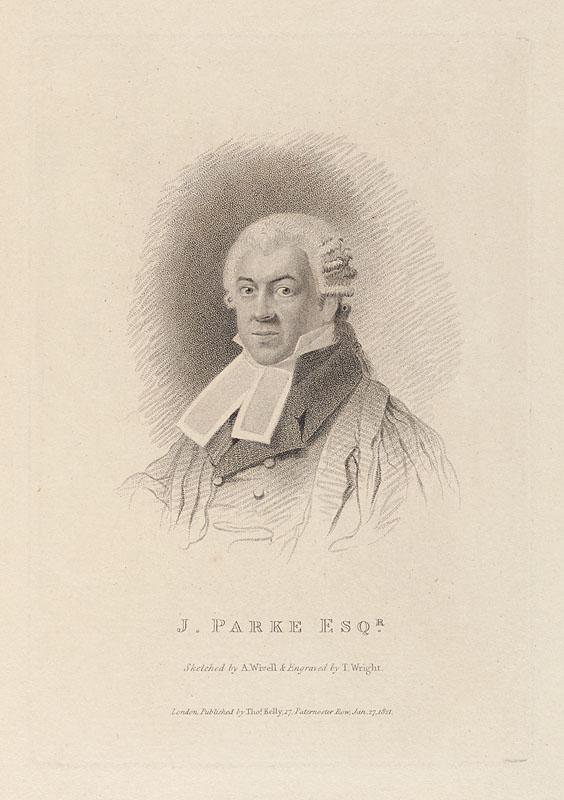
A life peerage grants all the privileges as does the hereditary peerage, including a seat in the House of Lords, except it cannot be passed down to the person’s children, though those children are addressed by the customary courtesy titles and styling appropriate to the peerage, and they keep that courtesy titles until their own deaths. Generally, those which have been granted under the Act are baronies. The only other life peerage granted occurred in 1856, when James Parke was made 1st Baron Wensleydale. Parke’s road to the barony was quite unusual, as you will see below:

James Parke, 1st Baron Wensleydale (1782-1868) – Public Domain

“Parke’s early career as a barrister was not noted as particularly brilliant, but he was successful; in 1820, for example, he was junior counsel for the Pains and Penalties Bill 1820 against Caroline of Brunswick. On 28 November 1828 he succeeded Sir George Holroyd as a judge of the Court of King’s Bench, a great achievement for somebody who had not even qualified as a King’s Counsel, and he was knighted on 1 December 1828. In 1833 he was made a Privy Councillor, and on 29 April 1834 was transferred, along with Edward Hall Alderson, to the Court of Exchequer, succeeding and being succeeded as a judge of the Court of King’s Bench by John Williams.

“His work in the Court of Exchequer has led to him being called “one of the greatest of English judges; had he comprehended the principles of equity as fully as he did the principles of the common law, he might fairly be called the greatest. His mental power, his ability to grasp difficult points, to disentangle complicated facts, and to state the law clearly, have seldom been surpassed. No judgments delivered during this period are of greater service to the student of law than his”. He was criticised for being too respectful of authority and unwilling to overturn precedent; John Coleridge accused him of being dedicated to the form of the law rather than the substance.

“The Common Law Procedure Acts 1854 and 1855 led to his resignation from the Exchequer in disgust, but his reputation was such that the government recalled him by granting him a life peerage, that of Baron Wensleydale, of Wensleydale, in the North Riding of Yorkshire on 16 January 1856. There was a question at the time of whether the letters patent, which granted him a peerage “for the term of his natural life”, allowed him to sit in the House of Lords; it was eventually decided that they did not, and a second set was issued with the usual form for Baron Wensleydale, of Walton, in the County Palatine of Lancaster on 23 July 1856. This was irrelevant, since he had no sons able to take the peerage even if it was not a life appointment. He sat as part of the Appellate Committee of the House of Lords until his death on 25 February 1868.” (James Parke, 1st Baron Wensleydale)

Coat of Arms, James Parke, 1st Baron Wensleydale

The former Prime Minister, Margaret Thatcher was presented a life peerage as a baroness. She should be addressed as Lady Thatcher. Her children have the courtesy title of “Honourable.”

Life peerages for women were more common than one might think. Remember, women in this position WOULD NOT sit in the House of Lords.

“Prior to the regular creation of life peerages, the great majority of peerages were created for men. Suo jure peeresses are known from an early period; however, most of them were women to whom a peerage had passed as an inheritance. It was very rare for a woman to be created a peeress before the 17th century. Peeresses of the first creation were not allowed to sit in the House of Lords until the passage of the Life Peerages Act 1958. Female holders of hereditary peerages could not sit in the Lords until the passage of the Peerage Act 1963. In some, but not all cases, peeresses of first creation were created for life only.

“Created peeresses fall into the following categories:

  • Created for merit or achievement
  • Having a father who was a peer, but who under the terms of the peerage could not pass the peerage to his daughter. Such an event could create the anomalous situation of commoners holding important lands and estates traditionally associated with lordship.
  • Closely connected to a reigning monarch (including many royal mistresses)
  • Created to honour a relative, including:
    • As a posthumous honour for a dead husband, often one who would have received a peerage if he had not died
    • To honour a husband who was living, but could not or would not accept a peerage in his own right (for instance if he wanted to retain his seat in the elected Commons)
    • To confer nobility upon the peeress’s children, again often in recognition of the achievement of a husband

There is a long list of the life peerages for women at this LINK. Notice King Charles II granted life peerages to ten of his ennobled mistress!!

Most peerages, however, are hereditary.

“A peerage passes from father to son, but sometimes a peer dies without a son to succeed him.  For example, the 6th Duke of Devonshire (1790-1858) never married.  When that happens, go back one generation, to the peer’s father, in this case the 5th Duke (1748-1811), and trace the next eldest male direct lineal descendant. In this case, that would be 5th Duke’s other sons, if he had any.  He didn’t (at least, not a legitimate one), so we go back one more generation, to the 4th Duke (1720-1764).  The 4th Duke had at least two sons:  William, who succeeded him as 5th Duke, and Lord George Cavendish (1754-1834).  Lord George died during the 6th Duke’s lifetime, but if he had survived him, he would have become the next duke.  However, he left a son, Mr. William Cavendish (1783-1812), who also died before the 6th Duke, but left one son, Mr. William Cavendish (1808-1891).  This man became the 7th Duke of Devonshire. 

“But if Lord George’s line had died out, then the dukedom could be traced back up to three more generations, all the way to the 1st Duke, and descend through the eldest of his other sons who had surviving legitimate male issue.  If there was no legitimate surviving male descendant, then the title of Duke of Devonshire would become “extinct.” However, if there was a legitimate surviving male descendant of his father, the 3rd Earl of Devonshire, then that person would inherit the earldom.  In this way distant cousins can sometimes inherit lesser titles while the highest peerage dies out. “[Hereditary Peerages]

To inherit a peerage, a man must be the eldest male survivor, with a line traceable from father to son, all the way back to the earliest person to hold the peerage. Verifying this “chain of succession,” so to speak is part of being summoned before the House of Lords officially to accept the peerage. “Eldest” in this case has nothing to do with the age of the person claiming the peerage, but rather, whether he can trace a DIRECT LINE to an earlier holder of the peerage, i.e., eldest son of the eldest son.

A direct summons by the Monarch to attend the Parliament is knows as a writ of summons. By modern English law, if a writ of summons was issued to a person who was not a peer, that person took his seat in Parliament, and the parliament was a parliament in the modern sense (including representatives of the Commons), that single writ created a barony, a perpetual peerage inheritable by male-preference primogeniture. This was not medieval practice, and it is doubtful whether any writ was ever issued with the intent of creating such a peerage. The last instance of a man being summoned by writ without already holding a peerage was under the early Tudors; the first clear decision that a single writ (as opposed to a long succession of writs) created a peerage was in Lord Abergavenny’s case of 1610. Peerages created by writ of summons are presumed to be inheritable only by the recipient’s heirs of the body.

writ of acceleration is a type of writ of summons that enables the eldest son of a peer to attend the House of Lords using one of his father’s subsidiary titles. The title is strictly not inherited by the eldest son, however; it remains vested in the father. A writ may be granted only if the title being accelerated is a subsidiary one, and not the main title, and if the beneficiary of the writ is the heir-apparent of the actual holder of the title. A total of ninety-four writs of acceleration have been issued since Edward IV issued the first one.

More often, letters patent are used to create peerages. Letters patent must explicitly name the recipient of the title and specify the course of descent; the exact meaning of the term is determined by common law. For remainders in the Peerage of the United Kingdom, the most common wording is “to have and to hold unto him and the heirs male of his body lawfully begotten and to be begotten”. Where the letters patent specifies the peer’s heirs male of the body as successors, the rules of agnatic succession apply, meaning that succession is through the male line only. Some very old titles, like the Earldom of Arlington, may pass to heirs of the body (not just heirs-male), these follow the same rules of descent as do baronies by writ and seem able to fall into abeyance as well.

Resources:

Creation and Inheritance of Peerages. DeBrett’s.

Harry Graham, The Mother of Parliaments (Little, Brown & company, 1911), p. 33

“Hereditary Peerages.”

Register of Hereditary Peers: running list”. Parliament of the United Kingdom.

UK peerage creations: Hereditary peerages with special limitations in remainder”http://www.peerages.info.

Posted in Act of Parliament, British history, Inheritance, Living in the UK, peerage, primogenture, research | Tagged , , , , , , , , , | Comments Off on Peerages: Those Which Can Be Inherited and Those Which Cannot

The Protocol of “Being at Home”

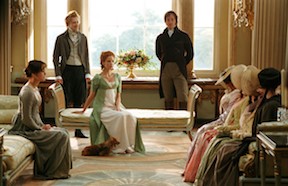
pride-and-prejudice_3During the Regency and Victorian Periods, ladies of the aristocracy rigorously made a daily round of social calls, which were governed by strictly adhered to conventions. Precedence and rank defined each of these engagements. However, there was a distinct difference between calls among the mercantile and professional class and those who could count their ancestors among the English nobility.

While in London, ladies of the house drove about town in their carriages, attended by a pair of appropriately attired footmen. When calling upon another, the footman would inquire of the “at home” status at the intended destination. A butler, footman, or hall porter would either admit the lady or inform the footman that his mistress was “not at home to callers.” If no admittance was achieved, the footman would leave three calling cards with the servant who responded to the door knocker: one card from the mistress of the house he served (intended for the lady of the house upon which his mistress called) and two cards from the footman’s master (intended for the mistress and master of the house upon which his mistress called).

Rules of etiquette also prescribed how the cards were presented. The embossed cards were carried in a gold, silver, or ivory case.  Leaving a card with a turned up corner indicated that the lady had called in person.  A card inscribed with “p.p.c.” (pour prendre congé) indicated that the lady intended to leave town for a period of time.  At a house in mourning, the lady might write the words “to inquire” on the back to indicate she had made a sympathy call.

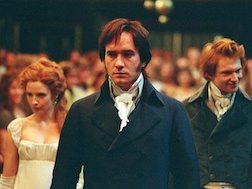
2005_pride_and_prejudice_025Even at a country ball, a precedence was strictly adhered to. An exclusive area was corded off for those of the upper ranks to separate them from the everyday riffraff that could attend a country assembly. Do you recall the image of the Bingleys and Mr. Darcy standing apart from the rest of those in attendance at the Meryton Assembly? In the 2005 film, note Mr. Darcy’s (Matthew Macfadyen) near snub of the forward Mrs. Bennet, who drags her daughters through the throng to be presented to Mr. Bingley.

Tea was served between 4 and 5. With guests in the drawing room, the house’s mistress would ring for tea. A maid would deliver a tea cart that included a hanging silver kettle (often on a stand), a silver teapot, cream and sugar basins, and dainty cups and saucers of fine porcelain. When a guest departed, another maid was dispatched to accompany the person to the door.

51lj5+YFN-L._SX331_BO1,204,203,200_From Project Gutenberg Ebook comes the book, Searchlights on Health by B. G. Jefferis and J. L. Nichols. Below are the “Etiquette of Calls” listed on page 56 of this book. (http://www.gutenberg.org/files/13444/13444-h/13444-h.htm#page56).


ETIQUETTE OF CALLS.

In the matter of making calls it is the correct thing:

For the caller who arrived first to leave first.

To return a first call within a week and in person.
To call promptly and in person after a first invitation.

For the mother or chaperon to invite a gentleman to call.

To call within a week after any entertainment to which one has been invited.

You should call upon an acquaintance who has recently returned from a prolonged absence.

It as proper to make the first call upon people in a higher social position, if one is asked to do so.

It is proper to call, after an engagement has been announced, or a marriage has taken place, in the family.

For the older residents in the city or street to call upon the newcomers to their neighborhood is a long recognized custom.

It is proper, after a removal from one part of the city to another, to send out cards with one’s new address upon them.

To ascertain what are the prescribed hours for calling in the place where one is living, or making a visit, and to adhere to those hours is a duty that must not be overlooked.
A gentleman should ask for the lady of the house as well as the young ladies, and leave cards for her as well as for the head of the family.

“In Sense and Sensibility chapter 27 we are told that “[t]he morning was chiefly spent in leaving cards at the houses of Mrs. Jennings’s acquaintance to inform them of her being in town[.]” Later in that chapter we learn that Willoughby has left a card when he called while Mrs. Jennings and her charges were out driving. In Persuasion, Sir Walter says that he will send his card to Lady Russell when she arrives in Bath and is overjoyed when he receives the cards of his cousins Lady Dalrymple and Miss Carteret.

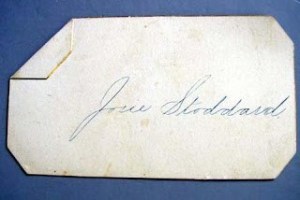
stoddard+calling+card“I can however tell you the following things about calling cards:

  • Men’s cards and women’s cards were different sizes, men’s cards being smaller;
  • Cards were typically carried in decorative cases designed for that purpose;
  • Once a card was given it would be displayed in the front hall, allowing visitors to browse and see who their host and/or hostess was acquainted with, similar to a Regency era LinkedIn or Facebook;
  • Regency cards were smaller than Victorian cards;
  • Regency cards were also less decorated than Victorian cards, tending to have simpler type and fewer designs;
  • Regency cards also offered less information, the card Miss Manners discusses included a name, address and day the lady would be at home for visitors, a Regency card would be much more likely to only contain the person’s name, title (if applicable), and possibly an address or what part of town the person lived in but that was not universal.” (Story and History)


Posted in British history, Great Britain, Jane Austen, Living in the Regency, real life tales, Regency era | Tagged , , , , | 13 Comments

Men of Harlech (Rhyfelgyrch Gwŷr Harlech), a Welsh Military March

 “Men of Harlech” (Rhyfelgyrch Gwŷr Harlech) is a traditional military march and is said to chronicle the seven-year long siege of Harlech Castle in the 1460s. The incident is considered the longest known siege in British history. The garrison was commanded by Constable Dafydd ap Ieuan. The tune is also called “Through Seven Years.”  Zuluwar tells us, “It is the regimental march of several regiments historically associated with Wales. The Royal Regiment of Wales, now the Royal Welsh (UK), the Royal Canadian Hussars (Montreal) and the Governor General’s Horse Guards, Canadian Forces are three examples. It is also the regimental march for two Australian Army Reserve units, the 8th/7th Battalion of The Royal Victoria Regiment and Sydney University Regiment where it is played as a quick march.” There are others who associate the song with the earlier shorter siege of Harlech Castle around 1408, which pitted the forces of Owain Glyndŵr against the future Henry V of England. “Men of Harlech” is important for Welsh national culture. The song gained international recognition when it was featured in the 1941 movie How Green Was My Valley and the 1964 movie Zulu. It was also featured in a 1950 Western, Apache Drums, at the conclusion of the 1945 film The Corn is Green, starring Bette Davis, and at the conclusion of the 1995 film The Englishman Who Went Up a Hill But Came Down a Mountain starring Hugh Grant.

Harlech Castle - A general view of the castle

Harlech Castle – A general view of the castle ~ via Wikipedia

Wikipedia speaks to the history of the song: “The music was first published without words during 1794 as Gorhoffedd Gwŷr Harlech—March of the Men of Harlech in the second edition of The Musical and Poetical Relicks of the Welsh Bards but it is said to be a much earlier folk song. The earliest version of the tune to appear with lyrics, found thus far, comes from a broadside printed c. 1830. Since then, many different versions of the English lyrics have been published. It was published first with Welsh lyrics in Gems of Welsh Melody, edited by the Welsh poet, John Owen (Owain Alaw), published in London,  England and Wrexham, Wales during 1860. An edition containing Welsh and English lyrics was published in  Ruthin, Wales, during 1862. The song was published in Volume II of the 1862 collection Welsh Melodies with the Welsh lyrics by the Welsh poet John Jones (Talhaiarn), and the English lyrics by  Thomas Oliphant, President of the Madrigal Society. Another source attributes the Welsh words to the poet John Ceiriog Hughes, first published during 1890, and says that English words were first published during 1893, but this is clearly predated by the earlier publications.

Some people assume this song is the Welsh national anthem, but that song is called “Hen Wlad fy Nhadau” (“Land of my Fathers”).

In addition to listening to this haunting tune on two You Tube links below, please read this story of survival where the song played a part in the evacuation of the South Tower of the World Trade Center on September 11, 2003.  Awesome Stories 

Men of Harlech ~ You Tube 

Modern Words used by Regimental Band

Tongues of fire on Idris flaring,
news of foe-men near declaring,
to heroic deeds of daring,
calls you Harlech men

Groans of wounded peasants dying,
wails of wives and children flying,
for the distant succour crying,
calls you Harlech men.

Shall the voice of wailing,
now be unavailing,
You to rouse who never yet
in battles hour were failing,

His our answer crowds down pouring
swift as winter torrents roaring,
Not in vain the voice imploring,
calls on Harlech men

Loud the martial pipes are sounding
every manly heart is bounding
As our trusted chief surrounding,
march we Harlech men.

Short the sleep the foe is taking,
ere the morrows morn is breaking,
They shall have a rude awakening,
roused by Harlech men.

Mothers cease your weeping,
calm may be your sleeping,
you and yours in safety now
the Harlech men are keeping,

ere the sun is high in heaven
they you fear by panic riven
shall like frightened sheep be driven,
far by Harlech men.

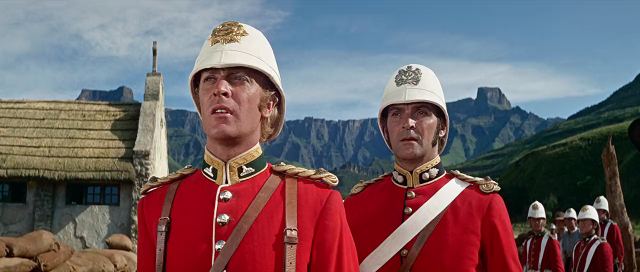
2-officers.jpgMen of Harlech (from the film Zulu) You Tube 

John Oxenford version (published 1873)

Verse 1
Men of Harlech, march to glory,
Victory is hov’ring o’er ye,
Bright-eyed freedom stands before ye,
Hear ye not her call?
At your sloth she seems to wonder;
Rend the sluggish bonds asunder,
Let the war-cry’s deaf’ning thunder
Every foe appall.
Echoes loudly waking,
Hill and valley shaking;
‘Till the sound spreads wide around,
The Saxon’s courage breaking;
Your foes on every side assailing,
Forward press with heart unfailing,
‘Till invaders learn with quailing,
Cambria ne’er can yield!
Verse 2
Thou, who noble Cambria wrongest,
Know that freedom’s cause is strongest,
Freedom’s courage lasts the longest,
Ending but with death!
Freedom countless hosts can scatter,
Freedom stoutest mail can shatter,
Freedom thickest walls can batter,
Fate is in her breath.
See, they now are flying!
Dead are heap’d with dying!
Over might hath triumph’d right,
Our land to foes denying;
Upon their soil we never sought them,
Love of conquest hither brought them,
But this lesson we have taught them,
“Cambria ne’er can yield!”

_

Posted in ballads, British history, film, legends, military, music, Wales | Tagged , , , , , , | 4 Comments

Happy Twelfth Book Birthday to My REALM Series and the Creation of “A Touch of Scandal”

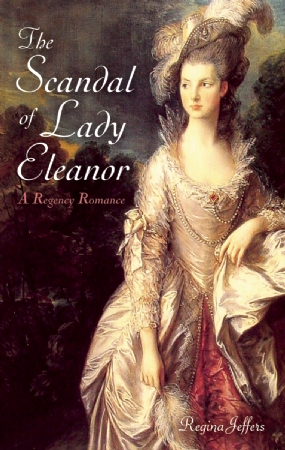
Until I wrote The Scandal of Lady Eleanor, all I had written were Jane Austen adaptations and retellings, including Darcy’s Passions, Darcy’s Temptation,Vampire Darcy’s Desire, The Phantom of Pemberley and Captain Wentworth’s Persuasion. I was very appreciative of Ulysses Press taking a chance on my first true Regency romance. What did not work out was before they could continue the series, Ulysses made the business decision to finish the fiction books under contract (including several of mine) to them and then switch to non-fiction only products. In truth, Ulysses was very much a non-fiction publisher when I joined them, so the decision was not surprising. However, that particular decision left my Realm series in limbo. It was impossible to sell the series to another traditional publisher for who would want to finish a series started by another publisher? Therefore, I ended up self publishing the series.

I must admit that it was liberating to write a story from beginning to end, without a preconceived framework already in place. When an author tackles an Austen storyline, he/she must stay somewhat true to the original characters or “suffer the ire” of Janeites. In my Austen books, I work in her original wording and use what I know of the lady and the times. With the Realm series, the characters and the conflict were part of me. 

A Touch of Scandal (formerly entitled The Scandal of Lady Eleanor) is the first book in the “Realm” series. 

The Realm is a covert group working for the British government during the Regency Period. They rescue British citizens, bring about diplomatic portals, etc. Its members are titled aristocrats and minor sons—therefore, the name “the Realm.” The members in this series number seven: James Kerrington, Lord Worthing (and future Earl of Linworth), who is the hero of A Touch of Scandal; His Grace Brantley Fowler, the Duke of Thornhill, from Book 2, A Touch of Velvet; Lord Gabriel Crowden, Marquis of Godown, from A Touch of Grace; Lord Aidan Kimbolt, Viscount Lexford, from A Touch of Mercy; Lord Marcus Wellston, serving as the regent for his elder disabled brother, the Earl of Berwick, from A Touch of Cashémere; Lord John Swenton, a baron, from A Touch of Honor, and Sir Carter Lowery, the youngest son of Lord Blakehell, from A Touch of Love. The series conclusion, A Touch of Emerald, features Kerrington’s son, Daniel and. Thornhill’s daughter. These men served together for several years in India and Persia, and they possess a stout camaraderie. Each holds reasons for originally fleeing his home and title, and each must reclaim his place in Society, while still occasionally executing a mission in the name of the government. Unfortunately, not only must these men fight their own demons, they must foil the plans of Shaheed Mir, a Baloch warlord, who believes one of them has stolen a fist-sized emerald, and Mir means to have it back.

In A Touch of Scandal, James Kerrington, the future Earl of Linworth and a key member of the Realm, never expected to find love again after the loss of his beloved wife, Elizabeth. But upon his return home, Kerrington’s world shifts on its axis when Lady Eleanor Fowler, literally, stumbles into his arms. Unfortunately, not all is as it seems with Eleanor, as she hides a deep secret. She had hoped the death of her father, William Fowler, the Duke of Thornhill, would offer her family a chance at redemption from their dark past, but when Sir Louis Levering produces proof of Eleanor’s father’s debauchery, she is thrown into a web of immorality and blackmail. It is up to Kerrington and his associates in the Realm to free Eleanor from Levering’s hold.
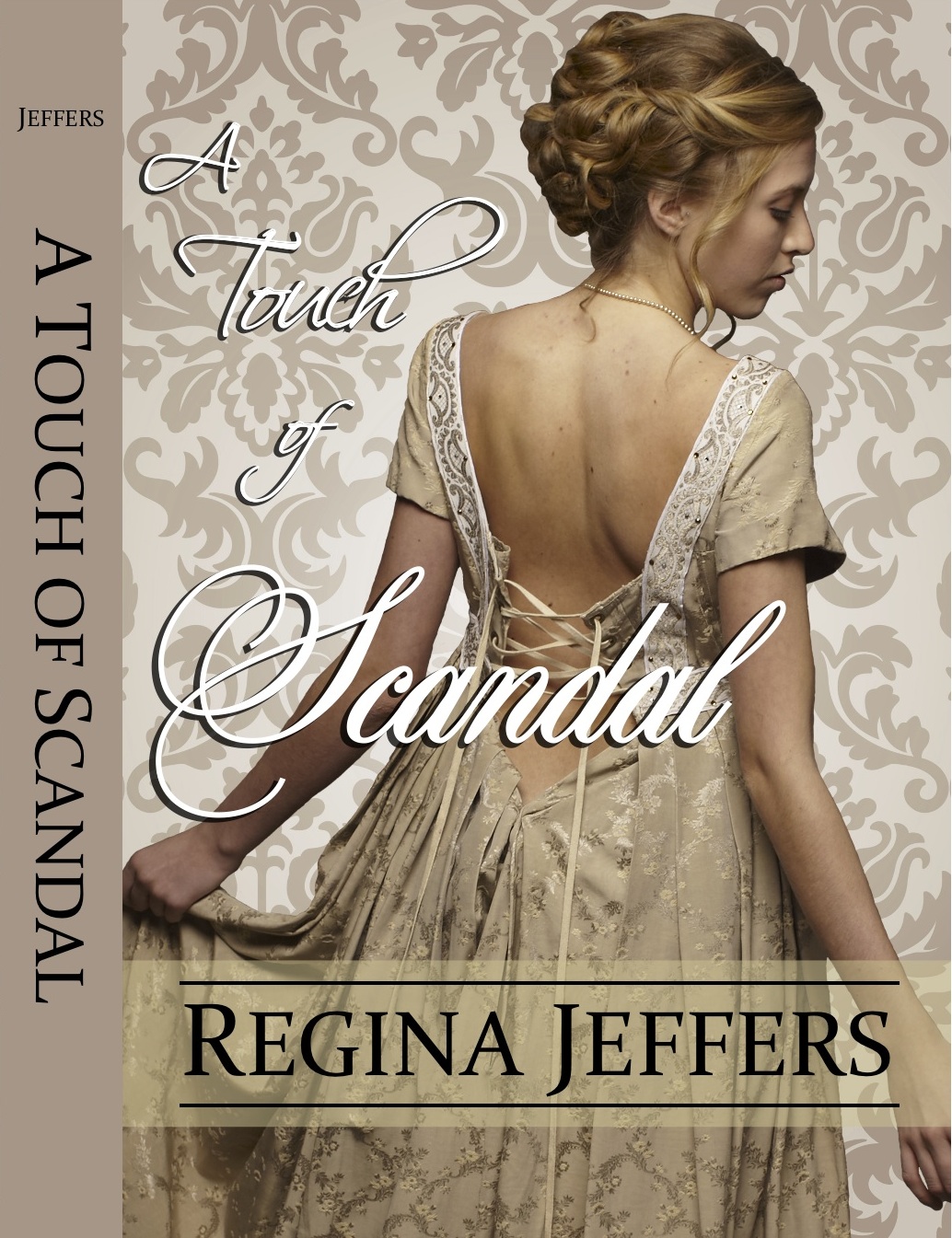
**The first cover used for the book when it was self-published. **

In writing this series, I chose to use “modern issues” throughout. Just because life appears “simpler” does not mean Regency England did not reek of scandal. Women lacked options. Even women of a wealthier class were the property of first their fathers and then their husbands. As such, Lady Eleanor Fowler is no exception. When her mother dies, her father’s debauched lifestyle invades her privacy, and she is sucked into a situation because she “loves” a parent who does not really understand the meaning of the word. Eleanor’s brother Brantley escaped the Duke of Thornhill’s hold on his household, but Eleanor is left behind to cope in the only way she knows how: Survive.

Readers always like to know who an author imagines when writing a book. So, I am going to indulge you on this matter.

First, let me say, I have been a Matthew Macfadyen fan long before he played Mr. Darcy in the 2005 film – back to his days in Wuthering Heights, Warriors, and The Way We Live Now. When I learned he was to be Darcy, I did a happy dance. Although I once was privileged to meet and speak to Colin Firth, and I adore him as an actor, Macfadyen is always the Darcy in my head when I write my Austen pieces, and he is the man I see and hear (Does he not have the most mesmerizing voice?) in my other works. In this series, Macfadyen is James Kerrington. James Mcavoy is Carter Lowery; James Scott is Aidan Kimbolt; Matthew Goode is Brantley Fowler; Toby Stephens (as he was in Jane Eyre) is Marcus Wellston, and Alex O’Loughlin faces Gabriel Crowden (although I am not certain how O’Loughlin would look as a blonde).

As weird as it may sound, I do not have famous women in my head when I choose the females. I see their faces and recognize their movements, but they are ordinary women. In this series, Velvet Aldridge came to mind because I fondly remembered a former student named “Velvet.” I stole Brantley Fowler’s name from a young man I met at an Enterprise Rental Car outlet. I told him I would make him famous. I originally planned only 4 books and possibly 3 novellas bundled as one piece. As the series progressed, readers kept asking for the next character. Each book in the series starts with the same scene on the Persian border, where these men encounter their most dangerous foe, Shaheed Mir. However, with each retelling of the scene, the reader learns more of what actually occurred, because he sees the action from a different point of view. 

__________________________________
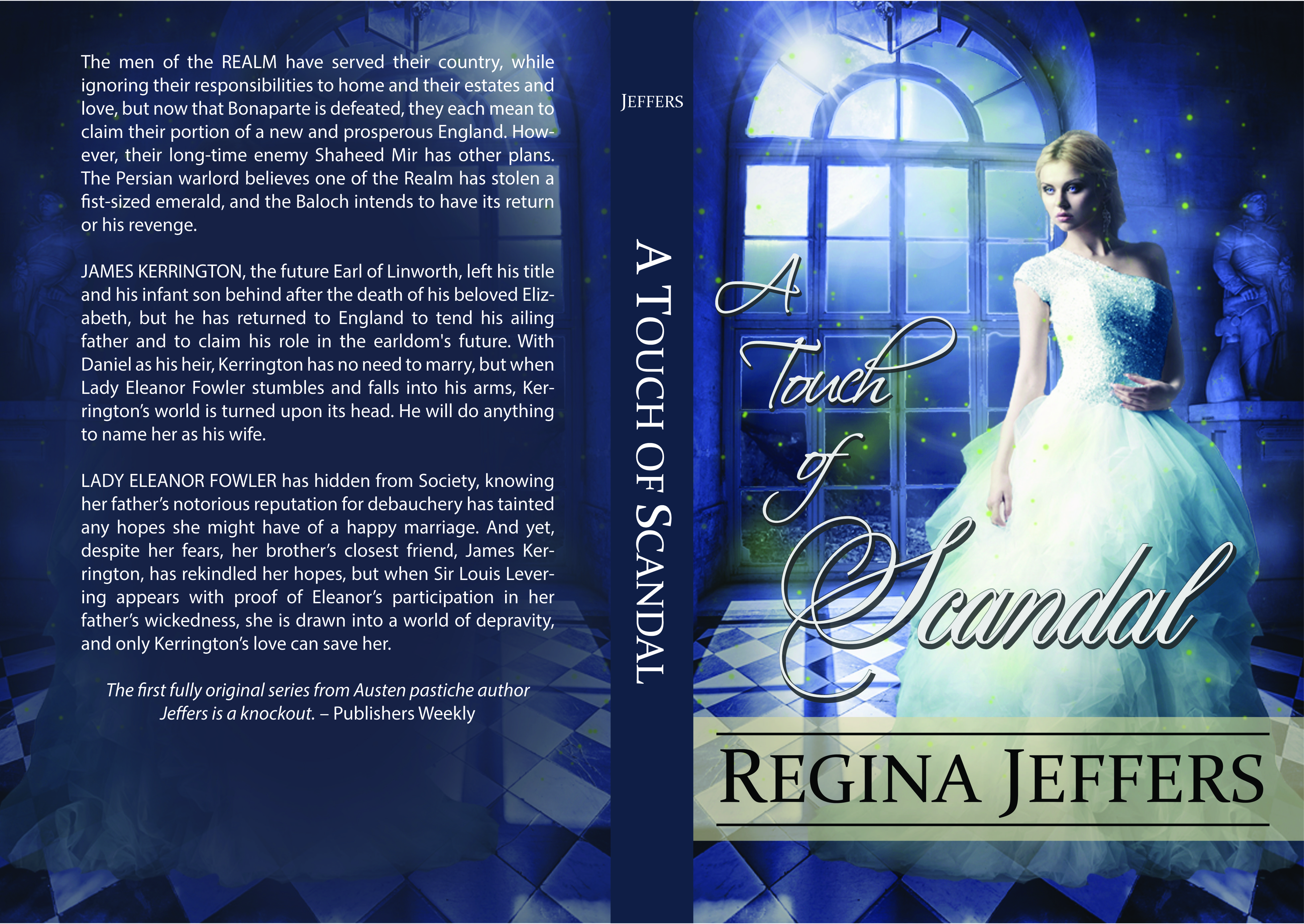
A Touch of Scandal: Book 1 of the Realm Series

The men of the REALM have served their country, while ignoring their responsibilities to home and love, but now Bonaparte is defeated, they each mean to claim their portion of a new and prosperous England. However, their long-time enemy Shaheed Mir has other plans. The Persian warlord believes one of the Realm has stolen a fist-sized emerald, and the Baloch intends to have its return or his revenge.

JAMES KERRINGTON, the future Earl of Linworth left his title and his infant son behind after the death of his beloved Elizabeth, but he has returned to England to tend his ailing father and to establish his roots. With Daniel as his heir, Kerrington has no need to marry, but when Eleanor Fowler stumbles and falls into his arms, Kerrington’s world is turned upon its head. He will do anything to claim her.

LADY ELEANOR FOWLER has hidden from Society, knowing her father’s notorious reputation for debauchery has tainted any hopes she might have of a happy marriage. And yet, despite her fears, her brother’s closest friend, James Kerrington, has rekindled her hopes, but when Sir Louis Levering appears with proof of Eleanor’s participation in her father’s wickedness, she is drawn into a world of depravity, and only Kerrington’s love can save her.

The first fully original series from Austen pastiche author Jeffers is a knockout. – Publishers Weekly

Jeffers’s characters stay in the reader’s heart and mind long after the last page has been turned. – Favored Elegance

KIndle   https://www.amazon.com/Touch-Scandal-Book-Realm-ebook/dp/B00JBOA9PW/ref=asap_bc?ie=UTF8

Amazon   https://www.amazon.com/Touch-Scandal-Book-Realm/dp/1496180941/ref=tmm_pap_swatch_0?_encoding=UTF8&qid=&sr=

Also Available to Read on Amazon’s Kindle Unlimited. 

Prologue (Excerpt):

“What do you plan to do?” James Kerrington asked as he leaned across Brantley Fowler, while pretending to reach for the bowl of fruit. Kerrington studied Fowler’s countenance as the man stared at where the Baloch warriors held the girl. Kerrington really did not need to ask. He and Fowler were the two of the original members of a group the British government “lovingly” referred to as the Realm. The unit ranged between the ages of nineteen and twenty-five. As he was the eldest, the others called Kerrington “Captain,” although no such military ranks existed between them.

The group often called Fowler “The Vicar” because the future Duke of Thornhill always wanted to “save” every soul they encountered, especially woman and children. Surprisingly, the baby-faced Fowler was also able to convince those their group captured to confess as readily as any clergyman. “Authoritative persuasion,” was the word they had coined for exacting information from those mean to defy the English government. Fowler had joined the group after a short stint with some shady seamen following the young man’s alienation from Thornhill and the dukedom, as well as a tumultuous time with Wellesley and the Spanish front. Fowler had never said exactly what had caused the rift between him and his infamous father.

Kerrington’s family knew something of Fowler’s. His mother, Lady Camelia Kerrington had made her Come Out with Fowler’s aunt, Agatha Braton, the Duchess of Norfield, and so Kerrington was familiar with some of the family history. Fowler’s father, the Duke of Thornhill, held a reputation for a lusty sexual appetite. Having viewed his friend’s multiple attempts to save more than one woman who suffered at the hands of a brute, Kerrington suspected there was truth buried in the gossip.

Fowler gritted his teeth, offering a grim smile to the Baloch warriors sitting about the low table, while Kerrington immediately assessed the situation. Fowler hissed, “Each man who enters that tent gives the girl a rupee because Mir says that is all she is worth — one rupee — one shilling and fourpence in England.” His friend’s breathing became shallow, obviously biting back anger. “She is not yet sixteen.”

“You cannot save the world, Fowler,” Gabriel Crowden, another of Realm numbers, cautioned.

Fowler insisted, “I can save her.”

Kerrington shot a glance about the tent to assure himself the others were aware of the change in their situation. He often regretted the fact he had shown more care with these men than he had ever shown to his son. Daniel resided with his parents at Linworth Hall. When he had walked away from his home after Elizabeth’s death, He had also deserted the child, who had cost his wife her life.

“Oh, Lord, here we go again,” Crowden grumbled as he slid the bench and slipped into the shadows. “Permit me time to assume a position.”

Kerrington stiffened in anticipation as he watched Fowler stand slowly and stretch. His friend pretended to exercise his legs. “I believe I will take a walk,” Fowler announced, but before James’s friend could execute more than five steps in the direction of the girl’s tent, a burly-looking soldier, under Mir’s command, blocked Fowler’s path. Without saying a word, the man had told Fowler to reconsider his choices, but James knew the Baloch would be sorry he had crossed the young duke.

Raising his hands in an act of submission, Fowler smiled largely and turned to Kerrington with a warning of what was to come. Fowler shrugged as if to agree with the warrior, but in a split second, he had struck the guard with an uppercut, sending the man reeling with a broken nose.

A heartbeat later, Kerrington and Fowler stood back-to-back, taking on all comers, delivering lethal thrusts after deadly jabs. “I have it,” Kerrington called as he parlayed a broken chair for a weapon. “Retrieve the girl. Take her to the Bombay safe house.” He shoved Fowler in the direction of the girl’s tent.

His friend did not look back; Fowler knew he count on Kerrington and the others in their group to break through Mir’s line of defense. Together, they would provide Fowler time to make a complete escape.

Preparing for the next assault, he wondered about his own sanity. How many times over the previous two years had Fowler staged “a fight to the death” in order to save some female? Somehow, Kerrington had accepted the future duke’s “need” to rescue the disadvantaged. It seemed only fair, if he was to die, he should do so in an effort to save some woman — an act of penitence, so to speak. He had had no skills to save the woman he love — Elizabeth Morris — the woman he had married and had promised to love and to honor and to protect “as long as ye both shall live.” Unfortunately, Elizabeth Morris Kerrington had live but two years, two months, and ten days before she had passed in childbirth — his child — their child. Mayhap by saving this woman, he might atone for for what he could not do for Elizabeth, and what he had done to Daniel — just walking away from the boy, unable to look upon his own child without seeing Elizabeth and experiencing the pain of her loss.

Turning his head, Kerrington noted how Fowler ran for the horses while pulling the scantily-clad girl behind him. Kerrington spun to the right, twirling a sword he had pulled from his walking stick, using the stick and rapier in tandem with swinging figure eights to ward off three Baloch soldiers. “Now!” he called above the battle’s clamor, and the Realm members synchronized their final strikes, leaving their opponents sprawled on the tent’s floor. They had dashed toward their tethered horses, swinging up into the saddles. They would distract pursuers, riding off in three separate directions — all in opposition to Fowler’s exit — to meet again in two days at their common house.

Racing toward the nearest hill, Kerrington pulled up the reins to take a quick look, making certain they had all made it out safely. He felt responsible, although each of his mean were quite capable and very menacing in his own right. “Let us depart, Captain,” Aidan Kimbolt called from somewhere behind him. Kerrington had seen all he had needed to see — they all were moving away from Shaheed Mir’s tents. Turning the horse in a complete circle, he nodded to Kimbolt, the group’s best horseman, to disguise Fowler’s hoof prints in the sand, before galloping away in the direction of the dying sunset.

Posted in book excerpts, British history, eBooks, Georgian Era, historical fiction, Jane Austen, Living in the Regency, Napoleonic Wars, Realm series, Regency romance, Uncategorized, writing | Tagged , , , , , , , , , , , | 12 Comments

A Young Lady’s “Come Out” in Regency Society

Recently, I received this question from an author/reader: Can you tell me if a young lady could have her debut ball at age 17 or 18, instead of the age 16 we customary read in Regency romance? Would a death in the family delay her being presented to society? I am working on a tale where I want my heroine to wait for the hero to return from war before her ball. Naturally, he will be present for her “debut” into society.

First, make certain, you do not refer to the young ladies as “debutants.” This would not be correct during the Regency, and it was not necessary for a ball to be hosted in her honor to be considered “out” in society. Being out or not being out was more nuanced and less dependent on one event to announce the young lady as “accepting the attentions of young gentlemen.” By the time a girl was sixteen, in the country, she would probably be going to dinner with neighbors and eating dinner with the family when there was company at home. She could likely stand up with friends and neighbors at a country assembly. Then she might be taken to London  for added lessons in dancing and French. All this was especially true in the country and among the gentry. If you recall, the imperious Lady Catherine de Bourgh is Pride and Prejudice was shocked to learn all the Bennet sisters were out in society at the same time.

Are any of your younger sisters out, Miss Bennet?”

“Yes, ma’am, all.”

“All! What, all five out at once? Very odd! And you only the second. The younger ones out before the elder ones are married! Your younger sisters must be very young?”

“Yes, my youngest is not sixteen. Perhaps she is full young to be much in company. But really, ma’am, I think it would be very hard upon younger sisters, that they should not have their share of society and amusement, because the elder may not have the means or inclination to marry early. The last-born has as good a right to the pleasures of youth as the first. And to be kept back on such a motive! I think it would not be very likely to promote sisterly affection or delicacy of mind.”

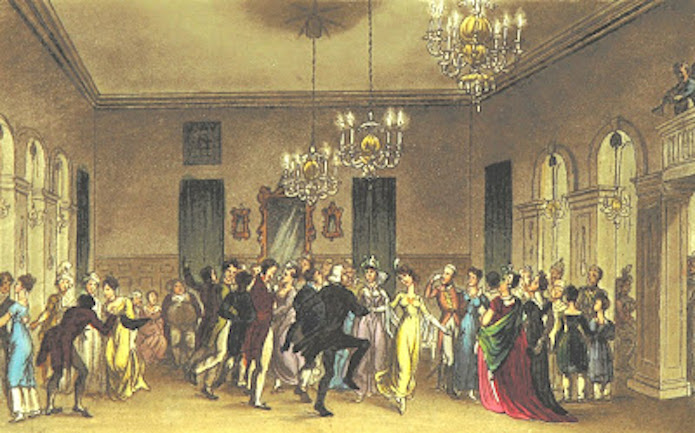
Highest Life in London – Tom & Jerry ‘sporting a toe’ among the Corinthians at Almacks in the West by IR & G Cruikshankin Tom and Jerry: Life in London by P Egan (1869 first pub 1821)

As to the aristocracy and being presented to Queen Charlotte, in the latter years of the 1700s and up to 1811, the queen hosted regular drawing rooms when young ladies were presented to her for approval before making their come out. Even then, some were not presented, if the young woman would not be regularly attending court affairs. Some even waited until after they were married to be presented. If the queen was hosting a drawing room, the girl would be presented, but we must recall, by the Regency era, the drawing rooms hosted by the queen were few and far between, sometimes more than a year apart and very crowded. Moreover, Queen Charlotte passed in 1818, so those of the aristocracy did not depend upon attending a drawing room to announce their daughters as out in society.

Many did not have a ball in the girl’s honor until she announced her engagement.

In truth, before 1800, many thought age 16 was much too young to marry, so most did not make their curtsey to the queen until they were seventeen or eighteen.

Sometimes, a hostess might have a ball to return entertainments, and her daughter would stand in the receiving line with her parents. This might come after she had been attending balls and Almack’s for weeks. At Almack’s, supposedly, the young woman could not waltz until she received the permission of one of the assembly rooms’ patronesses, but such did not prevent the young woman from dancing as a form of entertainment and to take on new acquaintances. In fact, being seen at Almack’s was as better than an “official” announcement of the young lady being out in society. Afterwards dancing together before watchful eyes, the young man might call upon the household during receiving hours “at home.”

A girl was considered out when her parents let it be known she was old enough to be invited to dinner and balls. She would first be presented at dinners in her own house when the family had guests.  Families had their own way of doing things, but, basically they let it be known the daughter was old enough to marry.  In the 1780’s and 1790’s,  sixteen was considered old enough to marry, but by the Regency, it was thought the young lady should be older. 

The young woman’s mother would write to friends and relatives saying they were coming to Town for the season in April and their daughter would be accompanying them. When they reached Town, the mother would make calls on friends taking the daughter with her. The invitations would then include the daughter, and she would be out. 

Ballroom, Scarborough, from Poetical Sketches of Scarborough by F Wrangham, W Combe and J B PapworthPub Ackermann (1813) from Metropolitan Museum of Art

For your reading pleasure, I have added a couple scenes from A Touch of Scandal (original title, The Scandal of Lady Eleanor) where Lady Eleanor Fowler and her cousin are preparing to make their curtsies to Queen Charlotte. As the daughter of a duke, Lady Eleanor should have made her curtsy years prior, but the late Duke of Thornhill had ignored all but his own pleasures. The first scene is shorter, as Eleanor’s maternal aunt (also a duchess) decides both Eleanor and Velvet should wear black for their presentations and then Queen Charlotte’s reaction. ENJOY!

***

Because Fowler had an appointment with Shepherd, he had left “his” ladies on Bond Street, ordering ball gowns, morning dresses, day dresses, intimates, hats, gloves, pelisses, ball slippers, half boots, and everything else required for a successful Season. By silent assent the women had decided to begin the Season in colors of half-mourning, not wishing to appear callous over William Fowler’s passing. In reality, they should wear black, but no debutante would appear in black for the Season. Again, under Bran’s orders, they would tell everyone the late duke’s long illness had served as the mourning period. 

Fittings for Presentation gowns had taken up much of the morning. Queen Charlotte expected young ladies to take a step back in time: Unfortunately, they stepped back while wearing hooped skirts. “I think this might be the place to show respect for your late father by having the Presentation gown made in black,” Agatha conjectured. 

“Black?” Eleanor and Velvet exclaimed in unison. 

“Queen Charlotte is a stickler for decorum. Your father passed but three months prior, Eleanor. If he was a simple nobleman, we might consider ignoring the Queen’s edicts without engendering censure; but as a duke is directly below a prince in nomenclature, I would not wish to incite Her Highness. Black should be the color.” 

Ella looked at Velvet, attempting to judge her cousin’s thoughts. “We bow to your opinion, Aunt Agatha.” 

However, she heard Velvet murmur, “So much for using my Presentation dress for my wedding.” 

*************************************************************************

Their Presentation day had found Eleanor and Velvet bedecked in the black gowns. The duchess had commandeered Lord Worthing’s carriage to complement the one Bran had provided, as the dresses were so elaborate that fitting both in one carriage would be impossible. Queen Charlotte expected the gowns to have old-fashioned hoop skirts and to be worn with a stomacher, lying over the triangular front panel of the stays and held in place by the gown’s lacing. Most of the young unmarried women waiting in the halls for their moment with the Queen wore white, which made Ella even more uneasy, although Velvet, after her initial complaint, had taken it all in stride. Low-cut and with short sleeves, the black silk complemented Velvet’s natural coloring and her coal-black hair, but Ella saw herself as a scorched tea kettle with golden curls. The single towering ostrich feather, pulled downward by the black veil attached with black pearl hairpins, threatened to topple from her thin blond hair. 

They waited in their carriages for two hours outside St. James’s Palace before being admitted into the too-warm hallway of St. James’s Gallery, where they waited another hour. As the daughter and sister of a duke, Eleanor would be among the first to be presented. Velvet would wait with the others in order of precedence, as her father, Lord Averette, a viscount, was of middle importance according to such standards. 

When the time arrived, Aunt Agatha escorted Ella to the Queen’s receiving room. As the door opened, Eleanor heard her aunt caution, “Breathe, child,” forcing her to suck in a deep breath and let it out slowly. Then Ella stepped forward and handed her card to the Lord Chamberlain while a gentleman-in-waiting spread out the ten-foot train, which was attached to her dress, behind her. 

“Lady Eleanor Fowler, daughter of William and Amelia Fowler, the Duke and Duchess of Thornhill,” the man’s voice boomed throughout the hall. 

Eleanor slowly made her way across the great room, praying with every step she would not trip on her train or finally lose the ornate headdress until she could complete the required curtsy. Before the throne, at last, Ella executed the deep obeisance necessary for the Queen, murmuring “Your Majesty,” as she did so. Then she gave a briefer bow to the remainder of the court before dipping low once more to her monarch. This one she held, waiting for the Queen’s release. 

“Your niece, Your Grace?” the Queen asked, although the queen was well aware of Agatha’s relationship to Eleanor. 

“Yes, Your Majesty. Lady Eleanor’s mother passed some seven years prior.” 

Queen Charlotte motioned to both ladies to stand. “And your father, Lady Eleanor?”

“Passed three months prior, Your Majesty.” 

Ella prayed Aunt Agatha had made the correct move by having Ella wear black. 

“Ah, we had forgotten. We are pleased you chose to display the proper respect for your family, Lady Eleanor. Not many of the young cling to the old ways.” 

“Thank you, Your Majesty.” A sigh of relief nearly slipped out, but Ella swallowed it. 

Queen Charlotte motioned to one of her courtiers, who made notations in a gigantic book he held, before returning her attention to Eleanor. “Your brother has assumed the title?” 

“Yes, Your Majesty. His Grace returned from the Continent and entered upon his duties as Thornhill.” Ella began to become nervous all over again. Any conversation with the Queen was unusual. This one of some substance was infinitely unlikely. 

“Your brother claimed his place with the King?” Queen Charlotte demanded. 

“His Grace has seen to his petition for a writ of summons, Your Majesty.”

“Excellent … excellent, indeed.” Queen Charlotte paused before adding, “And I understand you cared for the late duke during his illness?” 

“My father was abed for nearly two years, Your Majesty. I did what I could to ease his suffering.” 

“You perform your duties well for one so young, Lady Eleanor. You may tell His Grace we do not believe mourning clothes appropriate for a daughter of England during the Season.” 

“Thank you for your gracious condescension, Your Majesty.” 

Again, Ella curtsied, aware her time complete. Later, Velvet would be asked to kiss Queen Charlotte’s hand, but as the daughter of a duke, Eleanor received a different acknowledgment: Queen Charlotte kissed Ella’s forehead. 

Then, very carefully, Ella rose; another gentleman-in-waiting assisted her to drape the train over her arm, and she backed from the room, constantly aware of the liveried footmen who tactfully guided her steps. 

Posted in British history, family, Georgian England, Georgian Era, heroines, historical fiction, history, Jane Austen, Living in the Regency, marriage, marriage customs, Pride and Prejudice, reading, Regency era, Regency romance, research | Tagged , , , , , , , , , , , , , | Comments Off on A Young Lady’s “Come Out” in Regency Society

Entails and Common Recovery

As always happens, I received a number of questions on Wednesday’s post on A Debt-Ridden Inheritance about the legality of all this.

Back in feudal times, land was given from lord to tenant in exchange for services. This “service” could be a number of things from serving in the lord’s army to delivering a bouquet of flowers to a woman who had caught the lord’s eye. Naturally, the man who had served in the lord’s army and had sons who could follow in the man’s footsteps, likely received more land and more favors than did the fellow who carried a bouquet of flowers to the lord’s new lady love.

Most assuredly, the system was no longer practiced by the time the Regency rolled around, but the basis of the Georgian era entail found its groundwork in these feudal dealings. It was true that if the man owning the estate had no heir, then it could revert back to the Crown.

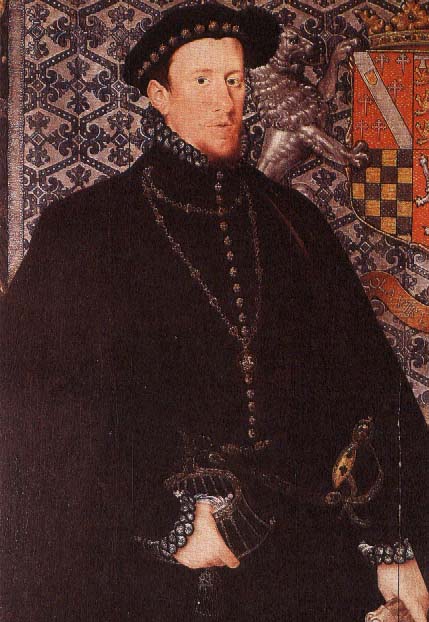
Take the case of the Duke of Norfolk. The Howard dynasty is known to be staunch Catholics, which often resulted in conflict with the reigning monarch, particularly during and after the reign of Henry VIII. In 1546, Thomas Howard, the third Duke, fell out of favor with the dying Henry and was eventually attainted on 27 January 1547. [In English criminal law, attainder was the metaphorical “stain” or “corruption of blood” which arose from being condemned for a serious capital crime. It entailed losing not only one’s life, property and hereditary titles, but typically also the right to pass them on to one’s heirs.] Stripped of his titles and his lands reverted to the Crown, Howard was imprisoned in the Tower of London, where he narrowly escaped execution through Henry’s death the following day, but remained imprisoned until the death of Edward VI and the accession of the Catholic Queen Mary to the English throne in 1553, upon which his lands and titles were restored to him. However, the Duke died the following year and was succeeded by his grandson Thomas as the fourth Duke of Norfolk.

Thomas Howard, 4th Duke of Norfolk, grandson of the preceding duke, executed for treason against Elizabeth I, forfeiting the dukedom

Following Mary’s death in 1558 and the accession of her sister Elizabeth I, the new Duke was imprisoned for scheming to marry Elizabeth’s cousin Mary, Queen of Scots. After his release under house arrest in 1570 and subsequent participation in the Ridolfi plot to enthrone Mary and Catholicism in England, he was executed in 1572 for treason and his lands and titles again became forfeit.

In 1660, the fourth Duke’s great-great-grandson, the 23rd Earl of Arundel, was restored to the family lands and dukedom. Mentally infirm, the fifth Duke never married and died in 1677. He was succeeded by his younger brother Henry as the 6th Duke, through whom the 7th Duke, 8th Duke and 9th Duke of Norfolk were descended in the male-line.

Exactly, who could be considered an heir. We, generally, speak of the eldest son being the heir and inheriting all the property. It is true he would under primogeniture inherit the estate associated with the peerage, but not necessarily ALL the property. If the father died without a will, the eldest son got it all, lock, stock, and barrel, so to speak.

In truth, a man might give land to his other sons and even his daughters. He could leave some of it to his wife. To his other relations, say an aunt or cousin, or even to a favored servant. Only the “entailed” land stayed with the eldest son. As long as the property had no restrictions, which, customarily, those associated with a peerage did have, the land could be dispensed with as the man wished. So, if he loved his second son better than his eldest, the eldest could receive the estate associated with the peerage, while the second son could receive all the other property. It breaks down to ownership. The peer did not “own” the land associated with the peerage; therefore, he can not turn it over to anyone except the eldest son (heir apparent and heir presumptive in practice, etc.)

The way it works is the legal entail (a fee tail) on the land is a restriction document. It restricts to whom the land can be transferred. We have all read in some historical novel how the land was to go to “Said Member of the Family and the heirs of his body” (meaning even the females could inherit), but, more likely to “Said Member of the Family and the male heirs of his body.” Only the children of the man can inherit, and it went to the male heirs, a fee tail male.

In a Regency-based book coming out later in the year, I am using the idea of Common Recovery. Many Jane Austen readers/writers have explored this idea as a means for Mr. Collins to be the heir to Longbourn.

The University of Nottingham tells us this: “Like a final concord, a common recovery looks impressive and important, but does not really provide much useful information. It was the product of a ‘collusive action’ – a fake legal procedure in the courts. The court was usually the Court of Common Pleas, but manorial courts could also deal with common recoveries. Common recoveries were used to break entails (conditions stipulated in wills or settlements which limited the descent of freehold land to certain individuals) and transfer land. Once the common recovery had been achieved (‘suffered’ in legal language), the land reverted to fee simple. This enabled it to be sold to somebody else, mortgaged, or settled in a new way.

“Common recoveries were abolished by the Fines and Recoveries Act 1833. After that date, a simple deed of disentailment was all that was required to break an entail. Purpose: Transfer of real property (freehold or copyhold land by judgement of a court. The main purpose was to bar entails, remainders and reversions.

“Features of Common Recoveries:

  • 15th century-1833
  • very large
  • written on parchment
  • written in archaic court hand up to the mid-eighteenth century
  • written in Latin until 1733
  • vague description of land, e.g. 2 messuages and 150 acres of land in the parish of X
  • Often appears in the form of an ‘Exemplification of a Common Recovery’. This is very attractive official copy of the record from the Court of Common Pleas, produced after the details were enrolled and examined. Includes a portrait of the monarch, and the Great Seal

“The main people involved were:

  • the ‘tenant in tail’. The person actually in possession of the land, who could not sell it because of an entail
  • the ‘tenant to the praecipe’, or the ‘tenant to the freehold’. This was normally a lawyer, agent or other associate of the tenant in tail
  • the ‘demandant’. The person who would own the land at the end of the court procedure. This would be the purchaser if the land was being sold, or a trustee for the tenant in tail if the intention was to create a new settlement”
OLYMPUS DIGITAL CAMERA – Exemplification of Common Recovery by William Brown of Ravensden, Bedfordshire at Court of Common Pleas, Westminster, 1803 ~ Robert Simmons ~ https://en.wikipedia.org/wiki/Common_recovery#/media/File:ExemplificationCommonRecovery1803.jpg

Posted in British history, estates, family, Georgian England, Georgian Era, Great Britain, historical fiction, history, Inheritance, Jane Austen, Living in the Regency, Living in the UK, medieval, Pride and Prejudice, primogenture, real life tales, Regency era, research | Tagged , , , , , , , , , , , | Comments Off on Entails and Common Recovery

A Debt-Ridden Inheritance During the Regency Era

Those of us who write JAFF are very familiar with Mrs. Bennet’s fears of being driven into the hedgerows after Mr. Collins takes over Longbourn in Jane Austen’s Pride and Prejudice. Though Mr. Bennet had not left behind a debt-ridden estate, he could have, and such would have been Mr. Collins’s lot. Total we will speak of property. On Friday, we will look at wills.

In many Regency novels, either the hero inherits an estate/title that is deep in debt, not of his making, or the heroine’s father has died and left his family destitute, due to his gaming debts or his poor investments. Both situations play well into the hands of a skilled author of Regencies, and, although they are somewhat cliché, that does not mean a reader will not enjoy the twists and turns all over again. However, of late, I have noted on several of the Facebook groups that people are confused about a particular plot point that mentions a debt-ridden inheritance. Therefore, I am taking on the topic today. 

Property could be tied up by entails, previous wills, marriage settlements, deeds, and other conditions accompanying a deed—we usually speak of all of these as being “entailed” property, but each could have a different line of descent. For quite a long time real property could not be devised by a person’s last will and testament, but had to be done by deeds or other means of transfer.
As a general rule for fiction writers, if property was not otherwise tied, it could be left to someone by a will. If there was no will, all the property would either be disposed of according to the various deeds and settlements and entails tying it. The rest would be disposed of according to the laws of distribution in intestacy.

First, one must realize that there is actually a rule against perpetuity law (a restriction saying the estate cannot be taken away from or given away by the possessor for a period beyond certain limits fixed by law) which addresses an entail that lasting more than the three lives (generally the grandfather who is the holder of the entailed property, his first born son, and his first born grandson) plus twenty-one years. Keep in mind that an entail can be renewed when the original owner’s son (meaning the first born son), as described above, becomes the grandfather, the original grandson becomes the father, and there is a new grandson.

The common rule against perpetuities forbids instruments (contracts, wills, and so forth) from tying up property for too long a time beyond the lives of people living at the time the instrument was written. For instance, willing property to one’s great-great-great-great grandchildren (to be held in trust for them, but not fully owned, by the intervening generations) would normally violate the rule against perpetuities. The law is applied differently or not at all, and even contravened, in various jurisdictions and circumstances. Black’s Law Dictionary defines the rule against perpetuities as “[t]he common-law rule prohibiting a grant of an estate unless the interest must vest, if at all, no later than 21 years (plus a period of gestation to cover a posthumous birth) after the death of some person alive when the interest was created.” At common law, the length of time was fixed at 21 years after the death of an identifiable person alive at the time the interest was created. This is often expressed as “lives in being plus twenty-one years.” (Wells Law Blog http://wellslawoffice.com/2011/05/remember-the-rule-against-perpetuities/)

Another point to keep in mind is that property and peerages followed different rules of inheritance, so customarily matters were set up so that the family seat went along with the title.

Property was disposed of through deeds, marriage settlements, and wills. Trusts were established to hold property for the benefit of the real owners. The rules of descent and distribution of these trusts could be set up any way one wanted-—within reason, of course. If property was disposed of by a settlement that was in force for the three lives in being + 21 years (as described above), at the end of that time it would need to be resettled by creating a new entail. That is what many did. If the property was not resettled, or dealt with in a will, it descended by through PROPERTY LAWS, not by LAWS GOVERNING PEERAGES. As long as the  property went from father to son or from grandfather to grandson along with the title, all was well. However, if there suddenly was no male heir in the direct line, other provisions were established for disposing of the property. The title might go to a cousin twice removed, but the property could even go to a daughter or the offspring of a daughter.

Male heirs were preferred only because males, especially of the gentleman class, did not want the property to go to another family. Though daughters have as much family blood as a son, when a daughter married (at least, up until the 1870’s) her property came under the control of her husband. Her son would belong to a different family then.
The laws of descent and distribution and inheritance of real estate are complex. It should be remembered that property and peerage have different rules of descent. The family seat can be separated from the title. Property cannot be extinct though titles could be. Property was rarely forfeited to the Crown due to lack of heirs. Usually it was due to a criminal action.

The entail prevented a wastrel from selling off the family estate to pay his debts. An entail was defined by a deed of settlement (or) a strict settlement. The heir customarily received the land for his use ONLY in his lifetime. His rights ceased to exist upon his death.

Originally, many attempted to entail their properties until the end of the world, so to speak. However, the law would not permit infinity to stand. In practice, an entailed property only remained so until the grandson of the land owner making the settlement became of age at 21 years. Then, the heir could sell or give away the property. So, theoretically, the entail only held the land through the first and second generation of land owners. However, a little coercion often secured the land for future generations.

Most land owners (and their sons) held no other financial employment. If the property owners son wished to keep his allowance, he agreed to sign a new deed of settlement, which would assure the property remained in the family for the next two generations, etc., etc. This legal practice offered the landowner to see his property remain in tact for the “infinity” his family duties required. 

Sometimes we read where the aristocrat decides he does not want the property, but the law says otherwise. The title and the property are his. He can leave the country and never claim them, but they are his, and no one else has the right to have them as long as he is alive. If the property is entailed, it usually has trustees who hold it until the gentleman dies or he decides to claim it. They and the executors could deal with the debts. However, usually, the debts to the small shopkeepers are not so great that they cannot be paid from the estate coffers. 

The executor was supposed to see about paying all the legitimate debts. These were debts on which the stamps  were affixed and fees paid. If the deceased had mortgaged the property,  the company could continue the mortgage. If the property were entailed, it took something like an act of Parliament to foreclose and sell it. Gambling debts could not be legally enforced unless they were processed as legal loans and stamped and all fees paid.

Only registered debts like  mortgages  and those on which the stamps and fees had been paid were legally enforceable. The law of the time said an heir was only liable for  debts to the sum of the assets he inherited. Most mortgages could be continued,  just by paying the interest. As I said above, much of this depends on whether the land was settled or not— deeded to another, entailed, passed by settlements—as to what happened to it. If the man inherited by entail, then he was stuck with the property and the debt. If by will and deed, he could refuse to accept the inheritance and let it be as though the man had died intestate. Then the solicitors would be involved and  go looking for the heir while the executor dealt with the creditors.

If the man discards the gambling debts, he could work out a payment to the small creditors and work with the major ones. Most debts will not be signed and sealed ones. Usually it was only some debts, such as mortgages which were so considered. On the other hand, some mortgages of the time ran for a century. It depends on the time of year—rents and such will usually be paid at Michaelmas, which is income.

The book An Open Elite: England 1540 – 1880, by Lawrence and Jeanne Stone, contains a bit of information on debt-ridden estates. 

An Open Elite? sets out to test the traditional view that for centuries English landed society has been open to new families made rich by business or public office. From a detailed examination of the landed elites of three counties between 1540 and 1880, the authors come to radical new conclusions about the landed classes. They describe the strategies of marriage and inheritance evolved by older families to preserve their position, and establish that the number of newcomers was always relatively small. The resulting work is a major reassessment of the social, economic, and political history of England since the Reformation.
***This abridged edition of what was immediately recognized as a major work of historical scholarship was first published in 1986 and is now available in Clarendon Paperback with a new foreword by Lawrence Stone.

Mr. Joshua Williams, a barrister at Lincoln Inn (1845) in his Principles of the Law of Real Property says, “In families where the estates are kept up from one generation to another, settlements are made every few years for this purpose; thus, in the event of a marriage, a life-estate merely is given to the husband; the wife has an allowance for pin-money during the marriage, and a rent-charge or annuity by way of jointure for her life, in case she should survive her husband. Subject to this jointure, and to the payment of such sums as may be agreed on for the portions of the daughters and the younger sons of the marriage, the eldest son who may be born of the marriage is made by the settlement tenant-in-tail. In case of his decease without issue, it is provided that the second son, and then the third, should in like manner be tenant-in-tail; and so on to the others; and in default of sons, the estate is usually given to the daughters; not successively, however, but as ‘tenants in common in tail,’ with ‘cross remainders’ in tail. By this means the estate is tied up till some tenant-in-tail attains the age of twenty-one years; when he is able, with the consent of his father, who is tenant for life, to bar the entail with all the remainders. Dominion is thus again acquired over the property, which dominion is usually exercised in a re-settlement on the next generation; and thus the property is preserved in the family. Primogeniture, therefore, as it obtains among the landed gentry of England is as customonly, and not a right; though there can be no doubt that the custom has originated in the right which was enjoyed by the eldest son, as heir to his father, in those days when estates-tail could not be barred.” 

A person could not inherit gambling debts. Those are debts of honor incurred by the person doing the gambling, so basically a vowel being held by a gentleman who passes is no longer collected. A son might feel he wants to clear his father’s debts of honor to preserve his father’s name, but a more distant relation might not feel the same urge.

Also, a title cannot be debt-ridden, meaning a barony, earldom, marquisate, etc., does not include the debts. The estates might be encumbered by mortgages or might have been drained of resources so that they need cash in order to become productive again, but that fact does not affect the inheritance of a title. There is also the possibility that the title might show up without estates to support it. No land, during the Regency era, meant “the gentleman” had no way of making money, other than his going into trade or investing…or gambling.

If you want to read up on entailed property and mortgages (and fee tail), I might suggest The Practice of Conveyancing from William Hughes. You can read it at this link [Note this series has more than one volume.]: 

https://books.google.com/books?id=2VFDAAAAcAAJ&pg=PA362&lpg=PA362&dq=entailed+estates+mortgages&source=bl&ots=0rN98VXd6g&sig=jzN5AteOMtU5dafw_PWs-e1CSmI&hl=en&sa=X&ved=0ahUKEwjByI-Kx__KAhURx2MKHcUtDQ0Q6AEIPzAH#v=onepage&q=entailed%20estates%20mortgages&f=false

Other Posts on My Blog Regarding Inheritance That Might Prove Helpful: 

Bride Inheritance? A Cultural Allowance for a Widow or a Means to Control Property?

The Common Practice of Primogeniture in Regency England

Discussion of Land Inheritance

The Effects of Primogeniture on Family Dynamics

Gavelkind, Inheritance in Opposition to Primogeniture

Inheritance and Illegitimate Heirs

Oh, Give Me Land, Lots of Land (or) the 19th Century Entail

Peerage, Abdication, Inheritance, and Questions of Legality

Primogeniture? Collateral Relatives? The First Laws of Inheritance…

Primogeniture and Inheritance and the Need for a Widow’s Pension in Jane Austen’s Novels

The Roots of Primogeniture and Entailments

Statute of Wills, Henry VIII’s Answer to Primogeniture

Posted in British history, customs and tradiitons, family, Georgian England, Georgian Era, Inheritance, Living in the Regency, Living in the UK, primogenture, real life tales, Regency era, Regency romance, titles of aristocracy | Tagged , , , , , , , , , , , | 4 Comments