The Post Office Annual Directory of 1814, Great Resource Find

Earlier in March, my sweet granddaughter (the youngest, who is barely age 6) decided she wanted to mail me a picture she had colored. First, please understand, we live a little over 6 miles apart. Anyway, without the knowledge of her parents, she colored me a beautiful picture of a flower, placed it in an envelope, sealed the envelope, and addressed it to “Grandma” and wrote “from Em.” Then she proceeded to carry it out to the mailbox, place it inside, and put up the flag, just as she had seen her parents do on multiple occasions.

Fortunately, my son received a Ring camera notice while he was picking up the weekly grocery order, so when he arrived home, he investigated. Miss Em was angry when he took it out, saying “Grandma needed a picture from her.” So, he brought it inside and assisted her in writing my address on the envelope, put a stamp on it, and placed it back in the mailbox. Two days later in the email from USPS telling me what to expect for the day was a letter, not with my given name on it, but one prominently written in six-year-old printing, stating it was to go to “Grandma.” If you other grandmothers are reading this, you know where this letter is going in my cherished stash.

Anyway, the idea came to me I had not shared anything on the British Postal System.

There is a great resource I discovered some time back in the Google Books Project.  

https://books.google.com.au/books?id=L9Q9AAAAcAAJ

That is the link direct to it.  You can download it for free as a PDF.

It is also available on Amazon, but costs some $35. The print copy has one advantage over the free one, it is easier to search, for flipping back and forth through pages easier to manage than it is to scroll.

It is the British Post Office Directory for ‘London and Parts Adjacent’.  It contains a list of over 17000 merchants, traders and significant people in London, with their addresses, trades and other details, as well as information on postage costs and schedules, where the post inns where, the mail coach schedules, the councillors, the banks, the newspapers, the insurance offices, army and navy offices, the East India Company and other major trading company offices, and more!  

It is obviously a source every historical writer of Regency, Georgian, or Victorian stories should have at his/her fingertips, but maybe it is only me who can become lost for hours in such interesting tidbits.

There is over 500 pages of the scanned original dealing with the street view of London in 1814. It is by far the most comprehensive insight into what existed and where it was that I have ever found. However, as I mentioned above, wading through it can be a challenge, as, due to the printing conventions of the day, the lower case ‘s’ looks almost the same as a lower case ‘f’ so it is pretty much impossible to use optical character recognition to transfer it into a Word doc or other easily searchable format. Even in the PDF, with all of the clever things Acrobat can do now, you still cannot really search it. So be ready to spend hours reading or cough up the $35 for the print book!

Perhaps, it might be best to keep in mind the Amazon “warning”: “This work is in the public domain in the United States of America and possibly other nations. . . . As a reproduction of a historical artifact, this work may contain missing or blurred pages, poor pictures, errant marks, etc. Scholars believe, and we concur, that this work is important enough to be preserved, reproduced, and made generally available to the public. We appreciate your support of the preservation process, and thank you for being an important part of keeping this knowledge alive and relevant.”

There are a couple of other equally amazing resources in google books library, which are equally capable of swallowing a person for days, but this is the most useful for answering questions like mine about tea shops, banks, warehouses, etc.

Posted in books, British history, business, Georgian England, Georgian Era, history, Living in the Regency, Living in the UK, real life tales, Regency era, research | Tagged , , , , , , , , | 4 Comments

Caroline Norton, a True Case of a Competency Hearing

My piece on Wednesday to answer a question about competency hearings during the Georgian era reminded me of the one in the series Victoria, where Duchess Sophie, one of Queen Victoria’s Mistresses of the Robes (ladies-in-waiting) is to be placed in an institution because she has fallen in love with and is having an affair with a footman at the palace. The character of Sophie is based on a true event.

In season three of Victoria, a lady in waiting called Sophie, Duchess of Monmouth has an affair with a footman, knowledge of which is used against her by her husband. This is the true story behind that devastating plot line. https://www.stylist.co.uk/life/victoria-season-3-jenna-coleman-true-story-caroline-norton-sophie-duchess-monmouth/265041

Caroline Norton, born Caroline Elizabeth Sarah Sheridan, on 22 March 1808, in London (died 15 June 1877, London), was an English poet and novelist whose matrimonial difficulties prompted successful efforts to secure legal protection for married women.

Caroline’s father was Thomas Sheridan and her mother the novelist Caroline Henrietta Callander. Her father was an actor, soldier and colonial administrator, the son of the prominent Irish playwright and Whig statesman Richard Brinsley Sheridan and his wife Elizabeth Ann Linley. Caroline’s Scottish mother was the daughter of a landed gentleman, Col. Sir James Callander of Craigforth and Lady Elizabeth MacDonnell, sister of an Irish peer, the 1st Marquess of Antrim. Mrs. Sheridan authored three short novels described by one of her daughter’s biographers as “rather stiff with the style of the eighteenth century, but none without a certain charm and wit….”

She also began to write while in her teens. The Sorrows of Rosalie (1829) and The Undying One (1830) caused her to be hailed as a female Byron. In 1827 she made an unfortunate marriage to the Honourable George Norton, a barrister and politician, whom she left in 1835.

George Norton was reportedly prone to jealousy, which was exasperated by the social circle Caroline kept that included such “celebs” as Benjamin Disraeli, Fanny Kemble, and Mary Shelley. Caroline earned enough money from her writing poems and books to support herself and her three sons.

Caroline left her husband in 1836 and no recourse could be found. As I mentioned above, Caroline was able to earn enough money to support herself and her children. Bitter to the core and embarrassed by her action (and perhaps a bit jealous of her popularity), George Norton sued his wife in court, saying as she was his “property,” any money she earned or items of worth she had accumulated was rightfully his. Therefore, Norton abducted their sons and hid them away with relatives, first in Scotland and then in Yorkshire. He then accused Caroline of having an affair with a close friend, Lord Melbourne (yes, the same “Lord M” of Victoria PBS show fame), who was then Prime Minister, representing the Whig party. Norton demanded £10,000 from Melbourne, but Melbourne refused to be blackmailed and George instead took the Prime Minister to court.

Lord Melbourne wrote to Lord Holland, “The fact is [George] a stupid brute, and [Caroline] had not temper nor dissimulation enough to enable her to manage him.” Even so, initially, Melbourne pleaded with Caroline to return to Norton, but a few days later he made a public statement of sympathy for her decision.

This conduct upon his part seems perfectly unaccountable…You know that I have always counselled you to bear everything and remain to the last. I thought it for the best. I am afraid it is no longer possible. Open breaches of this kind are always to be lamented, but you have the consolation that you have done your utmost to stave this extremity off as long as possible. [Joan Perkin, Women and Marriage in Nineteenth-Century England. Routledge, 1989, pp. 83-84.]

The trial, which lasted for nine days, was settled on the side of Melbourne, but the scandal brought down his government. Quite soon society was on to the next bit of “gossip,” but, by then, Caroline’s reputation was ruined, and she could no longer count Lord Melbourne among her friends.

In spite for his loss in court, Norton still kept Caroline away from her children and even refused her a divorce. Under English law in 1836, children were the legal property of their father and there was little Caroline could do to regain custody

Caroline, however, did not take to her bed in fear of her husband. Instead, she used what we nowadays would call her “platform” to campaign for a change in English law, which presented the children to the father and never to the mother. She actually petitioned Queen Victoria for changes for woman.

Her protest letters to Queen Victoria (English Laws for Women in the Nineteenth Century, 1854; A Letter to the Queen on Lord Chancellor Cranworth’s Marriage and Divorce Bill, 1857) had great influence on the Marriage and Divorce Act of 1857, which abolished some of the inequities to which married women were subject. (Caroline Norton)

When Parliament debated divorce reform in 1855, Caroline submitted to members a detailed account of her own marriage, and described the difficulties faced by women as the result of existing laws.

An English wife may not leave her husband’s house. Not only can he sue her for restitution of “conjugal rights,” but he has a right to enter the house of any friend or relation with whom she may take refuge…and carry her away by force…

If her husband take proceedings for a divorce, she is not, in the first instance, allowed to defend herself…She is not represented by attorney, nor permitted to be considered a party to the suit between him and her supposed lover, for “damages.”

If an English wife be guilty of infidelity, her husband can divorce her so as to marry again; but she cannot divorce the husband, a vinculo, however profligate he may be….

Those dear children, the loss of whose pattering steps and sweet occasional voices made the silence of [my] new home intolerable as the anguish of death…what I suffered respecting those children, God knows … under the evil law which suffered any man, for vengeance or for interest, to take baby children from the mother.

Lawrence Stone, Road to Divorce: England 1530–1987. Oxford University Press, 1990, page 178.

Stylist.co.uk tells us, “It was because of Caroline’s protests, writings and petitions that vital changes to divorce and custody laws were passed in the mid-1800s. In 1839, the Custody of Infants Act was passed, which overruled the idea that parental rights over children of divorce would ultimately fall to the father. Then, in 1857, came the Matrimonial Causes Act, which allowed for a civil court to regulate on divorce. Finally, the Married Women’s Property Act of 1870 gave women the right to being their own legal entity and ruled that her wages and property were her own and not the domain of her husband’s.

“These were all vital pieces of legal reform that gave women in the UK many of the rights that had previously been denied them. And without Caroline Norton, they might not have happened when they did.”

Posted in Act of Parliament, British history, family, Georgian England, Georgian Era, history, Living in the UK, marriage, political stance, real life tales, research, Victorian era | Tagged , , , , , , , , , , , | Comments Off on Caroline Norton, a True Case of a Competency Hearing

Lease and Release as a Plot Point in “Where There’s a FitzWILLiam Darcy, There’s a Way”

In one of my Austen-inspired pieces, I use a legal property term referred to as Lease and Release. The legal definition of Lease and Release says, it is a species of conveyance, invented by Serjeant Moore, soon after the enactment of the Statue of Uses. It is thus contrived; a lease, or rather bargain and sale, upon some pecuniary consideration, for one year, is made by the tenant of the freehold to the lessee or bargainee. This without any enrollment, makes the bargainer stand seised to the use of the barginee, and vests in the bargainee the use of the term for one year, and then the statue immediately annexes the possession. Being this in possess, he is capable of receiving a release of the freehold and reversion, which must be made to the tenant in possession; and, accordingly, the next day a release is granted to him.”

National_Archives___C54_Close_Rolls_group-1

Legal records were kept in long rolls.Close Rolls group (reproduced courtesy ofThe National Archives C54) https://www.exploringsurreyspast.org.uk/themes/subjects/crime/surreys_jps/1_keepers/national_archives___c54_close_rolls_group-jpg/

 If I lost you, with all the legalese, bear with me for a few moments more. First the Serjeant Moore mentioned in this definition is Sir Francis Moore, a prominent Jacobean barrister and Member of Parliament. In parliament he was a frequent speaker, and is supposed to have drawn the well-known statute of Charitable Uses which was passed in 1601. The conveyance known as lease and release was his invention which remains one of two main ways to extend a lease, each with financial and physical demise advantages and disadvantages. [Goodwin, Gordon (1894).  “Moore, Francis (1558-1621)”. In Sidney, Lee. Dictionary of National Biography. 38. London, Smith, Elder & Co.]

For Lease and Release to work, two agreements were required. First, a bargain (sale) contract was executed by the seller to convey a lease on the land… (Unlike an outright sale, short leases did not require enrollment in a public registry.) The seller then separately executed a release to grant to the buyer (who was now his tenant) the seller’s remaining interest. [This transfers] title to the buyer, since he now owned both the current and future interests in the land. [“A Bit of Deed History,” Bob’s Genealogy Filing Cabinet

In writing this story, I took some dramatic license by making a property in Cornwall on the Rame Peninsula available to the Bennets, after Mr. Bennet’s unexpected death. I set up the terms of the property as a combination of lease and release (with no option to purchase the land, for, obviously, the Bennets could not afford it) and a leasehold, which customarily involves the owner of the property “leasing” it to a potential buyer for a period of time, generally 99 years in the western shires of England, during the early 1800s, but only 21 in the eastern shires. 

************************************

Book Blurb for Where There’s a Fitzwilliam Darcy, There’s a Way 

ELIZABETH BENNET’s world has turned upon its head. Not only is her family about to be banished to the hedgerows after her father’s sudden death, but Mr. Darcy has appeared upon Longbourn’s threshold, not to renew his proposal, as she first feared, but, rather, to serve as Mr. Collins’s agent in taking an accounting of Longbourn’s “treasures” before her father’s cousin steals away all her memories of the place.

FITZWILLIAM DARCY certainly has no desire to encounter Elizabeth Bennet again so soon after her mordant refusal of his hand in marriage, but when his aunt, Lady Catherine de Bourgh, strikes a bargain in which her ladyship agrees to provide his Cousin Anne a London Season if Darcy will become Mr. Collins’s agent in Hertfordshire, Darcy accepts in hopes he can convince Miss Elizabeth to think better of him than she, obviously, does. Yet, how can he persuade the woman to recognize his inherent sense of honor, when his inventory of Longbourn’s entailed land and real properties announces the date she and her family will be homeless?

WTaFD eBook Cover-01.jpg

Permit Mr. Darcy, in an excerpt from Chapter 11, to explain it to you as he did to the three eldest Bennet sisters and Mr. Gardiner in Where There’s a FitzWILLiam Darcy, There’s a Way

Their days became routine. There was no more talk of her experiencing the presence of Mr. Bennet during her quiet hours, nor of what plans she had made for her future. Instead, they spoke of favorite books and music. They shared tales of their childhood days. Often other members of her family joined them, adding their versions of what were now, for him, familiar tales. They had completed her father’s study and library, the essentials in the dining room, and two small cupboards, where brooms and such were stored. Unfortunately, they had yet to discover another clue, which by all appearances, played havoc with Elizabeth’s disposition.

Therefore, he had been elated when he received the letter from Mr. Tapapses, who had been approached by Darcy’s agent in Devon. It turned out Eugenia Gardiner’s property was located near the twin villages of Kingsand and Caswand on the border between Cornwall and Devon, near Rame Head.

“You wished to speak to me, Mr. Darcy?” Gardiner asked when Mrs. Hill had shown Darcy into Mr. Bennet’s former study. Elizabeth’s uncle was to survey her father’s legal papers and ledgers for clues to the man’s will.

“I did, sir.” Darcy glanced about the room. It had been polished properly for Mr. Collins’s eventual arrival. Gardiner gestured to a nearby chair. When Darcy was settled, he launched into the business he had with the gentleman. “When I discovered the piece on your great-grandmother’s bequest, I took the liberty of making some inquiries.”

Mr. Gardiner’s eyebrows lifted in surprise. “Is Elizabeth aware of your doing so?”

“We discussed my offer. Miss Elizabeth did not wish to impose on me, but Miss Mary thought my doing so a fine idea. As no one forbid me to act, I chose to proceed.”

“You realize, of course, Lizzy will chastise you properly,” Gardiner said with a sly grin.

“It will not be the first time,” Darcy admitted.

Gardiner folded his hands together and rested them on the desk. “Your remark to the effect that she was only tolerable and not tempting enough for you was poorly done, sir.”

Darcy forced himself not to squirm under the man’s steady gaze. “I had been dealing with a troubling family situation and was preoccupied with my own misery, but you are correct: My actions were unforgivable. I demonstrated a lack of regard for your niece’s feelings. I did not perform as a gentleman should.”

“I am certain, with Elizabeth’s nature, she has seized upon the opportunity to speak to your insensitivity. I shan’t reprimand you further,” Gardiner assured. “Instead, speak to me of what you have discovered.”

Darcy reached into his pocket to remove Mr. Tapapses’s letter. “I wrote to contacts I hold in Cornwall. That was a little over a week past. This morning an express brought me this response.” He handed Gardiner the letter.

“How did you know to whom to write?” Gardiner questioned.

“There were a series of numbers at the bottom of the page Mr. Bennet hid in the book on hunting. I held the suspicion the numbers designated points on a map or were related to the recording of a deed. Perhaps a date or the jurisdiction’s means of distinguishing one claim from another.” He would not mention the tidy sum he had offered for a quick reply.

Within the half hour, Darcy and Mr. Gardiner discussed Darcy’s findings with the Misses Bennet, Elizabeth, and Mary.

“I am accustomed to examining deeds to property,” he explained when Elizabeth asked him the same question as had her uncle. “According to my contacts, it appears Eugenia Gardiner’s transition to property owner was from parent to child, in the manner of a freehold property passing to the lawful heir; yet, in this case, the property passed upon the maternal side, from mother to daughter. I am assuming it was originally part of Mrs. Sommers’s marriage settlements, and the lady and her husband permitted it to pass to Eugenia, or Mrs. Sommers passed first, and Mr. Sommers claimed it in a tenant of the curtesy situation, and then it passed to Eugenia upon his death. However, it does not matter how the property came into Eugenia’s possession, but, rather, if you have any claims to it.”

“It was very fortunate you thought the numbers at the bottom of the page were significant to the search.” Miss Bennet continued to study the letter.

“In truth, I was not certain whether they indicated the collection of taxes, church tithes, the hearth tax, or land tax assessments,” he admitted. “All have been known to be used to identify property claims. It turns out the numbers indicate markings related to turnpike maps. The property has been properly registered by law with a Clerk of Peace in the appropriate shire. It was originally recorded in Chancery on Close Rolls.”

“Close Rolls?” Miss Mary questioned.

He explained, “Close rolls are grants of land by the Crown to private individuals. In the 1300s, a large number of deeds between private citizens were enrolled on the payment of fees on the back of Close Rolls. The practice continued to the beginning of the last century, which would make sense in the disposition of the land given to the late Mrs. Gardiner. I am not certain how the property came to the late Mrs. Gardiner’s mother, but, after the 1730s, it became a popular practice to transfer properties once on Close Rolls to others to be used for charitable purposes. Many were converted to schools or burial grounds or some such purpose.”

“So this property could be one of these charitable ones?” Miss Elizabeth asked.

Darcy reminded her, “I cannot speak with assurance until I read the latest registration addressing the land’s use.” He spoke directly to the woman he loved. It was important to him for her to understand that Eugenia Gardiner’s property would not resolve all of her family’s problems. “It appears whoever set up the property’s use employed some form of a Lease and Release option.”

Her uncle explained, “With every exchange of property between individuals there is a legal obligation for the deed to be recorded, but this requirement can be evaded by granting a lease for a year on the land meant to be sold, thus avoiding the need to enroll, and then, a few days later, presenting the lessee the right of future possession of the land by a reversion of the lease. However, this property is unique, for although the lease and release is in effect, the person taking possession of the property is not purchasing it, but rather is leasing it for a specific time period. In truth, I would think this a challengeable condition, but as it has been effect, without complaints, for three generations, it could prove a precedence if a court case would be brought against Eugenia’s estate. Surely if the property was not so remote, someone would have brought it to the attention of the authorities before now. Then again, the property is not available to just anyone who wishes to lease, but rather only to Eugenia’s relations, and that may be the clause that protects it.”

Darcy was quick to add, “England has no standard means of recording deeds. Even within a shire the method differs. Various forms of tax records and church tithes are customarily used. I know the property was originally deeded to your great-great-grandmother. I am assuming it is still in her name, and the use of the land is still at her disposal. I imagine when we view her actual will, it will say something to the effect that the land cannot be sold until a certain year far in the future.”

“What Mr. Darcy says makes sense,” Gardiner affirmed. “The property is under the control of Eugenia Gardiner’s trust and controlled by the firm she employed some eighty years removed., one similar to the firm we recently employed to oversee your family’s incomes. The trust would be responsible for any disputes to the validity of our claim, and although I do not expect any, you must be made aware of this possibility.”

“This particular property,” Darcy continued, “employs what could only be termed as a modified lease for three lives, which is a practice popular in the west of England, and it does not surprise me to view it being used here. However, the modification comes in the form of the number of years one family can have use of the lease. Customarily, in England’s western shires, such a lease is good for ninety-nine years, but this one ends after twenty-one years, which is a practice generally found in land documents in the east of England. I suspect the use of ‘twenty-one‘ is employed as a means of permitting a family to know the house’s use and then move on, likely with the females marrying or passing away. That being said, there is a point of legal stability in that at the end of the twenty-one years, the terms may be cancelled, or there can be a change of terms or a simple renewal for an additional twenty-one years.”

“Then the lease would be made out in my name, along with Jane’s and Mary’s, as we are the three oldest and would be the ‘three lives’ you say are required for our acceptance of the lease. Am I understanding this correctly?” Elizabeth asked. She appeared quite pale, and so Darcy reached beneath the table to squeeze the back of her hand, and she rewarded him with a tremulous smile. Reality of what she meant to do to protect her family had, apparently, caught up to her.

“Names of your younger sisters may be added to the lease on the payment of a fee,” Mr. Gardiner told his nieces. “We can decide what is best in that manner if this proves to be how we wish to proceed.”

“The terms appear more reasonable than I first thought,” Miss Bennet observed.

“Except the stipulation that if one of the younger sisters marries before the elders, then the lease will be terminated immediately and without redress,” Miss Mary voiced her obvious concerns. Her plans not to marry would keep Miss Kitty and Miss Lydia from doing so. The girl would need to rethink her future.

“Such terms might force Mrs. Bennet into having second thoughts on permitting Kitty and Lydia so much freedom,” Mr. Gardiner remarked.

Darcy was glad there was, at least, temporary hope of salvation for Elizabeth’s family, but the terms of the agreement presented him an answer his heart openly rejected. Miss Elizabeth would never accept him until Miss Bennet married, and Miss Mary reached her majority.

Miss Bennet, with her customarily quiet acceptance, said, “As long as Lydia and Kitty can be brought in line, we could name our home for the immediate future. Mayhap, by then, one of us three, or all of us, will be in a position to see to our mother’s future.”

Miss Elizabeth added, “I suppose we should explain what Mr. Darcy has uncovered to our mother and sisters. We should set plans to remove to Cornwall as quickly as one of our uncles can approach those who oversee the Gardiner property.”

Posted in book excerpts, book release, British history, estates, family, Georgian Era, historical fiction, Inheritance, Jane Austen, Living in the Regency, Pride and Prejudice, Vagary, writing | Tagged , , , , , , , , , , , | 16 Comments

Historical Aspects of the Word “Cuckold”

I recently received a question on a sensitive subject.

Question: I have a question about cuckolding during the late Georgian era. I know for the most part that a woman who was brazen about her affairs could/would suffer public censure (and perhaps be subjected to divorce proceedings or a suit by her husband), and that the husband might also suffer public embarrassment over the whole ordeal, but is anyone aware of a situation historically where being cuckolded or publicly disgraced might have impacted the husband’s reputation at “work” or with his peers, particularly if he were an MP or part of the government (working in Whitehall, for example, or as a governmental minister)?

This was a bit unusual, for most of the stories and accounts I have found in the historical context are centered around the women offenders and the effect on them. A few have mentioned the men, but those men have been as reckless as their adulterous wives. The general sense I am getting is the practice was not “okay” for women, but definitely “okay” for men. The word specifically indicates a “a man whose wife is unfaithful and he meets with derision as a result of her actions.” [Middle English (as cukeweld ), from Old French cucuault, from cucu ‘cuckoo’ (from the cuckoo’s habit of laying its egg in another bird’s nest). The equivalent words in French and other languages applied to both the bird and the adulterer; however, cuckold has never been applied to the bird in English.]

Fan-tailed Cuckoo (Cacomantis flabelliformis), Bruny Island, Tasmania, Australia ~ https://en.wikipedia.org/wiki/Cuckoo#/media/File:Cacomantis_flabelliformis.jpg

As far as I can tell, being cuckold by one’s wife did not seem to have resulted in more than personal embarrassment for the man. It does not seem to have kept either the husband or the lover from  performing in a governmental or political positions. Husbands might be scorned personally for not restraining their wives or for not initiating divorce, as well as being dropped from some visiting lists, but those public shunnings were more on account of the erring wife than his inaction.

On the whole, he would still be allowed into Almacks, and the patronesses there were known for refusing many on a variety of reasons.

As far as the Regency goes . . . Look to Lady Caroline Lamb and William Lamb when she was having her very public affair with Lord Byron. No doubt others than his family wondered why he did not rein Lady Caroline in, but they were still invited places, etc.

**********

From the 16th century forward, the idea of cuckoldry was often spoken of, for most so-called “learned men” believed a woman’s womb, sometimes referred to as a “wandering womb” controlled the female’s lustful spirit. Women were considered more “lustful” than men. Crazy as we know it now, it was believed a woman’s womb could move around in her body and cause her to forget herself, i.e., lose control of her senses. Essentially, this meant ALL women cheated on their husbands because they could not help themselves.

Males during the Renaissance were chiefly concerned with their honor and their reputation in society. These men feared being cuckolded. Shakespeare speaks fluently of cuckolding in both Othello and Desdemona’s relationships in Othello and that of Claudio and Hero in Much Ado About Nothing. Cuckoldry was represented in literature through “horns,” a phallic symbol of a man’s virility. According to Elizabeth Falconer in “My Life Upon Her Faith”: Love Relationships and Cuckoldry in Othello and Much Ado, “Men had three defenses against cuckoldry. The Renaissance man would either deny the existence of cuckoldry by objectifying women, expect female infidelity due to misogyny, or change the commonly outcast cuckold into a phallic symbol through horn imagery. These defenses allowed men to experience cuckoldry as a male bond and to view marriage as a community of potential cuckolds.”

French engraving of a cuckolded husband wearing horns entitled "The Unhappy Fruits of the Horns".
A French engraving depicting a cuckolded, horn-wearing husband.(Supplied: University of Victoria) ~ The History of Insult ‘Cuckold’

“This infidelity would cause the poor husband to grow invisible horns, the ultimate symbol of cuckoldry, and the comic figure of the horned cuckold made its way into fictional songs, engravings, and theatre. It eventually became so ubiquitous as to give the impression of a ‘brotherhood of cuckoldry’ wherein all wives were adulterous, and all husbands their hapless fools.” [From the 16th Century to Men’s Rights Activists: The History of the Insult Cuckold.]

Another Source:

Regency Lexicon: Cuckoid

Posted in British history, Georgian Era, Living in the Regency, quotes, real life tales, Regency era, research | Tagged , , , , , , , , | Comments Off on Historical Aspects of the Word “Cuckold”

Happy Sixth Book Birthday to “A Dance With Mr. Darcy: A Pride and Prejudice Vagary”

This novel came to me when I admit to being quite depressed. I wrote it over the 2016 Christmas holidays, and we all know how those can sometimes catch us off guard. I am customarily sad over the Thanksgiving break because my mother’s birthday lands smack in the middle of the long Thanksgiving weekend ever year, and I do no miss my mother’s wise voice whispering in my ear. However, I am not customarily sad over Christmas. In fact, I deal with the hoopla of it all relatively well. Perhaps, it was because we had a tense situation going on in the family during that particular Christmas. My youngest granddaughter arrived in the world on some two weeks before the child’s due date. Then she spent five days in the hospital wrapped in a Biliblanket to control neonatal jaundice.

Perhaps it was because I am customarily alone over the actual Christmas to New Year’s holiday, and because of the baby’s early delivery, I found myself with children under foot and meals to cook and kitchens to clean. I pray I am not that selfish, but I admit at age 69 (which I was then) to enjoying my solitude when I have it.

Perhaps it was because I learned over the holidays of the passing of an my ex-husband. Although he practiced deplorable acts, ones no wife could ever forgive, there had been a time—in my naïve mind—I had loved him.  

Why do I preface my introduction of the book with this knowledge? It is because I find it one of the saddest and one of the happiest books I have ever written. I understood the losses Darcy, Elizabeth, and even Lydia felt. 

The book incorporates a bit about the history handfasting in Scotland, the traditions surrounding St Agnes Eve, the possibility of having a marriage annulled in the church courts, something of the East India Company, etc.—my usual array of historical research mixed into the story line—but its strength is the deep emotional connection between Darcy and Elizabeth. Your heart will ache for them. You will cheer their successes and bemoan the obstacles still keeping them apart. 

Book Blurb: 

The reason fairy tales end with a wedding is no one wishes to view what happens next.

Five years earlier, Darcy had raced to Hertfordshire to soothe Elizabeth Bennet’s qualms after Lady Catherine’s venomous attack, but a devastating carriage accident left him near death for months and cost him his chance at happiness with the lady. Now, they meet again upon the Scottish side of the border, but can they forgive all that has transpired in those years? They are widow and widower; however, such does not mean they can take up where they left off. They are damaged people, and healing is not an easy path. To know happiness they must fall in love with the same person all over again.

a-dance-with-mr-darcy-copy.jpg

Book Excerpt: 

Although he did not think it possible for anyone to alter Elizabeth’s decision, Darcy was thankful to have his sister in residence at Alpin Hall, for Georgiana made a concerted effort to keep his mind off the misery that awaited him at Pemberley when he returned to Derbyshire. Despite his cousin’s objections, she had sent Colonel Fitzwilliam riding for Newcastle in search of information on Mr. Wickham’s disappearance.

“It has been five years, Georgiana,” the colonel protested. “I can learn more by addressing letters to the scoundrel’s former commanding officers.”

“You will do both,” she insisted. “Those in London overseeing the war’s end will simply examine their files on Mr. Wickham, while those remaining in Newcastle area will possess a more personal story to share, and you must be there to learn their tales. No one can deny such an imposing figure as my husband,” she added with a genuine smile.

Fitzwilliam sighed good-naturedly. “It is a good thing, Mrs. Fitzwilliam, that your husband holds you in affection.”

“It is an excellent thing, sir,” she responded with a blush to her cheeks. Darcy watched the pair with envy lodging in his heart. He would never know such contentment. Even if he could learn Wickham’s fate, it would not ensure Elizabeth would reconsider his proposal.

In Fitzwilliam’s absence, Georgiana accompanied him as Darcy called in upon Daven Hall each day to learn more of the estate. While he examined the books and the various structures upon the property, his sister met with the housekeeper and toured the various rooms to note necessary repairs and required refurbishing. He was grateful for Georgiana’s presence. It was good to be with family. His hours alone at Pemberley had only added to his compounded sorrow.

“Dance with me, William,” his sister pleaded one evening, as she rose from the bench before the pianoforte. She had entertained him after supper with a variety of musical pieces. He always knew such pride when she performed, for he recalled the exact date when Georgiana claimed confidence in her performance. It was the evening at Pemberley when Elizabeth and her relations joined him and the Bingleys. Elizabeth encouraged Georgiana’s playing and remained by his sister’s side throughout the evening.

“I believe my dancing days are over,” he replied.

“Nonsense.” Georgiana caught his hand and attempted to tug him to his feet. “Perhaps you can no longer hop about in a reel or do a quickstep in a country dance, but surely you can manage a minuet or a waltz. Now, stand for me, William.”

“Georgiana, this is ridiculous,” he protested, but he permitted her to pull him upward.

Once he stood stiffly before her, she placed a hand upon his shoulder and waited for his hand to claim her waist. “Should I hum a tune?”

“I will likely send us tumbling to the floor,” he grumbled as he positioned his hand at her side.

Georgiana giggled. “It has been too many years since we took a tumble together.”  She nudged him into a slow step forward while continuing her tale. “I loved it when you would come home from school on holiday, for you would spend hours entertaining me. Do you recall how often I soiled my dress attempting to keep up with you and Fitzwilliam and Lindale or you and George Wickham? I was often quite clumsy and would tumble down the hill, but you always took the blame and Father’s punishments.”

“You were but a babe and always so thin. I could not permit you to know an evening without your supper,” he said in serious tones.

Georgiana’s cheeks dimpled with an impish smile. “You would sneak into the schoolroom and teach me something of how to swing a cricket bat or how to block a thrust from an opponent’s sword.”

“We destroyed a good many of your parasols. Your governess was never happy when you and I were about a new adventure,” he repeated in tenderness.

“Then you would sprawl upon the floor while I showed you my dolls or the new letters I had learned or a drawing. You would praise my efforts,” she said in contentment. “You were always so patient with me. I could not have asked for a better brother.”

Darcy halted their progress to place a kiss upon her forehead. It was only then he realized they had made a full turn and then some about the room. “You have played me with your compliments,” he said in a tease. “You still have the means to divert me.”

She rose on her toes to place a gentle kiss upon his cheek. “I wish you to know happiness, William, but first you must again believe in your dream.”

Darcy attempted to keep the frown from his features. “I do not know whether I dare. Her husband passed two months after I married Amelia. If I had waited—had rejected Lady Matlock’s manipulations—if I had made it my business to learn more of Elizabeth’s life, things could now be different. She admitted to loving me, Georgiana; yet, she still sent me away. How can I keep hope alive when so much has changed between us? Sometimes, love is not enough.”

“Love is always enough,” Georgiana countered. “It must be, for the world would turn upon its head without love. You must simply trust Mrs. McCaffney knows your heart. The lady is the complementary part of your soul. She will support you upon your journey in the same manner as I supported your steps in our waltz.”

Posted in book release, George Wickham, Jane Austen, Living in the Regency, Pride and Prejudice, publishing, Regency era, Regency romance, Vagary | Tagged , , , | 4 Comments

Regency Etiquette for Men and Women

I have never found an etiquette book publish during the Regency. The book named Regency Etiquette is not an etiquette book as we might think of it. The closest I once came was an etiquette book published in 1827. The “Etiquette of the Ballroom” in Thos. Wilson’s COMPANION TO THE BALLROOM deals with the etiquette of public assemblies. Thos. Wilson says the manners and practice of the aristocracy were often different and his rules would not necessarily apply. 

All that being said, I have just order this book on Amazon. Elegant Etiquette in the Nineteenth Century. Hopefully, it will live up to its book blurb, which says:

“A scholarly guide to etiquette as entertaining and amusing as a work of fiction” (Jane Austen’s Regency World Magazine).
 
Have you ever wondered what it would have been like to live in the nineteenth century? How would you have gotten a partner in a ballroom? What would you have done with a letter of introduction? And where would you have sat in a carriage?
 
Covering all these nineteenth-century dilemmas and more, this book is your must-have guide to the etiquette of our well-heeled forebears. As it takes you through the intricacies of rank, the niceties of the street, the good conduct that was desired in the ballroom, and the awkward blunders that a lady or gentleman would have wanted to avoid, you will discover an abundance of etiquette advice from across the century, and a lively, occasionally tongue-in-cheek, and thoroughly detailed history of nineteenth-century manners and conduct.
 
This well-researched book is enjoyable, compelling reading for anyone with an interest in this period. In exploring the expectations of behavior and etiquette, it brings the world of the nineteenth century to lif
e.

In the 1830s and 1840s there was a man who published etiquette books using the names of different people as authors. I have one from 1843 attributed to Alfred D’Orsay. [For those of you unfamiliar with the name, Alfred Guillaume Gabriel Grimod d’Orsay, comte d’Orsay (4 September 1801 – 4 August 1852) was a French amateur artist, dandy, and man of fashion in the early-to mid-19th century.

Alfred Guillaume Gabriel, Comte d’Orsay by George Hayter ~ Public Domain ~ https://en.wikipedia.org

Etiquette books were NOT written for aristocrats. They were written for those who would be called middle class and the noveau riche (new rich or rising rich), who wanted to know how to behave in a manner that would permit them to move among the aristocrats and upper class without embarrassing themselves. 

The earlier etiquette books of the 16th and 17th centuries were aimed at the aristocrats, or, I suppose I should say those who could read. The books concentrated mostly on behavior at the table. For example, one of the rules was not to eat with one’s knife. [I know you have seen bits in film where some aristocrat balanced his peas on a knife at the table while eating.] Rather, most diners had a spoon and a knife, while forks were only used to hold the meat steady while it was carved/sliced.

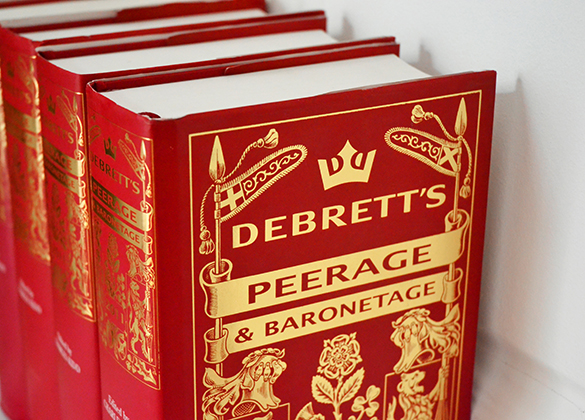
As a side note, if one is looking for something more modern, he might look to an “old” standard. Debrett’s has been recording everything pertinent to the aristocracy for years (births, marriages, deaths, titles, etc.) It offers Debrett’s New Guide to Etiquette and Modern Manners.

Combining traditional standards of conduct with modern innovations, this guide to etiquette covers everything from basic table manners to precedence at the State Opening of Parliament.

There is no better time than now for a definitive guide to contemporary civilized living. As traditional codes of behavior have given way to an increasingly informal society, many people are disconcerted by the current lack of guidelines. The established rules are as important as ever, but need adaptation for the complications and developments of the twenty-first century. The Debrett’s New Guide to Etiquette and Modern Manners cuts through the confusion to combine the very best of traditional standards of conduct with acceptable modern innovations. Packed with no-nonsense step-by-step advice, it covers everything from basic table manners to how to equip yourself at the grandest royal and diplomatic gatherings. Written with clarity and wit, this book celebrates the charm, beauty, and fascination of classic good manners, and their enduring role in a civilized society.

Now, back to the Georgian era: There was a man named Beau Nash in Bath. He was the Master of Ceremonies overseeing the assembly rooms in Bath.

The Historic Interpreter tells us, “. . . the Master of Ceremonies controlled the ballroom.  He was responsible for introductions, instructing the musicians, deciding which dances to do and in what sequence, maintaining order and settling any disputes.

“In addition, other items kept the Master of Ceremonies busy throughout the evening. For instance, there were rules that no gentleman could enter the ballroom in half boots or boots, nor carrying a cane, nor could any military man enter carrying his sword; and that no two ladies could dance together without his express permission. (It is doubtful how often this was enforced outside of the major venues such as Bath and London. This was a period where England’s Army and Navy were busy reigning in Bonaparte’s activities on the Continent and at sea so, there was a shortage of young, eligible men at many of the balls. It was apparently so prevalent, that Jane Austen remarks on it in her letters.)”

Basically, aristocratic children were supposed to learn from parents and tutors and governesses.

In Fanny Burney’s Evelina, which was first published in 1778 and was a HUGE hit, the whole point is that females are on display. They were the commodities, not the shoppers. Essentially, as a female one was not permitted to turn down a man who had asked you to dance unless you were so incapacitated you could not dance for an entire evening. This rule was so strict a chaperone would have enforced it upon a young lady if the girl had been inclined to hesitate. (Lots of people say Burney made up the rule, for they have not seen it anywhere else, except maybe Georgette Heyer, but that is another rabbit hole I am avoiding, at this time.) Personally, as an author I like the rule. How else could Jane Austen force Elizabeth Bennet to dance with Mr. Darcy at the Netherfied Ball and have them fight over Mr. Wickham, which is a major plot point in the story of Pride and Prejudice?)

Having said that, some of the current romance novels do not stay as close to historical accuracy as I would prefer, so one may find a very cunning heroine and a dull chaperone to which these manners mean nothing. I was reading a novel recently where the heroine was strolling by herself around Mayfair because she “needed to think” and then visiting a man by herself in the evening “because she had something to say.” The historical part was dreadful, but the romance part — Had conflict! Drama! Danger! — It was pretty well done. If I were asked for a rating, I would have presented the book a 3 out 5. While I enjoyed it, the loss of the “history,” though not convenient for the author was most inconvenient for me. I could not quite remove it from my mind. So maybe it worked for Jane Austen (assuming Burney made up the rules of etiquette), but not for a modern day author who took the “liberty” a bit too far. Just saying.

Cover of Volume 2 of Evelina – Public Domain ~ https://en.wikipedia.org/wiki/Evelina#/media/File:Evelina_vol_II_1779.jpg

Evelina, or the History of a Young Lady’s Entrance into the World is a novel written by English author Fanny Burney and first published in 1778. In this 3-volume epistolary novel, the title character Evelina is the unacknowledged, but legitimate daughter, of a dissipated English aristocrat, and thus raised in rural seclusion until her 17th year. Through a series of humorous events that take place in London and the resort town of Hotwells, near Bristol, Evelina learns to navigate the complex layers of 18th-century society and come under the eye of a distinguished nobleman with whom a romantic relationship is formed in the latter part of the novel. This sentimental novel, which has notions of sensibility and early romanticism, satirizes the society in which it is set and is a significant precursor to the work of Jane Austen and Maria Edgeworth, whose novels explore many of the same issues.

There were etiquette books published in the 18th century for men and some published later in the 19th century for men, but one will have difficulty finding any for females until late Victorian time. What they had in the Georgian era were many conduct books. Regency Etiquette (a book published 1811) Is more deportment and decorum than etiquette. There were many books about conduct and female education. I  guess their mothers would have taught them which fork to use, or not to use, before they were out, while the etiquette books were for the men moving up in society or the courtiers who still ate their peas with a knife. (See my explanation above…)

We, as Regency romance readers and writers, know those who lived through the period, had ways of handling calling cards and dinner invitations, etc., for they have come down to us from writers such as Georgette Heyer, but did Heyer make up “rules,” as did Burney. Some say she did. In truth, it is difficult to find any books of the period which address some of the things we have come to accept in historical romances. For example, we read how the patronesses of Almacks prohibited any young lady to dance the waltz (after 1816) without permission from one of the patronesses, but so far nothing of the period says such. We find this “rule” only in Georgette Heyer. Period literature does not mention these restrictions.

Other Possibilities for Research for Those Interested:

The Gentlemen’s Book of Etiquette and Manual of Politeness Being a Complete Guide for a Gentleman’s Conduct in all his Relations Towards Society by Cecil B. Hartley (Kindle version is free on Amazon)


 A System of Etiquette and a manual of politeness by John Trusler. One in Google books was published in 1804, but it was of an earlier date I believe. It is for young men.

The Mirror Of The Graces Or The English Lady’s Costume: Containing General Instructions For Combining Elegance, Simplicity, And Economy With Fashion In Dress (1830)

This book, entitled The Mirror of the Graces, is a guide to ladies’ fashion and etiquette, first published in 1811.

As the title page outlines, the book combines ‘taste and judgment, elegance and grace, modesty, simplicity and economy, with fashion in dress; and adapting the various articles of female embellishments to different ages, forms, and complexions; to the seasons of the year, rank, and situation in life: with useful advice on female accomplishments, politeness, and manners; the cultivation of the mind and the disposition and carriage of the body: offering also the most efficacious means of preserving beauty, health, and loveliness. The whole according with the general principles of nature and rules of propriety.’ The author is described as a ‘LADY OF DISTINCTION, who has witnessed and attentively studies what is esteemed truly graceful and elegant amongst the most refined Nations of Europe’.

Says it is etiquette, but not like our etiquette books. It has beauty tips and warnings about not romping about on the dance floor.

Posted in British history, customs and tradiitons, dancing, Georgian England, Georgian Era, historical fiction, Jane Austen, Living in the Regency, Living in the UK, marriage customs, peerage, Pride and Prejudice, real life tales, Regency romance, research, romance, tradtions, writing | Tagged , , , , , , , , , , | 3 Comments

Admiral Croft’s Gout in Austen’s “Persuasion” and How to Cure It…

pbb In Chapter 18 of Jane Austen’s Persuasion, Mary Musgrove writes to her sister Anne Elliot of their father’s tenants, the Crofts. “I have this moment heard that the Crofts are going to Bath almost immediately: they think the Admiral gouty.”

So exactly what is gout? How does one contract gout? What are the treatments for gout, especially as they would have address in Jane Austen’s England?

From the Arthritis Foundation, we learn, ” Gout is a form of inflammatory arthritis that develops in some people who have high levels of uric acid in the blood. It occurs in about 4 percent of American adults, but is more likely to affect men than women. Acute gout, or a gout attack, happens when something (such as a night of drinking) causes uric acid levels to spike or jostles the crystals that have formed in a joint, triggering the attack. The resulting inflammation and pain usually strike at night and intensify over the next eight to 12 hours. The symptoms ease after a few days and likely go away in a week to 10 days. Some people never experience a second attack, but an estimated 60% of people who have a gout attack will have a second one within a year. Overall, 84% may have another attack within three years. For many people, the first symptom of gout is excruciating pain and swelling in the big toe. Gout may also appear in the ankle or knee. Uric acid can form needle-like crystals in a joint and cause sudden, severe episodes of pain, tenderness, redness, warmth and swelling.”

NCO190158During the Georgian period, gout was attributed to luxurious living. From History Today, we find,  “As the physician William Heberden commented: ‘This seems to be the favourite disease of the present age in England, wished for by those who have it not, and boasted of by those who fancy they have it.’ In contrast, today’s manifestation of the disease is associated with the nutritional effects of poverty rather than affluence. Nevertheless, on some occasions gout was actively desired, as the belief was that it was incompatible with and would therefore drive out other illnesses. Horace Walpole called it ‘a remedy and not a disease’. Betsy Sheridan, sister of the playwright Richard Brinsley Sheridan, wrote to her sister Alicia LeFanu: ‘My Father is at last thank God fairly in the Gout – And has received the congratulations of Dr Millman on the occasion. The fact is that all his Phisicians have wish’d for this event but seem’d fearfull that he had not strength enough to throw off his disorders in that way.’

“Gout had many disguises. Roy Porter and G.S. Rousseau identified over 60 different types in one 18th-century treatise, including ‘galloping gouts’ and ‘flying gouts’. Other conditions were falsely labelled gout, including headaches and stomach complaints; the belief was that it came about as the result of an excess of one of the four humours flowing (or ‘dropping’, since the name is derived from the Latin gutta, a drop) to a weakened area of the body. Consequently gout was considered to be caused by ‘a sedentary life, drinking too freely of tartarous wines; irregular living, excess in venery; and obstructed perspiration and a supression of the natural evacuations’. Now we know that gout results from too much uric acid in the blood, either because an excess is produced or the kidneys are not filtering it efficiently. It can be worsened by the consumption of foods rich in purines, including anchovies, venison and goose – all of which featured strongly in the 18th-century diet of the better off. Then, as now, obesity and a high alcohol intake are contributory factors.”

In my series on the signers of the Declaration of Independence, several of the signers are listed of dying of gout. But can gout kill a person? In truth, gout can contribute to unhealthy cholesterol and lipid levels and although they are essential for the normal functioning of cells, when certain amount of lipids are enlarged or deposited in blood vessel walls and this clogging leads to a heart attack or stroke.

Nicholas Culpepper’s Complete Herbal, Consisting of A Comprehensive Description of Nearly All Herbs with Their Medicinal Properties and Directions for Compounding the Medicines Extracted from Them lists the following herbs for the treatment of gout: alehoof, angelica, archangel, barley, betony (wood), brank ursine, cabbages, cuckoo pint, goutwort, hellebore (black), kidney-wort, lily of the valley, mustard (black), nettle (common) pellitory of the wall, pennyroyal, poppy (wild) and rhubarb (monk’s). Let us have a look at several of these that were suggested by Culpepper and what he wrote of them. 

Alehoof (or Ground Ivy) is commonly found under hedges and on the side of ditches, under houses, or in shadowed lanes and other waste lands. They flower somewhat early. It is bitter in taste. Alehoof is used for inward wounds, exulcerated lungs, etc. Boiling alone or with other herbs, it was said to ease griping pains, windy and choleric humours in the stomach, spleen or belly. It was said to help with yellow jaundice and for expelling venom or poison, as well as the plague. It was used to provoke urine and women’s courses. (page 21-22)

dsc06587

anentangledbank.wordpress.com Basics of botany: Acanthus mollis – Brank-ursine

Brank Ursine is also called bear’s breech. It is of the thistle family. The roots are many, great, and thick, blackish without and whitish within, full of a clammy sap. They boiled leaves are used to mollify the belly by “making the passage slippery. The decoction drunk inwardly is excellent and good fro the bloody flux: the leaves bruised, or rather boiled, and applied like a poultice, are very good to unite broken bones, and strengthen joints that have been put out.” (page 59) 

KidneyWort is also called Wall Pennyroyal or Penny-wort. It grows plentifully on stone walls, rocks, etc. The seed ripens in mid to late May. “The juice or distilled water if drunk is good to cool inflammations and unnatural heats, a hot stomach, a hot liver, or the bowels; the herb, juice, or distilled water applied outwardly, heals pimples, St. Anthony’s fire, and other outward heats. It also helps some sore kidneys, torn by the stone, or exulcerated within: it provokes urine, is available for dropsy, and helps to break the stone. Being used in a bath, or made into ointment, it cools the painful piles or hemorrhoidal veins. It gives ease to hot gout, the sciatica, and the inflammation and swellings in the testicles; it helps the kernels or knots in the throat, called the king’s evil’ the juice heals kibes and chilblains, if bathed with it, or anointed with ointment made from it, and some of the skin of the leaf upon them; it is also used in green wounds to stay the blood, and to heal them quickly.” (page 206)

Posted in Austen actors, food and drink, Georgian England, herbs, Jane Austen, Living in the Regency, medicine, Persuasion | Tagged , , , , , | 5 Comments

Honorific Titles and Honourables

Ornament from the Bookman Ornaments collection from American Type Founders – Public Domain

After last week’s post on a “gentleman’s honor” and my brief mention of honorific titles, I had a reader ask exactly what such titles entailed and how were honorifics different from “honourables.”

An honorific title conveys respect and courtesy when used in addressing a person. Heck, we, in the U.S. and elsewhere around the world often use honorary academic titles, such as Honorary Professor or Honorary Fellow to indicate the person is a guest lecturer. This is often confused with honorary academic titles. A visiting professor or reader or senior lecturer or lecturer is someone who has taken time off their primary institution of employment to visit and collaborate with staff from another university. Hence, the visiting appointment is usually for a short period of time, ranging from 3 months up to 1 year. Yet, I have already strayed from my purpose in this post.

An honorific is used as a style in the grammatical third person and as a form of address in the grammatical second person. (I know for some of you this was as confusing as learning Latin, but bear with me. I will attempt to make it clearer.” After all, I spent 40 years teaching English,” she said laughingly.

If we were speaking to Mr. Collins in Jane Austen’s Pride and Prejudice, he might be filling our ears with anti-honorifics, meaning first person forms such as “your most humble servant” or “this unworthy person” to describe himself.

The most common used honorifics are Mr., Mrs., and Miss. “Sir” and “Ma’am” replace these titles and are also considered honorifics. Other honorifics denote an occupation: Doctor, Reverend Captain, etc. Those of us (Yes, I am including myself in this category.) with higher academic degrees, can be referred to as “Doctor” also, for we have a Ph.D.

Judges are often addressed as “Your Honour/Honor” when on the bench, the plural form is “Your Honours” and the style is “His/Her Honour”. If the judge has a higher title, that may be the correct honorific to use, for example, for High Court Judges in England: “Your Lordship” or “My Lord”. Members of the U.S. Supreme Court are addressed as “Justice”.

Similarly, a monarch ranking as a king/queen or emperor and his/her consort may be addressed or referred to as “Your/His/Her Majesty”, “Their Majesties”, etc. (but there is no customary honorific accorded to a female monarch’s consort, as he is usually granted a specific style). Monarchs below kingly rank are addressed as “Your/His/Her Highness”, the exact rank being indicated by an appropriate modifier, e.g. “His Serene Highness” for a member of a princely dynasty, or “Her Grand Ducal Highness” for a member of a family that reigns over a grand duchy. Verbs with these honorifics as subject are conjugated in the third person (e.g. “you are going” vs. “Your Honour is going” or “Her Royal Highness is going”.) Protocol for monarchs and aristocrats can be very complex, with no general rule; great offence can be given by using a form that is not exactly correct. There are differences between “Your Highness” and “Your Royal Highness”; between “Princess Margaret” and “The Princess Margaret”. All these are correct, but apply to people of subtly different ranks. An example of a non-obvious style is “Her Majesty Queen Elizabeth The Queen Mother”, which was an official style, but unique to one person.

In music, a distinguished conductor or virtuoso instrumentalist may be known as “Maestro.” Captain and Generals and Lieutenants and Admirals can be found as military ranks. “Esquire” in the U.S. is a title appended to the name of a lawyer, despite gender. [I will address “esquire” in the U.K. below. We also might hear something similar to Madam Secretary or Your Excellency or Senator. All are honorifics. [Honorifics]

Now, on to HONOURABLE. In the United Kingdom, all sons and daughters of viscounts and barons (including the holders of life privileges) and the younger sons of earls are styled with this prefix. [Yes, that means, all my Jane Austen Fan Fiction followers, Colonel Fitzwilliam has both the honorific of “Colonel,” but he would also be “The Honourable . . . “]

NOTE: The daughters and younger sons of dukes and marquesses and the daughters of earls have the higher styled title of “Lord” or “Lady” before their first names, as in my Angel Comes to the Devil’s Keep, the younger son of the Duke of Devilfoard, whose Christian name is Harrison, is Lord Harrison or more familiarly known as Lord Harry. In that same book, the eldest son, the story’s hero, is presented one of his father’s subsidiary titles, that of Marquess of Malvern. The style is only a courtesy, however, and on legal documents they may be described as, for instance, John Smith, Esq., commonly called The Honourable John Smith. As the wives of sons of peers share the styles of their husbands, the wives of the sons of viscounts and barons and the younger sons of earls are styled, for example, The Hon. Mrs John Smith. Likewise, the married daughters of viscounts and barons, whose husbands hold no higher title or dignity, are styled, for example, The Hon. Mrs Smith. (The Honourable)

“In 1912, King George V granted maids of honour (royal attendants) the style of the honourable for life, with precedence next after daughters of barons. [The London Gazette. 8 November 1912. p. 8201.]

The honourable is also customarily used as a form of address for most foreign nobility that is not formally recognised by the sovereign (e.g. ambassadors) when in the UK.

“Some people are entitled to the prefix by virtue of their offices. Rules exist that allow certain individuals to keep the prefix The Honourable even after retirement.

  • Judges of the High Court and other superior courts in the Commonwealth (if the judge is a knight, the style Sir John Smith is used socially instead of The Honourable Mr Justice Smith.); and
  • Members of Commonwealth executive and legislative councils (or senates) where the legislature is bicameral.

“Several corporate entities have been awarded the style by royal warrant, for example:

  • The Honourable East India Company;
  • The four Inns of Court (for example The Honourable Society of the Middle Temple)

“The style The Honourable is usually used in addressing envelopes (where it is usually abbreviated to The Hon.) and formally elsewhere, in which case Mr or Esquire are omitted. In speech, however, The Honourable John Smith is usually referred to simply as Mr John Smith.

“In the House of Commons of the United Kingdom, as in other traditionally lower houses of Parliament and other legislatures, members must as a minimum refer to each other as the honourable member or my honourable friend out of courtesy, but they are not entitled to the style in writing. Members who are ‘senior’ barristers may be called the honourable and learnèd member, serving or ex-serving members of the military the honourable and gallant member, and ordained clergy in the House the honourable and reverend member; a practice which the Modernisation Committee recommended abolished,[8] but which use has continued. When anyone is entitled to be styled Right Honourable this is used instead of honourable. [The Honourable]

Resources:

“The Honourable,” Britannica.

“The Honourable,” Wikipedia

“How Honorifics Are Used in English,” ThoughtCo

What Are Honorifics? Study.com

Posted in American History, British history, customs and tradiitons, peerage, titles of aristocracy, tradtions | Tagged , , , , , , | 2 Comments

The Greatest Way to Live with Honor . . .

Upon occasion, it is difficult for those who read Regency romances to understand all the nuances of the word “honor” or “honour”. Obviously, the idea of “honor” is quite different in nonfiction books. One rarely finds information in a nonfiction book on a gentleman’s sense of honor. Philip Dormer Stanhope, Earl of Chesterfield, provided extensive advice to his son, but much of his instruction is not what I would consider honorable behavior.

If you are interested, you might read the entire book or excerpts on particular subjects at this link: Lord Chesterfield’s advice to his son, on men and manners: or, A new system of education. In which the principles of politeness, the art of acquiring a knowledge of the world, with every instruction necessary to form a man of honour, virtue, taste, and fashion, are laid down in a plain, easy, familiar manner, adapted to every station and capacity. : The whole arranged on a plan entirely new.

In truth, I have not discovered much—perhaps, I just have not looked in the right places, about the gentlemen’s sense of honor. There is some discussion of the concept in books on dueling.  

Most often one reads a man would pay his gambling debts, those so-called debts “of honor” before he would pay his tailor, with the result being the tailor went bankrupt.

Another aspect  of “honor” was a man’s word was his bond. This meant he could give his word instead of taking an oath, except for before parliament.  

One comment on honor I read was that a man’s honor was involved even when the law could not be. Gambling debts of the plain IOU (vows, not vowels) type could not be enforced by law, so they had to be enforced by a concept of a gentleman’s honor.

Once the Hardwicke Marriage Act made marriage contracts of the old type unenforceable, it became a matter of honor that a gentleman marry where he promised. There was a breach of promise suit, but ladies and gentlemen of quality did not customarily avail themselves of that legal process. Lord Byron and the Duke of Wellington both married women who appeared to feel they had a claim on the gentleman. Wellington was told a Catherine Pakenham had waited for many years because she felt they had agreed to marry. Wellesley(as he was then) did not recall it in the same manner, but felt bound by honor to marry the lady with an offer of his hand.

Catherine Sarah Dorothea Wellesley, Duchess of Wellington (née Pakenham had met Wellesley in Ireland when they were both young, and Wellesley, after numerous visits to the Longfords’ (her father was Baron Longford) Dublin home, made his feelings toward her clear. At the time her family disapproved of the match: Wellesley was the third son of a large family and had little in the way of prospects. After the rejection by the Pakenhams, Wellesley became serious about his military career, was posted to the Netherlands and India, enjoyed a spectacular rise, and seemingly forgot Kitty. Although she remained hopeful they would be reunited, she admitted to a friend, Olivia Sparrow, after many years, she thought the “business over.” She became engaged to Galbraith Lowry Cole, the second son of the Earl of Enniskillen, but Sparrow, who was in contact with Wellesley, revealed he still considered himself attached to her. After much soul-searching, Pakenham broke off the engagement to Cole, although she believed the stress of the affair damaged her health.

There is much speculation about their unhappy marriage. One sees bits of it play out on the PBS series, Victoria, for Wellington was British Prime Minister from 1828 to 1830. During the Napoleonic War, Wellesley remained in Portugal and Spain during the entire Peninsular War, not returning to England until 1814. Kitty aged quickly, becoming short-sighted, causing her to squint when talking. Wellesley found her vain and vacuous. It appears she indeed loved him, but contented herself by doting on her sons and four adopted children. Wellesley confided to his closest female friend, Harriet Arbuthnot, that he had “repeatedly tried to live in a friendly manner with her … but it was impossible … & it drove him to seek that comfort & happiness abroad that was denied him at home”. Harriet, the nature of whose own relations with Wellesley remains a subject of speculation, had a rather low opinion of Kitty—”she is such a fool”—but disputed Wellesley’s claim that she cared nothing for his happiness; in a rare moment of sympathy, she wrote that Kitty wanted above all to make her husband happy, but had no idea how to do it.

Lord Byron did propose to Miss Annabella Milbanke with whom he had been corresponding. She had initiated the correspondence. She hinted she was expecting an offer from another and the subject and the correspondence was dropped.

On September 17 1814, Lord Byron receives Annabella Milbanke’s letter accepting his marriage proposal. Her letter reads:

I have your second letter—and am almost too agitated to write—but you will understand. It would be absurd to suppress anything—I am and have long been pledged to myself to make your happiness my first object in life. If I can make you happy, I have no other consideration. I will trust to you for all I should look up to—all I can love. The fear of not realizing your expectations is the only one I now feel.

Convince me—it is all I wish—that my affection may supply what is wanting in my character to form your happiness. This is a moment of joy which I have too much despaired of ever experiencing—I dared not believe it possible, and I have painfully supported a determination founded in fact on the belief that you did not wish it removed—that its removal would not be for your good. There has in reality been scarcely a change in my sentiments. More of this I will defer. I wrote by last post—with what different feelings! Let me be grateful for those with which I now acknowledge myself Most affectionately yours.
A.I.M
. (You may read more at Past Now.)

I am not certain whether or not Miss Milbanke was being honest when she hinted at someone else making an offer. Months later, when she again began corresponding with Byron, she let it be known she had not accepted another offer. He then felt obligated to make her an offer which she did not refuse. The whole world must know theirs was a very unhappy marriage.

Anyway, this all goes to prove, in the Georgian era, a man’s word was his bond.

The question of honor and the best outcome for all also comes into question if a man is betrothed to a lady in a marriage of more convenience than love and then he encounters the lady who he knew was the lady of his heart.

Honor might demand he follow through on the marriage with the one to whom he is betrothed, but is it really more honorable to marry one person when you really love another?  The thinking of many is that love is a fleeting emotion, and one can get by on shared life, children, and tepid emotions. I sometimes wonder though whether it wouldn’t be better to have the man break the engagement, leaving one person unhappy, rather than marrying where he had promised and making three people unhappy?

The thing to remember about honor was that it only applied to one’s peers. Such is the one reason a gentleman had to pay his gambling debts, but not the tailor’s bill. If another gentleman insulted him, he might challenge the person to a duel. If a servant insulted the gentleman, he might have him thrashed or thrash him himself. The gentlemanly code of honor is inseparable from the class system.

Honor was a person’s reputation. It had more to do with the gentleman and his family receiving the ‘proper respect’ due their station. A gentleman expected to “be honored” for who he was, and not whether he followed a particular morale code. Such is why Regency men “defended their honor.” Men fought for “honor and glory”—to uphold their reputations. Such was for what gentlemen strove, even more so than society wealth, though the trappings of wealth could add to one’s honor. It seems to make more sense on a society-wide basis if honor is seen as the score card, determining who they were and whether they were respected.

The drive for “glory” in monarchs and princes during the 1700s was rampant, either by spending money on monuments and/or on wars. Louis XIV stated that he fought wars and built palaces to “uphold his honor and that of France.” 

Acceptable/expected behaviors such as paying one’s debts to another gentleman was important, because the aristocracy and good families were the only ones who recognized or valued ‘honor’ as far as social class was concerned. It was very much a class issue. To say a poor man was without honor was more of a comment on his reputation and standing in society than commenting on his morals. Certainly, individuals would have personal moral codes they would feel ‘honor-bound’ to follow. Yet, ‘Honor’ as a code of conduct or some statement of what a moral person should conduct himself was simply one of many minor trappings surrounding the notion of honor. A man ‘without honor’ was someone who did not conform to society’s norms for a honorable gentleman and had a bad reputation. The two were often being seen as inseparable, regardless of the man’s actual behavior or morality.  

Such is why ‘Honorable’ or ‘Honourable’ was a ‘honorific’ title during the Regency as is referring to a Judge today as ‘your honor.’ It is the recognition of one’s position, not their character or morals. During the Regency, saying someone was “a man of Honor” was not the same as saying he was a “man of Character” even though the implication was a man of honor had “breeding” or an aristocratic character, with all the expected norms in behavior being considered as such implied. 

It is a complicated subject because we are looking at it from two hundred years and lots of definitions of ‘honor’ since then.

Posted in British history, customs and tradiitons, Georgian Era, marriage customs, Regency era | Tagged , , , , , , | Comments Off on The Greatest Way to Live with Honor . . .

Peerages: Those Which Can Be Inherited and Those Which Cannot

A hereditary peerage, generally passages from father to son, or to another. Those peerages which cannot be inherited are called “for life.”

“By the 1950s, there was a feeling the membership of the House of Lords ought to be tackled. Proposals for creating life peers, appointed by the Government for life rather than on a hereditary basis, had been around since the 1920s. In November 1957, a Life Peerages Bill was introduced into the Lords by Lord Home. The clause relating to the creation of women peers caused the greatest agitation. An amendment to exclude women from the House was defeated at committee stage by 134 votes to 30.” [Life Peerage Act, UK Parliament]

A life peerage grants all the privileges as does the hereditary peerage, including a seat in the House of Lords, except it cannot be passed down to the person’s children, though those children are addressed by the customary courtesy titles and styling appropriate to the peerage, and they keep that courtesy titles until their own deaths. Generally, those which have been granted under the Act are baronies. The only other life peerage granted occurred in 1856, when James Parke was made 1st Baron Wensleydale. Parke’s road to the barony was quite unusual, as you will see below:

James Parke, 1st Baron Wensleydale (1782-1868) – Public Domain

“Parke’s early career as a barrister was not noted as particularly brilliant, but he was successful; in 1820, for example, he was junior counsel for the Pains and Penalties Bill 1820 against Caroline of Brunswick. On 28 November 1828 he succeeded Sir George Holroyd as a judge of the Court of King’s Bench, a great achievement for somebody who had not even qualified as a King’s Counsel, and he was knighted on 1 December 1828. In 1833 he was made a Privy Councillor, and on 29 April 1834 was transferred, along with Edward Hall Alderson, to the Court of Exchequer, succeeding and being succeeded as a judge of the Court of King’s Bench by John Williams.

“His work in the Court of Exchequer has led to him being called “one of the greatest of English judges; had he comprehended the principles of equity as fully as he did the principles of the common law, he might fairly be called the greatest. His mental power, his ability to grasp difficult points, to disentangle complicated facts, and to state the law clearly, have seldom been surpassed. No judgments delivered during this period are of greater service to the student of law than his”. He was criticised for being too respectful of authority and unwilling to overturn precedent; John Coleridge accused him of being dedicated to the form of the law rather than the substance.

“The Common Law Procedure Acts 1854 and 1855 led to his resignation from the Exchequer in disgust, but his reputation was such that the government recalled him by granting him a life peerage, that of Baron Wensleydale, of Wensleydale, in the North Riding of Yorkshire on 16 January 1856. There was a question at the time of whether the letters patent, which granted him a peerage “for the term of his natural life”, allowed him to sit in the House of Lords; it was eventually decided that they did not, and a second set was issued with the usual form for Baron Wensleydale, of Walton, in the County Palatine of Lancaster on 23 July 1856. This was irrelevant, since he had no sons able to take the peerage even if it was not a life appointment. He sat as part of the Appellate Committee of the House of Lords until his death on 25 February 1868.” (James Parke, 1st Baron Wensleydale)

Coat of Arms, James Parke, 1st Baron Wensleydale

The former Prime Minister, Margaret Thatcher was presented a life peerage as a baroness. She should be addressed as Lady Thatcher. Her children have the courtesy title of “Honourable.”

Life peerages for women were more common than one might think. Remember, women in this position WOULD NOT sit in the House of Lords.

“Prior to the regular creation of life peerages, the great majority of peerages were created for men. Suo jure peeresses are known from an early period; however, most of them were women to whom a peerage had passed as an inheritance. It was very rare for a woman to be created a peeress before the 17th century. Peeresses of the first creation were not allowed to sit in the House of Lords until the passage of the Life Peerages Act 1958. Female holders of hereditary peerages could not sit in the Lords until the passage of the Peerage Act 1963. In some, but not all cases, peeresses of first creation were created for life only.

“Created peeresses fall into the following categories:

  • Created for merit or achievement
  • Having a father who was a peer, but who under the terms of the peerage could not pass the peerage to his daughter. Such an event could create the anomalous situation of commoners holding important lands and estates traditionally associated with lordship.
  • Closely connected to a reigning monarch (including many royal mistresses)
  • Created to honour a relative, including:
    • As a posthumous honour for a dead husband, often one who would have received a peerage if he had not died
    • To honour a husband who was living, but could not or would not accept a peerage in his own right (for instance if he wanted to retain his seat in the elected Commons)
    • To confer nobility upon the peeress’s children, again often in recognition of the achievement of a husband

There is a long list of the life peerages for women at this LINK. Notice King Charles II granted life peerages to ten of his ennobled mistress!!

Most peerages, however, are hereditary.

“A peerage passes from father to son, but sometimes a peer dies without a son to succeed him.  For example, the 6th Duke of Devonshire (1790-1858) never married.  When that happens, go back one generation, to the peer’s father, in this case the 5th Duke (1748-1811), and trace the next eldest male direct lineal descendant. In this case, that would be 5th Duke’s other sons, if he had any.  He didn’t (at least, not a legitimate one), so we go back one more generation, to the 4th Duke (1720-1764).  The 4th Duke had at least two sons:  William, who succeeded him as 5th Duke, and Lord George Cavendish (1754-1834).  Lord George died during the 6th Duke’s lifetime, but if he had survived him, he would have become the next duke.  However, he left a son, Mr. William Cavendish (1783-1812), who also died before the 6th Duke, but left one son, Mr. William Cavendish (1808-1891).  This man became the 7th Duke of Devonshire. 

“But if Lord George’s line had died out, then the dukedom could be traced back up to three more generations, all the way to the 1st Duke, and descend through the eldest of his other sons who had surviving legitimate male issue.  If there was no legitimate surviving male descendant, then the title of Duke of Devonshire would become “extinct.” However, if there was a legitimate surviving male descendant of his father, the 3rd Earl of Devonshire, then that person would inherit the earldom.  In this way distant cousins can sometimes inherit lesser titles while the highest peerage dies out. “[Hereditary Peerages]

To inherit a peerage, a man must be the eldest male survivor, with a line traceable from father to son, all the way back to the earliest person to hold the peerage. Verifying this “chain of succession,” so to speak is part of being summoned before the House of Lords officially to accept the peerage. “Eldest” in this case has nothing to do with the age of the person claiming the peerage, but rather, whether he can trace a DIRECT LINE to an earlier holder of the peerage, i.e., eldest son of the eldest son.

A direct summons by the Monarch to attend the Parliament is knows as a writ of summons. By modern English law, if a writ of summons was issued to a person who was not a peer, that person took his seat in Parliament, and the parliament was a parliament in the modern sense (including representatives of the Commons), that single writ created a barony, a perpetual peerage inheritable by male-preference primogeniture. This was not medieval practice, and it is doubtful whether any writ was ever issued with the intent of creating such a peerage. The last instance of a man being summoned by writ without already holding a peerage was under the early Tudors; the first clear decision that a single writ (as opposed to a long succession of writs) created a peerage was in Lord Abergavenny’s case of 1610. Peerages created by writ of summons are presumed to be inheritable only by the recipient’s heirs of the body.

writ of acceleration is a type of writ of summons that enables the eldest son of a peer to attend the House of Lords using one of his father’s subsidiary titles. The title is strictly not inherited by the eldest son, however; it remains vested in the father. A writ may be granted only if the title being accelerated is a subsidiary one, and not the main title, and if the beneficiary of the writ is the heir-apparent of the actual holder of the title. A total of ninety-four writs of acceleration have been issued since Edward IV issued the first one.

More often, letters patent are used to create peerages. Letters patent must explicitly name the recipient of the title and specify the course of descent; the exact meaning of the term is determined by common law. For remainders in the Peerage of the United Kingdom, the most common wording is “to have and to hold unto him and the heirs male of his body lawfully begotten and to be begotten”. Where the letters patent specifies the peer’s heirs male of the body as successors, the rules of agnatic succession apply, meaning that succession is through the male line only. Some very old titles, like the Earldom of Arlington, may pass to heirs of the body (not just heirs-male), these follow the same rules of descent as do baronies by writ and seem able to fall into abeyance as well.

Resources:

Creation and Inheritance of Peerages. DeBrett’s.

Harry Graham, The Mother of Parliaments (Little, Brown & company, 1911), p. 33

“Hereditary Peerages.”

Register of Hereditary Peers: running list”. Parliament of the United Kingdom.

UK peerage creations: Hereditary peerages with special limitations in remainder”http://www.peerages.info.

Posted in Act of Parliament, British history, Inheritance, Living in the UK, peerage, primogenture, research | Tagged , , , , , , , , , | Comments Off on Peerages: Those Which Can Be Inherited and Those Which Cannot