I still handwrite my stories on paper. Black ink. Wide ruled spiral notebooks. Wide ruled means I can squeeze in words or phrases. What I write today will receive its first edit tomorrow before I continue on with the story. Eventually, I type the pages, which is the second round of edits.
All that being said, I have my own method of marking words and phrases. If I cannot think of a more appropriate word than the one I have, I simple circle it and write wc (word choice) above it. On that second read through, I might change it or it may change later in the process, but I do not stop to look for an alternate word, for such would play havoc with my story flow. I do the same thing, if I have used the word often in a short passage. I also circle phrases that seem as if they might be too modern for a story set in the early 1800s. Such was true when I wrote a passage where my heroine, Lady Cora Midland, was honored by walking about the room with the “dandy of the period,” one Beau Brummell. Here is a bit of their conversation:
“How very sad,” she observed.
“Is such not the way of all people?” Mr. Brummell questioned. “We wish others to fail so we might think ourselves the fortunate ones, though often we are teetering on the edge of disaster ourselves. Yet, enough of my sermonizing. I did not ask to walk about the room with you to discuss such morbid thoughts. Tell me, instead, something of your people, Lady Cora.”
“Gladly so,” she said with another smile. “I adore speaking of them. My mother, Miss Sophia Cooper, was half-sister to Lord Lindmore’s mother, Miss Louisa Cooper. They shared a father, Edward, 7th Viscount Cooper. Louisa married Frederick Harrington, who, as you well know, both passed quite young, leaving their son as the heir to the Lindmore line.
“My mother was the second wife of Lord John Midland. With our father’s passing, my half-brother has assumed the earldom. My mother inherited Cameron Manor from her mother, the late Viscountess Cooper. The manor is mine, or, I should say, will be mine when the law considers me old enough to manage on my own. Before she passed, Lady Midland asked the Dowager Countess of Lindmore to see to my Come Out.” Cora would not admit how her mother had not trusted the Midlands to do right by her. Some family secrets were to be held close to the chest.
“My own father was not a landed gentleman,” Brummell admitted. “Not that anyone in this room cares. Never permit them to know you possess a weakness,” he advised. “They will turn upon you in the manner of a swarm of bees.”
Cora glanced to those watching them intently. “You make me wish to run screaming from the room, sir,” she admitted.
Brummell chuckled. “Perhaps we both should do so and see how many follow suit. I have heard of the habits of Norway lemmings, which suddenly appear in large numbers, seemingly out of nowhere, as if they fell from the sky. They are thought to come upon the notion of following each other so closely that when one jumps from a cliff, they all follow without reason. Someday I may place this rumor into practice to see what might be the result.”
Cora felt sympathy for a man who could not even turn around without everyone remarking on it.
*******
When I wrote this remark regarding “lemmings,” I again circled it and put “origin” above it to remind me to trace whether those in the Regency era might know of lemmings and the story of their “supposed” suicide. Fortunately, for me, some knowledge of this tale did exist for the time period of my story. I did not have far to go for the truth of the matter. The lovely encyclopedia Britannica tells us, “In the 17th century, naturalists perplexed by the habit of Norway lemmings to suddenly appear in large numbers, seemingly out of nowhere, came to the conclusion that the animals were being spontaneously generated in the sky and then falling to earth like rain. (The prosaic truth is that they migrate in herds.) Some people also thought that lemmings explode if they become sufficiently angry. This is also a myth, of course—lemmings are indeed one of the more irascible rodents, but they mostly channel their rage into fights with other lemmings. People probably came up with the notion of exploding lemmings after seeing the picked-over lemming carcasses that were left behind following a migration.
“But there is one myth that has held on tenaciously: Every few years, herds of lemmings commit mass suicide by jumping off seaside cliffs. Instinct, it is said, drives them to kill themselves whenever their population becomes unsustainably large.
“Lemmings do not commit suicide. However, this particular myth is based on some actual lemming behaviors. Lemmings have large population booms every three or four years. When the concentration of lemmings becomes too high in one area, a large group will set out in search of a new home. Lemmings can swim, so if they reach a water obstacle, such as a river or lake, they may try to cross it. Inevitably, a few individuals drown. But it’s hardly suicide.”
“There it is in the 17th Century!” It can fit in the story, and no one can call me out on it, though someone will for that is the way of mean-spirited reviewers. Sorry. That is for a different blog.
Loving Lord Lindmore released yesterday. If you do have your copy yet, do so soon before the price change at the end of next week, and keep looking for the story’s companion novel, Taming Lord Truist, releasing in September 2024.
LADY CORA TAKES SOCIETY BY STORM . . .
Lady Cora Midland, a highly-spirited country beauty, offers no pretensions, which wins her many admirers, despite her lack of knowledge on how to manage the beau monde. However, Matthew Harrington believes she is taking advantage of his elderly grandmother, and he means to put a stop to the girl.
LORD MATTHEW LINDMORE IS IN DENIAL . . .
Lindmore reluctantly assists his grandmother in bringing Lady Cora out in Society. Yet, what appeared to be a daunting task becomes a transformation the earl does not expect. He finds the woman as delightful, as do others in the haut ton. Yet…
When Lady Cora is on the the verge of marrying another, Lindmore fears time will expire before he can speak his own proposal.
It is here at last. I adored this book so much, I am writing a followup book that features Lord Augustus Truist, Lord Lindmore’s friend. Taming Lord Truist will arrive in late August (after all, he is named after Gaius Julius Caesar Augustus, also known as Octavian (which serves as August’s younger brother’s name in my tale). August, as expected, is the eighth month of the Gregorian calendar. It was named for the first Roman emperor, Augustus Caesar, in 8 bce.
Loving Lord Lindmore: Book 1 of the Strong Regency Women Duo
LADY CORA TAKES SOCIETY BY STORM . . .
Lady Cora Midland, a highly-spirited country beauty, offers no pretensions, which wins her many admirers, despite her lack of knowledge on how to manage the beau monde. However, Matthew Harrington believes she is taking advantage of his elderly grandmother, and he means to put a stop to the girl.
LORD MATTHEW LINDMORE IS IN DENIAL . . .
Lindmore reluctantly assists his grandmother in bringing Lady Cora out in Society. Yet, what appeared to be a daunting task becomes a transformation the earl does not expect. He finds the woman as delightful, as do others in the haut ton. Yet…
When Lady Cora is on the the verge of marrying another, Lindmore fears time will expire before he can speak his own proposal.
Taming Lord Truist: Book 2 of the Strong Regency Women Duo
Miss Eleanor Wilder has admired Lord Augustus Truist since she was a young girl. He had once protected her from an older boy who had meant to strike her. Now, she requires his protection again: This time, it is from her guardian, a cousin who means to marry Eleanor off to a man more that twice Ella’s age in order to keep Eleanor’s fortune in the family. As she will soon be one and twenty, Eleanor must convince Lord Truist to marry her himself, rather than see all her fortune go to a ne’er-do-well.
Lord Truist must save his family from disgrace and a touch of poverty by marrying an heiress of whom his mother approves, but he finds repugnant. However, when Miss Wilder offers him her fortune with no strings attached—a marriage of convenience—how can he refuse? As his countess, the lady would have the protection she required, and he would have the freedom to enjoy his long-time mistress, Miss Sarah Darling, without complaints.
How was he to know that the new Lady Truist not only loved him but was quite perfect in ways he did not realize he required?
London held a variety of popular parks during the Regency era. Let us explore a few of them.
St James’s Park is a Royal Park, named after a once isolated medieval hospital dedicated to St James the Less, now the site of St James’s Palace. It is the most easterly of a near-continuous chain of public parks, which includes (moving westward) Green Park, Hyde Park and Kensington Gardens.
It meets Green Park at Queen’s Garden, opposite the entrance to Buckingham Palace.
It contains a small lake, St James’s Park Lake, with two islands, West Island and Duck Island with the lake.
Originally it was an enclosed deer park for the use of King Henry VIII in the 1530s. Henry purchased the area from Eton College. It was a marshland through which the River Tyburn flowed. It set west of York Palace, which was subsequently renamed Whitehall. St James Palace was meant to serve as a “hunting lodge” for the king.
James I had the park drained and landscaped in 1603, and it housed exotic animals, including crocodiles, an elephant, camels, exotic birds, etc.
Charles II had the park redesigned in a more formal style. A 775-metre by 38-metre ornamental canal was added. During this time the park had a reputation as a meeting place for acts of lechery. Charles II was said to have entertained guests and mistresses in the park.
In the late 1600s and early 1700s, a person might purchase fresh milk at the “Lactarian,” for cows grazed in the park.
Further changes occurred in the 18th century with the purchase of Buckingham House (now Buckingham Palace) for the use of Queen Charlotte in 1761.
The Prince Regent (later King George IV) commissioned further remodeling in 1826-27. Architect John Nash converted the canal into a more natural shaped lake and formal pathways were added. Buckingham House was expanded to create the palace. Marble Arch was built at its entrance to the cour d’honneur of Buckingham Palace.
Hyde Park’s name comes from the Manor of Hyde, which was the northeast sub-division of the manor of Eia and appears in the Domesday Book. The name was of Saxon origin. “Hide” was a unit of land appropriate to support a single family. It was the property of Westminster Abbey in the Middle Ages.
Hyde Park was created for hunting purposes in the 1530s when Henry VIII received the manor of Hyde from the Abbey. It remained a hunting ground until the reign of James I, who permitted others access to the area and appointed a ranger to oversee it.
Charles I created the Ring (north of the present day Serpentine boathouses) and opened the area to the public in 1637.
A series of fortifications were built along the east side of the park at the start of the English Civil War in 1642.
During the Interregnum [the period between the execution of Charles I on 30 January 1649 and the arrival of his son Charles II in London on 29 May 1660 which marked the start of the Restoration] Parliament sold the then 620-acre park for “ready money,” earning £17000 + an additional £765 6s 2d for the deer living there.
Charles II retook ownership of the park in 1660 and enclosed it with a brick wall.
Hyde Park was used as a military encampment during the Great Plague of Lonon in 1665.
William III moved his residence to Kensington Palace in 1689 and installed a private road on the southern edge of the park, particularly for his use only. It is now known at Rotten Row. The row was used by the wealthy for riding in the early 19th century.
In late January through May, the “fashionable” people rode out during the Season. 4:30 to 7:30 P.M.
Hyde Park is one of London’s finest landscapes. It covers 142 hectares (350) acres.
The Ladies’ Mile was a more sedate bridle path than was the Row.
The Ring was where the fashionable drove their pleasure carriages to see and be seen.
The Serpentine was a shallow, man-made stream that wound its way through a section of the park.
Hyde Park section of “Improved map of London for 1833, from Actual Survey. Engraved by W. Schmollinger, 27 Goswell Terrace”, photographed for Wikipedia by User:Pointillist. All rights of the photographer are hereby released.
The Regent’s Park occupies 410 acres of high ground in what is now the northwest part of inner London.
It is split between the City of Westminster and the Borough of Camden
The land was part of the manor of Tyburn during the Middle Ages, having been acquired by Barking Abbey.
With the Dissolution of the Monasteries, Henry VIII appropriated it under the statutory forfeiture with minor compensation affairs of the time.
The park was named after the Prince Regent.
The Regent’s Park, as well as other properties built for the Prince Regent, include John Nash, James Burton, and Decimus Burton as the architects and builders.
Along with the park, Regent Street and Carlton House Terrace became a grand sweep of town planning stretching from St James’s Park to Primrose Hill.
Green Park, royal park in the borough of Westminster, London. Located north of Buckingham Palace, east of Hyde Park, and west of the neighbourhood of St. James, it covers about 53 acres (21 hectares) of land.
During the Medieval era, the park was a swampy burial ground for lepers from the hospital at St James.
The Poulteney family was the first to enclose it in the 16th century.
It was partly excavated for the sand found within to be used to make bricks and stone.
Like the others above, the park was enclosed in the 16th century, and it was later designated a royal park by Charles II (reigned 1660–85). In the 18th century it was an isolated location that often concealed highwaymen and served as the meeting place for duels, but it was also used for fireworks displays and balloon ascents. Green Park is the least stylized and ornamented of London’s royal parks.
Charles II took the land from the Poulteneys and ordered it developed into a Royal Park and enclosed with a brick wall. It was to be called Upper St James’s Park.
He even ordered an icehouse built to supply his family with ice for the summer months.
It was officially renamed Green Park in 1746.
Paul Rabbitts (15 June 2017). London’s Royal Parks The Postcard Collection. Amberley Publishing suggests that the Queen Consort, Catherine of Braganza, had all the flowers removed from the parkland, for she believed King Charles II gave some of the flowers to another woman.
The Queen’s Basin came about when King George II had “The Queen’s Walk” laid out for his wife Queen Caroline. The walk led to a reservoir that held drinking water.
During the late 18th century and early 19th century, it was a popular place for balloon attempts and fireworks.
Because it was somewhat “rural,” it was also known to have its fair share of highwaymen and thieves/
In 1730, William Pulteney, 1st Earl of Bath, and John Hervey, 1st Earl of Bristol held a duel upon the grounds. Other duels were reported, but no one so famous as these two.
In the present, in contrast with its neighbouring parks, Green Park has no lakes, no buildings, no playgrounds and three, early yet distinctive post-war-era public monuments.
Green Park, St. James’s Park and Buckingham Palace section of “Improved map of London for 1833, from Actual Survey. Engraved by W. Schmollinger, 27 Goswell Terrace”, photographed for Wikipedia by User:Pointillist. All rights of the photographer are hereby released. The monarch at the time the map was published was William IV.
BOOK BLURB…
LADY CORA TAKES SOCIETY BY STORM . . .
Lady Cora Midland, a highly-spirited country beauty, offers no pretensions, which win her many admirers, despite her lack of knowledge on how to manage the beau monde. However, Matthew Harrington believes she is taking advantage of his elderly grandmother, and he means to put a stop to the girl.
LORD MATTHEW LINDMORE IS IN DENIAL . . .
Lindmore reluctantly assists his grandmother in bringing Lady Cora out in Society. Yet, what appeared to be a daunting task becomes a transformation the earl does not expect. He finds the woman as delightful as do others in the haut ton. Yet… When Lady Cora is on the the verge of marrying another, Lindmore fears time will expire before he can speak his own proposal.
Excerpt from Chapter Seven of Loving Lord Lindmore
Lord Truist had called at noon, claiming he had business with Lindmore, but Cora thought it odd, for she considered the pair “friendly enemies.” She did not necessarily believe in happenstance, especially when it came to these two particular gentlemen, but there was little she could do to deter them. Even so, she made a mental note to watch and listen, for they were up to something.
Therefore, when Jordan and the Petersens appeared at twenty past one, it did not surprise Cora that the two lords “finished their business” about the same time and joined her and Lady Lindmore as they entertained her friends. “Lord Truist,” she said. “Hopefully, you recall Mr. Holt and Mr. Petersen. They often attended the hunts at Franklin Place with their fathers. All you young gentlemen were quite a tight group, each of you attempting to best the other, if I recall correctly.”
“Though I should have, I admit, I would not have immediately recognized Petersen,” his lordship admitted with a smile, “but Holt favors his father enough I might have introduced him to Lindmore by the elder Holt’s title.” He returned the bow the men presented him. “And the lady . . .” he hinted.
Cora smiled, for she noted Truist’s appreciation for the pretty blonde. The thing with Truist was, he always “appreciated,” but never took any young lady seriously. Therefore, Cora slid a protective arm about Miranda’s waist. “This is Mr. Petersen’s youngest sister, Miss Miranda.”
Again, Truist bowed, but, this time, he shifted his weight to present a pretty leg and a sweep of his hand as he did so. Cora thought him a terrible flirt. “I fear I do not recall Miss Miranda. I do remember a Miss Petersen and a Miss Alice.”
Cora laughed easily. She could not believe women tolerated Truist’s foolishness; yet, she had viewed for herself how more than one young lady longed for just a bit of his lordship’s attention. “Such is because Miranda was barely old enough not to holding onto her mother’s skirt tails, upon occasion, while the rest of us chased after the hunting dogs.”
“Why do we not all sit?” the countess suggested. “Cora, my dear, might you pour tea for your friends?”
As they all found seats, Cora was surprised when it was Lindmore who claimed her hand to seat her by him on the settee. During each of the evening entertainments she had experienced this last week, he rarely reached a hand for her beyond serving as her partner during one of the dance sets. His eyes met hers, and Cora stumbled, but his arm caught her before she could tumble over. “Thank you kindly, my lord. I am not often so foul-footed.”
“My pleasure, my lady,” he said in a tone she could not quite identify. Was it criticism or something more pleasant?
Seated at last, she lifted the pot to serve the countess first. “I fear I did not finish my introductions.” She poured the milk and the tea for the first cup. “For her ladyship,” she instructed the waiting footman softly. “Mr. Petersen. Miss Miranda, it gives me great pleasure to make you acquainted with my extended family. Lady Lindmore has been excessively kind to take me on, for you three are aware I would never have had the nerve to claim a London Season without her. I can never repay the kindness she has shown me.”
While she spoke, she poured a like cup of tea and passed it to the man on her left. “Her ladyship and I are extremely grateful Lord Lindmore has agreed to escort us upon the Town, and I am proud to enter each event upon his arm and under his protection.” Cora knew her speech too flowery, but she wished the Lindmores to know something of her honest gratitude. The countess had been excessively kind to her, and, though not being her mother, or even her grandmother, her ladyship’s gentle hand upon Cora’s shoulder had removed some of the sting of loneliness chasing Cora about over the last few years. As to Lord Lindmore, she had begun to think upon him as the standard for all others she met.
When she held up a sugar pat, Lord Truist waved off the offer. “And what will you say of me, my dear?” he asked with that taunting grin which was so much a part of his personality. She suspected the woman who finally tamed Lord Truist would never know a sad day in her life.
“Lady Lindmore has cautioned me on how some of my opinions might not always be welcomed,” she said with a lift of her brows. Cora liked Truist and thought any woman who claimed his loyalty would earn a true defender, but she was not that woman. Therefore, she would simply tease and test him.
While Truist laughed and good-naturedly warned her that her sassiness was not required before company, he said, “I understand from Lindmore you and your friends hope to ride out together. Where will you ride?”
Jordan Holt responded, “Miss Miranda wishes to view Hyde Park. This is her first visit to London.”
Truist continued to speak for him and Lindmore. “You are welcome to join me and the earl. We planned to ride together tomorrow. That is, if you hold no objections, Lady Cora.”
“Lady Lindmore has yet to extend her permission for my riding with friends,” Cora responded dutifully.
The countess gently nodded her approval of Cora’s response. “If Lindmore means to be in attendance, no objection will be spoken. He understands my expectations for Lady Cora and how they reflect on this family.”
“It would do both Truist and me well to have such enjoyable company,” Lindmore said. “Should I see to an appropriate mount for you, my lady? Are you well trained or a casual rider?”
“Not too calm,” Jordan said with a grin. “Lady Cora is quite the horsewoman, my lord. You will not be disappointed in her seat or her handling of the reins.”
Loving Lord Lindmore will be released on February 21, 2024. Purchase links are below.
In my latest novel, the heroine, Lady Cora Midland, is a bit of what we nowadays would call a “tomboy.” She likes to fish, is not afraid of using a knife to gut them or to shave a rough piece of wood, and bemoans the loss of her beloved father, who was a collector of pocket watches and snuff boxes, which her step-brother has claimed and refuses to share even a few with her. Earlier, I did a piece on snuff boxes of the day. Yet, what of pocket watches and John Elliott, both mentioned in the story?
Fob watches date back to the 15th Century, originally made in Germany. Fob pocket watches found their footing in the mid 1700s in England and were very popular by the late 1700s. Originally, they were made of gold and silver, but, eventually even the common man looked to carry one, those made of nickel and cheaper metals. Fob pockets watches became quite popular in the 19th Century. Women could even wear one as a necklace or attached to a belt about her waist. (The History of the Pocket Watch)
“Pocket watches have a long and fascinating history that traces their development for use by the upper classes to their eventual status as a compulsory tool for the working classes over the period of a few centuries. Pocket watches were first referred to in correspondence between craftsmen and members of the upper class in the fifteenth century, and it is believed that an early prototype of the pocket watch was worn in this era around the neck, rather than on a pocket watch chain, like an Albert T Bar chain. Historical figures such as the Duke of Modena, the Marchese di Manta and Meshur Sheyh Dede were all known to have used the first pocket watch designs.
“The famous German watch-maker, Peter Henlein, furthered the growth of the pocket watch when he took his spring-loaded design to England in the 1520”s, from which point the fad of the pocket watch truly took off. Manufacturers in Germany, Italy and England supplied the rest of Europe and eventually the designs began to appear in brass, gold and silver instead of the less desirable steel. The seventeenth and eighteenth centuries saw great innovation in the realm of watch-making. While pocket-watches had originally only had an hour-hand, new developments with the inner spring-workings allowed for a minute-hand to be introduced. The number of wheels within the watch mechanism was increased, thus decreasing the number of times the watch had to be wound up each day (previously it had to be wound twice). Another clever design feature was the use of jewels, generally rubies, for use as bearings within the watch; reducing the drag and wear on the mechanical parts and allowing for a smoother, more accurate time-piece. Oil was also used to maintain the regularity of watches and to stop the parts from freezing up.” (History of Pocket Watches)
A Regency gentleman might carry a watch in a pocket inside the waistband of his breeches/trousers. Sometimes a VERY fashionable man might wear two fobs kept tucked away in two welted pockets. Customarily the fob was engraved with a monogram or the family’s coat of arms. Accessories for the Regency Gentleman website tells us, ” The fob was either made entirely of metal (steel, gold, silver, pinchbeck, etc.) or with a carved gemstone as the seal. In some examples, the base swiveled to lie flat against the body when worn. Watches were usually open-faced as opposed to the flip-open cover of Victorian watches. They were wound with a separate key suspended from the ribbon alongside the fob. The very fashionable wore two fobs on matching ribbons, one from each fob pocket. Usually the very wealthy and conspicuously wealthy carried more than one watch. The second fob was usually attached to something else. I find that the remote entry widget for my car works well, and enables me to carry that modern accessory non-obviously.
John Elliott & Son was listed as working between 1802-51. The Kentish Gazette in January 1803 records him as a Watchmaker, Silversmith, Stationer & Bookseller. He was trading from premises opposite the White Hart Inn, High Street, Ashford. The Old Watch Word tells us, “John Elliott seems to have managed to evade the Censuses from 1841 onwards. A John Elliott was apprenticed to James Roberts, watchmaker of Ashford, Kent on 17 April 1794 for 5 years from 1 January 1794. Loomes notes: Elliott John (& Son) Ashford 1802-51. Elliot(t) & Son of Ashford appears in a 1855 trade directory at High Street, Ashford. John was listed as a watchmaker, silversmith, stationer and bookseller, trading from premises opposite the White Hart Inn, High Street, Ashford. In a 1858 directory the listing is: Elliott, John and son, booksellers, stationers, printers, circulating library, jewellers, watch and clock manufacturers, agent to the Phoenix Fire Office, High Street, Ashford.”
Lady Cora Midland, a highly-spirited country beauty, offers no pretensions, which win her many admirers, despite her lack of knowledge on how to manage the beau monde. However, Matthew Harrington believes she is taking advantage of his elderly grandmother, and he means to put a stop to the girl.
LORD MATTHEW LINDMORE IS IN DENIAL . . .
Lindmore reluctantly assists his grandmother in bringing Lady Cora out in Society. Yet, what appeared to be a daunting task becomes a transformation the earl does not expect. He finds the woman as delightful as do others in the haut ton. Yet… When Lady Cora is on the the verge of marrying another, Lindmore fears time will expire before he can speak his own proposal.
Loving Lord Lindmore is currently on PreOrder with a release date on February 21, 2024. Purchase links are below.
To Enter the Giveaway, leave a comment below. Winners will be chosen the weekend of February 17, and prizes will be delivered on February 21, 2024, the book’s release date.
As we are in the midst of award programs, and it is Valentine’s Day, let’s go back to the songs that made us fall in love. These are some of my LONG-time favorites. Today, I offer you an “evergreen” post.
The theme song from the 1997 James Cameron film “Titanic,” starring Leonardo DiCaprio & Kate Winslet can bring you both hope and sadness. “My Heart Will Go On” was written by James Horner & performed by Celine Dion. See it on YOU TUBE
How about “Moon River” from Breakfast at Tiffanys”? Audrey Hepburn singing this wistful number on the balcony of her apartment is a moment that Manhattan dreamers have related to ever since. See it on YOU TUBE
Fred Astaire singing “The Way You Look Tonight” to Ginger Rogers with shampoo in her hair is a priceless scene from “Swing Time.” See it onYOU TUBE
Then there’s “Skyfall” from the 2012 James Bond movie by the same name. Heck, it is Adele, what else must I say? See it on YOU TUBE
Next up, “(I’ve Had) The Time of My Life” from “Dirty Dancing” (1987) is an all-time favorite. Johnny pulls Baby up on stage at the end of season revue at Kellermans. See it on YOU TUBE
Although I was never a big fan of the film, “A Officer and a Gentleman,” I was a fan of “Up Where We Belong.” See it on YOU TUBE
Along the same vein, I offer “Take My Breath Away” (sung by Berlin) and featured in “Top Gun.” See it on YOU TUBE
Robert Redford is absolutely delicious in “The Way We Were.” Barbara Streisand sings the title song and stars with Redford in the film. See it on YOU TUBE
Vic Damone’s version of “The Shadow of Your Smile” is haunting. It comes from “The Sandpiper,” starring Elizabeth Taylor and Richard Burton. See it on YOU TUBE
“Evergreen,” again sung by Barbara Streisand in “A Star is Born,” is another that stays with a soul. She plays opposite Kris Kristofferson. See it on YOU TUBE
I also love “You Don’t Bring Me Flowers,” sung by Neil Diamond and Barbara Streisand. (Believe it or not, I did not set out to feature Ms. Streisand. She just has memorable songs!) This is from their GRAMMY AWARDS performance. See it on YOU TUBE
Barbra Streisand’s signature song, “People,” came from the film “Funny Girl.” She starred with Omar Sharif. See it on YOU TUBE
Noel Harrison’s “Windmills of Your Mind” from “The Thomas Crown Affair” is wonderfully crafted poetry set to music. See it on YOU TUBE
In “The Days of Wine and Roses,” Jack Lemmon and Lee Remick are unforgettable and the title tune wins an Oscar(R) in Blake Edwards’ searing, bittersweet study of an alcoholic couple on the rocks. See the title song on YOU TUBE
“Love is a Many Splendored Thing” from the film by the same name always ends up being an earworm for me. Here is Connie Francis’s version on YOU TUBE
Doris Day sang “Secret Love” in “Calamity Jane.” The fact that Howard Keel was in the film with her sealed the deal for me. See it on YOU TUBE
“Call me Irresponsible” came to us from “Papa’s Delicate Condition,” starring Jackie Gleason. See the trailer HERE. Listen to the song HERE.
“The Morning After” from “The Poseidon Adventure” evokes melancholy, as well as hope. Hear Maureen McGovern’s version on YOU TUBE.
When was the last time you heard “Three Coins in a Fountain” from the movie by the same name? Listen to it on YOU TUBE
And a song about growing into womanhood: “Gigi” from the movie by the same name. Here the song on YOU TUBE.
Another disaster movie, “The Towering Inferno,” gives us “We May Never Love Like This Again.” This is one is sung by Maureen McGovern. Listen to it on YOU TUBE.
Jeanne Crain sings “It Might As Well Be Spring” from the 1945 film “State Fair.” Hear it here on YOU TUBE.
The real life character of George “Beau” Bryan Brummell makes two very important appearances in my story “Loving Lord Lindmore,” which is part of A Regency Summer Scandal Anthology. His first permits my heroine, Lady Cora Midland, to become the “toast of the ton.” The second assists Lady Cora in teaching her childhood friend a lesson in not settling for second best. However, who was “the Beau” and how did a non-aristocrat manage to rule the haut ton?
George Bryan Brummell (1778 – 1840) was a famous English dandy, setting the standard of dress for many men in the ton at the beginning of the 19th Century. He was for many years friends with George, Prince of Wales, better known to those of us who read and write Regency era based romances as the Prince Regent (eldest son of King George III.
Ironically, Brummell was not born into the aristocracy. His grandfather was a shopkeeper in St. James parish (London), who let lodgings to many in the aristocracy who came to Town for the London Season or for Parliament. Brummell’s father was private secretary to Lord North and also high sheriff of Berkshire. Brummell reportedly always had an eye for his clothing and took great care in his dress. At Eton he was known at “Buck Brummell” and proved to be very popular with his classmates. At Oxford, he developed, not only his reputation as a fashion leader, but also his rapier quick wit. In 1794, the Prince of Wales, to whom had been presented at Eton, gave Brummell a commission in his own regiment. Four years later, Brummell had reached the rank of captain, leaving the service in 1798.
In 1799, Brummell inherited a fortune of £30,000 from his father. He quickly set up his bachelor establishment in the elite area of London known as Mayfair. Combining his connection to Prince George and his reputation for perfection in his clothing, Brummell was recognized as the arbiter of all things fashionable. For a time, he was the ruling “KING” of fashion, but he lost much of his influence as his debts began to mount and a very public falling out with the Prince took its toll. In 1816, he fled to Calais, where he remained for 14 years, all to avoid his creditors. However, even in Calais, he never seemed to be able to keep his head above water. From 1830-1832, he was made British consul at Caen. However, 1835 found him imprisoned for debt. Fortunately, his friends again brought him up to snuff in financials and provided him a small income. His personal appearance, no longer important to him, he was now known to be quite slovenly and dirty. He very much lived in fantasies of his past life. In 1837, he had two separate attacks of paralysis and never fully recover. One final time, friends found him shelter in the charitable asylum of Bon Sauveur in Caen, where he spent his final years.
In my tale, however, he still has considerable influence on the fashionable of the beau monde, for it takes place in 1814.
Loving Lord Lindmore
BOOK BLURB…
LADY CORA TAKES SOCIETY BY STORM . . .
Lady Cora Midland, a highly-spirited country beauty, offers no pretensions, which wins her many admirers, despite her lack of knowledge on how to manage the beau monde. However, Matthew Harrington believes she is taking advantage of his elderly grandmother, and he means to put a stop to the girl.
LORD MATTHEW LINDMORE IS IN DENIAL . . .
Lindmore reluctantly assists his grandmother in bringing Lady Cora out in Society. Yet, what appeared to be a daunting task becomes a transformation the earl does not expect. He finds the woman as delightful as do others in the haut ton. Yet…
When Lady Cora is on the the verge of marrying another, Lindmore fears time will expire before he can speak his own proposal.
Excerpt with Cora’s first encounter of Beau Brummell:
Cora had not looked up to the impeccably, though a bit flamboyantly dressed man, but rather when she felt the earl’s eyes upon her. She liked how Lindmore studied her, and, despite a number of young men with sharp and rather high shirt points standing about her, she looked to his lordship and smiled. Unfortunately, the earl did not smile back, but the other gentleman had.
Although she would prefer the earl’s company, she kept the smile upon her lips as the other gentleman approached and her current admirers all took a gigantic step away from her to permit the newcomer his sway. All conversation around them stopped and many leaned forward to better hear the gist of their conversation.
When the man spoke, it was in a drawl, indicating a certain level of boredom with all around him. She was surprised to discover Lord Lindmore had trailed the man across the room. “If you would indulge me, Lindmore, I would ask for a proper introduction to your ward.”
“Ward!” Cora began, but the earl shook off her protest with a warning frown.
Instead, he said, “Lady Cora, I would give you the acquaintance of Mr. George Brummell, but his friends call him ‘Beau.’”
“Yet, we are not yet ‘friends,” Cora declared, though she heard the waring in the earl’s tone and chose to ignore it.
“This is Beau Brummell?” one of the young men still close enough to overhear her response protested.
“I am aware of the gentleman’s name,” she corrected the fellow. “However, Lord Lindmore said Mr. Brummell’s friends refer to him as ‘Beau.’ I simply made the observation I am not yet Mr. Brummell’s friend, but I suppose one day I could be.”
The room remained eerily quite until Mr. Brummell barked a laugh. “The lady is correct, sir.” He extended his arm to her. “If you are willing, my lady, let us walk about the room and stroll into our friendship.”
As he stood so regally before her, in all her innocence, Cora recognized a monumental moment had arrived. “I find the prospects delightful, sir.” She slid her hand about the crook of his arm and followed his lead as they made their way about the room. It was as if all those within held their collective breath. Clusters of people bowed as they passed them, although the man at her side was not a titled gentleman. Ironically, he quite spectacularly ignored them and kept his attention of her.
It was not as if Cora held no knowledge of Mr. Brummell, for the newsprints spoke of his friendship with Prince George. Moreover, she had heard Jordan speak of the man when she had teased her friend for, first, one outrageous fashion trend and then another, and, naturally, her half-brother, the current Lord Midland, often sported questionable fashion, claiming “the Beau” had approved of it.
“You are friend to Lindmore?” she asked.
“Most men and women of the ton know something of each other,” he said with a tilt of his head. Generally, we approve of what we learn. More often than not, we pray the other will fall from grace so we might be entertained and consider ourselves fortunate not to be the poor soul.”
“How very sad,” she observed.
“Is such not the way of all people?” Mr. Brummell questioned. “We wish others to fail so we might think ourselves the fortunate ones, though often we are tittering on the edge of failure ourselves. Yet, enough of my sermonizing. I did not ask to walk about the room with you to discuss such morbid thoughts. Tell me, instead, something of your people, Lady Cora.”
“Gladly so,” she said with another smile. “I adore speaking of them. My mother, Miss Sophia Cooper, was half sister to Lord Lindmore’s mother, Miss Louisa Copper. They shared a father, Edward, 7th Viscount Cooper. Louisa married Frederick Harrington, who as you well know, both passed quite young, leaving their son as the heir to the Lindmore line.
“My mother was the second wife of Lord John Midland. With our father’s passing, my half-brother has assumed the earldom. My mother inherited Cameron Manor from her mother, the late Viscountess Cooper. The manor is mine, or I should say will be mine when I am considered old enough to manage on my own. Before she passed, Lady Midland asked the Dowager Countess of Lindmore to see to my Come Out.” Cora would not admit how her mother had not trusted the Midlands to do right by her. Some family secrets were be held close to the chest.
“My own father was not a landed gentleman,” Brummell admitted. “Not that anyone in this room cares. Never permit them to know you possess a weakness,” he advised. “They will turn upon you in the manner of a swarm of bees.”
Cora glanced to those watching them intently. “You make me wish to run screaming from the room, sir,” she admitted.
Brummell chuckled. “Perhaps we both should do so and see how many follow suit. I have heard of the habits of Norway lemmings, which suddenly appear in large numbers, seemingly out of nowhere, as if they fell from the sky. They are thought to come upon the notion of following each other so closely that when one jumps from a cliff, they all follow without reason. Some day I may place this rumor into practice to see what might be the result.”
Cora felt sympathy for a man who could not even turn around without everyone remarking on it.
He sighed heavily. “Tell me something outrageous regarding your father.”
Cora frowned. “I would not wish others to think poorly of him.” They had come to stand in one corner of the room. Thankfully, people had held back and not edged in around them to listen upon their conversation. “He was an exemplary father,” she assured.
“What I know of the current Lord Midland does not speak of ‘exemplary’ parentage,” Brummell countered.
“My mother always suggested such was due to the nature of my father’s first wife,” she admitted, though Cora was not assured she should be sharing family secrets with a complete stranger, though she sensed Mr. Brummell could be trusted, for he appeared to shun the gossipy nature of the beau monde as much as she. Moreover, she assumed he made it a point to know other’s weaknesses in order to protect his own.
“You are likely correct. We men do not give women enough credit for shaping our futures,” Brummell observed. “What is some article or lesson which speaks to the previous Lord Midland’s nature?”
Cora smiled easily. “I suppose you mean something other than adoring me.”
He laughed and nodded his agreement.
“Upon my father’s passing, my brother Midland quickly claimed a fashionably-made pocket watch by Mr. John Ellicott, similar to the one Ellicott made for Robert Wapole, as well as a dozen or so ornamental snuff boxes.”
“Oh, my, say it is not so! Lord Petersham would require a physician if he was made aware of Midland claiming snuff boxes of such merit. You see, my dear, Petersham is singular in his collection of ornamental boxes.”
Cora giggled. “If I take Lord Petersham’s acquaintance, perhaps I should suggest Midland could be persuaded to part with my father’s collection.”
“Petersham will not relent. You would be unleashing a ‘rabid dog’ onto Midland’s scent. Not very ladylike, I fear. Perhaps I should be the one to inform his lordship. I would not wish to cause trouble between you and Midland. Moreover, I would not have you subjected to Petersham’s ‘appreciation.’” Brummell chuckled again. “In reality, Lord Petersham can be quite tiring, but his approval will secure your success this season,” he assured. “Yet, before we must separate, which we must because others will soon criticize us, rather than admire us, I must learn what you kept from your father’s worldly goods. What memory did you claim? Such will speak to your goodness or . . . . Well, I refuse to think you as base as your brother.”
“You will only consider me quite eccentric,” she protested.
“The most interesting people always are a bit eccentric,” he assured.
Cora had quickly come to appreciate Mr. Brummell’s own form of “eccentricity.” “You shall consider me odd,” she began. “My father possessed a silver-hilted sword he would wear when we would come to London. He claimed parts of the Capital were quite lawless. He sported it on his left side; it was of the nature of a French dueling épeé. He also owned a quill knife with a sliding blade and a folding pen knife, the handles of both were made of ivory and encrusted with jewels. The blade of each slides into the haft when not in use. I have been quite obsessed with different knives since I was young.” She chuckled at her confession. “Lady Midland always said my father wished for another son. To prove otherwise, Lord Midland presented my mother with a silver stitching knife carved with a delicate pattern and engraved with a promise of his devotion. She used it often.”
“And where are these weapons now?” Brummell asked in what appeared true interest.
“The épeé is still at my estate. Two of the blades are in my quarters at Lind Hall. One in my reticule,” she confessed. “I took it from my trunk and carried it with me in the coach. I felt safer, and, I admit, more loved. As if, my father was watching over me as I made my way in the world.”
“The weapon with which you cut the strings of Lady Lindmore’s bonnet,” he surmised. “People have been wondering on that part of the tale of the countess’s rescue. There is no question you know something of how to use such a piece.”
“I am quite efficient with a blade, sir,” she whispered. “On a fish or a bonnet’s ribbon or on a scoundrel.”
Before more could be said, Lindmore interrupted them. “Brummell, you have claimed enough of Lady Cora’s attentions this evening. My grandmother extends her gratitude for your singling out my cousin. We are all greatly in your debt, sir. Are we not, my lady?” he asked Cora.
“I will permit your interference this time,” Mr. Brummell drawled. “Yet only because this is Lady Cora’s first foray and because I adore Lady Lindmore. As to the others, I care not their opinions.” He presented Cora an elegant bow before bringing her gloved hand to his lips. “I will anticipate our next meeting, my dear,” he said loud enough for others to hear. “It has been many years since I have been so delightfully entertained. Adieu.”
“Adieu, sir,” Cora dutifully repeated. “I am most grateful for your consideration.”
As Brummell turned towards the exit, Lindmore offered her his arm. “What a thrilling experience. I feel quite privileged,” she shared.
“And here I thought you simply preferred Brummell to me,” he said with a teasing lift of his brows.
“You are quite impossible, sir,” she chastised, but Cora enjoyed the warmth of his arm beneath her gloved fingers and the scent of sandalwood waifing from his skin. She would prefer to remain on his arm the remainder of the evening, but his grandmother had other ideas.
Loving Lord Lindmore is currently on PreOrder with a release date on February 21, 2024.
To Enter the Giveaway, leave a comment below. Winners will be chosen the weekend of February 17, and prizes will be delivered on February 21, 2024, the book’s release date.
Christie’s Auction House’s Facebook page tells us, “In the Georgian era, snuff was the tobacco of choice for high society. It came in a great many varieties and spending on it was lavish.
The boxes in which snuff was carried were trinkets of great importance and collecting them became an obsession amongst Georgian gentlemen. Lord Byron spent £500 on snuff-boxes in a single shopping spree, while Viscount Petersham owned 365, one for every day of the year, and always chose ‘one that suited the weather’ http://ow.ly/ri30306bYVl
In 1777 The Universal Magazine of Knowledge and Pleasure carried a comic poem by Holbeach (but as the most recognizable writer known as Holbeach was not born until 1824 … well). Nevertheless, the rhyme listed the ingredients to make a ‘modern fop’. Among other things: ‘A lofty cane, a sword with silver hilt, a ring, two watches, and a snuff-box gilt.’ As additional information, here’s a bit about Henry Holbeach. “William Brighty Rands also known as Henry Holbeach and many other names, was a British writer. His nursery rhymes made him famous. William published several volumes of children’s literature using pseudonyms. His most known pseudonyms were Henry Holbeach, Matthew Browne, and T. Talker. He also worked in the House of Commons, (the Parliament reporting staff of Messrs Gurney).” [Victorian Era]
The tobacco of choice for those of the haut tone was snuff. Some believe the aristocracy smoked a great deal; however, snuff was the tobacco of choice. That being said, the Word Wenches site tells us: “Cigars, which is to say the rolled leaf kinda tucked up neatly for smoking, were ancient in the New World when Columbus dropped by. This way of smoking came over to Europe with tobacco itself. Cheroot is another term. This means a cylindrical cigar, one made without the tapered ends. It would have existed in the Regency period but would probably have come from India or points east.”
Snuff was flavored and spice was often added. Lord Petersham’s collection, at his death was worth more than £3000. Snuff boxes were ornate—made of precious metals, porcelain, or tortoiseshell. Many sported illustrations by well-known painters.
Lord Petersham receives a nice mention by Beau Brummell and a bit in one of the final scenes, nonetheless, in my latest tale, Loving Lord Lindmore.
BOOK BLURB…
LADY CORA TAKES SOCIETY BY STORM . . .
Lady Cora Midland, a highly-spirited country beauty, offers no pretensions, which win her many admirers, despite her lack of knowledge on how to manage the beau monde. However, Matthew Harrington believes she is taking advantage of his elderly grandmother, and he means to put a stop to the girl.
LORD MATTHEW LINDMORE IS IN DENIAL . . .
Lindmore reluctantly assists his grandmother in bringing Lady Cora out in Society. Yet, what appeared to be a daunting task becomes a transformation the earl does not expect. He finds the woman as delightful as do others in the haut ton. Yet… When Lady Cora is on the the verge of marrying another, Lindmore fears time will expire before he can speak his own proposal.
***
Enjoy this excerpt from Chapter Five of Loving Lord Lindmore, where Beau Brummell makes an appearance and Lord Petersham is mentioned. (Name droppers…)
Cora had not looked up to the impeccably, though a bit flamboyantly dressed man, but rather when she felt the earl’s eyes upon her. She liked how Lindmore studied her, and, despite a number of young men with sharp and rather high shirt points standing about her, she looked to his lordship and smiled. Unfortunately, the earl did not smile back, but the other gentleman had.
Although she would prefer the earl’s company, she kept the smile upon her lips as the other gentleman approached and her current admirers all took a gigantic step away from her to permit the newcomer his sway. All conversation around them stopped and many leaned forward to better hear the gist of their conversation.
When the man spoke, it was in a drawl, indicating a certain level of boredom with all around him. She was surprised to discover Lord Lindmore had trailed the man across the room. “If you would indulge me, Lindmore, I would ask for a proper introduction to your ward.”
“Ward!” Cora began, but the earl shook off her protest with a warning frown.
Instead, he said, “Lady Cora, I would give you the acquaintance of Mr. George Brummell, but his friends call him ‘Beau.’”
“Yet, we are not yet ‘friends,” Cora declared, though she heard the waring in the earl’s tone and chose to ignore it.
“This is Beau Brummell?” one of the young men still close enough to overhear her response protested.
“I am aware of the gentleman’s name,” she corrected the fellow. “However, Lord Lindmore said Mr. Brummell’s friends refer to him as ‘Beau.’ I simply made the observation I am not yet Mr. Brummell’s friend, but I suppose one day I could be.”
The room remained eerily quite until Mr. Brummell barked a laugh. “The lady is correct, sir.” He extended his arm to her. “If you are willing, my lady, let us walk about the room and stroll into our friendship.”
As he stood so regally before her, in all her innocence, Cora recognized a monumental moment had arrived. “I find the prospects delightful, sir.” She slid her hand about the crook of his arm and followed his lead as they made their way about the room. It was as if all those within held their collective breath. Clusters of people bowed as they passed them, although the man at her side was not a titled gentleman. Ironically, he quite spectacularly ignored them and kept his attention of her.
It was not as if Cora held no knowledge of Mr. Brummell, for the newsprints spoke of his friendship with Prince George. Moreover, she had heard Jordan speak of the man when she had teased her friend for, first, one outrageous fashion trend and then another, and, naturally, her half-brother, the current Lord Midland, often sported questionable fashion, claiming “the Beau” had approved of it.
“You are friend to Lindmore?” she asked.
“Most men and women of the ton know something of each other,” he said with a tilt of his head. Generally, we approve of what we learn. More often than not, we pray the other will fall from grace so we might be entertained and consider ourselves fortunate not to be the poor soul.”
“How very sad,” she observed.
“Is such not the way of all people?” Mr. Brummell questioned. “We wish others to fail so we might think ourselves the fortunate ones, though often we are tittering on the edge of failure ourselves. Yet, enough of my sermonizing. I did not ask to walk about the room with you to discuss such morbid thoughts. Tell me, instead, something of your people, Lady Cora.”
“Gladly so,” she said with another smile. “I adore speaking of them. My mother, Miss Sophia Cooper, was half sister to Lord Lindmore’s mother, Miss Louisa Copper. They shared a father, Edward, 7th Viscount Cooper. Louisa married Frederick Harrington, who as you well know, both passed quite young, leaving their son as the heir to the Lindmore line.
“My mother was the second wife of Lord John Midland. With our father’s passing, my half-brother has assumed the earldom. My mother inherited Cameron Manor from her mother, the late Viscountess Cooper. The manor is mine, or I should say will be mine when I am considered old enough to manage on my own. Before she passed, Lady Midland asked the Dowager Countess of Lindmore to see to my Come Out.” Cora would not admit how her mother had not trusted the Midlands to do right by her. Some family secrets were be held close to the chest.
“My own father was not a landed gentleman,” Brummell admitted. “Not that anyone in this room cares. Never permit them to know you possess a weakness,” he advised. “They will turn upon you in the manner of a swarm of bees.”
Cora glanced to those watching them intently. “You make me wish to run screaming from the room, sir,” she admitted.
Brummell chuckled. “Perhaps we both should do so and see how many follow suit. I have heard of the habits of Norway lemmings, which suddenly appear in large numbers, seemingly out of nowhere, as if they fell from the sky. They are thought to come upon the notion of following each other so closely that when one jumps from a cliff, they all follow without reason. Some day I may place this rumor into practice to see what might be the result.”
Cora felt sympathy for a man who could not even turn around without everyone remarking on it.
He sighed heavily. “Tell me something outrageous regarding your father.”
Cora frowned. “I would not wish others to think poorly of him.” They had come to stand in one corner of the room. Thankfully, people had held back and not edged in around them to listen upon their conversation. “He was an exemplary father,” she assured.
“What I know of the current Lord Midland does not speak of ‘exemplary’ parentage,” Brummell countered.
“My mother always suggested such was due to the nature of my father’s first wife,” she admitted, though Cora was not assured she should be sharing family secrets with a complete stranger, though she sensed Mr. Brummell could be trusted, for he appeared to shun the gossipy nature of the beau monde as much as she. Moreover, she assumed he made it a point to know other’s weaknesses in order to protect his own.
“You are likely correct. We men do not give women enough credit for shaping our futures,” Brummell observed. “What is some article or lesson which speaks to the previous Lord Midland’s nature?”
Cora smiled easily. “I suppose you mean something other than adoring me.”
He laughed and nodded his agreement.
“Upon my father’s passing, my brother Midland quickly claimed a fashionably-made pocket watch by Mr. John Ellicott, similar to the one Ellicott made for Robert Wapole, as well as a dozen or so ornamental snuff boxes.”
“Oh, my, say it is not so! Lord Petersham would require a physician if he was made aware of Midland claiming snuff boxes of such merit. You see, my dear, Petersham is singular in his collection of ornamental boxes.”
Cora giggled. “If I take Lord Petersham’s acquaintance, perhaps I should suggest Midland could be persuaded to part with my father’s collection.”
“Petersham will not relent. You would be unleashing a ‘rabid dog’ onto Midland’s scent. Not very ladylike, I fear. Perhaps I should be the one to inform his lordship. I would not wish to cause trouble between you and Midland. Moreover, I would not have you subjected to Petersham’s ‘appreciation.’” Brummell chuckled again. “In reality, Lord Petersham can be quite tiring, but his approval will secure your success this season,” he assured. “Yet, before we must separate, which we must because others will soon criticize us, rather than admire us, I must learn what you kept from your father’s worldly goods. What memory did you claim? Such will speak to your goodness or . . . . Well, I refuse to think you as base as your brother.”
“You will only consider me quite eccentric,” she protested.
“The most interesting people always are a bit eccentric,” he assured.
Cora had quickly come to appreciate Mr. Brummell’s own form of “eccentricity.” “You shall consider me odd,” she began. “My father possessed a silver-hilted sword he would wear when we would come to London. He claimed parts of the Capital were quite lawless. He sported it on his left side; it was of the nature of a French dueling épeé. He also owned a quill knife with a sliding blade and a folding pen knife, the handles of both were made of ivory and encrusted with jewels. The blade of each slides into the haft when not in use. I have been quite obsessed with different knives since I was young.” She chuckled at her confession. “Lady Midland always said my father wished for another son. To prove otherwise, Lord Midland presented my mother with a silver stitching knife carved with a delicate pattern and engraved with a promise of his devotion. She used it often.”
“And where are these weapons now?” Brummell asked in what appeared true interest.
“The épeé is still at my estate. Two of the blades are in my quarters at Lind Hall. One in my reticule,” she confessed. “I took it from my trunk and carried it with me in the coach. I felt safer, and, I admit, more loved. As if, my father was watching over me as I made my way in the world.”
“The weapon with which you cut the strings of Lady Lindmore’s bonnet,” he surmised. “People have been wondering on that part of the tale of the countess’s rescue. There is no question you know something of how to use such a piece.”
“I am quite efficient with a blade, sir,” she whispered. “On a fish or a bonnet’s ribbon or on a scoundrel.”
Before more could be said, Lindmore interrupted them. “Brummell, you have claimed enough of Lady Cora’s attentions this evening. My grandmother extends her gratitude for your singling out my cousin. We are all greatly in your debt, sir. Are we not, my lady?” he asked Cora.
“I will permit your interference this time,” Mr. Brummell drawled. “Yet only because this is Lady Cora’s first foray and because I adore Lady Lindmore. As to the others, I care not their opinions.” He presented Cora an elegant bow before bringing her gloved hand to his lips. “I will anticipate our next meeting, my dear,” he said loud enough for others to hear. “It has been many years since I have been so delightfully entertained. Adieu.”
“Adieu, sir,” Cora dutifully repeated. “I am most grateful for your consideration.”
As Brummell turned towards the exit, Lindmore offered her his arm. “What a thrilling experience. I feel quite privileged,” she shared.
“And here I thought you simply preferred Brummell to me,” he said with a teasing lift of his brows.
“You are quite impossible, sir,” she chastised, but Cora enjoyed the warmth of his arm beneath her gloved fingers and the scent of sandalwood waifing from his skin. She would prefer to remain on his arm the remainder of the evening, but his grandmother had other ideas.
Loving Lord Lindmore is currently on PreOrder with a release date on February 21, 2024 Purchase links are below.
To Enter the Giveaway, leave a comment below. Winners will be chosen the weekend of February 17, and prizes will be delivered on February 21, 2024, the book’s release date.
“Persuasion is a 1995 period drama film directed by Roger Michell and baed on Jane Austen’s 1817 novel of the same name. In her theatrical film debut, the British actress Amanda Root stars as protagonist Anne Elliot, while Ciarán Hinds plays her romantic interest, Captain Frederick Wentworth. The film is set in 19th century England, nine years after Anne was persuaded by others to reject Wentworth’s proposal of marriage. Persuasion follows the two as they become reacquainted with each other, while supporting characters threaten to interfere.
“The film was adapted by the writer Nick Dear, who considered the story maturer than Austen’s other novels. He characterised it as one of realism and truthfulness, particularly in telling the story of two people separated and then reunited. As Austen’s narrative style conveys Anne’s thoughts internally, Dear and Root felt compelled to translate the character’s emotions using comparatively little dialogue. Persuasion was shot in chronological order, allowing the actress to portray Anne’s development from being downtrodden to happy and blossoming.” (Persuasion 1995 film)
To view part I of this analysis of “Persuasion” (1995), please lookHERE.
Last time, we looked at the main characters of Anne Elliot and Captain Frederick Wentworth. This time, we will explore how the minor characters were portrayed in the film.
Let us begin with Admiral Croft (John Woodvine). Like Wentworth, Benwick, and Harville, this naval man is often seen in natural settings. We even view the admiral onboard ship at the beginning of the film. He is one of the most affable characters in the story line. One imagines the admiral to be honest and forthcoming. Croft displays a wry sense of humor when he jokes with Anne about how quickly Wentworth recovers from the “broken engagement” with Louisa Musgrove. His easy going nature is indispensable in handling the undisciplined Musgrove boys. Unlike other married couples displayed in Austen’s novels, in the Crofts we find a pair who complement each other and display affection.
Sir Walter Elliot (Corin Redgrave), as portrayed in Austen’s book, is a more than a bit self-indulgent. In the 1995 film adaptation, the viewer meets a man immaculately dressed. His knee breeches and cutaway coat are made of the finest fabric. Even when seen at home, Sir Walter is the picture of the perfect “dandy.” He admires himself in mirrors and window reflections. Redgrave’s antics reveal Sir Walter as one of Austen’s finest comic characters. Sir Walter, like many of Austen’s patriarchs and matriarchs, cannot claim a bit of fatherly admiration.
Elizabeth Elliot is portrayed by Phoebe Nicholls in this adaptation. This is one situation in which the screenwriter erred. Nicholls plays Elizabeth as less than ladylike. She sprawls upon the furniture. Stuffs her face with delicacies. Laughs too loud. Elizabeth cruelly insults Anne by saying “No one will want you in Bath, I am sure you had better stay here.” A woman of Elizabeth Elliot’s station (especially one with Sir Walter as her father) would not be so crass in her actions and her speech. Nick Dear’s chooses to portray Elizabeth in a manner that no one will hold sympathy for her when she is left without prospects at the end of the film.
The Musgroves dote upon their children, especially the eldest son Charles. Even though they do not approve of Mary Musgroves “complaints of ill health,” they welcome their daughter in marriage to their home. They treat Louisa and Henrietta with great affection and do what they can to permit the girls to marry where their hearts are rather than to force a marriage of convenience upon them. This attitude is in sharp contrast to Sir Walter’s neglect of Anne (and of Mary to a certain extent). Sir Walter does not think Wentworth’s position in the Navy is worthy of the Elliot family. “I strongly object to the Navy. It brings people of obscure birth into undue distinction and it cuts up a man’s youth and vigor most horribly!”
Charles and Mary Musgroves’ children are seen as mischievous and not very likable. They are demanding of Anne’s attentions, to the point of jumping upon her back. Mary Musgrove (Sophie Thompson) ignores her children. Snobbish as is her father, she thins of the Musgroves as “farmers.” She only married Charles Musgrove because he will inherit the Musgrove fortune, and Charles will be the second most important person in the neighborhood (behind her father, Sir Walter). For her bit of the attention, Mary is a hypochondriac. Her manners are demanding and self-indulgent. Our first glimpse of Mary is of her looking out of the window for Anne’s arrival. As soon as Mary spots Anne, she lies down and pretends to be ill.
Mary Musgrove: Anne, why could you not have come sooner? Anne Elliot: My dear Mary, I really have had so much to do. Mary Musgrove: Do? What can you possibly have had to do? Anne Elliot: A great many things I assure you. Mary Musgrove: Well. Dear me.
The younger Musgroves reside in a “farmhouse” sporting messy rooms and sloppy care of the servants. This is to add to the portrayal of Mary Musgrove as the inferior daughter of the Elliot family. We can only predict that Mary will prove a poor mistress of the manor when she and Charles move into the great house upon the elder Musgrove’s passing. In the novel, the converted farmhouse was to have been thoroughly renovated into Uppercross cottage.
Charles Musgrove (Simon Russell Beale) is shown as a great outdoorsman. He is customarily dressed for hunting. One must wonder if he spends so much time from his home because he holds no idea how to deal with his wife’s constant need for attention. He has the personality of his parents. Charles Musgrove is unpretentious. In this depiction we see quite clearly what Louisa Musgrove means when she tells Wentworth that the family would have preferred for Charles to marry Anne.
In this adaptation Mrs. Musgrove (Judy Cornwell) and Mr. Musgrove (Roger Hammond) come across as happy and accommodating. Their home is NOT so properly arranged. Theirs is a country manor house, one appropriate for country squire. It appears “lived in.” The 1995 version of the novel does not address the musings of Mrs. Musgrove over her scapegrace son, Dick Musgrove. In the novel we learn of Anne’s observations that “Captain Wentworth should be allowed some credit for the self-command with which he attended to her [Mrs. Musgrove’s] large fat sighings over the destiny of a son whom alive nobody had cared for.” As two of Austen’s brothers spent time at sea, Jane Austen likely hear more than one tale of a wayward rascal who thought to earn his fortune at the hands of the French navy.
Louisa and Henrietta Musgrove hold an infatuation with Wentworth. Louisa is the outspoken one, while Henrietta is less sure of herself. Although Wentworth encouraged Louisa’s flirtations to spite Anne’s earlier refusal of his hand, he refers to Louisa’s jump from the Cobb as “Damned foolish!“
A sense of real life is created by showing these characters as dusty and even muddy as they walk through the countryside or ride a horse. They often appear disheveled. The Harvilles reside in cramped quarters in Lyme. There is barely room for them Uppercross party at the table.
Samuel West portrays William Elliot in this adaptation. In contrast to Wentworth’s seaworthy countenance, Mr. Elliot is “pretty.” His manners are too polished, and the audience knows immediately he lacks scruples. The character of William Elliot is seen as a “villain” in this adaptation. Not only has Mr. Elliot led Mrs. Smith’s husband into bankruptcy, but Elliot too lives beyond his means. The man wishes to marry Anne in order to secure the baronetcy. He also has an affair with Elizabeth’s companion, Mrs. Clay. This portrayal provides the audience an instant dislike for Mr. Elliot. The question is: Will Anne Elliot recognize Mr. Elliot’s manipulations before it is too late? Anne tells Lady Russell: My instinct tells me, he is charming and clever but I have seen no burst of feeling, warmth of fury. or delight. When Wentworth announces his betrothal to Anne at the card party, we see Mr. Elliot and Mrs. Clay exchanging a knowing glance that marks their speedy withdrawal to London.
Mr Elliot: Have you thought any more about my offer? Anne: What offer was that? Mr Elliot: My offer to flatter and adore you all the days of your life. Anne: I haven’t had a moment, Mr Elliot, to turn my mind to it.
The card party at the end of the film sums up much of what we as viewers are yet to know. We learn that with Mr. Elliot’s attentions to Anne that Elizabeth thinks to lower her standards and accept Wentworth’s fortune. Elizabeth warns Anne not to monopolize Wentworth’s time. “When Captain Wentworth arrives you must not monopolise him. That’s a very bad habit of yours.” Lady Russell tells Anne to make a decision and hold fast. The indication is that Lady Russell thinks Anne should marry Mr. Elliot. Elliot asks Anne if she has thought more on his proposal.
When Wentworth and Harville enter, Wentworth wastes no time in informing Sir Walter that Anne accepted Wentworth’s proposal. He asks permission to set the date. As Anne is of age, Wentworth no longer requires Sir Walter’s permission to marry. The idea of setting the date is a mere formality. Sir Walter’s surprise is apparent, as is Elizabeth’s frustration.
Captain Wentworth: I come on business, Sir Walter. Sir Walter Elliot: Business? Captain Wentworth: Yes, my proposal of marriage to your daughter, Anne, has been accepted and I respectfully, sir, request permission to set a date. Sir Walter Elliot: Anne? You want to marry Anne? Whatever for?
Inspired by Jane Austen’s Persuasion – Captain Wentworth’s Glove … janeaustensequelsblog.wordpress.com
Director: Roger Michell; Screenplay: Nick Dear
Although I have seen the other version of Austen’s “Persuasion,” this one is my favorite. It certainly is not the pretty heritage film common to the genre. The scenes are grittier and more life like. Nick Dear uses candles for lighting, which provides the viewer a sense of being within the scene with the actors. In this version, we are well aware that Anne Elliot “has lost her bloom.” Amanda Root goes through a change of appearance in the film, from dowdy to attractive.
Nick Dear’s notes on the screenplay indicate that the character of Anne Elliot will be less well dressed than the rest of her family, especially Elizabeth and Sir Walter, who preen throughout the action. Through the first third of the film, the viewer sees Anne as do the Musgroves, the Elliots and Captain Wentworth: She became an “old maid.” Her plain clothing choices, strict undo, meek behavior among her immediate family, and the solemn expression upon her countenance name Anne as hopeless. Anne wears loosely fit clothing and over large capes, indicating she wishes to fade into the wallpaper. At Kellynch, Anne is little more than a housekeeper. We see this because it is Anne who is in charge of the keys and the organization of the house while her father and Elizabeth retrench in Bath. At Uppercross, Anne is relegated to pianist while the others enjoy the evening with dance, and it is Anne who tends Mary’s children.
Anne’s life is very small. She looks out the window upon the others participating in life. She remains alone in her rooms at Uppercross while the rest of the family shares in Wentworth’s arrival. The scene is quite poignant. Anne stares at her reflection in the mirror. The camera is behind her, and the viewer sees her introspective expression in the mirror. Anne realizes she has nothing to tempt Wentworth’s return to her side.
The journey to Lyme brings a change to Anne’s countenance and her confidence. She encounters William Elliot for the first time, and Captain Benwick’s attentions go a long way in bolstering Anne’s self worth. They also go a long way in igniting Wentworth’s jealousy. The captain disapproves of Benwick reciting poetry to Anne, and Wentworth takes note of William Elliot’s notice of Anne on the steps from the beach. We observe the suppressed emotions on Ciarán Hinds’ countenance in the role of Captain Wentworth.
By the time Anne travels to Bath, she is transformed. There is more sophistication, and her stature no longer is one of meekness. Her clothes are more closely fitted, and there is a bit of color to her cheeks. At the concert in Bath, Anne hopes to express her resolve to have Wentworth if he would simply accept her overtures. We see her break with propriety by chasing Wentworth from the concert hall when he means to leave in a jealous huff. Her desire to prevent his leaving indicates Anne’s desire to reunite with Wentworth. His brusque reply to Anne’s entreaty displays his lack of control when observing William Elliot court Anne. Michell’s use of a circulating camera adds to the chaos of Anne’s desperation and emphasizes Wentworth’s desire to plant Mr. Elliot a facer. Wentworth’s pride and uncertainty causes him to lash out at Anne. He knows he still loves her, and he cannot tolerate another rejection. Moreover, Wentworth wonders if Anne is still under the influence of her godmother, Lady Russell.
One of the differences in this film adaptation is there is no voice over narrator, as with the makings of Mansfield Park or Emma. The director, Roger Michell, used the camera to convey the strong emotions bombarding Wentworth and Anne. Please note how seamlessly this occurs. At the first meeting between Anne and Wentworth, she utters but two words, “Captain Wentworth.” She grips the back of the chair to steady her composure. Michell directs the camera to take a close up of Anne’s face to clock her discomfiture and then to pan to her white knuckled fingers on the chair. Without words or elaborate staging, the viewer recognizes Anne’s anguish at seeing her dreams vanish before her eyes.
PERSUASION” (1995) Review | Ladylavinia1932’s Blog ladylavinia1932.wordpress.com
When the Uppercross party walks to Winthrop, we again see Anne’s extreme discomfort when Wentworth warns Louisa Musgrove to stick to her decisions. The one man Anne always adored expresses her most unforgivable sin: permitting others to define her happiness. When Wentworth is the only one to note how Anne struggles on the long walk, it does Anne well to know he does not wish her harm. There is a close up on Wentworth’s hand on her waist as he assists her in the gig with his sister and Admiral Croft. Yet, even with the kindness, Wentworth turns away from her gaze when Anne looks back to him. He is saying, “I will not see you suffer, but I mean to have none of you.”
There is a slight break from the novel. In “Persuasion,” Wentworth tells his sister that “anyone between fifteen and thirty may have him for the asking,” but in the film Sophia Croft says these words to Anne. It is a reminder to Anne that Wentworth is likely to choose one of the Musgrove sisters. In the novel, Wentworth’s words indicate that he knows his duty as a gentleman, but deciding on another is not so easy. Anne Elliot is the woman by whom he judges all other. Despite his best efforts to overcome Anne’s supposed betrayal, Wentworth knows the Musgroves cannot hold a candle to Anne.
Ciarán Hinds as Captain Frederick Wentworth in “Persuasion” 1995
Michell chose to present Hinds in naval garb rather than Regency civilian clothing worn by Bryan Marshall in the 1971 film. Hinds is also not the “pretty boy” we find other adaptations of Austen’s works. He has the rugged look of a man who spent his time at sea. We view Wentworth’s command as he leads his little party through Lyme and upon the Cobb. Yet, we also see him as “a fish out of water” in his interactions with Anne. He acts out of pettiness when he treats Anne coldly and when he accepts the adulation of the Musgrove sisters to prove Anne “missed out on a good thing.”
In the singular form the lexicon of a particular subject is all the terms associated with it. The lexicon of a person or group is all the words they commonly use. As a plural noun, a lexicon is an alphabetical list of the words in a language or the words associated with a particular subject. To distinguish lexicon from a dictionary, it is an alphabetical list of the words in a language or the words associated with a particular subject.
These examples are a mix of what one might hear upon the lips of the aristocracy, as well as examples of Cant used upon London’s streets and those terms used by farmers and like in the country.
coach – a vehicle used for public transportation, as well as private; could hold six or more passengers; two seats facing each other; closed vehicle; front and back axles connected to a “crank neck”
cob – a sturdily built horse, often ridden by an overweight person
cobbing – “A punishment often used aboard ship to address petty offenses. It normally involved 12 or so whacks to the posterior with a cobbing stick (a heavy, flat piece of wood resembling a yardstick) or pipe staff, although handsawa or anything flat could also be used in a pinch. The first stroke on the back was traditionally accompanied with the cry of “Watch” at which time all crew in the vicinity removed their hats on pain of like punishment. The closing stroke, which was always delivered with as much force as possible, was called the “purse”. But that only referred to the way in which the adults or boys over 14 were punished. Boys under 14 and midshipmen were punished with a slap on the butt, but the procedure was the same.” [https://ltwilliammowett.tumblr.com/post/695849527296606208/cobbing]
At he first stroke the person doling out the punishment repeats the word “watch,” and all persons present take off their hats, on pain of a like punishment. The last stroke is always given as hard as possible and is called “the purse.” Ashore, among soldiers, where this punishment was also often adopted, “watch” and “purse” are not included in the number, but given over and above, or, in the vulgar phrase “free gratis for nothing.” This piece of discipline was also inflicted in Ireland, by the school boys, on persons entering the school without taking off their hats. There it was called “school butter.”
coble (or) cobble – The word ‘coble’ refers to the wooden boat traditionally used for inshore fishing on the NE English coast between Berwick-upon-Tweed in Northumberland and the Humber in Yorkshire. [Living Language]
cock and bull story – a roundabout story, without beginning or ending
cockles of your heart -“Something that warms the cockles of one’s heart induces a glow of pleasure, sympathy, affection, or some such similar emotion. We do know that the expression turns up first in the middle of the seventeenth century, and that the earliest form of the idiom was rejoice the cockles of one’s heart. Cockles are a type of bivalve mollusc, once a staple part of the diet for many British people (you may recall that Sweet Molly Malone once wheeled her wheelbarrow through Dublin’s fair city, crying “cockles and mussels, alive, alive oh!”). They are frequently heart-shaped (their formal zoological genus was at one time Cardium, of the heart), with ribbed shells. It may be that the shape and spiral ribbing of the ventricles of the heart reminded surgeons of the two valves of the cockle.” (World Wide Words)
cock robin – a soft, easy fellow
cock sure – certain: a metaphor borrowed from the cock of a firelock, as being more certain to fire than the match
cocker – one fond of the diversion of cock fighting
cod – a good sum of money
codders – persons employed by the gardeners to gather peas
codger – an old fellow
cokes – the fool in the play of Bartholomew Fair: perhaps a contraction of “coxcomb”
college – one of the residential units around which the universities of Oxford and Cambridge were organized, though “university” appears to be a more appropriate choice of words, for “college” was also associated with the prison system as in King’s College (King’s Bench) and Newgate College
collogue – to wheedle or coax; early 17th century (in the sense ‘flatter, pretend to agree with or believe’): probably an alteration of obsolete colleague ‘conspire’, by association with Latin colloqui ‘to converse’.
Come Out – the process by which a young woman (usually 17 or 18) was presented to Society and was considered available for marriage
commoner – an Oxford undergraduate not on scholarship
condescension – being polite and generous to those from a lower rank
conservatory – a room for growing plants
consumption – an advanced stage of tuberculosis
cool tankard – wine and water, with lemon, sugar, and burrage (borage – a herbaceous plant with bright blue flowers and hairy leaves, used medicinally and as a salad green) Note: There is some concern that borage seed oil might prolong bleeding time and increase the risk of bruising and bleeding. Liver disease: Borage products containing hepatotoxic pyrrolizidine alkaloids (PA) might make liver disease worse.
colt – a grand or petty juryman on his first assize
colt’s tooth – an old fellow who marries or keeps a young girl is said to have a “colt’s tooth” in his head
“Coming? So is Christmas!” – said of a person who has long been called and, at length, answers
Commons (or House of Commons) – These members represented subjects of the Crown who were not Lords Temporal or Spiritual, who themselves sat in the House of Lords. The House of Commons gained its name because it represented communities (communes).
Comus – (A Masque Presented at Ludlow Castle, 1634) is a masque in honour of chastity written by John Milton. It was first presented on Michaelmas 1634 before John Egerton, 1st Earl of Bridgewater at Ludlow Castle in celebration of the Earl’s new post as Lord President of Wales.
Comus’s Court – a social gathering formerly held at the Half-Moon Tavern in Cheapside, London
conny wabble – a drink made of eggs and brandy beaten up together
content – a thick liquor, in imitation of chocolate, made of milk and gingerbread
contra dance – a dance where the dancers of the different sexes stand opposite each other, instead of side by side, as in the minuet, rigadoon. louvre, etc, and now corruptly called a country dance
contredance; early 18th Century wood engraving after drawing by Fritz Bergen – Public Domain
coquet – a jilt or flirt
Corinthians – frequenters of brothels; also an impudent, brazen-faced fellow, perhaps taken from the “Corinthian brass”
cork brained – light-headed; foolish
Corn Laws – The Corn Laws were tariffs and other trade restrictions on imported food and corn enforced in the United Kingdom between 1815 and 1846. The word corn in British English denoted all cereal grains, including wheat, oats and barley. These laws were designed to keep corn prices high to favour domestic producers, and represented British mercantilism. The Corn Laws blocked the import of cheap corn, initially by simply forbidding importation below a set price, and later by imposing steep import duties, making it too expensive to import it from abroad, even when food supplies were short. The House of Commons passed the corn law bill on 10 March 1815, the House of Lords on 20 March and the bill received royal assent on 23 March 1815.
1815 Corn Law, An Act to amend the Laws now in force for regulating the Importation of Corn ~ Public Domain
costard monger – a dealer in fruit, especially in apples
cottagers – lived in cottages upon a landowner’s property; worked on the estate (also referred to as tenants)
cotillion – a French dance in which 4 couples form a square
countenance – another word for the “face” or a person’s appearance
country dance – very much like a square dance; a vigorous dance (see contra dance above)
county member – a member of Parliament; represented the county rather than a borough
courtesy books – publications that advised on the education and conduct of a courtier ( a man of the royal court) or a prince
Covent Garden – a large market near Charing Cross; sold fruit and vegetables; near the theatre district; many brothels were also situated within this area
Coventry – to send one to Coventry was a punishment inflicted by officers of the army on such of their “brethren” as are guilty of improper behavior, but not so much as to warrant a court martial. The person sent to Coventry is considered “absent,” and no one must speak to him or answer any of his questions, except those relative to his assigned duties, under penalty of sharing his fate. On a proper submission, the penitent is recalled and welcomed by the mess, as if he just returned from a journey to Coventry.
cow-handed – awkward
cow-hearted – fearful
coxcomb – anciently, a fool, deriving from how fools, in great families, wore a cap with bells, on the top in which was a piece of red cloth, in the shape of a cock’s comb; later it came to signify a fop or a vain self-conceited fellow


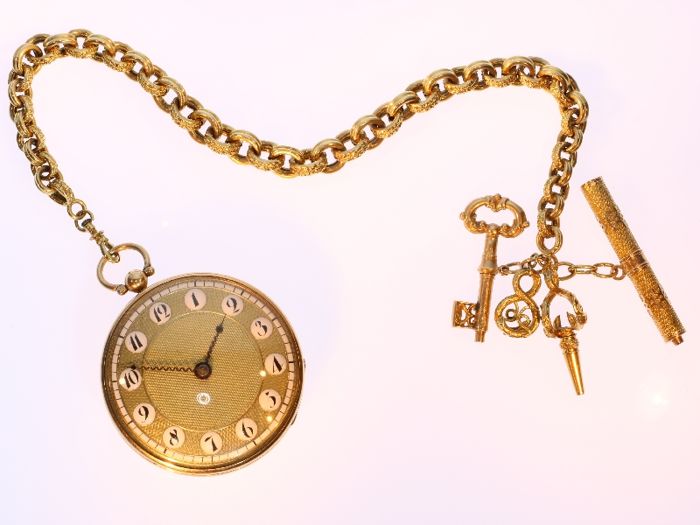

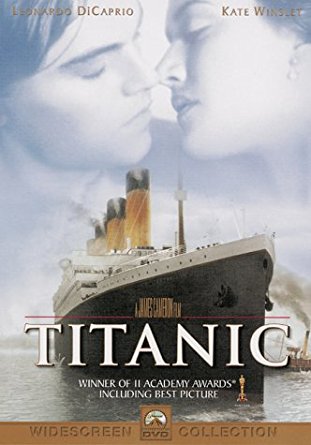 The theme song from the 1997 James Cameron film “Titanic,” starring Leonardo DiCaprio & Kate Winslet can bring you both hope and sadness. “My Heart Will Go On” was written by James Horner & performed by Celine Dion. See it on
 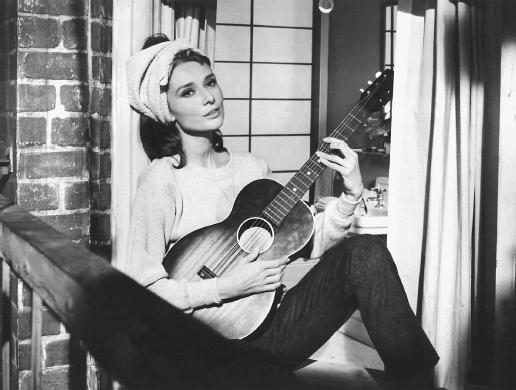 How about “Moon River” from Breakfast at Tiffanys”? Audrey Hepburn singing this wistful number on the balcony of her apartment is a moment that Manhattan dreamers have related to ever since. See it on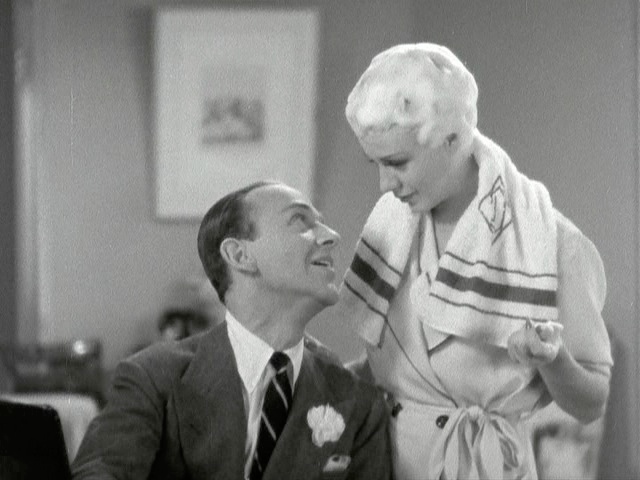
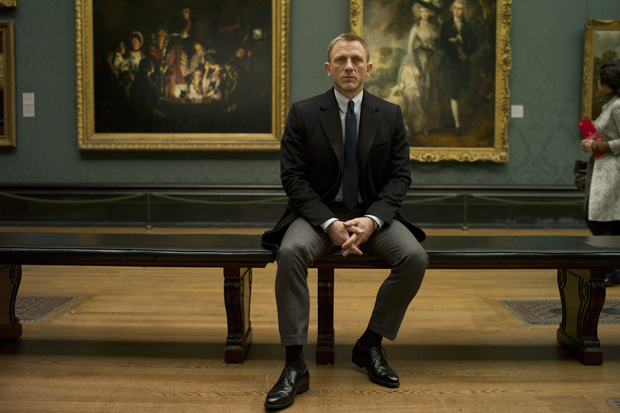 Then there’s “Skyfall” from the 2012 James Bond movie by the same name. Heck, it is Adele, what else must I say? See it on
 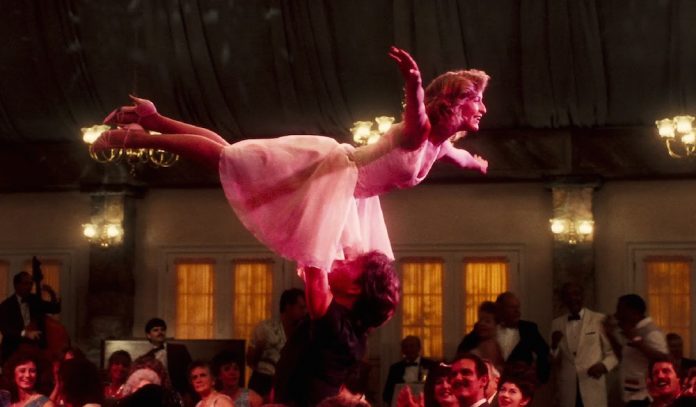 Next up, “(I’ve Had) The Time of My Life” from “Dirty Dancing” (1987) is an all-time favorite. Johnny pulls Baby up on stage at the end of season revue at Kellermans. See it on
 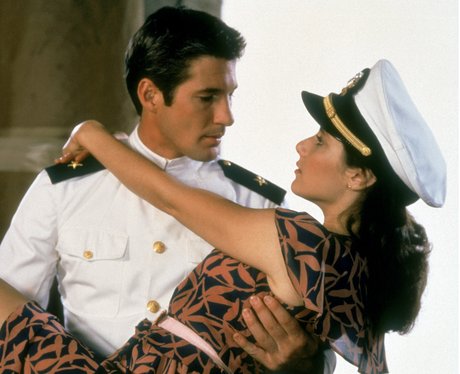 Although I was never a big fan of the film, “A Officer and a Gentleman,” I was a fan of “Up Where We Belong.” See it on
  Along the same vein, I offer “Take My Breath Away” (sung by Berlin) and featured in “Top Gun.” See it on
 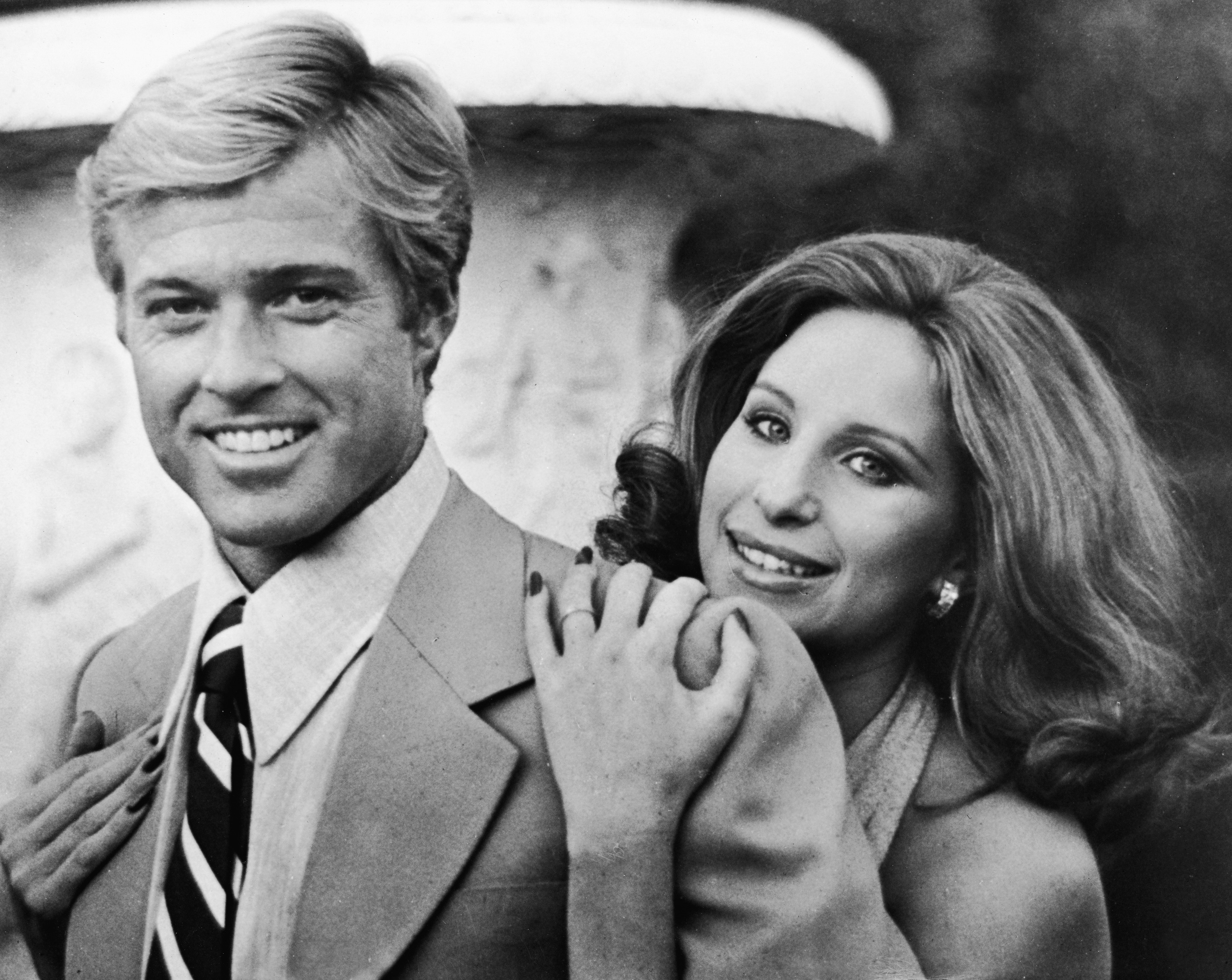 Robert Redford is absolutely delicious in “The Way We Were.” Barbara Streisand sings the title song and stars with Redford in the film. See it on
 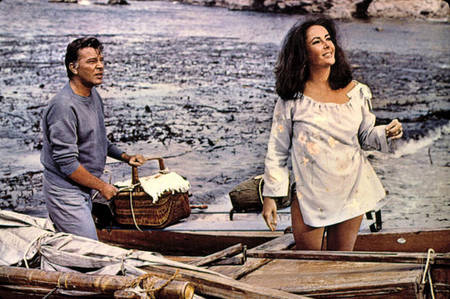 Vic Damone’s version of “The Shadow of Your Smile” is haunting. It comes from “The Sandpiper,” starring Elizabeth Taylor and Richard Burton. See it on
 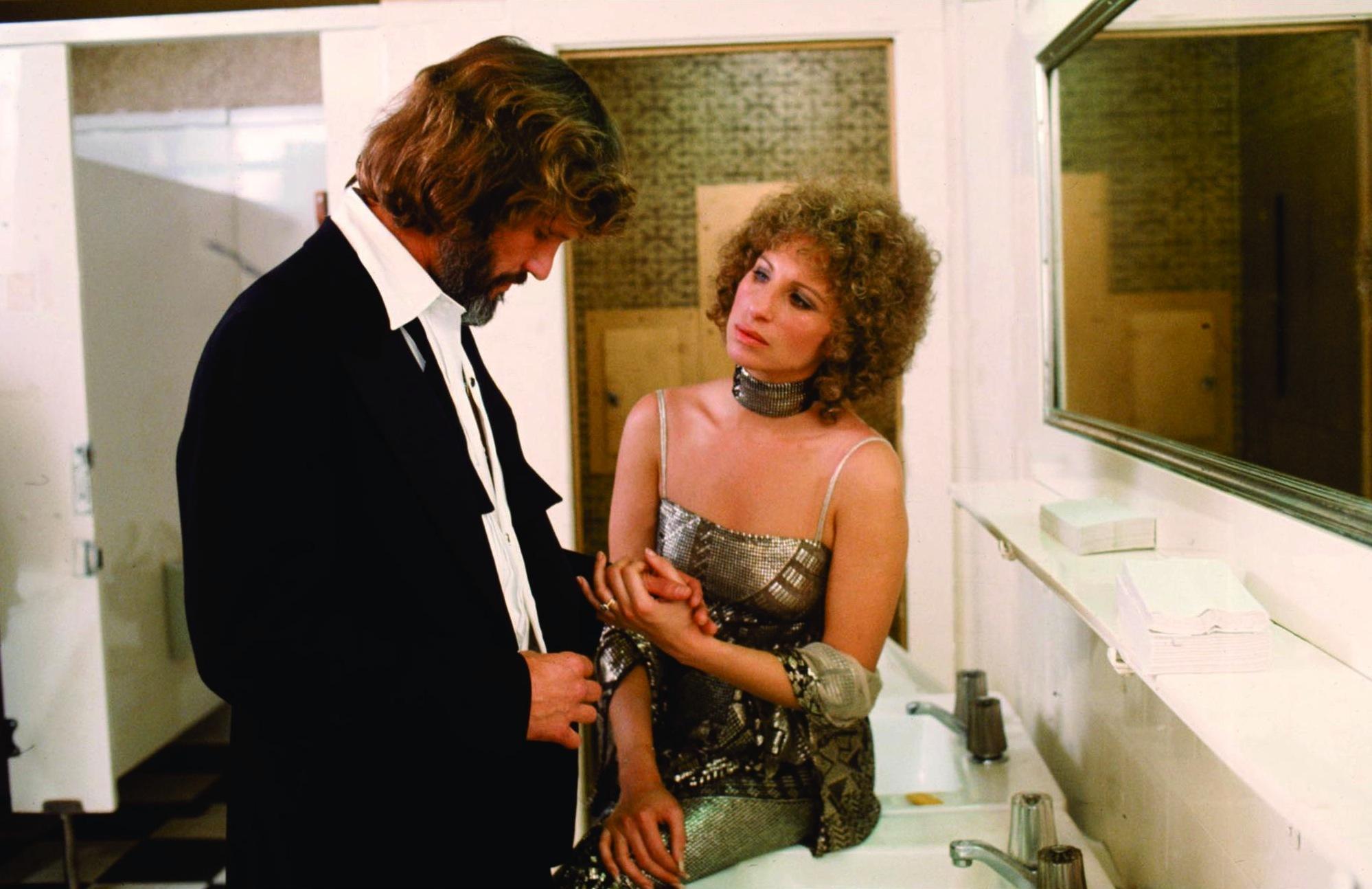 “Evergreen,” again sung by Barbara Streisand in “A Star is Born,” is another that stays with a soul. She plays opposite Kris Kristofferson. See it on
 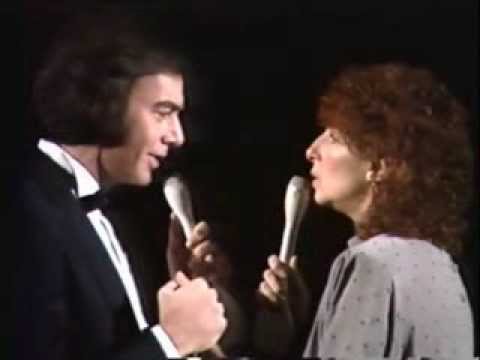 I also love “You Don’t Bring Me Flowers,” sung by Neil Diamond and Barbara Streisand. (Believe it or not, I did not set out to feature Ms. Streisand. She just has memorable songs!) This is from their GRAMMY AWARDS performance. See it on
 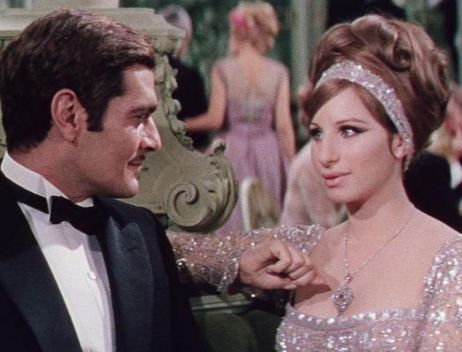 Barbra Streisand’s signature song, “People,” came from the film “Funny Girl.” She starred with Omar Sharif. See it on
  Noel Harrison’s “Windmills of Your Mind” from “The Thomas Crown Affair” is wonderfully crafted poetry set to music. See it on
  In “The Days of Wine and Roses,” Jack Lemmon and Lee Remick are unforgettable and the title tune wins an Oscar(R) in Blake Edwards’ searing, bittersweet study of an alcoholic couple on the rocks. See the title song on
  “Love is a Many Splendored Thing” from the film by the same name always ends up being an earworm for me. Here is Connie Francis’s version on
  Doris Day sang “Secret Love” in “Calamity Jane.” The fact that Howard Keel was in the film with her sealed the deal for me. See it on
  “Call me Irresponsible” came to us from “Papa’s Delicate Condition,” starring Jackie Gleason. See the trailer
 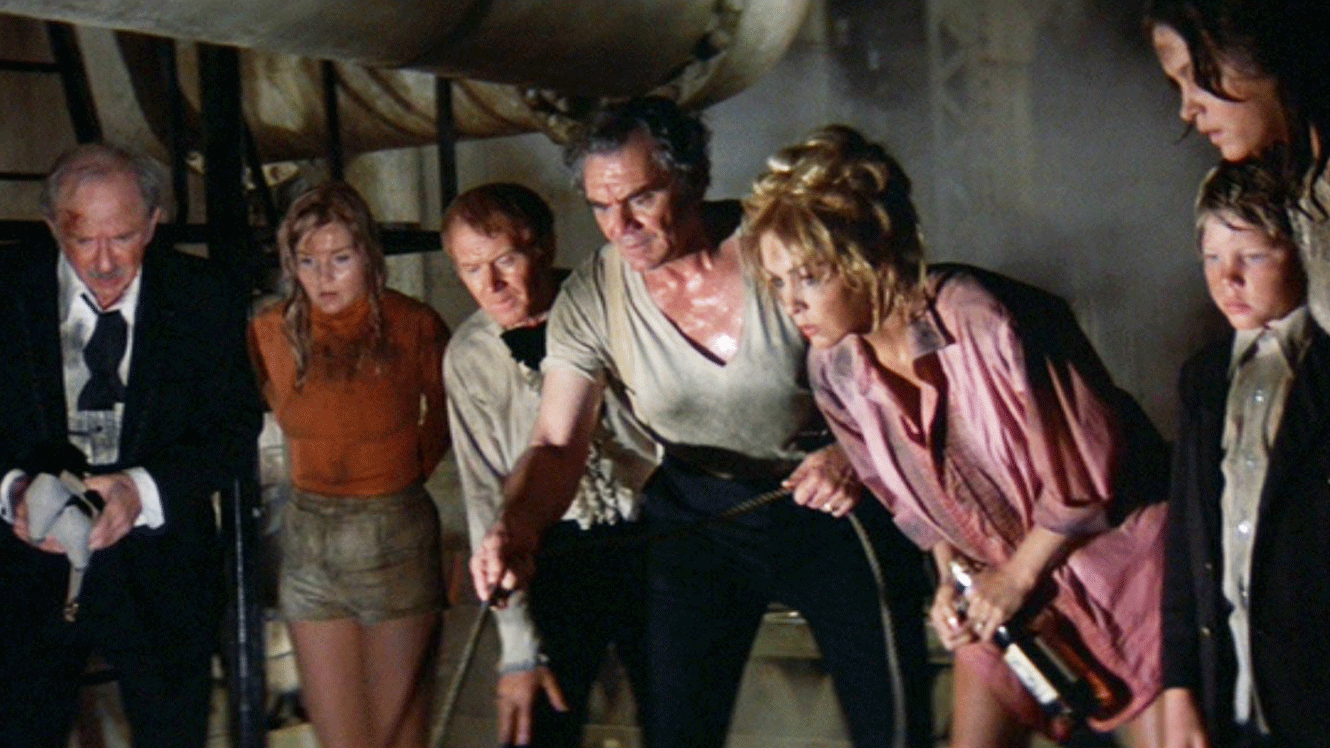 “The Morning After” from “The Poseidon Adventure” evokes melancholy, as well as hope. Hear Maureen McGovern’s version on
 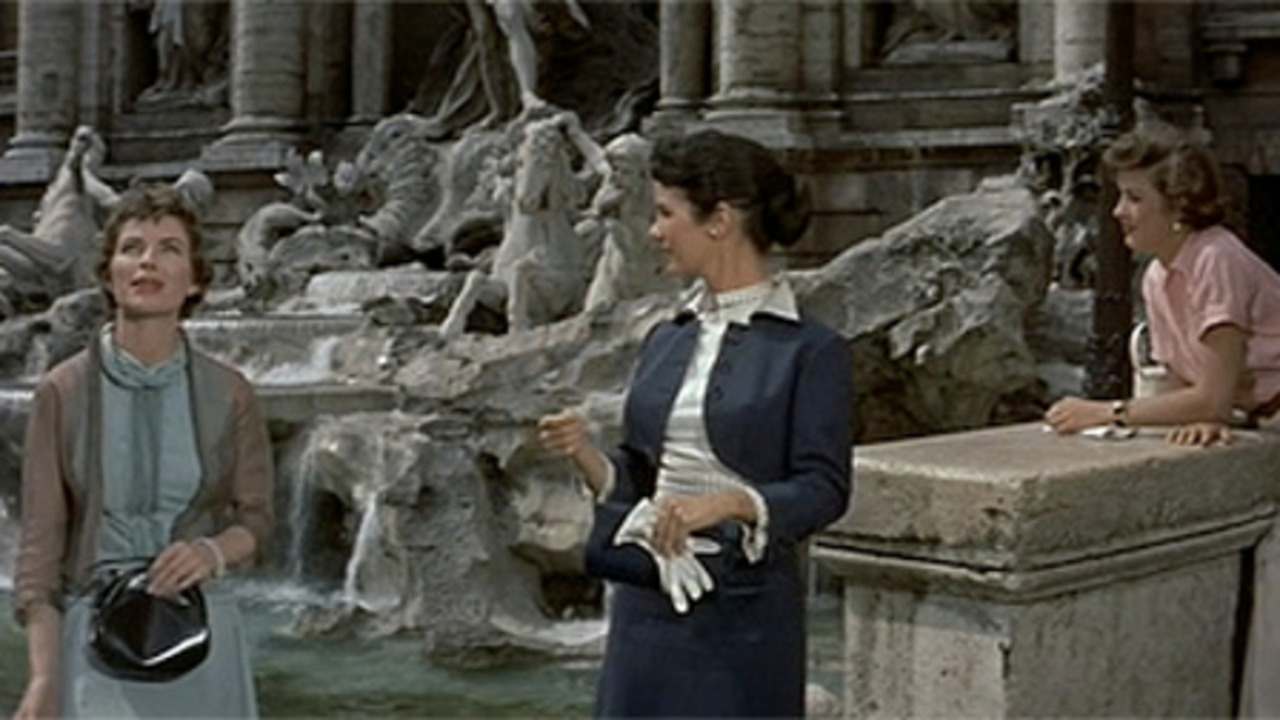 When was the last time you heard “Three Coins in a Fountain” from the movie by the same name? Listen to it on
 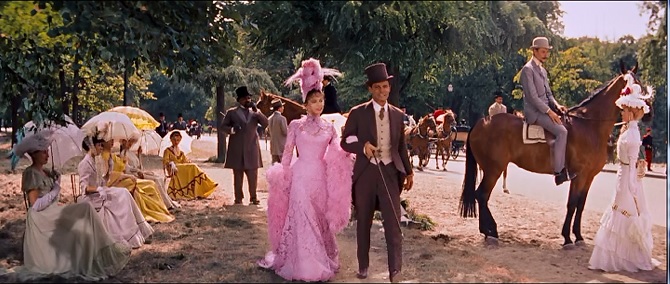 And a song about growing into womanhood: “Gigi” from the movie by the same name. Here the song on
 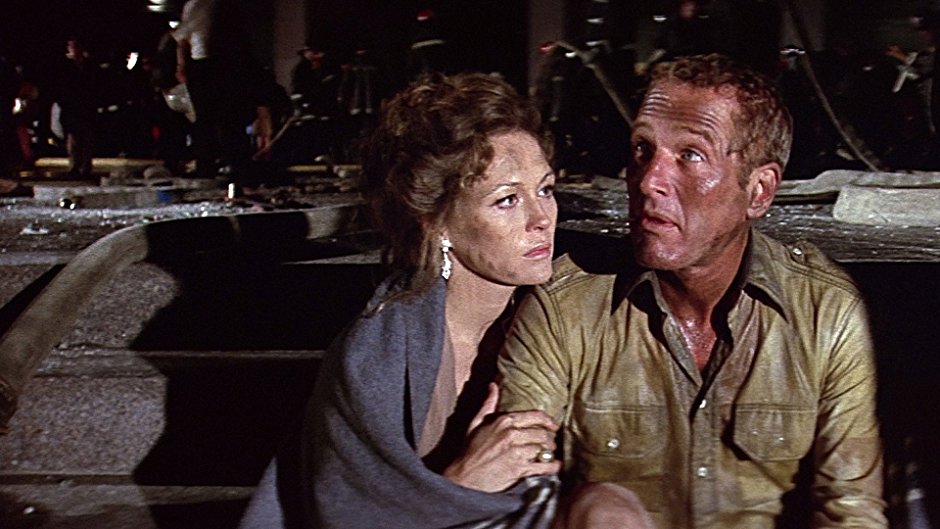 Another disaster movie, “The Towering Inferno,” gives us “We May Never Love Like This Again.” This is one is sung by Maureen McGovern. Listen to it on
 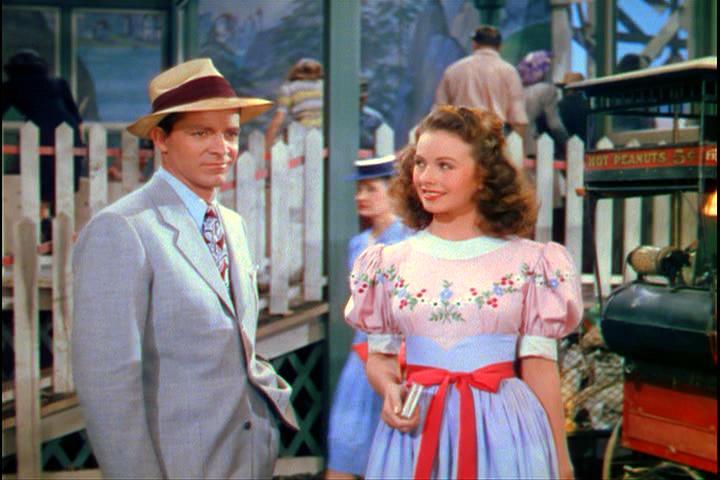 Jeanne Crain sings “It Might As Well Be Spring” from the 1945 film “State Fair.” Hear it here on


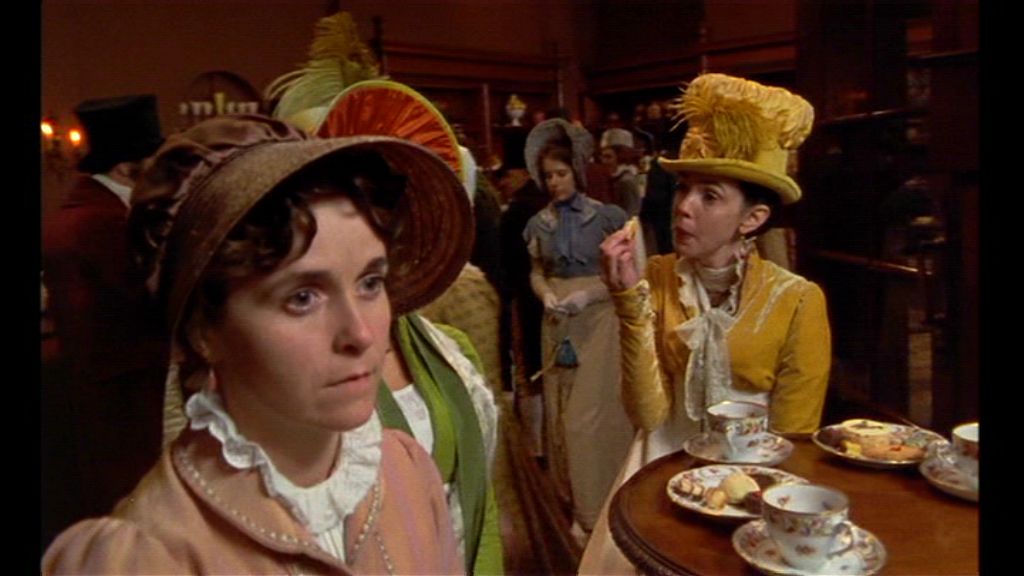 Elizabeth Elliot is portrayed by Phoebe Nicholls in this adaptation. This is one situation in which the screenwriter erred. Nicholls plays Elizabeth as less than ladylike. She sprawls upon the furniture. Stuffs her face with delicacies. Laughs too loud. Elizabeth cruelly insults Anne by saying “No one will want you in Bath, I am sure you had better stay here.” A woman of Elizabeth Elliot’s station (especially one with Sir Walter as her father) would not be so crass in her actions and her speech. Nick Dear’s chooses to portray Elizabeth in a manner that no one will hold sympathy for her when she is left without prospects at the end of the film.
 In this adaptation Mrs. Musgrove (Judy Cornwell) and Mr. Musgrove (Roger Hammond) come across as happy and accommodating. Their home is NOT so properly arranged. Theirs is a country manor house, one appropriate for country squire. It appears “lived in.” The 1995 version of the novel does not address the musings of Mrs. Musgrove over her scapegrace son, Dick Musgrove. In the novel we learn of Anne’s observations that “Captain Wentworth should be allowed some credit for the self-command with which he attended to her [Mrs. Musgrove’s] large fat sighings over the destiny of a son whom alive nobody had cared for.” As two of Austen’s brothers spent time at sea, Jane Austen likely hear more than one tale of a wayward rascal who thought to earn his fortune at the hands of the French navy.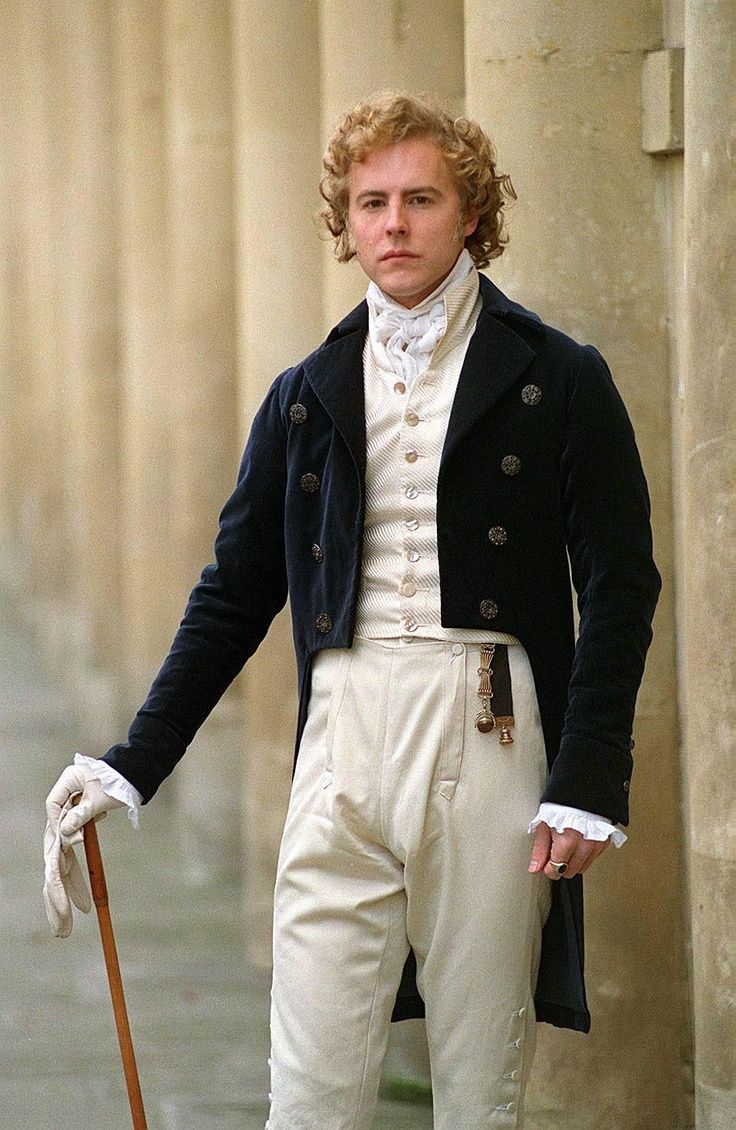
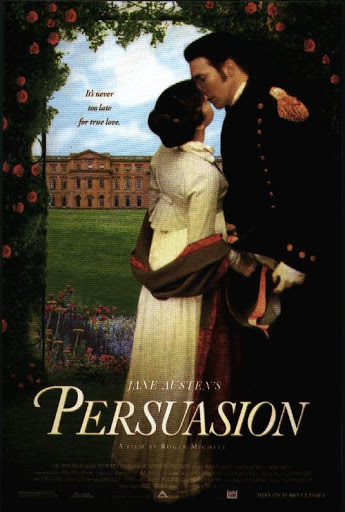

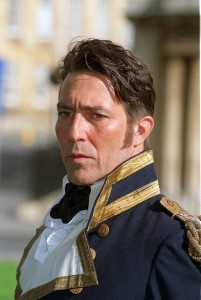

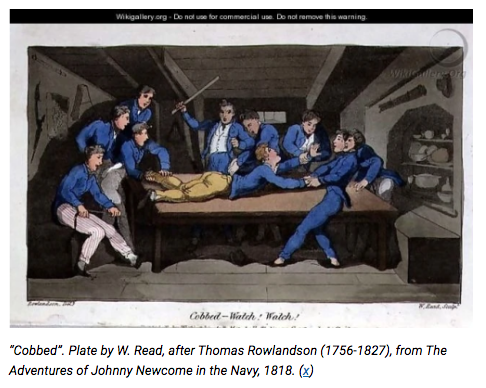



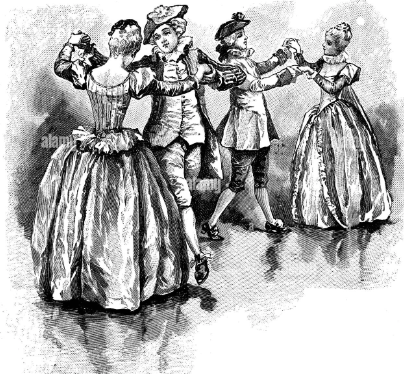


 Every Woman Dreams...
.jpg)