In my first post of August, a reader asked about a means for a female to go about the estate to paint scenery, etc. In my response, among my suggestions, I mentioned the use of dog carts as a possibility for the story. Naturally, I should have considered my response. I, most assuredly, did not mean I condoned the use of dogs for transporting people about. I was simply speaking of the history of the era and the use of dog carts being an appropriate means for a young lady who had a fear of horses. See the previous post HERE.
It was 1839 before dog carts were abolished in London, but such does not mean they were abolished everywhere in England and certainly not on the Continent.
The Metropolitan Police Act of 1839 ordered dog carts were not to be used within fifteen miles of Charing Cross:
“XXXIV. [Prohibition of Dog Carts.] And be it further enacted, That after the First Day of January next every Person who within the City of London and the Liberties thereof shall use any Dog for the Purpose of drawing or helping to draw any Cart, Carriage, Truck, or Barrow, shall be liable to a Penalty not more than Forty Shillings for the First Offence, and not more than Five Pounds for the Second or any following Offence.”
Now, some of you are likely praising this ordinance, but it was not completely based on the cruelty to the animals. Some dogs were expected to carry too heavy of a load. Obviously, it was cheaper to keep a dog in London that a horse or a pony. The problem was the weight of the load was not reduced.
In 1822, Parliament banned cruel treatment of horses and cattle.
1835 saw the Cruelty to Animals Act, banning animal-baiting and animal fighting styled bloodsports.
The banning of dog-carts had other motives beyond the cruelty to animals. The dog-carts often caused a traffic jam when horse-drawn carts/carriages were involved. The dogs nipped at the horses, etc. There was also the issue of rabies among the dogs. Over-worked dogs were thought to contract the disease easily. “According to the medical journal ‘The Lancet’ in 1841, there had been a decline in the number of cases of rabies in London since the act was passed: “Whether the police or the Dog-Cart Act have had anything to do with the decline of hydrophobia, we cannot say”. [Dogcarts and Lioncarts] – Note: You can find some of the “discussion” of this bill on this site.
One point of the discussion was if the license for a donkey was the same cost as one for dogs, then donkeys would quickly replace the dogs. The elimination of dog-carts would remove the employment of persons of small means to make a living. If size was the issue, they should also eliminate Shetland ponies from the street.
Other members of Parliament argued a dog was not meant to be a beast of draught.
Another argument stated by protecting the dogs in London they discriminated against the animals in the countryside. A man could move his business to one of the larger cities outside of London and not be restricted, where people in London would lose services as part of the ban.
Part of the argument included the dog’s feet and what they had to cross. The terrain was different. One member of Parliament argued that a dog’s feet are not designed to enable them to bear heavy weights.
“The dogcart nuisance was not only offensive to humanity, but was oftentimes productive of serious consequences. Only within the last few months the Lynn coach had been overturned by a dogcart, and much mischief was the result. He hoped, therefore, that the House would allow the bill to be proceeded with. An outright ban would also have been easier and cheaper to implement than rules and restrictions on the loading of dog-carts, the correct fitting of harness, the number of hours a dog could work before needing a rest and the provision of drinking facilities (in the same way that horse troughs were provided) etc. It was a case of using a legislative sledgehammer to crack a nut.”
Even with the London ban, the use of dogs to pull a variety of carts and products continued well into the 1900s in Europe.
There was a passage in one of Charles Dickens’s books—I think it was Barnaby Rudge, but I could not find it to quote it here, where the dog carts used to transport people were so heavy the paws of the dogs left bloody prints on the pavement. I read the story as a serial years ago when I was prepping to teach Advanced Placement Language courses.
I have a character in the book I am writing who prefers to keep her distance from horses, but she enjoys painting and walking quite long distances to sketch outdoors. Her husband notices and arranges for her to have a vehicle at her disposal, so she would have more flexibility. Unfortunately for me, I am not assured what would be the best choice. I was thinking a dogcart since it would have nice cargo space and she wouldn’t need anything more to rattle around the countryside, but wouldn’t she drive it herself? I’d rather she had someone else doing the driving for her, perhaps, a groom, since she’s not a horse woman. But then, if she had a servant for a driver, they would not sit side by side on the same bench, would they? A carriage is too much. She needs only a relatively small and open vehicle for driving in good weather. What would be a plausible choice?
Perhaps, a phaeton might work. Those of us familiar with Jane Austen’s know a bit about phaetons for they are mentioned twice in Pride and Prejudice. First, we have the one for Miss de Bourgh and then the one mentioned in her letter from Mrs. Gardiner to Elizabeth upon learning of Mr. Darcy’s proposal.
“Miss de Bourgh’s phaeton was of the low-slung variety, especially as it is being pulled by ponies. It would have a lower center of gravity and be very safe and secure, and the ponies easy for a woman to control and unlikely to run away with the vehicle. Mrs. Gardiner seems to think a phaeton and ponies just the thing for a woman to drive, especially on sightseeing expeditions:
Pray forgive me if I have been very presuming, or at least do not punish me so far as to exclude me from P. I shall never be quite happy till I have been all round the park. A low phaeton, with a nice little pair of ponies, would be the very thing.” [Margaret Sullivan]
However, though a phaeton might work, if one is afeared of horses, one still has an issue.
Phaetons did not have a place for a servant to ride behind, and the likelihood of the mistress of a great house wishing to sit on the bench with a groom would be slim. I can view Elizabeth Bennet doing so, but not Miss Anne de Bourgh or Miss Caroline Bingley.
And any carriage can overturn, even one though to have great stability. One hits a rough enough bump (side of a deep ditch will do nicely) and boom the carriage can go over.
As to the horses, the act of overturning usually breaks the harness. If the harness does not break with the accident itself, it is possible the horses will pull the vehicle around and around, attempting to break free.
Overturning a carriage does not guarantee fatal–or even serious–injuries. Such depends on luck. It is possible to jump free of an open carriage such as a gig or curricle, or even a phaeton. Then it all depends, too, on what you hit when you land. Rocks and rock walls will not be your friend.
Finally, the buckboard brake you speak of comes from mid to late 1800’s–it’s not around in the Regency. In the Regency, there is no brake that you can set from the seat. (That’s invented in 1835.)
As noted by this account from the Sporting Magazine (English, circa 1820s), for heavier stages and coaches, one of the coachmen had to get out to set a “drag” that would slow the carriage when going down a hill:
“Some few years past I was travelling to Brighton, I think by the ” Alert,” at the time driven by a coachman named Pattenden. On pulling up at the extreme point of Reigate Hill, and being anxious to get the drag on, he did not do it securely. On starting rather brisk, whether it came in contact with a stone, or from what cause I know not, but it flew from the wheel it was placed on to the opposite one, and fixed as properly and securely as if placed by hand, in which manner we proceeded down the hill, in my opinion, a providential and singular circumstance, which perhaps, prevented a serious accident.“
Remember: all vehicles of the time period were custom made. Some curricles had a step on the back. Some had a seat on the back. If no tiger was up back, a box of scrap metal was placed there to adjust the balance so the curricle harness did not weigh too heavily on the horses.
Okay, back to the question at hand.
The fussy part of me would suggest, if she wants to travel around, I would suggest she have a landau and a driver. If her husband/father can afford the vehicle, he can likely afford a driver. It is really hard to deal with a horse (or pony) and do other things. Despite what every Western you ever viewed with a horse and carriage, horses do not “park” very easily. Her assigned driver would sit up front for this, and she could use the vehicle for visiting as well.
You could also use a gig, or sometimes called a whisky, which are nice small sporting type carts. Gig carts are constructed with the driver’s seat sitting higher than the level of the shafts. Traditionally, a gig is more formal than a village cart or a meadowbrook cart, and more comfortable, usually being sprung.A light gig can be used for carriage racing. The Oxford English Dictionary gives the date of first known reference to a horse-drawn gig as 1791, and they were ubiquitous by the early 1800s. [Gig]
Reference for More Information: Felton, W. (1796). A Treatise on Carriages: Comprehending Coaches, Chariots, Phaetons, Curricles, Gigs, Whiskies… Together with Their Proper Harness. In which the Fair Prices of Every Article are Accurately Stated (Vol. 2). Debrett.
She would have to sit next to her driver/groom, but these carriages often had a space under the seat where she could put her gear. Even the most plodding horse can spook or shy or generally cause problems, and if she wants to stop, she really does need someone to look after the horse and carriage while she’s painting. She might prefer the fold up top of the landau for more protection–even the nicest days in England can turn fast on a person. Rain is always predictable.
A pony cart might work. It would be less intimidating, the lady could have a young groom take her about – maybe like a child of 10 to 12 years, to stay with the pony, fetch the animal water, assist in carrying her things, etc. She could even teach the young man how to draw as one of the plot points. [Gee! I think I have already written a similar scene.] Her doing so could provide a good opportunity for characterization or to draw out some backstory, etc.
Naturally, she would not need to be a horse person to drive a dog cart. Someone could instruct her on how to tether the animal when she reaches the place she wants to paint.
Such is basically all she would need to know. There would be grooms to hick the horse or pony or dog(s) to the vehicle and to unhitch him when she returns.
In England and Wales from the 12th Century forward enclosure (or inclosure) was a common practice. Before enclosure, much of the land was only used during the growing season. Once the harvest took place, the was at the disposal of the community. People grazed their livestock freely upon the land. They also found other uses for it. Enclosure occurred when someone, usually the manorial lord, put up a fence or a hedgerow to separate open land and the land the lord chose to claim. This prevented common grazing rights.
The article on enclosure on Wikipedia says, “Enclosure (sometimes inclosure) was the legal process in England of enclosing a number of small landholdings to create one larger farm. Once enclosed, use of the land became restricted to the owner, and it ceased to be common land for communal use. In England and Wales, the term is also used for the process that ended the ancient system of arable farming in open fields. Under enclosure, such land is fenced (enclosed) and deeded or entitled to one or more owners. The process of enclosure began to be a widespread feature of the English agricultural landscape during the 16th century. By the 19th century, unenclosed commons had become largely restricted to rough pasture in mountainous areas and to relatively small parts of the lowlands.
Enclosure could be accomplished by buying the ground rights and all common rights to accomplish exclusive rights of use, which increased the value of the land. The other method was by passing laws causing or forcing enclosure, such as Parliamentary enclosure involving an Inclosure Act. The latter process of enclosure was sometimes accompanied by force, resistance, and bloodshed, and remains among the most controversial areas of agricultural and economic history…. During the Georgian era, the process of enclosure created a landless working class that provided the labour required in the new industries developing in the north of England.”
The movement for enclosure spread quickly from the mid 1400s to the mid 1600s. This process increased the full-time pasturage each manorial lord claimed. Common rights had included not just the right of cattle or sheep grazing, but also the grazing of geese, foraging for pigs, gleaning, berrying, and fuel gathering. During the period of parliamentary enclosure, employment in agriculture did not fall, but failed to keep pace with the growing population.From 1750 to 1860, the idea of enclosing the open land turned from manorial concerns to that of “agricultural efficiency.” The problem was how the open fields kept the agricultural fields low. There was no incentive for a man to improve his land with fertilizer or proper drainage. Such “foolishness” would only result in those who used the open land after the harvest repeating the benefits of a more productive field without paying any of the expenses.
Alan Taylor tells us from an article on Facebook found in the British History: Georgian Lives Group, “Enclosure of common land was a process which produced much resentment by the rural poor who often depended on this land for grazing of cattle, horses etc and collection of firewood. Enclosure began in Elizabethan times as the old medieval manors were dismantled and replaced by fenced and walled fields owned by Freeholders or Copyholders who still paid homage to the Lord of the Manor. The effect of this major change in English landscape, accelerated in the 18th and early 19th Centuries by a series of Acts of Parliament, is usually only recorded by the literate new landowners who would benefit from the changes. Thus in a letter sent by a John Parker in 1812 he refers in a matter of fact way to an enclosure in a Manor in Essex: ‘ My son Comyns took a very active part as to the enclosures of the Common, it passed off extremely well, the Copyholders..appeared very well satisfied with their Allotments’. There is no sympathy here for the poor of the Manor who would have suffered greatly!
“Occasionally however rebellions took place against this loss of privilege. One such example was recorded in a letter of 1796 sent by a Thomas Swinnerton of Butterton Hall near Newcastle under Lyme. The letter was addressed to the agent of the Bishop of Lichfield who was Lord of the Manor in which Thomas had his estate. In the letter Thomas complained about a rebellion that had taken place when he decided to enclose common land adjoining the ‘green lane’ which ran through his property explaining why he had done so: ‘the great object of the enclosure..was to prevent the building of a Workhouse or the converting of..the land into Gardens for the Poor’. However the ‘poor’ had rebelled and convened a Manorial Court at a local pub during which : ‘the landlord..where the Court was held was a most principal party in exciting & encouraging the Mob to destroy the inclosure & …on return of the Mob gave them ale’.. Another agent provocateur was apparently ‘a man who hires out horses which may be found..in the night in the inclosures’. Again there was no sympathy at all for the poor some of whom were destitute needing accommodation and land to grow food. They had invoked an ancient custom by convening a Manorial Court at which their grievances could be aired but understandably this had ended in violence. I do not know whether the Bishop took any action as a result of this letter but the draft reply sent by his agent seemed more sympathetic to the ‘Mob’ than to Swinnerton!!”
I would venture to say the majority of us know of the issues this planet faces with the decay of the environment. We have likely all heard of the terms ecosystem (a community of living things and their environment), contamination (spoiling by contact), air pollution (contamination of the air, especially by smoke and gas from vehicles, factories, etc.), carcinogen (any cancer-causing agent), etc. However, test yourself on some of these . . .
eutrophication – This word did not come into use until the late 1940s and early 1950s. It means, “excessive richness of nutrients in a lake or other body of water, frequently due to runoff from the land, which causes a dense growth of plant life and death of animal life from lack of oxygen.” The National Ocean Service tells us, “Eutrophication is a big word that describes a big problem in the nation’s estuaries. Harmful algal blooms, dead zones, and fish kills are the results of a process called eutrophication — which occurs when the environment becomes enriched with nutrients, increasing the amount of plant and algae growth to estuaries and coastal waters.”
argochemicals – This word is also relatively knew, picking up usage in the late 1960s. It means, “a chemical used in agriculture, such as a pesticide or a fertilizer.”
debt-for-nature swap – This term is relatively self explanatory. It refers to the cancellation of the debts of developing countries if they promise/make a commitment to enforce environmental conservation.
biogas – This word, like those above, entered the language around 1970. It means “gaseous fuel, especially methane, produced by the fermentation of organic matter.”
Gaia hypothesis – This is a theory, put forward by James Lovelock in 1970, that living matter on the earth collectively defines and regulates the material conditions necessary for the continuance of life. The planet, or rather the biosphere, is thus likened to a vast self-regulating organism. It is named after a Greek Earth goddess. For more on this phenomenon, check out Springer Link or read ScienceDirect.
Population pyramid – A population pyramid (age structure diagram) or “age-sex pyramid” is a graphical illustration of the distribution of a population (typically that of a country or region of the world) by age groups and sex; it typically takes the shape of a pyramid when the population is growing. Males are usually shown on the left and females on the right, and they may be measured in absolute numbers or as a percentage of the total population. The pyramid can be used to visualize the age of a particular population. It is also used in ecology to determine the overall age distribution of a population; an indication of the reproductive capabilities and likelihood of the continuation of a species. Number of people per unit area of land is called
PCBs – PCBs are Polychlorinated biphenyls. Polychlorinated biphenyls (PCBs) are highly carcinogenic chemical compounds, formerly used in industrial and consumer products, whose production was banned in the United States by the Toxic Substances Control Act in 1979 and internationally by the Stockholm Convention on Persistent Organic Pollutants in 2001. They are organic chlorine compounds with the formula C12H10−xClx; they were once widely used in the manufacture of carbonless copy paper, as heat transfer fluids, and as dielectric and coolant fluids for electrical equipment.
Because of their longevity, PCBs are still widely in use, even though their manufacture has declined drastically since the 1960s, when a host of problems were identified. The International Agency for Research on Cancer (IARC) rendered PCBs as definite carcinogens in humans. According to the U.S. Environmental Protection Agency (EPA), PCBs cause cancer in animals and are probable human carcinogens. Many rivers and buildings, including schools, parks, and other sites, are contaminated with PCBs and there has been contamination of food supplies with the substances. Moreover, because of their use as a coolant in electric transformers, PCBs still persist in built environments.
Robertson LW, Hansen LG, eds. (2004). PCBs: Recent advances in environmental toxicology and health effects. Lexington, KY: University Press of Kentucky. p. 11. ISBN 978-0813122267.
Biomagnification of toxins in the food chain of a terrestrial environment. The dots represent the organic molecules present in each trophic level. The crosses represent the mercury present in each trophic level. While dots remain relatively constant in each individual, the concentration of crosses become greater in each preceding trophic level. Biomagnification: An increase of toxin concentration as the food chain moves up to higher levels. Organisms at the top have a higher tissue concentration of toxins and pollutants than lower levels. The concentration system is due to persistence of the toxins, food chain energetics, and low rate of internal degradation or excretion of the substance.Trophic level I represents the primary producers. Trophic level II represents the primary consumers. Trophic level III represents the secondary consumers. Trophic level IV represents the tertiary consumers. Per: http://www.thefreedictionary.com/biomagnificationhttp://users.rcn.com/jkimball.ma.ultranet/BiologyPages/D/DDTandTrophicLevels.htmlBiomagnification ~ CC BY-SA 3.0 ~ https://en.wikipedia.org/wiki/Polychlorinated_biphenyl#/media/File:Biomagnification.svg
monoculture – The Gallant website tells us, “Monoculture farming refers to cultivating a single crop on a large percentage or all of the farm, season after season. It places attention on crop specialization in modern agricultural terms.” Obviously, monoculture maximizes the use of farm machinery required, cutting costs in that manner; however, it increases the risk of crop diseases, infestation, and poor soil structure. “Given that it is not based on natural settings, monoculture imitates natural ecological components to safeguard crops and profits through the usage of artificial synthetic elements.”
irradiated food – This is a means to preserve food by exposing it to ionizing radiation. The U.S. Drug and Food Administration site tells us, “Food irradiation (the application of ionizing radiation to food) is a technology that improves the safety and extends the shelf life of foods by reducing or eliminating microorganisms and insects. Like pasteurizing milk and canning fruits and vegetables, irradiation can make food safer for the consumer. The Food and Drug Administration (FDA) is responsible for regulating the sources of radiation that are used to irradiate food. The FDA approves a source of radiation for use on foods only after it has determined that irradiating the food is safe.
“How Is Food Irradiated?
“There are three sources of radiation approved for use on foods.
Gamma rays are emitted from radioactive forms of the element cobalt (Cobalt 60) or of the element cesium (Cesium 137). Gamma radiation is used routinely to sterilize medical, dental, and household products and is also used for the radiation treatment of cancer.
X-rays are produced by reflecting a high-energy stream of electrons off a target substance (usually one of the heavy metals) into food. X-rays are also widely used in medicine and industry to produce images of internal structures.
Electron beam (or e-beam) is similar to X-rays and is a stream of high-energy electrons propelled from an electron accelerator into food.”
“Corridors are the habitual routes that animals use based on learned behavior, seasonal influence, and inherited traits. Corridors can often be identified by landscape features that indicate optimal paths of movement, including topography, elevation, vegetation type, or physical barriers like roads or rivers that may direct wildlife movement.
Corridors can include:
Routes wildlife use seasonally to reach water, food or other resources, utilized by a single animal or entire herds.
Paths between daytime and nighttime habitat; or between resting, feeding, and watering locations.
Examples of corridors:
The 125-mile migration that Wyoming pronghorn undertake each year, traveling between Grand Teton National Park and Pinedale, Wyoming in the spring and the fall.
The route formerly used by mountain lions in Southern California to travel between the Pacific Ocean and the Sierra Madre Mountains. This route is currently blocked by freeways and other development.”
How often have you read a Regency based story and the author uses some sort of concoction to incapacitate the hero or the heroine? Heck, I have written that plot line several times. Yet, what was the truth of this action?
Mostly used during the period were opium based and alcohol based mixtures and were used for pain. Some were plant based in could be found among the herbal realm, but, generally, nothing during the day worked efficiently and safely. Part of the problem was the dosage could not be adjusted for the person’s weight and medical history, as one might find today. A woman like my 95 pounds mother might be given the same dosage as a 200 pounds man.
In this short excerpt below from my Realm series (A Touch of Cashémere, book 3), a man has kidnapped Cashémere Aldridge, or, at least, he believes the woman is Cashémere, who her Scottish uncle has promised to the man. The only problem is Lachlan Charters does not realize Cashémere has an identical twin sister. He has grabbed the wrong girl. In this scene, he has taken her to his farm in Scotland. He has Satiné locked in a small cottage/hut on his land. In this scene, we learn Charters has used a sponge/rag soaked in a combination of opium, hemlock and mandragora. Knock one’s socks off!!!!
Charters silently opened the room’s door. He’d used a concealed exit to the wine cellar to come out behind several large boulders some one hundred yards east of his home. Such tunnels had come with the house when his father had purchased the land some fifty years past. As a child, Lachlan had spent endless hours playing castle and knights in the darkened passages. Some thought the house, which had been built upon the ruins of a Scottish keep, held ghosts and even a curse, but practical Lachlan had never believed any such tales. Yet, as he’d emerged from the hidden entrance, a shiver of foreboding had shot down his spine. “Maybe I should let the gel go free,” he told himself as he set a course towards the cottage, but Lachlan had realized it was too late for him to do so. He’d have to do what Averette had suggested.
He’d taken the last of the sponges with him. Before he’d gone to England, Lachlan had sent to his maternal grandmother, her clan’s healer, for something to deaden pain. The woman regularly dealt in drugs not readily found in the bags of country doctors. His grandmother had sent him a mixture of opium, hemlock, and mandragora. Lachlan had seen his grandmother use sponges soaked in the mixture to ease grown men into a peaceful sleep while she reset their broken bones or removed bullets. It was what he’d used on Cashémere to subdue the girl so he might remove her from her English home. Afterwards, he’d given her laudanum mixed in water to keep her unconscious through most of their journey to his home. On the road, he couldn’t trust her not to attempt an escape, but now she’d returned to Scotland, Lachlan had hoped their joining wouldn’t be so repugnant to the girl.
“It be good to see you up,” he said softly as he closed the door behind him and set the lock. The girl didn’t turn. She’d moved the lone chair in the room to sit before the window, and she appeared entranced by her narrow view of the world. Lachlan placed the small basket he’d carried on the table. “I brought ye some more food.” Still, she didn’t respond, and he’d wondered what bothered her. “I be sorry, Gel, for being so rough with ye, but I had no way of convincing ye to come back to me.” He chuckled lightly. “I not be treating you as such once ye be me wife. Ye know I care deeply for ye. I need me a wife to give me children and to tend the children, but I want a gel with whom I kin get along.”
As was mentioned in the last part of the excerpt, if someone wanted to drug a person, he would probably try a drop or two of laudanum, but, no one knew how much to use to make a person sleepy, even apothecaries could not name a definitive amount to use.
In my Tragic Characters in Classic Literature tale, I Shot the Sheriff, I used laudanum to keep the heroine subdued once she was kidnapped.
In all honesty, at times he felt as if he should have been the parent of the other two gentlemen who had joined Miss Busnik and her friends for supper; yet, he could not recall a time he more enjoyed himself at a ball, even during those days when he caroused with the best of them, he had never known such contentment. Naturally, he doubted he had ever been so green as were the two sons of two different earls who shared his table, when he had been their age, but, perhaps, his memory had been skewed by the fact Miss Busnik permitted him to hold her hand for a brief period, until he feared their indiscretion had become obvious to Miss Harrison. Skin to skin. No gloves. All done on a hush. Beneath the table drape, he had held her hand against his knee. Heat streaming through his body in anticipation.
The lady’s eyes had opened wider in surprise when his fingers first sought hers, but she had recovered quickly, even smiling at him in what he hoped was encouragement. The heat of her skin against his had done strange things to his own composure. Miss Busnik was so demme perfect, the idea made him ache with desire to claim her. If he would be so blessed to know a woman of Miss Busnik’s ilk as his own, he would spend the remainder of his days on this earth attempting to prove himself worthy of her.
He had sat beside her, conversing with those around them, as if they had done so for years. However, if she had known the direction of even a small portion of his thoughts, she would have slapped his face and stormed away.
Finally, the supper hour drew to a close, and he dutifully assisted her to her feet. He was not certain how much longer he would remain at the ball. They could not, according to the indubitable rules of propriety, dance together again, and it would be impossible for him to watch her on the dance floor, enjoying the interest of other men. However, when she swayed in place, as if attempting to gain her balance, he was not about to leave her side. He caught her elbow to steady her. “Are you unwell, my dear?” Now, that he looked closely at her, she appeared a bit pale.
“Just a bit light-headed. Too much to drink, I suspect,” she said with a weak smile.
“To the best of my knowledge, you have had but two glasses of champagne this evening, the one we shared earlier and the toast we made over supper. The rest of your libations have been the lemon punch,” he argued.
“Perhaps I drank the last toast too quickly. I am not known to be a drinker.” She looked up into his face, and William could note her eyes were watery. “I rarely consume champagne.”
“Then you should have said something,” he mildly chastised. “You must not drink simply to be sociable. That was a hard lesson I learned years ago.” He glanced around to a nearly empty room, couples returning to the dance floor. “I would not like to hand you off to another if you are feeling poorly. Have you promised this upcoming dance to another?”
She shook her head in the negative. “I had hoped we could walk the room again,” she admitted.
The idea pleased him, but his concern for her took precedence. “Instead of walking the room, mayhap we could step out on the terrace. We will stay near the open doors where people can view us, but the cool night air could cure your lightheadedness.”
“I would enjoy doing so.” She accepted his arm, leaning heavier against it than she had earlier in the evening. She appeared rather more sleepy than inebriated, in his opinion, but William had little experience telling the difference when it came to women. When he had previously shared a bed with a woman, sleeping was not part of the reason to be together. The idea suddenly struck him that he would not mind sleeping beside Miss Busnik, no matter whether they shared the bed for other reasons or not. He would cherish the idea of falling asleep with her in his arms.
Slowly, and purposefully, he set a course for the nearest door leading to the terrace. At length, they were outside, a cool breeze easing the heat of the ballroom. He led her to a nearby bench, propping her back against the balcony’s wall, before kneeling before her. She had not said a word the whole time they traversed the ballroom, a fact completely uncharacteristic of the lady.
“My dear Miss Busnik,” he said softly so as not to draw attention. A few other couples were making their return to the ballroom, and he did not want them to hear his concerns. “I fear you suffer from more than a glass of champagne.”
Her eyes opened briefly to look into his. “I believe you are correct, sir.”
He shrugged out of his tail coat and wrapped it around her shoulders when he noted that she shivered. “With your permission, I will leave you alone for a minute while I fetch your brother. Promise me you will not attempt to stand on your own.”
“Promise,” she whispered weakly, leaning her head back against the wall and closing her eyes again.
Obviously, for storytellers, a knockout punch was much more reliable.
One must remember neither ether nor chloroform were available during the Regency Era. WIKIPEDIA says Chloroform was first made by an American for a pesticide. It was first used in medicine 1847.
Ether seems to have come to notice about the same time in 1846. Ether was known for centuries; however, it’s anesthesia properties were not employed until the 1840s, and it is highly likely more than scientists would have had access to it.
Ether and chloroform might prove boon to Victorian authors, though. However, I still wonder, how does one carry a rag soaked with chloroform or ether around with one without having it affect the person toting it about? Can you not image the villain overcome by the vapors or having the vapors evaporate before the rag could be employed in some nefarious manner?
A person set on something nefarious pretty much just had laudanum or straight opium. Opium smoke would put someone in a daze, but was also risky to the person creating it. Some other natural herbs with sleep properties, but the drug would have to be ingested.
No Thank You, We Like Pain a seven-minute listen on NPR is very enlightening, but this excerpt proves to be quite helpful. I have provided the link below.
The trouble with Laughing gas and electricity is that they require an apparatus and certainly not part of the Regency era. Other substances require them to be ingested.
Many substances and articles were invented long before they became available to the general public.
As to routes, we must remember, a medication administration route is often classified by the location at which the drug is applied, such as oral or intravenous. Therefore, I am adding a couple of quick notes about routes:
Inhaled substances act quickly on the brain (think about it—nose straight up to sinus, close to brain—fast acting). This is why the modern Narcan is often administered by an inhaled device (really kills an opiate buzz fast). So breathing in a gas is the way to go for speed. It reacts within 15 seconds on up to about a minute, depending on what is administer and how much is given.
Next, you could go directly into the bloodstream, better known as an IV. This usually acts in about 5 minutes. Unfortunately in film stories, a quick jab with a needle and out the person goes. Such is pure movie fiction.
Next, is an injection into a muscle. This can take 15 to 20 minutes or longer to react to the body.
Lastly we have ingestion-—drinking or eating any substance to cause either poisoning or some kind of altered mental state, such as being unconscious takes time and may require a great quantity of the drug. Drinking a lot of hard spirits can tank you because the body cannot process it fast enough. Usually it would take about 20-30 minutes or more for anyone to go down, but such depends on the person and amount ingested.
Also, not everyone reacts the same. This is why hospitals have someone dedicated to putting anyone out—one may have to adjust as he goes. This is true for all substances–inhaled, into vein, into muscle, digested.
As to hitting anyone on the head. It is actually difficult and dangerous to “knock someone out.” This is called a concussion—anytime anyone is unconscious, he suffers brain damage to some degree. One has actually to rattle the brain around to knock a person out. A hit on the head is far more likely to produce pain, staggering, nausea, and bleeding.
Now, some folks have what is called “a glass jaw.” He/She are extremely sensitivity in the jaw and such can lead to enough pain to “knockout” someone. Usually this applies to boxing. If one hits the right place in the jaw, down goes his opponent. Just keep in mind, one REALLY has to know how to do this—the placement of the punch and how hard to hit. Not easy in any manner whatsoever.
So…the fiction of easily making someone unconscious without killing them is just that: FICTION. Gas is the best way to go. Lovely carbon monoxide, which one can get from a wood stove, will make everyone feel like they have the flu, and, eventually, they pass out as the carbon monoxide replaces the oxygen in the body. However, as the NPR article noted, most folks really do not know anything about air exchange or what happens in the body with using any kind of pain killers.
If nothing else works, I suppose you might consider mesmerism, meaning hypnotism. It has been used both to treat and leave folks unable to feel the pain. Or if the person doing the bad deed is a student of history, he might go back to some old fashioned ideas, meaning a sponge soaked in opium and hemlock—which sounds like it’ll be one of those kill or cure ideas. That is, unless you are an author and need a means to put the hero or heroine in dire straits, then it is ALWAYS . . . well, not a cure, but the characters will survive.
The first of the “two earls” featured in this collection was released in the summer of 2022 as part of the Regency Summer Garden Anthology (which is only available in print format).
Rose Vickers has been sent home by her parents from India where she has lived since she was a mere child. She arrives in England with her Indian ayah (a native maid or nursemaid employed by Europeans in India) and the woman’s son in tow. For some five years she had attempted to keep her estate from faltering, but Rose knows nothing of running the estate, and as both parents have perished in an uprising in India where her father served with the East India Company’s army, she has trusted first one scoundrel and then another. She will not fully inherit until she is one and twenty, so what does she do before then?
The Earl’s English Rose: A Regency Romance Novella
The new Earl of Everwalt was not one to appreciate being bamboozled by an obstinate, headstrong girl, though pretty she may be. If he did not require her to repair his reputation, he would leave her to the schemes she had concocted to save her father’s estate.
Just because he was now her guardian, the Earl of Everwalt had no right to decide who she might marry. Therefore, Miss Rose Vickers sets out for London to provide the new earl a piece of her mind, only to run into a highwayman. As if scripted, the new earl proves to be her savior, but it would be some time before the suspicious Rose and the extremely susceptible Everwalt learn the depth of their connection and the true meaning of love.
Excerpt:
“I see.” Rose Vickers managed to murmur as Mr. Arnold Palmer explained something of the passing of her step-mother’s eldest brother. Naturally, she had expected as such; yet, it made her sad to think upon the world losing another kind soul. When Lord Everwalt did not answer her multiple pleas for the assistance he had promised, she had repeatedly told herself his lordship had not abandoned her as those around her had often warned. “And you say the new Lord Everwalt means to continue the guardianship?”
Mr. Palmer wiped his palms down across the trousers he wore, evidence he was as uncomfortable with this conversation as was she. “Most assuredly, the present Lord Everwalt will see all you have chronicled set to right. First, I must issue a caveat, however. Surely you comprehend his lordship must first appear before the House of Lords in a formal ceremony to be recognized before that esteemed chamber as Everwalt.”
Rose swallowed her words of protest. “And how long will this formal recognition require of the earl?”
“It is my understanding the ceremony is scheduled to occur when Parliament returns to the Capital for its next session, along with the more prestigious families of the land,” Mr. Palmer explained. “Such is seven weeks removed.”
Alarm registered in Rose’s chest. “That is nearly two months. My father’s tenants must have seed to grow. Food on their tables. I have already sold many of the colonel’s favorite belongings to hold the estate together while I waited for the previous Lord Everwalt to act upon my behalf. I require the new earl’s intervention immediately. I can only do so much without my guardians’s permission. I am not yet of age.”
Mr. Palmer fidgeted in his chair. “I will relay your concerns to the new earl, but I must warn you his lordship has much of which to attend as he transitions to his rightful title. Have you no one to assist you with the estate business?”
“Lord Everwalt was the only guardian my parents saw to name on my behalf. As to the estate, I released my father’s steward when the tenants’ complaints proved to be true,” she explained. “Dhruv Bhatt has taken over many of the responsibilities Mr. Rinhart had ignored; yet, things have not gone as well as I had hoped. As to conducting business for the estate, as I am not of age and I am a woman, I cannot ask for credit for supplies. Such is the reason I have sold off some of my father’s possessions so I can offer the shopkeepers and others coins for the estate’s needs.”
“My, you are ingenious,” Mr. Palmer offered in praise. “And I promise to relay your concerns to Lord Everwalt upon my return to London.”
********
“You I might discover here,” Diya Bhatt said through a thick Indian accent and the typical reversals found in all her conversations. The woman had been the only “ayah” Rose could recall with her parents had arrived in India some fifteen years prior. Diya had been Rose’s closest confidante since she was a child. The woman had traveled to England with Rose when she returned some three years earlier, but, more importantly, “Ayah” had remained in England, even after Rose had received word of her parents’ passing.
“I fear I am quite predictable,” Rose said with a slight shrug of embarrassment. She pulled her knees in closer to her body to make room for the woman. She sat sideways on a long bench beneath her real mother’s favorite rose arbor, thus, the source of her name. And although the roses had lost their petals because of the winter months, some buds were still evident, and they gave her great comfort whenever the world felt too much for Rose to handle.
The late Lady Helen Vickers had been the only mother of which Rose held true memories, but Rose often imagined her real mother was in her room at night and watching over her, and she knew the look of her real mother, for her father had always commented on how much Rose had favored the late Mrs. Charlotte Vickers. However, those borrowed memories were the only ones she owned: Her mother had been ill for an elongated period before she passed, and Rose was not yet two years of age at the time.
She sighed heavily. “It is as we suspected. Lord Everwalt has passed. The new earl has promised to continue his support, but, as, he has yet to be named ‘Everwalt’ by the House of Lords, I cannot say when the financial allotments will resume.”
“The urgency to Mr. Palmer you did explain, did not you?” her ayah asked in well-practiced tones.
“Naturally, but, as Mr. Palmer is simply Lord Everwalt’s man of business, I fear he will not fully express the dire need of my request. After all, I am nothing more than another obligation the new Lord Everwalt has assumed.”
Ayah’s eyebrow rose in observation. “At least the reports of Lord Everwalt’s ‘activities’ now you know in the newsprints were not the the kindly ‘grandfather-like’ man Memsahib Vickers introduced through her letters to you.”
“We must thank our stars for that particular face, but such means the reports of Lord Everwalt and his mistress are in reference to my new guardian,” Rose countered.
Diya looked away as if seeing something Rose did not. “Your choice be few, my child.”
“I have settled on a plan,” Rose stated as she turned to place her feet on the ground, “but I would be willing to listen to your preferences.” Staring straight ahead, she asked, “Would you care to go first or should I?”
Diya said solemnly, “You believe yourself to speak to the new Lord Everwalt rather than you should wait in dependence on Mr. Palmer.”
Rose turned to the woman who had served her loyally for many years. “I do. Do you think my plan too forward on my part. From what little we know of the new Lord Everwalt, could such a man be trusted to act honorably?”
“Maintaining a mistress not be part of character of elder Lord Everwalt, I think,” Diya declared. “He was a man to be admired.”
“Amiable, truly defined the man,” Rose said softly as she recalled the few brief days she had spent with the previous earl, “yet, we do not know his nature when he was younger.” She sighed in
resignation. “Despite the presence of both a former mistress and the likely employment of a new one, we know nothing of the present lord—nothing of the true essence of his character. Therefore, I cannot but think I must personally plead my case before the earl.”
“How be so possible unless his lordship calls on you in Dover?” Diya asked, as confusion furrowed her brow.
“I plan to travel to London to request an audience with the earl,” Rose declared. “Surely, if the late Lord Everwalt educated the new lord, as Mr. Palmer assures me the former earl did, then the younger Lord Everwalt will be both reasonable and responsible.”
“If not he be?” Diya asked in obvious concern.
“Then I shall know how to proceed. I will return to Beetham Hall and either release a third of my father’s cottagers to conserve the land and the funds we have, or I will accept a marriage offer and pray the man I choose will not run through my inheritance before I turn one and twenty and claim a voice in estate matters.”
“With you I go,” Diya stated firmly.
“I hoped you would agree,” Rose admitted. “I do not believe I could face Lord Everwalt without you near.”
The second story in this collection was originally released the summer of 2021 as part of the Regency Mid-Summer Mischief anthology.
In the story, the heroine’s father is labeled “Brook’s Crook” for is from Brook, a hamlet in the civil parish of Bramshaw, in Hampshire, England. It lies just inside the New Forest. The hamlet contains a mix of 18th and 19th century cottages, just south of the village of Bramshaw. There are two inns in Brook on opposite sides of the road – The Green Dragon and The Bell Inn. Both buildings date from the 18th century, albeit with 19th and 20th century alterations. Brook is also home to the club-house of Bramshaw Golf Club, which claims to be the oldest golf club in Hampshire.
Just south of the village at Lower Canterton lies the Rufus Stone. This stone is said to mark the place where in 1100 the then King of England, William Rufus, was killed by an arrow whilst out hunting. The arrow was fired by a French nobleman, Walter Tyrell, but it has never been established if the death was an accident or murder.
Brook: the green A large-ish wedge-shaped green on the acute junction of the B3078 and a small side lane. The Bell Inn is in the distance. ~ CC BY-SA 2.0 File:Brook, the green – geograph.org.uk – 1444359.jpg ~ Created: 15 August 2009 ~ https://en.wikipedia.org/wiki/Brook,New_Forest#/media/File:Brook,_the_green–geograph.org.uk-_1444359.jpg
The Jewel Thief and the Earl
Grandison Franklyn, 8th Earl Harlow, has earned the moniker “Grandison, the Great” for a variety of reasons: his well-honed attitude of superiority; his appearance; and a string of mistresses, most notably Lady Jenest, who created a “great” row when he cut her loose.
Miss Colleen Everley is the daughter of England’s most notorious thief, a man called “Brook’s Crook.” Colleen has been taught many of her father’s skills, along with an eye for the value of each item in a room. Unfortunately, the lady does not possess Thomas Everley’s daring.
Lord Harlow and Miss Everley must combine forces to return Queen Charlotte’s sapphire necklace before Her Majesty learns it is missing. Toss in a healthy sprinkling of quirky characters and missteps in the investigation, and the reader will find a delightful tale that goes beyond the “Cinderella” effect and opposites attract.
Excerpt:
Grand had been in many low-born areas of London, but not this particular one. He gagged, despite holding a handkerchief over his nose. The stench made it hard to breathe; yet, Miss Everley moved along the streets as if she was strolling through the Queen’s gardens. Garbage and human waste crawled along the curb of the road as a light drizzle attempted to rinse away the muck. In Grandison’s opinion, it would take a hurricane to wash away the filth piled upon these particular streets.
“We shall begin here,” Miss Everley announced.
Grandison looked up to view a building leaning against the one beside it. He wondered if someone pushed hard enough on the exterior wall of the first building, if all along the street would fold in on themselves, one after another, like the ribs of a lady’s fan, until they were all flattened. “Who are we seeking within?” he asked, his nose wrinkling again. “Surely no one inside would possess knowledge of a sapphire necklace.”
“You may be surprised,” she responded.
As he held the door for her, loud, coarse language could be heard within. Grand glanced to Miss Everley, but the lady showed no sign she had even heard the string of curse words exchanged by two men, who stood across from each other at a table strewn with cards. He wondered how often, during her upbringing, she had been exposed to the underbelly of society. Oddly, he took offense, for, in Grand’s opinion, no lady of her quality should have previously tramped through these streets nor known her way around the community.
A bruiser of a man blocked their entrance until his eyes fell upon Miss Everley, and they softened. “Good evening, miss. Didnae know ye meant to call tonight. Mr. William didnae say nothin’ to me of it.”
Miss Everley laid her hand on the man’s beefy arm and batted her eyes at him. “Such is my fault, Mr. Hahn. I did not send Mr. William a note of my desire to speak to him on a matter of importance. Would it be an imposition to claim a few minutes of his time?”
From his place behind her, Grand watched as man after man inside the establishment placed his cards or his drink down before him and turned his attention to Miss Everley and him. Despite the rough clothing they both wore, they certainly did not fit in among these people. Moreover, they were sadly outnumbered, at least twenty to one. Even so, Grand edged closer to the lady, prepared to drag her from the place, if necessary.
Mr. Hahn glanced to Grand. “And yer friend, miss?”
“Will not harm anyone unless someone is foolish enough to attempt to pick his pocket or come too close to me,” she declared in bored tones.
Mr. Hahn barked a laugh. “Ye always be the brave one, beggin’ yer pardon, miss, fer me sayin’ so.”
Again, Miss Everley smiled on the man. “No offense taken. In fact, if you give me a moment, there is a cloth sack in my basket, especially for you. I made you something sweet.”
“Biscuits?” the man questioned through a toothy grin.
“You know I would not beg for your assistance,” she countered, “without a bit of a bribe.”
“Better than a monkey,” the man declared. “Come along. Mr. William be in his office.”
Miss Everley handed the man a cloth sack, tied off the string, and Grand wondered what else she had in the basket she carried.
As they crossed the room, he remained close behind her. All eyes in the place followed their movements, and he glanced over his shoulder several times to make certain no one approached. Meanwhile, Miss Everley walked past the rubble with her head held high and not a glance, one way or the other, at the danger within the room. In Grand’s opinion, she was both quite foolish and quite magnificent at the same time.
Mr. Hahn stopped before a dark door and gave it a cursory knock before opening it. “Miss Everley, sir, come to speak to you.” Mr. Hahn stepped aside to permit their entrance into the office before closing the door behind them as he returned to his post.
A man Grand recognized as the youngest son of Lord Harris- Green and another of Liverpool’s agents stood to greet them. Grand knew a scowl of disapproval marked his brow, but he held his tongue, at least for the moment. “Mr. William,” as the man was obviously known in this section of London, came around the desk to take the hand the lady extended to him and to bring it to his lips for an air kiss. “My dear, Miss Everley. What brings you to our door and at this hour? If I had known you were desirous to speak to me, I would have arranged a more suitable situation. You know I cannot guarantee your safety unless I am aware of your presence in this area of London.”
“Do not chide me, Lionel,” the lady said sweetly, causing Grand’s scowl to deepen. She did not speak to him in that particular tone, which was likely for the best, for it could be his undoing. “As you may readily observe, I did not travel alone. Moreover, Jones and Ardent wait outside, ‘anticipating,’ shall we say, my return.”
“Mr. William” raised an eyebrow to glance to Grand, but the man kept possession of Miss Everley’s hand. It was all Grandison could do not to pry the dastard’s fingers from the lady’s. A serious need to protect the woman had arrived, and he was not certain he was very happy about the feeling. “Mister . . .?” the man began.
“Franklyn,” Grand supplied. “I am certain you recognized me as easily as I recognized you.”
The man turned a well-placed smile on Miss Everley. “My, my, it appears I have innocently insulted Lord Harlow. I must recall my place and something of the truth of his lordship’s reputation.”
Miss Everley easily removed her hand from “Mr. William’s” grasp. “His lordship and I shall not keep you. I simply wished to know if you might check your customary sources regarding a missing sapphire necklace, one of great ‘sentimental’ value.”
GIVEAWAY – I have three eBook copies of Two Earls to Love available to those who comment below. The winner will be contacted by email and announced July 30, 2023. Good Luck!
Tracing back to the Medieval Period, both “dower” and “curtesy” are legal terms and sometimes concerns in real property law. Legally, the estate of dower is held by a widow upon her husband’s death and consists of a life estate of one-third (sometimes up to one-half) of the land owned by her husband. Naturally, there is the “issue” of whether he held a freehold interest in the land, what is known in real estate contracts as a “fee simple” and the land is inheritable by the issue of the marriage. “Issue” is the fancy legal name for natural born children (no step-children) and other lineal descendants of the husband’s and wife’s marriage such as grandchildren (children of their legal descendants).
Meanwhile, curtesy is a husband’s right to the estate and property of his deceased wife, if a child was born when they were married.
Modern property law, at least in the U.S., has abolished dower and curtsey and replaced it with what is known as “elective share” or a percentage of the deceased spouse’s estate. The spouse may elect or chose between what was provided in the deceased spouse’s will or the share provided in the statute. The good thing about the elective share option, especially in these days, is it prevents a spouse from disinheriting the other. Yet, none of that has to do with dower in the Regency era.
Hopefully, I have not lost you yet. Allow me to simplify all the mumbo jumbo above: A dower ensured that a widow received support and a portion of her husband’s property when he passed on.Curtesy granted a husband interest in his wife’s property upon her death. It also prevented the husband from conveying his wife’s estate to anyone else but their child(ren).
I did a lot of research on this topic when I wrote His Christmas Violet. (Stopping a second or two for a shameless promo…)
His Christmas Violet: A Second Chance Regency Romance
Sir Frederick Nolan stayed true to his late wife through all their years of marriage, but now he is widower and has waited the proper mourning period, he sees no reason he should not finally know the happiness of having Lady Violet Graham at his side. He meant to marry Violet when he was fresh from his university years and she was but a young lady; however, the realization she was perfect for him had come too late, and Violet had already accepted the proposal of Lord Graham.
Lady Violet Graham never strayed from the love she held for Sir Frederick, but she had proven herself a good wife to her late husband, serving dutifully as Lord Giles Graham’s chatelaine and presenting him three sons. Now, her widow’s pension and the use of the dower house will provide her the only freedom she has ever known as a woman. She cannot think to become another man’s “property,” even when that man is the only one she has every loved. Enough is enough when it comes to having no voice in her future.
They have been in each others’ pockets, so to speak, since they were children, but how does Sir Frederick convince Lady Violet to marry him, when she is most determined never again to permit any man dominion over her person, even though they both know they would be great together?
Originally there were varieties of dower (not to be confused with dowry) such as dower ad ostium ecclesiae (“at the church door”) and dower ex assensu patris (by the heir with his father’s consent), in which before the couple was married, the wife was endowed of particular pieces of the property – specific lands. In Medieval times more so than modern ones, sometimes land held in knight service was exonerated from dower by the widow’s taking dower de la pluis beale (“of the most fair”) of her husband’s socage land.
By the 16th century, dower at common law or subject to local customs under which dower might extend to a quarter, a half, or even the whole of the land was the law by which most operated. Except where the wife had been endowed of specific lands, she was entitled to have her land assigned “by metes and bounds” by the heir within her quarantine—that is, the 40 days during which the Magna Carta (1215) permitted her to remain in her husband’s house after his death. This is very much what happens in His Christmas Violet, for my lovely Lady Violet Graham possesses two sons carved very much in their father’s hard-nosed image.
The right to dower could be barred by the wife before marriage accepting a jointure (a life estate in specified lands) in lieu of dower, or by the complicated uses to bar dower invented in the 18th century.
As was stated in common law by the early 1800s, a widow who had been married for at least 2 years was entitled to one-third of her husband’s property on his death. This was her dower. That is not dowry. Dowry is what she brought to the marriage, and dower was what she was supposed to receive when the husband died.
Let us simply some of this once more. Unfortunately, sometimes in times of wars and plagues and epidemics, there could be several widows in a family. It would be a most unfortunate man who found himself not only dead, but with little property left upon his death. If each wife was entitled to a third as a widow, what was there left to his sons? Sometimes the woman took this property to a second husband as her “dowry,” though it was supposed to return to the first husband’s family on her death.The fear of a widow taking the property to a second husband and the way dower cut up property made men look for alternatives. They decided on a jointure. This was an annuity based on the income of a specific piece of property or a sum of money. This was paid to her in lieu of any other inheritance. Quite often payment ceased on remarriage. A woman was often cheated because she was deprived of her right of dower even if the sum of money left to her was less tan £100 a year. Also, if all the land was entailed or settled on another, she had trouble receiving her dower.
For example, Lady Blessington’s husband first gave her a jointure of around 4 or 5000 £. He changed that later to 2000, while increasing the amount of money for the man he forced his daughter to marry. Lady Blessington’s jointures was to be from the income of one of his Irish estates. She received this money for several years until the potato famine hit. The income from that estate shrank until there was none. As Lady Blessington was not entitled to any money from any other source, she felt the pinch. She had to sell all her belongings and go live abroad, where she died shortly thereafter.
By the Dower Act (1833), dower in England was restricted to realty still owned by the husband at his death and not devised by his will. It could also be barred by a declaration in his will or by deed. As a small measure of compensation to widows, the act extended dower to equitable interests. The Administration of Estates Act (1925) abolished dower in the United Kingdom, but it continued to be observed in a number of common-law jurisdictions, often in a modified form. The modern tendency, however, is either to abolish it or to replace it with other, less arbitrary means of providing for widows.
Okay, today, I am not talking about cheese, though the “gentleman” in question is associated with Cheddar, England, which is famous for its cheese. Cheddar is also famous for Cheddar Gorge and a line of limestone caves found there. Rather, Cheddar Man is a Mesolithic hunter-gatherer man with dark skin and blue eyes. In 1903, his Stone Age skeleton was discovered in one of the caves. At the time, improvements to drainage in Gough’s Cave was going on. Although originally thought to be older by 4 times his actual “dating,” it has been suggested through radiocarbon dating that he lived around 10,000 years ago. According to the National History Museum site, he was about 166 centimeters tall
The Natural History Museum also provides us these tidbits about the time Cheddar Man lived:
“His skeleton shows a narrow pelvis shape. It’s uncertain whether a hole in his forehead was from an infection or from damage at the time of excavation.
“Like all humans across Europe at the time, Cheddar Man was lactose intolerant and was unable to digest milk as an adult.
“At the time Cheddar Man was alive, Britain was attached to continental Europe and the landscape was becoming densely forested.
‘”Cheddar Man belonged to a group of people who were mainly hunter gatherers,’ … ‘They were hunting game as well as gathering seeds and nuts and living quite complex lives.’
“In addition to seeds and nuts, his diet would have consisted of red deer, aurochs (large wild cattle) along with some freshwater fish.”
The Archaeologist tells us, “Ancient DNA from Cheddar Man, a Mesolithic skeleton discovered in 1903 at Gough’s Cave in Cheddar Gorge, Somerset, has helped Museum scientists paint a portrait of one of the oldest modern humans in Britain. This discovery is consistent with a number of other Mesolithic human remains discovered throughout Europe. Cheddar Man is the oldest complete skeleton to be discovered in the UK, and has long been hailed as the first modern Briton who lived around 7,150 BC. He remains are kept by London’s Natural History Museum, in the Human Evolution gallery.
“Analysis of his nuclear DNA indicates that he was a typical member of the Western European hunter-gatherer population at the time, with lactose intolerance, probably with light-coloured eyes (most likely green but possibly blue or hazel), dark brown or black hair, and dark/dark-to-black skin, although an intermediate skin colour cannot be ruled out. There are a handful of genetic variants linked to reduced pigmentation, including some that are very widespread in European populations today. However, Cheddar Man had ‘ancestral’ versions of all these genes, strongly suggesting he would have had ‘dark to black’ skin tone.“
Even more interesting is the fact a teacher of history living in England was discovered to be one of his descendants. In 1977, Britain’s HTV network set about producing a documentary on the cave. The filmmakers got it in their heads to obtain a DNA sample from Cheddar Man’s bones and compare it to like samples of the children attending school in Cheddar. Great idea! But . . .
To prove the process of obtaining DNA was safe, history teacher Adrian Targett also provided a DNA sample. I do not have to tell most of you what occurred. None of the children were connected by DNA to Cheddar Man, but Mr. Targett was.
“‘I do feel a bit more multicultural now,’ he [Targett] laughs. ‘And I can definitely see that there is a family resemblance. That nose is similar to mine. And we have both got those blue eyes.’
“The initial scientific analysis in 1997, carried out for a TV series on archaeological findings in Somerset, revealed Mr Targett’s family line had persisted in the Cheddar Gorge area for around nine millennia, their genes being passed from mother to daughter through what is known as mitochondrial DNA which is inherited from the egg. To put it simply, Adrian Targett and Cheddar Man have a common maternal ancestor.
“It is only Cheddar Man’s skin colouring that marks the difference across this vast space of time. It was previously assumed that human skin tones lightened some 40,000 years ago as populations migrated north out of the harsh African sunlight where darker skin had a protective function.
“At less sunny latitudes, lighter skin would have conferred an evolutionary advantage because it absorbs more sunlight which is required to produce vitamin D, a nutrient vital for preventing disabling illnesses such as the bone disease rickets. Later, when farming crops began to replace hunter-gatherer lifestyles and communities ate less meat, offal and oily fish — a dietary source of vitamin D — paler skins would have conferred an even greater advantage and accelerated the spread of relevant genes.” [The Archaeologist]
How is that for a Family Tree? I am simply blown away to find ancestors back in the 1500s. What about you? Do you also have an interesting bit of ancestral history?
Often in a Regency book, we find a situation where the woman requires a new day dress, gown, riding habit, etc. I was reading a book of late where the modiste finished several gowns in two days, but was that possible, especially as the gowns were all hand sewn?
In reality, the answer is not as clear cut as one might imagine. It depends on so many variables; therefore, no exact answer can be had. Is the modiste in London or a provincial town? How important is the client? For example, a duchess would command more service than somebody unknown. How many other clients is the modiste dealing with at the same time? When does the London Season begin? Everyone would be looking for new gowns with the onset of the Season, so modistes would be overrun with business. In A Touch of Scandal, I have Lady Eleanor Fowler and Miss Velvet Aldridge arrive in London several weeks in advance of the Season so they may have new gowns made. In other books where urgency is required, I have the heroine purchasing what she can, but that is usually from a female proprietress in a village shop. In my latest tale, Loving Lord Lindmore, the dowager countess sees to the fittings for Lady Cora Midland, a distant relative.
Small adjustments after a final fitting likely took less than an hour, depending on the amount of work that needed to be done. All measurements would have been made before starting the gown, so there would be only tiny adjustments. A London modiste would have MANY seamstresses working for her. [A slightly out-of-period side note. Around the middle of the 19th century, the average Parisian modiste employed 20 seamstresses. By 1870, when his business was really taking off, Charles Worth employed 1200, turning out thousands of extremely elaborate dresses a year.] In an emergency, they could put together a simple gown for an important client in less than a day from scratch. And they would would late into the night, or through the night, if need be, to please a regular client or a client of whom they were very fond.
The amount of work a dressmaker has and the number of seamstresses employed determine how long it took to make a garment. Of course, the trimming and such also matters. A court dress could well take five days if the seamstresses worked on nothing else. If one needed a garment made expeditiously, one could pay extra, and it could usually be done.
A London dress maker could usually make one faster than a village seamstress, though even a village seamstress could finish a simple dress in three days if she had no other work.
There were no printed patterns so the lady and the dressmaker would have to confer on the dress’s style and the choice of fabric. If the lady had never been to the store before, she would be measured and a unfinished muslin or linen mock up dress would be made and fitted to her. The most skilled part of the procedure was drawing off the pieces and then cutting them properly. The dressmaker had to be able to see the pattern behind the fashion illustrations.
The muslin pieces would be used as pattern pieces when the material was cut. Then the fabric pieces would be pinned together. Many seamstresses then basted the seams. All this is the time consuming part. The customer was supposed to come for the final fitting wearing the stays she would wear with the dress. Dress makers did not usually make the stays. The dress would be tried on and any final adjustments made. Then seamstresses would sew all the seams and add any trimmings and tidy up the gown. The dress/gown was customarily pressed by the woman’s lady maid, not by the modiste’s workers.
Regency Summer Scandals, the latest in our summer anthologies from Dreamstone Publishing released yesterday. Today, I would like to give you a taste of my story in the anthology, which is entitled “Loving Lord Lindmore.”
Meet my Main Characters:
Matthew Harrington, 12th Earl Lindmore – Matthew is a London rake, who is attempting to live up to, rather than to live down, his father’s reputation and to ignore his grandmother’s words of wisdom, for they do not suit his style.
Lady Cora Midland – Cora resides at Cameron Manor, a house owned outright by her deceased mother and will be Cora’s when she reaches her majority. She is the child of the Earl of Midland’s second marriage and known to be a bit of a hoyden, often dressing in young men’s clothing while riding about the estate. Cora’s mother Sophia is half sister to Matthew’s mother, Louisa. Cora is Matthew’s second cousin.
It can become a bit confusing how they are related, so here is a family tree for each. Matthew and Cora share a maternal grandfather.
Family Trees: (the Lindmores)
Lady Agnes Corder + Alexander Harrington, 11th Earl of Lindmore
sired …
Fredrick Harrington (Lord Cornelius) – deceased; died in accident
Lady Cora Midland, a highly-spirited country beauty, offers no pretensions, which wins her many admirers, despite her lack of knowledge on how to manage the beau monde.
LORD MATTHEW LINDMORE IS IN DENIAL . . .
Lindmore reluctantly assists his grandmother in bringing Lady Cora out in Society. Yet, what appeared to be a daunting task becomes a transformation the earl does not expect.
When Lady Cora is on the the verge of marrying another, Lindmore fears time will expire before he can speak his own proposal.
Excerpt from Chapter Two (as the anthology is about summer scandals, my two characters must stir up a bit of buzz)>>>>
Chapter Two
As Mrs. Evans dozed contentedly, Cora watched out the window of the coach. She noted how more than one farmer doffed his hat as the dowager countess’s coach tolled along the road to London. Certainly, her own family crest, that of the Midlands, would receive equal deference, but it was quite telling how both families had earned some of the respect of the farmers and the local gentry. Living alone at Cameron Manor, Cora rarely went beyond the nearby village. She knew one and all from the nearby parish—knew which family had a new baby and which had lost a loved one. The beginning and the end of life. She knew tears of happiness and those of deep sadness, and she often called upon those families and was received with what she considered to be a warm welcome. She realized she could be considered a bit eccentric, the pleasure, or the result, of living alone. Yet, despite her occasionally going against what was expected, Cora possessed a strong definition of her role in life.
She knew her place, and, although she was not best happy to be leaving the security of her home, for she had heard multiple horror stories of those in London, she was thankful to make a connection to her mother’s extended family.
Mrs. Evans shook herself as the coach rumbled through yet another village. “How quickly I fell asleep. I apologize, my dear.” Her companion straightened the lines of her gown.
“No worries,” Cora assured. “I have simply been enjoying the scenery. It is amazing how the landscape changes the closer we come to St Albans.”
“Then we are almost to Middlesex.”
“Yes, we have made good time. Mr. Vickers has an excellent hand on the strings, and Lady Lindmore’s coach is well sprung. Mr. Vickers promised we would stop in St Albans to change horses. We may claim some tea and biscuits. Then it is only another five and twenty miles to her ladyship’s townhouse.”
“It has been many years since we have seen the Capital,” Mrs. Evans remarked. “I wonder how much it has changed.”
However, before Cora could respond, she spotted a familiar figure walking along the road. The man lifted his hat in recognition of the coach. They were well past where he stood at the edge of the road before she realized his presence. She regretted not signaling Mr. Vickers to stop.
“I believe that was Mr. Schroder,” she told her companion.
“The solicitor who used to practice over near Fowlmere?” Mrs. Evans asked. “I have not heard anyone speak of him for longer than I can recall. I wondered to where he had situated.”
“Yes, and he was carrying a bouquet of flowers,” Cora explained.
“Then what people said is true.” Mrs. Evans’s face lit with delight at the idea of being one of the first to know a bit of gossip. “He means to present his hand to the Widow Lawrence. I pray he is not make an error in judgement.”
“I know you have heard the rumors regarding Mrs. Lawrence, but there has been nothing in quite a few years. She supposedly married Mr. Lawrence when she was quite young, and people say he struck her often. No excuses, but we never know what we will do in extreme circumstances. Moreover, a marriage to the woman would be a good match for Mr. Schroder, who requires land and a wealthy wife to secure his own offices of law. Up until recently, he was with Mr. Elias Henry for some fifteen years. Apprenticed under Mr. Henry, whose children are grown and will inherit Mr. Henry’s business, leaving Mr. Schroder as a mere clerk for the remainder of his days.
“I see no reason they should not combine forces and claim a bit of happiness and respectability together. Schroder would have the land and the funds to grow his own law firm. Being closer to St Albans will provide him a varied clientele. Mrs. Lawrence surely has learned from all the mistakes of her early days after her husband’s passing. It appears she was simply looking for kindness in all the wrong places. Though not the most, how do I say it, ‘educated’ of women, the lady would do well to have Mr. Schoder constantly underfoot—someone she could fuss over and who would fuss over her in return. I understand her a bit ‘childlike,’ always wishing to please,” Cora pronounced diplomatically.
“A proper young lady,” Mrs. Evans scolded with a tut of her tongue to emphasize her opinion, “should know nothing of Mrs. Lawrence’s history.”
“You may blame Jordan and some of his lads for that break in decorum. I overheard them discussing the woman many years back. When I asked my mother of her, her ladyship made her explanations,” Cora confided. “Lady Midland always said a lady of the aristocracy, especially one living without a male to protect her, required a full accounting of what she should expect from the world. Not all was pleasant. It seems the same should also apply to a woman of Mrs. Lawrence’s nature.”
They sat in silence for several minutes, and Cora turned her mind to the scenery, but soon Mr. Vickers was pulling up on the reins to bring the carriage to a halt.
“Another toll?” Mrs. Evans asked as she craned her neck for a look about them.
From what Cora could see there were additional stopped coaches. Within less than a handful of minutes, the coachman appeared at the window. “Apologies, my lady. The coach ahead belongs to Lord Lindmore. Her ladyship would expect me to assist Mr. Flauton.”
“Certainly. Do what is necessary? Is Lord Lindmore also assisting his man?” she asked in concern. “Would he care to join us in our coach?”
The coachman frowned and cleared his throat. “Lord Lindmore did not wait in the coach, my lady. I believe he is within the house.” Mr. Vickers face turned red in embarrassment.
Cora lowered her voice. “Then who is in the second coach?”
Mr. Vickers’s lips twisted in disapproval. “From the crest on the side, it is Lord Truist.”
“Truist?” she questioned. “Is he within also? I thought I noted the coach rocking with movement.”
Again, Mr. Vickers appeared uncomfortable. “I cannot say with any assurance, my lady.”
Cora took another quick look around. “‘Something is rotten in the state of Denmark. That one may smile and smile and be a villain.’ Assist me down, Mr. Vickers.”
“It is likely best you remain within, my lady. Lady Lindmore would have my hide if her grandson’s and Lord Truist’s shenanigans brought scandal to your door,” the coachman pleaded. “I will assist Flauton, and we will be on the road again. No more than a quarter hour.”
Cora ignored his protests. “I shan’t speak of this to the countess.” She released the door latch. “Whose house sets along the lane?”
From behind her, Mrs. Evans added, “It belongs to the Widow Lawrence.”
“Oh, no. Oh, no,” Cora gasped. “Mr. Schroder is heading this way with a bouquet of flowers. He cannot find Lord Lindmore within and Truist standing guard. They are up to no good.” She swung the door wide. “Assist me down, Mr. Vickers. When Mr. Schroder appears, assure him that you and Mr. Flauton have just finished the repair. Then come ahead of him to fetch me and his lordship where we took refuge inside out of the warmth, while you completed the work.”
“Lady Cora,” her companion complained. “You cannot think to enter that woman’s house.”
“I plan to enter and so shall you. Now, fetch one of the jars of conserves we brought for her ladyship and climb down.” With a shooing motion, she sent Mr. Vickers to assist the earl’s coachman while Cora boldly strode across the road to pound on Lord Truist’s door. “My lord, I wish to speak to you. Now, sir!”
Truist dropped the window from the way to say sweetly, “My dear Lady Cora, I did not realize you were in the Lindmore coach.”
“I have no time for your double speak, Lord Truist,” she ordered. “What have you offered Lord Lindmore to enter Mrs. Lawrence’s house?”
“I am injured by your accusation,” he began, holding a hand to his heart as if wounded.
“Then be uninjured,” she argued. “Whatever it is you offered, I shall expect you to pay the debt or else I will see it quietly spread about London that you are not a man of your word. More of a man lacking in honor. Now, be from here immediately before I change my mind and call foul just to be contrary.”
Truist grinned, “I liked you better before you became a fishwife, Lady Cora. I will call upon you at Lind Hall once you are settled in with the countess. Adieu, my dear child.”
Cora did not appreciate being called a “child,” especially as she was set on correcting a very childish prank of two supposedly grown men. She turned to set a quick pace up the lane leading to the house. Catching Mrs. Evans’s elbow, she directed the woman along with her. She explained, “We have perhaps a quarter hour, at best, likely less before Mr. Schroder makes his call on the widow. We must set the scene inside so as not to send the man’s hopes plummeting.”
“Cora,” Mrs. Evans protested, as she juggled the jar of conserves. “A lady cannot interrupt what surely transpires within.”
Cora paused briefly before turning their steps towards the house again. “If I do not, the Lindmore name will be attached to a bit of a scandal. The countess shall not be permitted to bring me out in society. Equally as important, we shall face our own share of gossip as we are at the scene of this tumult. Now, assist me as I ask.”
Mrs. Evans’s pace increased, and she had knocked on the door before Cora could set herself a plan.
“Yes, ma’am. Miss.”
“Lady Cora wishes to speak to her cousin. Immediately,” Mrs. Evans demanded in that special voice all former governesses have perfected.
The man servant stepped back in response. “I fear Lord Lindmore is in consultation with Mrs. Lawrence,” he managed.
Cora had no time for niceties. “Listen carefully. Mr. Schroder is walking this way. We saw him on the road. He should be here in approximately ten minutes, depending on his pace. You,” she grabbed the conserves from Mrs. Evans’s hands, “are to bring up four cups and plates. Splash a bit of tea in each. Open the conserves and spread a bit on whatever the kitchen has available to create a scene of four people enjoying tea and bread and butter or whatever while his lordship’s coach is repaired.”
“There is no tea made, my lady,” he argued.
“We are not actually going to take tea,” she said in slow syllables so he might comprehend what she required of him. “Tell the cook to have tea ready for Mr. Schroder. Just splash a bit of dregs in each cup to ‘pretend’ we all had tea.”
“Yes, my lady.” He started away, but Cora caught his arm.
“First, tell me where I might discover your mistress and Lindmore.” Despite the chaos, Cora found herself beginning to smile. Going to London would answer one of her questions if she was brave enough to view the scene within.
“The last door along the hall. Mrs. Lawrence’s sitting room.”
“A sitting room?” Cora murmured. She was thrown for a passage of several heartbeats. She had always assumed the act of begetting a child took place in the bedroom, but she quickly supposed neither the Earl of Lindmore nor Mrs. Lawrence were considering a union of more than flesh. After all, Cora had observed the milk maid and one of the stable hands in various stages of undress and the throes of desire upon three separate occasions. Only once had the pair shared a bed, in the loft where the stable hand slept each evening. Shortly afterwards, the pair married, for the girl was with child.
“Lady Cora?” Mrs. Evans caught Cora’s hand. “You have no need to do this. We will return to the carriage and permit all involved their due.”
Such was tempting, but she liked Mr. Schroder and wanted to view him knowing success. Therefore, Cora strode purposely down the hall and pounded on the door. “My lord! Mrs. Lawrence! I am coming in!”
For those of you trying to figure out cousins, I offer you The Cousin Explainer:
Regency Summer Scandals: A Regency Summer Romance Anthology
Five fabulous regency stories to keep you reading all summer long!
This anthology contains:
Loving Lord Lindmore by Regina Jeffers
LADY CORA TAKES SOCIETY BY STORM… Lady Cora Midland, a high-spirited country beauty, offers no pretensions, which win her many admirers, despite her lack of knowledge on how to manage the beau monde.
LORD MATTHEW LINDMORE IS IN DENIAL… Lindmore reluctantly assists his grandmother in bringing Lady Cora out in Society. Yet, what appeared to be a daunting task becomes a transformation which the Earl does not expect.
Will time run out before Lady Cora and Lord Lindmore discover the truth… that they have fallen in love?
A Heart for an Heir by Arietta Richmond
A Duke’s heir seeking purpose in his life, a Lady with unconventional ideas, a collaboration for good, a campaign of scandalous gossip, a love won at knife point.
Thorne Gardenbrook, Marquess of Wildenhall, heir to the Duke of Elbury, needs something to fill his days – something other than his mother’s insistence that he find a bride. Lady Faith St John is facing the fact that, after the scandals which rocked her family in the previous year, she may never have the chance to marry. Then a secret revealed by a housemaid leads Faith into subterfuge, behaviour improper for a Lady, and an accidental meeting with Lord Wildenhall, and she is not certain, at first, whether he will condemn her, or conspire with her. What happens then leads them both down unexpected paths, into scandal which will destroy Faith’s reputation, unless they the gossip before it’s too late.
And, in the end, when the only thing between Faith and ruin is the point of a very small knife, will Lord Wildenhall find her in time?
Sister to Scandal by Janis Susan May
Miss Phyllidia Kettering is facing the destruction of all of her dreams – all because of a scandal her sister has caused, by leaving her husband and running off with another man. And the worst part is, she isn’t entirely sure that she blames her sister for what she’s done. Then, to add to her miseries, the situation brings Mr Gareth Routledge back to her door – the man who broke her heart, and left her haunted by the mocking whispers of society. When greed, malice and blackmail are discovered, the scandal deepens, even as Phyllidia and Gareth discover that, just perhaps, they still care for each other.
Can they prevent the destruction of her family, and find their way back to love as they do?
Lady Matilda Heals a Hero by Olivia Marwood
Lady Matilda Calthorpe has always been a little impetuous, although she hides it well, when on view to the ton – she certainly doesn’t want to face the whispers and scandal that her friends and her sister have all faced in their path to finding love! But when unexpected circumstances place her in a scandalously compromising situation with the man whom she secretly desires, her impetuous nature takes over – with the worst (or perhaps the best?) possible outcome.
Now all she has to do is convince him to let her love him, before they are doomed to a life of misery.
Beyond Scandal by Victoria Hinshaw
Lady Elizabeth Lovell has been betrayed – by those closest to her. As if it isn’t enough that her father has done something deeply scandalous, now her brother has decided to pack her off to her great aunt. Every certainty has been removed from her life, and as fortune hunting suitors circle, she finds herself taking comfort in morning rides with her oldest friend, the son of her great aunt’s neighbours. But nothing is as it seems, or as she expected, and to live beyond the revelations of scandal, they will both have to accept significant change – can they do it, and find love in the process? Or is there nothing but misery beyond the touch of scandal?
Giveaway!!! I have 5 eBook copies of Regency Summer Scandals for those who comment below. Those chosen will be contacted by email. The giveaway ends on Friday, July 28, 2023.

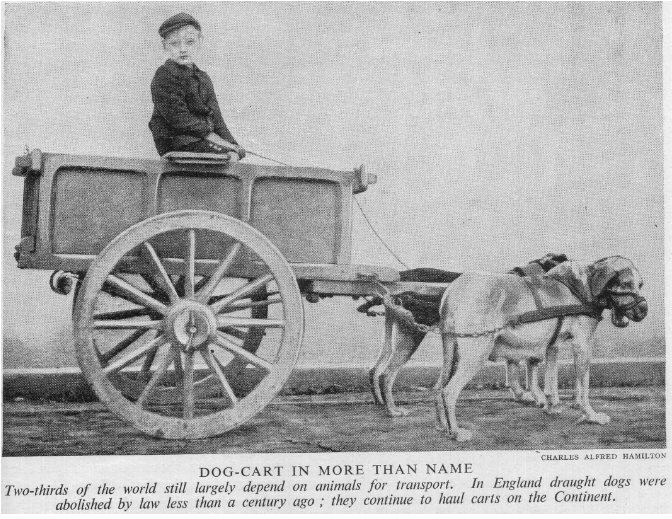

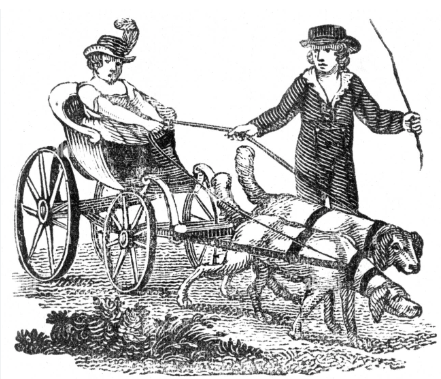
 In England and Wales from the 12th Century forward enclosure (or inclosure) was a common practice. Before enclosure, much of the land was only used during the growing season. Once the harvest took place, the was at the disposal of the community. People grazed their livestock freely upon the land. They also found other uses for it. Enclosure occurred when someone, usually the manorial lord, put up a fence or a hedgerow to separate open land and the land the lord chose to claim. This prevented common grazing rights.
 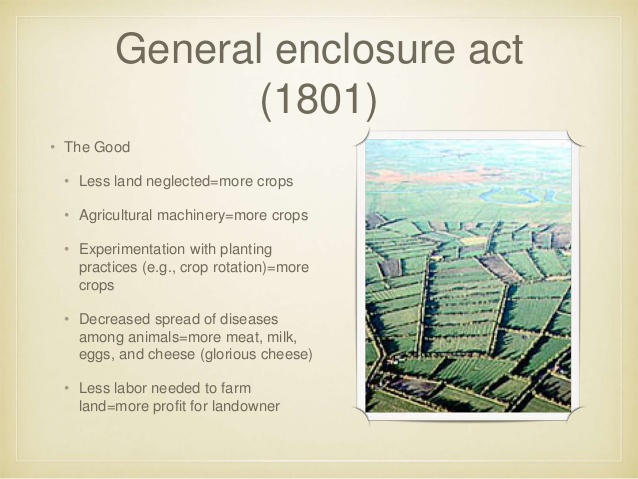 The article on enclosure on
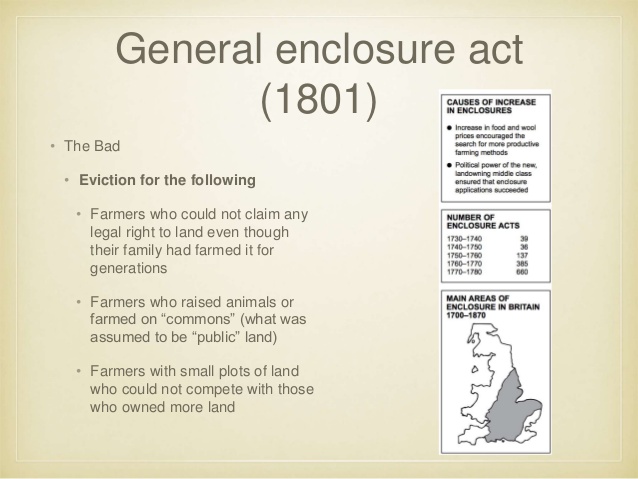
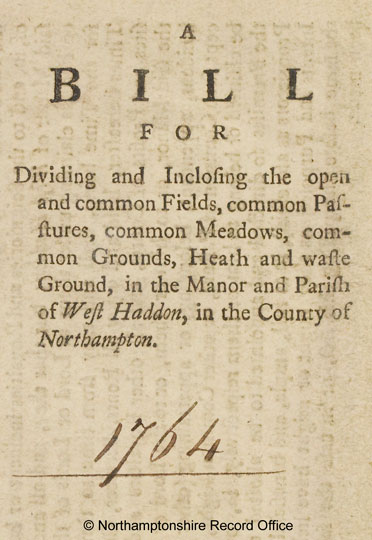 “Occasionally however rebellions took place against this loss of privilege. One such example was recorded in a letter of 1796 sent by a Thomas Swinnerton of Butterton Hall near Newcastle under Lyme. The letter was addressed to the agent of the Bishop of Lichfield who was Lord of the Manor in which Thomas had his estate. In the letter Thomas complained about a rebellion that had taken place when he decided to enclose common land adjoining the ‘green lane’ which ran through his property explaining why he had done so: ‘the great object of the enclosure..was to prevent the building of a Workhouse or the converting of..the land into Gardens for the Poor’. However the ‘poor’ had rebelled and convened a Manorial Court at a local pub during which : ‘the landlord..where the Court was held was a most principal party in exciting & encouraging the Mob to destroy the inclosure & …on return of the Mob gave them ale’.. Another agent provocateur was apparently ‘a man who hires out horses which may be found..in the night in the inclosures’. Again there was no sympathy at all for the poor some of whom were destitute needing accommodation and land to grow food. They had invoked an ancient custom by convening a Manorial Court at which their grievances could be aired but understandably this had ended in violence. I do not know whether the Bishop took any action as a result of this letter but the draft reply sent by his agent seemed more sympathetic to the ‘Mob’ than to Swinnerton!!”


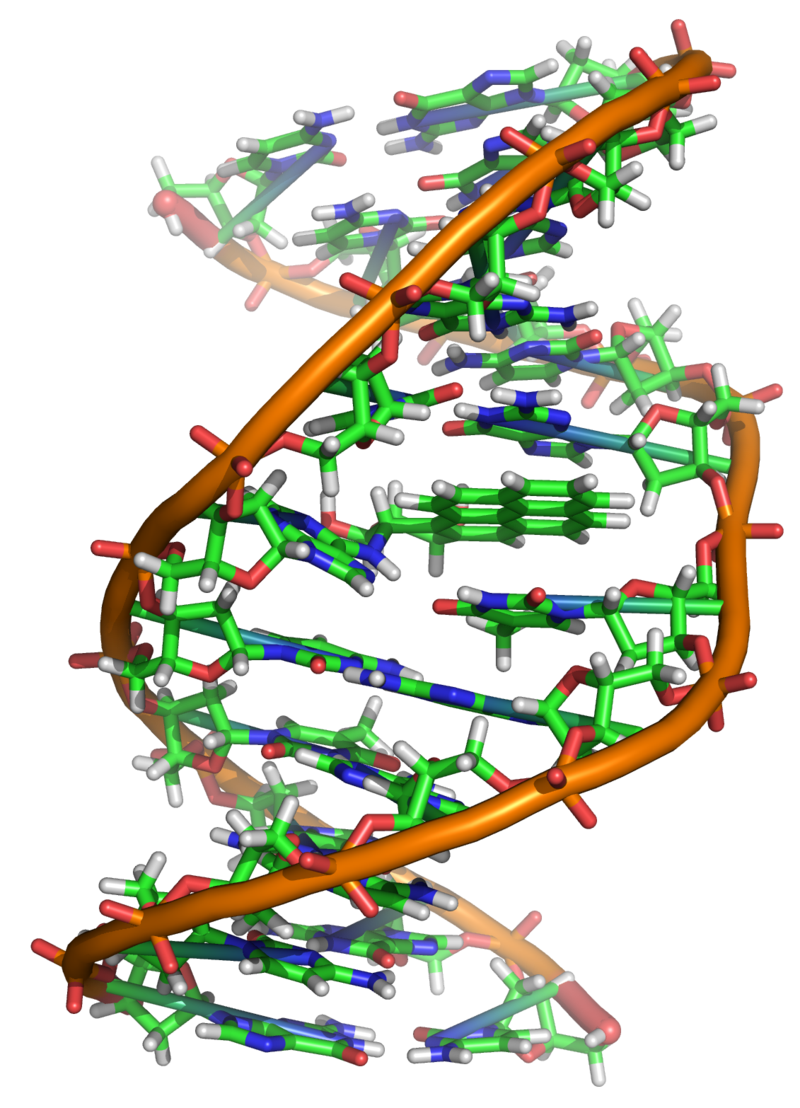

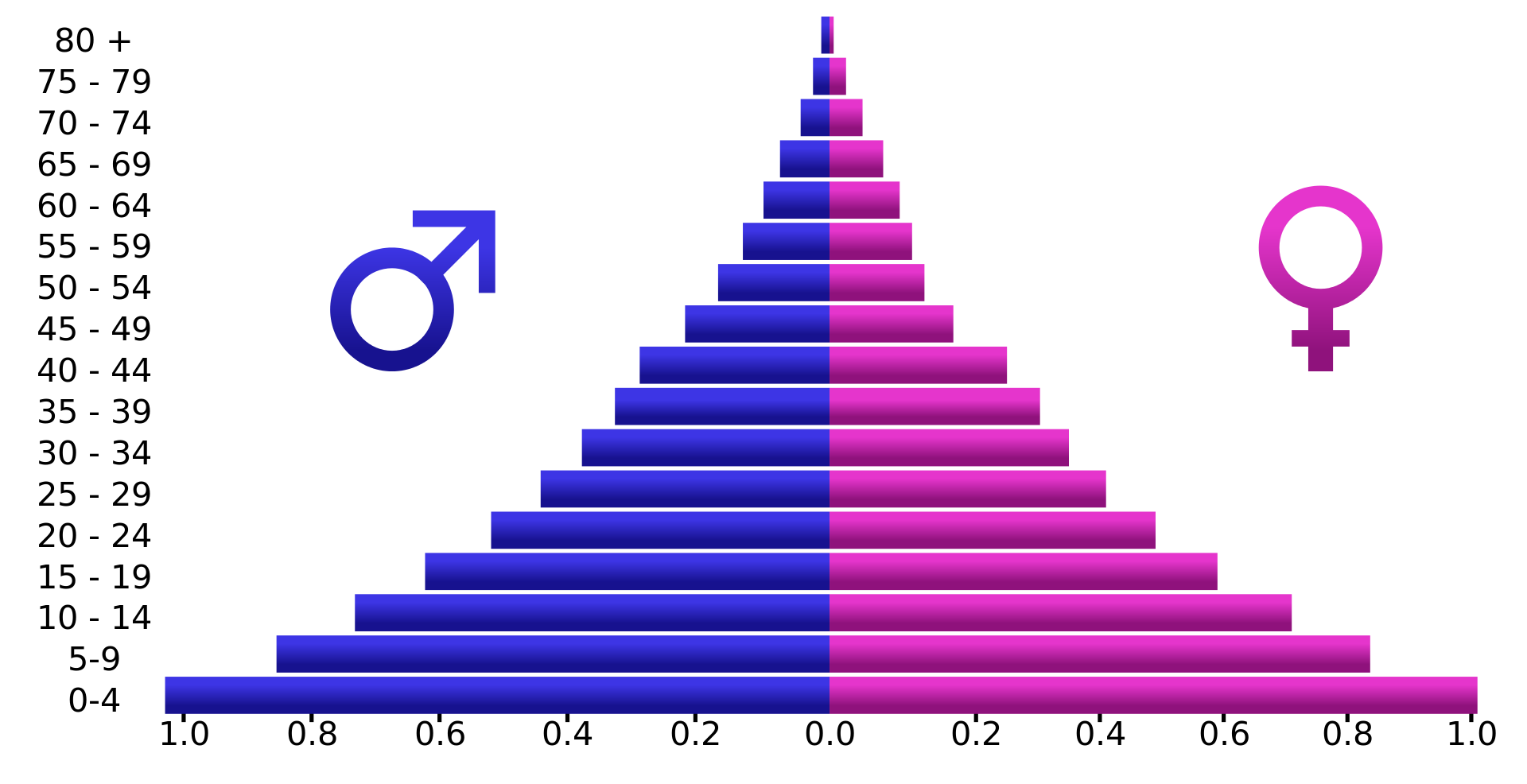





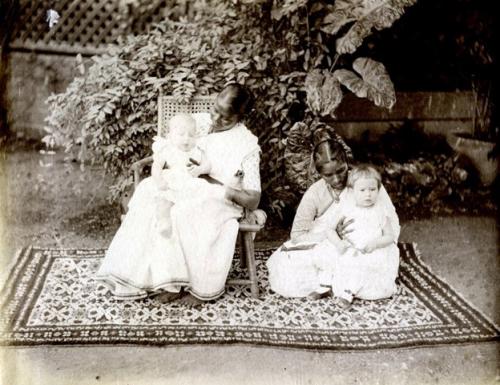
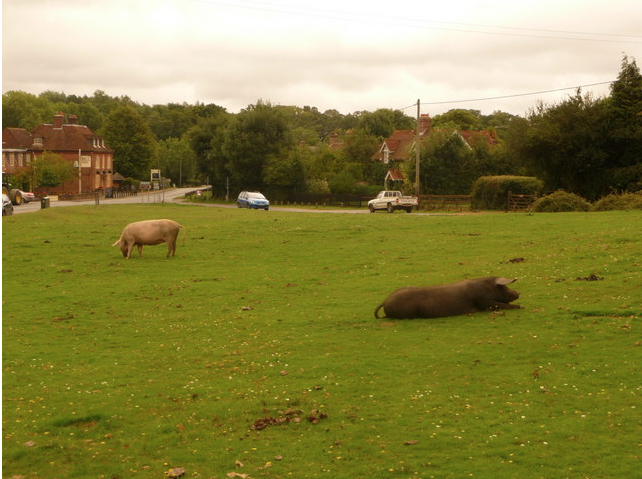


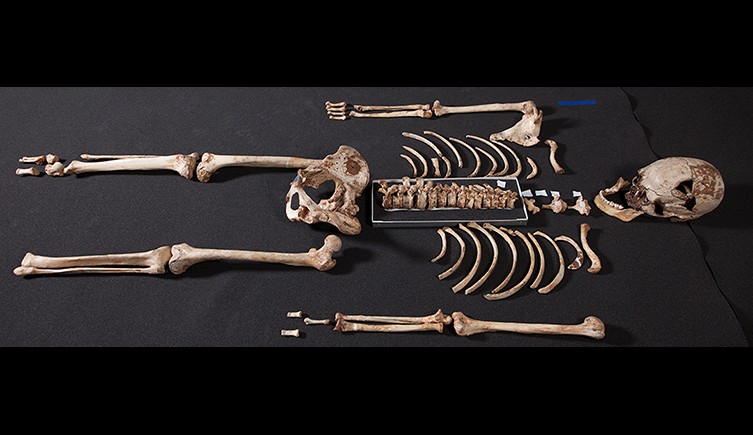


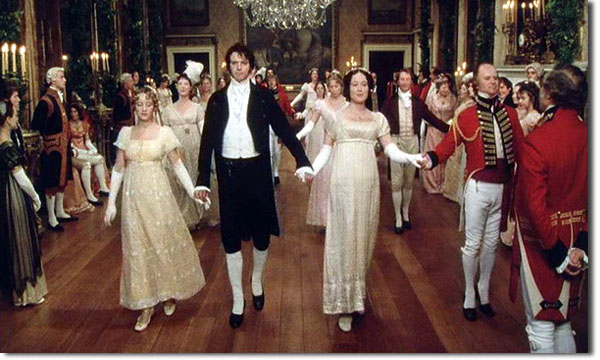 In reality, the answer is not as clear cut as one might imagine. It depends on so many variables; therefore, no exact answer can be had. Is the modiste in London or a provincial town? How important is the client? For example, a duchess would command more service than somebody unknown. How many other clients is the modiste dealing with at the same time? When does the London Season begin? Everyone would be looking for new gowns with the onset of the Season, so modistes would be overrun with business. In A Touch of Scandal, I have Lady Eleanor Fowler and Miss Velvet Aldridge arrive in London several weeks in advance of the Season so they may have new gowns made. In other books where urgency is required, I have the heroine purchasing what she can, but that is usually from a female proprietress in a village shop. In my latest tale, Loving Lord Lindmore, the dowager countess sees to the fittings for Lady Cora Midland, a distant relative.
  The amount of work a dressmaker has and the number of seamstresses employed determine how long it took to make a garment. Of course, the trimming and such also matters. A court dress could well take five days if the seamstresses worked on nothing else. If one needed a garment made expeditiously, one could pay extra, and it could usually be done.
 The muslin pieces would be used as pattern pieces when the material was cut. Then the fabric pieces would be pinned together. Many seamstresses then basted the seams. All this is the time consuming part. The customer was supposed to come for the final fitting wearing the stays she would wear with the dress. Dress makers did not usually make the stays.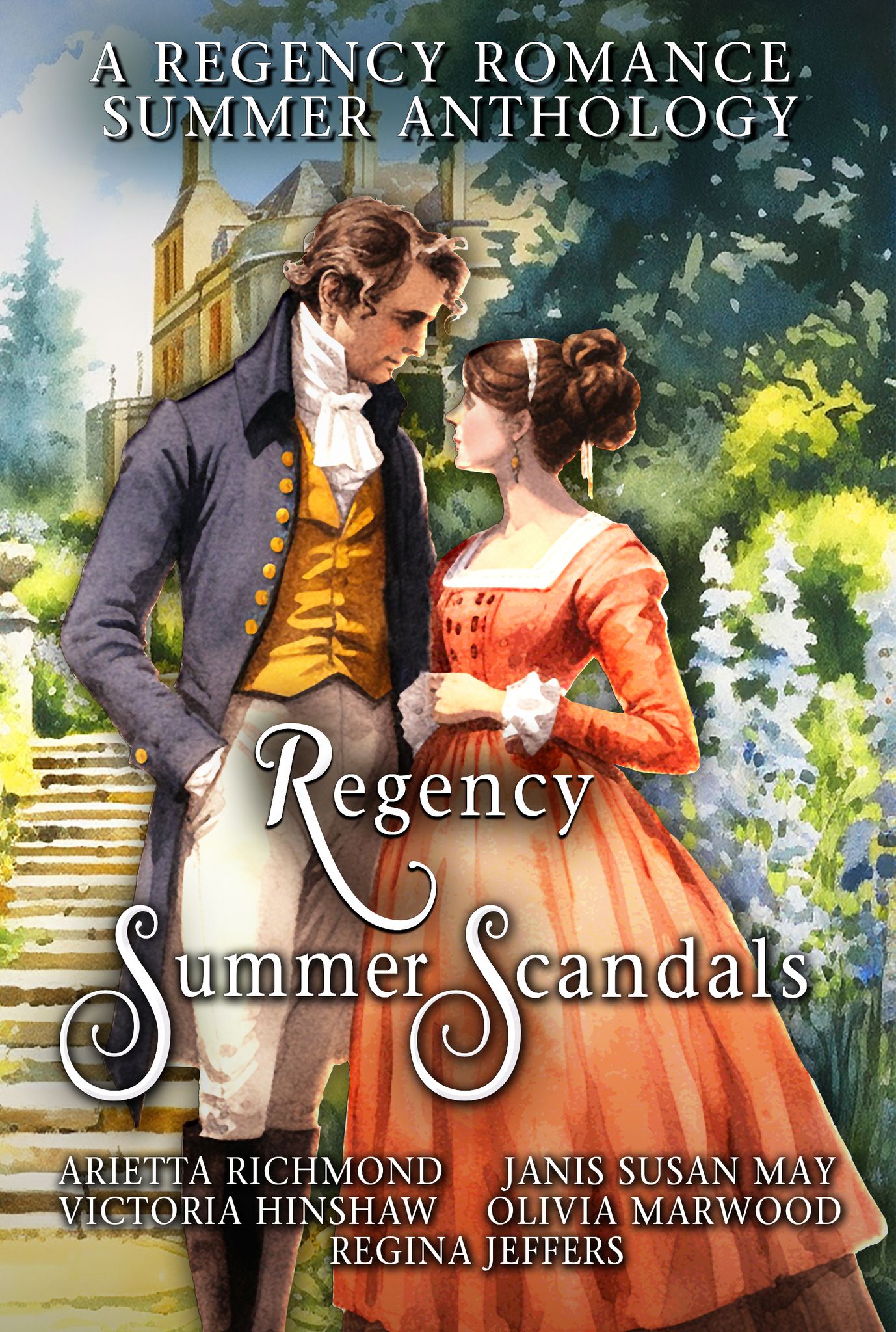

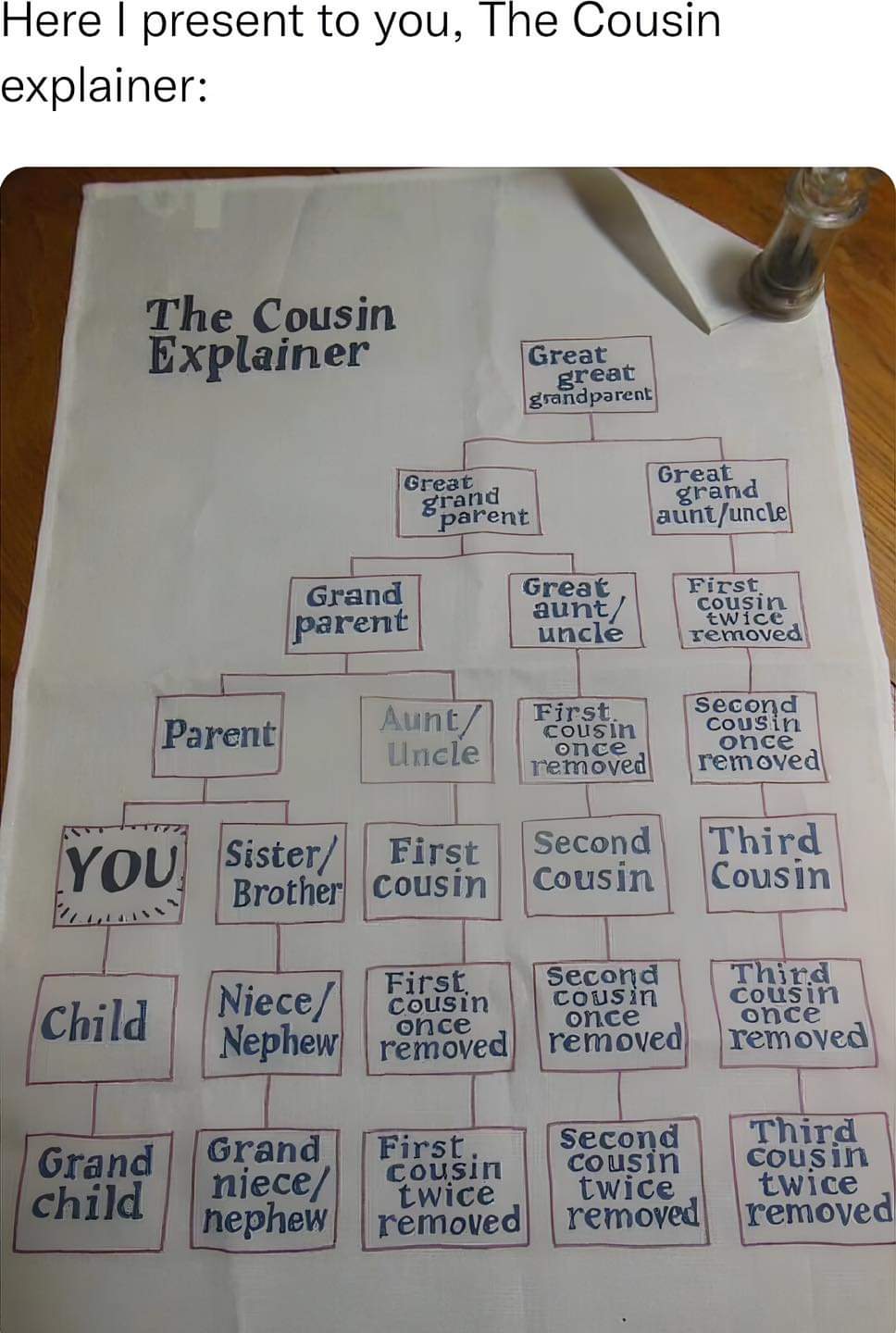


 Every Woman Dreams...


