Tidbits Regarding Some of Your Favorite Christmas Traditions

Below are some facts associated with Christmas, but are rarely mentioned in common conversation. Did you know…

170px-Henry_Cole,_Lock_&_Whitfield_woodburytype,_1876-84.jpgSir Henry Cole was the first to send out a Christmas card. The year was 1843. Cole bemoaned the number of letters he must write to send glad tidings to family, friends and patrons. Cole was an English civil servant and inventor who facilitated many innovations in commerce and education in 19th century Britain. He is said to have employed a local artist to create a scene and then had 1000 cards printed with a Christmas greeting. 

800px-Firstchristmascard.jpg

The Victorian Christmas tree was an “import” from western Germany. In Germany, the feast of Adam and Eve was celebrated on December 24, [believed by some to have originated in the 8th century with Winfrid, an English missionary later known as St. Boniface], and the tree was the main prop of a popular medieval play about Adam and Eve was a “paradise tree,” a fir tree hung with apples, that represented the Garden of Eden. The Germans set up a paradise tree in their homes. “They hung wafers on it (symbolizing the host, the Christian sign of redemption); in a later tradition the wafers were replaced by cookies of various shapes. Candles, symbolic of Christ, were often added. In the same room was the “Christmas pyramid,” a triangular construction of wood that had shelves to hold Christmas figurines and was decorated with evergreens, candles, and a star. By the 16th century the Christmas pyramid and the paradise tree had merged, becoming the Christmas tree.

“The custom was widespread among the German Lutherans by the 18th century, but it was not until the following century that the Christmas tree became a deep-rooted German tradition. Introduced into England in the early 19th century, the Christmas tree was popularized in the mid-19th century by the German Prince Albert, husband of Queen Victoria. The Victorian tree was decorated with toys and small gifts, candles, candies, and fancy cakes hung from the branches by ribbon and by paper chains. Taken to North America by German settlers as early as the 17th century, Christmas trees were the height of fashion by the 19th century. They were also popular in Austria, Switzerland, Poland, and the Netherlands. In China and Japan, Christmas trees, introduced by Western missionaries in the 19th and 20th centuries, were decorated with intricate paper designs.” [“Christmas tree.” Encyclopædia Britannica, Inc., May 19, 2015. https://www.britannica.com/plant/Christmas-tree]

Many traditions involving greenery originated in Druid, Celt, Norse, and Roman civilizations, which celebrated the winter solstice around December 21. Because the color green represented eternal life, plants that remained green throughout the year played an important role in these celebrations. The Romans celebrated the solstice with a mid-winter holiday called the Saturnalia, honoring the Roman god Saturn. They lit candles in their homes, spent time with friends and family, decorated their homes with wreaths and garlands, exchanged gifts, and feasted. As a symbol of eternal life, cultures around the world employ evergreen boughs and wreaths to decorate their homes. European pagans were known to worship trees. The practice survived even after Christianity took root. The Scandinavians used boughs of evergreens and holly to drive away the devil as part of their New Year’s celebration. As pagan cultures converted to Christianity, they continued many of their traditional winter solstice activities. Because the use of greenery had pagan origins, early church leaders often objected to its use. However, the traditions were so deeply ingrained that the customs continued – but from a Christian frame of reference.
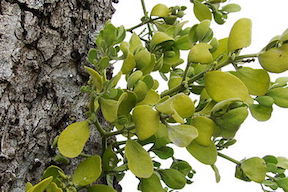
Mistletoe-0243.jpg 4-mistletoe.jpg Mistletoe thrives high above the ground, living as a parasite on oak trees. Ancients believed it represented a connection between heaven and earth. Mistletoe also played a role in various cultures. The Druids believed the plant was sacred and had healing powers. Mistletoe was an important element in the Norse legend of Balder, the sun god. The Romans considered it a symbol of hope and peace, so in the Roman era enemies reconciled under the mistletoe. Perhaps that is the basis of lovers kissing beneath the mistletoe. [Christmas Traditions Rooted in Ancient Cultures]

Wassailing is a very ancient custom that is rarely done today. The word ‘wassail’ comes from the Anglo-Saxon phrase ‘waes hael’, which means ‘good health’. Originally, the wassail was a drink made of mulled ale, curdled cream, roasted apples, eggs, cloves, ginger, nutmeg and sugar. It was served from huge bowls, often made of silver or pewter. Jesus College, in Oxford University, has a Wassail bowl, that is covered with silver. It can hold 10 gallons of drink! Wassailing was traditionally done on New Year’s Eve and Twelfth Night, but some rich people drank Wassail on all the 12 days of Christmas! The Wassail drink mixture was sometimes called ‘Lamb’s Wool’, because of the pulp of the roasted apples looked all frothy and a bit like Lamb’s Wool! [Why Christmas]

Here is a recipe for Wassail: 

1 gallon dark beer                1/2  tsp. ground ginger             2 cups brown sugar

dash of ground mace          2 cinnamon sticks                     1 tsp. grated nutmeg

2 lemons                                 1 bottle sherry or red wine      1 doz. apples, cored & baked

Cook the top six ingredients over a low-medium heat in a saucepan. When the sugar has melted, add the sherry. Pour the hot liquid over the backed apples and lemon slices and serve. 

1eec8ffc-f622-4f00-a93b-f98c3caa17c8_w610_r1_s

People dressed as Father Frost, the named used locally for Santa Claus, and Snow Maiden greet passers-by during a New Year parade in Bishkek, Kyrgyzstan. (Reuters Image)

Children all over the world call Santa Claus by different names: St. Nick, Nicholas of Myra, Father Christmas, Pilznickel, Sinter Klaes, Hoteisho, Weihnachtsmann, Père Noël, Sancte Claus, Lam Khoong-Khoong, Christkindle, Pelz Nichol, Kriss Kingle, St. Nicholas, and Für Nicholas. The picture of Santa Claus, as we see him, came from Thomas Nast. He was an American painter born in Bavaria. He painted pictures for Christmas poems. Someone asked him to paint a picture of Santa Claus. Nast remembered when he was a little boy in southern Germany. Every Christmas, a fat old man gave toys and cakes to the children. So, when Nast painted the picture, his Santa Claus looked like the kindly old man of his childhood. And through the years, Nast’s painting has remained as the most popular picture of Santa Claus. [Learning English]

Bishop Nicholas of Myra was the original Santa Claus. During the persecution of Christians in the 4th Century in what is now Turkey, Bishop Nicholas was imprisoned and died at a young age. Nicholas had been a well loved to those he administered for his kindness to children. His transformation into Father Christmas began in Germany and was carried to North America by 17th Century German settlers. 

5ff9eb38-92b6-405c-aa0a-96cf97f2017e_w610_r1_s

The Dutch version of Santa Claus, Sinterklaas, or Saint Nicholas, and his blackface helpers Zwarte Piet (Black Pete) arrive by steamboat in Hoorn, northwestern Netherlands, Nov. 16, 2013. http://learningenglish.voanews.com/a/santa-claus-saint-nick-kris-kringle-pelznickel-thomas-nast/1794841.html

While there are no written records of the origin of the Christmas Stocking, there are popular legends that attempt to tell the history of this Christmas tradition. One such legend has several variations, but the following is a good example: Very long ago, there lived a poor man and his three very beautiful daughters. He had no money to get his daughters married, and he was worried what would happen to them after his death. Saint Nicholas was passing through when he heard the villagers talking about the girls. St. Nicholas wanted to help, but knew that the old man wouldn’t accept charity. He decided to help in secret. After dark he threw three bags of gold through an open window, one landed in a stocking. When the girls and their father woke up the next morning they found the bags of gold and were, of course, overjoyed. The girls were able to get married and live happily ever after. Other versions of the story say that Saint Nicholas threw the three bags of gold directly into the stockings which were hung by the fireplace to dry. [Morris, Desmond (1992). Christmas Watching. Jonathan Cape. pp. 14–15.]

Posted in Christmas, customs and tradiitons, food and drink, history, holidays | Tagged , , , | 5 Comments

Products of the Stillroom: Mincemeat Filling and Christmas Pudding, a Guest Post from Diana J Oaks

This post originally appeared on the Austen Authors’ blog on December 13, 2021. Enjoy!

When we hear that Christmas trees and decorations didn’t go up before Christmas Eve in the Regency household, it might lead us to assume that Christmas celebrations involved little advance preparation. The reality belies that supposition, as stillroom work for Christmas would actually begin up to a year in advance. This early activity is because that is how long it takes for traditional mincemeat filling to properly age. This is a form of preserves, which in a household that has a stillroom, would typically fall under the purview of the stillroom. The same is true of the curing period and the periodic “feeding” of the Christmas pudding.

The consumption of mince pies and other spiced meat dishes dates to medieval times. By the Georgian period, however, those early receipts had been adapted and evolved substantially. In some cases, the meat had been removed from the ingredients list entirely, although the use of suet, a form of fat obtained from near animal’s kidneys, was still a standard ingredient meaning they weren’t exactly vegetarian either.

Christmas Pie by William Henry Hunt –  Public Domain, https://commons.wikimedia.org/w/index.php?curid=12146197

The evolution of the receipt (recipe) from the medieval dish to the Georgian versions began with returning Crusaders who introduced Eastern spices to Great Britain. Three of these, nutmeg, clove, and cinnamon – were added by cooks with the addition of a religious angle that related the dishes to Christmas. These spices were said to represent the Three Wise Men. Smaller, mincemeat “hand-pies” were also made, often with a top crust in the shape of a star. Access to and the affordability of sugar set the stage for reduction or removal of meat leading to the sweet version that was commonly made by the end of the Georgian period.

The aging process was critical to making a quality mince filling since the flavors were intensified during this curing period. The color of the mixture darkened, and as the alcohol evaporated a bit, the rich flavor became more concentrated. Interestingly, the instructions just say to keep it covered in a dry cool place without reference to the length of time.

Four to six weeks before Christmas, the Christmas Pudding is made. As with the mincemeat, this curing was an important phase during which time the flavors intensified, the pudding darkened, and the persons watching over the process would periodically–once a week or so–trickle a spoonful of brandy, rum, or a dark beer over the pudding. Christmas puddings come in many varieties, the two most commonly heard of being the figgy pudding of We Wish you a Merry Christmas fame and plum pudding.

There are religious symbols that grew out of the “Christmas Pudding”  tradition. The mixture was supposed to be stirred east to west, as a nod to the Wisemen who came from the east, and every family member participating and making a wish as they stirred. Most recipes included thirteen ingredients, said to represent Jesus and his twelve disciples. Christmas day introduced additional symbols around the rich dessert. A sprig of holly was placed on top to represent the crown of thorns that was put on Jesus’ head when he was crucified. Alcohol poured over the pudding is set afire at the table in a display said to represent His love and power.

The Christmas Pudding is served aflame.

I find myself rather curious about what the fuss is about, having never tasted a Christmas pudding myself. Here’s a recipe and tutorial if you (like me) would like to make an attempt at making a Regency Christmas Pudding.

Have you ever had mince pie or Christmas Pudding? If so, do you like it? If not, is it something you would like to try to either make or taste? Do you have room in the back of your refrigerator for a bottle of mincemeat to cure for a year? I’ll confess that I’ve tried a couple of mincemeat pies and so far, I’m not a fan. I’m game to try the pudding though.

Posted in Austen Authors, Christmas, food and drink, Guest Post, history, holidays | Tagged , , , , , , | 2 Comments

A Salute to My Grandfather

This past weekend would have been my late grandfather’s birthday. He passed in 1984, one month prior to my son’s birth.

If some day someone cared to ask about those who influenced me, he would be at the top of the list. He was more than a grandparent. He was a replacement father.

My parents separated shortly after my birth. In the late 1940s and early 1950s, this was an aberration. Yet, he supported me through school with weekly allowances. He purchased my first bicycle, which ironically has the original license plate on it – the same year I was born. Whether that was purposeful or not, I cannot say. And yes, I still own the bike though there are no means to do replace parts for it, but I have toted it from one household to the next over five different states.

His support was even more important when one realizes I have no memory of my paternal grandfather for he died when I was quite young. Heck, there was some thirty+ years between when I was young and in a stroller and my father’s death. That is how long it was between my seeing my paternal grandmother and my father’s funeral.

My maternal grandmother, my grandfather’s first wife, died of cancer before I was born, so, obviously, this man was the only grandparent I had in my life.

He cosigned for my first three cars. He gave me money towards college, though I quite literally worked my way through school. No student loans in those days. A few scholarships and perseverance. A bachelor’s, master’s and Ph.D. He sat through each graduation ceremony and beamed with pride.

He took me on my first vacation; it was to the Jersey shores. His brother-in-law played in the Lawrence Welk band. Doesn’t sound like much to those who were not alive then, but we were able to go to the show. Big time fun when you are about 12 years old.

He taught me how to drive, and “if” (and I am not saying I do) I still have a lead foot, it was learned at his hands. He taught me how to change a spark plug and other things no one can do nowadays for the engines of cars are pretty much a motorized computer. He came to my award programs and loved me in the special way of all grandparents.

For a living, my grandfather built boxcars for American Car and Foundry, but outside of work, one never saw him in anything other than a suit, dress shirt, tie, and a hat. He even wore a dress shirt when he bowled, which was his leisure sport. He was quite good at the bowling. He wanted me to me equally as adapt, but I was purely mediocre, though we had fun together. I would go watch him when he played in the various bowling leagues.

So, this weekend I was missing him greatly. He came from good stock. Hard working people who did what was necessary and without complaint. His generation was the one that rebuilt this country after World Wars I and II and the Korean War. He was remarkably ordinary and ordinarily remarkable at the same time.

Posted in birthdays, family | Tagged , , | 4 Comments

“Deck the Hall” with Music and History

I recently attended the local Christmas Parade for our rural community. You can keep your Macy’s Thanksgiving Day Parade, for there is nothing better than watching young children scrambling for candy thrown by the various floats. Young, shining face, full of joy and potential. Local marching bands. A variety of parade princesses and queens. A few politicians. Church groups. Bikers. And even a couple of refuse removal trucks, cleaned and not smelling of trash. LOL! 

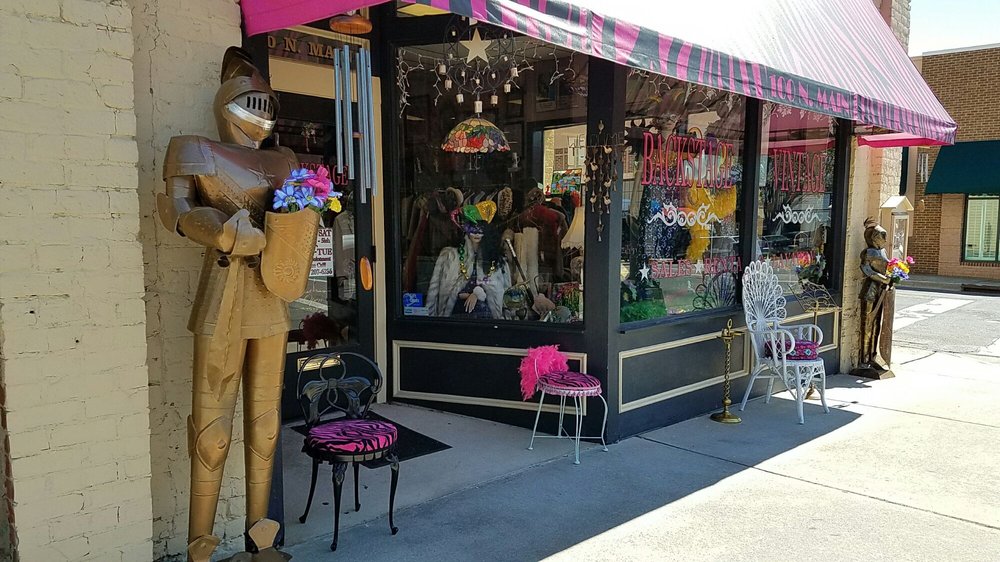
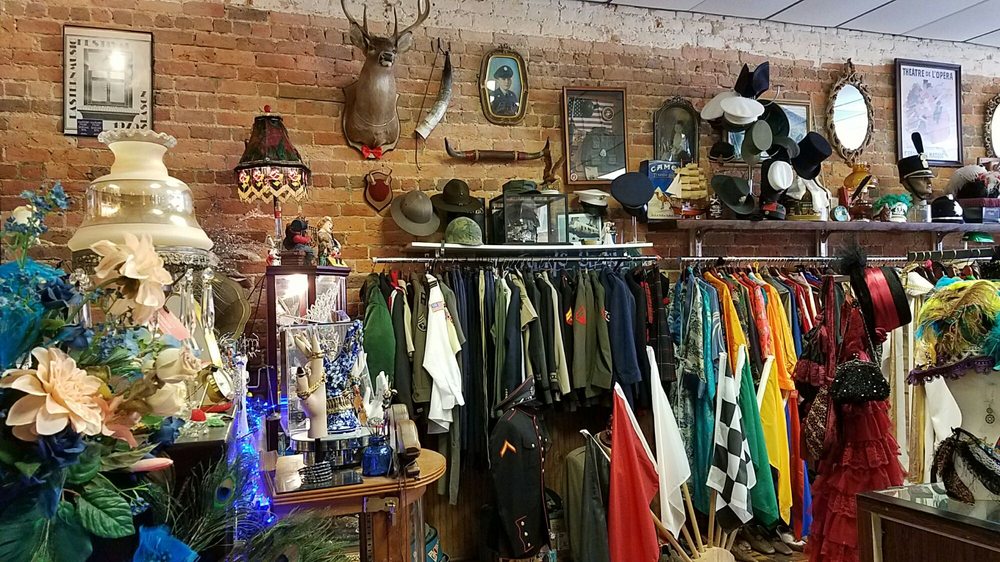
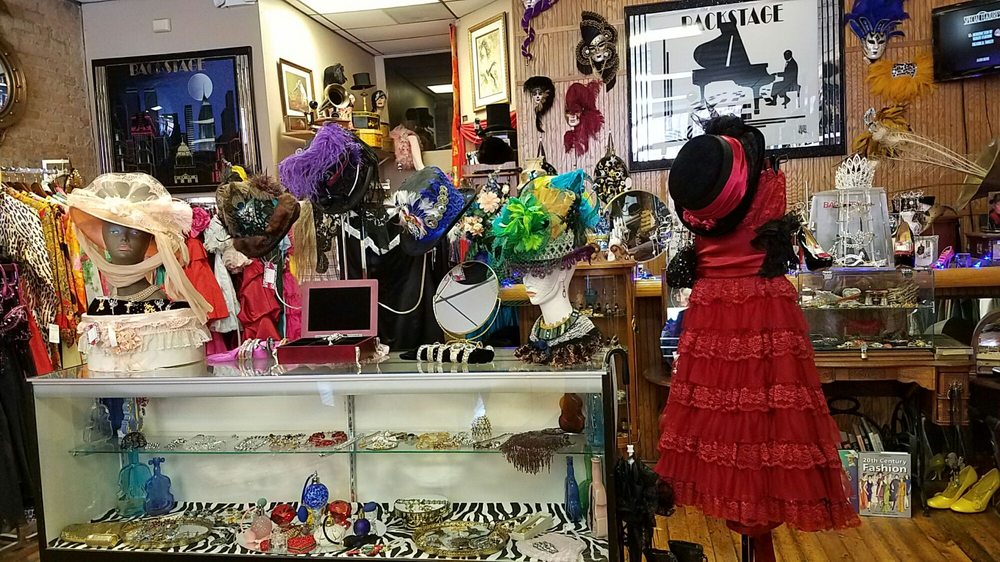
While my family and I waited for the parade to begin, I entertained my grandchildren by showing them some of the goodies at “Backstage,” a shop that carries unique vintage costumes and accessories (to purchase or rent on consignment), situated in a building built in 1875. My grandson was most impressed with the weight of “REAL” swords and guns (actually stage props, but they looked REAL). My granddaughters loved the bonnets and masks and the crowns.

o-1.jpg

o.jpg

o-2.jpg

During that time, Judy Craycraft, the shop owner and former principal violinist spoke of theatre and music, etc. One of things we spoke of was the Christmas carols we were likely to hear from the bands as they marched along. When we came to “Deck the Halls,” our knowledge of the song combined. We spoke over each other: my comments dwelling on the Welsh history of the Christmas classic and hers of the musicality of the piece. Later, when the high school band playing the song came by, we discovered we sang some of the phrases differently. Doing so hatched an idea for this post. 

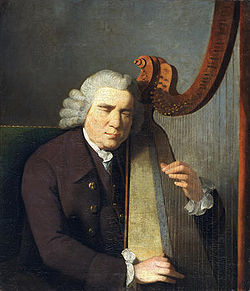
250px-John_Parry,_harpist.jpg “Deck the Hall” comes to us via a Welsh melody from the 16th Century. The melody is taken from “Nos Galan,” a traditional New Year’s Eve carol, published in 1794, although it is likely much older. [Goldstein, Jack (12 Nov 2013). 10 Amazing Christmas Carols, Volume 2.] John Parry (known as Parri Ddall, Rhiwabon (or, in English, Blind Parry of Ruabon) was  the first to record the Welsh air in a musical manuscript of the 1700s. Parry, who is said to have inspired Thomas Gray’s 1757 poem “The Bard,” dictated the air to his fellow-compiler, Evan Williams, his manuscript Antient British Music, published in 1741). In it was an unnamed ‘aria’ which is now called “Deck the Halls with Boughs of Holly.” Later, the song was published and named “Nos Galan.” It was found in Musical and Poetical Relicks of the Welsh Bards (1784) by Edward Jones. The melody is Welsh, but the lyrics come to us via the Scottish musician Thomas Oliphant, dating the piece to 1862. 
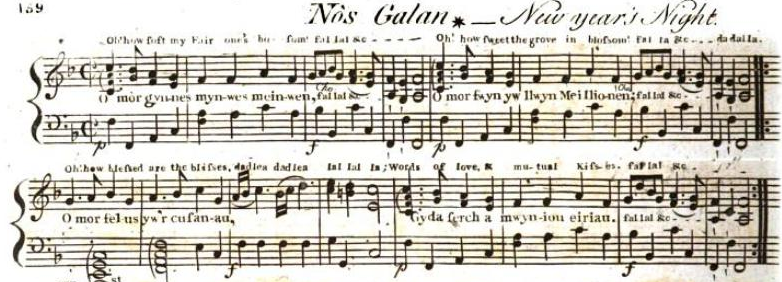
Poet John Ceiriog Hughes wrote his own lyrics to the tune. A middle verse was added by various singers, the lines changing from artist to artist. Reportedly, the melody was used by Mozart in a duet for violin and piano, “Sonata No. 18.” [“Christmas carols — William Studwell’s Christmas Carols of the Year series – chicagotribune.com”The Chicago Tribune. Tribune Newspapers. 2010.] Later, Haydn used it in the song “New Year’s Night.”

“Originally, carols were dances and not songs. The accompanying tune would have been used as a setting for any verses of appropriate metre. Singers would compete with each other, verse for verse—known as canu penillion dull y De (“singing verses in the southern style”). Consequently, tunes originally used to accompany carols became separated from the original dances, but were still referred to as “carols”.

“The Welsh and English lyrics found in the earliest publication of the “Nos Galan” melody are as follows:

Nos_galan

The first known publication of the melody “Nos Galan”, from “Musical and poetical relicks of the Welsh bards” (1794) by Edward Jones ~ Public Domain ~ https://en.wikipedia.org/wiki/Deck_the_Halls#/media/File:Nos_galan.png

Wikipedia tells us, “In the original 1862 publication, Oliphant’s English lyrics were published alongside Talhaiarn’s Welsh lyrics. Although some early sources state that Oliphant’s words were a translationof Talhaiarn’s Welsh original,[6] this is not the case in any strict or literal sense. The first verse in Welsh, together with a literal English translation taken from Campbell’s Treatise on the language, poetry, and music of the Highland Clans (1862), is given for comparison:

So, which is your version of “Deck the Hall” or is it “Deck the Halls”? 

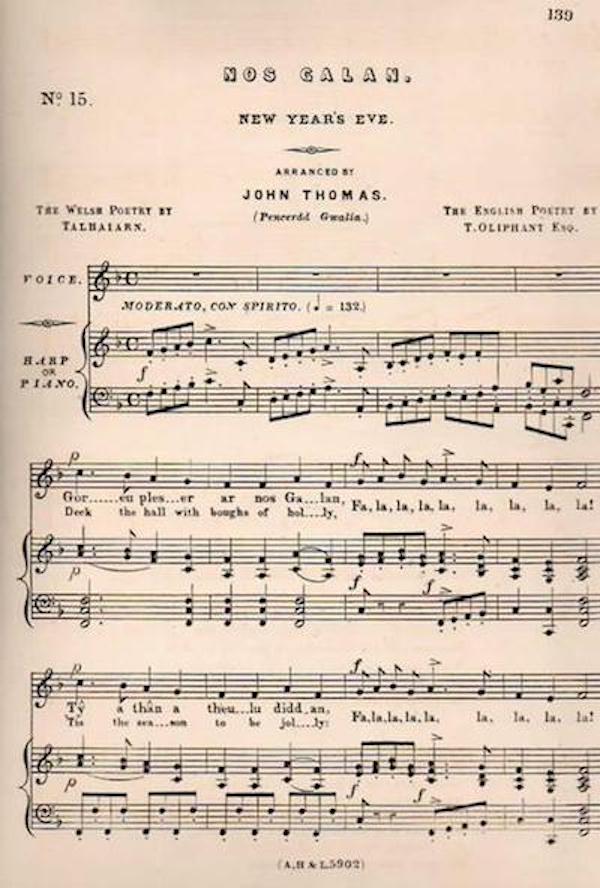
Thomas Oliphant’s version first appeared in Welsh Melodies With Welsh and English Poetry (Volume 2), which was published in 1862. As was mentioned above, Thomas Oliphant, a Scottish musician wrote the lyrics. These lyrics first appeared in a four volume set, authored by John Thomas, and entitled Welsh Melodies. The entry contained Oliphant’s English words, along side of the Welsh words, recorded by John Jones (Talhaiarn). The repeated “fa la la la la” is likely a left over of medieval ballads. Those lyrics are as follows: 

Deck the hall with boughs of holly, Fa, la, la, la, la, la, la, la, la!
‘Tis the season to be jolly, Fa, la, la, la, la, la, la, la, la!
Fill the meadcup, drain the barrel, Fa, la, la, la, la, la, la, la!
Troul the ancient Christmas carol, Fa, la, la, la, la, la, la, la!

See the flowing bowl before us, Fa, la, la, la, la, la, la, la, la!
Strike the harp and join the chorus. Fa, la, la, la, la, la, la, la, la!
Follow me in merry measure, Fa, la, la, la, la, la, la, la!
While I sing of beauty’s treasure, Fa, la, la, la, la, la, la, la, la!

Fast away the old year passes, Fa, la, la, la, la, la, la, la, la!
Hail the new, ye lads and lasses! Fa, la, la, la, la, la, la, la, la!
Laughing, quaffing all together, Fa, la, la, la, la, la, la, la!
Heedless of the wind and weather, Fa, la, la, la, la, la, la, la, la!

page1-405px-Original_printed_version_of_Deck_the_Hall_with_Boughs_of_Holly.pdf

The English words of Deck the Hall With Boughs of Holly are not a translation. This is Thomas Oliphant’s original publication of the words of the Christmas carol. Source Original publication: “Welsh Melodies with Welsh and English Poetry”, volume 2. Published by Addison, Hollier and Lucas, 210 Regent Street, London, England. https://en.wikipedia.org/wiki/File:Original_printed_version_of_Deck_the_Hall_with_Boughs_of_Holly.pdf

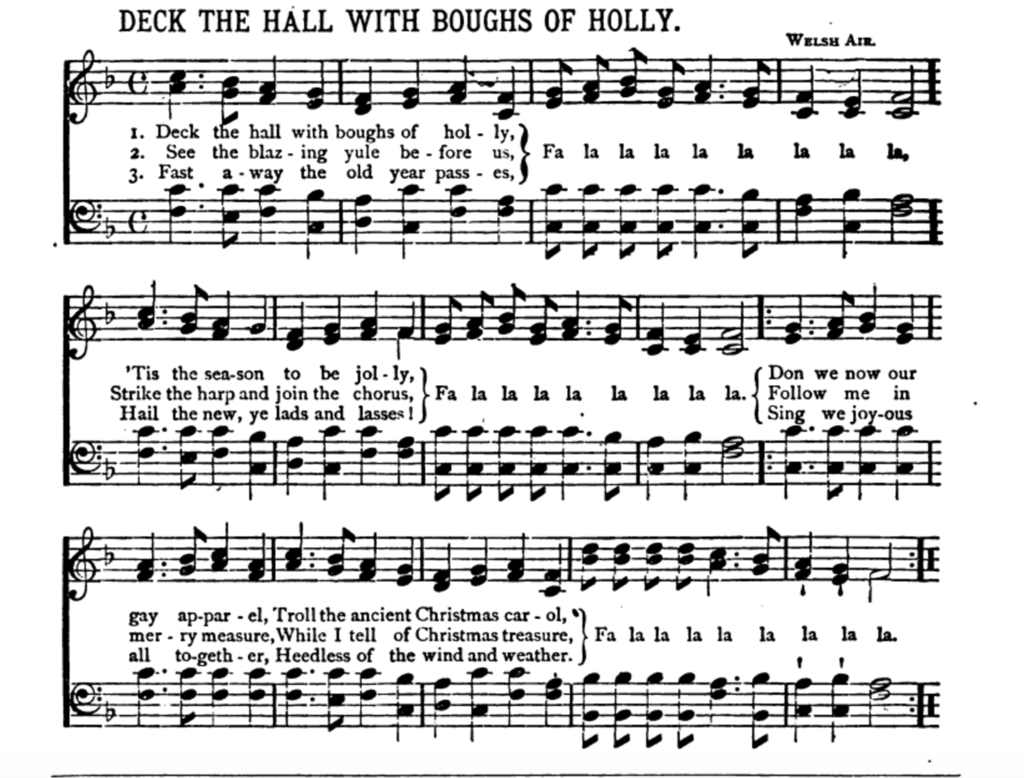
This version’s lyrics appeared in the December 1877 issue of the Pennsylvania School Journal. In this version, there is no longer any reference to drinking, runs as follows:

Deck the halls with boughs of holly, Fa la la la la la la la!
‘Tis the season to be jolly, Fa la la la la la la la!
Don we now our gay apparel, Fa la la la la la la la!
Troll the ancient Yuletide carol, Fa la la la la la la la!

See the blazing yule before us, Fa la la la la la la la!
Strike the harp and join the chorus, Fa la la la la la la la!

Follow me in merry measure, Fa la la la la la la la!
While I tell of Yuletide treasure, Fa la la la la la la la!

Fast away the old year passes, Fa la la la la la la la!
Hail the new, ye lads and lasses, Fa la la la la la la la!
Sing we joyous all together! Fa la la la la la la la!
Heedless of the wind and weather, Fa la la la la la la la!

Deck_the_hall

https://en.wikipedia.org/wiki/Deck_the_Halls#/media/File:Deck_the_hall.png ~ Public Domain ~ Pennsylvania School Journal, 1877

Posted in British history, customs and tradiitons, history, medieval, music, Scotland, Wales | Tagged , , , , , , , , | 2 Comments

A Georgian Era Lexicon – We Are Still on “B” ~ “Bi… to “Bl…”

In the singular form the lexicon of a particular subject is all the terms associated with it. The lexicon of a person or group is all the words they commonly use. As a plural noun, a lexicon is an alphabetical list of the words in a language or the words associated with a particular subject. To distinguish lexicon from a dictionary, it is an alphabetical list of the words in a language or the words associated with a particular subject.

These examples are a mix of what one might hear upon the lips of the aristocracy, as well as examples of Cant used upon London’s streets and those terms used by farmers and like in the country.

Bible – a boatswain’s great axe

The Pirate’s Lair website tells us, “Above photo is an excellent example of a beautifully preserved 18th century Swedish Naval Boarding Ax or Danish Boarding Ax. This particular boarding ax has a cross engraved onto the haft and the number 101 engraved on the bottom butt which is believed to be an armament rack number or position aboard a naval vessel. It has been established that it was the Scandinavians, or more precisely the Vikings, who first employed boarding axes as standard inventory. This particular boarding ax is 35″ long with an 11” head from tip of blade to tip of curved spike. Note the flaring and curved ax blade which is typical and distinctive of the Scandinavian and French boarding ax.

“The naval boarding ax was the most indispensable and versatile weapon used aboard a naval vessel prior to the advent of propeller-driven steel-hulled ships of the late 19th century. During the era of wooden hulled naval vessels powered by wind and sail the boarding ax was a critical piece of equipment used by the enlisted deckhand throughout a naval engagement from beginning the beginning shots of canon fire to the end when capturing or vanquishing an opponent. Outside of the large bore canon and skilled seamanship of captain and crew the boarding ax was likely the most single most important weapon which would determine a ships survivability during battle.

“Critical to a naval vessels survivability during an engagement would be to ensure that:
A) all “hot shot” was quickly removed and efficiently dug out from the hull, masts, or any wooden structure which it may have been imbedded preventing a catastrophic fire,
B) the rapid removal and discarding overboard of any downed rigging, ropes and masts which would prevent a vessel to properly navigate,
C) instrumental in allowing naval infantry or boarders to climb up the side of a wooden hull on an opposing vessel,
D) an effective weapon or sidearm used in close quarter combat either as a boarder or in repelling boarders.”

Bidget – commonly pronounced “Biddy” – a kind of tub contrived for ladies to wash themselves, for which purpose they bestride it; a modern definition explains: A bidet is a low, basin like bathroom fixture, usually with spigots, used for bathing the genital and perineal areas. A bidet is used to clean yourself off after you’re done with the toilet. It serves the same purpose as toilet paper but uses water instead of paper.

a modern bidget

bienly – excellently; she coaxed or flattered so cleverly

to bilk – to cheat

Billingsgate – a large fish market in London

bird-witted – inconsiderate, thoughtless, easily imposed upon

bishop – the highest of three orders in the Church of England

bishop – a mixture of wine and water into which is put a roasted orange

bishoped or to bishop – a term used among horse dealers for burning the mark into a horse’s tooth, after he has lost it by age; by bishoping a horse is made to appear younger than he is

bishoped – when a bishop passed through a village, all the inhabitants ran out of their houses to solicit his blessings, even leaving their milk and food on the fire, which when burnt, was said to have bishoped

bit – money; in Jamaica, a bit is equal to about sixpence sterling

A 1946 “sixpenny bit” of George VI ~ Public Domain ~ Wikipedia

Blackfriars – the area between Ludgate Hill and the Thames

black book – has a stain on his reputation/character

black eye – We gave the bottle a black eye; i.e., drank up nearly the whole bottle

black eye – a stain upon a person’s character – “He cannot say black is the white of my eye.”

black fly – slang for the parson who takes tithes of the harvest

Black Indies – Newcastle on Tyne, whose rich coal mines proved to be an Indies to the proprietors – also its landed gentry and businessmen were involved in more than just coal. They exploited new
opportunities that arose, including land and ownership of, and trading in, enslaved Africans to
cultivate and harvest produce in the colonies in North America up to independence and the
creation of the United States of America.

For further reading on the subject, please see Black Indies.

black jack – a jug to drink out of, made of jacked leather; The ‘Black Jack‘ Jug was a leather pitcher made from one piece of doubled leather with thick stitches holding.

Large Leather “Black Jack” Jug – found on 1stDibs – sold for over $6500 ~ https://www.1stdibs.com/furniture/dining-entertaining/pitchers/unusually-large-leather-black-jack-jug/id-f_656360/

Black Monday – the first Monday after the schoolboys’ holidays, when they are to go to school for a new term

black pudding – a sausage made with blood spread on the outside

black spice racket – to rob a chimney sweep of his bag and soot, likely to claim good luck ~

“The tradition of Chimney Sweeps kissing the bride and shaking the groom’s hand for good luck started more than 200 years ago after a London chimney sweep saved the life of King George III. King George was riding horseback in a royal procession when a dog ran from the crowd and began nipping at the King’s horse. The horse reared, and to the horror of the crowd, almost threw the King off of the horse! A lone and sooty figure of a man, a chimney sweep, stepped into the road and caught the horse’s halter. The sweep had been the only person brave enough to stop the King’s out of control horses and carriage. By Royal Decree, the King proclaimed that Chimney Sweeps should be regarded as Lucky! When people saw a chimney sweep, they thought they would be blessed with good luck, and as the years went by, it became a tradition to have a chimney sweep attend your wedding, therefore blessing your future marriage with good luck and happiness.

“To this day, a Chimney Sweep is considered a sign of good luck, wealth, and happiness! Make your Wedding Day complete—invite the lucky Chimney Sweep!

Chim chiminey,
Chim chiminey,
Chim chim cher-ee!
A sweep is as lucky
As lucky can be(Fire Safe Chimney Sweeps)

Black Strap – Bêne Carlo wine; also port

black strap – a task of labour imposed on soldiers at Gibraltar, as a punishment for small offences

blast – to curse

bleached mort – a fair complexioned wench

bleeders – spurs, as in “He clapped his bleeder to his prad.” meaning he put spurs to his horse

bleeding cully – bleeds freely, as in parting with one’s money freely, not actually bleeding

bleeding new – a metaphor borrowed from fish, which will not bleed when stale

blessing – a small quantity over and above the measure

blind – a feint, pretense, or shift

blind excuse – a blind alehouse, lane, or alley, meaning a little known or frequented one

blind harpers – beggars counterfeiting blindness, playing on fiddles, etc.

blindman’s holiday – night, darkness

block houses – prisons, houses of corrections, etc.

blood for blood – a term used by tradesmen for bartering the different commodities in which they dealt. Thus, a hatter, for example, furnishing a hosier with a hat would take payment in stockings ~ exchanging the “blood” of their labours.

blood money – reward given by the legislature on the conviction of highwaymen, burglars, etc.

blood back – a jeering appellation for a soldier, alluding to his scarlet coat

bloody – a swear word

bloss or blowen – the pretended wife of a bully or of a shoplifter (Cant)

blower – a pipe

blow-up – a discovery or the confusion caused by one

a blowse, or blowsabella – a woman whose hair is dishevelled and hanging about her face

Admiral of the Blue – Admiral of the Blue was a senior rank of the Royal Navy of the United Kingdom, immediately outranked by the rank Admiral of the White. From 1688 to 1805 this rank was in order of precedence third; after 1805 it was the fourth. In 1864 it was abolished as a promotional rank.

blue devils – low spirits

blue flag – He has hoisted the blue flag; he has commenced publican, or taken a public house, an allusion to the blue aprons worn by publicans

blue pill – a pill to counteract the build up of bile; it was made from glycerin, honey and mercury

blue pigeons – thieves who steal lead off houses and churches

blue plumb – a bullet

blue skin – a person begotten on a black woman by a white man

Bluestocking – an 18th/19th Century woman devoted to intellectual conversation and charitable causes

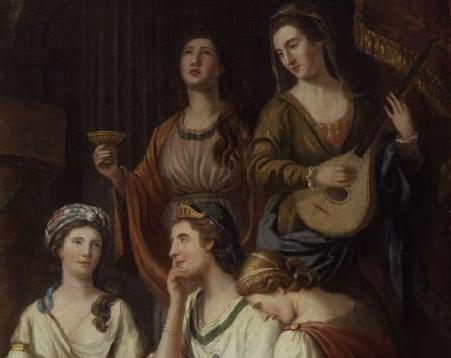
Portrait of Bluestockings by Richard Samuel ~ public domain ~ Wikipedia ~ Portraits in the Characters of the Muses in the Temple of Apollo – left to right, Catharine Macaulay (seated), Elizabeth Montagu (née Robinson, seated), Elizabeth Griffith (seated), Hannah More (standing), Charlotte Lennox (née Ramsay, standing)

blue tape, blue sky, or blue ruin – gin

blunderbuss – a short gun, with a wide bore, for carrying slugs; also, a stupid, blundering fellow

blunt – money

to bluster – to talk big; be a bully

Other Helpful Sources:

Other Sources: 

Candice Hern

Donna Hatch

18th Century Vocabulary 

Georgette-Heyer: Regency Cant and Expressions 

Jane Austen Organization

Kathleen Baldwin

Messy Nessy Chic

Regency Reader

Sara Ramsey

Sharon Lathan

Posted in British history, Georgian England, Georgian Era, language choices, research, word choices, word origins, word play | Tagged , , , , , , , | Comments Off on A Georgian Era Lexicon – We Are Still on “B” ~ “Bi… to “Bl…”

Courtesy Titles (or) Not, a Confusing Aspect of Reading and Writing Historical Novels

One of the most confusing aspects of writing Regency-based novels is the issue of courtesy titles. We authors are always going back and questioning what we think we know. I have heard readers say to me that this is one area that often confuses them. I will admit that I was in my final round of edits of The Earl Claims His Comfort before I realized I had called a minor character Delia Phillips, the daughter of a viscount, “Lady Delia,” when she should have been “The Honorable Miss Phillips” or to those more familiar to her “Miss Phillips” or even “Miss Delia” for close acquaintances.I  cannot tell you how many times I had overlooked the error; nor did any of the three different editors catch the mistake, thinking I had it correct. Therefore, I thought it useful if we reviewed some of the basics of courtesy titles

By courtesy title, I am referring to the words “Lord,” “Lady,” and “The Honourable.” A peer’s wife and children are granted the use of certain titles, depending upon the rank of the peer (duke, marquess, earl, viscount, baron). These are customarily used by the sons, daughters, brothers, sisters, daughter-in-law and sisters-in-law of a peer. The son and heir apparent of a duke, marquess or earl may use one of his father’s peerage titles by courtesy providing it is of a lesser grade than that used by his father.

The duke’s wife is a duchess. His eldest son usually assumes the next-highest of the duke’s titles as a courtesy title, customarily it is that of a marquess. The duke’s subordinate titles are distributed by courtesy only to his direct heirs, that is, his eldest son, and his eldest son’s eldest son, etc. His younger sons are are Lord First name Surname. The daughters are Lady First name Surname. For example, in my Angel Comes to the Devil’s Keep, we find the Duke and Duchess of Devilfoard, the Marquess of Malvern, Lord Harrison McLaughlin and Lady Henrietta McLaughlin. When the Marquess of Malvern’s son is born, he will become an earl, assuming the duke’s next-highest title, etc. In actual practice in the United Kingdom, the Duke of Devonshire’s eldest son bears by courtesy the title the Marquess of Hartington, and Lord Hartington’s eldest son is the Earl of Burlington. If Lord Hartington were to predecease his father, then Lord Burlington would become the Marquess of Hartington, and his son, if he were to have one, would be addressed as the Earl of Burlington. (Courtesy Titles)

A marquess’s wife is a marchioness. She is called Lady (His Title), i.e., Lady Stonecrest. His eldest son would become an earl as the courtesy title, depending upon the marquess’s highest-ranking minor titles.. The younger sons would be Lord First name Surname (i.e., Lord Frederick). The daughters are Lady First name Surname (i.e., Lady Lucinda). 

An earl’s wife is a countess. She is called Lady (His Title). His eldest son assumes the next-highest title as a courtesy title. He is customarily a viscount. The earl’s younger sons are The Honourable First name Surname. Just as it is with the daughter of a duke or marquess, the honorific prefix of “Lady” is used for the daughter of an earl. The definite article ‘The’ (written with the capital letter ‘T’ even when the title appears in the middle of a sentence) before the prefix. The courtesy title is added before the person’s given name, as in the example The Lady Diana Spencer. Because it is merely a courtesy with no legal implications, the honorific persists after the death of the holder’s father but it is not inherited by her children. The spouse of a woman with an honorific title does not hold any courtesy title in right of their spouse. Neither does the husband of a man with any title (including the husband of a peer). Do you recall in Pride and Prejudice, that although Lady Catherine de Bourgh married a baronet, she keeps her courtesy title of “Lady Catherine” because she is the daughter of an earl? As the wife of a baronet, she should be “Lady de Bourgh.”

Laura Wallace provides us some very specific examples: “It was a 17th century custom to throw in a number of new lesser titles to “fill in” when creating a new higher title, so the older a dukedom or an earldom, the more likely the second title is to be a much lower one, skipping steps, if you will: the eldest sons of the Dukes of Norfolk, Grafton, St. Albans, Richmond, Buccleuch, Newcastle, and Northumberland are earls, the Dukes of Dorset’s and Manchester’s are viscounts, and the Duke of Somerset’s only a Lord.  But since Dorset’s and Machester’s eldest sons are viscounts, their eldest sons cannot take a barony as a courtesy title.  If there is no courtesy title available, the eldest son of a duke, marquess, or earl takes the family name as a courtesy title.  

“Several marquesses have the same title as marquess and earl, e.g., the Marquess and Earl of Hertford and the Marquess and Earl of Salisbury.  In these cases, the heir skips the matching peerage, and takes the next highest title as a courtesy title, to distinguish him from his father.  The heir of the Marquess and Earl of Salisbury is thus Viscount Cranbourne, and the heir of the Marquess and Earl of Hertford is thus Earl of Yarmouth (whose father happens to have two earldoms at his disposal).  

“The Duke of Wellington similarly holds two marquessates:  that of Wellington and that of Douro, so his heir takes the courtesy title Marquess Douro to distinguish him from his father.  [During the 1st Duke’s lifetime, all of his lesser titles were also either Wellington or Douro, and the family name, Wellesley, was used as a title by his brother, the 1st Marquess Wellesley, so I’m not sure what courtesy title would have been given to the eldest son of the eldest son of the 1st Duke of Wellington.   Fortunately, the issue never came up;  and eventually the Dukes of Wellington also inherited the lesser titles of the 1st Marquess Wellesley (whose title became extinct upon his death), which include the Earl of Mornington and Viscount Wellesley, so there are currently three titles available to the direct heirs of the Duke of Wellington.]

“It is important to note, however, that an heir of a peer who is not a direct descendant of that peer (i.e., his eldest son or his eldest son’s eldest son) does not take any secondary title as a courtesy title.   He remains known by whatever title (if any) he derived from his own father until he accedes to the peerage.  This is a common mistake in historical romances.

“For example, the 6th Duke of Devonshire never married.  Since he also had no brothers, his heir was a cousin.  The cousin was a great-grandson of the 4th Duke; before the 6th Duke died, he was plain Mr. William Cavendish.  Even though the line of succession was clear, Mr. William Cavendish was never given the courtesy title Marquess of Hartington.  Similarly, after Mr. William Cavendish succeeded and became the 7th Duke, he was in turn succeeded by his eldest son, who became the 8th Duke.  But the 8th Duke had no son, and he was succeeded by his nephew, a son of his younger brother, Lord Edward.  Before he acceded, the 8th Duke was plain Mr. Victor Cavendish.”

A viscount’s wife is a viscountess. She is known as Lady (His Title). All the sons and daughters of a viscount are The Honourable First name Surname (i.e., The Honourable Mr. Davidson). 

A baron’s wife is a baroness. Both the baron and his wife are addressed as either “Lord” or “Lady” (His Title). It is not correct to call him Baron Johnstone. He is Lord Johnstone, and his wife is Lady Johnstone. All the sons and daughters of a baron are addressed as The Honourable First name Surname.

From Catherine Kullmann, we can also add, “One additional point: My edition of Titles and Forms of Address, published in 1945 says about the title ‘Honourable’: “The use of this title is not without its difficulties……….The important rule to note is that it is never used in speech, even by a servant. Neither is it used for letter-writing, excepting on the envelope.” Later, when discussing younger sons of Earls, they add ‘The title is never printed on visiting-cards, so that without inner knowledge it is difficult to recognize the rank.”
I have seen it printed in La Belle Assemblée’s list of attendees at Queen Charlotte’s Drawing-Room in 1816, where they simply broke the list down by rang e.g. Dukes, Duchesses, Marquisses, Marchionesses, etc. right down to Misses.
I have also seen in painted on a steamer trunk e.g. The Hon. Mrs John Smith.” 

 Ranks-And-Privileges-Of-The-Peerage.jpg 

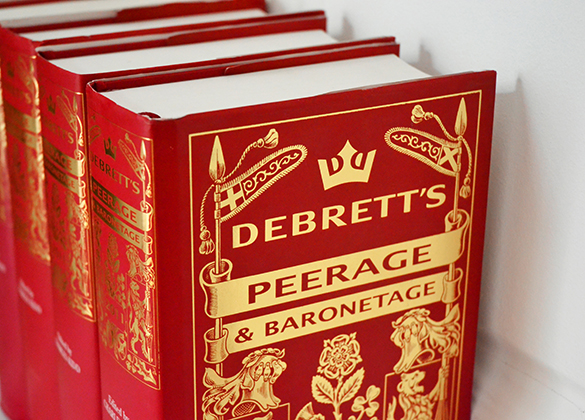
According to Debretts “A peer’s sons and daughters who are legitimated under the Legitimacy Act 1926, as amended by the Act of 1959, are now under an Earl Marshal’s Warrant accorded the same courtesy styles as the legitimate younger children of peers, though they have no right of succession to the peerage (except under certain circumstances in Scotland), or precedence from it. Courtesy styles may continue to be borne by the children of peers who have disclaimed their peerage.

“Children adopted into a family do not acquire rights of succession to a title, and children adopted out of a family do not lose their rights. An Earl Marshal’s Warrant dated 30 April 2004 decreed that the adopted children of peers should be accorded the styles and courtesy titles as are proper to the younger children of peers, but without right of succession to the peerage. Thus, for example, the adopted son of the Marquess of Ely is now known as Lord Andrew Tottenham (which is the style for the younger son of a marquess), rather than Viscount Loftus, which is the subsidiary title for that peerage.”

Debretts peerage has a section on siblings of peers who have special grants of precedency. In all of these cases, a sibling inherited because the father died before the grandfather, therefore, before the father could inherit.

When the eldest brother succeeds to the peerage, he can request that his siblings be granted the  precedency they would have had if the father had inherited. Though it is called a grant of precedency it really gives the person all the privileges of such rank such as courtesy titles. 

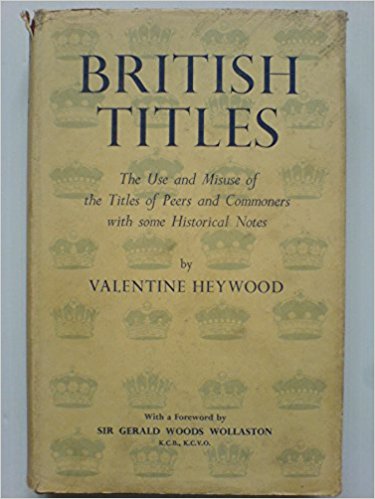
51da9RnvUwL._SX373_BO1,204,203,200_.jpg In Valentine Heywood’s British Titles: the Use and Misuse of the Titles of Peers and Commoners (page 113), Heywood addresses what happens with courtesy titles when the heir is not in the direct line of succession. If a nephew, cousin, or other distant relative NOT in the direct line of succession to a peerage becomes the new peer, the Sovereign can accord the new peer’s brothers and sisters with the customary styling, which would have been theirs had their father held the title. Such would be conferred by Royal Warrant.

Heywood mentions only ones not in the direct line, but it is often a case that a marquess’s son is an earl, and the earl’s oldest son is a viscountcy, but the siblings are plain honourables. If the father dies and the viscount becomes an earl, the brothers remain the same, but the sisters can be referred to as Lady First name, however, all the siblings generally would be raised to the higher ranks when the brother succeeds as marquess.

Again, when this article first appeared, Nancy Mayer reminded me, “Authors and writers of book blurbs confuse matters by naming peers as Lord First Name Title rather than First Name Lord Title. or First name title — They say Lord George Jersey instead of George Lord Jersey or George Earl of Jersey.”

Posted in British history, Inheritance, titles of aristocracy | Tagged , , , , , , | 10 Comments

A Georgian Era Lexicon – And Then There Were the Words Beginning with “Ba… to Be…”

In the singular form the lexicon of a particular subject is all the terms associated with it. The lexicon of a person or group is all the words they commonly use. As a plural noun, a lexicon is an alphabetical list of the words in a language or the words associated with a particular subject. To distinguish lexicon from a dictionary, it is an alphabetical list of the words in a language or the words associated with a particular subject.

These examples are a mix of what one might hear upon the lips of the aristocracy, as well as examples of Cant used upon London’s streets and those terms used by farmers and like in the country.

Regency Era Lexicon – And Then There Was “B”

babes in the woods – a criminal in the stocks or pillory

backboards – stiff, straight boards, strapped to a young lady’s back, to improve her posture

bacon – He has saved his bacon, meaning he has escaped.

bad bargained – one of His Majesty’s worthless soldiers; a malingeror (a military term for one who, under the pretense of sickness, evades his duties)

badge coves – Cant for parish pensioners

bag of nails – He squints like a bag of nails; i.e., his eyes are directed as many ways as the points of a bag of nails

baggage – a familiar and often derogatory epithet for a woman, as in “she is a cunning baggage”

bailey – the outside wall of a fortress or castle; the Old Bailey was the main criminal court in London

bakers dozen – fourteen; the number of rolls being allowed to the purchasers of a dozen [I know, like me you were thinking 13. According to Britannica, “There are a few theories as to why a baker’s dozen became 13, but the most widely accepted one has to do with avoiding a beating. In medieval England there were laws that related the price of bread to the price of the wheat used to make it. Bakers who were found to be “cheating” their customers by overpricing undersized loaves were subject to strict punishment, including fines or flogging. Even with careful planning it is difficult to ensure that all of your baked goods come out the same size; there may be fluctuations in rising and baking and air content, and many of these bakers didn’t even have scales to weigh their dough. For fear of accidentally coming up short, they would throw in a bit extra to ensure that they wouldn’t end up with a surprise flogging later. In fact, sometimes a baker’s dozen was 14—just to be extra sure.”

baker-kneed – one whose knees knocked together while walking, as in kneading dough

balderdash – adulterated wine (late 16th century (denoting a frothy liquid; later, an unappetizing mixture of drinks): of unknown origin

balderdash – senseless talk or writing; nonsense; gibberish; nonsense; claptrap; blather

ballast lighter – a boat the carried ballast to colliers in the Thames, who unloaded the coal

ballocks – the testicles of a man or beast; cant “His brains are in his ballocks,” indicating he is a fool

Banbury story (cock and bull story) – a round about, nonsensical story [Origin unknown. Folk history claims derivation from the rivalry between two inns in Stony Stratford, Buckinghamshire, England, one called “The Cock” and the other called “The Bull”, where travellers would congregate to hear fanciful stories told; one such story involved travellers destined for the city of Banbury. However, there is little evidence supporting this etymology. (Gary Martin (1997–), “A cock and bull story”, in The Phrase Finder.)

bandbox – a box used to carry and store hats and bonnets

bang up – something quite fine; well done; dashing

banging – great (as in “a banging boy, indeed”)

bang straw – a nickname for a thresher, but often applied to all servants of a farmer

bankrupt cart – a one-horse cart, said to be so called by a Lord Chief Justice, from their being so frequently used on Sunday jaunts by extravagant shopkeepers and tradesmen

bam – to impose on anyone by a falsity; also to jeer or make fun of someone

to bamboozle – to make a fool of another; to impose on him

banns – permission to marry; “reading of the banns” required the parish rector/vicar to read aloud the intention of the couple to marry; he must do so for three consecutive Sundays; the couple must marry within 3 months of the banns being read

The bark is a three-masted vessel with the foremast and mainmast square rigged and the mizzenmast fore-and-aft rigged.

bark – a three-masted ship

barker – the shopman of a bow-wow shop or dealer in secondhand clothes, particularly about Monmouth Street and deafens every passerby with cries of “Clothes! Coats! Gowns! What ‘ye want, gemmen?”

barking irons – pistols [Irish: comes from their explosive resembling the bow-wow of a barking dog]

Barnaby – an old dance to a quick movement

baron – the lowest level of the aristocracy; A baron is addressed as “Lord”; his baroness is addressed as “lady,” but his children are addressed as “Mr.” and “Miss”

baronet – a hereditary title; the bearer of which is referred to as “Sir”

barouche-landau – a small carriage with two rows of seats and a collapsible top; the seats faced one another

barrel fever – to drink oneself to death

barrow man – a man under sentence of transportation; the convicts at Woolwich were employed in wheeling barrows full of bricks or dirt

barton – farmyard

bastardly gullion – a bastard’s bastard

basting – a beating

batchelor’s fare – bread and cheese and kisses (the spelling is correct for the time period)

bathing machine – a large covered wagon attached to a horse who towed the wagon out into the water; women did not go swimming in the ocean; they would undress inside the machine and then swam or hung onto the machine’s rope within the constraints of the machine; men were separated from women because they often swam nude

batttle-royale – a battle or bout at cudgels or fisty-cuffs, wherein more than two persons are engaged: perhaps from its resemblance, in that particular, to more serious engagements fought to settle royal disputes

battue – large parties organized for shooting

bawbee – a halfpenny (Scotch)

Bayard of Ten Toes – to ride “bayard of ten toes,” is to walk on foot. Bayard was a horse famous in old romances.

beak – a justice of the peace or a magistrate; also a judge or chairman who presides in court

bean – a guinea

bear leader – a tutor

beard splitting – a man given to much wenching

beau trap – a loose stone in a pavement, under which water lodges, and on being trod upon, squirts it up, to the great damage of white stockings; also a sharper neatly dressed person, lying in wait for raw country squires or ignorant fops

Put to bed with a mattock – tucked up with a spade, said of one that is dead and buried

Bedfordshire – “I am for Bedfordshire,” i.e., for going to bed

BethlemSteelEngraving1828

Bedlam – the Hospital of St Mary of Bethlehem; an insane asylum

beef – to cry beef is to give the alrarm

Being Out – being of age to be “out” in Society; ready to become a wife

Belgrave Square – a posh area of London, south of Hyde Park; less fashionable than Mayfair, however

bender – a sixpence

Bergamot – a citrus tree; a fancy pear

Berlin – a four-wheeled carriage with a hood

beetle-browed – having thick, projecting eyebrows

beetle-headed – dull, stupid

beggar maker – a publican or ale-house keeper

beggar’s bullets – stones; throwing stones

Beilby’s Ball – He will dance at Beilby’s ball, where the sheriff pays the music; he will be hanged.

belcher – a red silk handkerchief, intermixed with yellow and a little black; worn around the neck

Bell, Book, and Candle – an allusion to the popish form of excommunicating and anathematizing persons who had offended the church

Luther burns the papal bull. (Detail from 19th century lithograph by H. Schile, after the original of H. Brüchner.) ~ https://www.canadianlutheran.ca/history-of-the-reformation-the-excommunication-of-luther/

To Bear the Bell – to excel or surpass all competitors, to be the principal in a body or society; an allusion to the fore horse or leader of a team, whose harness is commonly ornamented with a bell or bells

bellower – the town crier

bellowser – transportation for life; i.e., as long

belly plea – the plea of pregnancy, generally adduced by female felons capitally convicted, which they take care to provide for, previous to their trials; every gaol having, as the Beggar’s Opera informs us, one or more child getters, who qualify the ladies for that expedient to procure a respite

bell wether – the chief or leader of a mob; an idea taken from a flock of sheep, where the wether has a bell about his neck

betwattled – surprised, confounded, out of one’s sense

bever – dialectal, chiefly British, an afternoon’s luncheon

beaver – a fine hat; beaver’s fur makes the best hats

Felted beaver fur can be processed into a high quality hat that holds its shape well even after successive wettings, making it the material of choice for the hats worn by English gentlemen.~ https://janeausten.co.uk/blogs/mens-fashion/beaver-hats-build-a-nation

Posted in British history, Great Britain, Living in the Regency, Regency era | Tagged , , , , | 2 Comments

Could a Person Change His Name During the Regency Era?

Was it possible for someone to change his name during the Regency?

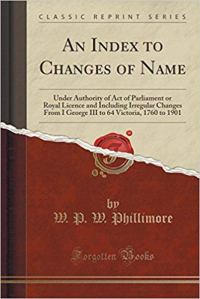
I recently purchased An Index to Changes of Name: Under Authority of Act of Parliament or Royal Licence, and Including Irregular Changes from I George III to 64 Victoria, 1790 to 1901 by William Phillimore and Watts Phillimore.

Book Blurb: The sources from which this index has been compiled are several. Primarily it is based on the Changes of Name by Royal licence. For this purpose the volumes of the London Gazette, and also the Dublin Gazette from 1760 to 1901 were examined, but it must be remembered that not all Royal licences are advertised in the Gazettes, though the vast majority are so advertised for obvious reasons of convenience, and often also in the Times and other newspapers. Registration at Heralds’ College only, is a sufficient compliance with the Royal licence granted.

According to many sources I researched, one was not supposed to change one’s first name because it was given at the sacrament of Baptism and established publicly at confirmation. However, it should be noted that the bishops sometimes changed baptismal names at confirmation if he found them displeasing. So, this means if Phoebe’s real name on “Friends” had been Princess Consuela Banana-Hammock as she claimed on the 14th episode of Season 10, the bishop might have taken umbrage at her name, and, certainly, he would have done so if Mike Hannigan, her betrothed, had been originally named “Crap Bag,” as he dares to make his point in the episode’s plot.

One could change his/her surname at any time and as informally as one wished as long as it was not done to cheat creditors or to commit bigamy, commit a crime, or the like. If it was a permanent change one would put a notice in the Times.

The official changes were listed in London’s Gazette.

Between the casual change of name that someone like an actor might do, or for other non-criminal reasons, there was change by royal license. A petition was prepared with the help of a solicitor and the College of Heralds and presented through the College.

There is a fee, of course This can run into the hundreds of pounds. If one changes the name for one’s own pleasure one paid £10. If a will or other document required it, the price went up to £50. Then there was the cost of the advertisements and recording the change in the College of Arms.

The College of Arms website tells us, “A change of name may be evidenced by a deed poll prepared by an officer of arms and entered into the official records of the College of Arms. The change of name is gazetted in the London Gazette. The person whose name is changed need not be a person entitled to arms. A deed poll which has been prepared elsewhere may also be entered into the College registers. 

“A surname may also be altered or changed by Royal Licence. Arms granted to one family can only be transferred to another person not in legitimate male line of descent from the original grantee by means of a Royal Licence, followed by an exemplification of the arms. A Royal Licence is usually granted, on the advice of the Secretary of State for Justice, where the petitioner is required by a clause in a will to assume the name and arms of the testator, in order to inherit a legacy, but voluntary applications are also entertained.

“A petition for such a Royal Licence is drafted by an officer of arms for signature by the petitioner. It is then submitted on his or her behalf by the officer of arms to the Ministry of Justice, who forward it to Buckingham Palace. A resulting Royal Licence and any subsequent exemplification of arms must be recorded in the official registers of the College of Arms to be valid.”

Were there actual people of the era who changed their surnames?

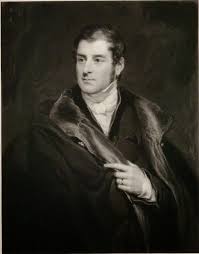
The Earl of Jersey’s title was created in 1697 for the statesman Edward Villiers, 1st Viscount Villiers, Ambassador to France from 1698 to 1699 and Secretary of State for the Southern Department from 1699 to 1700. He had already been created Baron Villiers, of Hoo in the County of Kent, and Viscount Villiers, of Dartford in the County of Kent, in 1691, also in the Peerage of England. George Child-Villers, 5th Earl of Jersey, was a Tory politician and served as Lord Chamberlain of the Household  and as Master of the Horse. Lord Jersey married Sarah Sophia (died 1867), daughter of John Fane, 10th Earl of Westmorland, and his wife Sarah Anne (died 1793), daughter of Robert Child. Through this marriage the private bank Child & Co. came into the Villiers family. On account of the considerable wealth brought to the family through this marriage, in 1819, Lord Jersey assumed by Royal licence the surname and arms of Child, and since then the branch of the family has been known as Child-Villiers.

Lord Byron FAQ tells us how George Gordon became George Gordon Noel Byron, 6th Baron Byron. “In 1798, he inherited lands and title as Lord Byron, with the estate of Newstead Abbey in Nottingham and Baron Byron of Rochdale in Lancashire. A confusion arises because his title and surname are the same.

“He was addressed as The Right Honourable Lord Byron (by strangers and on the outside of letters) and as Byron (the title, not the name) by friends. Intimates seem to have actually called him ‘B’, but this may just be the convention of the time to abbreviate names to initials in writing, but possibly not in fact. Servants would have said ‘My Lord’ but an intimately beloved housemaid, Susan Vaughn, addressed her letters to ‘My Dearest Friend’ and his wife addressed a letter to him, ‘My Dearest Duck’.

When his mother-in-law died, a stipulation of her will was that, in order to inherit, her beneficiaries must take her family name. Byron added it to his and became George Gordon Noel Byron in 1822. He also added it to his signature.”

Other Sources: 

You might enjoy Nancy Mayer Regency Researcher‘s take on the subject of name changes. 

BBC History gives us “What’s in a Name?”

Roger Darlington also gives us a piece called “What’s in a Name?”

Victorian-era.org presents “Georgian Era Names”

FYI, if you are interested: Gov.UK gives specific directions on how to change one’s name by deed poll HERE.

I did a similar post previously that contains additional information (and some repeats). You may find it HERE

Posted in Act of Parliament, British history, Church of England, Georgian England, Georgian Era, history, Living in the Regency, real life tales, Regency era, research | Tagged , , , , , , , , | 4 Comments

A Georgian Era Lexicon – We Begin With the Letter “A”

In the singular form the lexicon of a particular subject is all the terms associated with it. The lexicon of a person or group is all the words they commonly use. As a plural noun, a lexicon is an alphabetical list of the words in a language or the words associated with a particular subject. To distinguish lexicon from a dictionary, it is an alphabetical list of the words in a language or the words associated with a particular subject.

These examples are a mix of what one might hear upon the lips of the aristocracy, as well as examples of Cant used upon London’s streets and those terms used by farmers and like in the country.

Regency Era Lexicon – We Begin with “A”

Abbey School – Founded in 1887, the Abbey School is currently to an independent selective day school for girls in Reading, Berkshire. The novelist Jane Austen attended Reading Ladies Boarding School within Abbey Gateway, circa 1785, which is commemorated by, and incorporated into the Abbey School’s crest.

Abbess – the mistress of a brothel

abigail – a lady’s waiting maid 

acceptance – putting one’s name on a bill of exchange; writing “accepted” across the bill meant one was liable to pay the bill

accounts – to cast up one’s accounts; to vomit

Act of Parliament – a military term for small beer, five pints of which, by an act of parliament, a landlord was formerly obliged to give to each soldier gratis

Adam’s ale – water

addle pate – an inconsiderate foolish fellow 

Admiral of the Fleet – the highest rank of a military naval officer – The Admiral of the Fleet is often reserved for wartime and ceremonial appointments. Frank Austen held the rank. As was customary, the admiral who was the oldest and held the most seniority was given that rank.

advowson – having the right to appoint someone to a benefice (a church office that provides a living for its holder through an endowment attached to it)

Ægrotat (Cambridge) – a certificate from the apothecary stating you are too “indisposed” to attend Chapel or Hall

affidavit men – false witnesses; they are said to attend Westminster Hall and other courts of justice, ready to swear upon being hired to do so any thing required

against the grain – unwilling

Age of Sensibility – During the Age of Sensibility, literature reflected a rational and scientific approach to religion, politics, and economics. The period is marked by a secular view of the world and a general sense of progress.

agog (All-a-gog) – anxious, eager, impatient (from the Italian word “agogare,” meaning to desire eagerly)

ague – a disease (originally malaria) marked by fever and chills

alderman – a member of the government from a municipal borough; elected by a council; were to support the mayor of the borough

alderman – slang for a roasted turkey garnished with a string of sausages (which were supposed to represent the gold chain worn of those types of magistrates)

ale post – a May pole

all-a-mort – confounded; struck dumb (likely comes from Shakespeare’s line in The Taming of the Shrew,  “How fares my Kate? What, sweet one, all-a-mort?” – possibly from French à la mort

all hollow – a decided thing from the beginning; he had no chance of winning

all nations – a composition of all the different spirits sold in a dram shop; collected in a vessel into which the drainings of the bottles and quartern pots are emptied

almshouse – lodgings for the poor, which were supported by private funds rather than public charity

Almack’s – a social club in London from 1765 to 1871; one of the first to admit both men and women; Almack’s came to be governed by a select committee of the most influential and exclusive of London’s haut ton: Ameila Stewart (Viscountess Castlereagh); Sarah Villiers (Countess of Jersey); Emily Lamb (Lady Cowper); Maria Molyneux (Countess of Sefton); The Hon. Mrs. Drummond Burrell; Dorothea Lieven (Countess de Lieven); Countess Esterházy

ambassador of Morocco – a shoemaker

amen curler – a parish clerk 

amiable – To be amiable was to be friendly and easy going

angling for farthings – begging out of a prison window with a cap or box, which is let down on a long string

annuity – A set sum paid out to the terms of a will or settlement; after the death of a husband, the annuity was the woman’s only source of income

to knock Anthony – said of an in-kneed person, or one whose knees knock together

antimacassar – early Victorian gentlemen applied macassar oil to their hair; to prevent it from coming off on the furniture, ladies pinned antimacassar (small white doilies) to the backs of chairs and sofas; the gentlemen could lean his head back on the furniture without staining it

apoplexy – a stroke

apothecary – the lowest ranking medical men in the social sphere – They dealt with selling their items; therefore, apothecaries were considered tradesmen.

apron – part of a bishop’s formal garb 

apron

apron string hold – an estate held by a man during his wife’s life

aristocracy – used to designate the peerage

arsy varsy – to fall head over heels

articles – breeches; coat; waistcoat

article – a wench; prime article; a handsome girl “She’s a prime article.”

articles of marriage – The family lawyer for a wife with a dowry would consult with the future husband’s man of business to draft the “marriage articles.” This marriage settlement stipulated how money was to be settled upon the man’s wife and children. The marriage settlements determined upon what the woman would live if her husband passed before her.

assembly room – In the 18th and 19th Century, assembly rooms were gathering places for member of the upper social class. For a ten-guinea subscription, a person could purchase twelve weeks of a weekly ball and supper.

Autem Quavers – Quakers

assizes – Outside of London, justice was dispensed by justices of the peace at petty or quarter sessions. Capital cases and other criminal cases were adjudicated by circuit-riding judges from the superior common law courts in London of Common Pleas, King’s Bench, and the Exchequer after they finished their regular terms. The semi-annual sessions were known as the assizes.

Other Sources:

Other Sources: 

Candice Hern

Donna Hatch

18th Century Vocabulary 

Georgette-Heyer: Regency Cant and Expressions 

Jane Austen Organization

Kathleen Baldwin

Messy Nessy Chic

Regency Reader

Sara Ramsey

Sharon Lathan

Posted in British history, Great Britain, Living in the Regency, Regency era, word origins, word play, writing | Tagged , , , , , , | 4 Comments

A Personal Salute to My Mother on What Would Have Been Her Birthday, along with a Look at Mothers, in general, from Jane Austen’s Stories

Today, would have been my mother’s birthday, but, sadly, I lost her in 2002. It is odd when I think of her. She was a “mighty” force, even though she was but 5’1″ tall and only weighed 97 pounds when I was born. By example, beyond how to cook and clean house, she taught me to love books and reading, always to do my best, and never to succumb to those silent whispers, which say, “You are not good enough.” I also learned to accept people without any conditions except that they accept me in return, how to care about others despite having my own issues, how to be a strong woman and manage all that life throws at me, to assist others where possible, to give more than I got, to notice life’s smallest details and to take joy in those moments, to work hard, and to love both the children in our lives, as well as our elders.

She was a single mother when being a single mother was NOT acceptable in society’s eyes, although, in reality, she was not single. She and my father were married until the day he died in 1972; however, he was never in my life (He was more of a Wickham, than a Darcy). She devoted her life to me. She did all this in a time when women’s lives revolved around their husband and their children—in a time when a woman rarely worked outside the home. Her teenage years saw the Great Depression. Her 20s saw World War II. In other words, she raised me as a single parent when divorce and dysfunctional families were not the norm and rarely looked upon with any sympathy. She carried me up and down stairs when I had rheumatic fever and was too weak to walk. She made me Halloween costumes and clothes for school. She taught me to love reading and dance and literature and art, all the things I most cherish in my life. She tolerated indignities so I might succeed. She was a woman both ahead and behind her time, and she remains a part of me forever. With every breath I exhale, her essence is released into the world.

She did all this without a “mother” of her own, for my grandmother died of cancer when my mother was about 15 years of age. My grandmother was one of 13 children, and so many of those “aunts” became mother to my mother. Such was the way things went in those days.

Thinking of my mother had me wondering of Jane Austen’s portrayal of mothers in her novels. Here are some of those I discovered.

Sense and Sensibility

Lady Middleton is said to have the “advantage of being able to spoil her children all the year round.” Then we are told, “Lady Middleton seemed to be roused to enjoyment only by the entrance of her four noisy children after dinner, who pulled her about, tore her clothes, and put an end to every kind of discourse except what related to themselves.”

Mrs. Jennings, on the other hand, is said to be an extraordinary matchmaker.“She had only two daughters, both of whom she had lived to see respectably married, and she had now therefore nothing to do but to marry all the rest of the world.” On the prospect of taking Elinor and Marianne with her to London, she suggests, “I have had such good luck in getting my own children off my hands that [your mother] will think me a very fit person to have the charge of you.” She also tells the sisters, “If I don’t get one of you at least well married before I have done with you, it shall not be my fault. I shall speak a good word for you to all the young men, you may depend upon it.”

Mrs. Ferrars insists that Edward marry well and is not beyond using her wealth to control her son’s choice of bride. She tells “him she would settle on him the Norfolk estate, which, clear of land-tax, brings in a good thousand a-year; offered even, when matters grew desperate, to make it twelve hundred.”

Meanwhile, Mrs. Dashwood is said to possess a “tender love for all her three children.”

Mansfield Park

Lady Bertram is a mother who is described often as “indolent” and was said “might always be considered as only half-awake.” She pays “not the smallest attention” to her daughters’ deportment or their education.

We learn much the same of Mrs. Price: “Her disposition was naturally easy and indolent, like Lady Bertram’s.” 

Mrs. Price spends her days “in a kind of slow bustle; all was busy without getting on, always behindhand and lamenting it, without altering her ways; wishing to be an economist, without contrivance or regularity; dissatisfied with her servants, without skill to make them better.” 

Mrs. Price, who has nine children, mind you is said to be  “a partial, ill-judging parent, a dawdle, a slattern, who neither taught nor restrained her children, whose house was the scene of mismanagement and discomfort from beginning to end . . .” 

Pride and Prejudice

Mrs. Bennet is on the look out for appropriate matches for her five daughters. When she learns of Mr. Bingley’s prospects, we hear, “A single man of large fortune; four or five thousand a year. What a fine thing for our girls!” At the end of the book, with both Jane and Elizabeth married, we discover, “Happy for all her maternal feelings was the day on which Mrs. Bennet got rid of her two most deserving daughters.”

Lady Catherine de Bourgh describes herself as Darcy’s “almost the nearest relation he has in the world,” and she believes she is “entitled to know all his dearest concerns.”

Mrs. Gardiner serves as a surrogate mother, of sorts, to Jane and Elizabeth. She is said to provide “a wonderful instance of advice being given on such a point, without being resented.”

Jane Bennet’s prospects as a mother are assured when we read of her tending the Gardiner children, “The children, two girls of six and eight years old, and two younger boys, were to be left under the particular care of their cousin Jane, who was the general favourite, and whose steady sense and sweetness of temper exactly adapted her for attending to them in every way—teaching them, playing with them, and loving them.” 

Emma

In caring for Emma, Miss Taylor “had fallen little short of a mother in affection.”

Miss Bates speaks of her mother. “And, indeed, though my mother’s eyes are not so good as they were, she can see amazingly well still, … My mother does not hear; she is a little deaf you know.”

In speaking of Jane Fairfax, we learn, “By birth she belonged to Highbury: and when at three years old, on losing her mother, she became the property, the charge, the consolation, the fondling of her grandmother and aunt, there had seemed every probability of her being permanently fixed there; of her being taught only what very limited means could command, and growing up with no advantages of connexion or improvement, to be engrafted on what nature had given her in a pleasing person, good understanding, and warm-hearted, well-meaning relations.”

“Mrs. John Knightley was a pretty, elegant little woman, of gentle, quiet manners, and a disposition remarkably amiable and affectionate; wrapt up in her family; a devoted wife, a doating mother, and so tenderly attached to her father and sister that, but for these higher ties, a warmer love might have seemed impossible. She could never see a fault in any of them. She was not a woman of strong understanding or any quickness; and with this resemblance of her father, she inherited also much of his constitution; was delicate in her own health, over-careful of that of her children, had many fears and many nerves, and was as fond of her own Mr. Wingfield in town as her father could be of Mr. Perry. They were alike too, in a general benevolence of temper, and a strong habit of regard for every old acquaintance.”

Northanger Abbey

Mrs. Morland tells Catherine, “There is a time for everything—a time for balls and plays, and a time for work. You have had a long run of amusement, and now you must try to be useful.” 

“Mrs. Morland was a very good woman, and wished to see her children everything they ought to be; but her time was so much occupied in lying-in and teaching the little ones, that her elder daughters were inevitably left to shift for themselves; and it was not very wonderful that Catherine, who had by nature nothing heroic about her, should prefer cricket, baseball, riding on horseback, and running about the country at the age of fourteen, to books — or at least books of information — for, provided that nothing like useful knowledge could be gained from them, provided they were all story and no reflection, she had never any objection to books at all. But from fifteen to seventeen she was in training for a heroine; she read all such works as heroines must read to supply their memories with those quotations which are so serviceable and so soothing in the vicissitudes of their eventful lives.”

“Her mother [Mrs. Morland] wished her to learn music; and Catherine was sure she should like it, for she was very fond of tinkling the keys of the old forlorn spinnet; so, at eight years old she began. She learnt a year, and could not bear it; and Mrs. Morland, who did not insist on her daughters being accomplished in spite of incapacity or distaste, allowed her to leave off. The day which dismissed the music-master was one of the happiest of Catherine’s life. Her taste for drawing was not superior; though whenever she could obtain the outside of a letter from her mother or seize upon any other odd piece of paper, she did what she could in that way, by drawing houses and trees, hens and chickens, all very much like one another. Writing and accounts she was taught by her father; French by her mother: her proficiency in either was not remarkable, and she shirked her lessons in both whenever she could.”

Although her character is deceased when the story takes place, Mrs. Tilney is remembered as, “A mother could have been always present. A mother would have been a constant friend; her influence would have been beyond all others.” 

Of Mrs. Thorpe, we learn, “This critique, the justness of which was unfortunately lost on poor Catherine, brought them to the door of Mrs. Thorpe’s lodgings, and the feelings of the discerning and unprejudiced reader of Camilla gave way to the feelings of the dutiful and affectionate son, as they met Mrs. Thorpe, who had descried them from above, in the passage. “Ah, Mother! How do you do?” said he, giving her a hearty shake of the hand. “Where did you get that quiz of a hat? It makes you look like an old witch. Here is Morland and I come to stay a few days with you, so you must look out for a couple of good beds somewhere near.” And this address seemed to satisfy all the fondest wishes of the mother’s heart, for she received him with the most delighted and exulting affection.”

Persuasion

Mrs. Musgrove takes care of the Harville’s children while Mrs. Harville tends to Louisa. She was “receive their happy boys and girls from school.” Mrs. Musgrove’s home is described as “a fine family-piece.” 

Lady Russell prevents Anne from marrying Captain Wentworth, assuming the late Lady Elliot would wish it to be so. “Anne Elliot, with all her claims of birth, beauty, and mind, to throw herself away at nineteen; involve herself at nineteen in an engagement with a young man, who had nothing but himself to recommend him, and no hopes of attaining affluence, but in the chances of a most uncertain profession, and no connexions to secure even his farther rise in the profession, would be, indeed, a throwing away, which she grieved to think of! Anne Elliot, so young; known to so few, to be snatched off by a stranger without alliance or fortune; or rather sunk by him into a state of most wearing, anxious, youth-killing dependence! It must not be, if by any fair interference of friendship, any representations from one who had almost a mother’s love, and mother’s rights, it would be prevented.”

In speaking of Lady Russell’s role in the Elliot family, we learn, “To Lady Russell, indeed, she was a most dear and highly valued god-daughter, favourite, and friend. Lady Russell loved them all; but it was only in Anne that she could fancy the mother to revive again.”

Posted in birthdays, book excerpts, family, heroines, Jane Austen, real life tales, war | Tagged , , , , , | 9 Comments