Groan!!! More Editing Tips

If the people with whom we communicate understand us when we use “may” instead of “can,” or “convince” instead of “persuade,” or “one another” when we should be using “each other,” does it really matter?

Semanticists often accept the changes, but grammarians, who establish and maintain language standards, are not so willing to swallow the mistakes.

My students always groaned when I responded to their requests for a restroom pass. Student: “Can I use the bathroom?” Me: “I don’t know. I have never followed you to the restroom to see if you have that ability.” Groan!!! Student: “May I use the restroom?” Me: “You have my permission.”

That is the basis of the difference between these words. Can means ability to, while may means permission.

Convince means to cause someone to believe.

Persuade means to cause someone to take action.

He convinced voters of the need for a new gas tax.

He persuaded the group to write letters to their lawmakers.

Use each other when two people, places, or things are involved.

Use one another for three or more.

Sam and Dave have known each other for since childhood.

Sam, Dave, and Horace have worked with one another on the new project.

Use farther for distance.

Use further to refer to degree or extent.

It was farther to grandma’s house than he expected.

He would speak further with reporters after the conference.

Use fewer for things one can count.

Use less for bulk or quantity.

Fewer than 100 protestors made an appearance.

We have less than a year’s supply of paper at the school.

In behalf of means for the benefit of.

On behalf of means in place of.

We raised money in behalf of the team.

The attorney spoke on behalf of his client.

Proved is considered a verb, while proven is an adjective. (This is an Associated Press rule. I know some dictionaries will disagree. Do not write me hate mail. LOL!)

His intuition proved profitable.

A proven method for discovering the truth was not available.

Doctor is a title, not a profession.

Use try to, not try and. Likewise, use be sure to, not be sure and.

Remove the eye from eyewitness.

Remember all mobs are angry, all beatings are brutal.

Avoid using past and future when they are obvious. For example, past history is redundant. So is past/previous/prior work experience. One’s future plans does not mean we doubling the meaning.

Nauseated means feeling sick or disgusted. Nauseous means causing sickness or disgust.

I felt nauseated after riding the roller coaster.

The man’s behavior was nauseating.

If you say your best friend is nauseous, you are saying your friend is disgusting.

Everyday is an adjective used to refer to days in general.

Every day emphasizes the individual day.

(Hint: If you can substitute each for every in the phrase, use every day.)

Finding true love is not an everyday occurrence.

Every day is a new experience in Internet marketing.

Famous means to be well known for favorable reasons.

Infamous and notorious mean to be well known for unfavorable reasons.

Stanch means to stop the flow of blood from a wound, to check or to extinguish.

Staunch means to be steadfast in principle or loyalty.

What are some of the words, which find confusing?

Posted in editing, Industry News/Publishing, writing | Tagged , , | 7 Comments

Criminal Conversation During the Regency

In a recent article I did for “Eccentrics of the Regency,” I did a piece on Edward Hughes Ball Hughes. In the piece, I wrote: “Hughes’ older sister Catherine Ball was a socialite, journalist, and novelist who eventually styled herself the “Baroness de Calabrella” after acquiring property in Italy. She married an older man, Rev. Francis Lee, at the age of 16 in 1804, without her mother’s permission, and was separated from him in 1810 on charges of adultery; her lover, Captain George de Blaquiere, was successfully sued by Lee for criminal conversation.” When I read this, I wondered whether “criminal conversation” was anything like “alienation of affection.” So, I was determined to find out.

Criminal conversation, commonly known as crim. con., is a tort arising from adultery. A tort, in common law jurisdictions, is a civil wrong. Tort law deals with situations where a person’s behavior has unfairly caused someone else to suffer loss or harm. A tort is not necessarily an illegal act, but it is an act or inaction that causes harm to another. The law allows anyone who is harmed to recover his loss. To prevail (win) in a tort law case the plaintiff (person suing) must show the actions or lack of action was the most likely cause of the harm.

It is similar to breach of promise, a former tort involving a broken engagement against the betrothed, and alienation of affections, a tort action brought by a deserted spouse against a third party.

Suits for criminal conversation reached their height in late 18th and early 19th-century England, where large sums, often between £10,000 and £20,000 could be demanded by the plaintiff, for “debauching” his wife. These suits were conducted at the Court of the King’s Bench in Westminster Hall, and were highly publicised by publishers such as Edmund Curll and in the newspapers of the day.  Although neither the plaintiff, defendant, or the wife accused of the adultery were permitted to take the stand, evidence of the adulterous behaviour was presented by servants or observers. It was based upon compensation for the husband’s loss of property rights in his wife, the wife being regarded as his chattel. Historically a wife could not sue her husband for adultery, as he could not be her chattel if she was already his. The tort was abolished in England in 1857, and the Republic of Ireland in 1976. It still exists in parts of the United States, although the application has changed. At least 29 states have abolished the tort by statute and another 4 have abolished it by common law. 

A number of very sensational cases were heard in the second half of the 18th century, including Grosvenor v. Cumberland in 1769, where Lord Grosvenor sued the King’s brother, the Duke of Cumberland for crim con with his wife, being awarded damages of £10,000; and Worsley v. Bisset in 1782, where Sir Richard Worsley lost his case against George Bisset, after it had been found that Sir Richard had colluded in his own dishonour, by showing his friend his wife Seymour Dorothy Fleming naked in a bath house. In 1796, the Earl of Westmeath was awarded £10000 against his wife’s lover, Augustus Bradshaw

Modern usage

The tort of criminal conversation seeks damages for the act of sexual intercourse outside marriage, between the spouse and a third party. Each act of adultery can give rise to a separate claim for criminal conversation.

The tort is still recognized in a minority of states in the United States, although it has been abolished either legislatively or judicially in most.

The tort has seen particular use in North Carolina (my current home state). In the case of Cannon v. Miller, 71 N.C. App. 460, 322 S.E.2d 780 (1984), the North Carolina Court of Appeals (the state’s intermediate appellate court), abolished the tort of criminal conversation, as well as the tort of alienation of affections,  in the state. However, the North Carolina Supreme Court summarily vacated the Court of Appeals’s decision shortly thereafter, saying in a brief opinion that the Court of Appeals had improperly sought to overrule earlier decisions of the Supreme Court. Cannon v. Miller, 313 N.C. 324, 327 S.E.2d 888 (1985). In 2009, the General Assembly approved legislation which placed some limits on such lawsuits. The bill was signed into law by Governor Bev Perdue on August 3, 2009, and is codified under Chapter 52 of the North Carolina General Statutes.

Posted in British history, Georgian Era, Living in the Regency, Regency era, Uncategorized | Tagged , , , , | 2 Comments

The Haunting of Portland Castle

The castle's entrance

The castle’s entrance

Portland Castle is one of the Device Forts, also known as Henrician Castles, built in 1539 by Henry VIII on the Isle of Portland to guard the natural Portland anchorage known as the Portland Roads. The castle lies in the far north of the island, in the village now called Castletown, near Fortuneswell. The castle is under the care of English Heritage Trust.The castle provided protection from French and Spanish invasion, and it remains one of the best surviving examples of costal defense from the period.

The castle artillery forts stretched all around the Kent coast, along the south coast of England, down to Lands End. Strategic sites were chosen protecting possible landing points of an invasion. The area today known as Portland Harbour was a weak point, and Portland castle was built. The entire harbour fell under artillery range from Portland Castle and nearby Sandsfoot Castle.

Portland Castle from Portland Harbor

Portland Castle from Portland Harbor

Portland Castle has a low profile offering less of a target, with a traditional rounded wall facing the sea, designed to deflect incoming ordnance. The land side was moated.

The castle was bolstered ready to repel the attempted invasion by the Spanish Armada in 1588. In the event the Royal Navy fended off the Spanish fleet in the Battle of Portland just east of the isle of Portland on 23 July 1588.

the cannon battery

the cannon battery

Portland Castle experienced its only real action during the English Civil War 1642-1649. Being an historic Royal Manor, Portland naturally supported King Charles and was a Royalist stronghold. Nearby Weymouth – a merchant town – firmly backed Cromwell’s Parliamentarians and a succession of battles and ruses saw Portland Castle captured and recaptured several times. Despite being hopelessly undermanned and inadequately armed, the Royalists managed to keep the island out of Cromwellian hands for all but two brief periods of the war. By 1645, after repeated attacks only Portland, Corfe, and Sherborne remained in Royalist hands. When defeat finally came in 1646 Portland’s surrender was bloodless, and on remarkably generous terms.

During the bloody exchanges during the Civil War, garrison physician, Richard Wiseman, was known to perform emergency surgery in the castle’s kitchen. There Wiseman would cauterize wounds with a hot poker, heated up in the nearby fireplace. Today, the smell of burning flesh often greets visitors to the castle.

The castle is often used by re-enactment groups. One such group left soot and ashes in the fireplace to cool over night. The next morning the hearth and fireplace had been swept clean. No one in the group took either credit or blame for the incident.

Upon another occasion photographic proof of a presence in the kitchen appeared when another re-enactor developed photographs of her fellow performers. A swirling mist was on one of the frames.

The kitchen is used as a wedding venue for civil ceremonies. During a 2008 ceremony a lady in a long flowing gown appeared to several guests before fading into thin air.

Like the kitchen, the Great Hall is also used as a wedding venue. The hall has its original Tudor floor and is a point of curiosity for re-enactors. The Portland Garrison Civil War Society often hold 17th Century dances in the hall. Spectral voices have been heard humming along to the tunes, even when the music stops unexpectedly. Other sounds, those of a family in conversation and moving about the room, have also been heard.

Along a stone staircase leading to an upper floor, the scent of lavender is often noted. The “Lavender Lady,” a woman associated with the last governor of Portland, one Charles Manning, is believed to be the source of the scent. This woman reportedly withered away behind the castle’s walls. She hated living among the “dead” and suffered both mentally and physically.

There have been sightings of “ghost” children at play, as well as false fire alarms, cold spots, and other paranormal activity. Even the Captain’s House, a elegant two-story building, upon the grounds has running water taps turned on and off at will.

On the restoration in 1660, Charles II rewarded Portland’s loyalty in the Civil War by a special Royal Grant Fund, giving back to the Islanders royalties on stone taken from the crown quarries. The Grant is still made today.

The castle again stood by during action in the Anglo-Dutch War with the Battle of Portland, a bloody but indecisive three-day sea battle close to the Island coast.

Portland castle was armed for the last time during the Napoleonic Wars. In 2007, it was announced that Portland Castle attracts 25,000 visitors a year, despite limited opening hours.

Posted in British history, castles, Georgian Era, legends and myths, Living in the Regency, real life tales, Regency era, Victorian era | Tagged , , , | 2 Comments

Protecting Yourself Online


I found this article very informative, and I thought you might also. It comes from Linda Bernstein and PBS’s Next Avenue. You may read the complete article at http://www.nextavenue.org/article/2013-01/7-steps-protect-your-online-security

Linda Bernstein writes:

Around 11 a.m. on New Year’s Eve day, a Facebook friend in India sent an urgent message: My website had been hacked. Sure enough, when I went to my site and right-clicked my mouse to view the “source code” (the gibberish that shows what’s going on behind the scenes), I discovered that in addition to being a journalist and social media teacher, I was now also a purveyor of erectile dysfunction products.

As his night ticked down toward midnight, a man I know through techie forums and whose expertise I respect spent half an hour guiding me through the many steps of a website cleanse.

The irony wasn’t lost on me. Though a putative Internet maven, I fell into the clutches of a cyber-criminal who was clever enough to use my website to earn himself some money. Yet not once did I think, “How could this have happened to me?” Precisely because I am technologically savvy, I know that no one’s data is completely safe on the Internet.

Posted in Industry News/Publishing | Comments Off on Protecting Yourself Online

New Interview with Regina Jeffers

(This interview was originally posted on Teatime Romance on March 16, 2013.)

How long have you been writing, and how did you decide this was a career you wanted to pursue?

I began my writing career in the later part of 2008. At the time, I was an English teacher at Porter Ridge High School in Indian Trail, North Carolina.

In my Advanced Placement English Language and Composition class, I was prepping my students for a study of the Romantic Period. Unlike the AP English Literature class, the Language class does not focus on literature of a particular period. Instead, students are expected to analyze and interpret writing samples and to explain the author’s use of rhetorical strategies and techniques. They also must analyze sentence structures, including appropriate use of subordination and coordination; the use of repetition, transitions, and emphasis; the effective use of rhetoric, controlled tone, voice, and appropriate emphasis through diction and sentence structure. Whatever the students read was done so to become aware of stylistic effects and writers’ linguistic choices.

JeffersDPBeing an Austen girl, I had chosen a study of excerpts from Jane Austen’s works so we might study the lady’s style choices, syntax, and rhetoric. I was complaining about a particular piece of Jane Austen Fan Fiction (JAFF), which had turned Fitzwilliam Darcy into a sniveling blob, loaded with Angst, with a capital “A.” Most of the students in the class had had me as their 10th Grade Honors English teacher, and we were not beyond a bit of teasing. Therefore, Will D. challenged me to “put up” or “shut up,” so to speak. Whenever my students complained, I would always tell them to be a Nike commercial and “Just Do It.” Will turned the tables: He suggested I write my own version of Pride and Prejudice. So, in the evenings, I rewrote Austen’s classic from Mr. Darcy’s point of view. When I finished chapters, I brought them to class, and students examined the writing for syntax, tone, audience, etc. They became my editors.

I took on the challenge because I felt it was important to “show” my students what was required rather than to “lecture” on the techniques. At times, I purposely made errors to see if they could decipher the mistakes and write their own analysis of the chapters. To make the experience real, I self published Darcy’s Passions, even had one of my students design the cover for the book. Then I went about my business. At the time, I was two years away from retirement, and there were more young minds to mold. Darcy’s Passions went to #8 on the Amazon sales list, and Ulysses Press contacted me about publishing the book. I am one of those freaks of nature who has not gone through multiple drafts and hundreds of rejection letters. This month I released my ninth title with Ulysses.

Tell us about your new release.

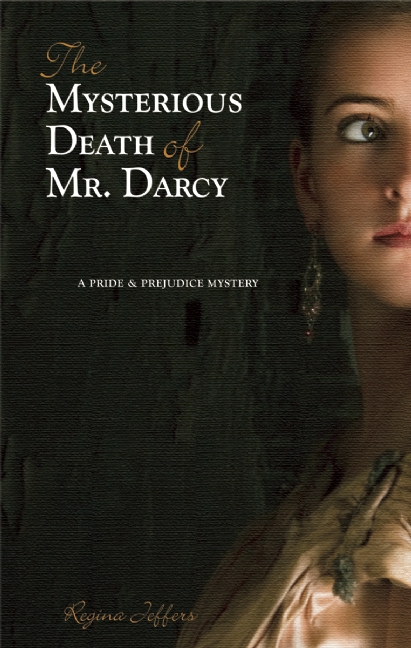
The Mysterious Death of Mr. Darcy was officially released on March 12. It is a Jane Austen-inspired cozy mystery. My Austen titles include two retellings (Darcy’s Passions and Captain Wentworth’s Persuasion), three sequels (Darcy’s Temptation, Vampire Darcy’s Desire, and Christmas at Pemberley) and three cozy mysteries (The Phantom of Pemberley, The Disappearance of Georgiana Darcy, and The Mysterious Death of Mr. Darcy).

Cozy mysteries are quite popular with intelligent women looking for a “fun read.” The defining characteristics of a “cozy” include the crime solver being a woman who is very intuitive. The setting is usually a small town or village. Many are not set in a time when CSI techniques were available, but in modern tales, the heroine is NOT a police officer or medical examiner. There is no graphic violence or profanity or explicit sex. The crime generally takes place “off stage” and death is quick. Sex happens behind closed doors. There are several twists and turns, which help to build the suspense. The emphasis of the book is placed on plot and character development.


The Mysterious Death of Mr. Darcy

Jeffers-TMDOMDA thrilling story of murder and betrayal filled with the scandal, wit and intrigue characteristic of Austen’s classic novels

Fitzwilliam Darcy is devastated. The joy of his recent wedding has been cut short by the news of the sudden death of his father’s beloved cousin, Samuel Darcy. Elizabeth and Darcy travel to Dorset, a popular Regency resort area, to pay their respects to the well-traveled and eccentric Samuel. But this is no summer holiday. Danger bubbles beneath Dorset’s peaceful surface as strange and foreboding events begin to occur. Several of Samuel’s ancient treasures go missing, and then his body itself disappears. As Darcy and Elizabeth investigate this mystery and unravel its tangled ties to the haunting legends of Dark Dorset, the legendary couple’s love is put to the test when sinister forces strike close to home. Some secrets should remain secrets, but Darcy will do all he can to find answers—even if it means meeting his own end in the damp depths of a newly dug grave.

With malicious villains, dramatic revelations and heroic gestures, The Mysterious Death of Mr. Darcy will keep Austen fans turning the pages right up until its dramatic conclusion.

You have written in paranormal, historical romance, and Austen-inspired fiction. Is your approach different for each genre, in the manner you write, plot the book, or brainstorm ideas?

My technique remains essentially the same for each. All my novels (but two) are set in the Regency. Therefore, I concentrate on what would be realistic for that period. The book begins with research, research, and more research. That is followed by additional research during the actual writing. I look at language choices (AP English, again), historical facts, and character development. So, when I penned my Regency based vampiric novel, I started with research into the origins of vampire tales. After all, Dracula did not appear until 1897. My book was set in 1812. I could not bring in the Victorian fear of “invasion.” I used traditional tales of the Baobhan Sith, female Scottish vampires, and a Scottish folk song to tie the story together. Sometimes I spend a dozen hours researching facts, which are less than a paragraph in the finished book, but the diligence is important.

Are you more of a plotter or a pantser, or does it change from book to book?

I am very much a Pantser. I begin with a list/outline of the major events, which will lead me to the conclusion, but how I move the story along from point A to point B is often a surprise to me. The characters take on distinctiveness I did not anticipate, and changes are necessary. I use what I call the umbrella effect, with each spoke of the umbrella as a separate point in the story.

That being said, in my Regency romance series (the Realm), I have been forced to design overlapping plots. After years away from England, members of the Realm return home to claim the titles and the lives they once abandoned. Each man holds on to the fleeting dream of finally knowing love. For now, all any of them can hope is the resolutions of their previous difficulties before Shaheed Mir, their old enemy, finds them and exacts his revenge. Mir seeks a mysterious emerald, and he believes one of the Realm has it. Each book in the series centers on one of the members of the group, but the reader meets the other members playing secondary roles. Readers become invested in the group. There is more overlap in books 1 and 2, The Scandal of Lady Eleanor and A Touch of Velvet, respectively, because one never knows when a reader will join the series, but the others are unique to the individual characters. Each book ends with a “teaser” for the next in the series. Book 5, A Touch of Mercy, will be released in early May 2013.

What do you see as the challenges and successes of being traditionally published? Being self-published?

One of the issues with traditional publishing is the preconceived idea of acquisition editors as to what will sell and will not sell. It does not matter if you have written War and Peace if the editor does not think an epic, which delineates in graphic detail events surrounding the French invasion of Russia,  and the impact of the Napoleonic era  on Tsarist society, as seen through the eyes of five Russian aristocratic families, will sell. So, a writer should expect LOTS of rejection letters. There is also the issue of querying an agent and waiting a year or two for the book’s publication. Small presses generally release the book faster than a large press, but a self-published author has more control of the price.

Sometimes, the traditional press does not promote the book as well as the author would wish. Each press specializes in particular genres. If the book is outside of those specialties, the press’s staff does not always have the wherewithal to promote the title properly. Agents holding a title, as well as the endless rounds of editing, including the non-contractual revisions, easily frustrate authors. Often agents cannot categorize a title or decide if there is a market for it.

If one self publishes his book, the marketing falls into the author’s lap. As a self-published author, one has control over the cover art, etc. If a person is not concerned with the “validation,” which comes with the traditionally published moniker, self-publishing is great. It can play to those with an entrepreneurial streak or a marketing background. One who self publishes keeps a bigger share of the profits. Traditional publishers tend to pay a 6-15% royalty, where a self-published author can keep up to 70% of the profits.

Whether one self-publishes or traditionally publishes, the primary responsibility for promoting the book lies in the hands of the author. Even if one self publishes, it is important to seek out professional editors, book designers, etc. I freaked out when I reached the end of a poorly edited eBook to find the author’s BETA readers’ comments in the last 10 pages. Not every opportunity is open to self-published authors. Recently, fellow Austen Author Abigail Reynolds and I were added to the program at the Decatur Book Festival because we were traditionally published. The Jane Austen group from Georgia hosted 15 Austen authors that day. Many of the others could not participate in the panel discussion because they were self-published. Whatever the author chooses – self-publishing, small press, or big six publishers – one must remember the need is to write, write, and write some more. It is not the dream of the big contract.

Can you tell us a bit about your upcoming projects?

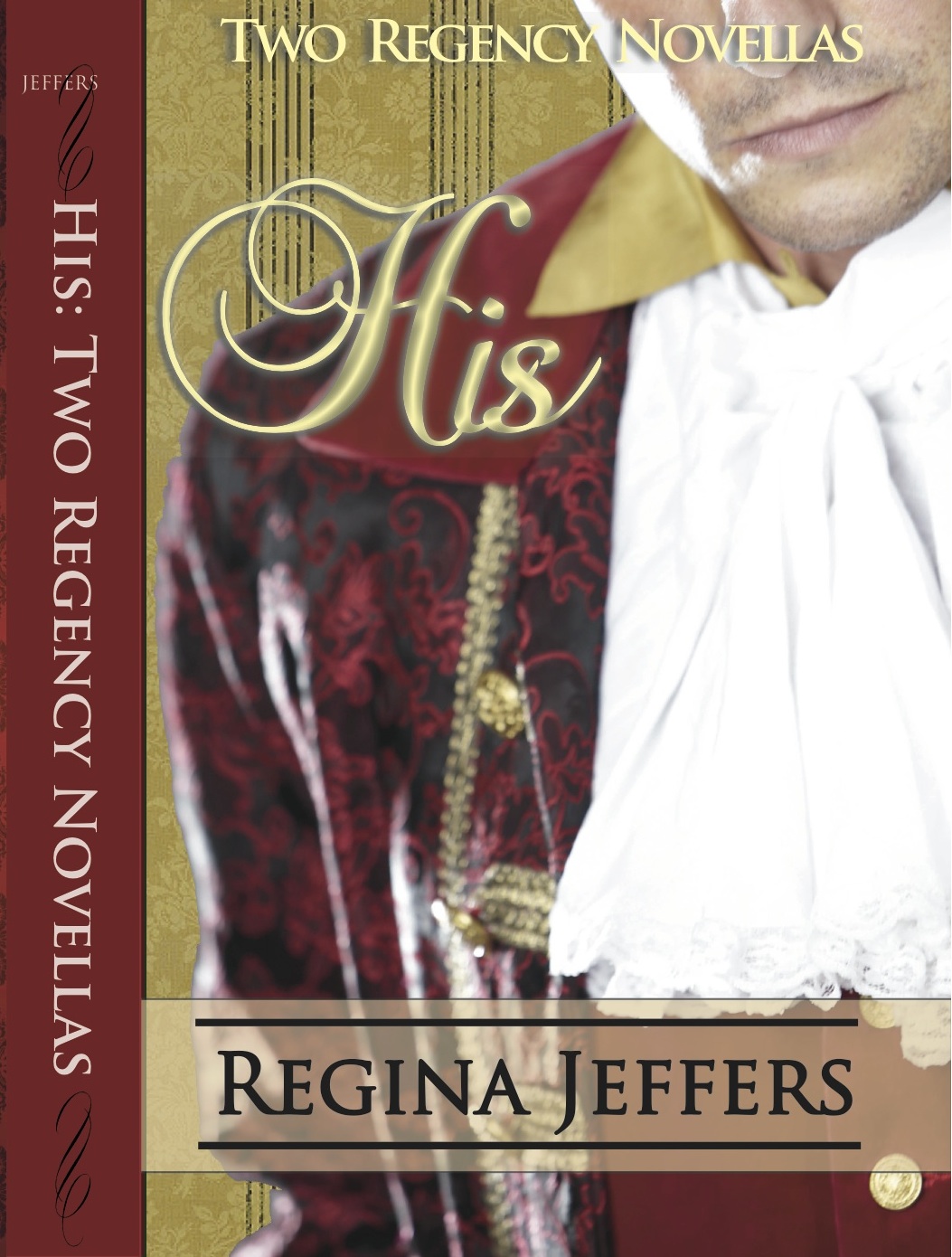
I am working on book 5 of the Realm series. It is entitled A Touch of Mercy. I hope for an early May release. That book will be followed by book 6, A Touch of Love in November/December. The series will end with a collection of two novellas in February 2014. This past February, I released His: Two Regency Novellas. That collection dealt with two of the minor characters from the Realm series. Lawrence Lowery and Adam Lawrence earned their own stories. The “Hers” collection scheduled for next February will give readers John Swenton’s story (the last of the Realm members) and a novella, which shares the truth of the missing emerald.

In addition, Ulysses Press and I have agreed to another Austen title for early 2014. We are still playing with ideas.

As we are about tea, what is your favorite tea(s) to drink?

First, I must say I am a big tea drinker. In fact, in my 65 years, I have had a total of two cups of coffee. I drink decaf tea all day. I brew my choices with the proper leaves and my trusty infuser. Generally, I drink green tea, licorice tea, or ginger tea.

Have you ever hated something you have written? A character who did not live up to your expectations?

For book 3 of the Realm series, I planned to deal with the Aldridge twins. The teaser at the end of A Touch of Velvet set up the story lines for Cashémere Aldridge and her twin Satiné. Cashé was to end up with Marcus Wellston in Book 3, which she did, and Satiné with Aidan Kimbolt in Book 4. However, by the time I had finished A Touch of Cashémere, I was no longer so keen on matching Satiné with Kimbolt, a viscount I dearly loved as a character. Satiné lacked the backbone found in her twin, and I began to feel she needed a dose of reality before she could be a heroine. (Yes, I know I created her without the gumption to face the hard facts of life. Yet, I am of the persuasion that sometimes a character needs to step forward and carve out a story line for himself/herself.) So, after considering killing Satiné off, I sent the girl to the European continent to recover from the scandal she faced. Miss Satiné will reappear in the series finale, but I am still not sold on her as a mate for any of the Realm members.

HisCropOn the other hand, Adam Lawrence, the future earl of Greenwall, has grown on me. Lawrence is that character who plays the role of a “walk through” character, the one who ties the stories together. He has appeared in such roles in A Touch of Velvet, A Touch of Grace, His American Heartsong, etc. He was a major character in my Austen-inspired cozy, The Phantom of Pemberley, assisting Fitzwilliam Darcy in solving the mystery plaguing his estate. At the end of that book, readers wanted to know what happened next between Adam and his mistress, Christine Donnell. Therefore, I gave Lawrence his own HEA in His Irish Eve, one of the two novellas in my February 2013 release of HIS.

How do you get past writer’s block or distractions like the Internet? Truthfully, I despise how much time I spend on the Internet because it takes me away from enjoying my time working in my yard or playing with my grandson, but Social Media is a necessary evil in promoting one’s books and keeping a public presence. In this Internet Age, readers want closer connections to their favorite authors. I answer a variety of questions from readers on a daily basis: When will the next Realm book be out? Are you really killing Mr. Darcy? Etc. If I did not take the time to respond, then I can “kiss” that reader goodbye.

As far as working my way through writer’s block, I simply allow the book to sit. Until I receive inspiration (usually in the middle of the night), I work on other projects: maintaining my personal blog or adding posts to two group blogs in which I participate; outlining upcoming projects; gathering receipts for tax purpose; or simply enjoying pleasure reading. The longest I have ever had to wait for a “glimmer” of an idea to make an appearance was 10 days.

What was your favorite book from childhood?

I cannot recall any specific titles from my childhood. My mother placed books before me when I was but a babe. I was in school at age three, graduated from high school at age 15. I have always been a reader. I first read Pride and Prejudice at age 12; however, when I think back on those days, I can recall how enthralled I was with Around the World in Eighty Days. I loved how Jules Verne provided Phileas Fogg with a believable means to win the race. I reread it several times. It was when I became aware of how science fiction could easily become science fact.

Regina-270x300Author Bio:

Regina Jeffers, a public classroom teacher for thirty-nine years, considers herself a Jane Austen enthusiast. She is the author of several Austen-inspired novels, including Darcy’s Passions, Darcy’s Temptation, Vampire Darcy’s Desire, Captain Wentworth’s Persuasion, The Phantom of Pemberley, Christmas at Pemberley, The Disappearance of Georgiana Darcy, Honor and Hope, and The Mysterious Death of Mr. Darcy. She also writes Regency romances: The Scandal of Lady Eleanor, A Touch of Velvet, A Touch of Cashémere, A Touch of Grace, and The First Wives’ Club. A Smithsonian Presenter, Time Warner Star Teacher, and Martha Holden Jennings Scholar, Jeffers often serves as a consultant in language arts and media literacy. Currently living outside Charlotte, North Carolina, she spends her time with her writing, gardening, and her adorable grandson.


www.rjeffers.com

https://reginajeffers.wordpress.com

http://austenauthors.net

Twitter – @reginajeffers https://twitter.com/reginajeffers

Facebook – Regina Jeffers https://www.facebook.com/regina.jeffers.9

(Books available from Amazon, Barnes & Noble, Books-a-Million, Joseph Beth, and Ulysses Press.)

Awards:

The Phantom of Pemberley – SOLA’s Fifth Annual Dixie Kane Memorial Awards – 3rd Place – Romantic Suspense

Darcy’s Temptation – 2009 Booksellers’ Best Award Finalist – Long Historical

The Scandal of Lady Eleanor – Write Touch Readers’ Award – 2nd Place – Historical Romance

A Touch of Grace – SOLA’s Seventh Annual Dixie Kane Memorial Awards – 3rd Place – Historical Romance; 2012 Orpheus Award, 2nd Place in Historical Fiction

The First Wives’ Club – SOLA’s Seventh Annual Dixie Kane Memorial Awards – Honorable Mention – Historical Romance

Christmas at Pemberley – 2011 Booksellers’ Best Award Finalist – Inspirational Romance; Runner-Up in General Fiction for the New England Book Festival


Posted in Industry News/Publishing, interview, Regency era, Ulysses Press, White Soup Press, writing | Tagged , , , , , , , | 4 Comments

Walking Cheshire’s Bickerton Hill

My latest Work In Progress is set in Cheshire, England. In doing part of my research of the geological aspects of the area, I came across several Iron Age earthworks, which I found fascinating. Permit me to introduce you to Bickerton Hill.

Northern Bickerton Hill, showing Raw Head and Musket's Hole crags

Northern Bickerton Hill, showing Raw Head and Musket’s Hole crags

Bickerton Hill refers to two low red sandstone hills that form the southern end of the Mid Cheshire Ridge in Cheshire, in northwest England. The high point, Raw Head, lies on the northerly hill and has an elevation of 227 metres. Parts of the southerly hill are also known as Larkton Hill.

There is evidence of settlement on the hills dating from the neolithic or Bronze Age. The earthworks of an Iron Age hill fort, Maiden Castle, are located on the summit of the southerly hill; they are a Scheduled Monument. The hills have been quarried and mined for copper since the 17th century, and a grade-II-listed engine house chimney remains as a remnant of the mining industry. Several caves occur in the sandstone, some of which have a history of habitation. The Sandstone Trail, a long-distance footpath, runs along the ridge, and the area is popular with walkers.

A large area of the southerly hill is protected as a Site of Special Scientific Interest (SSSI) for its biological importance; much of this hill is owned by the National Trust. Its summit plateau has an extensive area of lowland heath, a rare habitat in Cheshire, and one that is particularly important for reptiles. A substantial population of Lobed Maidenhair Spleenwort, a fern that is rare in Britain, is found here. Nationally scarce species observed in the area include the bleached pug and alder kitten moths, and the Malthius frontalis species of soldier beetle. The western escarpment of the northerly hill has also been designated an SSSI for its exposed Triassic sandstones.

Neolithic and Bronze Age
Cropmarks near Rawhead Farm suggest a possible neolithic or Bronze Age settlement on the northern hill, which is of the “banjo enclosure” type, consisting of a circular enclosure with a narrow enclosed entrance.  Two flint artefacts have been found on the southern hill: a leaf-shaped flint of unknown date and a Bronze Age arrowhead.  A Bronze Age burial mound of the bowl barrow type is located on top of an unnamed knoll immediately to the east of the southerly Bickerton Hill (SJ51055269).


Earth rampart of the iron age hill fort, Maiden Castle, on the summit of Bickerton Hill in Cheshire, in June 2006. The small plaque shown here has since been replaced by a much larger interpretive sign

Earth rampart of the iron age hill fort, Maiden Castle, on the summit of Bickerton Hill in Cheshire, in June 2006. The small plaque shown here has since been replaced by a much larger interpretive sign

Maiden Castle, Cheshire
The remains of an Iron Age promontory hill fort, Maiden Castle, are located on the southernmost summit of the southerly hill at an elevation of 212 metres.  Maiden Castle dates from around 600 BC and is the most southerly of the seven hill forts in Cheshire.  The double line of earth ramparts are still visible, forming a semicircle that encloses an area of 1.3 acres (5,300 m2) adjacent to the cliff edge.  The enclosure has a single entrance at the east side with inturned defensive banks. Archaeological investigations have shown that both ramparts are strengthened by dry stone walling; the inner rampart also has timber strapping.  The fort was destroyed by fire in around 400 BC,  although the area was probably used as a settlement until the Roman invasion of Britain in the 1st century AD.

The site is well preserved despite quarrying of the area during the 17th to early 20th centuries, as well as military training exercises during the 20th century.  The remaining earthworks have been designated a Scheduled Monument, and the site is owned by the National Trust.  Since 2009, the trust has been removing trees, scrub and bracken from the site, as the roots damage the earthworks.  Animal burrows are another threat, and footpath erosion from visitors is also a problem, as the Sandstone Trail cuts across the earthworks.  There is another Maiden Castle which is an Iron Age hill fort 2.5 kilometres (1.6 mi) south west of Dorchester, in the English county of Dorset.

Anglo-Saxon and Norman
The name “Bickerton” is Anglo-Saxon in origin, and relates to bees.  A township was recorded in the Domesday survey, which was found “waste”, or devastated, at the time of the survey, in common with many nearby townships.  This is usually considered to be a consequence of William I’s suppression in 1069–70 of uprisings in north-west Mercia.  The township included half a league (about ¾ mile) of woodland, perhaps located on the hills.

Copper Mine Chimney

Copper Mine Chimney

17th–19th century
Copper mining at Bickerton was first recorded in 1696. The mine was owned by the Egerton family of Oulton, with eight miners being employed between 1696 and 1698. There were six shafts, one of which was deepened to 156 feet (48 m) in 1807.  The mines were worked intermittently until 1906.  A rare remnant of this local industry is a disused mine engine house chimney in red sandstone, which stands by the A534 at the foot of the northerly hill near Gallantry Bank. The flue of a pumping engine that was used to drain the mine, it dates from the early 19th century and is a grade-II-listed building.  The remains of adjacent mining buildings were still standing in around 1920.  The Copper Mine public house at nearby Broxton displays mining equipment and pictures.

Quarrying also took place at various sites on the hills, including Maiden Castle from the 17th century.  Sandstone was extracted for building, and sand for use as a scouring agent.  An iron rock-splitting wedge dating from the 17th century was found during excavations of Maiden Castle.

Mad Allen's Hole

Mad Allen’s Hole

Mad Allen’s Hole
Mad Allen’s Hole, a cave on the southerly Bickerton Hill, is believed by some to be the location of “Allenscomb’s Cave” in which John Harris, “the English Hermit,” lived for 46 years in the 18th century. According to a pamphlet of 1809, Harris was a man of property from Handley, who embraced a hermit’s life when his parents refused him permission to marry the woman of his choice. He first inhabited a cave in nearby Carden Park, moving to Allenscomb’s Cave in the 1760s.  Recent research has, however, cast doubt on the identification of Mad Allen’s Hole with Allenscomb’s Cave. Unlike the cave in Carden Park, no material dating to the 18th century has been discovered at Bickerton, and the name “Mad Allen’s Hole” originated in the late 19th century, when the cave was occupied by an eccentric known as Mad Allen.  In the early 19th century, the Bloody Bones caves on the northerly hill were occupied by brigands, who terrorised the surrounding countryside, stealing cheese from local farms and plundering graves, as well as selling sand for cleaning. Seven were captured and executed in around 1834.

Droppingstone Well
The Droppingstone Well, immediately north of the Raw Head summit, bears a plaque dated 1861. A photograph of 1910 shows the well in use by locals.

20th–21st century
The area around Maiden Castle was used for military training exercises during the 20th century, which included digging numerous two-man slit trenches. The heathland of the southerly hill went unmanaged from the 1940s until 1983, when 66 hectares (160 acres) of land were acquired by the National Trust; the trust’s holding was extended by 51 hectares (130 acres) in 1991.  Much of the southerly hill and the western escarpment of the northerly hill were notified as two separate Sites of Special Scientific Interest in 1979.
The Sandstone Trail long-distance footpath opened in 1974; it then started in Duckington, immediately south of the southerly hill.  The Sandstone Trail Race was launched three years later.  A 2008 proposal to construct a 60 metre wind-monitoring mast adjacent to Bickerton Hill met with local protest,  and was rejected by Crewe and Nantwich Borough Council.

Posted in British history, castles, Georgian Era, Living in the Regency, Regency era, Victorian era, writing | Tagged , , , | Comments Off on Walking Cheshire’s Bickerton Hill

Life Beyond Bath (or) Regency Era Watering Holes

“Watering Holes” were part of the lifestyle of those of the haut ton during the Regency Era and beyond. At Bath and Brighton and Margate and Ramsgate, etc., people returned annually to drink the healing waters, attend the assemblies, and to  take dips in the sea water. At Cheltenham, Tunbridge Wells, and Harrogate, inland spas, healing springs brought in the crowd.

What entertainments drew the crowds to these English resorts? Dances and card parties and promenading along the boardwalks were headliners for the very social members of the ton. It was the old adage of seeing and being seen. Yet, surprisingly, there was the draw of the public libraries, which served their customers tea and coffee to drink while partaking of the latest newspapers and magazines, as well as many novels.

Books of bound caricatures and prints were available to review on site or even be loaned out to customers. At Sidmouth, educational toys and children’s books were housed in the collection. In the 1800s, the library system in England grew by leaps and bounds. For example, The Athenaeum in Liverpool, which opened in 1799, housed 6000 books. Subscribers of The Athenaeum paid 2 guineas per year for the services. Fancourts in London housed more than 40,000 choices.

In addition to the libraries, other “cultural” elements became popular in the resort areas. Circuses and magic shows, as well as “fair” performers made the watering holes their homes during part of the year. Concerts and puppet shows took place in public parks. The best of London’s productions made appearances on tour. For example, the Italian opera and Drury Lane repertory companies made regular stops in the many resorts as part of their summer tours.

220px-Dorothy_JordanIn Mrs Jordan’s Profession from Claire Tomalin, the author speaks of the tours of Mrs Dorothea Jordan. Dorothea Jordan (21 November 1761 – 5 July 1816) was an Anglo-Irish actress, courtesan, and the mistress and companion of the future King William IV, for 20 years while he was Duke of Clarence. Together they had ten illegitimate children, all of whom took the surname FitzClarence. Mrs Jordan wowed audiences inExeter, Portsmouth, Gosport, Southampton, Salisbury, Margate, Ramsgate, Deal, Canterbury, and Brighton. The royal family attended her performance in The Merry Wives of Windsor at Cheltenham. She packed houses in Leicester, Chester, York, and Liverpool. Mrs Jordan starred at the Theatre Royal in Bath for several seasons. 

By the beginning of the 19th Century, new realizations had come to the citizenry of Bath: Communal baths were probably not the most sanitary. It was customary for anyone to have access to the water, meaning those with contagious diseases bathed in the same water as those with arthritic pain. In the King’s Bath, a tank of warm water, the patients sat side by side, with no distinguishing of either sex or disease. Men were dressed in special brown linen suits and women in off white linen suits of a similar style. Copper bowls of scented oils floated on the water to purify the air. In the Queen’s Bath, cold water was used. Even if one chose simply to drink the waters, he often drank from a glass used previously by another (without being washed in between users).

At the Pump Room in Bath, the orchestra played music throughout the day. Dancing began daily (except Sunday) at noon, with formal balls twice per week. “Starting at 6:00 in the evening…The programme was inviolable: minuets only for the first two hours. The country dances, which were much more fun and more energetic, started at 8:00. (The eighteenth-century rules specified that ‘No Lady dance country-dances in a hoop of any kind and those who choose to pull their hoops off will be assisted by proper servants in an apartment for that purpose.’ By the time of the Regency, of course, only the most old-fashioned dowagers would have appeared in public in a hoop, so the ban was irrelevant.) At 9:00 the company adjourned to the Tea Room for refreshments and the evening ended at 11:00 sharp. It is not surprising that the Prince Regent and his friends preferred the free and easy life of Brighton.” (From An Elegant Madness, pp 126-127)Roman_Baths_in_Bath_Spa,_England_-_July_2006_edit3

The Royal Crescent in Bath, UK

Posted in British history, Georgian Era, Jane Austen, Living in the Regency, Regency era, Uncategorized, Victorian era | Tagged , , , , | 5 Comments

No Longer a Bumpy Ride! The 1762 Westminster Paving Act…

MaltonCHIn doing research for my newest release, THE MYSTERIIOUS DEATH OF MR. DARCY, which is set in Dorset, I came across the Purbek marble, a fossiliferous limestone found on the Isle of Purbeck, a peninsula in southeast Dorset, England. That discovery led to one thing and then another, and finally, I came across the Westminster Paving Act of 1762, a dramatic step forward on behalf of London’s dwellers.


The Westminster Paving Act removed the responsibility of paving the streets from the individuals to a governmental type commission. Before the act, occupants were responsible for paving and cleaning a specified area before their residences.

From John Wood’s Description of Bath (1749), we discover:

But previous to the Duty of these Officers, every Housekeeper, inhabiting and residing within the City, Liberties, and Precincts thereof, is enjoined, Thrice in every Week at the least, that is to say, on Tuesday, Thursday, and Saturday, to sweep and cleanse, or cause to be swept and cleansed, all the Streets, Lanes, Alleys, and Public Places, before their respective Houses, Buildings, and Walls, and all other Public Places, to the End that the Filth, Ashes, Dirt, Dust, Rubble, and Rubbish may be ready to be carried away by the Scavengers, upon Pain to forfeit Three Shillings and Four-Pence for every Offence and Neglect. They are moreover Prohibited from throwing, casting, or laying; or from permitting any Person to throw, cast, or lay, any Ashes, Filth, Duff, Dirt, Rubbish, Dung, or other Annoyances, in any open Street, Lane, or Alley, within the said City, Liberties, Precincts, or Places aforesaid, before his or their own Dwelling-House, Buildings, or other Public Places within the said City; but, on the Contrary, are Required to keep, or cause the fame to be kept, in their respective Houses, Yards, or Backsides, until such Time as the Scavenger shall come by to receive and take the fame entirely away, under the Penalty of Five Shillings for every Offense.

Again, if any person or persons shall have any Straw or Hay, brought and thrown down for the Use or any Inn, or any other House, in any of the Streets, Lanes, Alleys, and other Public Places, within the said City, the Liberties, and Precincts thereof, and shall not carry the same into their Yards, Backsides, or Stables, sweep and clean the Place where such Straw or Hay was thrown down, and carry away the Rubbish occasioned thereby, within one Hour after such Straw or Hay shall be unloaded, he or they so neglecting is to forfeit Five Shillings for every Offense, to be levied by Distress and Sale of the Offender’s Goods, by Warrant, under the Hands of Two or more of the said Commissioners.

Now as to the Paving of the Streets, Lanes, Alleys, and Public Places of the City, every Occupier or Owner of any House, Houses, or Lands, next adjoining to such Street, Lane, Alley, or Public Place within the said City, Liberties or Precincts thereof, is Required, from Time to Time, within ten Days next after Notice given by the Surveyor, or Surveyors, to be appointed as above, well and sufficiently to pitch or pave, or cause to be pitched and paved, the Street, Alley, or Lane before his or their Houses, Habitations, Lands, and Public Places respectively, into the Middle of the Street, Lane, or Alley, except in the Market Place, and there only eight Feet in Width, under the Penalty of Ten Shillings for each Perch not so pitched; and so in Proportion for any greater or lesser Quantity or Space of Ground; and under the like Penalty for every Month, ‘till the same shall be pitched or paved; which Penalty is to be levied by Distress and Sale of the Offender’s Goods, and to be applied towards Maintaining one or more of the Scavengers to be appointed as aforesaid.

In London, the responsibility of paving and cleaning the streets was normally written into the building lease/sale. The problem with the London streets in the early 18th Century was the lack of consistency. The paving stones were round and fit to walk upon, but in a carriage the ride was quite rough. The wide flat stones, which were perfect underfoot, created a bumpy ride for they were raised above the flat of the road.

The 1762 Act specified that Purbeck stone should replace the previous stone. The act also called for the replacement of the drainage kennel, which was normally placed in the street’s middle, with kerbside gutters. This standard of the Purbeck stone remained in place throughout the late Georgian Period. Eventually, gravel was added between the stones to level out the road.

The act also required a system of street cleaning. As a side benefit of working as a Scavenger (those paid to clean the street by at a parish rate) grew, the streets became cleaner. For example, discarded ashes were collected to be sold to manufactures of inferior place bricks. Eventually, carts carrying water (barrels pierced with holes) kept the dust down on the road.

In the early 19th Century, the occupant was responsible for sweeping the pavement before his house. The parish scavenger removed the dirt from the street and that on the carriageway.

Unfortunately, all the laws of the land could not force those who occupied single rooms in lodge houses or those who frequented houses of ill repute or beer houses. There were some who simply did not care for the condition of the streets upon which they walked or rode.

Posted in British history, Georgian Era, Jane Austen, Living in the Regency, Regency era | Tagged , , , , | 1 Comment

Major Changes in the Traditional Publishing Market

This teaser comes from a February 5, 2013 article on NPR, entitled “Why Traditional Publishing is Really in ‘A Golden Age.'” To read the complete article, please visit http://www.npr.org/2013/02/05/171164095/why-traditional-publishing-is-really-in-a-golden-age?ft=1&f=1008

How healthy is the traditional publishing industry? Not very, says Mark Coker, founder of the self-published book distributor Smashwords. On Monday, Coker told NPR’s Audie Cornish that “over the next few years, traditional publishers are going to become more and more irrelevant.”

But Michael Pietsch, soon-to-be CEO of the traditional publisher Hachette Book Group, disagrees. “I think we’re in a golden age for books — reading, writing and publishing,” he tells Cornish. “And the ways that publishers can work to connect readers with writers now are the kinds of things that publishers have dreamt of doing since Gutenberg first put down a line of type.”

Pietsch joins Cornish to discuss how marketing sets a publishing deal apart from the self-publishing model.

Posted in Industry News/Publishing | Comments Off on Major Changes in the Traditional Publishing Market

My Good Opinion Once Lost is Lost For Ever

Fitzwilliam Darcy is a major, but minor, character in Jane Austen’s “Pride and Prejudice.” Although he plays a major role in the story’s outcome, after all, Darcy is the romantic hero of the piece, he is not in every scene. The story is told from Elizabeth Bennet’s perspective, and Darcy is absent throughout extended periods of the book. However, he is far from being “out of sight…out of mind.” Darcy’s presence overshadows all of Elizabeth’s interactions with other characters, even though Miss Elizabeth would never admit an interest in the man.

Elizabeth is a strong, sympathetic, and independent character, and the two men with whom she associates romantically must be equally intricate. Despite Mrs. Reynolds explanation of Darcy’s “bumbling social manners” being the result of his shyness, there remains plenty of proof of his excessive pride. Yet, we do learn much of the man’s “softer” side through his interactions with Charles Bingley. Darcy serves as Bingley’s mentor, and he accepts the role with good-natured diligence.

As a Cit and the “new rich,” Bingley lacks a proper ticket into Society. Darcy is willing to lead the man through the stages of setting up a proper estate, the nuances of proper behavior, etc. I have always wished to know how Bingley and Darcy became friends. Would it not be delightful if Austen had provided her readers a glimpse of how the friendship began?

Elizabeth’s disdain for Darcy’s earliest snubs captivates the man. He recognizes the “danger of paying Elizabeth too much attention,” but Darcy cannot resist her charms. After he reluctantly leaves Elizabeth after the Netherfield Ball, Darcy is not seen again until she meets him at Hunsford Cottage; yet, the man if rarely from her thoughts, especially as Mr. Wickham spends the intervening months in speaking poorly of his former friend.

When Elizabeth meets Darcy at Rosings Park, she is full of the tales Wickham has shared. In Elizabeth’s estimation, Wickham’s half-truths are proof of Darcy’s true character. She cannot comprehend his repeated calls upon Mr. Collins’s household nor his unexpected proposal. “Elizabeth’s astonishment was beyond expression. She stared, coloured, doubted, and was silent. This he considered sufficient encouragement, and the avowal of all that he felt and had long felt for her immediately followed. He spoke well, but there were feelings besides those of the heart to be detailed, and he was not more eloquent on the subject of tenderness than of pride. His sense of her inferiority—of its being a degradation—of the family obstacles which judgment had always opposed to inclination, were dwelt on with a warmth which seemed due to the consequence he was wounding, but was very unlikely to recommend his suit.”

With Elizabeth’s refusal, Darcy is humbled. After his letter explaining his interference in Bingley’s and Jane Bennet’s life and his dealings with Mr. Wickham, Darcy again disappears from the story. Elizabeth does not encounter Darcy again for four months. By the time she meets him again at Pemberley, Elizabeth’s harsh opinion of Darcy has softened, and when he behaves heroically by rushing off to save Lydia’s reputation (as well as her own and her sisters), Elizabeth recognizes is Darcy is the man who would most completed her.

Darcy and Elizabeth’s relationship is the perfect nucleus for Austen’s theme of “First Impressions,” which are often flawed impressions. Elizabeth’s early disdain comes from how Darcy’s “tolerable” remark had pricked her pride. And despite what we assume in hindsight was her early interest in Darcy, she overemphasizes his pride in order to protect her bruised heart. With George Wickham, she ignores her earlier doubts about his being “too perfect.” Wickham’s lies about Darcy only serve to prove her opinions of Pemberley’s master was correct. Elizabeth accepts Wickham’s story because she does not want to face her buried interest in Fitzwilliam Darcy. However, she is easily disillusioned by Mr. Wickham because, in reality, he is not a man worth knowing. Elizabeth’s myopic view of the world lies not in her lack of eyesight but in her protection of her own pride.

Posted in Jane Austen, Living in the Regency, Regency era | Tagged , , , , , | 2 Comments